Industrial AI Podcast · 2026-04-29 · 39 min
Key moments - from our scoring
Substance score
53 / 100
Five dimensions, 20 points each
This episode tackles two distinct but related themes: first, the perils of commoditized AI in industrial contexts, and second, a practical infrastructure solution addressing the gap. Peter Sieber criticizes European automation companies rushing to offer white-label Nvidia products or generic LLM APIs as their competitive differentiation - neither builds defensible business cases or sustainable revenue. The conversation emphasizes that industrial customers won't pay for API access alone; they demand unique value propositions (moat) like Siemens's newly announced Eigen engineering agent, MathWorks's MATLAB-integrated AI coding agents, or proprietary algorithmic approaches. Ferry Siller then presents a contrasting model: the AI Factory in Munich, a sovereign, open industrial AI cloud launched by Deutsche Telekom and T-Systems in February 2024. Equipped with 10,000 NVIDIA GPUs (A100s, H100s, RTX 6000s), five hundred quintillion operations per second, and twenty petabytes of storage, it partners with SAP, Siemens, Nvidia, and others to offer both GPU-as-a-service and complete end-to-end AI stacks for mid-market manufacturers. Rather than forcing customers into vendor lock-in, T-Systems guides companies through data preparation, foundation model selection, and deployment - enabling predictive maintenance, digital twins, and process optimization without massive internal IT infrastructure.
White-label Nvidia or generic LLM APIs have no competitive moat - your customer could get the same from any competitor using the same platform. A real product requires proprietary differentiation (unique algorithms, engineering agents, business logic) that justifies what customers will actually pay for.
LLM APIs are commodities; customers can easily switch between Claude, ChatGPT, Gemini, or other models. Industrial buyers demand integrated solutions that solve specific problems (predictive maintenance, design automation, digital twins) with defensible competitive advantage.
Launched by Deutsche Telekom and T-Systems in February 2024, the AI Factory is a sovereign industrial AI cloud with 10,000 NVIDIA GPUs, storage, and partnerships with SAP and Siemens. It offers both GPU-as-a-service and complete end-to-end AI stack management for manufacturers without large IT teams - handling data preparation, model selection, and deployment.
Built in six months from November 2023 idea to February 2024 launch, the AI Factory increased AI computing power in Germany by approximately 50% and had already sold roughly 50% of its capacity by early March 2024.
Both are AI coding agents that move beyond co-pilot support to autonomous execution: Eigen generates production-ready engineering solutions for automation engineers, while MATLAB agents provide curated skills and code generation for model-based design using Model Context Protocol (MCP).
Our reviewer’s read on each dimension, with quotes from the episode.
The episode contains scattered valuable points about industrial AI infrastructure, the distinction between large language models and large industrial models, and the risks of white-labeling without differentiation. However, these insights are buried in meandering conversation, repeated themes, tangents (the beer garden anecdote, the Merkel joke), and excessive throat-clearing. A smart B2B operator would extract maybe 4-5 genuinely novel claims from 39 minutes of content.
only to provide APIs will not bring us further. all the big players, automation players this won't help you. You have to develop your own solution when it comes to gen AI, agentic AI.
the future of our prosperity takes place in digitalized factories
The core argument - that white-labeling NVIDIA and wrapping it as differentiation is hollow - is sensible but not particularly novel in software/SaaS circles. The distinction between LLMs and large industrial models is presented as fresh thinking but the underlying concept (domain-specific vs. general models) is well-established. The moat/bridge metaphor adds some flavor but the overall thinking recycles familiar patterns without strong contrarian insight.
you can still claim to doing physical AI just by using a white label in video product And That was interesting it and that won't get us anywhere from my point of view.
the Mode is the water you build around the castle. So If You Have That Mode And That Mode Is Like The USP Right?
Ferry is the CEO of T-Systems (Deutsche Telekom subsidiary) and a board member, giving him legitimate seniority and operational experience at scale. He is directly responsible for a €1 billion infrastructure investment and is speaking from hands-on execution, not theory. However, the conversation doesn't press him deeply enough to fully leverage his vantage point, and Peter Sieber, while knowledgeable, is more commentator than practitioner with proven industrial AI outcomes.
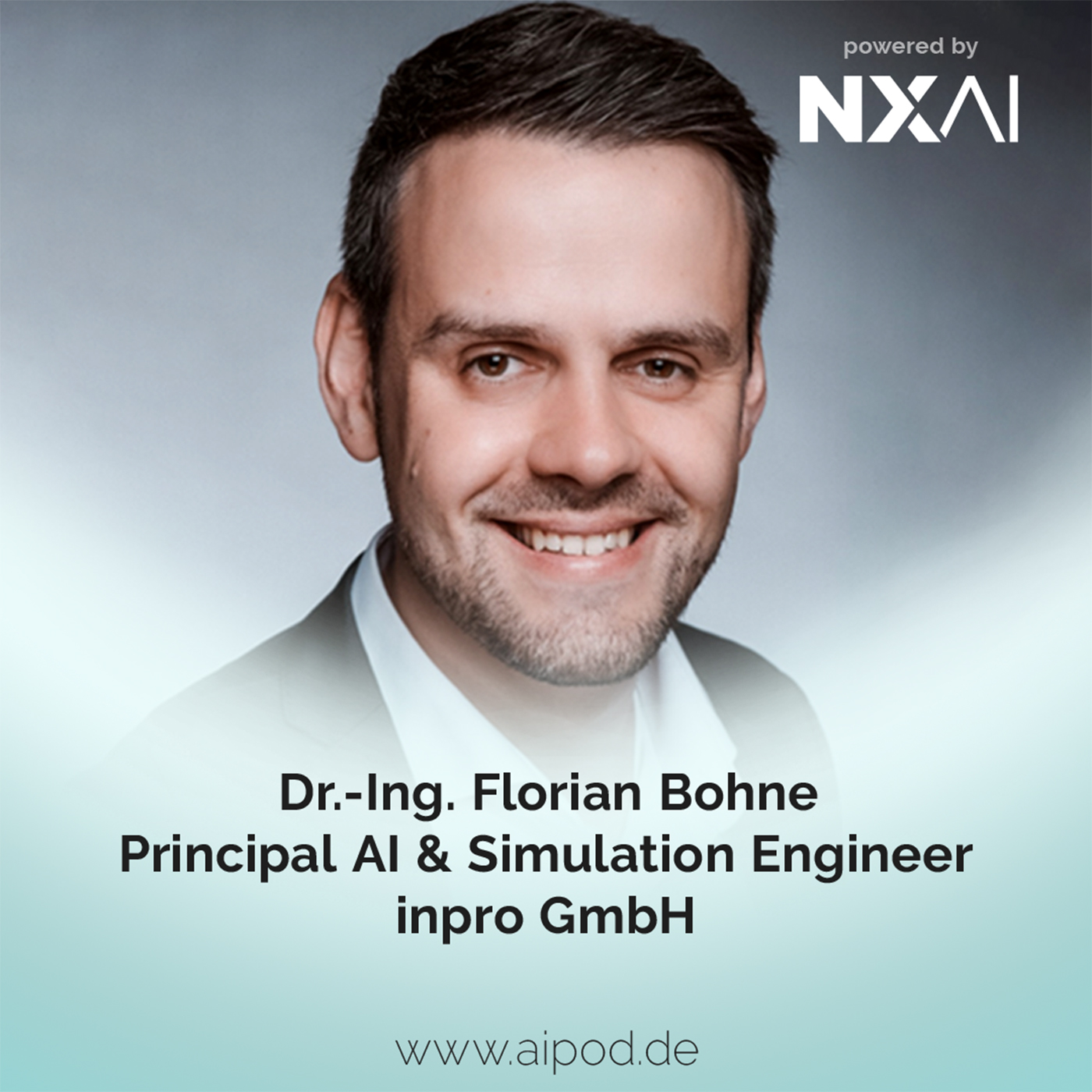
i am a member of the Board of Management of Deutsche Telekom and CEO of T-Systems
we equipped our AI factory with ten thousand of the newest NVIDIA GPUs
The episode includes concrete numbers: 10,000 NVIDIA GPUs, €1 billion investment, 500 quadrillion operations per second, 20 petabytes of storage, 50% capacity sold in weeks, built in 6 months from idea to opening. However, most use cases remain abstract (digital twins, predictive maintenance on air-condition systems) without named customer wins, timelines, or measurable ROI. The discussion of industrial models vs. LLMs lacks specific data or benchmarks.
we equipped our AI factory with ten thousand of the newest NVIDIA GPUs
one billion in terms of invest but as you see after couple weeks he opened beginning of February now its begining March with more or less fifty percent off our capacity already sold out.
Robert asks competent opening questions but frequently allows tangents and loses thread. He doesn't push back on vague claims (e.g., what exactly differentiates their industrial models from competitors' approaches), rarely follows up with numbers-focused questions, and permits Ferry to remain abstract on customer outcomes and ROI. The conversation feels more like a warm corporate interview than rigorous problem-solving dialogue. The anecdote about meeting Ferry in Munich and beer gardens adds warmth but no substance.
Let's assume I'm a mid-sized mechanical engineer company from South of Bavaria, how do I get started with the AI factory?
Okay, very it was a pleasure to talk with you about your idea of the already existing AI Factory. Munich. all the best!
Computed from the transcript - who did the talking, and the words that came up most.
Unpacking the buzz, the business, and the challenges of authentic industrial AI innovation. Is the industry losing its edge? In this episode, we dive straight into the heart of the industrial AI landscape - beyond flashy headlines and Instagram-worthy trade shows. We tackle the uncomfortable truths behind 'white label' solutions, the real value (or lack thereof) in APIs, and why simply following the hype won't cut it for true innovation. We share our candid impressions from Hannover Messe, exploring the tension between substance and showmanship, and what it means for the future of industrial-grade AI. Plus, we sit down with Dr. Ferri Abolhassan from T-Systems to uncover how Germany's new AI Factory in Munich is aiming to rewrite the rules for secure, sovereign, and scalable AI infrastructure. Join us for honest insights, pointed critiques, and a look at where industrial AI must go next if we want to deliver real value.
Transcribed and scored by The B2B Podcast Index.
This podcast is supported by Siemens, your partner for industrial grade AI. Hello everybody and welcome to a new episode of our Industrial AI Podcast. my name is Robert Wieber And it's pleasure to talk to Peter Sieber. Good morning Robert.
good morning afternoon evening To all of you dear listeners wherever You are. Good morning peter. let start in with the news part. What do you have?
I was at the Hannover mess and for sure that The topic physically. I wasn't big topic, but I Was surprised Because you can still claim to doing physical AI just by using a white label in video product And That was interesting it and that won't get us anywhere from my point of view. and there was actually a bit shocked By how many startups an even Established companies are going down this path. So really white label Nvidia and doing some here, And then say this is physical AI.
I think that's not the way to go. Yeah This is The wrong direction i would say. so you point us about hype right? I mean, the negative hype.
Hype is always like we know We have a new technology and it goes up in comes down that needs to survive. so there's always a positive thing to the hype. That's why we've been doing this now for eight years. if not, we would have stopped after four months.
Exactly This one. So are you suggesting these as one high No only hype. You show your customers something Not sufficient that there's no benefit for the customer. if he goes to a B C D E F G you would get the same and I think That's not the way to go to make business out of AI and physically.
Yeah, so that's good. That goes even further because as saw your your pose here And what? There was discussion about. everybody is now a specialist on then we always All of us need to be careful.
I mean it's general topic. You have been I don't know before we started. Maybe ten years maybe longer in automation. For me it's the same, I didn't I wasn't born.
and then other people young People come as well And mean the best example. but i don't want to move at that section here what you're saying. But just one moment is like now everything Is human or its The Same Topic. And then people start talking about industrial robots, and they've kind of never seen which has been around for a forty-fifty years.
The Kukars and all the other wonderful industrial robots right? But you say it's...and that is what do mean to say with white labels so are saying working in this case with their platform, or I guess soon with Google and some AWS whatever. You say you need to this?
I think the word was this mode right is mode what? What makes you different exactly from all The other ones? even though working With a platform i Think that's about your don't Need ten years developing the platforms. You can use it but still you need to something more than using this as a tool and not as a product, yeah?
Use It As A Tool. and second topic I was very surprised. many major European players are now delivering or offering APIs for big LLMs And they really believe that money out of it. So, only to provide APIs will not bring us further Really?
Believe me all the big players, automation players this won't help you. You have to develop your own solution when it comes to gen AI, agentic AI. Only an API will not help and customer is not willing pay for that I'm pretty sure. But isn't that the discussion we've had for ten, twenty or thirty years as long as IT came into OT.
I was looking at the origin of Bose and it's almost like...I think i mentioned this two weeks ago. sorry I think it started like, you know the first microprocessor of seventy four. But modcon was that?
The one who's a first PRC? so as long as we We are It's almost like some of us still were there. and Like next week i'm gonna be talking to Steven Who designed One Of The GE PSEs for example. So And when they Were doing That For Thirty Forty Years They Had Nothing To Do With Something Called IT.
That Came As Well At Some Point In Time Now, and from the time on that you need to connect both. it has always been discussion. Do the automation players needs take care of IT themselves? Are they going to connect to IT?
are we gonna connected? just say Microsoft as a word. I mean yeah hundred thousands potential IT. And you're saying I hear, You say it's the same now.
So Now we have these these huge LLM. There is not just five big ones and there are fifty thousand smaller ones. The question Is do you need to get involved? How deep Do you Need To Get Into The Technology Yourself Or Similar To What You Said Before or Use It As A Tool?
Are You Say You Need to Get Deeper Than Just? It's difficult for all the big companies, automation companies to define a business case. For what is your customer willing to pay? I think he's not willing to play for API.
Is you're willing to pray for? code generation stuff may be but they can also have when you have an API. You could add Claude there. so for What is he willing To pay at the end?
and i don't see There are so many. They're our business case, but I don't see So Many Business Cases there. maybe because it's a trade fair show. It's an image trade Fair Show right?
You See Some Image Driven The Stuff There And you Can See All Kind of Connected to my Machine Blah Blah. But Maybe Its Because Of That. In General i Have A Bad Feeling When It Comes To APIs Because Now the Guys Are Thinking Okay The API Will Help us to handle this AI bus, right? And but this is not the way to go.
I think we you really need to sit down with your R&D department was your product manager with your sales guys To ask how we can make money out of that and in This Is The Way Then To Go Not Only To Have An API. Yeah. So i Think It Is Still Like For All You. Whatever Business Development Corporate Development Product Manager people out there, I think the job in itself hasn't changed right.
it has always been like that. Just mentioned GE. you know forty fifty years ago POC as just another one than Rockwell or Siemens whatever doesn't matter. modcon i think was the first one and That is been the same for all the industrial robotics we've had.
There's ten big brands so It's this thing Nook. in the meantime, for a product manager responsible four. The Product Manager responsible for the KUKA is same kind of, they have indifferent classes. They have robots.
but you know still in the end the customer needs to decide are we gonna go with Fanuk or with Kuka? Exactly! And I think your saying that's still the same today right. so now the point is if we just say what a robot doesn't matter You're going put an API and interface in front of dealing with your robot.
the total solution what it delivers to the customer still needs. have a USP. It means yeah, whatever is going to be maybe one half? The best price performance.
that's why exactly made. Maybe it could be like that or maybe you're gonna have the One. dad has the biggest payload You know can take two cars at one time Whatever. I don't know What it is.
Yeah now but there it has To Be Something Exactly. That's what I hear you say, right? You're an automation company A and you have combination automation company B And they both offer a code generation API for their PLC or for their stuff. So what is the difference now?
What does it different? this isn't different It's not. one is using Chetcha PT The others use in Claude and the other third one Is using Gemini. so what is that difference Now?
the difference the USP belongs to them. do the LLMs another to the api. they won't pay money for that. your customers.
Won't pay me for it, I'm pretty sure. even one step further again if we talk about this mode i finish reading the book that I talked to about some time ago. so The Mode is the water you build around the castle. So If You Have That Mode And That Mode Is Like The USP Right?
I mean...I have This Mode Around My Solution. Nobody Else Can Enter It Now As Soon as Then You're Gonna Put a general language interface. It's almost like building a bridge into your cursor, right?
So you invite whoever it is in to your cursor by putting that there. so what does the next step gonna be for any of language provider companies, there may be the next time and I'm going to give one or two examples here as well in a moment. It's almost like you build a bridge for companies that have not been a competitor today but they add value to your total solution. it is not your values its the value third parties deliver.
right. so thats already potential. Let me see whatever I'm going to share with you if what that has been based on. Now, is moving, you know general AI I would say and specifically industrial AI.
Is AI from an AI that answers to AI that works? Now let's talk about one thing under this. come from Hannover. master Siemens unveiled the Eigen engineering agent.
they call it a colleague for automation engineers. then lets think oh what does that mean colleague. in the past we had co-pilots or do And then I say working for you. So it's around the same theme, right?
Is the person sitting next to you in a plane co-pilot and your colleague can be sitting next? or in virtual working diagram maybe is someone on your team doing something? so this thing plan searches writes delivers production ready engineering solution. doctor Roland Bush He makes a point, CEO of Siemens.
And it relates little bit to what you said before. but he gives us quick physics lesson and is explaining where the Eigen comes from because as the German listeners know it means like one's own. The engineers they know their term best Through a concept like Eigen value. That's one of these things taken out at the German language and they are properties that remain constant even as everything around in transform.
And that's what the eigen engineering agent wants to be is study source of intelligence. so What is this going to do agent? Yeah. Hype theme, nevertheless I'm on what I said before.
hype as always positive negative. I am a strong believer and it's one solution here that we see. i'm gonna give one two other ones. uh...
what Is It Going To Do? is Gonna Give A Higher Productivity To Engineers? So Is It Gonna Fill Empty Engineering Seats? Is There Potential There For Everybody In Germany And Europe Around The World?
Absolutely. If we would say already today, maybe it's difficult for people coming from university in an engineering environment to get this entry-level job which I'm not certain that is the case in engineering? Thank you very much. He was he wasn't here, but it was at the booze that furnished contact and then the CEO of furnish condo said good morning.
Good morning Mr. Merkel That was another one. There's even people of you from very far away countries, from Germany. who knows that he is not Mr.
Merkel. there wasn't Mrs. Frau Merkel until a couple years ago... He was not happy to hear this!
So coming back to the chancellor? Yeah right okay..he was actually suggesting young people consider engineering jobs or engineering studies I believe. Okay, I have a second example.
They're massworks. they have their MATLAB simulink polyspace and now that adding also there external AI coding agents. so you have a matlab agent. it's an API or something from scratch?
Oh i don't know i didn't get into the details. just says like You can provide curated skills There is an MCP. So this both for MATLAb and also for Simulink then provides the skills and code for model based design. Here again, MCP.
you know we talked about MCP many different times. so just same here. what I see is this AI moving To decide or is it moving? It's moving down almost like from just the support The support.
so did the co-pilot in the plane that sits next to you. And now what starts doing things for you Is my feeling. and I have one little story maybe. I shared before but i need to share if So again because i did the moderation for them at the matlab expo Munich October, yeah, and i asked One of the session attendees i said ten years ago was Google days started with machine learning for translation.
Ten years later, everybody can make a translation right? You know people take their smartphone and go to the other person And they communicate it in complete different. second thing since a year I would say Everybody around the world will access two. technology like we have on the notebook smart phone Can produce wonderful images.
what please picture? so then asked how long is be until a consumer, the consumer that has an idea for whatever in their brain. You know table or coffee top and airplane can ask an AI please design produce the necessary engineering drugs, right? So my mother was entering the B to C market or what is they would?
Oh no. No need I wasn't me asking that. and then that isn't. That's The final one.
i'm going To be sharing it exactly too in this direction. Yeah know. so I Was not suggesting that now because This Is still for the engineer right. so Now the engineers Gonna have these agent.
I do believe it's a step further, same to the Siemens. To AI doing things for The Engineer. but we're still in what i would call you know support and yeah It is Still The Engineer In Charge. Okay?
I Do Have A Final One Maybe Yeah. In The Same Area If I May There Is Robin Jay. He'S A Fifteen Year Veteran In Industrial Software Industry And he says instead of opening answers or abacus, you don't need to know they are finite element tools. It's specific engineering algorithmic based approach to designing and He asked an AI coding assistant to write a finite elements over from scratch.
Well any trained the time on neural network to replace it. so without going into the details, he has a beam. He does the loads and then he uses a pin physics informed neural network. And in the end, he says The story is it's not about this simple beam that he kind of engineers and calculates and knows That the beam is correct for certain values load values.
He says It's the pipeline. he says AI coding plus a GPU. Plus the AI IDE, so the integrated development environment. that's the same.
I'm not going to say you don't need but it is the same he says as the computer engineering software. So He Says AI for Engineering isn't coming It's here in my works. its working For You. Do we have any announcement Peter?
any announcement. I have one, one piece here. maybe you can share the announcer them before I forget because i have her Ranjita Umesh. she recently graduated her Master's in Artificial Intelligence at Technical University of Applied Science.
since Wurzburg Schweinfurt You know that. or yeah, I know the. she's actively seeking entry-level internship opportunities AI ML. She has hands on experience in rec systems agentic workflows.
look at if you want to produce an API nasty person. Now that depends on the company. The company. I'm now going to say, if you want a view dear listeners are interested in Ranjita working for you, check her out at LinkedIn and not gonna call out Ranjitayumesh.
or maybe contact me, contact Robert and we'll bring YOU into contact with her! Okay... And uh.. With this episode we wanted thank you our sponsor your partner Siemens.
This is the last episode. Who's the guy from Demands? We will have a new partner. I'm very curious next week with our podcast, New Podcast Partner.
Thanks to all of the Demands guys especially Boris who are making this possible. thanks alot. Yeah i can only share you and saying thankyou very much. Two Siemens, we did a couple of podcasts.
I think the one you would do that two weeks ago. Yeah but i've always said like You know We keep this Chinese wall between partnership and content And i'm still very Certain That we did up But whatever whenever there was good content? We did share The Siemens content as well As it just happened to Do right now because It Was A big One. Apart from that, thank you very much.
As you said Boris with all the other people From Siemens it was a great time to be working With You. Perfect. and now we switch To The Main Part. I Did An Interview With Ferry From T-Systems Deutsche Telekom About Their AI Factory In Munich And Their AI Strategy.
Thanks A Lot. Yeah Very much looking forward to it. I was just thinking, you and I met each other quickly yesterday here in Munich And i said that the beer garden season opened for me as a player of the baritone. everybody hosted by now cycle past because the beer garden where we did actually go and play on Sunday afternoon is very close to a place that you then are have been talking about with Ferris.
So I'm very much looking forward to hear details of it. Perfect, Peter! It was a pleasure. Thank You Very Much.
Don't Forget Your APIs. I'll do my best. Thank you Robert, thanks bye-bye. thank You dear listeners.
have you with us soon again? Bye-bye Hello everybody and welcome! My guest today is Ferry. you very well come to the podcast.
yeah Thanks for having me Yo, more than welcome. It's the first episode I already mentioned three hundred thirty free episodes and now The First One with T-Systems telecom. i'm really looking forward to talk To you but before we start please introduce yourself briefly to the listeners. Okay Thank You Robert!
Yeah, my father comes from Persia. But I'm really born in the Saarland and as you can hear by the accent that i am a member of the Board of Management of Deutsche Telekom and CEO of T-Systems And my thesis clearly is artificial intelligence revolutionized the value creation of entire economy. What's missing so far was an open secure and sovereign infrastructure for industry. application probably is what gets us and got to the table.
Yeah, exactly we talk about the AI factory in Munich And now that all the contracts have been signed tell us a little bit of recent history. The AI Factory project hasn't always been easy or am I wrong? Let's say first off there was our will. it wasn't our will.
We didn't talk. We simply did and we made it, and built in only six months from the idea to realization. This industry AI Cloud in Munich is open-to-industry. It's a public sector defense and science and secure sovereign and scalable so that manufacturer right up.
public sector can innovate without compromise. And what does it got? We equipped our AI factory with ten thousand of the newest NVIDIA GPUs, or the last generations. So the BIS-M and BIS M will follow as well as the RTX POS-Six on six hundred six thousand.
and thus in increasing By that, we increased the AI computing power in Germany by around fifty percent. In a very short time and as you say most people doubtful that we got there to the table. but they got it through. a terrific team of two hundred people actually was from the idea which somewhere what's made in November then even realized in January.
we opened them in February at school. But its more than the computing power for super computer. It has. Beside that it can perform five hundred quadrillion operations per second and twenty petabytes of storage.
And all of them, It is more than that because its a complete AI stack but That's something we talk about. But Of course We are proud Because the team was driving in A short time from The idea to the realization and that shows we Can still do things In Germany and they also made that for Germany. I have question how difficult Is for Deutsche Telekom to calculate an investment like this because you invest in hardware, right? So how difficult is it then to scale and really calculate that there's a business opportunity for Deutsche telecom.
sandbox to have an error where they can simply test and try. And therefore for us, it was simple to do the first step and get something on the table. Of course there was a bit of risk when we talk about one billion in terms of invest but as you see after couple weeks he opened beginning of February now its begining March with more or less fifty percent off our capacity already sold out. It shows that And our speculation and read of the demand in the market was right.
Was it easy? It's never easy if you are going to invest a billion. Also with us, money just doesn't lie around on the corner. but for us is clear we wanted do a step that invested into Germany.
Let's assume I'm a mid-sized mechanical engineer company from South of Bavaria, how do I get started with the AI factory? With the industrial AI stack especially? what do we need. What kind of contracts technology access to this system?
How can i start? first of all you mentioned already that the typical user would be an industrial customer. but then let's step one step back When the market is talking about large language models, when they talk about AI. I mean we all have to admit you as strong in conversational AI for instance, primary model for text and image creation.
but then next step was to learn And use industrial processes and their data. This where Germany can get into top of it But only if become mass our own data again make it usable. So therefore the future of our prosperity takes place in digitalized factories. That's the first thesis that we believe, and of course an automated supply chains and virtual development.
yeah whoever masters industry determines the competitive off their entire economy. so that said it was clear. they say okay there is telecom for connectivity data center cyber security Nvidia stands the hardware. is that complete.
But we then also invited partners such as SAP for their business technology platforms, Siemens, Simcenter but also nowadays very recently service. now on top of that and they got many other partners like SAI, HR, Roberts, Wunderbosch, Kranthum, Physics & Perplexity and thereby Robert have an offer After a long introduction, finally to answer your question. You can now offer that in several portions and several ways through the market. you could either give a company in Germany an interesting company mid-sized company or public company then naked yeah GPU as a service But you can even more so offer them AI as a service and deliver them secure open and sovereign stack from end to end.
And then for instance, a mid-sized company who doesn't have full IT department with hundreds of people. It does not know how to get that all started. That's where we have. it doesn't know where to get of course the heart from, but also don't know which software with foundation models and How do you get their data in so?
We take them by hand and give really a complete end-to-end solution. So you as Deutsche Telecom Do that right. I Don't need to be your customer already a Siemens customer or agile robots customer. the industrial AI stack, right?
Exactly. And what do you do with your customers can just show a little bit of process. yeah. so first off all it's always best to give some concrete examples.
let say they're very large customer such as automotive customers. okay them for instance. we realize projects where they say through digital twins instead of really investing a lot of time into blending process. Why can't we do that with AI?
When can you do it, for instance on base off our data and knowledge that we have an exactly that we do in this AI effect sure. On the other hand We have very small customers. That for instance let's imagine I'm A company midsize that produces air-condition systems. They so far didn't have the IT power and capacity to go learn about predictive maintenance in such a way that they say we can already hear from the noise, whether it will break or not next hours of days whatsoever...
and collecting those data feeding then the foundation model in the industrial AI is something worse to them, because then they have a space for their data. For the know-how or learning and AI that we deliver on hardware makes these data richer. two examples, you can also go into the public sector. You Can Also Go Into The Consumer Side.
They Always Look Like Yes It's. Either Somebody Knows Already What He Does And Then Has An Own IT Department Such As The Big Companies Than They Probably Just Want To Take The News Technology. Or Is That Smaller Companies Say No We Would Like to Have Somebody Given Advice But We Bring To The Table. What They All Bring To Table is The Data and Their Knowledge.
I think what you mentioned is very important when it comes to the whole ecosystem of AI, or when it come your factory because. You mention its data platform right? It's a place for training and it's space for inference. yeah Because then we talk about in our three hundred episodes with industry guys.
they say okay We have edge computing we have embodied AI When it comes robot but need train models. Do you see it more like a, let's call it model gym or is it focusing on training? Or Is it more inference for the big LLMs. What does your main focus there?
in The beginning? its model gym and a training place. of course but Customers like the mid-size company, they don't have now the capacity to difference between. I'm training.
Now i am in the gym and then on the road again And I'm realizing The real production process. so it depends On whether you Have a can afford To have two gyms. yeah one for training him and one four executing. we Can do in Munich both?
Yeah from this hardware. Yeah, you have like race horses there. Like this Blackville ships. these are race horses These aren't normal Horses for everything agriculture stuff so to speak and therefore we also Have a data center immunity close by which is then good with Normal CPU For more inference and more execution So that out of one hand as telecom we can offer both.
but if You really put it into the focus? Then you say well equipped for the model gym, but you can also use it as an execution or other data center close by Munich with more normal CPUs than for normal inference. That's a great idea! When it comes to models right?
You already mentioned large language models. what else do you see? because when it come to industrial AI I don't forget the language of machines time series and there is different languages. Look, when we talk about large language model it's not supporting physics AI.
Exactly Because that means more large process models or large industry models. so therefore nobody. and That is the huge advantage that Europe has! Thats a huge advantage Germany has!
thats'a huge advantage. We also want to enter the field with who is now building capacity Who is building a stack and who is gathering data that built up an large industry model? And large industrial models are per se something completely different than the larger language. Yeah, it is large.
It's very large but the aim isn't to create a language. what are you using? ChatGBT for instance for its languages with which you do lectures or your presentation. so presentations and lectures made by languages.
that's what AI creates. now we created by industrial AI processes from unstructured data to structure data, To really get a machine better. Exactly. It's time series data at the edge, right?
Everything is temporal dependency in the industry field everything when you talk about with the companies it always temporal dependency. The whole life has temporal dependency and we are all focusing on tokenization, right LLMs tokenization. So do you see that tokenization as maybe not the main focus, right I would say there is a tokenisation data for industrial AI as well, but it's a different kind of tokenization. If tokenization in its inner sense and I'm computer sentence comes from the syntax into semantic translation or takes a word and partitions to work in different tokens that where this what token come from order then do build through a Kramer a sentence out via the sentence, then more sentences and a complete speech which makes it language.
Now on the industrial AI... On the industrial cloud there are similar things. for instance if you have certain patterns in unsaturated data that the AI is learning and concluding Then also so to speak starts from an atomic to complex to very complex relationships and you can call these smaller atomic or modular um uh relationships also tokens. why do i say that?
because I don't want to now have a theoretical debate. You came in with large language model as the norm, large language models was built for language but it has this same AI The same foundations, the same computer science and algorithms. as an industry AI is just applied to different problems. The industrial cloud or the industrial large industrial models are applied to structured unstructured data of industry processes in two structured conclusions for instance, doing digital training or production process modeling quality checks etc.
At the end which model? What kind of model are you hoping to get in the factory this year? what is something You would say? oh This is interesting.
We have a first running and model like this our Training a model like dis or do the inference for model like disc. we hope that For their very large companies We will be the home where they structure with data for their predictive maintenance, for things like digital to win. For things like quality checks etc., and for the mid-size companies I hope that we get them started in helping AI supporting them in a day-to-day process.
That's very simply put! They come from customers or users And by doing so there are models of this. fabric will start to exist and we'll start to grow. And then probably in a year or two, you build the first one who has like a chat GPT The First Industry Model being applied but I'm pretty sure that's coming out as an aside after one.
yet Everybody is talking about costs when it comes to AI right? So Is there the cost of working together with your comparer like the big scalers from the US Or are you cheaper? So beyond eye level and we make sure that they are not more expensive. Okay, very it was a pleasure to talk with you about your idea of the already existing AI Factory.
Munich. all the best! We keep our fingers crossed. thanks a lot.
Thank You Robert.
Other episodes covering the same guests and topics, from across The B2B Podcast Index.
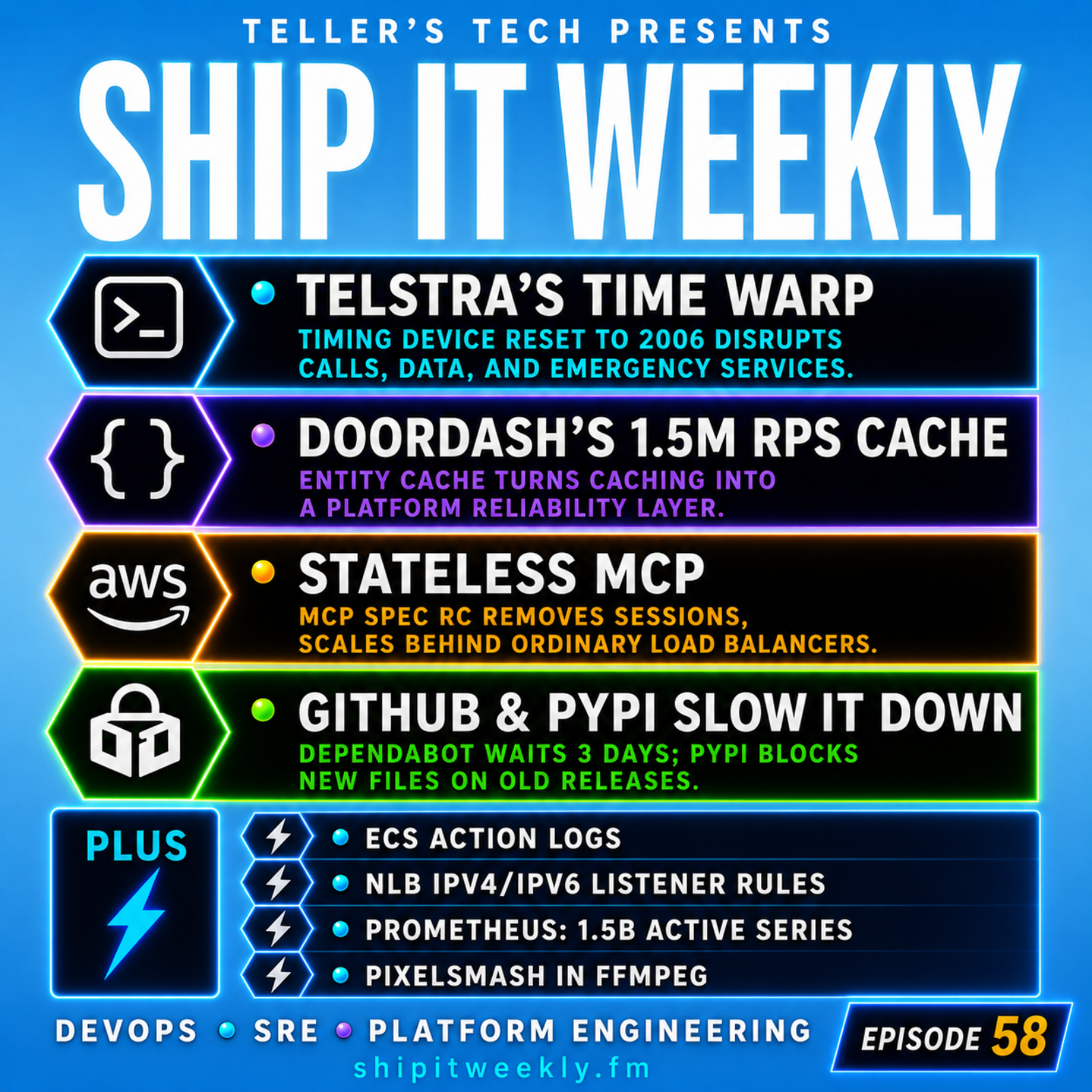 Telstra’s Time Sync Outage, DoorDash’s 1.5M RPS Cache, Stateless MCP, GitHub and PyPI Supply Chain Delays, and Why the Quietest Infrastructure Often Has the Biggest Blast RadiusShip It Weekly · on Model Context Protocol (MCP)97 / 100
 Late checkouts, AI agents and the future of guest communication with Cole Rubin of ConduitMatt Talks Hospitality: Real conversations for innovative hoteliers · on Model Context Protocol (MCP)83 / 100
 The End of Software as We Know It: How AI Agents Are Rewriting HR, SaaS, and Organizational DesignAI First with Adam and Andy · on Model Context Protocol (MCP)81 / 100
 Boilerplate in Seconds: AI Handles Setup, Engineers Handle Logic - Klaudia Dussa ZiegerSoftware Testing Unleashed · on Model Context Protocol (MCP)80 / 100
 How airfocus Is Rebuilding Product Ops Around AI AgentsProduct Team Success · on Model Context Protocol (MCP)80 / 100
 DevOps and observabilityNext in Tech · on Model Context Protocol (MCP)79 / 100
 TiRex-2 - a multivariate time series foundation model64 / 100
 From Sales to Spare Parts - Festo´s AI solutions80 / 100
 Industrial AI: From Pilot to Profit81 / 100
 AI for the Glass Industry76 / 100
 NVIDIA´s Safety Initiative / The unique Volkswagen-Siemens joint venture80 / 100