I Used To Be Crap At Sales · 2025-09-24 · 59 min
Key moments - from our scoring
Substance score
57 / 100
Five dimensions, 20 points each
Niraj Kapur shares his journey from being terrible at sales (rating himself 2-3 out of 10 when selling gun magazines over the phone with an Irish accent in early-90s London) to becoming a top performer and now running his own sales training business. He identifies that approximately 15% of salespeople consistently hit targets year after year because they invest in themselves - reading, hiring coaches, attending conferences, and asking better questions - while 50% fluctuate and 25% remain mediocre. The episode unpacks what separates elite performers from the rest, emphasizing that great managers do more than nice gestures: they publicly recognize effort on micro-wins (securing a difficult meeting, supporting colleagues), not just big revenue deals. Kapur stresses that 80% of salespeople are currently missing targets, a statistic aligning with his tiered breakdown, and attributes underperformance to both salespeople's lack of self-awareness about investing in themselves and managers' inability to coach effectively. He advocates for personal accountability - paying for your own coaching rather than waiting for company approval - and notes that top voices like Daniel Disney, Benjamin Dennehy, John Barrows, and Marcus Chan all reinvest heavily in their development, even during successful years.
The top 15% invest continuously in themselves through coaching, books, podcasts, and conferences; ask better questions; and maintain discipline around hard work and avoiding office politics. They hit targets year after year because they actively develop their skills, often during good times, not just when struggling.
Managers should publicly acknowledge effort on micro-wins like securing a difficult meeting, supporting colleagues during absences, or reconnecting with lapsed clients - not just closing large deals. This reinforces the daily habits and behaviors that drive long-term performance.
Many make excuses and defer responsibility to their boss or HR, but Niraj argues those who personally invest their own money work much harder to ensure ROI and see significantly better results because they have more skin in the game.
They typically became managers because they were excellent individual contributors and wanted a pay raise, not because they developed coaching skills. Selling is a different skillset from developing others, and most managers rely on 'do what I did' rather than tailoring coaching to their team.
Approximately 80% of salespeople are not hitting targets in 2025 (up from 72-75% in 2024), driven by both underperforming salespeople lacking self-awareness about development needs and managers who are overly critical instead of investing in their teams.
Our reviewer’s read on each dimension, with quotes from the episode.
The episode contains several actionable insights about sales fundamentals - prospecting methods (video DMs, physical letters), emotional detachment from outcomes, one-on-one coaching structures, and language adaptation by role - but these are interspersed with considerable conversational filler, repetition, and obvious observations that a practiced B2B operator would already know. The substance-to-padding ratio is moderate rather than exceptional.
you have about 15% of people in companies that I would call are great sales people...They're the ones who invest in themselves. They're the ones who ask questions, they're the ones who will hire coaches
I don't know a single person Mark who's ever said to me. You know what? I really wish I had more emails...I send videos through LinkedIn, DMS, because most people just don't do that...I write letters in the post
The core ideas - Monday pipeline reviews, Wednesday team training, sending handwritten letters, emotional detachment from sales outcomes - are sensible but not novel. The guest repackages well-known sales principles (asking questions, following up, building relationships) without introducing genuinely counterintuitive frameworks or first-principles thinking. This is competent practitioner advice recycled through personal anecdotes rather than fresh thinking.
the small things in business that make a big difference...it's often the simple things that make a big difference, not the big, expensive investments
It's interesting, like you use the language when you do a good deal...Do you feel like bosses should only really do that level of praise when you go above and beyond
Niraj Kapur is a legitimate practitioner with 31 years of actual sales experience, real leadership tenure (10+ years as a rep, then manager/director), published books, and a functioning training business since 2018. However, he is primarily a sales trainer and speaker rather than a current operator running a large sales org or closing enterprise deals. His credibility is solid but somewhat attenuated by time away from direct frontline selling and reliance on his own training business, which narrows his perspective to what he observes in training contexts rather than operating at scale.
I used to be horrendous at sales...I was given a script...to sell this magazine down the phone
since 2018 they have ran their own sales training business...Salesforce awarded them the top sales influencer to follow
The episode includes some concrete examples (Royal College of Nursing, two CEOs, £20k YouTube/SEO investment loss, specific email templates) but relies heavily on vague references ('I see this all the time,' 'most people I train,' Salesforce stats cited without year or link). Claims about the 15% top performers, 25% mediocre, and 50% hot-and-cold are presented as observed fact without data, methodology, or qualification. Few hard metrics on outcomes, win rates, or ROI from the proposed methods.
almost 20,000 pounds, right?...I invested very heavily in a YouTube channel...And the second thing I did was, at the same time, I invested heavily in SEO
72% of people will not hit their target in 2024 and they estimated it would be 75% of people will not hit their sales target in 2025 that number is actually now closer to 80%
The host Mark Ackers asks solid follow-up questions and pushes back productively in places (e.g., 'you haven't given me a detailed answer,' clarifying coaching vs. training, challenging the guest on investment losses and hiring mistakes). However, much of the conversation follows a soft interview format where the guest controls pacing and topic flow. The host occasionally enables tangents rather than drilling into specifics, and doesn't push on weak claims or press for evidence. Some follow-ups are warm rather than incisive.
I get it when a boss is nice to you, that's great. What else was she doing beyond being nice to you. That made her a great boss
So I'm pleased I pushed because the way in which you described your pipeline reviews slash coaching, the key for me was you were not giving the answers
Computed from the transcript - who did the talking, and the words that came up most.
Most salespeople stay stuck in the middle of the pack. Some even survive decades in sales without ever breaking through. But a small group - just 15% - consistently smash target, year after year. In this episode, our host Mark Ackers sits with sales influencer and coach Niraj Kapur shares how he went from “horrendous at sales” (his words) to becoming one of the most respected trainers in the industry. His story is brutally honest - from reading rejection scripts with no clue what to say, to being nominated for Salesman of the Year . You’ll discover: Why 80% of sellers fail to hit quota in 2025 (and why it’s not just about bad leads). The mindset shift that separates mediocre reps from top 15% performers. How detaching from outcomes can actually increase your close rate. Simple prospecting techniques that help you stand out in a sea of sameness. Why investing in yourself matters more than waiting for your boss to back you. If you’re tired of feeling average, this episode is your wake-up call. Niraj doesn’t sugarcoat it - he lays out the hard truths and the daily habits that build sales winners.
Transcribed and scored by The B2B Podcast Index.
So who am I joined by today? Nobody supported and nobody trained me, and nobody told me you have to read books to become better. Mark Ackers: My guest has had a long and successful career, and since 2018 they have ran their own sales training business. They are also a transformational speaker, an author multiple times over with their books available on Amazon, Salesforce awarded them the top sales influencer to follow, and LinkedIn has awarded them the official top voice in sales badge.
My guest is Niraj Kapur, did you used to be crap at sales? Niraj Kapur: I used to be horrendous at sales. I was given a script. I was given one hour to learn it.
I had to sell this magazine down the phone. Now bear in mind, this magazine was about guns and weapons, and I had a strong Irish accent in the early 90s in London, it did not go down well. Then you have about 15% of people. They're the ones who hit target year after year after year, and they're the ones who invest in themselves.
They're the ones who ask questions. They're the ones who will hire coaches. They're the ones who go to Sales conferences. You work very hard, you don't gossip, and you make me money.
You keep doing like you'll do well. Now a great boss is somebody, when you do a good deal, gets out of their desk, comes over to you and goes, well Mark Ackers: done. What have you done to turn it around and make 2025? The best year.
It's been okay. So hello and welcome to another episode of The I used to be crap at sales podcast. I'm your host, Mark Akers, co founder and Head of Sales here at my sales coach, we called the podcast that because it's true and all of our guests say the same. So who am I joined by today?
Some may say those who can't teach but that's not true here. My guest is Niraj. Kapur, Niraj, welcome to the podcast. I feel like it's been a long time coming.
I know we've known of each other for many years now, but delighted to have you here. How are you today? I am doing absolutely fine. Actually, I've gotten your office in the city now in Belfast, and I had my first podcast yesterday, and because you have these little pods, it's so echoey.
So I was in the office today, and I rushed back home so I can get a decent sound to do this podcast. Thank you for making the effort whilst you're looking to get a decent sound on your side. Irony is someone that's like drilling in the floor below ours, so hopefully that won't come across too loud, but great to have you here. Let's Let's kick off with the question we always start with neuralgia.
Yes, no question, did you used to be crap at sales? I used to be horrendous at sales. I did because nobody supported and nobody trained me, and nobody told me you have to read books to become better. And on a scale of one to 10, one being the absolute worst.
10 being elite. How would you rank yourself when you started off in sales? When I started, I'd probably say two or three. I was given a script.
I was given one hour to learn it. I had to sell this magazine down the phone. Bear in mind, this magazine was about guns and weapons, and I had a strong Irish accent in the early 90s in London, Niraj Kapur: it did not go down well. It really didn't.
And anytime somebody give me an objection, I would just kind of stumble and not know what to say. I'd have to wave to my bossing. And back in those days, they had those double phones, the boss could listen in and then say, say this, say this. But it's not how you train people.
And that was my first experience in sales. It wasn't a very pleasant one. Mark Ackers: I can imagine the reference may be lost with you being from Northern Ireland, talking about guns in the 90s on some of our listeners, but I can understand why that might have been difficult for you. Let's talk about how you ended up in sales then.
So yeah, your first sales role was in 1994 according to LinkedIn, the sales executive you were there for 10 years, launching products, winning big deals, really starting at the bottom and climbing your way to the very top, where you actually got nominated for salesman of the year as well. Let's get into that. But I suppose the first question is, how did you end up in sales? Niraj Kapur: I ended up in sales the way so many people do end up in sales.
Either not sure what you want to do in life, or you just think, you know what I'd like to earn more money. And back in those days, for everybody listening or watching, you know, if you want to get a job in sales, you would go to the back of the Evening Standard, I think, was a Wednesday or Friday evening, and I would say, you know, our top salesperson earned 2000 pound this week in commission. And I'm like, Oh, I like the sound of that. And that was it.
You know, most people get into sales for the wrong reasons, and then they thankfully leave very quickly, or they stay and become mediocre, or they stay in after a while. Realise this is actually a fantastic profession and a fantastic way to help and serve people. But at the beginning, I did get in just I had rent to pay, I had overheads. I'm obsessed with 80s rock music and early 90s rock me tonight, I will buy every CD, every special edition, every Japanese edition that exists, you know, for all the rock bands that I love.
So that was what my expenses and overheads were. And the only thing that could fund that living in a big city like London, and a very expensive city like London was selling and Mark Ackers: just picking up on what you said there about people. Getting sales for the wrong reasons. Then you talk about people that leave quite quickly, then people that stay, that are mediocre, and then some people realise what fantastic opportunity is.
What kind of percentage would you put on those different Niraj Kapur: outcomes? I would say about 90% of people get into sales for the money initially, or because they have no idea what to do with their life, or, sadly, because they've watched the bull for Wall Street too often. You know, these things happen in terms of mediocre a lot of young people will do sales jobs for a few years and go, this is horrible, and just leave and get something else. There's a lot of people I've trained, unfortunately, in the last year to 18 months, who have been stuck in jobs for 20 years, and they're in their 40s and they don't like LinkedIn, they don't use social media, they don't like the state of the world, and they say, This is who I am.
I will never change. And there's a lot of people like that now, probably as much as 20 to 25% I would say, who are just mediocre, shouldn't really be doing their job and shouldn't be in their job, but they're stuck there because sometimes companies find it hard to get rid of staff. Sometimes companies generally believe staff will change with the best of intentions, even though they never will. And these are what I would call the mediocre, let's say 20, 25% mediocre.
Then you have about the 50% who are kind of hot and cold, average, hot and cold average, kind of zip lining up and down, up and down, and then you have about 15% of people in companies that I would call are great sales people. They're not often natural. They're people who have maybe spent years learning their craft to become very good, and they're the ones who hit target year after year after year, and they're the ones who invest in themselves. They're the ones who ask questions, they're the ones who will hire coaches.
They're the ones who go to Sales conferences, and the top 15% is what everybody should be aiming for. 50% hot and cold, 15% great, 25% mediocre. You obviously got to the point where you're in the top 15% I can see, I can see that in you, and you did that the first 10 years, right? So in your intro, I was saying how you really carried a bag and led and built teams for like, just over 23 years.
And this is why I'm excited for this podcast. Like you've really lived this life, and now you're training people how to have the success that you've had. And I can see say you were there for 10 years, which, which actually is a long time to stay in a sales company, in a sales reps, a very long time. But if you're successful, and you're at a place where you're earning money and they're investing in you, and you feel like you're growing, perhaps not.
But I see that as I say, you went from entry level to being nominated for salesman of the year, which would get you, I mean, really, probably in the top 5% but what's the big differences? You talk about investing themselves and coaching and going to conferences, but it's obviously a lot more than that. What were you doing differently to others when you were at the very top of your game in those early years? In the early years, you know, I became a father very young, and I got married very young, and I had a mortgage that will make you work really hard.
So that was it. I would come into the office. I was the first person there. You know, back in those days, you know, you started a half nine, you finished at half five.
You spent one hour the pub for lunch. That was sales. Nobody worked in the evenings. There was no mobile phones, there was no emails.
You went home at half five. And so what I did was I come into the office most mornings about quarter past half eight, so one hour earlier, and I would read all competitive press. Who's advertising? Hmm, they're not advertising with us.
Well, they should be. And I would spend time doing that, and then shortly after, my publisher, who was a boss, would come into the office, and she would see me all the time, working, working, working. What had happened was the publisher was amazed. She was a woman working in publishing who was a boss in an office, and there weren't many female bosses there, and a lot of people found her very cold and very distant, but she was always very nice to me, and I'll get teased in the office.
Oh, look, look who's arrived. It's Annie. Look. Now, Johnny, your boss is here, because she's always really nice to me.
And one day I just knocked her door. Said, Annie, I'm really sorry to bother you. Can we have a wee chat? And she goes, Sure.
I said, Look, I don't want to cause any trouble. Please don't get upset with me. But why are you nice to me for because I was just a kid in my 20s. I'd been in London for a few years.
I came from a small town in Northern Ireland. I wasn't the life and soul of the party. I wasn't really that interesting a person. I didn't understand why she was being nice to me.
It made no sense. And I said, Can I ask why? And she goes, Sure. She goes, you work very hard.
You don't gossip, and you make me money. You keep doing that, you'll do well in life. And that was it, just really simple advice, work really hard, don't gossip and make money. And bosses love members of staff and sales who make money.
And so there's no doubt that you need a bit of luck in anything you do as well. And having a great boss does make a huge difference to your career. And there's no saying. I'm sure it's all over the internet.
You can find it. He wouldn't work for a boss for a day. Don't work with him for a year. Okay, just don't.
And she just kept promoting me and promoting me and saying, Okay, you're doing really well in the magazine. How do you fancy selling our awards? I'm like, Okay, you're doing really well in our awards. Why don't you sell our conferences?
Okay, it's more money. I'll do. It because it was exciting. It was thrilling.
The boss liked me, and I kept getting paid more money, which meant I could get a mortgage in my 20s in London. It was only a little two bedroom house, but it gave me a life, and it gave me a career, and it gave me a way of supporting my family. Mark Ackers: So I get it when a boss is nice to you, that's great. What else was she doing beyond being nice to you.
That made her a great boss. Like you talk about great bosses make all the difference. What does make for a great boss? Niraj Kapur: A great boss is somebody, when you do a good deal, gets out of their desk, comes over to you and goes, well done.
That was brilliant. You can email somebody, which is okay. But one thing I learned when I became a manager was, you know, you go over to somebody, you shake their hand in front of their colleagues, go, that was a brilliant deal. Well done.
You know, no matter what industry you work in, sales are non sales, but especially sales people, whose egos are a bit more fragile, let's be realistic, they want to be appreciated. They want to be respected. They want to be admired. Yes, sales people love the Commission.
They love the money. Of course, they love all those extras. But ultimately, as human beings, we want to be respected. We want to be appreciated by others.
I don't mean loved by everybody, but definitely want your boss to respect, admire you and appreciate the good work you're doing. Mark Ackers: And it's interesting, like you use the language when you do a good deal. Do you feel like bosses should only really do that level of praise when you go above and beyond? Like you talk about working harder an hour earlier every day doing good deals.
Do you feel like bosses should only give that level of praise when you go above and Niraj Kapur: beyond? No, because as a coach, if I'm speaking to somebody, and they've spent maybe two months trying to get a meeting with somebody, and it hasn't worked on email, and I'm saying, Okay, well, let's try multi platform approaches that's much more successful. So we'll try email, we'll do a LinkedIn DM, and then we'll try a phone call a week later. Let's do that, and they have success just literally getting a meeting.
That's not a business deal, that's not revenue, but as far as I'm concerned, that's worthy of saying well done to somebody. So I don't think you should just congratulate sales people when they make money for you. I think you congratulate them when they support a colleague, when someone's on holiday and they pick up the extra work, when they get a deal with somebody who's just been quiet for months, or when they get a meeting with a client who said, I will never do business with this company again.
I have to work with those clients because had bad experiences with somebody else, which wasn't my fault. It's really important to appreciate people for that. Don't just appreciate them for making money, appreciate them for good work that they do. Mark Ackers: I suppose that that's kind of my point, right again, it's some of the examples you gave there, like picking up the slack when someone's on holiday.
It's about not just praising when they go above and beyond. It's about recognising daily habits and behaviours and reinforcing that not not just you've done something that I wouldn't expect you to do well done. You've closed a deal better or bigger than I'd expect you to do well done. It's about looking for micro opportunities to say well done and reinforce positive behaviour.
Is kind of what I'm picking up from Niraj Kapur: what you're saying absolutely. You know, even the teams I coach now it's now what, August, 2025 and no doubt this will still happen in q4 2025 it'll still happen in 2026 the number of sales leaders I speak to, and sometimes commercial directors. Not again, CEOs don't speak to CEOs as much, but sales directors and commercial directors and HR directors, a lot of the time. They complain the staff just don't care sometimes.
And then around a recent stat, Salesforce initially said it was 72% of people will not hit their target in 2024 and they estimated it would be 75% of people will not hit their sales target in 2025 that number is actually now closer to 80% which is shockingly high. So there's clearly a disconnect going on here. Now there's a whole lot of variable factors. Of course, there's things like, you know, sales leaders making targets very high.
Quality of leads, not very good. The company's not investing enough. And you there's all kinds of variables, of course you have to take into consideration. But the fact that 80% of people are not hitting their target is a major problem in sales.
It really and truly is, and I truly believe, just from the observations I see all the time, learning to appreciate people on a deeper level, learning to invest in people on a deeper level, and teaching people to really look after their colleagues and to pick up the slack. It's often the small things in business that make a big difference. You and I both know everybody is desperate for giant golden nuggets, rather desperate for oh, if you invest 50,000 this technology will be saved.
Oh, invest 30,000 LinkedIn Sales Navigator, come on. If you do that, we'll hit our targets. No, sometimes it's just the small things, which often don't cost money, which really do have the biggest impact in sales. And a lot of people just don't see this.
I see it all the time because I see I'm with teams, I'm in offices all the time. But quite often it's the simple things that make a big difference, not the big, expensive investments. Mark Ackers: It's interesting because you talk about the percentage of people not hitting target, and that aligns quite nicely, not perfectly, but quite nicely, to your observation of 15% being the great salespeople that hit their target, 50% being hot and cold and 25% being mediocre. And aligns quite nicely to what Salesforce are predicting or predicted for last year and for this year.
I. Are you saying that when a sales team doesn't hit target, or a sales team isn't performing, it's often down to the sales leader because they're not doing the right things on a daily basis. To get that from the team or picking up what you spoke about earlier. Is it the individual?
Because what you really summarise with the top performers is they invest themselves, they hire a coach, they go to competencies, which actually is more habits for the salesperson. So where is it going wrong? Is it the sales leader or is it the sales people? Niraj Kapur: Oh, it's both.
You both have to anytime a team comes to me and they're struggling, they're never struggling because everybody is self aware. They're never struggling as a sales leader or invest heavily in them with regular coaching. They just it's not it's often because at least one of those functions isn't working. And when you work in sales teams, even the teams I've been working with very recently, they're struggling.
The first thing I'll ask them is, okay, so what books have you read recently? And I'll say to younger people, what YouTube videos have you watched recently, or what podcasts have you listened to? And often there's complete silence. They listen to Steve Bartlett, which is okay now and again, but they don't listen to sales specific podcasts.
I say, okay, so you're not listening to sales podcasts improve. But you know, sales isn't just about sales. It's about psychology. It's about emotional intelligence.
It's about understanding copywriting, when it comes to email and LinkedIn DMS, I was also understanding LinkedIn and how to leverage it. What have you done to learn about these things, complete silence, the amount of lack of self awareness that occurs in sales. In 2025 and beyond, we have the most amazing technology available in so many areas. There have been so many advancements in this world, but yet people in sales are not advancing.
They're not getting better. There's just zero self awareness of the need to really invest themselves properly. And when they do invest themselves, they will say to the bosses, Look, can you spend 5000 pound a Tony Robbins event? Or can you spend several 1000 pound getting us some LinkedIn Sales navigators?
We can reach more people. And those are not solutions are going to build for you long term they're okay on a short term level, but in a long term level, it's not going to get you your annual target. So salespeople need to be much more self aware of where they are, how they come across, and to invest themselves. And sales leaders have to stop being so critical of their staff and spend more time investing in them.
And bear in mind, most sales leaders aren't very good coaches or managers. They're not they often became a sales leader because they were very good at sales, and they wanted a pay rise, and the boss said, Okay, I'll make you a sales manager or a sales director. But that doesn't justify you to coach other people. A lot of sales leaders coach badly and say, Look, just follow me, or they don't coach at all.
And so you have to really blame both parties. It's not it's quite rare. It's one person. Quite often.
There's two or more things Mark Ackers: I've said and written very similar many times in my career around and it's interesting, because anyone listening to this podcast is already ahead of what you're talking about, right? They do. They're listening to podcasts. They're here.
So I kind of want to be respectful of the audience and not kind of lay into that because that they are listening to podcasts, I suppose it's what else can they be doing to invest in their own development? Yeah, like, a very small percentage of sales people pay for their own sales coaching, for example. Why do you think that is a lot Niraj Kapur: of sales people I speak to will say, Well, I'll work with an erage. If the boss says, Yes, I'm like, well, the boss says, No, what are you going to do?
You're not hitting your target. Why don't you invest in it yourself? And they start making excuses. Oh, let me think about it.
Or I'll speak to my partner about it. My Come on. You want a sales career or not? You know, it's just what I hear are excuses all the time.
And so people, when sales people work with me, it always tends to come through the boss. But anytime a sales person had the initiative to invest in me themselves, they've gone on to have much more success because they've taken the initiative to spend their own money. When your company spends the money you might invest, you might learn, you might not. It depends on your attitude, but if you spend your own money, believe you me, you will work really hard to make sure you get that money back times five or times 10 you will, because it's your money.
There's more at stake. And a lot of people default to saying, Well, we'll see what the boss says. We'll see what HR says, But HR, you shouldn't be asking HR about your career. You have to take responsibility for your career.
You look at all the people that we know, that we respect and that we admire. Okay, whether it's the Daniel Disneys, the Benjamin Dennehy, our colleagues in America, you know, the John Barrows, the Marcus chan the Lindsay Boggs, Amy volases, all these people. I know them all, and I've met most of them. They invest very heavily in themselves and going to conferences.
They invest very heavily in coaches. They go to conferences. They some of them read. Others will listen to podcasts.
But they invest heavily in themselves, not when times are difficult, but when times are good as well. So right now, in 2025 I'm having the best year of my career. 2024 was tough for me. I made one or two wrong decisions with people I invested in, but 2025 has been outstanding for me, and despite the fact I'm having the best year of my career, I'm currently investing more in myself than I ever have to better myself, and I really want everybody listening and.
Watching to think about that. I'm not waiting until times get tough. I'm investing now while times are outstanding, because that's what successful people do. Mark Ackers: The other thing that is just important to touch upon is you're right.
Again, I talk about this a lot good sales people get promoted into managers, but it doesn't make them good coaches, and what they rely on, typically is, well, do what I did, because that worked for me, but it's a whole different skillset. I would say on this podcast, we probably covered that quite a lot, in that difficult dilemma of you become a manager, and it's a whole new job now, and you don't get the support in learning that, I think what I found interesting is I still don't feel like I got a detailed answer from you as to what makes a good boss.
You spoke about praise. You spoke about recognising hard work. You spoke about being nice. But if you were building like the perfect boss to lead a sales team, what other attributes are in there?
Hey, sales leaders, do you want a cost effective way to develop your team's skills and help them smash their quotas? My sales coach offers team memberships for just 20 pounds per month per individual. Plus VAT, this will give your reps access to small group tactical coaching sessions, daily power hours and exclusive events, all led by world class sales coaches with over 25 group sessions to choose from monthly. There's something for every role we have.
Sessions for SDRs all the way up to CROs. Empower your team to perform to their best visit my sales coach.com to get started. The link is in the description.
Niraj Kapur: Oh, very simple. And I learned this only when I became a boss. Unfortunately, I looked at other bosses in the company who were way more experienced than me, way, way more experienced, way better, way more successful at the time. Luckily, I was working at Informa, and I got a coach at inform I thought, You know what, I really should be investing myself.
So I got a coach, stay ahead. And my coach said to me, spend every Monday morning with every member of your team doing one to one coaching. I said, he crazy. That will take up my entire Monday.
He goes, now, Raj, you want our team to succeed, this is what you have to do. I'm like, Oh, for God's sake, it's gonna take out my pro. I'm gonna lose prospecting time. I'm going to lose everything if I do this.
And I did it begrudgingly. And after a month, I started to see the team move the needle a bit, because when you sit down, you spend 30 minutes with a member of staff on a Monday morning, and the first few minutes you're asking about, how are you? And you just listen, you let them talk, and then you say, Okay, what was the highlight of your week last week? Okay, brilliant.
What did you learn? Okay, and where are you in your pipeline this week? And what do you think you're going to close and close and what do you think you're in danger of losing and how to be protected? And you ask just five or six really important questions in a one to one, you will learn so much about your memory.
You will learn so much about your team, and your team will improve very quickly. Or unfortunately, you realise, yeah, this person is not working out here, and you make sure your team come prepared to these meetings fully on a Monday morning. They don't just wing it. If you ask somebody their target, they don't go, let me look it up in the CRM.
No, no. They will know their target off by heart, because that's what great salespeople do. The amateurs will go, Oh, God, I don't know. Let me look it up and I'll come back to you, a professional knows exactly where they are.
They know what they have to hit, they know what they have to get, so they come in fully prepared for those meetings. And that is absolutely gold, and it's one of the smartest things you can do as a manager. Mark Ackers: So you started with saying you got to do one to one coaching at the start of every Monday. What you described to me there felt more like pipeline reviews.
And that's fine, that's an important part of a manager, but I'm just curious how you see that differently to maybe how I've interpreted that. Niraj Kapur: Yeah, it's a pipeline review. I call it I call it coaching, because it's very intimate, and it's one on one. And if somebody's struggling their pipeline and they're saying, Yeah, this person might close with a few objections, like, okay, so what objections are you having?
Okay, and what can we do to overcome those objections? So for me, that's really coaching. Yes, it's a pipeline review, of course, technically, but there's a lot of one to one coaching involved in that. Okay?
And so this person's been stuck at 30% now for a while. What are we gonna do to get it to 40% Well, I'm sending an email. Okay, so show me the quality of the email you're sending. Oh, okay, I see what the problem is.
Okay. So what can you to make this email better? And then, quite often, you're just the email in half. You write better buzz words.
You get everything the first two sentences. You know, to me, that's one to one coaching. It's more than a pipeline review. Pipeline reviews are kind of cold and clinical and kind of dull, but there's always one to one coaching in that.
So on a Monday, that is key for individual members of a team. And then on a Wednesday morning, the whole team get together and you have proper sales training. You choose a topic, whether it is closing a deal, whether it is sales process, whether it is overcoming objections, which is huge right now, whether it's overcoming ghosting, which is probably the I would say ghosting and client indecision are the two biggest problems we have right now. And you talk about it, and then you do a role play on it.
You don't just train people on it. You have to do role plays. You have to get member of the team and actually do a live role play so people can see it. Because teaching something is one thing, but doing it is a completely other thing, and that's what I do in my coaching and training sessions.
We don't just learn. We take action. So you got the Monday pipeline review forward slash one to one coaching, and then on Wednesday, you have the team training as Mark Ackers: well. So I'm pleased I pushed because the way in which you described your pipeline reviews slash coaching, the key for me was you were not giving the answers.
You were asking the questions and getting them to think and present back Niraj Kapur: to you. Don't give answers to people ever. They don't learn that way. You have to ask questions and as much as possible get them to, I mean, this is coaching, of course, but and get them to give the answers as much as possible.
If they're stuck, by all means, help them, but you want the answers to come from them. Because what I found is if the answers come from the other person, they're much more likely as hic action. But if you tell somebody what to do, it's gonna be a bigger struggle. Mark Ackers: I agree.
I always use the analogy of inception, the movie. I know you've seen it, but it's where you have to make them feel like the ideas originated in their head, so it's more believable, rather than give them the idea. I love how you described going from the Monday to the Wednesday. I picked up on you using the word training and coaching, and sometimes you were using them interchangeably.
Other times, it felt like you were very specific with that's coaching, that's training. And I just want to really get from you, what do you see as a difference between training and coaching? In your own Niraj Kapur: words, this may not be the difference, but it's how I perceive it. So for me, coaching is it's very intimate.
It has to be more one on one based it's a much slower process, and it's more about focusing on the individual, whereas training, for me is more about having a group of people together, like a team together, and working with the team as a whole. That for me, rightly or wrongly, is how I see the difference between coaching and training. Mark Ackers: That's your take. I'm not too dissimilar to how you say it.
In fairness, I want to get into the biggest things that you're seeing with ghosting and client indecision, I suppose, before that, trying to keep in some sort of chronological order to what you've shared, because there's lots of gold here. You made loads of wrong decisions last year. What did you What did you get wrong? The two biggest Niraj Kapur: wrong decisions I made last year was, I want to go really big last year, so I invested very heavily in a YouTube channel.
And the second thing I did was, at the same time, I invested heavily in SEO and the YouTube channel. I look back on it thinking, at least I learned a lot about it, but I made nothing from it. After 12 months investment, it cost me a fortune. It was my money.
And the first person I hired was a very nice guy, and I have to fire him, which I hated doing, but he wasn't good enough. And firing anybody is a it's never a pleasant experience, ever, especially that person's a friend, and we're not friends anymore, because that happens when you fire people, sometimes they don't like it, even when they make mistakes, they don't like it. And the second person I got was better, but still it didn't work the way I wanted it to. And the SEOs, because I wanted anybody, anytime that people put in sales training, or, you know, sales coaching, one to one coaching, I wanted my name to be there, and they were driving traffic to my website.
They were putting news articles my website. Because apparently we put news articles on the website, it drives traffic from Google towards it. And that was a catastrophic failure. And so I've lost all my business savings that I spent years accumulating in one year was a it was just, it really hurt, and it was a very painful lesson.
And unfortunately, when you when you feel anything in life, you do lose a bit of confidence, and you do start to question your abilities. And that's dangerous, because you need confidence in sales. You can't be going to sales thinking, you know, you have to have some kind of good confidence. And I did, in November, December last year, lose a lot of confidence and question myself far too much, Mark Ackers: and you've only given me the headlines there when you've hired somebody.
Because unless you're going to tell me otherwise, I'm going to assume you're not an SEO expert or YouTube expert, hence hiring someone, I'm Niraj Kapur: just going to delegate to you, because I assume you're the expert, and therefore I expect you to get on Mark Ackers: with it. Yeah, exactly. That's exactly how I thought you'd answer it. So if you've hired people in those roles and they failed, why has that affected your confidence?
Niraj Kapur: Because all the money I worked so hard for as a LinkedIn trainer and as a LinkedIn all the savings. Because bear in mind, when I when I earn money, it doesn't just go towards bills. You know, I'm not my 50s. My father is my 81 so it goes towards private health care, which you need, and it goes towards having a good life.
Because in your 50s, you know, health care is important, living a good life is important. And all of a sudden, if all the savings is gone at my age, it's dangerous to have no backup. You got to have at least a few months salary in your bank account. People are 20s.
May not agree with me, but trust me, when you get to my age, having a few months salary is a blessing. Having six months salary is ideal, and it means that when situations occur regarding healthcare or regarding a nicer holiday, or my stepdaughter has just graduated from law school, and I decided to live with us for the next six months, you know, you have all these things happening. Money helps you, on so many levels, make decisions, and when I spent all that savings, it's like, what do I do now?
What have I spent? 2025 making the wrong decisions again, and that was my fear. I see Mark Ackers: you wait. Your confidence is around making a decision to rectify it and go big in 2025 given you've spoke about investing in yourself and investing with.
Good Times are going well, and we're two sales people that will be comfortable talking about money. I have to ask, how much did you invest into this last year, an SEO on YouTube channel, almost 20,000 pounds, right? Okay, and that sounds like that was a huge bet for you, and it didn't work out. What?
But the good news is, what I'm hearing is you're having the best year ever in 2025 and I want to know what you've changed, but I did ask you that, because when I reached out to you on LinkedIn, I said, What? What's changed for it to go really well, and I just loved your answer. You said, prospecting. And I just think that that is the cure for for most Gremlins, building big healthy pipeline and lots of sounds reps don't do that.
The older, more mature, more experienced they get, the less they prospect. But that's just the headline you gave me. Tell me, what have you done? What have you done to turn it around and make 2025 the best year it's Niraj Kapur: been okay.
So I spend a lot of time reading and personal development and studying and in stoicism, one of the things they teach you to do is detach from the outcome. Of course, you always want the outcome, but quite often you'll have control over the outcome. And before, when a client rejected me, you know it upsets you, because you're a human being, and sometimes it affect me for days, thinking that was a big deal. Why did I lose that?
What's wrong? And now it's like, you know what? The client's gone is there any lesson I can learn from this? Yes, brilliant.
Let's not make that mistake again, or just don't get hung up on a deal. You have to detach from the outcome that's really important. I don't see a lot of people. I see a lot of people getting very depressed when they lose deals and slowing down a bit, and they often cut back on prospecting instead of accelerating it.
So I would call that. You can call it stoicism, you can call it emotional intelligence, but let's call it what it is, detaching from the outcome and not letting rejection lead to self rejection. Okay, so that's the first thing. The second thing in terms of prospecting.
You know, I don't know a single person Mark who's ever said to me. You know what? I really wish I had more emails. Nobody says that.
Nobody wants more emails, and so I tend to prospect two ways. I send videos through LinkedIn, DMS, because most people just don't do that. And just to be clear everybody, I don't have fancy software. I use my phone.
That is it. I use my phone, my mobile phone, which I'm holding up to those of you listening. And the second thing I do, which again, hardly anybody does, is I write letters in the post. And the reason I write letters on good quality paper, which you then sign in beautiful ink and put in a very nice envelope and lovely quality headed paper, is because none of my competition I'm aware of do this.
Nobody gets anything useful set in the post. It helps you stand out. And also, you can make letters a bit longer than emails as well, and I have found tremendous success sending letters in the post. And I tend to break into two groups of people.
One are people who have never spoken to me, and the second group of prospects are people who work with me in 2023 in 2022 in 2021 and I don't just say hey, I'm a LinkedIn trainer. I'm a LinkedIn top voice. I've written three books. I'm a TEDx speaker, I'm an award winning sales coach, and all the nonsense so many people talk about, what I'll do is I'll say, do you know that 90% of business takes place in the follow up?
And I guarantee your sales team are not following up properly. They might be sending multiple emails, saying thoughts, but that's not really how to follow up. And here's three suggestions I have and how you can follow up better. And I'll give my three suggestions, and I'll say, if that's been helpful to you, I'm happy to share more information.
Here are my details. So what I've done is I've shared a problem that a business owner or a sales leader is currently having, I have given a partial solution to that problem, and I've said, if that has been helpful, I am happy to share more insights with you, and that is a very effective way to get a response from people, because you're not talking about yourself. You're not saying, can I get 15 minutes of your time? You're not saying, Here's my county link.
You're standing out head and shoulders above anybody else in your industry. And that has been a blessing for me. And one of the people who hired me is director of the Royal College of Nursing, who I worked with 15 years ago, and I just messaged, and I just sent that letter, and it was gold. It was so useful.
Another person was somebody I worked with two years ago who said, That's right, they worked with two years ago. Yeah, things have been going great. I've gotten on a member of staff, actually on board, can you do some training with them? And just all these lovely things opened up because I stood out, and I was different, and I gave value.
So emotional detachment, prospecting through LinkedIn video and sending letters in the Mark Ackers: post. What I love about that is like you say you you almost demonstrating that you can do it, hence why you're credible to teach it. You also mentioned that you invest in yourself now more so, like when things are going well. So so tell me what what do you currently do to invest in yourself?
Niraj Kapur: I do things. I try and look what other sales people are doing, and I try and do stuff they're not doing. So, for example, I attend at least three marketing conferences a year, and I spend time in rumours with these are all paid for conferences. I don't go to free events.
I prefer, if possible, paid for events. You get different kind of person who attends. Pounds, and I'll pay in Dublin, it's 200 euros. In the UK, it's about 150 maybe 200 pounds.
And I was sitting in a room full of marketing directors and marketing managers, and I literally go there and ask questions. So what book you're currently reading right now that's helping you? What are the biggest challenges you're facing? Do you think sales teams right now?
What are the biggest demands sales teams? I just go there with a notepad and a pen and I ask questions like a sponge, and that's just to the people, by the way, who are attending. That's not even to the speakers. That is just to the people who are attending.
And I network, and I always share a lot of LinkedIn insight with people, because, with great respect to marketing people, majority of them haven't a clue how to use LinkedIn. They really don't. So I will share a lot of insight with them onto how to use LinkedIn so they see me as a person of value, and because I'm asking questions, when you ask good questions to people, they kind of see as a person who's a bit intelligent as well. And I come armed with lots of information when I go there.
So I attend marketing conferences, which is vital, but also, you know, I polish up in my skills, what I call my non sales skills, which are very important. So I mentioned stoicism, I mentioned copywriting. I read a lot of books on copywriting, and also I'm doing a six month business course right now on scaling my business, and that is teaching me so much about growth, about pricing, about lead magnets, and I'm just getting better and better and better. I'm going to launch something very big, very soon, which I can't talk about, but I'm getting better and better.
So it's business skills. With those business skills comes a coaching programme. It's attending marketing conferences. And it's continued to be in a position where, after 31 years in sales, I'm still humble enough to say, You know what?
I don't know it all, and I'm still here to learn every Mark Ackers: day. I love that. So again, real examples of putting yourself out there, travelling to events, paying paying for your ticket, investing in coaching programmes, looking to grow and develop even 31 years later, still having the mindset of growth. I notice you ask a lot of people what book you read in the minute.
Can't ask you, What book are you reading at the minute? Niraj Kapur: You certainly can actually there you go. Now here's the thing. I bought this because you wrote it.
I bought your first book problem prospecting, which I loved. But when I read a book that's really good, what I tend to do is wait for, like, two months, and I go back and every day a second time, and I'm holding up a highlighter here, and I go through with a highlighter and I make notes, because, you know, you read a book that's very good, you're gonna forget half it after two months. You just will. So I always read good books a second time, and I'll make notes, or I'll highlight the notes, and I make sure I look back at that regularly, just to remind myself what I've learned from it, because there's no point reading books if you're going to forget about what you've learned.
You know, same as sales training. You know, most people I train, they forget stuff the next day. So I always say, Okay, after this training tomorrow, I want you to send me three things you're going to do off the back of this training that means they're not going to forget as much. And then they respond to me.
Then I look at it and I respond back. And then a week later, what are you doing right now? But also, what are you having challenges with? Because you have to keep people accountable and you have to put stuff into action.
Otherwise, reading and training is a complete waste of time. Mark Ackers: Cynics will think that we plan that I did not know that that was going to be the book that you lifted up. I appreciate people listening, not watching or will not see me blushing, but yeah, you So you picked up deconstructing discovery. I'll ask since, since we're here, as I say, slightly blushing being being British is what we do.
But what do you think Niraj Kapur: of it? It's a terrific book. Here's the thing. Here's why it's terrific.
That's more important. I literally had this book here because you're going to be here. And also, as a fellow author, I know how incredibly difficult it is to write a book, but I also know how incredibly difficult it is to sell a book. You know, a lot of people write books and go, Hey, I'm a best selling author.
No, you're not. You got into the Amazon top 100 for two hours. Get over yourself. You know, there's a big difference.
But selling a book is really hard, and when you sell it, you only get 30% Amazon take the rest, and of that 30% you have to pay taxes, you know. So it's like people don't realise how hard you have to work as an author. And those authors who are really big and sell 100,000 copies a year, it's probably what point not a 1% made. All the friends who have had the written sales books, not one of them sold 100,000 copies, I'll tell you.
But many of them are very, very good books, and sales books, certainly, at the moment, are getting harder and harder to get good information from, because they're often regurgitating the same thing. And what I liked about your book is the way I learn is I like simplicity. I don't like complicated stuff. I don't want to read books are just packed with research and data.
That's just not how my brain works. I like books like Simon Sinek start with why, which are just simple and actionable and make sense to me, because I'm really busy. I haven't got time to try to deconstruct a book. I want to deconstruct something simply.
And what you did was you give outlines of emails. You give outlines of how conversation should go. You give examples in your book of how things should be, and from my perspective, that makes my life much easier. Mark Ackers: Wow.
Thank you for as I say, for those listening, it's deconstructing discovery. That's the review right there. What about podcasts? You.
You know, let's say this one, because that would be just, I'd be too embarrassing. What? Why we Niraj Kapur: started your podcast three weeks ago, so I'm not going to mention your podcast. I'm taking my phone out here.
All right. So my podcasts are a mixture, and I'll tell you not only the podcast, but why I chose them. So let me go to my downloads. Okay, so the first is Joel osting, which is about God, and regardless of whether you think this is an inappropriate topic or not, is irrelevant.
But having faith is very important in life. And the last five years, you know, I lost everything five years ago with divorce and then lockdown, and I had to rebuild my life again, which, by the way, in early 40s. I mean rebuilding your life's never nice, just to be clear, rebuilding your life in your late 40s as a man who also happens to be bold and Indian, it's so difficult, I can't even tell you. So I just found faith really helped me in those darkest moments.
So I listened to Joel Osteen book, and I find faith and positivity just very good in general. I listen to sales gravy by Jeb blunt. Why? Because it's podcast 10 minutes.
That's it. I can't do the whole two hours. Steve Bartlett, three hour. Andrew Huberman, I've tried.
I just have no patience. I really don't good for them, their success, it's not for me. I like podcasts that are short and snappy and to the point. So sales gravy by Jeb blunt, and sales influenced by Victor Antonio.
I also have, this is the way which I'm really enjoying a lot of good sales and LinkedIn people on there. I don't know those guys. It's just something I picked up recently. There's an American business bond by guy called Bedros truly on who's Craig Valentine's partner.
And I like him just because he's loud and he's actually Armenian, but he's loud American, unfiltered, quite different to the kind of thing I would normally listen to, but I like the fact that it's balanced, because it's just a bit more hardcore nice. I couldn't Mark Ackers: help but smile when you said you didn't like big, long podcasts. And I'm thinking, Christ, I've had you here already for sort of 40 to 50 minutes. Let's pick it up.
Let's pick up the speed. So one of the things that I wrote down, and then I've dropped my pen on the floor, and I'm sort of strapped in to this chair, not literally, but if I get up, I'm going to move the microphone. But you said client and indecision are two of the biggest things that you're seeing right now. And I was going to ask you, you know, when you reach when people reach out to you for help, what are the most common problems?
Here's the thing. Let's take them separately, ghosting and client indecision. They're headlines. What's the root cause of those problems?
And take them one at a Niraj Kapur: time. Okay, so when a client ghost you, they're ghosting you for a variety of reasons. Sometimes you just haven't built the trust with them or given them enough value, and sometimes they just have more important stuff going on than you. That's it, and I haven't actually my percentage breakdown, but it's probably close to 5050, I would imagine they simply have more important things.
Buying from a salesperson is not top of their priority list. If you're running a business, or if you're a sales leader, you have so many things going on. You got to deal with staff, you got to deal with targets. You got to layers with marketing.
You got to probably hit your own target. If you're a Selling Manager, which I was for many years, you have so many things to think about, recruitment, getting rid of a member of staff, maybe the last thing in your mind is this person is selling to me. So please bear that in mind. A lot of the time the other person is simply busy, but the rest of the time you simply haven't given enough value or built enough trust with that person for them to want to go forward and do business with Mark Ackers: you.
Let's talk about building trust again. That's a headline. If a sales rep struggles to build trust, that's a headline. There's lots of reasons you might not be able to do that, like, off the top of my head, right?
You might not have the desire or motivation to really be in sales. Maybe haven't got the will to sell, from a DNA point of view, perhaps you've got a high need for approval, and you struggle to ask the right questions. And like you said earlier, right asking great questions can build credibility and build trust and build interest. And perhaps you don't handle rejection very well.
It might be you've got supportive buy cycles where you accept people buying from you, how you might buy yourself, or limiting beliefs tactically. It could be you don't qualify, you don't reach actual decision makers, you don't uncover compelling reasons. Perhaps you don't ask the right questions or enough questions. There's lots of things that link to trust.
But what do you think is, if someone's listening to this and they're thinking, Do you know what? I think people might like me, but they don't trust me as much as they should, and credibility is important. What can they what can they work on to get better at that looking to unlock your team's full potential, at my sales coach, we pair individuals and teams with expert coaches for personalised one to one and group coaching sessions. Our platform makes booking seamless.
It tracks progress and delivers real results. Studies show expert coaching increases win rates by 30% and revenue by 7% whether you're an individual or a team leader, we provide coaching that sticks and delivers visit my sales coach.com use the link in the bio and start achieving your goals. Niraj Kapur: Today, I would always recommend people to tap into the language of the person you're speaking to.
So. So for the first time in 2025 I'm coaching not one, but two CEOs. Now these CEOs are way more successful than me, probably earning at least 10 to 20 times what I earn. Okay, I can't really teach them anything, but they trust me.
They hired me because they trust me. They've hired big consulting companies before who just took as much money as they could, and they hired me because they trusted me. And how did I earn that trust? Well, when I spoke to them, I was recommended to them, which always helps, of course, but that only moves you forward slightly.
What I then did, I didn't just say hi. I've been recommended to by such and such. I've written three books. I've been in sales for 30 years.
I'm a TEDx speaker. I'm a LinkedIn top voice, officially LinkedIn, they don't care. What I would say is, as a CEO, here's what I imagine you're going through a daily basis, dealing with market share, dealing with legacy, dealing with revenue growth threats everywhere. So immediately, in the first two to three lines, I let them know I understand their world.
I also know how you probably have very little time available for coaching. So rather than doing 60 minute sessions, a lot of CEOs I've spoken to before prefer 20 minutes or 30 minutes a week instead of one hour. That is how I build trust, because I let them know I understand their world and I tap into their world. When you speak to a sales leader, for example, you don't talk about legacy, you just don't or or revenue or, sorry, not, or market share.
What you do talk about is ROI targets, making the staff better. That's the language I use with a sales leader or a sales director, but with a CEO, it's always revenue, it's market share, it's legacy. If I'm speaking to financial director, I build trust by talking about cutting costs, because that's a lot of them get bonuses on that when you're speaking to an HR director, because some HR directors sit on boards as well. Mark, you speak to them about staff well being you'll speak to an HR director about marketing.
Roi, you know you have to use the right language. And when I observe demos each week, and I listen to phone calls every single week, I rarely see sales people adapting their language to the person they're speaking to. I see them speaking exactly the same way to everybody, and that's not going to help you. And you build trust.
When people think, oh, this person gets me, not this person's a genius, or this person's got a 200 IQ, this person gets me. He or she understands what I'm going through. Mark Ackers: This way you hear the phrase now you're speaking my language. Here's the problem with that, that I sympathise with sellers, is they often, they often sell to people that are doing a job they've never done you, as a CEO of your own business, understand the CEO world and just you're over older generation.
You've had more experience, right? Like you, you are more experienced than most people that listen to this podcast is in terms of length of service to the role. But you've experienced what a CEO thinks. You've been a sales leader.
You know what a sales leader thinks, why they get up, why they go to work, what they moan about. We've spoken heavily about the money that you spend. You understand money coming in, money going out, right? You can talk from a CFO point of view, so you have that advantage, but, but this is the missing piece.
A seller needs to learn how to speak the language of the person they're selling to, why they get up, why they go to work, how they describe their problems. And actually not, you know, I've said it a few times, not the headlines, what the actual root cause is, and what's the language to use when they go home of an evening and they moan about their day. What language do they use? Because if you can talk that language, I absolutely agree that's when you connect.
That's when you build credibility and trust. And actually, it doesn't even matter if they like you or not. They trust you, and people get it wrong. They think they need to be liked, and that can lead to ghosting, that can lead to client indecision and and I agree with you, Indecision is a huge problem right now.
But again, that's a headline. So many things lead to indecision. What do you see as the root causes for indecision? There's a lot Niraj Kapur: of crossover between indecision and ghosting.
Of course, you gotta acknowledge that. So a lot of indecision is just they have other stuff going on, just like in ghosting. But love Indecision is just sometimes they have to wait back to hear from other people, and not everybody's a great communicator. A lot of the time, people just don't communicate to other people look and when they get back an answer from such and such.
I'll come back to you shortly. And so it's indecision, and it's a real problem people have, but it's not the end of the world, and too many sales people treat it like it's the end of the world. And my advice to sales people everywhere is, if you don't get a decision from somebody, please, for the love of God, do not send them an email saying, I've not heard back from you. What are your thoughts?
Which is, what the most common thing they do is, or they write it off too quickly. You know the amount of effort you have to make right now to do business with people, you should need a minimum of seven to 10 touch points. And of course, bigger companies more touch points, and yet, most people give up after two or three attempts. So what I do?
Because bear in mind, whatever sales people go through I also have to go through a lot of the time as a business owner, because so much of my work is out. Bound and prospecting based. And so therefore people ghost me, and people still make indecisions with me. And so what I do is I still make sure I am giving them value.
And what does that mean? The word value could be quite abstract. I will make sure I click the bell next to their LinkedIn profile. So when they do post on LinkedIn, I at least see what they're talking about, and I can either like and comment on those posts or message them and give my thoughts on their posts.
I will make sure I sign up to their company's blog or newsletter, which you can do with most companies. So at least I'm Kel well, well informed of what the company is doing, so I can drop emails or LinkedIn DMS or send videos saying I really like what you've done here, or here's an article I read. I had a client ghost me recently. He was really interested in me doing sales presentations with his team, and I couldn't get hold of him.
I thought, You know what, dear James, it's mid July. I hope you're having an amazing holiday, which is fine, because I get it. It's summertime. If you're not on holiday and you're you're very busy being a CEO, I get it.
Every CEO I work with is super busy. Here's an article I wrote on Salesforce about how to do better sales presentations. Your team will get so much value from this. I just thought you'd appreciate sharing it with them.
Best wishes, Mirage, that's it, and I got a response within half a day. Thank you so much. I've been really busy. Shared it with my team.
I'll come back to you soon. That's better, because I gave value to that person. And by the way, it doesn't have to be an article you're written. Can be an article somebody else has written, but you're dealing with their problems, you're dealing with their challenges, and you're being a person of value.
And when it comes to clients being indecisive, giving them tonnes of value can sometimes help move the needle in the right direction. And I say can sometimes help, because a lot of the time you don't hear from people that Mark Ackers: is part, part of the course with sales, and it's about being disconnected from the outcome, which, which is so hard because we're measured on the outcome. But what I like is you're sharing content with no ask. It's trying to be helpful, trying to trying to remain connected and be diligent.
And actually it is rare that sales trainers will proactively prospect, right? They do rely on referrals, which you've said is always better, but it only gets you one step close, but that's what a lot of people rely on. It's rare. And I spoke to a lot of sales trainers when I was working at refract.
I was responsible for selling to sales writers. That's actually how you and I met. I don't know how much you remember, but I think it was around 2020. We had a discovery call where I was I was trying to run a discovery call with you for a fact and your sales training business.
But yeah, it's, I've sort of lost my train of thought slightly, but it was really good. But you got my attention when you called me. So what do you Well, it's interesting. You remember that?
What do you remember from that five years? Niraj Kapur: I remember most cold calls I get are so bad, right? I get good ones. I do remember them because there's so I get one or two good cold calls a year.
Now, obviously, since I bought your book, since then, I know of my sales coach, I'm a bit more aware of who you are, but you knew who I was. You'd researched my business, and you said something which isn't as original now, but it was my original five years ago. Can I have 35 seconds here? Tell me, whoa, 35 seconds.
What's going on here? Because nobody, nobody ever said that to me. I'm like, okay, I'd be 35 seconds. And then I think you talked for a minute.
I stopped using Hey. You said 35 seconds, which was a dick move, I know, but you said 35 seconds, but I respected you for calling me. It takes courage to pick up the phone. You've done your research on me and used an opener that I hadn't heard before.
Even if I got a cold call, I've only had, I think, two cold calls this year that were good. One person said to me, hi, this is a cold call. You want to hang up. And I know it's an oldie, but it made me laugh.
You know what? You made a cold call. I'll give you 60 seconds. I always give them 60 seconds, because I know how hard it is, but I get one or two cold calls a month.
That's it. It's not like my phone. My phone number has been public for years. I recently hit it just so people can stop calling me.
But it's been public for years, but still, people insist on bombarding me by email, copy and paste, emails, AI, emails which are terrible, or sending me terrible LinkedIn, DMS, which all look and sound, copy and paste. And if I read something and it stinks of copy and paste, I will delete it, or I'll archive it on LinkedIn or on email, I will delete it immediately. And that's what people think I'm hard to get hold of. I just ignore most stuff because I don't appreciate copy and paste.
You want me to do business with you, you make it personal, and if I sense it's a mass email you've lost Mark Ackers: already. I don't disagree. I think again, people listening to this podcast will be of this mindset anyway, because they're listening right? They're an hour into this podcast.
But nothing you've said there is groundbreaking. It actually is just the basics that people don't do the beginning. Niraj Kapur: Exactly what I said at the beginning. So much seals the basic stuff.
Mark Ackers: It's about standing out. And it's easy to stand out in a sea of shit. It's easy. It is about going just that, that little bit further right, like that, just putting an extra step in, do something that's a little bit harder, that takes a little bit more time, a little bit more effort, and you will stand out.
You know, people talk about cold calling is dead, or emailing is dead. Actually, it's only dead if you shit it, if you just put a little bit more effort in email works, cold calling works and voice notes, what that? It all works, and that's what I like about you. As I say, you're still practising what you preach.
You're not just relying on referrals and you've got your own cadence for winning your own business, and you've had difficult year last year, a difficult year five years ago, when we first met, and you've kept going. And what you're doing now is leading the way for many others by training and coaching and developing them. I love that about you know, you're a very positive person that brings a lot of good to the world of sales. And there's a reason, you know, Salesforce have voted you the top sales influencer to follow for five years in a row.
Why LinkedIn has given you the top voice for people to connect with. You do a lot of good. And you know, again, when I you say, What's favourite book I've called you, you produce a book straight away, what podcast is that you produce a podcast straightaway, you really practice what you preach and bring real profession to it. And I think if you agree with this, I'm sure you will, but that's the mindset thing that we haven't spoke about.
The difference, for me, in that 15% are people that realise that this is a skill, people that have realised that sales isn't just something you do because you want to make a quick buck. It's actually a profession. It's a discipline, if you learn it and dedicate yourself and go above and beyond to read, listen, watch, master your craft, seek coaching. You can get better at it and listen to podcasts.
This might be someone's first step for someone listening to this, but I think this has been a great conversation. I honestly have about seven pages of questions that I wanted to ask you, and I think I've asked like five. We've just had a great conversation. I've really enjoyed it.
This tells me that we should continue speaking, and perhaps there's a sequel episode out there, but I'm conscious of your time as well and where we're up to, so I think let's wrap it there. Niraj, you've written three books. I know of all three, I've researched them. I had questions on them, but I won't get around to it.
But tell everybody a little bit more about just who you are connecting you on LinkedIn and the books that you've written, sure Niraj Kapur: everybody works in sales after seven years, is still a book everybody buys because it's only 160 pages. It's easy to read and it's storytelling. And by the way, just a quick bonus point, there not not. People still tourists sell Tories, not not.
People still use stories and selling. And when you tell stories and presentations their goals. So please bear that in mind. So yeah, everybody works in sales.
Is a story of my sales career. The second book was the easy guide to sales for business owners, because so many of my clients at that time were business owners. And the third book was business growth lessons learned from dating, divorce and falling in love, because I went viral and I became big on LinkedIn by talking about my personal life and my dating life and relating it to sales. And I thought, well, I became huge on LinkedIn.
This way, I picked up like 20,000 followers, I went viral several times. If I do this in a book, the book will become huge. No, it didn't. But you know what?
I spent two years of my life in that bugger and it was one of the best experiences my life. And actually hired a team of people, and it was a wonderful experience. I didn't get the outcome I wanted, but it's the best book I've done, and I'm very proud Mark Ackers: of it, and so you should be, and it's important you're not attached to the outcome. It's it's about the journey, not just the destination.
Niraj, I do love your content on LinkedIn. I've got a feeling we're going to do some work together with my sales coach as well. And yeah, thank you for coming on. You've been a great guest, and we'll speak soon.
It's an Niraj Kapur: absolute pleasure, and I can't wait. Thank you so much. Mark.
Other episodes covering the same guests and topics, from across The B2B Podcast Index.
 Why ABM Doesn’t Work (and How to Fix It) - Andrei ZinkevichRevOps FM · on LinkedIn Sales Navigator94 / 100
 Ep. 196 - The SaaS Opportunity Hidden Inside ServicesSaaS Backwards · on LinkedIn Sales Navigator79 / 100
 Goal One Is Just to Get Them to Answer (with Drew Johnson from Everflow) | Ep. 270Scrappy ABM · on LinkedIn Sales Navigator77 / 100
 The LinkedIn Playbook: Smart Outreach, Real Conversations, Better BDAmplify · on LinkedIn Sales Navigator76 / 100
 The Limiting Belief That Keeps Consultants Out Of Enterprise Accounts with Jamie ShanksConsulting Success Podcast · on LinkedIn Sales Navigator73 / 100
 B2B Sales Tech Stack: 5 Layers for Predictable RevenueDriving Growth: The Go-To-Market Podcast · on LinkedIn Sales Navigator71 / 100
 Why the Best Salespeople Struggle Most When They Become Managers | EP27 | John Mason66 / 100
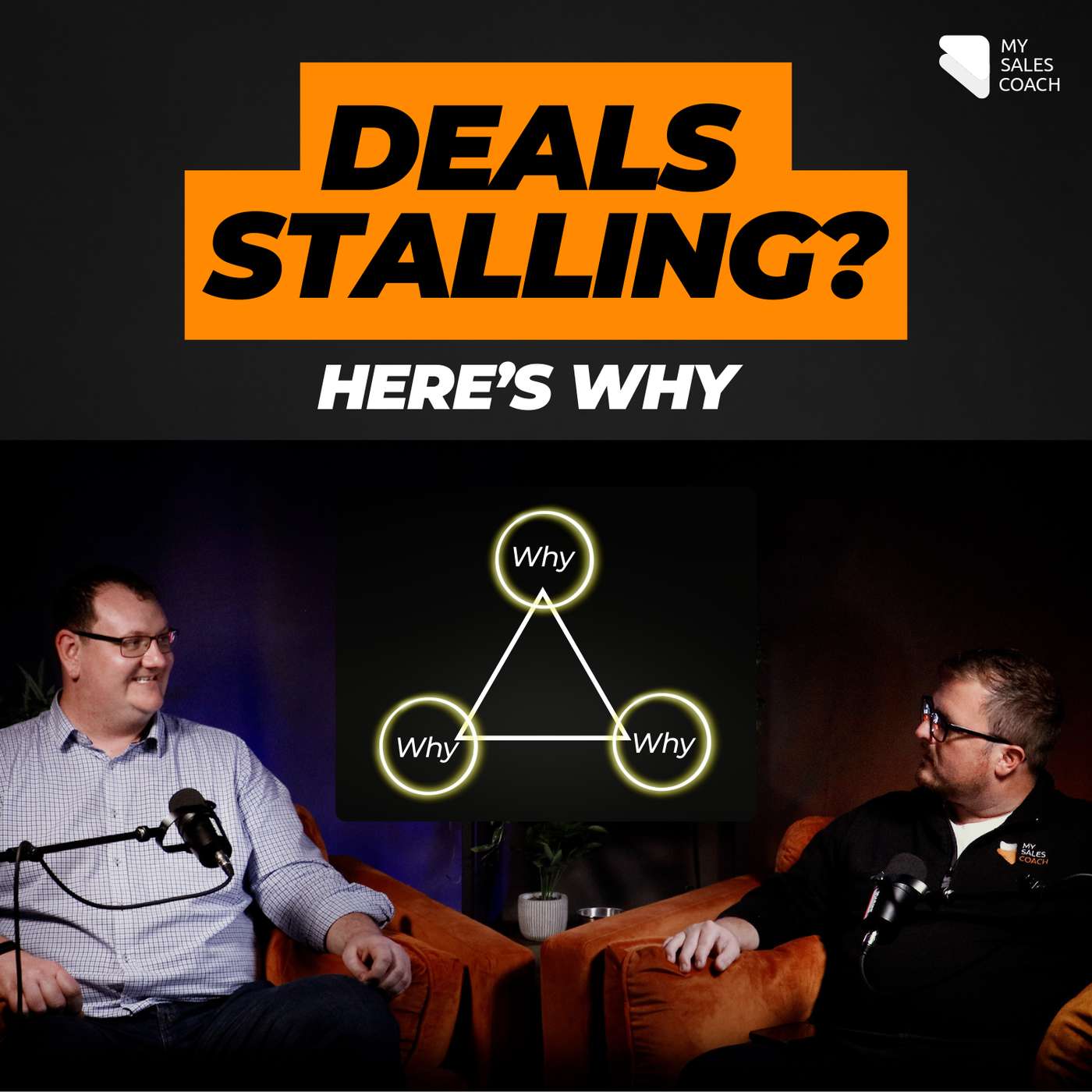 The '3 Whys' Framework Top Performers Use To Close More Deals | EP26 | Scott Cowley88 / 100
 The Two Silent Killers Destroying Sales Careers (And How To Beat Them) | EP25 | Jessica Williams86 / 100
 From The Sales Floor To BBC Traitors Final Four |EP23| Andrew Jenkins70 / 100
 The Marketing vs Sales Blame Game Is Costing You Millions |EP22| Mark Walker87 / 100