I Used To Be Crap At Sales · 2026-05-20 · 1h 5m
Key moments - from our scoring
Substance score
46 / 100
Five dimensions, 20 points each
John Mason, a sales and commercial leadership veteran with over a decade of experience progressing from SDR to business development leadership, explores the core challenge facing high-performing salespeople promoted into management roles. The episode examines why the 'do what I did' management approach fails when applied to leading other top performers. Mason and host Mark Ackers discuss the gap between individual selling competency and management effectiveness, the role of early-career experiences and peer learning at organizations like BT, and how external coaching differs from internal management guidance. Key themes include imposter syndrome across career transitions, the dangers of cookie-cutter sales approaches, and how protective, fair-minded leadership (exemplified by Mason's early manager Matt Charleck) creates psychological safety and discretionary effort. The conversation emphasizes that years in role don't equal development - many salespeople repeat the same year multiple times without growth - and that new managers need specialized external coaching beyond HR checkbox training sessions.
Top salespeople promoted to management default to the 'do what I did' approach because it's what made them successful individually, but selling and managing are fundamentally different roles. They lack specific management training and coaching, leading them to apply sales tactics rather than develop people.
Internal coaching from peers is useful, but external coaching is what teams actually need when someone first becomes a manager. One-day HR training workshops are typically checkbox exercises; meaningful development requires ongoing external support tailored to the specific management context.
Rather than assuming a single coaching style works for everyone, managers must adapt their approach to the time available and the individual needs of team members, avoiding cookie-cutter demonstrations or conversations that ignore what the person actually needs.
By being fair in resource allocation, protecting the team from unnecessary pressure above, reframing criticism constructively, and showing that you believe in team members' potential - which creates loyalty and willingness to go to war for that leader.
When entering a new vertical or product line, salespeople under pressure tend to default to cookie-cutter approaches they've used before, reverting to patterns they'd previously unlearned - which is why ongoing development and adaptation matter regardless of tenure.
Our reviewer’s read on each dimension, with quotes from the episode.
There are genuine structural observations - companies retaining quota when promoting managers, HR owning sales training, wrong metrics driving wrong behaviours - but the episode is heavily padded with platitudes (imposter syndrome, '1% a day', 'it's about others not you') and three embedded ad breaks that kill momentum. The ratio of novel insight to filler is low for a 65-minute runtime.
a team that cannot turn six people that are responsible for inbound, outbound, SDR functions, closing the business and upsell supporting they will just fail at all six rather than be good at one
numbers can be pulled out of thin air, and they aren't unattainable. Don't get me wrong. I am not scared of a big target. I went from Being an individual contributor at BT, dealing in pocket change to being given a million pound target
The core thesis - top performers make bad first-time managers because they clone themselves - is among the most recycled topics in sales media. The hospital A&E analogy is explicitly credited to Rory Sutherland. The parent/children analogy for leadership responsibility, the Ferguson four-year cycle, and the silver-bullet critique of frameworks are all thoroughly circulated takes with nothing counterintuitive added.
you go from being all about yourself to being about others. I guess anyone watching this podcast that has children, when you're single, you don't have children, you're responsible for yourself
do what I did, because that's what made me successful, and that's their approach to management
John Mason is a genuine practitioner who progressed from SDR to head of BD and carried both individual and team quotas simultaneously - credible and relevant. However, his experience tops out at SME-focused BD leadership at a mid-market software company; he is not a CRO or VP at a notable SaaS business with auditable scale, limiting the authority of his observations.
I was not promoted because I was the best individual contributor. I was, you know, jostling for first and second continuously with another, but I was the one that could also lead people, but I did carry an individual contributor target and the team target
I went from Being an individual contributor at BT, dealing in pocket change to being given a million pound target for myself to achieve in a year. The king of the caveat, if we don't get over 500,000 pounds, it's a red mark against us
There are concrete anchors - BT Southwest franchise size (30-40 staff), the £1M target with a £500k floor to keep the franchise, ISO 27001 certification deadline anecdote, named individuals (Matt Charleck, Ben from OMG, Tim Ergo from Toggle Consulting) - but a lot of the evidence is vague anecdote ('a sales leader I spoke to the other day', unnamed Downaplanner company) and the conversion-ratio example (30% to 40%) is illustrative rather than real data.
if we don't get over 500,000 pounds, it's a red mark against us keeping our franchise X number of red marks, and we lose
We were going through our ISO 27,001 certification. So the head of it adopts needed some things... When do you need these? And he went two weeks ago
Mark Ackers demonstrates genuine follow-up instincts - he pushes back on John's 'tactical' framing toward the mental dimension, explicitly invites disagreement on team motivation, and asks for concrete examples of what new managers wrongly prioritise. He is undermined by lengthy self-referential monologues that answer his own questions, three ad breaks that break conversational flow, and a tendency to provide his own anecdotes where a tighter follow-up question would extract more from the guest.
I'm going to say it as I see it, and I'd love you to tell me I'm wrong, because if I'm right, it's a sad reality. I think most sales leaders don't truly understand each individual's motivation
I'm going to change that slightly... I suppose what you were talking about there, though, it wasn't different tactics... I wonder, was it that you might just take your foot off the gas
Computed from the transcript - who did the talking, and the words that came up most.
Episode 27: Why the Best Salespeople Struggle Most When They Become Managers Most sales managers are promoted because they were great at selling. The problem is that selling and managing are two different jobs - and nobody tells you that before you take the role. Download the Modern Revenue Leader's Sales Coaching Manual:
Transcribed and scored by The B2B Podcast Index.
1 - > Mark Ackers: I see this trap all the time. First time managers 2 - > were previous top performers. They now don't know how to 3 - > manage top performers. They want more.
So businesses promote them 4 - > to the manager role that is a completely different role to the 5 - > one that they've been doing. So what they do is they lean on 6 - > well, do what I did, because that's what made me successful, 7 - > and that's their approach to management. 8 - > John Mason: I'd say those two things are definitely far apart. 9 - > Everything you think the job is, is that and more, 10 - > Mark Ackers: they still keep their quota, but now have more 11 - > responsibility.
It's 12 - > John Mason: spooky. It's scary. 13 - > Mark Ackers: Today's guest is someone who spent more than a 14 - > decade in sales and commercial leadership roles, progressing 15 - > from SDR through to leading business development teams. He 16 - > blends leadership, coaching, sales, psychology and real world 17 - > go to market experience.
John Mason, did you used to be crap 18 - > at sales? Yes. What part of your career flashed through your mind 19 - > John Mason: the start of every chapter of my career in sales, 20 - > we expect people to wear many hats, a team that cannot turn 21 - > six people that are responsible for inbound, outbound, SDR 22 - > functions, closing the business and upsell supporting they will 23 - > just fail at all six rather than be good at one. Internal 24 - > coaching is brilliant, but external coaching is the thing 25 - > that teams need when 26 - > Mark Ackers: you first become a manager.
What kind of training 27 - > and coaching did you get? The 28 - > John Mason: company did invest some time, effort and money into 29 - > leadership training, for those of us that were new managers, 30 - > and this is a point about the industry as a whole, in sales 31 - > training that, to me, felt like a HR tick in the box exercise. 32 - > It's just a case of being able to say we did some training, we 33 - > can just hire someone to come in for a half day or one day 34 - > workshop that's going to eradicate all of our problems.
35 - > Why do people still turn to that? We think it's a silver 36 - > bullet. This is the reason why my team is not successful. This 37 - > is going to solve all my problems.
Do you think HR people 38 - > should be arranging sales training sessions? I'd say 39 - > Mark Ackers: sales leaders, coaching. We all know how 40 - > important it is, but we also know finding the time to coach 41 - > as often as needed is a challenge. You often have random 42 - > pockets of time, and you feel like, how do I coach effectively 43 - > to the time that I have in my calendar?
We've created a guide 44 - > for you, whether you've got 10 minutes, 20 minutes, 45 minutes 45 - > or an hour in there. You go to the chapter that you need with 46 - > the time that you have, and it'll teach you how to coach 47 - > effectively. Link in the comments to download So John, 48 - > welcome to the show. Good to see you.
How you feeling good? 49 - > John Mason: Thanks, Mark, Yeah, glad to be here. Thanks. 50 - > Mark Ackers: And I can't help with notes immediately.
Your 51 - > background that looks like, I think, are they called Funko 52 - > Pops? 53 - > John Mason: They are indeed. 54 - > Mark Ackers: Is that the turtles behind you or not? It's 55 - > blurring.
I can't see what are they? 56 - > John Mason: Oh, no. It's Yoda at the top. So it's Yoda at the 57 - > top.
They're out of focus for the camera. So it's Yoda at the 58 - > top. There's some Marvel characters in the middle, and 59 - > some rather jazzy colours and hidden just here is one that my 60 - > team bought me, which says the king of SME sales says, when I 61 - > left my previous role, they got me my own custom phone call. 62 - > Mark Ackers: Wow, which 63 - > John Mason: is nicely a book crest there.
64 - > Mark Ackers: Yeah, very good. And I can see a little bit of a 65 - > Star Wars AT walker. I believe they're cool, but yeah, no 66 - > great. Great to have you on the show, John.
It's always 67 - > interesting to see people's backgrounds and what they share. 68 - > But no big welcome to the podcast. We always kick off with 69 - > a yes, no question. John Mason, did you used to be crap at 70 - > sales?
Yes. And when you heard me ask you that question, and 71 - > you answered yes, what part of your career flashed through your 72 - > mind? 73 - > John Mason: I'd say the start of every chapter of my career. So 74 - > whether it's my first role in sales as an SDR, my first 75 - > promotion, my first change of job, my first change of 76 - > vertical, my first time in management, I think every time 77 - > you start something new, that imposter syndrome creeps back 78 - > in, and you're like, I am crap at sales.
And 79 - > Mark Ackers: I suppose that's an interesting differentiation, 80 - > though there's the imposter syndrome, whereas that self 81 - > limiting belief and the reality. What do you think's going on 82 - > when you say that? Is it the imposter syndrome and it's like 83 - > your own self limiting belief? Or do you think there's a 84 - > reality to that as well.
85 - > John Mason: I think the reality is there for a lot shorter time 86 - > than the imposter syndrome makes you feel like it's there. So 87 - > there are going to be times in your career when you're gonna be 88 - > a look back and think there's one time I remember this 89 - > particular call, this particular demo, where I really messed up. 90 - > And they are the points in which you are crap at sales. But you 91 - > may have that longer lingering thought and feeling that you are 92 - > Mark Ackers: every sales person I speak to has got their own 93 - > story where something has gone horrendously wrong.
If I asked 94 - > you to think back to perhaps your worst moment, where you've 95 - > just made a mistake that now you can look back on and laugh, but 96 - > others could maybe learn from what is probably the biggest 97 - > Howler you've had in your career. Today, 98 - > John Mason: I recall in my previous role, when I was at 99 - > down at planner, sort of I was fairly fresh in the role, 100 - > probably my first three to six months on the phone, and there 101 - > was a big uptake in the number of inquiries we were dealing 102 - > with as a big sort of push.
And I was doing a lot of 103 - > demonstrations, a lot of conversations on an autopilot, 104 - > quite a. Lot, and I fell into this sort of bad rhythm of just 105 - > taking everyone through the same motions. And I remember being on 106 - > a demonstration with a client, trying to convince them to 107 - > upgrade to the latest thing. And at every turn I'd say this 108 - > wonderful new thing, that wonderful new thing, selling the 109 - > features, the thing we shouldn't be doing.
And they're just sort 110 - > of very uninterested, but they're still going to buy it. 111 - > And I couldn't understand what I was doing wrong. And it was that 112 - > I was selling the features, but I kind of got to the end of the 113 - > call with that particular client and said, I think I've just sat 114 - > here and talked at you for half an hour trying to sell you this 115 - > latest thing, when, in fact, you just want to continue and have 116 - > whatever we're offering.
And I on the phone sort of coined an 117 - > analogy or a story, that if you walk into a car dealership 118 - > because you just want the latest hatchback, you just buy the 119 - > hatchback, and then you upgrade to the next hatchback, and then 120 - > you upgrade to the next hatchback, because you're just a 121 - > creature of habit, and you don't really care what features there 122 - > are. I've just sat there and told this person all these 123 - > wonderful new things and latest car, and he's like, I just want 124 - > a car, mate, just give me that car.
Thank you. So that Howler. 125 - > I'd say it. Wouldn't say it haunts me, but I definitely look 126 - > back on it and think that was a point in which I realised you 127 - > can't just cookie cutter your demonstrations or conversations.
128 - > You need to adapt and listen to what the client wants. 129 - > Mark Ackers: And that's interesting. Like, I think a lot 130 - > of salespeople will know that feeling of I'm on a call with 131 - > someone, it's not gone well, and I just needed to end now and 132 - > forget about it and go on my next call. But what you've done 133 - > differently there is you've kind of called it out.
You've said, 134 - > Look, on reflection, it feels like I've just spoke to you for 135 - > half an hour. That wasn't the right thing to do. I can imagine 136 - > that disarms the prospect, because they're not expecting 137 - > you to say that. How.
How did they respond to your brutal 138 - > honesty there? I think 139 - > John Mason: they responded, Well, I think you're right, that 140 - > the fact I was able to think on the fly and turn it around and 141 - > have that self awareness probably comes from a time 142 - > previously in my career where I've made a similar mistake, but 143 - > wanted the ground to swallow me up and wanted to get off the 144 - > call as quickly as possible. So the fact that this happened 145 - > pretty much six years into my career, halfway, halfway into my 146 - > career, could work out how old I was then, meant I would have 147 - > learned a lesson previously and applied it then.
But yeah, 148 - > definitely has been times where I've come off a call as quickly 149 - > as possible, wanting the ground to swallow me up. I 150 - > Mark Ackers: think what's interesting there is you're 151 - > talking about something that's happened six years into your 152 - > career, and I know you'll take this the right way. Many people 153 - > on paper would read that story and think surely in the first 154 - > six years, you've learned that lesson. Not just a feature dump, 155 - > but I think one of the things that I see all the time is 156 - > people confuse years in role for growth and development, and it's 157 - > not the same thing.
So many sales people have the same year 158 - > over and over again, and they're not learning, they're not 159 - > developing, they're not moving on. And it feels like perhaps 160 - > you got to a point where you realised, okay, something needs 161 - > to change. I need to grow and develop. And maybe that was the 162 - > point where you realised that, is that, is that a fair 163 - > John Mason: statement?
I'd say it was a fair statement. It was 164 - > the third vertical, the third area that I was selling into. So 165 - > financial services was not something I'd done for six 166 - > years. I had some selling for six years, but for six years, 167 - > but financial services was new.
Some days I was doing three or 168 - > four, three or four days in a row. So the thing that I slipped 169 - > back into was that cookie cutter demonstration. Just go through 170 - > the motions, get it done. And that's when I lay, sort of fell 171 - > foul of going back to the default, which I had spent years 172 - > unlearning, and let's talk about that early period then, like the 173 - > years that you'd spent learning and trying to undo that.
How did 174 - > you actually end up in sales in the first place? I think I ended 175 - > up in sales, like everyone else ends up in sales. I fell into it 176 - > by accident. I woke up one day, decided I needed a nine till 177 - > five that paid me a salary I couldn't necessarily just keep 178 - > working zero hour contracts and the gig economy as such.
And 179 - > basically applied for the, you know, took the first role that 180 - > would accept me, which, yeah, back in 2012 was my local BT 181 - > business office, 182 - > Mark Ackers: and what was an early John like in a sales role, 183 - > John Mason: a deer in headlights, Bambi on ice. I had 184 - > plenty of soft skills that I took into the role where I had 185 - > worked in bars and done cross sell, up sell. I had done some 186 - > door knocking. I had done some telephone sales, appointment 187 - > setting for like, you know, Windows and things like that in 188 - > my teens and early 20s.
But this was B to B sales, selling 189 - > telecoms. It was like a step up, and there was a steep learning 190 - > curve. So, yeah, deer in headlights or Bambi on ice is 191 - > definitely a good way of describing how I would have been 192 - > in those first 369, months, 193 - > Mark Ackers: and in that time, who helped you? That's 194 - > John Mason: a really good question.
I was quite lucky. So 195 - > BT is a large organisation, but the local office is franchised, 196 - > and so it's small. At the time, we probably had 30 or 40 staff. 197 - > I know the Southwest office now has probably tripled in size 198 - > since I left in 2014 you learn off your peers.
So it's who's 199 - > already there, setting the appointments that are doing 200 - > well, sort of copy. Sort of copy them. But I did have a really 201 - > good team leader, manager that was fantastic at protecting his 202 - > team. You know, if there was some negativity coming down from 203 - > the top table, you know, make more calls, but more 204 - > appointments.
You know, why are you guys not hitting target? 205 - > He'd do very well at the. Absorbing that and then playing 206 - > it back to us in a constructive way for us to be able to achieve 207 - > those targets. So having a really good team leader allowed 208 - > me the space to grow in those two years.
I get the idea of 209 - > absorbing the pressure from above and relying that in a 210 - > message that is softer, more motivating than it is 211 - > criticising. I tell you that, what other traits did this team 212 - > leader have that perhaps has left an impression on you? They 213 - > were always fair. So there's a few, a few mouths to feed, 214 - > whether it was like, you know, in down leads and things like 215 - > that.
So there was always fair in making sure that everyone got 216 - > a fair shot. He didn't share show favouritism, and I probably 217 - > couldn't quantify what it is that he did, but I can quantify 218 - > what feeling I had when I was at work. And it's a case of, I was 219 - > ready to go back for him. I was ready to go to war.
If he said, 220 - > We need to book two more appointments today, I was ready 221 - > to go. So the things that he would have done that would have 222 - > instilled that in me. And so obviously, you know, this is 223 - > going back 12 years, so I can't necessarily think of what they 224 - > were, but I do vividly remember that feeling of way too bad for 225 - > him already to go to war. And I think that's important.
If, if 226 - > your leader can make you feel like that, then that's a really 227 - > important thing. What 228 - > Mark Ackers: was this leader's name? 229 - > John Mason: It was Matt charleck. So, yeah, he was at 230 - > BEC for quite a long time.
I think he's now at OT or Virgin. 231 - > I know those merged. So he's doing something over on that 232 - > side of the the telecoms fence, just so to speak. 233 - > Mark Ackers: And let's say I said to you, oh, I know Matt.
234 - > I'm going to give him a call if I was to call him up and say, 235 - > Tell me about John Mason in those early years. How do you 236 - > think he would describe you? 237 - > John Mason: I was inconsistent. You know, back then I was I'd 238 - > have good days of booking two or three appointments, and then go 239 - > two or three days without booking one.
I just couldn't 240 - > seem to find the strive that. I couldn't seem to find the thing 241 - > that made it click. I remember watching Wolf of Wall Street 242 - > thinking, This must be the secret sauce to how you'd be a 243 - > good appointment setter. So from a performance perspective, 244 - > that's what you definitely say.
But I'm I know that I shared it 245 - > showed a lot of of those skills. That says, If I teach this 246 - > person how to achieve those things, there are other things 247 - > that they can do naturally that will help them in their career 248 - > move forward. 249 - > Mark Ackers: And what do you think the difference was then, 250 - > on days where you might set two or three appointments, and then 251 - > days where you where you wouldn't was it a tactical 252 - > difference in those days or a mental difference in those two 253 - > days?
254 - > John Mason: Tactical? I think back then, it was just sheer 255 - > luck. This is 2012 2013 14, the days of just do 100 dials a day. 256 - > There's no full enrich LEM list.
There's no sequences. It is just 257 - > pick up. There's no parallel dialers or anything like that. 258 - > It's just pick up the phone manually, type in a number, and 259 - > do that 100 times in a day with as little research as possible.
260 - > I think that was a very shotgun scatter coach, scattergun 261 - > approach to appointment setting and to sales development roles. 262 - > And I think it was brilliant to have learned how not to do 263 - > things and to have that experience to cut my teeth, but 264 - > people coming into the industry now, they've got a lot more 265 - > support behind them to not get to that target by chance, but to 266 - > actually get there tactically, 267 - > Mark Ackers: I'm going to change that slightly, and I'm going to 268 - > do that in a way which I think is going to be a really good 269 - > conversation.
John, and this comes from a place of working 270 - > with and managing SDRs for a long time now, the tactical side 271 - > of things, I get it, if you do something different one day to 272 - > the other, that can impact results. I suppose what you were 273 - > talking about there, though, it wasn't different tactics. It was 274 - > pick up the phone. Have 100 dials a day.
I get you might say 275 - > and do things differently, but your point about in today's day 276 - > and age, there's like, full and rich cognism All these sort of 277 - > you know, we've never had more technology at our fingertips, 278 - > but that technology wasn't different for you day to day. So 279 - > I wonder, was it that you might just take your foot off the gas 280 - > a little bit because you've had two or three appointments a day 281 - > before, you don't feel like you need to achieve that the next 282 - > day, and perhaps you are just a little bit more relaxed.
You're 283 - > not desperately trying hard. Do you think, like, mentally? 284 - > Because I think tactically, when people looking to improve the 285 - > form to sales team, they focus on those tactics. But I feel 286 - > like most of it's actually the mental side of sounds like, 287 - > obviously you need to know how to do things.
You need to know 288 - > how to say, what to say, the cool structure, etc. But I think 289 - > your answer there would tell me it was more mental than 290 - > tactical, because you were doing the same thing each day. Talk to 291 - > me about that. 292 - > John Mason: Yeah, I think I probably didn't actually 293 - > describe it as well.
I didn't know what I was doing. So it was 294 - > sheer luck if I was booking appointments, because there was 295 - > not necessarily a huge amount of science behind it, other than 296 - > pick up the phone and make those dials. So now we would better 297 - > define an ICP. We would create sequences.
We would be more 298 - > targeted, methodical in our approach, so that we can take 299 - > what works and repeat that. I didn't necessarily know what was 300 - > working, so I didn't necessarily know how to repeat it, and I. 301 - > 100% agree with why you think the side of it would be mental, 302 - > and I've seen that as well in the near decade that I've worked 303 - > with, SDRs and AES, training, coaching, managing, working 304 - > alongside. But I do know, from a perspective, when I was working 305 - > at BT, you couldn't take your foot off the gas.
You weren't 306 - > allowed to, I definitely felt like there was a degree of 307 - > ruling by like an iron fist and fear. You know, there, there was 308 - > no coasting. You know, you did need to hit two appointments, 309 - > three appointments a day. And if you didn't, you know, you're in 310 - > for a bit of a rollicking.
So I think the mental side of it 311 - > would be around the that imposter syndrome creeping in. 312 - > You know, it's not going well. I'm at lunchtime, I haven't 313 - > booked an appointment, and then you start the self doubt, and 314 - > that will probably carry through into your course, so that 315 - > mentally, I think, would be where your subconscious is 316 - > probably actually affecting your dials in the afternoon, for 317 - > example. 318 - > Mark Ackers: So that's, yeah, that's interesting, because that 319 - > that to me, if you get to lunchtime and you've not had any 320 - > success, you start to count down the hours that you've got left, 321 - > and you start to become more attached to the phone calls 322 - > you're making and the outcome.
But again, you know, that's that 323 - > look. Could you argue that's tactical, maybe. But again, 324 - > that, to me, screams mindset and being able to rise above what 325 - > situation you find yourself in. I've enjoyed that part of the 326 - > conversation.
John, when I know BEC was was in conversation with 327 - > you about organising this this episode, you shared some really 328 - > interesting thoughts, and we agreed that we'd feature, sorry, 329 - > we agreed that we'd focus this episode on that first time 330 - > manager role that this is one of the biggest challenges that the 331 - > sales industry has, right? You get top performers, they want 332 - > more. So businesses promote them to the manager role, and that is 333 - > a completely different role to the one that they've been doing.
334 - > And there's so much we could talk about here, and this is 335 - > kind of what I want to get into, but I see this trap all the 336 - > time. First time managers were previous top performers. They 337 - > now don't know how to manage. So what they do is they lean on 338 - > well, do what I did, because that's what made me successful, 339 - > and that's their approach to management, and the company 340 - > doesn't support them in that transition from quota carrier to 341 - > manager, and actually, far too often, they still keep their 342 - > quota, but now have more responsibility, and they've got 343 - > to navigate so much, not not just learning how to interview, 344 - > recruit and onboard, how to have one to ones, how to use the tech 345 - > stack in a reporting sense, how to forecast, how to have 346 - > difficult conversations.
They've also got to go from being a 347 - > friend to being a boss, and it's a huge step up. And like, like 348 - > you said in your notes when we were swapping some emails, most 349 - > sales people don't become managers by accident. We all 350 - > accept that they do choose it because they feel like it's the 351 - > next step, more money, more status, career progression. And 352 - > companies say yes, because you're a top performer, we don't 353 - > want you to leave.
We'd rather promote you than bring in 354 - > someone external. It looks like we're a great employer. We are 355 - > developing people, but yeah, the issue that nobody talks about is 356 - > the reality of the job. Talk to me about your experience when 357 - > you first started thinking about leadership, what did you think 358 - > the job actually was going to be and what was the reality?
359 - > John Mason: Yeah, I'd say those two things are definitely far 360 - > apart. A lot of professionals not just sales, but sales very 361 - > much so your top ICS tend to become your your managers, 362 - > because of the status thing, everything you think the job is, 363 - > is that and more. And you probably hard. You probably hold 364 - > things that you think are important in the role, that 365 - > aren't you think they're more important than they actually 366 - > are.
Yeah, you touched on quite a few really good points there. 367 - > So you're going from you know, you're now managing your peers 368 - > and your friends. How do you do that? How do you still build 369 - > that relationship where they will, you know, go to bat for 370 - > you.
How do you make them better without trying to make them four 371 - > or five clones of yourself? What support do you get from the from 372 - > the business? I remember vividly when I took over my first 373 - > leadership role, it was a very much a firefighting moment. I 374 - > was trying to fix the things that hadn't been done because 375 - > there was, you know, no one at the helm for a small period of 376 - > time.
I was trying to fix the things that needed to be done on 377 - > the day to day basis as they were coming in. And, you know, I 378 - > was a few weeks or months away from planning for next year. So 379 - > I try to fix the future. I thought some of those things 380 - > were really important, and little did I know that many more 381 - > would come, you know around to need urgent attention, because 382 - > you step into leadership and you're managing your team, but 383 - > now you have this level of exposure to the rest of the 384 - > business.
So there are other people in the business that now 385 - > need things from you and need to do things that you weren't 386 - > necessarily expecting. So I remember when I was promoted to. 387 - > Become the team leader, the head of business development. We were 388 - > going through our ISO 27,001 certification.
So the head of it 389 - > adopts needed some things that had been sort of left in the 390 - > inbox tray. And I said, When do you need these? And he went two 391 - > weeks ago. So I've just been stepped into a role.
I've got 392 - > all these new things that I think are super important to 393 - > deal with, and I've just been given a deadline of something 394 - > that I didn't even know was on the radar. So it is a it's 395 - > spooky. It's scary. When 396 - > Mark Ackers: you first become a manager, what kind of training 397 - > and coaching did you get on how to be a great frontline manager?
398 - > John Mason: I had a really mixed bag in my previous employer done 399 - > that planner. When I was made head of I was really blessed 400 - > that the previous person who was my manager, allowed me exposure 401 - > to her job and to do things on her behalf, to kind of, I guess, 402 - > Tee me up ready to take over in the event that she was to leave. 403 - > I was then promoted, not because I was the best individual 404 - > contributor. I was, you know, jostling for first and second 405 - > continuously with another, but I was the one that could also lead 406 - > people, but I did carry an individual contributor target 407 - > and the team target and the responsibility of basically 408 - > heading up the department with the CRO and the planning and 409 - > everything else that comes between that the company did 410 - > invest some, some time, effort and money into leadership 411 - > training for those of us that were new managers, getting sort 412 - > of consultants to come in and do workshops and things like that, 413 - > to me, and this isn't a point specifically about my previous 414 - > employer.
This is a point about the industry as a whole, in 415 - > sales training that, to me, felt like a HR tick in the box 416 - > exercise, as opposed to a structured need for training 417 - > something you'd be awful too familiar with my sales coach. 418 - > Plenty of you know, people will come to you looking to training 419 - > for their sales team, and it's just for their tick box 420 - > exercise, rather than actually trying to develop that manager 421 - > to an end goal as part of their career, as part of their 422 - > development, etc.
It's just a case of being able to say we did 423 - > some training. And I think that may have been the case, and I 424 - > know that is the case for a lot of other businesses. 425 - > Mark Ackers: I think, sadly, the vast majority. Let's go back to 426 - > then, to that strategy of teeing you up.
I'm a big fan of that. I 427 - > remember when I was in SDR, I wanted to become an AE, and I 428 - > got some exposure in the sense of, I got to run some events 429 - > where I sold tickets. Then run events. I got to learn to speak 430 - > to people.
And as I say, I was selling those tickets to an 431 - > event in London, and that was my first taste. Then I got to if I 432 - > overachieved on my quota of booking meetings, I got to spend 433 - > a day a week trying to be an AE and take those first meetings, 434 - > and then as a, as a, an AE, I made it my, my purpose in every 435 - > one to my boss to say, can I take that off your plate? Can I 436 - > take that off your plate? And I used to get all the crap jobs 437 - > that they didn't want to do, but you do them well, and then you 438 - > get more responsible, and you get more exposure and and I 439 - > really believe in that strategy, not just promoting someone into 440 - > a new role.
And it's like day one, this is all you do. I think 441 - > you have to give that soft exposure and those those 442 - > opportunities which seem to work really well. That sounds like 443 - > that will happen to you as well, which is great when you say 444 - > about getting some tick box training and workshops? Yeah, I 445 - > sort of in the back of my head, just thought, Well, we both know 446 - > as as does anybody listen to his podcast?
Right? No, nobody 447 - > listens his podcast. Will be of the opinion, well, that sounds 448 - > great. Just do a workshop and training, because we're all 449 - > smarter than that.
We know better than that. But why? Do 450 - > you think that people still in 2026 believe that we can just 451 - > hire someone to come in for a half day or one day workshop, 452 - > and that's going to that's going to eradicate all of our 453 - > problems? Why do people still turn to that?
454 - > John Mason: I think it's the path of least resistance. I 455 - > think it's the easiest thing to do to satisfy an, you know, a 456 - > question with the answer that we've done training, but the 457 - > question doesn't probe deeper. So I think in companies in 458 - > general that make this mistake, and frequently make the mistake 459 - > and don't necessarily learn from it, I think they are the ones 460 - > that don't probe deeper at the SLT, C suite level, when asking 461 - > those questions, you know, why are we delivering training?
What 462 - > are we trying to do? What's the positive outcomes we're trying 463 - > to enact? Also goes to commission plans as well. You 464 - > know, we put this commission plan together, what behaviours 465 - > are we trying to get the sales reps to do?
I think if we don't 466 - > challenge the why, the what, the when, the where, the WHO, and we 467 - > just accept the first answer rather binary and linearly, we 468 - > will continue to make those same mistakes and sales, sales 469 - > professionals, AES, SDRs, leaders will continue to, I 470 - > guess, be held back by their inability to evolve and to take 471 - > that step forward. The 472 - > Mark Ackers: other thing that you said that just made. Maybe 473 - > wins was HR booked the training effectively.
Do you think HR 474 - > people as great as I'm sure they are at their jobs should be 475 - > arranging and booking sales training sessions? 476 - > John Mason: No, they are great at their job, and they're great 477 - > is people in human resources, just like I don't think finance 478 - > and operations should be anywhere near commission plans. 479 - > But in plenty of companies, that is the case. I think sales 480 - > leaders, you know, team leaders, head of business development, 481 - > sales director, CRO Chief Sales Officer, Chief Commercial 482 - > Officer, whatever they may be, they are the people that own 483 - > their domain.
And I think they are the ones that should be 484 - > involved in the training for their their teams and the 485 - > responsibility and power should divulge down from the CRO all 486 - > the way down to the team leader of an SDR, 487 - > Mark Ackers: you've signed your team up to another E Learning 488 - > course. You've hired a trainer to come in and run a workshop. 489 - > But guess what? Six months later, pipeline and performance 490 - > is still lumpy.
My sales coach turns learning into doing. We 491 - > evaluate everyone on your team, we identify with real data the 492 - > critical gaps that are holding them back, and then we remedy 493 - > it. We match each person to their dream coach and provide 494 - > consistent one to one coaching to help them fulfil their 495 - > potential and hit the number less one size fits all, 496 - > training, more personalised support, which results in the 497 - > growth of your team. That's predictable sales execution.
498 - > That's my sales coach. I think that's one of the big shifts 499 - > that I've seen in the last sort of 20 years. Though, I think if 500 - > I go back to the first 10 years of my career, lots of companies, 501 - > particularly like the FTSE 100 you can, you can see who the 502 - > CEOs are. It was a lot of sales people with sales backgrounds.
503 - > And then the 10 years that followed, it seemed to change, 504 - > to be more CFOs and financial people. And I think you do just 505 - > run the company completely differently and have a different 506 - > outset to it. Let's, let's put something out there for anyone 507 - > that's listening to this podcast that thinks the next role for 508 - > them is to be a sales manager. They perhaps feel like that's in 509 - > their grasp.
First of all, what do you think they believe the 510 - > job to be? So just imagine being that IE, I've got a sales 511 - > manager role in my grass. What do you think they believe that 512 - > role to be like on a day to day basis? 513 - > John Mason: Oh, gosh, it could be so many things.
Some people 514 - > probably just think it's a title and some power, and they are 515 - > people that shouldn't be promoted to that position. 516 - > Others may just think that they're now responsible for a 517 - > bigger target, because they're looking after 345, AES, 518 - > hopefully plenty of them realise it's now my responsibility to 519 - > make these people better at their job so that they can 520 - > progress in their careers. And I am commercially incentivized. 521 - > The better they do, the better I earn.
The latter one's one, I 522 - > hope is the one, but it's probably the middle 523 - > Mark Ackers: one. 524 - > And let's talk about the realities. Let's imagine again, 525 - > you're gonna create the perfect advert that is a true 526 - > representative of what it's like to be a sales leader. What do 527 - > you think those people that have that job in their grasp need to 528 - > know about the reality of the role?
529 - > John Mason: Yeah. So what is the true purpose of a sales leader? 530 - > You go from being all about yourself to being about others. 531 - > I guess anyone watching this podcast that has children, when 532 - > you're single, you don't have children, you're responsible for 533 - > yourself.
When you have children, you're now responsible 534 - > for other human beings, and you then put them first over 535 - > yourself. I think sales leadership is very similar. I 536 - > think you need to realise that it's no longer about you, it's 537 - > about the collective team and those individuals. So anyone 538 - > looking to go into leadership needs to very quickly be able to 539 - > shift from that mindset about being me and it's it's then 540 - > about them.
I think 541 - > Mark Ackers: that's a really good analogy, and as a father of 542 - > two and a sales leader, that probably explains why I'm 543 - > exhausted all the time you talk about being responsible for 544 - > making the team better, let's have a really open conversation, 545 - > because I think this is one of the things that sales leaders 546 - > need to accept when you think of all the things a salesperson 547 - > needs to be good at in 2026 and by the way, that list has 548 - > changed dramatically in the last two years.
Is it actually fair 549 - > to think that a sales manager has all the domain expertise and 550 - > knowledge to make their team strong across all areas and 551 - > disciplines? 552 - > John Mason: I will say yes in theory, but no in practice. One 553 - > of the things I think we struggle with in sales as well 554 - > is we expect people to wear many hats, so in lots of companies, 555 - > even ones that have grown, you know, your A's may be doing 556 - > outbound, they may need to have SDR skills.
They may be doing 557 - > upsell as well, so they need CSM skills. So to expect, without. 558 - > Are like specifically defining, you know, the manager and their 559 - > role. I think they can fall foul of that target of making them 560 - > better in an organisation or structure where it's a case of 561 - > you are in charge of the outbound team make them better.
562 - > I think providing there is the additional support, training, 563 - > coaching, mentoring, for that new manager, then we do have the 564 - > technology in place, the understanding of the human brain 565 - > and psychology to be able to make those people better. 566 - > Everyone has a limit, though, I'd say it's the same with 567 - > football. You know, the level of game that's played today in 568 - > football is very different to level of game that was played 20 569 - > years ago, 30 years ago.
But not everyone has the ability to 570 - > become a Christian art or an owner or a messy but everyone 571 - > has the ability to become, you know, 110 120% better than that. 572 - > Well they were, and a lot of people say, just make yourself 573 - > better, 1% a day at a time, and that compounds over time. So I 574 - > think there's a bigger ceiling that we can reach for but there 575 - > needs to be that, that structure in place, and that understanding 576 - > that you cannot a team that cannot turn six people that are 577 - > responsible for inbound, outbound, SDR functions, closing 578 - > the business and upsell supporting they will just fail 579 - > at all six rather than be good at 580 - > Mark Ackers: one.
Yeah, I think the important caveat that you 581 - > mentioned was if they have the right training and coaching and 582 - > structure around them, which, of course, we know, unfortunately, 583 - > isn't true. It just I had a conversation the other day. I 584 - > speak with a sales leader. They love the idea of my sales coach.
585 - > They have told me my team is not going to hit the number that 586 - > we've been set this year. They are new to the role. They're 587 - > like, kind of green. There's a lot they need to learn and do.
588 - > And they shared with me many examples across the sales 589 - > process where they're struggling, like qualification, 590 - > discovery, getting the right, decision making, criteria, 591 - > understanding how they're going to buy, budget, all of this 592 - > stuff. And it'd been four weeks since we last spoke, which is 593 - > always obviously a warning sign in general. But got on the call 594 - > and they said, I've still not asked my boss if we could buy my 595 - > sales coach.
And I asked why, and they said, I feel like the 596 - > answer is going to be it's your job to fix this, and I 597 - > understand that it is your job to fix this, but doesn't mean 598 - > you have all the answers. So I said to the sales leader, I 599 - > said, Look, when you think of all the things that you ask your 600 - > sales team to do, what part are you weakest at? And by the way, 601 - > everyone's got a part of the way it's at. And he said, 602 - > negotiation.
I said, Okay, so how are you going to get the 603 - > team better at negotiation if that's your weakest part and you 604 - > struggle with that? And then we spoke about how that's one of 605 - > the problems. They're leaving money on the table. They're 606 - > negotiating too early.
They're discounting against themselves. 607 - > I was like, that's what you need to be saying to your CEO. I 608 - > don't have all the answers. I want to learn and develop.
How 609 - > can I do that? It's about working with someone that is 610 - > stronger in that in that area, and that's obviously where a 611 - > sales manager should be able to help. In a lot of cases, they 612 - > they should be stronger, because they've been a top performer, 613 - > and they've been promoted all of that stuff. But the reality is, 614 - > the way in which the landscape is moving and the pace that it's 615 - > moving at, I think expecting a salesy to have all the answers 616 - > really difficult, particularly when they've not done the role 617 - > before.
And this is obviously kind of what you specialise in, 618 - > right? It's about helping people that are now managers know what 619 - > to do. And let's talk about that, right? You make the play 620 - > in your LinkedIn.
It's about knowing what to do on a Monday. 621 - > What does that mean in real life, not on LinkedIn. Help me 622 - > understand you've got a first time manager in front of you. 623 - > What does that really mean to them?
624 - > John Mason: It could be incredibly daunting to be a 625 - > first time manager, and if you're in a very reactive 626 - > environment, you're firefighting, essentially making 627 - > it up as you go along. You don't know what you're going to do on 628 - > Monday, you don't know what you're going to do on Tuesday. 629 - > You're just dealing with whatever shouts the loudest, and 630 - > it's about being able to structure what you need to deal 631 - > with, fixing the problems that the team have, you know from the 632 - > past and the day to day, planning for the future, 633 - > developing the team and developing yourself.
You spoke a 634 - > moment ago about that example of a prospective client for my 635 - > sales coach, that happens way too often. Hence, you guys have 636 - > a business. I do also think that sometimes promoting a team, new 637 - > person into a manager position, if the business thinks they're 638 - > going to solve the problems. And you know, if a sales leader came 639 - > to me and said, I'm not going to hit my number this year, I'd 640 - > sort of put it back and go, like, is your first start?
Is 641 - > your number actually physically attainable? Like, if I got you 642 - > the best SDRs and AES in the world with the current resources 643 - > that you have, the tech, the structure, everything else could 644 - > they hit that number. Because that's also a thing that I don't 645 - > think sales leaders challenge enough, is that sometimes 646 - > numbers can be pulled out of thin air, and they aren't 647 - > unattainable. Don't get me wrong.
I am not scared of a big 648 - > target. I went from. Being an individual contributor at BT, 649 - > dealing in pocket change to being given a million pound 650 - > target for myself to achieve in a year. The king of the caveat, 651 - > if we don't get over 500,000 pounds, it's a red mark against 652 - > us keeping our franchise X number of red marks, and we 653 - > lose.
So, you know, although my target was a million, I had to 654 - > get over by 500 grand by hook or by crook, it was inevitable. Can 655 - > the best of the best do that? And if the best of us can't do 656 - > it, the business needs to have an honest conversation. But 657 - > then, how do you get the most out of those reps?
In that 658 - > example that you were speaking about, he was talking about them 659 - > not being able to do X, Y and Z, internal coaching is brilliant, 660 - > but external coaching is the thing that teams need. They need 661 - > both because they're not experts. I'm not a cold calling 662 - > experts. Why I'm not an SDR coach.
I could do cold calling 663 - > Absolutely I am, probably better than some, but I would always 664 - > play to my strengths. And I think when you're a new leader, 665 - > you need to very quickly identify those strengths, 666 - > identify those weaknesses, and then ask for support on those 667 - > weaknesses, exactly as you said, going back to your your boss and 668 - > saying, I don't want my sales coach to do the heavy lifting of 669 - > the training you expect me to do and the coaching I want my sales 670 - > coach to fix the problem the team have with negotiations, 671 - > even I could learn something about negotiations so I can then 672 - > better train the next generation of leaders.
But for now, I need 673 - > help. It's an area I'm very passionate about. Obviously, I 674 - > feel like I was a bit of an accident manager myself. And in 675 - > addition to that, I know plenty of other sales professionals 676 - > that have gone on to have fantastic careers that were 677 - > accident managers.
You mentioned you wanted to be an AE, you were 678 - > proactive in it. I know an SDR that wants to be an AE, that 679 - > became an SDR manager because the company said, Oh no, no, no, 680 - > no, you. We're not going to promote you to AE. We're going 681 - > to make you the leader of the SDRs.
We need you to be in Team 682 - > Leader of the SDRs like I don't want to manage people. And it 683 - > happens far too often for reasons we've discussed so far. 684 - > One of the biggest reasons is businesses can't afford the 685 - > double hit. You can't afford to take your top forming SDR and 686 - > their performance out of plan.
So you try and keep them in that 687 - > world or your AE, you can't afford to take their number out 688 - > of plan, but they want to be a manager, so you keep the quota 689 - > and ask them to manage. But it's just, it's just unfair. I think 690 - > one of the interesting things you spoke about was about how 691 - > sales leaders have to also think about the future. That's 692 - > Mark Ackers: really hard when every quarter you start at zero, 693 - > and you're always measured by your number, and you live month 694 - > to month.
I kind of compare it to, you know, you use the 695 - > football analogy earlier. I think most football managers get 696 - > less than a season, or maybe a season a half. Whatever the stat 697 - > might be, we all know as football fans, is a short amount 698 - > of time. How are they meant to focus on the Academy and the 699 - > youth team and developing, which is, you know, if you look at 700 - > longevity in the role that's what if you take, you know, 701 - > arguably the very best ever.
So next, Ferguson, it's because he 702 - > was at helm for 27 years, and he used to work on four year 703 - > cycles, always refreshing the team every four years, and a big 704 - > part of that was the Youth Academy and the pipeline in the 705 - > future. As a sales leader, you can't be looking at if you've 706 - > had three bad quarters in a row, you can't say yep, it'd be fine 707 - > in two years, because we're doing this development and 708 - > coaching, and I'm spending time with the team, and I'm listening 709 - > to calls, and we're doing live training and workshops.
You 710 - > can't do that, and I think that's the sad reality. So sales 711 - > leaders get beaten up by the system, and they focus on the 712 - > classics, like they obsess over pipeline and micro management, 713 - > and they become hero managers that join calls and try to save 714 - > deals or win them single handedly, and, you know, or and 715 - > they avoid, like, those hard conversations that they need to 716 - > have internally. I think the other thing that you said was 717 - > interesting is about the disconnect from where the number 718 - > comes from.
I know you said it sort of flippantly, but it like 719 - > your words were. It can feel like the numbers come out of 720 - > thin air. The reality is, it's not come out of thin air. It's 721 - > just not been shared properly with the sales leader.
You know, 722 - > when you set I don't like the word target in sales because it 723 - > that's something you aim for. I do think the word quota is the 724 - > right word to use. I know that when I set my team's quota for 725 - > the year that has been reverse engineered against the plan that 726 - > we've created, and everything centres around that plan, from 727 - > hiring, spend, tech stack, budgets, recruitment, all of it. 728 - > So when a manager gets given a number, they feel like that's 729 - > unachievable, or that's been pulled out of thin air.
That's 730 - > because the plan hasn't been properly shared, and there isn't 731 - > that belief that they can get there, but it would be carefully 732 - > worked out like people will spend. Weeks and weeks, maybe 733 - > months and months, putting together the plan and the quotas 734 - > that go alongside it. But yeah, it feels like what we're 735 - > starting to talk about here is some of the emotional burden 736 - > that you can feel as a sales leader. Let's talk about that, 737 - > right?
You know, the pressure that you can be, the imposter 738 - > syndrome, the, no doubt, the burnout that people feel, and 739 - > what's the emotional bit of leadership that nobody warned 740 - > you about before you take the job? 741 - > John Mason: I guess the emotional bit of leadership is 742 - > you're you're now invested in your team's real motivations. So 743 - > if anyone says they're motivated by money, the chance are you can 744 - > actually pinpoint down further, why they're motivated by money.
745 - > What it is about money that motivates them. They could be a 746 - > family man. They want to make sure that their wife can not 747 - > have to go back to work after their second child. They want to 748 - > get a bigger house.
They're motivated by family, not by 749 - > money. They just need money, which is why they're in sales. 750 - > You are now responsible for other people's personal and 751 - > professional aspirations. I always used to think to myself, 752 - > I want to make sure the people that I lead are better 753 - > professionally and personally.
For every year that I manage 754 - > them, they have to move forward. That is a burden that if you're 755 - > unable to leave your work at the door when you go home, be it 756 - > virtually or in person, that can be can be quite a burden that 757 - > could keep you up at night. That's one of the things that 758 - > you're not necessarily prepared for in leadership, is that 759 - > you're now responsible, in a way, for those people and 760 - > helping them achieve their goals.
I 761 - > Mark Ackers: think there's a couple of interesting things to 762 - > talk about there, so I'm just going to say it as I see it, and 763 - > I'd love you to tell me I'm wrong, because if I'm right, 764 - > it's a sad reality. I think most sales leaders don't truly 765 - > understand each individual's motivation. They might 766 - > understand it at a headline level, or they want to earn more 767 - > money, or they want to buy a house, or, well, they're going 768 - > to go travelling, but I think that's the best that it normally 769 - > is the headline level of the motivation.
I don't think, and 770 - > it's harder in a remote world, which, you know, lots of people 771 - > operating or hybrid, but yeah, I'm gonna say, as it is. I think 772 - > most sales leaders would say, Yes, I know what my team are 773 - > motivated by. If you really pushed on it beyond the 774 - > headline, I think they'd struggle. Do you think that's 775 - > fair, or have I got that wrong?
776 - > John Mason: I think I think that is fair, and I think it actually 777 - > goes to a bigger and wider issue. The same surface level 778 - > answer without probing could be so for pipeline, yeah, you know, 779 - > sales leaders think they know what's going on in their 780 - > pipeline, but they don't. They haven't probed deep enough if a 781 - > company doesn't pass down the target structure correctly, the 782 - > quota structure correctly. It's because when you know the top 783 - > levels pass it down to the second level, the second level 784 - > hasn't asked an important why question.
So when it gets down 785 - > to the fourth level, they've got no idea. I think especially in 786 - > sales, we need to be more inquisitive and ask why, and 787 - > probe further and not take everything at face value, 788 - > because there is a underlying cause. I'm motivated by success. 789 - > Money is a byproduct of success.
I know that I'm motivated by 790 - > success because if I was in a role where we were not hitting 791 - > quota, and I was feeling miserable for missing quote all 792 - > the time, and someone offered a pay rise to keep me because I 793 - > could leave, you know, and get 20 something else. Well, I 794 - > wouldn't stay to fail. I'd rather leave earn less money and 795 - > be successful. So if you don't know what your own individual 796 - > motivator is and the level of depth that you can give to that 797 - > answer, how would you expect to be able to question your team?
798 - > You'll just take the top level answer, which is not just about 799 - > their motivations. It's the sad reality of of discovery, right? 800 - > You know, being able to go further, we should all learn to 801 - > be detectives that have to solve murders. I think that would 802 - > help.
803 - > Mark Ackers: I am. I love that analogy. I've said many times I 804 - > love watching, particularly the BBC and ITV have done great 805 - > detective shows, and I love the interrogation scenes because I 806 - > feel like they just ask great open ended questions to get to 807 - > the truth and to solve the crime. And one of my analogies 808 - > in the recent book that I wrote my colleague, rich Smith, 809 - > deconstructing discovery, we have this golden minute.
And 810 - > again, I took that from a crime scene that Trevor McDonald was 811 - > exploring, and they speak about the golden hour, how you have to 812 - > solve the case, or get as much as you can the first hour, 813 - > because what you solve there really links the outcome. So 814 - > yeah, you tell you, right, we have got to be detective. You've 815 - > got to have that natural ability to keep asking questions, even 816 - > when you feel like you've asked enough. And I remember there's 817 - > been times in my career where I feel like I know everybody in 818 - > the team's personal challenges and frustrations outside of 819 - > work.
And whilst that can be a heavy burden to have, you have 820 - > to learn the school to disconnect from it and leave 821 - > leave work when you do etc. But yeah, your job is to help them 822 - > as human beings, not just sales people. But I think one of the 823 - > other mistakes that you see sales leaders make, and I was, I 824 - > was really guilty of this earlier on in my management 825 - > career, was, let's remember why sales managers are in that role. 826 - > Most of the time.
It's because they were top performers and 827 - > they've been promoted. Top performers are typically 828 - > ambitious. They're they crave success and all that stuff, 829 - > right? They want it.
You can be guilty of assuming everyone is 830 - > as motivated as you are. They have the same drive, the same 831 - > moment, same motivation. It was only when I took and we offer 832 - > these at my sales coach, but I took our I took our sales DNA 833 - > assessment, and it's, it's incredibly in depth. It's like 834 - > 45 page report on who you are as either an individual contributor 835 - > or a manager or a manager of managers.
And there was this 836 - > page on how I motivate the team, and it basically, in black and 837 - > white said, You do not understand how your team are 838 - > motivated. You assume everyone's motivated like you, and they're 839 - > not. And that was a bit. That was a big shit moment, and I 840 - > made it my mission, therefore, to go and really understand 841 - > motivations and drivers.
And you know how they like to spend 842 - > their time outside of work, and I think, but again, it's hard to 843 - > do that when you manage big teams and you're under pressure 844 - > and you're remote, and you're new to the role, and you've got 845 - > a quota. There's so much 846 - > John Mason: going on there. Here's what I'd love to hear 847 - > from you, though, right? What as a sales leader can you do to 848 - > really get through all of that crap?
Like, how do you get 849 - > through all of that on a day to day basis. What are the ways in 850 - > which you can identify the team, understand their motivations, 851 - > put the plans in place, build for the future, not, not not 852 - > carry a quote like there's so much there. Help me understand 853 - > what is your playbook? You've got a first time manager in 854 - > front of you.
They don't know what to do on a Monday. How do 855 - > they bring it to life? How do you bring to life? Even caffeine 856 - > and sarcasm would be the two things.
No, it's a great 857 - > question, because there's a lot to do. I think prioritisation is 858 - > key. So if you are just stepping into a new manager, work out the 859 - > input, yeah, the important things that needs to be done. 860 - > Now, get a real grip on your diary.
Put in dedicated time 861 - > that's you know, it can be rescheduled in the same week for 862 - > conflicts, but it is dedicated to your team, whether it's a 863 - > Monday morning catch up or Friday afternoon before you go 864 - > off for the weekend, time together, one to one separate 865 - > your pipeline reviews from time with the team. So instead of 866 - > doing an hour on pipeline, do 30 minutes on pipeline and 30 867 - > minutes on them. Have they got anything they want to bring to 868 - > the conversation?
Ensure that you're getting the most out of 869 - > your one to ones with your your manager, because they are the 870 - > person that's supposed to help you move forward. These are all 871 - > things that I'm trying to put down into into a playbook and a 872 - > framework that isn't just in my head, because you know, you'll 873 - > know this as well from from forming your business. It can be 874 - > very much a case of, I just, I just do it right, and that will 875 - > be the thing that I'm looking forward to most, to finishing, 876 - > is that blueprint of what's the first man, first time manager, 877 - > need to do in their first, second, third, fourth month.
So 878 - > if they were to receive coaching from me or from anyone else, 879 - > whether they did it for 123456, months, they know what they're 880 - > able to achieve at the end of that period. And the chances are 881 - > the things they think they have to do are things they have to do 882 - > later, not immediately, there'll be more pressing and burning 883 - > issues to deal with. Straight off the bat. Can 884 - > Mark Ackers: you give me some examples of things that they 885 - > often prioritise that can wait 886 - > John Mason: they want to put their stamp on something.
So 887 - > they're going to change the sales terminology that they use 888 - > or process, you know? We're going to start using medic, you 889 - > know, or we're going to get this new bit of tech in. I think a 890 - > lot of people, when they come in new try to put their stamp on 891 - > things. I think that they feel the need to impress, especially 892 - > if they've been promoted.
You know, did we deserve and earn 893 - > that promotion, or did we kind of wing it? And then you start 894 - > to try and do things that we think can impress? The most 895 - > important thing I think you need to do is understand your current 896 - > state. So what are the team doing now?
What are your 897 - > metrics, the average order, value, conversion, ratio, 898 - > velocity, etc, and get hold of that plan that you spoke about 899 - > there, where your target must be based on some sorry, your quota 900 - > must be based on some assumptions. You know, we're 901 - > going to get this many leads and convert them for this much 902 - > value. Reverse engineer your target. Are your current metrics 903 - > going to going to get you there?
Do you need to improve the 904 - > metrics? What metrics do you need to improve? Where can you 905 - > get help improving 906 - > Mark Ackers: them? Let's talk about metrics.
Because one of 907 - > the things I've enjoyed is you've spoken in the past about 908 - > leaders chasing the wrong metrics, and when they chase the 909 - > wrong metrics, it encourages the wrong behaviour. And you give 910 - > the example of the hospital being measured on waiting times. 911 - > Tell us. All about that analogy and how that links to the wrong 912 - > metrics and the wrong behaviours as a result.
913 - > John Mason: Yeah, it's nothing that I've come up with. I've 914 - > definitely heard it from someone else, probably Rory Sutherland, 915 - > who's a brilliant marketing genius. So if you said to an A 916 - > and E department, you need to reduce a and e waiting times, if 917 - > they focus on the number as opposed to the patient outcome, 918 - > they will do things which ticks that operational number box that 919 - > doesn't actually solve the problem. And what actually does 920 - > happen in a live example is you have patients in corridors.
You 921 - > have patients still in ambulances that have not been 922 - > admitted to any yet, because if we admit them, the clock starts, 923 - > so let's keep them outside in the ambulance, then our clock 924 - > doesn't start. None of those things actually solve the issue. 925 - > They just deal with the symptoms rather than the root cause. So 926 - > if you chase the number, I've got to hit 100 dials a day, what 927 - > you're going to do then is consider success being hit 100 928 - > dials, whereas if you turn around and say, I want to have 929 - > 20 meaningful conversations, completely different thing, you 930 - > know, again, it's a bit metricy.
You could have 20 meaningful 931 - > conversations in 20 dials, or you could have 20 meaningful 932 - > conversations in 100 dials. You try to do something that isn't 933 - > just that tick box exercise of Look what we did, because 100 934 - > dials a day doesn't get you to quota. It might do by fluke, but 935 - > ultimately, you want to book two appointments, three 936 - > appointments, make a sale. So look at the root causes of the 937 - > things you're trying to achieve, the outcomes, not just the 938 - > symptoms and the metrics, 939 - > Mark Ackers: sales leaders.
I guarantee this, the forecast 940 - > you're looking at isn't accurate. Why? Because your reps 941 - > have deals that become stuck in the pipeline, things like 942 - > champion leaving, not being taken to power competitor enters 943 - > the deal at the last minute. They're ghosting.
You imagine if 944 - > your reps had access on demand to support where they could get 945 - > one to one deal coaching with one of our expert coaches. 946 - > That's what we provide. Your reps can use it proactively. 947 - > Perhaps they've got a meeting coming up and they want to 948 - > ensure they're putting their best foot forward.
They can book 949 - > time with a coach and prepare for that upcoming meeting, or 950 - > perhaps it's reactively. There's a snag, there's a last minute 951 - > problem. They need help moving an opportunity forward. They can 952 - > book same day coaching with one of our expert sales coaches and 953 - > get help deal.
Coaching gives your reps every opportunity to 954 - > secure the best outcome and keep your forecast as accurate as 955 - > possible. One of the things that I'd love to get your take on is, 956 - > how does a sales leader draw judgement on the team that 957 - > perhaps have inherited and their true capabilities, their 958 - > weaknesses, the opportunities to improve. How does a sales leader 959 - > go about getting that insight without having their biasness 960 - > affect what they believe to be true?
What do you see sales 961 - > leaders do to get a real grip on where the team are today and 962 - > where they need to get them to I think 963 - > John Mason: it's really important, because you might 964 - > have biases positive and negative. You might think 965 - > someone is taking their foot off the gas, or that they are 966 - > really, really good at their job, and they're not that. I 967 - > think the way that you would try to understand the real scenario 968 - > of what's happening, not just your biases, is to get into the 969 - > data.
The data will tell you what their average order value 970 - > is, the average order value of the team of the other members. 971 - > Where do they stack in comparison? Where is the 972 - > comparison average for the industry, you know, how well are 973 - > you guys as an individuals or team, doing we can be over 974 - > inundated with data in sales. You know, we've never had more 975 - > data at our fingertips, but have we had the right data at our 976 - > fingertips?
You know, I believe, I believe this. Since I first 977 - > saw an OMG sales assessment, I've done one myself as well. It 978 - > is brutally honest, like you said, honest, like you said, can 979 - > really open up your eyes. And I remember seeing Ben from OMG and 980 - > Tim Ergo from toggle consulting present at a CRO event that I 981 - > was at, and I just sort of looked at it and I went, this is 982 - > the data that you need to understand.
You know, the 21 983 - > different outputs that you can factor into, whether it's a 984 - > sales DNA, their ability to accept rejection, the 985 - > negotiating skills, etc, see whether or not you've got the 986 - > right people in the right jobs. This was a presentation on, you 987 - > know, the cost of hiring, the strain of resource and getting 988 - > it wrong. You know, you could have SDRs that become AES 989 - > because they think that is their career path, but they could be 990 - > the best SDR since sliced bread, and make a terrible AE, they 991 - > could actually be the best CSM person ever, unless you actually 992 - > look for the right data to understand your your team or 993 - > your future hires, I think you will just get cluttered by the 994 - > bias and potentially This noise unnecessary data.
995 - > Mark Ackers: Yeah, so the assessments you speak about, 996 - > yeah, like, just for those listening, that's exactly the 997 - > same assessment that I spoke about when I when it highlighted 998 - > to me that my motivation, I believe everyone's motivated 999 - > like I am, and it was a big learning point for me that 1000 - > having that data is paramount, because it gives you that 1001 - > crystal. Clear insight into the team and the individuals. And 1002 - > here's what you notice, everyone's different.
Everyone 1003 - > has different strengths, be that tactically, but more 1004 - > importantly, that mindset piece that we spoke about. And if you 1005 - > can't fix the mindset and the behaviours, it doesn't really 1006 - > matter what you help them with tactically, because they've got 1007 - > what I would call like hand brakes on that affect their 1008 - > mental the mental side of sales that you know they're let's give 1009 - > some examples, right? So they might have a poor operating 1010 - > system so they need to be liked and loved by their prospects.
1011 - > They are uncomfortable talking about money. They let people buy 1012 - > from them, how they buy themselves? Let's talk about 1013 - > their natural drive. They might have a high desire to be 1014 - > successful, but a low commitment to actually doing it.
You know, 1015 - > they don't actually want to do things that are uncomfortable, 1016 - > even though they'd love to be successful. Perhaps they don't 1017 - > take responsibility for the number that that's been set, and 1018 - > they'll always blame marketing or leads or events or the 1019 - > economy rather than how effective they were. And I think 1020 - > this links really nicely, because you know, if you have 1021 - > that data, I mean doing these assessments, I think it could 1022 - > take you years to get that level of insight, which you can get 1023 - > within an hour of someone completing an assessment, but 1024 - > you've spoken about frameworks and hard data, and you mentioned 1025 - > it earlier on, like one of the things that people should leave 1026 - > until later is a framework, right that you gave the example 1027 - > of, I think it's a med pick.
Why? Why do you feel like people 1028 - > prefer the comfort of frameworks versus the discomfort of data. I 1029 - > John Mason: think it comes down to the we think it's a silver 1030 - > bullet. We think it's the thing that's going to solve our 1031 - > problems.
You know, make $100 a day, have a tech system that's 1032 - > got a million different data points use AI, implement a new 1033 - > framework, a new sales methodology. This is the reason 1034 - > why my team is not successful. This is going to solve all my 1035 - > problems. I think that's what we fall foul of.
You should deploy 1036 - > medic when you want to understand how you can go from a 1037 - > 30% conversion ratio to a 40% conversion ratio, which areas of 1038 - > the process are maybe lacking. So, you know, is it 1039 - > understanding the economic buyer. Is it understanding the 1040 - > competition? Is it understanding decision criteria, etc?
Who does 1041 - > what at what stages, and who does it well and things like 1042 - > that. That's what should be done. But what actually happens 1043 - > more often than not, is people go, Yeah, let's put medic or med 1044 - > pick in, and you just feel your CRM nonsense. You don't actually 1045 - > take the learnings.
I know, obviously, you know, seeing a 1046 - > few reports that yourselves, my sales coach and other training 1047 - > providers, or SaaS providers in the tech space, in the sales 1048 - > space, have put out there that more often than not, things are 1049 - > more successful when a good discovery is done. You know, 1050 - > things are more successful when the more people you know, fill 1051 - > out medic correctly, not just as tick box exercise, but as an 1052 - > outcome exercise.
If I do these things correctly, I'm going to 1053 - > be successful. The correctly bit is important. If I do these 1054 - > things, I'll be successful. It doesn't work all of the time.
It 1055 - > only works some of the time. So I think that's why people jump 1056 - > to that silver bullet, the thing is going to make their team 1057 - > better. What is missing? You know, it's volume.
Let's get a 1058 - > parallel dialer, 200 dials. It's tech. Let's get to get LEM list, 1059 - > and let's get fully rich. It's AI.
Let's send out 1000 emails 1060 - > that they're all personalised. Or it's a new sales methodology 1061 - > and framework. If I just deploy this, it will be fantastic. 1062 - > Mark Ackers: I think it's just something to hide behind.
You 1063 - > can point to look, I've done this, I've deployed this 1064 - > technology, I've deployed this framework. It's not me. It's not 1065 - > my fault. It's gone wrong.
I think when most companies want 1066 - > to there's here's here's the things that sales leaders really 1067 - > care about, right? It's headlines, of course, but 1068 - > improving revenue, improving pipeline, upsell, cross, sell, 1069 - > and when you think about those things, they're like, they're 1070 - > headline problems, right? We want more revenue. We want 1071 - > revenue from different places.
We know we need more pipeline to 1072 - > do that, and where most revenue is lost is in the quality of 1073 - > your sales team, sales conversations, right? Like what 1074 - > they do and what they don't do in those sales conversations, 1075 - > that's where your company leaks revenue. But to go in and fix 1076 - > that requires a manager, one, to spend the time, two, to put 1077 - > themselves out there and say, This is where I think you've 1078 - > gone wrong, and it's their opinion, it's their belief, it's 1079 - > their coaching and and I think that that sometimes is hard for 1080 - > a manager to do.
There's that imposter syndrome, there's that 1081 - > self doubt, there's that I don't want to give this feedback to 1082 - > this individual. I don't want to carve out time. You know, 1083 - > listening to calls is time consuming. I.
I know, and again, 1084 - > I get slightly worried that people feel like they can hide 1085 - > behind Oh, we'll just automate that now. We can build a 1086 - > scorecard in conversation intelligence, and that will 1087 - > surface it. But the art of the sales conversation is where most 1088 - > companies leak revenue. And it might not be in that call, but 1089 - > it would be what didn't happen that call is the reason your 1090 - > deal much further down the line doesn't come in, or it slips, or 1091 - > they ghost you.
And I think, I think if you can hide behind, 1092 - > well, the medic scorecards filled out, or, you know, we've 1093 - > done some training on this, or I've done a DISC profile on the 1094 - > team. It's stuff you can hide behind, 1095 - > John Mason: just tick box exercise, isn't it? It's 1096 - > Mark Ackers: just tick 1097 - > box. But what you have to do as a sales leader is immerse 1098 - > yourself in what is the quality of the conversations my sales 1099 - > team are having.
And to do that, you have to really put yourself 1100 - > out there. And there's no way to hide. I've listened to this 1101 - > call. This is what I think we need to be doing differently, 1102 - > and then putting that into practice.
But just because you 1103 - > do it once doesn't mean it changes. It's a constant 1104 - > listening to calls and reinforcement. But I don't know. 1105 - > I feel like a lot of leaders are reluctant to do that because of 1106 - > time, because of will and skill.
It is a skill to be able to 1107 - > listen to and coach sales conversations effectively that 1108 - > drive positive change as well, where it's not a skill to 1109 - > implement a framework, it's you get it done, and you maybe bring 1110 - > someone in, or a consultant or and whatnot. So that's my 1111 - > thinking. But what would you say to that? I'd 1112 - > John Mason: agree.
I definitely think it's something to hide 1113 - > behind. And like you said, then, you know, just use a scorecard 1114 - > and get AI to read all our read all of our transcripts from our 1115 - > calls and tell us what was good or bad. But if you actually 1116 - > listen to the calls, you might pick up on some nuances that are 1117 - > just completely subjective to that call, that interaction 1118 - > between that client and that AE or that SDR that you wouldn't 1119 - > pick up just from the scorecard.
And if that thing that has come 1120 - > up is actually a much deeper root cause or underlying 1121 - > problem. It's something to fix. You'll find it quicker. I think 1122 - > you can leverage AI to identify which calls to listen to, so 1123 - > that, because, yeah, you can't listen to all of them rather 1124 - > than randomly checking them.
Can we be a bit more selective? Same 1125 - > way we would do it for ICP, is there a way which I can filter 1126 - > this data down so that I've got the greater chance of listening 1127 - > to a call that I can actually gain a teachable moment from 1128 - > it's also a difficult conversation. You've got to tell 1129 - > someone that they're, you know, not doing it right. Is that 1130 - > opinion, you know?
Is it fact? Is it subjective? How do they 1131 - > take criticism? How do you deliver criticism?
You know, do 1132 - > you do the sandwich method or various other words? Do you, as 1133 - > a leader, take time to go? I'm not being coached on how to do 1134 - > this. Let me go and research how to do it.
You spoke earlier in 1135 - > this, in this interview where you said you're constantly 1136 - > saying as an SDR to your AE, can I take this off your plate? Not 1137 - > everyone thinks of that instant what I can do next. Some people 1138 - > are waiting to be told. As a sales leader, you need to very 1139 - > quickly realise you need to work out what you need and where you 1140 - > can get it, what your team needs and where they can get 1141 - > Mark Ackers: it.
And I think that's a lovely way to bring the 1142 - > conversation to a close. I really enjoyed getting to get 1143 - > into speech here today, John, you know, we've spoke about how 1144 - > people fall into leadership roles. They might chase it 1145 - > because they're a top performer, and it feels like the next step. 1146 - > How companies back it, because they feel like they're a company 1147 - > that's showing progression, and they don't want to lose their 1148 - > top performer, we spoke about the challenges that can bring 1149 - > where they don't want to lose the revenue so they give them 1150 - > the quota as well.
And when I spoke about how leadership is 1151 - > just a completely different job, like different skills, different 1152 - > pressures, different emotional load, and you need people to 1153 - > help you make that shift. You need support from the 1154 - > organisation. We need support from internal and external 1155 - > coaching. And we need to not just focus on the month and the 1156 - > quarter, but look ahead and really put our team forward, 1157 - > team first, I should say.
And I love the parent analogy, and I 1158 - > think to anyone that's got kids myself included, I think that 1159 - > really does bring it to life. But yeah, John, I just want to 1160 - > say, yeah, thank you for sharing your knowledge and expertise 1161 - > today. I think this is a great episode for anybody that is 1162 - > thinking about making the step into a leadership role, or 1163 - > they've just got their first leadership role, and they're 1164 - > thinking shit, what do I do on a Monday?
Thank you, John, you're 1165 - > John Mason: welcome. Thank you. 1166 - > Mark Ackers: You.
Other episodes covering the same guests and topics, from across The B2B Podcast Index.
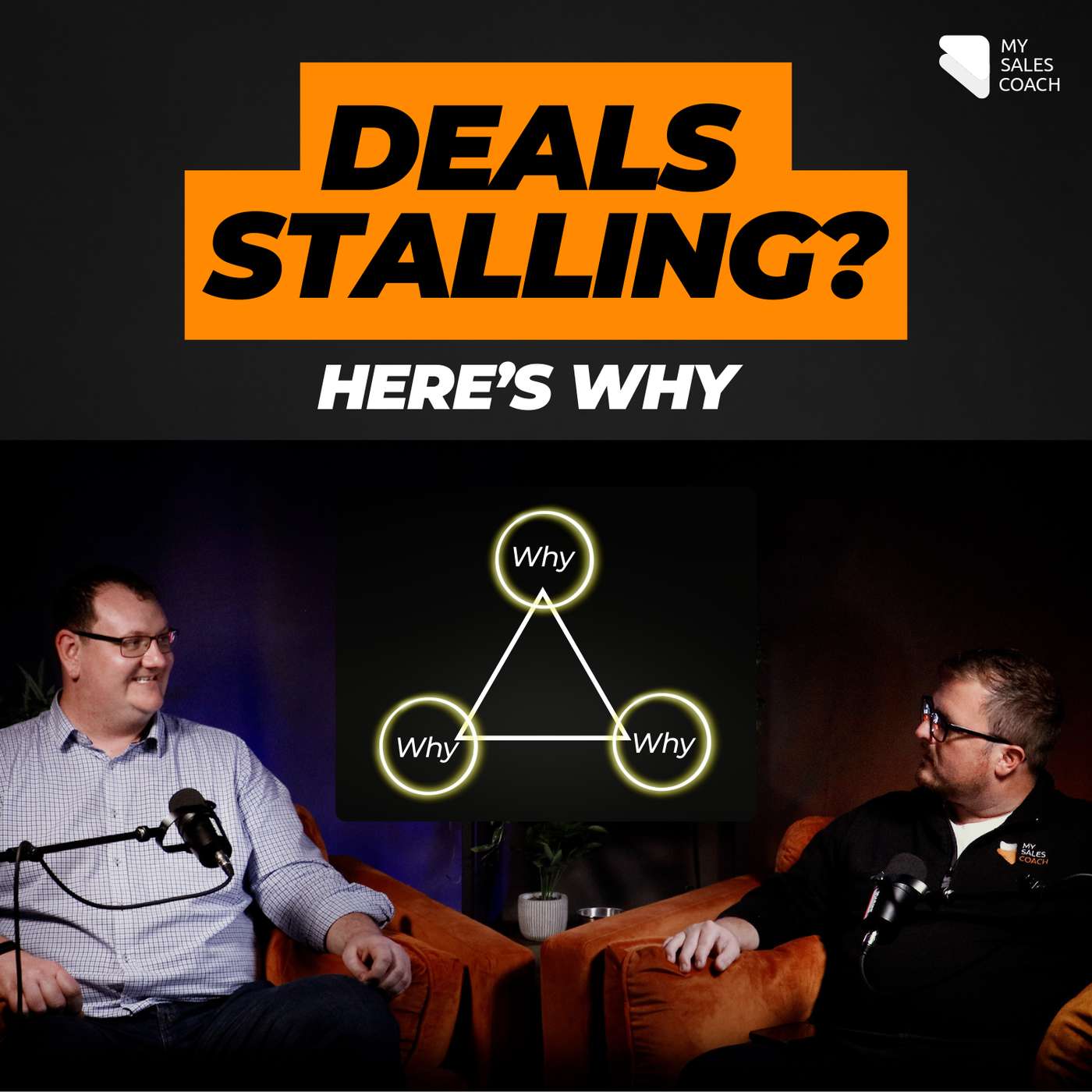 The '3 Whys' Framework Top Performers Use To Close More Deals | EP26 | Scott Cowley88 / 100
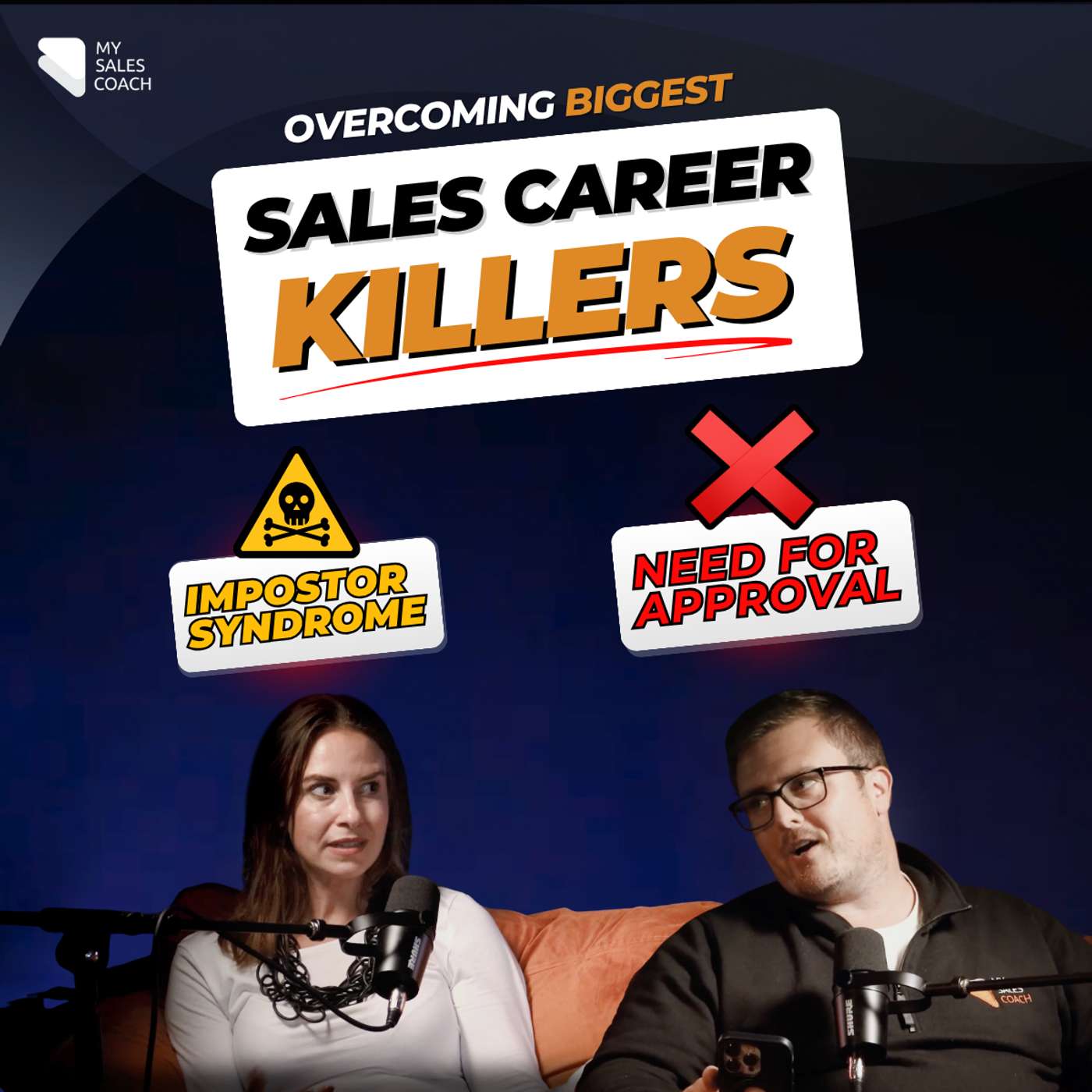 The Two Silent Killers Destroying Sales Careers (And How To Beat Them) | EP25 | Jessica Williams86 / 100
 TOP 15% of Salespeople Do THIS to Stay on Top |EP24| Niraj Kapur77 / 100
 From The Sales Floor To BBC Traitors Final Four |EP23| Andrew Jenkins70 / 100
 The Marketing vs Sales Blame Game Is Costing You Millions |EP22| Mark Walker87 / 100