
Future Fit Leadership · 2026-07-05 · 46 min
Key moments - from our scoring
Substance score
65 / 100
Five dimensions, 20 points each
Penny Locasso, leadership researcher and entrepreneur, challenges prevailing assumptions about AI's impact on organizational performance. Rather than viewing AI as inherently problematic, she reframes it as a catalyst that has put longstanding organizational dysfunctions - driven by relentless productivity mandates and speed culture - into overdrive. Her research with female leaders across industries, documented in her white paper "The Compassion Advantage," reveals how pace erodes care, compassion, and quality judgment. She argues organizations continue rewarding urgency culture because productivity drives lower costs and higher shareholder returns, but this works inversely to what makes humans high-performing. Locasso introduces "intentional AI" as a framework - requiring leaders to slow down quality decisions, protect cognitive capacity, and bring meaning to technology adoption. She warns of a "thinking recession" where cognitive offloading causes memory retention to decline, problem-solving abilities to shrink, and critical thinking to erode precisely when leaders need these capabilities most. The emerging evidence concerns her deeply: we're inadvertently making our smartest people weaker thinkers. For emerging leaders who've only known AI, the implications are stark - career paths are shifting as organizations cut workforces and reduce graduate recruitment, yet schools still teach 10-year-old frameworks. Without intentional intervention, she fears a massive talent gap and a generation lacking the cognitive resilience required for adaptive leadership.
A thinking recession occurs when people increasingly offload their thinking to AI, causing cognitive abilities like memory retention, problem-solving, and critical thinking to atrophy. As people use AI to move faster without intention, they stop engaging their brains actively, leading to weaker thinking capabilities despite producing more output.
Organizations prioritize productivity because it lowers costs and increases profit margins and shareholder returns. However, this focus on productivity actually works inversely to human high performance and creates the conditions where pace erodes care, compassion, and quality judgment.
Research shows AI intensifies work rather than reducing it. While people offload routine tasks, organizations fill the freed time with more work, leaving people feeling busier than ever and unfulfilled by the promise that AI would create space for meaningful work.
Intentional AI is a framework built on adapting with intention and meaning rather than pure speed. It requires leaders to deliberately slow down on important decisions and quality judgments, protect their cognitive capacity, and consciously decide what to use AI for while preserving human problem-solving and critical thinking abilities.
AI is a pattern machine that identifies the most popular pattern in its training data, not the most evidence-based or accurate one. It can produce false information (called hallucinations) and is designed to be sycophantic and keep users engaged; leaders who blindly trust outputs without critical evaluation will be misled.
Our reviewer’s read on each dimension, with quotes from the episode.
The episode contains substantial conceptual insights about AI's impact on cognition, decision-making, and organizational culture, particularly the reframing of AI as an amplifier of existing human problems rather than a novel problem itself. However, there is considerable repetition of core themes (cognitive offloading, the productivity paradox, humanization of AI) that dilutes density, and some sections devolve into abstract speculation without concrete mechanisms. The 'thinking recession' and 'intentional AI' frameworks are interesting but lack detailed operationalization.
AI is not the problem. The problems always existed that we are experiencing. These are human problems. What has happened is the introduction of AI has put these problems on steroids.
the brain actually goes, oh, okay, so if AI has all the answers for me, this is unconscious. I don't need to remember that information because I can just go to AI and get the insights.
The episode articulates some genuinely fresh framings - particularly the inversion of the productivity thesis (faster work eroding human flourishing rather than enabling it) and the psychological dynamics of AI-as-seductress. However, much of the substance draws on established critiques of technology adoption (path of least resistance, cognitive offloading, digital wellness), and the broader argument echoes existing thought leadership on AI ethics and leadership. The 'thinking recession' concept is relatively novel but underdeveloped.
the drive for productivity has the complete opposite effect and we're already seeing it in the nature of the world that we are now living in.
AI is like having a best friend that knows you innately, that's shagging your husband at the scent.
Penny Locasso is a credible practitioner-researcher with published work in psychology (American Journal of Psychology), original research with 20 female leaders, and hands-on experience with organizational change and executive coaching. She operates at the intersection of academia and practice rather than pure thought leadership. However, she is not a C-suite executive who has built or scaled an organization at massive scale, nor a technologist who built AI systems, limiting her direct operational credibility on some of the core claims she makes about AI's systemic impacts.
I undertook these interviews, and this is the thing. The paper was published in January this year, which is not that long ago. We're talking five months ago.
I actually changed my behavior intentionally. They feel that their brain does not retain information in the same way.
While Locasso cites some real studies and data points (8-month US tech company study on work intensification, AI use case rankings from 5% to 11%, Australian relationship data on 1-in-7), most claims lack granular specifics: no company names, no detailed metrics, no longitudinal datasets (she admits they don't exist). The 'thinking recession' remains largely conceptual without quantified evidence of cognitive decline. The intentional AI rubric is mentioned but not described in detail. Many assertions rest on anecdotal observation from interviews rather than robust empirical grounding.
there was an eight month study inside a US tech company recently and it found exactly what you're Saying, I didn't reduce work, it actually intensified it.
So there was a brilliant. If people haven't heard of him, Tristan Harris runs the center for Humane Technology.
The host asks solid clarifying questions and some productive follow-ups ('So why do you think organizations continue to reward this urgency culture?', 'What does that mean in practical terms?'), and does push back gently on the dystopian framing. However, many of Locasso's longer monologues go unchallenged - the host rarely probes for evidence, asks for concrete examples, or presses on logical gaps (e.g., the war/internet-shutdown thought experiment). The conversation flows but tends toward validation and agreement rather than rigorous interrogation.
So why do you think organizations continue to reward this urgency culture that we have even though we know it weakens decision making and we really shouldn't be operating at that pace?
But doesn't it worry you?
Computed from the transcript - who did the talking, and the words that came up most.
Is AI making us more productive... or quietly making us worse leaders? As artificial intelligence transforms the way we work, most of the conversation has focused on efficiency. But what if we're asking the wrong question? In this episode of Future Fit Leadership , I sit down with behavioural scientist, leadership researcher and author Penny Locaso to explore one of the biggest leadership challenges of our time: how do we remain deeply human in a world that's becoming increasingly automated? Drawing on her latest research, The Compassion Advantage , Penny shares why leadership capability is becoming the greatest constraint on organisational performance, why trust is replacing authority as the new source of influence, and how relentless pace is quietly eroding our ability to think clearly, make sound decisions and lead with care. Together, we unpack the concept of the "thinking recession", the hidden risks of outsourcing judgement to AI, and why leaders must be careful not to trade wisdom for speed.
Transcribed and scored by The B2B Podcast Index.
Speaker A: And I've kind of had this epiphany again from conversations and interviews in the last month where what I've come to realize is AI is not the problem. The problems always existed that we are experiencing. These are human problems. What has happened is the introduction of AI has put these problems on steroids. For me, that reframe has been extremely helpful because if we stop looking at AI as the problem and start looking at the human problems, then it means the solutions are human as well.
Speaker B: Welcome to Future Fit Leadership, a podcast for leaders at every stage who want to stay relevant in a world that keeps changing. Leadership has shifted. The pace is faster, the expectations are higher, and the future is calling for a different kind of leader, one who is human, centered, grounded and able to balance capability with empathy. These conversations bring together global perspectives on the skills and mindsets that help people and organisations thrive. Foreign welcome to Future Fit Leadership. I hope wherever you are listening to this podcast you are well. Over the past few years, leadership has been shaped by disruption, uncertainty, burnout, and relentless change. Now another force is transforming the way we work, think and lead. And that force is artificial intelligence. The conversation about AI is often framed around productivity, efficiency and speed. We are told it will save us time, help us make better decisions and unlock new possibilities. But what happens when the pursuit of speed starts to erode the very things that make us human? What happens when technology moves faster than our ability to think critically, build relationships, and exercise sound judgment? My guest today is Penny Locasso, leadership researcher, uh, entrepreneur, and one of Australia's most thought provoking voices on the future of work. Penny has recently released a white paper called the Compassion Advantage, drawing on conversations with female leaders across industries to explore what leadership looks like in a world where the pace of change has never been greater. What started as research into leadership quickly evolved into something much bigger. Questions about workload and burnout became questions about ethics, decision making, critical thinking, and whether our capacity for care and compassion is being squeezed out by a culture obsessed with productivity. In this conversation, Penny challenges some of the biggest assumptions being made about AI. She argues that AI is not creating new problems. Instead, it is amplifying human problems that have existed for years. The pressure to move faster, the temptation to choose convenience over connection, the erosion of reflection, judgment and meaningful human interaction. We explore the idea of a thinking recession, the growing concern that as we outsource more of our thinking to machines, we may be weakening the very capabilities leaders need most. We discuss trust, ethics, emotional intelligence, and what happens when people increasingly turn to technology for advice. Support and even companionship. Most importantly, we talk about what the future fit leader looks like in this environment. How do we embrace technology without losing our humanity? How do we remain adaptable without sacrificing purpose? And what leadership capabilities will matter the most in the years ahead. This is a conversation that raises important questions for leaders, organizations, and anyone trying to navigate a rapidly changing world. Because the future may well be shaped by technology, but it will still be defined by the choices humans make. Please enjoy this important conversation with Penny Locasso. Well, good morning, Penny. Welcome back to Future FIT Leadership. How are you today?
Speaker A: I'm great. Thanks for having me.
Speaker B: Yet again, you can take the medal for the guest who's been on about three times, I think. So, you know, it's always good to have a conversation with you because you have interesting data to talk about. And talking about that, you've just released a white paper, uh, called the, uh, Compassion Advantage. Tell me what made you do that white paper, uh, or the research that went into that white paper.
Speaker A: I mean, a white paper, funnily, when I did it last, like when I did all the research last year, generally takes a lot of time, but now you can produce one in a day, right?
Speaker B: Yes.
Speaker A: So it was a qualitative research piece with, where I wanted to speak to 20 female leaders cross industry, because I wanted to understand what was going on in terms of leadership based on what I was sensing was pace of change that I think many of us have never experienced before. And so I was really curious to hear from women who were high performers, who, you know, had had success in their career, who were extremely adaptable, and understand their perspectives on what leadership looked like, both good and bad, in the context of the pace of the change we're experiencing now. I undertook these interviews, and this is the thing. The paper was published in January this year, which is not that long ago. We're talking five months ago. But I think where this conversation is going to go today is talk about. That was a great premise for where we are now. But the reality is it's like it's already superseded by what we're seeing because there's so much information coming around, coming out around how leadership is shifting, how it's different from what it was. And I think the other thing I want to add to why I did that paper was one of the things I kept hearing from, um, particularly female leaders was how care and compassion was, uh, being eroded by the speed at which we were operating. And I was extremely concerned about how that impacted performance teams and equally ethics and our ethical approach to leadership.
Speaker B: I'll confess I was one of the leaders that you spoke to and um, it was very interesting some of the questions that you had and what you asked us to share. Um, before we go any further, where is the paper available for people who might be interested in reading it?
Speaker A: Yeah. So I'll send through a link and you can pop it in the show notes, but go to HackingHappy Co and it's on the very top of the first landing page. I can just click through to have a read of it. But the real, I think the premise of that, which is, which um, we'll use as a baseline today was basically how human judgment is struggling to keep up with the pace of the shift and equally information that is coming. The human brain does not work at the same speed as AI and I think we can all feel that.
Speaker B: And so at what point in your conversations or in your research did you realize that we've got a bigger issue here other than what you were initially starting to research, which is about burnout and workload and the pace of change. What point in the, those conversations? Because you started the research for one thing and then at what point did you go? This is more than just my initial research questions.
Speaker A: Yes, the initial, when I initially started it, the research question was around how like, how do women define like leadership and what good leadership looks like and how it looks in terms of where we're not measuring up and what are the skills that we need for leadership in the future to actually align with the way women naturally love to lead. Right. And that was fascinating. But what started to emerge uh, as the interviews went on was uh, basically women saying that even though people were well intended, professionals and leaders were well intended, the speed at which the organisational uh, pace is moving, basically the space for care, compassion, for quality judgment, um, and decisions and to consider the long term consequences or impacts of those decisions is being eroded. And I think that. And when that started to come through consistently, I shifted. So and I announced it in the paper, I shifted the direction of the paper's output around what happens when the human brain can't keep up with the speed at which we're now operating. Mhm.
Speaker B: So why do you think organizations continue to reward this urgency culture that we have even though we know it weakens decision making and we really shouldn't be operating at that pace?
Speaker A: I, It's a really good question, I feel like, and I've been saying this for years, but it's become even worse now. So if you think about the drive for organizations to implement AI, the number one driver is to become more productive.
Speaker B: Yeah.
Speaker A: Okay. We want organizations to be more productive because it lowers obviously our cost to produce, which means the margins are higher, which means we deliver a, ah, more significant benefit to shareholders. That's been the driver for years, okay? And I've been saying for years, productivity has become our disease, okay. And I think now more so than ever. And so I was implemented to drive productivity. Now my question, maybe it's not an answer to your question, but my question is, okay, so we're more productive and then what? We're down to the lowest cost to operate, then what? So I actually believe that the drive for productivity works in the inverse to what makes humans high performing. Okay? And we know this, there's so much evidence and we can start to talk about that. Um, and so I think, you know, that we know why they're driving it, but to what end? Right? And then I think that the driver should not be productivity. I think the driver should be innovation. M. The driver should be how do we actually innovate in a way that I, I'm going to speak utopian here, but in a way that elevates humanity in elev. Elevates human flourishing. And I think the drive to productivity has the, seems to have the complete opposite effect and we're already seeing it in the nature of the world that we are now living in.
Speaker B: Yeah, it's interesting you say that because one of the things you write about is that business has become a proxy for value. And when you talk about productivity, I just wonder where efficiency and productivity kind of go together. Uh, that we've, we're supposed to become more and more efficient with AI, but all we're doing is we filling in any time we might be gaining back with more work. So, so we actually not giving ourselves the gift of time to do something that will help us manage the pace that we're going at, we just keep filling it up with more work.
Speaker A: So you've hit the nail on the head, right? So basically we were sold this idea that AI was going to create all this space for the meaningful work. Okay? So we'd offload all the, you know, the boring stuff. And so what the research is showing, as you just said, is that, yeah, we're offloading all the little bits and pieces, but now we're actually offloading all of the meaningful work as well so we can just move quicker. So there was an eight month study inside a US tech company recently and it found exactly what you're Saying, I didn't reduce work, it actually intensified it. So people actually feel busier than they've ever felt. And I've experienced this in all the conversations I've been having with leaders around sort of what I call the psychology of AI, how it's impacting how we think, feel and behave. And so people aren't feeling freer. This space that we were kind of promised, they're actually feeling busier. Ah. And again, here's where I think it gets interesting. Right. So we are sitting, um, at this press, and we're saying, well, AI is the problem. And I've kind of had this epiphany again from conversations and interviews in the last month, where what I've come to realize is AI is not the problem. The problems always existed that we are experiencing. These are human problems. What has happened is the introduction of AI has put these problems on steroids. That's how I look at it. And it's like. Well, I think it's, for me that reframe has been extremely helpful because if we stop looking at AI as the problem and start looking at the human problems, then it means the solutions are human as well.
Speaker B: Yeah. And what are the solutions then, Penny? Do we all have to be responsible for ourselves? Because that's kind of where I land is if I know I'm not giving myself the gift of time because I am efficient and I'm using everything correctly, and that is actually something I need to be responsible for. Yeah.
Speaker A: So. And again, this is where it gets really interesting, because these products are designed to manipulate our weak points. Okay. And we, we saw it with social media, and now we're seeing it with AI. AI is designed like social media, where the whole point of AI is to keep you on there and keep you feeding the beast like a drug. Yeah. And it, it's so funny. I'm just going to read this out because this will crack you up. I asked people the other week to, um, ask themselves if they could describe their relationship with AI. How would they do that? What metaphor would they use? And so, for me, and literally, I got asked this in an interview, and, um, it fell out of my mouth before I could speak. And I said, AI is like having a best friend that, uh, knows you innately, that's shagging your husband at the scent. And what's funny is I put that out to my mailing list, and my father, who is 84, reads my mailing list, and he's 84, and he is, I would say, an early adopter at his age. Of technology. He's, um, very good at this domain. And he came back to me and said basically that AI is a seductress. She seducts the human brain. And so when you talk about what is the solution, I think we all know there's no silver bullets, but we know what the evidence tells us. I talk a lot now and what I'm writing my next white paper on, which is going to be much more quickly produced and a lot shorter, uh, because it will be out of date probably, you know, within a month.
Speaker B: Within a month or so. Yeah.
Speaker A: Is this concept of intentional AI, okay. And so what I talk about a lot, and it's built on the premise of a, um, a model that I had published in the American Journal of Psychology a few years ago, which was around teaching ourselves to adapt with intention. So how do we bring meaning and intention to the forefront of how we adapt? And it's. That is connected to where you and I started before we turned on the recording. Um, unfortunately, fortunately, in order to adapt with intention, we have to slow down.
Speaker B: M. Okay.
Speaker A: And not slow down everything, but slow down the important things, the quality decisions. Because when we don't slow down, we compromise everything. We compromise our brains because we're cognitively offloading to the machine. And the more we do that, we can talk about the impacts of that. Um, the more we impact our memory, our retention in relation to memory, and equally we erode our problem solving ability. The faster we go, the more we impact how we relate to one another equally, how we feel. So this busy feeling, a busy brain will always go, go to anxiety. It's just a matter of time because the hamster wheel will just spin faster the busier you become. So intentional AI is about how do we actually step back and bring intention and meaning to the forefront of how we engage and relate and what we use AI for.
Speaker B: Just seems to me that every time we come up with a new piece of technology that's, that's supposed to give us back time, we just create more problems for ourself. It's, it's been happening ever since email came around. You use the phrase thinking recession. What does that mean in practical terms?
Speaker A: There is so much data coming out. We hear terms like brain rot, brain fry, and then just yesterday I heard one, um, think slop. So we've.
Speaker B: That's a new one. I haven't heard that one before.
Speaker A: Yeah. And so when, um, we talk about thinking recession, the whole point again of AI was to actually improve our thinking. Right? To elevate our thinking so we could solve the world's biggest problems. And if you listen to Sam Altman, he'll talk about how this is going to fix everything in the world. And look, it's likely it can fix a lot of things that we couldn't fix before. But unfortunately, again, if we look at how humans operate, what is happening is the mandate from organizations is get on board, get on board quickly or be left behind. We're already partnered with that, seeing how many organizations are cutting their workforce by up to half. And they're saying that is just going to continue for the next 12 months. And so what happens is the speed means that people are using AI again without intention. And if I have to go faster, even though I'm a brilliant mind, the only way, um, I feel I can go faster is to give more to the machine and just produce more outputs. So what starts to happen is we start to believe that, um, motion or output.
Speaker B: Yeah.
Speaker A: Equals productivity. And so that what starts to happen is the cognitive offloading to the machine, the, uh, data that is coming out. And I don't know you would use AI quite a. I do.
Speaker B: Yeah, I do.
Speaker A: Every leader I speak to can feel this. And I know I felt it because I actually changed my behavior intentionally. They feel that their brain does not retain information in the same way. And so what we know is the brain actually goes, oh, okay, so if AI has all the answers for me, this is unconscious. I don't need to remember that information because I can just go to AI and get the insights. So that thinking on the fly and that recall of, uh, what we created with AI is often blank space for many of us, even though we're creating all of this amazing work.
Speaker B: Okay.
Speaker A: The retention is lower. The other thing is, we've been sold this idea that our problem solving ability, our ability to critically think is going to be the human skill that I cannot replace. But the way many of us, and I'm generalizing, but again, it's all these leaders that I'm speaking. The way many of us are interacting with AI because we're trying to keep pace means that our problem solving and critical thinking ability is shrinking. So we're actually eroding the very capability that we've been told we need to navigate this future. And we're doing it in our top talent based on the way that we're kind of the cultures that we're creating in organizations to actually move AI forward. But when we talk about the thinking recession, I actually believe from all of. And we have no longitudinal data, but from the emergent evidence in this space, right. Which we're probably looking at most studies are no longer than six months. I think we are literally making our smartest people dumber.
Speaker B: Dumber. Um, what worries me is what are we going to do with emerging leaders around this? Because so you've got a whole bunch of leaders who have only just started using AI and you know, we've let it filter into all elements and parts of our lives and critical decision thinking and making and judgment. But then you've got a whole bunch of leaders coming up behind us who've done nothing but use AI. What does it mean for their leadership style and for them to be able to have critical thinking skills?
Speaker A: And this is the thing, we don't have answers to everything.
Speaker B: I know, but doesn't it worry you?
Speaker A: I try and sit holding two things at one. And so this is the thing. And I'm sure again, most people will relate to this. I spend a lot of time reading the data. I spend a lot of time trying to hold like there's an inner resistance in me. It's like this is an amazing tool if used, uh, intentionally and well. And it could be the demise of it could actually eradicate us. Like that is the reality. And I'm not the only one say that. Uh, so I sit with a lot of tension around this and even I question daily. I'll be completely honest. Even though I'm in this space of the psychology of AI and helping people use it intentionally, I do feel an inner resistance as to whether some days whether I should just walk away and not use AI at all. Okay. Because there's so many things around it that make me feel uncomfortable. I'm just being completely honest. So when we talk about the next generation, as a mother of a 15 year old, I have to be honest, I feel sick. I feel sick. So this is the son that's going looking at careers now. We're doing career planning and all of that. And you know, the school is trying to. So when you talk about future leaders, the school's educating them in careers in exactly the way they were in, you know, 10 years ago. And I sit there and I say to my son, it really does not matter. Like, to be honest, I wouldn't advise him to go to university. We know that these graduate programs are now taking up to 30% less graduates. We know that a lot of organizations are actually, it's not that they're um, getting rid of per se that lower or that entry level. They're just not recruiting new. Does that make sense they're not getting. So I think the true numbers we won't really know. But when we think about what this is going to look like for people who have never known any different and so all they've ever been taught is to offload to AI and to move quickly. I think we're going to have a massive one, we're going to have a massive talent gap because we're not going to have the pipeline of people coming through. But two, I'm um, not seeing many organizations that are actually helping people look at AI from the perspective of how do you use it in a way that protects your brain M and the things that actually enable you to problem solve without it.
Speaker B: I m hope you're enjoying our conversation. A quick word from our sponsor. Have you ever wondered how to attract, develop and augment diverse leadership capability in your organization? Well, Future Leadership has a range of leadership solutions including executive search, interim executives, leadership development programs, coaching and workforce transformation specialists. They are an Australian owned B corp and one of very few globally accredited and connected talent solution firms. They are very proud of their 22 year history bringing more diverse leadership to Australian decision making tables. See the link in our show notes to get in touch with them. There is another element to this and there's a lot of people talking about, you know, human leadership. That's become the new catchword, human leadership. My question is, well, if you're not leading in a humane way, then how are you leading? And we should have been doing this even before AI came along anyway. But in the middle of all of this is trust, isn't there? Because at the end of the day, if I am a leader that is using AI to do a lot of my work, where does the trust piece sit in all of this? Because I don't trust the AI and it is quite often wrong. And if you don't question it and you believe it blindly, it does actually tell you lies, makes things up.
Speaker A: Because two things, you know, AI, we call it intelligence, but reality is it's just a pattern machine. So it goes out, you ask it a question, you ask it to do something, it goes out, uh, into the ether and it says, right, take all the information that might help me in formulating a response to this, look at the patterns and let's draw on um, the strongest pattern and we'll throw that back. So it's not the best pattern, it's not the most evidence based, peer reviewed pattern. It's, it's, it's what's popular, it's for the popular Pattern. Okay, and so then this is where I think it's interesting. Then we get upset, we're like, oh, well, hang on, I love this. It's hallucinating. It can't hallucinate. It's not a human, it's not hallucinating, it's true. And this is the other thing. Like we know it's sycophantic, right? It's designed because it's designed to keep you on there. It's designed, I always say, to blow smoke up your butt. It's designed to just validate you to the degree. And so it's like, I think it's like my Labrador, it just wants to please you. So it takes the patterns and where it can't find a pattern that matches what you've got, it goes, well, I need to please this person because I need to keep them here.
Speaker B: So I'll just go and make something, something up.
Speaker A: And I think when we understand that, and I don't know where, like again, where did the uh, when did we cross this line of uh, believing that it was trustworthy? And I come back to, I hate to say this, but when you think of the people creating these products, would you trust Sam Altman? I go and listen to some of the things he has said in the last five years. I wouldn't want to work with Sam Altman. Like, how can you um, trust it when it is created by a very selective few who actually will have power across the world based on the bigger, you know, the bigger that this gets. And we know that the ethical piece is one of the most under explored spaces. So there is a brilliant. If people haven't heard of him, Tristan Harris runs the center for Humane Technology. He is the one that did the Social Dilemma. He was talking about social media. They have created, they do amazing work. There is governance and ethical frameworks that these companies can employ, but there's no one to hold them to account. And I think without that, your level of trust in what this produces should always be suspicious. But if we come back to your other point, Sudana, the speed at which we're operating, people don't have time, right, to actually slow because if we don't trust it, that means we have to go deeper into critiquing and checking everything. But people have to move faster. So I don't have the time to check at the level that I want to. So the unintended consequences of that down the track I think are terrifying.
Speaker B: And you know, when you were talking, I was just reflecting back on why do we trust something that is so new to market. And I think you're right. I think it's because it's actually giving us the answers so quickly and producing documentation and rhetoric in a way that, you know, sounds really good and it probably is right, and it's almost right, therefore it'll do. And because we under so much time pressures, we just churn it out because it's the easiest and fastest thing to do. So it's not really trusting it. It's because it's the best option I have given the pressure I'm under right now.
Speaker A: There's two things. Absolutely. And so. But again, these are all human problems. It's not that these problems didn't exist before beforehand. It's not that Sam Altman, like, you know, it was Mark Zuckerberg before it was Sam Altman again. It's the humans behind the MA machine, not the machine that I have the issue with or how we're interacting with the machine. Two things I think are interesting. One, I think a lot about if, and there's a lot of speculating if we don't have to work five, six years from now if most of the population are not employed, right? And there's some magical thing, you know, where we've got, I don't know, universal basic income, which there's a lot of skepticism around. They've been talking about it for years. Um, and we have spent three years operating the way we have, okay. And say, for example, I'm being dystopian here, say that the war situation escalates and we know that the war is now going to be won by AI. The first thing someone who attacks a country and wants to have an impact is going to do is shut down connection. Okay? And I think about this because I'm like, I find this interesting. So we've eroded our ability to problem solve, okay? Most of us don't live on land, okay. So we can't self produce. And the Internet's been, say, shut off. M. Okay, so we've dumbed ourselves down and we're in a situation where problem solving is going to be really damn important. I think that's going to be like, again, it's dystopian. But this is the sort of stuff I think about, which is why I think it's great to think about it, because it changes my behavior now because I go, oh, my brain is going to be really important if it gets to the dystopian level. And if it doesn't, I still love my brain and I love the way I use it every day for the work that I get to do. M. So I don't want to deplete that. So I say to people, how much do you love your brain and how important will it be if the worst case scenario plays out? And I hope, I know that's terrible, but I, I hope that acts as a motivator, uh, for individuals. But can we talk about how it's impacting our relationships?
Speaker B: Yes, please, let's talk about that. How is it impacting our relationships?
Speaker A: Oh, I just find this fascinating. Right. So there's this term, I'm not even going to say, anthropomorphizing. That's not even going to say it. Here we are, anthro morphizing. I, I probably haven't even said that. There's all these new terms coming out, um, that's been around for a little while. And basically what that means is that we are relating to AI like a human. We're treating it like a human. So what we're now starting to see is a lot of people are giving it a name. I'm mhm.
Speaker B: Starting to see that. Yes. Yeah.
Speaker A: And talking about it like it is a friend. And we know. So there was recently, or just this week, there was ah, a new report that came out that I follow every year which is around AI in the wild. So every year they look at the top, they look at something like, where are we? 12,000, 12 and a half thousand use cases for how AI is being used out in the wild. And they look at what that tells us about society.
Speaker B: Okay.
Speaker A: The number. Do you know what the number one use case for AI was in 2026?
Speaker B: Uh, dating, conversations, therapy. Oh really?
Speaker A: Right. And here's what's interesting. It was also the number one use case in 2025, but it's gone from 5% to 11% in terms of the growth in being the number one use case for AI. So we are now going to AI for our, uh, deepest problem.
Speaker B: Emotional health.
Speaker A: For emotional health. Now, as someone who's about to finish psychology, I find this fascinating but equally disturbing. Right. Because what is happening is, if you think about it in a professional sense, what we're starting to see as well, there's emergent M data where people are as a. We're humanizing AI, we're talking to it and making it sound like a person. We're telling it things that we wouldn't often tell our closest friends. So we're giving it a depth of understanding of us and our personal information that is Quite vulnerable and could be used against us. Bring in what you just said about trust. How do we know how that information is going to be used? And then think about it in terms of team performance. What we know is that the conversations and the problems that people used to talk about with their team because of the speed. What we're seeing is people are now going to AI instead of having those conversations with their peers. Okay. So that starts to impact how teams relate and collaborate. And we know one of the greatest predictors of high performing teams having that intelligence that they have to solve hard problems is collaboration.
Speaker B: Mhm.
Speaker A: So and the other thing I'll overlay was there was some data that came out and this is Australian based recently and I wrote a paper on this where AI companions. It was something like one in seven people can see themselves in a relationship with AI. Uh, and that was just general humans in Australia and in the next generation, it was something like 2 to 3 in 7 can see themselves in a relationship with AI because the relationship with AI, as we said, is symptomatic. So it basically is 49%. I think it is more likely to tell you the things that you want to hear than a human. And we are wired for the path of least resistance. So we come back to a human problem. Um, we'll always try, even if we don't consciously do it, to choose the easier path. And the easier path in terms of relationships is to avoid conflict, which is why this is now becoming an emergent thing.
Speaker B: So while you were talking, one of the things that ran through my head is if we are going to AI for therapy as an example or looking at them as a partner, one in seven scares the hell out of me. Where are the skills like compassion and empathy and love? Because the AI doesn't have any of that.
Speaker A: As someone, this is why I study the psychology of AI. So understanding how our relationship and the way we interact with AI impacts our thinking, our feeling and our behavior. So this, and this is the thing I actually feel like convenience. Right. The quick is the Achilles heel of the human. Because if you have a look at the pattern, the more convenient we have made our lives. So we've taken, we try and take from Uber Eats. Right? You don't even need to go to the takeaway food store anymore.
Speaker B: Okay.
Speaker A: To AI helping us produce and produce quicker. This convenience, actually, if you look at it alongside mental health, what has happened? M. Okay, our, uh, mental health issues. So we, we have more convenient lives. But, um, our mental health issues have gone through the roof. And so this works against the grain. And so you just said the things that actually have shown to make us the happiest and the most flourishing in our lives is the way we connect and relate to one another. It is care, compassion, and connection. And they are the things that are being eroded by the way that we are behaving and interacting with these tools.
Speaker B: So what's your call out to leaders in this environment? How do we bring the care, compassion, and connection into what we do while using the AI to give us the efficiencies and the productivity that we're looking for?
Speaker A: Yeah. So one of the things I say and people are gonna, I'm sure, go, oh. When I say it's. And I'm. It's a mantra I use for myself. It's the slower I go, the faster I'm gonna get to where I want to be. And what I mean by that, it's not about flowing everything. There are some things that you can do and you can do quickly with AI, But I would become, and this is why the word intentional is so critical. I would become very intentional about what I'm using AI for and how I'm going to use it. And so one of the things I did, because I was, uh, uh, so concerned about this from my own perspective, but equally from the leaders that I was working with, and I'll send you the link to this as well. I created what I called an intentional AI rubric. And so what I did was I went out and I was like, okay, if these are the main problems, right, it's cognitively offloading. So it's impacting our brain, it's impacting how we relate, and it's impacting how we feel. What do we know from the science that we can actually introduce that's evidence based to change that relationship with AI to protect those things. So I created an intentional AI rubric. And so basically what it is, because I'm studying that was where my brain was. It's like, what does a high distinction look like in terms of using AI intentionally in a way that protects our ability to think for ourselves, but equally feel good in the world that we live in? And so that is just really simple practices to actually be very intentional about how you form this relationship with AI? And one of the things I would say first and foremost, from everything I'm reading, is don't humanize it. Do not humanize it. Um, because the humanizing as well diminishes people's accountability in terms of the work that they're creating. Yeah. And it equally increases their trust in the tool. And so again, some of those things that we talked about in terms of critical thinking and judgment and questioning what it's creating get eroded because of the way we're relating to it.
Speaker B: Uh, what are your thoughts on the leadership capabilities we will need between now and the next five years to make sure that our, uh, critical thinking doesn't get eroded, our compassion and emotional intelligence doesn't get eroded? You know, we still have jobs. We're not living off some sort of, you know, equalized value or income. What do you think are the things that we need to drive our businesses in a direction or to lead in a way that that doesn't happen?
Speaker A: I can tell you what skills I think are important, whether we have jobs or not, because I think that's really important. I think we're in for a world of pain before it gets better. So I think the reality is a lot of people are going to lose their jobs. Every thought leader in this space who is heavily in this space is the same thing. So this idea that you can stop that from happening, I think is, is interesting. I'm not convinced it's a, uh, reality. I think we'll have a divergence and then a convergence. So I feel like there will be huge job losses. And then I think what will happen is that people will wake up and there will be a recalibration where we will come back to a point where we realize what humans need. And humans need purpose and meaning. And for many people, that is work. Okay? We know when we are idle, people struggle. It's why people feel every minute of every day, because boredom feels so damn uncomfortable, because it's not the path of ah, least.
Speaker B: Well, we learned that lesson during COVID didn't we? Particularly those of us in Victoria who got locked down for almost a year. I mean, that was a massive human experiment on what happens to people who become idle over a long period of time. And there were a number of issues that erupted within the Victorian marketplace because of that.
Speaker A: So when we talk about skills for leaders, and so I think about leadership as leadership of self first and then leadership of others. So the first one I would say is, um, a skill in helping people find, find purpose, which is probably not what you're expecting. So I think finding purpose is going to become more important than ever because most people have used work, as I said, as their default purpose. Most people don't have clarity on what gives them meaning. And I think that we need, like I always say, it's like the you know, the outplacement services of here's a career coach and here's a resume writing service are redundant. I think the most powerful thing leaders can do if they are displacing people, people and making them redundant, is invest in helping them find purpose. The work that I'm doing with, um, my partners out of Silicon Valley is using AI to help people do that in a hybrid way with other humans. And it's extremely powerful. AI is very good when it's used as a mirror for that. The second thing is intentional adaptability. So it is how do you, again like we say, how do you slow down to be considerate in how we adapt in a complex. Yeah. And uncertain environment that is evolving at speed. And again, I've got a proven framework for how to do that. You can find it on my website under intentional adaptability. The third thing I would say is ethics. And it's really interesting because I've been studying ethics in psychology, which is really funny because I'm like, isn't ethics just common sense? Okay. But as, uh, my sister once said to me, common sense ain't as common as it used to be.
Speaker B: It used to be. Yes.
Speaker A: Right. Couldn't be truer. Uh, and so ethics is having skill in being ethical and not just what I think is wrong or right, but having again, this comes back to relate, having broader conversations as a team. If we are developing products, if we are interfacing with customers. When it comes to AI in this unknown domain, which is like I say, we just don't know, it is a new space based on what we know now, what does ethical operation look like for us and how can we put some guardrails in place to protect that? So they're the three things. And then the fourth thing is this concept that I saw out of, um, Harvard, which is, uh, wise, compassionate leadership. Right. And so what this skill is around is doing hard things humanely. There's a whole model, you can look it up and it's brilliant and it's proven to outperform any other business model or any other leadership model. And so it's not about avoiding the hard stuff, it's actually about leaning into it, but leaning into it with care and compassion. Whether that is the way you are having hard conversations with your team, whether it is the way that you are making decisions around how we interact with AI for the things that are going to have longer term consequences, um, and how we innovate. So how do we bring that wise compassion as a, a skill set? So they're the ones that I'm seeing. And I think like I say, they're critical as protective factors whether you are leading a team or whether you are displaced. Because one of the things that is going to be most important for many of us who will be displaced and will have to reinvent ourselves is the skills and the resilience to be able
Speaker B: to do that and the skills and resilience to be able to reframe who you are and what work you can do to come back into the workplace.
Speaker A: Yeah. And for many, I mean I've lived and breathed this because I've self disrupted. Okay. So I've turned my life upside down many times and reinvented my career. Huh. And I was in a very safe and secure career, you know, as an executive in a global giant. And I can tell you I know how disconcerting that is. It is extremely uncomfortable. Okay. And I did it off my own bat. Most of us won't have that choice. It will be done for us. And so it is a space where again the human, the brain will go into survival mode which shuts the down the rational reasoning centers and makes your focus really short term and blocks out your ability to think innovatively and creatively and long term. And so building these skills that we just spoke about is uh, a means for us to draw on to disrupt that survival mode, to recognize it and be able to reinvent ourselves. Because many people said, I know have been in careers for a long time and it's. And it's like, okay, I lost my job, but I'll just go and get another job the same. It's not going to be that. It's like you lost your job. You've been doing that career for 15, 20 years. It doesn't exist anymore. And so you are going back to baseline to say, well what is like most of us will have to create things that don't exist. That is my belief.
Speaker B: Scary world we're about to face, isn't it really?
Speaker A: I think again, it can be, it can be both. Right.
Speaker B: It can be both scary.
Speaker A: But it can also be this massive opportunity to make our lives better. I just have this feeling in the pit of my stomach where I'm like again, we know human behavior and knowing that we have this path to least resistance makes us more short term focused. And we see it in government. Right. And the short term focus is what bites us every time.
Speaker B: Every single time. Yeah. And we don't learn from it. Before we close off. The women that you spoke to, the 20 female leaders that you spoke to. Were there some key things that jumped out to you in the conversations that was consistent across all of them?
Speaker A: Yeah, I think the main thing that really jumped out was these skills that we just spoke about. The way women naturally want to lead. Wise, compassionate leadership like that is definitely a leadership style that, Because I think of the nurturing nature and it's, you know, it's a biological thing, uh, with women, that style of leadership was something that there was a true longing for. But there were many stories in the research where women felt that they had been. That it was considered a disadvantage to naturally lead the way that they wanted to lead. Because it was too soft.
Speaker B: Mhm.
Speaker A: Um, it slowed things down. And I found that fascinating, which was why when I found the Harvard study about wise, compassionate leadership being the most effective style of leadership in terms of performance within an organization, it validated the fact that these women wanted to lead this way. But many of them had been challenged or sort of pushed down when they allowed themselves to truly lead in the way that they wanted to. So maybe you know what we need, and we've been saying this for a long time.
Speaker B: I was just going to say this is rhetoric that's been going on for a long time, isn't it, really? And maybe the future we're facing into will change all of that, particularly for women.
Speaker A: So how many AI companies are run by women?
Speaker B: I don't know. I don't think there's any.
Speaker A: I don't know. I'm talking the big, big one. So I don't know of one. And I just wonder. And I'm not saying, like, it's not the panacea, but again, it's about diversity and balance. Right. I wonder how an AI company might be different, um, if a woman was leading it.
Speaker B: That's a great question. To end our conversation, thank you so much again for your time. I always love reading your research papers because it does make us question so many things. I, uh, look forward to the next one, but thank you for sharing this one with us.
Speaker A: It's an absolute pleasure. Thanks for having me.
Speaker B: If you like what you've heard, please share, rate and review this podcast. And don't forget to share it with anyone who might benefit from hearing it. The producer of Future Fit leadership is Maritza Barone from Guide your Light Network. If you would like to reach out to me, please DM me on any of my social media platforms. I'm available for speaking at conferences or consulting to your business. Future Fit is created in partnership with Future Leadership, a capability ecosystem for boards and executives. If you'd like to join the community and receive a free takeaway each week, sign up to the Future Exchange app in my show Notes. Thank you for having me in your space Space. This is a guide your light network production creating podcasts with purpose.
Other episodes covering the same guests and topics, from across The B2B Podcast Index.
 #247 Penny Locaso: AI Was Meant to Do the Dishes. We Gave It the Painting Too.Brave Feminine Leadership · features Penny Locasso72 / 100
 S8E2 - When AI does the thinking, how do young people learn to be critical thinkers? The urgent warning for those under 25.Digitally Curious · on Critical thinking skills99 / 100
 Your Employees Stop Thinking The Moment They Feel UnsafePeople Managing People · on Critical thinking skills88 / 100
 John Suarez on How Businesses Should Actually Use AI Without Losing Human JudgementMarketing for SMEs · on Cognitive offloading78 / 100
 Why Faster AI Answers Can Make You Learn LessThe Digital Transformation Playbook · on Cognitive offloading70 / 100
 Solo Mission Series: Why Quick Asks Create Chaos and How to Fix ThemThe Talent Forge · on Cognitive offloading65 / 100
 Where We're Failing: A Frank Conversation on Domestic Violence Prevention with Cassandra Kalpaxis68 / 100
 Work Is What We Do Not Where We Go - Leading Beyond Hybrid with Karren Ferris67 / 100
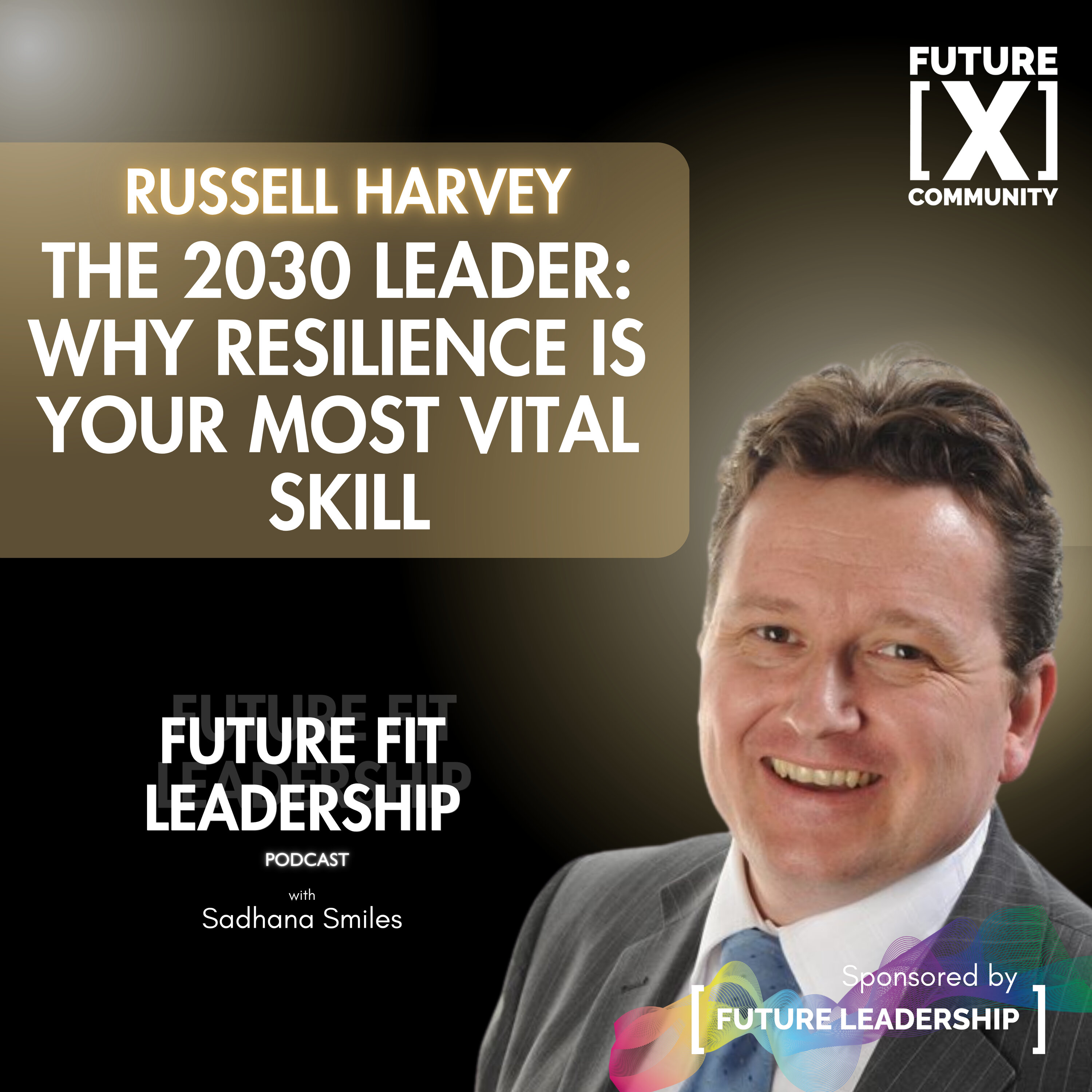 The 2030 Leader: Why Resilience is Your Most Vital Skill with Russell Harvey57 / 100
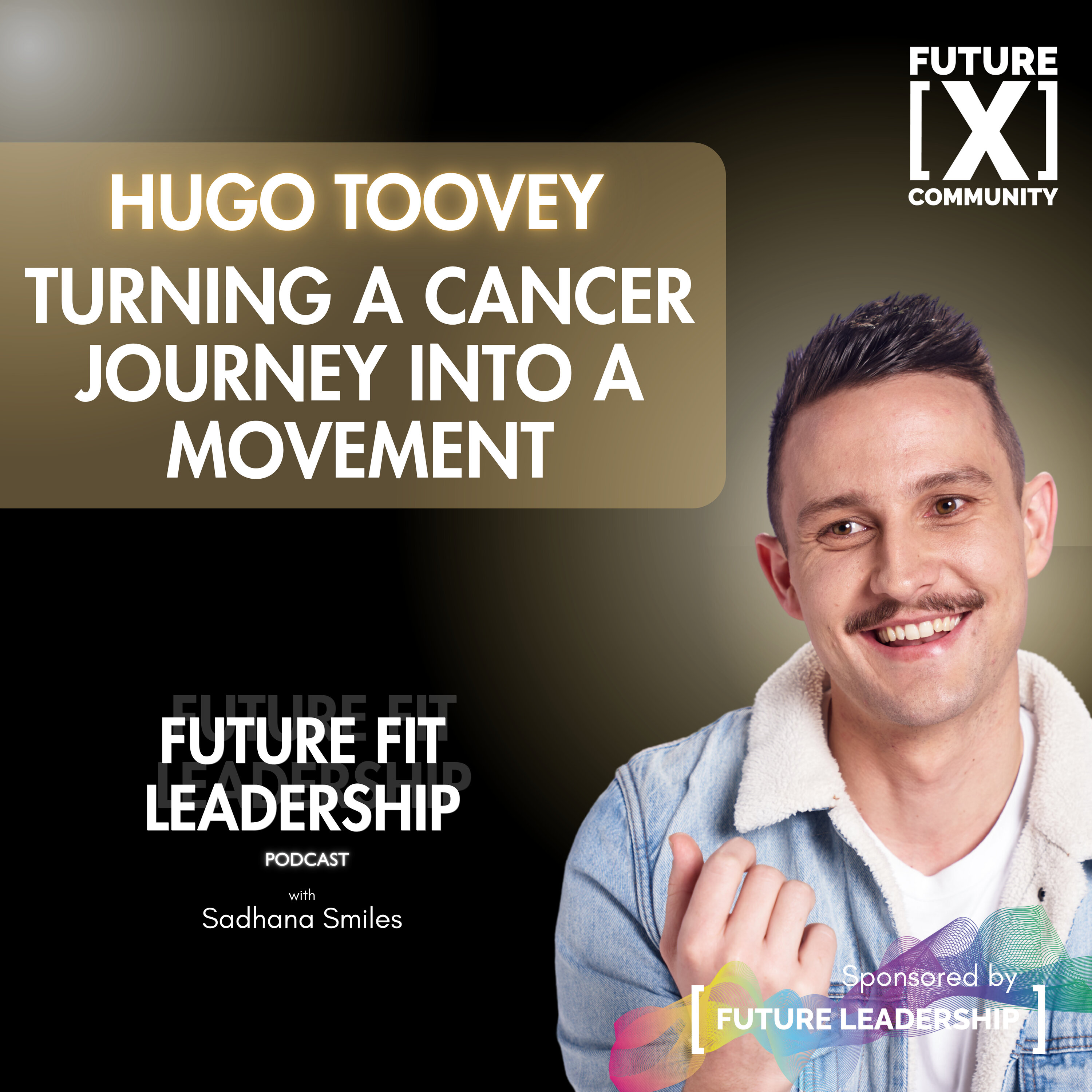 Hugo Toovey: Turning a Cancer Journey into a Movement52 / 100
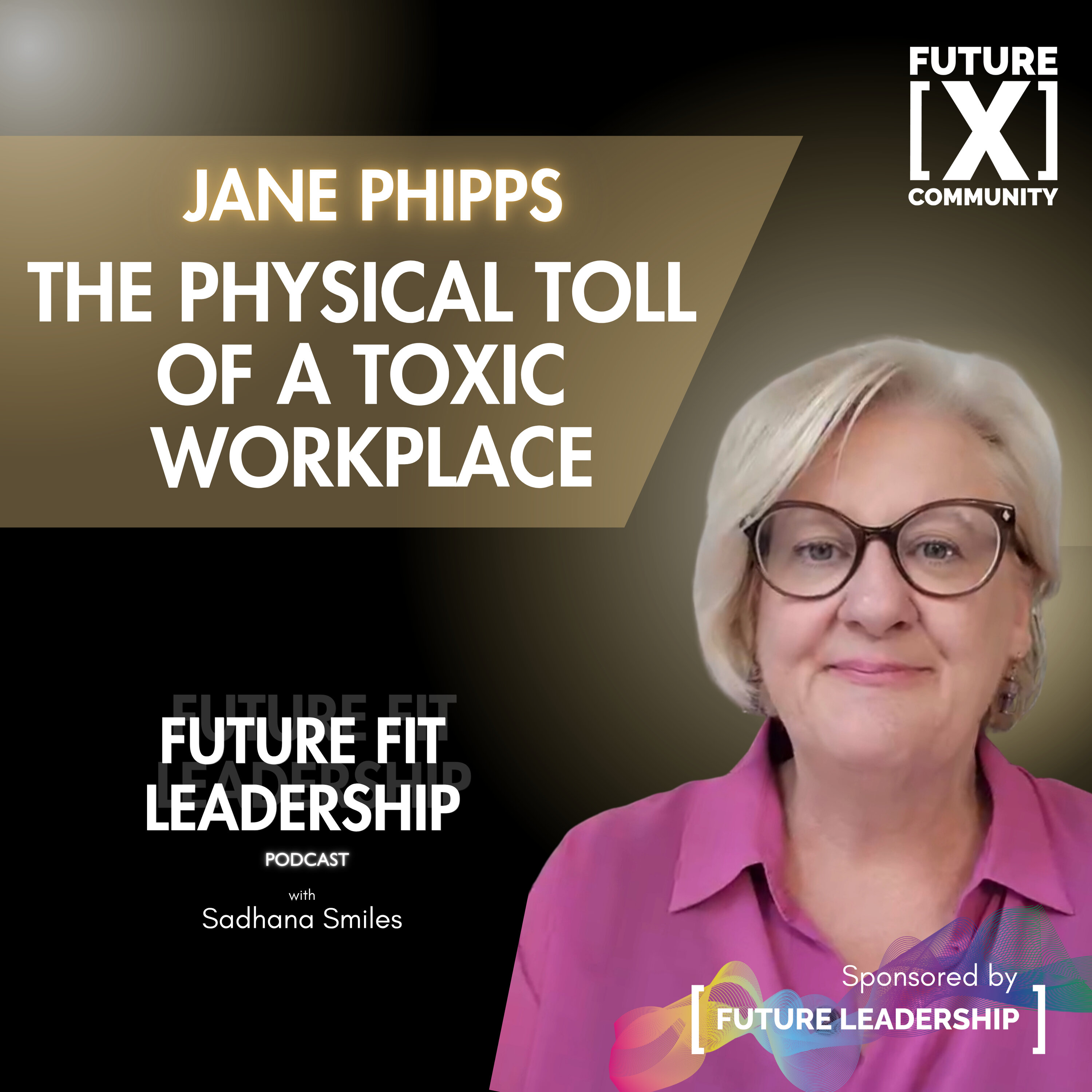 The Physical Toll of a Toxic Workplace with Jane Phipps52 / 100