
The Digital Transformation Playbook · 2026-06-28 · 20 min
Key moments - from our scoring
Substance score
50 / 100
Five dimensions, 20 points each
Most AI tools optimize for instant answers and minimal friction, which backfires in educational contexts by preventing deep learning and memory formation. Drawing on the research paper "Building AI Companions That Prioritize Learning Over Performance" from Khan Academy and multiple universities, this episode unpacks the learning-performance paradox: students using AI assistants solve problems faster during training but suffer significant harm to independent learning afterward, developing what researchers call metacognitive laziness. The discussion covers four foundational elements for better AI learning design: the pedagogical foundation (desirable difficulties, retrieval practice, guided scaffolding in the zone of proximal development), the adaptive foundation (stateless AI versus continuous learner modeling through microinteractions), shared regulation (keeping learners as co-decision-makers rather than passive passengers), and the responsible foundation (explainable AI, privacy tailored to context, and cultural inclusion). Real platforms like Khan Academy's Conmigo, CodeHelp for programming, RIPPLE for peer learning ecosystems, Recast for high-stakes role-play, and GPTA with cultural personas demonstrate how these principles work in practice.
Fast AI triggers cognitive offloading, where learners delegate sense-making and planning to the tool instead of doing the neurological work that encodes memory, resulting in metacognitive laziness where students achieve good test performance but retain nothing afterward.
Desirable difficulties are pedagogical mechanisms like retrieval practice and the generation effect that require effort but enable deeper learning; AI learning companions must deliberately include these rather than removing all friction.
Khan Academy's Conmigo and CodeHelp use different approaches: Conmigo provides hints after detecting genuine confusion, while CodeHelp uses a sufficiency check to demand that students articulate problems clearly before offering conceptual guidance.
The zone of proximal development is the learning sweet spot where tasks are challenging enough to require effort but achievable with guidance; AI tutors using guided scaffolding must find this balance while providing emotional support so productive struggle doesn't overwhelm learners.
Privacy policies must match context: minors need adult oversight for safety, but university students need hidden transcripts to feel psychologically safe taking intellectual risks and making mistakes without fear of embarrassment, making privacy itself a pedagogical tool.
Our reviewer’s read on each dimension, with quotes from the episode.
The episode delivers several substantive ideas about AI-driven learning - the learning-performance paradox, cognitive offloading, productive struggle, and stateless AI limitations - that would be genuinely useful for someone thinking about deploying AI tools in training or education contexts. However, the core insights are drawn directly from a single research paper and presented somewhat sequentially without deep exploration of tensions or practical implementation challenges that would add density. The discussion of specific case studies (ConMigo, CodeHelp, RIPPPLE, Recast, GPTA) provides concrete illustrations but mostly validates the framework rather than complicating it.
When you make learning too smooth, you trigger this psychological phenomenon called cognitive offloading... you bypass the exact neurological processes that actually encode memory and build deep understanding.
the key failure mode of AI at work is skill atrophy over time. But the key failure mode of AI in learning is that immediate performance gains completely mask absent learning.
The episode presents a genuinely useful reframing - that frictionless AI can harm learning - which is contrarian relative to mainstream AI-as-productivity-booster discourse. However, the core thesis relies heavily on established pedagogical concepts (zone of proximal development, generation effect, retrieval practice) that are well-known in education research. The application of these concepts to AI design is sensible but not groundbreaking; the research paper appears to be the primary source of novelty, and the hosts are synthesizing rather than extending the ideas.
Large language models, the LLMs we all use daily, were fundamentally designed for work, not for education. Their primary directive is to maximize efficiency and minimize friction.
In an educational environment, minimizing friction is actively harmful.
This episode contains no guests. The hosts Aaron Powell and Trevor Burrus, Jr. discuss a research paper and case studies but do not interview any practitioners, researchers, or operators who built these systems. This is a significant weakness for a B2B podcast focused on operator learning; firsthand accounts from teams at Khan Academy, University of Technology Sydney, or other platforms mentioned would substantially strengthen credibility and insight.
This foundation relies on commitments to security, transparency, accountability, and inclusion.
The episode names specific AI systems (ConMigo, CodeHelp, RIPPPLE, Recast, GPTA) and references a research paper title ('Building AI Companions That Prioritize Learning Over Performance'), lending it concrete anchors. However, evidence is largely anecdotal or descriptive rather than quantitative. The GitHub Copilot 56% speedup statistic is the only hard data point. The high school math experiment is mentioned but not detailed with sample sizes, effect magnitudes, or statistical rigor. For a B2B operator considering implementing similar systems, the episode lacks the granular metrics (cost, deployment timeline, failure rates, learner outcomes) that would enable decision-making.
the paper mentions that statistic about GitHub Copilot helping engineers complete coding tasks 56% faster.
the paper actually highlights a large randomized experiment in high school mathematics that proves this. Students were given an AI assistant to help them solve math problems... Those same students suffered a significant harm to their independent learning capabilities compared to kids who never used the AI at all.
The hosts demonstrate decent question sequencing and attempt to unpack complex ideas (e.g., how CodeHelp's sufficiency check works, what stateless AI means). However, follow-ups are generally accepting rather than challenging. When a concept is introduced, the co-host asks a clarifying question or offers a relatable analogy, but there is little productive disagreement or pressure-testing of claims. The exception is when one host raises concerns (e.g., autonomy loss, privacy risks, real-world transition), but these objections are acknowledged and answered smoothly rather than pressed. The tone is collaborative exploration rather than adversarial interrogation.
But wait, let's say I'm studying for a massive certification exam. It's 2 a.m., I'm exhausted, and the AI is constantly withholding direct answers just to preserve my productive struggle. Yeah. Isn't that just incredibly annoying?
But let me push back on this level of hyperpersonalization. If the AI takes total control over what I should study next, how hard it should be, and when I should review it, don't I lose my own autonomy?
Computed from the transcript - who did the talking, and the words that came up most.
Frictionless AI feels like a miracle: one prompt, instant answers, spotless work. But when we use large language models for learning, that same “no effort” design can become a trap. Google Notebook LM agents break down the learning performance paradox, where AI can make you look brilliant in the moment while quietly preventing the mental work that builds memory, judgement, and real competence. If you have ever “understood” something with AI help and then blanked the next day, you will recognise what we mean.
Transcribed and scored by The B2B Podcast Index.
One click, right. And uh your groceries are awarded. Oh yeah, instantly. Instantly.
One prompt and an entire complex report is just written for you in seconds. I mean, it feels like almost every new tool we adopt promises to make our lives completely, totally frictionless. Aaron Powell The absolute elimination of effort. We really do celebrate it as the ultimate goal of technology.
And well, in the workplace it usually is. Right. But then you look at what's happening in our brains when we use that exact same magic to learn something new. That is where it gets complicated.
Trevor Burrus, Jr.: Extremely complicated. Suddenly frictionless starts looking a lot less like a miracle and uh a lot more like a trap. So, okay, let's unpack this.
We are taking a deep dive today into a massive shift happening right now. Aaron Powell A really necessary shift. Exactly. We are looking at how we can stop using artificial intelligence as a simple, you know, answer machine and start designing true AI learning companions, companions that build durable, long-lasting understanding, rather than just handing you a quick short-term performance boost.
And we are basing this exploration on a comprehensive new research paper. It's titled Building AI Companions That Prioritize Learning Over Performance. Which is quite a title. It is, yeah.
And it's authored by this massive global team of researchers from multiple universities, alongside experts from organizations like Khan Academy. They are really digging into the foundational architecture of how AI interacts with human cognition. Aaron Powell Which matters so much for you listening right now. Whether you are using AI to catch up on a new industry trend, prep for a high-stakes meeting, or, I don't know, teach yourself how to code.
Totally. Understanding how the AI is interacting with you could literally be the difference between genuinely mastering a skill or just tricking yourself into thinking you have. Right. And to understand how to build a good AI learning companion, we first have to understand the core problem with the AI we are currently using.
The stuff we use every day. Exactly. Researchers call it the learning performance paradox. Large language models, the LLMs we all use daily, were fundamentally designed for work, not for education.
Their primary directive is to maximize efficiency and minimize friction. Like the paper mentions that statistic about GitHub Copilot helping engineers complete coding tasks 56% faster. Trevor Burrus, Jr. Right, which is huge.
If you are a software company, that is a massive win for productivity. Aaron Powell In a production environment, yes, absolutely. But in an educational environment, minimizing friction is actively harmful. Actively harmful.
Yeah. When you make learning too smooth, you trigger this psychological phenomenon called cognitive offloading. Cognitive offloading. It's when you use an external tool to bypass the cognitive demand of a task.
When you use AI to do your sense making, your planning, and your evaluation, you bypass the exact neurological processes that actually encode memory and build deep understanding. You know, it makes me think of using a GPS to drive around a new city. Oh, that's a great example. Right.
Because if you use a map app every single day to drive to a new coffee shop, you get there fast and you never make a wrong turn. Your performance is flawless. But if your phone dies a week later, you have absolutely no idea where you are. Your brain never had to orient itself, so it never built a mental map.
That is a perfect illustration of the learning performance paradox. You look incredibly capable, but your underlying capability is actually zero. Wow. And the paper actually highlights a large randomized experiment in high school mathematics that proves this.
Students were given an AI assistant to help them solve math problems. Okay. During the learning phase, their performance was fantastic. I mean, they solved problems faster and more accurately than the control group.
Trevor Burrus, Jr. The AI was their GPS. Let me guess. The second the AI was taken away, they were completely lost.
Aaron Ross Powell Worse than lost, honestly. Those same students suffered a significant harm to their independent learning capabilities compared to kids who never used the AI at all. Wait, really? Yeah.
They developed what the researchers call metacognitive laziness. They completely abdicated the mental effort required for deep understanding just because the AI was too helpful. So it actually hurt them. Yes.
What's fascinating here is that the key failure mode of AI at work is skill atrophy over time. But the key failure mode of AI in learning is that immediate performance gains completely mask absent learning. You get an A on the assignment today, but you retain absolutely nothing for tomorrow. Precisely.
So if we establish that friction is necessary, how do developers actually program a machine to be deliberately difficult? I imagine coding an algorithm to withhold information goes against like every single instinct a software engineer has. Oh, it absolutely does. It requires an entirely different framework, starting with what the researchers call the Pedagogical Foundation.
It's really about designing for productive struggle. Productive struggle. Yeah. The science of deep learning shows that passive reception of information simply does not stick.
We need desirable difficulties. Desirable difficulties. You know, I do this all the time. I'll watch a 10-minute YouTube video on quantum physics and think, oh yeah, I totally get this.
Of course. I suffer from this massive illusion of competence. Then someone asks me to explain how a QIPIT actually works, and I realize I just stammered my way into proving I know absolutely nothing. Aaron Powell Well, we all do it.
Human beings are notoriously terrible judges of their own understanding. Yeah, fair enough. That's why desirable difficulties are so important. They include mechanisms like retrieval practice, forcing your brain to recall information without looking at the source and the generation effect.
The generation effect. It proves that you retain knowledge far better when you synthesize and create your own answers rather than just reading someone else's perfectly articulated summary. Aaron Powell Okay, so a true AI learning companion shouldn't just explain a concept to you. Right.
It has to flip the script. It should ask you to apply it or demand that you explain it back in your own words. Exactly. And it must also teach learning to learn, or metacognitive calibration.
An AI companion can safely expose the gap between what you think you know and what you actually know. Which forces you to recalibrate your self-assessment. Yes. And to do this, it relies on guided scaffolding, which is based on a psychological concept called the zone of proximal development.
Zone of proximal development. Okay, let me translate that from academic speaker. Go for it. You basically mean the AI needs to find that sweet spot where a task is just hard enough to make me sweat, but not so hard that I throw my laptop out the window.
That's the exact tension. The AI needs to find the space just beyond your current unassisted ability, but achievable with a little guidance. Right. And crucially, it must balance that cognitive challenge with emotional support.
If the struggle isn't productive, the learner just gets overwhelmed and quits. But wait, let's say I'm studying for a massive certification exam. It's 2 a.m.
, I'm exhausted, and the AI is constantly withholding direct answers just to preserve my productive struggle. Yeah. Isn't that just incredibly annoying? I feel like the Socratic method can border on psychological torture when you just need to know the answer.
That frustration is very real. And it brings us to how developers are struggling with and solving this exact issue in the real world. Okay. Look at the case study of ConMigo, Khan Academy's AI tutor.
Initially, the developers prompted ConMigo to act as a strict Socratic tutor. Oh boy. The core directive was to never give the answer and always ask a guiding question back to the student. I can already picture the chat logs.
They were brutal. When researchers reviewed the transcripts, they saw students getting incredibly frustrated. The logs were full of students just typing it, I don't know, over and over again. Wow.
An endless loop of questions when you genuinely lack the foundational knowledge doesn't create productive struggle. It creates a brick wall. Because you can't retrieve information that was never in your brain to begin with. Exactly.
Khan Academy realized this and walked their prompting back. Now, the AI encourages an initial attempt, but if a student fails and shows genuine confusion, instead of just asking another vague question, the AI provides specific hints. That makes a lot more sense. Yeah.
And eventually it will even provide a fully worked example. They realized you have to give the learner a foothold before you can ask them to climb. I actually saw a different approach to this in the paper that I thought was brilliant. Oh, CodeHelp.
Yes. It was an AI called CodeHelp, designed for university programming students. And their developers took a totally different angle on the frustration problem. Code help has a strict guardrail.
Under no circumstances will it ever generate the solution code for you. Which, for a coding assistant in the era of Chat GPT, refusing to write code is a fascinatingly rebellious design choice. Right. But instead of just stonewalling the student with Socratic questions, it uses something called a sufficiency check.
Okay, yeah. So if a student asks a vague question like, why isn't my Python script working? The AI actually hits the brakes. It demands that the student provide the specific error message, the line of code that failed, and the context of what they're ultimately trying to achieve before it offers any conceptual guidance at all.
It shifts the learner from a passive consumer of code to an active troubleshooter. Yes. And here's where it gets really interesting. Code help isn't just withholding the answer, it's actively teaching the student how to ask for help.
Right. It's like a mechanic refusing to fix your car until you can accurately describe the weird sound the engine is making and exactly when it happens. That's a metacognitive skill in itself. You are learning the architecture of diagnosing your own problems.
That's a great way to put it. By forcing the student to articulate the problem clearly, the AI is making them do the heavy cognitive lifting of sense making. Yeah. But for an AI to know exactly when to give a gentle hint like comigo, or when to demand rigorous context like code help, it can't just be a generic chat bot.
It has to deeply understand you as an individual learner. Aaron Powell Because if I ask a standard AI a question right now, it has no idea what I struggled with yesterday. It basically has total amnesia. Researchers call that stateless AI.
Every interaction starts from zero. To fix this, developers are building the adaptive foundation. The adaptive foundation. Yes.
It operates on a continuous real-time cycle. Capture, model, adapt, evolve. Okay, walk me through the mechanics of that. How does an algorithm actually capture how I learn?
It captures your digital footprints microinteractions. Where you click, how long you linger on a specific problem before asking for help, and even the linguistic complexity of the language you use in open-ended chats. Creepy but cool. Right.
And from that raw data, it moves to the model phase. It builds a multidimensional graph of your mind. It maps not just your knowledge of the facts, but your specific misconceptions, your preferred problem-solving strategies, and even your effective states. Wait, effective states?
Is the AI tracking my mid-study breakdown? It's inferring it. By analyzing the tone of your prompts, the frequency of your typos, or erratic clicking, the algorithm can calculate the probability of frustration, boredom, or deep engagement. Wow.
The paper actually highlights a platform called RIPPPLE to show how this works in practice. It's an ecosystem used by tens of thousands of university students. And Ripe PPLE isn't just a chat bot, right? It's a whole peer-to-peer system.
Exactly. In RippPPLE, students don't just consume content. They're required to create learning resources like multiple choice questions or flashcards and then peer review the resources created by other students. That sounds like a lot of data.
It generates a massive complex matrix of data. So how does the AI companion function inside that chaos? It acts as the ultimate hyper-personalized matchmaker. That's the adapt phase.
The AI companion evaluates this entire ecosystem of peer feedback and student-created content while constantly looking at your personal learner model. If it sees you are constantly confusing two specific statistical formulas, it won't just tell you the answer. It will search the database and serve you a specific practice question generated by a peer that targets that exact misconception. Oh, that's smart.
And the evolve phase is the AI updating my profile based on whether I get that peer question right or wrong. Precisely. But let me push back on this level of hyperpersonalization. If the AI takes total control over what I should study next, how hard it should be, and when I should review it, don't I lose my own autonomy?
That is a very valid concern. Aaron Powell Am I just becoming a passive passenger in my own education, being driven around by an algorithm that knows my brain better than I do? It's a profound concern in the shield. If the AI does all the metacognitive planning for you, you fall right back into cognitive offloading.
You never actually learn how to structure your own study habits. Right. That's why the researchers emphasize that modern adaptivity requires shared regulation. The AI shouldn't be a black box making unilateral choices.
It needs to act as a co-regulator. Meaning it has to ask for my input on the itinerary. Exactly. Instead of just forcing you to the next module, a shared regulation AI might pause and ask, based on your performance, I recommend reviewing thermodynamics, but what is your personal goal for this study session?
Ah, I see. Or it might present its data and ask, how confident are you feeling about this topic before we move on? It presents its recommendations but leaves the final decision in your hands. It's adaptivity done with the learner, not to the learner.
Which brings up the elephant in the room. The idea of an AI tracking every single click, mapping my every misconception, analyzing my moments of frustration, and deciding what I should laun next is, well, it's a terrifying amount of deeply personal data. Aaron Powell It really is. And that leads to the final and perhaps most critical piece of the framework, the responsible foundation.
Right. An AI companion can be pedagogically brilliant, but if it violates trust or operates in the shadows, it fails entirely. This foundation relies on commitments to security, transparency, accountability, and inclusion. Let's start with transparency because I think that's where people feel the most uneasy about algorithms.
The researchers argue for a standard called explainable AI or XAIED. AI must show its work to the learner. Instead of just pushing a new assignment at you out of nowhere, the AI explicitly details its reasoning. So it tells me, like, I'm giving you this specific fraction problem because your last three attempts showed you are consistently forgetting to find a common denominator.
Exactly. Making the invisible visible. It empowers you. You can say, wait, no, I just made a typo, or you can realize, wow, the AI is right.
I do have a blind spot there. That makes a huge difference. But the ethics of how this deeply personal data is handled varies wildly depending on the context of the learner. Privacy isn't a one-size-fits-all setting.
Give me an example of how privacy changes based on the user. Compare our two case studies. In Conmigo, because it is largely used by K-12 minors in schools, privacy means full transcript visibility for authorized adults. Teachers and parents must be able to review the interactions to ensure safety, moderation, and prevent any harmful content.
A black box conversation with a 10-year-old is a massive safety risk. But if I'm a university student, I don't necessarily want my professor reading every single dumb question I asked an AI at midnight before the final exam. Which brings us to the Recast platform. This is an AI companion ecosystem used by adult university students at the University of Technology Sydney.
Recast is often used for high-stress role-playing scenarios, like practicing a difficult legal negotiation or a highly sensitive healthcare conversation. In recast, the university deliberately hides the students' transcripts from their professors by default. That is fascinating. The privacy itself is part of the teaching method.
Yes. If we connect this to the bigger picture, ethical AI isn't just a defensive measure to prevent bad things from happening, it's an active pedagogical tool. By guaranteeing transcript privacy in a system like Recast, you completely remove the student's fear of embarrassment. When you aren't afraid of looking foolish in front of your professor, you are far more likely to take risks, experiment with a messy negotiation tactic, and engage in the vulnerable struggle that is absolutely necessary for real growth.
So, what does this all mean for you? A trustworthy AI companion protects your psychological safety so you feel completely comfortable making mistakes. Exactly. And we also have to consider inclusion, which goes far beyond just providing internet access.
It's about cultural relevance. The paper highlights a system called GPTA, an AI teaching assistant embedded in university discussion forums. GPTA actively adopts specific cultural personas to ground the learning in diverse real-world contexts rather than just spinning out generic homogenized encyclopedia answers. I'm trying to picture how a chatbot actually adopts a culture without sounding like a, you know, crude stereotype.
How does that work in practice? It relies on deeply contextualized system prompts. In a course for future teachers, GPTA was programmed to adopt the persona of Felipe, a Mexican-American educator working in a specific demographic area. Okay.
When students proposed a lesson plan in the forum, they weren't just getting feedback on their academic theory. They were getting feedback from Felipe and how that lesson plan would actually land in his specific classroom. Precisely. Felipe might point out that a certain assignment assumes students have high-speed internet at home, or he might suggest incorporating specific community resources relevant to his neighborhood.
That is incredible. It forces the future teachers to adapt their theoretical textbook pedagogy to diverse perspectives and lived experiences. It completely shatters the idea of AI as just a sterile answer machine. It becomes a tool for empathy and perspective taking.
It proves that we can design systems that don't just optimize for the fastest, most frictionless answer, but actually expand the learner's worldview. Okay, let's bring this all together. Throughout this deep dive, we've learned that the ultimate AI learning companion is not an efficiency machine that does the heavy lifting for you. Not at all.
In fact, if it's doing the sense making and the problem solving for you, it is actively breaking your ability to learn. The ideal companion is a carefully designed partner that deliberately orchestrates productive struggle. It shifts the metric of success from did you get the task done quickly to did your capability as a human being grow? It adapts dynamically to your unique brain, your mistakes, and your emotions.
And it operates with total transparency to build trust. So next time you fire up an AI to help you learn something new, whether it's understanding a complex financial model, prepping for a negotiation, or learning a language, think about your own prompts. Are you asking the machine to bypass the work and hand you the answers? Or are you asking it to act as a true companion, to challenge you and to scaffold your understanding?
We have to invite the friction back into the process. Because if we don't, we might just be building a world of incredible performance metrics, backed by absolute cognitive emptiness. Which leaves us with one final thought to ponder. Let's say we get this right.
Let's hope. Let's say we successfully build these perfect AI learning companions. Entities with infinite patience, uniquely tailored to our individual learning styles, perfectly calibrating the exact right amount of challenge and emotional support at every single second. What happens when we graduate from those flawless systems and enter the real world?
Oh, that's a good question. Well, getting used to perfectly optimized, endlessly patient AI tutors permanently destroy our patience for collaborating with messy, unoptimized, unpredictable human beings. Until next time, keep diving deep.
Other episodes covering the same guests and topics, from across The B2B Podcast Index.
 $1.4M Annual Rev Exhaust Brand + 83% Margin Cloud Stacking SaaS + Seller Candy WebinarDaily Deals · features Aaron Powell73 / 100
 CMMC Reassessments Explained: What Changes Trigger a New AssessmentCMMC Compliance Guide · features Aaron Powell70 / 100
 3 Things AI Can Never Replace In B2B SalesThe Sales Experts Podcast · features Aaron Powell68 / 100
 Radiology Can't Keep Up. Here's Where AI Actually Helps | Dr. Nina KottlerRethink Imaging · on Agentic AI96 / 100
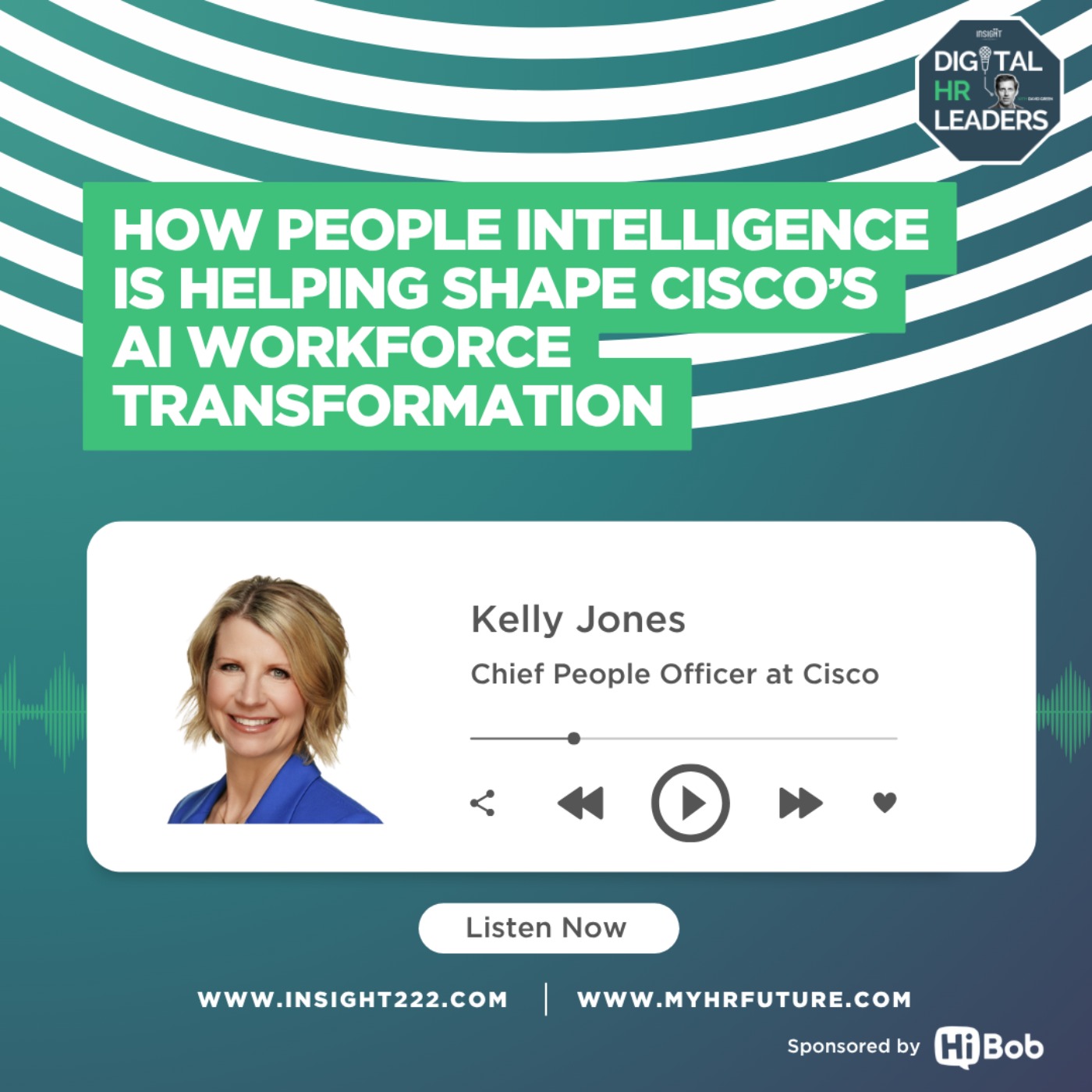 How People Intelligence Is Helping Shape Cisco’s AI Workforce TransformationDigital HR Leaders with David Green · on Agentic AI92 / 100
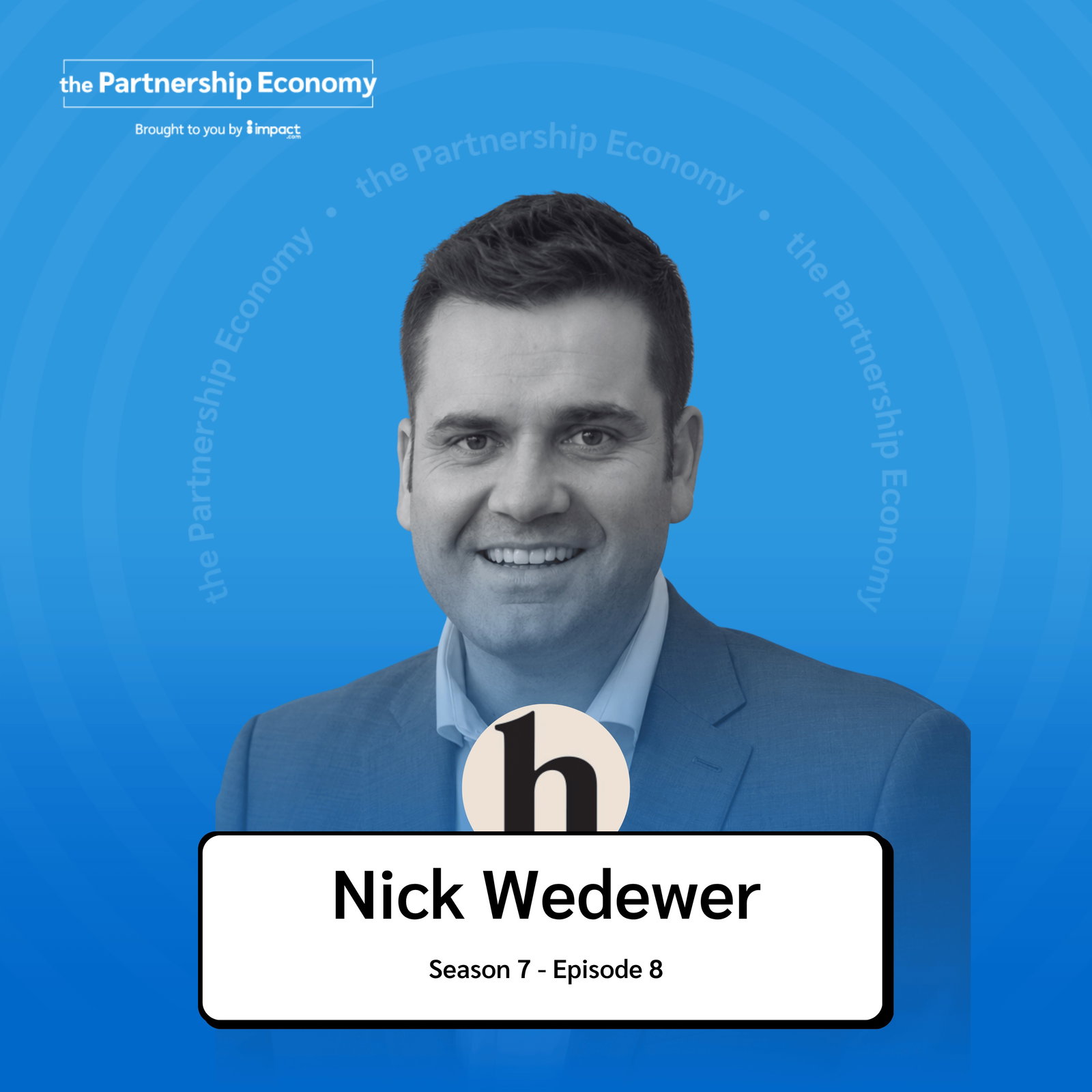 What Marketers Can Control When AI Changes Everything with Nick Wedewer, VP of Growth Marketing at Hims & HersThe Partnership Economy · on generative AI87 / 100
 Measuring What Actually Matters: The Value Layer of AI Scale58 / 100
 Finance: Powerful Decision Engine, Not Passive Scorekeeper
 From Copilots to Workflows: Where AI Value Actually Sits
 The Governance Problem: How AI Scales Without Losing Control
 Beyond Rebranding HR: Building People Strategy That Performs