
Full-Funnel B2B Marketing Show · 2026-03-02 · 49 min
Key moments - from our scoring
Substance score
63 / 100
Five dimensions, 20 points each
Enterprise sales success increasingly depends on treating buyers as humans first rather than targets for constant pitching. Lauren Goodell draws from her experience at Microsoft and Salesforce managing multimillion-dollar portfolios to argue that the highest-value deals come from deep research into buyer personas, preferences, and business drivers - not from automated sequences. Her platform Zenia automates research tasks but emphasizes the importance of human judgment in applying findings. CMOs can enable this shift by building role-based playbooks that segment buyers by tenure and personality type rather than just industry and company size, and by leading with a consistent rule: ending every call by asking "how can I support you?" Marketing and sales should be deeply integrated, with marketing owning inbound intent signals while sales owns negative signals throughout the deal cycle. The approach requires trust between teams and moves away from traditional MQL-focused metrics toward collaborative account planning. Real examples - like a virtual awards ceremony that created genuine engagement with prospects - demonstrate how marketing can support human-first selling when both teams work together toward shared outcomes rather than operating in silos.
Show results over time with data proving that caring about the buyer generates larger, longer-term deals. Model the behavior yourself by conducting "no sales sales calls" focused on understanding the buyer's role, goals, and challenges before ever mentioning your product.
Check the buyer's social media to understand personality traits and interests, read the company's 10-K to understand business drivers, and identify how the buyer's compensation is tied to company initiatives - so you can show how your solution directly impacts their bonus or goals.
Instead of segmenting only by industry or company size, segment by tenure in role and personality type. For example, newer executives need to be made the hero, while long-tenured executives need reassurance that change isn't scary.
Use AI to automate data gathering and research tasks, but always verify findings and apply human judgment before using them in conversations, since inaccurate insights destroy credibility. Save detailed personalization for buyers who have shown high engagement intent.
Marketing should create targeted playbooks and story-driven positioning that helps sales advisors explain not just features but best practices and the right path forward for the buyer's specific situation.
Our reviewer’s read on each dimension, with quotes from the episode.
The episode delivers solid, practitioner-grounded advice on enterprise sales and human-first selling, with specific frameworks like stakeholder mapping and the 'no sales' calls approach. However, it relies heavily on familiar concepts (relationship building, personalization, adding value) and lacks dense novel insights - much of the advice is actionable but not surprising to experienced B2B operators. Several sections meander through obvious points.
I would invite them to lunch, I would invite them for a walk or a coffee, get our nails done, just crazy different things, and it was all about hey, like, who is andre, what's important to you, what's your goal and your role this year, what's keeping you up at night?
deals are thirty five percent and maybe it's thirty six percent more likely to close if there's more than three stakeholders involved
The guest articulates a coherent philosophy around human-first selling and relationship-based enterprise deals, but the core ideas - understanding buyer psychology, doing research before calls, staying top of mind, multi-threading - are well-established in enterprise sales playbooks. The stakeholder mapping framework and the distinction between inbound/outbound signal ownership offer some structure, but the thinking is incremental rather than contrarian or first-principles.
we build Zenia to automate a lot of those manual tasks that we would do of going out and searching those thirteen different data points of who this person is, all of that kind of stuff. But it will also be looking at you know them and using your discernment and using your judgment
coming in with a prescriptive point of view and saying we would love for you to purchase and become a customer, but more importantly, let's do X, Y and Z first for us to get there
Lauren Goodell is a credible practitioner with substantive enterprise sales experience at Microsoft and Salesforce, managing large ACV deals and building teams. She now runs a sales platform, so has skin in the game. She speaks from field experience, not theory. However, she is not a top-tier C-suite exec or market leader of a major company, and some of her expertise is filtered through her product lens (Zenia).
spent nearly educate at Microsoft and Salesforce right as an enterprise accountant of managing multimillion portfolios achieveing top tier results
I have a rule for all of my employees that they need to and every call with the same question
The episode includes some concrete examples (the virtual awards ceremony at Salesforce, auditing websites, the 50-point website audit, Trivia Fortune 100 deal closed two months early) and specific percentages (70% of sales cycle before first contact, 35-36% likelihood of close with 3+ stakeholders). However, many claims lack hard data - no metrics on the impact of relationship-building, no ROI numbers, no timeline specifics on how long the 'no sales' calls approach took to yield results.
seventy percent of a sales cycle is actually completed before they ever talk to a sales rep
we nominated a bunch of our prospects to become award winners, and then we had a virtual award ceremony where we gave awards to some of our prospects and some of our current customers
The host asks coherent, relevant follow-ups and creates space for the guest to elaborate. Questions are generally well-structured (e.g., the CMO challenge question, the multi-threading stakeholder question). However, the host often lets claims pass without pushback, rarely presses on feasibility or edge cases, and uses extended preambles that pad airtime. There's little productive disagreement or skepticism.
So imagine for a second you are a CMO or B two B CMO right sell an enterprise high ACV product, long sales cycle, like a lot of buying committee members, and you see this problem internally, right, and you can't influence it because, like you said, you need to have the results. But like you have the choices. You need either to start selling to prove that it works right, or you need to have another solution. So if you are a bit to B CMO right in this scenario, what would you do?
I'm just also wondering from your experience of winning these deals, how do you how do you need to nurchurre the buyers across long sale cycle? Right?
Computed from the transcript - who did the talking, and the words that came up most.
For the new episode of Full-Funnel Live we've invited Lauren Goodell, CEO at Zinnia and former enterprise AE at Microsoft and Salesforce who hit 220% quota and made Chairman's Club. You now the harsh B2B marketing reality: enterprise deals take 12-18 months and involve 10+ stakeholders, but most sellers act in "always be pitching" mode. Lauren did it differently to win enterprise deals. She knew her buyer's dogs' names. She knew how the CFO was compensated. She knew exactly which jokes would land. We break down how marketing can actually enable human-first selling - not with more slide decks and battle cards, but with the research, POVs, and nurture support that top sellers wish they had.
Transcribed and scored by The B2B Podcast Index.
This is the Full Funnel bt B Marketing podcast, brought to you by full Funnel dot io. Let's start everyone, and welcome to the new episode of All Final Life. Today, I'm going to chat with our beautiful guest, Lorem Goodel, co founder basically founder and CEO at Zina and X Enterprise account executive at Microsoft. So we have not a typical let's say topic for our BIT to B marketing podcast.
Right, we're going to talk about how to generate enterprise deals with human first sealing, but we're going to take another angle or perspective, right, thinking about marketing enablement, how marketing can help sellers as well with the human first sealing. Right, I'm considering Lorenz experience. I think we'll have a fantastic perspective and fantastic chat. As always, guys, you're very welcome to ask any questions in the chat.
Will pick them up and cover them and plarn. Thanks a lot for joining me today. Thanks for having me. It's be fun.
Guys. Let us know please in the chat. First of all, what's your role in marketing or in sales. I'm just curious to see what is the proportion today between marketers and sellers so maybe it was my bed just thinking about how to cover this from CMO's perspective.
But anyhow, let's see, let's see what is your ole jury sales partnerships. Cool, thanks a lot for sharing. Let us know guys as well. And I'm just curious to see.
And meanwhile you're typing what I'm just thinking about where we can kick it off. You spent nearly educate at Microsoft and Salesforce right as an enterprise accountant of managing multimillion portfolios achieveing top tier results, and you have definitely seen sales reps who kind of treat every interaction with the buyers as an opportunity to pitch right. You can act on linked In, you do the pitch swap, and you meet people that you try to immediately pitch your product right.
So we all know this behavior. And you know, like the sales reps who I think and long term who try to build the relationship right, which is essential in enterprise sales. And I know you have preaching being human fast as well with your new product, but being human first and doing social sell and means changing the mindset from always be pitching right. So I can questions here.
First of all, how do you change the mindset of your sales team? Yeah, I think the biggest thing with this is that at the end of the day, we're all human, and so you can go in and you can pitch to somebody and you can share their product, but it's more important to understand who they are before you ever have a conversation. And the way that I used to approach it back in my Microsoft days was I would actually do the first couple months of every fiscal year do what I would call no sales sales calls.
So I would invite them to lunch, I would invite them for a walk or a coffee, get our nails done, just crazy different things, and it was all about hey, like, who is andre, what's important to you, what's your goal and your role this year, what's keeping you up at night? How can I support you? And never even pitch anything Microsoft. And the goal of that was just to better understand who they were and so that they would come to me first if they ever needed anything.
So when you talk about changing the mindset of a team, I think the number one most important thing is showing the results of what happens when you actually leave human first and it's not going to be immediate. Of course, you're going to get some shorter tra int actional deals if you pitch, pitch, pitch, but over longer periods of time, showing the data that actually proves that actually caring about the other human is really what works. That makes perfect sense. By the way, guys, I'm dropping a link to Lawrence profile and linked in and help product Zenia the sales acceleration acceleration sorry platform, so I can check it out.
I think it's just it's something that will make much more sense while will be flowing through this conversation because we'll be sharing tons of different examples for AIO. And thanks a lot guys for Sharon. It's nice to see that we have a healthy means between marketing and sales. So that's going to be interesting.
Now. The second question that I would love to ask you probably the harder one. So imagine for a second you are a CMO or B two B CMO right sell an enterprise high ACV product, long sales cycle, like a lot of buying committee members, and you see this problem internally, right, and you can't influence it because, like you said, you need to have the results. But like you have the choices.
You need either to start selling to prove that it works right, or you need to have another solution. So if you are a bit to B CMO right in this scenario, what would you do? How would you try to ignite that shift if you will? So I think this is twofold.
One is how you prepare your sellers, and then two is how you lead by example, And the first one is leading preparing your sellers being able to provide playbooks. So every sales org I've worked in or led, we've always had playbooks of Okay, if this person is a CMO and you're selling to a CMO, do this. If this person is a VP of sales, do this. If this person is in this industry, here's the playbook.
But I think we're cmos have a really unique opportunity is instead of saying I'm going to segment them by industry, by size, by role, how about we start segmenting them by tenure. If they're newer to role, then you want to make them the hero. If they've been the role for a long time, it's more about change management, and the change isn't scary, and so we need to start shifting our approach from segmenting from what it looks like on a resume into who somebody is as a person. There's a lot of psychology that goes into the way that somebody shakes your hand.
If they're going to be more dominant, you sell to them very differently than if they are more of a relational type person. And so cmos have this unique opportunity when creating these playbooks to say, Okay, not all cmos should be treated alike, not all manufacturing industry should be treated alike. It's really comes down to the person on the other side of the screen or the call, and so when building out those playbooks kind of catering towards that. But the second part of it, which I think is way more important, is leading by example.
So I have a rule for all of my employees that they need to and every call with the same question. And we do this to each other, We do this with customers, we do this with my investors, and it's how can I support you? And that does not mean how can I support you by selling you more software or you know, doing anything with customer success. Maybe that's hey, you're hiring for a different sales role.
I have somebody in my network that might want it. Maybe it's hey, you need a list of industry best practices or a spreadsheet example, for something you can use for setting commissions, like something that we may not even touch. But it all comes down to how can you support the other human And so when you're leading by example, it's not only asking and showing that that's what you do with your clients, but also with your employees and your staff and things like. That, thank you, I love it, and am I credit just to say that.
To actually implement this, you need a couple of things in place. First of all, you need to have regular think meetings, I mean marketing and sales right in weile on account executives as do ours dependent on the company's organization, right, which leads us to actionable account planning. And instead of saying, hey, let's implement one more nurturian cadence or one more outbound cadence, how can we help the specific person from the buying committee. Right, that's the first one and the second one it's planning together what can be valuable for these people, which kind of shifts the narrative from what we want to say.
Right, we are leading platform we are doing this, and that our experts created this content and you guys are supposed to consume it to what these people actually need them today, right? And how can we deliver this? Am I correct with this? To summary is.
Yeah, No, I think you're spot on. And this is always the constant. I don't want to say battle, but maybe battle. The marketing and sales go head ahead with so many different things of like, oh we bring the mqls and salespeople are like no, you don't, right, But more and more the clients we work with our marketing and sales are so the ones that are doing really well are integrated super well.
And I think of each other as you know, best friends of how can we partner together to drive awareness, to move deals forward, most importantly serve server people love it? Thank you so. One interesting fact that I have noticed, and yeah about section on LinkedIn, I mean you mentioned so, I'm just citing it. I experienced this firsthand while sell and loan complex deals at Microsoft and salesforce juggling, back to back meetings, internal dealer reviews, and endless annual tasks made Personalizer a sales process difficult.
But the biggest deals I want I had done the research. I knew the name of my buyer's docs, I knew how the CFO was compensated, I knew the company's biggest initiatives, and how could we help, and you whether or not they would appreciate my jokes, right, So I would love to chat about this, and he'll bit first of all, how they run this research and what's your process? So I mean, that's that's the whole thing of catering a conversation to somebody else, and you know, kind of code switching or matching.
And I am a very casual person. I'm very laid back. I also love bad dad jokes and silly humor. And so if a salesperson came to me and was telling me something and they were super serious and they were all, you know, super technical or just really focused on the facts, I'd be like, hey, like, let's have a little bit of fun here.
But conversely, if I'm selling to a CFO who is really serious and is focused on the numbers and I'm cracking jokes, They're not going to want to work with me. And so it's really about understanding the person on the other side. And so historically what I used to do would be you know, look up Bob on Facebook, look them up on different social media. How does he post what's important to him?
Did he get an award for a local men's basketball league? Right? Did he post pictures of his kids? Does he love to travel?
Like all of these little anecdotes are not about me being like, hey, by the way, I saw you into Paris with your family last week, because that's creepy. It's more of like, Okay, this person is adventurous, so that's starting to tell me some of his personality traits. Oh he posts funny jokes, okay, so I know that I can be myself around you know, these meetings. And obviously there's that social those soft skills that side.
But then it's also important to understand what drives them in their role. And so if a company is public, I would read a company's ten K or annual report understanding what is driving their business decisions. But also there's a little section where you can see where any executives how they're compensated, how they'll get their annual bonus. So if in there it says, you know, the CFO is compensated by increasing margin by ten percent this year, gets his annual bonus.
Then it's important for me to show, even if that's not the main ROI of my product, how it can money back in his or her own pocket. So it's really about doing the whole analysis of the research there love it. How would you address the biggest I don't know how to say, concern, challenge or maybe the desire of modern marketing and sales teams to automated this process immediately with AI? Right, because it's easy you can ask, doesn't matter what tool you I use it right, But then AI will bring you the research, all the judgment, etc.
But I feel like you said, just manually checking this helps you to understand better who you are talking to, right, because otherwise you are just delegating all the judgment to AI. So I'm just wondering, how do you address this? How would you explain the benefits of it when literally nobody wants to do the manual research anymore. Yeah, I always say trust but verify.
So you know, we build Zenia to automate a lot of those manual tasks that we would do of going out and searching those thirteen different data points of who this person is, all of that kind of stuff. But it will also be looking at you know them and using your discernment and using your judgment. So where AI comes in is, yes, it reduces a lot of the manual tasks, but what we need to do is then apply our own judgment here and saying, okay, yes, there's context. I need to make sure if this says that this person is Olympic athlete, I want to make sure that they are really an Olympic athlete, because I will lose credibility and trust if I bring in something that's incorrect.
But where there's so many automations out there with you know, sequences, caveence's mass email campaigns using that one liner of personalization that we often talk about, like Hey, I see that you went to Nebraska. That's great, will you buy this you know, new shopping cart? And I'm like, what are you talking about? This isn't nothing to do with it.
So where AI and automation is really good is for awareness, brand awareness, market awareness. So kaydences and sequences still have an important place. It takes a lot of touch points for people to understand who you are as a company. But then taking that one step further, Oh, has somebody opened up that sequence or cadence multiple times has it been forwarded?
Now is the time to spend a little bit more time digging in and understanding who they are. Love it. Thank you so much by the way, guys, I dropped the link and the chat to our full final sign as well. Aren as well would be present and as one of the speakers and our ABM track.
So as you know, we just announced it officially yesterday. Will be host on it in one month on twenty fourth to twenty six off March, so make sure to sign up and print your teams. It would be fantastic. The lineup is really really great this year, so I'm looking forward to media and everybody there.
And you mentioned you love jokes, So what's your favorite bad joke about marketing and sales collaboration? Oh, you're putting on a splot here. Well, I think let me come back to that one. Let me come back to that one.
Sure, sure, so we can definitely cover it later. But anyhow, so we covered you mentioned like when it makes sense to you say yeah, right, and when it makes sense to dig a little bit deeper manually. So what I'm wondering is how marketing can help with this process. Basically, and what marketing can handle for sales.
Yeah, so I think this comes back down to building those playbooks. It's one of those big things, right as a marketer, that's a big part of your job is one message cohesion. So sellers go rogue sometimes. I know that as a seller who has gone rogue and made up my own you know, messaging and things like that, where marketing is like Lauren, this is not what we're planning on doing.
But marketers are rock stars are copy Their rockstars are being able to add a story in the make that seems relevant and also positions the company and the products and the service is in the best life. And so when you're putting together those playbooks of how to how to approach somebody again, I think it comes down to taking it one step further and not just focusing on the overarching resume, but focusing on how do you sell to different people in different. Contexts makes perfect sense and pothers think about signals about that talking today about signal based GM or you like, need to to create different signals first plots part of the right into marketing on sales motions.
Who shoult on this and whether it's like from you obviously from your perspective, should be on the market on site or sales site. I I'm going to go back to saying that I think that sales in marketing today should be completely intertwined. It should be hard to tell who's on what team. And that's why I think most companies are moving towards that go to market team model versus marketing and a sales org.
But I will say when it looks when you look at signals, the way that we structure it is that our marketing team owns inbound signals. So where somebody went to a landing page, showed up to a webinar like this, right, if they commented on a LinkedIn post like those are inbound signals of intent. But I think the sales team actually it's equally as important for them to own signals or negative signals. So in a sales process, for example, I often will send somebody a thanks which is like a small little gift that goes to their email, and I'll send them a thanks to Latte, which is a gift card for a coffee.
And a negative signal is if they don't redeem it, they probably aren't going to move forward. And those are signals people often forget, and so that's really where I think the sales teams need to lean in throughout the sales process versus having marketing bring those inbound ones as well. Love it, Thank you so much. By the way, we have one joke from Judish why don't skeletons how I go to the movies because they have nobody to go with?
Jummy, I don't know you yet, but I love you already. So, oh, we're going to be best friends. This is great. Thanks a lot for sharing.
So. At Zenia's website, I read a testimonial from Andy Hite, P of sales at Trivia, right, so, and he said something like we closed a fortune one hundred deal two months earlier than expected because we had the right point of view going into procurement negotiations, which you already mentioned right the po We can you bolok us through please your three process of building POV and share how like, what's what's the marketing role here? Right? How they can help?
Yeah? So, walking into a customer a point of view is one of the biggest differentiators in today's world because now seventy percent of a sales cycle is actually completed before they ever talk to a sales rep. Before, people would call me up at Microsoft and say, hey, you know, we want to buy Azure for the first time. We want to move to the cloud.
What does this mean? What are the cost implications? So I have to hire somebody new? Should I be scared?
It would call me first. Now they go to chat, GPT, Now they go to the company website. Now they go to all these other things. And so when they're coming in with a preconceived notion, they're not wanting to talk to a sales rep to be able to learn.
They're wanting to come to a sales rep for knowledge. And the difference between that is not this isn't facts, This isn't here's the step by step. This is you are now the expert. How can you have a prescriptive solution?
And so we've actually had clients come to us and say, hey, we want to buy Zinnia for five hundred sellers, and we'll actually pause and say, hey, well on a second, like, let's let's learn a little bit more. I want to do a little bit more discovery. And I find out that if they rolled out today, it wouldn't be successful. They don't have the right groundworking place.
And so it's about coming in with a prescriptive point of view and saying we would love for you to purchase and become a customer, but more importantly, let's do X, Y and Z first for us to get there. So POV is all about building trust, helping people understand the right solution for them, and marketing can really come in and help without positioning. And so sellers are really good being able to fit, you know, fit a solution into a budget. Marketers can really help tell that story and build out that ROI and say this is why we think we should get there.
And that's where the two coming together is really truly magic. Love it. So a couple of questions here, does it mean that's ever a sales rep must be a subject matter expout slash have depths theman knowledge? So yeah, yeah, I think go ahead.
I just wanted to say why I'm asking this because you know, like fifteen years ago, everybody bought in the predictable revenue model, right, which was all about hire more SDRs, sent most sequences, call more people, et cetera, and then pass this to account executives who are supposed to have the demain knowledge. So they can bring just somebody from product right, or some internal let's say sales architects. They're selling the technical products just to help with the with the sales process.
This, this is kind of the context, right. So I'm wondering, why does that mean that every sales rep today must have the demain knowledge or no. So I think that intelligence is now baseline. You know, every every sales rep should have become the expert in their own products or services.
Every sales rep should have the answers simply because everybody else will have the answers. And what I mean by that is you know LMS, and it's crazy, Like any information that's out there, any case study that's out there, if you have copilot, if you have chat, GPT, if you have any of those things, you should have the information at your fingertips. Now, this is the same kind of use case as teachers used to say, you're not going to have a calculator in your pocket. You need to be able to do math.
Now we have a full computer at our pocket. And so it doesn't necessarily mean remember every statistic from every case study, but being well to use your resources. Yes, intelligence is important. Being a subject matter expert but more importantly being an advisor on the best practices, how to move forward, and being able to feel comfortable giving that advice.
Love it, and also what I'm wandering Everson, that would have discussed so far right, just to even to be able to build this point of you, right, you need to build some trust, some part with your Brian committee, and that leads meet a couple of leessions that I want to discuss with you about the enterprise marketing and sales playbooks. So I mean, let's let's just take the default number. Enterprise deals are in between twelve to eighteen months, and the typical playbook is right, Marketing builds awareness, generates the mkls, maybe in the best scenario, generate the inbound pipeline, maybe influenced the early engagement, and then sales take over these leads and marketing essentially disappears.
Right then we know what happens next six months later, the deal stalls, the champion goes quiet, nobody knows why, and we have the problem of blaming each other. Right, So this is why I would love to dig different to get your perspective. So, from the seller's perspective, when did you actually feel marketing's awareness work and what made you saying okay, marketing made this easy about as I did this despite marketing. Yeah, I've been lucky because Microsoft and Salesforce had rock star marketing teams and so and obviously my team at Zinnia is wonderful as well.
But working at large companies having these, you know, very delineated organizations, the marketing teams I worked with, where I was like, dang, this is a really good partnership was of course, we all want inbound leads. We all want inbound leads that we feel like are qualified, that want to have good conversations with us, But they never came from, in my experience, you know, a large mass outbound campaign. It came from really targeted marketing projects. And what I mean by that is, you know, at one point at Salesforce, I said, hey, I've got a book of business, and I've got some customers that are using us today and I have some that aren't, but I want them to be, and I would like to create a virtual awards ceremony.
Marketing. Can you help me with this? And so we nominated a bunch of our prospects to become award winners, and then we had a virtual award ceremony where we gave awards to some of our prospects and some of our current customers for great marketing campaigns they had or a cool e commerce site or things like that. And it was so silly.
It was like these little trophies that we sent out, but it was all about, Hey, how can I work with marketing who can execute an awesome event to be able to drive that awareness, build that pipeline, and then we end up closing a heck of a lot of deals from that. And so it's really those partnerships where you can lean in together and say you're an expert at putting on events and making this slow seamlessly. I don't know what the heck I'm doing, but I know the right people to bring in the room.
How can we bring this all together and partner. So I think it's about getting creative and just kind of building that partnership. I love it, and honestly, this is like what I feel is very different about today. Right, But all came up to this Creative Solutions was out.
Yeah, I was out Chajipito and asked what to do outlining and the entire account engagement plan. Right, So we were just thinking together, Okay, how can we do this? How can we attract the attention of these people? How can we build that relationship?
Right? And that worked? And what is really important here as like you said, you didn't just sit down this marketing. Okay, So what would be the best personalization to put into these kind of outbound cadncies to sell to these people our software?
Right? That was okay? How can how can we attract the attention first and build that relationship? Which is fantastic, which leads me to the second question today.
Do think create an account awareness and generally speaking creating print awareness? Is it purely marketing and responsibility or marketing and sales must work together on this? No? I think they always have to work together.
They always have to work together. Like I said, there's different skill sets and that's why we have different rules and titles. But ultimately, you know, I, as a seller have information that marketer doesn't because I'm close to the field. I talk to the customers every single day.
And from the flip side, you know, marketers are seeing you know, mass numbers campaigns, They're seeing what's working and what's not. Where I'm so in the weeds sometimes that I may not see that, and so I think it's so so important to be able to partner those kind of things together. But yeah, I mean with that, there's uh, that's that's why we have different roles in different titles. So if we'll think, I just would love to get your take here.
If ill think about the role of role of sales reps as there are account executives, even sales leadership, what they should do, how they should work on kate and account awareness and buy a mask. And because last year were ram the state of full funnel bit the market and research and we actually spoke to like a country called the exact number, but close to eighty sales leaders and all of them can plain that lack of account awareness is the number one problem that they wish market and would help with.
So that's why I'm asking. I'm just curious from your perspective, what exactly sales could do to create account awareness. I mean, I will always, always, always be a proponent of social selling. And if you're not familiar with social selling, you know, social selling is about building relationships with your customers, not you know, not just through emails and meetings and things like that.
It's also about building relationships through comments and likes and content. And so as a seller you have the capability of being your own marketer as well, and you have a platform through things like LinkedIn where you can share best practices, case studies, stories from the field, and that is another way for you to be able to continue to drive awareness. Again, what you want to do is the top of mind. And so when somebody says I'm ready to buy this marketing solution, I'm ready to buy or get a keynote speaker for this conference.
Oh, Lauren posts about that all the time, So she's going to be the first person I call because I see that constantly. So that's really where that social selling content creation comes in. Loalid and I thought, I agree, it's something that will kind of just the essential part of any ABM program that we're doing. And we're just integrated and the account based content strategy, making it really account based and enable on sales to be kind of in front of their prospects, right why because I mean if full look today, right, So it's not a surprise in fact anymore.
The drop is get them down everywhere, the organic creach on all social platforms, the organic creature from Google, right, so today just to even to be not just it's really difficult. And if we think of about any channels, who has the best network if I going to create the content? Right, sales, because they're connecting with these people every single day, right, but they have literally two choices. They can just promote purely let's say, market and content in a sense like this is what we want to say.
We produce this. We don't really care if it matters to you, but we just think it's important. Right, or we start talking about something that is relevant to these people that jobs to be done, or like you said, if they are new, right, so for example, the the like first ninety days to be in a specific role, right, or like how to initiate the change management in the organization, right, like for more mature leaders, et cetera. And this is essential because then it's it is something that sales can use to ignite the conversation.
Right with this, buyers, Hey, we produce that asset? Is it treason NATed? Would you change something? Rightious involving people to start the conversation and seeing what even like the thing that you have created, if it resonates or not at all?
Right? So which is essential. So absolutely answer. Thanks a lot for Sharon.
I'm just also wondering from your experience of winning these deals, how do you how do you need to nurchurre the buyers across long sale cycle? Right? Because quite often market and also thinks in terms of campaigns, or most more precisely quota campaigns. Right, we'll do this drip campaign, will just do some air color, et cetera.
And sales might be doing just outbound cadences. But if the cell cycle length is eighteen months, right, we need to constantly build that relationship. So what's what's your best practice of generally speaking, what works? Yeah, it's all about staying top of mind.
It's all about staying top of mind and adding value every interaction. And that doesn't mean like, oh, here's another case study twelve times over twelve months. It's Hey, hey, we talked about last week that you recommended I go to this restaurant when I'm in Denver. Here's a picture.
I'm going to text you from the restaurant. Hey, thanks for this recommendation. The scalps were great. Right, this is building relationship.
It's staying top of mind, but it's also showing them that you're thinking about them, that you're caring about them as a human, that your conversations are not just transactional, that you really care about building the relationship, understanding who they are, and then even taking their advice of getting the scallops at a certain restaurant. Right. So, I try not to let too much time pass before between conversations. Even if we're like, hey, we're going to touch base in three months, I'm still going to check in between and send little friendly things like that, like a little coffee from thanks, you know, whatever it might be.
I will just be able to send those little touch points to continue to stay top of mind. And I don't know if it's a dumb question, but that I would love to ask you how many touch porns are properate? So how what's the let's say, how can we just know that it's not too much? Well, you should text them once an hour for the whole twelve to eighteen months.
No, it's all it's all about nuance, right, And so there are some I always love to be on a texting basis with my key contacts and key stakeholders, but that's not comfortable to everybody. Some people feel like that's you know, too far, and so I will never text a prospect first. I will always say hey, if you need anything, shoot me a text, or if you get to dinner early where we're meeting, shooting a texts. And so I allow them to open that door if they're comfortable with it.
And some of them will reach out to me and say, hey, Lauren, I heard this song like I know you and I both love this, you know afrobeats DJ. And so they'll send me things like that. Again as a human and so the more interaction I get in return, if I send them something they're like, oh my gosh, I love that so much. I know that's something they enjoy.
It all nuanced. If I send that to them and they send me a thumbs up emoji, I'm like, all right, okay, I'll maybe pull back a little bit. But there's no one size that's all answer. And that's why automation doesn't work for a lot of these more enterprise deals.
Love it and care also just touched. Let's say the general principles. I'd just love to ask one most thing about specifically, engage on the big buying committee group. Let's say you have seven plus people, right, you need to engage with, which kind of means that we need to do constant multi threading.
Right. It's just also to create the right perception for everybody that we're not talking that you're just reaching out to CFO city all the time. Right. With these touch points, it means that you need to engage with multiple stakeholders all the time and try to stay top of their minds.
So quite often inside buying committee, these people might have different goals. Right, even if there is like one account priority or strategic initiative, these people might have completely different goals. Let's say CMO might care about prans, CFO is caring about ro I write procurement, about risk mitigation and compliance and all of that stuff, right, and end users are caring about the workflow's jobs to be done, et cetera. So my question is how do you actually map the stakeholders because if you are selling to BEAK enterprises, it's really challenging and how can you figure out what each of them actually needs?
Yeah, I mean what I actually do is I have a stakeholder map framework that I use and this is what we train our clients on and this is what my team uses. But especially in large enterprise deals. It's important to nob labelient and it's not necessarily just who reports to who, what they're year has been. There's a lot of political capital that goes into this.
You know, Oh, the chief of staff is actually the original founder's son, and so while he doesn't have an executive title, he has a lot of influence. Or this person you know is a blocker because they used our competitor at their last company. Like, all of those things are really important to know, and so I use a kind of a stakeholder mapping framework to say, Okay, this isn't the person who's going to be making the decision, but this is the person who has their ear, This is the person who decides the budget, this is the person who can block me, and this is the person who's a champion.
So this framework not only maps everybody out and how they fit together as puzzle pieces, but it also identifies where is somebody maybe a champion and you can lean in, and where is somebody a blocker. And a blocker doesn't necessarily mean they don't like you. It just means that maybe they have other priorities, they don't have the budget, and how do you kind of win that person over and transition them either into neutral or being a champion as well. And when it comes to multi threadom is it purely a sales skill or market and can help with this as well.
Oh, marketing can absolutely help And a lot of times this is something where it is very strategic to actually have marketing engage with one contact and sales engaged with another. We know that deals are thirty five percent and maybe it's thirty six percent more likely to close if there's more than three stakeholders involved. And so you know, we've all had an enterprise deal. We've been working with a champion that we love and they get promoted into a different org and now this is no longer under their purview, or they leave to go to somebody else, and if you lose that relationship that's there, the deal fails.
So there's also instances, like we talked about the politics, where the person who is a big champion for you doesn't really want you to go around them or build other relationships. They want to own this because they want to be the hero. When that's the case, it's awesome for marketing to be able to say, all right, you own the relationship with the CTO. But I'm going to invite the CMO to this table or this dinner or this webinar, and I'm going to start building that relationship for you.
So it's not you going around them, it's just us kind of circling them with a hug. So does it mean that marketing should also actively be in the trenches, not just let's help with the infrastructure and just enable them with the content? Right? My, You know, the way that I structure our team is that marketing is in the trenches and they do work directly with our customers.
Doesn't work for every organization. There's different cultural and you know, stakeholder differences. But if I were to recommend the way to build on an organs absolutely have marketing touch, customers have salespeople understand the data behind. It, love it and I have the same opinion tous.
But that's sometimes it's hard to sell to the honest. But it's again it just depends on the motiation of the leadership. Anyhow, guys, let us know in the chat place, how did you enjoy this episode? I already have seen some great feedback back from Daniel.
Thanks a lot for kind words and ll not already here but maybe you'll be catching up at the second part of the recording. Jury. Again, thanks a lot for the jokes and the feedback as well. Let us know guys in the chat, how did you like it?
Nick class, wonderful stuff. Thanks a lot I mentioned guys awful final assignment and again Lauren will be presenting this so don't miss it. The link is spinned and we'll also for everybody who is listening to the recording right now, you can find it in the podcast description and the podcast itself. And we have some time for community questions, so I'll just bring some of my favorite questions.
Claudia Martins asked us how to escape from just another sells rapperst and to sell to me Samson? So, how to escape from that? Probably from the buyer's perception? Right, this is another sales rep that is trying to sell me something.
Oh my goodness. So the question is how do I escape a sales rep? Or how do I be a sales rep that can't be escaped? What's the question?
Yeah, So how to how to escape that perception from the buy right? Even if you have the best intention, like you mentioned, Let's say you want to do the social seal and you don't want to immediately pitch slapon right. But you reach an out and UI bar right, and you can think, oh wow, one more sales rep is trying to pitch me right, So how to how to escape from this? The number one thing is to add value at every interaction.
And so obviously with running a technology company, I'm a product leader as well as a seller, as well as a janitor and everything else, right, But as a product leader, one of the key concepts in creating technology is if you push a button, it means to do some thing. If you do, if you give something, you know, if the person using the software does something, they need to get value in return. Otherwise they're not going to click a button, they're not going to fill it a form, They're not going to do so you have to give them that satisfaction.
It's the same thing in a sales process. If you are going to ask them for a meeting, they need to get value in return. If you're going to send them an email, they need to get value in return. And so some things I used to do would be like, hey, if I'm trying to sell e commerce to somebody, I will send them an audit and say, hey, I audit your website fifty point audit.
Here's some things that you can do to improve your website even if you never buy from us. And so then redoing my email them, clicking through that, spending an hour looking at it is actually providing them value before I ever ask them to, you know, buy anything from me, before I even broach the conversation of hey, let's go into a sales process, so you. Just share on these examples, and the question from Christine I came up and then that during every interaction gives some examples please.
So I'm just wondering as well if if you don't mind, I would just quickly fall up here. Right, So one of the things, like you said, you have audited the website and you just shared some improvements, which is absolutely valuable asset. But let's say if you are connecting the first time on LinkedIn, right, is that appropriate to say this immediately? Hey, you know I've just reaching out to you because I have audited your website.
Isn't that kind of I'm just thinking about a few sales reps who said, like, oh, but they might perceive it's just creepy, right, so they like and why they even looked at my website to share this. So what as some sorts here and what is appropriate? Yeah? I mean again, everyone has different you know, willingness to to interact with sales reps.
But with that, yeah, the pitch slap, you know, I hate nothing more. I get a couple hundred messages on LinkedIn to day, like a couple hundred, so it's very hard for me to respond. And the ones I do respond to are people that take the time to actually cater a conversation to me. I've had a bunch of people send videos, Hey, Luren, here's your website if I know readoing websites and they're like, here's how I would improve your website if you would allow me.
And I will always respond when somebody puts the time in because it's a value exchange. They took the time which is valuable to be able to give me some feedback, which is awesome. If somebody sends me a copy and paste of something else, hey, I would like to send you this is that Okay, I'm like, this is the same copy and paste they send everybody and I won't respond. And so my opinion is build a relationship before you make an ask, and I love when people will add me on LinkedIn interact with my content comment.
I still start seeing their name over and over and I'm like, all right, I know who Judy is. You know, I know who Christina is. I know who these people are because I see their name, I see their picture, I see their comment, and then when they reach out to me, that's that social selling. We've already started building a relationship, even if it hasn't been a one to one interaction.
So before reaching out and immediately saying hey, by the way, like I want to do this for you, it's more of like, hey, I'm getting to know you, I'm getting to see your style, and by the way, I think I can provide value. I did this for you. Take a look if you'd like to spend fifteen minutes going through it. Would love to have that conversation.
And that's just one way to do it. Just wanted to quickly fall up. You know, from the perspective of sales reps, who would say, yeah, that makes perfect sense for people who are silent to salespeople or to market and people because they're active on LinkedIn. But what if my buyers are not posted anocent right or In the best case, they just republish, you know, the HR's post by a hian or like the corporate awards s from the company's LinkedIn page.
What would you say, Yeah. So it's all about meeting them where they are. If they're not posting content, then that's not you know, obviously you're not going to be commenting on their company's web page all the time and being like, Wow, I love this great marketing copy that you know is out there. It's meeting them where they are are going to local chamber meetings, are they going to a volunteer event.
If they seem like they are more stoic and reserved, then yeah, then you want to maybe just send them an email. But it's all about showing up differently and catering it to them, and so some ways I like to think outside the boxes, maybe sending them a loom video that's a little bit different than an email alum video of you talking to them as a human, not reading off of a script, saying like, Hey, I looked at your website. I think this is awesome. By the way, here's some things that I think that we could do to help you.
If this is of interest, great, we'd love to have a conversation. If not, we'd love to just support you whatever way possible. So you know, whether it's a loom video, a voice note on LinkedIn, whether it's sending them a coffee, something just a little bit different outside the box. I love it, I guess so much.
And let's pick up the last question, which is quite a long one from gallaf What goes in market and create a playbook? What are the parts of this dog? What is to include and what depths which sales actually use us. I have learned that audience work bad and playbooks get all very quickly now one uses, but audits are highly focused and relevant.
Yeah, this is where AI is a beautiful thing. It is because playbooks do get old quickly. And you know the way that we work with organizations is whether it's through this ny actual platform or through custom GPTs, custom agents, custom workflows. We will say, hey, we're going to tap into all of the case studies that you guys have.
We'll build out an agentic workflow to say, Hi, I need a case study for this customer. What's relevant here? According to you know the size of the industry, the problem statement, things like that. So playbooks can be dynamic now in the day and age of AI.
But I would say the biggest thing that sales reps want to know is how do you cater a conversation to somebody in a way that they would want to hear it. And so, obviously we are in it. We're in the weeds so often that marketing can do such a good job of pulling us out of the weeds and to be able to say, yes, here's the you know, here's all the features and benefits. But when do I use each for what?
And so, like I said, catering those playbooks to personas. So this is a CMO who is really bubbly out there social selling. Here's how you interact with them, and here's some ideas for what to do. So if they're bubbly, outgoing, crack a joke, make a comment on their LinkedIn and stand out, be different, be funny.
If they seem to be more reserved, maybe something the playbook could be. Here's an ROI calculator. Here is a pre can thing that is a little bit more stoic, right, and so it's giving them different solutions, not necessarily copy and pasting, but here's different ideas for how to stand out and be different for each of these personas. I love it, Thank you so much, and I think we have a cover at all of the questions, so that last a fantastic chat.
Appreciate you coment today and answering all of this questions and you guys as well, thanks a lot for asking fantastic questions, as it helps us a lot to prepare for the podcast to make it right for you first of all. So that being said, as I mentioned, sign up for our assignment. You have the link in the chat and I will drop one more time the link to lorenz LinkedIn profile and her product Zinia, the sales acceleration platform which I can check and Lauren already mentioned it helps a lot your sales teams to build the right point of view and win the deals.
Again, the link is pined right now, so check it out and share with your sales teams. Thanks a lot, Lorenva, coming today and looking forward to your talk. Yes, think so much. It was fun.
Thank you. Have a good rest of the day.
Other episodes covering the same guests and topics, from across The B2B Podcast Index.
 Why AI Will Replace Risk Managers Who Don't Adapt | Kristen BessetteRisk Management: Brick by Brick · on Salesforce85 / 100
 Mike Micucci: Tell the World Your StoryThe BreakLine Arena · on Salesforce77 / 100
 CELab - Ep 185 - The Four Faces of AI Resistance: Eve Kedar on Why Customer Education Should Own the AI RolloutCELab: The Customer Education Lab · on Sales enablement77 / 100
 Leading a Sales Team Through AI Adoption with Jillian Swenson and Alex Cruz at SentinelOneSales Game Changers · on Salesforce76 / 100
 E63: The AI War Machine with Rabah RahilSAAS Operators · on Salesforce74 / 100
 Maisa Fernandez on Transforming Partner Marketing into a Revenue EngineNever GTM Alone · on Account-Based Marketing (ABM)74 / 100
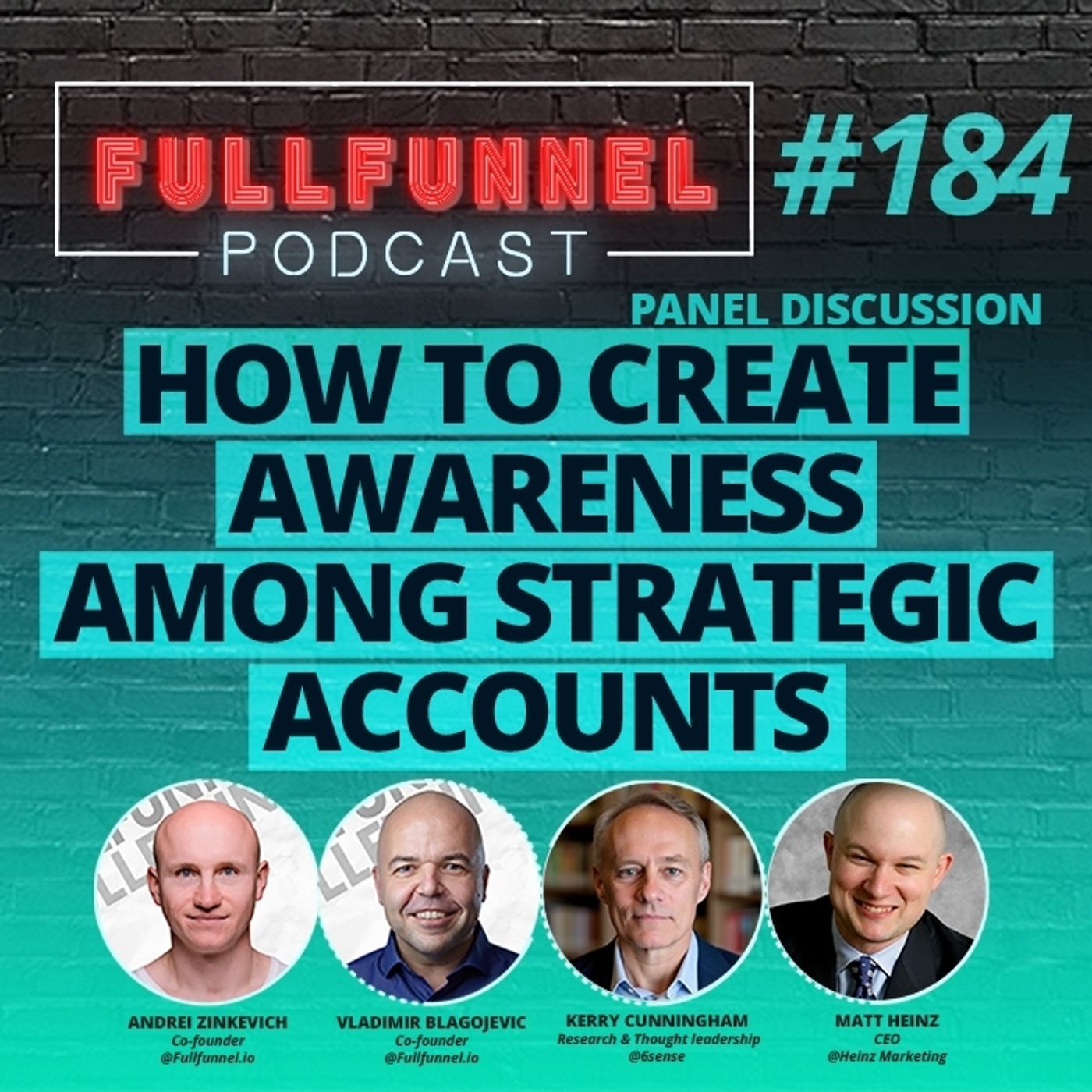 Episode 184: How to create awareness among strategic accounts with Andrei, Vladimir, Kerry & Matty82 / 100
 Episode 183: How to build a global, AI-native ABM function with Tim Rutten80 / 100
 Episode 182: B2B ADS masterclass with Shlomo Genchin67 / 100
 Episode 181: How to implement ABM strategy 3.0 with Andrei & Vladimir62 / 100
 Episode 180: Lifecycle marketing in 2026: How to engage with buyers in AI era with Ashley Faus85 / 100