
Field Notes Podcast by Brand Shepherd · 2026-06-20 · 16 min
Key moments - from our scoring
Substance score
27 / 100
Five dimensions, 20 points each
Dan Krask draws parallels between today's AI moment and the Industrial Revolution to warn brands about impending cultural backlash. He traces how the Industrial Revolution's unchecked mechanization sparked the Arts and Crafts movement - a powerful reaction that ultimately forced changes to labor practices, safety standards, and design philosophy. The Bauhaus movement then synthesized both perspectives, creating mass-produced goods designed with human dignity in mind. Krask argues we're repeating this pattern: AI is advancing with little regard for communities impacted by data centers - which create noise, utility cost inflation, and physical harm, particularly to neurodivergent populations - while China strategically places facilities offshore. Unlike the organized Arts and Crafts movement, today's fragmented society may lack the unified response capacity to shape AI's trajectory. This has direct brand implications: leaders caught defending AI-forward positions against growing public backlash risk severe reputational damage. Krask urges brand operators to zoom out weekly, monitor emerging sentiment beyond their algorithmic bubbles, and understand that being on the wrong side of this cultural shift could be catastrophic for brand equity.
Krask compares AI's current expansion to the Industrial Revolution, arguing that just as mechanization created unchecked disruption, AI is now advancing with disregard for human impact - particularly through data centers that harm nearby communities.
While the Arts and Crafts movement lost the broader 'war' against industrialization, it successfully shaped how machines were deployed by advocating for factory safety, child labor removal, labor unions, work-life balance, and human-centered workplace conditions.
Bauhaus emerged as a synthesis of both perspectives, proving that mass-produced items could be well-designed with human dignity and quality of life in mind - essentially meshing industrial efficiency with human-centered craft principles.
Data centers drive up utility costs, create unbearable noise that particularly affects neurodivergent populations, emit harmful frequencies that may cause physical and mental damage, and are aesthetically destructive with no community benefits.
Brand leaders are often blindsided by public opposition to AI and may post or make statements that put them on the wrong side of emerging cultural sentiment, risking significant brand damage similar to how opposing the Arts and Crafts movement would have been costly.
Our reviewer’s read on each dimension, with quotes from the episode.
The Arts and Crafts → Bauhaus → dispersed seeds framework is a genuine structural insight that a brand operator could actually use to anticipate backlash cycles. However, the one interesting idea is padded with an extended Raymond Loewy tangent, repeated hedging, and a conclusion that amounts to 'zoom out and listen.'
Bauhaus essentially came along and said, you know what, you both have a great point. We need a scenario by which, um, well designed items...can be mass produced but designed very well with human dignity and humanity and a human way of life in mind.
Take some time every week to zoom out, get a sense on what's going on, go to places, hear from voices that you would normally not hear from
Applying the specific Arts and Crafts / Bauhaus synthesis lens to AI backlash is marginally fresher than the ubiquitous 'AI is like electricity' analogy, and the WWI-as-inflection-point warning is an interesting provocation. But the AI-Industrial Revolution parallel is itself well-trodden, and the thinking isn't pushed to a novel conclusion.
AI is the Industrial Revolution, the, uh, the human outcry to that does not have a name right now yet. We don't have an arts and crafts movement yet.
What does an AI fueled warfare look like? Because that's, that could be where we're headed with this stuff if history repeats itself.
This is a solo monologue by the owner of a 20-year brand agency; he has practitioner credibility on brand building but is operating well outside his domain of expertise when discussing industrial history, AI infrastructure, and geopolitics, and he explicitly flags his own imprecision.
My name is Dan Krask. I'm the owner and founder of Brant shepherd here in 2026. We're in our 20th year of business
I'm going to jump around in history and I'm sure some historians will cringe a little bit as I move back and forth freely and with, with not the most precise accuracy
Historical proper nouns (Bauhaus, De Stijl, Loewy, Gropius) give a veneer of specificity, but the host hedges even these ('if I'm remembering correctly, 30s, 40s'), and the data center claims, brand-damage warnings, and China comparisons are stated as unsubstantiated assertions with zero named companies, metrics, or sourced examples.
He was more in the 1930s if I'm remembering correctly. 30s, 40s.
I think Saran Wrap was somehow in there at one point. Lucky Strike cigarette logo.
There is no conversation: it is an explicitly unedited solo monologue that visibly meanders into a multi-minute Raymond Loewy digression before self-correcting, and there are no guests, no follow-up questions, and no structured argument development to compensate for the absence of dialogue.
I don't edit these podcasts. This is, it's proof that it's just me talking.
That's the subject of an entirely different podcast I think. Anyway back to the topic at hand.
Computed from the transcript - who did the talking, and the words that came up most.
History is rhyming, and the rhyme should concern us. This week’s Field Notes is more philosophical than usual. Dan walks through the structural parallel between the Industrial Revolution and the current AI moment: the unchecked deployment, the cultural backlash that followed (the Arts and Crafts movement), the eventual synthesis (the Bauhaus), and the dark consequence almost nobody wants to talk about (mechanized warfare in World War One). The question that should be haunting every brand conversation about AI right now is the one nobody is asking: what is the AI equivalent of World War One? And if you are running a brand, the more immediate question is whether you can read the room well enough to navigate what is coming. Get full access to Brand Shepherd at brandshepherd.substack.com/subscribe
Transcribed and scored by The B2B Podcast Index.
Speaker A: Welcome to episode 52 of Field Notes. My name is Dan Krask. I'm the owner and founder of Brant shepherd here in 2026. We're in our 20th year of business, and in the Field Notes podcast, I like to share some things that are on my mind regarding brand building. And we touch on, uh, a number of things. Sometimes it's an interview format, sometimes it's just me yapping. Either way, I appreciate you chiming in or listening into this week's episode. Uh, I don't edit these podcasts. This is, it's proof that it's just me talking. It's no AI use, no, no, uh, overdubs or anything like that. So what you hear is what you get. And I like to envision that I'm sitting down, I'm talking with someone one on one. Uh, but you're obviously not next to me, so it's just a lot of me talking. Um, but I am a conversationalist. And so if there's any, anything that strikes your fancy as you listen to these podcasts, I'd be happy to, uh, to have an actual conversation with you. So something that's been on my mind a lot lately is how history seems to be repeating itself. And that both intrigues and alarms me. I have equal amounts of intrigue, alarm and hope because of what I'm seeing. And it has to do with AI and the public's response to AI right now. Now, I'm not going to talk about how Brant Shepard uses AI or, uh, how businesses can use it. I'm not going there. I want to talk about this. This is something that's more philosophical and grounded in history and has more to do with the, uh, societal or sociological aspects of it. Now this does tangentially touch on brand building because brands need to be aware of what the temperature of the room is and how to interact with this and where the societal ebbs and flows might lead opportunities. So this is what's been on my mind. Uh, the Industrial Revolution. Back when the Industrial Revolution happened, it was obviously a game changer for the world economy. And yet in response to that, there was a, a, A, um, small, yet very powerful uprising against the machine, against the industrialization. It was called the Arts and Crafts movement. Now you can ask Google, uh, AI Overview for an overview on the Arts and Crafts movement as a reaction to the Industrial Revolution. I'm going to give you kind of the CliffsNotes version. Um, but, uh, it is worth looking into because I feel and I see like this, that is what's Happening right now. We're on the cusp of something like that happening right now in response to AI. So the Industrial Revolution comes along in greed and opportunity and a zest for the machine really spurred, um, reckless behaviors by industrialists who just went and crossed many, many lines with, uh, child labor and workplace, um, environments and safety. And I mean just the list is, is exhaustive. The Arts and Crafts movement came along and said, you know, human craft, human art, the um, the, the skill needed to make something. Craftsmanship matters and it, it needs to still be part of this. And the founders of the Arts and Crafts movement made of such a strong case that this became an entire movement. There were people who were adamantly opposed to the machine age, and they, they really had a strong reaction to it. Now, um, I'm going to jump around in history and I'm sure some historians will cringe a little bit as I move back and forth freely and with, with not the most precise accuracy, but I'm going to give you kind of like I said, the Cliffs Notes, the bird's eye view of history and how this unfolded because it impacts us today. So what happened is the Arts and Crafts movement is having a very strong reaction to the Industrial Revolution. And as part of that, it did create a, an entire movement. And over time, um, the, the Arts and Crafts movement, um, lost the war to the Industrial Revolution, obviously, because right now most of the stuff we interact with on a daily basis is mass produced by some kind of industrial machine, some kind of factory, some kind of thing. And we, we, we accent our lives with handmade arts and crafts types of things, whether that's a homemade piece of apparel, piece of art in our home, uh, something we've bought off Etsy, whatever. Right? So that's your, that's your arts and crafts accenting, um, the machine age. So the machine age won the overall war. However, what was fascinating is the, uh, the, the Industrial Revolution lost its original intent to, to industrialize everything with absolute abandon and disregard for the human condition and human dignity and humanity. What ended up happening is the Arts and Crafts movement had a direct impact on industrialization, and it did so in a lot of different ways. So things like factory safety, getting kids out of factories, um, you could even loosely tie labor unions to this. You could talk about work, ah, life, balance, the work week, um, all kinds of things, uh, you know, conditions in which you work, the, the ways in which factories are built for humans, um, on and on it goes. But then it didn't stop there because along comes the Bauhaus or, and prior to that the De still movement, but specifically Bauhaus were. This really came into effect. Bauhaus essentially came along and said, you know what, you both have a great point. We need a scenario by which, um, well designed items, whether it's a chair, a teapot, um, a vase, a, a uh, house, a factory, a uh, bus, a vehicle, whatever is produced in such a way that it, it can be mass produced but designed very well with human dignity and humanity and a human way of life in mind. Bauhaus ended up being the meshing of the Industrial Revolution and the uh, um, Arts and Crafts movement. Now prior to that you had World War I. And this was a massive impact. And this is what gives me great alarm, is that it took World War I or the Great War for a lot of this stuff to come into focus and for a lot of the um, the public opinion to change about the machine age. This is where the Arts and Crafts movement was not like the star of the show for this, but it had a, um, its ideas were propelled because the Great War comes along. It disrupts and completely overhauls an agrarian way of life for the world. And for the first time in world history, you have a mechanized, A mechanized war where all kinds of atrocities with gases, munitions, tanks, machines and things like that were propelled and made, um, all the more horrific through machines. So you had this, this great awakening through the Industrial Revolution where people were very, uh, enthralled and thrilled to have industry, machine and vehicles and all these things taking over the world. This was new and exciting and wonderful. Along comes World War I and the machines put, uh, into the hands of uh, people with nefarious motives, end up betraying the very people who were excited about this. And so you can even look online and see photos of uh, men who were shell shocked, who experienced severe PTSD from going from a peaceful, tried and true agrarian way of life into this mechanized war and coming out of it, um, either horrifically disfigured physically or horrifically disfigured, uh, psychologically, mentally. The Bauhaus, it was the answer to all of that. But the Bauhaus was disrupted by World War II. And what ended up happening is that created a lot of what I will call little seeds where those seeds spread to the United States, and the United States ends up spreading its ideas worldwide, uh, in a more diluted fashion. Because we don't credit the Bauhaus for, say, the furniture in our home or the toasters or the appliances and things like that. But if you're a student of history and you know, Bauhaus principles and you know what's going on there. You can directly see Bauhaus in that school of thought where it was the meshing of the Arts and Crafts movement and the Industrial Revolution meshed together to create mass produced, well designed stuff that had humans in mind. Um, I, I, I would be um, I would be remiss if I did not mention Raymond Lowy in this conversation because he's a big part of this. He was more in the 1930s if I'm remembering correctly. 30s, 40s. Um, this was a generalist. I, I, Raymond Loewy is probably my, definitely my top three design heroes of all time up there. Walter Gropius, Mies van der Rohe, Gustav Nagel, Paul Rand, uh, those guys, uh, because Raymond uh Lowy was a proud generalist. He designed everything from logos to um, locomotives to streamline things. I think Saran Wrap was somehow in there at one point. Lucky Strike cigarette logo. Um, he was both a physical designer, um, visual designer. He understood that the language of design was ah, across all disciplines. And if you could speak the language of design then you could get into anything physical design, uh, packaging design, logo design, visual design, interior design, architectural design. Design is design to Raymond and that's why I really admire him and I actually consider him to be the godfather of UX user experience, uh, because of the things that he put into place that made objects and design more accessible to more people through um, considering the human user experience. That's the subject of an entirely different podcast I think. Anyway back to the topic at hand. What I'm seeing is this right now we're seeing the percolating outcry of people getting fed up with being force fed AI specifically through data centers encroaching on uh, communities and just the uh, the horrific uh, monstrosities that these data centers end up being. Um, there's no benefit to them whatsoever. They, they drive up costs of everything, utilities. They create sounds that are, are um, absolute torture to our, to the neurodivergent population which is more than anyone probably realizes. The sounds and smells and things like that coming from data centers are absolutely uh, opposed to the human condition. Given a long enough time they're sending out frequencies that are probably doing physical damage and mental damage to the people that live around them. Um and not to mention just they're an eyesore. They have no, they have no good qualities whatsoever. Meanwhile, China is creating data centers, but they're doing so off, off the mainland. They're putting them out in the ocean, they're putting them away from people. So it's interesting that here in the United States we have a repeat of history where this runaway technology is in the hands of people with means, money, and they're doing so and they're expanding this, this technology with absolute disregard for humanity. And you're going to have a public up outcry to that. Um, I enjoy the benefits of AI it's no, it's no secret. I, I, I think it's wonderful technology, but I hate the way that it's being implemented on the backside. And there will be repercussions for that. And if it ends up being a thing where I have to drop AI altogether, I'm okay with that. I'm not beholden to it. It's not something that I'm, it's not a hill I'm willing to, to die on. But the technology is going to give way to something that could be horrific. And I don't, I can't, my mind cannot even imagine what the AI equivalent is with World War I, because that's what the Industrial Revolution produced, was the means for a totally new version, um, of war as people of that time knew it. Up until that point. Up until that point, war was pretty horrific, you know, I mean, as is the machine age came along and made it all the more horrific because you now have mechan mechanized warfare. What does that mean with AI? What does an AI fueled warfare look like? Because that's, that could be where we're headed with this stuff if history repeats itself. And then what does the meshing of human and AI life just as Industrial Revolution and humanity, what does that look like? I don't know. I'm just calling it out. I want to say that we are, right now, we are in lockstep with history repeating itself. Where AI is the Industrial Revolution, the, uh, the human outcry to that does not have a name right now yet. We don't have an arts and crafts movement yet. Uh, I don't know if we will, I don't know if, I don't know if our, our culture, our society is organized enough to have something like that. We're all pretty divided. We have individual algorithms that serve our individual needs and we're all concern about ourselves pretty much. I don't think that it's might not even be possible for there to be some kind of unified thing, and that might set this off in a totally different direction, because that's the one thing that humanity back in the Industrial Revolution had for the arts and crafts. Movement was the ability and the understanding and the know how on how to organize behind a singular idea. I just don't, I'm not convinced that we have that anymore. So this is a warning. I know this is like Danny Downer here talking about, you know, how horrific things could be, but I, I, someone has to call this out and might as well be me. And I want to make sure that we all are aware of where this is marching towards because there's a bigger picture at play here that as we're in the daily grind of doing our thing with brand building and things like that, as brands are trying to read the room and I've been in some meetings where, where brand leaders are just completely blindsided by the public outcry to AI and they have no idea, no idea that, that people hate AI as much as they do. And, and it, it ends up being a thing where they, they might post something or share something, their CEO might say, something that is completely opposed to this public outcry that would be the equivalent of the past arts and crafts movement. If you're on the wrong side of that, that can damage your brand a lot. So the, the takeaway here is to pay attention, zoom out. Take some time every week to zoom out, get a sense on what's going on, go to places, hear from voices that you would normally not hear from in order to get, get a fuller picture of what's going on. Thanks for listening to this week's episode of Field Notes. We'll catch you next time.
Other episodes covering the same guests and topics, from across The B2B Podcast Index.
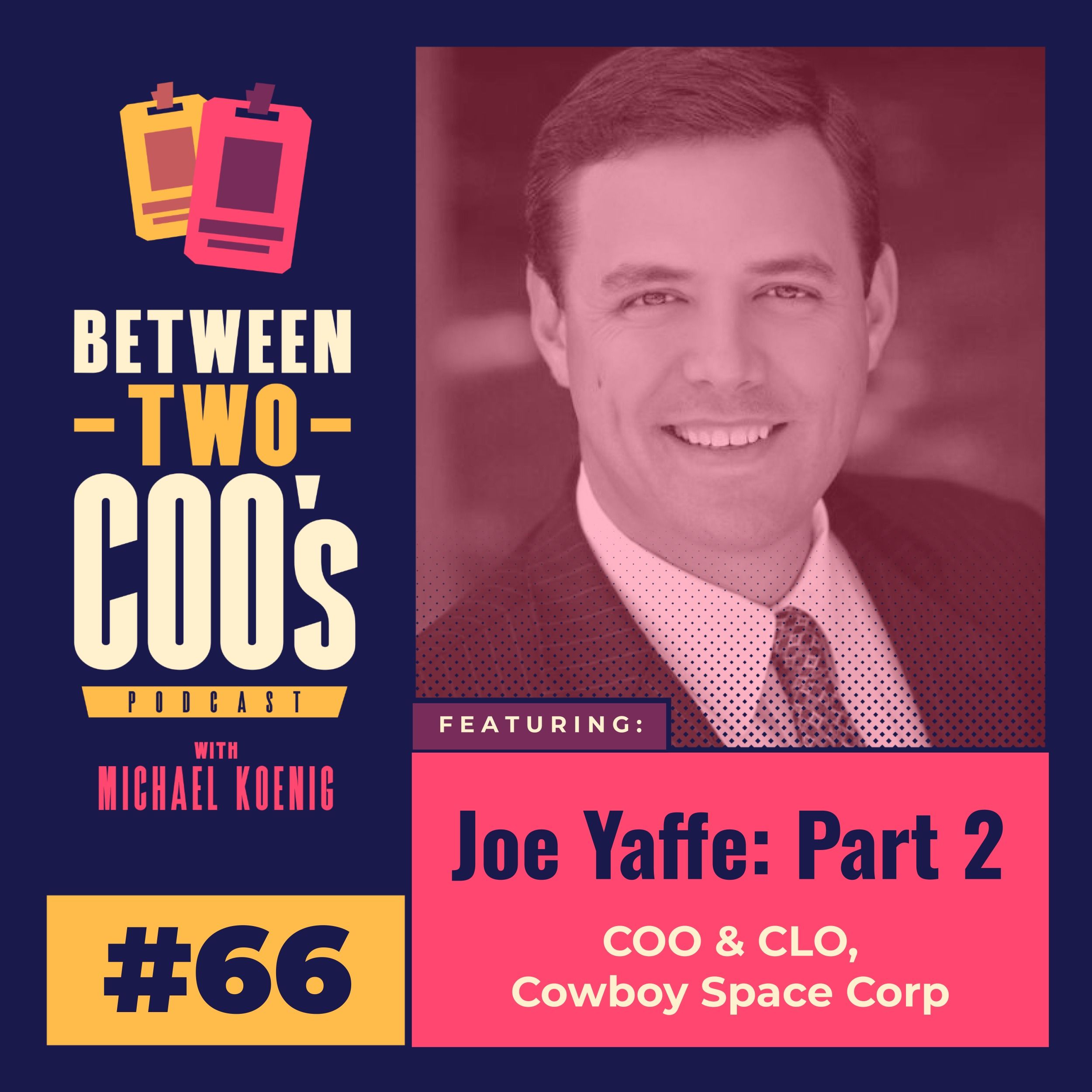 Joe Yaffe, COO at Cowboy Space, on Whether Data Centers in Space Are CheaperBetween Two COO's with Michael Koenig · on Data centers90 / 100
 New Mountain’s Steve Klinsky: The distribution backlog is a timing issue, not a PE issueDeal Talk: Interviews with Private Equity Leaders · on Data centers88 / 100
 Leading Through Energy Affordability | From Customer Service Issue to Business Crisis - Ben Nathan, E Source (S5:E5)Just Power · on Data centers88 / 100
 Finland - a power success story?Plugged In: the energy news podcast · on Data centers82 / 100
 Offices and AIMoody’s Talks · on Data centers81 / 100
 David Porter: From Grid Load to Grid Asset: How Data Centers Can Support the GridNot Your Father’s Data Center · on Data centers78 / 100
 shepx reimagined: a brand experience lab54 / 100
 The One-Word Litmus Test for Hiring a Creative61 / 100
 Nobody Sends Videos for Thought Leadership. Here's Why That Matters.44 / 100
 Print Is Making a Comeback. Three Things to Know Before You Dive In.48 / 100
 Build Your Brand From the Inside Out (Especially When Morale Is Low)38 / 100