
Field Notes Podcast by Brand Shepherd · 2026-06-06 · 11 min
Key moments - from our scoring
Substance score
18 / 100
Five dimensions, 20 points each
Dan, founder of Brand Shepherd, argues that economic downturns and low morale present an ideal window for building brand strength from the inside out. Drawing a parallel to the investment principle of buying low and selling high, he positions internal brand clarification as a counter-intuitive opportunity: when morale is struggling, compensation isn't keeping pace with inflation, and AI uncertainty looms, organizations can establish competitive advantage by defining their internal culture before conditions improve. He introduces Vibe Tribe and Why, a clarification framework that applies equally to internal teams and external customers, covering company vibe (culture, compensation, leadership), tribe (talent fit and development), and why (the challenge the brand exists to solve). Dan shares how Brand Shepherd itself is applying this methodology at its 20-year milestone, restructuring roles and formalizing systems. The episode is valuable for agency owners, company founders, and HR leaders looking to systematize culture and attract talent when the market is softer - offering the book, consulting services (three to five 45-minute sessions), and an upcoming AI tool to guide the process.
Vibe Tribe and Why is a brand clarification process with three components: Vibe (how it feels to work at your company - culture, compensation, leadership, remote policies), Tribe (your talent, their goals, motivations, and blind spots), and Why (the challenge your brand exists to solve). Applied internally, it creates lockstep clarity for employees just as it does for external customers.
When morale and economic conditions are universally low, it's easier to stand out and attract talent compared to periods when everyone's morale is high. Starting internal brand work during downturns positions organizations to compete and retain talent as conditions improve.
First, read the book (available on Amazon and vibetribewy.com); second, hire Brand Shepherd for three to five 45-minute sessions resulting in a brand experience guide; third, use the Vibe Tribe and Why AI model (currently in beta testing, launching soon).
At its 20-year milestone, Brand Shepherd hired external consultants to formalize systems and consistency. The team restructured roles to better match individual talents and skill sets, moving people into positions where they could grow beyond their original responsibilities.
Engagements consist of three to five sessions (typically 45 minutes each), covering each section of Vibe, Tribe, and Why, resulting in a brand experience guide that documents the brand and is used internally by all teams and to train AI models.
Our reviewer’s read on each dimension, with quotes from the episode.
The episode is primarily a promotional monologue for the host's proprietary framework. The one semi-interesting idea - that low-morale periods are optimal times to build internal brand culture, analogous to 'buy low, sell high' - is stated but never developed with evidence or mechanism. The bulk of runtime is definitional explanation of Vibe/Tribe/Why and a sales pitch.
I believe that brand building can be done from the inside out, specifically when morale or economic forces are at a low point
if you start doing this when things are universally, uh, high or morale is high, or economic forces are really good across the board, it's tough to break through
The 'Vibe Tribe and Why' framework is a transparent repackaging of Simon Sinek's Start With Why with cosmetic renaming, and applying brand frameworks to internal HR/culture is not a novel idea. The buy-low analogy is the only mildly fresh angle but it is dropped after the opening sentence.
There's this concept in investing of, uh, buy low, sell high, right? And I think that the same can be said in a different type of, uh, thinking when it comes to brand building.
your why is simply the challenge your brand exists to solve
This is a solo episode with no guest at all. The host identifies himself as a 20-year agency owner but the content does not demonstrate practitioner depth; the episode reads as a promotional advertisement rather than a knowledge-transfer session.
My name is Dan and I am, um, your host today. This is Field Notes by Bran Shepherd. Bran shepherd is my agency. I started it 20 years ago this year.
I know I'm selling here. I know I am making a pitch for you to engage with Vibe Tribe and why.
There are almost no named clients, case studies, measurable outcomes, or third-party data points. The only concrete numbers are session lengths and a book price described vaguely as 'very, very cheap.' Claims like 'ROI through the roof' and 'five star reviews' are asserted without substance.
We have a minimum of three sessions, often four or five. We go through each section of the process. Five tribe. Why each session is 45 minutes.
It's cheap. It's, it's very, very cheap in terms of the bang you get for buck. It's ridiculous. Five star reviews.
There is no host-guest dynamic, no probing questions, no pushback, and no structured argument - just a meandering solo promotional monologue. The host visibly loses his train of thought mid-episode and openly acknowledges he is pitching a product, removing any pretense of editorial intent.
And I know I'm selling here. I know I am making a pitch for you to engage with Vibe Tribe and why.
See, I'm still struggling with that.
Computed from the transcript - who did the talking, and the words that came up most.
Buy low, sell high. The same logic that drives investing applies to brand building, and right now is a buy-low moment. This week’s Field Notes makes the case that mid-2026, with morale low and the economy strained, is exactly the right time to build your brand from the inside out. Dan walks through how Vibe, Tribe & Why® works internally (applied to HR, talent, and culture) just as powerfully as it works externally, and shares how Brand Shepherd is following its own advice in its 20th year. If you have been waiting for the right time to get clear on who your brand is, what it stands for, and who it is for, this is it. Get full access to Brand Shepherd at brandshepherd.substack.com/subscribe
Transcribed and scored by The B2B Podcast Index.
Speaker A: There's this concept in investing of, uh, buy low, sell high, right? And I think that the same can be said in a different type of, uh, thinking when it comes to brand building. I believe that brand building can be done from the inside out, specifically when morale or economic forces are at a low point, as we are right now in the middle of 2026. Economic forces are pretty dire right now. The economy is, is struggling. Um, the population's thoughts about work are pretty low. AI is making all kinds of threats, not really making a huge dent yet, but everyone has this looming feeling about what's coming. And at the same time, prices are going up across the board, payment is not keeping pace, and so everyone is pretty miserable. This is the point where I believe brands have an opportunity to build their brands from the inside out, starting when things are pretty low. Because if you start doing this when things are universally, uh, high or morale is high, or economic forces are really good across the board, it's tough to break through, especially when you're trying to attract talent that will in turn produce the kind of work or products that attracts your ideal customers. My name is Dan and I am, um, your host today. This is Field Notes by Bran Shepherd. Bran shepherd is my agency. I started it 20 years ago this year. And it's been my great pleasure to grow, guide and protect brands of all sizes and scales, um, across a number of different industries. And it's my pleasure to host this podcast every single week where I report from the trenches on what's going on with brand building because there's a lot of different moving parts. One of the things that I champion on this, this show is clarity. Specifically the clarity gained through a process I developed called Vibe Tribe and why. It's basically where we, we, uh, have sessions to figure out, clarify and document brands, a brand's, uh, clear, uh, purpose, people and position in the marketplace. This is called Vibe Tribe and why it's the center part of every brand. But I want to tell you that it, it, it goes both ways. It can be used externally, of course, for sales and marketing and, and things like that. But the place where I am seeing Vibe, uh, Tribe and Y used more often than it has in the past. And I would say it's starting to keep pace with external is the internal use to apply Vibe Tribe and Y for HR teams or, uh, talent relations or people. People relations, whatever your, Your company calls that. And it's, it, it makes all the sense in the world because the same, the same importance on those three things needs to apply to Your internal teams as it does to your external customers. Think about it. Vibetribe and why makes the case that you need, uh, that in order for your brand to be top tier, top of your specific category or industry, you have to have absolute lockstep clarity about your, your brand's presence, people and purpose. It's Vibe Tribe and why. Think about that in terms of how it might be understood from an internal perspective. Okay. Vibe Tribe and why Vibe. That's your company's presence. It's how it feels to work for your company. It's what it's like to go into the office. What's the morale like? What's the culture like? What do you do? How do you give back? How do you, how do you create a cohesive team? How do you handle work from home? How do you handle remote work? How do you handle hybrid? All the things that people care about. Compensation? Do I have opportunities, uh, to expand my career there for you to grow? What's leadership like? All the, all those questions, those are, that's your vibe. When we're building brands from the inside out, then let's talk about tribe. These are, uh, this is your talent. This is both the talent that you have already and the talent that's coming. Do they fit into the vibe that we've already established? If they don't, what are we doing about that? If they do, how can we elevate them? How could we expand on it? How can we get more people like that? And so that's your tribe. We get into goals, motivations, and blind spots. When we talk about customers as tribe. Good grief. Those things, they, they apply to talent goals. What's your, what's your career goal? Why are you working here? Why do you. What's your goal for working with my brand? Motivations. What are you motivated by? If it's just money, cool. I just need to know. There's a lot of people who work here that are motivated by money, and that's fine. We're a business. That's kind of the point. Blind spots. Okay, here's what you might not know about working for our brand. Here's, uh, some things that, that our customers or that are, uh. See, I'm still struggling with that. This is some stuff that our talent has, uh, learned along the way. These are our blind spots. And then we get into Vibe or why. And this is, this is where we get into the give back stuff, the culture, the why does this brand exist? And as I say in the vipriby process for external teams, I think the Same thing applies. And it's, it's an area of agreement for external and internal teams, which is your why is simply the challenge your brand exists to solve. Uh, if that's not a rallying cry for your team. And I don't know why you exist to begin with, because it attracts your clients, your customers. But it's also why your talent is on your team. This is the challenge that they have been hired to help solve. It's also true for your leadership team. Uh, Vibe Tribe and Y applies to leadership to the C suite. You have to have people competent in leadership skills and leadership abilities who can lead people. Vibetribe and why it attracts and clarifies their roles as well. Now I'll circle back to where I began. I believe right now is as good a time as any to get in and do this. Morale's low, so why not get in there and start clarifying what your brain believes and champions in terms of its Vibe tribe and why? For internal teams, for internal staff, all of your talent, if you don't have a culture, if you're just kind of letting it evolve on its own without any direction or a light touch, now's the time to do that. And I got to tell you, I'm following my own advice. 2026 is the year that we turned 20 years old at Branch Shepard. And through this time, I have, I have tried to take a very light touch with all of the Branch shepherd staff. I've let culture just kind of evolve itself, um, in the name of liberty and respect for the professionals that branch upper hires along the way, I have had, I have made the mistake of being too, too much of a, uh, a pushover where I'm letting vendors set terms and I'm letting, uh, you know, payment dates be this for this person and that for the other, you know, all the things that business owners can sometimes do. And I've hired some, some people to come in from the outside and take a look and say, help me, help me get consistent. We're 20 years old. I want for the next 20 years. How can we be set up to do this better? And a lot of that is following Vibe Tribe. And why internally, in terms of getting our system set up, getting biz ops set up, getting the right people on the right roles. One, One thing we've done is we've, we've moved people around. I've. I've moved people around into better roles and fit their, their unique talents and skill sets which have evolved as they have worked with Bran Shepherd. They've outgrown their role. They're too good to continue on in the same role they've had. And it's been, it's been such an honor to see them grow into something else. And I bet that's the same case with you. If you're listening to this, that means you're, you're a self aware brand owner or a stakeholder who knows what's up, has self respect in your brand. Who, who wants to do better. Vibe Tribe and why is the key to make that happen. And I know I'm selling here. I know I am making a pitch for you to engage with Vibe Tribe and why. Here's the thing. There are three ways to engage. Two are available right now. One is coming the first go over to Amazon, search for Vibe Tribe and why or, or go to vibetribewy.com and look for the book. It's cheap. It's, it's very, very cheap in terms of the bang you get for buck. It's ridiculous. Five star reviews. Loads of people have read it, love it. Most people finish it in a few days or at least under a week. And it's a great entry point into the Vibe Tribe and y philosophy, understanding what it does, how it helps your brand. And you're probably gonna be able to put it to use in getting a sense of like how to start working with it. The second way is to hire branch up or to hire or hire hire, uh, us to do it for you, to meet with you. We have a minimum of three sessions, often four or five. We go through each section of the process. Five tribe. Why each session is 45 minutes. I'm very adamant that we do not exceed an hour for our meetings. I find that meetings that last more than an hour are unproductive and exhausting. Everyone gets stale, tired. So we're very clear about how we, how we do these things. At the end of it, you get a brand experience guide. This is the documentation of your brand and we get very clear, very fast about everything that your brand does. This is then used by all of your teams within your brand. It's also now being used to train AI models so that the content your AI model produces is always on brand, lots and lots of uses. The ROI on Vive Tribe and why is through the roof. The last option is an AI model we're developing and training. Uh, the first one is in beta testing. We've got a fresh set of testers right now as I speak. They're, they're testing it out, putting it through the ringers and, uh, making it ready for public use. It's taken a while to get this out because I was. I've been unhappy with its, um, with some of the friction points. And I want to make this as frictionless as possible so that it can be useful to the most amount of people. That's five tribe. And why, uh, the AI Will be available soon. It's not available right now, but it will be available soon. And I hope that you'll consider using one of these three things to bring clarity to your brand so you can build it from the inside out. Thanks for tuning in. I hope to see you next time on Vive Tribe and why. Field notes.
Other episodes covering the same guests and topics, from across The B2B Podcast Index.
 Dashboards Are Dead with Ankita PoddarHRchat Podcast · on Company culture74 / 100
 Ep 167: The Promotion He Never Wanted Changed His Life with Nestor GutierrezThe Limitless Leadership Podcast · on Company culture54 / 100
 CMOs Should Think Bigger - Bruce HersheyThe CMO Whisperer · on Company culture52 / 100
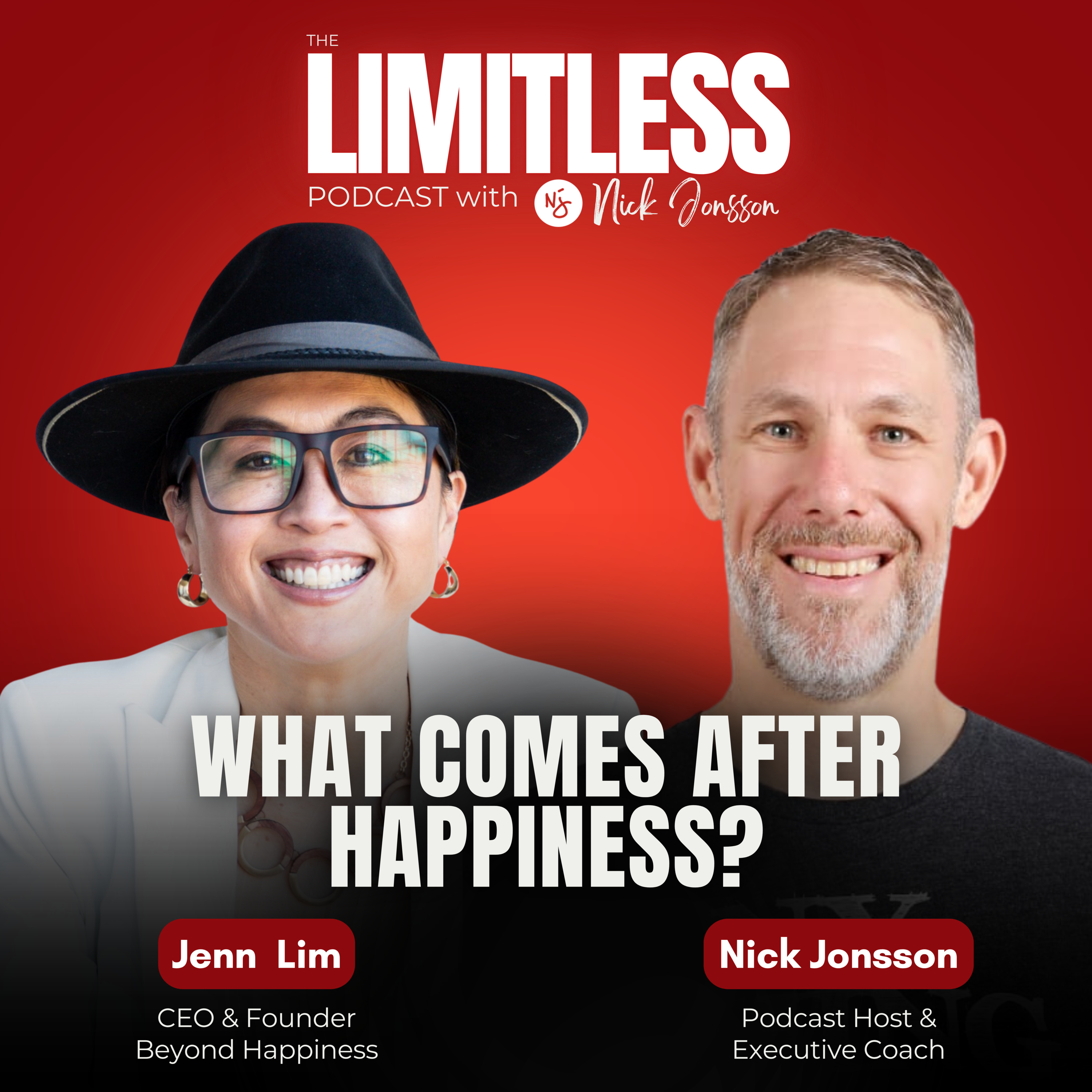 Episode 326: Jenn Lim - What Comes after Happiness?The Limitless Podcast with Nick Jonsson · on Company culture51 / 100
 How to Scale Your Business Without Burnout: Team Building, Systems, and Entrepreneur FreedomBiz Help For You · on Company culture50 / 100
 211. Hot Takes: Company Culture Do's and Don'tsThe Business Reboot · on Company culture43 / 100
 shepx reimagined: a brand experience lab54 / 100
 The One-Word Litmus Test for Hiring a Creative61 / 100
 Nobody Sends Videos for Thought Leadership. Here's Why That Matters.44 / 100
 What the Industrial Revolution Can Teach Brands About the AI Moment47 / 100
 Print Is Making a Comeback. Three Things to Know Before You Dive In.48 / 100