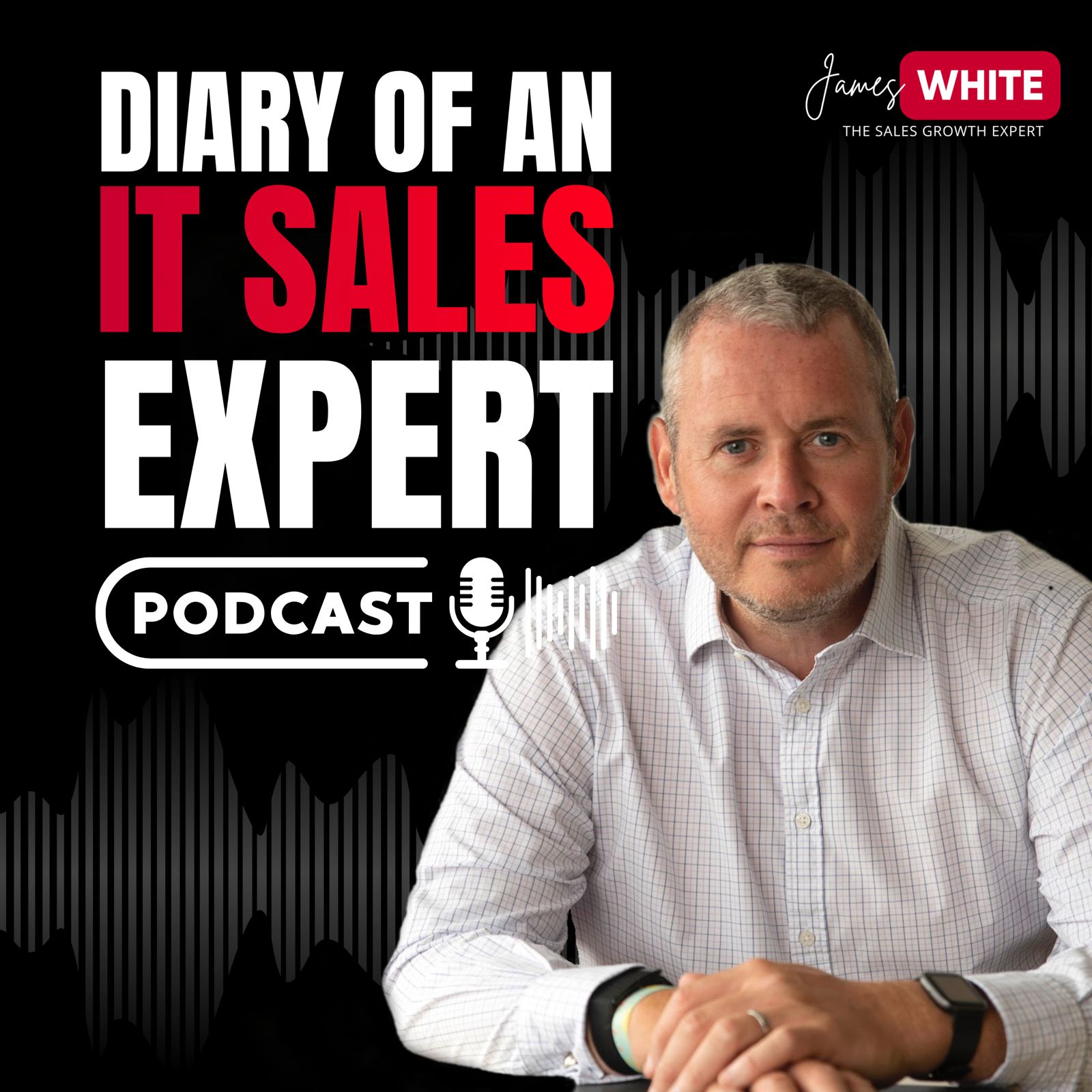
Hosted by James White
Listed under Business › Entrepreneurship, Business › Management, Business
The Diary of a Sales Expert podcast is all about sales success and sales failures and the whole journey around sales and selling. In the podcast share stories, ideas, mistakes, and learnings to help ensure you can become better at selling.
180 episodes · publishes weekly · latest 2026-08-12 · ~33 min/episode
Rank
#1096
Substance
64.0
/ 100
Breakdown
Scored 2026-08
Updated monthly
Across the index
#1096 of 1878
Substance
Top 58%
outscores 42% of the index
Diary of an IT Sales Expert ranks #1096 on The B2B Podcast Index with a substance score of 64.0 out of 100, scored across 2 recent episodes. It scores highest on insight density and specificity & evidence. The episode contains several actionable frameworks (BMW client classification, profitability analysis via ticket-cost attribution, security recommendation compliance tracking) that would be useful to MSP operators, but these are interspersed with repetitive storytelling and throat-clearing that dilutes the substance. The core ideas - know how clients treat your team, measure profitability against support costs, ensure clients follow security recommendations, watch for late payments, and align to your service model - are solid but not densely packed or particularly novel.
Averaged across 2 recently scored episodes, with cited evidence.
The episode contains several actionable frameworks (BMW client classification, profitability analysis via ticket-cost attribution, security recommendation compliance tracking) that would be useful to MSP operators, but these are interspersed with repetitive storytelling and throat-clearing that dilutes the substance. The core ideas - know how clients treat your team, measure profitability against support costs, ensure clients follow security recommendations, watch for late payments, and align to your service model - are solid but not densely packed or particularly novel.
“there's a phrase that um, my good friend Matt Garman shared with me, which was, no one wants BMW clients. And the client, the phrase that he referred to that was bitches, moaners and whiners.”
“you know, be in a position where you can record details down of how many tickets they've had per month. And then if you attribute, you know, the cost of a support engineer to be able to tackle that and work out a uh, cost of what an hour or 15 minutes of time is”
The core frameworks and concepts - client profitability analysis, red-line conversations, value misalignment - are well-established in B2B service businesses and are not particularly contrarian or fresh. The BMW/bitches-moaners-whiners acronym is borrowed from someone else (Matt Garman), and the overall thesis (fire bad clients) is conventional wisdom in service businesses. The host does bring some personal anecdotes (Richard story, recent client exit) but these illustrate known principles rather than challenge them.
“Not all business is good business.”
“sometimes there's an opportunity cost here for you and your team to do better work with your chosen marketplace by letting other people go as well.”
This is a solo host monologue with no guest present. The host claims relevant experience (ran an MSP, ran a SaaS software business for nearly 14 years), but there is no independent practitioner voice to challenge, deepen, or triangulate the claims. The episode would have been substantially stronger with an actual MSP owner discussing their client-firing decisions and outcomes.
“I don't run an MSP business, but I have, uh, in the past run an MSP business”
“I've run um, a software business for um, well, nearly 14 years.”
The episode mentions some specifics - £150k+ client with significant support costs, organizations paying £30/hour for support engineers, 20 clients not matching a new model, 19-person business using a server - but lacks concrete data, named companies, measurable outcomes, or timelines. The profitability framework is explained but no actual case study with before/after metrics is provided. Most claims remain illustrative rather than evidenced.
“one of my clients at the moment has a very large organization they work with who is responsible for a very large figure per year. They probably do, I don't know, 150 grand a year plus”
“the cost of a support engineer to be able to tackle that and work out a uh, cost of what an hour or 15 minutes of time is, it's worth actually looking up and saying actually okay, well we had 100 tickets and the support cost is, you know, cost to the business is £30 an hour.”
This is a monologue, not a conversation, so there are no host-guest dynamics or follow-ups to evaluate. The host does pose rhetorical questions to the listener (e.g., 'Do you think I'm talking absolute toss?') and references external thinkers (Chris Voss, Dave Sutton, Matt Garman), but without pushback or real dialogue. The structure is clear but lacks the intellectual friction that strong conversational B2B content requires. A guest would have tested these claims and forced precision.
“Do you think I'm talking absolute toss? Do you think you'd never, you know, all customers just have to take it on the chin and grin and bear it.”
“What I'd like to suggest is that we transition that out for a period of one month, three months, six months, whatever”
2 periods tracked.
2 scored on substance · 66 tracked in total.
Add this badge to your site - it links back here and updates automatically as you rank.

<a href="https://index.fame.so/show/diary-of-an-it-sales-expert" target="_blank" rel="noopener">
  <img src="https://index.fame.so/badge/diary-of-an-it-sales-expert/badge.svg" alt="Ranked #55 on The B2B Podcast Index" width="360" height="136" />
</a>Track Diary of an IT Sales Expert's rank
Get an email whenever this show moves up or down the Index. Monthly at most, no spam.
Companies, products and tools that come up most across this show's episodes.
The themes that come up most across this show's episodes.
Podcasts that dig into the same topics.