Decoding Digital Content Marketing - IAB SA · 2021-11-11 · 56 min
Key moments - from our scoring
Substance score
47 / 100
Five dimensions, 20 points each
The episode centers on a fundamental tension in modern content marketing: the over-reliance on data analytics and platform algorithms has created sterile, creepy advertising that ignores deep human truths in favor of demographic targeting. Matt draws on his dual background as a content marketer and investigative journalist at John Brown Media (Dentsu Network) to argue that relevance has been chased down the wrong path - comparing how a David Attenborough documentary about orca whales connects more profoundly than targeted ads based on postcode data. Lebo brings the production perspective from Sea Monster, challenging the rush toward AR, VR, and metaverse solutions by invoking E.O. Wilson's observation about paleolithic emotions and godlike technology. Both stress that storytelling, character authenticity, and brand purpose remain the foundation. Real examples like Society of Grownups (insurance coffee shops for millennials) and Pick and Play's wine education series show how brands win by addressing audience anxieties and serving first, selling second. The conversation pivots to measurement: traditional click-based KPIs reward lowest-common-denominator content (funny cat gifs) while missing propensity to act. The future lies in voluntary engagement - games, long-form content, and subscription models that command hours rather than seconds - a shift requiring brands to see themselves as publishers and platforms, not just product-pushers.
Data-driven targeting ignores deep human truths and emotions, instead focusing on superficial relevance - like recommending more sheds to someone who bought one shed. True relevance, like David Attenborough storytelling, connects across demographics because it reflects shared human experiences and desires.
Society of Grownups is a brand experience and content platform funded by insurance/financial services that opened coffee shops in cities to address millennial anxieties about careers, starting families, and adulting - packaging financial advice as human-centered learning rather than product promotion, which drove higher engagement and propensity to buy.
Instead of advertising wine directly, Pick n Pay created educational video content addressing the real human barrier: insecurity about wine knowledge. By teaching the difference between Merlots and Cabernet Sauvignons, they armed customers with confidence, which increased both wine knowledge and sales.
These technologies are not new (VR has existed since the 1980s) and are often pursued because they are cool or award-winning, not because audiences need them. The real driver of engagement is story, character, and authenticity - not the technology wrapper - as evidenced by the boom in long-form content like podcasts and Netflix series.
Clicks reward low-quality, sensational content (funny cat gifs) that misses the deeper metrics: propensity to believe, act, or recommend over time, as well as emotional resonance and breakfast-table conversations. True measurement requires a more anthropological, holistic approach and willingness to invest in long-term brand perception.
Our reviewer’s read on each dimension, with quotes from the episode.
There are genuine flashes of useful thinking - the bullshit-tolerance vs. attention-span reframe, the rented-land argument against platform dependency, and the 'add an egg' agency principle - but these are separated by long stretches of philosophical meandering, repetition of the same storytelling-is-fundamental point, and little that a working content marketer wouldn't have encountered before.
Audiences' tolerance for bullshit is shrinking. Audiences' tolerance for being doorstepped.
the first instant cake mix to be launched in America was a failure...they took it back off the market and relaunched it the same instant cake mix but they'd taken all the dried egg content out
The episode surfaces a few genuinely crisp framings - especially the attention-span myth and the Facebook-as-cheap-crack analogy - but most of the underlying ideas (purpose-led brands outperform, human-centricity, brands-as-publishers, first-party data imperative) are widely circulated content marketing orthodoxy repackaged in slightly new language.
Audiences' tolerance for bullshit is shrinking
content hubs like nobody goes to them anymore they're like ghost ships build it and they won't come haha and actually that's bullshit
Both guests are genuine practitioners with real agency or studio experience rather than pure thought-leaders, which is a positive, but neither is an operator who has run content marketing at scale inside a major brand - they are suppliers, and the conversation stays largely at the level of observed trends rather than hard-won operational lessons.
My day job is as chief content officer with John Brown Media, which is a global content marketing agency, part of the Dentsu Network
I write movies for you know for Hollywood and I write books and I write for the Washington Post
The episode is better than average on named examples - Society of Grownups ($100M, Boston coffee shop), Pick and Pay wine education, Cicada 3301, Waitrose/John Lewis, Capitech game - but almost no outcome metrics are attached to any of them, and the Capitech reference is vanishingly vague, limiting their evidential weight.
They gave her a hundred million dollars to go and do this. She started off a coffee shop in Boston, and it was known as the Society of Grown Ups.
On the average journey on the London Underground from a place where you live to the place where you work, you're going to get doorstepped by about 3,500 commercial approaches
The host adds her own perspective and keeps the conversation moving, but the questioning is largely facilitative and leading rather than probing - no meaningful pushback occurs, both guests agree on nearly everything throughout, and there are no moments where an assertion is genuinely challenged or stress-tested.
So how do we make that conversation and make it real and operational for our clients who are thinking in terms of KPIs and targets and awards and their board report?
But is it also challenging our clients to see themselves not primarily as a financial services institution or a FMCG company, but actually as a...publisher
Computed from the transcript - who did the talking, and the words that came up most.
Host: Sarah Browning-de Villiers (Chief Content Officer at Machine_) Guests: Matt Potter (John Brown Media Group | Chief Content Officer) Lebo Lekoma (Sea Monster | Head Client Service) For the 6th and final episode of the IAB South Africa Decoding Digital Content Marketing mini-series, we look at where the experts think it's going in, The Future of Digital Content Marketing. Digital content expert and host Sarah Browning-de Villiers, Chief Content Officer at Machine, discusses the latest digital content marketing trends and innovations with London based Matt Potter and Cape Town-based Lebogang Lekoma. Matt is the Chief Content Officer at John Brown Media Group while, Lebogang heads up Client Service at Sea Monster, a specialist agency in gamification, animation, AR and VR. Listen to the panel discuss new mediums and channels and how you can create digital content that resonates with Gen Z audiences. We also delve into what brands and agencies need to be harnessing to be ahead of the curve and take a look at our cookieless future and the role digital content marketing has in building 1st-party databases. Definition of Digital Content Marketing August 2021 IAB SA
Transcribed and scored by The B2B Podcast Index.
Welcome to Decoding Digital Content Marketing, the IAB essay podcast that encourages and develops content marketing in South Africa as a unique, independent discipline and an effective tool for brands to communicate with their audiences. Hi everyone, welcome to the Future of Digital Content Marketing, Episode 6 of the IAB. Decoding Digital Content Marketing podcast series. I am super excited to have with me today Matt, who is joining us, I believe, from the UK, which is super exciting, and Lebou, who is joining us a little bit more locally.
My name is Sarah Browning-DeVillas. I'm the Chief Content Officer at Machine and Publicis Group Africa. And I'm going to hand over to our guests to introduce themselves and tell us a little bit about also what you do, where you work, and what your interest in content marketing is. So, Matt, let's start with you.
So, yeah, I'm half a content marketer actually tonight. So I'm a content marketer and I'm also an investigative journalist. I wear both hats. Both of them help each other.
My day job is as chief content officer with John Brown Media, which is a global content marketing agency, part of the Dentsu Network. And I guess my job is great content marketing, great storytelling by any means necessary, no matter what the channel, no matter what the job, I can help. Awesome. Thanks, Matt.
Lebo, tell us a little bit about yourself. Thank you, Sarah, for having us on this podcast. So my name is Lebo. I hail all the way from Cape Town.
I work for a company called Sea Monster. And traditionally where we come from is the area of content production and development. We were once the biggest 2D animation studio on the African continent. And really as our current incarnation of Sea Monster, what we challenge ourselves is to bring those same skills in storytelling to help brands really drive their messaging, particularly with a view towards learning, because we feel that that is important.
And so that's what we do. The other thing that people tend to look at us for as well is game design or game development. And so what tends to make us unique is this dual ability to not only tell the story, but to be able to craft it into a game, which of course holds this promise of deep voluntary engagement. Yeah, that's our story.
Cool. So the podcast series has been unpacking all sorts of things from what digital content marketing actually is to how to measure it, which I think is the golden question we all ask ourselves. And today we want to talk a little bit about the future of digital content marketing, which I think is super exciting. I know we're all passionate about it.
So are there anything, any trends, anything that you're really excited for that you're talking maybe to your clients about, particularly for next year or the coming few years that you think really are going to come to define content marketing across sort of the global landscape for our clients? So for me, I think the future of content marketing, I mean, I've never, I've been in this game for about years, like 20 years. And I've never known a time that has felt like so much of a fulcrum as we're at right now.
So what's happened? I see in the past few years, you know, there was a huge, especially in digital content, there was a huge movement towards being data-led and letting the data tell us what we need to do and know what our intervention points are and so on and so forth. And that tended to swamp those things that we suddenly found we could do and those new toys that we all suddenly found we had tended to swamp some of the things that we should have always known were true. That people love a good story.
People love to feel the deep human truths reflected back at them more than, I mean, you know, let's say my favourite comparison is, you know, would Hamlet Prince of Denmark have been a better play? Would you have found it more engaging if it had gone Hamlet Prince of Cape Town? Or if it, you know, no, it can reflect data at you, but data has been used in stupid and dumb ways. And I think the thing that we're seeing is stuff like the intervention points are becoming more powerful because they're not about you.
They're not like you. We're not doing the creepy thing and kind of just doorstepping you with the last thing you bought, that classic Amazon trick of, you know, now that we see you've bought a shed, we're happy to recommend more sheds. And nobody wants that. And, you know, I guess it's about a return to authenticity and being bullshit free and not having the creepy for me.
I mean, it's really interesting how creepy content has got, how creepy advertising has got. because it's used what it thinks are the relevant data points and ignored the stuff that we feel is true deeply and humanly and the stuff that we we've chased relevance down the wrong hole I think and relevance has become this kind of thing of you know like what's relevant to me would be a piece about you know fairly scruffy guys in their late 40s who live in suburbia and I don't want to see that you know more relevant to me even though I share no demographics in common with an orca whale is David Attenborough telling me about this deep truth that we both share and who the orca whale is on a journey and wants to protect his child and oh my god you know that's if you can tell that story in a way that I feel something that connects us all then that's going to be much better than trying to pretend that the orca whale lives in my postcode I think it's so fascinating I wouldn't move in next to an orca whale.
I mean, this would just be madness. But Lebo, I'd be really interested in whether you're seeing those same kind of storytelling things coming back. Matt, you know, thank you for pulling on the story thread because that's what I was going to reflect. But we see the other side of that.
As a technology company, we anticipate AR, VR. Everyone is talking this metaverse thing. and everyone is jumping to the next exciting technology. But I think there was this philosopher called E.
O. Wilson who said the challenge of humanity is that we have paleolithic emotions, medieval institutions, and godlike technology. And when you zoom out from that, what we can say is, well, in thousands of years, human beings have not really changed. And the things that engaged us all the way back then are the things that continue to engage us today.
The story, the character, and the authenticity around that, because that creates resonance and relevance. It can make you feel heard. So yes, we continue to see the exciting asks. Can I have this AR?
Can I have this VR? And sometimes coming from that content space, our response is to ask, but why? Why do you feel that this exciting technology is about to be the one that is going to be this holy grail. And the thing about these technologies is they're not actually that new.
If we look at things like VR, VR has been around since the 80s. We're just finding new ways to use it. Augmented reality. We've had some great experiences in the local market that have broken box office records.
And then we saw that slump. And now we see that again with everyone going meta this, metaverse, meta all of that. But for me, as a practitioner in the space. I think the future of content marketing still lies really in its past.
And that is story, character, and how we are driving and unearthing those essential brand narratives that overlap with the relevance to our audiences. A bit of a philosophical take. This is fascinating, Lebo. We actually did a very small experiment on exactly that.
I mean, on that kind of disconnect that I think there is between what marketers think they need to be jumping onto to remain relevant and what people actually want. We asked members of the public and then brand marketers in separate groups, what was the most important piece of content they had seen that morning? And if they could describe it to us. And the people in brand marketing and agency land all said things like, well, it would have been something on Snapchat probably, or yeah, was it memes?
It's memes. They're big now. Or a piece of something, kind of 50 words in a and then one minute video because that's all you and the members of the public when we got the members of the public's answers back they all said things like I saw something funny and I saw something moving you know and I saw something that felt that touched me or something that made me afraid about a certain situation and they talked about emotion and they talked about a connection with a story not the format not the incidentals of the platform that it was delivered And I sometimes think as people in content marketing and brand marketing and advertising, we need to get out of our own way a little bit sometimes, you know, and just as you say, to see the ephemeral for what the ephemeral is and the essential for what the essential is.
And Matt, don't you feel that that recognition, right? Because if we look back at how the IAB defines content marketing, it's really about putting the user or the recipient of the message in the center and as the hero. And so often, and this is not a slight to wanting to be innovative on the cutting edge, but we want to do the thing that is cool, that is going to get us the award. and only as an afterthought do we think about, oh, who is going to be the recipient of this message or who is the audience member in all of that?
And it's something that even I find as a challenge when I have to put myself in the position and go, this is not about what I think is cool, but this is about that individual or that user who is sitting, whether it's in a township or in a suburb somewhere, and what they're grappling with And how do I put them in the center of that experience to get that brand essence and recognition? And it's incredibly difficult to do. We are a heterogeneous society. We're not homogenous.
And so when we rub up against each other and that friction, like that's where the magic happens. And if brands are able to unearth some of those stories, create a spark, show me something that I haven't seen before, a moment of delight. that then creates that emotional touch that we look for against the brand. I mean, when was the last time you yourself had a strong emotional reaction to a brand?
And in what context did that happen? So how do we make that possible for clients who have lots of challenges, right? First of all, to be authentic is to be brave, I think, often. And that's very scary for brands to do.
And I think to lead on emotion also means to put your brand or your product or your retail proposition second, which is obviously that's the holy grail of content marketing. But I certainly know that often that's the toughest sell to our clients is to be able to do that really authentically and just allow the story and the emotion and the connection work first. And then the practical thing of, okay, cool. Well, then how do we take that connection that we've been able to form and monetize it, which obviously has a technical application.
And I think that application is changing as our digital kind of playground and the rules by which we can play change, but also the rules by which consumers expect us to play to your point, Matt, about getting creepy change. how do we take this conversation and make it real and operational for our clients who are thinking in terms of KPIs and targets and awards and their board report? I think there are some systemic things we can tackle there but I also think I mean part of our commitment at John Brown and at Dentsu is to we call it to echo your point Lebo we call it human-centric so we're about human-centric content that connects and I think the key about human centricity is to remember not just the customer, the consumer, people out there are humans, but to remember that you're one of them too as a marketer.
And I think there is this terrible problem with people in brand land or people in marketing or wherever that they know because in their personal lives, they know what works on them and what doesn't and what is impressive and what's true and what's real. And then for some reason, they get into their office with all their kind of grey filing cabinets and spreadsheets and they put on their I'm now a marketer hat and say things like, yeah, I'm going to need a bigger logo and let's just do what Google Analytics says.
And this would never work. So I think there's something about remembering that we are all human and that instinct plays a part. And then I'd be interested to know about you, Lebo, and what you think. But there is something wrong in this, to come back to Hamlet, there's something wrong in the state of measurement.
And I think people have been weaned onto this idea that what is easy to measure, and that's going to be clicks, is therefore the thing we measure. That will lead you to the reductio absurdum of saying to a financial services brand, yeah, you give me a funny cat gif and I'll give you a load of clicks. And if you don't, I won't give you clicks. We need to turn measurement into something more holistic, I think, and start to look at what happens around the breakfast table the next day.
start to look at those complex to measure things like people's propensity to do or say something as a result later on and over time and that it is brave it means a little bit of investment it means maybe taking more of an and it's easy for me to say anthropological isn't it but taking more of an anthropological approach let me start with like you know someone else's clever pity saying which is that brands with purpose tend to outperform the brands that don't have a purpose Now, I don't care even if you are a FMCG that, I don't know, sells cans of some commodity.
That just the product that you sell you right And let take something like pilchards in a South African context But for many many many people in this country that pilchards is your can of sustenance It going to power and see you through to the day And so when you can at least create some connection between your product and what its purpose is, you start to unpack some of that human centricity. If you are a financial institution, yes, you exist to make a profit. But, you know, what is your purpose?
Are you helping young families unearth their way or dig their way out of poverty? One of my personal favorite case studies was around something called the Society of Grownups, which was a mass smart funded sort of play at getting young millennials to sort of like buy into the insurance industry. And the way that they were able to achieve some of that was they often opened a coffee shop. Now, I often try and imagine how that conversation must have gone in the C-suite, you know, a bunch of actuaries and you had a young woman there, freshly minted MBA saying, guys, I think that the way to do this is with a coffee shop.
She must have almost been laughed at the room. They gave her a hundred million dollars to go and do this. She started off a coffee shop in Boston. and it was known as the Society of Grown Ups.
And how they connected with people was around the key challenges that millennials had. Wow, how do I build a career? How do I start a young family? I have started a young family.
What are the lessons that I need to know? And they simply packaged up some of those lessons from their rich history and just happened to have a number of advisors sitting around in the room. If you can create that connection, it then gives you like so many avenues to start having real, true and meaningful stories with members of the audience where you will eventually have the opportunity to say to them, oh, by the way, you know, this is my product. And yeah.
And then by that time, there's a greater propensity to buy, we believe. I love that one. I mean, there are easy things to do. And one of the best, very simple examples from recent South African history was, I think, one of our clients, Pick and Pay, wanted to sell more wine, but realised that talking about the wine in a certain way wasn't going to do it.
And actually, the way in which you have to talk about wine to sell people, sell people wine sounds, sounds wrong somehow. But to sell people wine was actually to recognize the deep human truth that most people are pretty insecure about their wine knowledge. And not to go buy this because it's but actually to go today, we're going to taste a couple of different Merlots. Or today, we're going to figure out what the difference is between a Cabernet Sauvignon.
And actually, so they did a bunch of just like teach videos, just teaching about different wines. And that's the thing. I mean, I have it when I go to a car repair shop. You know, I try not to or I try not to go into banks because I know that somebody who knows a lot about it will go to me.
So what is it going to be? What do you want? Your carburet? And I don't know.
I don't know. And now I'm feeling really small. So actually, people get that with wine. So everybody orders the cheapest wine or a wine at a certain price point.
if they were more confident and if they were more, if they felt in themselves, better armed for tomorrow and better armed for today. And I think, Lebo, to your point, that's exactly it. You know, this coffee shop was helping people with a very real kind of emotional trigger that they had, you know, which is that adulting is tough. If you're doing content marketing right, there is something, I'm going to say there is something almost giving about it you know there is something almost quite deep about what you're doing and what you're doing is yes absolutely you know there is an answer and that may be a product that may be a service but we just want to help you to address the things that you need to address more confidently another challenge that I would put out to us collectively as practitioners and brands in this space is that our current constructs have us fighting for seconds of human attention.
Isn't that laughable? Now, imagine if we could think a little bit more broadly and if we could look towards these things like games. And yes, this is now some of our Kool-Aid, but some of what makes a game a game is that you get to play. There's something that happens when you are in that state of play that is very analogous to being in a state of learning, grabbing new skills, being able to do something that you weren't being able to do before.
And so imagine if the holy grail that we held was how to get all of our users to come and engage with us voluntarily. Because we believe that when that happens on a voluntary basis, what you then get is not seconds of attention but minutes of attention in that consideration phase and this is not rocket science that we are speaking or science fiction but absolutely real case studies exist and john brown has been like part of one of these with sort of like the work that we do in like capitech and that game getting towards you know we're talking about audiences who everywhere else are giving hours of attention to content.
We are talking about the renaissance of the podcast where people sign on for, well, look, hey, that's a bit meta in itself, actually. We're on a podcast, but we're talking about the renaissance of the hour long. We're talking about the box set immersion on Netflix. We're talking about a time when people have returned to reading and reading long reads blogs and long reads pieces.
And people are doing subscription models for things like Eon that give you reads that will take you 33 minutes and upwards are absolutely there. And those are all doing very well. And yet you have a generation potentially, and I think it might be a generational thing, of sort of slightly older Gen Xers, maybe older than that, in CEO positions who have got, I always call it like the cultural cringe. I mean, I hear it a lot of the time from financial services organisations, for example, be like, oh, let's just give them three seconds because who wants to know about us?
and you go well nobody because all you're doing is going we're happy to serve you you know or whatever for three seconds and you're giving them blipverts because you don't have the confidence in your own story your own permissions to talk to people about things that they find engaging and they find and you know like like I say you know there are one of the things that I am is I'm a journalist for other companies in by night and I write movies for you know for Hollywood and I write books and I write for the Washington Post.
And I don't see a difference. They're all chasing clicks. They're all chasing audience numbers. The only difference is, and their business models depend on it too.
The only difference is that they've got the confidence to say, here's what we're going to stand for. And here's what we're going to come towards people with, because this is what audiences desire and want and will engage with. And we'll stand behind that. And we've still slightly got a cadre of people in brand land who are going, yeah, you know, marketing, isn't it just about giving them behind the scenes on our new advertising TV slot or a logo or a quick joke and out?
And I think coming back to what you're saying, Lebo, about games, we know that that's the case with storytelling too. People open up into this state of consciousness that is very different from the functional state. It is porous. And that's where we should be engaging them.
That's the state of openness to all possibilities and of learning that great content brings out in people. And the fact that brands are blithely walking away from it while Netflix, Amazon, everybody else is stealing their lunch. Yeah, and then charging them for it. And then charging them to now play with it.
And I think that for me is a big thing. Absolutely. And the strange thing is that the wealthier and the more prized the audience, the more they are prepared to pay for long, deep engagement. I mean, you know, the executive, the B2B and high net worth audience are the ones who go to The Economist or Financial Times or whatever.
Please take my money. Take my money and keep me interested for hours. We are not looking at audiences whose the classic lie is audiences' attention spans are shrinking. No, audiences' tolerance for bullshit is shrinking.
Audiences' tolerance for being doorstepped. On the average journey on the London Underground from a place where you live to the place where you work, you're going to get doorstepped by about 3,500 commercial approaches in the visual field or the oral field. I mean you're filtering that out and we're just becoming good filters and that's why if a brand is finding it hard to cut through you show me one of those brands and I'll show you a brand that hasn't embraced the need to connect with people as you're saying Lebo you know taking people on a journey with them.
So is one of the key things that we need to be thinking about for the future, and I mean, the future I think is to, we all agree, it's actually here, it's now, it's just helping everyone see it and then how do we unpack that for clients? But is it also challenging our clients to see themselves not primarily as a financial services institution or a FMCG company, but actually as a, what we call in publicist as a platform, but I mean, a publisher, someone who's fighting for a share of attention of their audience.
And the more of that that they can take, even if it doesn't directly relate to their service or products that they're trying to sell, the more that they start to be able to have space in people's lives that's relevant and interesting. And then suddenly, they're no longer having to pay Facebook for that space, which also takes away from a little bit of credibility, because I think the platforms we use, and they carry with them lack of authenticity or high authenticity. And I think we need to be smarter about how we pay to play but actually our i believe our clients need to be thinking of how am i the netflix in financial services how am i the amazon in fmcg and that is scary because it's actually rethinking your entire business model and your purpose yes i think in many ways exactly but if you can do that you also then give yourself permission to tell stories beyond your product and to see your role in that storytelling very very differently and so you start to measure it differently too because It's suddenly not just about a one quarter campaign that has to deliver on a certain number of leads.
It becomes a much bigger, more sustainable approach, which also requires heavy integration. So you're no longer just having a conversation with the CMO. You've also got to think about your business collaboratively, which I think functionally becomes very scary for a lot of our clients. That's definitely like a line I'm going to be cribbing from you.
You know, you've got to think of your business as a platform. And so you raise a number of important points. Suddenly, the CMO needs to have very, very strategic conversations with the head of data, for example, as the waves of legislation sort of like crash over us. And you've got organizations who've got to go and empty out databases because those were perhaps gathered in noncompliant ways.
Facebook or the platforms are slowly disintermediating us from the millions of users that we have. So suddenly you've got very, very profound challenges. So where are you going to get that user data? Oh, you may know where to get it.
How are you going to convince that user to actually part with that precious data? It suddenly brings your reward and loyalty schemes into question because, you know, again, we had a prominent local retailer who had an extremely challenging loyalty and reward system because it was sitting completely out of alignment with the actual audience that you have. These are profound challenges, but also like they create, I believe, profound opportunity for those who are willing to engage.
One of the projects that we worked with, again, was a game created by a financial institution. And with that game, all that they really intended to do was to drive a couple of key lessons into the market. However, from being able to observe how people played the game, their interactions, you're starting to suddenly unearth a measure of resilience about those particular customers. You start to take a better look at how you might perhaps lend to those customers.
And so all of a sudden you're starting to go, hey, hang on. There might be a whole new line of revenue here because I now suddenly assess a cohort of my database in a very different way in terms of their propensity to pay back. But these are the things that we need to grapple with as brand practitioners and as marketers and as content developers. And I think your point about Facebook and the kind of the disintermediators is so on point.
I mean, if I described in any other function of what a business does, what Facebook is doing to brands, if I describe that, well, actually, what they're going to do is they're going to lure you with the promise of cheap something into this trap where that's the only place now that you can connect with your customers. And then they're going to start blocking that connection and owning all the data. And you won't know anything about it except that one last engage. and then after a while they can charge you to access them and actually there reputational damage And they would go I mean compliance would be all over it Everybody would be going no no no we not going to do that And yet because it was cheap crack for a while it was this flood of attention that Facebook sent.
And we can talk about how credible that flood and that attention was, but sent to the people who were betting on Facebook in order to get everybody there. And it's not just Facebook, you know uh but they're they're easy to talk about right now um and one of the things that i think is has become very clear is that that's that's letting somebody else look after your stash of candy you know that is it's madness they own they now own the data why wouldn't i want you know you you learn more about people if you host them for a dinner party than if you rock up at somebody else's because they have to tell you what their preferences are what they do and don't eat.
You have to plan for them. And I think brands need to own the party again and need to believe that they can own the party. And this gets to the heart of the third party cookie thing. I want you in my home, in my website, because I want to hold some things out in front of you so that you can go, I can see what you click on next and I can see how long you looked at that way because then I can know you better and not just guess and be creepy.
you know yeah it's for me it's the basic commercial premise of you don't build on rented land right if there might be business cases in which in which you rent land to do a certain thing but you don't invest heavily in it and you certainly don't make that your your only asset and well because it's not an asset there's been a lie out there and i've heard it and i've heard it said by you'll go to a meeting with google or you'll go to a meeting with facebook meta whatever you'll go to a meeting and people that they'll start to say things like yeah content hubs like nobody goes to them anymore they're like ghost ships build it and they won't come haha and actually that's bullshit that is not true build it and make it great and spend on yourself the stuff that you would have been spending on faith and people really come and you own them and you know the relationship and you have that but of course you know at the risk of sounding conspiratorial that's not what they want you to do well I mean it's I do think third-party platforms are starting to show their hand in that, you know, we know Google has showed their hands that they're going to stop playing nicely from 2023.
We know Apple has showed their hand and the restrictions they're going to put on iOS and various mobile sort of cookie tooling. But I think the challenge we have to say to our clients is, so, you know, what's your bet? What's your play? And let's not see it purely as a marketing play because it's not.
It's actually a business sustainability play. So it also shouldn't just, doesn't just require marketing commitment and budget. It requires a C-suite way of thinking to say, yeah, we're going to invest in a platform way of thinking, whatever that looks like for our own brand and for our own value proposition. And it is no longer just the role of the marketer.
The marketer is how we wrap and tell those stories and what those insights maybe are, but it's an entire business play. And for me, that's very, very interesting. And the success of that will be, and I think in our ability to have those conversations at a collaborative C-suite level and let rather than just at a CMO level um which I think is often a challenge because the CMO is our client absolutely and and frankly that's where consultancies beat advertising agencies hands down and that is something that also we're going to see I think more of a blend of in the future and for marketers to survive they're going to have to stretch more across those spaces and I think consultancies as we see globally are having to stretched into the creative space in order to take their theory and make it emotional and connected and living and real, which they're not so good at.
And I think that's an interesting space for the future of what we do and our craft, but also how our clients see their suppliers and the kinds of specialists they have to partner with. Yeah. Sarah, you're so right. You see that playing out in the trajectory of acquisitions that some of these consulting businesses are making.
First, it was a consolidation of consulting houses, but now they've started to look over the fence into the creative industries, acquiring agencies, and so forward. And that's really to be able to have that ability to be able to deliver the experience in-house so that you don't necessarily need to go and outsource that. But even within the delivery of the experience as we are, I still believe that there's some key fundamental tips, tricks, and insights that we can bring to bear for our customers as we walk the path.
Another one that I want to touch on, like two more, is the aesthetics, you know, how it looks, how it feels, you know, how does that experience make me feel? As we take this journey into these virtual worlds, how are we thinking about the aesthetics of our products and our worlds, how are we thinking about how we are going to build that out? You know, it's like at some point, everyone is going to have to think about how do I represent my product and my value proposition in this purely digital world?
We don't have to freak out today and think that it's something that we need to do tomorrow. But as a brand, you have to start thinking about how you are going to represent that in that world. And then once you've got all of those others, it's then the mechanics of all of that. If I give you something, what do you give me back?
You know, a CEO likes to tell the story of if I have to buy the drinks every single time that we're out, oh, I'm just the stooge buying the drinks. But if it becomes an exchange, right? Oh, I shared this thing about me. Look at this shared value that you've given me back.
Oh, let me share something else about you, which is really the spirit in which the laws around data protection have been created. Right. It's not to say don't make use of it, but it's really about don't use my data as a user against me. Use it to build value.
I think people's brands in a storytelling space and in content marketing have to know how to look and feel. not like people who are going to rock up with their great big brand and demand money from you, but like friends, like they're in this third space, which isn't marketing at you. And it isn't you talking to your mates. It's something else.
But they are behaving to us like frenemies. They are leveraging our clicks against us to sell us more things. They are using our data in ways that are nakedly avaricious. And we need a new, I think, a new covenant in some way between brand and consumer that as exactly as you say, Lebo, feels more like the way in which one would like, it's more human centric, the way in which one would like to be dealt with in an honest, plain and emotionally intelligent manner.
And brands are proud of that. And one simple way in which it's exposed, right, is how many times have we tried to work with influencers and we don't pay the process due justice. And then at the end of it, we had an experience with an influencer and we say, oh, influencers, they don't. They don't influence anything.
But when you examine what was wrong, well, you probably picked an influencer who was popular. There was probably a lot of non-alignment between that particular influencer and the true messaging of the brand. And so we go through these formulaic setups. Oh, I need PPC.
I need one of those, add of those. Oh, it adds up. Oh, now I've, okay, cool. I've spent the budget according to how the textbook tells me 10%, 20%.
Exactly that. There, boom, off I go. And we wonder why we sometimes end up with disappointing results. My view is that this work is difficult.
You know, at film school, they would often say, you try and make a film and the world conspires against you. You think it's as hard as rocket science. It's harder than rocket science. But it's because the substance that we're dealing with, to use your word, Matt, is so ephemeral.
You know, it's about like touching the soul of someone and moving someone profoundly. That is incredibly difficult to do. So I don't want to undersell the task, but we have to look for those, you know, how we unearth those pockets of authenticity. Are you being true to the purpose?
Are you actually engendering something good or are you just trying to sell a product? And at least one's got to be honest with oneself as one is conducting the work. I think also what's so interesting is you take us and brands, and I would hope it's always a partnership, need to be much, much more discerning about where and how we play. And I think that I was reading in Business and Fashion, this conversation around how fashion obviously has changed during the pandemic.
and Chanel, it still doesn't have an e-commerce play. And they've actively said over and over again, we don't believe it's aligned with our brand, which is primarily experiential. And we still don't feel that the digital experiential options that have been offered to us are good enough for who we stand for as a brand. And it's an interesting one.
I mean, I think it's playing out well for them for now, but I admire the audacity and the bravery and honesty to say, in a digital world, we actually, our customers still want to come to a shop, have a glass of champagne, feel and smell everything and be known by name. And that's okay. We don't have to go out and service everybody else. In fact, there's real smartness in being distinct in that way, but it's very brave.
And I do think that we also need to be able to have those conversations and not worry about the sort of cut and paste, but also that requires you to be very clear on who you're trying to reach, what your purpose is and what success looks like. And for success for Chanel and the luxury business, it's not volume. And they've been able to be very upfront about that. Yeah, I mean, Chanel's nightmares are clearly that they would become Burberry.
But today, Chanel, tomorrow, because they're suddenly available at the click of a something, Amazon would pressure them into going on and suddenly they would become the new, you know, I mean, I'm old enough to remember when Dolce & Gabbana went from being Dolce & Gabbana to being the thing that everybody wore on a t-shirt. And suddenly, a little bit like the of thesis, Dolce & Gabbana contained not one ounce of what Dolce & Gabbana thought it should contain anymore for everybody.
And I think Chanel's taking a stand on that is a very, I think it's a very healthy thing for companies to take these stands in terms of their brand. I do wonder whether quietly they're laying plans for a secure brand environment online where they can do that. We work with Waitrose and the John Lewis group here in the UK who are effectively they're they're cooperative i mean they're owned by their everybody's a partner who works there they're they're owned like that and they're they're very very responsible and and very and one of the continual conversations we have is the place for your videos about that might not be youtube because you'll you'll literally get them with a very wholesome uh brand and not just an image but a brand that that seeks to do good and to mean something very good in people's lives next to, you know, I mean, I don't need to say the names, but various people from America who are basically claiming that ivermectin is good or whatever, you know, feminism's bad and things like that.
And that's not really a good environment. So I feel for Chanel, and it goes back to what we were saying earlier, I think, about do you trust, do you want to host your own party or do you want to go along to somebody else's and maybe see what the environment's like? You know, Matt, that's an interesting point to pick up Because from some of the work that we are doing currently, we are starting to see some brands locally begin at least to experiment with the idea of, can I create a separate channel?
And some of them are going, okay, like Facebook, Instagram, Twitter, the social media, of course, those have a role. Those are sometimes my de facto shop windows where I'm telling people about what's happening. But, you know, somehow we have challenged ourselves with some of these experiments is to say, can we get to a construct where you're not trading on single digit conversion rates? And so to your point, as we try and say, look, this is how we might create your own party where you can go and grab people at the shop front, but find a way to bring them into your home.
And once you've got them into your home, how do you then recognize them around, you know, issues of authenticity? How do you give them a moment to play? How do you really get them into that state of flow where they're doing something? It's not too easy because I think sometimes as practitioners, right, we want to make it so simple for our users that they just have to engage brainlessly.
But we know as human beings how much we often treasure and are precious about the things that we've had to work for. Absolutely. There's nothing wrong with making your user work for a little bit of attention. I mean, when I was young, cigarette companies, I'm going to show my age now.
But we got to see Cypress Hill for free just because you were able to smoke or you were not even smoking. You were buying a pack of Lucky Strikes. And so you randomly go to some list. You sign yourself up.
you have an amazing concert and then you walk away and then like, you know, you go back to smoking and whatever brand afterwards. But imagine that's what people did. What's the digital equivalent of that? Can I find a space where I can bring you into my home Let play a little bit Let have a little bit of fun Yes there might be some messaging in terms of what our greater purpose is about the product is But to me at least that kind of communication that feels a little bit more authentic Look the user is not an idiot The user is always going to be aware that you are a brand and ultimately that you're pushing a message.
But at least the engagement is a little bit more real. We've challenged ourselves to say, let's put our users into a state of flow, whether that flow is learning or play, and let us see what kind of results we are able to get from that. And we believe certainly that whether you do that using some kind of gamified experience or actual game, you are then able to coalesce a number of things in one single experience. Fun for your user or the recipient of your message.
all of a sudden you're able to collect a little bit of data as well. And we all know how important that data imperative is. And imagine that you are able then to do that over a protracted amount of time. Well, I think that's called a conversation.
I believe gamification will continue to be a buzzword. But for me, this mix is where the holy grail lies. It's why often brands come with a reference that says, how do I get my Pokemon Go? Because it was digital, it was in the real world, people were gathering in places, there was data that was coming out.
It's like, it was a beautiful thing, really. In storytelling terms, I'm seeing exactly the same thing journalistically, where people are yearning not to be talked down to, and people are yearning to have their brains engaged a little bit. And I think there's one of the trends that I'm seeing so massively is that the idea of thought leadership is permeating everywhere. So it used to be thought leadership was something that you'd talk about as a, oh, is this like for CEOs?
Yeah, thought leadership. It was a bit wishy-washy. But if you want to talk to people about fashion, if you want to talk to people about wine, whatever you want to talk to people about, try to think, where can you take their thoughts? Where can you take their mind?
How can you engage their intelligence? When people think about fashion, they are not just thinking about what's everyone wearing, can I wear one too? They are thinking about the self and they're thinking about how they will actualise, what will make them feel like authentically the person that they feel themselves to be. And how do we lead people towards that?
How do we give them more? And I think that that is a key point. That is a really key point. As you say, Lebo, it's gamification and engaging the mind outside of games and outside of thought leadership.
It's getting some of those things in because they work. You know, because you've never, I've never had to tell my kids, can you please go onto your gaming console? Can you please just spend some time on the gaming for a little while? I have to say to them, come off because it's such fun.
When you're into a really good book that you're really enjoying. Again, you've never said to your kids, can you please continue the last page? You've said, can you please switch your light off? And they'll go, oh, let me just do the last chapter.
Let me just do the last page. I want brands to think like that. I want marketers to think like that. I want us to get people into that.
I mean, you talked about it, Lebo, at the top of this, that state of mind where they are open to learning and where they feel that they are improving and they feel that they're more truly themselves. And that is something that brands need to think about. Remember that our consumers aren't buckets to be filled up with messaging. Our consumers will take the messaging you give them and turn it into all sorts of fascinating shapes in their minds and their futures if you let them.
And Matt, one way we find or one technique that we apply sometimes is the idea of giving the user choice. So let's say you have a simple competition, right? How often do competitions run one way? I need you to go to this destination, purchase a product, take your till slip and put it in a box and then hope that you get lucky in terms of winning.
But imagine you could take that very same competition and turn it on its head. It still requires someone to go to a destination. It can be physical or digital. and yes you can still require them to buy a product to engage with with the value proposition but imagine you turn it from a luck-based interaction to suddenly a skill-based interaction oh yes i said that treats me a little bit differently and everything like that and then imagine instead of telling me you've got this one single competition to enter maybe you gave me a choice.
Hey, you can pick this, this or this, or come back tomorrow, play again, and you might be able to pick this, but that needs more. But that process of giving the user choice in terms of how they engage in the experience, well, that's something called agency. And when users feel that they have agency, what do we know? Their propensity to engage is higher, their propensity to follow through in terms of the journey and actually take up the value proposition is higher as well.
Levels of engagement are higher. And at least at a psychological level, these levels of engagement start to then almost appear similar to being in a state of flow, being in a state of play, being in a state of learning. And these are just some of the techniques that we are employing, but definitely being able to give your users choice in the experience and having them feel a sense of ownership is an important one. And then to harken back to episode one of this very podcast, one of the speakers spoke about how important the user-generated element was.
And I think that's where we are sometimes, Mr. Trick, we create great content, we push it out or we'll maybe push all of it out too soon but we don't really leave enough room for our users to have a return message and in turn influence how that message goes and where that conversation goes but if you can do that I definitely think well like evidence is out there you definitely lead to greater experiences with higher levels of engagement and definitely more conversion And I think one of the first great case studies in how to do that was actually, I think it was in the 1950s, the first instant cake mix to be launched in America was a failure.
And it was a failure because it was an instant cake mix and it was launched at a time when people still believed. And at the time in America, it was probably sort of housewife as homemaker felt bad for the I need do nothing. so they took it back off the market and relaunched it the same instant cake mix but they'd taken all the dried egg content out and the idea was just add just add an egg and when they made it just add an egg people it was a huge roaring success and that's why we have instant mixes today it was because the people buying it felt that there was something left for them to add something for them to do that there was still some ownership they could have over it that was still that was nothing.
I mean, the intelligence agencies in Britain and the US at least are playing this with their recruitment. So there was a, if you look up Cicada 3318, I think Cicada 3318 was this sign that started appearing of this Cicada all over the internet and public places. There was one stuck on a lamppost at Paddington Station in London. And everyone was like, what the heck is this.
And it took you to, through QR codes, it took you to a series of, it didn't even say these are puzzles, but there were some numbers that you had to sort out and some URLs. And it was a recruitment for the intelligence services, that if you were good enough at cryptography, they would then contact you. Now, that became a worldwide sensation. And it went everywhere on the, especially because it never said which intelligence agency it was.
We still don't know, which is very intelligence. But I think brands need to, and marketeers actually, not just brands, and you were right to pick me up on that earlier, Sarah, I think it's agency land and people in-house as well, need to think what exercises our excitement and imagination when we're talking about these things. When we're having an idea, is it that, oh, we'll just put something on, we'll just put some PPC on, or is it, I know, I know what we should do, we could do this.
And if we're excited thinking about it, then that will transmit. Then that will transmit. And if we're cynical thinking about it, then that will transmit too. Well, I think it's been a really interesting, robust conversation with an awful lot to think about, which is amazing.
What I'd love for us to just do sort of in closing is if there's one thing that you want to see in the future of content marketing, what would it be? Look, this is me drinking my old Cool 8 and I'm going to be very clear about the bias, but games. I'd love to see more games in the content marketing space. I'd love to also see them expressed in the multi-language kind of format.
Look, Squid Games was a phenomenon, right? And you now go around just asking yourself, culturally, all of these games that exist. I know of hundreds in like South Africa, but you're like, how do we unearth stories and kind of like create our version of all of that? So that's just something that I'd love to see come to the fore.
Gamification is just simply about creating experiences in such ways that people will want to voluntarily engage with them. That's our definition. And those are some of the trends that I'd like to see come into the space. I think gamification as a principle should actually be something that people can employ within simple narrative storytelling.
I see it as a broad outlook on the world and I see it as this idea that within a narrative story there's room for the imagination to play and that that's really inspiring. I am going to go slightly unexpected and I'm going to say that what I'm looking forward to most as a Gen Xer myself and I'm going to guess that you two are both millennial, but as a Gen Xer myself, I'm looking forward to Generation Z becoming numerically overwhelming in the workplace. I think we know that they are the most tolerant generation in history.
They are the most diverse generation in history. They are the most broad-based in terms of how they identify in all sorts of ways, whether that's gender or whether that's outlook or whether that's style. They value authenticity above celebrity and they are going to be so transformative. They are, for every email that we've all had from a company going, hello and unaccustomed as I am to public speaking, I'm here your CEO of your company that you buy into.
Yes, it's a gas utility company, but I'm going to talk to you in a friendly way. That's all going to get swept away. For every email that we've had telling people, return to the office nine to five because that's the way we should all be after the pandemic lockdown, that's going to be swept away. And I think this new outlook has a lot of hope.
These are people who know our research shows that they no longer use ad blockers as keenly as the rest of us do because they don't actually, they don't see the ads. They're so used to them that they filter the ads out. If something's annoying, it's just on the edge of their vision. this to me is a superpower and I cannot wait until they are calling the shots yeah I think for me I would just love to start having less conversations with CMOs about marketing and more conversations with companies about building platforms and building audience networks that are much bigger and more more meaningful than their product or their brand yeah it's exactly it's the meaning that meaningful thing it's going to be the return of the humanity and of of human centricity and putting that, if it's a platform, what purpose does it serve?
How can we get to know you deeper and better and not just spray more crap at you? I think just have to introduce some more players into the platform world so that it's not just, you know, the big sort of six or whatever, that actually every company and brand has a space to play in that, that we also as consumers have choice. Thank you so much, everyone, for listening. I'm sure that there is a ton of stuff for you to think about.
certainly left me with a lot of sort of open-ended thoughts which I think is what the best kinds of conversations leave you with Matt Lebo parting thoughts Sarah thank you so much for inviting us absolutely incredible session Matt thank you for for just being an incredible partner to riff off of Lebo same with you man I think this podcast is you know and more more like it please it's something for the soul and it's something that's that's real in a landscape that Lord knows could do with it.
Thanks, guys. Thanks so much. You've been listening to the IAB essay podcast, Decoding Digital Content Marketing, another solid gold production. We'll see you next time.
Other episodes covering the same guests and topics, from across The B2B Podcast Index.
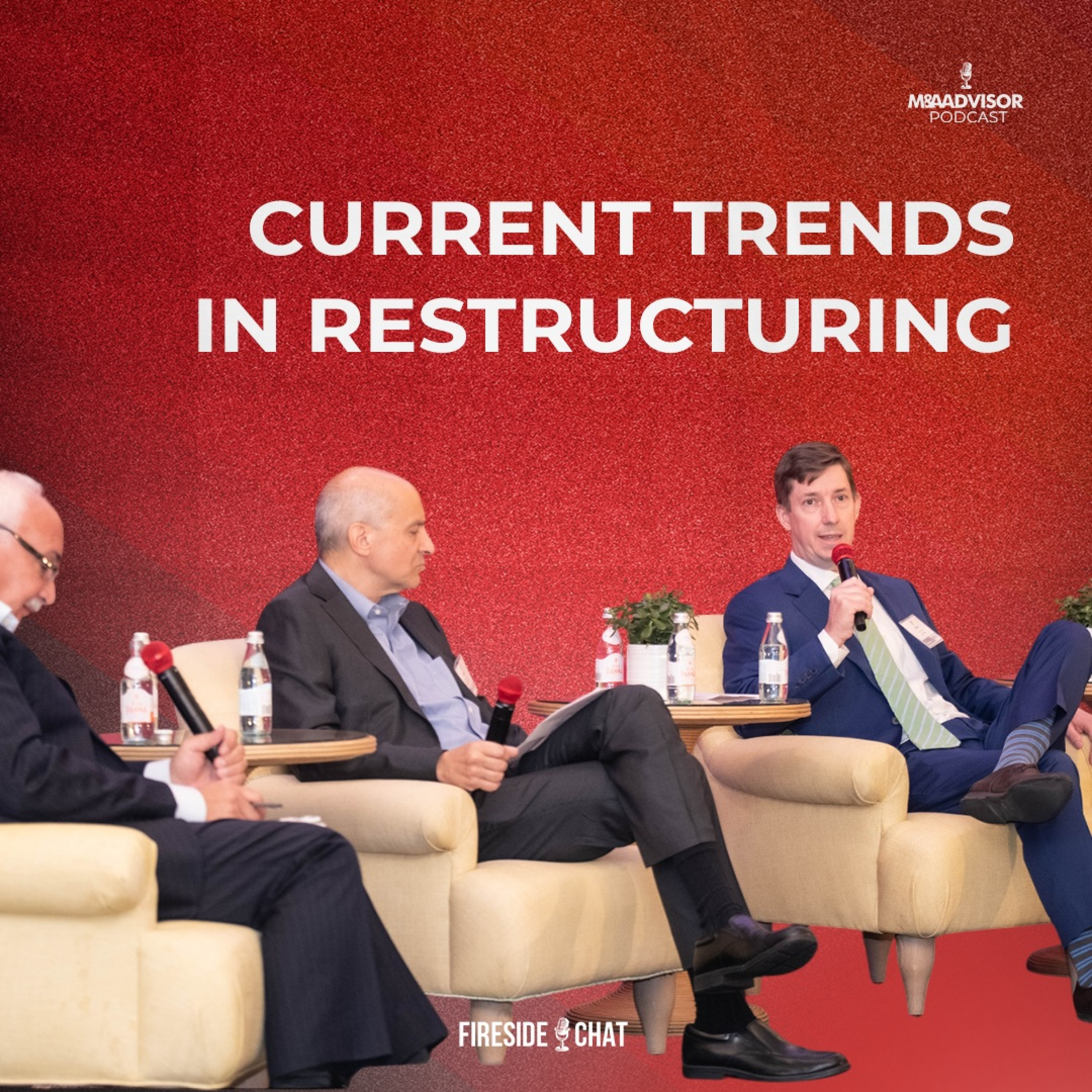 Current Trends in Restructuring : A fireside chat from the 2026 Distressed Investing SummitM&A Advisor Podcast · features Matt78 / 100
 CHRISTMAS SPECIAL | Inside Hoxton Wealth’s Biggest Year Yet: People, Growth & What’s Next For 2026Hoxton Life · features Matt70 / 100
 BONUS EPISODE: Answering YOUR listener questionsRandom but Memorable · features Matt59 / 100
 Monday Morning Data Chat - The Finale!Monday Morning Data Chat · features Matt45 / 100
 Your Marketing Needs Trust, Not Just ReachWinsDay · on Authentic storytelling72 / 100
 The Power of Authentic Storytelling: Co-Founder & CEO of ICR, Tom RyanThe Safari · on Authentic storytelling70 / 100
 05 What does digital content marketing success look like?
 04 The Power of Purpose-driven Content Marketing
 03 The Audience
 02 How digital content marketing supercharges your marketing strategy
 01 What is Digital Content Marketing?