
CS RevSpeak · 2026-06-22 · 28 min
Key moments - from our scoring
Substance score
36 / 100
Five dimensions, 20 points each
Consumption-based pricing fundamentally reshapes how customer success teams operate, requiring a shift from protecting fixed ARR at renewal to continuously earning the right to the next dollar of usage. Unlike subscription models with annual contracts and predictable renewal dates, consumption models (whether pure pay-as-you-go, hybrid with a base fee, or committed consumption) create immediate revenue signals when usage changes - customers don't cancel, they quietly use less. The episode breaks down three critical operational shifts: moving from periodic usage reviews to continuous usage management, tightening the window for proactive outreach before usage curves bend downward, and embedding value conversations into every touchpoint rather than reserving them for QBRs. The speaker, drawing on experience with VPs and CS teams navigating this transition, explains why inherited subscription-era metrics like GRR and traditional health scores become misleading, and introduces replacement frameworks including usage trajectory tracking, time-to-value-expansion measurement, and usage volatility monitoring. Critical for any CS leader at a company that has shifted to or operates under consumption pricing.
Pure consumption has no base fee or commitment (zero fixed revenue floor), hybrid adds a base subscription plus usage above a threshold (some revenue predictability), and committed consumption requires upfront spend commitments tied to actual usage (different churn risk profile). Each creates different urgency levels and CS motions.
In consumption models, GRR doesn't capture silent churn - a customer who renews but reduces usage technically retains but loses revenue. Health scores that weight support tickets and QBR completion miss what matters most: usage trajectory (declining usage is riskier than lower absolute usage with growth).
Subscription churn has a moment (a non-renewal decision); consumption churn is a gradient - usage declines gradually over quarters until revenue quietly drops 60% without a single churn event being logged, making early intervention critical.
CSMs need analytical capability to spot usage patterns, commercial awareness that driving usage drives revenue, and the ability to hold both customer value and business growth as compatible goals - skills different from subscription-era relationship and renewal management.
Reframe metrics from 'ARR protected' to 'revenue trajectory influenced' using usage correlation data, make CS-driven expansion revenue visible as a distinct reporting line, and explicitly connect team capacity to usage outcomes by showing performance gaps between overcapacity and well-covered accounts.
Our reviewer’s read on each dimension, with quotes from the episode.
The episode has a coherent structure and delivers a few genuinely useful operational ideas (usage trajectory vs. point-in-time health scores, churn as gradient, specific threshold triggers), but it's diluted by repetition, two promotional interruptions, and the host twice undermining his own argument by noting the advice applies to subscription models too.
In a consumption model, Churn is a gradient. It doesn't have a moment, it has a direction.
If usage drops more than 15% week over week, that's an automatic outreach. If a customer who was in the top tier of usage falls to the middle tier, that's a conversation.
The 'churn as gradient' framing and the three-way taxonomy of consumption models (pure, hybrid, committed) are the freshest ideas here, but most of the content recycles standard CS thought-leadership about proactive outreach, health scores, and commercial awareness without meaningful first-principles reasoning or contrarian arguments.
In a consumption model, CS is continuously earning the right to the next dollar of usage.
A customer at high usage with a declining trend is more concerning than a customer at moderate usage with consistent growth.
This is a solo host episode; the host is a CS coach and consultant, not a practitioner who has operated a consumption-based CS team at scale. The only practitioner referenced is an unnamed VP-level client cited in passing, which is insufficient to raise the caliber score.
I worked with a customer success leader, VP level, strong team, genuinely good relationships across their book, whose company shifted pricing models about 18 months into her tenure.
that's exactly the kind of work I do in my one on one executive coaching
The episode offers illustrative but plausible operational numbers (15% week-over-week threshold, 60-day flat usage flag, 40 accounts per CSM) and one anonymized anecdote, but cites no named companies, no verified external data, and no real customer outcomes, keeping it solidly illustrative rather than evidential.
If usage drops more than 15% week over week, that's an automatic outreach.
We currently have 40 accounts per CSM in our mid market segment. Here's what the revenue trajectory looks like in our overcapacity accounts versus our well covered accounts.
As a solo monologue format there are no guest questions, no follow-ups, and no productive disagreement; the host delivers a structured lecture with clear signposting but the format structurally eliminates the conversational craft dimension, and two mid-episode promotional breaks further interrupt momentum.
Quick break. If you're enjoying this conversation, don't forget to sign up for the CSRevSpeak newsletter.
Before we dive into today's episode, a quick question for customer success leaders.
Computed from the transcript - who did the talking, and the words that came up most.
Consumption-based pricing is reshaping how CS teams need to operate and most CS leaders are navigating it without a clear playbook. When customers pay for what they use, churn stops being an event and becomes a direction. Metrics that worked in a subscription world stop telling the full story. And the skills that made your CSMs excellent in a subscription model may not be the ones this model demands. This episode is a full breakdown of what consumption-based pricing actually means for how you lead CS.
Transcribed and scored by The B2B Podcast Index.
Speaker A: Before we dive into today's episode, a quick question for customer success leaders. Does your team have a clear way of guiding customers to value or measuring value today? If your answer is no, then my Value Realization Framework Online course is for you. It's a self paced online program that helps you install a repeatable system so your team delivers value, proves outcomes, and drive retention and expansion. Check out the program details@csrevspeak.com VRF get instant access and lifetime updates when you Enroll Again, that's CSREVspeak.com VRF See you there. Most customer success teams are built for a subscription world Annual contracts predictable ARR a fixed renewal date. The customer success manager's job in that model is to keep the customer healthy enough to say yes when that date arrives. But what happens when there's no renewal date? What happens when the customer isn't locked into anything when they pay for what they use when they use it, and they can dial that usage up or down at any time based on how much value they're getting? Any changes to customer success motions in ways most leaders haven't fully reckoned with yet. The metrics you've been tracking may no longer be telling you what you think they are. The skills your systems built may not be the right ones for this model, and in turn, the thing you've always been watching for looks completely different when a customer doesn't cancel, they just quietly use less. If your company has moved to consumption based pricing or is heading that way, or if you're a CS leader who just joined an org that's been running this model, this episode is for you. Stick around because at the end I'll show you how to know when this is something you can work through on your own or versus where outside perspective changes the math. Let's get into it. Welcome to the cs uh, Rev Speak podcast where we talk about practical insights, strategies and frameworks that will help customer success leaders who carry a revenue number drive sustainable growth, maximize customer lifetime value, and crush their numbers. Let me start by making sure we're working from the same understanding of what consumption based pricing actually is, because it shows up in different forms and the customer success implications vary depending on how it's structured. At its core, consumption based pricing means the customer pays based on how much they use, not a flat annual fee, not a per seat license that's fixed regardless of adoption usage. That could be API calls, data volume, transactions processed, hours of compute, number of workflows run, whatever the value metric is for your product, the more they Use, the more they pay, the less they use, the less they pay. But not every consumption model is the same. Some companies run a pure consumption model, which means no base fee, no commitment. It's a pure pay as you go. The customer has zero fixed obligation. Every dollar of revenue is earned in real time based on usage. Other companies run a hybrid model, a base subscription that guarantees a floor of revenue plus consumption on top usage above that threshold. This is increasingly common because it gives the company some revenue predictability while still aligning pricing to value delivery. And then there's a committed consumption model where the customer commits to a certain level of spend upfront, often at a discount. But the revenue recognition is still tied to actual usage rather than a fixed seat count. And why does this matter for customer success? Because the urgency and emotion look different across these models. In a peer consumption model, there is no floor. A customer who stops using the product stops paying immediately. The risk is immediate and the feedback loop is short. While in a hybrid model, the base subscription creates a buffer, but the expansion opportunity and the risk of the customer not renewing the base is still very real. In a committed model, the customer has made a, uh, financial commitment. But if they're not using against that commitment, you have a different kind of problem. A customer who has paid but isn't realizing value, which is one of the fastest paths to churn at, uh, renewal. Understanding which model your company runs tells you how to calibrate the urgency of your customer success motion. And regardless of which model it is, the fundamental dynamic is the same. The customer only stays and grows if they're continuously getting value. Customer success job is to make sure that's happening not just at renewal, but all the time. In a subscription world, customer success is largely protecting an asset that already exists. In the consumption world, CS is continuously earning the right to the next dollar of usage. The motion is different, the urgency is different, and the skills required are different. Let's get specific about what this means for how your CSMs actually spend their time. Because the day to day motion in a consumption model looks meaningfully different from what most customer success teams are used to. In a subscription model, a CSM can follow a relatively predictable rhythm onboard a customer drive adoption. In the first 90 days, check in regularly, run the QBR, manage to renewal conversation. The calendar has natural anchors, the customer journey has defined phases. And yes, a good CSM and a subscription model is still watching usage and still acts when it drops. The difference is the Runway. A usage dip six months before renewal is a customer conversation opportunity. A Usage dip in the consumption model is a revenue signal. Right now, the window to act is fundamentally shorter. In a consumption model, that rhythm doesn't exist. In the same way, there's no renewal date anchoring the conversation. Usage is always moving up, down, flat, and a CSM who isn't watching it closely and acting on what D.C. is going to miss the things that matter before they have a chance to recover. The first shift in motion is from periodic usage reviews to continuous Usage Management. Your CSMs need to be in their usage data consistently, not just pulling a report once a month, but understanding the patterns. Which customers are increasing usage, which ones have plateaued, uh, which ones had a spike last quarter that hasn't been sustain and critically, what's driving each of those trajectories. This is a different kind of analytical work than most CSMs are trained for in subscription environments. In a subscription model, health scores and adoption metrics are useful but somewhat lagging. You're using them to predict a renewal conversation that still months away. In consumption model, they're operational. A usage drop this week is a revenue signal right now, not a risk factor for next year's renewal. The second shift is in how proactive outreach is timed. In a subscription model, proactive means reaching out before the renewal conversations get uncomfortable, and there's a reasonable window to do that. In consumption model, proactive means reaching out before the usage curve bends in the wrong direction. That window is much shorter, and it requires your CSMs to have a clear view of what healthy usage growth looks like for each customer and to be moving toward it with intention, not waiting to see what happens. The third shift is in how value conversations happen. In a subscription model, value is often demonstrated at specific moments. The QBR or the executive business review, maybe a few months prior to the renewal. In a consumption model, the value conversation needs to be woven into every meaningful touch point. Because if a customer isn't seeing value continuously, they don't wait until renewal to act on it. They just use less. Now let's talk about the CSM profile this model requires. The CSM who thrives in a consumption model is analytically inclined. They're comfortable with data. They spot patterns to connect usage signals to business outcomes without needing to be prompted. They also have a natural commercial instinct, an understanding that driving usage isn't just good for the customer, it's good for the business. And they're comfortable holding that dual awareness. When you're running a consumption model, you want to make sure you are hiring the right profile to begin with. Where this gets Harder is when a company transitions from a subscription model to a consumption model. I worked with a customer success leader, VP level, strong team, genuinely good relationships across their book, whose company shifted pricing models about 18 months into her tenure. The team had been hired and developed for subscription. They were excellent at relationship management, strong at renewal conversations, good at the human side of customer success. But when the pricing changed, the motion change and the team struggled because the analytical and commercial urgency the new model demanded was a muscle they hadn't been asked to build yet. We spent time together working through how to develop that muscle and the people who had the foundation for it, and how to have honest conversations about fit for the ones who didn't. That transition is one of the hardest things a customer success leader can navigate because it's not just an operational change. It requires a, uh, fundamental rethink of, uh, how the team is developed and what great looks like in the role. Quick break. If you're enjoying this conversation, don't forget to sign up for the CSRevSpeak newsletter. The newsletter for revenue driven customer success leaders, where I share insights and tried and tested frameworks for driving both retention and predictable scalable revenue growth that works for customer success. Sign up now for free@csrevspeak.com Newsletter. Okay, let's talk about metrics. If your CS team is running on subscription era metrics inside a consumption based model, you're making decisions based on information that isn't telling you what you think it is. And this applies to whether your company just made the pricing shift or whether you're a CS leader who's recently joined an org that's been running consumption based pricing for years. Because inherited metrics can be just as misleading as outdated ones, let's talk about what needs to change and why. The first metric to reconsider is gross revenue retention or grr. In a subscription model, GRR is a clean signal. Did a customer renew at the same or higher contract value? In a consumption model, GRR gets complicated. A customer who renews their commitment but reduces usage has technically retained but the revenue is lower. A customer who has no commitment at all but maintains consistent usage is healthy and practiced but invisible. In a traditional GRR framework, the metric doesn't capture what's actually happening. What matters more in a consumption model is revenue trajectory at the account level. Is usage growing flat or declining? And what's the rate of change? Those two questions tell you more about the health of an account than a renewal rate ever could in this model. The second metric to reconsider is your health score specifically how it's constructed? Most health scores and subscription built CS orgs weight product engagement broadly support ticket volume and QBR completion, for example. In a subscription model those are reasonable proxies for customer health. In the consumption model, the most important input is usage trend, not just current usage trend. A customer at high usage with a declining trend is more concerning than a customer at moderate usage with consistent growth. If your health score isn't, weighing usage trajectory heavily is giving you an inaccurate picture, here's how to start operationalizing this Build usage thresholds into your health score model that reflect trajectory, not just current state. Define what healthy growth looks like for each customer segment. Not a universal benchmark, but a segment specific one. Because a scaled customer and an enterprise customer have different usage profiles and build alerts that fire automatically when a customer crosses a threshold that warrants action. Not a general decline flag, but a specific percentage drop over a specific time window that your team is expected to act on within a defined number of days. That last piece is the operationalization most CS team skip. They build the dashboard. They can see the usage data, but there's no clear protocol for what happens when the signal fires. Define it. Make it part of your operating rhythm. Encourage your CSMs to treat those alerts as urgent, not as information to file away for the next check in. The third thing to measure that most CS teams don't track explicitly in a consumption model is time to value expansion. Not time to initial value, time to the next value milestone because and consumption based CS growth comes from customers finding new use cases, expanding into new teams, solving new problems with the product. The system's job isn't just to protect current usage, it's to actively identify where the next layer of uh, value exists and help the customer get there. Tracking how quickly that happens and whether it's happening at all is one of the most important leading indicators you have. And finally, track usage volatility. A customer whose usage swings dramatically from month to month is a commercial risk because that volatility makes revenue unpredictable and often signals that the use case isn't fully embedded yet. Customers with stable growing usage are your healthiest accounts. Customers with volatile usage are your most at risk. Even if they're average, it looks fine. The most common pattern I see across CS leaders working in this model is that they have the data, but they haven't built the decision protocols around it. The signal is there, the action isn't. Building those protocols and coaching your team to use them consistently is where the metric work actually pays off. In A subscription model, Churn has a moment, a date, contract that doesn't get renewed. A conversation where someone says the word cancel. You can see it coming, you can fight for it, and when it happens, you know what happened. In a consumption model, Churn is a gradient. It doesn't have a moment, it has a direction. And by the time it's obvious, you've already lost a significant portion of the revenue. Here's what it looks like in practice. A customer who used a product heavily in Q1 starts using it a little less in Q2. But maybe a champion left. Maybe a competing priority emerged. Maybe the team that was driving usage got restructured. The CSM notices the dip, but it doesn't feel urgent. The customer is still using the product, still responding to outreach, still showing up on calls. Everything looks okay on the surface. Q3 usage is down another 20%. The CSM has a conversation. The customer says things are fine, they've just been busy. So the CSM files it away. Q4 usage is at, uh, 40% of where it was at peak. The customer isn't going to cancel, there's nothing to cancel. They're not using the product. And the revenue has quietly declined by 60% over the course of a year without a single Churn event ever being logged. That is consumption based churn. And it's almost impossible to recover from once it's reached that point, because by then the customer has deprioritized the product. The champion who drove adoption is gone. And rebuilding the use case from scratch is a much harder conversation than the early intervention would have been. So what does early intervention actually looks like? It starts with having clear usage thresholds that trigger action. Again, not a general sense that something looks of a specific number. If usage drops more than 15% week over week, that's an automatic outreach. If a customer who was in the top tier of usage falls to the middle tier, that's a conversation. If usage has been flat for 60 days on an account that should be growing, that's a flag. The intervention conversation itself also looks different in the consumption model. In a subscription world, a risk conversation is about to renewal. In the consumption model, the conversation is about the usage. I've noticed your usage has shifted over the last few weeks and I want to understand what's happening. Is there something getting in the way? Is there a use case that's changed? Let's make sure we're getting the value out of this that we've designed for. That's a different conversation, more specific, more operational and more urgent. And the recovery playbook matters. Once you've caught a usage decline early, what do you actually do? The first move is diagnosis. Is this a champion change competing priority? A product issue or a value gap? Each of those has a different intervention. A champion change requires fast relationship rebuilding at a new level of the org. A competing priority requires a, uh, reprioritization conversation that reconnects the product to the customer's goals. A product issue requires an internal escalation. A value gap requires going back to the success plan and rebuilding the use case from the ground up. The key is not to treat all usage declines the same way. A uh, CSM who responds to every dip with a check in call and just wanted to touch base email is not running a recovery playbook. They're going through the motions. Coach your csms to diagnose first, then intervene with the right play for what they actually find. Here's something most CS leaders don't talk about openly when they move to a consumption model. The CSM's relationship with Revenue has to change. And that makes a lot of CSMs uncomfortable. In a subscription world, there's an unspoken rule in many CS teams. CSMs don't talk about money. That's sales job. The CSM job is to drive value. And if the value is there, the commercial outcome takes care of itself. It's a clean separation that keeps CSMs in their lane and out of what can feel like an awkward commercial dynamic. In a consumption model, that separation doesn't work because driving usage is driving revenue. There's no way to do one without doing the other. A CSM who coaches a customer to expand their use case to a new team isn't just doing good customer success work. They are generating revenue. A uh, CSM who identifies a new workflow the customer could automate isn't just being helpful. They're creating the conditions for the next tier of spend. That's not a sales motion, it's a CS motion that has commercial consequences. And your CSMs need to be comfortable with that reality. Not as salespeople, but as advisors who understand the helping customer use most of the product is how to create more value in how the business grows. You know what? It really does sound like what CSMs in a subscription world should be doing as well. But I digress because that's not the topic of today's podcast. But I feel like in most subscription based model that mindset is not inherently there as opposed to in a consumption based model, your systems actually don't have a choice. So the coaching shift here is from value delivery to value expansion. In a subscription model, the system's job is to make sure the customer is getting value from what they bought. In a consumption model, the CSM's job is to continuously identify where the next layer of value exists and help the customer get there. That might mean introducing the product to a new team. It might mean helping the customer design a new workflow. It might mean surfacing a use case they haven't thought of yet. This requires your CSMs to have a genuine understanding of the customer's business, their goals, their workflows, their priorities, their growth plans. So it's not just about product knowledge, business knowledge. And it requires them to show up in every conversation with a question. Where is the next opportunity for this customer to get more value? And how do I help them see it? Commercial conversation that follows isn't a sales pitch. It's a, uh, natural extension of a value conversation. Based on what you've told me about your Q3 priorities, I think there's a use case here that you haven't activated yet. Let me show you what that could look like. That's customer success and it drives revenue. Coach your team to be comfortable with both being true at the same time. And I know I'm talking about consumption based model here, but I feel like that applies to subscription based model as well. Okay, there's one more challenge consumption based pricing creates for CS leaders that doesn't get talked about enough. And it's internal. How do you make the case for CS headcount and investment when the revenue your team is protecting and growing isn't a fixed number on a spreadsheet? In a subscription model, the CS investment case is relatively straightforward. You have X ARR, your churn rate is Y. CS reduces the churn rate by Z percent. Here's the revenue protected. Here's the ROI on the CS team. It's not always easy to make that case, but the math is tractable, traceable. In a consumption model, the math gets messier. Revenue is variable. Usage fluctuates, there's no clean renewal date to point to as the moment CS work either paid off or didn't. And leadership teams that are used to thinking about CS as an ARR protection function struggle to evaluate CS investment when ARR isn't a unit of measure. So how do you make the case? First, reframe the metric. Instead of ARR protected, talk about revenue trajectory influenced show leadership to correlation between accounts with active CS engagement and accounts with growing usage versus declining usage. That correlation quantified is Your investment case accounts where our CS team is actively running usage expansion plays are growing at X percent. Accounts that are effectively unmanaged are declining at Y percent. Here's what that difference means in revenue over a rolling 12 month period. Second, make the expansion revenue visible in a consumption model. CS influence usage growth is revenue growth and it should be tracked and reported as such. Build a reporting that shows CS driven usage expansion as a revenue line. Give it a name. Present it in leadership meetings. If uh CS is growing revenue and nobody can see it, the investment case will always feel soft. Third, connect CS capacity to usage outcomes explicitly. If your team is stretched and certain accounts are going unmanage, show without cost. We currently have 40 accounts per CSM in our mid market segment. Here's what the revenue trajectory looks like in our overcapacity accounts versus our well covered accounts. The gap is the cost of not investing. That's the business case and it's the kind of case that gets funded in a consumption based business where CS is visibly connected to revenue outcomes. Consumption based pricing is not a trend. It's becoming the dominant model for a growing number of SaaS products particularly in infrastructure, AI and data. And the CS teams that figure out how to operate in this model, like how to drive usage with intention, measure the right things, catch the gradient of churn before it becomes irreversible, and make the internal case for investment are the ones that will build durable competitive advantage for their companies. Let's bring this together. First, understand what flavor of consumption model you're operating in. That could be pure consumption, hybrid or committed because each one creates a different level of urgency and a different CS motion. The common thread across all of them is that CS is continuously earning the right to the next dollar of usage. Second, the CSM's day to day motion changes in three specific ways. Usage management becomes as important as relationship management. Proactive outreach needs to happen on a shorter window than subscription and value conversations need to be continuous, not episodic. If your org has been consumption based from the start, make sure you're hiring against this profile. If you're transitioning from subscription, expect the team development work to be significant. Third, your metrics need to evolve revenue trajectory, usage trend, weighted health scores, time to value expansion and usage volatility are what tell you what's actually happening. Build the dashboards, the thresholds and the protocols that make acting on those signals automatic. And if you have inherited metrics from a previous CS leader or or a subscription era, audit them. Inherited metrics can be just as misleading as outdated ones. Fourth, churn is a gradient here, not an event. Define the usage thresholds that trigger action, diagnose before you intervene and build a recovery playbook so your CSMs know what to do when they catch a decline early, because catching it early is only valuable if they know how to respond. Fifth, get your CSMs comfortable with the commercial dimension of their role. Driving usage is driving revenue. In this model, coach your team to see value expansion as a natural part of their job and 6 make the internal investment case with revenue trajectory data, CS influence expansion, revenue and a clear picture of what undercovered accounts actually cost. That's how CS gets funded in the consumption based business. Most customer success leaders who are navigating a consumption based model for the first time, whether because their company just made the pricing shift or because they've just joined an org where this is already the model, run into the same realization at some point. The knowledge of what needs to change isn't the hard part. The hard part is figuring out how to actually make that change and inside your specific team, with your specific people, inside the commercial reality of your org. Right now. That's the threshold where this episode stops being enough on its own. The frameworks are here, the application is specific to you, and that's exactly the kind of work I do in my one on one executive coaching. Working through what your consumption model actually demands, where teams gaps are and how to build emotion that your org needs right now. If that's where you are and you'd want to get support, head on over to csrevspeak.com coaching and Schedule A consult call with me. Let's talk about whether one on one coaching is the right next step for you. Thanks for being here. I'll see you in the next one. If you enjoyed today's episode and you want to learn more about CS Rev Speaks coaching and training services, head on over to www.csrevspeak.com. i specialize in working with customer success leaders who carry your revenue number and I look forward to helping you confidently run a revenue generating customer success team. Don't forget to connect with us on LinkedIn and join uh, our Customer Success Leaders hub for more discussions, resources and networking opportunities. You can access the links on the show notes. See you next episode.
Other episodes covering the same guests and topics, from across The B2B Podcast Index.
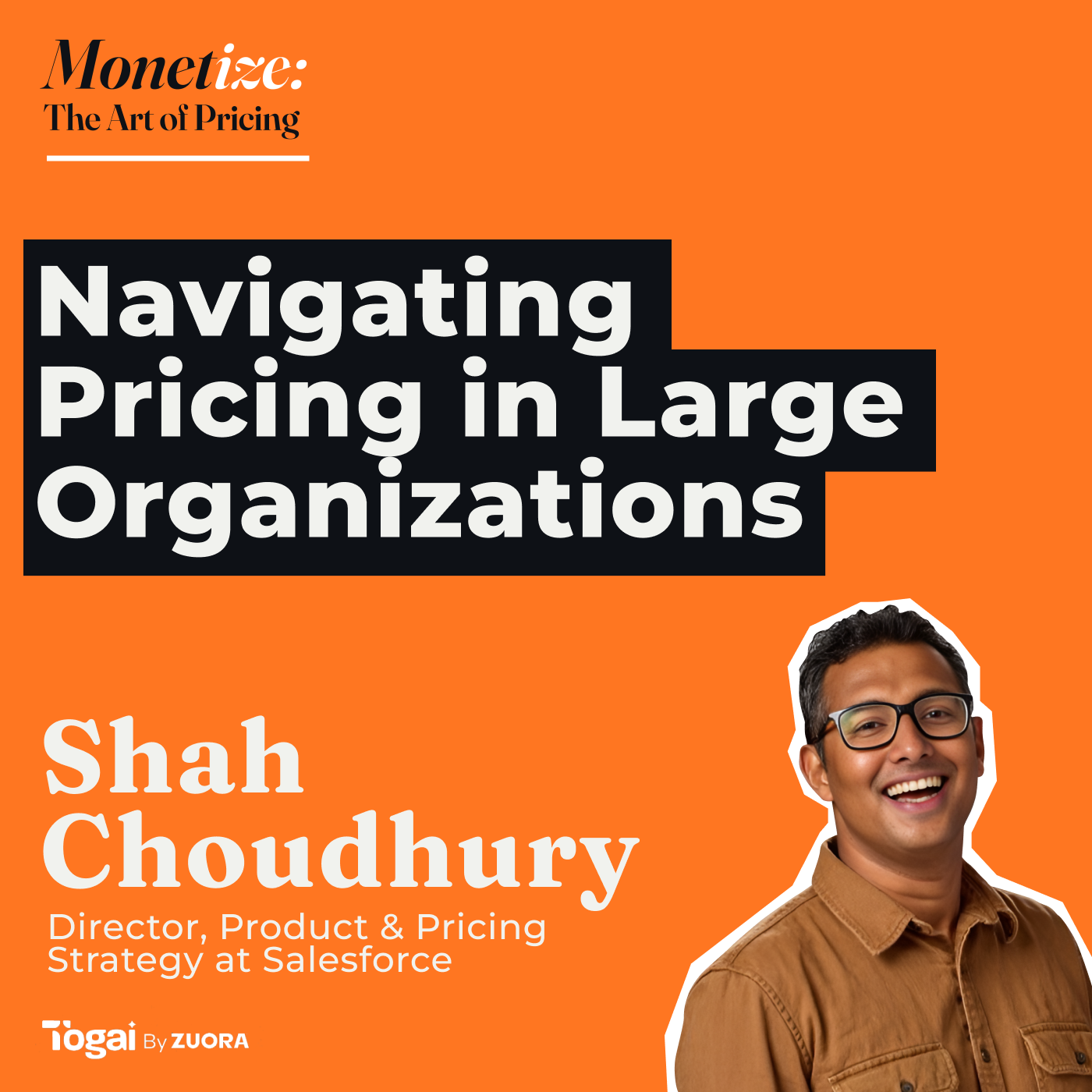 Navigating Pricing in Large Organizations with Shah Choudhary, Salesforce’s Monetization LeaderMonetize: The Art Of Pricing · on Consumption-based pricing models87 / 100
 The Evolution of the CRO & Revenue Efficiency Metrics with Christopher Semain and Sean RyanThe CRO Spotlight Podcast · on Gross Revenue Retention (GRR)86 / 100
 212: Tamara Adams | CRO, OctaveSales Is King · on Consumption-based pricing models83 / 100
 Angeline Gavino: How to align Customer Success with Revenue GrowthCustomer Success: With Fahim Waaler · on Gross Revenue Retention (GRR)80 / 100
 Treat Metering Like Finance: Building Data Platforms for Consumption EconomicsData Engineering Podcast · on Consumption-based pricing models79 / 100
 Ep. 192 - Why SaaS Growth Now Starts After the SaleSaaS Backwards · on Gross Revenue Retention (GRR)76 / 100The Customer Success Playbook for Building the Relationship with the Decision-Maker64 / 100From Coordinators to Trusted Advisors: How to Coach Your CSMs Through This Shift71 / 100What to Protect, What to Delegate, and What to Let Go Of as a CS Leader51 / 100How to Coach Your CSMs to Say No Without Losing the Customer Relationship50 / 100Lead2Scale Spotlight: Building Customer Success From Scratch at a Startup55 / 100