
Cloud Radio · 2025-09-03 · 45 min
Key moments - from our scoring
Substance score
57 / 100
Five dimensions, 20 points each
Godard Abel frames AI's impact across five layers of the software stack. At infrastructure, he sees clear opportunity as hyperscalers (AWS, Azure, Google Cloud, Oracle) dominate with massive capital investments in AI data centers. The data layer presents opportunity through infrastructure platforms like Databricks and Snowflake, plus third-party data providers like G2 itself, which has identified itself as a top-10 influencer of LLMs. Model and orchestration layers show opportunity with OpenAI, Anthropic, Google Gemini, and long-tail specialized models proliferating. At the application layer, Abel sees neutrality - incumbents face threats from declining seat-based licensing as AI reduces headcount needs, but opportunities in new outcome-based pricing (citing Salesforce's Agentforce and Zendesk's performance-based models). For incumbents versus startups, winners will depend on regulatory moat (healthcare, financial services favor incumbents) and user persona (engineers switch freely; regulated industries stick). Disruptive startups need 10x better experiences, exemplified by Cursor and Lovable in coding and web-building. G2 itself faces threats from buyers starting on ChatGPT instead of Google, but Abel sees major opportunity in Generative Engine Optimization through partnerships like Profound, positioning G2 as a top influencer. He introduced G2AI, an agent-based software buying assistant trained on 3 million reviews across 200,000 products.
No - AI will shorten buying cycles and potentially expand shortlists by making vendor research easier and enabling discovery of long-tail solutions, rather than eliminate vendors from consideration.
G2 is partnering with Profound on Generative Engine Optimization to understand how LLMs reference G2 data and competitors, and building G2AI - an agent that recommends software across all 200,000 products using reviews and taxonomy, positioning G2 reviews as critical training data for answer engines.
They must deliver a 10x better user experience (like Cursor's IDE integration for AI coding or Lovable's no-code website builder) to overcome incumbents' advantages in customer trust, existing data, and installed bases.
AI automation reduces the number of employees needed (fewer support seats), but enterprises need to pay for more AI agents to handle cases - requiring incumbents to shift from seat-based to usage or outcome-based pricing models.
Regulated industries like healthcare and financial services offer better defense due to regulatory moats (HIPAA compliance, decade-long deployments, entrenched trust in vendors like Epic) that startups cannot overcome with superior UX alone.
Our reviewer’s read on each dimension, with quotes from the episode.
The episode has a reasonable number of substantive points - GEO as an emerging SEO analogue, AI expanding rather than shortening shortlists, LLMs preferring conversational content over marketing copy - but a large proportion of airtime is spent on well-worn AI disruption narratives (seat-based SaaS under threat, incumbents vs. AI natives, regulated industries as moats) with minimal elaboration beyond the obvious.
there's this whole new category emerging of, uh, Generative Engine Optimization, or some people are calling it Answer Engine optimization or AI optimization
I would probably say no, I don't think it'll shorten a short list. I do think it will shorten the buying cycle and I think in some ways it might even expand the short list
Most of the framing - hyperscalers win at infra, seat-based SaaS threatened by agents, coding as the first disrupted category, regulated industries as incumbent moats - is standard AI discourse that circulates widely; the most genuinely fresh angle is the counterintuitive claim that AI will expand rather than compress vendor shortlists, but it is not developed deeply enough to stand out.
in some ways it might even expand the short list. Yeah because it's easier to get information on many vendors and even discover long tail solutions
the original solution selling methodology was like, hey, only give the buyer information in exchange for them, allowing you to qualify them and give you information. But I don't think that works anymore
Godard Abel is a genuine multi-exit operator - Big Machines to Oracle, SteelBrick to Salesforce, and now G2 at meaningful scale - who has directly sold enterprise software for 25 years and runs the most relevant software-review platform in the industry; his commentary comes from practitioner authority rather than punditry.
He's been the CEO and co founder of Big Machines which was exited to Oracle. CEO of Steel Brick which was a configure price quote software platform that was exited to Salesforce. He is the co founder and CEO of G2 which has over 3 million verified software reviews
I sold a lot of cpq software over 20 years my prior companies
There is a solid sprinkling of concrete numbers - Cursor to hundreds of millions ARR in a year, Lovable to $100M ARR in months, Profound's $40M Sequoia round, ChatGPT at 800M users, Salesforce's ~50% S&M spend, G2's 200K products across 2K categories - but many figures are approximate or self-promotional, and key claims about buyer behaviour shifts and ROI of GEO are asserted without supporting data.
cursor encoding. You know, I think we've all seen they've grown zero to hundreds of millions of ARR in about a year
Profound and they're one of the emerging leaders in AI optimization. And actually you might have seen they just got a big round from Sequoia Capital just last week. I think they raised something like $40 million
The host's 'threat-neutral-opportunity' game-show frame adds modest structure, and a few questions genuinely invert the guest's logic (the 'how freaked out should incumbents be' follow-up is good), but the conversation is dominated by lengthy unchallenged monologues, frequent pre-telegraphing of expected answers, overt cheerleading for G2, and a lengthy mountain-bike closing segment that consumes several minutes with no B2B substance.
Inverting that a bit, if you're an incumbent and you see Somebody with a 10x experience Enter your market, how freaked out should you be?
I would probably view AI as a bit more of an opportunity than neutral. I just see kind of as some of these things evolve and I just uh, very bullish on G2 myself
Computed from the transcript - who did the talking, and the words that came up most.
Our Guest: Godard Abel , Co-Founder and CEO of G2 , the world's largest and most trusted software marketplace. He previously built cloud CPQ pioneers BigMachines (acquired by Oracle) and SteelBrick (acquired by Salesforce). Episode Topics: AI across the stack: Infrastructure, data, models, and applications - where the most significant opportunities and risks lie Incumbents vs. startups: Why the next decade will reward incumbents with data and trust, and AI-first challengers with 10x user experiences G2’s AI strategy: From generative engine optimization (GEO) to G2 AI as a buying assistant Future of software buying: Will AI shorten shortlists? How buying cycles, transparency, and seller roles are evolving Marketing in the AI era: Risks of losing optimized website conversion funnels and how vendors must retool Endurance in entrepreneurship: Lessons from the Leadville 100 on perseverance and keeping vision through valleys Resources: G2 2025 Buyer Behavior Report Godard Abel LinkedIn
Transcribed and scored by The B2B Podcast Index.
Speaker A: Foreign.
Speaker B: Welcome to Cloud Radio. Made for full stack cloud operators. Cloud Radio covers all aspects of the business of software. Excited to have Godard Abel on the show today. He's got an amazing background for a cloud focused cast. He's been the CEO and co founder of Big Machines which was exited to Oracle. CEO of Steel Brick which was a configure price quote software platform that was exited to Salesforce. He is the co founder and CEO of G2 which has over 3 million verified software reviews. 100 million professionals use it every year. It's one of our favorite tools, has been hugely influential as a platform in the industry in terms of increasing transparency, just adding value to the cloud ecosystem and so I've long wanted him on the show and I'm excited to have him on the show. Godard, do you want to give the audience anything more about yourself?
Speaker A: Yeah. No. Hi Matt, thanks for hosting me. Love what you're doing with cloud ratings and I know you do also do a lot with our G2 data to give better insights on what's happening in cloud and now enterprise AI. So just really excited to be here with you. Great.
Speaker B: And I think like the theme of the day is obviously AI and how it's disrupting software and I framework I like to use is threat neutral opportunity and software is multi layered and will go portion of the stack one by one and kind of get your rapid fire takes threat neutral opportunity. It's a little bit of a game show and hopefully it generates some broader discussion for us. So enterprise stack, let's start with the infrastructure level, threat neutral or opportunity in terms of the impact AI opportunity and any particular bullets there.
Speaker A: Well I think we're all seeing the need for compute just grow with these new AI data centers and I think we're seeing Amazon with aws, Microsoft with Azure, Google Cloud, Oracle. I think they're investing literally hundreds of billions every year now to build these new AI data centers. And I think the power consumption of these data centers, the concentration is much higher and so it's just leading to a need to invest billions and frankly there's very few companies in the world that have that kind of capital. So I do think those four hyperscalers are only going to get stronger in AI. And I think no matter who wins at the app layer or which LLM um wins there's going to be a need for more compute, more infrastructure. So that's why overall I see much more opportunity at the infrastructure layer than I do.
Speaker B: Threat makes perfect sense. Now the data layer which you have a Very good viewpoint on threat neutral
Speaker A: or opportunity Opportunity and I think both the data infrastructure obviously companies like DataBricks, Snowflake and AI only works on good data and so I think now every enterprise, every business is realizing they need a centralized data lake data warehouse where they can have all their data and also most importantly cleanse and integrate their data. And so I think the data tooling I think becomes more critical than ever and then also I think third party data providers and yes that's a big part of our business at G2 we provide software marketers intent data so they can know which of their customers are in market for certain of their products or AI solutions as well as just all kinds of data to train agents. And G2 again we have really interesting data sets and we've done analysis together with profound where G2 is already one of the top 10 influencers of the LLMs of the AI uh agents based on our data. So I do see both the data infrastructure as well as data providers Obviously I mentioned G2 but there's many others But I do see the need for data, both data infrastructure as well as more trusted data sets to just grow in this age of AI.
Speaker B: And we added the stack and that was a great answer Model and orchestration layer I'm going to guess have a good sense what your answer will be but threat neutral or opportunity?
Speaker A: Yeah I think that is opportunity and I think that has created the opportunities also in the rest of the stack obviously chatgpt when 3.5 came out in late 2022 it has created this whole generative AI revolution because everyone saw the power of gen AI to really be I think the ultimate assistant for humans to learn and increasingly to do work. I think the demand for LLMs also on hugging face as you know there's thousands of models, many long tail ones and so I think both for the core foundational models obviously OpenAI, Anthropic, Google Gemini, Perplexity well Perplexity doesn't really even have its own models but I think the model providers, Both the core LLMs as well as I think this long tail and I think there'll also be room for small models, industry specific models. So I think there's just going to be tremendous growth at this model layer which really to most of the world is brand new in the last three years and it's just hard to see how it's not going to just grow dramatically over the next few years.
Speaker B: And then perhaps most importantly at ah the software application layer, Threat neutral or
Speaker A: opportunity I would say neutral and because there I see both the opportunity and obviously all the big incumbents in enterprise software, you know, companies like Salesforce, ServiceNow, they're launching Agentforce. I think ServiceNow is repositioning as the ultimate agentic AI platform. And so I think there's opportunity for all of enterprise software. But I think also on the threat side, and the reason I'm neutral is that the traditional SaaS seat based licensing model I think will be under threat because the reality, if you look at applications like support, a lot of support centers may need fewer employees. So that means fewer seats. On the flip side though, they will need more agents because I think people are expecting agents to be able to resolve a lot of support tickets as well as drive a lot of other outcomes in the enterprise. So I think it's going to be, yeah, there's going to be both forces for the enterprise software vendors, you know, where on the one side they can generate more revenue with agents likely based on outcomes and usage. And of course on the other side the traditional SaaS annual recurring revenue will be under threat. And I think some players will obviously win and grow the agent, the AI revenue faster than their SaaS seat based revenue will decline. But I think on the app layer there's clearly both forces, you know, some positive, some negative. So I would say net neutral beautiful
Speaker B: and that transitions well into, you know, at the application level dividing between incumbents and startups or AI natives. So for the incumbents, do you view AI as a threat neutral or opportunity?
Speaker A: And I would say neutral, you know, for similar reasons I mentioned earlier, they have, you know, the threat on their seat based SaaS revenue likely declining as automation, you know, reduces the need for the number of seats. Of course on the other side they have a massive opportunity to provide agents. They'll have to have a different pricing model, you know, likely more based on usage. Right now Salesforce is now offering Agent Force based on Conversations or Zendesk. One of our board members is Tom Eggemeier, the CEO of Zendesk. But they're now truly doing outcome based pricing models where you know, they will only generate revenue if they resolve cases for their agents. And so those are new revenue streams. And I think in addition to the shift in business model that, you know, I, I put net neutral because there's both opportunity and threat. I think the big advantage the incumbents have clearly is having, you know, In Salesforce's case, 200,000 customers or Zendesk, you know, thousands of customers. So they have the big advantage of already having big installed customer Bases that trust them. I think that's clearly a strength. They also already have a lot of data from their customers. And as we talked about earlier, AI only works on top of data. And so I think those are the big strengths the incumbents have. They already have their enterprise customers trust, they already have their data. And so in that sense they're in a good position to layer on agents and AI automation on top of that existing customer relationship on top of that existing data set. Of course, I think on the threat side for the incumbents, they're not AI native and I have the same threat at G2. I think any company that started before 2023 probably is not truly AI native in terms of the user experience, user interface. I do think we see a lot of startups now popping up that are creating new apps like AI first CRM. And I think one of the things in 10 years I could see an M enterprise software, for example, in CRM software, maybe no sales rep ever logs into any CRM system anymore. They're just interacting with an agent and they're just using voice, let's say on their phone. Maybe it's an AI pin, maybe we even all get the Elon brain implants. So the user interface will likely be totally different and it'll be more of a voice based Q and a prompt answer interface to software. And I think that's where the opportunity is for the startups. They can just reimagine, you know, without the traditional screens, forms, workflows that traditional enterprise software had to have in the era of the cloud and SaaS. And so I think that's a threat. You know, can the enterprise incumbents pivot the user experience fast enough that they can keep all of these startups the VCs are funding that are truly AI first at bay. And so I think it'll be interesting and I think different. I think I'm sure some of the incumbents will win big. I'm sure some of the startups will win big, but I think there'll also be losers on both sides. And I can't predict individual companies, but that's kind of a long answer to saying why I'm also net neutral on the incumbent enterprise software vendors. Some will win, but some will not adopt AI fast enough and then may lose out to uh, some of these disruptive startups.
Speaker B: And for these AI native startups, what do you think are the key things for them to get right to unseat the incumbents? Like overcome the lack of the customer base challenges of building a brand all of those things like what, what do they need to do to win?
Speaker A: Well, I think the disruptive startups, they have to have a 10x better user experience. And one great example of this is cursor encoding. You know, I think we've all seen they've grown zero to hundreds of millions of ARR in about a year. Or lovable you another AI coding assistant to help anyone build a website with AI. I think they're getting tremendous adoption because they truly offer a 10x better user experience via AI. And I know our, uh, CTO, Mike Wheeler, he loves coding assistants like Cursor because, and I think what cursor's done well, they've also integrated an ide. So it's really easy for the developers to leverage, let's say Claude code. And of course, you know, developers can also just use Claude code straight away. But I think the integration of the user experience and cursors just made it easier for coders to do their job, to code and to leverage the AI assistance. And I think that's one great example. I think lovables have done the same thing, you know, where I think just in a few months they grew to over 100 million ARR because they've just made website building, the user experience with AI so much easier where you can just prompt and really anyone that's not at all technical, that could have never built a website before, can now all of a sudden do develop websites, web apps. So I think the incumbents, uh, have to win on a reimagined brand new AI user experience that's truly 10 times better. And I think so far the first area, probably no surprise where that's really happened I think, is encoding. But I think that's, that's going to be the bar for the startups. It truly has to be reimagined. It truly has to be much more delightful for the user, you know, otherwise the users won't switch to a startup.
Speaker B: Inverting that a bit, if you're an incumbent and you see Somebody with a 10x experience Enter your market, how freaked out should you be?
Speaker A: I think you should be pretty freaked out. I think in a healthy way. I mean the positive side of fear is it can spur action. And I think we're seeing Microsoft with GitHub, for example, I think they are responding and obviously improving their own. And I think you remember with coding assistance, Copilot was actually winning at the beginning. Now all these amazing startups have come out done with even better. And so I think Microsoft is, I'm Sure, Watching that closely and now it's leading them to accelerate their own innovation. But I do think you have to be freaked out in a healthy way and respond really quickly because if you give these startups too many years and they're all seeing tremendous exponential growth, and even with ChatGPT, we're seeing it where I think now they have 800 million active users and so they've been able to get ahead of Google and Gemini. And I think same thing with ChatGPT. I think ultimately what made it so successful was also reimagined user experience. You know, just so simple. I think when we all went to ChatGPT for the first time, it's just simple prompt and answer and obviously also with a very powerful LLM that gives you very good answers. But I think that, you know, and what OpenAI has done in, they may now be able to keep that sustainable lead. Right, because they've gotten 800 million users. I think most people probably think of ChatGPT first when they think of an AI assistant. And so in the core LLM AI system category, they may have actually built a sustainable lead. Of course, you can't count out Google and Gemini or Microsoft. But I think that's why the incumbents do have to be concerned because if you let a startup get too far ahead and the startups are also able to raise almost infinite capital, you know, if they do show that breakout velocity. So I do think the incumbents have to be on high alert and obviously innovating very quickly. I do think they get some time. You know, I think especially in more regulated industries like healthcare, I think it's probably a bit easier for the incumbents because you need things like hipaa. Ah. And obviously there's healthcare systems like EPIC that all the largest hospitals trust and frankly it takes a decade to deploy. So I think in some of those more regulated industries like healthcare, maybe financial services, maybe the incumbents are in a better place because there's also a big regulatory moat and a big data trust moat that the incumbents can use their advantage and the startups probably can't overcome with just a better user experience. So I think it will also be highly dependent on the vertical and the use case. And like I said, I think the incumbents fare better where there's more regulatory and more trust concerns than in categories, I think, like coding and engineers, as you know, they love experimenting. My co founder, Mike Wheeler, like most engineers, right, he'll try a new tool in a second and they don't even want to talk to anyone. So I think, you know, a lot of it depends on the user Persona as well as level of sensitivity around regulation and data trust that will determine, you know, in which categories the incumbents versus the startups have a better chance to win.
Speaker B: Awesome. And you're obviously in a great seat to speak to all of this and talk about how G2 is implementing AI kind of in its products and its strategy internally. But kind of give everyone a thumbnail of where G2 is with AI right now.
Speaker A: And also G2, if I were honest, you know, an investor in G2, I would also be neutral on G2 in terms of what AI will do to us. We do have the threat. The biggest threat for G2 and probably any website, kind of any content driven website like G2 is that buyer behavior is changing rapidly. And we see software buyers now more and more starting on ChatGPT, starting on Gemini, uh, they're no longer starting on Google Search. In the first 10 years of G2's business, we very much focused on optimizing for SEO. We were a good Web 2.0 site and when we started we said we're going to build a Yelp for Software or TripAdvisor for software. And so we really built our site with SEO discovery in mind and we did a great job with that. We became the number one software marketplace with over 100 million buyers a year coming. But obviously now that's under threat where increasingly software buyers are starting in ChatGPT, they're starting in Gemini. And obviously if we don't adapt to that, that would be tremendous threat because over time, and who knows, I think there's some theory in 10 or 20 years, some possibility, users aren't going to any website anymore, they're going to consume all their information via an AI chat. And obviously that could be an existential threat. But we also see massive opportunity in it for G2 in that all the LLMs train on data. And now I think there's this whole new category emerging of, uh, Generative Engine Optimization, or some people are calling it Answer Engine optimization or AI optimization, which is really a new form of what SEO was for the past 20 years. And I think one of the cool things I already mentioned earlier, we're actually partnering with a startup called Profound and they're one of the emerging leaders in AI optimization. And actually you might have seen they just got a big round from Sequoia Capital just last week. I think they raised something like $40 million, uh, because they're only a year old, but out of the box, they Focused on AI optimization, gender engine optimization and helping brands understand. When a buyer queries and prompts ChatGPT or Gemini or anthropic Claude based on terms related to their brand, why are those answer engines giving the answers they're giving? And I believe the technology they're using, they're kind of injecting prompts at scale on all the key terms prompts the buyer might be giving to discover your product or your competitors products and then they can give a brand a quick perspective on are you being referenced, are you being recommended by the answer engines and what are the source data that are driving those answers? And one cool opportunity for G2, when we looked at that with profound, I think they actually said we're one of the top five or six global websites being referenced by the LLMs, especially on topics related to software buying. And no surprise, we're also doing analytics. But you know, G2's data is heavily crawled by OpenAI, uh, by Google and obviously we haven't been able to monetize that yet but we still like it in the sense that the ANSWERS now the LLMs are giving on software topics are G2 is actually number one influencer for enterprise software. And so now that's also a big message we're taking to marketers and I think every CMO or even CEO now, anyone running a business that's relying on an online funnel is under threat with this shift and also has an opportunity because I think right now if you do geo faster and better then you have an opportunity to win. Much like it reminds me of the early days of SEO. And I remember that when I was building my first company, Big Machines. I've been an entrepreneur now for 25 years and I remember it was probably like 2004 when we first started trying Google Ads for big machines. And I remember at the time I was actually skeptical because people thought oh, Google's only for consumers and people aren't going to shop for enterprise software through Google. Of course this was 2004 and I think now we're kind of at a similar shift where all of a sudden, wow, even enterprise buyers, even for heavy enterprise solutions that might cost millions of dollars, they're going to be doing research on ChatGPT. And so I think that's a big opportunity for G2 is if we can really be the number one influencer for Geo for software, then obviously that creates a massive new market for us. But we are having to re educate CMOS that that's why G2 reviews are actually now more important than Ever is because AI engines love conversational content. Obviously Reddit, you know, Reddit has done very well with massive licensing deals with Google and OpenAI, et cetera because LLMs love training on human conversational data. And G2's user generated reviews and content, you know, also fit into that category. And so you know that's the big opportunity for us and that's we're really focused on capturing now, really good perspective.
Speaker B: I, I would probably view AI as a bit more of an opportunity than neutral. I just see kind of as some of these things evolve and I just uh, very bullish on G2 myself and thank you.
Speaker A: And partly I think I also say that honestly to also motivate our employees, you know, because, and I think they all see it also. But you also have to see the threat. And I think I said this about all the incumbents, right? Uh, there is some beauty of fear in that it spurs action and obviously you can't be fear driven for very long. But I think, I think that's true for every incumbent now. Right. And G2 we do also have the advantages I mentioned of other incumbents. We are a well known brand. We work with over 4000 leading software vendors around the world already. We have a lot of data, so we do have a lot of advantages. But also we have to innovate. And the other area we're innovating in is We've also built G2AI which is a software buying assistant. And part of our vision there Matt, is it's almost like your best software analyst but in an AI agent. And the beauty of an AI agent versus a traditional analyst. Traditional, uh, analyst, they focus on certain categories as you know, and they might publish one quadrant for one category and obviously they're super deep in that category. But the beauty of an AI agent, we can train them on all our data, our millions of reviews, our taxonomy of over 2,000 products or 2,000 categories and over 200,000 products. And the AI agent can, you know, we think ultimately even better than a human analyst or human consultant, make better software recommendations. And so that's the other big opportunity we're pursuing that we can create the best software recommender that can give ultimately an even better recommendation than a consultant or analyst that focuses on just one category. So that's the other opportunity we're framing to sees.
Speaker B: Yeah, and, and some of my viewpoint there too, I'll just be a little bit honest is I would say if you're a tier 2 or tier 3 asset like web property or something in the AI world, you likely get destroyed. I think if you're a tier one and I think there's going to be a lot of parallels to in terms of brand that's going to be like having brand advantages will really compound for like the very best. I think G2 is very advantaged there as well in terms of how your brand will translate into AI. Uh, and then the other part too is we'll get this back to like the software buying process. Right. And kind of make up an assumption that some of the research might happen on Chat GPT where it's incredibly top of the funnel, very exploratory, you're just trying to orient a bit, but you in an enterprise and you're actually interested, you're going to likely end up on G2 and G2AI. And one question in terms of the software buying experience is will AI shorten short lists?
Speaker A: I would probably say no, I don't think it'll shorten a short list. I do think it will shorten the buying cycle and I think in some ways it might even expand the short list. Yeah because it's easier to get information on many vendors and even discover long tail solutions. And actually I love that for the software buyer because they'll probably have more choice. And I think with traditional RFPs, as you know, most big enterprises would send out maybe to three to five vendors. And I sold a lot of cpq software over 20 years my prior companies, you know, but typically they would, you know, send the RFP, let's say to three to five companies. And I think now the beauty with AI and G2AI you can really get a quicker view of let's say 10 to 20 solutions that might fit because based on just one prompt you can get a strong recommendation to give you initial market overview. And you can also do then quick vetting of that shortlist. With G2AI, we're also building specific tools and you've probably seen this in ChatGPT where they also offer a canvas. ChatGPT used to be just kind of prompt and answer in one thread. Now you can open up a canvas to collaborate with others. And we're actually adding that Same ability to G2AI because enterprise software buying, as you know, is very collaborative. Very few apps are just bought by one person. So they need to collaborate with their peers, they need to get the cio, the CFO buy in, et cetera. And so now we're creating a canvas in uh, G2AI where you can pull in all the data. We already have our G2 grids you can also pull in comparisons. And let's say you do pick a short list even of 10 vendors with AI, we can automatically populate that RFP for you based on whatever your sufficient criteria are. The basic information on the vendor, company size, revenue, stability, et cetera, all the things that uh, traditionally a software buyer would have put into a 20 tab Excel RFP. And honestly that was probably my least favorite part of being an entrepreneur, especially when my companies like Big Machines and steelbook were small. I'd sometimes pull all nighters filling in RFPS myself and it's super painful for the seller. And honestly I wasn't even sure the buyer would ever read all 25 tabs of that spreadsheet. And I think AI really solves that because with AI and G2 Marketplace we probably already have the data to populate the 25 tabs on the spreadsheet, if you will. But now it's all an AI canvas and it can be much more interactive. So if the buyer has follow up questions, they can pull in all their peers to collaborate in a collaborative AI assisted canvas. And so ultimately I do think it'll open up a longer list of vendors to consider and then make it much easier for the buyer to get the data and the information they need to make a quicker decision. And so I really just see a better, more informed buying process that's both faster and informed on more data on more alternatives, more alternative software vendors and informed on more real time data on how well those software vendors can fulfill your needs. So I think AI is going to be really exciting. It's going to lead to better, faster software buying.
Speaker B: And will software vendors have to get more transparent to enable the AI share more documentation or things that in an earlier time might have only been available through an rfp?
Speaker A: I think yes. And I think the Internet has already, you know, first, the Internet has already kind of, you know, created that shift of more and more transparency and, and I do think AI will only accelerate it. And I think especially customer voice. And as I mentioned, I think the LLMs are going to be much more likely to train even on forums like Reddit, you know, where people are talking about your software. Obviously sites like G2, that's what the LLMs want to train on. And frankly they're probably less likely to train on the marketing text on a vendor's webpage. And I do think the progressive forward looking vendors will make it more and more transparent, including things like pricing that they may have shied away from the past, because these AI agents will gather Data really quickly. And let's say, as I mentioned, on this G2AI canvas, there's 10 columns, 10 vendors, and for eight of them, our AI agent, based on what's already on G2.com and the rest of the web, can fill in all 100 rows, let's say. And then there's two vendors that are blocking everything. I think if nothing else, just from a buyer convenience standpoint, you're like, I already have eight choices. They're fully transparent, they're authentic. You know, I'll just move on. So I do think the vendors that keep data behind, uh, kind of a, uh, behind a moat, I think they're going to be more likely to lose in the age of AI. I think it is going to lead to more transparency, more information, because it's just so much easier for people to go gather information that's public. And if it's not public, they may not bother, right? Because then they have to have, oh, now I got to schedule a call with that vendor and I got to get qualified, right? Sort of. The traditional enterprise selling process was like, well, I remember when I first started enterprise software like 25 years ago, you could actually do that, right? Because the Internet was barely even out there, so the seller controlled all the information. And that was probably, you might remember, Matt, the original solution selling methodology was like, hey, only give the buyer information in exchange for them, allowing you to qualify them and give you information. But I don't think that works anymore because now with AI, uh, the buyer is just going to expect all the information and data is out there and the seller isn't going to be able to use data and information to control the process anymore. And so overall, I think that's a very positive shift for software buying and selling because it's going to make it faster, easier, more transparent, and the best fit solutions, I think will win faster.
Speaker B: And with buyers able to do so much research, able to do so much planning independent of the software vendors, what does AI mean for the human sellers? And when the buyer does arrive at their doorstep, I think it's going to
Speaker A: raise the bar for the human seller. And I do love this quote, you've probably heard it also that AI won't replace humans. Humans with AI will replace humans without AI. And I think that's also true for sellers because I think one of the cool things, we're using an app called Hyperbound, for example, at G2 to train all our sellers. So I think with AI, our sellers can and should also be better trained to be able to Answer deeper questions, be better advisors to our customers. And I think that's what the buyer is going to expect, that by the time they get to the sales rep, they're expecting to really talk to a consultant. And I think the other part the human seller is going to do that's so important is the empathy and the emotion. And I think buying anything, even enterprise software, it's a combination. I think any human decision, frankly is also emotional because you also want to know, hey, can I trust a person? Can I trust a vendor? Especially enterprise software, Many projects are still challenging. You're going to hit some rough patches in your project. And so in addition to if you're the buyer, you want to know, yes. Does the software fit? Is the pricing fair? Is there security good? Is there reliability good? Yes. You want all the hard facts, but you also want to know, is this a vendor I can trust? You know, if we're having a crisis and I'm down over the weekend and Monday's my end of quarter, is this vendor going to respond and get me back up and running? So I think that part is going to be there for the seller to still build a human relationship, to have the empathy and to ensure that that buyer can trust you and your company as well as to be a better consultant. Because, you know, all the data in a, uh, spreadsheet, RFP usually won't give all the context on what's the best practice way to deploy this technology. How am I really going to get that business outcome that this AI app is promising? So I think the seller is going to be more of a consultant and the bar is going to be higher. They have to be very deep in how to actually deploy the solution to drive outcomes. And I think that part of human empathy, human relationship, human trust building is also going to be critical. And I think the best sellers will actually enjoy that because they'll be freed from the minutiae of fill in RFPs, updating their CRM system and they'll be really able to focus on being a great consultant to their customers and prospects and on building trust based empathetic relationships. And I think that's what the best sellers want to do anyway.
Speaker B: Awesome. And want to test out a pet theory of mine. Like one concern I have kind of from a software vendor or software investor perspective would be how AI is moving traffic or buyer experience away from very well optimized conversion platforms, websites or similar where you're able to kind of get a feel for the brand. There's lots of optimization on, um, capturing your Email capturing your attention. And when you're in ChatGPT or many of these interfaces, it's very plain and not optimized from a conversion perspective. So I look at that as very significant potential headwind. So I wanted to get your opinion on that as kind of AI shifts the playing ground and how that might impact marketers go to market and software vendors in general.
Speaker A: And I think you're right, Matt. There's a threat to that traditional process and probably our whole industry, SaaS, Cloud, we've optimized it over 20 years, right? Like how do you build a perfect landing page and also Obviously like what HubSpot led, how do you create the perfect inbound content for SEO and for Google, right? And then you follow their digital activity, qualify them, ultimately get them into that perfectly optimized lead form. So I do think, yeah, if you just rest on those laurels, right, then I do think it's a big threat because buyers are going to engage differently. On the flip side though, also here I see the opportunity and to create more of an AI agent experience to help answer that prospect's initial questions and engage them more through an AI conversation. And obviously there's also vendors popping up. I'm sure you've seen like Qualified or one Mind that are creating these virtual selling agents. And in the case of Qualified, it's purely designed to handle that inbound. And I think rather than having web conversion forms, I think what better vendors will want to have is a great agent experience. And frankly the agent probably. And we're also optimizing G2AI this way. We actually don't ask for the buyer's email or contact information in the first prompt. You know, first you give them some information along, do some discovery, answer some questions and then very naturally at some point, yes, you can ask them to sign up, you know, connect with your LinkedIn or your Google Workspace account. And so I think ultimately it'll actually be a better qualifying process. And also I think that AI chat is going to create a lot of Digital data on G2, what we call intent data and frankly give you even more insight because now you'll have a threaded conversation, you'll see what questions does that buyer have? What business problems are they trying to solve with your app? So ultimately I think those that innovate and create this new AI first experience for the prospect to just answer all their questions with a very well trained agent that also very comfortably at some point does ask them for their contact information. It does ask them some of those qualifying questions like hey, do you have budget? When might you buy? And so I think there's actually a massive opportunity there. But I think people are going to have to retool. They're going to have to retool with AI and have a whole new prospect, engagement prospect, qualification process that will be very AI, uh, driven. But I think those companies that do it well will actually end up in a better place with better qualified prospects, one form prospects and actually much more data on what that prospect's looking for. So you can probably skip that first BDR SDR call and go straight to that consultative empathetic salesperson that can then just close the deal. So, net, I'm bullish for those that innovate and seize the opportunity to reimagined a whole prospect buying experience with AI.
Speaker B: Yeah, I think there is going to be an interesting volume versus quality dynamic and, and you could make the argument and look at a lot of GTM metrics that there's a lot of waste at the top of the funnel. A lot of these initiatives, you know, are just saturated and you're not really getting highly targeted, highly qualified, that you're going to have a lot of intelligence on who's really interesting. Even more so in an AI age.
Speaker A: No, and I think, uh, everyone's saying it, right. I think what is probably under threat is, you know, kind of the, just the pure inbound SDR bdr. And I think, and honestly, I think from the buyer's perspective, nobody loves that first qualification call anyway. Yeah. Because what happens, a lot of buyers, they have a qualification call and then um, the BDR SDR is like, oh, now may I set up a meeting with the sales rep? You know, and then they have to kind of have the same conversation again. So honestly, I don't think the buyer loves the current qualification process or nobody loves filling in the eight field web forms and then getting barraged. So I think the buyer is going to prefer it and frankly for the seller it's much more efficient. You know what I mean? So I would expect that for sellers, the percentage of revenue they have to invest in sales and marketing will go down. I think if you look at most enterprise software vendors and you know this, even the big ones like Salesforce, they're probably spending close to 50% of revenue on sales and marketing. And I imagine what will happen in our industry that will go down and then more will be invested in R and D and support, which is ultimately what the buyer really wants. So I do think our whole industry will end up in a better place. But there's going to be a lot of change.
Speaker B: Yeah, I tend to agree with it. So much of this is going to be so dynamic. When I think back to my first AI experiences or some of its capabilities, know that we've been working with it really like who knows where we'll be in two years.
Speaker A: Yeah. Uh, it's kind of amazing how far we've come. It's been approaching three years now. Right. Since chat GPT 3.5 but it's, it's amazing how far we've already come. And I remember like I'm old enough to remember, you know, I started my first startup way back in 2000. The uh, kind of the tail end of that initial.com boom and pretty a lot of stuff in cloud Internet took many years or even decades. And I think I do believe probably like most people and most VCs these AI changes are happening much faster. And some of these AI startups that I mentioned curse are lovable. I mean they're getting to hundreds of millions of ARR much faster than any early SaaS startup ever did. It's a really exciting cycle and it is coming pretty quickly.
Speaker B: Yeah, we do a fair uh, amount of quantitative macro work and we've tried to make parallels between the Internet and AI and based on lots of things we're arguably in 1995 or 1997 in Internet terms. And that's how I look at it. And I would feel pretty reasonable about that.
Speaker A: And honestly as an entrepreneur I think that's exciting, you know what I mean? Because I think back to 1997 most of, well, uh, the whole cloud, I mean Salesforce didn't start in 99. Yeah, the whole cloud and the Internet was really yet to be built. You know what I mean? Yeah. You're an entrepreneur. That's very exciting because it is truly. And the VC love the term early innings. Right. And I think these first, let's say three years, first three innings have been super exciting. But I think what you're saying is we are truly still just at the beginning.
Speaker B: Yeah. So much of this will change. It's going to be wild, it's going to be exhausting and that leads to a good parallel. Right. I saw your LinkedIn. You just completed 100 mile mountain bike race called the Leadville. It's famous in Colorado. Any parallels you can make to like some of your athletic endeavors, Being an entrepreneur, being a CEO and not just talking in terms of innings but just that endurance kind of being in it for the long haul. Some way to rescue me from that
Speaker A: question, yes, no, I do see, and I wrote a LinkedIn post on this. But I do see a lot of parallels to entrepreneurship. And this is actually 105 mile Leadville Mountain bike trail race. And it's an amazing experience, you know, way up in the town of Leadville, which is at, uh, 10,200ft. It's actually the highest altitude incorporated town in North America. And of course, if you're going to be doing an endurance bike or endurance run, that means it's a lot harder. There's a lot less oxygen. I think you have something like 30% less oxygen than you do at sea level. And so all of that really increases the challenge. And you also, you're not just running 105 miles on flats, but you're climbing over 12,000ft. And in the middle of the race you actually have to climb all the way up to 12,600ft up to the old Columbine mine, which actually was shuttered a few decades ago. And actually that also economic calamity that happened at Leadville is actually what inspired them to create these races. And the founder of the Leadville, both the Trail Run and they first founded the 100 mile trail run. And if any of you read the book Born to Run, if you're runners, they talk about Leadville and their mystical ways where they also had the Tarramura Indian tribe from Mexico come up and compete against the best ultra runners in the world. But all of that happened in Leadville and really what inspired Ken to start this race, the town needed a new start, it needed a new brand because it was kind of a busted mining town. And I think it was as genius really as an entrepreneur in this case creating this whole series of endurance event that then has brought thousands of people to Leadville, built a tourism industry and now it's also got a burgeoning industry where people are building second homes there. But it's really brought the town back to life. So one, I find his story very inspiring. But back to entrepreneurship, I've also found all my companies. You go through a lot of peaks and valleys and as you're riding the Leadville 100, you know, uh, you go over about six different mountain passes to climb a total of 12,000ft. And I think entrepreneurship feels a lot like that, you know, where a lot of times you're not sure you're going to make it. The oxygen's thin. And maybe the analogy to oxygen, startup world, sometimes you're running out of money, you don't know if you can make the next payroll. And I think the only thing that gets you through as an entrepreneur and as a mountain bike rider and lead bills, you just gotta keep pedaling, uh, even when the doubt starts to creep in and, like, am I ever going to make it to the finish line? And is my startup ever going to succeed? And I think that same spirit of, you know, keeping your vision, like, why are you doing this race? And for me, I really wanted to get this big buckle. In Leadville, if you finish under nine hours, you get a big buckle. And I think only about 200 starters out of the 1700 every year get that big buckle. And I just really wanted that big buckle. And my son was riding the race, my wife was there, so I didn't want to let my family down because I also spent months training, missing days with my family. But I told them, hey, I'm going to come home with a big buckle. And so I didn't want to let them down, didn't want to let myself down, so I just kept pedaling. And I think in a startup, it's a lot like that, where you have some ultimate vision. And for G2, our vision now is we want to be that trusted source of data and insight in the age of AI. And some days it's really hard. And it happens to all of us as entrepreneurs. You know, we lose a great employee, we lose a customer, we get some negative press. You know, those moments kind of feels like you're falling over on your bike and you're like, uh, oh, I don't know if I'm ever going to make it. You know, it's going to be impossible to realize our vision. We all go through those moments, but if we keep pedaling, and especially nicely entrepreneurship, we can do it with a team. Just like I was riding this bike race with my son, but I've always had co founders, great teams of employees, and we're all pedaling together. And I also felt that in Leadville, it was really a spirit, less competition and everyone cheering each other on to get to that finish line because we all know how hard it is. And I think that's the same great thing in entrepreneurship where you have a team and you're all peddling together. You want your customers to succeed, you want to succeed. And so if you just keep pedaling, you persevere, you endure, you stay 100% committed to your vision. You can make it through the pain, you can make it through the valleys, and ultimately, you have that glorious moment where you cross the finish line and you, the big Buckle. So it was just a phenomenal experience for me. And I do think that same spirit is ultimately what's made our company successful. And like I said, With G2, I hope we can climb one more peak and truly create that ultimate source of insight for the age of AI.
Speaker B: That's an awesome message and, uh, congratulations. I hope the big buckle was worth was.
Speaker A: I mean, I questioned it, especially 50 miles in when you're like, I'm never going to make it. But then I think, like most hard things in life and building companies this way, right after you go through a lot of pain together with a community of people and you merge on the other side victorious, it feels even better. So, uh, it was ultimately very, very invigorating.
Speaker B: Well, I think that's a good place to close out the show. I think, get to know you a bit personally. And I think that was a very motivational message. And then absolutely loved all your commentary on AI and so really grateful to have you on the show. For everyone listening, in the show notes, we'll have G2's Buyer Behavior Report and some other assets of theirs and research of theirs that touches on some of the things he mentioned. So, Godart, thank you so much.
Speaker A: Yeah, thank you for having me, Matt. And excited to keep partnering with you and cloud ratings as well to bring our insights to the market together.
Speaker B: Awesome. Thank you again, Sam.
Other episodes covering the same guests and topics, from across The B2B Podcast Index.
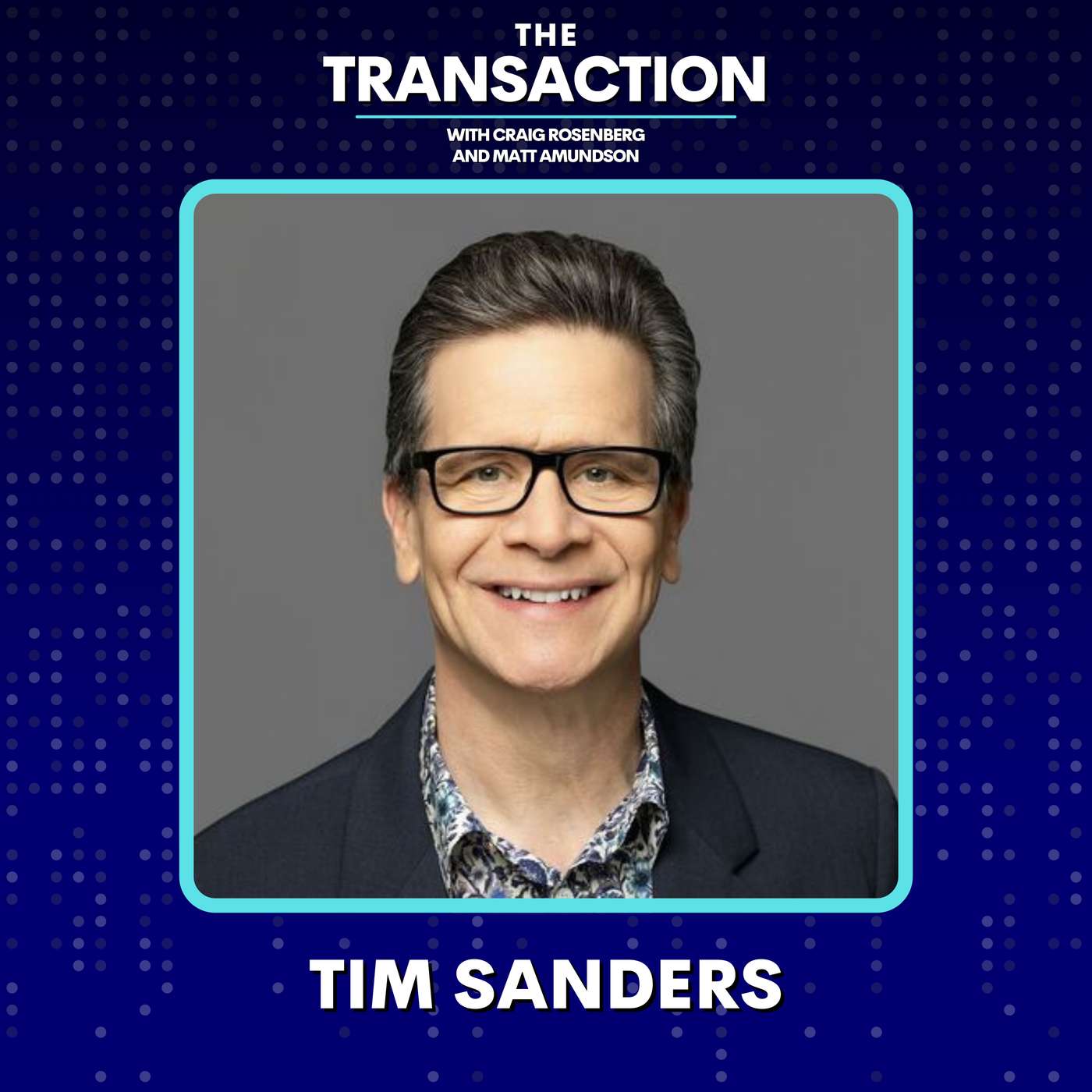 Win the AI Answer, Not Just the Citations with Tim Sanders, Chief Innovation Officer at G2 - Ep 85The Transaction · on SaaS100 / 100
 The Invisible Network Powering AWS with Matt RehderScreaming in the Cloud · on cloud94 / 100
 How Databricks Went $1M to $7B+ ARR in 10 Years | Ron Gabrisko, CROThe Peel with Turner Novak · on Databricks89 / 100
 Adamma Ihemeson on Building Autonomous AI Systems You Can TrustBack on T-R-A-C-K · on B2B84 / 100
 Athos Commerce CMO Gary Lombardo on why only 14% of shoppers see one consistent brandThe Agile Brand with Greg Kihlström® · on Generative Engine Optimization (GEO)80 / 100
 Just Say No to "Yes-Man Agents" & "Process Barnacles": How Miro Builds Post-AI | Jeff Chow, CPTOLaunchPod · on SaaS74 / 100
 Guy Rubin - 2026 GTM Benchmarks95 / 100
 Tim Sanders - G2 - The AI Answer92 / 100
 Karim Fanous - Engineering Management in the Age of AI72 / 100Guy Rubin - Ebsta - 2025 GTM Benchmarks
 Ben Pippenger - Zylo - 2025 Zylo SaaS Management Index