
Cloud Radio · 2026-05-06 · 53 min
Key moments - from our scoring
Substance score
72 / 100
Five dimensions, 20 points each
Tim Sanders presents G2's latest research on how artificial intelligence has fundamentally disrupted the software buying journey. The data reveals that enterprise buyers now start 55% of their research on ChatGPT rather than traditional search, and critically, one-third of all buyers use a single prompt to generate their entire shortlist - replacing what used to be hours or days of research. Sanders introduces the concept of "answer engine optimization," arguing that being one of three recommended solutions in an AI response is now existential. He explains why Deep Research tools (which generate 7-20 page reports rather than single-page summaries) dilute citation value but concentrate power in the final recommendation. G2 capitalized on this shift by positioning itself as the "proof point" for recommendations rather than just a citation source, resulting in a million users coming to G2 from ChatGPT in 2025 alone. Sanders emphasizes that vendors must shift focus from driving traffic to winning recommendations, as buyers arriving via AI recommendation show 5x higher conversion rates and arrive 90% through the buying journey but early in calendar time - fresh and ready to close quickly.
70% of buyers now use AI at some point in their software buying process, with 55% of enterprise buyers starting their research on ChatGPT instead of traditional search, according to G2's research.
Enterprise buyers face intense time pressure, expanded scope without additional headcount, and competing priorities - a dynamic called "satisficing" where they accept good-enough solutions quickly rather than conducting exhaustive research.
A citation is a link in the supporting evidence section of an AI response that may have low click-through rates (as low as 0.1%), while a recommendation is when the AI names you as one of the top three solutions in its final answer, driving 10-100x higher click-through rates because the user has higher verification needs.
Deep Research generates 7-20 page reports instead of single summaries, diluting the value of individual citations throughout the report but concentrating power in the final page three recommendations, where most click-through occurs.
Buyers arriving from AI recommendations show at least 5x higher closing ratios compared to traditional search traffic, and marketers report even higher conversion rates, because the buyer is further along cognitively but still fresh in the buying process.
Our reviewer’s read on each dimension, with quotes from the episode.
The episode is packed with non-obvious, actionable claims delivered at a fast clip - the one-shot shortlist concept, Deep Research changing the citation game, satisficing theory applied to enterprise buyers, the Rick Rubin talent model, and the trust gap framing. Filler is minimal; nearly every exchange introduces a new mechanism or framework.
one third of all the buyers we talk to, the first prompt is give me the best CRM solution. Medium sized hospital use case would be patient outreach. So the best of a category with some long tail details, that's a third of all prompts
Over one out of three B2B software buyers, when they do that one shot map, they choose Deep Research as a tool
Several genuinely counterintuitive angles here: tier-1 publications driving only 2.7% of B2B citations because they block AI crawlers, YouTube transcripts suddenly outranking Reddit for software purchase prompts, and the framing that winning a recommendation (not a citation) is the only metric that matters. These are not recycled takes.
Tier one publications, think. AP, Bloomberg, New York Times, Wall Street Journal. 2.7% of citations for B2B in general, not even software, just B2B. 2.7%.
YouTube has come out of nowhere. They weren't on our top 10 list six months ago, they, they weren't on our top five list three months ago. Now they're number three, breathing down Reddit's neck.
Sanders is CIO of one of the most data-rich B2B buyer-behavior platforms in existence, a Harvard D3I fellow, and a former CSO at Yahoo - giving him genuine longitudinal perspective on platform cycles. He speaks from proprietary survey data and named vendor partnerships rather than theory alone.
Matt, I was the CSO at Yahoo in 2001. I've seen this show before
a million human beings came to G2 from chat. A million. It was an exponential leap for us
The episode is unusually data-rich: named third-party sources (Sixth Sense, Profound, PromptWatch, Spotlight, First Page Sage, Futurum, Graphite HQ), concrete percentages throughout, and a real dollar-figure quantification of the cloud trust gap. Specificity is a clear strength and elevates the episode meaningfully.
the average year between 2006 and 2022, companies globally, they lost $44 billion a year. Deadweight loss by resisting cloud adoption
78% come from either best of like Best of Software Best of Categories or our reviews as content. It's like 78% of all our citations
The host asks a few genuinely sharp follow-up questions - the single-word 'Why?' forcing Sanders to unpack Deep Research, and probing for commercial-intent citation evidence specifically - but too often defaults to uncritical validation ('This is phenomenal,' 'Phenomenal answer') rather than pushing back on self-serving G2 traffic claims or interrogating methodology.
Why?
have you seen any ability to kind of get closer to that commercial side where it's like the commercial citation or the high intent citation
Computed from the transcript - who did the talking, and the words that came up most.
Our Guest: Tim Sanders is the Chief Innovation Officer at G2 and a fellow at Harvard’s Digital Data Design Institute . A longtime researcher of market trends and business technology, Tim focuses on AI adoption, AI agents, and the rise of answer engines in the software buying journey. Episode Topics: AI’s role in reshaping the B2B software buying journey, from early research to shortlist creation. The rise of “one-shotting” and how buyers now compress days of vendor research into a single AI prompt. How G2 reviews, category rankings, and high-authority third-party sources influence AI recommendations. Why enterprise buyers are moving faster toward AI-assisted buying as teams get leaner and workloads increase. The new importance of “winning the answer” in ChatGPT, Gemini, and deep research tools. Mentions vs. citations vs. recommendations: which ones actually influence software buying decisions? Deep research is the new buying battleground, where the final recommended vendors matter more than general visibility. Why AI-driven traffic may convert better than traditional search traffic.
Transcribed and scored by The B2B Podcast Index.
Speaker A: Foreign. Welcome to Cloud Radio. Made for full stack cloud operators. Cloud Radio covers all aspects of the business of software. Pleased to have Tim Sanders, Chief innovation officer of G2 on the show today. And as is custom I just let the guests introduce themselves. So Tim, how about you give folks your background and of course thank you for being on the show Matt.
Speaker B: Such a pleasure to be with you. For decades I've been a researcher. I love all forms of research and I love market trends. But I think about market trends from an economist's point of view. In addition to my work at G2, I'm also a fellow at the Digital Data Design Institute at Harvard. They are also measuring AI trends from a business application point of view. So between those two surface areas, Matt, I have a lot of fun covering this crazy sauce thing we call artificial intelligence. The two things I find myself most obsessed about is AI agents. And the thing I think we're going to talk a lot about now, the rise of answer engines, otherwise known as answer engine optimization.
Speaker A: That's great. And I think like the genesis of this cast was I saw your report come out about ah at recording seven or eight days ago on the software buying journey in AI and reached out to the G2 team to get this scheduled and first of all it was excellent. I think like the sample size, the access G2 has to it decision makers across a range of companies that for such an important topic it covered a lot of important ground and one of the things that jumped out to me was how far AI has gone into deeply into the buying cycle. I think once that was 51%. Now start with AI. AI is involved in 70% of the buying cycle or 70 at some point.
Speaker B: Yeah.
Speaker A: And then one of the most interesting parts, at least to me was the market share or impact of AI is greatest amongst enterprise and enterprise plus organizations which was which I guess you know reflects their thoroughness or something of that fact. So yeah, maybe like at a macro level what were your takeaways from that report?
Speaker B: Let's start at the last one. So why would enterprise and large enterprise index the most on using a ah, chatgpt instead of doing the traditional software research process? Right Matt. So let's first of all talk about the traditional process. For years and years G2 in our buyer behavior report research we've studied how buyers create a shortlist. They start on Google, they go through a lot of blue links, they go to vendor reports, they go to publications like yours, they go to review sites like G2, they read analyst reports, they talk to their peers. Their colleagues, their friends, they build this spreadsheet, might have 5, 10, 15, then they kind of do a second wave of research and synthesis to get it down to three. And now you have 51% of them. 55% if they're Enterprise. Even more if it's Enterprise plus they start on ChatGPT. And Matt, they one shot the short list. One third of all the buyers we talk to, the first prompt is give me the best CRM solution. Medium sized hospital use case would be patient outreach. So the best of a category with some long tail details, that's a third of all prompts. What does this mean? They are one shotting. The entire shortlist process, something that used to take hours if not days is done in a single prompt. And that's the, that, that's the massive change that's gone on here. And uh, why do they do it I guess is your question. I, I believed even before I joined G2, I believed that enterprise buyers would over index on using shortcut tools like Chat GPT. Why do I believe this? Well, there's a concept called satisficing. So satisfy sufficing, put the two words together. Sociologists talk about the idea that when you're under a lot of time pressure, you will accept a good enough solution that gets the job done quickly. And so what we're seeing at Enterprise, and most of you watching, if you work at an enterprise company, you know what I'm talking about. You're doing more in your job in 2026 than you were doing in 2023, way more than you were doing in 2019, et cetera. There is a, a real attitude at Enterprise about not adding headcount, doing layoffs, cutting headcount, freezing hiring. So the scope has increased. And the thing too, Matt, is for most people buying software isn't your job, it's something you do in addition to your job. So the squeeze is in at the biggest companies and as a result they choose satisfy. Saying they move to chatgpt makes all the sense in the world and I expect to see this surge even more in the next few years.
Speaker A: And when you talk about one shotting, that seems like incredibly powerful concept. Uh, and what are some of the implications for that in terms of does that favor incumbents? Does that actually broaden the opportunity set for that query for the hospital looking for CRM that someone comes out of left field? Is it mixed? I, I know it's a loaded question there, but I'll, I'll give you the floor.
Speaker B: Okay, well here, here's what I think of, you know, one shot's a phrase of like I got it in one prompt. Think about how the yellow page is compressed buying to one shot. You open the yellow pages, you need a plumber, you go to the plumbing section, you thumb over, there's a bunch of little things, there's the full page ad. That's where the seller has bought the biggest presence during the moment of the greatest need. That's compression. And we saw Google go through this huge era of compression, you know, 25 years or so, where being the on the first page of search was a huge opportunity for sellers. This is kind of where we're at now. If you are one of the three and you can ask me why I say the number three. If you are one of the three software solutions that ChatGPT returns to that prompt I gave you CRM, Hospital Patient Outreach. If you are one of the 3, then that means it's all been compressed and you're now on that list. Now, uh, why is this important? Our partner, Sixth Sense, they had a buyer behavior report they did at the end of 2025. And I believe this following statement, 9 out of 10 B2B software buyers told them they make their decision based on their day one short list. So this has become an existential threat to companies that aren't geared up for answer engine optimization, especially those companies that are craw blocking AI. They are gating their most valuable thought leadership content or they insist on using formats that are not AI crawl friendly such as JavaScript required and PDF. All of those companies might be locking themselves out of the game 90% or more of the time. I think that's why it's a really big deal. Now. What does this change? I think in the world of AI search, what it changes is it's never been more important to win the answer. And by win the answer, Matt, I mean you are one of the three that AI recommends at the bottom of the return. Now, I know we spend a lot of time talking about citations because that's what we're able to count in 2026 effectively. And I can explain this process to you in a minute if you like. So we count citations. But Matt, I was the CSO at Yahoo in 2001. I've seen this show before when we started talking about all these eyeballs on a website, all these hits that we're getting. The dot com crash was littered by companies that measured eyeballs and hits when they should have been figuring out revenue attribution. So for CMOs, I talked to winning the answer being one of those recommended brands at the bottom of the return. It's never been more important. And the last thing I'll tell you is that the other wrinkle that's happened over the last year to this whole process and it was revealed in our survey and it just, I. This is the thing that surprised me the most. Over one out of three B2B software buyers, when they do that one shot map, they choose Deep Research as a tool. Okay, that changes everything.
Speaker A: Why?
Speaker B: Deep Research is not one page. It's not a simple answer. It does not look like your AI overview on Google. Okay. Deep Research is an opus. 7 pages, 10 pages, 14 pages, maybe 20 pages. Okay, what does that do? It dilutes the value of every citation right now getting mentioned or showing up. That doesn't matter as much as being the one at the bottom of the return. That's the punchline like, all right, for the CRM solutions, choose these three. That's what everybody's got to figure out in 2026. How do you measure it? How do you win it? How do you scale those wins? That's the new ballgame.
Speaker A: And particularly and tough question here is have you seen any ability to kind of get closer to that commercial side where it's like the commercial citation or the high intent citation as opposed to just mentions of DocuSign somewhere, uh, in a report, but that is, have you guys seen any best practices or evidence of how to drive kind of the commercial conversion related citation?
Speaker B: Yeah. So again, a citation is a link, a mention is a mention. They're different. So think of a citation as something in the little link cloud, like when you see a claim made and a return, there's usually links down there that you can click on. It kind of opens it up. There might be 1, 2, 3 citations. But let's talk about this. So, so what I mean by this is if you're a software company that sells CRM and your target ICP is hospitals or companies that look like hospitals or use cases that look like patient outreach, what you're looking for is to be one of the three that are recommended. So that's different than a mention. You weren't just mentioning. You're the bottom where the, where the Deep Research says. So ultimately we recommend this one and this one and this one. They may not even link to you. Doesn't matter. You will recommend it. Now, what are the links under the recommendation? That's the real question. And that's the question G2 asked almost two years ago. That's Kind of changed our fortunes to be honest. Generally speaking, when AI makes something called a uh, your money, your life recommendation, okay, so it says to you like you need to spend $50,000 on a CRM or that spot is not cancer. That's where they are going to see the most. Click through on the citations that are provided as proof. G2 made a decision a couple of years ago and then we were lucky in another way to really focus on being the proof point for the recommendation. So that when we unblocked and we begin to target reviews and uh, we begin to re engineer our categories to be a collection of the best of a category, all of a sudden what happened was the chat, GPTs and Geminis and Perplexities of the World would show G2 citations at the bottom of these reports right now in the new world, the bottom of Deep research and as the proof point as to why these three were recommended. Now this is important because not all citations have the same click through rate. The way to think about why you would click on a citation risk and need to verify. So let's go back to the CRM prompt. I love to use this example. So if you use Deep research to ask for the CRM for the hospital for the patient outreach, maybe you even added another detail you like. I want very low money down and it must work on mobile phones. Your deep research report is going to have these sections, uh, history of CRM and healthcare history of CRM and patient outreach cases. Different CRM providers that have moved from machine learning to say large language models and now agentic. The rise of the patient or the rise of mobile phone endpoints for CRM. And then you know, page 13, the recommended three. Okay, so when you're moving through that, G2 is on that last page and that's where we focus now. The click through rate for your average expository citation. The history of CRM in hospitals, I've heard it's as low as 1/10 of 1%, maybe as high.
Speaker A: My personal experience, I write, you know,
Speaker B: there's no risk to believing those things. However. However, when I get down to the bottom and I say choose this one and this one and this one, the risk is much higher. And what we're seeing, I talked to the founder of PromptWatch that click through rate is at least 10x higher, if not more and it is linear. So if it's a very important decision, that click through rate could be similar to being on the first page of Google SERP, right? Like 7%, 10% maybe it's 100x. So it is demonstrably different to be the proof point for a recommendation than to just show up. And that's why Matt, and we talk about this publicly. 2025 was a banner year for G2 for two reasons. Reason number one, in 2025, based on Cloudflare data that we verified, a million human beings came to G2 from chat. A million. It was an exponential leap for us. And by the way, when we think about where our citations come from, 78% come from either best of like Best of Software Best of Categories or our reviews as content. It's like 78% of all our citations. So we got a million people came to us. We're going to have many more than that this year. And Matt, even though 2023 was uh, slightly down traffic, 2024, like for everybody listening, terrible year for traffic, right? Because zero click right AI overviews and Chat GPT takes away all your clicks. We bent the curve in 2025. G2 actually saw traffic growth in 2025 and we're going to be increasing that even more this year. Why? They because we've figured out a way to show up in the part of the AI return where the risk is the greatest and so the verification, you know, uh, the verification habit on the part of the user is the strongest. So you ask me, what's my advice for people? If you're a vendor, you should focus less on getting traffic and more on being recommended and getting high conviction traffic. Because here's what we know. If a person, you know, if a person finds you from Chat GPT because you were recommended in this short list prompt when they reach you, our buyer behavior report indicated it was at least a 5% higher closing ratio. People I talked to say it's much higher than that. It is high quality traffic. It shouldn't even be measured like traditional traffic. That's leads to pipe. Okay, so, so that's the way a vendor should think about it. I'm not really worried so much about getting a citation with a high click through. I want to win the recommendation. Because if you win the recommendation now, you are in that pool of a 90% chance to win. Even if they don't click out of the return, they're going to go find you. They're going to read reviews on G2 and click over to you. You're one of the three. However, if you're a publisher, if you're a UGC site, if you're a verification marketplace like G2 with reviews, yes, you want to find ways to by being easy to work with, by having very recent recommendation content, and by having the most satisfying set of data points to convince models in their validation layer of work that you're helping the buyer make a good decision. All of those really come together.
Speaker A: Fascinating answer. And I'll, uh, add a little bit because we, we did some work around this for a public company that the conversion rate in terms of qualified marketing, qualified lead, was five times as high for AI driven web clicks than traditional, uh, search clicks.
Speaker B: That's right. Because the buyer has outsourced the synthesis. So the synthesis comes back and it's like, this is a good reason. And they usually give color on that. Yeah, it's just much higher. But again, I think the reason the clicks are higher, the reason the conversion's higher is because the buyer is much further along the cognitive process, but they're much earlier in the calendar process. Now this is fascinating. Fascinating. So let's say it took me six months to get to a coalition decision on a, uh, $50,000 software purchase, and now I'm going to get there in four weeks, including InfoSec diligence. Okay. I want you to think about buyer burnout. So a long buying process, you kind of lose a lot of energy. You don't really have conviction. You have resignation at this point, Matt. I'm tired of this process. We're almost done. Let's do it. Conviction is you're still fresh. So, so, so the, the unintended consequence of AI search is that the buyer shows up 90% into the journey. When they come to you, they're coming to you for pricing. Talk to a rep. But they're still fresh, Matt, because the process hasn't even been going on that long. So it's the best of both worlds for the, for, for the vendors receiving those leads.
Speaker A: That's fascinating. And, and that's a call out from the report, which I was a bit surprised by, is, you know, my perception has been, is, you know, so many software buying habits and processes are, are very deep and ingrained. Right. And you'd think, you know, they're quite deliberate or historically have been. And that in your report that we'll link in the show notes, 83% showed an acceleration in overall purchasing, uh, process. It was about 40, significantly 40, somewhat faster. But when you talk about 83% faster, it's amazing.
Speaker B: Well, it's because there's been so much busy work. So it's not, they're not being less diligent. They're just doing a lot less of the grunt Work that's like a person who's really good at vibe coding because they've got enough domain experience to know what good looks like and if it's going to stand up and scale. When you'd look at a piece of software they built with say a Cursor or a Windsurf or even a Claude, you know, Opus front end, you wouldn't say, well, they didn't do their work. The answer is they just didn't do the manual grunt work. They didn't do important stuff. They did the judgment work. So these buyers are still doing all the verification work they ever did. They're just not doing the front end assembly of it. All right, so even though the model might say these are the three, they're going to do a lot of verification on those three. It's just now they're not having to build it from scratch. And I think that's where the time savings comes. But I think there's. And to the point of how much more traffic we're seeing at G2 from AI, they are saying, I want to go read the reviews, I want to see the ratings, I want to see some visual proof. But what we really believe that Sixth Sense publishes, they still stay in that box in the Day one shortlist. You know, I talk to vendors all the time about like the old way of doing a short list where it went over weeks, hours go in, I got time here, I got time there. Vendors kind of entered the shortlist process days or weeks into the process. Maybe a colleague rolled over, you know, in their chair and said, hey, have you thought of so? And so that just all goes away when you have a one shot prompt that happens in the moment. So I think that's fascinating.
Speaker A: And uh, I've been a bit of the elephant in the room for all of this, or AI in general as well, is the underlying quality of what the AI is pulling and summarizing and answering from. And the encouraging thing is some of your answers, it seems like where you guys have visibility is in these software processes. People are actually carefully investigating the links, going through and verifying entry two because one where for sure, because one worry is that, you know, ultimately the AI is flooded with DocuSign is the best dot com kind of SEO slop content that just, you know, behind the scenes is horrible. But the AI just quickly summarizes it. It's answering in 8.2 seconds to write this 13 page report. And the underlying information in many cases is quite poor. And that's for me, that's been the elephant in the room.
Speaker B: Yeah. So there's an old saying. Ethan Mollick came up with it years ago. Today's AI is the worst AI you ever work with. It just gets better. And what you have to understand is that These are enterprise B2B software buyers using deep Research. Over a third are on some type of enterprise account, which means more compute at test time, not free chat GPT on somebody's phone. Right. It's not taking seven seconds, Matt. It's taking several minutes to produce a deep research. It might even come back and ask you questions before it does. The Deep Research report. Gemini's famous for doing that. So it's a shorter process, and as much as you're not spending hours and hours swimming through the blue links. But let's talk about AI generated content. Now, here's what we know about the two big models. ChatGPT, Gemini. Every marketer needs to understand every use case is treated differently at test time. What I mean by this is that models are fine tuned with weights based on different use cases. So if I asked, like last week, like, when's the NFL draft? When is it coming on in Palm Desert, where I'm at, you're going to get a fast answer at test time because the use case is what they basically call search lookup. So it's a very quick process. It gives it to you. Not much compute at test time. But when I asked you the CRM prompt, it's a different test time experience. And what we know is it started at OpenAI, but you could, you could absolutely believe it's happening at Gemini, which, by the way, those two are, you know, 80% of the game. I could talk about why cloud's not part of the game, but those two are 80% of the game for our use case buying B2B software. So what you have to understand is that the models aren't just doing pattern matching like other use cases. They're not just looking for content where whoever published the content says the right words that match the prompt magically. So they go, we got to match. They're too sophisticated for that, Matt. I mean, OpenAI wants to be in the shopping business. They're going to. They're already making a lot of commissions on consumer shopping. When they figure out softw, which they will, they'll make billions of dollars getting a sliver to deliver the recommendation list. They don't want to blow that. And the concept of programming in AI, they call that avoiding a regrettable purchase. What does that mean? The. The recommendation algorithm is based and so here is an image I'll show you here. This is first page Sage. And first page Sage studied the authority, the way that these recommendation algorithms work. So they're combining not only pattern matching, but more importantly something called validation layer work. So almost half the time they're looking for authoritative lists and mentions by experts, not by vendors. They're also looking for awards and affiliation. They're also looking at online reviews. Less than 11% of that algorithm is really driven by social. So if a blogger or a vendor was out, uh, able to say these are the best, they have to go out some way and establish the type of authority, authority for that to give comfort to the models in making a recommendation. So it's not just about producing content that says we are the best. It's about content from the G2S or the Garteners or the, you know, whoever, insert, whoever is an expert, high authority website. It's those. A Tech Republic might be an example, CIO Dive might be a good example. It's those authoritative sources with best of rankings based on some methodology that tend to win the validation layer work to win the answer.
Speaker A: This is again like phenomenal. I love the depth. And then the other part is listening to this and kind of taking another perspective. If I were a CMO or if I were a CEO of a software company, I hear a lot of uncertainty, right? Like how do I end up in the top three? These are non deterministic engines.
Speaker B: Yeah.
Speaker A: We don't have control over them. There's lots of possibilities there. And then one. A bit of a pet theory of mine is we had a conversion model, right. When we get you onto the website, we can show off our magic quadrant. We can invite you to a webinar. There's great imagery, there's flow to it, right. All of that is gone. When they're in the G2AI chatbot on your site, or they're in Gemini, all of these micro conversion opportunities go away and the buyer is truly off by themselves. And then we're also hearing if I'm not in the top three, and all of these categories are arguably minimum 10, quality, vendor deep, you know, even 20, and if you're not in that top three, you're in huge trouble. So all of this is incredibly worrying.
Speaker B: Yeah. Well, the good news is if you won on G2 and think about the CRM1, like when you look on the CRM categories at G2, there's not one just for hospitals. So you may be number nine on, on that list, not number three, but you have reviews about hospitals and how it's working really well for providers walking the floor on their phones. And that could really solve the problem. So it's like, it's not necessarily your top three on a category. Your top three for the long tail prompt. Remember, the prompt has M what we're seeing. Graphite. HQ studied this and so did another company called similar web prompts are a lot longer than they used to be. We don't just use keywords like we do on Google. We explain situations, right? So we say this is the job to be done. This is the success criteria. This is my constraint that I'm operating under. This might be, you know, what, what my budget looks like. So there's all that detail. So you might be the 9th, 10th, maybe even the 15th vendor in one of our categories, but you're still first for that long tail prompt. What I tell people is if you win on G2, if you win the top category list for the publications that matter, that allow AI crawling, and we should talk about this. If you win the magic cue that might get into the wild. Even though Gartner aggressively blocks AI search, all of those show up. When that person's on Gemini and test time, it shows up, they go find it. So my, my recommendation is you really need to do a few things. Number one, you need to win in the places that are high authority as the best, wherever that is. G2 is a one you can win with with recent reviews and quality reviews. You win the others through submission. You, you win by having the best product and providing the best service. And this, this new world that we live in, that means it's good for the buyer. 80% or more of the people in our survey had more confidence in their purchase when they started with AI search than the traditional route. Fascinating idea. So, you know, just win in the places that count. That's step number one. Step number two, it is important to show up over and over again. I mean, even though we're focused a lot on winning, the answer, a similar number, over 80%, they thought more of a brand that was mentioned in an AI report. So it does improve your brand awareness, improves your authority. So I tell people there's just a few things you need to focus on. Number one, be easy to do business with. I mentioned this earlier. Really take a look at where you're blocking AI or slowing it down and have the internal debate as to why you're still doing it in 2026, you want to have fresh and recent content. I want to break this down. Fresh Content. What does that mean? You have a knowledge about the content gaps in your market space. There's a profound is an AEO vendor we partner with. They can help you with this. Air Ops is another AEO vendor. They specifically has a content engineering solution for this. You need to know what your opportunities are to create frontier knowledge that you can publish that is first on the scene or best on the scene to answer burning questions in your market space. So that's a really good strategy for showing up. When I say fresh, I say that. When I say recent, what I mean is if you've changed the features in your products, especially if you've added AI, you need recent reviews, you need recent write ups because as you put the press release out, you probably heard this Matt oh, press releases get great AI visibility. They also draw a line in the sand about the before and after picture of your company agent force that comes out in 2024 at the Dreamforce conference. Line in the sand. Everything before that it's not agents. Same for Clay, same for Zoom Info when they turned on the studio. Everything before that press release not agented the model know that. So they move. So recency of reviews and accolades and awards. If you're adding more AI really, really important, you're not going to be able to ride on your legacy. So I think that's fascinating. The last thing I'd say is produce as much human answer shaped content as you can as opposed to corporate speak message shaped content. So corporate speak message shape content. It's sort of like the CEO whose staff prepares their PowerPoint slides. There's no, there's no thought leadership in that talk. It's just a combination of a bunch of marketing speak about different things they're doing. A lot of times when I look at content on vendor websites, it's very message shaped. It's like here's the problem, here's our solution, here's the features, here's the benefits, here's the proof, here's your call to action. That's message shaped. AI search is allergic to that because it's trying to avoid a regrettable purchase. And it sounds like a marketer is trying to sell somebody or what do they like instead? They like human beings like you and me talking and one human being answering the answering the question from a pure experience point of view. That's why Reddit does really well in terms of driving citations. G2 reviews all do well. LinkedIn is surging in terms of showing up more and more in AI search because it's, it's it's answer shaped content. One thing I find fascinating at G2 we've been studying like just for the B2B software prompts, like best in a category and just for the purchase, recommendation, use case, commercial intent. We have a leaderboard at G2. And so G2 has, has a formidable lead now over Reddit. But YouTube has come out of nowhere. They weren't on our top 10 list six months ago, they, they weren't on our top five list three months ago. Now they're number three, breathing down Reddit's neck. It's fascinating, Matt, why YouTube would be such a cited source for B2B software prompts. Here's what happens. Smart corporate YouTubers get the transcript from the YouTube video, which is usually a conversation like you and I are having right now in the podcast, and they publish the transcript in the description. Okay. Uh, language models don't watch videos. Yes, Gemini could. They're not going to spend that computer test time. What do they do? They read the headers. What's the header? The description. So they see all those YouTube video transcripts and guess what happens? Making a video like what you and I are doing now is a forcing function to get us to talk like humans and for you to ask me questions, me to give you answers. I haven't done any messaging on the show. There's no script in front of me, there's no teleprompter in front of me. But if I sat down to make a video for corporate marketing, it would be the opposite. And that's fascinating. So I tell, I tell buyer or uh, sell sellers. It's not just YouTube. It's really about question, answer style video where transcripts are published in a high authority place like a YouTube where it's easy for the AI to consume. Pursue more of that in your content development and less of the scripted message based content. That's another big piece of advice I give a lot of people.
Speaker A: This is phenomenal. There's like, from my side of this, there's so many tactical things to do. It's a volume game as well as quality, but it's also volume. You have to be active on PR, press releases, YouTube descriptions. Right? This is because. Lots of shots on goal.
Speaker B: Yeah, lots of shots. Let's talk about PR because like, you know, you hear a lot about like public M relations. Never been more important. Well, sure, because you know, getting an endorsement from a high authority publication that AI can see may help you win the answer. Right. That may be the tipping point for you to make that list. But here's the rub. According to Josh Blaisk at Profound. For those of you watching, find him on LinkedIn. He's the director of Profound University, this amazing strategist.
Speaker A: We'll add it to the show notes.
Speaker B: So he studied media citations. Here's what he learned. Tier one publications, think. AP, Bloomberg, New York Times, Wall Street Journal. 2.7% of citations for B2B in general, not even software, just B2B. 2.7%. The other 93%, niche publications like Cloud Ratings. Why is this the case? Because that's not the way it works in the real world. When you talk about somebody said, I read a piece and it's not 2.7% first tier, it's probably 50, 60% tier one. Right. But the reason that tier one isn't showing up is because they're aggressive about crowd blocking, because they think they're going to monetize it later. They don't want to have, you know, anything cannibalized their online subscriptions, their paywalls. So they block it. But the tier twos don't because they want the distribution. And as a result, they're winning all the citations. So what I tell people is, yes, you need to focus on PR and earn media, whatever monitoring tool you have, whether it's profound or whether it's all these others I mentioned, you shouldn't just be studying the AI visibility of your brand. You should be studying the AI visibility of the brands you're spending money on public relations with or analyst relations with. Okay. Because I'll give you an example. So I mentioned before, publishers, if the publisher is not AI visible, you're not going to get any aeo, uh, out of getting a hit from them. That's the first thing. But think about ar. So Gartner, Forrester, super aggressive in blocking the bots. The only way the Magic quadrants or the wave report results get out there is because vendors post it and those vendors may not be crowd blocking. So the AI founds it circuitously. Okay. That's why I'm seeing next generation analyst firms like Futurum. I'm sure you heard about Futurum, right? Daniel Newman's company, They're doing great on citations because they don't block. They have a different business model altogether.
Speaker A: And they've got a good partnership with G2 too.
Speaker B: There you go. So I think it's really important. Oh, by the way, there is a. I get asked this by AR professionals all the time. Like, okay, well, how do I know the visibility of these, uh, analysts cost You a lot of money to work with one. There's a company called Spotlight. Spotlight provides AR services and they actually have a leaderboard of AI visibility for analyst firms and they even have a leaderboard down to the individual analyst. That's the kind of stuff as a marketer you need to dial into to maximize like what leverage you get for the dollars you spend chasing, chasing that answer, chasing that win.
Speaker A: This is phenomenal. I think we could go on and on at this level of granularity.
Speaker B: I geek out on this. I geek out on.
Speaker A: Well, I do too. I'm an enabler. Right. I've got these little tangential follow up questions that spur this. And we're 35 minutes.
Speaker B: You are.
Speaker A: So let's do a little bit on your agentic report. It came out last fall. My headlines from it were satisfaction with agents was very high. The ROI was quite fast, a lot in the three to six month time to value basis. It was consistent with what we've seen on ROI broadly. And then one of the other areas maybe spent a little bit more time on was all of that positivity was in despite of some real risk factors, some incident factors on security or operational. So maybe talk a bit more about that report and then a little bit about risk tolerance in general for agents in today's world.
Speaker B: The report is a summary rejection of the MIT study that says 95% of AI fails. That's my headline. Yeah, of course, the MIT study. Let's skip the methodology criticism for now. They were just studying corporations that built internal large language models, custom models, that's all they were studying. They weren't studying agents. So. So it's kind of like apples to apples to oranges. Although people just kind of see the headline.
Speaker A: Yeah.
Speaker B: So agents go into production. The top use case. There's three top use cases. So for most industries, the top use case was customer service agents and software coding agents. Okay. In both of those situations, the corporate debt was so high, anything was better than nothing. Okay. So for customer service, you got people coming in with what they call, you know, customer service debt every day. 300 unanswered tickets where people are like living in JIRA ticket hell and the agent can be completely responsive to all of that. Now whether it's 100% accurate doesn't matter. Our study showed that the containment rate, meaning you didn't hear any more complaints from that customer, was very commensurate to offshore call centers, but it was much cheaper. So there was a lot of satisfaction early on with agents. And I'll Tell you another reason. There was so much more satisfaction with agents for customer service. So machine learning. And I don't know about you, Matt, but is it just me or is machine learning like the Nickelback of AI now? Uh, it still works. It's great. But no one brags on it anymore.
Speaker A: It's true. I was thinking of a vendor, longtime investor, that was very, very early on machine learning. And now when I think about, you know, AI. Native, right?
Speaker B: Yeah.
Speaker A: They never get classified in it. Right. I would be a little pissed off. Like, machine learning was AI before everyone changed the definition.
Speaker B: And the thing too is that there's still people in 2026 that say, listen, it's much more dependable. It's the only thing I want to use. So let's talk about mix machine learning versus agents. And remember, agents are complex systems that have decision intelligence and are empowered to take actual actions in the real world. So that's what an agent is. But remember, an agent sits on top of a large language model. So when you think about it, machine learning is deterministic software. It's based on fixed data and rules, and as a result, it doesn't hallucinate. Here's the problem. Because it's deterministic and it's just classifying something based on the data to vector representation. It can't cover the surface area. Like, give a great example. Customer service. Before there were agents, there were bots. Robotic process automation, rpa. Bots are great. Bots don't hallucinate. But bots are brittle, meaning they cover about 30% of the actual customer request. The other 70%, the bots, like, sorry, I can't answer it. Go talk to a human. You get that a lot. It's very frustrating. Agents don't do that. Agents are probabilistic. They're stochastic. They use randomized pattern matching to cover 100% of it. Sometimes it's not right, but that's kind of a feature, not a bug. You've heard people say that. That's what they're talking about is that machine learning was very accurate but unsatisfying against an entire surface area of customer service requests. Whereas agents came along and it was like, wow, no one got sent to a human being except in extreme situations. And that's exciting to those people. So that's why they liked it. Software coding. Think about how hard it was to hire developers in 2022, 2023. Now, with software coding, you don't need that whole early layer of junior developers. You need people that know what Good looks like. I call them the Rick Rubins of the workforce. They got taste, they got conviction. They might have some understanding of systems thinking so they know it's not going to stand up once you launch it. Software coding had such a talent bottleneck. The vibe coding that came along was absolutely satisfying because now instead of doing an update every four or five days, they're doing hundreds of updates a day. So you saw those two use cases I mentioned. There's three. The third one is business intelligence and research, A, uh, very expensive, high latency process. We saw this especially in industries like healthcare and financial services. Those two industries, Business intelligence was a close third, maybe even a second in terms of use cases. So those are where the satisfied users were. And so, uh, the way I think about it, Matt, is that agents and all of their flaws and they're getting better every day, they work the best where the pain is greater than the risk. So, yes, in our agents report, over one out of four companies had major incidences, whether it was security, data leakage or something that affected their brand. But they paled in comparison. They paled in comparison to the relief those companies were getting at scale across those three use cases.
Speaker A: Again, a phenomenal answer. And I think transition a bit, tap a bit into your Harvard D3 type of expertise, higher level one thing, and going through your, your comments and your LinkedIn, which we'll add in the show notes, lots of good takes from Tim on there would be that at the executive level, effectively you only need to understand 30% of the tech. Do you want to just elaborate what that means for everyone?
Speaker B: Professor Sidal Neely, Dr. Sidal Neely, she wrote a great book called Digital Mindset and she called it the 30% rule. And if you think about it, Matt, like when you're trying to learn a language like Spanish, you don't need to learn 100% of the Spanish vocabulary. If you learn about 30% of the Spanish vocabulary, you don't really converse with people. That's fascinating. Well, it's the same when it comes to digital literacy. When it comes to something like artificial intelligence, as, uh, an executive, you don't need to know a lot. What you need to know is that artificial intelligence, for the first time ever, has decoupled prediction from judgment. Machine learning did it about 30% of the time. LLMs do it 100% of the time. What does that mean? The machine now can make a prediction and the human being can pass judgment. When you think of the bottlenecks you have say for software coding, it's the training and the business experience. That predictive intelligence, that's the shortage of humans. Machines come along and solve that. The judgment layer. Those can look at a output and see that it's right and it's going to scale. That's not been the bottleneck. So if you understand that AI decouples prediction from judgment, so AI will make the prediction, humans pass judgment. Then you learn very quickly, Matt, how to reframe business problems as prediction problems. Right? So think about, I go back to software coding. You thought software coding was a talent acquisition problem. It wasn't. It was a prediction problem. Okay. Just like the shortage of taxi drivers in the United Kingdom 10 years ago, before Uber came, they thought, we can't get enough drivers problem. It was never that. It was that you had to go, you know, London Cab, you had to go to school for three years. It's called the knowledge to learn every route in this crazy city called London to get somebody from Piccadilly to Heathrow on time. Then Google Maps comes along and the AI makes the prediction. And now all you have to have is, you know, good judgment as a driver. Now they have 500% more drivers and they don't have a mobility problem. So if the executive understands that AI is a prediction machine and then they, they translate that to looking at all of the business problems. Think of them as the blockers in your business plan. Whether, what you call it an OP1, a V2, mom, we have okrs at G2. If you can learn to selectively redefine those problems where they're appropriate as a prediction problem, then you can apply AI. So that's the first thing you need to understand about AI. The second thing you need to understand about AI is that the secret to winning isn't about how big the check is that you write. It's about how closely your company can track to the reliability curve of the technology. I, uh, call this trust gaps. This is the leadership challenge of the century. Think about cloud computing. From 2006 to around 2022, there was tepid adoption. It went slowly because a lot of companies didn't trust cloud as quickly as it became reliable. What does that mean? Available by broadband, secure, private, stable, always on. I researched this. The average year between 2006 and 2022, companies globally, they lost $44 billion a year. Deadweight loss by resisting cloud adoption. That's a classic example of the trust gap in action. But that's cloud. Let's look at agents now, where agents don't make you 30% more efficient they can make you 3 to 10x more velocity cap role. The trust gap is a trillion dollar problem for companies. So I think if the leader also understands that there is scaffolding at ah, their company where people trust other people who can sometimes hallucinate makeup stuff and make huge mental gas, but they trust them, but they don't trust the machines because of things they thought three years ago around hallucination. Those are the companies that are going to be in trouble. So I think the leaders have to rethink what change management is and uh, teach people to learn to get a little bit over their skis with AI. That's why when I look at agents and I have to answer this question all the time, if one out of four companies had a major incident, why are they doing agents? Because they figured out how to track the reliability curve with agents against the use cases where the pain was greater than the risk. That's the magic sauce for leaders. Those two things alone can catapult the company from an also ran to a company that's bordering on AI first.
Speaker A: So it sounds like a lot of this is actually taking on more of a risk orientation. Correct? In light of that rule, you have
Speaker B: to take a little bit of risk and what you have to do is to keep your eye on the data supported reliability of the AI you're using. Whether it's through reviews, whether it's through benchmark evaluations, you need to keep your eye on that and challenge the emotional fears of people. One of the things I do learn about like, uh, companies that are doing better at AI adoption than others, about trusting and letting the agents be autonomous. Because one of the things we did find out in our research is that almost half the companies that are spending millions of dollars on agents are still treating them like chatbots where a human has to approve every agentic action. That's crazy sauce. That's like, that's like when the US Postal Service bought thousands of Model Ts. And like all those drivers didn't turn the money on for years because they just had the horse pull the car. That's what's going on right now. So, so the companies that have done the best in driving real agentic adoption, they don't talk about AI as a cost savings tool. They talk about it as a growth mechanism for individual employees to have 3 to 10x more punching power in the world. Why is this important? When you go out and talk about AI as a cost saving tool, your people know there's only one way that plays out and that's cutting headcount, hiring freezes, layoffs. Okay, so the narrative at companies is where I believe agentic adoption starts. And that is we've got to help people see AI as a superpower where the 500 of us can triple our top line number without having to add another 1500. And so that's the way leaders need to talk about it. And it's probably the best way to think about it moving forward. Forward.
Speaker A: And what are the next level implications in terms of like the talent you promote, the types of talent you hire. Right. In light of all this? Because these, these are obviously sea changes to the operating model.
Speaker B: So AI is changing really fast. So the value of AI experience isn't what, what you think it is. So like a person's like, oh, I'm really good at writing prompts. Well, I'm not sure that, you know, you're even going to be prompting. Right. You're, you're, you're very, very soon systems of agents will merely need to know your business plans, have your context data and an MCP connection, and they'll, they'll write themselves. They'll create their own swarms. So, so don't hire people because they have a track record of doing a specific thing with AI. Uh, hire people because they have a passion for using it. They've been applying it in all of its various incarnations their whole career. They have an intense curiosity to understand how it can move the business forward. You have to have people that have an AI attitude. I think that's the most important thing. I also think that you need to look for people that have done things in their life that got them feedback to sharpen their judgment. Like judgment comes from feedback. This is the last thing I'll tell you. Rick Rubin. I talk about the Rick Rubin economy. Rick Rubin has, doesn't know how to play a musical instrument, Matt. He doesn't even know his way around a mixing board. He probably can't set compression levels like your typical studio engineer, but he's a producer. He put out, he founded Def Jam in college. He put out records, many of which failed. Some succeeded, like the Beastie Boys. He discovered them. That worked. He was able to understand why his records didn't move by talking to the local shops. He understood why they didn't get played on radio by talking to the DJs. He developed a nose for the charts. He watched the charts a lot because he saw what the outputs were and how they correlated to trends. And he developed a sense of taste and judgment about music. That's why, when he went on for the rest of his career, over 30 platinum records, nine Grammy awards, he's just different. But really what he did was he put things out there that gained feedback, and he showed a curiosity for the real things that show results. That's what you're looking for in talent. So that's why, like, if I was hiring people in tech five years from now, after all this, you hear about, you know, college students. I want to see a college student that, like, they released something and it failed or it succeeded and they understand why. They worked on launch teams that put things out and got feedback. Like, think about my reports. I get such feedback from geniuses like you. When I put these reports out, uh, challenging me on things, that's sharpening my Rick Rubin. Not doing the repetitive survey, building the repetitive slide generation. All of those things that now I can have AI help me with. That's not where I got my judgment. I. I got my judgment from feedback and developing a curiosity for the things that mattered. That's who you need to hire. And if you do decide to cut your workforce, watch out, because the Rick Rubins of the world are usually the first people you let go because you're so glued into your spreadsheet asking, what do they do? Instead? You should ask, do they have a unique judgment skill? Because that's what we do in the age of AI, as prediction will increasingly be done by machines.
Speaker A: So, amazing answer. I was, I was going to ask you about G2's own learnings, AI in your own chatbots and your own software bind. But I also know we're running out of time, and that was a great answer. If you want to talk about any learnings from G2 internally, well, I will say this.
Speaker B: You know, between Monty G2AI, we've been able to see a whole lot of prompts and answer them and get much better. Better at thinking like a language model. But it's also helped us understand more about what the buyer is intending, and it's helped us refine how we track prompts across citations to make sure it's not just the categories by how we defined them, um, but the natural language. So that experience has been very good for us. We're on sprints now to really become more of an AI first company. So every iteration of new things we try that have AI as a big part of it. Like, right now, we're doing generative AI context summaries on. On product pages. It's part of an AEO effort, but it's teaching us how to take a complex, dense page and make it simple for machines. That's been really helpful. We're able to generate dynamic generative AI FAQs across category pages, and that's been fascinating for us. We don't think of it as a Reddit killer, but it helps us think now about how can we be more fact oriented and less statement message oriented. So those have all been great sprints. Do more stuff, get more feedback, you build your judgment. G2 is on that same journey.
Speaker A: That's beautiful. Look, Tim, this has been phenomenal for everyone. And I guess the bots. It's not just our audience these days, it is ChatGPT. We'll have links to all of your reports, your links and some of the partner companies like Profound SEO you mentioned. And, uh, again, thank you so much for the time.
Speaker B: Absolutely. My pleasure.
Speaker A: Matt.
Other episodes covering the same guests and topics, from across The B2B Podcast Index.
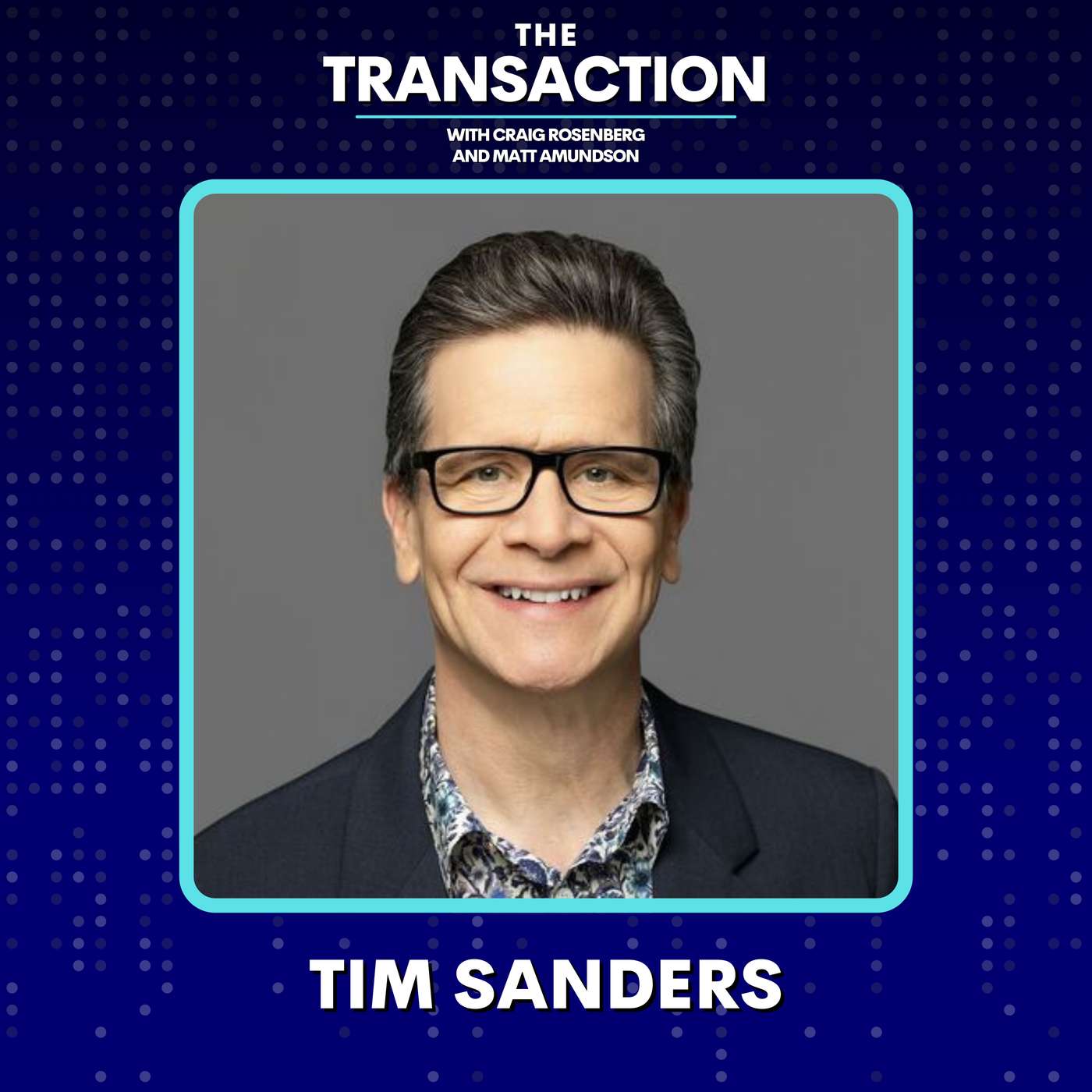 Win the AI Answer, Not Just the Citations with Tim Sanders, Chief Innovation Officer at G2 - Ep 85The Transaction · features Tim Sanders100 / 100
 The Invisible Network Powering AWS with Matt RehderScreaming in the Cloud · on cloud94 / 100
 Adamma Ihemeson on Building Autonomous AI Systems You Can TrustBack on T-R-A-C-K · on B2B84 / 100
 Just Say No to "Yes-Man Agents" & "Process Barnacles": How Miro Builds Post-AI | Jeff Chow, CPTOLaunchPod · on SaaS74 / 100
 Define the Message and the Roadmap Follows with Jamie Domenici, CMO of KlaviyoThe B2B CMO Podcast with Jon Miller and Sydney Sloan · on SaaS70 / 100
 Episode 57: Kshitij "KJ" Jain - Unleashing the Power of Data with JoveoTalent Acquisition In The Trenches · on Answer Engine Optimization (AEO)70 / 100
 Guy Rubin - 2026 GTM Benchmarks95 / 100
 Karim Fanous - Engineering Management in the Age of AI72 / 100Godard Abel - G2 - Software Buying In The Age of AI77 / 100Guy Rubin - Ebsta - 2025 GTM Benchmarks
 Ben Pippenger - Zylo - 2025 Zylo SaaS Management Index