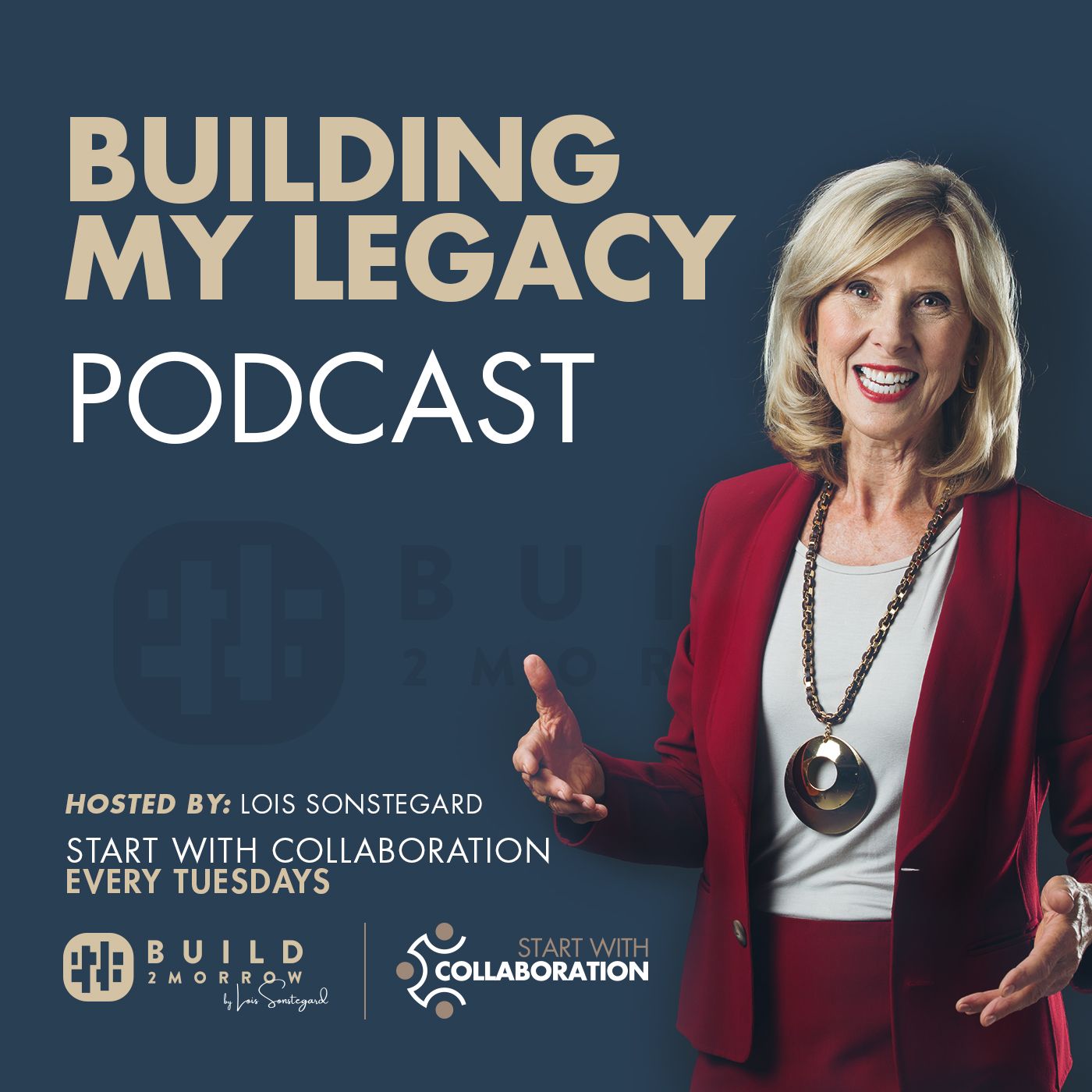
Hosted by Lois Sonstegard, PhD
Building My Legacy Podcast examines how leaders build legacy. The podcast will encourage, stimulate, challenge and motivate you as leaders to effectively Build Your Legacy.
261 episodes · publishes weekly · latest 2023-07-26 · ~35 min/episode
Rank
#2750
Substance
63.0
/ 100
Breakdown
Scored 2026-07
Updated monthly
Across the index
#2750 of 6181
Substance
Top 44%
outscores 56% of the index
Building My Legacy ranks #2750 on The B2B Podcast Index with a substance score of 63.0 out of 100, scored across 1 recent episode. It scores highest on guest caliber and specificity & evidence. Paul Spradling is a legitimate lower-middle-market M&A practitioner with real deal flow and a named industry ranking from Axial, but he operates in a narrow niche ($5 - 30M deals) and the credential claims (Blackstone, Goldman) are mentioned by the host without the guest substantiating his direct role there, limiting verifiable authority.
Averaged across 1 recently scored episode, with cited evidence.
The episode contains a handful of actionable concepts - buyer-type segmentation (PE, family office, strategic, search funds), earnout mechanics, and growth equity - but much of the runtime is consumed by obvious advice (have your financials ready, plan taxes, start early) and a mid-episode promotional break. The search fund discussion is the most substantive segment, while the rest is entry-level.
“Search funds are individuals that have a lot of experience in management, that they are professional CEOs, you can say, or professional entrepreneurs. And they go to investors and say, stake in me, invest in me. I'm going to go buy a business.”
“Have your documents ready. Have the most common things people ask for is your last three years. Financials, profit and losses, P L's balance sheet, have that ready.”
The framing of search funds as a structural solution to the baby-boomer business-transfer wave is a genuinely less-covered angle, but nearly every other point - sell to the right buyer, plan taxes, have a succession plan - is recycled standard advice found in any exit-planning article.
“There is millions. I don't remember the exact number, but millions of baby boomers that are aging out and they are retiring and their children don't want to take over the business. And they never really trained anyone else to take over the business. So it's going to be the largest transfer of business in the next coming 10, 15 years”
“I think the biggest mistake is, uh, not, not seeking guidance. Ah, whether it be your wealth manager, your tax advisor, an investment banker.”
Paul Spradling is a legitimate lower-middle-market M&A practitioner with real deal flow and a named industry ranking from Axial, but he operates in a narrow niche ($5 - 30M deals) and the credential claims (Blackstone, Goldman) are mentioned by the host without the guest substantiating his direct role there, limiting verifiable authority.
“he has raised over $350 million in capital. And he did that, guess What? Before of 30. And he has worked with some of the biggest names in the industry. Blackstone, Blackstone, Goldman and Sachs.”
“we focus more on these companies that are around 20 to 30 million dollars in size and we'll go as small as a 5, 6 million dollar company”
The QSR portfolio story delivers real numbers - 15 units, $3M EBITDA, 4x multiple, $12M valuation - and the growth equity example uses concrete figures ($10M business, $3M for 30% stake). However, many other claims are vague or self-undermined ('I don't remember the exact number, but millions of baby boomers') and no third-party data is cited.
“we're selling a 15 unit portfolio of, uh, quick service restaurants, fast food restaurants. And you know, the, the business was making, call it $3 million a year. So the multiples in an industry are lower. They're, they're around four. So it was a $12 million sale.”
“get an investor to come in with 3 million by 30% of your business, non controlling interest”
The host asks broad, listicle-style questions ('what are five tips,' 'biggest mistakes') and routinely summarizes the guest's points back to him rather than probing deeper; there is no pushback on vague claims and the episode is interrupted by a self-promotional ad for the host's own summit, which breaks substantive momentum entirely.
“So if you're thinking of selling a business, what are five tips that you would say? Five things that somebody should really think through”
“Isn't it funny? We do get into specifics that probably are not so meaningful.”
First period on the Index - history builds from here.
1 scored on substance · 60 tracked in total.
Add this badge to your site - it links back here and updates automatically as you rank.

<a href="https://index.fame.so/show/building-my-legacy" target="_blank" rel="noopener">
  <img src="https://index.fame.so/badge/building-my-legacy/badge.svg" alt="Ranked #313 on The B2B Podcast Index" width="360" height="136" />
</a>Track Building My Legacy's rank
Get an email whenever this show moves up or down the Index. Monthly at most, no spam.
The themes that come up most across this show's episodes.

Founder-Led Sales Stories with Pete Kazanjy
Peter Kazanjy

The Secret Life of Great Leaders
TripleGoal

The Dental Economist Show
Planet DDS

The Centre for Army Leadership Podcast
The Centre for Army Leadership

Humanity At Scale: Redefining Leadership
Bruce Temkin

The Shift Code
Project Management Institute
Podcasts that dig into the same topics.
The New F*Word
Colin Hewitt

Private Equity Experience
Ed Barton, Rory Liebhart, and Emily Sander

The Truth About Wealth
John Parise and Michael Parise

The Buyout Show with Fexingo
Fexingo

Private Equity Conversations with Fexingo
Fexingo

Best But Never Final: Private Equity's Pursuit of Excellence
Doug McCormick, Lloyd Metz, Sean Mooney
