Behind The Pixel: Closing The Animation Communication Gap · 2024-06-27 · 23 min
Key moments - from our scoring
Substance score
33 / 100
Five dimensions, 20 points each
Will and Catherine break down the real costs of using pre-made animation templates versus custom builds. While templates promise efficiency and lower costs through reusability, the hosts reveal significant hidden drawbacks: parameters that can't be changed because they're "baked in" to the template structure, complex interdependent layers that break when you modify one element, and a lack of competitive differentiation when multiple competitors use the same template. They explain that templates work best for specific use cases like sports graphics packages (where you swap player faces and stats while keeping animation intact), data visualization across social platforms, and award show presentations - scenarios with genuine repetition and scale. The episode emphasizes the distinction between purchasing a pre-made template and hiring a creative team to build a custom template tailored to your needs. The hosts warn against giving templates to creatives before understanding what can actually be changed, and highlight that many creatives dislike working within someone else's constraints rather than building from scratch. For B2B buyers with tight budgets, the key insight is that apparent cost savings often evaporate when change requests hit the limitations of the template structure.
It means there is no parameter or control built into the template to change that specific element, so you're locked into whatever default was created and cannot modify it without potentially breaking the entire template structure.
You're limited to whatever parameters the template creator built in, and unless the template documentation explicitly lists what can be changed, you won't know until you open the file what's actually modifiable versus baked in.
Pre-made templates appear cheaper upfront, but hidden costs emerge when you need changes the template can't accommodate; custom templates built by your team for specific use cases are often more cost-effective long-term.
Templates work well for sports graphics packages (swapping player faces and stats), data visualization across multiple social platforms, and award show presentations - scenarios where you genuinely need repetition and scale with consistent visual style.
Creatives prefer building from scratch rather than modifying someone else's work, and templates create confusion about how layers are connected, what can be changed, and where effects come from, making the work take longer than expected.
Our reviewer’s read on each dimension, with quotes from the episode.
The episode identifies real problems with templates in animation (parameters are 'baked in,' competitors use identical assets, complexity of file structures) but recycles the same criticisms throughout without introducing novel angles or deeper investigation. The core insight - that templates trade flexibility for speed - is covered within the first 5 minutes, and subsequent discussion largely restates it with minor variations. Minimal quantitative or comparative analysis; mostly conversational repetition of established points.
the template won't allow us to change that
you're kind of stuck with what is there
The take that templates have hidden downsides is not original; the analogy to Apple's locked-down MacBooks is illustrative but well-worn. The recommendation to build custom templates instead is practical but conventional industry wisdom. The hosts acknowledge their own bias against templates early on ('I think you're about to drop the other shoe'), signaling they're rehashing an established position rather than uncovering fresh thinking. No contrarian or first-principles perspective emerges.
we don't actually recommend buying or providing a creative partner with a template
it's kind of like starting from a place of confusion, right?
This is a co-hosted conversation between two co-founders of Open Pixel Studios discussing their own business philosophy. While the hosts are practitioners in animation, the episode lacks outside expert validation or a guest with different perspective or deeper expertise in template systems. The entire conversation is two people agreeing with each other, which significantly limits intellectual friction and credibility-building. No third-party data, research, or counterargument from someone who actively uses templates at scale.
My name is Well and my name is Catherine. And this is the Open Pixel Studios podcast. We are the co-founders of Open Pixel Studios.
I think you agree, Kathryn, that the word template is an overly simplified term
The hosts provide concrete use cases (sports graphics, award shows, social platform data visualization) and mention specific file structure problems ('84 of them or 128 or something' connections on a processor, layers named 'comp_underscore_buts_underscore_one'). However, no metrics, client case studies with dollar impact, timelines, or comparative data are shared. The MacBook repair analogy is detailed but anecdotal. Solutions are suggested (custom templates, selective use cases) without examples of cost savings or time gains.
every time you watch a sports game, whether it be football, baseball, hockey, whatever, all of the graphics on the screen are templates
like 84 of them or 128 or something like good and like, so you heat them up
The hosts rarely challenge each other meaningfully; dialogue is largely collaborative agreement with gentle humor interjected. Follow-ups are superficial ('So what is your catch?') and often derail into tangents (extended riffs on 'Frisco' pronunciation, cosplay, schmear etymology). There is minimal probing into the nuances of when templates actually do work, how much custom alternatives cost, or whether there are scenarios where templates remain preferable. The tone is friendly but lacks intellectual rigor and productive pushback.
I feel like this is an open pixel podcast, though. So you're about to drop the other shoe, so to speak.
We got, we got. Let's keep going.
Computed from the transcript - who did the talking, and the words that came up most.
Will and Kathryn are back to celebrate their milestone 50th episode by diving into the topic of using templates in animation. They discuss the pros and cons of templates, highlighting their potential to save time and money while also pointing out their limitations, such as inflexibility and lack of originality. This special episode combines valuable insights with the usual light-hearted banter, making it a must-listen for anyone involved in creating or buying creative content. If you have a topic or question you’d like us to cover, you can submit it to Learn more about this podcast here: EMedia produces the podcast in Easthampton, MA.
Transcribed and scored by The B2B Podcast Index.
00;00;02;28 - 00;00;12;04 Unknown It. 00;00;15;29 - 00;00;34;22 Unknown Hi there. Welcome back to Behind the Pixel. My name is Well and my name is Catherine.
And this is the Open Pixel Studios podcast. We are the co-founders of Open Pixel Studios. We've been around for about eight years. This is the podcast where we try to bridge the knowledge gap between those who buy creative content and those who make it.
00;00;34;22 - 00;01;01;25 Unknown You know, I haven't said that in a really long time, and now it's and it's been a while, but welcome back. If you're here, if you know us, if you've been listening, fantastic. If you've been listening this whole time, then you'll know that this is a special episode. This is our big baby, Big 501 movie held this by foot long, but $5 $50 a foot long.
00;01;02;02 - 00;01;22;06 Unknown 50. Well, in this economy. In this economy, yeah. Oh, I struggle starting to get real.
Yeah. Thank you all for supporting us and for being here and listening and learning. So it's been great. But we're going to keep going.
I don't think 50 is not a stopping point. I think it's just a yeah, just a little a little marker. 00;01;22;07 - 00;01;43;29 Unknown Just so for any of our listeners who are 50, congrats to you. Yeah.
Making it that far in life. Hopefully we get there pretty soon. I mean, I think I'm already there emotionally. Yeah.
Oh, that's true. That's true. Yeah. So.
Yeah. So for this episode we want to get back to sort of our original format. We've been doing a lot of interviews, Andrew, for many different reasons. 00;01;43;29 - 00;02;03;04 Unknown We went to the Salt Lake Animation Expo.
We interviewed a bunch of folks there. We're going to still keep releasing those, but we're still trying to get back to sort of the original version of the podcast as well, the OG, if you will. Yes, where it all started. Yeah.
Are you down with OG? That does, yes. It didn't work. 00;02;03;08 - 00;02;27;01 Unknown Didn't land.
All right. Well, as usual, to kick things off in our totally odd way, we're going to cover today's topics. So today we're talking about templates and why they may or may not suck. You know, that they could be terrible.
They could be. So we're going to dive into what they actually are. Which templates were actually talking about. 00;02;27;01 - 00;02;53;23 Unknown We want to be kind of specific with this and that, answering the big old question.
Do templates actually save you money, money time, all that good stuff? We'll see. We'll see. So why don't we start just just describing the overall issue that we're seeing in in a lot of communities and with conversations in our clients as well.
So often someone serving as a marketing or communication professional, a client of ours will ask us about templates, can we use them? 00;02;53;29 - 00;03;17;29 Unknown And I think and I think you agree, Kathryn, that the word template is an overly simplified term, and the word has always been associated with the idea of like scale making, making things very quickly, starting at a different point so that, you know, some work is already taken care of and that having a template would allow you to scale your operation in some meaningful way.
00;03;17;29 - 00;03;41;12 Unknown So and we think there are definitely ways in which tempos can be super useful. Sure. I feel like this is an open pixel podcast, though. So you're about to drop the other shoe, so to speak.
So what is what is your catch? Shoes can drop that. Well, so in animation, I think specifically, they also can cause a ton more harm than good. 00;03;41;13 - 00;03;55;15 Unknown There it is.
And it's not. Yeah, it's not a lot of ways in which we've talked about this. So I think it's important to sort of open this up. We thought it would be helpful to sort of break down what kinds of things we might want to look out for and might be aware of when we're working with templates.
00;03;55;22 - 00;04;15;21 Unknown Yeah. So just quickly, if you're new to listening to the podcast, we typically will give out some definitions first and then talk about our perspectives from the marketing side and the creative side. So in order to get into this, I think we all need to get some definitions going. So we kind of all understand what a template should be.
00;04;16;00 - 00;04;37;10 Unknown And I think it's really important to note here that we're talking about templates in the context of animation specifically. So we're not talking about templates for your baked goods, for example, for your cosplay costume that you're going to make on your own where you remember. Go on. Yeah, well, I remember walking into like a Jo-Ann Fabrics and they asked me, Are you using a template?
00;04;37;10 - 00;04;54;25 Unknown And I was like, I didn't know that's what he called it. Yeah, I was. And this is at the time of like PowerPoints, PowerPoint templates were a big thing. And I was so confused in there.
Well, let's just go back to like, templates being useful for costumes and other designs for sure. I want to be a cosplayer. So about one day, one day. 00;04;55;02 - 00;05;20;29 Unknown But in terms of right now we're talking about templates for animation.
And so a template for animation is generally considered this file that has a number of parameters in it that you can make changes to the motion and design styles within that have really already been set and applied. And so the intention is that you can swap out different text or different images or colors to basically try to get the desired result that you're going for. 00;05;21;12 - 00;05;43;20 Unknown And there are design apps out there like you've probably used Canva before or Figma, and those do incorporate some animation to a small degree, but they do serve a different purpose than the kind of templates we're talking about today.
So animated templates that we work with come in a variety of different flavors, so to speak, and they've scaled immensely on their own. 00;05;43;22 - 00;06;06;13 Unknown You can find them all over the place and they typically come at like comparatively a lower cost to than doing something like a custom solution. So as someone who's buying creative content, you're probably coming across creative companies that talk about templates a lot, or pre-made assets, for example, and they tout that as a reason for their services being cheaper because they're more efficient.
00;06;06;18 - 00;06;25;28 Unknown And that sounds nice. Efficiency is nice. I'm I'm all for efficiency. A lower cost can be appealing for.
So many reasons, but maybe you have lower budgets this year and you know, you need to stretch your dollar totally fair. It's something that I think a lot of people are experiencing in this economy that's not lower budgets. Are you kidding? 00;06;26;17 - 00;06;43;03 Unknown But what ends up happening at some point or another, you're going to want to change something that your creative partner, the people you're working with, the studio you're working with, they'll say something like you don't have access to.
And the conversation kind of goes like this, you know, Can we change this? They say, No, we actually can't do that. 00;06;43;03 - 00;07;03;02 Unknown You say, Well, why not? And I think the line that almost always comes up is the template won't allow us to change that.
We're just creating change. It. Yeah. Yeah.
So in often you might hear the words baked in in this conversation, a lot of studios or creatives say, yeah, that, that's baked into the template. So what does that mean? 00;07;03;02 - 00;07;24;25 Unknown Well, it basically means that there's no parameter that has been created to change the thing that you're asking to make a change to. So you're kind of stuck with what is there, which can be super frustrating, right?
Which is like it's almost like you're asking for a template plus, which isn't usually a category that we that we see in the animation industry. 00;07;25;17 - 00;07;46;12 Unknown Well, I mean, sometimes just changing the particular thing that you want is actually very hard. And that's why it's baked in. So there could be different.
I mean, they're all so subjective, but you can imagine maybe 3D models that work within the template that you just can't change because it would be it would break the whole thing. Yeah, sure. 00;07;46;16 - 00;08;14;18 Unknown Yeah. Another part of this whole sort of template or deal is that a template is meant to be applied at scale, like it's supposed to be reusable in a lot of different ways, which means that if you're using it, the chances that your competitor is using it for similar reasons is probably pretty high, right?
You actually don't differentiate much at all when you end up using something that looks basically like something that Joe Schmo with a similar product is is using. 00;08;14;28 - 00;08;42;17 Unknown Can we can we change that up? I feel like Joe Schmo is is outdated now. What about Carol?
Sheryl, Carol, Sheryl, you know, this progressive. I like it. Thank you. Thank you, Carol.
Sheryl Schmear. So we've been in L.A. for a little while.
Have you seen the word schmear? Like as a as. Yeah, I've seen it in a lot of places that sell bagels with me. 00;08;43;08 - 00;09;07;07 Unknown And it's like, you know, it's the spread that goes on it.
Yeah. A schmear is such a bad word. I don't like it. I think it's schmear.
It's. It's og. It's oh, it's the OG version of saying sneer. There we go.
Schmidt, You don't say Smucker's. All right, We got, we got. Let's keep going. So we don't actually recommend buying or providing a creative partner with a template.
00;09;07;11 - 00;09;22;27 Unknown We've come across that a lot where someone is like, Hey, could you can you use this template? Like, I found something that I really like, and that's a great starting point as a reference, but I don't think you should actually purchase it before you get to a creative. Have that creative take a look at it. But now we're getting into solutions.
00;09;22;27 - 00;09;42;03 Unknown We'll get there. But I know you like to jump to those solutions. Yes. Yeah.
I just think that that's something that causes more problems in the long run. Well, so if we take a step back and kind of look at it on the creatives point of view, you know, sometimes within any production, a template is selected to be used and we're like, okay, great. 00;09;42;12 - 00;10;13;12 Unknown But it turns out, as you know, now that we can't change any of those parameters that we were hoping to change because they're baked in, like I said before. Exactly.
And I mean, that's what leads our team to feel stuck, too. So we're kind of all in that stuck position. And you can kind of think of it like it's like how Apple laptops that were built with sort of specific limitations in mind, they they tend to block the ability to make upgrades to things because they wouldn't want you to do that without taking a significant risk to that. 00;10;13;13 - 00;10;44;22 Unknown Yeah, I think you'd have to like use like a heat gun to like, pry open the processor.
There are YouTube videos that I've seen of people doing this. Basically. You can yeah, you can take like a heat gun and like heat up the processors, like little points of connection. There's like 84 of them or 128 or something like good and like, so you heat them up and then you like kind of pry it off of the board and then you have to like, wipe down the board and get another processor and then fit in the right specific place, which is not recommended.
00;10;44;22 - 00;11;04;07 Unknown It basically just voids Apple's warranty on your MacBook. So it's technically possible, but it's not recommended. I mean don't do that. We're not advocating for that.
Sure. I mean you could do it or listening you you could, but we do not recommend AI layers. Tell us that we should tell you that we do not advocate for this process. 00;11;04;12 - 00;11;27;00 Unknown We are voyeurs.
Okay. So you you know, the other thing that we tend to come across is actually this common problem of, I would say, too much control. So templates are often built with this idea that there may be a one size fits all kind of solution, which means there's a lot of parameters to tweak in order to get the thing working in the way you need. 00;11;27;00 - 00;11;50;05 Unknown It sounds great, but it actually can be problematic When templates are built.
They're typically built with these like complex connections between all of your inputs to get a little more technical. So trying to change something very specific might mean that you accidentally break some of the other connections that are happening along the process and it can cause a bunch of errors and nobody wants to see that. 00;11;50;06 - 00;12;09;19 Unknown You hate to see it. And with really large templates, sometimes you have this connection that you're trying to find that might be buried in like tons and tons of layers deep hidden within the file, almost like you're trying to find an artifact that does become like a search hidden.
Yeah, Yeah, a needle in a haystack kind of situation. 00;12;09;19 - 00;12;33;03 Unknown Yeah. And some templates are referencing external files, and those can get really complex if there isn't a guide. So it all comes down to this sort of last point here, which is like a lot of creatives don't like working with templates.
Mainly it's because they're being asked to change something that is somebody else's work instead of creating it on their own, which as artists we always just prefer to do. 00;12;33;12 - 00;12;53;24 Unknown And it could be cool to work with the template and make something new out of it, but it generally isn't ideal. It's a lot more headache than than we need. Yeah, and I would say like, it's kind of like starting from a place of confusion, right?
So like we're inside of a template, we open up a thing and actually it takes us a bit longer to figure out where we are. 00;12;54;06 - 00;13;17;03 Unknown Yeah. How did, how, how were these layers put together? Where are the effects coming from?
What should I look at? What can I tweak? And this problem has gotten so bad that some templates actually come with like 24/7 support because yeah, you can sense like, I don't know what I'm doing here. Oh yeah, you just email me and I'll show you.
00;13;17;03 - 00;13;36;08 Unknown And I think that's a whole other problem. You know what it sounds like? It sounds like it's not a great start. So that's an inside joke between and between us.
So that's true. If you meet us in person, ask us about it. We'll tell you all about that. Ooh, that'll be fun.
It's kind of like a weird way of tracking who's. 00;13;36;08 - 00;14;03;13 Unknown Listen to the podcast. Oh, my God. And not tracking anyone.
So let's talk. Oh, it's not some solutions here for you, just so that you give you a better sense of where to start from. So one solution is to maybe ask your creative team to build custom template. That is something that we've done all the time.
All kinds of folks know how to do this, and we're not against time saving strategies or saving money or anything like that. 00;14;03;23 - 00;14;29;27 Unknown I'm all for templates in terms of its usage case. We want to be able to reuse this. I just think it's important to kind of think about a purchase versus hiring someone.
I think that's where it comes in from. Something you might not know is that templates can be custom made, right? If you really need this piece of animation or to scale, you want it done correctly and you don't want to start with making someone else's work kind of fit fit your needs. 00;14;29;27 - 00;14;48;20 Unknown Yeah.
So stick to using templates for specific use cases. So a good example of this is like sports graphics packages. Now, not everyone listening is going to to understand what that means, but every time you watch a sports game, whether it be football, baseball, hockey, whatever, all of the graphics on the screen are templates in some way to fit every player. 00;14;48;24 - 00;15;14;05 Unknown All of those are templates there, right?
Catherine Tacconi UMass Sandhurst, that kind of thing. Yeah. So the idea is that you can swap out people's faces, people stats, other information on that template, and it keeps the visual style intact in the animation intact. So for sure that's a good I mean, you can also do like showcasing visual data across multiple social platforms as part of your content marketing strategy.
00;15;14;05 - 00;15;36;14 Unknown Always really effective. It can just help you get your data across really consistently and then you have the ability to swap out that data whenever you need. Like as long as you have the built in template first for sure. Yeah.
Another use case is presentations. Sometimes presentations that honor people in sort of a repetitive way at a presentation we've done that shows a couple of different times. 00;15;36;14 - 00;16;02;08 Unknown Award shows is a great way. So those custom templates give you just the right amount of controls to figure out what you're wanting to change 30 times that It's like terrible to use a template, like just don't even bother.
Don't even bother. I, I would say when you're actually not going to use it as a template, sometimes you're, you're buying a template, but you only want the graphics from it for this one project. 00;16;03;00 - 00;16;23;15 Unknown And it's like, why would you why would you buy a template for that? Right?
Think about templates is like longevity rather than short form content kind of stuff. Yeah, there's got to be some element of duplication and scale in there that should drive you towards that. It's just something to think about. That's fair.
Interesting. Lastly, I think, you know, you want to remain flexible. 00;16;23;18 - 00;16;44;05 Unknown Remember that you won't have access to all the parameters and you won't know what those parameters are unless you look through the template in the guide and like sometimes I tell you the template page itself will say, Hey, these are the things you can change. A lot of times when you get a template, they don't.
You won't know until you get in there how easy or hard it might be to change something out. 00;16;44;15 - 00;17;11;06 Unknown That's true. Yeah. Sometimes it's it's connected in really interesting ways that you would say, Well, why did you do it that way?
And that's true. Every artist is trained differently. So, you know, the joys of trying to work with other artwork is so fun. I mean, just ask any creative about passing files back and forth.
And and even if it's not a template, it is actually very difficult to get it in a way that you expect. 00;17;11;22 - 00;17;28;23 Unknown Now, if you're trying to if you're trying to get somebody, then that's when like, you know, if I know the training, if I'm having it, if I'm having a day where I'm like, you know, I'm going to screw with Will a little bit, so I'll like name layers like, incorrectly or like, do something funny too. I'll say about another file. 00;17;28;23 - 00;17;56;00 Unknown But, you know, sometimes just to be like, Oh, here's, here's the file you need.
Yeah, here's everything you need. And it's just and then it says like comp, underscore, buts, underscore one How terrible or dumb? I think that's it. I think that was the entire episode.
We think that too much on templates we forget we don't hate templates we just know that you should be a little bit more thoughtful in either selecting them or using them at all. 00;17;56;04 - 00;18;17;18 Unknown There's different ways to to do that. Yeah, we hope this is helpful and definitely let us know if you have any questions about it. I'm happy to talk through it, but in the meantime, yeah, final thoughts.
There's some housekeeping. Yeah, we have some updates for those who are following along. We have our newsletter back in action. Haven't had that in a while, so we're kicking it back up.
00;18;18;02 - 00;18;36;23 Unknown Yeah. Basically they're you're going to see videos of things that we typically won't post anywhere else. We're trying to keep it kind of exclusive to the newsletter. If you're curious about our travels, as you know, just a reminder, we're currently traveling cross-country, so you'll see some photos from there meeting up with clients and friends and family along the way.
00;18;36;23 - 00;18;53;21 Unknown A word on that exclusivity. What's cool about what we're doing now with videos is we're doing time lapses of some of our work. So you'll see us walk through a little bit of our process, even a little bit deeper than just Here are the stages or steps. Sometimes we're making choices that are creative, choices that people just don't think about.
00;18;53;22 - 00;19;15;28 Unknown And I think it's kind of cool too, to be doing that. I'm really enjoying those. It's like, yeah, kind of walking through my process. Yeah.
If you're ever curious about seeing the back end of how it's made, we got that for you. Yeah. We'll talk a little bit about where A is headed, things like that. So if you are looking to kind of learn about that, stay in the know about what we've been up to and what we're what we've got going on, we have big plans for the future.
00;19;16;06 - 00;19;43;28 Unknown You can sign up for that at open pixel Studios dot com slash join. Yeah. Up next will also be another slay episode against Slay stands for Salt Lake Animation Expo. We sat down with saw Oh yes as a yes.
Yes. So the Slay does those episodes of which the name is changing. So we could do all of that next time. 00;19;44;09 - 00;20;03;21 Unknown It'd be to s.
I think eventually we'll just get the screen. Yeah, yeah, yeah. But anyway, so we sat down. I think our next episode is with Julian Curry.
Um, yeah, it was a really good conversation about his film. Gruff, how he got started. He kick started his animation, which was really cool. We talked a little bit about that.
00;20;04;07 - 00;20;22;07 Unknown Yeah, and he works. He worked on some interesting things. I went on his Instagram the other day and he was doing something for Harry Potter and like Lego, it's not Lego, but there's like Harry Potter toys. And he built like this entire Harry Potter like scene.
It was really, really cool. And he's doing some really cool paper paper animation work. 00;20;22;14 - 00;20;46;01 Unknown Very interesting stuff. So if you haven't seen the short film, gruff G, are you f f?
Please watch it before you listen to our next episode because it it'll give you some major context. Yeah, major context, Major. That's true. Yes, exactly.
Got to have the context. One last thing is that we're in we're in more, but we wait these gaps. 00;20;46;01 - 00;21;05;21 Unknown So just a small announcement that we will be in San Francisco shortly. So this point, if you're listening to this and you're in that in the San Fran area, which is a here is what, you know, the original people who live there call it, I'm pretty sure they don't.
It's San Fran. Oh, they also use first, I tell you that you're going to get canceled. 00;21;05;21 - 00;21;27;26 Unknown And I think this might be the one. This is it.
This might be the one that gets it. Yeah, we're going to Frisco. Frisco. And then the new one, I think, is San Francisco.
I think that's how that's how people are saying it now. Everyone's calling it that. And it's and if you're listening to this in August or any time after July of 2024, we're not there anymore. 00;21;27;26 - 00;21;47;00 Unknown Sorry I missed you in Frisco.
Sorry. Yeah, you forgot on a bumper sticker. Yeah. All right.
As always, stay honest, stay creative, stay open, and we'll see you next year. Thanks. Bye Bye. 00;21;49;19 - 00;22;19;28 Unknown A big thank you, as always, to E Media for producing this podcast.
Our producer is Jackson Foote. Our music is created by Hidden and licensed through premium BET.com. And as always, stay honest, stay creative.
Stay open. Open Pixel Studios, Thanks. We'll see you in the next episode. Mm hmm.
Mm hmm. And I don't know the words, and I'm. 00;22;20;02 - 00;22;36;11 Unknown Mm hmm. I don't know any.
And I don't think anyone knows what you're humming. Who do you mean? I'm not sure. I'm not sure.
They know it's a popular song. It's. It's hot. It's a hot song.
It used to be hot. It is not hot anymore. Totally still hot. It's like.
Much like me.
Other episodes covering the same guests and topics, from across The B2B Podcast Index.
 She built Microsoft's Great Copilot Journey Program. Now, AI is her Co-Founder | Kristin GinnUnlocked Professional: AI and Future of Work · on Canva80 / 100
 How AI splits startups into winners and losers | E2322This Week in Startups · on Figma77 / 100
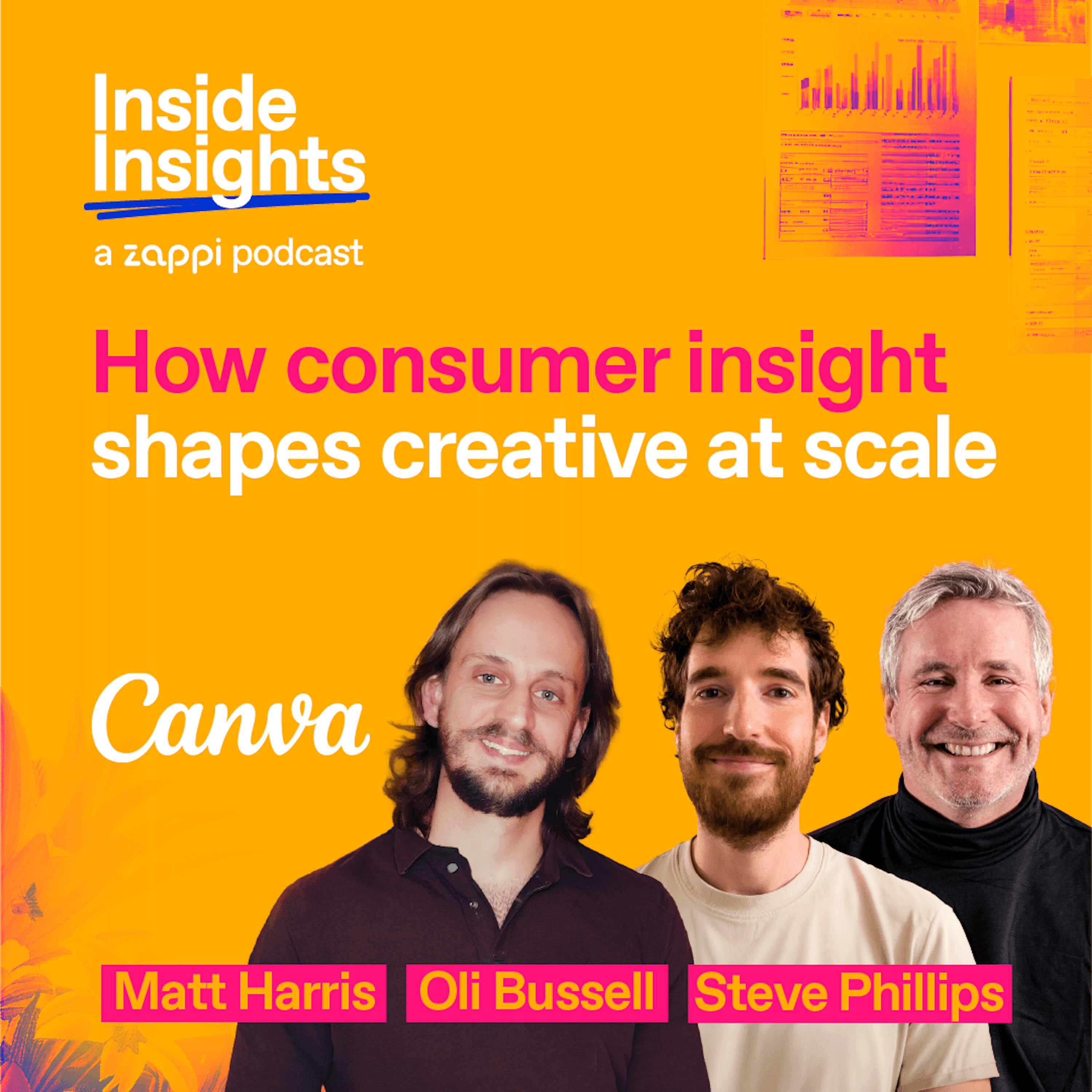 How Consumer Insights Shape Creativity Across MarketsInside Insights · on Canva70 / 100
 EP # 6 Alvanson So: What Makes Humans Irreplaceable in the Age of AILead Human · on Canva67 / 100
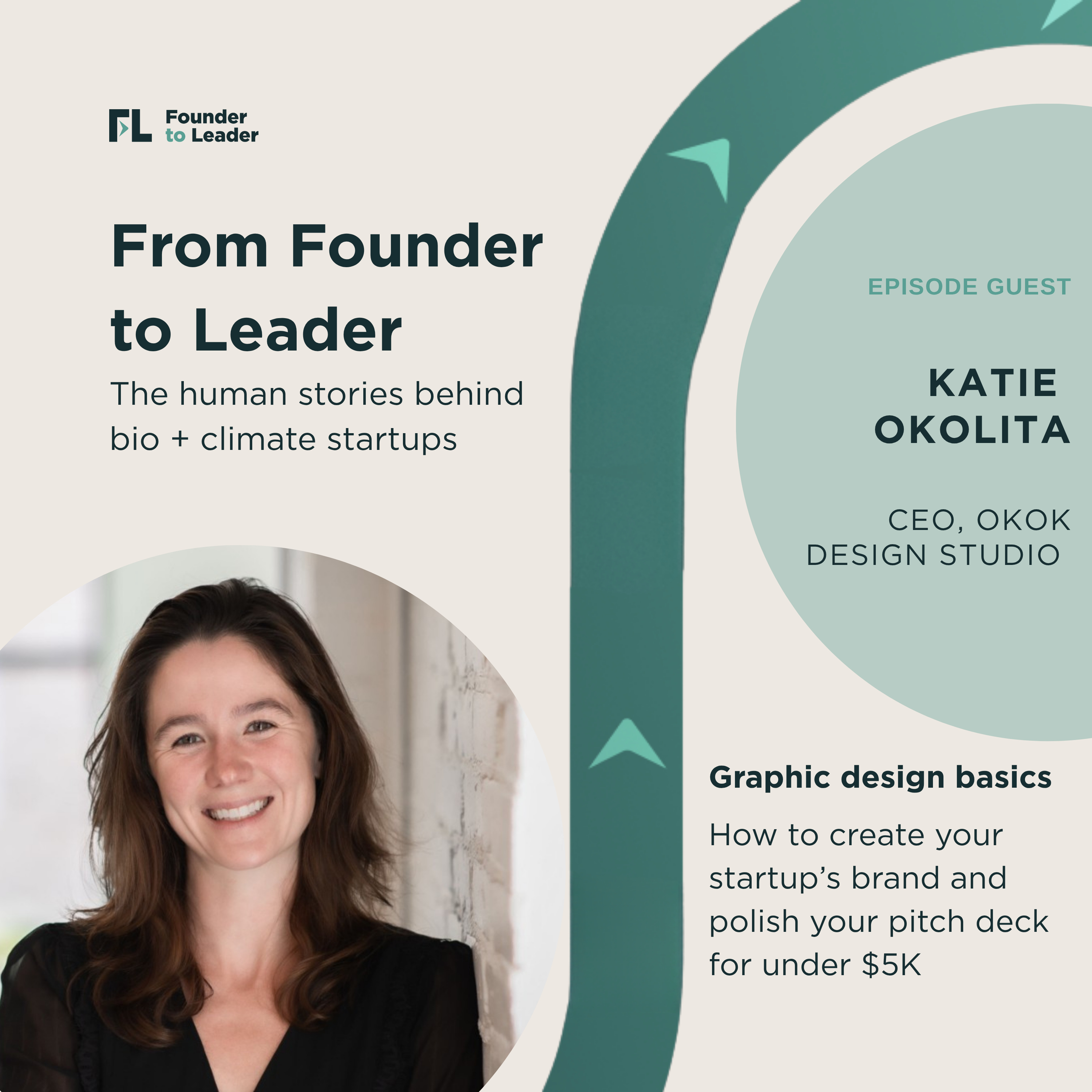 Graphic design basics, with Katie Okolita, CEO of OKOK Design StudioFrom Founder to Leader · on Figma65 / 100
 Autopilot Onboard: Build an AI-Powered Client Onboarding & Delivery System for NomadsAI & Future of Work: How to Automate Your Business · on Canva64 / 100054 - SLAE - Lindsay Knowler at Eat Your Peas58 / 100053 - Jennie & Kaci at Mothers of Mograph62 / 100052 - POVs - The Rules for Collaboration54 / 100048 - SLAE - Mike Morris at BlueOwl63 / 100051 - SLAE - Julian Curi at Righteous Robot