
AXIOM Insights Learning and Development Podcast · 2026-05-21 · 18 min
Key moments - from our scoring
Substance score
39 / 100
Five dimensions, 20 points each
Tom Decker discusses the critical final phase of launching a learning experience platform (LXP) across 18,000 employees in a Fortune 500 company: adoption and sustained engagement. Rather than building novel interfaces, Decker advocates designing platforms that match user expectations established by consumer apps like Amazon, YouTube, and iTunes - reducing cognitive load and documentation burden. His platform architecture, modeled after YouTube's personalized homepage with separate channels for business units, required careful stakeholder management to balance centralized consistency with decentralized autonomy. Key strategies included empowering decentralized learning teams to promote content to the homepage, implementing robust filtering systems (by skill, role, business group, type, duration, and proficiency level), and shifting from controlling learner experiences to empowering learners with choice. The episode closes with forward-looking analysis: consolidation toward suites (Workday, Degreed acquiring competitors) versus Decker's hope for hybrid build-and-buy approaches where L&D teams embed engineering talent. This conversation serves L&D leaders, platform owners, and organizational learning strategists weighing adoption tactics and long-term learning technology strategy.
Decker's company gave each business unit its own channel for control and autonomy, but also enabled channel owners to promote content to the centralized homepage - avoiding the friction of forcing learners into separate spaces while preserving unit influence over what learners see.
Design for expected behavior, not novelty - model interfaces after Amazon, YouTube, and iTunes so learners immediately understand navigation without training. This reduces friction and documentation overhead by leveraging familiar mental models.
The platform included filters for skills, role tags, business group tags, content type, duration, and proficiency level, allowing learners to narrow results cleanly and quickly - directly mirroring Amazon's approach to searchability in high-volume environments.
Decker expects consolidation toward suites (following Workday and Degreed's acquisition strategy), but hopes instead for hybrid build-and-buy models where L&D teams partner with internal engineering talent rather than relying solely on external vendors and consulting firms.
Decker is skeptical: once you license to external clients with different needs, you recreate the same customization and scalability problems existing LMS and LXP vendors face, questioning whether the effort differs meaningfully from standard SaaS offerings.
Our reviewer’s read on each dimension, with quotes from the episode.
The episode contains a handful of genuinely useful practitioner concepts - borrowing UX mental models from consumer apps, channel-vs-homepage architecture tension, empowering learners rather than force-feeding content - but they are spread thin over 18 minutes with significant filler, repetition, and meandering future-gazing that produces little actionable insight.
My mantra, and my team have heard this so many times for me, is that we're not building something that is new and unique. We're building something that's expected.
Give them, give them back some power. We spent a lot of time, you know, controlling everything that the learner sees. Empower your learners.
The 'build what's expected, not what's new' principle is a crisp, useful reframe of a common UX mistake, and the 'build AND buy' framing is a modest counterpoint to the standard debate; however, the rest - centralized vs. decentralized L&D tradeoffs, suite consolidation cycles, consulting firms controlling the market - is well-worn territory in the L&D industry.
we're not building something that is new and unique. We're building something that's expected
my thought is always build and buy. That's what I would hope we would get to, is some sort of build and buy solution
Tom Decker is a genuine practitioner who actually built and launched an LXP at scale for 18,000 employees inside a Fortune 500, which gives him real-world credibility; however, his seniority appears mid-level, the company is unnamed, and his perspective rarely transcends his single project, limiting broader operator applicability.
exploring his experience in the development and launch of a learning ecosystem within a Fortune 500 company serving a staff of 18,000 people
I've talked to people before and I've said, you know, they've come to me with a problem. They said, hey, this is my technology problem. And I would say I would test this theory out. Like, why don't you just hire a couple engineers?
The episode offers a few concrete structural details - 18,000-employee scale, skill/role/business group/duration/proficiency filter taxonomy, named platforms like Workday and Degreed - but there are zero adoption metrics, no timeline data, no cost figures, and the company itself is anonymous, leaving most claims at the level of anecdote rather than evidence.
We had filters for, you know, all the skills. We had a tagging system, so skill tags, role tags, business group tags and the type and the duration and proficiency level.
like workday and like, degreed, and they're all kind of buying each. Buying each other up and buying different components
The host regularly inserts his own anecdotes and finishes the guest's thoughts rather than probing deeper, turning sections into a mutual agreement session; there are no challenging follow-ups, no pushback on vague claims, and the closing 'future of L&D' segment produces only speculative hand-waving with no redirecting questions to force specificity.
Some years ago I was involved in a, um, web, uh, portal project and I had a conversation with my technical lead at the time and I said, don't invent something new.
Ah, one thing that you're talking about is, I think, uh, building a product, uh, for ease of use of the user is important.
Computed from the transcript - who did the talking, and the words that came up most.
What happens after a learning ecosystem goes live? In the final episode of this three-part AXIOM Insights Podcast series, Scott Rutherford and Tom Decker discuss launch, adoption, stakeholder management, and the future of learning technology strategy. Tom shares lessons learned from managing enterprise rollout and user adoption, including how to keep leadership engaged, how to support decentralized learning teams, and why successful learner experiences should feel intuitive and familiar to employees. The conversation also explores the future relationship between L&D and technical teams, including the growing importance of “build and buy” strategies that combine internal engineering capabilities with external learning technology platforms. Topics include: • Enterprise learning rollout • Learning platform adoption • User adoption strategy • Learning ecosystem governance • Personalized learning experiences • Build versus buy learning technology • Learning and development innovation • Future of workplace learning and L&D technology
Transcribed and scored by The B2B Podcast Index.
Scott Rutherford: Hello and welcome to the Axiom Insights Learning and Development Podcast. I'm Scott Rutherford. This podcast series highlights the expertise of L and D leaders and focuses on driving performance through learning. This episode is the third of three parts of my conversation with L and D leader and learning experience specialist Tom Decker, exploring his experience in the development and launch of a learning ecosystem within a Fortune 500 company serving a staff of 18,000 people. In part one, we focused on strategy, defining the objective, building the business case, and creating internal support. Then in part two, we looked at the build itself, the learner experience, the project team, modular design integrations, and the technical choices that determine how flexible the ecosystem will be. And if you've missed either of those two, you can find them as previous episodes wherever you're listening to this podcast. Or you can go directly to the episode pages with transcripts and links to external resources@axiomlearningsolutions.com podcast. So, in this third part, the LXP conversation turns to launch and adoption. How do you keep leaders and stakeholders engaged? How do you manage expectations across a, uh, decentralized team? How do you help learners adopt the platform? And how do you design an experience that feels intuitive and easy to use for learners? And we also close this discussion with a, uh, broader speculative discussion, I guess, about the future of learning technology. And Tom will tell us why he sees value in building strong partnerships between L and D and engineering teams, and why the future of the learning tech stack may require a hybrid build and buy rather than build or buy approach. So with that, here's part three of my conversation with Tom Decker.
Tom Decker: We had worked really hard to, um, think of ourselves as one unit, right? So I think beyond what we had built, we were spending more time together as learning leaders. And we knew that this whole one company concept was important to us and being decentralized. And I had been talking about this for a lot of years with folks in the learning spaces. The pros and cons of being centralized versus decentralized. And so if we're decentralized, what's great is we get to actually do the right work for our business units. We understand our learners better. Um, we have dedicated resources and budgets to support those learners in a way that we wouldn't if we were centralized. What do we lose? Well, we lose consistency amongst us. We were all doing something a little bit different over the years. We had been talking a lot about the ways in which we could take some of those disadvantages and make them less or turn them into advantages somehow, some way. So we had a really, really strong community that was built on collaborating with, uh, collaborating with one another. Um, so it was a little easier. Uh, we had a lot of tenure in the space, so there's not a lot of turnover of those leadership roles. We built relationships and strong partnerships that was kind of easy to help everyone understand that this is for the betterment of our company. Now the product that we had delivered gave everybody their own space still. So I mentioned it was architected a lot like YouTube where you have a homepage and that page is personalized for you as the consumer of the content. And then all the authors have their own channels. Well, this was no different. And so all of these business units and business areas, their learning teams had their own channel that they could control. Now that was a, that was difficult because that's one extra click into that space. And so I think a lot of these learning teams want to, um, want to invest and be engaged in that, in their learners experience as much as possible. So trying to help create a space on the homepage where they still had the ability to influence the content that their learners are seeing was critical. And we did that. So we gave all of the channel owners the ability to actually promote specific content to the homepage. And if your learners subscribe to your page or uh, your channel, they'll see that content on the homepage. They don't have to leave the homepage. And getting people to understand the value in not actually leaving the homepage. Right, Because I think naturally the learning teams are saying, oh, I want all my learners in my channel, I want them all on my channel. Well, not necessarily, that may not be the most valuable place for them. Um, so you got to think of your learners as individuals that require personalization and that might not always be the stuff that you're force feeding them. So there's a lot of those conversations, a lot of collaboration around that. And we were kind of figuring all of that out on our own. I didn't have all the answers. I knew what I wanted, wanted to build. And to be quite honest with you, if there's content vendors or products out there like YouTube that do this, well, they, they must know something, right? They, the people that built that product must know something that maybe we don't. And so the blueprints are out there and, and, and I believed in that. And, and I knew what, what that was achieving. And so it was just a matter of, of collaborating closely together to help us all unify on that, that those core principles which, which is bringing a personalized Experience that both you as the learning professionals can influence, but ultimately give your learners control. Give them, give them back some power. We spent a lot of time, you know, controlling everything that the learner sees. Empower your learners. Now that was a shift for, for us too. And so we spent a lot of time just kind of hashing out those conversations. I listened a lot. Um, all of, all of those learning leaders became business owners. And me as a product owner, I was here to serve them. And so I was very strategic about what I heard from them and what I built to support them. I compromised a lot and tried to put everyone in a position where they were getting some of the things that they want. Um, but we were maintaining the integrity of the product that we had built.
Scott Rutherford: Ah, one thing that you're talking about is, I think, uh, building a product, uh, for ease of use of the user is important. Um, some years ago I was involved in a, um, web, uh, portal project and I had a conversation with my technical lead at the time and I said, don't invent something new. Think about. You mentioned YouTube. I used Apple, I used, uh, uh, itunes, I think, as an example at the time. Uh, folks know how to use that user interface. Folks know what it's going to do and how it's going to respond to them. So use that as a foundation to build yours. Because you lessen the hurdle you're expecting everyone to clear rather than you might be able to build something that's really, really unique and fun and unlike anything anyone's ever seen before. But if you do that, you're increasing the friction and also increasing the amount of documentation you have to create.
Tom Decker: Mm. Uh, it's almost as if you were in on some of my team meetings. My mantra, and my team have heard this so many times for me, is that we're not building something that is new and unique. We're building something that's expected. So this product will behave the way people expect it to behave. The idea is that the learning curve is down low or null, because when they come in here, they go, oh, this is just like, I know exactly what this is doing because I've experienced it here, here, here and here. We would spend time in Amazon, in some of the social media sites in YouTube, and we would look at go, oh, here's something that we want to do. How does Amazon do this? How does YouTube do this? Because all of these products already have developed the expectation in our consumer. And so that's all we had to do is just meet their expectations, right?
Scott Rutherford: Yeah. And frankly they ah, often if you look at Amazon as a great example, uh, they also have, uh, compared to my user base at the time, about 15 billion times more. More clicks to build their experience from.
Tom Decker: Mhm.
Scott Rutherford: Why wouldn't I at least directionally leverage their learning to my advantage?
Tom Decker: Right. And leveraging applications like that to helped us um, sell business owners on ideas for new features, new functionality. Right. And so I used to hear all the time, um, there's too much content in, in this, in this lxp. And I'd ask them back, I'd go, is there too much content in Amazon? No, I'm able to find it just fine. Right, right. So, so the argument that there's too much content in there is not the argument. The argument may be that I can't get to it as fast as I want to, which is why we created a search bar and also we created filters. And then the argument would also be there's too many filters. Go into Amazon and search for a chair and see how many filters pop up on the left side. Is that a problem for you? No. You go down to the exact filter components that you want, select what you want and boom, there you go.
Scott Rutherford: Right.
Tom Decker: You've got your choices.
Scott Rutherford: Filter experiences, curation of content all factor in there, Right?
Tom Decker: Exactly, exactly, yeah. And we had filters for, you know, all the skills. We had a tagging system, so skill tags, role tags, business group tags and the type and the duration and proficiency level. So you had filter options for everything. You can narrow down your results in a way that was clean and easy and also expected.
Scott Rutherford: So I want to, uh, before we wrap up, just get your sense of where you think the ideal learning ecosystem is moving. If you were to look out. So we're recording this as we approach the middle of 2026. Um, so let's look at 2030, which is, which is far enough out that it's a little bit immaterial. Um, what, what do you hope happens, uh, in, in the, the world? You know, is, is, is there another sea change coming? Or is it iterative? Or what is, what do you think it's going to look like?
Tom Decker: Yeah, I, so I'm going to, I'm going to give you two answers. One is, what do I think is going to happen? What do I want? What do I hope will happen? Because I think they're two different things right now. In. And this is, this is my opinion. Right. And I think, I think a lot of, a lot of our listeners have a lot of different experience too that might feel differently, but the consulting firms and the software solutions control our market. They control our business. They control what we choose to, um, offer for our employees, more so than, I think, our L and D teams, our internal L and D teams. Now, that was my experience. And so I've heard a little bit about a lot of, um, the software solutions are kind of moving more towards these suites. Again, we saw this years ago, um, over a decade, 15 years ago, maybe more, um, the suite of tools. And then they kind of broke apart and became disparate. And everybody's offering these niche little products and services and technologies, and that's where we are today with multiple disparate technologies. I've heard from some industry experts, too, that they think they're moving towards these suites. And you've got a lot of these larger organizations, um, like workday and like, degreed, and they're all kind of buying each. Buying each other up and buying different components.
Scott Rutherford: Exactly right. I think we're in a moment, uh, for a variety of reasons, that, uh, we had a propagation of, uh, vendors that have come into the market in the past five years, and now they're starting to acquire each other. And so that consolidation and lumping together is absolutely happening. I see that too.
Tom Decker: Yeah. And I imagine a lot of that is, um, you know, just kind of very strategic, um, in the market. And a lot of that is probably because we want those features and functionalities to incorporate within our product and services. Now I've seen some of these software companies buy these products and, um, you know, not offer them or make them. Cost you more money to be able to add that on. Right. And that presents a unique problem for the businesses when you're kind of stuck in that contract with some of those bigger software companies. But I think the suite is kind of where it's going.
Scott Rutherford: Um,
Tom Decker: where I hope it would go is that we as HR professionals, um, would figure out a way to start bringing more engineering mindsets into our organizations to start building. Um, I've talked to people before and I've said, you know, they've come to me with a problem. They said, hey, this is my technology problem. And I would say I would test this theory out. Like, why don't you just hire a couple engineers? Oh, I can't do that. I can't do that. Right. I can't. I can't sell that to my executive leadership team, my senior leadership team, that I need engineers in an HR space. So it was always just kind of like this very initial reaction, like, oh, no, I can't do that. Um, and so I think there's a challenge out there with how we as HR professionals, L& D professionals, partner more with engineering professionals, um, to build the right solutions that we need. And this can kind of bring up the whole build versus buy debate too. And my thought is always build and buy. That's what I would hope we would get to, is some sort of build and buy solution. Um, I do think that the consulting firms and the software solution companies control too much, um, and have too much influence over us. And so I think suite of tools is probably what we'll see within the next four or five years. And not as much of what I had done, which is building the modern tech stack internally and connecting it uh, to all of the different products.
Scott Rutherford: Right. And what you're describing almost implies, and I don't want to say this could happen, but it's an interesting flip on the build versus buy to say potentially that uh, well, if the better mousetrap is built by an internal team, would uh, it not be a revenue stream for a company to say, well, we're going to license out what we built and let other. Correct.
Tom Decker: And I think I heard that a lot. Right. So from a lot of um, you know, uh, external partners and colleagues and people in the business say the same thing. Can you license that out? Right. And so some businesses may be um, more uh, keen to that, some not, uh, maybe some of the more risk averse might be like, nah, we're just going to stick to what we do.
Scott Rutherford: Um, yeah. And there's of course a competitive pressure that would discourage that sort of thing too.
Tom Decker: Absolutely, absolutely. Yep. Yeah. I mean ultimately there may be somebody out there that, that can, that can figure that out and then offer that up. But I think ultimately too what's, what's then the difference between if you did that, if you license it out, how different is that than any other SaaS solution, any other software solution.
Scott Rutherford: Right.
Tom Decker: Because you, you built it for yourself and you're going to offer that to somebody else who is different. So you're then just giving them, you're
Scott Rutherford: creating a new problem.
Tom Decker: Exactly, exactly. Or the same problem that all these other software, you know, uh, LMSs and LXPS offer up.
Scott Rutherford: Exactly.
Tom Decker: I think there's, I do have some thoughts on what the, what that, what that is, um, what that could look like in the future. Um, you know, maybe there's, maybe there's a birth of consulting firms that offer up some, something, some sort of mix in between.
Scott Rutherford: Well, we'll see where that goes. I hopefully hopefully, uh, maybe you and I will chat again about this at a future conference or a phone call, but, uh, absolutely. It's a fascinating and continually, uh, evolving area of practice, so it's going to keep us all very busy for an indeterminate amount of time.
Tom Decker: It will. It absolutely will. Yes.
Scott Rutherford: All right, Tom, pleasure talking to you as always.
Tom Decker: Likewise.
Scott Rutherford: Once again, my thanks to Tom Decker for being a part of these episodes. Over the past three episodes we've explored the scoping, building and launching of a learning experience platform, and along the way we explored how building a learning ecosystem is more than a technology or a tech stack Question. It's a business initiative, a data initiative, and can be a significant change management effort, but the outcome can be worth it. Through the intentional connection of learning resources and learner experiences with business goals and performance data, L and D becomes better positioned to support the organization and it strengthens our ability to show results. Thanks for listening. This has been the Axiom Insights Learning and Development podcast. This podcast is a production of Acxiom Learning Solutions. Axiom is a learning and development services firm with a network of learning professionals in the US and worldwide, supporting L and D teams with learning staff augmentation and project support for instructional design, content management, content creation, and more, including training, delivery and facilitation, both in person and virtually. To learn more about how Axiom can help you and your team achieve your learning goals, visit axiomlearningsolutions. Com and thanks again for listening to the Axiom Insights podcast.
Other episodes covering the same guests and topics, from across The B2B Podcast Index.
 The End of Software as We Know It: How AI Agents Are Rewriting HR, SaaS, and Organizational DesignAI First with Adam and Andy · on Workday81 / 100
 Inside Org Design: What Leaders Get Wrong and How to Fix It: Iwan de Leeuw, Global Organisation Design Leader, ABBThe HR Impact Show · on Workday81 / 100
 Andy Moss, GM Underwriting: Duck Creek: Why AI in underwriting needs to run ‘on rails’: Send’s next chapter with Duck Creek (416)InsTech · on Build versus buy strategy80 / 100
 190 - What If Leave Policies Felt Like Product Design - with Romy MalviyaProduct Led Growth Leaders · on Workday80 / 100
 The case for context graphs | Aaron Levie (Co-founder & CEO, Box)B2BaCEO · on Workday76 / 100
 How AI Agents Can Multiply HR's Impact with Nelson SpencerHR Superstars · on Workday75 / 100
 It's Not Autopilot: What AI Does Well (And Doesn't) - AXIOM Insights Learning & Development Podcast #4679 / 100
 Workplace Learning, Grounded in Science - AXIOM Insights Learning and Development Podcast episode 4572 / 100
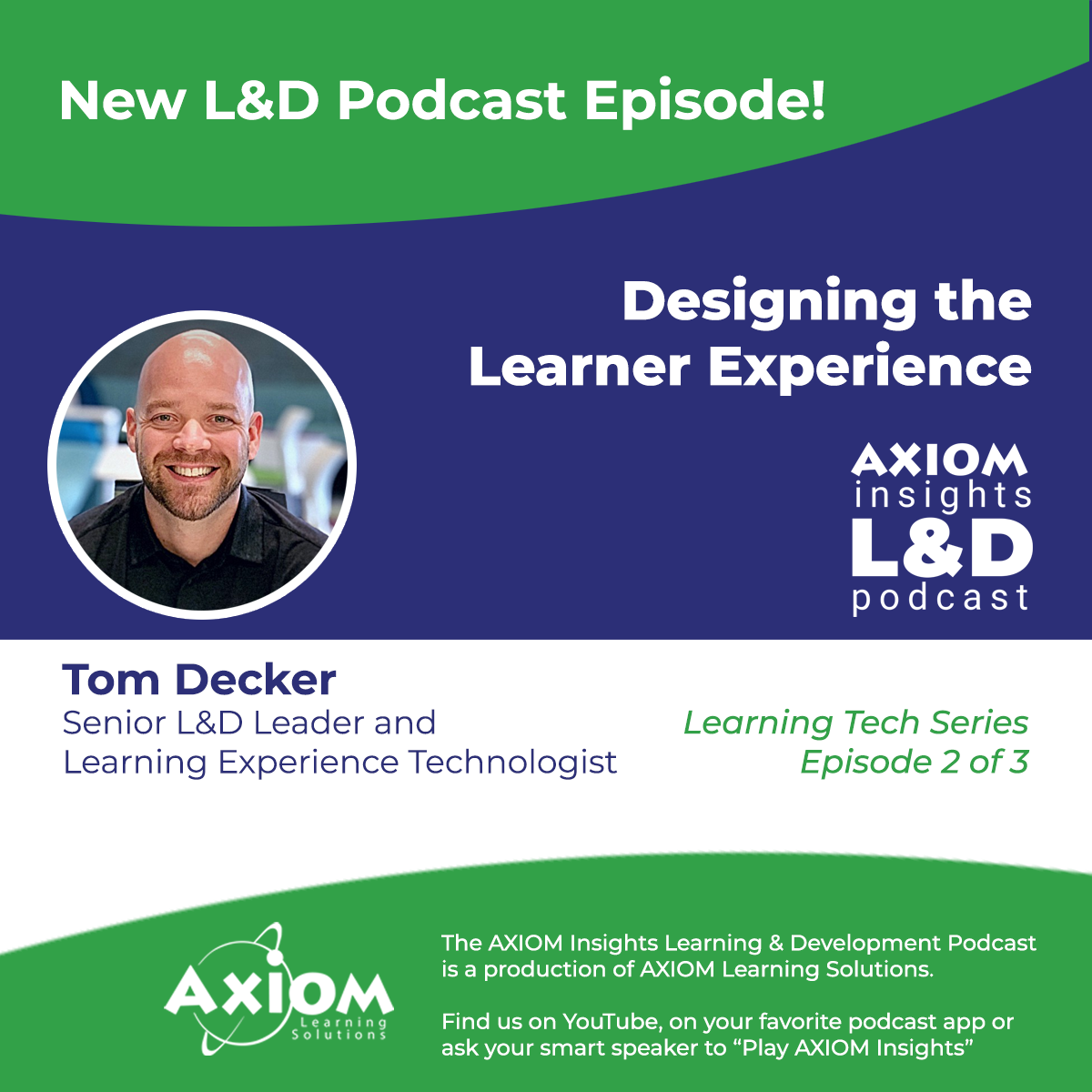 Designing the Learner Experience - Learning Tech Series, part 2 of 367 / 100
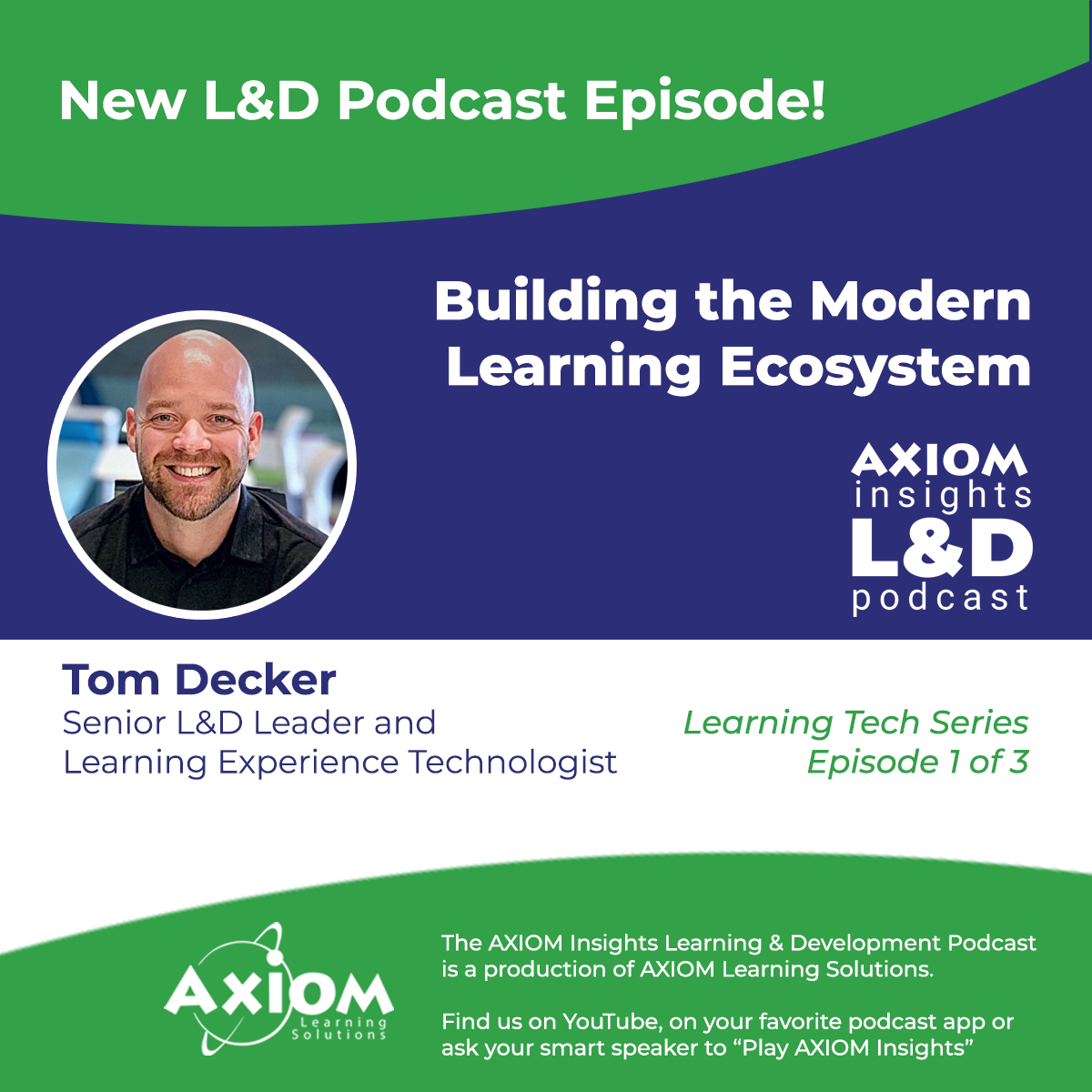 Building the Modern Learning Ecosystem - Learning Tech Series, part 1 of 371 / 100
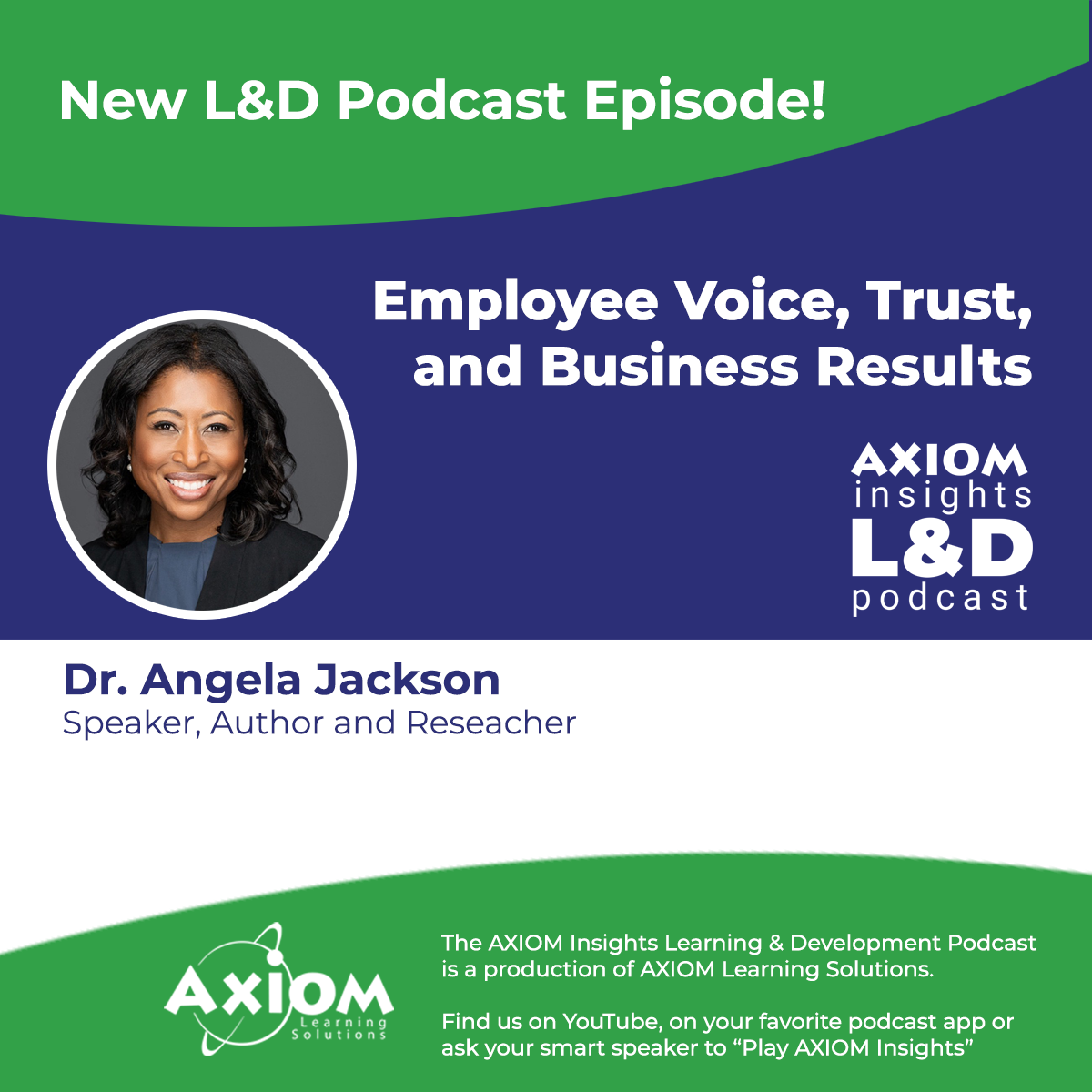 Employee Voice, Trust, and Business Results: Building a Win-Win Workplace with Dr. Angela Jackson76 / 100