
AXIOM Insights Learning and Development Podcast · 2026-06-17 · 45 min
Key moments - from our scoring
Substance score
52 / 100
Five dimensions, 20 points each
Dr. Tessa Forshaw, cognitive scientist and leader of Harvard's Next Level lab, argues that L&D professionals are still trapped in content-provision thinking despite tools that should free them for strategic work. The core issue: learning is a neurobiological process - the creation and strengthening of neural pathways through specific neurochemicals and environmental conditions - yet organizations continue designing programs around completion metrics and one-off events rather than sustained, embedded capability building. Forshaw distinguishes between heuristics (useful thinking frameworks like risk matrices) and neuromyths (disproven concepts like learning styles that persist in the field). She unpacks how "learning in the flow of work" is often misapplied (ambient coaching pop-ups) when it should mean learning *through* the work itself, grounded in situated learning theory and supported by managers, peers, and communities of practice. Transfer, too, is misunderstood - it's not about applying last week's lesson identically, but designing learning so contextual and emotional cues align with when knowledge will actually be needed. For L&D leaders caught between strategic ambitions and executive pressure for four-hour innovation bootcamps, Forshaw advocates reframing as a strategic advisor: ask clarifying questions, set realistic scope, and propose paced, coached, culturally-supported alternatives grounded in evidence. The conversation serves CLOs, L&D directors, and instructional designers navigating the gap between neuroscience and organizational politics.
Learning in the flow of work typically means interrupting work with pop-up content or ambient coaching, while learning through the flow of work - grounded in situated learning theory - means the work itself and its completion is the learning activity, supported by managers, peers, and communities of practice rather than separate training.
Learning styles contradict how the brain actually processes stimuli structurally, and extensive research shows no person has a dominant style, no performance differences based on teaching to preferred styles, and no correlation between teacher perception of a student's style and actual performance outcomes.
Forshaw advises asking clarifying questions about realistic goals, then either scoping the four hours to stress importance and practice one or two applied behaviors, or proposing a broader paced capability-building strategy connected to real work moments with coaching and cultural reinforcement - avoiding the false choice of simply saying yes or no.
Traditional transfer thinking assumes applying learned material to identical tasks; actual transfer requires designing learning so contextual cues, emotional associations, and related knowledge align with when and how that knowledge will be needed in complex performance tasks, making it largely the educator's responsibility rather than just the learner's.
Heuristics are cognitively efficient thinking frameworks (like risk-impact matrices) that help structure analysis from multiple angles but are not grounded in cognitive science, whereas science-based principles like spacing and retrieval practice are validated through empirical evidence to support neurobiological learning processes.
Our reviewer’s read on each dimension, with quotes from the episode.
The episode contains a handful of genuinely useful distinctions - particularly the 'through the flow of work vs. in the flow of work' reframe and repositioning transfer as an educator's design responsibility rather than an individual assessment outcome - but these are diluted by extended conversational padding, the host's long scene-setting, and a mid-episode certificate infomercial.
it's learning through the flow of the flow of the work, not learning in the flow of the work. So the work itself, the actual execution and completion of the tasks is the learning activity
transfer is a lot more about how do you support somebody to cue in what they know and can learn at the moment that they need it
The 'through vs. in the flow of work' distinction and reframing transfer as a design problem rather than a measurement problem are genuine fresh angles; however, the neuromyth critique of learning styles and the neurobiological framing of learning are well-trodden in serious L&D circles, and the metacognition recommendation lacks the specificity needed to feel truly novel.
we for some reason still think that transfer is uh, about I'm facing a performance task and I learned something last week. And so successful transfer is I used exactly what I learned last week and I am applying it on this very specific task
it's largely the educator's um, responsibility and it's the educator or the L and D teams that have the ability to better tee up transfer
Dr. Forshaw is a legitimate academic-practitioner - cognitive scientist leading a lab at Harvard's Graduate School of Education with prior real-world consulting and Stanford D School experience - giving her genuine credibility, though she is not widely known and some of the credential-dropping substitutes for cited empirical specifics in the conversation.
my background before becoming an academic was uh, that I worked in a, uh, consulting firm doing uh, learning and talent organization
I used to teach it at Stanford University at the D school, um, scientific creativity, innovation
The episode almost entirely relies on anecdote, analogy, and general principle rather than named studies, authors, or concrete data; the 'study' about an intern moving a desk is the closest thing to an evidence anchor, and numeric claims ('17 years,' '500 people') are illustrative estimates rather than sourced figures.
A great example of metacognition that I, uh, saw um, relatively recently in a study was a uh, young learner who was uh, doing an internship program remotely
Daniel Pink posted that on LinkedIn this week
The host asks one legitimately sharp question - how L&D professionals should distinguish scientific rigour from pseudoscience - and the CEO hypothetical is productively applied, but the host frequently over-talks, answers his own questions before the guest can, and defaults to validation rather than genuine pushback on any claims.
how does the profession or how should the profession differentiate between a model that has legitimate scientific rigor and one that may just be an instinct driven piece of pseudoscience
I realize I'm asking you to chase a hypothetical here, but play along
Computed from the transcript - who did the talking, and the words that came up most.
In this episode of the AXIOM Insights Learning and Development Podcast, we speak with Dr. Tessa Forshaw of the Harvard Graduate School of Education about what learning and development can learn from cognitive science. The conversation explores why employee learning often falls short when it is treated primarily as content delivery, course completion, or a one-time event. Dr. Forshaw explains why learning should be understood as a neurobiological process, why learning transfer must be designed for before performance is measured, and how L&D teams can become stronger strategic advisors inside the business. The discussion also covers several practical challenges facing learning leaders today, including how to respond when executives ask for unrealistic training outcomes, how to evaluate frameworks and models with a more critical eye, and how to separate useful heuristics from unsupported neuromyths. The discussion includes thoughtful commentary on learning styles, personality assessments, metacognition, situated learning, productive struggle, and learning through the flow of work.
Transcribed and scored by The B2B Podcast Index.
Scott Rutherford: Hello and welcome to the Axiom Insights Learning and Development podcast. I'm Scott Rutherford. This podcast series is about supporting performance through learning. In this episode, I'm joined by Dr. Tessa Forshaw. Dr. Forshaw is a cognitive scientist who leads the Next Level lab at Harvard. She's part of the team that created a new certificate in workplace learning focused to help L and D professionals design learning that fits how and where people actually work, grounded in cognitive science, neuroscience and learning design. And if you are interested in that certificate, we'll tell you more later in the interview, including a code that you can use to save a few dollars if you do decide to enroll. The information will also be on the episode page for this episode@axiomlearningsolutions.com podcast. So, in this conversation we look at learning as a neurobiological process and Dr. Forchau shares some practical advice on how L and D professionals can apply models to support your work and help people learn more quickly and make evidence based workplace learning more continuous and embedded in how work actually happens. So I start the interview with Dr. Forshaw by asking her a question which was, we're working in a moment in L and D where learning content is perhaps easier to create than ever before, which in theory should be freeing up L and D to focus on other ways to support change in organizations like behavior change or supporting innovation. So I asked her, is that what's actually happening?
Dr. Tessa Forshaw: Gosh, every fiber of me wants to say yes, but, um, unfortunately I think that the answer is no. Ah. And I think that's for a few reasons. Um, one in particular is, I think that we are often, unfortunately separating where we're learning and doing. And even when we talk about learning in the flow of work, often we still, um, mean learning that happens on top of the flow of work instead of that learning that happens through the flow of work. Um, I think that distinction is really important because that process of, um, learning and developing through working and um, through the process of working, uh, is, um, one that gives us a lot of opportunity to reimagine what, um, L and D looks like. But when we continuously are sort of separating the idea of performance and learning, um, even in this sort of artificial way that isn't how they work cognitively. Um, I think we accidentally box ourselves into an idea of learning that is an idea of content provision, even if it is micro in the moment flow
Scott Rutherford: of work, content provision, content creation and content provision. I share, I think, the discomfort with the balance between. On one hand, it's great that we have a lot of content. And it's easier now to create content perhaps than ever before. But if that's not used carefully or in alignment with real impact, then are we risking being led down the wrong path?
Dr. Tessa Forshaw: Uh, what are we shutting ourselves off to? Like what are we not noticing as opportunities for learning, as opportunities for L and D, um, to step into, for moments that matter that we need to cultivate and amplify. So I think one of the concerns that I have is that it's nearly like you know, the horse in Hyde park with like the blinkers on, um, is I think sometimes when we think narrowly about the content provision that stops us seeing everything else that's involved in learning happening.
Scott Rutherford: The risk is just focusing on the operational and not being reflective. And I know you're coming from an academic and ah, a consulting and a scientific background, but uh, uh, uh, there's a lot of uh, recognition uh, within learning and development that we need to focus our efforts on things that are more impactful and valid in terms of uh, affecting how people actually think and create and change. Um, but getting from where we have been historically operationally to perhaps a more grounded future has continued to be a major challenge for a lot of folks. And I've seen this on conference agendas for I mean, decades.
Dr. Tessa Forshaw: Yeah, I mean I certainly. It's an interesting point. I totally agree with you. Like right now, um, I think we're talking about some of these things a little bit more because of AI is sort of making the pace and the cracks more visible. But you're right, like this isn't a new um, problem or paradigm. It's definitely something we've been talking about for decades. And I think one of the, I mean my hypothesis for what it's worth here is that we, I think it does come down to what we mean when we talk about learning sometimes. Um, and so for me when I talk about learning, I talk about learning as a neurobiological process. Um, essentially ah, the creation or strengthening of um, a ah, pathway between two neurons. There are things that support that to happen and things that really don't. Um, and by things I mean uh, neurochemicals and neurotransmitters and hormones. Um, and those, those set of things are largely influenced by um, things that are happening in our brain and our body, but those things are influenced by things that are happening in our environments and contexts. Um, and so for me when, when we, we talk a lot about you know, repeating this same mistake and not seeing learning, that's necessarily translating to Performance and behavior change. I think that's because we sometimes neglect to understand that all of those things come back to neurobiology. And uh, we do have a relatively good science of stuff that tells us things that can be effective and things that can't. But we seem to keep replicating things that can't. That's my little pedestal that I stand on.
Scott Rutherford: That's fine. I know there's lots of folks who uh, will share that soapbox with you for sure. But I think that there's a challenge because on one hand, uh, for L and D folks who kind of look and know what they should be doing, they're trying to build in uh, the retrieval, they're trying to build in some of the activities and techniques that are grounded in how the brain learns. But they're balancing that between maybe in an organization that says, well no, just give me the course, just turn it, be production oriented, um, get all I want. This is in air quotes, but all I want. I have 300 employees, I want them all to complete the course. And there's a pressure sometimes to just focus on that completion metric. So it puts a real pressure on the L and D person to say, okay, well not only do I have to push back a little bit, I have to educate my organization on the benefit and the foundations of what I'm trying to do. And that's been uh, uh, again, talking about legacy problems.
Dr. Tessa Forshaw: Yeah, I mean firstly, let me just say that I have experienced this myself. So my background before becoming an academic was uh, that I worked in a, uh, consulting firm doing uh, learning and talent organization, um, ah, sort of work. And so a lot of L and D, A, uh, lot of learning design for um, uh, capability building of, if you remember the 21st century skills movement, a lot of capability building around the um, ERP implementations of new technologies and things like that. So I just want to say, um, that I have been in this chair myself, especially with innovation. Um, I've heard many times in my career somebody say to me, hey, we'd love to bring you in to teach uh, innovation or creativity. Because just for context, that's the course that I teach at the Harvard um, Innovation Lab and I used to teach it at Stanford University at the D school, um, scientific creativity, innovation. And so they'll say, can you come in? We've got four hours at our offsite next week and I want you to teach the whole company to be innovative in four hours. Yeah. an off site. You're like okay, um, and it's really hard in that moment to say, hey, like, I can tell them what innovation is, or maybe they could have a taste test of a core competency of it and practice one thing, but I can't deliver that thing for you that you want. It's really hard to do that as a consultant, especially because clients don't really want to hear that. But it's also really hard to do that as the L and D team when you have, I think, sometimes, uh, a power structure in these or in organizations that maybe puts L and D as and a bit of an order taker when really the way they need to be utilized is a strategic advisor. And I think that comes from the idea that everybody went to school. And so a lot of the time we have business leaders who go, I went to school, I'm successful, I know how to learn. And so it's really challenging to sort of push back and say, hey, asking me to teach, um, you know, negotiation, uh, in a massive open online course that everyone has to take for an hour. Like, is it going to result in meaningful behavior change? Just like four hours at an off site isn't going to make 500 people become innovators tomorrow? It's hard to say, right?
Scott Rutherford: It's hard to say. But also. And even if you're putting myself in that room, okay, so if I'm the L and D, uh, lead I've been asked to do, to change the world in four hours, or change the culture of innovation in a company in four hours, uh, how would you advise? Because I'm talking to the CEO, they're saying, okay, and I'm bringing. And from the CEO's perspective, I get it. I'm bringing together all of, all of the staff from all of these functions. The production cost of that in productivity and the personnel cost in that room is immense. So the CEO's interest is get them in, get them out, get back to work. Fine, I understand that. But for the L and D folk, uh, for the person in that moment, do you have advice for what they can say to that CEO? I m realize I'm asking you to chase a hypothetical here, but play along. Um, what can they say in that moment to say, look, what you want is different than what you're asking for, and here's why.
Dr. Tessa Forshaw: Yeah. So, uh, having been in that room myself, the reason that I initially went to pursue, I went to graduate school after working for more than a decade. And the reason that I did that was because I wanted to have better scientific answers to that question. And, um, I think that science is an Answ here to, and I'm not saying go to grad school to everyone. What I am saying is, um, by understanding learning as a neurobiological process and that there are things that help it and things that don't, we then start to understand. We then start to have a frame of reference m to start to think about why some asks will and will not work grounded in empirical evidence. And that's really powerful. When you're um, talking back to, especially to business leaders having data and examples and science to support sort of your argument can be really helpful rather than it just sounding like your opinion. Um, so what I might say in that specific scenario of four hours to teach innovation is I would probably start by asking some questions to understand what it is that they're really hoping to get out of the four hours. So there is every chance in the world that what they're hoping for is that everybody to walk away with a sense that like we want the people in the company to start to show a little bit more innovative behaviors and mindsets. If that's the case, I would probably say, all right, we can stress the importance of innovation and give everybody one or two applied things that they can practice and they could go away with tomorrow to start doing that in four hours. We can definitely do that. If they said we're um, going to, we want everybody to be able to come up with a startup that they incubate within the company and you know they're going to start doing that tomorrow, I would obviously say look, that's not possible for us to do in four hours. Um, right, um, because the, we know that with anything that you learn you need to have opportunities for deliberate practice. You know, there needs to be um, time and space time to be cognitive but also then metacognitive about the learning and reflect on it. And so that you know, you've got a, you've got a five pound sack and you've got ten pounds of armadillo. So how do we scope this down so that we can get you a meaningful experience in the four hours? But they also might say what I want is, you know, I just need the whole company to be more innovative. I want to see widespread behavior change towards innovation. In which case I would say then you this, use this four hours for something else and let's design for you a uh, different innovation capability building strategy that is much more. It's, it's paced, it's connected to moments of real work. You know, it's coached and supported. It's, there's A cultural component to it as well, where we're um, celebrating applied behaviors so that we can increase all of those good neurochemicals, that we can increase the likelihood of transfer occurring, things like that. So I think that's probably how I would approach it is um, trying to understand uh, what they're doing and sort of coach to that. But the reality is like sometimes they are just going to want you to teach the whole company, you know, soup to nuts, innovation in four hours. And I think you have to weigh like, do we say yes and no, we can't do it, we. Or do we say no and um, provide them with sets of alternatives and what's better, like doing it and failing and then having frustration and a disbelief in the power and capability of the L and D team or maybe having a tough upfront conversation and few moments to work through, but then being eventually able to deliver on something that we know can work and can drive it. Behavior change.
Scott Rutherford: Right. Yeah. There's always the short term and the long term. And this actually something that uh, on a previous episode, uh, I guess Keith, uh, Keating, uh, author from Canadian, uh, author had mentioned, you know. Well, you know, if you're being asked to be an order taker, sometimes take the order, but don't just take the order. And I'm paraphrasing, uh, so you can always come back and have that conversation too and say, well look, you know, here's what you asked me to do and I did this. Fine, great. I checked the box that you asked me to check. But you know, let's frame something sort of to your point more broadly that'll be successful over time. And then uh, you know, and this is where we're, I think having, having the grounding in what cognition, how cognition works is necessary because you're, you know, I alluded to earlier, you're educating your colleagues on the value of what you're bringing to the table.
Dr. Tessa Forshaw: I think that's such a good, um, a good phrase like don't just take the order. Uh, I love that because I think that is that moment that we move into being more strategic. Ah. And it also is collaborative in the sense that it's, you know, there's a yes and component to it. I work a lot with, um, with the sort of VPs of learning and Chief Learning Officer community as I know that you guys do as well. Scott. And one thing that I have really noticed is this internal struggle that's sort of starting to come out in this current moment of oh, I could be a really Good strategic advisor right now. I know how to grow talent, I know how to build capability. I can see that we have gaps, but I'm sort of stuck in this role of, of the order taker. Um, and, and so how do we move that? And so I think that's a really great, like a really great phrase to keep in your mind or a mantra is like, don't just take the order. Yes. And how do you do both of those things together and start to shift how um, the function is perceived?
Scott Rutherford: I want to lean into your expertise too because there's a lot of uh, uh, um, terminology that's thrown around, sometimes correctly, sometimes not so much. Um, but I wanted to ask you. Well, are there um, findings or principles from the world of cognitive science that you um, think are being underused? Are there ones that you think are being overused or misapplied? What have you seen that hits the target? And what have you seen that doesn't?
Dr. Tessa Forshaw: Yeah, well, I think when I already said, and I know some people might crucify me for this, but I don't. I think that learning in the flow of work is being, is being misapplied. I think the right now, when, you know, people think about it, they think a lot about like, oh, you're in your SAP HANA system and all of a sudden this like thing pops up and tells you that you need to do this because you've been hovering on this for too long or this kind of ambient coaching vibe as well. So that's um, how people are interpreting it. And a lot of the foundational science around learning and flow of work comes from the body of knowledge that's called situated learning. And what it's actually telling us is that you learn through the process of working. So it's learning through the flow of the work, not learning in the flow of the work. So the work itself, the actual execution and completion of the tasks is the learning activity. And that sits within a container that often involves um, a more experienced other, be that a manager or a peer, um, or an entire network of those as well as a larger sort of, ah, um, a community of practice. Again another word that gets thrown around a lot. But a larger sort of community of people who are in the process, at various stages of doing the work, who you utilize as um, as vortices to accelerate your learning. So that's sort of one that I think um, gets, definitely gets to me. Um, uh, a second is transfer. Um, I think we have this like really funny idea of learning transfer that I understand. Like where it came from, but I don't really know why it's endured for 150 odd years. Um, but we for some reason still think that transfer is uh, about I'm facing a performance task and I learned something last week. And so successful transfer is I used exactly what I learned last week and I am applying it on this very specific task.
Scott Rutherford: Right.
Dr. Tessa Forshaw: But the reality is that a person's learning is associated to different contexts and cues and um, other uh, neurons and knowledge. And so when they are in a performance task, what they just learned might not be the thing that is cued forward or even the best thing to solve the complex problem at hand. And so transfer is a lot more about how do you support somebody to cue in what they know and can learn at the moment that they need it. And that is a deliberate strategy and you have to think intentionally about that. How do you make sure that what they're learning is associated with the contextual cues of when they will need to learn it, of, uh, the emotional cues of when they will need to use it, um, of the other kinds of knowledge that they will likely be also engaging in their working memory at the moment that they need to learn it. So that when you're teaching it, you can design it to be transferred versus just measure if it was transferred. Does that make sense what I'm trying to say? So we think of it a lot as an individual's responsibility and an assessment of performance. But actually it's largely the educator's um, responsibility and it's the educator or the L and D teams that have the ability to better tee up transfer. That's another thing that I think that's
Scott Rutherford: the strategy of the preparation, uh, work of course. Yeah, well, uh, that kind of leads me to another thought which I wanted to uh, ask you to comment on because uh, again sort of in the learning world, um, we have many, many frameworks. Uh, there's a model or a framework for virtually everything it feels like. And if you go to ATD or go to one of the uh, domain conferences, uh, there will be n number of vendors with their proprietary models. Uh, so for the working L and D professional I can recognize it would be a little bit of a challenge to say, okay, well how do I then differentiate and understand the rigor and the validity of a given model that I'm being presented with? And I wanted to get your thoughts on how does the profession or how should the profession differentiate between a model that has legitimate scientific rigor and one that may just be an instinct driven piece of pseudoscience.
Dr. Tessa Forshaw: I love this question so much. I've never been asked this, but you're making me. Ah, I'm really excited by it because I think that this is something about, um, I think is really common in the L and D field. Again, um, I'm not entirely sure why it is, but there is a lot of pseudo science and a lot. An entire economy around making money on concepts that have largely been disproven or were never proven. Um, so a lot of neuromyths, I would call it, and a lot of, of frameworks and tools that are, uh, good thinking strategies or thinking routines, but, um, are not like, not science. And there's a difference between those two things. So just to like, step back and sort of help pull out the difference between those two things.
Scott Rutherford: Absolutely. That's. Yeah, that's the point. Sure.
Dr. Tessa Forshaw: If you think about like some of the models. So I used to work in consulting and all the time we were looking at things like, um, uh, you know, risk versus issue matrix, ah, cost versus cost versus impact matrix, a risk versus likelihood matrix. Um, we were looking at, um, uh, if things were messy, um, uh, so all sorts of frameworks that we were using. I would call these heuristics. Right. Ways of structuring our thinking that are like, super helpful. And I think that there is a real value in heuristics, a way to think about something in a meaty fashion, um, that can help you make sure you're, uh, addressing, um, it holistically and you're looking at it from different points of view. And when you change heuristics, you see different things in the thing you're looking at.
Scott Rutherford: Well, it's a filtering mechanism or a lens, if you look at it that way.
Dr. Tessa Forshaw: Yeah, exactly. And cognitively efficient heuristics are efficient cognitively too. They direct our thinking. And since our brain uses a lot of metabolic energy, that helps us sort of direct the metabolic energy and use less of it rather than trying to process the whole world and make sense of everything. So, uh, it's efficient. They're great. Yay. Heuristics. Um, and none of those things that I just said that I used in all the time in my work, um, are grounded in the cognitive science of anything or the science of anything. The cognitive science in learning and development, I think one that comes up a lot is learning styles. For me, um, learning styles, um, are a neuromyth, I would call them the brain. It firstly just doesn't even make sense the way that your brain processes stimulus and Inputs that you would be an auditory learner or a visual learner or a kinesthetic learner. That doesn't, um, make sense in the actual structural reality of how brain works. But also there is a lot of science where they've studied them extensively and no person has a dominant style. Um, when they. People say that they do, then they teach them in different ways. They don't actually perform any differently depending on the different styles. There's no correlation between if a teacher thinks a student has a style and the performance of the student. You know, there's been heaps of studies, but it is a very good heuristic in the sense that if you look at a curriculum that you're designing and you say, how do I think through all of the m. The components here, where we're talking to visual learning or we're talking to auditory learning, or we're talking to kinesthetic learning, what you're actually just doing is assessing the curriculum for variety. You're assessing the curriculum in a way that thinks about, have we balanced the different types of modalities that we're using to keep learners engaged? Um, uh, have I thought about if I'm using different types of modalities and maybe what ones I want to use, where and if they're the right match. So it's not that using it makes your learning bad, um, but it isn't grounded in any science.
Scott Rutherford: Right. It's thinking through. Thinking through. I mean, I like that this is one of the, uh, uh, uh, topics that I'd love to come back to as well, because it refuses to die, uh, sometimes. But there's also a differentiation between, you know, it's not a style, but it could be a preference. That's fine. And it can be a preference that's driven by the learner. It can be a preference that's driven by the environment. You know, the modality of the learning, uh, you know, uh, can and perhaps should be different if you're talking to something that's delivered on a cell phone to, uh, someone in a warehouse versus a classroom seminar, whatever the.
Dr. Tessa Forshaw: Absolutely. Yeah. And thinking through that is never bad. Right. Like, it's a helpful heuristic, but it just isn't scientifically driven. Um, so in terms of how do you spot that? I think my go to default is to think about things as a heuristic first. So don't believe something is scientifically grounded just because somebody says so. I think first think about. Okay, I see that this framework is trying to help me think about these kinds of features in this sort of structured way and what it, and that I can use that framework as a, essentially a metacognitive tool to help me intentionally choose to structure my thinking through that lens. And then I could do it with 10 different ones and then I could see what do I get between some of them and others.
Scott Rutherford: I like this perspective because it recognizes the utility of some of the tactical practice without having to rely on, uh, another one and I'll dust off my soapbox. And without naming names, personality assessments oftentimes are circulated broadly and everyone knows what their personality type is. Uh, um, I'll let you comment here on a second. But to me it's always seemed like these are useful. If you're trying to get a bunch of people in a room to understand how they like to interact and what their preferences are, fine. Um, but taking them. This is the risk, I think, and I'd love to hear your perspective on this. But the risk is to say, well, if I'm, you know, these four letters are not intrinsic to, uh, my identity and also are not immutable over time.
Dr. Tessa Forshaw: Absolutely. And I think you've sort of hit exactly the nail on the head, uh, with learning styles and with personality assessments. And I agree with you nearly bar like one. I think none of them have actually any validity behind them. Um, but what they're helpful for is having, using them as a conversation, as a lens. Where anything should make you nervous is when you start to see it being dogmatically applied or where it's trying to put a immutable box around a learner. Uh, so, for example, with the personality assessments and with the learning styles, I think one of the biggest risks is that they influence a person's sense of self and their identity. And then when that happens, the people change their mindset and therefore their attention and perception and they limit what they process and what they can do and what their self belief is because of these like, unscientific things that they believe they are. So if they're, if they think they're a visual learner, they're going to choose not to engage in anything that is, you know, auditory because like, well, I can't learn that I'm a visual learner. If they think they're, um, you know, ISTJ or whatever, blue, red, green, whole brain, I don't know all of these, they might think, oh, I can't have
Scott Rutherford: just invented a new one there actually.
Dr. Tessa Forshaw: Yeah, all of it together. But then they're going to think like, I can't do this because I'M in. I uh, like I'm driven from a place of emotions and that's too analytical of a task for me and that is where I think the action there is harm. So using them as a heuristic, a way of thinking and intentionally as a strategy to get more information or to kick off a conversation. Fine, great. Using them to define a sense of self and limit choices, uses or exposure of individual learners. Terrifying.
Scott Rutherford: Uh, uh, I love what you're describing. I think you've touched on a couple of terms uh, that I've heard used pretty broadly within L and D as well as learning more broadly, metacognition and motivation. And I wanted to see if uh, wanted to get your thoughts on sort of how you see those applied, how L and D folks can understand what those mean and then how to apply them in the practice.
Dr. Tessa Forshaw: Another great question, uh, so be careful what you issue up because I feel like I could talk about metacognition all day. It's I think single handedly the most important thing that we can teach learners. Um, and uh, and I feel totally validated because aside from the decades and decades of science telling us that. Daniel Pink posted that on LinkedIn this week. So we're clearly like it's on the um, on, on point. But so what is metacognition? So think about meta as sort of being like above or self referential, not the company. So above self referential, meta in the that sort of sense. And then cognition being how we think, feel, act, learn and decide.
Scott Rutherford: So thinking about thinking.
Dr. Tessa Forshaw: Yeah, but also about actions, decisions, your emotions. I think sometimes when we say thinking about thinking, I worry that we think that that means not our feeling, but our feeling happens in our cognition. So they're very um, intertwined and emotion is very useful in learning. So metacognition is, is essentially thinking about all of those things and monitoring those things and then um, changing or addressing or using strategies to help you adjust those things to achieve a goal. A great example of metacognition that I, uh, saw um, relatively recently in a study was a uh, young learner who was uh, doing an internship program remotely and noticed that um, they were really struggling with the environment where they had been sort of set up to do their work, the office. And they kept getting distracted and tired and everything like that. And there was a uh, space for a desk near a window. And so they went over to the manager and they said hey, could I move my desk to the window? And everyone was like sure, of course you can. They were like great. And now they're finding that they're doing a lot better because they're not coming up with excuses to go and be near the light and to do things like that because that was important to them. So that process of recognizing that they were not quite showing up how they wanted to and getting distracted and feeling tired in the afternoon, that is a metacognitive process of noticing. And then they sort of named what was going on for themselves and then they did what I would call, they navigated, they figured out what's a strategy for how I can shift this to get to what I want it to be. And they self advocated, they showed agentic behavior, they got themselves that new place and then they were set up to do better work the next time. So it doesn't have to be a massive thing like that tiny little moment that is metacognition.
Scott Rutherford: Um, I wanted to bring in, uh, of course I know that you at Harvard have a certificate that you're launching. Uh, my understanding from looking at it simply from outside looking in, uh, is that some of the concepts we're talking about here are probably reflected in that curriculum. Could you talk through. So it's called, uh, if I'm right, the Future of Workforce Learning and Innovation, the two day certificate, uh, done at Harvard in Cambridge. Um, tell me a little about uh, the genesis of it and really what's the content? What's that experience going to give, uh, the participants?
Dr. Tessa Forshaw: Yeah, so the background of the certificate program um, really came from two places. The first is that I think in the last at least 17 years, but if not 25 years, there's been a massive acceleration in the cognitive science of learning in terms of what we know about learning and just in general like what we know about the brain. And as a result of that, a lot of people might actually, like myself included, went to university for undergraduate degrees to become professionals in this space before that acceleration. Right. And so given the sort of pace of change and that uh, it's becoming urgent and people's livelihoods are really relying on it because of how much job disruption and task disruption we're seeing and learning becoming important to economic inclusion but also to strategic business success and all of those things, we felt that it was a good moment to help uh, you know, mid to senior level learning and development and workforce development professionals just like catch up on the science of um, of learning since they lasted their degree. Because how, like how else are you supposed to know all of this stuff, right? Like if you. And so we wanted to give an opportunity that was applied with peers to really talk through some of the things that we know. So that was the first piece. And the second is we actually tested a few different formats of how we wanted, um, this offering to come to life. Uh, and what we found was that ah, professionals who participated in the test really felt that like coming to HGSE and coming to campus and interacting with the faculty as well as with each other, um, was going to be really, really important because they needed a sense of camaraderie to kind of get through this moment in history. So in addition to the learning outcomes, there also is a, I'm in this boat, but I have people who are in it with me and are also paddling. So there was that sort of sense of community and um, activation that I think they were looking at. So that was why we decided to um, bring this program to life and put it, uh, as a two day residential course at hgse.
Scott Rutherford: That makes sense. I've seen groups, uh, come together in an uh, exercise like that often, uh, will spend many months or even years being uh, a peer support network afterward as well.
Dr. Tessa Forshaw: Yeah. And I think that from the first cohort that went through in February, we're definitely seeing that. In fact, several of them, even completely independently came back for uh, convening that we had on campus just a couple weeks ago. And uh, I saw that they all took a photo together, posted it on LinkedIn. And that really shows to me that they found a sense of community with each other. Um, but the course itself really, we think about learning through five key ways. The first is what we've talked a lot about, learning as a neurobiological and cognitive process. So something that happens in a person's mind, um, and then we think about that as situated in relationships with more experienced others like we already talked about as well. Uh, and that sort of discussion we had around the flow of work, uh, and those relationships and more experienced others are in contexts. And so that's, I think those two obviously very related but independently very important points. The fourth is that learning takes effort. So we talked before about learning being the creation or strengthening of, uh, neurons at its most fundamental form. And if you imagine for me like you have two points in a sand, in the sand, and you need to draw a line in the sand that stays there and doesn't just collapse. You would need to put a stick in and drag it. And that would take effort, right? Quite a bit of effort. And that's literally what we're doing with learnings. We're trying to drag between these Two points. And so it needs effort. It takes struggle and intention. Um, and so things, uh, what do we know about how to do that in a way that is both what we call productive. Struggle. Productive. And isn't just the kind of struggle that drives everyone crazy?
Scott Rutherford: How to manage the discomfort.
Dr. Tessa Forshaw: Yeah, exactly. Desirable, Difficulty. Manage discomfort. Exactly. And then the fifth one we've also touched on a little bit, which is this idea that, um, learning must be, ah, framed to transfer and adapt. And we need to think about transfer as, um, a mechanism and not an outcome.
Scott Rutherford: I'll include a link, uh, in, uh, the episode notes for this on our website axiomlearningsolutions.com podcast, uh, so folks can link to the program and certificate and learn more about that. Uh, but before we wrap up, I wanted to ask you really just for a couple more nuggets of advice. I've been enjoying everything so far, um, but the listener of this series tends to be someone who's, uh, uh, passionate about learning and development, passionate about workforce learning, and they're already doing something. I would hope to, uh, elevate their own expertise and skills because listening to podcasts or going to seminars is all professional development. So with that sort of lens in mind, keeping, I'm projecting, but I think the typical listener is probably not far off, um, for that highly engaged L and D professional, uh, what's one thing they can do tomorrow, uh, to elevate their practice and what's one thing they can stop doing?
Dr. Tessa Forshaw: So I think the first thing that they can do for themselves is to start to be metacognitive about their own learning. Sometimes I think we forget that we as L and D professionals are also learners and sometimes super learners. Right? Like we're engaging in new content and new subject matters to design learning around those things. And so building a practice of metacognition around our own learning and strategies and what's helping us and what's hindering us. And next time we have to do, uh, this course, how do we want to show up? How did we show up last time? What behaviors or practices do we need to change? What we should implement at beginning next time? Like thinking through those sorts of things is so powerful, um, for leaders, um, of learning, in my opinion, um, and something we could stop doing, um, goodness. I think we need to stop really thinking that learning has to be enjoyable. And I know that is not popular, but learning often is really hard. And sometimes the most profound experiences, people leave tired and frustrated and they don't know the outcome yet, um, until they're in the applied context where they see the sort of loop close for themselves
Scott Rutherford: and that's when it becomes rewarding.
Dr. Tessa Forshaw: Exactly. And so letting go of like it needing to be this beautiful bow of an experience, uh, I think is really
Scott Rutherford: powerful and to sort of go back to uh, uh, one of the uh, uh, well trodden measures of learning. That's why the uh, smile sheet as they head out the door may not be the best idea.
Dr. Tessa Forshaw: Yeah, totally.
Scott Rutherford: Well, Dr. Tessa Forshaw, uh, Harvard University. Um, it's been a pleasure. I thank you for your time and hope uh, to talk to you again soon.
Dr. Tessa Forshaw: Thank you so much for having me. It was a real pleasure.
Scott Rutherford: My thanks to Dr. Tessa Forshaw at Harvard University. You can find more information on her on the Next Level lab at the Harvard Graduate School of Education and about the two day certificate program Future of Workplace Learning all on the episode page@axiomlearningsolutions.com podcast thanks for listening. This has been the Axiom Insights Learning, Learning and Development podcast. This podcast is a production of Acxiom Learning Solutions. Axiom is a learning and development services firm with a network of learning professionals in the US and worldwide, supporting L and D teams with learning staff augmentation and project support for instructional design, content management, content creation and more, including training, delivery and facilitation, both in person and virtually. To learn to learn more about how Axiom can help you and your team achieve your learning goals, visit axiomlearningsolutions.com and thanks again for listening to the Axiom Insights podcast.
Other episodes covering the same guests and topics, from across The B2B Podcast Index.
 Here's How to Become Your Best Self According to James ClearBehind the Brand with Bryan Elliott · on Deliberate practice82 / 100
 Safari Your Way to Success: Alex Hillman on 30x500 and Building Successful BusinessesSaaS Growth Podcast · on Deliberate practice81 / 100
 The Science of Deliberate Practice with Anders EricssonThe Unmistakable Creative Podcast · on Deliberate practice70 / 100
 The Missing Piece of Compassionate Leadership - Wheelhorse WebAn Agency Story · on Deliberate practice65 / 100
 0306. When Your Systems Don't Match How Work HappensLean By Design · on community of practice56 / 100
 Episode 117 Part 6 - Changing behavior through training with Jordana Zeldin & Jonathan MahanThe Talent, Sales & Scale Podcast · on Deliberate practice32 / 100
 Launch, Adoption, and the Learner Experience - Learning Tech Series, part 3 of 359 / 100
 Designing the Learner Experience - Learning Tech Series, part 2 of 367 / 100
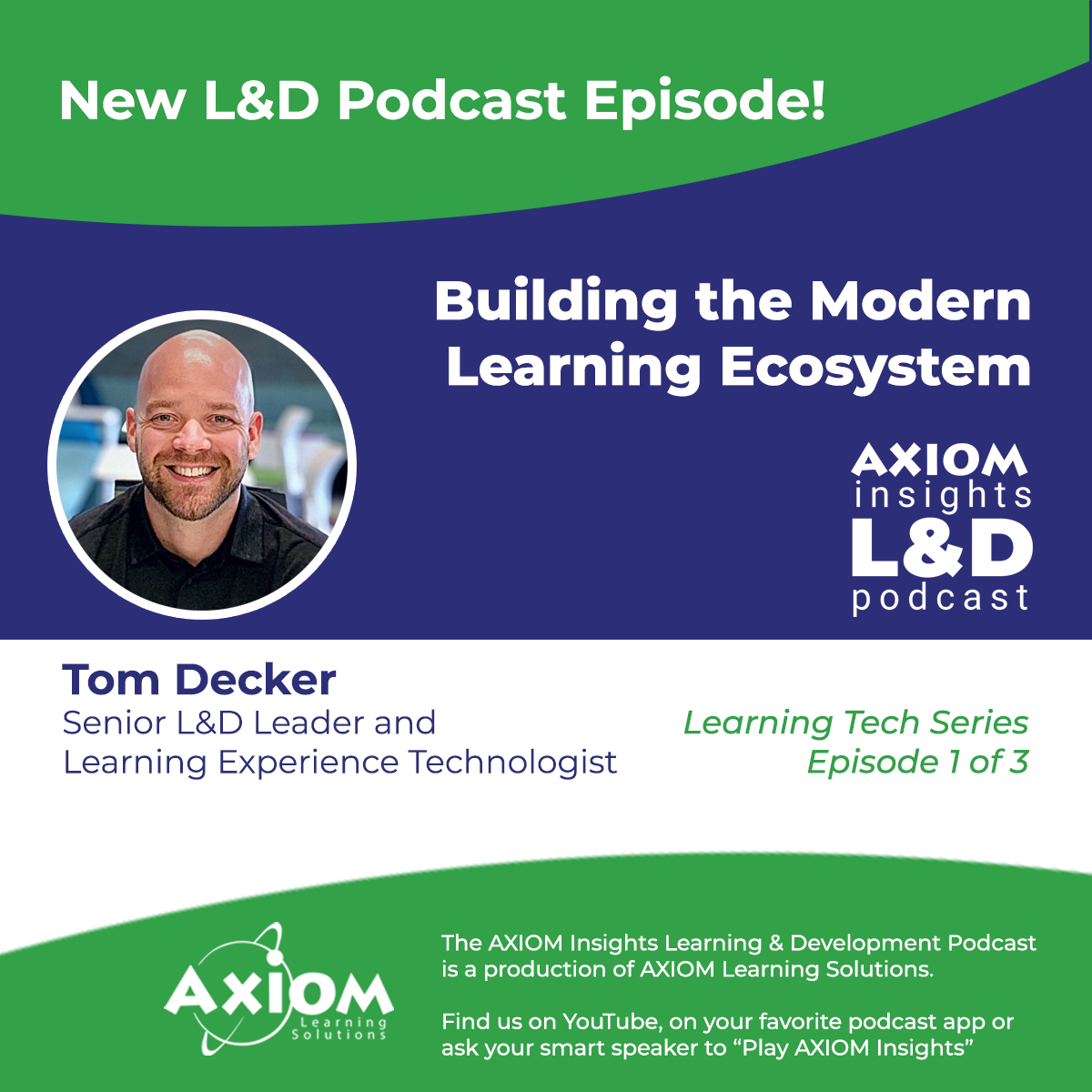 Building the Modern Learning Ecosystem - Learning Tech Series, part 1 of 371 / 100
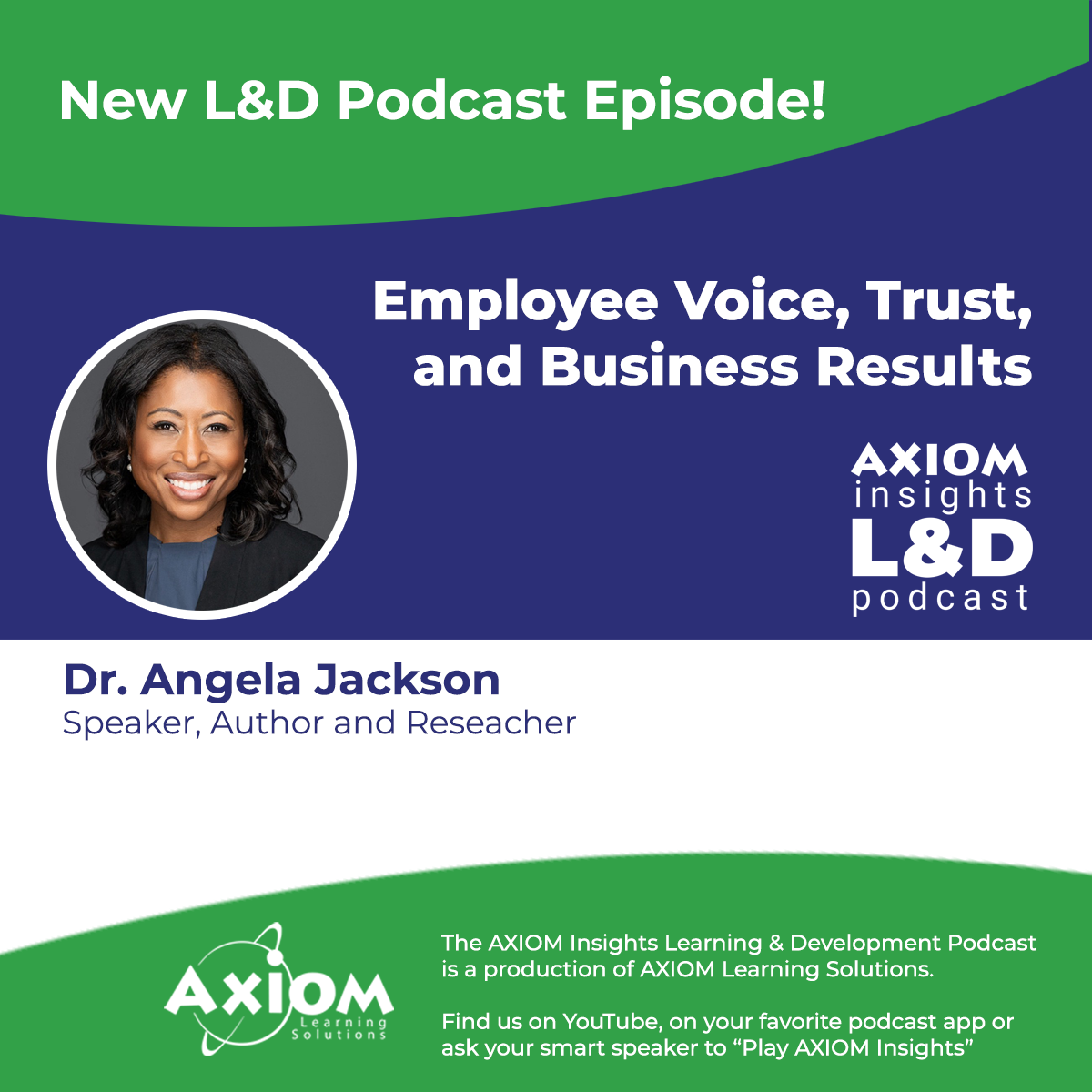 Employee Voice, Trust, and Business Results: Building a Win-Win Workplace with Dr. Angela Jackson76 / 100
 The 8-Decade Technical Spoof: The Encabulator