
Zag Talk · 2026-06-18 · 38 min
Key moments - from our scoring
Substance score
44 / 100
Five dimensions, 20 points each
This season finale episode of Zag Talk brings together hosts Jonah, Greg, and Athena to recap the most significant mobility and transportation-related stories of the past six months. The conversation spans SpaceX's theatrical IPO launch and its surprisingly problematic AI venture with GoPuff, the continued SPAC boom exemplified by pre-revenue battery startup Factorial, and the troubling case of Donut Lab's alleged solid-state battery fraud. Greg emphasizes the historical parallels between energy market disruption (referencing George Goodman's work on OPEC's leverage) and today's electromobility transition driven by Asian markets, while questioning whether heavy American models (driverless cars, large AI models) will ultimately compete against China's light mobility and efficient open-source alternatives like DeepSeek. Athena highlights the London robotaxi narrative shift from novelty to necessity, tracking Waymo's normalization alongside new partnerships between Uber and Wave. The hosts also celebrate wins like Mexico's domestically-produced Lineia EV and Walmart's drone delivery expansion to major metros, while mourning Starship Robotics' pivot away from college campuses. The episode serves B2B operators tracking AI commoditization, regulatory arbitrage, and the consolidation of advantage toward companies optimizing for efficiency rather than scale.
Donut Lab, a Finnish startup, claimed at CES to have a production-ready solid-state battery while running multiple funding rounds but refused to disclose financials. Independent researcher Zyroth investigated and concluded the cell was actually a standard lithium-ion battery, not solid-state; Donut Lab disputes this and says evidence is forthcoming.
Despite announcing new campuses as recently as six weeks prior, Starship is pivoting out of the college market to focus on grocery delivery in the US, though the exact strategic reasoning wasn't disclosed by the company.
Mexico just launched the Lineia, a domestically-produced EV priced at $9,000, featuring a boxy six-seater design with limited range but suitable for urban commutes; it combines domestic and Chinese battery technology and represents Mexico's move up the automotive value chain.
Walmart is expanding Wing drone delivery to seven new markets including the Bay Area, San Diego, and Philadelphia (previously concentrated in Charlotte and Dallas), and integrating it with new Subway food delivery partnerships on its e-commerce platform.
Waymo launched Premier Membership, a monthly subscription that offers discounted rides, marking the company's transition from pilot programs to recurring revenue and normalization as mainstream transportation infrastructure.
Our reviewer’s read on each dimension, with quotes from the episode.
The interview section contains a useful framework around exit routes for profitable mobility startups and a few concrete deal observations, but roughly half the episode is news banter and filler with minimal novel analytical content for operators.
profitability has created something for them which I would call luxury of optionality
18 months ago we were at rock bottom. Um, a lot of bankruptcies were still happening, A lot of businesses were not profitable.
The 'luxury of optionality' framing for post-distress mobility companies is a moderately fresh way to describe incumbent exit dynamics, but the broader market commentary and investment thesis stay well within conventional wisdom; the news roundup is reactive commentary with no first-principles arguments.
profitability has created something for them which I would call luxury of optionality
does the future belong to like, light mobility of like light electric motors and scooters
Roulet is a legitimate sector-specialist practitioner who has closed real mobility transactions and speaks with earned credibility, but as an investment banker rather than a founder or operator he offers a financial intermediary's perspective rather than first-hand operational insight at scale.
we raised um, kind of 43 million for them. It's a Dutch player called Leyden Jar based in Leiden in Holland
they had Meta uh, as one of their key clients and that was kind of quite uh, nice uh, uh, as a kind of proof of validation
A handful of concrete deal details anchor the interview (Leyden Jar $43M raise, Meta as client, GetAround/GoMore geography), but most claims about market recovery, investor sentiment, and mobility trends are asserted with anecdote rather than data, timelines, or named comps.
we raised um, kind of 43 million for them. It's a Dutch player called Leyden Jar based in Leiden in Holland
we are 12 billion market cap, $12 billion market cap, 9,000, uh, people globally, 5 billion of revenue
The host sequences questions logically and lands one sharp push ('No. A little bit. Come on.'), but most questions are predictable setup lines and no vague claims about market recovery or competitive edge are genuinely probed or challenged.
What brought you into the mobility space in particular?
No. A little bit. Come on.
Computed from the transcript - who did the talking, and the words that came up most.
It’s been a rocky road for new mobility startups these past few years. Late 2020 until early 2022 saw rock bottom interest rates fuel massive funding for all sorts of new companies: many raised far more cash than their fundamentals ever justified. When rates shot up, many companies languished on the vine. They couldn’t raise new cash, but they had enough in the bank to make their deaths rather drawn out. While that played out, the stronger players clawed their way to profitability. From ridehailing to food delivery, to micromobility and beyond, there are finally impressive transportation businesses growing in both footprint and profitability. That’s why, for this season of Zag Talk’s final episode , Jonah sat down with Florent Roulet . He’s Managing Director at Stifel’s Global Technology Group, where he puts together transactions across the mobility tech landscape, including interesting deals like Getaround’s recent merger with GoMore. He and Jonah talk about how the new mobility landscape has matured, why he thinks that today’s best startups have the “luxury of optionality” whereby they are fully in control of their destinies and what’s next for the sector.
Transcribed and scored by The B2B Podcast Index.
Speaker A: Hello, hello, hello. We're gathered for a very somber occasion. It is the final episode of the season of your beloved zag talk. Today I'm joined by Greg and Athena. Hey, gang.
Speaker B: Hey, Jonah, what do you say?
Speaker A: We've got Floren Roulet, managing director from Stifel, coming on at the end of the show. But before that we got plenty of news and also, I think, sort of a meta recap of the most interesting stories over the past half year or so. Um, these seasons, they really take on lives of their own.
Speaker B: I was gonna say it's not quite a montage episode, but it is like a season finale. Jono. Like what cliffhanger? Will we leave it on here? You.
Speaker A: Who will we find in your shower?
Speaker B: This whole season was a dream.
Speaker A: Where will we be next year? But, yeah, Athena. Gregor. I'm going to miss these hangouts, listeners. You're going to miss us too, I'm sure. But let's just get straight into it because I think there's something that's been unavoidable in the news. Uh, a little company called SpaceX went public. Uh, obviously there is a transportation element. I think they do launch rockets into space. That's transportation. But I don't know, this feels like sort of a good capstone for just financial market mania over the past, I don't know, lifetime.
Speaker B: I know you say that as we record this here, markets are surging on the supposed, what, the 40th, uh, announced end of, uh, the Iran war here and the reopening of the straits. But yeah, markets are exploding. SpaceX mania. What could go wrong here? Increasingly narrow AI driven rally here. But there you go. We have the world's first trillionaire. Even as the French government is trying to basically hold him to account for, uh, his AI, which will make an appearance later in our episode. But generating what? Revenge porn and other sort of, uh, I think child pornography as well. And I think the Brits would like to have a word with him about, you know, I don't know, the race riot he helped foment in Belfast the other week. So are there consequences for Elon Musk? Stay tuned till next season to find
Speaker A: that no consequences in space. Stock popped about 20% on the day it opened today. You know, Monday, when we're recording this up another 15% or so. So gravity hasn't caught him yet, I don't know.
Speaker B: Nor the rest of the markets there. That is one way to get out of the gravity well of it. But. But we'll see. As we discussed last episode, like it's seen as inevitable that he'll fold Tesla back into that and we'll just have Elon Musk Enterprises.
Speaker A: Eme Athena, how many shares did you buy?
Speaker C: I've bought them all and I shan't be disclosing how many. But, um, good thing I didn't buy shares in his flying car, which has.
Speaker A: There's a reason this is the last episode. Athena's leaving us for her lair.
Speaker C: Taking over, actually. But, um, yeah, well, he may occasionally launch rockets. He never managed to bring the flying car this season, which I had thought in our season finale he might have finally achieved some. So let's not give him too much praise for allegedly the biggest IPO ever.
Speaker A: So let's tie it back. There was another piece of SpaceX AI related news that caught my eye last week. Bringing it into delivery. So GoPuff, which is the quick delivery app here in the U.S. they launched a new voice conversational chatbot powered, I think even co developed with SpaceX AI. It's a mouthful. So with the idea being that you can hold up your phone and say, hey, go, I'm hungry. What's a, uh, perfect, you know, basketball game snack? Or, you know, what's a meal plan underneath? 30 bucks. So contextual. And also for some reason pulls, pulls data from Twitter or X. So it can be like, oh, there's a race riot going on. Here's the perfect snack to watch the, uh, world burn. What really tickled me about this one though is that if you look closely at the market materials, there's all sorts of AI artifacts and hallucinations that we sort of have gotten rid of if you're using the more advanced models, but if you're using the budget rate SpaceX one. So those Pampers are not pediatrician recommended, but Promptrician recommended. And if there's one person that might save us, it's the lawyers at, uh, Procter and Gamble and those sort of giant brands that so closely guard their carefully, uh, formulated images.
Speaker B: There you go. Just like the RIAA saved us from Napster 25 years ago, maybe P and G is going to save us this time. It is funny to me that this is a SpaceX AI product out of this, uh, given that, uh, the entire founding team quit. Elon has said publicly we're going to have to blow it up and start over. And the entire data center you built in Louisiana is currently being leased Anthropic, who is probably using it to do inference for Fable 5. Whoops, never mind. So, yeah, there's a lot of Fascinating, uh, dependencies at play here. Uh, but good for Gopuff. One of the last, what is it? The last American quick commerce, uh, company standing. It's interesting to see them lean in like this.
Speaker A: Yep, yep. Go Philadelphia Chatbots. All the rage. Doordash also launched a new version of their chatbot. Seems less hallucinatory, but less, less Mecca Hitler. Onto our other favorite topic though. Spacs. Uh, truly what's old is new again. So a company that I can't say I was familiar with, called Factorial, just, uh, spacked its way public on the NASDAQ, of course. Equity valuation of about 1.3 billion. And, uh, do they have any revenue, Greg?
Speaker B: Uh, I'm going to probably go with no on this one. I mean, who needs revenue?
Speaker A: Ding, ding, ding. Yeah, they're pre revenue, which is such a wonderful euphemism because it implies that there will be revenue eventually.
Speaker B: Well, let's get them listed on the NASDAQ right now then. Man, who even needs limits to this? Get them in the index.
Speaker A: Let the retail investors enjoy all that revenue generating upside. So, Factorial, a solid state battery startup, supposedly. And uh, this is a, uh, you know, the holy grail for battery startups. And it's, it's felled a number of, uh, worthy contenders. So another company, Donut Lab, just got in trouble for supposedly a little bit of fraud. Their solid state battery was actually just a regular lithium ion. And Athena, you know this company?
Speaker C: No, I do. It's a Finnish startup. Um, I mean, obviously nothing is proven yet. Donut Lab claims that they're going to come back with some really serious evidence imminently. But, um, yeah, they were causing a bit of a stir at CESS in, uh, back in January when they claimed to have a sort of production line.
Speaker A: We don't call it cess.
Speaker B: That was amazing.
Speaker C: Cess, with absolute vile as well. But, um, anyway, at cess, they claim to have a production ready solid state battery.
Speaker A: Um, that'd be like me calling your country uk.
Speaker C: Call it ook then. We have no faith in you guys to get it right anyway. You can't even get football right. But let's not get into that.
Speaker B: Jonah, when's the World cup start? Do you remember?
Speaker A: Yeah, Jeremy, the World cup already started. Okay, there, there are, um, you know, the highway signboards in LA say avoid congestion, use transit today. I think there's a match this evening.
Speaker B: All right, so back at cess, uh, as in cess, what happened? Which kind of is Vegas appropriate? We put it that way.
Speaker D: Keep going.
Speaker C: Yeah, we have been Talking about Vegas. Well, Jon has proven himself, of course. Anyway, caused a bit of a stir. Uh, said they had this production ready solid state battery, which is, you know, not the easiest thing to achieve. Were running a bunch of kind of investment rounds. That's around the time I interview them. I think they were opening quite a few funding rounds back to back and said they were doing pretty well, but wouldn't disclose any figures, which is always a bit of a red flag as a journalist, I think.
Speaker A: Don't look behind the curtain.
Speaker C: And yeah, I think Zyroth has now been investigating them as a battery researcher, uh, talking to independent experts, and they concluded that the cell is actually a very standard lithium ion battery. So donut lab says just you wait will prove you wrong. That's all I've seen from them so far, but I shall be emailing them imminently and I will let you know.
Speaker D: Hmm.
Speaker A: And they had raised. I think they did like a crowdfunding kind of thing, right? Like, what was their 25.
Speaker B: Yeah, 1300 investors. Yeah, it's a lot of. A lot of shareholder lawsuits, I suppose.
Speaker C: Yeah, many, many.
Speaker A: I expect better from the Finns. They're supposed to be, you know, high trust society.
Speaker C: And it was through a crowdfunding platform, wasn't it, Dean?
Speaker B: Well, the funny part is you read the coverage of it as well, too. And I will not bore, uh, our listeners with some of that, but like, you know, there are telltale electrochemical fingerprints, as they say, that like, it's just reading it being like, how'd you guys ever think you're going to get away with this? Uh, anybody who's an actual expert. Yes, Voltage curves. I learned a lot about voltage curves.
Speaker C: Why Nicolette? Chemistry.
Speaker A: I mean, I guess they got away with it long enough to raise some money. The question is just now, what have they already absconded to? Uh, you know, a non extradition country.
Speaker B: They're up in Svalbard right now. Yeah, they snuck out.
Speaker A: So. Speaking of sneaking out, Greg, have you ever been ordering, you know, a pair of affordable jeans from Walmart and you just wish that they could bring some food along with the order?
Speaker B: I, uh, can't say I have. Although, you know, I mean, I mean, it does raise the question of, like, at Costco. Why, like, why am I not being able to get a drone? Drop those hot dogs on me as
Speaker A: much as you can. Cheap hot dog.
Speaker B: But I guess this one, this is the second best option, right?
Speaker A: Yeah, I accidentally predicted this one in the last episode. I made like a dumb joke about them bringing food along with the order as they were kind of rolling out their 30 minute delivery. And gosh darn it, it came true. So Walmart partnering with Subway, which is like the largest in store restaurant chain,
Speaker B: I mean the largest restaurant chain, period. It makes sense. They've got all these Subways. Yeah.
Speaker A: Um, basically if you're making a Walmart order for some jeans or your groceries or a uh, cheap tv, what have you, and you're feeling a little peckish, you can say, I want a foot long sub to come with. And it's got the full checkout flow. You can customize it, extra mayonnaise, uh, choose which weird bread you want.
Speaker B: So uh, give me, give me, give me that 6 inch cold cut combo. We're gonna do like, yeah, like lettuce, onion, tomatoes.
Speaker A: I'm a delight guy. Athena. I can only shudder to imagine what horrible names sandwiches have in your country.
Speaker C: I'm sorry, someone who can get a sandwich delivered with a pair of jeans has absolutely no place saying anything about my country today.
Speaker A: You're British, usually you pretend to be German.
Speaker C: That was the least dystopian form of late stage capitalism today.
Speaker A: Um, and that's not the only Walmart news because they also are expanding their partnership with wing drone delivery. And what's interesting about this one is so they're hitting seven new markets and so so far these have really been concentrated in sort of like Charlotte and Dallas and very sprawling, exurban, low density, low regulation markets. But this one coming to the Bay Area, San Diego, Philadelphia, a couple other cities. So obviously, uh, depends what part of those metros make a big impact. Whether you're in center city Philadelphia or 100 miles west of the mainline. But yeah, still like a different kind of environment than Denton, uh, Texas or whatever.
Speaker B: But did the press release mention if those include the subway delivery? Because I want to know if like that order flow now has like, if I order like a foot long double meat, double cheese meatball, like is there a sensor alert? We're like, oh no, you're gonna, you're gonna break the 2.2 kilogram limit, the standard limit for drone delivery. Cause like, you know, I need to know.
Speaker A: Yeah, yeah.
Speaker B: What if I order a party sign and try to have a drone delivered?
Speaker A: Shave some deli meats off that.
Speaker B: Yeah, exactly. You know, going to walk back. But truly exciting breakthrough innovations happening in the Bay Area, particularly in sandwich delivery. I love it. Let's drive the Nasdaq up another 10 points. Let's go.
Speaker A: More IPOs, I think sandwich race.
Speaker B: Yes.
Speaker A: And then on the more affordable front. This one actually warmed my heart. So Mexico launching their first domestically produced EV. $9,000 is the price. It's called the O Lineia. It's very cute. I mean, I hate describing things on an audio podcast, but it's this big, boxy little derpy front faced, six seater cubemobile. Doesn't have a ton of range, but it's cheap and works for urban commutes and uh, a mix of domestic technology and Chinese technology. But the idea being that it's not just about manufacturing in Mexico, but also sort of bringing in some of the higher value chain, know how to move the country up the sort of, you know, from just a place where you make things. The places that decides what they want to make themselves. So I like that story. Go shine bomb.
Speaker B: Yeah. God bless them. I worry about this one. I wrote about the Tata Nano when it came out like 15 years ago now. It's been a long time, but I worry that every time someone tries to make a sort of ultra low cost relative to its market kind of vehicle in this is like always that sort of cultural value takes over. Where self described respectable people are like, that's great, go let poor people do that one. I'm going to go get the biggest SUV I possibly can. And that plays out whatever market, whatever the smallest thing is, they want to get at least the next biggest thing
Speaker A: a badge of shame on it.
Speaker B: Uh, yeah. So it's great that President Scheinbaum's out there like inaugurating it like we're gonna build the value chain. But I do hope that like it's not just like immediately consigned to the dustbin of low status history kind of thing there.
Speaker A: But yeah, I mean it does seem like if you plopped a bigger battery in it, this would be a perfect, you know, kind of like shuttle or uber sort of vehicle. So I wonder how modular it is. Uh, I also think, you know, 9K short distances, that could do well in a UK kind of market too. See Athena tooting around one of these kitchena.
Speaker B: But will you arrive like a baller, Jonah? I mean that's what's been driving the agenda here in mobility for the last 10 years at least since Travis got in there. So I see.
Speaker A: I feel like, you know, put some like bright Mexican colors on it, it can almost become like sort of like a cool. Look at this imported car. I've got this, this.
Speaker B: Well, uh, now when you put it that way, like let's hope there's like a fleet of them roll into the Azteca then for the next Mexico home game during the World Cup. I sense, I sense a smell of marketing opportunity here, John. I get it on the horn.
Speaker A: Get on the horn.
Speaker B: There you go.
Speaker A: And then, uh, what? The market giveth, the market also taketh. So this one caught me by surprise. So Starship Robotics leaving the college market and that had really been their bread and butter here in the US in the UK they've obviously done grocery deliveries in Milton Keynes and other towns like that, but here in the US they've really been taken over. Just random college campuses and basically just pulling out. I mean, as recently, it was like a month and a half ago they were announcing new campuses. So it seems like a quick pivot. Um, I've gotten a little bit of gossip from people at other companies and it seems like there's maybe more that meets the eye. But yeah, they're obviously going to try and launch grocery delivery here in the US too, but why not launch it and then leave the existing college campuses? I think Robot.com and Avride will pick up some of the slack there with those contracts, but I don't know, too much leverage with Sodexo and Grubhub to not make a profit. It's interesting.
Speaker B: Yeah, I'm shocked by this too. I always thought part of the pitch of college universities is because the urban form factor was so well suited to it. Right? I mean like mostly sidewalks, wide pathways. So it is interesting.
Speaker A: Clearly defined. Odd.
Speaker C: Yeah.
Speaker B: Uh, yeah, I mean there must have been, I mean I'm just purely speculating obviously, but I'm just guessing some sort of strategic internal calculation that like this is an evolutionary dead end in terms of where the market goes and like you got to pivot now if you're going to tap that larger tam out there. So a shame for all those, all those college students at 2am I mean now, I mean, how are you going to get that burrito unless it's in a two ton car when you're ordering it? Because you know, you got your thc. Hard to say.
Speaker A: Athena. Have you seen their bots in Milton Keynes or any other towns?
Speaker C: Uh, well, I'm afraid to say Milton Keynes is not a place I frequent regularly.
Speaker A: Um, you don't frequent it, you're ever
Speaker C: in the uk, you can visit it. I'm not sure how impressed you'll be, but I shall speak to the good people of Milton Keynes and um, find out more for you.
Speaker A: Yeah, Milton Keynes is, uh, describe it for listeners. It's like the UR suburb in the uk.
Speaker C: No we'd kindly call it a bit of a shithole. But, um, I think that's using words from the inhabitants of Milton Keynes, not my own. Never mind to speak on it.
Speaker A: These are Athena's words, not the official viewpoint of the podcast is neither here nor there on Milton Keynes.
Speaker B: This is amazing. Between your thoughts, this episode on the cesspool of Las Vegas, America in general, and now Milton Keynes.
Speaker A: You're going out with a bang. This might be the final episode forever.
Speaker B: Athena, do you ever, like, leave Mayfair or, like, where are you hanging out right now? Yeah, like, coming to you live from Claridge's here.
Speaker C: Athena, I'm German. What are you saying? I couldn't possibly be one of those Mayfair snobs.
Speaker B: All right, personal preferences aside here, but let's. Let's review the season that was now. On that note.
Speaker A: Yeah, anything. Anything that. Athena, anything that you liked in the past six months and any stories that you thought were good.
Speaker C: Well, speaking of Mayfair, I did like how relevant London has been on the robo taxi stage that can't be ignored. Kicked it off, really, I would say, with Waymo's launch, which I attended, rather intoxicated, um, a few months ago, back in, what was it now, October.
Speaker A: I think you heard it here first.
Speaker C: You heard it here first. Ah, I'm not ashamed to admit it. It was an open bar, it was really good. It was imported from a hotel. And I am but a humble journalist, John. But, uh, yeah, I think it's been a really interesting time for London. Obvious, Very much started in the, in the trial phase. People were kind of going, what the hell is this technology? And what is a robo taxi? And level four and level five and all these different definitions. I think increasingly now you're seeing Waymos on the streets. We're having the experience you guys, obviously, in California have been having for much longer. And, um, it's been interesting to see the public react to the whole robotaxi trend, see how they kind of. Whether it's something they want and need. And I really feel like that's the discussion right now. Do we even need this? Are, uh, we deploying in the right places? Should it be in central London at all? Much more drama to come. And now we've got. Uber and Wave have just partnered, so Uber will be distributing Waves on their platform or offering wave rides. They've just started the waitlist for that. Waymo is pushing along with its own agenda and, um, trying not to go into Stab sites and schools and police investigations in the process. But, yeah, I Think it's a really interesting time in London right now. Probably my highlight.
Speaker A: Yeah, I would say that sort of Waymo, just becoming a regular part of the commute pattern across the world has been really the background noise. Last six months they just launched an ad campaign, Aaron. During big sporting events they launched Premier Membership which is sort of like their pay a monthly subscription. And your rides are a little bit cheaper. So yeah, it's moving from just kind of pilot to real thing and uh, not just in the US but in the UK as well. And I think that kind of dovetails nicely with. At the same time gas prices have been going through the roof. So yeah, still up, uh, you know, peace with Iran, tbd. But uh, interesting how this has been happening.
Speaker B: Uh, Greg, I was gonna say my vote for the last six months is, you know, if we follow the arc of history, then yeah, it's certainly obviously the closure of the strait and Iran's realization that it can close the strait. So that will never go back to being the same I've enjoyed. By the way, just as a historical aside, I really enjoyed going back and reading George Goodman's book paper money from 1981, written contemporaneously with like right after the 79 oil shock and stagflation. And he writes about sort of the origins of opec where like OPEC got started really, I mean in really recognizing it had leverage when a bulldozer broke the trans Syrian pipeline. And like Gaddafi and the Iranians realized like hey, we could just set prices. Like there's like a, there's this temporary rupture, but we can make a permanent shift in the energy markets. And now you see the sort of maybe interesting echo of this, of the Michael Leibreichs of the world who uh, are basically saying, yeah, this is the permanent energy transition because as we've seen, we've covered this this season. Vietnam, Philippines, China, all that electromobility coming out of the Asian markets turbocharged. And unlike the States and North America with its giant fossil fuel reserves here in Canada as well, they're not coming back. And so I don't know, it's really interesting between that and I guess tie it back to our AI piece, discuss like you know, not just SpaceX but the other big IPOs coming down the pike. Like my bet would be before, between now and next season or in future seasons is like it's going to be interesting to see whether there's like a China model where instead of like heavy mobility of driverless cars and heavy AI of these huge models does the future belong to like, light mobility of like light electric motors and scooters and other and drones in the Chinese context and like light AI, like deep seek and these other like models that are not nearly as good as the top America models but are 25 times more efficient energy wise. Like, I wonder how that's going to play out.
Speaker A: Some real butterfly effect stuff. So thank you, eco warrior, President Trump.
Speaker C: That's a shame a bit there, Greg. You've got geopolitical tensions and gas prices and here I am going, oh, robo taxis are interesting.
Speaker B: I was just reading the FT right before the subpoena. Sorry, blame the pink sheets.
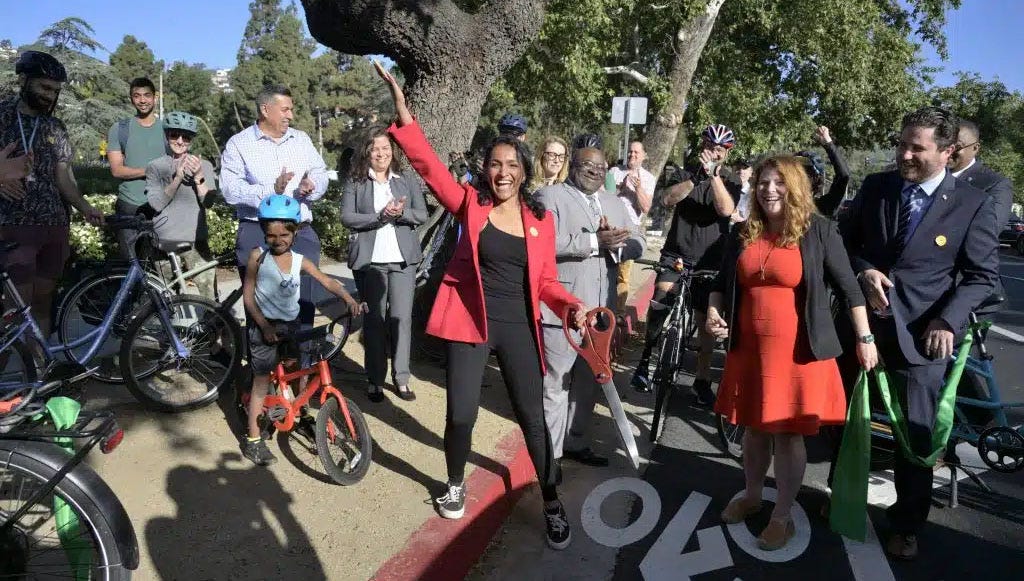
Speaker A: I know you guys both want to outflank me. To the left. The final one that I think is interesting is a couple, let's say curbivore candidates, um, advancing to the general election out of the primaries. So Nithya Raman here in Los Angeles making it to the mayoral election and Scott Wiener advancing to take Nancy Pelosi's seat. Um, both people we've featured, um, on stage or on the pod before. So advancing the cause of new mobility and better urbanization. So you'll love to see it.
Speaker B: I say we can directly thank Kerbivore for saving us from Spencer Pratt. Thank you, Kerbivore. Thank you.
Speaker A: I'll take your applause. Thank you. Uh, let's get a little bit more into the future of mobility, not just the past six months with Florence Roulette. And we're back. We're joined today by Florin Roulet, managing director, Global technology group at Stifel. Hello.
Speaker D: Hi. Hi, Jonathan. Thank you so much for having me.
Speaker A: It's great to be here. Obviously, I think investments in the broader mobility transportation space are always top of mind. It's been a, uh, topsy turvy couple years, but, uh, it seems like things are smoothing out now. Why don't we start with some background? Uh, tell us about yourself. Tell us about Stifel.
Speaker D: Ah, yeah, so I'd say my job as Florent Roulet, managing director at Stifel, I'm part of the technology team, uh, at Stifel, meaning that my job is to work with a number of tech businesses across Europe and also in the US And Canada. I'm especially focusing all my efforts on the mobility sector, which kind of is very topical, of course. Um, just a few words about Stifel. We are a global investment bank. Most of my colleagues are actually in the US or in Canada, but we're part of Stifel Europe. I'm M based in London and I cover the entire of Europe. And we are 12 billion market cap, $12 billion market cap, 9,000, uh, people globally, 5 billion of revenue. So we are one of those large transatlantic investment banks, which gives me a good perspective on being able to see what's happening over here in London or in Europe versus what's happening in the US And Canada. And my job, to put it very kind of in simple terms, is to do two things, is to work with businesses and entrepreneurs on either topics related to M and A. So I help entrepreneurs to sell their business or I help businesses to acquire other businesses. That's number one. And number two is to work on anything related to financing. Financing could be a number of things. Could be private companies, could be IPOs, it can be equity, it can be debt. So my job is to know, well, what investors will want to do in the sector and just make sure that my clients are well prepared for that. Those, uh, transactions.
Speaker A: The right kind of financing for the right moment for the right business.
Speaker D: Correct. That's exactly where my job is. To know the level of maturity of each business and make sure I put in front of them the right investors.
Speaker A: What brought you into the mobility space in particular?
Speaker D: Look, I could give you the answer, but my last name is French. Means kind of moving.
Speaker A: We might have noticed, listeners.
Speaker D: Yeah, exactly. And I think also just that's a sector that I like. Um, that's just pure interest. I don't have a car, first of all, so I think as an need, I've kind of been quite intrigued by the number of shared mobility options. Um, I don't believe in kind of car, private car ownership. I'm used to kind of having a bike, a scooter, a moped. So I like to move from A to B. Not just kind of taking, uh, Uber or boat, but moving kind of various types of transport. So I'm a user and I thought it was.
Speaker A: You're a true believer.
Speaker D: It sounds like I'm a true believer, yes. And I think that was working in this sector was something fairly natural to me.
Speaker A: Very cool. And the bank itself, Stifel, obviously you have colleagues kind of working across different domains, right?
Speaker D: Yes, I think we are. I mean, we are relatively large investment banks covering a number of kind of subsectors. But within technology, I'm, um, spending a lot of my time around transportation logistics. Pure bad mobility, around batteries, around kind of electric mobility. So we cover anything you want in terms of sector, but my job is to be a sector specialist. That's quite important. I Think so.
Speaker A: There's a recent transaction that you worked on that caught my eye. Uh, obviously car sharing has always been near and dear to me. Getaround Go More. Could you tell us a little about that?
Speaker D: Yeah, I can tell you about it. I mean, a lot of the American people would know about getaround because that was a name that was fairly well known in the US A lot of the European people would know about a business called Drivee, which was ultimately acquired by Getaround a few years ago. So the two combined, trying to create a large, uh, kind of global player. And then as you know, it was a spark and things didn't go too well for that business, especially in the U.S. but the European side was always doing relatively well, being kind of profitable, being well known by users in Europe. I was using it quite a lot myself whenever I was in France or in various countries. So I was kind of a believer in the business before, uh, becoming uh, the advisor. And then what we did is we worked with the Getaround Europe team on trying to find the right partner for them. And I insist on the word partner because they were looking for somebody with the same DNA around kind of car sharing, around scaling in a smart way. And then we did find gomore from Denmark. And Go More was fairly complementary to Getaround Europe in terms of where they were located. So Getaround was a lot in France and Norway. Gomorrh was a lot in kind of the Denmark, Sweden, Finland, a few other places. And our job was to advise Get Around Europe on negotiating the terms, uh, with gomor structural transaction, advise the shareholders kind of. We brought the two companies together until the transaction was announced a few weeks ago. And what I like is by combining the two, you are creating a proper pan European champion. And I think that's important in the moment that we are in the industry that some players become scalable and become kind of champion over a larger geography. I think we have a lot of domestic champion businesses that may be seen as subscale. I think we need some of those players to become larger and even more profitable.
Speaker A: Yes. Uh, it's interesting. We've heard that term a lot. You know, I've been watching like the just eat takeaway delivery hero sort of news, this idea about a, a European continental scale champion for food delivery. Um, so Get Around Go More merged up. Maybe that's the champion for P2P car sharing.
Speaker D: That's right.
Speaker A: Any other interesting mobility deals you've worked on recently?
Speaker D: We worked also fairly recently on transaction in the battery sector. So helping a player with Kind of designing one part of the battery pack. And we raised um, kind of 43 million for them. It's a Dutch player called Leyden Jar based in Leiden in Holland. And that was interesting because the battery sector was going through a bit of kind of difficult time putting it kindly. But yes, yeah, I'm being polite. Like a lot of bankruptcies happen in the sector. So we were trying to raise capital for Leyden Jar around the same time. Um, and we did manage to kind of to convince them, to convince a lot of investors that this was the right player. They had Meta uh, as one of their key clients and that was kind of quite uh, nice uh, uh, as a kind of proof of validation that there was uh, something to be done with this business. So that's again another transaction. I mean get around go more was M and a Leyden Jar was a private placement. And my job is to be relatively agnostic in terms of what sort of transaction we do as long as the sector is mobility.
Speaker A: Is there uh, a sweet spot in terms of scale though? I think you wouldn't do a super early stage, but is it anything beyond that?
Speaker D: No. Yes, you're right. We don't do any kind of seed or series A type of transaction. Probably series B would be the where we start getting involved. And our job is to take the companies from call it series B to series C up to IPO and beyond having a, uh, we are skilled at kind of helping the businesses find the right investor at each of those kind of those scale proof points.
Speaker C: Do you think?
Speaker A: Uh, you know, so if I'm a uh, company I've hit this scale. Is there a reason that you know, working with someone with mobility sector expertise. Is there something that you know better than just a, you know, generalist?
Speaker D: Look, I don't want to be French and arrogant.
Speaker A: No. A little bit. Come on.
Speaker D: Yeah. Okay, so if you ask, look, I do think that I know the sector uh, much more than kind of some of my marginalist tech investment bankers. So in a sense you're saving time because you don't have to explain to me the basics about the sector, uh, the market dynamics, the KPIs, kind of what each of the people that are going to look at the topic we need to understand. So that can be kind of more interesting conversation for you. That's one way to look at it. The second way is because I only spend time in the mobility sector. I know exactly what are the buyers. I can access them. I almost put myself as kind of a stamp of approval. But if I have you as a client. That means that I've selected you as a client and that shows that kind of, this is a more established, maybe
Speaker A: kind of more prospective buyers standpoint. The fact that they're working with you means that you've sort of vetted them.
Speaker D: Correct? Correct. And I should have access to kind of the buyers and they should think that if I'm working with that client, I've, uh, vetted them. So it's about access and it's about credibility on that side. So saving time, but also it should have the transaction ultimately makes a lot of sense.
Speaker A: So. So where do you think we are in a broad sense, the capital markets, the uh, sort of landscape for emerging mobility? Have things sort of gone to a calmer state than they were a few years ago? Is it difficult to still find investors, acquirers, or is it steady state?
Speaker D: That's part of my challenge every day is to convince some of the investors who are still stuck, maybe in looking at the sector two or three years ago. Two or three years ago this was, let's call it a bloodbath. A lot of players had raised weight, way too much capital under delivered, uh, over promised. And I think that's kind of some of those investors are still stuck in this mindset. Best example being shared mobility or micromobility. A lot of investors are still thinking this industry is not mature enough. My job is to convince them that they're wrong and should revisit, um, in terms of where the companies are, I'd say yes. 18 months ago we were at rock bottom. Um, a lot of bankruptcies were still happening, A lot of businesses were not profitable. And I think that was really difficult for me to convince any investor to look at the sector again. But again, we are on the right trajectory. I'm not trying, it's not wishful thinking. I do see it that a lot of those companies are not profitable, have scaled to the right, uh, metrics and I would call it profitability has created something for them which I would call luxury of optionality. What I mean by that is they have the luxury of deciding what's next for them. Two years ago there was no luxury. They needed to raise every six months, 12 months because they are still kind of burning cash and they were loss making. Know that a lot of those businesses are profitable. They have the luxury of deciding what can happen for them. The kind of the, the best, or maybe the kind of the, the route that seems obvious is to go ipo. This is what Lime is doing in a few weeks. That's kind of the dream scenario for a lot of entrepreneurs and to be in NASDAQ or New York Stock Exchange and ring the bell. So that's kind of the dream scenario. But I also see a lot of kind of other scenarios that are super attractive. A lot of entrepreneurs should be eligible for private equity transactions, which means that they can recycle or clean up their cap table. The VCs that invested a few years back will get their money back and then the entrepreneurs can go and continue scaling with some fresh capital. French mindset from new investors. And that should be quite attractive. You can also do it via uh, secondary transaction. Right. We are doing it a lot to take early. Investors who have been in the business for way too long are tired and we just kind of find somebody to replace them on the cap table. So I think the last route that is quite attractive is to just consolidate your market. I mean that's the get around, go more transaction. Take two businesses of the shared DNA, shared ambition and you just scale together. You take two profits. I mean, go more what's profitable, get around what's profitable. You put the two together, you have a nice and kind of a nicer business, nice synergies.
Speaker A: Hit scale faster.
Speaker D: Yeah, you hit scale faster. Everything is a reduction. So again, that luxury of optionality is kind of for me just starting. Right. And then my job is to kind of explain to entrepreneurs that they should not worry anymore about like raising every five minutes. They should decide what route they prefer. And again, it depends on each of their own situation, each of the tastes. Maybe some are just kind of they want out or some of their shareholders want out. But at least they should be clear that that's kind of what is being offered to them because they demonstrated profitability. So that's kind of the consequence, the positive consequence of having kind of reached that, uh, kind of the other side of the break even.
Speaker A: They're in control of their destinies again. Yeah, it's a lot better place to be in the. And for sure raise money or die.
Speaker D: Correct. Yeah, that's kind of, that's much more enjoyable than probably two years ago.
Speaker A: Yeah. So what about just the mobility industry, broadly? Um, not necessarily just micro, not necessarily just capital markets, but where do you see new mobility headed over the next few years?
Speaker D: So I could tell you, um, autonomous is where everybody's kind of looking at. I think that's where still a lot of capital is being deployed. I'm sure that a lot of industries will be heading to that direction, whether we're talking kind of people transportation or kind of transportation of goods.
Speaker A: Goods, movement.
Speaker D: Yeah, yeah, everything. At some point there will be an autonomous angle for some of those.
Speaker A: The robots are coming.
Speaker D: Yeah, yeah, just kind of the Waymo and kind of the wave of this world are definitely winners. But I also see a number of topics right to electrification. I think that's a big theme that I see at the moment. I do spend a lot of time in the EV charging infrastructure sector and I think we are just at the beginning of this. I mean in the last few months the number of kind of BEV registrations in Europe and in the US has kind of increased massively.
Speaker A: Why?
Speaker D: Because you have a lot of new kind of new cars being electric, new models that you can.
Speaker A: Gas prices are through the roof, obviously.
Speaker D: Exactly. That was the last cherry on the cake, obviously in a negative way, but
Speaker A: might not feel that way for consumers.
Speaker D: But yeah, yes. I mean I think that has kind of accelerated so many things. But the gas prices are through the roof. So electrification has accelerated. So a lot of those players are, are surfing on that wave for uh, sure. And a lot of investors who again a year ago were telling me, look, we think EV charging electrification will take much longer. They are looking at it a bit more seriously, uh, because things have accelerated. So again, some external factors can accelerate things.
Speaker A: Yeah, yes. And of course here in the US the gas uh, prices spiked right after we yanked all the EV subsidies away. But in Europe you guys have been a little bit more steady state in terms of helping smooth that transition.
Speaker D: Yes, yeah, depends which geographies you're talking about and how many subsidies you take into consideration.
Speaker A: But no, I think you're right. It is sort of firing across all cylinders, to use a gas powered metaphor for a second. But it's nice to see just general consumer interest. Cross new mobility again, that must be keeping you busy. Any final thoughts before we go?
Speaker D: Yeah, look, that definitely keeps me busy. So many companies have reached a scale where they are relevant for us and we can take them to the next stage. So um, I think a lot of entrepreneurs have kind of managed to reach the level of ambition maybe my last comment is I think we are talking about mobility as a broad theme, but actually think that everything is kind of converging. Micro mobility, shell mobility, electrification, autonomous. For me it's kind of an ecosystem of players around the same area. They may not have the same business model, the same product, but in the end kind of this is us about just how we move. And that's what makes it interesting for me as a sector specialist is. It's not like whatever I do in EV charging is completely different from what I do. Uh, in micro mobility. Everybody's kind of in the same ecosystem. The buyers might be the same and the investors might be the same, which makes my life easier. Um, so I don't want everybody to think, like, we have nothing to do with those guys. Everybody is kind of in the same.
Speaker A: Uh, yes. Yeah, I think that's a good point. The sort of broader mobility ecosystem moves as one.
Speaker D: Yes.
Speaker A: So, Florian, great conversation.
Speaker D: Thank you, Jonah. Thank you, everyone.
Other episodes covering the same guests and topics, from across The B2B Podcast Index.
 Building X With Astro Teller: Monkeys, Card Counting, And The Power Of FailureBuilding One with Tomer Cohen · on Wing drone delivery84 / 100
 E398: Hamilton Lane ($1T AUM) on Venture Capital, AI, and Private MarketsHow I Invest with David Weisburd · on SpaceX IPO81 / 100
 How Ondo Is Bringing Stocks and Perps Onchain | Ian De BodeBankless · on SpaceX IPO81 / 100
 The Rundown 6/23/26: The AI Hype Machine, Canada’s Capital Gap, and the Return of Hard TechTank Talks By Ripple Ventures · on SpaceX IPO79 / 100
 SpaceX IPO, Anthropic Fable 5, And Roku | The Brainstorm EP 136FYI - For Your Innovation · on SpaceX IPO75 / 100
 Seraphim Space CEO: “Europe is catching up”Tech.eu · on SpaceX IPO73 / 100
 How to Amortize an Ebike, With Wombi CEO Dan Carr76 / 100
 The McKinsey Center for Future Mobility’s Bold Claims About the Coming AV Revolution
 Could a New Mayor Transform LA’s Streets, Housing and City Services? Councilmember Nithya Raman Wants a City That Works
 Reverse Logistics: So Hot Right Now! Uber's Head of Grocery & Retail Partnerships Talks Returns Launch & 10 Years of Growth
 AVs' Impact on Cities, Mobility & Delivery