Tech.eu · 2026-06-25 · 32 min
Key moments - from our scoring
Substance score
53 / 100
Five dimensions, 20 points each
Seraphim Space has established itself as the world's most active space tech investor across three vehicles: an accelerator program, a private venture fund, and a listed growth fund on the London Stock Exchange with over 150 portfolio companies. CEO Mark Boggart highlights how the SpaceX IPO - which made the company more valuable than Amazon - has fundamentally shifted capital flow to space, with private funding doubling to $8 billion in a single quarter according to their Seraphim Space Index. However, Seraphim hasn't invested in SpaceX itself; instead, it focuses on complementary companies benefiting from SpaceX's commercialization of orbit. Boggart emphasizes the transformational impact of Starship, SpaceX's next-generation rocket that's 10 times cheaper per kilogram than current Falcon 9 pricing, which will enable mega-infrastructure in space - cell towers, manufacturing, data centers, and space-based energy. On Europe specifically, Boggart notes that European portfolio companies are winning significant defense contracts worth hundreds of millions to billions, driven by sovereign tech strategies. While the UK ranks third globally in space funding (though recently dropped to fourth behind Germany), European companies historically received half the funding of US counterparts at each funding stage. Companies like ISI (the world's most valuable private space tech firm) and AST SpaceMobile (listed on NASDAQ as the third-most valuable space company after SpaceX and Rocket Lab) exemplify breakthrough potential. Boggart argues that space, like AI, is a facilitating capability across all verticals, making specialist fund expertise essential for evaluating competitive positioning and technology viability beyond headline companies.
Seraphim focuses on companies that benefit from SpaceX's commercialization of orbit rather than SpaceX itself, positioning SpaceX as a catalyst for the broader ecosystem rather than a direct portfolio holding.
Starship's 10-fold reduction in launch costs (from $5,000-6,000 per kg to estimated $500 per kg) and ability to launch hundreds per year enables mega-infrastructure projects like orbital cell towers, data centers, and manufacturing that were previously cost-prohibitive, requiring significantly larger funding rounds.
80% of revenue from Seraphim's top 10 publicly listed companies now comes from defense customers, primarily in Europe, with contracts signed in under six-month periods measuring in the hundreds of millions to billions.
Specialist funds like Seraphim see 75% of global space deal flow (150-200 deals monthly) enabling them to identify competitive positioning, technology differentiation, and market trends that generalist funds lack, resulting in better deal selection and risk management.
The US has historically provided twice the funding to space startups at every stage, compounding advantages; while the UK ranks third globally in space company funding, it ranks only 13th in average per-company investment, indicating structural underfunding of European space tech.
Our reviewer’s read on each dimension, with quotes from the episode.
The episode delivers several genuinely substantive data points - Starship's projected $500/kg pricing vs. the current $5-6k/kg, the satellite growth thesis, and the 'defense by accident' dynamic across the portfolio. However, roughly half the runtime is promotional framing about Seraphim's own track record and generic SpaceX hype, diluting the overall density.
the price has not yet been set but the market believes it's going to be about $500 per kilo whereas the market price at the moment is about five or six thousand dollars per kilo. So it's ten times cheaper
today there's about 15, 000 operational satellites in space. And if you were to lead any analyst reports, you will not find a single analyst report that's going to say that there's going to be less than a hundred thousand satellites orbiting uh, our Earth in the next decade
The 'defense companies by accident' framing is a genuinely fresh observation about dual-use space companies, and the 'space is like AI - a facilitating capability, not a sector' analogy has real argumentative value. But most of the macro narrative (SpaceX catalyzes the market, Europe catching up) is standard industry commentary without contrarian edge.
space is very much like AI. It's not a sector at all. It's a facilitating capability
The rest of them are defense companies by accident. Revenue, uh, the 80% of the portfolio, uh, and 80% of all revenues are currently coming from Defence
Boggart is a genuine practitioner with a decade of execution - the ISI A-round investment in 2017 tracking to a $10B valuation is a real credential, not a thought-leader talking point. He is, however, primarily a financial investor talking his book, and the promotional register limits how much practitioner-level depth surfaces.
We invested in the A series before they launched um, any, any satellites at all or uh even built any satellites um in 2017
we've had 46 fund investments. We've only had three failures over that entire period. We've had nine unicorns, we've had six IPOs, we've had two trade sales
The episode is notably specific by podcast standards: Starship pricing economics, ISI financials ($50M invested, $10B valuation, $1B revenue next year), Azona's $175M raise and 250-satellite plan, UK ranking 3rd globally but 13th in average deal size - these are concrete and checkable. Some stats are delivered without source attribution and one investment figure ($18B vs $8B in a quarter) is muddled in delivery.
We invested $50 million um ah in total into ISI in 2021. And you know now that company is now the biggest in the world...It'll do a billion dollars in revenues next year. It's profitable, currently valued at $10 billion
UK ranks third to US and China in terms of the number of space companies that have been funded...In 2025 we actually got knocked into fourth place by uh, by Germany...whilst UK third or fourth in global stakes we're 13th in terms of the average amount that we've invested
The host introduces a few genuinely interesting angles - the AI vs. space government funding disparity and the European sovereignty question - but consistently fails to follow up or push back on promotional claims, lets the guest self-cite performance stats unchallenged, and punctuates the conversation with affirmations that shut down depth rather than open it up.
Okay, I like that, that Quote, mega infrastructure in space. That's got a nice, nice ring to it
Okay, Mark, uh, we're really grateful for your time. You've been very eloquent
Computed from the transcript - who did the talking, and the words that came up most.
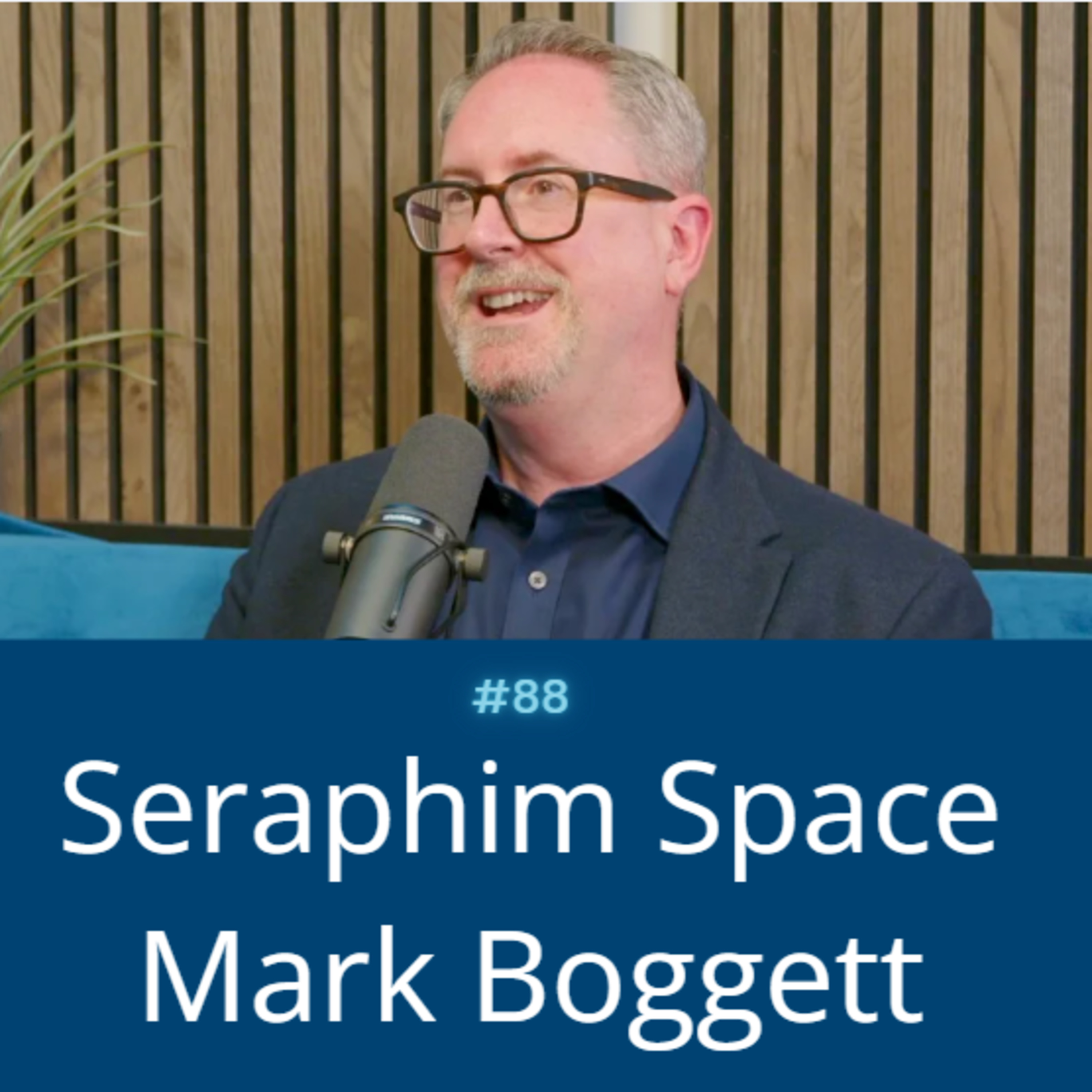
Mark Boggett, co-founder and CEO of Seraphim Space, discusses the recent SpaceX IPO, its impact on the European spacetech sector, as well as the investment landscape, and European sovereignty.
Transcribed and scored by The B2B Podcast Index.
Speaker A: Hello and welcome to the Tech EU podcast. My name is John Reynolds, the host. This week we have another top notch guest. We are joined by Mark Boggart who is the CEO and co founder of Seraphim Space which is a space tech investor, uh, which includes the world's first uh, listed space tech fund M. So thanks a million for joining us Mark. Uh, we're grateful to have you. So just give us a bit of an overview of Seraphim space first up please.
Speaker B: Yeah, be happy to do so and thanks for having me on the show. So yes, so Seraphim is a UK thematic uh, fund manager. We specialize uh, in space and um, we are the company that launched the world's first ever space fund which we launched 10 years ago. We've now grown to become the most active investor in the space market globally. Our business um, has uh, three elements to it. We have an accelerator program which takes really early stage global space companies from spin outs from universities, teams out uh, of companies like SpaceX. We have a venture, uh, private venture, uh, global space investor, uh, they invest in the seed and series A round. And then we have a growth fund which is listed on the London stock market that invests in the growth stage rounds. So across all of those activities we've got more than 150 space tech portfolio companies. That makes us the most active investor uh, in space globally.
Speaker A: Okay, no, that's good. And who are the, I guess people. You've got one or two kind of, I think well known space. Who are your kind of uh, top performers or people the portfolio companies people might know?
Speaker B: Yeah. So uh, one is called um, ast. It's a cell towers in space. It's listed on um, the, on NASDAQ. It's now um, the world's third most valuable space companies after SpaceX and Rocket Labs. And then in our fund we also have a company called ISI which after the IPO of SpaceX is the, is the world's most valuable ah, private space tech company.
Speaker A: Okay. No, that's great. So you mentioned the SpaceX IPO a couple of times. So it's quite hard to ignore it. I know you probably you've answered a few questions on this but I mean I think you kind of put your um, nailed your colors to the mast on your last results when you said this is quoting you, it could prove transformational by being a catalyst for generating billions of new capital in the market. I guess, you know, I mean I think yesterday, uh, it's now moved that it's more valuable than Amazon can you just give a bit of. I know it's early days but has there been any tangible impact on your funds so far or is that too early and just give a bit more color to your quote?
Speaker B: Yeah. So really what's happened um, during the course of the last six to 12 months is that there's just been a global focus on space. Space has become much more of a sort of investable uh, area than ever before. And in anticipation of the SpaceX IPO as um, different investors have been doing their diligence and evaluation that's led to significant investing in a basket of um, listed stocks. So um, many of those stocks have traded very well during the course of the last six months. They've been quite volatile but they've tended to trade upwards. So there's been a sort of valuation inflation if you like, um, as a consequence of people waiting for the SpaceX IPO. It's also brought a, ah, whole range of new investors to the sector uh, that really hadn't focused on this area before. So a lot of big institutional investors that just simply hadn't considered space before are now actively investing and uh, looking at the sector, uh, and you know SpaceX came with a big price tag and uh, what that's also led to is um, investors sort of recognizing that they want to get an exposure to the growth, growth in the space market, but perhaps finding complementary ways to get an exposure to that over and above the, the SpaceX itself. So that's led to you know, considerable investment across the broad range of uh, space stocks. It's led to significant investment in ETFs as an example of way of uh, investors getting exposure to the whole sector. And then what we've also seen is, is significant investment into the private sector. So uh, we run something called the Seraphim Space Index, which we've been publishing um, every quarter since 2017, uh, which looks at all of the global private flows into the sector. And in the period to the um, 31st of March of this year, ah, it doubled. So we saw 18 billion invested, ah, 8 billion invested in just that quarter alone. And we think that that's a trend that is set to continue.
Speaker A: What would happen hypothetically, and I guess it's not happening, if the shares do plummet, would that have a detrimental impact? Because from our older people see SpaceX as a kind of uh, an outlier and a bit of a one off. And from my understanding you've not invested
Speaker B: in SpaceX, we haven't invested in SpaceX. We really focus on SpaceX is the catalyst for, for, you know, creating the opportunity to uh, commercialize orbit. We've been investing into all of the other companies that really benefit from that. So, you know, a lot, a lot of people are, uh, have been focused on, you know, the downside. What if the uh, share price of SpaceX starts to plummet? The way that I look at this is that um, SpaceX is now a conglomerate. And um, if you really sort of look at the, you know, how the company's valued and how it's broken down, you know, AI, you know, really accounts for a very significant proportion, um, of uh, of the company and that. And you know, they made, they made an acquisition, um, only yesterday, which really, really does evidence the um, you know, the AI nature of the business. If you actually look at the sort of, um, the space element of SpaceX, the launch and um, the telecommunications part of the business that is growing at breakneck speed and is very profitable. So I think that, um, you know, the space element of SpaceX I think is in magnificent shape and um, you know, I'm not overly concerned about. So I think that um, you know, we can certainly weather a storm if, um, if there is a sort of revaluation of this. I think if a revaluation is coming, it's likely to come from the sort of AI perspective as opposed to, to the space perspective. So I think that that can be weathered and I think, you know, the market, you know, considers this to be fully valued and I don't think anyone would really be surprised if we saw um, you know, some declines in the value after the sort of initial euphoria and the sort of squeeze if you like, because of the um, the low free float and you uh, know all of the indices buying in and you know, the uh, retail demand for this.
Speaker A: And are you just. How does it work with your portfolio companies? Are you telling them to grasp the nettle now? Do they need to do anything differently? Do they need to move forward fundraising or is it just business as usual?
Speaker B: It's just business as usual really. Uh, you know, the ipo, the world's biggest ipo, has been a catalyst for people's interest in space. One of the other things that's um, really changed as a consequence of um, this IPO relates to the new launch vehicle, um, for SpaceX. They've got this amazing new rocket called Starship. You might have seen some of the videos of it being caught by these pincers as it, as it, as it comes back to Earth. What that is, is the next generation of launch. So the Falcon 9 uh, which has really been the workhorse of um, the launch market for the last decade, you know it's been the game changer that's really opened space for commercial activity. This new vehicle is 10 times bigger and um, the price has not yet been set but the market believes it's going to be about $500 per kilo whereas the market price at the moment is about five or six thousand dollars per kilo. So it's ten times cheaper. And SpaceX are saying that they're going to do a couple of hundred of these a year. So what this is, it heralds the new era of the next generation, generation of launch. So this is really uh, to answer your question, going to be sort of game changing from m a number of ways. So um, you know our larger portfolio companies that Constellation plays, you know have somewhere between 70 and a couple of hundred satellites that they've taken four or five years to Ah, to get into orbit. Now uh, with ah, with the scale of the launch from, from Starship feasibly you can, you can launch all of those in a single launch. So this is really going to accelerate the uh, the build out of um, of the digital infrastructure in space. And just to sort of put this into perspective, Today there's about 15, 000 operational satellites in space. And if you were to lead any analyst reports, you will not find a single analyst report that's going to say that there's going to be less than a hundred thousand satellites orbiting uh, our Earth in the next decade. So we're still only you know, in the beginning stages of the growth of the build out of this infrastructure and um, we've now got the vehicle to be able to do that. That's part one. Part two is because the price and scale of launch is now changing. It's now really opening up the market for mega infrastructure in space because um, you know previously it's been cost prohibitive to put large infrastructure into the space environment. Now that it isn't, it starts to close the business case for things like cell towers, things like manufacturing capability, things like data centers and things like energy from space. So this is the sort of next um, ah, focused area where um, we're going to be putting money to work. And finally because SpaceX has really ah, got the interest of very broad range of um, large investors, there's now the investment appetite to start uh, backing these companies that are uh, going to be putting you know, this mega infrastructure into the, into the orbital environment.
Speaker A: Okay, I like that, that Quote, mega infrastructure in space. That's got a nice, nice ring to it. So I mean uh, aside from SpaceX, from, from my understanding and you kind of hinted at, hinted at it there, we're seeing these, um, generally speaking we're seeing larger funding rounds in Europe and you mentioned one of your, your biggest holding in ISI. They've recently done a, I think it's a 1 billion euro Series F. And then we had the German rocket develop developer ISA Aerospace. Um, so I mean are these, are these larger rounds in Europe? Are we seeing these at all? Is it all different stages at early, later stage or.
Speaker B: It is, yeah. There's been a general um, increase in the size of the rounds from seed upwards, which was very much needed in Europe because um, if you look at the statistics, what they show is that the US has historically provided twice the amount of money to these startups at every stage. So uh, that really compounds over time. If a company gets twice as much at C, twice as much at Series A, twice as much at Series B, twice as much at Series C, um, you know, each time that they're uh, going through the gears and they're just able to be able to do that more effectively, hire better people, do more quicker. And that has really led to US companies having this major advantage globally and Europe is catching up and uh, SpaceX has played its role in doing that, making it a more investable sector, uh, to a broader range of uh, investors. But as I say, um, what we're going through now is this sort of fundamental shift. Previously we were really sort of focused on um, Constellations and it costs 4 to $500 million to get a constellation business to profitability. But now we're talking about um, mega orbital infrastructure. You can add a 0 or maybe even 2 to the cost of getting those projects into profitability. So this is the reason why we do need this huge step change as the amount of money uh, that uh, investors have to put into those companies.
Speaker A: Okay. Because I mean this taps into, I notice so much being written and talked about sovereignty at the moment, particularly on AI, but I guess it's been quite acute in space and defense. So how much has space investment in Europe benefited from Europe's push to reduce its dependency on US tech then?
Speaker B: So very significant changes have happened in Europe during the course of the last year. Um, just to sort of put this into perspective, um, the top 10 companies in our publicly listed growth fund, the Seraphim Space Investment Trust, the top 10 companies in the last 12 months grew revenues by uh, on average 80%. And pretty much all of that is um, from defence customers, uh, notably in Europe. Pretty much all of those contracts were signed in less than a six month period from start to finish. And uh, these contracts uh, are measured in hundreds of millions, up to billions. And what it really demonstrates is that uh, a coach and horses has been driven through the traditional procurement processes that have really held back um, defence uh, uh for many many years. So yeah, the genie's out of the bottle. Europe is very, very actively buying cutting edge capability, particularly buying um, a sovereign way where they're effectively acquiring the satellites themselves so that they effectively can own and operate this capability. So they're not reliant on a commercial um, uh party. They're not reliant um, on the US But Europe had a long way to go on this from a space perspective. Other than um, the Galileo GPS network, we had very little by way of launch, very little by way of satellite monitoring, very little by way of satellite communication. So you know there's uh, a, there's, there's a big requirement for um, uh, uh, uh defense budget spend in order just to get back to where they already were.
Speaker A: So you're just, just for clarity. So those portfolio companies you mentioned, they're pivoted to defense applications and from space, is that right?
Speaker B: Yeah. So here's an interesting stat. Out of all of our fund portfolio companies, so across the three funds that we've invested over the last 10 years, uh, we had 46 companies. Only one of those companies is actually a defense company. Uh, in fact we, we IPO'd that company about three weeks ago. Hawkeye360 on the, on the New York Stock Exchange. The rest of them are defense companies by accident. Revenue, uh, the 80% of the portfolio, uh, and 80% of all revenues are currently coming from Defence. But these uh, these companies um, were established as commercial companies. But the defence um uh opportunities come knocking. Giant budgets that are available for cutting edge capability. So these dual use companies have then sort of turned their attention to servicing the customers with the highest demand.
Speaker A: And how easy and difficult has it been to make that change then for them?
Speaker B: So it's not a straightforward um, um transition because defence customers speak a different language. You ah, um, they have different processes and in many cases where you're dealing with sort of secretive activities, you need sort of um, people who are in your employ with certain security levels as well. So there's been a sort of adjustment that has accelerated during the course of the last year. But um, you know, ah, there's such Demand from the defence customer. You know, the reality here is John, that um, that that in the theatre of war a technology advantage is a very significant advantage. So what we're really seeing here is the defence organizations proactively going after the companies, the commercial companies that they believe will give them that edge on the, on uh, the battlefield. And this is the reason why it's tending to be these relatively earlier, uh, privately backed companies that are actually now winning these significant contracts because these defence organizations are looking for that advantage.
Speaker A: Okay, can I just, just left a field. Can I ask you Occasionally, I don't really write about space tech to put in my own colors to the mask, but what about European rival to Starlink? And I've read about Ares too. Where, where are we with that at the moment?
Speaker B: Well, you've got OneWeb, which um, you know, was actually sort of established around the same time as Starlink, but it's sort of somewhat fallen behind in terms of like the scaling up of their constellation. And uh, it's now owned by Utilsat, uh, which is a sort of traditional Satcom operator. And uh, note noting they're also one of our LP investors into our fund. But the uh, the other, the other one is Iris Squared, as you mentioned, which is the uh, eu which want to have their own version of starLink. They've put 10 billion euros into a budget to uh, to finance that. Uh, and uh, you know, they're in the process of uh, of appointing the parties and uh, you know, agreeing the, you know, the, the specification of, of that. It's um, it's, it's actually a, a, a project that is very controversial because um, there's a. Somewhat fearful that um, this um, these budgets are going to the sort of traditional space companies in order to, you know, keep them in business as opposed to the best in class. And so perhaps the uh, the fastest way um, of accessing a um, European equivalent to Starlink. So, so there are several activities underway at the same time.
Speaker A: Okay, so let's just talk more broadly about the Seraphim fund. What are the advantages and disadvantages to having a specialized space tech fund vis a vis a uh, generalist fund? I guess investors would still ask the question about why do I need to invest, why do I need to invest in a specialist fund when I can invest in a generalist fund with space?
Speaker B: Yeah, of course. Well, um, you know, this swings and roundabouts, of course. Um, with us as a specialist and being the global market leader in the sector, uh, we get to see more deal flow so we get to see between 150 and 200 space deals every single month. We can qualify that. That's more than 75% of the global market for space bills. Ah at any one point in time we've seen 10,000 private space tech companies. So that provides us an information advantage, an information asymmetry if you like, whereby when we see a new space company we can immediately identify who its 6, 7, 8 competitors are and identify side by side their functions, features, traction with customers, et cetera. When we see a uh, new technology um, we know uh, immediately with conviction whether it's new or not because we know that we've not seen them before. So the generalist um M investors don't have any of those advantages. So when they are seeing um, um space tech companies, you know they just don't have the richness of the understanding of the rest of the market that we have. And um, you know that's really allowed us to um, to execute really effectively. You know I noted that um, in 10 years we've had 46 fund investments. We've only had three failures over that entire period. We've had nine unicorns, we've had six IPOs, we've had two trade sales. Uh our fund, the, the Seraphim Space Investment Trust is um, the best performing fund in the uk measured over one and three years. So the performance is also ah there um uh you know, evident um uh because space has become you ah know a very hot market. It's been driven by the tailwinds of defence, um and now by the tailwinds of um, both SpaceX and the interest that that's bought but, but also the sort of um, broadening of space to include infrastructure of major elements like um, AI, um and data centers, um uh but space can come in and out of fashion. It's only recently been in fashion and
Speaker A: uh,
Speaker B: our fund on the London stock market was languishing for a number of years because, because there was lack of interest in the space sector. Whereas um, other sectors have been sort of buoyant over the period and come in and out of favor. One of the things I think um, that takes investors to do some research to understand is that space is very much like AI. It's not a sector at all. It's a facilitating capability. There's a driver across all different verticals and thematic areas. So you wouldn't consider space to be AI to be a sector uh and you wouldn't want to get your exposure to AI just through a single holding in a company. Like Nvidia, you'd want to have a more broad spread. And I believe that the sort of same is true for space. SpaceX has been a great way of uh, getting exposure to the space sector. Many of the other sort of generalist funds have been really successful in getting access to that private company. Many of the investment Trusts in the UK now have SpaceX sort of 15 to 20% of their overall nav. So it demonstrates what an important part space is of generalist funds. But uh, when they come to add new companies to their list, they do so at their own peril of not being a specialist in this area. You really do need to have a decent understanding of uh, the competitive environment, the technology environment. And you uh, know, I think outside of SpaceX it just gets harder to select individual companies and get them right.
Speaker A: You mentioned AI there. I was at the, I was at London Tech Week last week when I think the government announced uh, a billion plus UK government a billion plus uh, pound plus investment in AI hardware. And obviously you've got this sovereign AI investment, uh, thing which is trying to keep uh, UK AI companies to, to grow in the uk. And then I also noticed last week that the Space Minister, uh, Liz Lloyd announced a 19 million pound packing package for cutting edge technology. So I guess on the face of it there's a disparity there between 19 million and 1 billion, over 1 billion. Do you think, do you think that uh, there's too much focus, too much investment in AI and that's come at the expense of space from the government?
Speaker B: Um, well, you know, I think the government's right in putting a um, you know, their best foot forward in putting the money behind, uh, making sure that the UK is relevant in global AI stakes. So no, ah, I wouldn't argue that um, that they're underfunding AI, you know, are the underfunding space. Definitely. But let me just sort of take a step back and just uh, help you appreciate that actually UK does pretty good in space. So if you look back over the last five years, the UK ranks third to US and China in terms of the number of space companies that have been funded and the amount of funding that's gone into those space companies. So this is really the private funding that's gone into those airspace companies. In 2025 we actually got knocked into fourth place by uh, by Germany. So um, you know it's uh, it's sort of uh, moving in the wrong direction but nevertheless UK really punching above its way. One point I'd note from those stats is that whilst UK third or fourth in global stakes we're 13th in terms of the average amount that we've invested into those space companies. So UK is guilty of underfunding um, its space companies and I'm hoping that um, um evidence that we can see already that um, SpaceX is bringing interest to backspace companies uh, from a much broader group of investors um, is going to help address that deficit.
Speaker A: Okay, that's great Matt. Just latterly you kind of hinted at it which I know I think your portfolio is described as kind of picks and shovels and maybe the non sexy space tech companies. But out of all your portfolio investments which is the most kind of um, what's the word? Kind of adventurous and kind of get gets your heart racing with the potential.
Speaker B: So well you know there's quite a few but sort of looking at our top 10 coming in at number 10, you've got Xeno power. So what, what they do is they've taken the um, nuclear um, uh energy use from the sort of Apollo era and they've just brought that up to date. So what they have is a nuclear uh power battery that's the uh, the size of a microwave that provides a 10 year uninterrupted power source. And uh, they've got several customers at the moment. One in space where it powers a satellite 1, 1 on Earth where it's ah powering a defense vehicle and one ah undersea where it's powering an autonomous submarine. So that is a um, really interesting mega growth market. Modular uh, energy from nuclear. We need to find ways to remove ourselves from reliance um on oil and this is a uh, step in the right direction. So that's one area that um, that I'm really excited about. I'll just, if I, if I've got time for one more John, there's uh, there's one that I'm particularly excited about uh which is a company called Azona Space Systems. So this is a great company that came through our accelerator, it then came through our venture fund and then we've more recently financed it through the growth fund uh, at ssit. And um, what this company is doing is a um, private version of gps. You might ask why do we need a private version of GPS when we've got the public available version. But I think everyone who's listening in today will know that the public one doesn't work very well. It's not very accurate. It's accurate 1 to 10 meters. Um but most importantly it's open the security, it doesn't have Any security, very easy to spoof. Um which means that you can't rely on the data that it provides. So that's a big challenge for our autonomous future. So what a Zona have developed and they're now operational in space and uh, working is that their gps, ah satellites in low Earth uh orbit. They provide centimeter accurate navigation but importantly they've been built from the ground up to be military grade secure so you can rely on the information that they're providing on location. So that really for us is an unlock for autonomous cars, autonomous drones, uh, robots, all of these that can't really compromise on those two elements. Uh they've recently raised 175 million private round. They've got a giant factory that's built and now operational and they're using that money to buy the components so that they can actually build the 250 satellites that will lead to their full constellation. And now everyone will have a choice. You can either use the publicly available GPS and suffer the negative consequences of that but if you need security and centimeter accuracy you pay the price for it. So we believe that this is um, effectively going to grow to become the uh Starlink for GPS and uh, what's really exciting about it and again we can say this with high conviction because um, we understand and know the market. There aren't any other players on the pitch. This is it. So these guys have got years and years head start above anybody else who's looking to do anything similar. And um, we're really excited about the growth that we're going to enjoy through that business.
Speaker A: Just one last question. We mentioned isi. What stage did you invest in isi? How did that.
Speaker B: We invested in the A series before they launched um, any, any satellites at all or uh even built any satellites um in 2017 um when we uh, we've continued to invest into that business, we uh, led the D round um through our um growth fund. We invested $50 million um ah in total into ISI in 2021. And you know now that company is now the biggest in the world. It leads to uh, the uh Earth Observation Market. It'll do a billion dollars in revenues next year. It's profitable, currently valued at $10 billion. And this is a company that's gearing up to IPO. So uh, we believe that this is going to be one of the next spectacular space ipos that um, the world is going to be excited about right now. SSIT provides a great um, um proxy to that company as a sort of pre ipo, um um, um, uh, exposure.
Speaker A: Where do you expect? As they said, where they're likely to ipo or is that not.
Speaker B: No, they're, they're playing that quite close to their chest. Um, you know, they're largely ready, um, from, from a company perspective, but they are just so busy. They're winning giant contracts month after month. They're, uh, they're doubling, tripling, quadrupling the size of the constellation. They are focused on, um, uh, execution, excellence. And, um, they've got their head down. So, um, yeah, they're going to be reviewing what's happened now. IPOs come to the M market now that the SpaceX IPO has happened and it's been successful. So that might well, um, bring forward their plans around that ipo.
Speaker A: Okay, Mark, uh, we're really grateful for your time. You've been very eloquent. So that's been the Tech EU podcast. Uh, thank you very much.
Other episodes covering the same guests and topics, from across The B2B Podcast Index.
 Beyond SpaceX: War, AI, Orbital Infrastructure and green utopia | Mark Boggett | Seraphim SpaceFund Shack Private Equity Podcast · on Seraphim Space82 / 100
 E398: Hamilton Lane ($1T AUM) on Venture Capital, AI, and Private MarketsHow I Invest with David Weisburd · on SpaceX IPO81 / 100
 How Ondo Is Bringing Stocks and Perps Onchain | Ian De BodeBankless · on SpaceX IPO81 / 100
 The Rundown 6/23/26: The AI Hype Machine, Canada’s Capital Gap, and the Return of Hard TechTank Talks By Ripple Ventures · on SpaceX IPO79 / 100
 SpaceX IPO, Anthropic Fable 5, And Roku | The Brainstorm EP 136FYI - For Your Innovation · on SpaceX IPO75 / 100
 SpaceX Surges, Anthropic Stumbles, and Bezos Bets $12Btrading places · on SpaceX IPO72 / 100What it makes to build ambitious companies in Europe today: A podcast with Kitty Mayo and Jade Yarrow from Project Europe."Speed" reason Coreweave leasing data centre space in UK, says European boss“Very difficult" for US competitors in Europe, says boss of healthtech Tandem HealthWe are where ChatGPT was five years ago,” says European 3D AI foundation model startup boss"We are at the starting line" of pay by bank, says Stripe-backed TrueLayer CEO