
Two Cents: Finance Talk · 2026-02-10 · 34 min
Key moments - from our scoring
Substance score
61 / 100
Five dimensions, 20 points each
Finance teams often approach AI projects like one-time ERP implementations, expecting a delivery date and completion - but AI requires a living, iterative product mindset. Abhishek Chandna draws from his experience at Autodesk and now Visa to argue that the core failures in finance AI stem from two issues: starting without solid foundations (data quality, process alignment, compliance) and pursuing technical perfection instead of user outcomes. The real power of AI, he notes, lies in seamless workflow integration and measurable decision improvement, not model accuracy alone. For finance leaders drowning in legacy systems, Chandna advocates starting small - targeting high-frequency, high-pain processes with minimal ambiguity (like variance analysis commentary generation). His framework hinges on data providing trust, processes enabling scalability, and product thinking forcing hard questions about user benefit. The episode covers actionable MVP design, avoiding vanity metrics, balancing human oversight with efficiency, and practical prioritization frameworks for selecting which AI use cases to tackle first. Finance operators wrestling with legacy constraints, risk aversion, and unclear ROI on AI initiatives will find concrete guidance here.
Most fail because teams start without solid data and process foundations, lack user alignment on the actual problem being solved, and treat AI like a one-time project rather than a living product requiring continuous feedback loops and iteration.
Instead of asking 'Has the model been built?', ask 'Has it improved end-to-end decision outcomes?' Product mindset means focusing on the user, the workflow being embedded, and building feedback loops so users adopt the solution rather than reverting to old methods.
An MVP should be a minimum viable product that generates actionable user feedback for iteration - not a shortcut to full rollout. It should be usable enough for testing but not so polished that you've wasted development time; the goal is learning what users actually need.
Be intentional: let AI handle mundane work like summarizing patterns and drafting commentary, while humans own decisions requiring judgment, materiality assessment, and critical review - think of AI as an intelligent intern that provides a first draft, not a replacement.
Choose a process that is high-frequency, high-pain point for analysts, clearly defined (low ambiguity), has solid data and process foundations in place, and where success is measurable - variance analysis commentary generation is a practical example.
Our reviewer’s read on each dimension, with quotes from the episode.
The episode covers useful foundational principles (product mindset, starting small, foundations matter, actionable vs. vanity metrics) but relies heavily on reiterating the same 3-4 core ideas throughout. While substantive, there's limited novel insight per minute - much time spent on context-setting and gentle agreement rather than new frameworks or counterintuitive observations that a finance operator wouldn't already suspect.
Don't go for vanity metrics. Don't go for some of the flashy metrics, but go for some really actionable metrics.
AI is always a living capability.
The core thesis - apply product thinking to AI, fix foundations first, iterate with users - is solid but well-trodden advice in the AI/product world. The specific framing for finance is useful, but the frameworks (MVP, product mindset, human-in-the-loop) are standard. The guest does not present contrarian views, first-principles reasoning, or novel mental models that challenge conventional thinking.
building AI the product way, usually think of it as a switch in mindset
AI is always a living capability
Strong caliber: Abhishek Chandna is a Director of Finance at Visa with prior experience leading transformation at Autodesk - genuine operator at scale in the domain. He speaks from hands-on experience running AI initiatives and building copilots for actual finance teams. This is not a consultant or academic; it's a practitioner with real accountability and lived problems.
I'm currently working as a Director of Finance, Data Strategy and Governance at Visa
I'm doing within my team
The episode includes some concrete examples (variance analysis commentary, comparing Excel files, Copilot usage, Satya Nadella quote) but lacks quantified outcomes, metrics, or timelines. No data on success rates, adoption rates, cost savings, or specific dollar figures. The variance analysis example is well-explained but remains illustrative rather than evidenced with measurable results or comparable case studies.
variance analysis commentary every month, every quarter
we have to compare to Excel files. That's a pretty regular work that we do
The host (Anthony) asks reasonable setup questions and does attempt some follow-up (e.g., on legacy systems, on ethics/human oversight balance, on AI use cases). However, questions are mostly softball and rarely challenge the guest's claims. The guest is rarely pushed for specifics, counterexamples, or failure modes. The conversation feels collaborative but lacks the productive friction or sharp follow-ups that would elevate it.
Yeah, I like that a lot. It's kind of moving away from that mindset
Yeah, definitely. Yeah, it seems like so. Or, or I think that's good advice as well
Computed from the transcript - who did the talking, and the words that came up most.
In this episode of Two Cents: Finance Talk, we sit down with Abhishek Chandna, Director of Finance Data Strategy and Governance at Visa, to explore why many AI initiatives in finance struggle and what leaders can do differently. Instead of treating AI like a one time IT rollout, Abhishek argues for a product mindset that focuses on user workflows, decision improvement, strong data foundations, and continuous iteration. The conversation covers how to choose the right AI use cases, what a good AI MVP really looks like, and why actionable metrics matter more than flashy dashboards. If you work in finance, FP&A, or data leadership and want to move beyond AI hype into real business value, this episode is packed with practical guidance.
Transcribed and scored by The B2B Podcast Index.
Speaker A: Don't go for vanity metrics. Don't go for some of the flashy metrics, but go for some really actionable metrics. Right through your mvp, you want to track some actionable data, not just vanity data, which is. Which makes you feel good, but doesn't really help move the needle in terms of your AI model being good or bad.
Speaker B: Hi, Abbie. Thanks so much for joining us on $0.02 podcast today.
Speaker A: Thanks, Anthony, for having me. It's a pleasure to be here. That's great.
Speaker B: Before we get started, do you want to just tell our audience a little bit about yourself and your journey to your current position in finance?
Speaker A: Absolutely. So, um, first, thanks again, Anthony, for inviting me to this podcast. I'm really looking forward to this conversation. Um, I'm currently working as a Director of Finance, Data Strategy and Governance at Visa. So think of my work as all. All things data. Um, data strategy, data foundations, revenue reporting. Um, I cover it all. My previous experience prior to Visa was at Autodesk, where I was leading finance transformation, uh, initiatives for the group. And my focus has always been on this classic trier of people, process and technology. And that's what I'm here to talk about. Um, I'm going to intersperse that with the importance of product mindset and AI. And I'm really looking forward to the conversation.
Speaker B: Me too. Me too. Well, let's get started then with that. I mean, uh, what does it mean in, in your eyes, to kind of talk about building. Building AI and finance the product way? That's a phrase you've used. Can you just unpack that for us? Uh, break that down, what that means to you?
Speaker A: Absolutely. So when I say building AI the product way, I usually think of it as a switch in mindset. Um, let me kind of give it with an example. What I've seen a lot of teams, a lot of finance team, they're approaching AI projects as they've approached ERP upgrades. What does that mean? They have. In your typical ERP upgrades, you have a project plan, you have a delivery date, and then you have. The project is done, it's shipped, it's one and done. That's not how AI projects should be done or will be done. Um, AI is always a living capability. And that's what is an important distinction for one to understand. And that's where your product mindset kicks in. One food for thought that I'll give my audience is, instead of asking, has this model been built? Has this project been completed? I think a more pertinent question to ask is has it improved, uh, end to end decision? And that's where your product mindset, thinking about, um, who's the user, what is the workflow that I'm trying to embed AI, in what decision am I trying to improve at all and has the decision been improved? Just checking with their users until, unless you have these feedback loops, users will go back to their old ways of doing things. And your AI product, um, AI products, so to speak, won't be successful. And that's not the end goal that you want to achieve. Right. So that's my crux of what, um, building AI models with product way actually means.
Speaker B: Yeah, I like that a lot. It's kind of moving away from that mindset of kind of like, well, let's just do it because we can. And sort of like again, thinking about it almost in like I guess the old fashioned way really, which is kind of like, you know, does this actually benefit the people that we serve? Um, and I think, you know, so many people right now building products, building software with AI and I think what really separates the people who are going to succeed, I mean most of them fail, right? Because the vast majority fail. And I think the reason why they do fail is the same reason why most products fail, which is that are you actually thinking about who are your customers, who you're serving, how is this going to remove friction from their lives? You know, how is this actually going to improve things from them? I think that's so simple. But it's something that people miss, isn't it? Time and time again?
Speaker A: Absolutely, yeah. You summarize it perfectly well. If I could add one thing. Um, so I was, I was watching some of the, one of the speeches by Sam Altman, the founder of OpenAI, and he said that the real power of AI does not lie in your perfect model that you've built. It does not lie in the perfect project that you've embedded. But to your point, lies perfectly well in if, if your, if your AI is successful, it should be well embedded in your workflows, in your day to day work. And that's the real power of AI. So perfectly summarized. Thanks, Anthony.
Speaker B: So I've given my kind of explanation, um, maybe tentative explanation going off what you've gone on and why, you know, AI in finance is such a struggle, why so many AI initiatives fail. I wonder if you could just talk a little bit more about that, like, what do you think is the kind of stumbling block, ah, stumbling block for AI initiatives in finance currently? If you could list maybe a couple.
Speaker A: Definitely, uh, one is what we've talked about, right? It's really starting from the wrong place. You don't have good foundations in place, you don't have safety may be a good process defined. You don't really have alignment on. Hey, this is the true problem that I'm trying to solve. Maybe there's misalignment in terms of the end users, everybody trying to achieve certain things. So I feel the first biggest issue is people starting with the wrong place. Maybe you want to build a perfect model, but have you taken care of the sum of the fundamentals? The second thing in my mind is as you, as anybody who's working in finance would relate to this. Finance by the nature is a system. With systems, um, what that means is you have data, you have processes, you have um, accountability, you have compliance. They all are so intertwined. And if you don't have alliance, if you don't have alignment across these pieces, your AI is not, it's not gonna, um, solve the magic bullet. In fact, it's gonna, it's, it's a classic phrase of garbage in, garbage out. It's gonna give your garbage out much more fast, much more seamlessly. And that doesn't help with adoption. Individuals are gonna say, hey, this is fancy, but it's all wrong. So in my mind, those are the two key reasons why individuals, um, why AI models fail. And then the way around, like I just spoke about, is really honing in on the product mindset where you think about the decision, think about the end user, think about the true problem that you're trying to solve before jumping into the solution, uh, quickly.
Speaker B: Yeah, definitely. I think, uh, that's so, so important to, to keep in mind as well. I think that one of the things I hear a lot in finance as well is that people are kind of, you know, they're very, very kind of shackled to kind of legacy technology a lot of the time. Like, and I guess with something like finance that's very kind of sensitive, you're dealing with a lot of sensitive data. People are frightened, I think, sometimes to have a big overhaul or to integrate some, some new technology because if things go wrong, it's, it's really, really bad. I guess like something like marketing, it's like, maybe you can be a bit more experimental, you know, but if you're working in finance leadership, it's kind of, I can understand how people would have that, um, mindset of being like, we have a system that works. Let's not tempt fate and mess with it and see what happens. You Know, could definitely see how that would be. There would be a hesitant star towards change, technological shift. Definitely.
Speaker A: Yeah, definitely. That's a good summarization. Um, like one pointer, right? Um, so the ex CEO of Intel, Andy Grove, he made a point saying that systems fail when there's lack of understanding, so to speak. And that's the whole point, right? There's a lack of understanding on how would AI models work. And to your point, there's so much resistance to get out of the legacy systems because there's a little bit of lack of understanding. Hey, what is this world that I'm trying to get into? Um, and yeah, 100% what you just said makes perfect sense.
Speaker B: Definitely. Yeah. Ah, thanks so much. Okay, so what, what do we, what do we, how do we start then? Because you know, if you're someone in finance and you know, you're kind of like, you've seen a lot of talk about AI and everything and you maybe it's just like a little bit overwhelming. It's if people say, you know, someone comes to you tomorrow, says like, oh, I know, I really want to, you know, integrate AI into what we're doing, but I don't even know how to get started, you know, what would you say? What would you say? Like the first thing you need to be thinking about kind of step by step, you know?
Speaker A: Mhm. So my advice, um, like I'm doing within my team, but also broadly is always start with something small. Um, it's so important to not have this. I, I've seen a lot of individuals trying to overhaul this whole big AI strategy and I'm not going to get started until everything is perfect. But it's so critical where you start something small. And again the small. When you start, think about what you're gonna start with. I think some of the pointers that I like to give you is have a process that's maybe there's high frequency, there's high pain points involved in it, and that's more or less not super ambiguous. Um, you want to have some fundamentals in place. You want to also make sure you are set up for success. So you don't want, at the end of your AI, at the end of your first workflow AI journey, you don't want people to say, hey, this is super cool, but it does not work. I don't care about it. Rather you would want some feedback where your users say, hey, this looks simple. This helps me improve my life by say, X percentage. I'm going to use it. I think that's where the critical part is you want to start with something small, good process, um, good frequency of it and definitely a big pain point. One example that I feel people in FP and a, um, your audience might relate with is this whole variance analysis commentary. A lot of analysts start putting uh, together a variance analysis commentary every month, every quarter and then they have a set of inputs that they're taking in from different sources, leveraging them, thinking about what drivers impacted the um, the end to end analysis this, this month and then trying to put together a good variance analysis commentary based on uh, some of the pieces that they're seeing for that month. A big chunk of it is a great use case for them for leveraging AI. Let AI handle the mundane part of taking the first pass at uh, what the variance commentary looks like and you as the end user analyst start taking, you know, you shouldn't be starting from a blank page, rather let AI create the first page for you and then you review. Okay, hey, this makes sense. These are some of the drivers that were there, there. And um, and okay, I'm gonna review some of these pieces and send back to my leadership. I feel that will be such a huge value add for some of the analysts, some of the leadership that you're thinking about. So that's my advice. Like start with something small, don't try to boil the ocean.
Speaker B: Yeah, definitely. Yeah, it seems like so. Or, or I think that's good advice as well for anyone who's worried about like potential risk, isn't it? Is maybe start with something that's like, as well. Maybe like that's like a uh, pain but is like easily fixed and it goes wrong. Like low. Maybe like kind of low, low risk as well. Yeah. Like don't try and reinvent the wheel the first time. Like. Yeah, yeah, I think, yeah, baby steps. Definitely. Yeah, yeah. Okay. So in terms of like, like data, I talked about data and you know, the sensitivity of it and everything and, and process, how does that fit into, into what you define as product led AI.
Speaker A: Mhm. So in my mind, in the whole world of product led AI, your process and data are the absolute foundations that you need in good place before you even think about the AI model. In my mind, data gives you the trust, process gives you scalability, repeatability and it's so important. Right. Getting your foundations right. If you have, say, let me explain this with an example. You might have misaligned definitions, you might have a broken process. It's going to just speed up and churn out bad data, bad outputs for you because Your foundations are broken. And that's my second point where the importance of having a product first mindset plays in. Because when you are truly approaching it as a product first mindset, you'll be forced to ask questions. Is my data broken? Are my definitions aligned? Uh, is the process repeatable? Are uh, my end users going to benefit from this AI model that's going to be built and the decision that the decision is well aligned? And uh, there's a clear decision that I want to, so to speak, leverage the AI model to improve the outcome of. So I believe that's where they are the absolute foundations. They are super critical. But wearing your product manager hat and thinking, truly embracing the product mindset will help you avoid some of the issues that individuals seeing and that individual see when they start building out the AI models where the AI models build. But hey, it's churning out wrong data because my data isn't fixed. So that's, that's where I would say both are super, super critical.
Speaker B: Yeah, I think it's, it's the garbage in, garbage out thing again, isn't it? Um, you really, you really cannot have a good AI model without reliable data. And that's where the kind of um, I suppose the people talk about, oh, it's going to replace human expertise. And actually no, it's, I mean that is, that's where human stewardship comes in, doesn't it? We provide it with, with good information, um, and then it gives us a good output. You see that even with like LLMs, you know, even with, with the OpenAI, uh, I think when people first started using ChatGPT, they were kind of like, we just thought it could like just create magic out of nowhere. Like you know, you just like ask it to do something and then it would, it would, it would kind of produce this really long detailed answer. And the problem is it fills in gaps with like educated guesses when it doesn't know, have the information and it lies very convincingly. So people were kind of at first kind of like, oh yeah, this sounds right, you know, like when it was produced. So this sounds right, but they don't realize it's actually, it is garbage. You know, there's a lot of false information here and the more you can give it, even at a simple level like that, ah, using like an llc, you know, providing it with like I guess say a spreadsheet or something and saying like, can you find, you know, can you cross reference information here? Can you prove, can you analyze, um, it can't do anything with bad, but With a bad sheet can it, you know, bad information, um, very similar kind of things. So it's um, very much a synergy I think of human expertise and uh, an AI efficiency, definitely a synergy.
Speaker A: And I think um, what you said, like, you know, even today as the AI models keep improving, by the way, they're improving at a, at an amazing rate but they still hallucinate. And that's where some to, for, for the hallucination to reduce, you need to kind of think about some of the foundations. If they're in place, um, you won't have a garbage in, garbage out problem.
Speaker B: Okay, so what does, what does a good AI MVP look like in finance, in your opinion?
Speaker A: Well, um, the way I'm going to answer this question is really going back to the fundamentals, right? So your mvp, the classic way it stands for your minimum viable product, um, what that means is your MVP should give you good inputs, good feedback from your end users in terms of how do you improve your AI model. It should not be a, ah, kind uh, of, you know, first pass at hey, this is my final end goal, go ahead and test the user. This is your MVP is the minimum viable product. It's something that you want users to provide feedback on. You want users to test it and give you inputs, hey, maybe these are the decisions that it's not still hallucinating or maybe go ahead and iterate on it. So it should truly be a iteratable piece where the first draft gives you feedback and you can iterate on it, improve the experience for the end user. Um, one thing that I always think about is the definition that um, I don't know if you know Eric Reeds, um, he's the author of this amazing book called Lean Startup which I would recommend a lot of users, um, if they are trying to really embrace a good product mindset. I think that's a really good read where he reiterates the definition of an mvp. Where uh, MVP is. It's not something where it replaces your, it gives you good testing outputs but it's not a shortcut for you to just roll out your product. So to answer your question in a succinct way, my first MVP is perfectly, which is an outcome that I drive, which gives me good feedback which I can iterate on and improve the end result for my end users.
Speaker B: Yeah, I imagine there's been a lot of um, you know, very, very uh, quickly like kind of maybe shoddily put together AI MVPs, you know, like especially at this day and age, you know, I imagine it's kind of, um, but I guess getting that balance right between is this usable and is this actually something that's even worthwhile putting out there is difficult sometimes to, you know, because people want to put their best foot forward, don't they? Um, but I imagine it can be quite challenging, you know, to get that, to get that balance. And especially since like, you don't, you don't necessarily know, do you, if the feedback sometimes is valid, if you haven't necessarily, if you have, if it's not a good representation of what you're trying to do with, uh, a minimum viable product. So knowing how much I need to do so, that it's still representative of like what my kind of vision is and still provides value is really difficult, I'd imagine sometimes, you know, and also
Speaker A: I think it's so important you don't want to kind of go down the line almost where you don't want to go down the line where you build something that the end user doesn't really want. So it's that happy middle path where you've built enough for the users to provide you feedback on, but not gone down the drain of spending all the development time and building something wrong. So I feel that's the crux of it, which, which to your point, also helps, um, avoid some of the issues why AI product fails. Again, coming back to this importance of really think like a, really hone in on a product mindset where you have mvp, get feedback, you'll adopt, you'll avoid a lot of issues.
Speaker B: And I guess it's about asking the right questions as well, right? Because I mean, I always go back like this, this is obviously not to do with software or finance, but there have been products like, throughout the years that, you know, they kind of get showcased in kind of prototype form and people play with them and they say, oh, this is really cool, you know, like, I really enjoyed my time exploring this. But what. And then, so you, you check that in the box, you know, like, oh, positive feedback. But the question you haven't asked is, are you likely to use this in your life? Like, that's the, it's like the kind of Google Glass thing, isn't it? It's like, ah, are you actually gonna use this? Um, so I guess it's about like knowing what questions to ask to know if this is worth building, you know, and not necessarily taking like a somewhat positive feedback as a kind of green light that you should, you should follow through with this. You know, I think it's, um, it's a lot of nuance, isn't there, to kind of adopting?
Speaker A: Yeah. And I think one, one thing that I always recommend, um, teams is the classic thing, right? Don't go for vanity metrics, don't go for some of the flashy metrics, but go for some really actionable metrics. Right through your mvp, you want to track some actionable data, not just vanity data, which is, which makes you feel good, but doesn't really help move the needle in terms of your AI model being good or bad.
Speaker B: Yeah, absolutely. I think, I think it's. It's again, that all goes hand in hand, doesn't it, with, like you saying, having the, having the product mindset, um, it's all asking the right questions and knowing what, what feedback is. Actually the kind of feedback that indicates you should keep going and you should invest more time into this, I think is really, really important. Yeah. Okay, so how do we, you know, we mentioned about, you know, keeping humans kind of as overseers, you know, in AI models, and obviously we all know there's something in the news every single day, isn't there, about ethics and AI and how important human stewardship is and how important. How do we, how do we balance this with, with, um, innovation and efficiency? You know, I mean, because there is a case, there is an argument to be made, isn't that if there's too much human oversight, there's too much red tape, you know, it's. It slows everything down. We can be too cautious. Where do you kind of land on that? What do you think is. What do you think is the right level of human involvement?
Speaker A: That's a good question. So, one, I'm a big, big believer that the whole, the whole argument around humans in the loop is actually very, very critical. And the way to think about this is you need to be intentional about which part of the process humans own. And let's stick to our skill set. For instance, humans should own, in a workflow, humans should own where there's judgment involved, where maybe there is materiality involved, where there is, um, any critical decision that needs to be made and let AI handle some of the, the mundane work, so to speak, where it creates the commentary, so to speak, where it gives you some patterns that it is seeing across months, across years. The variance analysis example that I shared, it summarizes everything for you in a neatly tied word document. And then you review it. You take the judgment, you take what makes sense. You kind of go back and review it and make sure that, um, the final output is what you need so almost think like um, having your own intern, um, as one of these agents or um, some of the work that AI is doing where it moves past the problem of starting from blank slate and gives you a first good um, word document to work from and then you iterate on it. So truly be intentional about what parts of the process AI should solve, what parts of the process that require a decision, that require review of the decision and that you as the human, the expert of this stuff need to, need to kind of own and um, and solve for, for the people.
Speaker B: Yeah, definitely. I think that's a, that's a really, really succinct um, way of putting it. Definitely. Okay, so what do we think then about um, I mean there's probably a lot of variance in this question because I mean, depends where you're working, you know, uh, what, what area you're in, what industry you're in. But how do we decide as leaders, you know, which, which AI use cases to build first? How do we, how do we prioritize that?
Speaker A: Mhm. So I would kind of answer it in twofold opportunity. One is if you are, if you are kind of, you know, early starter. Coming back to my previous point on don't try to boil the ocean, try something which is a little more defined. You have the two foundations, the data and the process. Somewhat, um, in a good state. The process is not ambiguous and most importantly it's a critical process. It's something that requires. It's a pain for a lot of analysts to kind of put together. The frequency is high and it has a lot of visibility. So kind of take it from the lens that the process data should not be ambiguous, but it should also be a good value add for that. So that's one way to prioritize that. The other thing that I would encourage a lot of people to also think about, I use it all the time and I've leveraged it within the team. Um, this is like, that's a good case when you're thinking for maybe solving pain points for say your end users, you as the, as on the day to day work that you do, there are a lot of pieces that you can leverage AI in. For example, I have, for my team, we have built these simple copilot, uh, agents which do some of the basic day to day work for us. For instance, we have to compare to Excel files. That's a pretty regular work that we do. Um, we have to compare, okay, compare this version with that version. What are some variances that are seeing which columns are Seeing inputs, what's the materiality gap that we are seeing? We let the agent take the first pass at it, it gives us a good output, we iterate on it and then we kind of help the agent improve. So almost thinking about if you're following for your end user, think about something where it's less ambiguous. Whereas for your own day to day work, I would also encourage the users to see what parts of the work that you do are. You could kind of outsource to AI and build some, uh, so to speak, the agents to help support that kind of, you know, have your own interns working for you who kind of help you in your day to work so that you can focus on uh, maybe recording podcasts like these.
Speaker B: Yeah, um, just out of curiosity Abby, like how, what would you say you use AI for most on a day to day basis? Like what's the thing that you think you go back to again and again and again?
Speaker A: Well, I use. Oh. So I'm definitely uh, one of the first um, adopters of AI and I kind of use it and hone in on some of the work that I do and always keep iterating on. That's a good discussion me and my wife always have. Right. You know, hey, this maybe think about this piece where you can leverage AI. But to summarize, as of today, what are the three things that I use AI heavily for? Right. One is I use it always, always for a good draft of the communications, um, good graph for a first thinking draft. I always kind of make sure that I give it a good prompt where I'm asking it to maybe think a little more strategically, maybe think a little more tactically, maybe kind uh, of where a leader's had, where analysts had. So I feel that's where your prompting to get the output is very critical. So definitely use it a lot for communication summarization, a lot of thinking. Um, I also use it for I live and breathe in the data world. And um, there are a lot of analysis that I do on a day to day basis where some of the patterns that I look from the data kind of think about how will it influence on the decision that I'm taking. And I've started using AI, especially Copilot, to automate some of those decisions. Um, where I give it the variances, I give it the data, give me good trends that you're seeing. And I think my productivity has drastically increased because some of the um outputs, some of the thinking patterns that it gives me, it's really prompted me to hey, maybe I Did not really notice that. And that actually has improved. So the second is always kind of, uh, leveraging it to kind of analyze some of the data sets. And the third is always, okay, I'm trying to solve this very vague problem. Now how do I get started with making the problem a little more structured? Um, generally at workplace you'll be given a vague problem and you want to kind of, you know, maybe leverage AI to break down the problem into smaller chunks. So I use a lot, um, a lot of AI for that. So those are my three use cases. I would say, Anthony, I use it,
Speaker B: um, to kind of, to help with kind of critical thinking. And people say that AI is bad for critical thinking. But I always say, no, that's just because you're using it wrong. So you could like present it with an argument, you know, really detailed argument. And of course, the way, I mean, I primarily use LLMs, you know, and the way that they work is that they'll, they'll agree with you. They're very agreeable. You know, they'll be like, that's a really great point. Yeah, yeah. But what you can do is you can present it with a detailed argument. Then you can say, okay, now present me with the exact opposite of what I've just said. Present, prevent me, you know, present me with the counter argument to that, you know, the devil's advocate position and cite your sources, you know, give me like, information that challenges that and give me, you know, uh, citations. Um, so I use it for that as well. I think it can be, it can be the best or the worst in that regard. Like, you can get into a point with AI where you're just in a kind of echo chamber. It's just agreeing and confirming everything. But it can actually be the exact opposite. It can be very neutral because it's very neutral. So it can, you know, it won't actually, if you tell it not to have any kind of bias and just kind of challenge your, your, uh, preconceived notions. It's very good at that sometimes. So that's one of the things I always say, is that it's actually very good for developing critical thinking sometimes, you know, if you use it correctly.
Speaker A: Yeah, kind of just make it, cite the sources to your point. Um, I love the idea of making it purposely act as a devil's advocate. I'm m going to try that. So thanks for that, Anthony. I'm going to steal that idea.
Speaker B: Yeah, it's cool. Honestly.
Speaker A: It is.
Speaker B: Like I said, when you first do it, when you first present it with an argument, it'll just do the default thing that it always does where it's like, great point, Abby. You know, that's really so.
Speaker A: Exactly.
Speaker B: Yeah, yeah, exactly, exactly. It's all about again, isn't it? It's all about giving it the right prompts as well. There's an art to prompting is, is very much, uh, I think, and I think it won't surprise me if there are people already teaching courses on prompting. You know, how to give a good prompt, uh, to get the best out of AI. That wouldn't surprise me. Uh, I know that there's already some companies doing AI literacy training and things like that, which I think is definitely, um, a very important step to kind of demystify AI as well and kind of get people to not be so cautious about it. Okay, so what do you think then? I'm going to ask you two more questions if that's okay, uh, just to close things off. What do you want people to take away about kind of the, the AI in finance, uh, conundrum that we have? Uh, if you could sum it up, you know, with all the fear and anxiety and hesitancy around it, what would you say?
Speaker A: Well, I would say the three big takeaways, if you have to take. Um, listen to these three. One is really important to have your foundations in place, and I think about data and processes as critical foundations. If you don't have aligned definitions, your AI model won't work. The second one that I would like users to take away is reiterating, I don't know if I've spoken about it multiple times, but really wearing the product hat, it's so critical to have a good product mindset, to avoid any of the issues where individuals are seeing. Maybe your AI modeled in, didn't behave that it was in how it was intended to behave. So product mindset helps you avoid some of those issues, um, down the line. And the third, which we've kind of discussed a lot is start small, don't try to boil the ocean. Um, pick up something that's non ambiguous. You want something that, where the frequency of the process that you're doing is maybe a little higher. The decision that needs to be improved is crisp, is aligned, and then the process is well defined. So those are the three things that I'd like the audience to take away, uh, from this discussion.
Speaker B: And finally, uh, what is the biggest misconception, biggest myth about finance, finance leadership that you would like to throw in the sea? Get rid of that. You hear people say all the time,
Speaker A: Um, I would say the biggest myth is you. You. I feel the biggest myth that people think about a lot and I've seen a lot in that discussions. Hey, I need a perfect model in place. Hey, let maybe let's use a uh, linear regression model. Hey, maybe let's use maybe let's make this end goal statistically significant by so and so percentage. Wait, all that is great. You need to have your foundations and a good problem to first solve. You need to have alignment on what problem you're trying to solve before you jump into picking the best model, picking the best tech, picking the best LLM, uh, so to speak. Um, and it kind of reminds me of a food for thought that I'll leave the audience with is a quote that one of my favorite leaders, Satya Nadella, the CEO of Microsoft has said, um, where he kind of focuses on the importance of that when that technology products are super successful, when you have your good foundations in place. And that's something that I would want the users to think about. Make sure you have your foundations in place. We've discussed so many foundations. It's not just your data processor, it's your product mindset. It's anchoring on what decision needs real inputs from you. So that's what I'm going to leave the audience with.
Speaker B: Thanks so much abhi. It's been a pleasure.
Speaker A: It was a pleasure as well, Anthony. So thanks again for inviting me.
Other episodes covering the same guests and topics, from across The B2B Podcast Index.
 Eric Ries on Why Good Companies Go BadPodcast Archives · on Lean Startup methodology92 / 100
 Building an Incorruptible Company that Lasts with Eric Ries, Author of Incorruptible & The Lean Startup - Ep 78The Transaction · on Lean Startup methodology88 / 100
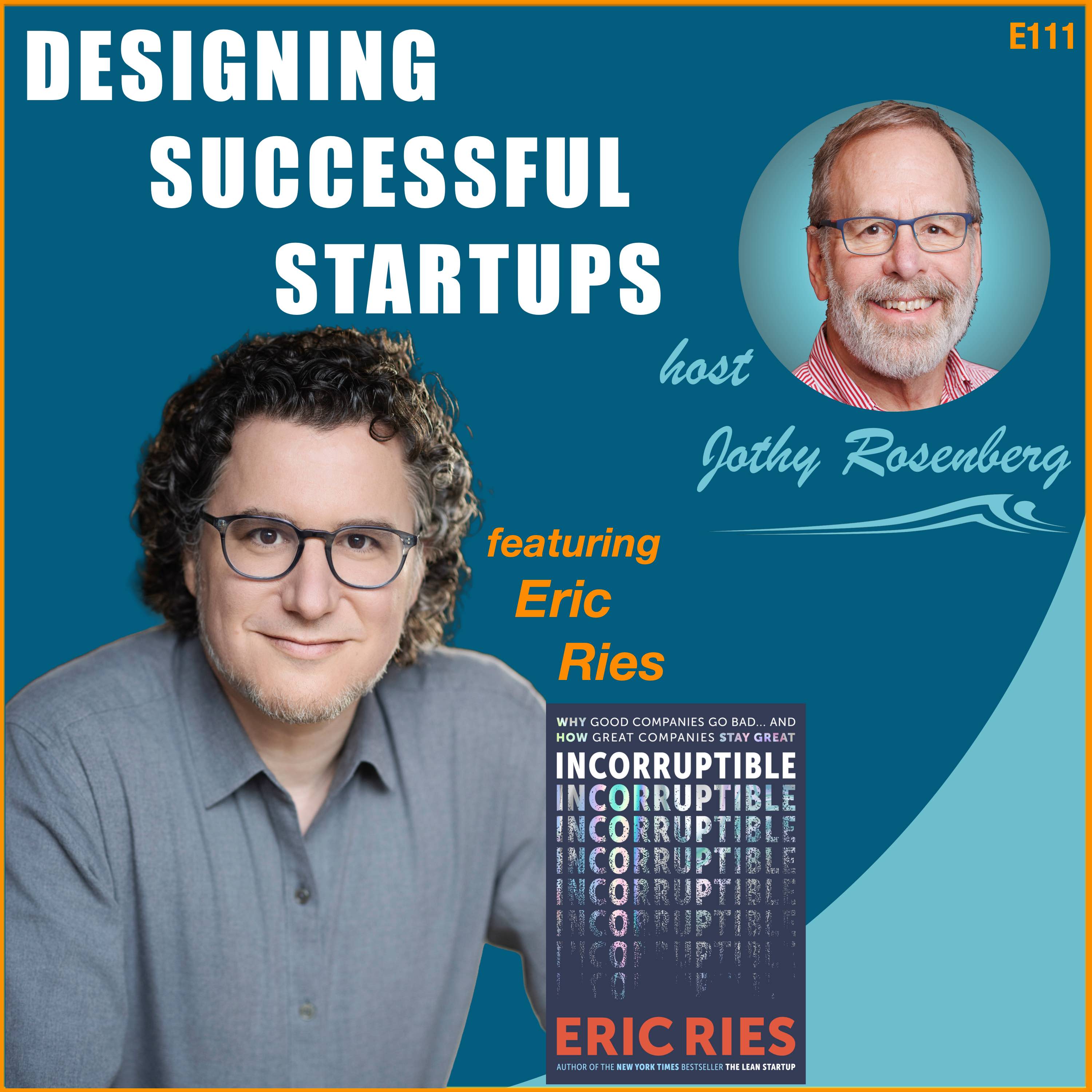 Incorruptible: Eric Ries on Why Most Startups Lose Their Soul - and How Yours Won'tDesigning Successful Startups · on Lean Startup methodology87 / 100
 #2307 Eric Ries: Why Anthropic Won and How To Build Incurruptible companiesStartup Stories - Mixergy · on Lean Startup methodology86 / 100
 The Enterprise Edge - Georg Glantschnig, CVP Dynamics 365 Agentic ERP, MicrosoftThe Enterprise Edge · on Human-in-the-loop workflows84 / 100
 #288 Why Great Companies Lose Their Way After Going Public with Eric Ries Author The Lean StartupGrowCFO Show · on Lean Startup methodology84 / 100Stop fearing it, start building it: AI and finance talk, with Lydia Stone63 / 100How great CFOs master the unknown, with Diya Sagar61 / 100The IPO readiness mistake CFOs make, with Joy Mbanugo69 / 100Is your FP&A team just reporting the past? A conversation with Persia Setna80 / 100Why finance must embrace change with Nikki Mamdeova76 / 100