Tiny Marketing · 2026-05-10 · 23 min
Key moments - from our scoring
Substance score
55 / 100
Five dimensions, 20 points each
Jen Hamilton brings her 15 years of solo consulting experience and fractional COO expertise to diagnose why solo consultants feel perpetually stuck. The three bottlenecks she identifies - overwhelm, lack of direction, and missing systems - stem from reactive rather than proactive work patterns that prevent predictable revenue. For overwhelm, she recommends protecting a weekly CEO hour (or two 30-minute blocks) for thinking time, using the diagnostic question: "What's creating the most friction in my business right now?" To address direction and inconsistent results, she advocates defining one clear 90-day goal focused on what matters most, ensuring it's measurable and capable of creating relief or momentum. For broken systems, she stresses documenting one repeatable process - whether it's client follow-ups, invoicing workflows (she uses Stripe), or email templates in Google. She also mentions using Loom with AI-powered SOP generation to speed up documentation. The bonus bottleneck is weak accountability; her solution is tracking one key metric on a Post-it (new conversations, follow-ups completed, or appointments set) rather than building complex dashboards. Throughout, Hamilton emphasizes that systems create predictability, which enables consistency even while serving existing clients.
Overwhelm from being busy all day with little time to think, causing constant reactivity instead of proactive work. The fix is scheduling a weekly CEO hour protected like a client meeting to think strategically about friction points in the business.
By defining one clear 90-day goal focused on what matters most (not what they think they should do), then consistently executing business development systems even while serving clients, rather than stopping marketing when busy and creating feast-or-famine cycles.
Start with one repeatable process - whether it's client follow-ups, invoice creation, or email responses - using tools like Loom with AI SOP generation or Google email templates to make the process clear and handoff-ready.
Because they are their own worst boss with no one holding them accountable; the fix is to track one key metric (like new conversations or follow-ups completed) on a visible Post-it daily rather than relying on complex dashboards or another person.
While EOS excels at team leadership and culture, Hamilton's fractional COO model also emphasizes cash flow, revenue development operationalization, and client experience - areas beyond EOS's core focus.
Our reviewer’s read on each dimension, with quotes from the episode.
The episode covers three clearly-stated operational bottlenecks (overwhelm, lack of direction, broken/missing systems) with one actionable fix per bottleneck, plus a bonus on accountability. However, the advice is largely standard consulting fare - CEO blocks, 90-day goals, process documentation, and accountability metrics are well-known frameworks. While concrete enough for application, the insights don't go beyond typical small business operations content.
What's creating the most friction in my business right now?
one clear target is way more powerful than multiple vague ones
The framework mirrors established systems thinking (EOS, E-Myth, Traction) which Jen herself references. The specific tactics - CEO hour, 90-day goals, process documentation via Loom, Post-it tracking - are not novel. The framing of 'fractional COO' as operations consultant is slightly differentiated but the underlying concepts are recycled from mainstream business literature.
I mentor integrators as well. I am a big fan of EOS, been trained in it
Using something consistently like a system makes it easier to be consistent
Jen Hamilton is a practitioner with ~15 years of solo experience and now runs a community of 670+ fractional COOs, positioning her as an operator-turned-consultant with relevant peer exposure. However, the evidence for scale and depth is thin - no mention of revenue figures, client results, or transformations achieved. She's credible but not exceptional caliber for a B2B interview; more peer-level operator than proven scaling expert.
I've done the whole solo thing for nearly 15 years
I have a community I lead, the Fractional COO Integrator Ops Consultants, and I have about 670 of them now
The episode relies heavily on frameworks and general principles rather than named examples, metrics, or data. The only concrete examples are personal (Stripe invoice workflow, email templates, Post-it tracking) and anecdotal. No client case studies, revenue impact numbers, or comparative results are provided. The promise that 'revenue will go up if you follow up' is unsupported by evidence.
I've used Stripe for years to be able to send invoices
I love recording and speaking out loud on Loom
Sara asks basic setup questions and shows enthusiasm but rarely challenges or probes deeper. When Jen teases a bonus point ('I make it a teaser'), Sara doesn't push for clarity. The conversation is warm and relatable but lacks the sharp follow-ups and productive tension that would elevate it. Sara mainly affirms and mirrors rather than interrogate.
So how do we fix it?
Hold on. This makes me think of EOS. Are you... You said integrator earlier too. Do you work with EOS a lot?
Computed from the transcript - who did the talking, and the words that came up most.
Send us Fan Mail You can be great at what you do and still feel slammed every week. That pressure is not just “too much to do” it is usually a few operational bottlenecks quietly stealing your time, attention, and revenue. Sara Noren Block sits down with Jen Hamilton, a fractional COO who has spent years inside solo consultant businesses, to pinpoint what actually breaks first and what to fix without adding more complexity. We dig into three common bottlenecks: overwhelm that keeps you in reaction mode, lack of direction that creates inconsistent results, and broken or missing systems where everything lives in your head. Jen shares practical, doable actions for each one, including a protected weekly CEO hour for real thinking time, one measurable 90 day goal to create focus, and documenting a single repeatable process so work becomes faster and easier to hand off. We also talk about predictable revenue, why feast or famine happens, and how simple systems can keep business development going even when client work is full. Jen adds a bonus that ties it all together: accountability.
Transcribed and scored by The B2B Podcast Index.
Welcome to the Tiny Marketing Podcast. I'm Sara Noren Block, and this show is made for solo consultants who wanna get booked out without burning out. If you've ever thought, "I just want this to feel easier," you're not alone. Around here, we focus on simple, sustainable growth that actually fits into your life, so growth feels doable instead of overwhelming.
Hello, and welcome to Tiny Marketing. Thank you so much for joining us this week. Today, we are going to talk to Jen Hamilton about the three operational bottlenecks that solo consultants and solo consultants with maybe a VA typically come across and are dealing with, and we're not gonna leave you with that, just, the bottlenecks. We're also going to tell you how to fix them.
So I'm gonna bring Jen up to the stage so she can introduce herself. Hello, Jen. Hey, Sarah, thanks so much for having me. I'm happy to be here.
Yes. Can you introduce yourself to the audience? Sure. I'm Jen Hamilton.
I am a fractional COO. I've done the whole solo thing for nearly 15 years, and now luckily I have grown up to have a little bit more of a team, so I know where you're coming from. And I often go into small businesses, kinda like flipping the business, as you would in a house. what can we do to help make what's not working actually start working?
So we're gonna talk about some of those things I've seen many times around the bottl- their bottlenecks today. I love that. before we hit record, you were telling me that, 99% of your clients are solo businesses or solo businesses with an assistant. Yeah, so my comm- I have a community I lead, the Fractional COO Integrator Ops Consultants, and I have about 670 of them now in my community as of the date of this recording, and most of them are solos.
Maybe they might have an assistant or they might have done what I've definitely done in my life- begged a child or a spouse Or a sibling, "Can you help me with this?" Oh my gosh, I trained my 12-year-old on how to edit podcasts. Yes. My 15-year-old niece is the one who audits, or who edits my podcast.
Nice. She does an amazing job. yeah, I actually, I recorded it on Loom, I think it was. No, I'd recorded training him on Descript, and now I use that training for my clients who wanna launch their own podcast, 'cause if I can explain it to a 12-year-old, I can explain it to you.
Yes. I love that. Yes, we get pretty creative when most of the business is on our shoulders. Yeah.
Yeah, you have to be. You have to be able to think outside of the box and bring in the 15-year-old to do the editing. Exactly. Exactly.
So this sounds like you. We get it, we are you. Yeah, we are you. That's why we talk about this stuff.
It, it helps us too. It's l- almost like therapy, right? I'm like, "Okay-" Yeah "I'm not alone." Yes, it really is, and every time I host a new guest on my show I'm like, "This is brilliant."
And they become, my go-to referral. Well, that's a high standard, so I'll do my best to make an impact today- 'cause that's our goal. Yeah. So let's get into it.
What would you say is the number one bottleneck that soloists are dealing with? The number one I would say is overwhelm. It... So what does that look like in a common experience?
Busy all day, and then little time to think, and constant reacting, right? Not being proactive, but feeling like everything is coming at you. Oh, it's just, so much, right? Yes.
We were just talking about that before we hit record. Both of us were like, "I'm slammed right now." Yeah. Yes.
So how do we fix it? How do we make it so we don't feel so slammed all the time? Well, we're gonna talk about one action so that it feels doable with each of these three. And so this first action is to schedule a weekly CEO hour.
You are the CEO. You're also doing everything else, right? But you need that time to be that visionary, which is creating that vision. And what you wanna do is have that time to think.
I also call it thinking time. And if you can't do an hour in one phase, I encourage two 30 minutes. This is what worked better into my schedule, at least taking two 30-minute times to just think. And the best way to do this to protect your time, because our time, again, if we're reacting, it's all over the place.
Yeah. Is protect it as if you're meeting with a client, 'cause we know we put our clients f- First- Yeah or maybe a doctor's appointment. One would hope you put your health first. what do you do to make sure that doesn't move?
So ideally, though, it's the same time every week, so you can block your calendar. Same day, same time, and uninterrupted. So making sure... You might even have to move yourself.
I've put notes onto my iPad so I can be in a different location than on my computer where- That's a good idea the notifications are. Yeah, where all the notifications are hitting you, and you're like, "Oh, I should probably deal with that." Exactly. So if you can, go somewhere else without your phone and, without notifications.
And here's a question you can ask yourself, because it is about addressing the overwhelm, but having the time to think about, what do I need to do? So here's one powerful question. What's creating the most friction in my business right now? That's gonna give you time to think, and then fix.
Yeah. That is really smart. I block off Fridays, mainly because I don't wanna work on Fridays. And my mom comes over for sushi and true crime.
Yeah. But I always end up having to work in the morning before she comes. Yeah. And I really would just...
if I made that CEO hour, and I just, I set that aside and I... It was sacred, "This is the thing that I need to do," I think that I would probably not do that so much. I love that you called it sacred, because it is. Because you are sacred.
Your mission is sacred. Your ability to impact others is a sacred work that we're doing, and yet are we giving us that sacred time to do it even better? And that's what this is. Yeah.
Yeah, that's a great action point to have. Okay, what is number two? Number two. What is the next one?
It can bleed from this. What you might see as part of what's that friction is that you lack direction. So whether you... What is that common experience that people might experience?
You're working hard without a clear plan or consistent results. And one of the things that's really challenging, if you're a startup or if you've been doing it for many years, is to ask yourself, "Do I have predictable, consistent results?" If not, you're missing actual plans, strategies, and that consistency is really what is a sign that you'll get predictable results. So oftentimes, again, being reactive, that's what's- Getting in the way of our being consistent, which gets in the way of predictable results.
Yeah. Meaning I know this is how much money I'm gonna make pretty well, and I know if I do this work with marketing, I'm gonna get this number of people to do a sales call, and this number of sales calls is gonna get me this number of clients. predictability- Yeah gives us confidence. You're speaking my language.
That's what my entire program is about, is like building systems that give you predictable revenue. Exactly. There's no worse feeling than that feast or famine, where you're either too busy to do the work to keep your sales pipeline full, or you're broke and you're like, "Oh shit, what now?" Yes.
Worst feeling. Yeah. I see that a ton, and I've mentored and guided solo consultants, coaches, fractionals for, gosh, probably eight or nine years now, and peer mentoring, right? Me being mentored by them as well.
And part of what I've learned from them and what I've passed on to them is that the reason we have those big giant ebbs and flows which come like crashing waves is because we stop doing the work that you, and the system that you put in place, which is- you have to consistently be doing business development even when you have a full client load. What happens every time is big giant dips if you're not constantly putting your foot on the gas of, even just a little bit. But having your consistent system makes it a lot easier to do that while you're serving clients.
Yeah. I've even, I've experienced that myself, where I will get busy running the thing- and then I'm like, "Well, what now?" I feel like I'm in a stuck place, and I turn on my own systems that I teach, and it instantly changes everything. I'm like, "Why?
Why do I do this to myself when I know it works?" Yes, exactly. You're not alone. There's that whole thing about the collarless kids have no shoes.
Yeah. It's so easy for us to see it for others, but to turn that mirror and do it for ourselves is challenging. So is there an easier way to be able to make sure that you're keeping the, up with your systems? Good question.
So I think that the easiest way, and, actually, how about this? I make it a teaser, 'cause I added one bonus, a way of that we can- one bonus, challenge that gets us into bottleneck and one bonus way. So I, I will make sure I go through this quickly, and I'll get to that because it is, it, there is one quick and not always easy way to be able to do that. So I'll leave you on that cliffhanger, but I wanna make sure I get to the action around that lack of direction.
Is that- Okay work for you? Yeah. Do it. All right.
So that one action is to maybe in your thinking time, right? Define one, one 90-minute business goal. What are... Or 90 days, excuse me.
90 minutes would be great. We wish that. 90 days. What in the next 90 days is my goal?
So complete this sentence maybe in your thinking time. If the next 90 days went well, what's one result that would matter most? So again- we're looking at outcomes. I like to think of COOs as chief outcomes officers.
We cr- change operations into outcomes. And so being able to be focused on what matters most is where your goals should be coming. I think a lot of times we do goals that we should be doing instead of what matters most. Yeah.
And then do a quick check on that goal. Is it clear? Is it measurable? And would it achieve this way of relief if you're stuck or momentum if you feel like, "Ugh, I'm not getting where I want to go."
So being able to put it in those parameters. And remember, one clear target is way more powerful than multiple vague ones. You're gonna have, this is what I do, and then when you start to drift and have those shiny objects, you're like, "Nope, this is the- This is it one thing I do." You...
Hold on. This makes me think of EOS. Are... You said integrator earlier too.
Do you work with EOS a lot? Yeah, I've definitely done, I can sit in the fractional integrator seat. I've done that many times. I mentor integrators as well.
I am a big fan of EOS, been trained in it, and do the, have the experience with it. And I work with... Why I like to say COO is because there's more than what is in EOS, but it's an incredible system, and it's an incredible baseline. I feel there's, even more that, a small business needs to focus on beyond just the team, which EOS is so great at.
It's also really focused on, what, and t-talk about what matters most. What is your client experience? What is your cash flow like? Yeah.
And I love this, that EOS doesn't tou-touch on, but you do, is revenue development. How do we operationalize, going back to what you're talking about, revenue development? Yeah, that, yeah, there are... EOS definitely focuses...
I was a marketing seat when I was in corporate. Yeah. And, it definitely focuses much more on the team. But I do know that a lot of soloists are interested in, the whole traction system.
Yeah. So it sounds like you take it and turn it upside down for more of a, that mindset of traction- Yes for a different situation. Yeah, I love it. It's very powerful.
E-Myth is very powerful. Scale It Up. All of the systems we, again, like we say, a system helps create that predictability. Using something consistently like a system makes it easier to be consistent, and it's about doing what is comprehensive.
So I really look at making sure all areas of the business are strong, not just the team leadership and vision side of it. To me, EOS is fantastic around culture, and what I also look at is the money side of it, the client- I thought you meant funny or cash. For a second I was like, "The bunny?" And the marketing.
What do you mean, money? Let's get some money g- Yeah flowing through this business as well. That matters the most, otherwise you do not have a business. Exactly.
Exactly. All right. Should we get into that third bottleneck? Yes.
Yeah. I think you're gonna love it, right? This isn't even that bonus, but this is broken or missing systems. I swear we didn't talk before that we were gonna talk so much about systems before we got to this bottleneck.
No, we didn't have that on our list, but here we are. So we've been talking about systems, but what is the sign that you're missing systems or that they're broken? One of the biggest signs, and this is extremely common with solos, is everything lives in your head and nothing feels repeatable. You're just making it up- Yeah every single time.
Oh, now I already know what I'm gonna pair this episode with, 'cause I had someone else do an episode on, like, how to build systems for when you're about to bring on a team member. So Yeah this will pair so nicely with that one. Absolutely, because the first action, even if you're not gonna bring in someone, and I started doing this for myself, is document... I know you're, everyone's "Agh."
Document one repeatable process. And one of the things that I think I've done for myself that's made me consistent, made me faster, takes a little bit of time at first, is being very clear on what did I do last time? When we do things once a month, one of the things, for example, a really perfect example, I've used Stripe for years to be able to send invoices, especially for retainer type work. It makes it easier.
You can make changes. You have the credit card in there. It's- all the good things. Every freaking time I try to make a new invoice for a specific client, I was like, "How do I use this thing again?"
Yeah. It's not something I do every day. And so I finally got sick of me spending so much time trying to figure out the system, and started to record, "This is exactly how I do it," 'cause I was just irritated. And then I couldn't even pass it on to somebody else, even if I wanted to, is that I couldn't even do it.
So for me, that, that was really a perfect example of how am I getting in my way of not having something repeatable. and so when you look at one process, like we're talking about that action, taking it a little bit s- far- farther, what might be a way that you follow up? You wanna make sure you follow up with a lead. document that process so that it's consistent, because we often drop people through our cracks because of not having follow-ups.
If that's one of the areas where you're super weak, maybe look at a process that you can repeat every time. Promise your revenue will go up if you follow up. Maybe it's a transaction workflow, just like I was saying with my being able to make invoices. It could be client communication.
That's one thing I did too, is that repeating themes in emails are all over the place, right? So I made myself email templates. And first I would just be like, "Okay, I don't wanna have to go back and search my send. What did I say last time to someone that has a similar question?"
Or maybe it's an introduction from a networking thing or whatever. So I started making gen email templates, and now that I have an executive assistant, she knows how to respond without even... she knows, this is the type of email, this is the type of response. Yeah.
one little bonus- The templates in Google are nice can you talk about Loom? Oh, sorry. Go ahead. Oh, I was just saying being able to create templates and auto responses- Yeah in Google is so nice.
Yes Oh, absolutely. Yeah, they make it easier. And that's the thing, more and more these days, things are being automated and you can push a button and it's e- even reminding you how to do it. And I would say, when you're writing or recording it, you can...
I love recording on Loom. If you were talking about Loom too. I love recording and speaking out loud, what am I doing, and then I've got the... I think I had to pay five extra dollars a month to get the AI version of Loom, and once it's done recording, you can push a button and it will make an SOP, right?
So you now have the recording- Ooh, that's nice. And it has it written out with, timestamp of where in the recording, and pictures of what you clicked on within seconds. So- I didn't know that Loom does that. I found that out the other day, and I was, like, totally geeking out.
Yeah, that's cool. All right, you ready for my bonus? Yes. Okay, we talked about systems, we talked about th- these things.
Everything I just told, talked to you about all happens in bottlenecks on because we have weak accountability, and this is the biggest one for us as solos, right? We are our own worst boss. We are. No one is telling us and keeping us accountable.
So whether you're not being consistent, whether you're not taking the time to think, whether you're doing things over and over again that you could have just made a process, part of the biggest thing is that we have weak accountability. So one of the good things you could do is, is have an accountability partner. That's always great. part of why I have a peer community is we help hold each other accountable.
But one first action you can take that doesn't rely on another person is have one weekly metric, the key number that you personally sh- check. I just actually put Monday, Tuesday, Wednesday on a piece of paper, and I just do hash marks every time I do that key metric. It might be new conversations started, it might be those follow-ups completed or appointments set. Whatever is that one metric that you know, "If I just keep doing this, I'm gonna move things forward."
And it can change, right? You look at the 90-day, what's the most important thing? You might have one metric related to that. Yeah So figure out what your one metric is and where you will track it.
it's right here next to me as my little hashtags on my big giant Post-it, 'cause I have... I started with one metric, and I realized there were a couple others that moved the needle. And when I do those things, my business works, and when I don't, it doesn't. That is smart.
I was doing a, one... It was a month ago, I had a workshop on, building repeatable revenue and, the little systems that you can build in. it's just money math. if you need to close five clients over the next two months, how many warm conversations do you need to have a month?
Just put it on a Post-it, keep track of it, and it's just, an easy thing that you can do. We don't need a fancy spreadsheet. We don't need a fancy metric t- tracking system. It- Dashboard right, because that will get you bottlenecked and stuck figuring out, "What do I need to do?"
A Post-it. And it's right there, so you're visible and you're constantly looking at, "Okay, so today I need to do two outreaches to hit my goal." Yes, exactly. So Sarah, hopefully we can all loosen up those bottlenecks a little bit and s- take these few powerful but simple actions to move us forward.
Yes. So before we go, can you tell everybody how they can work with you- Sure and where to find you online? Yeah, no problem. So one of the ways, again, I work with a lot of fractional COOs, so if you are one and you're listening or you know you need some help with this and you would like to get access to a fractional COO to flip your business into being, productive, what I would say is go to my website.
It's hamiltoncoos.com, and I know we'll put it in the show notes. I have a couple little ways that you can actually start getting some help with this for free. Once a month, we meet in a peer roundtable.
So as I shared with you, I love mentoring and learning from others, so we do a monthly roundtable where we are addressing some operational challenge that we can hear from others that are like us. "What did you do to fix it?" And we get to also share with them and contribute to each other, so that's a fun way to do it. Yeah.
I did, In preparation for this, I actually made a one-pa- it's actually a lit- probably a little bit bigger. But I took all of these ideas that we talked about, and I put it into a document, which I'm more than happy to share. So if you're listening and you're like, "You went too fast, Jen," or, "What was that one thing I need to do?" go ahead and email me and just say, "I was on Sarah's podcast, and I would love the three bottleneck fixers," and I will send that to you.
I will put her email in the show notes so it's easy to contact her. Thank you so much for joining me today. You are so welcome. Thanks for having me.
If this episode made things feel a little more doable, I'd love to help you take the next step with the Booked Out Blueprint. It's a practical, low-pressure session to clarify your offers, your marketing, and what actually moves the needle. You can book yours through the link in the show notes. You don't have to figure it out alone.
Other episodes covering the same guests and topics, from across The B2B Podcast Index.
 Second-Time CEO Buys a $30m Title CompanyAcquiring Minds · on EOS (Entrepreneurial Operating System)90 / 100
 The Exit Nobody Prepares You For with Chris DonnellyFounders' Forum · on EOS (Entrepreneurial Operating System)77 / 100
 Your Company Isn’t Outgrowing Chaos. It’s Missing Structure with Brian HintonScaling With People · on EOS (Entrepreneurial Operating System)75 / 100
 How client-centric models are disrupting the norm in pharma marketing - #60The Consulting Pulse by CMap · on EOS (Entrepreneurial Operating System)71 / 100
 How We Run Two Multiple Seven-Figure Businesses Together Without Burning OutSeven Figure Agency Podcast with Josh Nelson · on EOS (Entrepreneurial Operating System)70 / 100
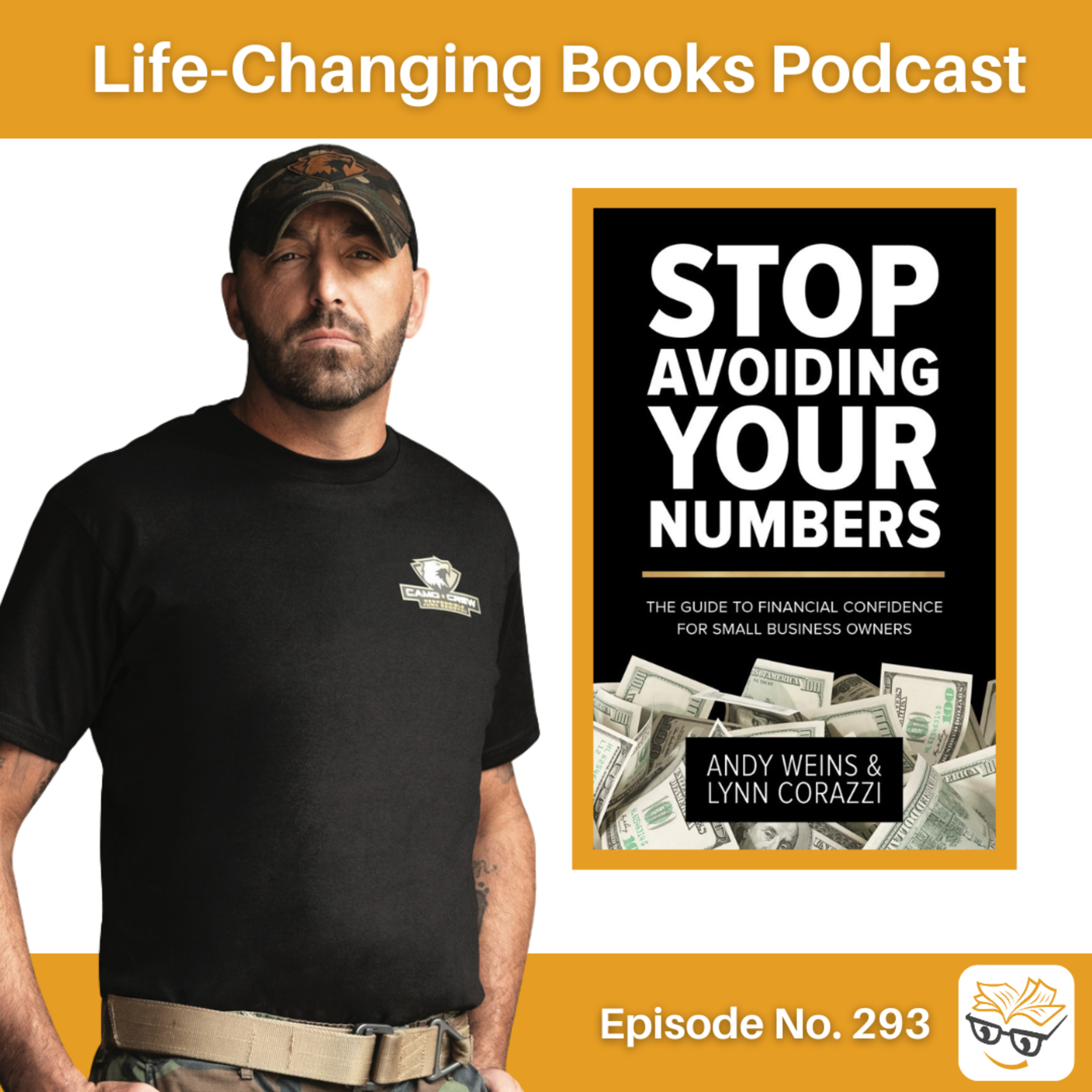 293. Andy Weins | Stop Avoiding Your NumbersBookThinkers: Life-Changing Books · on EOS (Entrepreneurial Operating System)69 / 100Ep 196: Stop Pitching Cold And Start Selling Through Warm Paths67 / 100Ep 193: Five Follow-Up Scripts To Restart Stalled Sales Conversations [LIVE]73 / 100
 Ep 192: Stop Calling It A Discovery Session [LIVE]58 / 100Ep 191: What If The Best Business Advice Sounds Messy?25 / 100Ep 190: Behind The Scenes Of A Sales Call Challenge That Actually Worked52 / 100