
The Seed · 2022-01-17 · 21 min
Key moments - from our scoring
Substance score
36 / 100
Five dimensions, 20 points each
The Sandbox is a 3D multiplayer virtual world built on blockchain technology that fundamentally changes who owns and profits from digital creations. Sebastien Borget discusses how the platform combines user-generated content tools (VoxEdit, Game Maker) with NFT ownership and play-to-earn mechanics, allowing creators to monetize games, experiences, and assets in ways traditional gaming platforms never permitted. With 40 million installs from its previous mobile iteration and now 165+ integrated brands and IPs - from Snoop Dogg to Atari to The Walking Dead - The Sandbox creates a unique ecosystem where landowners can build themed neighborhoods, hire other creators, launch season passes, and generate revenue through player engagement. Borget frames this as solving a 10-year frustration: his earlier games attracted 70 million player-made creations but creators saw no financial reward. The platform operates across multiple products: the VoxEdit 3D editor, the Game Maker, marketplace, blockchain layer, and multiplayer client. Borget envisions a future where all 166,464 land parcels and the SAND governance token are fully owned and controlled by the community through a DAO, enabling infinite play-to-earn possibilities from virtual concerts to fashion contests to narrative adventures.
Virtual land ownership lets you join a community of fans around your favorite brands or IP, create and monetize experiences with neighbors on shared themes, hire other creators to build your vision, and earn revenue from the games and events you host - similar to owning a real business but without physical limitations or geographic restrictions.
The Sandbox uses NFTs and its SAND token to give creators true ownership of their 3D assets, games, and content, and lets them earn revenue directly from what they build - in contrast to platforms like Roblox where the company retains ownership and profit from player creations.
The Sandbox has integrated over 165 brands and IPs including Snoop Dogg, Atari, The Walking Dead, Adidas, Polaroid, Kia, and many others; it's the only place where all these IPs are combined in one virtual world that users can remix into their own games.
The ultimate vision is a fully decentralized metaverse where all 166,464 land parcels and the SAND governance token are owned by users and managed through a DAO, allowing the community to vote on roadmap priorities, foundation funding, and key platform decisions.
Creators use tools like VoxEdit (a 3D editor and modeler for creating and animating assets), the Game Maker (for building playable experiences), the marketplace (for trading NFTs), and the blockchain layer (supporting ownership and transactions), all accessible across the multiplayer client.
Our reviewer’s read on each dimension, with quotes from the episode.
The episode is dominated by high-level promotional description of The Sandbox platform and generic entrepreneurship platitudes. There are occasional interesting framings (play-to-earn as superior to free-to-play, gamers as implicit financial analysts) but they are never developed into actionable insight. A B2B operator would extract very little they could actually use.
better than free is Actually getting paid or that's how I approach it
gamers are without knowing they are great financial analysts and now they can combine both and make, make best of the both world
The content is almost entirely standard 2021-era NFT and metaverse evangelism - user ownership, creator economy, play-to-earn, DAO governance - recycled talking points that were ubiquitous at the time. The framing of gamers as unrecognised financial analysts is mildly interesting but is dropped immediately without development.
gamers are without knowing they are great financial analysts
finance education becomes fun again in a way
Sebastien Borget is a genuine operator - co-founder with four companies, three acquisitions, and a real product at scale. His background building a 40-million-install mobile game and pivoting to blockchain is legitimate practitioner experience. However, the format fails to draw out his actual operational and strategic depth.
co founding four companies with my business partners for 14 years. Three of them have been acquired
40 million installs where uh users largely contributed to that success through the 70 million player made creation they did
There are real figures present - 40 million mobile installs, 70 million player-made creations, 165+ brand/IP partners, 166,464 land parcels - which lift the episode above pure abstraction. However, there are no revenue numbers, user growth trajectories, token economics details, or hard data on engagement, leaving most strategic claims unsubstantiated.
40 million installs where uh users largely contributed to that success through the 70 million player made creation
166464 owners of land to launch play to earn season
The host asks entirely generic entrepreneurship-podcast questions ('what are your darkest moments?', 'how did you even know where to start?') and never pushes back on a single claim. The interview ends with several minutes of a 'this or that' game that is pure filler. The host also discloses being a Sandbox landowner, creating an undisclosed conflict that further softens any critical edge.
I prepared a quick game. It's called this or that, basically through two things and you can pick which one you like more
I imagine for you as well, there's probably definitely a lot of challenges or failures along the way
Computed from the transcript - who did the talking, and the words that came up most.
What if there’s a world where YOU can hang out with The Smurfs, chill with Snoop Dogg, become a Rollercoaster Tycoon, AND fight off The Walking Dead? A world where you can build anything you want, play games, build games, and at the same time... make money? Today we’ll be chatting with the Co-Founder of The Sandbox, Sebastien Borget, who’s building a blockchain-based gaming world alongside some incredible partners. Even Adidas recently bought land in The Sandbox and will begin to build their own experience within the metaverse. How did they start, and where are they headed? Let's explore Sebastien's startup journey! Check out The Sandbox here: Interested in learning more about NFTs?
Transcribed and scored by The B2B Podcast Index.
Speaker A: What if there's a world where you can hang out with the Smurfs, chill with Snoop Dogg, become a rollercoaster tycoon and fight off the walking Dead. A world where you could build anything, play games, build games, all the while making money from it. Hey everyone, this is Rick. And welcome back to the Seed the Startup Journey, the entrepreneurship podcast sharing the origin stories of amazing founders and the companies. In 20 minutes today we'll be chatting with Sebastian Bourget, the co founder of the Sandbox, a blockchain based gaming world with some incredible partners. Even Adidas recently purchased land in the Sandbox and will now be building experiences in their metaverse. Without further ado, let's explore Sebastian's journey. Hey Sebastian, thank you so much for coming onto our podcast today. You are the co founder and CEO of the Sandbox, which is a blockchain based virtual world where players can build their own gaming experience. And I own some land in the Sandbox as well, but I actually found it pretty challenging to explain to my dad like why I'm spending actual money to buy virtual land. And I'm sure some of my audience might have the same question. So can you quickly go over kind of what the Sandbox is and maybe why some people are spending thousands of dollars on virtual land?
Speaker B: Hi Rick, it's a pleasure to be with you and to discuss with one of our landowners, member of our community and I would say earlier adopters and builder in the metaverse. So, uh, definitely so I would say Sandbox, to put it in simple terms, it's essentially a gaming virtual world where users and players truly own their creation 3D assets, games or the content they earn as they play and engage in two experiences and can monetize it the way they want through the use of NFTs and send the utility token of our platform. We've been ah, building the Sandbox for close to 10 years now, um, actually uh, 10 already, um, but more recently this new version, that's the 3D multiplayer multiplatform and use blockchain technology since uh, the end of 2017 when we saw the first crypto punks, the first cryptokitties and we saw the potential to combine the technology of NFTs with user generated content and through enable, turn players not only into creators, but enable those creators to earn revenue from the work and values they contributed to the platform. Because that's our background. That's where we come from. We come from having 10 years of experience into gaming and having a success on mobile with 40 million installs where uh users largely contributed to that success through the 70 million player made creation they did using uh, this and that frustration we had uh, as founders as, as entrepreneur m to not be able to reward and retribute the creators that contributed to the success overall. Uh, that's our mission I would say. Like we're aiming to build a new digital economy where creators and players, anyone who get engaged and participate giving time, actually get rewarded for the value they they bring whether in production or into participating into activities and engaging in social games, into events, concert and more into our virtual world. We also been uh, bringing more than 165 brands and IPs into that world that include uh, Snoop Dogg, Atari, the Walking Dead, Polar Rose, murph, kia bird, etc. Ah so it's a very diverse multicultural world that include IP's brand that you might be fan of. Uh, whether you are based in US in Europe or in Asia as well. And it's the only place in the world where all of those IPs are combined. And you as a creator can use content from your favorite IP to make your own games, your own experiences and start by publishing them on the world for other players to play those stories, adventures, etc. And you monetize it. So brands embrace user generated content and let users monetize the content they create with their content. Ultimately uh, I think that's my opinion that I think why people value virtual land more, sometimes more than physical land or actually decide to invest into uh, land parcel. It falls down to uh, the idea of like you're part of a community, you truly own that land and you decide where uh, that land will be. So you can pick a neighborhood next to Snoop Dogg or a neighborhood more to a uh, sport brand, gaming brands, your favorite Hollywood show, etc. And because your fan and other fans who picked land there as well, you know somehow that ah, you and your neighbor, you create experiences around the same thematic and you can work with your neighbors on creating something even bigger. Ultimately uh, so you belong to that community of creators. You're supporting a whole digital economy. You might, if you are not skilled yourself, you can hire other creator, uh artists talents that will help you to bring your ideas come to life and ultimately m you can monetize that effort, that investment of time, energy, passion through by the revenue that your experience will generate. So it's almost like a real physical world, brick and mortar shop or restaurant energy. Except like your skill, your talent is applying into a uh, virtual world where I would say zero only limit Is your imagination rather than the laws of physique or uh, some boundaries set by uh, government and other establishment system that well you never choose from, you just inherit because you're born in this country and well that's how it is and how it's been done for centuries before. Uh yeah. Did I miss anything in why you decided to be a landowner?
Speaker A: No, I think that was a really good uh, explanation also super exciting as well. And I'm really curious, curious about kind of your personal journey with this because as you mentioned like you've been working on this for over 10 years. When did you decide that you wanted become an entrepreneur and launch your own thing and create this game?
Speaker B: Well, uh, I think I have somehow I'm m almost destined to be an entrepreneur. Like I've been uh, co founding four companies with my business partners for 14 years. Three of them have been acquired before. And I like the challenge, I like the resilience and then thinking through uh, like designing products that millions uh, of users will be using. I want to empower um, those users. That's always been something that uh, driving me like how do I allow people to create more, to create things that like they never thought they would be able to do. And well yet now we provide them those tools and they discover they have new skills, new talent, how do I push and support people so that they feel there is no risk to do that. And then when you feel there's no risk, you know, your creativity expands. Like you feel like oh now I'm not pressured anymore by many parameters that comes from like your social pressure, the need for like just doing a job to, for supporting your living. But now like living from your passion and because you're good at it and you enjoy it, you can thrive at it. And that reflects uh, into the creator economy on one side and now something new also the play to earn economy where us uh, like I've been growing as a kid, playing a lot of games, spending a lot of hours. So I've uh, been millions of people from my generation and we've all been told by our parents like m, you should stop doing that and do more serious things, you're not going to make a living of that etc. Huh. And we've been able to, I hope to prove them wrong and prove them wrong not just by becoming the most competitive esport athletes, but just like doing the things I enjoy most of the time. And because I might be good at collecting resource solving some challenges, quests, etc. Uh potentially derive a revenue from the asset I earn or the sun I earn as I engage with this world. I'm also quite passionate now. Like, like it's really exciting to see every day. Uh, as I just opened my social media feed, everything that people have been creating with Sandbox and I was not even aware about, you know like say like they're really leveraging the different creation tools. They are finding ways on their own to monetize, to engage communities with it. That's really comforting us with the idea that we are offering something of value for everyone and we should keep building engaging and we're in the right direction.
Speaker A: Yeah. And I think you definitely uh, proved my mom wrong. Like I was the Sandbox basically introduced me to like Zed Run which is one of the horse racing game. And I was basically making some money off of just playing that game. And my mom was like pretty. She was kind of confused at first but I was like wow. Like this is actually like really a kind of world changing technology. So yeah, definitely.
Speaker B: Um, so got to here.
Speaker A: Uh, yeah, for sure. So I'm curious because I know this is a super complicated company that you're building. There's so many pieces to it. How did you even know where to start? How did you get started?
Speaker B: Oh yes. Sometimes what people don't realize about Sandbox is not just a game, it's an actual platform. A platform that comprehends several products. Some of them you can download, some of them are just uh, manifestation of things you will see. Uh, like uh, we have a VoxEdit or 3D Editor and Modeler which also allows to animate the marketplace, the map, the blockchain, which is the underlying technology supporting this ecosystem. Uh, the game maker, the game client, the multiplayers, the avatar, the content, a lot of things around. So Sandbox company has been growing in terms of people. We are on close to 100 people, 20 around the world. It's not easy every day to design and complement all those aspects. But I would say like where did we get started? We started with content first we believe like it's not just about creating tools and basically handing them over to users and hoping that users will doing something great with them. It's about having tools and then building the content, some content, some good example of how those tools, the possibility offered by those tools to inspire other people and by inspiring them, offering them templates, example of content that they could uh, do with that then we are setting certain benchmark. We're also push, we're pushing and uh, educating more and more people to the software with various Incentive that supported by our Creator Fund, Game Maker Fund, uh, from the foundation. And we grow overall ecosystem that goes along, uh, the development of products. So that's important. That's how uh, the community of Sandbox has been growing progressively and get engaged with the product for the right reason. And that's why over time we're now seeing more and more content being produced using Sandbox.
Speaker A: Got it. And one thing that I learned from just chatting with a lot of entrepreneurs is that this journey is never easy. And I imagine for you as well, there's probably definitely a lot of challenges or failures along the way. So could you maybe share with us maybe some of your darkest moments or your hardest challenges along the way so far?
Speaker B: Well, uh, I don't remember a specific moment. I think there's always, uh, moment where you might be in disagreement with certain choices, some moment where you might fight, find it's really hard. What I try is always by the next day to think through again the same situation and try to see, like, how can I make an opportunity of that challenge, like, is there another way I can approach it? And it's true, like, being entrepreneur is not something that you're not alone. And what matters is to have a good team behind that supports you and that will help to build that vision. As long as they are understanding why they are making things, it's more helpful to drive change to go through those challenges altogether and try to solve issues with those problems altogether.
Speaker A: Got it. And also kind of going back to the Sandbox, I mean, as you mentioned, you guys have a lot of very impressive partnerships and IPs. The Walking Dead recently, Snoop Dogg, Atari. So I'm personally really excited for your launch and I'm also curious to hear kind of what your vision is for the Sandbox or even for the blockchain game. Overall, what do you think the future looks like? And maybe five or ten years down the road, would it be like, Ready Player One?
Speaker B: It will be. It will be in some sort. Not exactly how the science fiction movie is projecting it with us, uh, wearing like VR outfits and playing around others. But I do think like we're heading towards future where like all users truly own their digital assets and there's no way back to not owning it. Like, once you start to understand the benefit of NFTs and being able to transact, sell and monetize assets with other users or even earn revenue from playing, you don't get back to playing free to play where you have to pay to continue and progress. Like, better than free is Actually getting paid or that's how I approach it. Um, we're seeing an acceleration since the uh beginning of this year of adoption in awareness among the general public into like a whole culture that's building around that universe and that culture started with avatar, uh profile picture and crypto art and collectible but is evolving quickly into gaming asset and NFTs with a real utility and the capacity to generate yield which well for gamers it's essentially what gamers are doing all day. They make choices on which equipment they should get or upgrade in games or like car parts etc. So that they get better at it. They can do the same thing and earn more or pass the next challenge. So that's uh very well fitted in a way gamers are without knowing they are great financial analysts and now they can combine both and make, make best of the both world and earn revenue from that knowledge. And uh, that's how also like finance education becomes fun again in a way I would say well where are we heading like ultimately vision of Sandbox is to become a decentralized virtual world which will be 100% owned by its user. Like all lands will be in the hand of users all sand the Chi Token platform will be in the hand of users as well. Uh and that will be then governed by the community through a DAO where users can vote on key parameters, priorities on roadmap, uh ways like the foundation should allocate its fund and ways that the land in reserve should be managed typically but there will be many more possibilities I suppose Ultimately the Sandbox will become a platform for many play to earn games to launch and then might the next big blockchain game hit would might be born in Sandbox directly. That's uh, I think that's ultimately the holy grail but without even thinking about that uh we plan to enable landowner to publish their experience to launch their own NFT uh ticketing system. So gating access to their land or portion of their land through the ownership of an NFT launching like their own season Battle pass so we call it Season Pass in Sandbox and offering rewards based on different tiers of engagement for users which uh will allow like any of the 166464 owners of land to launch play to earn season and for users who come to have uh like plenty of choice of where would I want to spend my time and earn a revenue today? Is it by attending a virtual show? Is it by participating in a fashion contest? Just chatting with friends at this virtual cafe, uh taking a Yoga, virtual yoga class, playing some games, winning uh, at some uh, like parkour game and trying to do good leaderboards, participating into this narrative adventure, etc. I believe the possibilities becomes infinite there.
Speaker A: Yeah, no, it's definitely super exciting and you guys are kind of making it seem like an achievable possibility. So. Yeah, I love what you guys are doing. So uh, do you have any advice for someone like me who's still a student, but I'm interested in potentially becoming an entrepreneur or maybe even launching something in the blockchain or the metaverse space?
Speaker B: Well, I think it's great that you take a step in, you start to play and double with nft. You understand them, uh, you understand what it means to engage with a play to earn game, which is Zed Run. You probably have uh, started to choose which stallion you want to pick or uh, breed maybe and which is, will increase your chances of earning. Uh, I'm sure like after that you will probably make a step towards like defy trying to understand if I stake those NFTs, what can I do? Can I take a loan from it? What if I take a loan, can I maybe buy another NFT to increase my yield? Or are there other incentive from liquidity pools and so on? And all of that builds around you, um, some culture, some know how that I don't think you will get at a traditional school or university and those are great skills that you have that will prepare you for uh, uh, becoming maybe more uh, entrepreneurial. Already I feel you have already that characteristics. Ah. And becoming entrepreneurial doesn't need necessarily to start a whole company with thousands of people. You can be entrepreneurial and decide like look, I make the choice to not follow the traditional path, build my own way, my own way. I will become like a farmer of Zed Run horses, start a guild with that and from there maybe uh, work with players, start a DAO, etc. And work. Find my own new model of monetization and what makes me happy and drives me, um, from there you might know that wow, it's such a great idea and people are asking for it that it's worth turning into a business. So let's see, how do we scale this to the next level? Got it.
Speaker A: Yeah. Kind of going with the flow of what you enjoy doing and then if something, if people want it, then build it bigger. Love it.
Speaker B: Awesome.
Speaker A: So to wrap things up, I uh, prepared a quick game. It's called this or that, basically through two things and you can pick which one you like more.
Speaker B: Sure.
Speaker A: Ready? So the first one. Waking up early or staying up late?
Speaker B: Both.
Speaker A: Both. No sleep.
Speaker B: No sleep.
Speaker A: Yeah, man. Got it. What about Ethereum Eth or Sandbox sand?
Speaker B: Ah, uh, that I suppose. Sandbox sand board.
Speaker A: Ape Yacht club or Cryptopunks?
Speaker B: Uh, Bored Ape. We're very well versed in the space.
Speaker A: Yeah, I saw a lot of apes on the sandbox land as well.
Speaker B: We have the captain and we'll use him. Yes.
Speaker A: 100 users that love your game and play it every single day. Or a thousand users that maybe play it once a week.
Speaker B: 100 users, because the engagement, uh, I think those super fans is much more important. Specifically in the blockchain space.
Speaker A: Awesome. And this last one, $10 million or go back 10 years in time, that's a challenging one.
Speaker B: It's not about the money, so I'm not interested. But at the same time, I don't know what I would change in the past. Why would I want to go back in the past? Mhm. So no need. No need.
Speaker A: Got it. Awesome. Yeah. So that's it for today's episode. Thank you so much for coming onto our podcast. And yeah, wish you the best of luck as well.
Speaker B: Thank you. Thank you, Rick.
Speaker A: I hope you enjoyed this episode. The Sandbox Alpha is actually out now, so definitely go check it out and explore the world. And if you're interested in Learning more about NFTs, definitely check out our previous video with the founder of, uh, the Metakey NFT project. And as always, if you have any questions or feedback, feel free to message me or leave a comment on our YouTube or Instagram post. With that, let's grow our seat of innovation and creativity together. I'll see you next time.
Other episodes covering the same guests and topics, from across The B2B Podcast Index.
 How a Startup Used a Single Customer Review to Land 10k SignupsMarketing for Startups with Fexingo · on User-generated content87 / 100
 Leverage Your Community Like An Expedia PMMProduct Marketing Adventures · on User-generated content83 / 100
 Samsung, Sculpted by Aimee & Barbour: AI, Data and Digital GrowthThe Retail Tea Break · on User-generated content78 / 100
 Building a premium, sustainable hair care brand with Kate Assaraf (Founder & CEO, Dip)SuperConnector Show · on User-generated content76 / 100
 The Screen-to-Scream Effect: The Influence of Travel Media Today with Carmen RobertsTruth Behind Travel Podcast · on User-generated content76 / 100
 How Canva Built a Product Marketing Flywheel That Sells ItselfProduct Marketing with Fexingo · on User-generated content60 / 100
 Corporate vs. Startup - Allan Chow, CTO at Bucket Listers
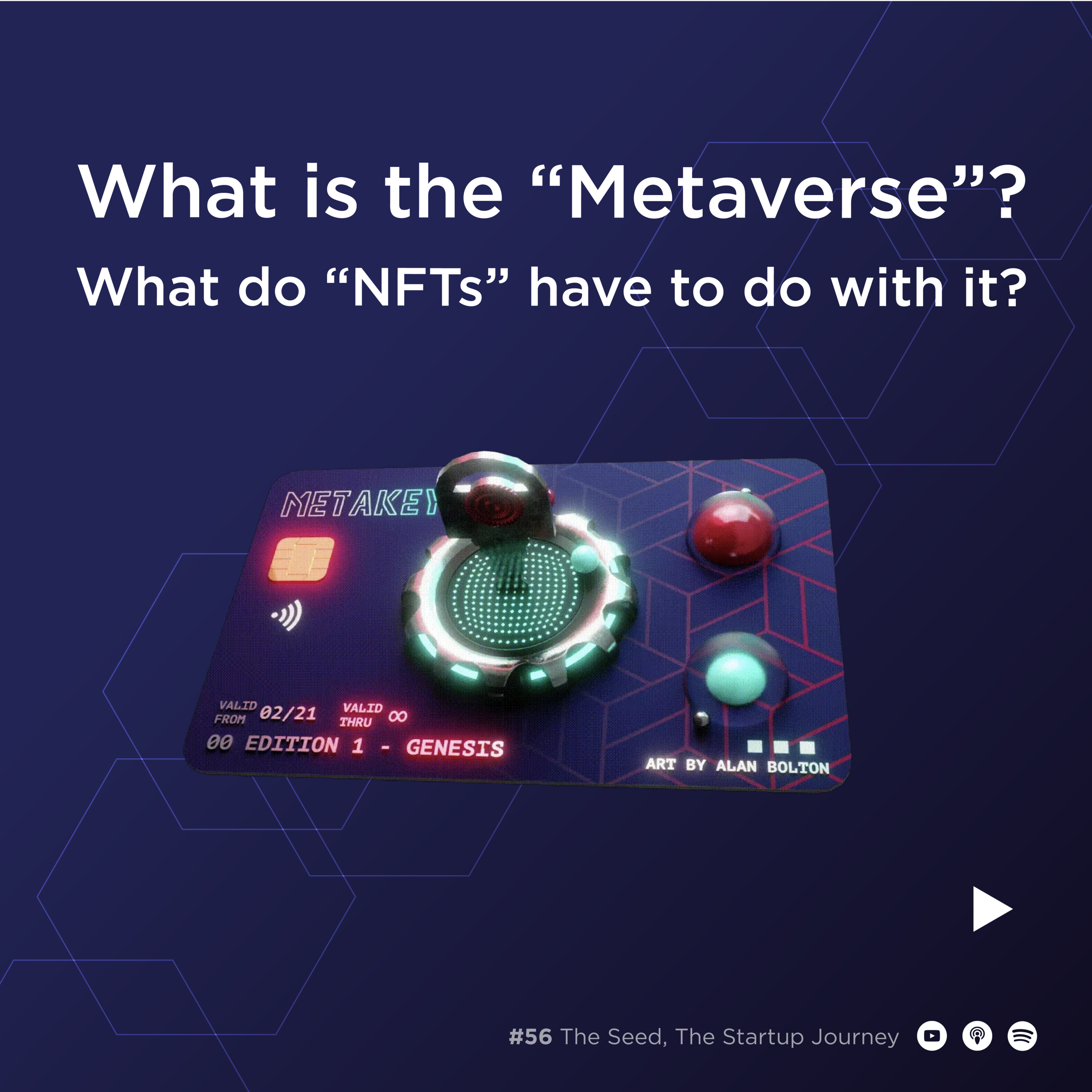 The KEY To The Metaverse - Matty, Founder of The Metakey (NFT Project)
 From Zero To One... SIX Times - Jeff Solomon
 Starting... and SELLING Companies at 16 - Calix Huang
 By Founders, For Founders - Jamie Lin, Founder of AppWorks & President of Taiwan Mobile