
The Scaling Lab · 2026-07-01 · 48 min
Key moments - from our scoring
Substance score
49 / 100
Five dimensions, 20 points each
YouTube offers D2C operators dramatically higher scale potential than Meta alone - Mark and Christy demonstrate how their team hits $30K+ daily spend (versus $10-15K ceilings on Meta) by treating YouTube as a second channel for winning creatives rather than starting from scratch. Unlike Meta's permissive environment, YouTube rewards content that educates and entertains; ads mimicking native content (educational deep-dives on anatomy, podcaster-style content, expert debunk formats) pass compliance at much higher rates. The compliance process itself isn't random - it's systematic. They've learned that Google's strictness fluctuates seasonally and by vertical (digestion offers face different restrictions than others), and that aggregated feedback across accounts creates inefficient edits. Instead, they maintain account-specific compliance catalogs, tracking exactly which claims, visuals, and language get flagged per client vertical. This reduces revision cycles from potentially five rounds to one or two, making the lift manageable enough to justify the compliance overhead. Stability, leverage, and resource efficiency seal the case: once a winning creative is proven on Meta, repurposing it for YouTube is far less labor-intensive than hunting for net new winners, and running two channels smooths algorithm volatility.
Educational formats that look native to YouTube - like anatomy explainers, science-specific breakdowns of how the body works, podcaster-style discussions, or expert debunk videos - have the highest approval rates because they match viewer intent to learn rather than be sold to.
If the ad spent $5K+ on Meta and is performing at or above target efficiency, Mark estimates 1-2 revision cycles are typical in June 2026, though this varies by account vertical and Google's current strictness level - meaning the compliance lift is substantially less work than finding a new winning concept.
Mark and Christy attribute fluctuations to company earnings targets (Google loosens standards when revenue targets slip) and user experience metrics (tightening when poor ads damage retention), though the exact factors remain opaque.
Christy's process is to attempt launching without edits first to see what feedback Google returns; if it doesn't pass, those rejection reasons directly inform the compliance edits needed, making the revision process faster than pre-guessing what will fail.
YouTube has three advantages: large audience scale (unlike TikTok/Snapchat), video assets that are already proven on Meta so require only compliance edits rather than full redesign (unlike native's static + advertorial setup), and established audience intent to consume educational content.
Our reviewer’s read on each dimension, with quotes from the episode.
There are genuine operational tips buried in the episode - specific flagged word lists, the appeal-first feedback loop, account-specific vs. aggregate compliance tracking, and the visual metaphor workaround - but they are surrounded by substantial padding, repeated motivational filler ('it's a hundred percent worth it,' 'the juice is worth the squeeze'), and obvious advice about channel diversification that any media buyer already knows.
cure for sure, but fixes, repairs, detoxes, flushes, heals, words like that, and automatically I know they're gonna get flagged. So you need to add in more compliant words like supports, helps, maintains
we had a visual where there are balloons that were like superimposed over legs and that got through
The 'expert debunk' format and the white/gray/black compliance spectrum are modestly original framings, but the core arguments - YouTube needs educational content, channel diversification reduces risk, Meta creative churns faster than YouTube - are entirely standard industry takes recycled here without fresh evidence or counterintuitive angles.
another type would be a format that we came up with which is we call expert debunk, but it's basically a person watching a video and arguing with it, basically, and saying why it's not true
there is like totally white, okay, you're gonna be okay with saying this pretty much no matter what. There's stuff on the side that like you're pretty much never gonna get away with. And then there's gonna be a gray area
Mark and Christy are genuine hands-on practitioners with real DTC ad experience, and their specificity on compliance mechanics confirms they've actually done the work, but they are mid-level agency employees with no external credibility signals - no named clients, no industry recognition, and no demonstration of scale beyond their own anecdotes.
I'm a creative strategist and copy chief and I help my writing team turn out million dollar ads for our clients
I'm a performance manager here at TNT. So managing the team, allocating resources, and I'm responsible for just the overall success of our our clients
The episode earns points for concrete spend thresholds ($5K test minimum, $10 - 15K/day Meta baseline, $30 - 50K/day with YouTube added, 75 - 80% approval rate as a benchmark), specific prohibited word lists, and the balloon visual metaphor; it loses points for zero named clients, no conversion or ROAS data, and most claims resting on unverifiable internal anecdotes.
if it's spent five grand and it's still like ten, twenty percent above whatever efficiency we're shooting at, then we know okay, this net new has legs
we've had ⁓ several clients that have had months where they're hitting fifty K plus days throughout the entire month on target
The host asks a few genuinely useful follow-up questions - notably 'what is a disapproval that taught you something you couldn't have learned any other way?' and probing whether teams re-inject stripped language after approval - but largely lets vague answers stand unchallenged, accepts non-answers gracefully, and never pushes back on the repeated 'it's worth it' framing with any hard data request.
what is a disapproval that taught you something that you couldn't have learned any other way?
Will you then go back in and test the seven second whatever and maybe use some of the language you thought you couldn't use, but put it back in to see if you can try it
Computed from the transcript - who did the talking, and the words that came up most.
Most DTC teams try YouTube once, run into a wall of disapprovals, and quietly go back to Meta. They tell themselves it's not worth the headache. Meanwhile, the brands hitting $30K days - some pushing past $50K - aren't doing anything most teams couldn't do: They just built the system to get through compliance instead of around it. The thing about YouTube compliance is that it looks like a gatekeeping problem when it's actually an operational one. Teams that treat every disapproval as a dead end stay stuck. Teams that treat every disapproval as data eventually stop guessing - they end up with a tested playbook of exactly what passes and what doesn't, and that's what drives the approval rate up. That gap in speed is where scale lives. In this episode of The Scaling Lab, Kira Hug sits down with Marc Mares (Performance Manager, TNT) and Christy Ingkavet (Creative Strategist & Copy Chief, TNT) - two of the people most responsible for TNT clients hitting $500K+ months on YouTube. They break down the full compliance system: what to move from Meta, what to edit, what to appeal, and how to build the operational infrastructure that keeps the pipeline moving.
Transcribed and scored by The B2B Podcast Index.
speaker-0: It's a hundred percent worth it. The juice is worth the squeeze. When you get that control that's killing it on meta and you get that scaling on a second channel, and now you've gone from like ten K a day on target and now you're like twenty-five, thirty K a day, and like the client's super happy, it's the best they've done in since the launch of the offer funnel, it's a hundred percent worth it. speaker-1: YouTube and Facebook are different in that ⁓ people go to YouTube because they want to get information, but they also want to be entertained.
So they're specifically looking for how to kinds of things. speaker-0: It's a moving target, like I've said a number of times. That is gonna just clear some of the competition, right? It's gonna be a little bit of a blue ocean because people are gonna get frustrated.
They're gonna move to other channels, and you're gonna find that the bar or the standard to to have something be successful is gonna be a lot lower than on meta, where ever where most advertisers can say any and everything. speaker-1: And if your ad is more likely to look like something that is gonna teach them something, it's more likely to pass on YouTube and start running. And if it doesn't look like native content, I have to look at the ad seriously and see if there was a strong enough message or curiosity hooked to it, or if there was some sort of statement that, you know, is confusing or a statement that is a contradiction that make people really stop scrolling, then maybe it's worth pursuing.
But it has to provide some sort of value. speaker-0: There's a certain amount of ra of randomness that you can't control. And our responsibility is to understand, you know, there is like totally white, okay, you're gonna be okay with saying this pretty much no matter what. There's stuff on the side that like you're pretty much never gonna get away with.
And then there's gonna be a gray area, right? Our our job is to try to narrow that gray area so that we know, okay, this is persuasive, this is gonna drive performance, but more times than not, this is also gonna get approved and it's not gonna be flags, right? But you're always gonna have those random things that just don't make any sense and that's part of the compliance process. speaker-2: If you've tried scaling on YouTube and watched your ads get disapproved or never even launched because compliance feels like a wall, this is for you.
Mark and Christy run one of our top creative teams. They've gotten ads to 500k plus months on YouTube using language and formats that get killed on most other accounts. Today they're gonna walk you through how they do it and they're also gonna share why it's worth all the work. But before we dive in, Mark.
Christy, I'd love for you just to each introduce yourself and give us a, you know, a quick intro who you are, what do you do at T T and how did you end up in this line of work? So why don't we start with Christy? speaker-1: Great. Thank you, Kira.
I'm a creative strategist and copy chief and I help my writing team turn out million dollar ads for our clients. And before coming to TNT, I had my own consultancy for about ten years and I was helping wellness professionals and e com brands grow and scale through funnels and emails. And the last five years I've specifically focused on top of funnel advertising. speaker-2: Awesome.
speaker-0: Yeah, I'm a performance manager here at TNT. So managing the team, allocating resources, and I'm responsible for just the overall success of our our clients and and their offers. Before TNT, I was writing direct response copy. So a lot of the stuff that we're actually doing for our clients.
I was a a copywriter and then before that I had an e commerce business where I was buying media, doing CRO, you know, doing the whole thing. I had a small team, so a lot of the work I did myself, so Yeah, I just had a you know, a fair amount of experience in this thing and it just everything just kinda came to a head and I found the perfect the perfect role for me. speaker-2: Awesome. All right.
So before we get into how you each do what you do here, let's just talk about the big why behind this episode. Just like why is it worth D to C operators putting in all the work and we we all know it can be a ton of work and time to crack YouTube when meta is so much easier. What what do you typically tell your clients, Mark, when you're talking to them about it or Christy? Why don't we start with you, Mark?
Yeah. speaker-0: So, you know, if I had to sum it up, it's higher scale, which is what we all want, more stability, which is something that again, everyone wants. ⁓ and then more leverage on resources. And I'll dive into that in a second.
So higher scale, obviously, you're producing these ads, you're having them written. Finding a winner is is pretty challenging, right? Like a net new win can be pretty hard to come by. And when you find that win, the work that that's involved in getting it to become compliant from Facebook.
To Google or from Meta to Google or YouTube is far less work than if you were to look for a new winner on on Meta, right? You should always be looking for new winners, but but that compliance edit is gonna be far less work and it's gonna deliver at least twice as much scale. And and it also allows you to shift budget. You know, sometimes we know that there's algorithm changes or costs creep up.
When you have when you're running on two channels like that, let's just say a minimum of two channels and Facebook or Meta's no longer performing the way it did four or six weeks ago. And YouTube or Google still performing, well you can shift that budget. You don't have these up these peaks and troughs and spend and performance. You can kind of smooth that out, right?
So that's the the stability. And then finally leverage. I just kind of mentioned that a little bit, but you know, you've got your team and they're writing, they're editing ads, they're producing things. Now that ad's already produced, it's scaled on Facebook.
The changes that you make do not require as much labor. There's not as time intensive as looking for a new win, right? Because you might have to write five, ten more net new concepts to find a new win, whereas the changes you're making are minimal pretty often to get that to perform on a second channel. Right.
So say those are the three the three reasons why I think ⁓ you know DTC operators should consider YouTube. speaker-2: Yeah, those are good reasons. Christy, what about you? Anything you'd add?
speaker-1: A lot of the same things, but in general when more creative scaling is is scaling than on one or more platforms, it reduces your risk. So basically you're hedging your bets. And then it also increases the confidence in the team and in the client side. So you actually get more opportunities to experiment with different things because you know that certain things are working and there's there's more room.
Since you're making more money, it gives you more creative freedom. speaker-2: Yeah, yeah. And I'm just curious, like what are some misconceptions of you've heard from clients or just maybe even colleagues in the industry when they're talking about YouTube and they're considering it but maybe not maybe on it but not quite figuring it out or they want to go on it but they're not quite sure how to do it. What do you think, Mark?
What do you hear? speaker-0: I think the biggest thing is that it's not worth it. Right. It's not worth it.
We're already doing well on Facebook or Meta and we're running into so many compliance roadblocks. Our accounts are getting suspended. Our ads are getting disapproved. We don't know what to do.
The effort the headache is not worth it. And and I I would disagree with that wholeheartedly. You know, time we do you do have to spend time to kind of understand what Google likes and doesn't like. You do have to set up, you know, some s some systems, but once those are set up, it it yeah, it it really, really pays off and it's a hundred percent worth it.
speaker-2: And are you able to share any examples of what's possible at a higher level based off what you two have seen, just to get anyone who's watching a little more excited about what's possible? speaker-0: Yeah, I mean, I can say that, you know, for a lot of the clients that I work with that are doing better. ⁓ you know, if we're talking about daily ad spend numbers, you know, I think for most clients who do pretty well, I think like ten thousand a day, fifteen thousand a day on Meta is like a pretty solid spend amount, right?
Now, getting past that on just one channel, like on meta alone, is pretty difficult because your creative is gonna churn pretty quickly and you have to just produce a lot of creative. But if you add a second channel, if you add YouTube, you know, you can easily hit thirty grand a day and hit your target role as or your target cost per purchase and scale beyond that. You know, we've had ⁓ several clients that have had months where they're hitting fifty K plus days throughout the entire month on target and they they we really couldn't have done that without a second big channel like YouTube.
And speaker-2: To speak to the second channel, I mean, they could choose your clients could choose or you could advise them to go on many other different channels that we'll, you know, talk about on this podcast in other episodes. But why would you say, hey, we should really look at YouTube versus these six other ones? speaker-0: Yeah, yeah, I think ⁓ you know, if we were to just pick another one that a lot of our clients might consider or have seen some of their competitors have success in, ⁓ let's pick native, right?
And it goes back to leverage. W when you're thinking about native, the ads and native are pretty different than the ads that you have on YouTube or on Facebook, right? YouTube and Facebook is more video dominant, native, you have a static image and then you typically have an adpertorial or a jump page. That needs to be optimized, it needs to be designed, right?
And that optimization process is pretty different from taking your Facebook winners and just repurposing them and making compliance edits and getting them to YouTube, right? You've already done the majority of the work, whereas if you're choosing another channel like native, the work is pretty different, right? Now, if you pick another channel like Snapchat or TikTok, well those audiences are pretty different, and then the scale is really not there, right? Like TikTok we've seen is smaller scale.
Snapchat we're testing, but I Imagine also play smaller scale. So YouTube has the benefit of having large scale because it's a huge audience on there and you've already produced the assets and you know they work. speaker-2: Yeah, easier lift, definitely. So let's let's shift into how the two of you work together.
Mark on performance and Christy on creative strategy. Can you walk us through it? Maybe Christy start just like what does that look like in a typical week for the two of you in collaboration related to compliance and launching on YouTube? speaker-1: Well, I think f for my part it's more about looking at what has been performing creatively and what I think might work on YouTube.
We always collaborate, however, on seeing what numbers really make sense and where we should focus. So for Mark's for what I talked to Mark about is really what do you think numbers wise or revenue wise is gonna make the most sense? speaker-2: And then what are you looking for revenue wise, Mark, when you're thinking about that? speaker-0: Yeah, so ⁓ what I'm looking at is what what have we launched recently on Meta that is ⁓ that is showing strong signal, right?
That has a certain amount of spend, it's at a certain efficiency that I think, okay, if we have to do let's call it three rounds of revisions to get it compliant, is this ⁓ is this gonna be worth the squeeze, right? And I'm deciding I'm deciding okay, this ad looks promising, let's let's get the writers working on this ad. So that's one of the big things is where are the opportunities? And then the other thing is which accounts are showing signs of fatigue on YouTube, right?
Where where ⁓ do we have a downward trend that we need to reverse and where should we be focusing? That's kind of where what I'm looking at. speaker-2: And when you're talking about efficiency and spend, can you just share some examples examples of what might grab your attention when you're looking at ads from meta that you can move over? speaker-0: Yeah.
Yeah. So you know, in terms of the testing element, right, in terms of what we're testing on a specific ad on Facebook, I'm usually looking at net new concepts, right? Sometimes a net new concept, if it's a win, it can have a huge impact on the account. If we have a a net new win and let's say it's spent five grand and it's still like ten, twenty percent above whatever efficiency we're shooting at, then we know okay, this net new has legs and we should work to get this on to YouTube, right?
So that's the big one. The other one is sometimes like a format test, right? So maybe we we have like a walk and talk ad and we decided okay we this would be perfect as like a two person pod. You know, maybe it was a narrative story ad.
And if we have one person telling the story to another person, well visually that's going to look really different than the walk and talk. And if it's a big win then our audience on YouTube may not recognize it from the initial variation because it just visually looks so different, right? So th those are the types of ads that I'm looking at. And then like I said, usually like five ish grand or more in spend and and above efficiency because we know as we scale, oftentimes that efficiency drops, right?
speaker-2: Yeah, and then so are you then ⁓ moving it over to Google right away, Christy, without compliance edits just to see if it'll run or do you typically run it through compliance, like one round of compliance edits first? What does that look like for you? speaker-1: process usually is to try to run it on YouTube and see if it'll pass. That's the easiest way.
Yeah. What can we do with this? If it doesn't, then we start it into the compliance process. speaker-2: Do you have a rough idea of how many ads will kind of sneak through without a pass an editing pass?
Like is it fifty percent? speaker-1: Kind of hit or miss. I don't Mark might know better. I mean, I feel like we just kind of speaker-2: I know it's based on account too.
Mm-hmm. speaker-0: Yeah, I think I think that ⁓ I think that that percentage changes. And the reason it changes is because compliance, especially on Google, is a moving target. Right.
Like in January, you know, things were a little bit easier, they were l a little less strict with what we could run, and come like end of February, March, then we knew okay, we really have to put this through a lot of edits or some pretty substantial edits to to get it to run, right? So right now I would say that few things would probably make it through compliance as is if we just took it from meta straight to YouTube. But in the bright side is it, when you when you when you launch a lot of things and you and you can kind of collect that feedback from Google, you have a long list of feedback from them and you can get it to run within like one revision or two revisions.
So even though you're not just even though you're still having to make changes, you can get it to run pretty quickly. It's not going to take, you know, several weeks most of the time. speaker-2: Okay. And we are in June.
I don't think we said that just so we can capture the timing. So you'd say like right now, as of June twenty twenty six, it's a little bit ⁓ less stringent on Google? Is that safe to say or are we mid? It's where speaker-0: More on the more on the higher side I'd imagine.
Yeah, more on the higher s yeah. A little bit more on the higher side. I think January, beginning of the year was less stringent and it's become a little bit more stringent. speaker-2: And what do you connect that to?
Do you have either of you have any theories about like what what is determining that factor of to I guess just like how strict it is at this point. Have you noticed anything, Christy? speaker-1: Could be a lot of different things. We don't really know.
Sometimes if you know, these companies are in the news. It could affect especially if they have lawsuits against them, it could affect advertising. speaker-0: Some some clients have mentioned earnings, right? Say there's a certain amount of earnings or or a stock price that they're shooting for and they decide, ⁓ well, we're not we're not on target to to meet whatever earnings.
Let's loosen up what we're we'll allow to run so we can collect more revenue and so that we can look better. And maybe certain at certain points they might see, you know, people are having a worse experience on the platform because of some of the ads they're seeing and we're not retaining clo ⁓ you know, viewers. then maybe they they dial up the how strict they are on compliance rights. So I would I would imagine it's probably a combination of those things and then what ⁓ what Christy mentioned.
So user experience and then also earnings for the company. speaker-2: Right. So it's less about the why anyway, because we can't control we can't control it. But just I think having the awareness to know right now it's strict.
So we will have to do three rounds. We're probably not gonna be able to just launch it straight to YouTube. And just having that awareness will be helpful. Christy, let's shift to kind of your your part.
Let's say the ad did not launch with no editing to YouTube. So it's coming back to your desk as a creative strategist. What is What does your role look like and what is what are you doing through this process? Hey, just wanted to pop in for a quick break and let you know that if you're interested in signing up for our newsletter because you're enjoying the insights here and you want to get weekly insights directly to your inbox from our team of specialized experts, go ahead and use the link in the description to sign up for our newsletter, Scaling Secrets.
And with no further ado, let's get back to the episode. speaker-1: Actually the feedback is a good sign in a way because you're finding out what they don't like and that gives you just more information for the future about what you should be launching or not launching. One of the things that I've noticed in general is that YouTube and Facebook are different in that ⁓ people go to YouTube because they want to get information, but they also want to be entertained. So they're specifically looking for how to kinds of things.
And if you're ad is more likely to look like something that is gonna teach them something, it's more likely to pass on YouTube and start running. If you're so it it basically looks like native content. And if it doesn't look like native content, I have to look at the ad seriously and see if this is something that would eventually be able to run on YouTube. And if there was a strong enough message or curiosity hook to it or if there was some sort of statement that, you know, is confusing where a statement that is a contradiction that make people really stop scrolling, then maybe it's worth pursuing.
But it has to provide some sort of value. speaker-2: Do you have an example of something that maybe you looked at and you're like, I don't think this is gonna work on YouTube. I it's not worth it's not worth the time. Without calling out a specific offer or just a general description of it.
speaker-1: I'll I'll say that I've written a couple of those ads and they are I they're basically ⁓ curiosity driven open loop ads where it might start with like a quiz, so like a food quiz, like which of these foods is worse for your condition and the ad never answers the question. So that's less likely to to pass on YouTube. speaker-2: Right. Okay.
But when you're talking about how to formats, can you share some of those formats that are the ones that we typically use at TNT that you know are like this is gonna do really well on YouTube because it is a specific format. speaker-1: Sure. ⁓ some of those formats are things that are educational. We write a lot of very s science specific ads that go into say human a anatomy and the way things work and why they stop working.
And I think those ads work really well on YouTube. Another type is something that looks native is a podcaster talking about a topic because that looks really native on YouTube and it's something that people look for. ⁓ and another type would be a format that we came up with which is we call expert debunk, but it's basically a person watching a video and arguing with it, basically, and saying why it's not true or what the real reason is behind the problem that people are dealing with.
speaker-2: And when you're thinking about the compliance process, are you also thinking about each individual account? Because I guess what are what have you observed about different accounts since you're managing multiple accounts, both of you, are some more strict with compliance than others? You have to factor that in and really have that history built up to make smart decisions with each account. speaker-1: Well, from my perspective, I think it has a lot of it has to do with the sensitivity of the problem.
And if you're calling out certain anatomical things or conditions and being really careful about not being geographic. So it depends it depends kind of on the the client though. speaker-2: Anything you'd add to that, Mark? speaker-0: Yeah, I think ⁓ you know, at one point we were aggregating the feedback that we got from all of our accounts, right?
We'd aggregate all the feedback and we would, you know, we created something on an AI, whether it's on Google or chat, GPT, and we would attempt to make edits based off aggregated feedback. And I felt that we could improve on that approach because we know that it's so cl it's so account specific, right? You know, if you have a digestion offer, there's gonna be certain visuals that are specific to digestion, certain language specific to digestion that they're just not gonna be okay with, right?
And and maybe some yeah, maybe some of the ⁓ some of the B role too, right? And sometimes if you're applying that across accounts, it's not gonna be one to one. Whereas if you're taking inventory of everything that's getting flagged for your specific account, you're gonna be able to to reach an approved ad that scales a lot faster, right? So I think understanding the Feedback is going to be specific to the vertical and that's what's going to help you get to some compliant faster.
And then also certain accounts are just going to be in what I call a hole, right? Maybe you've you've had a long stretch of tons and tons of disapprovals and Google's got a close eye on it. In those instances it might be more challenging to get things approved and your your edits will have to be a little bit more ⁓ more aggressive, so to speak. You'll have to remove more claims, you the the visuals will need to be a little bit cleaner.
So so yeah, there's definitely some differences between accounts and and verticals. speaker-2: Yeah, you almost just need to have a a catalog where you're summarizing or analyzing each account ⁓ and running that through through Claude or whatever ⁓ chat bot you're using ⁓ rather than the aggregate. But that being said, if we can just look at kind of the general feedback and generally what's working and go through a couple of the layers I know that you're thinking about Christy, like copy and visuals.
We talked a little bit about format, hooks. If we can kind of touch on Each one of those just briefly to talk about any patterns you ha both of you have seen. And again, I know this is kind of defeats the purpose of what we just said, but it's different based on each account. And you can use a word for this account that you can't use for another account.
It's all very individual, but there still are some takeaways that we can use in those decisions you're making around copies. So, Christy, what would you say you're looking for or you know, removing thinking through when you're Reviewing copy. Okay. speaker-1: Okay, so when I'm looking at copy, I'm looking at word choices.
One of the things that sometimes happens is our writers don't write the most compliant copy. They might say things that are verbs that you want to avoid that sound like you're curing something. So it cure for sure, but fixes, repairs, detoxes, flushes, heals, words like that, and automatically I know they're gonna get flagged. So you need to add in more compliant words like supports, helps, maintains.
Another problem is a time and outcome stacking. So like specific numbers over a specific timeframe. For example, like a seven second fix that you can do in and you'll get results in just days. The that'll get flagged, things like that.
And then language around if you're talking about a problem you can't say like you're gonna have this problem. The way to get around that is you talk about you do like a first person account of how somebody else fixed their problem instead of talking directly at the viewer who might find that distressing. That's that's what they say. It's like you can't say anything distressing.
speaker-2: Right. And that goes back to what you shared about formats and thinking through the formats that work best on YouTube. And it is that like the podcast format where it's a first person account of something negative that happened to them or some suffering involved, but that is more likely to get passed through because it is that firsthand account. Other which other formats do you think would help with that first person account and story?
speaker-1: If it's like one of those personal stories where it's like a confessional, like I did this or I didn't know that this was happening to me and you know, I got dismissed by my doctor and it was so frustrating and then finally I found the real solution and I can't believe I couldn't find it until now and I'm so mad, but now I'm happy because everything's fixed. If it's coming from the that person's point of view, that's usually passes that's speaker-2: Okay. Yeah. And we can talk about visuals next, but I was just that made me think about or wonder if in your process the two of you will make sure you can get something through compliance, even if it takes one or two rounds.
You get it through, it's running, but then you're like, Well, I wonder if we stripped out too much or if we made it too compliant. Will you then go back in and test the seven second whatever and maybe use some of the language you thought you couldn't use, but put it back in to see if you can try it. What How do you each approach that part? Mark, what about you?
speaker-0: Yeah, I would say it's on a case by case basis, right? I think the l you know, let's just say you had an ad and you stripped a stuff a bunch of stuff away and and you launched it and you had a variation get approved and it just didn't perform. I would look to see how well did it do or how well is it doing on another on Facebook, right? This is an ad that's drive that's driven, I don't know, a hundred thousand and spend plus.
Then it's definitely worth the time to go in there and and determine, okay. We're we were successful in testing this, making it compliant, but now how do we get this to actually perform too, right? I think if the ad maybe had let's call it five grand in spend and did okay, then maybe it's not worth going in there and and chipping away at it, right? Because there could be something else in the account that's higher pri priority, higher probability of actually driving performance.
So it's you know, I'd say it's a case by case basis. ⁓ yeah, that's probably the same. speaker-2: Okay, yeah, that's really helpful. And jumping back into visuals, so we covered copy and what you're looking for, Christy, but what what are you thinking through when you're looking at the visuals or you're coaching your writing team and they're reviewing the visuals?
speaker-1: So visuals are interesting. ⁓ there's sometimes we put in some things that look kind of graphic and are flagged by YouTube as disturbing. So things like if you're, you know, seeing B roll of an operating room or needles or any sort of exposed organs, even if it's just like a diagram, sometimes YouTube will flag that. You can't show any sort of obvious distress.
We had I think we had one ⁓ like clickbait at the beginning of an ad where somebody's walking with a shopping bag and all of sudden they're it shows like they're in the hospital. That one could because it looks like they died. So stuff like that. You can't do that.
You have to just soften it. And so what we do when we're making it more c compliant is using analogies instead of, you know, actual footage or, you know, things that look distressing. So speaker-2: Right. speaker-1: Those are those are the kinds of switches that we make.
speaker-2: Were you able to get that one through compliance after some visual edits? speaker-1: Well, yeah, we got the ad I think we got the ad through, but we didn't use those visuals at all. So, like, for example, we have an ad that has it's deals with skin. And skin is one of those things that it's like sensitive.
And so and we're talking about like skin swelling. So instead of actually showing like huffy skin, we had a visual where there are balloons that were like superimposed over legs and that got through. speaker-2: Hm yeah. speaker-1: It's like that kind of yeah, like it's like kind of like this is an analogy.
It's not a real thing. speaker-2: Right. And Google's perspective, is this all really based off like their user experience and making sure their users aren't like watching watching their favorite podcasts and then see an ad where it's something absolutely disturbing on the screen and they lose they offend that that person ⁓ and hurt damage their audience. So let's just like make sure it's a good experience all around with the ads they're watching.
So it's delightful and speaker-1: I believe so. Yeah. Thank you. speaker-2: still working and performing.
You did cover, so we covered copy, visuals. You already mentioned formats and really thinking about which format would work best for YouTube and you shared those. The final element is the hook pre-roll. So how are you thinking about that part, Christy?
speaker-1: It's kind of similar to what I was saying before about the, you know, pre roll, clickbait kinds of things. It's like how can you come up with something that is visually expressing the same idea without being so graphic? So just thinking of any sort of other weird imagery that d is not distressing. Maybe it's something where I don't know, instead of blood you're showing flowers or something weird like that, something blooming.
but it It's enough that people will stop scrolling 'cause they'll like, What is happening there? And it's not distressing. speaker-2: Still grabbing the attention but not distressing. And what do you personally wish that your we could say writers in general, but also your writers understood before sending you a draft to review with compliance edits.
And we can share this with we can share this with them later. speaker-1: I think I think one of the biggest things that writers miss when they're writing is thinking about who's watching and what state are they in. And that's in general. It's not just compliance.
It's really about is the person, you know, looking for some information and it's the middle of the day and you know, they're just like taking a break from work or are they like do doom scrolling at night and they just want to be entertained? So what's their frame of mind? What are they looking for? Are they actually trying to solve a problem or are they just trying to distract themselves?
That's one of the reasons. Yeah. speaker-2: And when you're thinking about all four of these elements working together, which one are you going to kind of attack first when you are reviewing? Or are you just kind of always thinking about the big picture?
It's like a it's a blend of all the elements if you had to prioritize. speaker-1: It's a case by case basis because I'm getting feedback first and I have to look at the feedback and see if it's are are they really talking more about visuals or are they talking about language? Like what's the real problem here? And sometimes it's a problem with ⁓ the landing page, which I have less control over.
It's not so much the ad, but in general, especially for that account, what are the biggest flags that keep coming up over and over again? So what what part do I need to focus on first? Because sometimes it's visuals, but sometimes it's It's language and sometimes it's just it's the two working together. speaker-2: And then let's go over to you, Mark.
And ⁓ you know, you you you talked about kind of the initial review that you do on Meta to see what's numbers look promising and what's worth moving over, but can we do a deeper dive into what you're doing on a like every Monday to really think about compliance and keep that a top priority to continue to scale on YouTube? speaker-0: Yeah, I think one of the most important pieces of this process is, you know, we're used to the workflow of like producing a new ad, right? We get the ad written, it gets edited, it gets tested, we collect data, we iterate.
With compliance edits, now there's a couple additional steps, right? And a and specifically for us, there are I'd say at least two team members who are involved in now this process in this new in this process, right? And With two new team members being part of this process and with more steps for things that fall through the cracks, it's important to s to stay on top of ⁓ the test that you're running, right? What was tested over the last two weeks?
What round of revision are we in? Ha has this been sitting at a certain round for a certain amount of days? Is this moving through writing and editing quickly? Is it not?
Right? Because you can get caught up in the day to day and so many things and client calls and before you know it, you've got this control that's Driven a hundred K plus in spend that you're trying to get onto YouTube that it's been sitting in the same stage for like a week and a half and and you're just like, ⁓ I didn't know, right? So staying on top of of that whole pipeline is is important with with the additional team members and the additional steps where things can get stuck.
That's probably the biggest one, I'd say. speaker-2: I mean, what are some mistakes maybe that you've made that you can share that we can avoid just because I think it's it can be so overwhelming to manage that entire process and ⁓ seems like prioritization is so key. So what have you learned along the way that has helped you now tighten this process so it actually works? speaker-0: Yeah, so there's there's a couple of things.
So would say the first one is ⁓ you know, don't assume that the edits that worked a week ago or two weeks ago or four weeks ago are still gonna be the same ones that can get through on on YouTube, right? Because like I said, it's compliance is kind of a moving target. based off of factors outside of our control. And there was a w there was a point at which, you know, I felt that okay, we just have to make X, Y, Z changes.
If we make these changes, all of our ads are gonna make it through. Right. And I would launch campaign after campaign, ad after ad, then I would now look back at a four, eight week period and I'm like, wow, very few things actually got tested and were and actually drove performance. So when I realized that, then I started tracking I started looking at the trend, right?
It's We've tested we've done six compliance tests, eight compliance tests over the past three, four weeks, and our approval rate's like seventy-five, eighty percent. Okay, that's great. But if it's like ten percent, then what maybe feedback isn't going back to the writers or the editors that that should be going back to them so that so that our approval rate is is a little bit higher, right? So that's the first one is just knowing that that it's a moving target and that we need to stay on top of the new feedback that we're receiving when we're appealing ads.
So that's That's the big one. The other one slipped my mind, so speaker-2: you are you the one you say you keep mentioning the two members, the two team members who are supporting this, but are are you managing this entire I mean it sounds like a spreadsheet or is this something that another member could handle? I'm just thinking through like anyone listening that wants to really get a handle on managing this, what can be a tense process, how they can do it efficiently. speaker-0: Yeah, so the internally what ⁓ what I think should be delegated to a team member who's not like the main driver of performance would be the appeal process, right?
Is is somebody who's going to review the ad a day after launch, appeal it within Google's platform, and then track that we're actually getting that feedback, right? You don't want your traffic manager, media buyer doing that because that's gonna take up a lot of their time. You know, if you're somebody who's responsible for performance, you probably don't wanna be doing that either. So that is a key team member who, you know, it can this can yeah, this is someone who you want dedicated to this, right?
Or at least partially dedicated. ⁓ and then the other thing is you want somebody who is gonna monitor feedback from Google or YouTube to trigger the next round of revision, right? So internally, you know, what what I do is I'll I'll select an ad that we wanna do this whole process on, and then we have a team member who creates. What we call cards internally, so like just a task within our PM tool.
And every time we receive new feedback, that team member goes and creates a new card so that the writer can begin the process, right? You you want to you want the person who's responsible for performance to kind of do one thing and then let let the system work on its own, right? ⁓ so I don't know if that's ⁓ specific enough. Yeah.
speaker-2: Yeah, yeah. And then what how do you think about appealing verse rewriting for your team members? speaker-0: Yeah, like like Christy said, I think it depends on how what your success rate is for for certain ads, right? Sometimes if you think that, hey, things are going pretty smoothly here, we we understand what copy and visuals we can and can't use, then then maybe we just we we don't rewrite or we rewrite.
But yeah, I would say most most of the time as of now, we're appealing because that feedback is valuable, right? That feedback that was when somebody from Google's compliance team jumps into the ad and says Well, ⁓ you know, you've said this and this and you've used this and th these the the these and these visuals. That is valuable to us because we're tracking all that, right? And if we're saying, Okay, four out of our five last appeals, this type of claim has been flagged, well, we know that we probably can't use that on the next one, right?
So I would say we we appeal more often. speaker-2: And what is a disapproval that taught you something that you couldn't have learned any other way? speaker-0: Yeah, so there was an instance where we had an ad that was approved, right? We made some changes to it, we launched it on YouTube that was approved, and then we iterated on that ad.
The change was very small, the change was also compliant based off of what we'd received from from Google and the new ad was flagged and it was disapproved and it was flagged for a handful of things that the previous one hadn't been flagged for, right? ⁓ And and what it taught us is that like there is there's a certain element of randomness, right? There's a certain element of ra of randomness that you can't control. And our responsibility is to understand, you know, there is like totally white, okay, you're gonna be okay with saying this pretty much no matter what.
There's stuff on the side that like you're pretty much never gonna get away with, and then there's gonna be a gray area, right? Our our job is to try to narrow that. gray area so that we know okay this is persuasive, this is gonna drive performance, but more times than not, this is also gonna get affr approved and it's not gonna be flagged, right? But you're always gonna have those random things that just don't make any sense and that's part of the compliance process.
speaker-2: Yeah, it's it makes me wonder just like what your mindset is. I mean, I think you're describing it right now, but for each of you, what is your mindset when approaching this type of compliance work? Because some of it does feel so random and like, how can we possibly figure this out if this doesn't make any sense today? So I mean, I think what you're saying, Mark, does make sense.
Like being okay with the randomness and knowing that it's still worth the learning because you are decreasing the random element and and learning every single time. But I can see where it could be frustrating for some people. I mean it's been frustrating for me at times where I'm like, this just doesn't make sense. So is this really worth it when it does feel so random at times?
So I guess yeah, the question is like how how do you each approach it so that you don't I don't want to say don't give up on it because it's your job not to give up on it, but so that you feel like engaged and focused on it. Hey, just a quick interruption to remind you that there's a link in the description of this episode for you to book a free strategy call with our team of specialized experts, whether it's creative, media buying, or conversion rate optimization that is causing a bottleneck in your business right now, we'd love to help.
So use that link in the description below and book your free strategy call. Now let's get back to it. speaker-1: I see it as like a game like a puzzle. It's you know, figuring out what it's almost like finding the right key that's gonna fit and then how cool is it when it finally opens that door, but you don't really know.
So just seeing what you can do. And I think it actually makes you be a little bit more creative because you have to think about what is actually gonna pass compliance but also make sense and also intrigue the viewer. speaker-2: Yeah. speaker-0: Yeah, and and what I was thinking as you were asking that question here is that the juice is worth the squeeze, right?
It's w when you have you know, you might have to go through several rounds, but when you get that control that's killing it on on meta and you get that scaling on a second channel. and and now you've gone from like ten K a day on target and now you're like twenty five, thirty K a day and like the client's super happy, it's the best they've done in since the launch of the the offer funnel. It's a hundred percent worth it. It's it's so worth it.
yeah, it's just it's so worth it. And all it takes, like I said, is kind of that that first big win, you see the payoff and you know, okay, I'm okay with the randomness. I'm okay with like the goalpost moving because if if we just have a couple of these working, right? Like on Meta, your creative churn is like pretty fast, right?
Like you have to produce a lot of ads because they churn through pretty quickly. On YouTube, they have a lot more longevity. Like you can scale those for for a lot longer and and you don't need as many of those successful tests to really drive a lot of performance and and performance. And scale, I mean.
Yeah. speaker-2: And it's it's a game where you can you can win big. So Christy, I don't think you've shared, but you you've had a really big you've had many wins, but you had a really big win with your compliance work. If you can I don't know if you can share it without giving specific, specific details, but just to share, like it's worth it's worth playing the game because of this win.
speaker-1: The way I did it was I got I had an ad that I needed to try to get on YouTube because it was doing really well on Facebook. And so I made a very compliant version. Maybe basically I think four or six versions and then one that was like Uber compliant and then had a bunch of different visual metaphors instead of the more graphic things and it just worked. And I cut out a lot of stuff that it seemed like maybe aggressive cuts to some people, but I th thought that the ad was still going to have the same meaning and drive enough people to keep watching and it worked and it just scaled.
It just scaled the account like like magic. And I was a one round of revisions. speaker-2: That shows just what you were saying about how it forces you to be even more creative and and use your experience and skill set to really think about problem solving in a in a new way. Exactly.
All right. Well, as we start to wrap, I do want to ask each of you if there is a specific test that you ran recently, last month or two, that maybe surprised you, wasn't what you expected. Anything that really stood out that you can share with us and maybe teach a little lesson connected to it. Mark anything?
speaker-0: Yeah, so there this goes back to the formats conversation that we're having earlier where, you know, I think ⁓ we had a an ad that was it was like a a talking inanimate object, right? I think we've all seen those as of late, like ⁓ you know, a talking a talking heart or a talking whatever whatever, right? And it works really well on Facebook and I think, you know, like Christy was saying, Facebook is Facebook, Instagram, maybe I hate to we're I hate to use the word mindless, but you're kind of doom scrolling Right, just wanting to be entertained.
And and that worked incredibly well on on Facebook. And we tested it on on YouTube and it just it didn't perform as well. It didn't perform as well. And I think that you know it kind of goes back to like what what type of content feels native on YouTube and and what you know, if someone's in the middle of their of their podcast and they get hit with a five second ad, well, if you've got this random talking heart thing, it's gonna it's gonna look a little bit different, it's gonna feel different and disruptive.
to the podcast that they were watching. Whereas if it's like another podcast and you call out their problem and you promise them solution and you build some intrigue in those first five seconds, well you're gonna have a better chance of that person sticking around watching more of the ad and clicking through to the to the landing page. speaker-2: Yeah, that makes sense. I mean, it's if we're saying this is how to content educational with, you know, almost like a dash of entertainment too, but not strictly entertainment.
If it is that talking heart that is entertaining, but there's no educational element or it's limited, it might not work. speaker-0: It feels maybe a little bit less educational than like a podcast, because that you recognize the format in the format. It's like, ⁓ podcast, I'm gonna learn something, right? speaker-2: Yeah, it doesn't feel native.
Yeah. ⁓ Christy, anything that surprised you? speaker-1: No. Sorry.
speaker-0: I love it. speaker-2: It surprised me 'cause you knew exactly what was gonna happen. speaker-1: No, I just not good. Everything is a surprise.
So I'm basically nothing shocking. Okay. speaker-2: Something is shocking for. All right.
So let's wrap up with some tactical takeaways because we covered a lot. There's a lot to consider when doing this work, but the win is worth it at the end. And so, Mark, can you give like one action step someone could take if they want to start running their ads on YouTube? And maybe they've tried it previously and they gave up, but they're determined to do it this time around.
What could they do or think about? What would be your next step? speaker-0: Yeah, I think ⁓ you know, you don't need a big team, you don't need a lot of help. I think you can develop that eventually if if you you're gonna systematize it, which I suggest that everyone does.
But I think what ⁓ a small team could easily do is, you know, take whatever's working on Facebook and and and you don't even need to make a lot of edits. You maybe you don't make a single edit, but just run it, try to run it on YouTube, it'll likely get flagged and and appeal it. I appeal it, do that a couple of times. And after let's say half a dozen appeals, you're gonna have a hand you're gonna have a fair amount of feedbacks directly from the people who are reviewing, making those decisions, and you're gonna know exactly what they like and what they don't like.
And based off of that, you know, pick an ad and and have a team member write a couple of variations and edit a couple variations. Maybe one through maybe maybe I'd say at least four, four to six variations. each progressively more compliant, removing more things that you think are gonna get flagged. And I would bet that within maybe a round or two of revisions, something's gonna get approved and you're gonna you're gonna determine if if YouTube is viable for for your business, which which I think for most businesses it is going to be.
Yeah. speaker-2: That's great, nice and actionable. Christy, what would you say? What would advice would you give?
speaker-1: Similarly, test really rapidly. It's worth it. You should be doing minimal edits, meaning that you're not rewriting things wholesale, but just cutting things out, maybe changing some of the visuals, but it shouldn't be that difficult to do. So you should be able to turn around ads really quickly.
And then when you're getting that feedback loop going, it just gives you more ammo for figuring out what's actually gonna work for the account. speaker-2: Amazing. And ⁓ just to end on a really positive note, you know, what what are you excited about? Like where do you see the biggest opportunity over the next three to six months for for all the accounts and the clients you're working with?
Like what excites each of you about the opportunities on YouTube? speaker-0: So I you know, I would say that because it's a moving target, like I've said a number of times, that is gonna just clear some of the competition, right? It's gonna be a little bit of a blue ocean because people are gonna get frustrated, they're gonna move to other channels, and you're gonna find that the bar or the standard to to have something be successful is gonna be a lot lower than on meta, where ever where most advertisers can say any and everything, right?
Because Google is is so stringent and they're filtering out so many of those people who are pretty wild and pretty aggressive with claims, you can still get a lot of performance and a lot of scale out of things that are a little bit more dialed down, right? Whereas if you take that same ad on Facebook, it's probably not gonna scale the same way it would on YouTube. Yeah. speaker-2: That's exciting.
It gets me excited. All Christy, what about you? What's exciting? speaker-1: I think w ⁓ write actually specifically writing for YouTube.
I think that's a that's a big opportunity that we have. And then YouTube shorts. Those seem to be doing really well. And I'd like to do more with that because I think we'll have to scale that way.
speaker-2: Yeah, we'll have to do a separate episode about all about YouTube shorts. Topic. Okay, well, I wanna thank both of you for giving me your time this week because I know you both are very busy getting your ads on YouTube and doing a hundred other things. And so thank you for sharing your all your processes and experience and ⁓ wins and struggles with with me and with all of our listeners.
So thank you for your time. Appreciate it. speaker-1: Mm. Thank you.
speaker-0: Yeah, thank you for having me.
Other episodes covering the same guests and topics, from across The B2B Podcast Index.
 Restaurant Server Success System in 45 mins...It’s Not You · features Christy75 / 100
 Evolution vs Revolution: how is AI changing legal practice and legal education?Future Ready Lawyer · features Mark74 / 100
 Episode 122: Microsoft Ignite 2025 Wrap-upThe Azure Security Podcast · features Mark73 / 100
 New Strategies for Achieving a Billion Dollars in SalesRemarkable Marketing Podcast · features Mark65 / 100
 #91: The Elephant in the Room: Institutional Resilience & Quiet CrackingStepsero · features Mark57 / 100
 174 - How to work as a founderYour Business Hour · features Mark51 / 100
 Your DTC Creative Data Is USELESS If Your Team Can't Define These 4 Words
 How to Ship 500 Ads a Week Without Killing Quality
 Stop Blaming CPM - This 1 Formula Tells You If You Can Scale
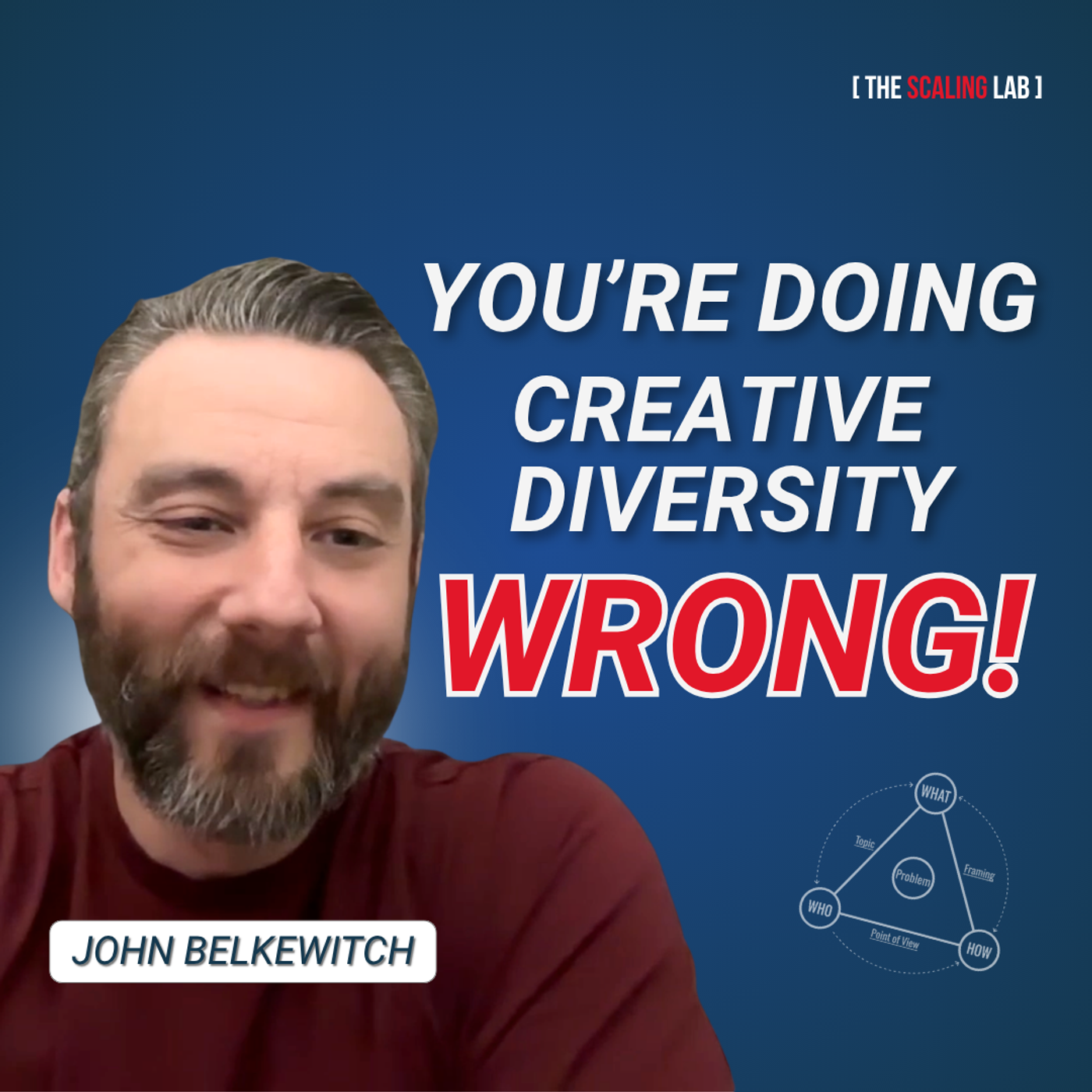 Creative Diversity Explained: The Who/What/How Triangle Driving Our Top Scaling Ads
 Your Winning Meta Ad Will FAIL on YouTube Unless You Do This