
The Revenue Lounge · 2026-06-25 · 31 min
Key moments - from our scoring
Substance score
46 / 100
Five dimensions, 20 points each
The enterprise buying environment has transformed dramatically since the pandemic-driven spending spike five to six years ago. CFOs and procurement teams now demand rigorous justification for every dollar spent, having learned painful lessons from over-invested, under-deployed security solutions. Marty Overman, drawing from 20 years in cybersecurity including roles at Cisco, McAfee, and Palo Alto, argues that buyers no longer need salespeople to educate them on product capabilities - they've already conducted research via Gartner, LinkedIn, and peer networks. Instead, they need sense makers who can translate complex information and prove operational reality. Overman emphasizes the shift from product expertise to problem expertise, recommending sellers adopt curiosity-driven selling (similar to Chris Voss's negotiation principles from Never Split the Difference) and position themselves as orchestrators of cross-functional resources. Workflow impact assessments during proofs-of-concept have become critical, as is demonstrating how solutions integrate with existing infrastructure and enable teams to do more with less. This approach is particularly relevant for cybersecurity, where 1,100 new vendors enter annually and most require proof that deployment will succeed.
Companies over-invested in pandemic-era security solutions and now face tech debt and CFO scrutiny. They no longer buy reactively and instead demand proof that solutions integrate with existing infrastructure, fit business growth plans, and help teams do more with less.
Gartner research shows ~60% of buyers prefer rep-free experiences early in the journey. With abundant information via LinkedIn, analyst reports, and peer networks, they know product specs before engaging sales and need sellers to help translate that information and prove operational fit instead.
A workflow impact assessment details how a solution will work within a customer's existing infrastructure and team processes. Darktrace requires them during proofs-of-concept because fully deploying solutions and training teams on actual workflows dramatically improves adoption and prevents the accumulated tech debt problem.
Build teams that are adaptable and change-tolerant with strong enablement and communications infrastructure. Sales leaders need to help teams digest late-breaking information quickly and accept that change will come fast and frequent, rather than limiting training to one enablement series per quarter.
Our reviewer’s read on each dimension, with quotes from the episode.
The episode surfaces a handful of genuinely useful operational concepts - workflow impact assessments during POVs, 'comfort pipeline,' multi-threaded vs. multifunctional selling - but they are diluted by repeated analogies (doctor, car, diet) and a lengthy personal-chat section that consumes meaningful time with no B2B payoff.
We've started doing what we call a workflow impact assessment during a pov
pipeline is such a dangerous metric because it's so easy to fake
'Comfort pipeline' is a fresh and memorable label for a real phenomenon, and the multi-threaded vs. multifunctional distinction is a small but genuine contribution; otherwise the episode recycles well-worn ideas - the Chris Voss reference, curiosity as hiring signal, trust-in-sales - that circulate heavily in B2B content.
comfort pipeline. Like, it's the opportunity you leave open because if you close it, your leader's going to freak out
pipeline's a lagging indicator. By the time you're looking at a pipeline dollar, there's all this activity that you should have been looking at
Marty Overman is a credible practitioner - EVP of Sales for the Americas at Darktrace with 20 years across Cisco, McAfee, Palo Alto, and Imperva - and speaks from genuine operational experience rather than thought-leadership abstraction; the interview does not fully exploit his depth, leaving much tacit knowledge untapped.
I started at Cisco 20 years ago as an associate sales representative
I have been going to RSA...Since 2006
The episode names real companies and references a few approximate figures, but almost every substantive claim rests on personal analogy or vague attribution rather than hard data - deal outcomes, win rates, or customer-named examples are entirely absent.
I think I heard somewhere, once upon a time that there were like 1100 new cybersecurity vendors a year
We might be talking 18 months from start to finish. And that's on average we've got some that go two, three years
The host contributes two genuinely good reframes ('innovation in isolation,' 'multifunctional vs. multi-threaded') and uses a lightning-round format effectively, but he is relentlessly affirming, never challenges a claim, and frequently answers his own questions, preventing the sharper insights from being pushed further.
not innovation in isolation anymore. They're buying confidence that innovation's actually going to work in their environment
not only multi threaded, but are we multifunctioned?
Computed from the transcript - who did the talking, and the words that came up most.
In this episode of the Revenue Lounge Podcast, host Randy Likas and guest Marty Overman share insights on the evolving cybersecurity landscape, modern sales strategies, and the importance of trust and curiosity in sales. Discover how buyers' behaviors are changing and what it takes to succeed in today's dynamic market.
Transcribed and scored by The B2B Podcast Index.
Speaker A: Welcome to the Revenue Lounge, a podcast for revenue operations professionals who want to understand the various facets of this important go to market function. In each episode, the team at Nectar, uh, interviews revenue warriors on how they are reimagining revenue operations in creative and disruptive ways, and what are their secrets to building a scalable and predictable revenue engine. Lets get started.
Speaker B: Hello everyone. Welcome to another episode of the Revenue Lounge. Over the last few years, the enterprise buying process has fundamentally changed. Buyers are doing more research on their own, CFO scrutiny is increasing, and sales teams are being asked to justify business impact earlier and more often. To unpack what this means for modern sales leadership, I'm joined today by Marty Overman, Executive Vice President of Sales for the Americas at Darktrace. Marty, thank you for joining me today. Really excited to talk with you.
Speaker A: Hi Randy. I'm happy to be here. Thanks.
Speaker B: So, Marty, I usually like to start these episodes just getting to know you a little bit. And so I wonder if maybe you could spend a few minutes talking to us a little bit about your background, maybe your career journey and a little bit about your current role at die Darktrace.
Speaker A: Yeah, I'd like to consider myself one of the lucky few that have spent my entire professional career in cybersecurity. I started at Cisco 20 years ago as an associate sales representative and something about security was appealing. I remember a mentor at the time said, like, if you can specialize in something, cybersecurity is the space. It is not going away, it will only get more interesting. And this was when data center was like the cool place to be. So I specialized in cybersecurity, spent 10 years at Cisco in a variety of different roles. Public sector, mid market enterprise, eventually global enterprise, and then spent a few years at McAfee Palo Imperva. Like I've seen this whole spectrum of network security, endpoint security, really, how cloud came around and transformed at a couple startups. And then now I'm here at Darktrace where it's all really come together and now we've got this AI driven world. So it's been a journey in cybersecurity. I remember when nobody cared about security.
Speaker B: Imagine that, right? Way back when.
Speaker A: Yeah, it was an insurance policy. They were mad to have to spend money on it and they're like begrudgingly did it and now it's a, uh, board level conversation. Everybody's interested in it and it's completely changed the way we talk about it, the way we sell it, and of course how you engage with the public.
Speaker B: Yeah, that's what we're going to dive into in the next, say, 30, 40 minutes. So you and I have previously spoken once before and we've talked about the change that's happening in enterprise buying behavior and how enterprise buyers are increasingly skeptical, especially around AI offerings. The first question would be what feels fundamentally different about this buying environment that we're in today compared to maybe just a few years ago?
Speaker A: Uh, gosh. So again, kind of going back to where nobody wanted to spend money on security. It was this cost center, you know, this was 20 years ago. Then people started paying attention. There were some very high profile breaches that made everyone start thinking about it. The CISO role started to change. Then Covid hit and all of a sudden everybody's remote. And all these large and small companies are figuring out, how do I enable my people to work from home because we have to maintain productivity. And so remote access solutions really peaked. Cloud solutions peaked. It was the era of SaaS and everybody spent like pretty rampantly. Most cybersecurity companies saw spend increase pretty dramatically to enable that. And then now you come around to, gosh, it's also hard to believe that that was five and six years ago. Yeah, here we are five, six years later and there's so much more scrutiny because, uh, they just spent so much money to get like one thing that they really needed at the time. And now CFOs are looking at it. CISOs are looking at anybody who's got any responsibility for a P and L is saying, do we actually have to spend this money because we bought all that stuff four or five years ago, we overbought, we overspent, maybe it's not integrated into everything else that we bought. It was like a knee jerk reaction to this problem. And now they've learned there's actually all these other things we needed to have considered. And if I have to go ask for a dollar, I better be really sure that I'm spending that dollar responsibly. And we could probably all look at the stuff, the stock market, and be like, yeah, there's not a financial issue. And I don't think that's what it is as much as it's, we just have to be responsible with every penny we're spending because there's all these other areas we want to invest in, all these other areas that companies want to invest in and their growth. And they look at it and they're like, I'm not just going to keep throwing money at this problem. And so we've all got to be better. We've all got to be a lot more diligent. I have a 15 year old son who loses things and I'm like why would I buy you the same thing again? We have the money but just because I have it doesn't mean I want to spend it on that.
Speaker B: Yes.
Speaker A: And prove to me how you're going to be responsible with it, how you're going to use it differently. It's the same conversation happening. How does this advance our growth plan? How does this fit in with everything else we already own and how does it help us do more with less? These are the questions everybody has to answer. And so from a seller's perspective we've got to be ready to answer those questions, not just to say let me show up with a data sheet and tell you what my product does. That's just not going to cut it anymore.
Speaker B: Yeah. The other fundamentals dynamic at play is just the access to information that people have to get details on products and use cases. There's of course LinkedIn and there's community groups and there's analyst firms and there's so many different sources. Four or five years ago people couldn't get access to that so they needed to bring the salesperson in earlier to learn about the space or learn. And whether you're talking to a company like Gartner or, or Sixth Sense, there's been a lot of research that has been done. I think the Gartner stat was about 60% of uh, buyers prefer a rep free experience up to a certain point. That being that it's not that they don't want sellers ever. They don't want them prematurely. Right. They want them maybe to help provide additional value or to help understand, validate, assess risk, so on and so forth. So I'd just be interested to get your perspective. Is that also what you're seeing in your buying cycles as well? And if so how are you coaching your teams and your leaders against that dynamic?
Speaker A: It's so funny because I think also a few years ago everyone started thinking oh we're going to move to this like fully remote or inside sales model where you'll engage with the seller very late stage basically just to quote and move you through. And I think it's almost like the more information that's available the more a, ah, human has to help cut through some of that and help make sense of it. I hear a lot of talk in some of this year roundtables I'm part of where people talk about needing sense. Makers don't necessarily need a salesperson anymore. You need a sense maker who can help make sense of all this because there is so much data and information available. And look, anybody can show up and tell you specs and features of a product. I think where we see the human element really start to shine is first off, trust. There is so much information out there and everybody's claiming to do something in this incredibly new, very dynamic, very unique way. And there's some element of it where we're still humans and you want to engage with a human who you can build a trust relationship with, who's going to help you understand. Does that actually solve my problem in the way that I want it solved? Because according to this spec sheet, it does solve it like it does the thing I need it to do. But does it do it in a way that works with my existing infrastructure that I can explain to my team, we can train our team on? I find some comfort in this as a salesperson that they'll always need us because you have to develop a relationship with somebody on the other side who you trust is gonna be there for you.
Speaker B: Yes.
Speaker A: Like who's gonna pick up the phone when I have a problem with this product that the data sheet tells me can do everything I need it to do. I need to trust that I've got this great company behind it and that I've built this relationship with this person who understands what I have put at stake to bring it in and then be able to really stand behind it and ensure that I'm gonna be successful with it. And so to your point, Randy, that is later stage, but it also needs to happen all throughout. And so, yeah, they'll go get. Look, I think the marketing stuff I've seen says that it's something like eight touches and eight engagements where they're touching content or viewing something where before they actually want to talk to a human. And that's why, like, they've taken in all this data. And so as I'm coaching my teams, we're really looking at how do you position yourself, as I've started calling it a problem expert. When you're talking to the customer, do I understand your problem enough to help guide you through this? Because they've already done the research to know if the product does the thing that it needs to do, but it's the understanding their problem well enough to help and understanding their business well enough to help guide them through. Here's what it's actually going to do for you. Here's how it's going to transform your workflows and here's how it's going to make your life better.
Speaker B: Yeah, I love the term sense maker. And I was having conversation with someone about this earlier this week that you put out a set of requirements. And at the broadest level, most spec sheets will have it to a certain degree. You know, they'll check the box. We have that. The devil is really in the details, uh, behind that. And I think it's something you've also mentioned before, is that sellers have to help prove operational reality, which is how is this actually going to impact m, my particular environment or my particular situation and the risk that I'm trying to mitigate, not just product capability. Why do you believe that's become so important for buyers today?
Speaker A: Uh, partially because they bought all these things that never got fully deployed. So they have all this accumulated tech debt. But I think it's also that piece of everybody's claiming to do the thing. So I have been going to RSA and this. It made me feel really old the other day when I said this. Since 2006, it was in the San Jose Convention Center. It was like we all ate in this one room. Um, you know, and now it's taken over all four halls at Moscone. And I think I heard somewhere, once upon a time that there were like 1100 new cybersecurity vendors a year. It's wild. Yeah. Yeah. And some of the companies are features. Someone will buy them and it will become a feature in another broader product set. Some of them are really doing something transformational and very unique. And these, they don't know the difference. Like, how do you know and how do you know where it's going to fit in with everything else? And so you've got to have some level of confidence and something steering you through that. We've started doing what we call a workflow impact assessment during a pov. So, first off, require a pov, you've got to be willing to show what you do and how you do it, not just what you do. Because again, we can all fire up a demo and show the thing we want to show you. But how do we do it? How does it work within your infrastructure? But this workflow impact assessment gets really important because we go into the detail around what are your existing workflows, how is that going to work with what you've got? Because the other thing that's happened with all the things that got bought and never fully deployed is the teams are almost overwhelmed by it. Nobody's getting more people.
Speaker B: That's right.
Speaker A: Last time I checked, Most everyone's going with fewer and really being able to show them how they're actually going to work with and interact with the tool, it just improves the likelihood that you're going to use it. I bought a new car three years ago and they kept telling me that I needed to come in and do the demo with the technical guy, and I blew it off. I blew it off. I blew it off. And then guess what? When I went to use my Blue Cruise, I didn't know how to use it. The thing kept yelling at me and I got frustrated with it and would, you know, I turned it off. And then when it came time to renew my subscription, who didn't renew? My dad works at the car dealership and he's like, if you had just come in and done the session with the guy, you would have known how to use it. And we could have ensured customer success. And that's a smaller scale of what we're doing with these products that we sell. If you can't show them how they're going to use it, guess what? They're not going to get full value out of it. And it's going to make it really hard on the next thing.
Speaker B: Yeah, 100%. It almost sounds as if buyers aren't. They're just not buying innovation in isolation anymore. They're buying confidence that innovation's actually going to work in their environment. Right. And sellers need to help them understand that. And they did, you know, bring them along the way. So you said that great sellers don't show up pretending to have all the answers. The best ones are the ones that can come in and demonstrate curiosity. Can you talk a little bit more about that?
Speaker A: First off, I would like to say I really like the way you said that, not innovation in isolation. I will remember that one. And, uh, probably quote you frequently, Randy. Yeah, it's this immense curiosity you have to have. I think it's almost off putting to always have all the answers.
Speaker B: Yeah.
Speaker A: And again, and I think customers have been conditioned to expect the salesperson to show up and go, let me pitch you. Let me tell you all the things which we've already established. They already know. They already know your product specs, they did the research on it, they know what your product does, and in some cases they may know it better than you do because they've talked to, uh, their peers who maybe use it, et cetera. What we've got to do is really take the time to understand why they need it. And that's going to require you to ask a lot of questions. And in some cases, as you're asking these questions, they may even realize it solves a problem that they didn't even know they had.
Speaker B: Yeah.
Speaker A: Or that you solve a problem that they knew they had, but they didn't realize you could solve for them because they were. I mean, think about it. It's like, uh, search terms, return search results. They don't necessarily give you what you're not searching for. And through asking those questions, you get to learn so much more. And I use the analogy a lot of going to the doctor, and it's the best doctors ask you a lot of questions. What were you doing when you hurt your knee? Can you move this way? Can you move that way? What about this? Does this hurt? How does that feel? And the whole time they're taking information in, not just about what your problem is, because if you tour your acl, they know what your problem is, but they're figuring out how to help you heal in the best way. What do you need? Do you need surgery? How much physical therapy are you going to need? Is this going to take six weeks or 12 weeks? And they're really taking in this information to help guide you on your healing journey. And so I think when we rush to just have answers, we miss a lot of our opportunity to really be able to show value, but also build some of that trust that we're talking about. That's the human piece of it. So it's. Anybody can be a product expert, Just do the research, memorize the facts. Being a problem expert requires you to ask the questions and to seek to understand. There's another one where I think it's Chris Voss in Never Split the Difference. Yeah, one, uh, part of that book that really stands out to me, I read it probably seven years ago, is you want the person on the other side to say, that's right. Not your right.
Speaker B: That's right. Yep.
Speaker A: Because. Oh, you see, you just did it. Because you're right implies somebody's wrong. That's right means you understand me.
Speaker B: Yeah. I was at a conference a few years ago, and Chris was one of the keynotes. And we were at one of the events in the evening, and I was at the bar grabbing a drink, and he happened to be there as well, and we got into a personal conversation. He is just such a fascinating man. I love all of his material, but to talk to him one on one, he's just a very interesting guy. Anyways, off topic, he asked you a
Speaker A: lot of questions, didn't he?
Speaker B: So I guess. What do you think executive selling looks like differently. I'm uh, sorry, let's go a little bit away. One of the things that you talked about when you talk about executive selling is that the idea that sellers are becoming orchestrators of expertise and orchestrators of customer problems rather than being those people that have all the answers. Right. The lone wolves in the organization. Can you expand on that a little bit? What are the best orchestrators doing to help solve customers problems?
Speaker A: Yeah, it does go back to the not pretending to have all the answers. You've got to have this big team behind you. So again their customers, they're not choosing a uh, technology necessarily. They're not choosing a single person, they're choosing a company to partner with. And so having all those various skill sets and those experts that you bring in and expose different levels of your customer to helps uh, builds a lot of credibility. So first they're asking all these questions and they're really understanding the business and the problem statement and then effectively plugging in those experts to help build the additional credibility and the trust that not only are you the, you know, my sales rep, the person understanding me and figuring out how to work with us and having my back, you're showing me that there's this, this, you know, whole team of experts who can engage with us in different ways. Who by the way, aren't salespeople.
Speaker B: Yeah.
Speaker A: Like trust me, they can smell us come in 100 miles away. Like so when you're bringing in, obviously there's your se, but there might be an AI analyst who actually uses your product in our own operations. Security specialist, an incident manager. The support, various levels of support. Support who are able to just bring different perspectives and engage at different levels. Yeah, the best sellers are doing this very intentionally and throughout the sales cycle. It also helps keep up your touch points. I call it breadcrumbing.
Speaker B: Yeah.
Speaker A: Leaving these little breadcrumbs and giving them something to consume and a way to engage with us on a regular basis. Some of these enterprise sales cycles are long.
Speaker B: Yeah.
Speaker A: We might be talking 18 months from start to finish. And that's on average we've got some that go two, three years. And so finding ways to meaningfully engage with them and add value and teach them something along the way gets really, really important. And it helps keep you top of mind. And it also helps effectively position as that problem expert. Like understand. Go ahead. Sorry.
Speaker B: And that trust builder. Right. And I love what you said and it goes back to the word orchestrate. If I can bring in the right resource, depending on whoever that M might be to help you understand, to help you think through the problem, to help you de risk something. Me, as the seller becomes more valuable because I, as the buyer, trust that you're going to be able to go find that answer for me. Right. And especially to your point earlier about these enterprise sales cycles being so long, you've got to sometimes find ways to keep the momentum going. Right. And being that resource, or that connector, if you will, that can connect me with the right people helps build that trust and helps keep that momentum going. Would you agree with that?
Speaker A: 100%. This is more of a yes. And it's your opportunity to show expertise that I've solved this problem for other customers. Here's how I know that you need this. Yeah, here's where this. It's making the suggestions of, hey, would it be helpful to talk to our incident manager? Because they'll be able to run you through what this looks like when you find an indicator of compromise. And going back to my doctor analogy, I don't want to go to the doctor who's never seen this problem before. I want to go to the doctor who's like, oh, okay, all right. I have helped six other people this week with a torn acl. So here's what I know to prescribe. You're going to go to this specialist, you're going to go to the specialist, you're going to take this medication, you're going to do this pt and you'll be back playing basketball in six weeks. And again, that doctor doesn't solve your whole problem, but they know exactly who to direct you to because they, they've seen this problem before and they have guided other companies through how to solve it. And so putting that expertise in front of them, it builds trust, it builds credibility. And by the way, you're not just one person who's doing all this. It takes a team to do it.
Speaker B: Yeah. I think one of the big part discussion is, especially in this world of AI that we're all living in right now, is we still need humans, right? We still need humans to build those relationships and make those connections and build that trust. And everything in sales is changing right now around technology and the speed of information. If you were to put the Magic 8 ball in front of you and think about, like, what's going to happen in two years or what do you think most sales leaders are not thinking about today that they should be thinking about? Because two years from now, the world's going to be much different.
Speaker A: I think building a team around us that is Incredibly adaptable and kind of, I'm going to say, like change tolerant. Among sales leaders, we don't almost treat our salespeople with kid gloves. We're like, oh, no, don't. They can't handle that. They'll break. Like, they can only handle like one enablement series a quarter. And look, this information is going to change so fast. And so having a plan to change and it sounds so counterintuitive. I often joke that I thrive in chaos. Like throw it at m me. We can handle it. And I don't think anyone thrives in chaos where we tend to survive it. But I think it's going to be a little bit of that. And some of how you thrive in is getting comfortable with the amount of change and having a really great enablement team and a really great communications team who can help you kind of take this late breaking news in very quickly, digest it and figure out what that means for your teams. And I've started prepping my teams already. I'm like, look, we're going to throw a lot at you and it is going to come at you fast and furious. And I need you to be okay with that because if they start showing some of that, the change fatigue is a very real thing when it comes about through all sorts of scenarios that we throw at our teams. But I think one of the things we need them to be very tolerant of is how fast this is all going to change. And we may tell you something in March that come August needs to look different. And that doesn't mean we're histrionic. It means that the market is changing at an incredible rate. Yeah, we've got to have some tolerance to be able to move through that. But that also means that think as sales leaders. Go back to your direct question two years from now, we've got to make sure that we've got the infrastructure and the system and the people in place that will help support the consumption of all that change and help our teams be very resilient and tolerant to it so that we can all respond quickly because it's going to change whether we like it or not.
Speaker B: Yeah. What's the saying? The only constant is change. Right. But the pace of change right now is just incredible. How we think about our talent pool and making sure that we are bringing in the right people that can survive and change is really, really important. Is that something that you look for when you're hiring your leaders as well?
Speaker A: Absolutely. Our leaders, our individual contributors, every level. And I think it shows up as curiosity. I Want them to ask me what do I read and then them go read that. I love when they're talking about what podcast can I listen to? Like, where can I learn more? Because that tends to mean that as something new comes in, they're gonna consume it, digest it, and then figure out how to make some sense of it. But yeah, I think we've gotta have that. If we get people who, as we look at our hiring profile, if they're super rigid, there's a place for that. By the way, we need process oriented people who, you know, have a system and a playbook and will run the system in the playbook. So I think if you look for that, plus some curiosity, we tend to find that they're gonna be pretty, pretty resilient and ready to roll with it.
Speaker B: Yeah. Well, Marty, I want to do a little bit of a transition in the podcast now to go to something that we call more of a lightning round, which is this fast paced, off the cuff type of answers. What do you think the most underrated metric in go to market is?
Speaker A: Underrated metric. Okay, I'm supposed to go lightning round. So I was supposed to answer very, very quickly. I don't know that it's underrated because I think we do all look at it, but we've got to look at customer retention. You know, there's so much around the next new logo and you're kind of moving into looking at pipeline and all that. But you can't outrun customer churn. I have more analogies. You can't outrun a bad diet. Like if you're taking in a bunch of bad calories, you can't go run all that off.
Speaker B: That's right.
Speaker A: And I kind of consider it to be the same thing, like really placing a ton of value in that. Actually kind of where we started is the customer getting value out of what they originally bought. Because otherwise, or to my car analogy, they're not gonna renew, they're not gonna do the thing. And so I think a lot of startups especially really focus a lot on the new, the next new logo, the next new partnership, and you can forget quickly about the existing customer and making sure that you're really taking care of them. Yeah.
Speaker B: What about the flip side of that? What do you think is the most overrated metric that we all seem to care about but really does not make any difference?
Speaker A: This is going to be tremendously unpopular. When my marketing guy hears me say this pipeline is such a dangerous metric because it's so easy to fake. It's so Easy to fluff. And I use a term a lot called comfort pipeline. Like, it's the opportunity you leave open because if you close it, your leader's going to freak out because now your pipeline's not big enough. It's so easy to kind of fake your way through it. And I just think we've got to be like, super real about what it actually is and that we're not inflating the dollars, also that we're not understating them. Um, reps are fantastic at hiding what they want to hide and showing what they want to show. And so I just. That there's a. There's actually a guy worked with at PALO for a long time who was one of the first I ever heard say pipeline's a lagging indicator. By the time you're looking at a pipeline dollar, there's all this activity that you should have been looking at and really inspecting. And so I think pipeline's a. It's an easy one. We have to look at it like it's gotta be part of the conversation. But if you're not triple clicking down into what it really looks like, it can be really dangerous.
Speaker B: I agree with that. When you're looking at your numbers and you're looking at your quarter and you're looking at what's at risk or what you can count on, is there any one signal that you think is the most predictable of a deal pushing, or the one that you push your team on the hardest M. Oh, being multi.
Speaker A: Threaded.
Speaker B: Yeah.
Speaker A: If I see that there's really only one stakeholder engaged, I'm very concerned about that deal. And often it comes about through getting that one person that you're really attached to and they won't let you go to others. Because I hear it all the time. When I start digging in on it and inspecting, they're like, no, no, that guy, he's totally got it. Like, you know, really owns the relationship, really. If I go over them, um, like, this thing will blow up. He'll be mad. I'm like, why?
Speaker B: Yeah. And I think the. Just the term multi, threaded, like, everyone knows what that means, but I also think we have to be multifunction, especially when we're selling across large deals with multiple stakeholders that we might be talking to five people, but if we're talking to five people in the same function, there's some danger in that. Because what happens when you're not in the room? Right. What happens when you have that meeting and they all meet together? Getting that internal alignment across functions is so Important. And a lot of times we have to look at, are we not only multi threaded, but are we multifunctioned? Right. To help understand that as well, would you agree?
Speaker A: 100% agree. And a great call out. And going back to the. If you're attached to the one person or even the one group, and they won't let you engage with procurement yet they won't let you engage with operations, we have to ask why. Yeah. Uh, that's a red flag. What is it that we're keeping here? And we should be reading. Absolutely. We should be reading that as a signal that we're not as engaged or maybe as understanding the problem as we think we do.
Speaker B: Yeah.
Speaker A: Or we haven't proven to them that we understand the problem or their business as much as we think they do. Yeah, I like that. Multi threaded and multifunctional.
Speaker B: All right, let's take a couple personal questions. What do you do to decompress? What do you do outside? As a joke, right?
Speaker A: Uh, I don't do that. I was lucky to marry the love of my life, who happens to be what I could best describe as a mountain goat. He climbs 14ers in Colorado, and he's actually doing Rainier next week, which is really exciting for him.
Speaker B: Yeah.
Speaker A: So to decompress, I hang out with him and I go on death marches with him. Uh, but it's. No, seriously. I took up this habit, this hobby of hiking with him. And one of the best things that happens is your phone doesn't work for, like, eight hours while you're out on these hikes. And whether you want to or not, you disconnect and spend some time in nature and, yeah, decompress. And for me, it happens to be that I'm hanging out with my favorite person. So.
Speaker B: Yeah. That's wonderful. So I'm going to guess it's probably maybe in the mountains, but favorite place in the world that you visited.
Speaker A: Ooh. It's not the mountains, actually. It is kind of part of the mountains. There's an area in Italy called the Dolomites. It's like two hours from anything, basically. So it is very mountainous. But we were in this tiny little village called San Vigilio. And it's just, you know, drink wine all day, eat pizza when you feel like it, uh, sit outside on your patio and just enjoy the quiet. Is a magical little village. And it is in the mountains. So I guess I should have said
Speaker B: mountains, but is there a destination in mind that you have, um, in the future that you'd like to visit?
Speaker A: I've never been to Australia.
Speaker B: I went a few years ago. It'd be wonderful.
Speaker A: Did you? Okay. One of my closest friends is Australian, and everything she tells me about it, it sounds magical. Also very dangerous, though. My children will not go to Australia with me because they've read about the spiders and they're not interested in that. But Sydney seems cool.
Speaker B: Yeah, no, Sydney's great, so. All right, one last question. If someone wants to listen to the episode and wants to get in touch with you, best way to do that, I'm on LinkedIn.
Speaker A: Um, Marty Overman on LinkedIn. Tend to be pretty active on there. And then, of course, just Marty Overmanarktrace.
Speaker B: Awesome. Well, Marty, thank, uh, you very much for your time. I really enjoyed our conversation and the wisdom that you've shared.
Speaker A: Thanks, Randy. Yeah, I enjoyed this.
Speaker B: Me as well. All right, have a great day.
Speaker A: Thanks. You, too. Take care.
Speaker B: That's another episode of the Revenue Lounge, folks. Thanks for listening.
Other episodes covering the same guests and topics, from across The B2B Podcast Index.
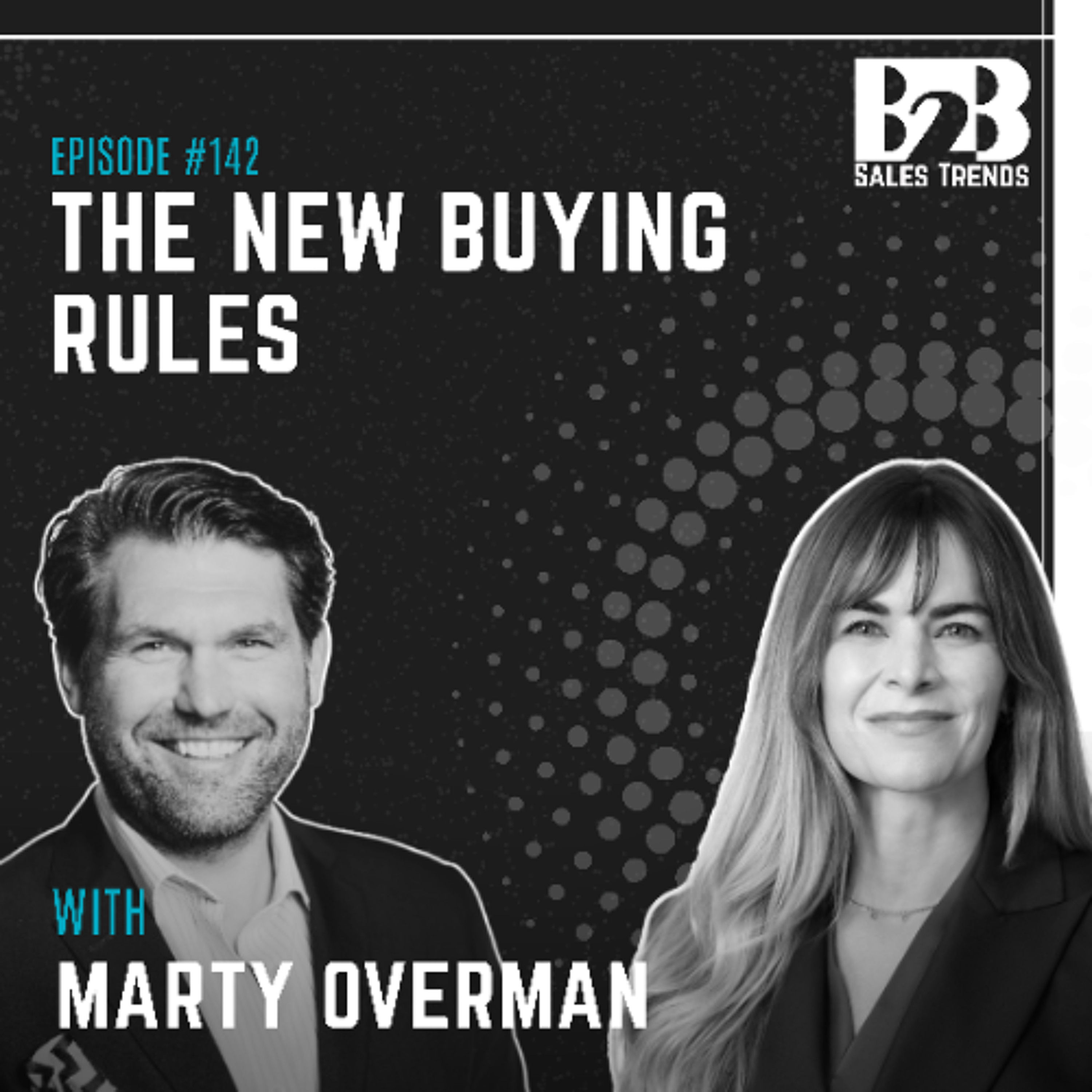 142. The New Rules of Cybersecurity Buying in the Age of AI w/ Marty OvermanB2B Sales Trends · features Marty Overman86 / 100
 Boost Product Adoption Like A GoFundMe Pro PMMProduct Marketing Adventures · on Multi-stakeholder buying committees87 / 100
 How One Rep Closed by Asking the Buyer for a Competitor ComparisonClosing the Deal with Fexingo · on Multi-stakeholder buying committees81 / 100
 Unlocking B2B Sales SuccessTrue Confessions of a Sales Leader · on Multi-stakeholder buying committees75 / 100
 #67: CMO Strategies in a Health startup (Dexcare) by Former Microsoft & GE Healtcare (Jamie Gier)Impact Talks · on Multi-stakeholder buying committees71 / 100
 From Support to Strategy: The Evolution of CS in a Data Driven World ft Devin Shane
 Building a Revenue Operating System that Leadership Trusts ft. Aidan Nevin
 Unlocking Revenue Intelligence: Bridging Data Gaps with AI & GTM Strategies ft. Uday Sharma
 PLG to Enterprise GTM: Playbook for Experimentation, Signal Discipline and AI ft. Stephanie Couzin
 Transforming Customer Success in the Age of AI ft. Chad Gorman