The Retail Tea Break · 2026-04-09 · 33 min
Key moments - from our scoring
Substance score
40 / 100
Five dimensions, 20 points each
Nick Harbaugh brings three and a half decades of experience executing complex retail projects for Fortune 100 and 500 companies across hundreds of thousands of store locations. His career spans from co-founding Retail Marketing Services in 1994 - when he managed massive rollouts for RadioShack, GNC, and Lowe's Home Improvement - to consulting globally on construction, logistics, and fixture installation as The Retail Nomad, now based in Costa Rica. The episode unpacks his philosophy on project success: getting all internal departments (visual merchandising, operations, logistics, maintenance) talking to one another before execution, and establishing unified vendor partnerships rather than siloed relationships. Harbaugh shares concrete examples of simultaneous international blitzes - like outfitting nearly 600 locations across 15 countries in a single evening - and explains why he often says no to projects with misaligned budgets, poor scope definition, or disconnected leadership. He positions selling not as transactional pitch-work but as long-term relationship-building through LinkedIn, speaking engagements like EuroShop, and his YouTube channel The Retail Nomad, which showcases global retail environments and keeps his name in front of decision-makers without aggressive prospecting. The conversation resonates with store operators, retail marketing leaders, and brand executives responsible for nationwide or international rollouts.
By aligning all decision-makers and vendor partners in advance - construction, logistics, visual merchandising, operations - and defining scope A to Z before execution. Harbaugh cites a example of outfitting nearly 600 locations across 15 countries in one evening, which required unified planning and pre-positioned inventory and labor.
Disconnected departments and cost-cutting that sidelines internal expertise; visual merchandising, marketing, and construction departments often never speak to each other or maintenance teams, leading to impractical designs that create problems in-store and hurt customer experience.
No; Harbaugh emphasizes saying no more than yes. Projects with poor scope definition, CFO-driven budgets that don't match reality, or misaligned internal stakeholders are not worth pursuing, because the risk to reputation and margins outweighs the revenue.
Build long-term relationships on LinkedIn, speak at industry events like EuroShop, and create content (like The Retail Nomad YouTube channel) that keeps your name and expertise visible to decision-makers over months or years - so when they need help, you're already top-of-mind.
Brands have outsourced internal construction departments to manage costs, making vendors more valuable but also creating younger, less experienced internal teams. Access to technology (LinkedIn, email, YouTube) replaced Rolodexes and paper brochures, but relationship-building and listening remain the core sales skill.
Our reviewer’s read on each dimension, with quotes from the episode.
The episode is dominated by generic networking advice ('build relationships,' 'listen better,' 'join associations') and nostalgic career storytelling rather than actionable, novel insights a B2B operator would lack. The few operational specifics (e.g., coordinating cross-departmental communication, managing rollout logistics) are buried under lengthy anecdotes and lack concrete frameworks or metrics. The substance-to-filler ratio is poor.
So I very seldom knock on the front door of the house. I always like to say, I walk in the side door and I walk out the front door with a million dollar PO, right?
I don't like to offend people. I don't wanna to, you know, upset them. So I just present my offerings
The episode recycles tired platitudes: relationship-building over hard selling, the importance of listening, multi-stakeholder alignment, and following industry trends. These are not contrarian or fresh - they are standard advice repeated across hundreds of sales and networking podcasts. No first-principles thinking, counterintuitive insights, or provocative arguments are present. The 'tech drives brick' observation is vague and uninspiring.
I build relationships for 10, 20 years, right? I'm here to create solutions
the only thing that doesn't change in our industry is change
Nick Harbaugh has genuine, relevant operating experience: 35 years in retail construction, project management, and international rollouts for Fortune 100/500 brands. He is a practitioner with real P&L exposure and has executed thousands of large-scale projects. However, he is not a current exec or board-level decision-maker at a major retailer/brand; he is a service provider and fractional consultant. His credibility is earned but somewhat niche to logistics and installation rather than broader retail strategy.
with more than 35 years in commercial construction and large scale retail execution
he has worked with some of the world's most recognized brands, helping Fortune 100 and 500 companies bring complex retail environments to life
While Harbaugh name-checks a few brands (RadioShack, GNC, Lowe's, Nike) and mentions specific geographies (Canada, Mexico, Costa Rica, Chile, Singapore, Istanbul, Colombia), he rarely provides concrete data: numbers of stores, budgets, timelines, financial metrics, or measurable outcomes. The 'blitzed 600 store locations in 15 countries one evening' claim lacks detail (cost, ROI, duration, actual KPIs). Most claims are anecdotal ('we've touched thousands') without evidence.
a trinket company, we blitzed at five, almost 600 store locations. One evening, 15 countries from Canada to Chile
we've completed projects in hundreds of thousands of store locations
The host (Melissa Moore) asks open-ended questions and shows genuine interest, but rarely probes deeply or challenges claims. Follow-ups are surface-level ('How has that changed over the years?') rather than probing assertions ('You say internal teams are younger and less experienced - what specific examples show this costs brands money?'). The guest is affable and dominates airtime with long monologues. There is no productive disagreement or skeptical pressure that would test the guest's claims or extract harder insights.
Are you finding, and maybe I shouldn't even ask this question, are you finding that things aren't designed properly
I tell you in the politest possible way, you've had an incredible, an absolute incredible career
Computed from the transcript - who did the talking, and the words that came up most.
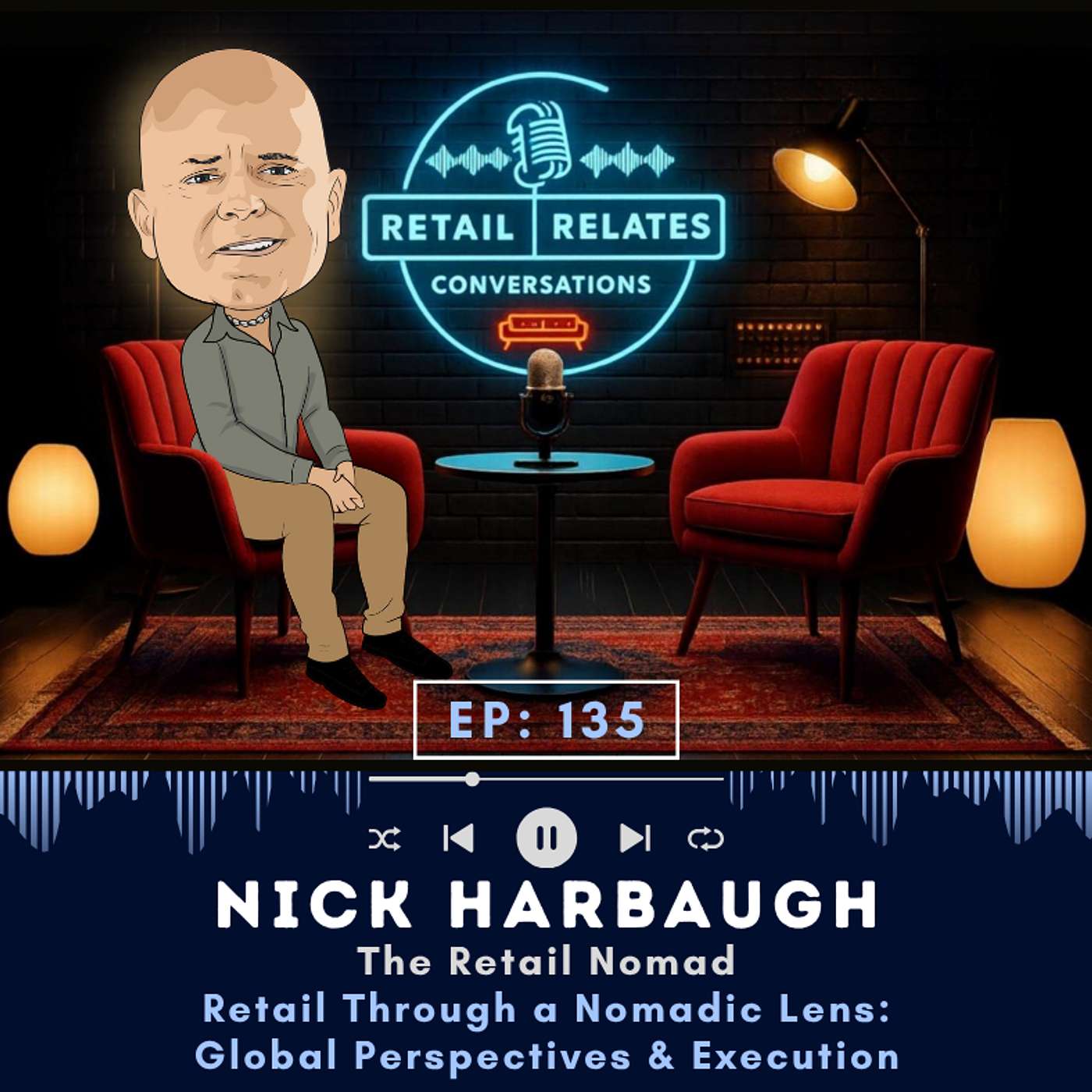
In the latest episode of The Retail Tea Break, Melissa is joined by Nick Harbaugh. The retail project management leader has more than 35 years of experience in commercial construction and large-scale store rollouts. He founded Retail Marketing Services and went on to lead international programs for major global brands, delivering complex retail execution across hundreds of locations and multiple countries. Now based in Costa Rica and known as The Retail Nomad, Nick shares his global perspective on brick-and-mortar retail, operational discipline and what it truly takes to deliver projects at scale. Key Discussion Points Managing store rollouts across 600+ locations in 15 countries The importance of cross-department collaboration between marketing, construction and operations Why strong project management protects timelines, budgets and client relationships Cost control, scope clarity, and knowing when to walk away from the wrong projects Relationship-driven business development and long-term networking strategies Life in Costa Rica and building The Retail Nomad brand! Check out The Retail Nomad: This episode is
Transcribed and scored by The B2B Podcast Index.
Well, welcome to season 10 of the award-winning Retail Tea Break podcast. My name is Melissa Moore, The Retail Advisor. I'm a retail educator, trainer and retail conference MC, and each week as your host, I'll be joined by industry experts, retailers, and brands to dispel the myths, share their knowledge and give you an insight into the retail industry. There's well over a hundred episodes now for you to listen back to on your favorite podcast platform.
Or of course, watch us over on YouTube. And while you're there, please hit that follow button so that you get to listen first every week. And if you've enjoyed an episode, don't forget to leave a comment or subscribe to the podcast to stay connected. And remember, sharing is caring in the retail industry.
Share an episode across any platform with your network. And if you're on LinkedIn or Instagram, tag me, Melissa Moore and the Retail Tea Break podcast. Ooh, with a little secret we've been keeping... you can now find the Retail Tea Break podcast on Substack.
You'll get to read my take on each episode, extra learnings and lots more insights. So subscribe to the Retail Tea Break podcast on Substack today. In the meantime then, grab a cup of tea, sit back and enjoy season 10 of the glorious Retail Tea Break podcast. This episode of the Retail Tea Break podcast is brought to you by SmartGifty.
The modular digital platform connects gift cards, loyalty and data into one unified experience, and is used by shopping destinations, shopping centers, and retail chains across Europe. Well, what makes SmartGifty different? It's not the technology alone, but a philosophy to treat every customer as a guest, and every interaction as a moment of hospitality. Gift cards here are not just payment instruments, but a powerful marketing and insight tool.
It's a true closed loop system, meaning fund state on the issuer's own account with no banks, no intermediaries, and no revenue leakage. The platform is fully modular, highly personalizable supporting physical and digital gift cards, Google and iOS wallets and can be implemented in all backend systems. So for more information, visit www.smartgifty.
com today. Today I'm joined by a retail project management veteran with more than 35 years in commercial construction and large scale retail execution. From nationwide rollouts and remodels to new store build outs, he has worked with some of the world's most recognized brands, helping Fortune 100 and 500 companies bring complex retail environments to life. After co-founding and scaling retail marketing services into a multimillion dollar business, he went on to consult globally across construction, logistics, and fixture installation.
Now based in Costa Rica and well known as The Retail Nomad, he combines deep industry expertise with a global perspective on how retail operates around the world. Nick Harbaugh, The Retail Nomad. Welcome to the Retail Tea Break Podcast. Melissa, thank you so much for the invitation, and I'm excited for the time we're gonna spend together here today.
I am so excited about kind of doing a deep dive into what you know and what you've done, because I tell you in the politest possible way, you've had an incredible, an absolute incredible career, not that it's over anytime soon. I'm so very excited for this conversation, but look, to kick us off in the time that it takes to boil a kettle, which I am told is about two minutes, tell us a little bit more about you and of course, your background in this industry. Absolutely. Let's back up...
when I, let's say childhood years, right? I used to love playing with Lincoln Logs and Legos and you know, these little games that where you would put things together and build something. You'd build a Ford as a child or build, try to build a house, if you will. And if you just, you know, fast forward, if you look at our retail sector today, it's kind of what we do is we put bigger pieces together which at the end creates a retail environment that we're all very familiar with globally.
So my, my process with and and, and going from childhood and through educational years, continued along that path. I thought I was gonna start in engineering, if you will, for mechanical engineering. I quickly learned and realized I wasn't the best academic student, you know, along that path. And I ended up having, having the opportunity to start my first entity in 1994, you know?
So come together, retail was booming across North America, one of the fastest periods of growth for that retail sector. We got a hold of some of the best brands that were out there, booming in business, hundreds of stores being built per year, remodels and so forth under the, the banner Retail Marketing Services, RMS. And you know, we rode that wave of growth, you know, brands, RadioShack, some which is no longer around in the US, GNC, Lowe’s Home Improvement . We really learned a lot at such a young age in how to, you know, copy, cut, repeat, and build and scale, which it drove us to all the, the international borders of the US.
You know, we were very fortunate for the timing to our entry to the marketplace. It was a blessing, right? Then I had the ability to cross international borders. Mm.
A few of those brands started going north and south, you know, and I had a, a cell phone with an international plan way back then. I'm like, I can build some stores in Canada, you know, and, and say the word aye. I could go down to Mexico and, you know, say ¿Cómo estás?, you know, and, and it really opened my vision internationally to what the world has to offer in our retail sector.
So quick synopsis on where I started and, you know, maybe where we're at here today. It's amazing. It's incredible though that I think you breeze through the fact you built, supported and installed so many of these stores and I definitely wanna go into that, but that international expansion obviously has been something that's been kind of right at the forefront of everything you've done. But as we say, installation, project management, right up to handing over keys, to people like me as store managers.
Like the work you've done and you continue to do is absolutely incredible and it's very much embedded in this industry. But talk us through the process. 'cause very few people listening would, I suppose, be aware of that. And I think they'd also be surprised at the detail and the different departments within retail kind of that you talk to too.
Absolutely. And that's one thing that we truly encourage is that communication of all departments, A: on the inside of the retail brand, you know, visual marketing, merchandising, operations, logistics. You know, when they're all in communication with one another, our probability of success on at the store level is, you know, a thousand percent higher, you know? So I love it when a, you know, an international brand, whoever it may be, they design a product or a display or fixture, or they wanna change the theme.
And let's, let's scale this. Let's roll this out to a hundred some store locations, if you will, and take it macro. You know, and we look at the store list, we look at the delivery schedule, we look at the labor, and so forth, and we put all of that together and then we devise a plan for success. And I love that, you know, we've blitzed stores internationally.
You know, just to give you an example, a trinket company, we blitzed at five, almost 600 store locations. One evening, 15 countries from Canada to Chile, so they're A and B store locations, one evening, we've got that international bandwidth to copy, cut, repeat, and replicate at scale on an international footprint. And to me it's fun. It's like kind of put solving a Rubik's Cube, if you will.
And every project is a different Rubik's Cube. Pretty exciting, right? It's, it's bananas like when you think about, but actually the impact that then has on their customer is that wow factor. 'cause as you said, it's like you've flick a switch overnight, but you've done it everywhere.
And that level of detail like absolutely blows my mind. You know, you call yourself The Retail Nomad, but you have this consistency even when everything around you is changing, you know, it's absolutely bonkers. 'cause obviously stores are stores, they don't always look the same. They're not in the same format, but you still have to deliver.
We do. And it, again, when you've got all the players, all the decision makers, you are there at the table, you know, pre-project, right? And sometimes we see and we feel like something's off here. And I've learned in my industry, in my career, to say no more than saying yes.
Because there's a lot of variables, a lot of moving pieces and parts. And when something is off... yeah, maybe they don't have the experience. Maybe they don't realize the repercussion effect at store level when we get there and arrive and if, you know, we need a 10 piece puzzle, I always say, and they ship us seven or eight pieces, where do we get the other two or three pieces?
I don't know. Yeah. That comes from experience and completing rollouts in thousands of stores. We literally can say that we've completed projects in hundreds of thousands of store locations.
And that comes from 35 years of experience in the industry and seeing what works and what doesn't. And that's why we love to create that collaborative communication link with the client, the brand, the entity, the designers, the fixture manufacturers, the logistics arms and people. 'Cause when we're all singing from the same sheet of music. We, we have a better melody, you know, at, at the end of the day.
And it eliminates the finger pointing because that's what can happen. What I learned younger years, when we would acquire projects, when we didn't know all the other vendor partners, right? They kinda kept us siloed and it, I was like, was that intentional? What's the, what's the benefit there?
And we don't know who that player is, so what do we do? We would pick the phone up and we would call client, Hey, Mr. or Mrs. Client, we don't, we didn't receive A, B, C product.
We don't, we, whatever it was, it was, I called it a negative phone call. A complaint phone call. Guess what we do now when we all are walking hand in hand in unison, we don't even call the brand anymore. We call the vendor partner that we've known for many years.
Hey, vendor partner, you shipped me a left hand, I should have had a left hand and a right hand to install that fixture unit on the wall. But I, we received two left hands. How can we modify that, fix it, retrofit it on site? The brand never hears the phone call and they're like, wow, that project was amazing.
We didn't even hear a complaint. You know, then that comes from experience on finding solutions, not calling out problems and issues. You have incredible experience over this 35 years, but is it getting easier within the industry, do you think, to work cross collaboratively like this? You know, has that got better over the years?
Do you think it's gotten worse? Whether, I suppose the, almost the interference of socials or, or I suppose people being busier? How have you seen it change? Well, I mean, I've been in the industry long enough.
I've, we've seen peaks and valleys, right? So if you look at the crash of ‘08, 9/11, there were really tap the brakes in some of those cases. After that happened, some of the brands would, would thin out the herd from their construction departments and their internal staff. What I've seen is they, thankfully, some of them now have leaned onto the vendors to, to be that light switch when they need us, they turn it on.
When they don't need us, they turn it off. And that way it's not a yearly, you know, weight load on their, on their cost structure, at home base. But with that, they've got fewer resources. So we become more valuable in, in essence, hence why I like to say no more than I say yes.
A lot of those internal staffs are younger, right? And I say that and not as a, a finger pointing or not as a negative, but they don't have the experience, right? A lot of these retailers try to cut cost and minimize their overhead. And then the youthful team that they have that, if they do learn to lean up on us, fantastic.
Some don't. And those are the ones I walk away from. I want my competitors to work on those projects. And I hate to say that, but I don't, we don't want every piece of business 'cause not every piece of business is designed correctly.
Or maybe the budget, they come to us and they say, we've got this project. Whatever the project is, can you install this, whatever, this display, fixture, millwork, whatever, and a thousand store locations. Sure we could do that. That's easy.
But they want to pay X. X is the wrong number. Right who, who defined X, I don't know. CFO right?
And not, thanks, but no thanks. And it's having that ability to, to walk away from certain programs that aren't designed properly. Gosh, do you know what I'm, I'm loving the honesty there, and I think, again, that comes from this 35 years experience. Are you finding, and maybe I shouldn't even ask this question, are you finding that things aren't designed properly or unfortunately in-house, they're designed in a way to keep the CFO happy?
It, it, we've seen it all, right? And we, sometimes we see and we feel that disconnect. We see and realize that visual merchandising or marketing never spoke to construction, never spoke to ops, never spoke to their maintenance team that has to maintain whatever it is we're installing, right? And, and there's that disconnect sometimes internal, you know?
Or on the flip side of that, we have those clients that just rock and roll, like, wow, that team it, they're, they're in unison with one another. And you like those programs because we all feel successful at the end of that, the vendor side, the brand side, and the C-suite, CEO, CFO, like, wow, that was a really successful program and that's why we encourage that communication in advance. Let's get that definition of the scope of work defined A to Z and let's dance through it, front and back, from every department's vision because you know, there's a lot of pieces out there and, and you being on the store ops side, you know what it's like.
You, you see a program rollout like who thought that was a great idea? Like, wow, maybe Susie in marketing, but Billy in construction, it made no sense, right? You know, we've seen the good and bad over the years and that's why we try to give that feedback, constructive criticism for those that are willing and want to hear it. 'cause some do and some don't, you know?
I've had, we've had clients that tap the brakes and, you know, Nick, we're the brand. We know what we're doing. Okay. It's bizarre as a, and actually, as you say, from a front end perspective, those in the store, the store that you've built, or the store that you've changed, know full well straight away that it's not gonna work, or it's not practical, or it's not productive, or it's inefficient.
And actually, funnily enough... the customer can tell you that too. So I do always wonder how in this day and age we can be so disjointed in some departments from actually what you're saying, you want the customer to have that journey they need to have, but also what the people in store who are playing with the space, what they're gonna live to it. It's very strange in this day and age that that can still happen.
But obviously from what you're saying. It does. We see it occasionally, right? But here, look at it from our perspective, right?
I've been in the shop, you call it, on the, on this side of the pond you all call it shop fitting. But on the other side of the pond, we call it installation, project management, you know, nationwide rollouts. We do those installs every day, every night, right? So just think every major international label that you've heard of, we probably touched it, done something with it.
So look at that experience. We've touched literally thousands of those brand projects. Sometimes that brand comes to us that they have all the answers. Like, you've only installed your brand, you know, for the last five years, 10 years, 20 years.
We're trying to give constructive feedback and suggestions based off thousands of different brand rollouts. Like this worked really well last year, what if we considered your program by adding these few elements or steps to the process, you know, to ultimately create a higher level of success in completion. That's what's important, isn't it? Like I wish they'd listened to you more Nick, 'cause obviously, again, as you said, 35 years experience.
You kind of know what you're talking about. You really do. We're here to help, is what I always say. Some like that.
Some like that. Some encourage it and some don't. Oh, I know, it's weird, isn't it? But look, I wanna kind of move us sideways a little bit, if you don't mind.
'cause again, playing on the fact that you've been in this industry so long and the discussions you've had, the negotiations you've had, I kind of wanna move this into selling, 'cause again, you've been really honest and open with me in the past about those deals that you’ve done. So not even, I'm not even talking about the retailers themselves now, or the brands, but how that works. 'cause again, I think this is a key area in retail right now. That we kind of miss.
We skip a beat here and we just presume people can sell. So you obviously do a lot of deals, a lot of negotiation. What are lessons that we can learn or the insights you can share when it comes from the way we'd say that you actually do business? Great question, Melissa.
That I don't know if there's an actual book, right? You know, step one, step 17, you know, and so on. I'm, I'm a little more old school. I think you mentioned that in our prior, prior chats and so forth, you know, but backing up, when we originated in the nineties, mid nineties, we didn't have Google, we didn't have cell phones, we didn't have laptops, right?
You know, I started my entity before Google, you know, so I remember we would mail paper brochures to clients, right? So if you look at that, that curve and that, that growth on what we have now at our luxury and fingertips, you know, why we collected business cards. We had a Rolodex, right? And you know, and just bringing out some terms.
Some of the viewers may not be familiar with if they're, if they're youthful. But I say that because today's technology and what we have access to is amazing. It's incredible. LinkedIn to me, is the number one business, you know, platform in the world.
Some get it, some don't. Those who don't, will not be, they will not monetize as much as those who do, right? So, what I do now is I connect A to B. I don't even look at it like I do sales.
I build relationships for 10, 20 years, right? I'm here to create solutions and bring solution entities to brands, people and folks that are in that decision making position. And we enjoy that and that connection, it's all about networking. You know, I'm a member of a group, I don't know if you've seen on LinkedIn, it's called The Mob and I love it because it's easy to remember, right?
It's hard to forget the Mob, but it's an acronym that stands for Maximizing Opportunities for Your Business. All we do is we bring brand a few hundred brands into a few events annually, and we hear where their pain points are, so we don't sell them, right? The odds of them needing my services at that point in time, in most cases, are very minuscule, right? But they might need flooring.
They might need lighting, they may need engineering. Like, oh my goodness, you need to talk to my buddy Mikey or Susie. She's been in engineering for 27 years and you know? That that connecting A to B type of scenario, and before you know it, I get the phone call, Nick, did you hear Nike's building 102 stores and Susie's needs installation?
I'm like, I didn't hear that. Yo, here's her number. I've worked with her for 22 years. It's that warm introduction.
So I very seldom knock on the front door of the house. I always like to say, I walk in the side door and I walk out the front door with a million dollar PO, right? It makes selling fun and it's truly relationship oriented. That's, that's so interesting.
I think from a business perspective, even from a customer perspective, you're building that emotional connection is what I'm hearing. You are listening. The art of listening, it is not it, it's like it doesn't exist half the time out there nowadays. Again, because of social media and our phones and our laptops, and we are so engaged all the time, but on our terms that we don't know how to listen.
I say the youth, the youth, I mean, they're on some of the platforms. I'm not really sure how you monetize in our industry or sector of business and Instagram and TikTok and, you know, LinkedIn, we know going in that it's, there's an, there's a high probability of transacting and that's why all of my time is invested on LinkedIn. And before you know it, they see me, they know my name, they know my service offerings. And then they see my resume online.
They see who, who we've installed for. They're like, "oh my goodness, if he can install for all of those high-end luxury brands, he could probably help us with ours." So it's Guerrilla marketing, if you will, you know? Reverse engineering the process, you know?
So I truly love connecting folks, networking with folks and speaking. I spoke here this week at EuroShop in Dusseldorf on two different stages. Hopefully some folks that didn't maybe know what I do or have done are maybe now aware of my name. So it's marketing and getting my name in front of international decision makers and I, I truly enjoy it.
From a networking perspective again, 'cause you are, you are like the master of it. You are so good at it and it's, it seems to come so easily from you. Is that the suggestion? 'cause again, even from a retailer customer perspective, like there are so many ways now to get yourself in front of a customer.
And I think we've forgotten that. I think as you said, we've hit hard on the old fashioned marketing, well not even old fashioned, but email marketing, that it kind of drops dead, social media for the sake of playing social media, especially on certain platforms, but from the way you network, it is about constantly getting the name or the brand or you and those shelves out there. Exactly. And, and here's, I mean, let, let me flip the coin.
If I was maybe one of my competitors, right? And they may knock on that front door, you know, once a week, once a month. And the brand, they're like, we don't need your services. You know, it could be a very annoying, could be offensive at times.
Like, dude, I told you, we'll call you when we need you, you know? And that, I don't like to offend people. I don't wanna to, you know, upset them. So I just present my offerings and that's why, I mean, I don't know if I'm jumping ahead here, but in the creation of The Retail Nomad YouTube channel that I, that I built a few years back, all that does is it puts my name on the decision maker's desk on a weekly basis, but I'm not selling, I'm actually providing industry information.
You know, that, that maybe they weren't aware of what a store looked like in Singapore or Istanbul, Turkey, or Columbia, you know? So all I do is I create content. And it's the ability to keep my name on their desk when they need installation or project management services, hopefully they would think, "Hey, who's that short balled gringo that lives in Costa Rica, travels around the world and installs things internationally?" Oh, Nick, you know, and if they wanna use our service, great.
And if they don't, no harm, no foul. So I actually dislike the actual term sales because we, none of nobody likes to be sold, right? None of us, you know, I dislike it when you walk in the store and they're all over you and hounding you. I'm like, whoa, whoa easy tiger, you know?
It's softer. You are connecting with people, I suppose, on a human level, as you said. It's not about selling what you do. They'll figure that out for themselves.
But if you keep showing up, and that's definitely the one thing I see with you, it's consistency, whether it's on LinkedIn or whether it's on YouTube. You are there. The smiley version of you that actually when you meet in person, is exactly the same, and it is that authenticity as well. Totally.
Yeah. And I mean it. I like it. I love it.
It's fun. It's exciting. You know I met you in New York there, was that last month? Oh my goodness.
It feels like it was yesterday. I've had, I've had surgery since I saw you last. I mean, but It's mad. I mean, but think of that we're, we're rubbing elbows out there in these associations.
That's one thing I would tell some of the, your viewers potentially, especially if they're youthful or in still in school, join the associations. I mean, that's how you're going to meet individuals. That's how you and I met through, I'll give a shout out to Rethink Retail. Boom, you guys rock and the TRE's, Top Retail Experts.
I would not have met you without that connectivity that they brought us together. But it's the same RDI, Retail Design Institute, Shop Association. I just met with the European leader, Leo yesterday. Leo, you rock dude!
Thanks for getting me on stage. Another shout out, you know? But again, actually that's really important that you, you, you celebrate other people as you go on your journey. And I think that's be lost almost in time right now.
But again, you, you lift people up as you move along yourself. So many people these days are self-serving. Yeah. And they wanna build themselves up.
But it takes a team, it takes an army, it takes a, you know, we all should be hand in hand winning and crossing the goal line together, right? And I love those folks that help me 'cause I wanna help them and, you know, and, and reciprocate that, giving shout outs and the love to them. We all win. You know, the industry could be fun if we allow it.
I don't want it to be stuffy and, you know, too corporate suit and tie sometimes, and, you know, hence my goofy necklace everybody comments about. I love this. And actually on that, we've gotta talk about the necklace. We've gotta talk about where you're living technically right now, but also we need to talk about the YouTube channel.
Tell us all. Well, okay, I, let's back up. I left the continental United States in 2005 and I learned by having that communication of that international plan on my phone when I was building stores in Canada and Mexico, I'm like, well, they can still reach me. My phone rings and I'm, oh, it's Nike.
Hello, this is Nick. Nick, this is Nike. You know, I learned at that. I had that ability to communicate internationally across borders.
So I ended up packing up my goods and I Scooby Doo'd down to Costa Rica in 2005, you know? So my neighbors down there were monkeys and crocodiles, but I still could connect and communicate to the corporate, you know, entities in London, New York, San Fran, Singapore, you know? I still, as technology advanced, it allowed me the ability to live more of a, a unique lifestyle that, that was me. Very fun.
Very fitting, you know, so to speak. So I've been in the jungle for 21 years, but I'm on this side of the pond, so there could be some upcoming changes Melissa, stay tuned. Ooh. He's coming to Europe.
I like this! But look, kind of a fascinating question and I'm trying to ask it to everyone this season. Sure. What are you most excited or curious about when it comes to the future of retail?
You know, retail's changing. It's always changed, right? I always like to say the only thing that doesn't change in our industry is change. So you have to be ready for it, right?
Hence why, I'm not a tech guy, right? Why was I at NRF in New York City? It's primarily heavily driven off technology, and what I've summarized just as a quick synopsis is tech drives brick. If you just as a simplicity of mindset.
Look at the scan and go, frictionless technology, you know, a smart dressing room. I remember the first time I heard that and I'm like, what in the world is a smart dressing room? What am I dumb? You know?
But learning what those advancements are, especially with the new, the millennials, the gen alphas, and so forth. You know, our, my demographic is, you know, slowing down and the younger demographics are, are becoming the larger percentage of the buying populace, right? So we gotta kind of follow those trends, which also changes that look and feel, the brick and mortar outlet. So those that have their finger on the pulse of those upcoming changes will be more successful.
So I love learning and attending these shows. One facet has nothing to do with what I deal with, but on the other hand, it has absolutely everything to do with what I deal with. It does though, it all does feed in eventually. I was literally saying this in the classroom yesterday that even if you don't see this right now, this is the kind of new age tech of the future.
It eventually does come down. It kind of runs through that funnel and even if you only see a small piece of it in 5 or 10 years time in your store, it will still impact you and definitely your customer. Absolutely. And for those that are my demographic, I like to say they're taking Fred Flintstone and they're moving me to the Jetsons, right?
Wow, you heard it here first. I love that idea. But look, last question. So Nick, and I dunno where this kind of answer's gonna go.
What's coming up next for you in 2026? Great question, and I'll give you a quick summary, all right? So I'm dancing through Europe here for a month or two, and then I'm going to jet back to the US and do a three month road tour. I've got that Scooby-Doo bus wrapped with the, The Retail Nomad on my RV, and I'm gonna dance from Florida to California.
And then after that I'm probably going to, you know, swim back across the pond over here for a bit. So that should... My goodness me. Yeah.
Yeah. It's the roadshow, The Retail Nomad. I love that and obviously on that, as we said, catch that YouTube channel. 'cause it really does, you know, you share all, all your little journeys and all your exciting ventures as well, and some incredible retail too.
I love it. I love the yin and yang and some people, some people grasp my concept and I'm not sure if I did a great job explaining, but on the channel, I try to give the love of corporate America one week, if you will. And then I try to give a little local flavor of the culture, you know, a brand that some may not be familiar with unless they've been to wherever I'm standing, you know? Now with videos in over 50 countries around the world, you know, it goes corporate brand we've all heard of.
You know, local brand most of us haven't heard of that, that shake and bake yo, if you will. Oh my goodness. If you are listening out there and you are in some far-flung country, reach out to Nick 'cause I have no doubt he'll be hitting that country sometime soon. It's incredible though, what you do and and sharing, especially those small independents is just gorgeous.
But it's just fascinating to see as well how retail's playing out around the world. Absolutely. And it's, it's exciting, you know, to go touch and feel these, these individuals and brands on different continents that may not have the bandwidth or exposure, you know, in the Americas or other entities, giving them a little bit of love and you can feel their passion, especially from the ma and pa's. And I love connecting with those type of folks.
Oh, I love that. I really do. Well, look, if you've enjoyed today's podcast episode, please do like and share it, of course, from any of the podcast platforms out there. And if you are on social media, tag me, Melissa Moore and the Retail Tea Break Podcast.
You can listen back to all 10 previous seasons now, across any of those platforms. And of course, if you're over on YouTube, do subscribe to The Retail Nomad and the Retail Tea Break Podcast while you're there. So Nick, again, remind us where can we find you? Great question!
On LinkedIn, you can find me under my personal name, Nick Harbaugh, H-A-R-B-A-U-G-H, or on YouTube under the name The Retail Nomad. Love to connect with everyone. Do, and I'm gonna pop all those details in the show notes as well. Nick, it's been a pleasure.
I know I saw you in New York early this year. I've obviously just seen you in Dusseldorf. It's been great to catch up on the podcast and I have no doubt our paths will cross again very, very soon. Absolutely.
I look forward to it, Melissa, and thank you very much for your time today. You rock. A huge thank you again to SmartGifty for bringing us this episode of the Retail Tea Break podcast. SmartGifty is a modular experience and insights platform trusted by leading destinations and retail environments, from shopping centers and retail chains to independent businesses and tourism or food destinations.
SmartGifty empowers every place that treats its customers as guests, not just transactions. So for more information, visit www.smart gifty.com today.
Other episodes covering the same guests and topics, from across The B2B Podcast Index.
 Retail’s £6.25 Billion Productivity Problem66 / 100
 Samsung, Sculpted by Aimee & Barbour: AI, Data and Digital Growth78 / 100
 Retail Without Silos Featuring Curvy Kate, Blackcircles & Persi74 / 100
 Building an Irish Brand People Love with Pawpear69 / 100
 From Inspiration to Purchase: How Pinterest Is Changing Retail73 / 100