
The Mack Podcast · 2026-07-01 · 39 min
Key moments - from our scoring
Substance score
57 / 100
Five dimensions, 20 points each
Navigating illiquid private asset portfolios requires new tools for accessing capital without fire-selling positions. Alex Branton of Notam Capital explains NAV (Net Asset Value) financing - a loan structure secured against a diversified portfolio of private assets minus debt - as an increasingly strategic solution for family offices, PE funds, and LPs. With $8 trillion in unrealized value trapped across buyout and venture holdings, and distributions languishing at 15% of NAV for four years, families face a genuine liquidity bottleneck. NAV financing differs fundamentally from secondaries (which impose 15 - 50% haircuts on non-tier-one assets) and restrictive bank facilities (typically 5 - 15% LTV). Notam operates at 15 - 30% LTV, underwriting complex, heterogeneous portfolios - VC, PE, direct stakes, secondaries, co-GP positions - line by line rather than applying blanket haircuts. The conversation covers structure and covenant design, why non-bank lenders can be more flexible than banks on cure periods and capital pledges, and real-world triggers: succession planning, divorce settlements, tax events, and bolt-on acquisition funding. Deal timelines typically run 30 - 40 working days, far faster than traditional bank processes.
NAV financing is a loan against the value of a portfolio of private assets, minus debt, typically at 15 - 30% loan-to-value. Unlike secondaries, which impose discounts of 15 - 50% on non-tier-one assets and require GP consent, NAV loans let you retain your positions, continue capturing upside, and pay only interest and a pick on drawn facilities, with no forced asset sales.
Approximately 90% of NAV loans today are used offensively - to fund acquisitions, bolt-ons, portfolio growth, and bridge exit windows - rather than accelerating dividends. This shift reflects market normalization of the product among sophisticated investors and recognition that diversified portfolio-level borrowing is often cheaper and less risky than single-company dividend recapitalization.
Predictable, cash-generative portfolios with mature PE and real estate holdings are easiest to finance. Early-stage venture is very difficult due to high outcome variability; growth-stage venture works better if diversified with PE or real estate. Notam evaluates each position line-by-line - quality, maturity, realistic liquidity paths, downside scenarios - rather than applying blanket haircuts.
Notam has completed deals in as little as 20 working days start-to-finish, with typical closings between 30 - 40 working days. This is substantially faster than traditional bank facilities, which often take 3 - 6 months and may lead frustrated borrowers to approach non-bank lenders mid-process when time pressure mounts.
NAV loans are structurally more conservative: even at 25% starting LTV, a portfolio must fall more than 50% to hit typical covenant thresholds (50% LTV, a 2x cushion). Non-bank lenders typically offer longer cure periods (up to 12+ months), flexibility to pledge additional capital or make partial repayments, and subjective underwriting rather than rigid rules, since forced liquidation of illiquid assets is value-destructive for both sides.
Our reviewer’s read on each dimension, with quotes from the episode.
The episode contains a solid cluster of useful market data points and a coherent decision framework for NAV vs. secondary, but is padded with repetitive explanations and the core concepts are revisited multiple times. Non-obvious insights exist but are scattered among extended throat-clearing.
buyout funds are sitting on around 4 trillion in unrealized value across around 28,000 unsold companies
distributions um as a percentage of NAV are now around 15% have um, been for around four years
The episode is primarily an educational explainer rather than fresh thinking; the sword/shield framing is explicitly borrowed from market convention. The observation about LP psychological inconsistency - preferring company-level dividend recaps over fund-level NAV loans despite the latter being safer - is the most genuinely original moment.
there is some interesting psychological, I guess inconsistency I'd say in the market. So LPs often more comfortable receiving distributions funded by dividend recapitalization at the portfolio company level. Um, Where A single company gets saddled with debt. But as opposed to a NAV loan at the fund level where the risk is diversified across an entire portfolio
90% of NAV financing is used offensively as a sword as you mentioned
Branton is a genuine niche practitioner running real transactions at Notam Capital, not a career thought-leader, and his market data and deal mechanics feel lived-in. The interview is structurally promotional for his own firm, which limits candor, and the firm operates at a relatively modest scale ($20M - $100M).
I've never seen um, and nor is my partner after 80 odd transactions um, seen something where there's been a forced liquidation
we have done deals in as little as start to finish in 20 working days
The episode earns credit for consistent use of specific numbers - LTV ranges, SOFR spreads, DPI percentages, secondary discount ranges, deal timelines, and two reasonably detailed (if scrubbed) case studies. It stops short of named companies or auditable third-party citations, and some figures are qualified with 'the data varies.'
top tier buyout fund interests...trade at around, say, depending on the asset, 90% of NAV. For anything below the best funds or venture assets, you're looking at discounts of 15 to 50% or more
a European family office with 400 million in private assets...The family needs $60 million in let's say under two, under two months
The host structures the conversation logically and asks the right topical questions, but there is no real pushback, no challenge to the guest's self-serving framing, and one question explicitly asks Branton to explain NAV financing 'in simple practical terms' well after he has already been explaining it at length. Questions are mostly open prompts rather than sharp follow-ups.
How would you actually we kind of jump right in. But how would you break down and explain NAV financing in simple practical terms?
And what are the key questions in your experience to ask if, if you're trying to decide going down one route or the other
Computed from the transcript - who did the talking, and the words that came up most.
In this episode of The Mack Podcast, Brian Adams sits down with Alex Branton, Managing Partner of Nodem Capital, to explore the growing role of net asset value (NAV) financing in family office portfolio management. As private market holding periods continue to lengthen and liquidity remains constrained, Alex explains how sophisticated family offices are using NAV financing as a strategic tool to access capital without selling high-quality assets at a discount. Together, they discuss how NAV financing compares to secondary sales and other liquidity solutions, common use cases, key underwriting considerations, and the questions families should ask when evaluating a financing partner. To learn more about Mack International, please visit This episode is sponsored by In Three Generations. In Three Generations provides education and coaching for individuals and families with significant financial means, helping both leading and rising generations navigate wealth with confidence, clarity, and intention. Learn more at inthreegenerations.com
Transcribed and scored by The B2B Podcast Index.
Speaker A: Something we talk about a lot on the show is governance, next generation leadership, values transfer and the human side of multi generational wealth. Because it plays such an important role in long term family continuity. I want to take a moment to highlight today's sponsor and the exceptional work in three Generations is doing in the family education space. If you are part of a family navigating meaningful wealth succession or leadership across generations, they offer uh, coaching, peer learning groups and family facilitation designed specifically for families like yours. What's especially unique about their team is that their coaches bring their own lived experience from financially successful families into the work that they do. You can find more information in the show notes or visit in3generations.com that's in3generations.com. Today's Conversation Centers on NAV financing, what it is, how it works and why it's increasingly being used as a more proactive tool within portfolio management, particularly as families look for ways to access liquidity without disrupting long term portfolios. We also explore where this approach fits within more complex portfolios, how it can be applied in real world situations and the key factors families should weigh around. Structure, risk and cost when evaluating these types of facilities. Alex Branton is the managing partner at Notam Capital, an FCA authorized asset manager. Delivering tailored NAV financing solutions to GPs LPs and family offices. Notam underwrites facilities against complex baskets of illiquid global assets with solutions ranging from 20 million to more than $100 million. So uh, Alex, it's interesting that we're recording this when we are, uh, you know, in this landscape today of huge amounts of illiquidity in the market. Meanwhile we have these massive secondary transactions that have been occurring and we're now recording this in April of 2026 where we have these looming huge IPOs occurring which will unlock liquidity theoretically. But moving forward I think there'll be, continue to be a focus on these type of transactions. And nav financing is something that I hear more and more families focused on. So it's getting a lot of attention, but I don't think it's fully understood. So maybe help us on a practical level. What's the backdrop? What's driving increased focus on liquidity solutions like navinacing right now? Maybe just paint the picture for us.
Speaker B: Yeah, so look we're as you, as you rightly said, look, we're in the middle of the biggest, the biggest liquidity bottleneck ever seen. Uh, so look, the data varies. Um, and of course there are some looming IPOs coming up as well. But buyout funds are sitting on around 4 trillion in unrealized value across around 28,000 unsold companies. So um, you know even a huge amount of IPO activity and M and A activity isn't going to fully unlock that in Venture you're looking at adding at least another 3.9 plus trillion in just active unicorns alone. Holding periods have also ballooned. So average PE backed company is now held for over 7 years. Venture it's up to 12 to 17 years depending on the data. So the result is there is a dynamic of the cash flow back to investors really drying up um, despite some green shoots ahead. So distributions um as a percentage of NAV are now around 15% have um, been for around four years. Venture is even lower. Um, three quarters of LPs rank DPI as a primary factor when evaluating fund re ups. And so you are seeing this kind of, this need for multiple exit routes um, and multiple kind of channels of um, liquidity from yeah the direct secondaries more likely or financing or NAV financing and all the innovations in between.
Speaker A: And could you maybe help give us some perspective about where we are today relative to what the state of play was three to five years ago? What do you think is really the macro trend that's pushing this?
Speaker B: I think the macro trend are kind of multiple. One is that there is simply just kind of unprecedented lack of liquidity in the market full stop. As I mentioned there's 8 trillion of unrealized value um across P and VC alone. So those are M multi decades loans. Um it's also there is a feeling that you know a lot of people have made a lot of paper money um on this that is kind of about to be realized. People want liquidity but they aren't necessarily, still are not necessarily entirely desperate. They certainly don't want to sell great assets at a discount. Another factor is that I think items such as NAV loans have been more normalized as an offensive tool through precedent. So even if you look at um, capital core facilities for example 15 years ago were uh, also kind of less well understood. Today there's 99% of them. 90 um, 9% of funds are using them um, very frequently. So there is in terms of what's changed three to five years ago to today, honestly not a huge amount. You're still talking about four years consecutively, 15% DPI to the underlying NAV base. It just becomes more acute over time.
Speaker A: So you mentioned some of the other tools that people have available to them. How should we think about NAV Financing relative to secondaries or some of the other credit facilities or options that people might be able to pursue in the space.
Speaker B: Yeah, so if you're a family office, there are multiple routes you can take for liquidity. The most obvious, and one that a lot of people look at first, is really selling your direct company stake or LP interest on the secondary market. The issue here, the primary one, uh, is pricing. So top tier buyout fund interests, which are um, by far the most liquid secondary asset trade at around, say, depending on the asset, 90% of NAV. For anything below the best funds or venture assets, you're looking at discounts of 15 to 50% or more. Um, and so you're crystallizing a loss to generate liquidity. So big discounts on growing assets. There's also the friction here. Um, so the GP or the company has to consent to the transfer. There is a high friction process. But if you can get a premium or you can sell efficiently your stake, that can be a great option. Bank financing, which is often the first call, is often of families to their bank. And so here they may offer you a very low LTV facility, often with a cash coupon element rather than a pick. Um, and here if you're working, if you're holding hundreds of lines of KKR Blackstone type, um, PE LP stakes, you may be able to secure, secure that, but there's relatively little flexibility here in how they, how it works and then NAV financing as to where that fits in and sort of what we do at nodem. I'm sure we'll get into this further but really we use the NAV basis of a portfolio to provide often very bespoke, bespoke, uh, loan. So the NAV being net asset value or the value of the portfolio minus the debt. So pros are the no for sales, no discounts on the growing assets we spoke about there, the directs, um, you continue to capture the upside. The cost is of course the interest rate and on our side it's uh, a pick on the, on the drawn facility size. So there are multiple different avenues. And then if you go to the fund level then you have items such as continuation vehicles and all sorts of kind of innovations that, that are coming in. But that's how I broadly, broadly say look financing versus selling your assets.
Speaker A: And what are the key questions in your experience to ask if, if you're trying to decide going down one route or the other, where does NAV financing, you know, certain fact patterns or commonalities or characteristics, where does it make a lot of Sense. Where does it make less sense? Pros, cons.
Speaker B: Yeah, I think that. Where does it make sense? Look again, it's really kind of a mathematical equation. If the cost of capital for the NAV lender is significantly below your investment opportunity then it becomes you know, quickly, um, a no brainer. Or if you're holding an asset that is, you know, is very strong but the market misunderstands and is growing and you have to sell that asset at 50% discount when it is growing 20% year on year, NAV lending becomes kind of extremely attractive. If your portfolio is only growing at say 5% a year or as kind of, it's very early stage and has a high degree of variability as to the, the uh, eventual value and you can maximize prices today on the secondary markets it often makes much more sense to be able to sell those assets on the secondary market. Those things aren't also necessarily mutually exclusive. What we generally find is that someone may look to take a NAV facility whilst undergoing a secondary process. They just don't want to be in the market and having that perception as kind of a fire sale or someone that desperately needs liquidity. And so you can take a NAV facility and wait for your IPO or your M and A or your kind of more structured secondary process. It's just kind of a portfolio tool in that, in that, in that way as well. And of course um, yeah, that's how I would characterize it.
Speaker A: How would you actually we kind of jump right in. But how would you break down and explain NAV financing in simple practical terms?
Speaker B: Yeah, so a NAV financing is a, in simple terms is a loan against the value of a portfolio of primarily private assets, less all the debt. So let's say in this case, in our case the borrower is typically a family office or a PE fund. The borrower pledges their interest as collateral and the lender so Nodam um, advances a percentage of that portfolio's value and that's the loan to value. So we can look at portfolios of global assets, underwrite multiple asset classes from direct venture to infrastructure funds. And I'd say that typical um, typically LTVs for NAV loans are for bank would be sort of 5 to 15%, non bank 15 to 25% and we might go up to 30%. And so that's the kind of range you're talking about in a NAV loan. So it's the residual kind of equity in your portfolio as the basis as opposed to an operating company or um, that would be more Common obviously in direct direct lending. And I'd say in terms of the misunderstandings of what NAV lending is, uh, as indicated it sits on the spectrum. So at one end you have that bank style senior secured facility at the really super low LTVs, um, often backed by the largest names, PE funds and biggest GPs. On the other end, completely on the other end you get these bespoke private credit solutions which are really quasi equity at much higher LTV, say up to 40, 50% on concentrated complex collateral, um, with more flexible covenant packages. And then nodem would sit somewhere between the two of those. So still very conservative but willing to be very flexible, really do the underwriting ourselves and really to kind of understand those assets. Um, often NAV lending is conflated with direct lending which is a different kind of different in the sense that we are lending kind of. Well, the underlying borrower is pledging shares in a holding company um, which has an underlying portfolio. It's not indebting a kind of an operating company. And so yeah, that's how I describe it.
Speaker A: So we're in this world of private credit has undergone a huge amount of volatility. You referenced traditional lenders and banks as those folks have stepped back. A lot of these private credit solutions, including NAV financing, uh, have stepped in. How should families think about structure and really in terms of covenants, collateral versus what people think of as a traditional bank loan?
Speaker B: Yeah, traditional bank loans, I would say that there are certainly some kind of similarities in the way that they are structured. Uh, they just tend to be slightly more flexible. On the non bank lending side, I'd say that, I mean maybe we can to re answer kind of your question, I guess the biggest fear really is what actually happens when um, these things go wrong and what is the actual process that happens. That's another way of kind of going to say teasing out what these covenants are. What I'd say is that just generally speaking the most important thing is that LTV ratio, uh, NAV lending is just structurally more conservative compared to any other form of asset backed lending or direct lending. That kind of, you mentioned before at uh, that kind of sub 25% rate. Um, so as maybe a quick thought experiment, imagine a family office has $200 million portfolio and gets a $50 million NAV loan at a 25% LTV. The entire portfolio would need to fall more than half before it typically um, hits a covenant threshold of say a 50% LTV which would be that covenant being a two times, maybe the starting LTV and then In a bank you may see more kind of inflexible um rules kind of apply there. Um typically a non bank lender has a much longer cure period um up to a year plus in some instances there's the flex given we're investing from a fund, um there are ways that the borrower can pledge additional capital, make partial repayments. Um and the reason we are kind of extremely conservative and avoid all parties um running into issues is obviously that the underlying collateral is a liquid here. So unlike public equities in the covenants um that you might see in a margin loan um, we have to be far more conservative because you can sell public shares tomorrow morning but we need to build in significant buffers from day one. And the general principle is that no one wants to be in a situation where you're liquidating illiquid assets in a distressed market because it's value destructive for both sides. So whilst I'd say that there are definite similarities with bank lending um the major differences probably on our side I'll go slightly higher LTV whilst still being conservative and also have that real flexibility to be a bit more subjective given we're not apply you know we don't have banking um risk weightings in that way. We're investing from a fund that itself um is much longer than the, the loans that we're underwriting. So have that flexibility um and can also be very bespoke in solving situations in a more pragmatic manner as a, as as a process, kind of a pure process driven um activity that might cause that value destruction. And I'd say just for context as well, any form of forced liquidation is extremely rare in nav lending um primarily because of that still continuing to, whilst higher than banks. Still very conservative lending philosophy against those growing portfolios often heavily diversified. So I'd say the things you want to look at really are one the LTV to kind of how aggressive is the cash sweep and that is you know who has the seniority over subsequent uh flows that come from that portfolio. Is it the lender, is it the borrower getting that balance right? Because you want to start paying down this facility when you can without being um, encumbered um earlier. And then of course the term needs to align with your underlying liquidity more often than not. What we see are uh portfolios that are expecting you know to have two or three liquidity events coming within 24 months. They just don't have the cash right now. And so that there are multiple ways out of that of that trade um, is Also something. And so making sure that that term, um, let's say it's a three year NAV loan term, there are multiple options within 18, 24 months and a huge say equity cushion to be able to even liquidate in the worst case scenario. But as I say, most of these get resolved through a phone call and um, uh, in that way, if that answers your question. Sorry, it's a roundabout way.
Speaker A: No, it's helpful. A quick break to thank the sponsor of today's episode in three Generations. If you are navigating the responsibilities or emotional complexity that come with wealth, they create a space where you don't have to do it alone. They offer free community groups designed to help people from successful families build confidence not just in understanding trusts, governance or advisors, but in understanding themselves and their role in their family system. To learn more, visit in3generations. Com. That's in3generations. Com. And I think it's fair to say that there was historically a stigma associated with taking these types of loans out on your portfolio. People thought of them as a shield and reactive, defensive in many ways. But the narrative seemed to be really shifted towards using this as a sword to be proactive, strategic, um, and a more sophisticated portfolio management tool. Have you seen that shift occur and what do you think's driving that?
Speaker B: Yeah, for sure. Um, so look, we've, we've discussed earlier about the kind of the, the scale of the trap liquidity. So um, I think really what's driving is just the normalization of NAV loans generally with some very kind of, let's say innovative investors having used them very consistently. Um, as is always the case, you usually get the early adopters and then the others follow again like sublines. And NAV loans would be within that as well. I mean today for context, you know, people, well, 90% of NAV financing is used offensively as a sword as you mentioned. And so what do we even mean by that? So that means GPS or investors like family offices are using NAV loans to fund bolt ons, acquisitions, support portfolio growth, um, bridge exit windows and make new investments. And that's in contrast to what kind of people commonly associate NAV loans with which is accelerating DPI. Basically a fund level dividend recap that's only 10% of NAV loans um, were used for that purpose. That said, you know, there is some interesting psychological, I guess inconsistency I'd say in the market. So LPs often more comfortable receiving distributions funded by dividend recapitalization at the portfolio company level. Um, where A single company gets saddled with debt. But as opposed to a NAV loan at the fund level where the risk is diversified across an entire portfolio and does not encumber and any individual company can often be cheaper. That said, I'd say the knowledge g gap is closing and the thing that's driving it more often than not is just the most sophisticated investors taking these things on for um, offensively and then others are now following. As I say 90% is now offensive in that sense.
Speaker A: Talk to me about what is financeable and what is not. I mean if you have a messy complex portfolio of VC, hedge funds, directs, private equity, LP positions, secondaries, CoGP, how do you underwrite those things?
Speaker B: Yeah, I think really look on the point of let's say messy portfolios that's really where we try to differentiate ourselves. So most NAV lenders will lend against say buyout fund interest. The underwriting there is relatively standardized. The diversified portfolios of cash flowing companies fairly predictable distributions. And so there you'll find some will just blindly take the NAV on the capital account statements. The portfolios we see are kind uh, of underwritten line by line. So we're not certainly not applying a bankit haircut, just a blanket haircut to the entire NAV um base. You have to evaluate each position on the quality, how mature is it realistic path liquidity downside scenario. Um, this takes more time and is, is difficult. I'd say that what is tougher to finance anything with a very broad range of outcomes. And I'd say the things that kind of would be tougher to finance would be earlier stage venture capital. For obvious reasons that you have a huge variation in outcome. Really NAV financing becomes relevant to venture when you get into the growth stages and that kind of the distribution of outcomes gets much much narrower and you have a more diversified portfolio. Even then venture can be tough. So often you want to see some private equity or real estate in there. Well at least uh, to cover the loan amount. And so yet items that are difficult would be I think early stage venture. I think there's some opportunity there um, being very conservatively but we don't touch that. We look at growth and often mixed in with others. And then the more predictable and the more cash generative the obviously the easier it gets. But then the cost of those facilities often gets massively compressed as well. And soon as you see kind of very obvious cash flows, banks will step in there. But really look again I'd say NAV lenders are divided by those that are working with the largest names, GPs that take the NAV fairly blind all the way down to, I'd say us in terms of really looking to do the work. I mean we will look at portfolios that don't have formal third party valuations and we will work on the underlying assets to come up with a valuation framework that is sensible and agree with the borrower and that obviously gets checked every, you know, on a quarterly basis or annual basis as well. But you know, that's the, that's the level of messiness we will go to. We will really go and look and understand what these assets, these assets are.
Speaker A: It seems like this is particularly relevant for major, we'll call it life events. So succession, divorce, tax liabilities, et cetera. Do you see that use case as well? Often,
Speaker B: yeah. So look, the fundamental problem with sudden liquidity events is that they impose a uh, rigid timeline on an illiquid portfolio. So the outcome there is almost always bad. I mean a couple of scenarios that I've seen more in a family office context. So let's say succession, a patriarchy passes away, um, suddenly the estate needs to distribute assets to heirs. Some have want cash, some want fund interests. And so the portfolio might be performing brilliantly but you can't divide the PE fund interest into multiple pieces in that way. And again you could face um, headaches on the secondary market, tax events, high friction on everything else that goes with it. A NAV loan can certainly help there or work alongside a wind down process another one divorce what sets a deadline. They don't care that your growth portfolio needs another three years to reach a peak valuation. So there may be a need to equalize the marathon estate by a specific date. Um, and the only way to do that is to sell at say a worse time. So again the idea with NAV financing really is that it converts that time pressure, let's say over a typically five year NAV loan term, um, into you know, that problem into a non event basically that's the kind of idea of it. So I'd say that's how it plays into more life, life kind of events.
Speaker A: And what is the, I mean I know every deal is a little bit different but generally the timeline here, soup to nuts, from initiation to you know, getting the cash in the bank.
Speaker B: So we, we have done deals in as little as start to finish in 20 working days. I'd say typically it's uh, somewhere it sits between 30 to 40 days. And I'd say this is not necessarily what they'll tell you, but often bank facilities can be up to six months by the time that you've gone through start to finish, they end up being much longer. So what can happen sometimes is two or three months into a bank process, someone reaches out to us, um, because they need the capital urgency urgently because an LOI is about to run out on some operating company they want to buy or that tax event is looming, um, and then they'll approach us. So that's how I would say, timing wise and that's quick.
Speaker A: You referenced uh, LTV ratios before and downside risk. You alluded to margin calls. Are you seeing families think about risk in a different manner, underwrite risk to avoid those forced outcomes that you referenced?
Speaker B: Yeah. So look, the question of, let's say call it margin call in this sense is probably the one I get asked more than, more than any others. First thing I'll say again is that the LTVs and NAV lending are structurally super conservative and nobody wants to be in that situation where you're having to um, liquidate these things. And that's really the top, the top priorities. You never want to be as the borrower, the family here. You never want to potentially wipe out some wealth because you have to sell an asset, um, for some borrower. And so we went through the thought experiment before on the 200 million and the UM portfolio in the 50 million NAV loan. But um, again, the way that they're thinking about risk is making sure that there is multiples coverage of that nav loan to avoid ever being in a situation where there's anything um, close to a distress. And really from a family perspective as well, you want to ensure that that cure period is really long. You don't want 30 days in that absolute worst case nuclear scenario that your portfolio falls what it would need to, let's say 70% or something, which is highly unlikely if everyone's done their job. But if it does happen, you want that ability to have a borrower you can have a chat with to explain why there's say a one year um, valuation mismatch here or give you that flexibility to add more assets or whatever else you might be to avoid that, that value destruction. The higher your ltv, I mean ultimately the riskier it gets if you are. We do very little of this. But if you're looking at kind of junior tranches within real estate portfolios where LTVs can get up to sort of 80%, um, we might go up to 60% or something. There is then becomes a risk of um, evaluation triggering something. I think the key is to really focus on that LTV and any kind of what are the covenants and if it's conservative enough and you really are staying at that sub 30% the diversified portfolio, it really should feel implausible, um, that that should happen. By far the biggest thing um, that is tripped up is kind of, and it's still not huge issues but maturity. So you end up you know, two year facility that ends up being stretching to three. Um, I've never seen um, and nor is my partner after 80 odd transactions um, seen something where there's been a forced liquidation. There's always been a workout um, in the sense of an extension.
Speaker A: And that's a good segue to this next question I have about cost relative to you know, the downside of selling an asset. And especially given where interest rates are, how should people be thinking about that structurally? Yeah.
Speaker B: So the honest answer is it's um, case specific but to give you a framework. So right now SOFR is sitting at uh, around 3.7%. And for context NAV loans, uh, a large portion of them are priced at a margin above sofa. Uh sometimes they're also a flat rate. So NAV loans just again for more market context have compressed a little due to competition. But Most are pricing SOFR plus 400 to 700bps. So it gives you an all in cost of somewhere between 8 to 11% depending on the structure, the LTV, the collateral quality. NAV financing makes the clearest sense when your portfolio's expected return is going to expect to meaningfully exceed that borrowing cost. So if your portfolio is generating 15 to 20% return and you're borrowing at 9% you have 6 to 11% positive carry you're being paid to borrow. If the comparison there is selling a discount, it just doesn't make sense in many cases um, it starts to get more nuanced below this. So the decision depends on why you're borrowing. If you're borrowing to avoid selling a position at Ah, a 20% discount on a growing asset, again 9% borrowing cost is still cheaper by a mile. Where it stops making sense is your portfolio is returning at or below that cost of capital from the NAV lender, uh, and you really don't have a compelling strategic reason to borrow. Um, just generally I think the other one is really, well it doesn't make sense. It's the time horizon. So if you only need the cap, so well it can make sense. So if you only need capital for 12 months and expect a significant liquidity event and I'd say This is probably the majority of the cases I see where there's a liquidity event expected in the sub three year period. Even at a relatively high borrowing cost it can be cheaper than a permanent sale. I mean simple terms a uh, 10% annualized cost for 12 months uh, is 10%, a 15% secondary discount is permanent and you're losing out on that, on that growth. So situation specific. But M, that's one way of thinking of it.
Speaker A: And in terms of families diligencing nav lenders, what are the right questions to ask?
Speaker B: Yes, good question. I'd say um, they're probably five things at least to look out for. One is the underwriting depth. How are they valuing your portfolio? Are they being arbitrary? Are they really going to look into, look into this and understand your assets. Valuations can be misleading both on the up and the down. Are they really understanding the quality of your assets? So a good NAV lender is looking position by position. Second, we discussed it also. What's the flexibility of the collateral? Can the lender accommodate a mixed portfolio? Can they structure around the complexity? Do they understand your issues? Do they understand what might not be a plain vanilla private equity fund? You can waste lot of time trying to get a lender comfortable uh, with a portfolio that they ultimately never are going to get comfortable with. The third is that covenant structure and cure rights. So you should ask, you know, what happens if my portfolio nav declines by X percent? What are my options? What are the cure period? Um, can I, can I pledge additional collateral? These will really trigger um, these questions will trigger whether the lender is building a facility, you know, designed for a partnership or one designed to trigger a margin call effectively. Ah, fourth, which is maybe number one really. But the speed and certainty, you know the situations we've discussed before, timing matters. So you need a lender that can move quickly and also deliver with certainty, doesn't need to go out and syndicate some loan, um, which can take a long process which you wouldn't see on the back end. You want someone with there with the capital with a track record of say closing deals in sub 30 days. Again as mentioned, a bank might tell you they can do something within three months. I consistently see them closing at six months plus. So ask them really when have you actually closed them. And then the last one is really to understand that alignment of incentives. The best nav lending relationships are kind of multi, multi year M sometimes multi generational um we hope. And so you want situations where both sides win. The lender should be incentivized to help you succeed, not trigger a default. So you want someone that's really looking for that long term relationship, um, because that you know that makes much easier for the lender as well. Rather than having multiple one time lends, you want to be that person they go to consistently see over time. So are they looking for that long term partnership or are they looking for a short term um, check. So those are maybe that's one, you know that five, those five points are a framework to think about.
Speaker A: And how are you seeing sophisticated institutional level thoughtful family offices leveraging NAV financing within this broader context of their long term portfolio management and the long term return profiles they're hoping for.
Speaker B: So maybe I'll give you a couple of examples that uh, are scrubbed but uh, would be real use cases. So let's focus on say the borrower being a European family office with 400 million in private assets. Mix of private equity funds, direct co investments, few venture positions, let's say the two core assets. Um, so it's a long term kind of evergreen endowment style portfolio. Two assets are going through an IPO process with liquidity expected in 24 months. The remainder of the portfolio is very strong but no imminent liquidity expected. So the family has an opportunity to acquire a controlling stake in a fantastic business. The family needs $60 million in let's say under two, under two months. So option one is they go and sell their top quality fund interests which are growing um, at a discount which is kind of a high friction process. And all the reasons We've mentioned option two is that they can come to Nodem and structure a NAV loan against that $400 million portfolio. We can advance the capital, they can make the acquisition which is then paid back by the IPO proceeds or um, other, other other ways or natural, natural dpi. So that would be kind of an endowment style portfolio that has just cleared, just done the math to make, make it clear that a NAV loan is cheaper and more accretive than the alternative. Um, another scenario we worked on recently. So a US based family office concentrated portfolio of late stage growth companies plus ah, a handful of PECO investments. So they hold several assets without uh, also formal third party valuations. So a significant amount of DPI is expected in the next three years, just not today. So the family office has um, significant unfunded commitments or they had significant unfunded commitments coming due in several funds and the distributions um, that they were expecting had been delayed. So rather than defaulting on those capital calls, many family, not just Families. But institutions have just generally been caught out by the delays in dpi. And so again, one, no one wants to default for sure. Secondly, you don't want to sell your great assets at a discount. They just happened. The expectation of liquidity was just off. And so here we offered a NAV loan against a combined portfolio of mature assets at conservative ltv. They used that to kind of meet those capital calls. And the facility was repaid in 18 to 24 months as the distributions normalized. And again for the assets without formal valuations. We worked with the family on establishing sensible current valuations and how it'd be m monitored going forward. So really it's just again to iterate. It's kind of this portfolio management tool for people that don't want to sell their assets in anything like a, um, in a, in a stressed market. Whilst liquidity has improved, there's still a huge overhang and the market is incredibly inefficient outside of those large name buyout buyout funds which even themselves are, uh, you know, trading at 10% plus discounts right now.
Speaker A: Well, Alex, I want to thank you for coming on. This is a very timely conversation, giving everything going on in the market. And I continue to hear families interested in this, uh, solution set or product type. If people are interested in learning more about the work you do or your firm, what's the best way for them to engage?
Speaker B: The best way is nodem. Um.com is our website and there's a contact form there and that goes directly to me and I see all of the inquiries and then we get on a call and we map your liquidity needs. And if something is time sensitive, we try to move again. Time to money can be 20 days. If there's nothing immediate, we just get to know you, get to know your portfolio. So we're there when you do need us. I mean, no, often I say is that no one really thinks they need a NAV loan until they need one. Um, and so the best time to have that conversation is before you need it. So just reach out. We'll help you map out, um, what it looks like, all the typical covenants, educate you on that front and then you're ready to go when you need it. But no, we love new conversations. Um, so yeah, please reach out there.
Speaker A: Great. Alex, thanks so much for joining us today.
Speaker B: Thank you. Thanks, Brian.
Other episodes covering the same guests and topics, from across The B2B Podcast Index.
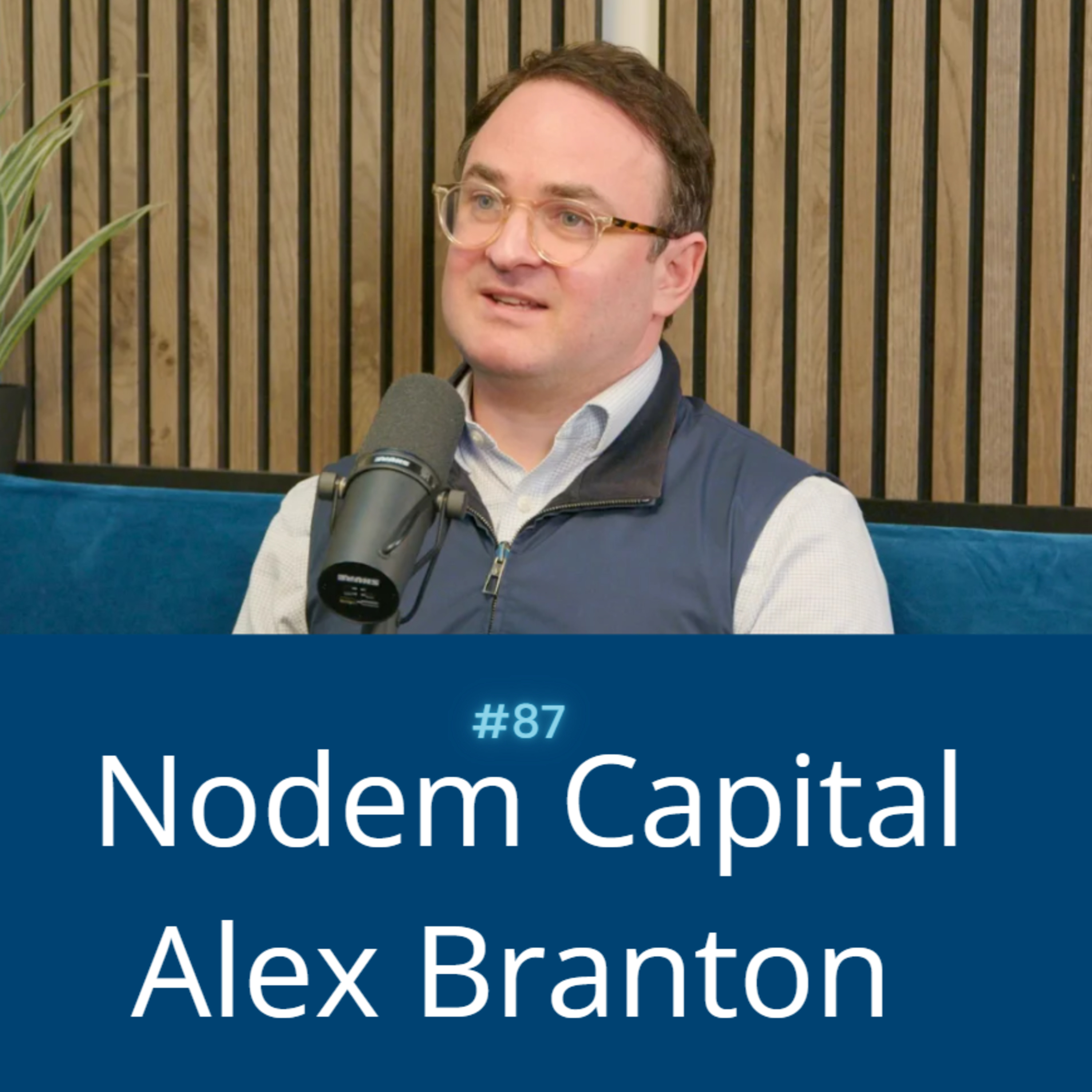 What NAV Is Really Signalling in Private Markets | Alex Branton, Nodem CapitalFund Shack Private Equity Podcast · features Alex Branton80 / 100
 Exostar: The Explore Platform's First InvestmentThoma Bravo's Behind the Deal · on Dividend recapitalization86 / 100
 Corporate Finance Explained | Private Credit: How Non Bank Lending Is Reshaping Corporate FinanceFinPod · on Direct lending82 / 100
 What's Going on in Private Credit?The Memo by Howard Marks · on Direct lending80 / 100
 Secondaries Are No Longer a Liquidity Tool. They’re a Private Equity Strategy with Adrian Siew, Rothschild & CoThe Private Equity Podcast, by Raw Selection · on Secondaries market78 / 100
 Oak Hill Advisors' Eric Muller - operating at the intersection of public and private credit: live from iCapital ConnectAlt Goes Mainstream · on Direct lending74 / 100Opportunity Zones, Concentration Risk, and the Long-Term Investor88 / 100How Family Offices Strengthen Due Diligence and Protect CapitalDiversifying Beyond the Traditional PortfolioWhen Does Private Placement Life Insurance Make Sense for Family Offices?The Power of Family Story: Building Identity Across Generations