The Live eCommerce Podcast · 2025-10-31 · 27 min
Key moments - from our scoring
Substance score
24 / 100
Five dimensions, 20 points each
The hosts open with Q4 ecommerce outlook following Amazon's October Prime Days, which showed a 15% drop in average transaction value ($53 in July vs $45 in October) and revealed that 55% of shoppers compared prices across Amazon, Walmart, and Target. This signals intensifying retail competition beyond Amazon's dominance, though both hosts remain cautiously bullish on holiday sales given merchant investment resilience following spring tariffs. Nicholas highlights YouTube's expansion of AI-powered product detection and affiliate linking for creators in India - essentially automated merchandising - as another sign of video commerce globalization. A Cornell University paper on accessibility features for deaf and hard-of-hearing viewers using speech-to-text and visual context AI in live shopping received attention; with China's live streaming market projected to reach $1 trillion, even small audience segments represent significant opportunity. The episode closes discussing Rolling Stone's top 20 most influential creators for 2025, examining how modern celebrities are building their own commerce empires (MrBeast's chocolate brand, etc.) rather than relying on traditional corporate endorsements, with implications for how future generations aspire to media careers.
Average order value dropped 15% from $53 in July to $45 in October, and merchants reported lower profitability growth, though exact year-over-year comparisons against 2024 weren't yet available.
YouTube is automatically detecting products visible in creator videos and attaching affiliate links, enabling creators to earn commission without manual product tagging.
Cornell University's Echo Aid technology uses real-time speech-to-text conversion, visual context representation, and large language models to simplify sales information, allowing deaf and hard-of-hearing viewers to participate in and transact during live shopping.
Rolling Stone's top 20 most influential creators for 2025 includes both, but internet-native creators like MrBeast are building their own commerce empires independent of corporate endorsement deals, shifting how celebrity monetization works.
Merchants have successfully adapted supply chains following spring tariffs by sourcing from alternative countries, and many are actively investing in new initiatives, suggesting underlying consumer demand confidence heading into the holiday season.
Our reviewer’s read on each dimension, with quotes from the episode.
A handful of Prime Day data points give the episode some marginal value, but the vast majority of runtime is small talk, sports chat, and surface-level observation with no actionable operational takeaways for a B2B operator.
Not in a great mood today, Nicholas. I'll be honest with you. All my favorite teams lost last night
45% of the shoppers that shopped on Amazon Prime Days this week, 45% were waiting for items to go on sale
Every major claim is conventional wisdom - Amazon faces competition from Walmart, the creator economy is growing, India is a big market - with no contrarian angle or first-principles reasoning applied to any of them.
I love competition obviously I don't like any any one company dominating the way Amazon has dominated over the years
He just created content at the right time with the right audience and built his audience one by one
Despite the episode title promising 'Andrew from Dappz,' no actual guest appears in the transcript; the episode is entirely two hosts chatting, and neither demonstrates deep practitioner authority on the topics discussed.
I listened to a report from a retailer this past week, basically saying they reacted to the tariffs in a very positive way
Neil Toit, who I got a chance to have on the podcast, was writing a post last week saying, if you actually want to make money on Amazon
There are a few concrete figures - Prime Day price drop ($53 to $45), category growth percentages, and the Amazon fee math example - but these are largely unverified paraphrases of secondary sources and the rest of the discussion is vague.
if you buy something 10 bucks, you need to sell it at 40 to just be able to have a 30% margin on top of what all the fee that Amazon is taking
55%, which is interesting to me, waited to compare prices from Amazon with Walmart and Target
The hosts almost never challenge each other, defaulting instead to agreement and affirmation; questions are generic ('do you think this is an indicator?') and the conversation repeatedly loses focus on commerce topics entirely.
Nicholas, do you think this is an indicator, a true indicator of what Q4 will be like across U.S. commerce?
So where are we going?
Computed from the transcript - who did the talking, and the words that came up most.
SEASON 3 - Ep10 - your weekly fix of video commerce newsVCommerce experts Matt Hodlofski & Nicolas Bailliache every Friday at 11am ET for a lively discussion on the latest developments shaping the video commerce worldCheckout our substack: to Andrew: follow him on LI: eStreamly: More content, lower engagement, tighter budgets - Does it reasonate? eStreamly empowers you to build a scalable video commerce ecosystem - turning every video and livestream into a shoppable moment across every channel that matters - web, ads, email, social, SMS and more. Matt: He has over 25 years of vcommerce experience within product marketing and sales. He currently is a partner at e6 marketing, a firm that help brands to go on QVC/ HSN #videocommerce news of the week #ecommerce #retail #vcommerce
Transcribed and scored by The B2B Podcast Index.
Matt, how are you? Good morning, Nicholas. How are you today? Friday, October 10, 2025, 11 a.
m. My God, here we are. 11 a.m.
Eastern. Yeah, we're all right here today. Love it. Not in a great mood today, Nicholas.
I'll be honest with you. All my favorite teams lost last night, so I'm still recovering from a disappointing night. Yeah. You know.
But you know, it sounds like you're in a great place. Is that your house? It's a new background. Oh, yeah.
I'm in the basement. Change the scenery for myself, working in a different space. Different space. You're not at the office, so at least you didn't have to go to the office today.
No, you're right. You're right. Let's see the positive side of the thing. Yes, I know.
I got to spend everything to the positive today. Working hard to do that. But you mentioned you went to homecoming last weekend. What was that about?
Well, yeah. I mean, my daughter, my oldest daughter, was singing the anthem, national anthem, for the game. So it was my first time ever, I think, going to a football game. American football, yes.
yeah this is like i was very and then uh american football for you know for like college and everything so it was like even more interesting from from that standpoint obviously it's me um here was high school um but yeah it was it was a big big uh big learning for me it was pretty interesting you know i didn't know a lot of you know it was culturally interesting i loved it and it was it was really fun well it's a great atmosphere right it is it was a great atmosphere here. But I will say they were out of pretzels.
So I didn't even have the chance to have the traditional pretzels. It sounds like everyone had his own pretzels. So like, hey, it sounds like that's the thing to have. So I wanted to buy one.
And by the time I get it, it's oh, we just have one. Oh. Well, why don't you get started? Yeah.
All right, everybody, this is Nico with eStreamly, the company that gets you live stream and video commerce on your site, social media, email, SMS, wherever you are. The video is shoppable. So excited to be here with Matt, my great friend from e6 Marketing, the company that gets you on QVC and HSN. And we have a pretty good docket of news today coming from all over the world.
So before we go there, Matt, why don't you tell us what the show is about? Thank you, Nicholas. And thank you, everyone, everyone for tuning in or listening to us. This is called the VCommerce podcast.
We're here every Friday at 11 a.m. Eastern or somewhere around 11 a.m.
Eastern. We talk about the top three or four stories in video commerce. And you may ask, what is video commerce? That's the storytelling selling app that started with direct response television, graduating into QVC, HSN and other live selling TV networks.
And now that's everywhere on TikTok shop, on Instagram, on Facebook and your own websites and distribution points. So video commerce is what Nicholas and I do day in and day out. And talking about video commerce or e-commerce, we're into the fourth quarter. In my world, October 1st is kind of the beginning of the fourth quarter.
Things shift kind of from the self-purchase way of buying products to the gift-giving way of buying products. And we're coming off of two days of October's Amazon days. Amazon Prime days were Tuesday and Wednesday, 7th and 8th. And I not many reports are in yet, Nicholas, but it doesn't sound like it was as profitable as this past July, which unfortunately is, you know, an early indicator of maybe the economy, maybe consumer unrest going into important.
Was the point around profitability or growth? I think it was around growth. So what I read was Everyday Essentials were bought, you know, 26% in apparel, 26% in household items, a little less in home goods and beauty and wellness. But 45% of the shoppers that shopped on Amazon Prime Days this week, 45% were waiting for items to go on sale.
So that's something that they were waiting for. They knew the event was coming up. 28%, as I said, bought everyday essentials. 55%, which is interesting to me, waited to compare prices from Amazon with Walmart and Target, which makes a lot of sense.
And we've talked about Walmart and Target on this show many times. So they're becoming serious players against the Amazon world. Amazon isn't the only place for the low hanging fruit price points anymore. So more than half of the people that were shopping, Did a little cop selling, so I'm sure Walmart and Target sales were up because of that.
And then the price point from July on Prime Day dropped about 15%. So the average price point in July was $53 and change. This week it was $45 and change. So, Nicholas, do you think this is an indicator, a true indicator of what Q4 will be like across U.
S. commerce? well i think we have to compare it maybe not against july but against last year because obviously there's a you know the time of the year that probably has also an impact on like where people are with their finance at this moment of the year so i think it might be more um i won't say more relevant but i think it will be a good indicator to convert that against this um honestly i don't know i i i'm talking to merchants i'm talking to other people there's a part of me that feel a little bullish about the next months to come um you know yes there is this narrative of like hey the economy and all that stuff is is is painful and everything but on the other side i don't know i feel that people are are trying doing new things they're excited about this I on the bullish side to be frank with you Yes I hearing you know like everyone else Jamie Davis I think the CEO of Morgan Stanley saying hey you know there a high rates of recession and everything, but, and a lot of people are talking about this, but at the same time, I'm seeing like merchants who be starting to invest again, being excited about what's happening.
And so I don't know, I have a mixed feeling and I don't, I do think that I'm hoping that we're going to get to a strong year. That's kind of where I'm. I don't have like numbers or anything that can provide you, but I just feel delicious about what's happening. I listened to a report from a retailer this past week, basically saying they reacted to the tariffs in a very positive way.
And they're sourcing from different parts of the world because of the tariffs. And so I think over those, you know, when did the tariffs kick in? Like April. Well, really.
Yeah. So the springtime. I think I think big American companies have flexed and are savvy and are moving their distribution to different places. And it didn't lock them up as I feared the tariffs would going into this time of year.
So I love how you're bullish. You're bullish on Q4. So am I. I think there's great excitement with holidays as always.
And I think it's going to be - unfortunately, the prime day was down. But once - we don't know the final numbers. And I'm curious to see Walmart and Target and what other major retailers did. I think to your point, right, there's really fierce competition with happening at Amazon, right?
So Walmart is really trying to, you know, getting their thing together and they're really aggressive on many fronts. I, myself, I ended up having, you know, I used to be like a big Amazon customer, or at least the household was a big Amazon customer. and we still have a good customer, but I will say, you know, a pretty significant volume of transaction, I've moved to Walmart. And they want us over.
I mean, they want my wife over, let's be honest. And so I'm not surprised that today people are comparing Amazon because you remember, like, when we were talking with Jake on the pod, he said, well, if people want pricing, they go to TikTok, if people want convenience, they go to Amazon. Well, if Amazon become the place of convenience, having a prime day, you know, event, whatever, and people like, okay, well, it's still Amazon. I mean, like, I think I was reading an article from a great friend from a Sharpie freak saying that Amazon is still ratcheting up starting October 1st with their fees to warehouse the product.
And so at the end of the day, you know, if all those fees are extracted from those merchants, those merchants, you know, they have to survive. Neil Toit, who I got a chance to have on the podcast, was writing a post last week saying, if you actually want to make money on Amazon and being able to invest with all the fee and everything, If you buy something 10 bucks, you need to sell it at 40 to just be able to have a 30% margin on top of what all the fee that Amazon is taking.
So if you think of it, those fee adds up. And, you know, and merchants are trying to do a lot of things. And so maybe Amazon is no longer like the price where everything is so cheap anymore. and people if they are into a prime mode or like another prime mode I'm saying I'm using this word like like they're in the shopping mode for for discount and stuff maybe the consumer realized that that's probably not the best place to find that I don't know yeah I love competition obviously I don't like any any one company dominating the way Amazon has dominated over the years And they've had their issues this year, a lot of issues.
Transactional situations, their own direct-to-consumer kind of thing, getting the product to the consumers, that's been kind of a negative storyline over the last year because they're so massive. So Walmart and Target aren't exactly small fries. They're huge, huge companies. But I like that if they're chipping away at Amazon's dominance, if the consumers are becoming more and more savvy and price comparing and Amazon isn't the lowest price out there on the market, then if that's what the consumer is looking for, then that's a good thing.
Let's try to come back in a couple of weeks when we have the data consolidated of those free players. And let's compare that against last year and say, hey, were there like an up move or like a down move? then that will be a good indicator, I think. Agreed.
But on the other side, I will say the Prime Day was awesome from a video commerce perspective because I'm pretty sure everyone has seen if you have Prime TV, when you light up the Prime, the first thing you were seeing on the Prime TV was a creator doing a live show. And I thought I loved that personally because putting that highlighting, you know, we've been talking about the creator economy. I look at this live and it was like not a celebrity. He was a real creator.
One of those creators that is on Amazon Live on a regular basis. So obviously, you know, she had their things together. The setup was great and everything. Her husband was the one recording on the back and they were talking to each other and he was saying hi from time to time.
I thought that was really cool. Like it was a real, you know, genuine. GENUINE? GENUINE?
Yeah, sure we're connecting kind of a video, right? It was really cool. And I felt that it's great that that format came to TV. For that specific moment, it really realized it.
And then they had a QR code. And when you get to QR code, you get to the live stream. I just thought it was really, really interesting that Amazon was pushing that. You and I, we've talked about this.
They have pushed that on their thank you for all their confirmation plays. They really have been pushing live shopping into different places And that Yeah and they haven figured it out I mean they been doing it now for a few years and I haven seen a lot of great results You could argue, did they really not have figured it out? I don't know. Maybe they just don't report on it.
But maybe they're, I don't know, like merchants that are doing it are pretty excited about it. Oh, yeah. So I don't know, like it might not be, you know, so bad or anything. So anyway, they don't report the numbers.
So that's why we say we don't figure it out. But maybe they did. And that's why they're positioning the live shopping into different places. That is not the places that we would think about.
Right. Anyway, second story, I think. Let's move on to that. I wanted to bring on a more international story.
I don't know if you saw that, but it's interesting what's happening in India. I saw this article. I came across this article on the Indian Express. And what this article is about was about YouTube that is actually, I'm going to put it on the floor here.
YouTube are expanding their AI shopping tool to India to boost creator-led commerce. And what YouTube is going to do is like they will enable creator to automatically find and type automatically product on the video. So, you know, what we call here at Instruimely Merchandising. So with affiliate links.
And so you've got a video, the AI will detect the product on it. We'll just put the affiliate link shopping on it of the creator. And so I thought it was interesting because another opportunity for creator to earn and generate revenue. But it's also showing that YouTube is taking seriously the commerce element also and trying to, you know, step up and trying to figure out a way to compete more and more with the TikTok of the world.
So, yeah, I just done another sign of video commerce progression. And another sign of how serious India is taking video commerce. Yeah, it's a big it's becoming a bigger and bigger player in a very, very, very large country of India. So that's a good thing with video commerce.
It's a good thing that the storytelling is translating across the globe, all that kind of thing. And your story indicates that it's a it's a healthy it's a healthy addition of A.I. to help the creators, you know, build revenue for themselves.
So that's all very positive. The other story I wanted to bring up is related to something a little different, is a paper that I found. It's not a new paper. It's more like an older paper.
It's from August. But it's a paper that's been published at the Cornell University. And so what the paper is about is about Echo Aid, announcing live stream shopping accessibility for the dhh community so the dhh community for the one that like me unfortunately didn't know what that acronym stands for is the deaf and out of hearing community and so what they're doing is basically they're creating different models they use different models different technology to um uh to create advanced speech to text conversion right so like on the fly because you know like the problem with live streaming is like it goes so fast right so it will translate right away and then a serial of visual representation technology to help um to understand what the context is about and they're using the large language model to simplify the context of information flow in the sales environment and making the ability for the viewers to actually that is in part of that community the deaf and other fearing to participate get excited but also enabled them to get to the next step and transact.
So they can be really part of the live shopping experience as opposed to be just like not understanding what was happening. I think it's pretty cool. I think it's pretty cool that, you know, there's two things that I'm excited about with this paper. The number one thing is like, well, here we are, like Cornell University, a paper specifically about live shopping.
And what we can look at, I don't think there are so many. uh so that's that's i think that's that's pretty interesting and then um it's it's a the the other thing that i find is pretty cool is like they are looking at a very uh interesting problem um so yeah just um yeah there's like four paper total that have been published between 2022 and 2025 by connell university on on on live stream e-commerce uh so yeah just just super interesting dynamic there. Yeah. I mean, coming out of an Ivy League school, obviously it gets a lot of credibility because of, you know, smart people are putting these things together.
You know, blind and deaf people, such a, it's, it's a, I would say, obviously it's a very small faction of live commerce consumers, but there, there's one, there's a blog I follow through QVC and there's a blind woman that always comments on what's happening on air at QVC. and she highlights brands. She says who she likes and who she doesn't like as far as talent goes and hosts and things. She's very engaged.
The other thing we need to think about, like you and I were listening to a podcast that we're saying like, well, China is on the path to get a trillion dollar for live streaming next year, right? A trillion dollar market. So, you know, even if it's a 2% of the viewership that is on that, out of the two percent of the trillion dollar market it's a big market opportunity in the u.s it's not on it i mean it's it's relatively small but it's going to go there and so i think it's interesting to look at this way well it's for everyone it's meant to be for everyone so that that's it's all inclusive so i mean there's nothing wrong with it i'm just pointing out that it's a small it's got to be a small percentage which and maybe because of that enhancement because of that technology that came out of Cornell, it'll become a larger percentage of their consumer.
But, you know, the live commerce consumer base would be from the from deaf people, which is amazing, which would be amazing, obviously. Right. Yeah. Before we go, I was I was kind of struck by an article I read this morning and I kind of wanted to challenge you a little bit It was from Rolling Stone Magazine and they got they posted their top 20 most influential creators in 2025 And I went down this list of 20 creators and I honestly only knew three.
And I only knew three. Yeah. I mean, you just posted this if you're watching on LinkedIn. Three of these people I knew.
I didn't know the other ones. So I started looking them up and like, why are these people famous? Why are they the most influential creators in the U S what, what's, what's their deal? So like one, one guy is a former athlete.
One guy is kind of a rapper singer. One guy is a comedian. A woman is a, an athlete. So they're coming from traditional kind of places where they, I guess, have started a platform, but now they're influential creators.
So from your end, Nicholas, like these people, I'm assuming in some way, are associated with commerce, associated with companies. And from what the article read, they are creating their own companies based on their creator status. So where are we going? Where before, you know, a big time athlete would have Coca-Cola and Nike and big companies kind of linked to their stardom or their celebrity.
Now these people are the company themselves and I guess we're feeding into them. So just what's your thoughts on the whole creator economy at the highest level, like this list of highest level creators? Where are we going through? I think it's the evolution of the media business altogether, right?
I think those people are creating media empire the same way, you know, Carrie B or people like that is doing in the B2B side. I think those creators are creating organization around them. All right. Like if you look at Mr.
Beast, right, he's still producing tons of content and he's not profitable and clearly say he's not profitable on his content. But his content and his following base allow him to sell the chocolates, selling to sell, all those different ancillary product that he's building, creating, and that's how he's making money. And I think it's interesting to see that, right? They're creating brand persona, and those brands are going to go a long way, and they're going to be a lot of transaction.
And I think it's good, because in a way, it also showcased that with the creator economy, anyone can start and if you really create good content and you're really diligent about it and you know how to talk to your audience and you're engraging the culture and you're working with the right platform and the right partners you can become a celebrity and you don't have to know have your parents that know the producer or how it used to be to be a celebrity before, right? Right. A few weeks ago, we had Laura on this pod, and we were talking about Dancing with the Stars and Saturday Night Live, how their celebrity is now internet celebrities, like these people.
So now those celebrities are crossing over from the internet to traditional media with Saturday Night Live and Dancing with the Stars. So there's an intersection of that going on. I find it amazing that you can't have a goal to be on the top 20 most influential creators. No, no kid is going to want to grow up that way.
I guess you want, you know, kids want to grow up to be famous. Kids want to grow up to be an athlete or a scientist or something. And getting and having this. I think you're mistaking us.
I think kids want to be the best creator. They want to be Mr. Beast. they want to you know they want to be youtubers and they want to be like streamers and stuff i think i think you know they aspire to be on that on that 20 lists yeah so like i said i didn't dive into all 20 of these people but the the four that i did had a background you know to kind of catapult them into a creator status to your point like mr beast i don't know what he did before he was tick TikTok famous.
He's a YouTube famous, right? Well, YouTube famous, right. Yeah. All he did was posting content because he doesn't come from a background that will have put him on that path.
He just created content at the right time with the right audience and built his audience one by one, one after one, one after the other, and got it there. Yeah. Alex Cooper, she's 10th on this list. She's got one of the most viewed or listened to podcasts in the country.
So I do understand it, but I really like to take a dive into each one of these people and find out where they are on the commerce side of things. What are they doing as their own companies? This is 2025. This is what's happening.
I love that. All right. Well, Matt, it was a great episode again. for the weekend?
No, I'm just going to drown in my sorrows of my team's unsuccess this week. The worst part of it is the Philadelphia Eagles now, because they played last night, they don't play on Sunday. We all have to wait 10 days before they play again. I'll watch games that I don't really care about this weekend.
Weekly fix of liveshopping news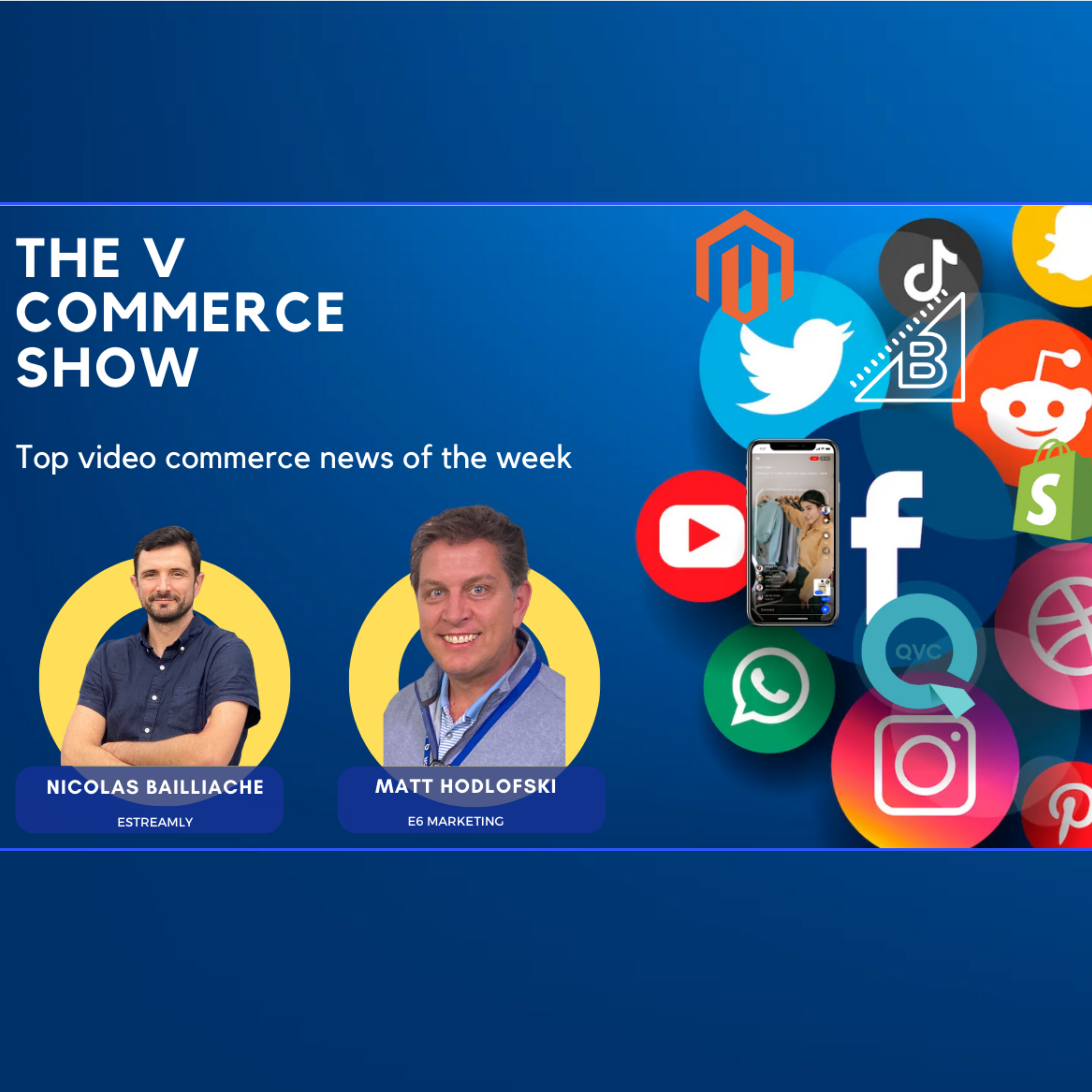 Youtube turns shoppable in India, Accessibility & liveshopping, Prime day and top 20 Rolling stone's
 Everyday Magic: Ritual, Fragrance & the Art of Live Shopping with Luna from Circe Boutique
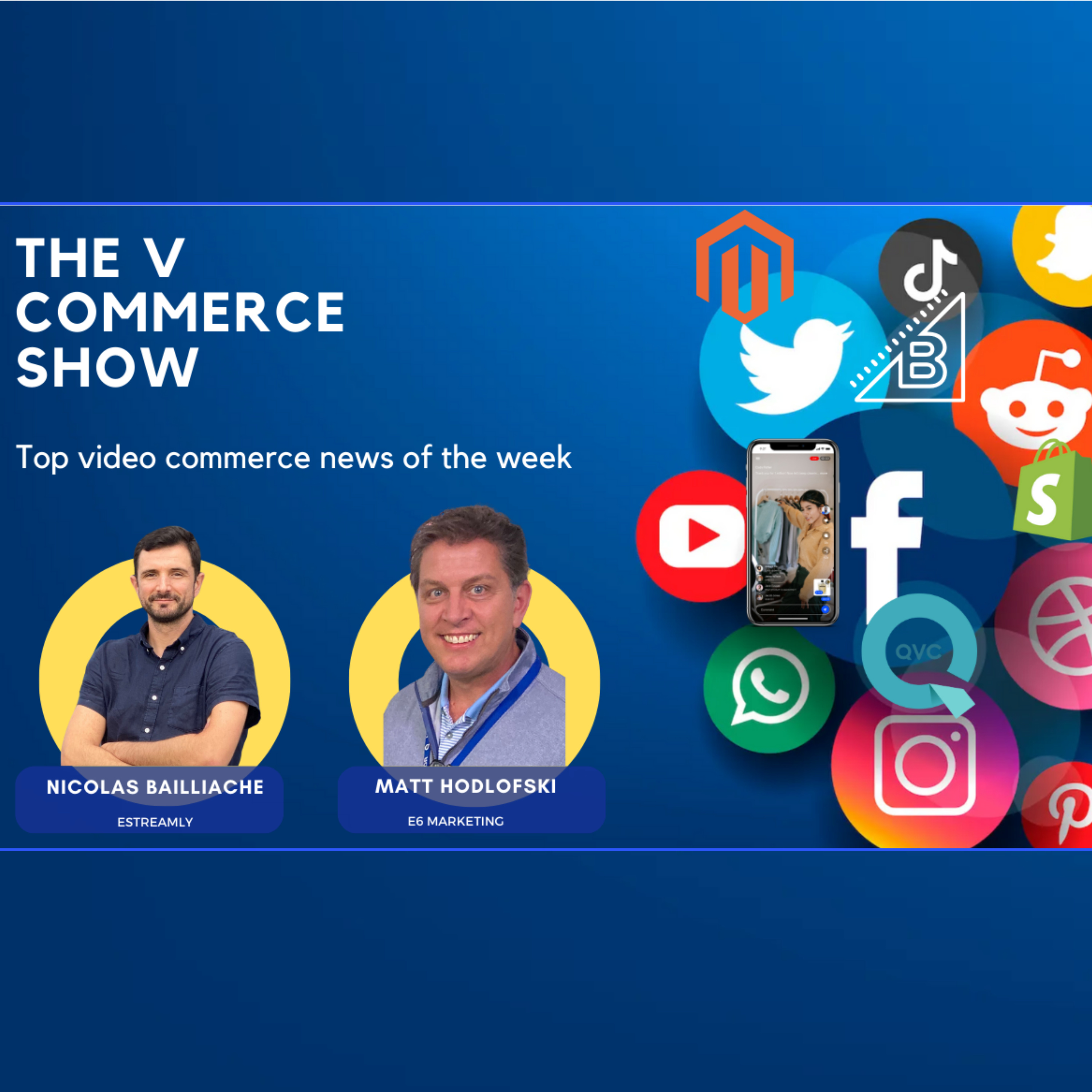 Shopify Embraces ChatGPT 🔥 Amazon’s New Rival? | TikTok, Meta AI & Live Shopping Records
 Your Weekly Shot of Video Commerce News