The Kickstart Podcast · 2026-06-16 · 1h 22m
Key moments - from our scoring
Substance score
55 / 100
Five dimensions, 20 points each
Mark Frank's path to founding Sondermind reflects a deliberate progression through healthcare leadership roles and entrepreneurial ventures. After graduating from West Point and serving five years at Fort Carson (with a deployment to Iraq), Frank transitioned to business school where he met Gavin Christensen of Kickstart. His subsequent investment banking career in healthcare M&A exposed him to systemic inefficiencies in the industry, particularly through his nurse practitioner partner. Rather than climbing the banking ladder into relationship management, Frank chose to build things - first establishing Denver Cyberknife (later rebranded Inova Cancer Care), a radiation oncology services business he sold in 2015 with strong returns, alongside the side venture Safe Image MD, a cloud-based medical imaging platform comparable to Dropbox for DICOM files. These healthcare technology experiences with provider-side operations and complex compliance requirements directly informed Sondermind's hybrid model combining clinical services delivery with software infrastructure. Frank's risk calculus - calibrated by military service and intentional timing while young with minimal assets - enabled him to personally guarantee debt and accept 70% compensation cuts, positioning himself to recognize and execute on the mental health marketplace opportunity when it emerged.
Frank graduated from West Point with a computer science degree, served five years in the Army at Fort Carson with one deployment to Iraq, then attended business school where he met Gavin Christensen. He worked in healthcare M&A at an investment bank before founding Denver Cyberknife (sold 2015) and co-founding Safe Image MD, a cloud-based medical imaging platform.
Frank realized he preferred the analytical work of running deals and strategy analysis rather than the relationship management required at senior banker levels. His military background had cultivated a desire to lead and build things, which wasn't fulfilled in banking's relationship-driven track.
Safe Image MD was a Dropbox-like platform for DICOM medical imaging files that taught Frank how to solve healthcare provider problems using technology and cloud solutions during an era (2010-2011) when the industry was still in dark ages with paper charts and minimal digital infrastructure.
Frank reasoned that entrepreneurial risk was actually lower early in his career with minimal net worth (bankruptcy felt equivalent to zero), military experience calibrated his risk tolerance differently than civilians, and he was confident he could find employment if ventures failed within three years.
Military service taught Frank sophisticated culture-change and leadership techniques without financial levers (no firing, promotions, or bonuses), which he valued more in retrospect than he realized leaving the Army, and reinforced his desire to control outcomes rather than rely on others.
Our reviewer’s read on each dimension, with quotes from the episode.
The episode contains genuine operational nuggets - fundraising mechanics, working capital dynamics in insurance-based healthcare, and valuation discipline across rounds - but these are buried in lengthy military backstory, generic fear-management philosophy, and entrepreneurial platitudes. The insight-to-airtime ratio is mediocre for a supposed 82-minute deep dive.
I had about six to 10 weeks of payroll at any given point in time... for 18 months, I was on the phone about every two to three weeks with the banker
The scarcity of capital is not everybody thinks of it as like it's a barrier, it's a speed block, right? No, it can be in some ways. But I'd say in the early days when you're sub 30 person team, you want that. It forces innovation, it forces ingenuity
Most of the frameworks are borrowed or well-worn - stoicism, Who Moved My Cheese, Ben Horowitz's wartime/peacetime CEO - and the military-to-entrepreneur arc is a familiar genre. The 'don't optimise for valuation early, optimise hard at Series C' framing and the 'personal guarantee only when you have no net worth' observation are mildly contrarian, but nothing here challenges conventional startup wisdom at its core.
The time to do personal guarantees... do it when you have no net worth. Yeah, that's the time to do it. Right. Because the difference between zero and negative zero is the same
I'm not was it a Series C, whenever that is... I am going to optimize for price. Then that's when I'm going to optimize for price
Mark Frank is a genuine multi-exit operator who built a mental-health unicorn from scratch with real revenue scale, prior profitable exits, and meaningful M&A activity - not a thought-leader or career podcaster. Score is tempered because the interviewer is a co-investor, which creates an inherently promotional dynamic that prevents the guest's full candor from being tested.
we've more than 4x the revenue of the business... over a quarter billion in revenue... in all 50 states
we acquired this machine learning company in 2021... called Quantify. And then another company in 2022
The episode is notably concrete: named investors, exact post-money figures, revenue multiples across every round, employee headcounts, EBITDA margins, and a granular timeline of the COVID Series B near-miss. This level of numerical specificity is above average and genuinely useful for operators benchmarking their own fundraising trajectories.
seed was a single digit post money valuation... seven and a half million post money or something like that. 7.8 maybe, on like two and a half million. So like a $5 million pre money valuation
170... investor meetings for my... actual seed round... guess how many term sheets I got. Just the one
The host is a co-investor interviewing a portfolio CEO, which structurally prevents genuine challenge - affirmations ('yeah, yeah, very interesting,' 'that's super powerful') dominate over follow-ups, and several questions are answered by the host before the guest can respond. There are occasional decent prompts around valuation discipline and leadership evolution, but no meaningful pushback on any significant claim.
I think, uh, that's super powerful. And, you know, what a great, I guess, snapshot into the mind of a CEO and leader.
Yeah, yeah. Very interesting. Yeah. So it's, you know, I hear that you're a leader.
Computed from the transcript - who did the talking, and the words that came up most.
Mark Frank is the cofounder and CEO of Sondermind , one of Colorado’s standout digital health companies. What began with Mark’s own frustrating search for a therapist became a national mental healthcare platform serving clients, clinicians, and payors across the country. In this episode, Mark shares how his time at West Point, in the Army, and in healthcare shaped the SonderMind journey. He breaks down early risk, fundraising, COVID-era growth, the $150M Series C, founder leadership, and why AI has pulled him back into founder mode. - 02:30 The making of a founder. 11:10 Eighteen months on the brink of bankruptcy. 17:04 Taking a 70% pay cut to go build. 19:01 An unconventional view of risk and control. 26:51 Managing fear: if you weren't afraid, what would you do? 31:03 Stoicism, learned under mortar fire in Iraq. 38:00 The therapist search that sparked SonderMind. 46:45 A hundred and seventy meetings, one term sheet. 51:00 Signing a Series B two weeks before COVID hit. 57:03 The truth about raising at sky-high valuations. 01:12:49 Why the founder-CEO job changes at every stage. 01:18:00 AI and what comes next. - Mark Frank is the co-founder and CEO of SonderMind.
Transcribed and scored by The B2B Podcast Index.
Speaker A: Oh, we recording.
Speaker B: Okay, we're live.
Speaker A: Ah. All right. We're live from the Kiln, Littleton. And so Kiln is one of our portfolio companies. Shout out to kiln. Um, and this is fun for us to record one of these interviews, our first one from Colorado.
Speaker B: Oh, really?
Speaker A: Yeah, yeah.
Speaker B: Matt and I have been the maiden guest in Colorado. I love it.
Speaker A: Yeah, yeah. You know, I'll give a quick, um, background on our move to Colorado. So, you know, we moved here, I moved three years ago. Matt's been here for a coup, and we have an office in Lohi. And one of the reasons why we moved to Colorado was to increase our investment activity in the state. And really, when we look back at our investment activity, we see we did an investment in a Colorado based company in fund one. We didn't do anything in fund two. And then with fund three, it started to go about. Up by about 5% of our allocation per fund to Colorado per fund. So we've grown to about 25% to 30% of Fund 6 going into Colorado. And, you know, we wanted to highlight one of the best investments we've ever made in the state, which is Sondermine. And so, you know, you have built, uh, an amazing company here. And we were fortunate enough to participate in, I believe, every single round of the company.
Speaker B: Yeah, every round.
Speaker A: Yeah. So we, when we first met, you were connected to Gavin Christensen, the founder of Kickstart, through grad school days and common connections. And, you know, in those first days, we saw a company that had a services component. It was office space for clinicians, uh, therapists, and you had a vision for what this was going to come. In fact, just before we started recording, we looked over the original pitch deck you had, and it was remarkable how much your vision has remained consistent. Really, it's hard to do that as an entrepreneur because you have to constantly adapt to the market. But your vision has been very consistent. Um, but we, we eventually got involved. Once we saw it, we were able to wrap our mind around it and create a hypothesis around this kind of an, a network or a marketplace business. And, you know, similar to the Uber of, we saw lots of these Uber of. This is, you know, could have been described as the Uber of mental health services.
Speaker B: Although I never said that.
Speaker A: Yeah, forgive us. Yeah, you know, um, but, you know, I think venture capitalists oftentimes are trying to, like, put things in categories that we can understand.
Speaker B: You're trying to pattern match?
Speaker A: Yeah, we're trying to pattern match and we're trying to say, okay, what's the, you know, what's the really compelling business model here? And so I guess without kind of, uh, extending this introduction any longer here, I'd love to ask you kind of, you know, tell us a little bit about the early days of Sondermind. So I just kind of alluded to it, but what brought you to that point? And, ah, if you want to spend some time talking about different ventures you had tried, like, why were you prepared to articulate a vision in 2017, 2018 for the future of mental health care in this country? And why were you able to be so accurate? That's, you know, it comes from prior experience. So love to hear how you positioned yourself and why you were in that spot back then.
Speaker B: Yeah, absolutely. I mean, so it's like, by the time we met, right, which, uh, as you mentioned, Gavin and I were business school classmates, uh, so we knew each other a bit from business school. And I was probably a little bit closer with maybe a couple other of your portfolio M company founders who were business school classmates. Um, and then, uh, a different partner was the partner who led the round, and he had a background in healthcare and some marketplace businesses and things like that. And so you have, like, again, you said this earlier, before we started the podcast, like, you know, a little less about the company. You know, enough. Because we've been involved for a while now for, you know, eight years.
Speaker A: But I was never on your board.
Speaker B: You're never on the board. You know, and so, um, what's interesting, I think, is that 2017, 2018, uh, I mean, I was already deep into mental health stuff by then. Right. And so you have to go actually further back in time to answer that question. So that the lead into that is basically just to permit myself to go further back in time. Um, so maybe, I mean, if it's helpful, uh, for the listeners, I'll go all the way back in time, which is I studied computer science and went to West Point for undergrad. And then like everybody who goes to a service academy, you're commissioned into the military. Right? And so I was commissioned. I then moved to Colorado, uh, for my first duty station at Fort Carson, which, from where we are here, it's about 45 minutes due south from where I live in central Denver. It's about an hour, you know, depending on traffic. Traffic it could be easily too. Uh, and so I was stationed Fort Carson for five years, except, uh, for one year over in Iraq. And, and I, when I got out of the Army, I went to business school. And that's where Gavin and I met, and then I did investment banking for a couple years. And my uh, my partner at the time was a nurse. She became a nurse practitioner. And so I saw healthcare through her eyes, uh, as a provider operating in hospital, uh, settings, in private practice settings, uh, as a nurse practitioner, she operated in private clinics and ran private clinics. Um, and that was what interested me in healthcare. Besides that it's a big gnarly industry that's very inefficient to say the least and has a lot of problems that could be solved. And so when I left business school I did investment banking and I focused on healthcare mergers and acquisitions. Um, after a couple years I realized that wasn't like the, the long term thing for me. Interestingly not, not for the normal reasons. I think people leave banking or consulting, which is like, oh, you know, the lifestyle stinks and you know, you're working all the time. And I actually like, I mean I've obviously I can, you went into like the next thing where, you know, lifestyle stinks, which is like entrepreneurship. Um, but uh, it was more because I just realized at the end of the day as a senior investment banker, I, uh, actually liked the work of an associate or vp, right? Like running the deal, um, doing the analysis, like kind of analyzing the strategy, all that sort of stuff. Um, as a senior banker you're doing that as well. But really you make your hay as a relationship manager, right? Like that's the job and that's not a bad thing. I have a lot of very good friends and we work with a lot of bankers. But I just like, you know, I, I went to West Point to lead people, right. I, I, and I in retrospect had more of an entrepreneurial sort of background that I probably even gave myself, I had awareness of or give myself credit for. And we can talk about that if it winds that way, but we don't need to. Um, and so I left and I came here and I started a company not far from where we are here. Um, originally called Denver Cyberknife. I, I, so I started, I called it Denver Cyberknife. I changed the name a couple years in, which was a whole learning experience with rebranding and it was a public facing thing. I had TV commercials and all that sort of stuff to Inova Cancer Care, still, still treating patients today with brain tumors, lung cancer, prostate cancer. Built a management service organization around that called Nexoncology and ultimately sold that business in 2015. So that was healthcare services, right? That's like treating patients with cancer. Um, um, and you Know, I employed nurses and you know, medical physicists and radiation therapists and you know, partnered with doctors and radiation oncologists and neurosurgeons and things like that. But very much in healthcare, right? It was like you're delivering care. And then, uh, there's another company that I, about a year and a half into that one, I actually started on the side called Safe Image md. And that was basically a software platform for storing and sharing and viewing medical imaging data. So think of it as like, like Dropbox, um, for CT and mri. Right in. You know, it started like I had one of my former employees who was medical physicists, um, and then went on to get another PhD, uh, in bioengineering with uh, a focus on imaging informatics, he and I, and then a third co, um, founder of that business, uh, a guy named Sid Dennis, who became my first CTO of Sondermind. Uh, we started this thing nights and weekends. We built this up to profitable, profitable business. Uh, was one of three companies in the space at the time. We didn't raise any outside capital. We talked about it, we talked, we, we had, we had investors coming up to us and saying, hey, like we want to invest in the space. And so I got a little taste of how like the fundraising stuff worked, you know, on the VC side because the first one was not a VC backed company. It was, you know, a couple private investors and um, but had a 12x return. So it was a VC type return for the, for that first one. Um, and the second one, we ultimately sold it. But I give the background, um, more because that one was specifically health care technology. Right. I mean it was dealing with a file format that is only in healthcare. Dicom. Um, dicom is the, is the file format for medical imaging data and the transfer protocol as well. A very technical product at a time when the industry didn't, I mean the industry, healthcare industry, broadly, and even the technology industry did not understand sort of the needs of the health care space. And I say that to just like for the listeners who don't understand how like in the dark ages healthcare was even in 2010, is that in 20, in 2009, there were still incentive payments from Medicare that they had put in place a couple of years earlier to basically pay doctors hundreds of thousands of dollars for them to start using an electronic health record system. To put that into context, that means the majority of physicians in the country in 2008, 2009, 2010, we're still using paper charts, right? And so this is, I mean like you're like, wait, that wasn't that long ago, right? You think of, like, paper charts, you go, that was probably in the 90s. No, no, no, that was 15 years ago. Um, and the idea of, you know, HIPAA compliance and, like, cloud services was still very new, you know, I mean, Dropbox in 2010, 2011, like, you know, you said like the Uber, like the Dropbox for, you know, sometimes you talk to providers or physicians with that, and they were like, what's Dropbox? You know, it was that, you know, the idea of cloud storage and things, that was still pretty new in 2010, 2011. And so, um, Sondermind was this, was this combination you mentioned, like the service component. And we are. And we have a service component. Like, you know, we. We treat people with, you know, with mental health conditions, right? We have thousands and thousands of providers and psychiatrists, and our mission is to improve mental wellness, right? Is to improve their outcomes and to enable our providers, all these therapists and psychologists, to deliver better care. And so that's a service. That's a service element, right? But then Safe Image was this technology component. So the background of that was, how can you use data and really unique technology, um, tools to actually make care more efficient, right? So with Safe Image, it was, how can neurosurgeons and medical oncologists, other people, not have to worry about the CD that the patient brings in? And if they don't bring it, it's a, it's a wasted session. You know, it's a wasted consult, uh, or whatever. How can we make it easier to get second opinions? Um, so San remembers a lot of that. And then there's a whole nother component of like, well, why get into mental health? Which is probably where your question was emanating from. But let me pause if there's no.
Speaker A: I think this is really helpful because, you know, most entrepreneurs, you know, one, they, they oftentimes imagine that you kind of meander a bit and then you find your thing, but you've. You've had some successes. You know, it wasn't just like, oh, we started this and then shut it down. You know, you've had a number of things that are still going well.
Speaker B: They're baked with failures all inside of them.
Speaker A: Right?
Speaker B: I mean, it's like the entrepreneurial journey is. Even the successful ones are. Are just a combination of failures until success. Yeah, right. That's really what it is, you know, so the first one wasn't like, oh, it was successful from day one. It was, you know, for the first 18 months. I had perpetually about six to 10 weeks of payroll at any given point in time. I was on the phone with the local business bank who we had borrowed a much of us. We had financed it with a lot of debt as well. And I had personally guaranteed that debt, um, as had my, my outside investor. So if it went bankrupt, I was declaring personal bankruptcy. So for 18 months, I was on the phone about every two to three weeks with the banker because I had a line of credit and I had it based against different, like parts of my accounts receivable. And I had update my model and I had a sort of like borrow and repay all the time. And that was while running the business and I was cfo. I mean, it was like I was doing all this stuff myself, but I mean that was, it was on the brink of failure for a year and a half easily. Yeah, um, same agenda.
Speaker A: You have a great head of hair through all.
Speaker B: Well, I don't know. It's really great. So I definitely lost some. I mean, I think the army. The army let me, Let me lose enough hair too.
Speaker A: Um, I want to actually put press on that a little bit. So here in Colorado, we see a lot of defense tech base tech, you know, companies, um, led by veterans and people, you know, with experience in the military. And you've talked about how, uh, one of the core drivers when you were a banker, you said, I want to lead people. Yeah, you don't really want to be a leader. So you, you moved out of that and you went and actually put everything on the line. You know, you were personally guaranteeing loans for your startups, um, which by the
Speaker B: way, the time to do personal guarantees. If anybody's ever think about it, I would say don't do it. But if you are going to do it, do it when you have no net worth. Yeah, that's the time to do it. Right. Because the difference between zero and negative zero is the same. Right. It's like if you're bankrupt, you don't get more. So, um, now you have to make sure you can get underwritten and things like that. But I basically put all the money I had, which was not that much, but everything I had into all in was all it.
Speaker A: Yeah. And what was that like leaving a big organization where you, you actually were a leader, uh, of people? Maybe it wasn't leading in how you wanted or you actually want to do. Sound like you want to do more of the analytical work than just kind of maybe relationship cultivation and bringing in the business.
Speaker B: Yeah.
Speaker A: But you know, when you're a startup, you don't really have very many people report to you either. And so there's something deeper than just, I want to leave you. You want to just.
Speaker B: I wanted to build problems. Uh, yeah, I think it was, I mean, it was, it was. I want to. I mean, it's interesting because I went into banking after business school running away from leadership, right? I was like, I'm done with, you know, it was like I had, I had been in leadership positions for, you know, well, for the entire time in the army, but in, you know, in like sort of troop leadership positions for, for a fairly long time. So basically my entire time as a second lieutenant and as a first lieutenant until I made captain, um, which is not like super rare, but a little rare. So for two and a half years I was leading, you know, platoons or companies ranging from 30 to 150 soldiers. Um, and just dealing with all the stuff, right? Like all the, all the people stuff, you know, like Joe is, you know, is, is a jail right now for drunk driving. It's two in the morning, you got to go pick him up, Lieutenant. Right. Like you got to go get him, that sort of stuff. Um, and I was like, I don't want to deal with this, right. I want to like banking sounds like straight an office. You know, at the most you're managing one or two analysts and it's all deal. You know, you have deal teams. They're not, they're, you're not like their reports for a project, but not like you gotta like, own the results of their performance for, you know, years. Um, and then I realized I missed some of that, right? I missed developing people. Um, and then to your point, I also missed like again, in the army, you can say, well, you weren't really building something. But actually I would, I would. And you didn't say that, but I think some would say that, right? So I would disagree because, you know, like, I remember one, one platoon I took over. It was the second platoon I took over. Uh, so I was in a platoon position soon leader position for my first 10 months. And then my company commander switched me to a different platoon because it was kind of a, you know, in business sense, we would say it needed a turnaround, right. And so, you know, I had to completely change the culture. And you don't have the tools at your disposal in the army that you have in the private sector, meaning you can't fire anybody. You know, like, you're stuck with what you got. Um, you can't willy nilly promote Them, um, either. Right. There's a whole process and tenure and things like that. There's no idea Bonuses. You don't. So you have no. You have basically no financial levers, and you have no sort of like, you know, you have no hatchet that you can sort of swing to sort of completely change. So you have to use a lot of different leadership tools and techniques to change culture, to sort of turn around an organization. I really like that. Again, I thought I didn't coming out of the army because I was like, you know, you just do enough of it, you get burnt out. But I missed that after a couple of years. Um, I think that was. That was probably one of the key things. The last thing was the jump was a lot of it was, you know, a lot of it was just, okay, I have an itch that I think that I need to scratch, right? And it's this itch of I want to try starting something. And, you know, I had. When I left banking, when I left Morgan Stanley, um, my oldest son, who's, you know, 18 now, was, uh, one. Right. And, um, my wife and I at the time, we wanted to, you know, have more kids, and we kind of wanted to get out of Chicago, which is where we were living at the time, and get back to Colorado just because we loved it here. Um, but, you know, it was. I mean, I went from a certain sort of total income level, uh, and we were dual income. So then we moved here and she stopped working pregnant with number two quickly thereafter. Uh, and my total compensation, besides the fact that I put all the money we had and savings into this business and signed these debt guarantees, you know, was cut by. I mean, I cut it myself, but it was 70% less, right? It was 30% of my total compensation. So, like, in the year, in the 12 months after I left Morgan Stanley, and even for the next two or three years, my total compensation, I think actually the next two and a half years, my total compensation was equal to my last year at Morgan Stanley's for almost three years. Right. Um, personally, not the family. I mean, if you take the family, it was actually even lower. And so I was like, geez, why did you do that? It was like, well, now's the time to do it, right? People are always like, how did. That's a big risk. Like, why were we willing to take that? We had a family to support, things like that. And my risk tolerance, or at least my risk calculus, was more of, well, one, nobody's shooting at me, and there's no IEDs to worry about, um, so that calibrates your risk a little bit and then two was well it's actually more risky for me to do it. People think it's less, it's more risky to do it when you, you know, maybe 10, 15 years later, at least in my opinion, I thought it'd be um, like or less receded later. Right. I've got some, I've got savings I can do. In my opinion. I was like that's going to be more risky, right? Because the opportunity and the time to rebuild career or whatever. If it's failure. I always operated with like well, if this thing fails, then what? Right? Then I'm um, bankrupt. Um, but that's okay because there was not that much to start with. Um, I need to go find a job. Um, but I felt confident that I could do that with education background, the experience background I had and even, even a failed sort of experience in healthcare might be valuable to a hospital employer or to you know, a private equity firm or whatever. Right. And um, and I just sort of was like, I'm willing to bet on that. And I figured it would, if it did fail, it would fail within three years. Right. My, my fear was always what if this thing drags on for a decade, right? At like a, it's sort of an average. That, that to me was the bigger fear. But I thought I could extricate myself from that. Mhm.
Speaker A: Yeah. Yeah. Very interesting. Yeah. So it's, you know, I hear that you're a leader. You know, you had felt the call to leadership, join the military leader man called uh, to build, called uh, to create something. You know, these are commonalities that the, yeah, a lot of you saying like yeah, uh, yeah, a willingness to sacrifice, you know, to put a lot on.
Speaker B: I mean you, you put it in these. Like I, I, I try to. I, in fact I remember um, there was another podcast that did with, with one of your former partners a long time ago and he, he made a comment, he was like, it's like all your sort of choice, career choices have been oriented around service and like, and I was like no, I don't think that at all. And even the things you're saying, like okay, I guess those are true, but I don't think about it that way. Like those are very um, grandioses and type is exactly the right word, but they're very like uh, they're positive. I don't, I don't look at myself in the mirror and think I'm like a not, not like a negative person. I, I do think I have, you know, a, uh, risk appetite, things like that. But I, I think about the choices that I've made, in my opinion, from my, like from the inside. This crazy thing here are like. Well, they're like an analysis of, you know, well, what, what am I comfortable living with and what are the things that drive me. Right. Like a big driver of mine is. I always very much so wanted to be sort of for right or wrong, in control of my destiny. Right. And you're not really ever done. There's all kinds of other sort, uh, of factors that come into play. But I always wanted to say if, if something didn't work out, I'd rather it actually work out, not work out, because it was my fault than somebody else's fault. M. Right. Like, I'd rather it be a, a bad decision that I made than being sort of subject to somebody, something else's, you know, the environment or, or the other. And, and you can't control for that. I mean, that we live in a world of all kinds of other things and all kinds of other decisions and other factors. But I've always tried to. I think that that's always been a big driver of mine. So even. And you. And people might hear that and go, wait a second. But you, you went to West Point and you went to the army. Like, you didn't have choice around. Like once, you know, the army's going to tell you what to do. And that's true, but it's actually, in my view, it was, I mean, I went to service academy because I didn't want, you know, I won from a, from a financial needs standpoint. It was like, hey, this is a free ride, right? So I, I didn't need to then take on debt or, you know, things like that to go to college. Um, so that was a freedom thing for me. That was like in control because I'm going to be out of college. The other thing was I, I didn't know exactly what I wanted to be when I grew up. Like a lot of, you know, 18, 17, 18 year olds. And I, uh, and we mentioned earlier, I'm trying to push my oldest son to take a gap year, uh, between high school, he's graduating and college and uh, and do some things with, you know, in, in Asia or in Europe. HE SPEAKS MANDARIN things like that. Um, and I was talking to my mom about this and she was like, well, you didn't do a gap year. I'm like, well, uh, not technically in the way that I'm describing It, Right. A year between high school and college. But I feel like I did like a nine, like a, a gap decade. Right. It was like I went to a service academy because I don't know what I want to do. So I'll just, I'll go into the military. That'll give me a bunch of skills and I'll learn a bunch of things in order to then be better positioned to sort of know. And then I went to business school. Same things, right? So I, you know, 11 years after I graduated high school, I was like, okay, maybe I want to go into this finance world. And then after two years I go, no, I don't really want to do that.
Speaker A: Right.
Speaker B: You still didn't really know, but it was always. I go, these, these sort of attributes are in my mind, they've always been in service of. Just be true to yourself and sort of understand. You know, when you, if you fast forward your life 60 years, 70 years, um, you know, not right now, but when you're, when you're 20, um, and you say, well, if I'm, if I'm there, you know, with my grandkids or whatever, I'm on my deathbed, you know, I'm in my 90s or something like that, hopefully. Um, what are the things that if I look back on, I say, gosh, I, I even, you know, if I thought about it and I didn't do it, like, why didn't I do it? And if you can't really answer that, then maybe you should go do it. I was always like a driver.
Speaker A: I love that. Yeah. Yeah, it feels like, I mean, I hear a lot of, you know, these are buzzwords, but, you know, high agency, you know, desire for freedom.
Speaker B: Yeah.
Speaker A: Um, yeah, and kind of a, maybe an unconventional view of risk or maybe it's more conventional among entrepreneurs.
Speaker B: I think it is, I think it is a bit unconventional. At least it doesn't feel that way to me. But that's because it's, it's my own view. But I think I have enough awareness now of everybody else's sort of viewpoints that, yeah, it's probably, it was probably a little unconventional. Um, the risk reward calculus is, you know, is different for me than for other folks. Um, and I don't mean that as a positive or a negative. Just different.
Speaker A: Just different. Yeah. So, yeah, I mean, I think, uh, you know, I've, I've felt that oftentimes we, we overemphasize risk and under emphasize opportunity oftentimes. And so that kind of, um, fear based decision making Paralyzes a lot of people. So how have you, you know, do you have anything that you share with the audience would be helpful in understanding fear management? I think about, you know, I've never served in the military and. But I have. I am aware that a number of the, you know, top leaders of, you know, executives, leaders of corporations and entrepreneurs have had that refining experience. In a lot of ways, that test would be in the military, which doesn't really compare to a lot of the other things that we get to talk about sports. Right. But that's like, you know, kind of at the extreme end of, you know, the pressure that a human would, you know, could be responsible for failing.
Speaker B: Yeah.
Speaker A: Um, and so do you recommend that as a path for an entrepreneur, or are there lessons that you developed while you were leading in the military that you could, that others could develop, you know, external to military? You know, for those who are thinking about their next step and yeah, they're not sure if they're an entrepreneur yet, but they have this call to build agency. They want to have impact. They want their freedom.
Speaker B: Yeah.
Speaker A: You know, what's, what's a path? You know, your son's taking a gap year.
Speaker B: You know, maybe if I get him there.
Speaker A: Is the military an interesting path?
Speaker B: You know, he doesn't want that, but yeah, I think, I think, you know, there is, I mean, there's a, um, like, ah, there's a book called Startup Nation, which is about, uh, entrepreneurship in Israel, and they tie a lot of parallels to the reason that, uh, Israel is such a entrepreneurial economy. Um, it really is. Right. You know, on a per capita basis and sort of the innovation that happens there is pretty remarkable. Um, a lot of that is tied to the mandatory service in the military. Right. Everybody, every, every citizen in Israel serves for, you know, at least a year or two in, in the military. Um, so I think that there is, there is, there's merit to the idea that the military helps, uh, imbue you with some skills and points of view, but not. But you have to, it has to be. Those seeds have to be planted into fertile ground for it. So what I wouldn't do is that, hey, like, if you have a drive to be an entrepreneur, I would be like, oh, go do a pit stop in the military. Right. Like, I don't think that that's the path, like, you're not going to learn things necessarily from the military, but I do think that if you're coming out of the military and you have this, you know, you have this sort of entrepreneurial uh, pull. Right. Then you should not underestimate the impact that your training and experience in the military has had. Yeah, right. Um, one thing. So back to the. The question on the fear management. Uh, well, there's maybe two things. One is. So I actually had a. This is not about the military specifically, but it's. The story comes from my time in military. So I had a battalion commander who was an incredibly influential, uh, leader and mentor to me. Uh, and for those listening, a battalion, depending on the type of unit, is, you know, anywhere from like 800 to 1400 soldiers, usually made up of, you know, four to six companies, and each company has, you know, three to four platoons. Um, so you can do the math from. From that. Right. So my battalion commander at the time, Lieutenant Colonel, uh, Gus Perna, was just a really tremendous leader. Really, really tough. I mean, like, he scared everybody. Like, he was just a scary guy, and he. But he would do things, um, like, for all the officers in the battalion, we had, uh, I can't remember. It was once a quarter or maybe six months, I think it was once a quarter. We had a book club. It, um, wasn't called that. It was just like, hey, you got to read this book. And then we're going to get together for three hours on Tuesday morning. We're going to talk about it, and I'm going to drill you on this sort of stuff. And I remember the very first book that we read was who Moved My Cheese? Um, and, um, I had a book club in Sondermind, um, when. By the time we were. I mean, ST was probably like right after the seed round, actually. So right after you guys amassed it, I think is when I started it. So August of 2018. And we would do it every quarter, um, and the whole company had. It was mandatory. Right. And then we would go. We would read the same book, and we would, you know, then go to dinner somewhere all together and, um, and talk about it. And I'll. I'll talk about the reason why I did that in a second when I finish this story, if it's interesting. Um, and the reason I'm tying it together. One of the books that we read a couple years into the book club for Sondre was who Moved My Cheese? Because it's still relevant today. So I think, you know, what it frames is, like, if you weren't afraid, like, if you didn't have fear, what would you do?
Speaker A: Right, Right.
Speaker B: I think that's just a good framing. Right? Like, doesn't. Because you can't ignore the emotion. Right. So it's. And it's not to say that you should. Just because you're afraid of it, you should sort of do it as a means to conquer. No, that's not true either. It's like it's an emotion. Uh, it's a feeling. Right? And so feelings can cloud your judgment, and they're good data points too. So it's like it's an. And you should, you should sort of remove your feelings when making decisions, and you should take into account your feelings. Why am I, why am I scared about this? Right? If I wasn't, if I didn't have any fear, hypothetically, let's say I wasn't, for whatever reason I'm crazy person, I would, you know, who's the, the guy who clowned, uh. Oh, yeah, right. Like what they did, like mris, and like he has some part of his brain that's, you know, lower functioning in terms of the fear mechanism. Right? And it's like that allows him to free climb this ridiculous, like, huge things. Right? Like, it's, it's. There's. That's just a different makeup, right. You know, so you go, okay, if I'm like him, um, and I wasn't afraid, what would I do? You know? You know, if I wasn't afraid of climbing El Capitan, I still wouldn't climb it because I'm not all that interested in it. And I just don't. I don't think I'll get any value out of it. Right.
Speaker A: Um, you're not interested in doing the preparation for it.
Speaker B: Yeah, it's not something obvious. Right. So. But I think it's like a, It's a good framing. Um, so that's one thing I would say is ask yourself, like, if I wasn't afraid of doing this, what would I do? And I don't know that I learned. I mentioned this book with Colonel Perna, which just to finish the. Like, he was an excellent leader in so many ways. Um, he ended up. And the army rewarded him for it. Meaning, like, he progressed very well. And he retired not too long ago, a couple years ago, after 40 years serving service. Um, he retired as a four star general, which is very, very rare. Uh, and if anybody hears that name, here's General Perna. Why would I hear the name? He was the. His last position was a presidential appointee as four star general and COO of Operation Warp Speed, which was that distribution, um, of all the COVID vaccine. Yeah, right. In, in 2021. So he, he led all, um, um, under M. Uh, President Biden. Um, and so, uh, anyway, so I think there. There are just some things that you. You like. There's a lot of things in the military you learn. So there's that book. Not. Wasn't like a military teaching was from him. But I think it was interesting for me to sort of think about, okay, if I'm not afraid, what. What's the decision I would make? And then the other is. And again, I think it's just my own personal makeup. So unlike Alex Hannell, um, you know, I. I have that, you know, whatever it is, you know, amygdala or something like that. Right.
Speaker A: You have a fear response.
Speaker B: I have a fair response. Right. So, um. But I. But there is probably something in me, and I've, you know, other friends and. And people who know me pretty well as. And I've read about things. I've read about, like, stoicism, where I think, in retrospect, I'm. I'm probably like. So they said you're like a natural stoic. Right. You know, so, um. And I recognize that now. Where it used to be 20 years ago, I would think, why are people worrying about things that they can't control? That doesn't make any sense. You just worry about the things you can control. And it's like, well, no, most people do worry about the things they can't control. M. And so again, a couple decades later, I started reading more stoicism. And I read it and I was like, this is all, duh. It was like, you read these things. So I think that's the other pieces that. With that mindset or with that makeup that I have, just naturally, I'm not saying people should develop it one way or the other, just as me. Um, it always put me in a frame of mind that, like I said, the agency piece, I want to have control over the things that are happening to me, because those are the things that I will ultimately spend my time thinking about and engaging on and the things that I have less control over. You know, I. I don't. I don't worry about as much. Yeah, it's just going to happen. And then I think that's. That plays into the fear piece, right? Because then you go, well, if I can't control. So, like, when I was in Iraq, you know, we'd have these, like, mortar attacks in the middle of the night. You know, the, um, insurgents and people like that would. Would be sort of like outside the areas. They'd be lobbing mortars, right? And they. They're just random. They're they're not accurate devices. They. They land, but then they. They blow up, right? They. They kill people. And so, um, we did these mortar attacks. You. Boom. Like this, you know, thing goes off and you. It wakes you up and you gotta, you know, throw on your vest and run into, like, the. The ditch you dug or whatever. You know, not like it wasn't like every single night, but probably a couple nights a week, right. For a while. Like, for months and months. And when I came back, you know, my. My wife and. And, and, um, you know, friends were like, oh, wow. Like. Like, weren't you just scared all the time? Like, no. Like, well, how. I'm not. Like, it's just. I just, like, I can't control that at all. You know, I didn't worry about that. Like, what am I gonna do? Walk around in fear all day that a mortar might land on my head? If it does, it does. There's literally nothing I can do to control that at all. IEDs, roadside bombs, you know, can't control those either. But you can influence them. Right? So I would worry about that more. You know, I made sure to prep my unit on these convoys, uh, really, really well. You know, I would drill into the, you know, you know, you're there for a year, nothing happens or whatever. Six months. And people get lazy. They're not scanning. They don't have the rifles pointed out the vehicle. They're not sort of, like, paying attention as much as they were on the first week. It's just like anything else. You get sort of used to it. And I would just. I mean, I would light a fire to make sure, because, you know, that's what I can control. I can control their behavior. I can control at the thing. You know, we had a couple near misses and things like that, but, you know, I can say, well, I did everything I could do.
Speaker A: Yeah.
Speaker B: And at the end, if. If it. If it hits me, then I'm not going to worry about it because I did everything I can do. Right.
Speaker A: I think, uh, that's super powerful. And, you know, what a great, I guess, snapshot into the mind of a CEO and leader.
Speaker B: Yeah.
Speaker A: It's, you know, it's like, what can I control and what can't I.
Speaker B: That's right. As a CEO and definitely as an entrepreneur, it's like, you got to focus on what you can control, what you can't. Right. And. And complaining about it doesn't change it. Right. I mean, sometimes you just need an event. That's okay. Right. But you got to focus on like, what are you going to do about it?
Speaker A: Yeah, yeah, a couple of, Can I interject there?
Speaker B: Are there lessons maybe that you could reflect on Sondoman's history where you purposeful moments where you chose to. I can control that.
Speaker A: Mhm. I can't control that.
Speaker B: Like, do you have any examples? But yeah, yeah.
Speaker A: Um, let, well, let's, let's go straight to Sondermind here. Let's, let's dig into Sondermind a little bit. Yeah. Um, but the only other, you know, kind of reflection on a couple of things that you raised here. You know, one was Alex Honnold, where you know, when he has different brain chemistry and maybe there's a certain element of that and founders and entrepreneurs. Um, but I've also heard him describe, you know, his kind of surprise when people talk about how I, oh, I can never do that. Or how, how can you, how can you take on so much risk? How can you like put that to the side when there is a real risk that you're, that he's facing a real, at the risk. Um, and for him, it's like I, people don't understand how much I've trained for this. You know, I've done every single one of these moves so many times, over and over. It's been my life obsession for years and years.
Speaker B: Yeah.
Speaker A: And I take just meticulous M notes. And so it's also a story of just obsessive preparation. And you know, so some of that. I want this thread to continue into, you know, talk a little bit more about Sondermind because we, we heard some of the backstory around how you got to this point, the variants and the preparation. You know, like we, a lot of times we hear the story of the college dropout who goes and starts a software business, but you were out leading soldiers for a period of time and you were, you know, doing banking and you put your house on the line for a period of time to become the entrepreneur. Um, and so I think that there's you, you had the preparation. You talk about, you take the risks early, but you also didn't take them too early. You went and got that preparation. So I, I, I note that, that when the more prepared someone is, the, the more they can assess what they should be afraid of or not or what they can control.
Speaker B: Yeah.
Speaker A: And so I feel like you were able to apply stoicism in part because of your experience that you would.
Speaker B: Yeah, yeah.
Speaker A: The other thought that comes to mind also, and it's interesting that you mentioned who moved my cheese because I hadn't thought of that book in years, but I think it was this morning it popped in my head because I was thinking about like, how do we talk about AI and the changing industries? And I'm like, oh, it's even move my cheese all over again. You know, that's all things that we figured out, like, okay, I've got my model, I've got my business, I'm making money. Like, this is going to continue forever.
Speaker B: This is great.
Speaker A: Like, and then all of a sudden it's like something changed.
Speaker B: Everything changed.
Speaker A: And so if your expectation is like I'm ever going to arrive at a point where like I've got my everything set up and it's just, you know, humming that doesn't really ever happen because the cheese will always move because petition and changing technologies trends. And so I m guess let's spend the, the second half of this conversation really talking about sonder mining experience, building this unicorn here in Colorado. You know, when you went out to raise a seed round, you had already had a couple of startups, you had preparation, you knew what you wanted to do. This wasn't like a, uh, you know, kind of a passing fancy to go, you know, solve this problem, address this problem. You know, I've heard you talk about your, your care for the mental health of soldiers and this was an aspiring thing for you. So here you are. I'm going to go make a difference in mental health care in this country. I'm gonna. So walk us forward.
Speaker B: Yeah, yeah. So I mean, I give the background on sort of next oncology or anova cancer and safety, these, you know, the service and the technology side. And um, somebody said, well, why? You're like a serial entrepreneur, right? And it's like, well, I said this the other day. I said, well, they were all. Actually all these things were kind of overlapped, right? Like I was doing safe image while running nexoncology. Uh, I was doing that on the side. And then I started thinking about the problem for sondermind also while doing both of those. And the problem emanated from my own search for a therapist. I had three kids in three and a half years. I was running these two companies, Stressful, all that sort of stuff. And I knew healthcare. I was dealing with insurance companies all the time, contracting with them, dealing with providers. I was in healthcare deep, right? I knew the parody act had been passed in 2009, which made at par mental health benefits with all physical health benefits. I was like, okay, so this is now a covered benefit on my insurance plan. And I was like, I'm going to go find a therapist to deal with some things that I need to deal with. And it was nearly impossible, right? It took months and months, um, to find somebody who even took my insurance or had availability. Um, when I finally did, because I'm just dog with a bone persistent, you know, like I could have paid out of pocket, but I was like, no, damn it. I'm using my insurance because I'm paying for this as the employer and the employee, right? Like, I'm going to use these benefits. And uh, when I finally found somebody, the clinical care was good, but I just was sort of struck by how, um, poor the consumer experience was, right? Like we went into this little dingy basement office and there's no windows because that's all the therapist can afford. So that's all the stuff on the consumer or the patient or the M client as we call them in Sondermin, side of the fence. And so I was looking, trying to see, well, there must have been sold. Maybe this is a thing in Colorado, maybe this exists in other markets. Not really. I couldn't really find this. I was digging into that and I was paying attention to what to me was such an obvious. Is like 2012, 2013. I was like, we're going to get hit with this tsunami of mental health need. It's coming. It was just, I mean my. One of my earliest leaders, um, he became my coo, was, uh, a friend of mine, he was working for a big healthier company here in town called davita. And I remember talking to him, we were friends and he was like, I was, he said, he recalls this and tells me, you, you sounded a little like a crazy person. You were like, you were like, it's gonna just be this huge thing. It's going, we gotta address it. And he was like, I don't see it. You know. And so that was one thing. And then the other thing was the whole provider problem, the therapist and the psychologist problem. And I saw that firsthand because my younger sister's a therapist. So she went to private practice and struggled with all these things. How to get, how to get clients, how to deal with office based stuff, how to, you know, administrative business running type things. There was no real good ehrs, electronic health record systems at the time for therapists. And so I was like, wow, wow. And I talked to her, I talked to a bunch of her colleagues. So probably like 2013 to 2014, I think I spoke. My cousin in Florida is a clinical psychologist as well. So I had that benefit so these family members who could connect with people in the space. And I probably talked to 30 or 40 different providers basically doing user research and trying to understand their problem because I recognized that the way to solve the problem that I faced as a patient or as a consumer was going to be through the provider. And so that was the genesis. And so when I, I met my co founder as part of that, uh, himself therapist and he had a private practice and he had some office space and a business around sort of a co working, which I was also interested. I have a real estate license that I got when I was in the army in Colorado. So I still have an active Colorado real estate license. I've always been interested in real estate. Um, I, I said, okay, well there's this opportunity for sort of like a, ah, you know, you mentioned the Uber for like a we work for therapist kind of thing. Right. And he was sort of doing some of that. And I said, well, that could be a way to bring these therapists together and we can build technology around that. And then by doing that we can enable sort of better care. Because these therapists in private practice, they want to be in private practice. They're not trying to join in a, back into a W2 group setting most of the time. Like that's actually where they're often coming from. And by doing that we can then contract with the insurance plans and we can have, you know, this comprehensive care model where we have so the full tech stack of how they do clinical nodes, treatment planning, how we get them matched to the right provider because we'll have objective information around. Hey, this provider, even though they say they do these seven things, they treat these different issues, they're actually really good at these two. Mhm. And they're really good at those two for these three demographics. Right. Because we could see the data around that if we built our own tool. So. And that could allow for better matching and that could allow for better care. And it was always oriented toward how do we ultimately drive better clinical quality and better outcomes in the space that I thought was a very fragmented. So it was like how can you defragment the space but be pretty subjective in terms of how we measure care and quality, um, and move into more of an objective setting. So that was the vision, and I'll call it 2014-2016 was mostly about building this sort of footprint of the physical space to bring these therapists together in this sort of call it a co working. But it was more of like a flexible space situation where while starting to build some of the technologies. So even it was in early 2016 was when we started to build our EHR platform, our electronic healthcare platform. My co founder for safety of JEMD became my first CTO for Sonder Mine and he was the CTO from the three of us. Well and one of my, over the employees from my general manager from Nexonology. By that point I had sold that business in 2015. A few months later she said, uh, I can't work at this with these, you know, with the new buyers anymore. Um, you know, you can you connect me with some people might be looking for something. I said, oh, I might have something for me. She's like, great, I'd love to work. And we'd work together for six years. And so you know, I basically I kind of like brought her in from one company. I brought Sid in, my CTO from the, you know, my co founder from the other company that we were about to. We sold that in 2016. And so um, and then Sean, my co founder, uh, you know again, I've been working on this at this point for two years. So that was like the four person team in 2016 and started building around that. And by, you know, early 2017 started raising a little bit of, of like angel money. Right. I at this point had put in a reasonable amount of my capital um, to fund it. And obviously Sean and I had all sweat equity, weren't really paying ourselves anything and um, and was starting to talk to VCs. In fact that's when I talked to Gavin. Was that my, uh, it was my, it was our 10 year reunion. It was in 2017 in the spring for business school. And um, shout out to kellogg. Yeah, Kellogg MBA, uh 07. And uh, and we met up, you know, one of these, you know, things and, and Nathan Etherly, you know, another uh, kickstart, former founder and classmate from business school and service academy grad himself. Academy grad. Um, he said, do you, how well do you know Gavin? I said oh, kind of. He's like, all this stuff you're doing with Sonderman, like he'd be interested in this. And we were talking and he was like, oh yeah, keep me in touch. I was like, I'm, I'm starting to talk. And you know, at this point it still had this real estate piece to it. It had um, you know, it was healthcare. We were treating patients with mental health services that had a technology component. And to top it all off, to make it literally the most VC unfriendly business, it was a franchisor so like a lot of locations were franchise, right, because that's a good way to bring in capital to scale, right? Is franchising. But I mean VCs don't really invest in franchising businesses, you know. And, and at the time VCs were definitely not doing a lot of uh, health care service investing and definitely not behavioral health. They're like, what is this industry? Um, and so fast forward, you know, another six months back to the question around some struggles. It was really difficult. You know, it was, I talked to, I end up splitting the company into two. We started putting into motion, basically a spin off where we, we split Sonnen into two companies. Um, we started the process in summer of 2017 and by um, basically end of September 2017 separated it into two companies. So those angel investors who had come in to that pre split company got shares in Sonderman Inc. Which was the split company, and then Sonderman Wellness Centers, which is now called Humanly. Um, and then we said okay. And I focused all my attention then on Sondermind Inc. And Sean, the co founder focused all his attention on Humanly, which again wasn't named out until about a year later. And so um, that separation, meaning we separated the real estate piece and we separated the franchising piece, I think made us a little more uh, palatable, I won't even say attractive, but palatable to institutional investors of venture capital. Um, but you know, one of the things people are surprised about when I talk, you know, talk to early founders who are struggling. Fundraising is hard, right? Um, is, is, you know, I, I, I had a, you know, I think I used um, first just a Google sheet, right? And then I upgraded to Streak, right. Which was pretty new at the time. It was like It's a plugin CRM for Gmail. I think I had you know, 170 uh, investor meetings for my, for my actual seed round. Right. So um, new investor meetings, I mean like unique investors. So you know, times however many, when they go to second and third and fourth meeting, um, 170. Now not all were institutional investors. Some were family offices, some were, you know, and you know, large angels and things like that. 170, it's a lot. And you know, guess how many term sheets I got. Just the one, right? Just the, and you know the, the question that is oftentimes like what were some of like the real hard decisions? I mean I, uh, you know, it was like we were perpetually running out of money, right? I mean it was like while I was fundraising for that I was bringing in, you know, 50k checks whenever I could every month or two from somewhere just to keep the lights on, basically just to pay the. The seven employees that I had. Right. Um, nobody made six figures. Literally, like, there was. Nobody was making a hundred thousand dollars, uh, in the company. And these are all pretty experienced people, you know, of the. Of the. Of the seven of us. Um, and, you know, it was like, late 2017. Brandon, who was. Became my COO, the person he had just sort of. He came in and took no money for the first two months, you know, no salary. And then his first paycheck was December 25, 2017. December 15. And then I think on December 20, I said, hey, I'm going to talk to you first about this, but I'm going to talk to the whole company, all seven of us, about the need to do a salary deferral. Like, I'm going to ask for volunteers to basically reduce your salary as much as possible so that we can not run out of money. Um, I think I'll be able to raise this round in the next three or four months, and I think I maybe can drum some more 25k checks here and there. Um, and we did. And most people reduced their salary down by 70, 80%. And people really banded together, but that was incredibly difficult, obviously, to do, uh, and to ask people to do. And, um, everybody got their money back and everybody got extra shares for it. And, uh, it all worked out. But, you know, it was not easy. Right. It was like, this is all these
Speaker A: things, bootstrapping with some angel capital, your capital, some angel X here and there.
Speaker B: Yeah.
Speaker A: And then you raised kind of the proper seed round.
Speaker B: Yeah.
Speaker A: In 2018.
Speaker B: 2018.
Speaker A: Yeah, yeah.
Speaker B: And. And Kickstarters. But I mean, it was a. It was really, I think, and I tell founders this, and this is not meant to be. I mean, this isn't an advertisement, Right. This podcast isn't like, oh, let's advertise Kickstart. I am speaking from the heart, and I do in private settings. And anybody who's listening to this, who's met me and had the conversation, I say it. Right. Which is as far as what seed investors promise, institutional seed investors promise. Um, both from my own experience, but also in talking to lots of peers. Right. I mean, hundreds of other CEOs and founders who are also in, you know, series C, d, e, uh, IPO'd, whatever. And when I talk about, you know, how was your experience with your early investors, where they're, you know, first check in, your first institutional check. Um, it's a mixed bag. Right. And what I can definitively say is that everything that you all said, right, that you know, the partners at Kickstart said would, they would do, you did, right? Like, we will be there to support you when times get tough. Uh, we will follow on, you know, in as many rounds as we can. I mean you guys followed on in every single round. You just followed on in the Series c, you know, 150 million fundraise round. Right? Like that's most seed round. Those seed rounds don't do that at all. Right. Um, and um, and even, I mean one of the stories that I is doesn't get told very often. And you know, when we raised our Series B, I think you know this, I'm sure it was a pardon decision at some point. Uh, again, we, we didn't work together during that time directly, but we raised our, you know, we, we signed our term sheet for a Series B in January 2020. Great investor, you know, General Catalyst leading the round F Prime coming in, all of our other institutional investors coming in as well. Um, we were growing really well, we had grown, you know, I think 8x year over year at that point. Um, and you know, we were going to close the round in, in late February 2020 like that was. And General Catalyst said I'd really, we would really like for you. And they put the pressure on hard and I kept saying no. And finally they pulled out the biggest. Look, we really need you to do this. They wanted to put their investment in Sondom into the very first, basically be the first investment from their fund to 10, which they were raising their fund 10. And they were going to close that at the end of March.
Speaker A: Mhm.
Speaker B: And so I said no, this is all allocated for Fund 9. I'd rather just get the money in. We're growing. Well, we have a working capital part of when our growth goes. We had really good growth. And so part of the financing is to fund our working capital, right? Because we pay our therapists fairly much, basically instantaneously or within a week, depending on where it lines up, but generally within zero from zero to seven or eight days after they've completed a session. But because we're working with insurance and Medicare and things like that, we don't get paid until, you know, uh, 30, 60 days later. Right. So when you're growing, you run out of money because you're, because you're having the working capital. So we were fine with it. And then this, then when I go, okay, fine, you know, I, I don't really want to wait till the end of March because there's this, like, there's this virus seems like is kind of in. In Asia. It might have gone into Europe, and I don't know, like, it's February. And they said, no, it'll be fine. I said, okay, twist them. And I said, okay, let's. Let's do this. And, you know, two weeks later, we all know the story, right? Like, the world sort of shuts down. Uh, you know, we had a completely re. Like, we were doing pretty much everything in person. We'd already been building all the technology for videocare. We had already launched our text messaging platform for therapy. Um, but we pulled up our launch day by two and a half months to launch our video platform. Because we had thousands of therapists at this point who were delivering care, and they wouldn't be able to deliver care, and that's their livelihood and also the care needed by their patients, by their clients, uh, if we didn't launch our video piece. So we did all that in the sort of first two, three weeks of March and got that going. And all of a sudden we're like. And growth was just tremendous during the whole time. And we're like, uh, it's going to be really tight, like, if General Catalyst doesn't close their. Their fund, because all these funds were not getting. You know, people were like, everything was shutting down, right? Like, the. You know, it was just like, panic, right? Like, you were like, oh, no, we're not closing funds. Like, VCs were pulling term sheets all over the place. And I was like, well, every day I'm on the phone with them saying. And they're like, no, we're going to close it. It's all good. We've got our anchor LPs, all this other stuff, but you never know. And so it got really, really tight at the end of the month. And I didn't want to pull on the bank line that we had set up because it would have triggered a bunch of warrant issuance, which would have been just dilutive capital that was unnecessary because we were getting the money in, right? It was literally like a matter of days. And I came to, you know, Kurt was the partner that I was working with and on the board, and I said, here's the deal. Like, can. Can we just need, like, a bridge. Literally, it's. It might even be a week or two, you know, at most 30 days of, um, you know, 500,000 just to make sure that we can pay our therapists and stuff like that in case and I don't want to pull on this bank line. And he said, yeah. And then came back and you guys, what you could have done was been, you know, not like predatory. Became like, oh, like, let's get some, you know, interest rate that's higher than normal and let's maybe have some warrants that are issued around it. And there was none of that. It wasn't even asked. Right. It was like, like the offer was, yeah, of course we'll do this, and we'll do this at a 5% annual rate or something like that, and you pay it back. So that all worked out. Paid the money back to you within 30 days. You made whatever, like $1,000 on that or something, whatever the de minimis interest was for that period of time. Um, but completely support of the company. Right. And so I think that's like, you should be. And Gavin and the rest of the partners should be really proud of the culture that you've created and held yourself to in terms of supporting founders. Um, particularly when the times are tough and not necessarily like, you know, you could always make the argument, well, we have to do the right thing for LPS and this and the other. And you, you go, no, we're founder first. Right. So I always appreciate it.
Speaker A: Yeah, you know, it's. We'd love for that to be the story for every interaction that we have, you know, and it is. There are times where we can't make, you know, the investment that we would love to make. Yeah, I know for us, it was. It always felt very easy in Sondermind because of how well the company was run. Um, but a big part of what we've tried to build at Kickstarter, certainly a reputation for being supportive to entrepreneurs in the good times and the bad. And, you know, investing out of Fund 6 right now, we know what it takes in order to be a lead investor. And so. And that means that as a seed investor, you reserve capital and you. We follow on into multiple rounds. So there's a fund for initial investment, and we wrote multiple checks out of fund four. We wrote a check out of fund five and out of our co investment vehicle. And so I, you know, we're honored to be investors and thank you for the kind words. I'd. You'd love to know a little bit more about. Let's talk about, you know, what it was like. It was hard to raise money. You felt like you got, you know, the support you needed from your early investors. You grew your business tremendously. It benefited from this, you know, Covid tailwind where everybody was now remote, people still needed therapy more than ever.
Speaker B: Yeah.
Speaker A: And so we saw this like 10x valuation increase over that round that you just described.
Speaker B: Yeah.
Speaker A: A year later you were raising your kind of billion dollar valuation, you know, $150 million round. And you know, fast forward to today. That was the last capital that you took, right?
Speaker B: Yeah, five years ago.
Speaker A: Yeah, five years ago. So one, congratulations for being able to manage your business where that could be the last check that you took during that time. And market has certainly shifted quite a bit since then. But I'd love to know a little bit more about. You know, there are a couple topics I want to press on. One is just around taking money at high valuations. And I know you have thoughts on that that entrepreneurs could benefit from. Um, so let's start with that. You know like you, you were just, it was, it's going crazy. You're one of the hottest mental health startups in the country. Everybody wants to invest in your business 10x. You know, it's like you're turning money down. So what, what's happened since then and is there anything you would, you know, what are some of the lessons from those?
Speaker B: Yeah, well, I mean look, the 2021, 2021, 2022, but mostly 2021 time frame was for all businesses was just crazy, right? I mean zero interest rates from the Fed, basically, you know, service industry. You have just uh, this mania around funding, um, all kinds of early stage and medium stage businesses, you know, venture backed businesses, um, all kinds of investors getting into it. Right. From you know, the, the like hedge funds are going into, you know, early stage investing and investing in seeds. I mean you guys probably, you know, deal with it like crazy, right? You know, all these, uh, you're like, wait a sec, who are these investors that are coming from Wall street that are investing in pre revenue companies? They never cared before and they don't care again. Right. But there was a period of time, so I do talk about this with other founders. A reasonable amount. Um, this being there's a high degree of valuation sensitivity and dilution sensitivity I think particularly in the early rounds of funding. Um, and I'm not saying that there shouldn't be, it's natural. But to give even more context, yes, the valuation 10x the business also uh, the business about 8x. So revenue 8x'd from series B to series C. But if we go all the way back and go, okay, like my seed round, the one you guys invested in initially, you know, from seed to series a, we about 7x revenue in a year and we and I raised the next round from the seed to the A. Our seed was a single digit post money valuation, right? It was like seven and a half million post money or something like that. 7.8 maybe, um, uh, on like two and a half million. So like a $5 million pre money valuation and we were revenue. We had you know, the experienced founder and we'd ran for a couple years and good traction, all this other stuff. Product was you know, built in reasonable sense. Um, and, and so that's a reasonable amount of dilution. You know you go, that's like, that's not immaterial. Um, and fast forward a year later and it was you know, basically on ah, a pre money basis, you know, a little less than 2.5x increase even though we had 7x revenue. Right. And then a year later from there there's about a 5x valuation increase for the series B and we had about 8x revenue year over year. And then a year later we had, we had about 8x revenue again and as you said it was about a 10x valuation increase. So um, the valuation increases that we were having were somewhat actually in line with our, with our revenue increases. Right. Just on a multiple basis. And I remember with series B and certainly with the seed and the A, I was very much optimizing for the right partner and with A seed I was just optimizing for getting money, right? It was like when, when you have one option, you, you like take it, you take it, right?
Speaker A: More or less.
Speaker B: Um, but I was, I was, it's better to be lucky than good. So I was lucky that I had such a great option with, with Kickstart, um, for my seed for my Series A. I was um, I had, I had basically a lead lined up but it was an institution. It was a really, really valuable um, uh, like sort of individual strategic investor who ended up become, getting on the board and has become a very good friend and he's, he's now running for governor of Maine and uh, you know he founded a company called Athena Health. Um, do you want to give him
Speaker A: a shout out for Jonathan Bush?
Speaker B: Yeah, it was, it was a great, I mean it was a great, is a great investor but a better operator and, and board member and he runs a company called Zeus, uh, as well as he's running for, for governor right now. Um, and so I had him sort of lined up as sort of like the lead but you know he's not an institutional. So then I uh, had this tremendous Firm of Natural FCA Venture Partners who came in, uh, to lead the round and then you guys. So it was really like three investors and then some little, you know, on the edges, some people who wanted to take their parada, um, but kept it really small, like 3 million. In our series A, when we were growing that fast, whether it's a big tam, uh, there was appetite and more than that, I would say there was pressure actually from some other investors, from other VCs who said, look, for us to only put in a million to lead this round, it's too small for us, we need to put in three. And they said, we'll make your valuation higher so that the dilution's the same. And so when I give what I'm about to, when I give the advice, I'm about to say, um, it's not hollow like it's the advice that I took myself. Right. Which is especially in the early days, two things. One, the scarcity of capital is not everybody thinks of it as like it's a barrier, it's a speed block, right? No, it can be in some ways. But I'd say in the early days when you're sub 30 person team, you want that. It forces innovation, it forces ingenuity, right? It's if you have too much money, you just go do. You'll hire the person who's got the experience because you can pay them. You'll do the thing. That's the tried and true way because they have the experience. That's why you're hiring them. Right. And you'll do that too early. So that's one reason and that's a judgment call. What does too early mean? You can't say seed or A or B is too. It all depends on your business. So there's not like uh, a specific. Like here's what too early means to take, you know, less or more capital. I felt like our Series A was too early. I felt like even though, you know, there's a case maybe that we should have raised 3, those 6 or 7 or 8 million which was on the table from some firms, I only raised three. And we were, we were like out of money. I mean like if I hadn't raised it, when we raised it, we were going to make maybe have one more payroll for the seat. For the seat, for the Series A. Same with the seed. We're going to run out of money. I had to do the deferral, right. Um, but then fast forward to the Series B and I actually had an immense amount of interest again. Now we were at a scale. We were nearing 10 million in rent revenue. We were at a scale in a market that was starting to get more exposure. People were starting to see what I'd seen six, seven years ago. They were like, oh, wow, this mental thing is a big deal. Um, and we had enough traction. We were early. We were one of the first sort of, maybe the first sort of our model, the first one out there. There was a couple other companies that were more like, employer focused and more tech focused. And so we had these. We had, I would say, a plethora of term sheets for our Series B. And I remember there were a couple of firms who were trying to play the valuation game again. And in that regard, you know, you could say, okay, I'm raising roughly 25 million. These are real numbers we're talking about right now. You know, the dilution and the amount of capital you're raising matters. And I still said, no, I don't want to raise. I didn't want to overraise. I certainly wasn't optimizing for efficiency of CA. I wasn't like, oh, let's raise a tiny amount. 25 is a lot of money. Um, but I wasn't so valuation sensitive. I actually had a couple investors, a couple of prospective investors who said, what would be the price, where we would win this? And I said, you know what? I really like this firm, General Catalyst. I really like the partner or the operating partner who was becoming in Eric Rosa. Because I have a. I have a bias toward bringing on, uh, prior CEOs onto the board. I just have a, you know, for better or worse, like I, I have a bias having operators on around the boardroom with me. Um, and so they were going to do that. And, uh, and I said, no, I'm not. I'm just not going to play that game. Don't, don't even tell me. I said, unless it's, you know, 10x what you're gonna. You know what? And they're like, well, it's not gonna be that, you know, and so, and I. But I told a few of them, I said, however, in the Series C, whenever that is, I didn't think it'd be a year later, but when I raise my next round after the Series B, maybe two or three years from now, I am going to optimize for price. Then that's when I'm going to optimize for price. And so now fast forward to the question. I know it's a long winded answer to get back to. So. But I think the backstory matters, right? Because then it's like, okay, I raised this big amount of money. I actually didn't go to market saying we was going to raise 150. I went to the market one without need. We were still, we had only deployed a third of our series B capital a year later. So I still had plenty of capital to keep doing the thing. Um, but the market was there, right? And so, you know, what's the, the adage like when people are, uh, you know, when they're handing out money, you, you pass around the hat kind of thing, right? Um, and as a CEO, particularly later stage now, like, and not like that the company was so late stage, but at least from a funding standpoint, you know, part of your job is to get the right cost of capital, right? So this is where, you know, I wasn't focused on cost of capital for my series seed or my A or even my B that much. Right. It was like, let's just get the right capital. But for series C, my cost of capital meaning like what's the valuation and how much is this really, you know, diluting and diluting other shareholders? Because now it's not just me, it's other, other institutional investors, things like that. I got to think I have a job, uh, to do the right thing for all my shareholders. And I always had that. But before that it was pretty much me and my co founder were the shareholders, you know, um, so I don't regret we went up from 75 to 150. The reason we did was because, you know, we had some investors who said, well, what's. They kind of did the same thing. What's the price that would have us win this round?
Speaker A: Mhm.
Speaker B: And I said, well, this price with this amount of capital, and I made the price higher, but I also made the capital instead of 75, I made it 150 because I knew I would need more. And then I was really freaked out when they said yes. I proposed the price and I was like, I thought there'd be a negotiation, but there wasn't. Because this was the craziness of 2021. It was just like they didn't say yes on the spot, but a day later they came, yes, that's it. And I was like, what? You said yes. I thought this was a negotiation. Negotiations work like opening bid, you're going to come back and it's probably going to end up being somewhere in the middle, right? So it's like, here's my anchor and then you're going to come in with something and there'll be somewhere in the middle we'd land. And I was like, oh, my God, I have to go fill the rest of this round. And ended up being nearly 2x oversubscribed. So it was like, crazy. I mean, I was just blown away. I remember talking to one of my board members at dinner a month, sorry, a week or two before we closed the first, uh, closing. We did like, I think two or three closings for this. And I was totally freaked out. Not because I was worried about the closing. We had it all lined up. I said to him, I don't know how this, how I'm going to generate a 3 to 5x return, um, on, in the next 3 to 5 years on this price. And I'm like, am I doing the right thing? And he, who was, he's a former CEO of a public company. And this wasn't Jonathan, it was another board member. Um, he said to me a couple things that one, um, it's not your job to set the valuation. Your job is to get the right cost of capital and properly capitalize the business and then deploy those resources properly. Right. Use it wisely. Um, and two, in that process, he's like, did you lie about anything? Did you, do you think you can meet your, your projections? Did you. Were you, you know, open and, and sort of direct and transparent in, in the diligence and everything throughout all this? I said, absolutely. He said, do you think you can meet your plan over the next two to three years? Yeah, I do. I think I can beat the plan. Right. And where we are today, you know, five years later, is we've more than 4x the revenue of the business. We've gone from basically, you know, whatever. Our, um, EBITDA margin was a negative 50%. You're burning crazy amount of capital in that time period to basically break even to EBITDA positive now and on a plan for more. Like, you know, in the 3 to 3 to 8% EBITDA range, um, you know, over a quarter billion in revenue, um, in all 50 states. I think we were at that point in time, maybe we were in like eight states. Um, we've acquired now four companies. We just closed another acquisition in February, acquired four companies of very different nature. Technology. Otherwise we've built up the technology suite in a huge, huge way. So the company is definitively better. Oh, by the way, we have almost the same employee headcount today as we did three, maybe not five, four years ago, but I think we had 225 when we closed the Series C, and pretty quickly we got to 300. So we three, you know, a little over 300 employees now, so basically all with the same head count. Right? So it's like the company is definitively better. And just to be transparent, we're probably not as much worth as much as our last round. Right. Like, we're probably underwater. You know, we're very solid in the capital, but, you know, there's what you
Speaker A: can control and what you can't.
Speaker B: Yeah, it's like, uh, I mean, we've. I mean, if multiples have stayed the same, the business would be 4 or 5x better, you know, be valued 4 or 5x more.
Speaker A: Yeah, right.
Speaker B: But they didn't stay the same. And so that's the, the challenge that, uh, I think entrepreneurs have in these environments. And I know that there's companies today, particularly in the AI space, that are dealing with this, which is this. When there's. When they're really frothy, you go, I'm just gonna take a bunch of money. But when you take that money, you gotta clear that hurdle. Like, this is preferred equity. It's debt, like, in that you gotta pay. No matter what, you gotta pay the money back, right? And so the amount of money you bring in, you know, you got to pay that back. And so you have to really think about, okay, that value, you got to pay it back at the valuation, right? Meaning you got to think about, if I sell this company in X years, will I be able to sell it for at least as much as I'm raising, like the price I'm raising at now? If I can't, then I'm just paying that money back right off the top. And that's going to impact my, my return as a founder, right? And those early investors who bet on me when it was nothing. Um, so be very careful about the quantum of capital you raise in any round. Um, but I think especially in the early rounds, because it's harder to sort of achieve that if you're raising a big amount of money in the early rounds and a higher valuation. You have to cross that hurdle just to raise the next round, not just for an exit. It's like you got to ideally have at least a 2x increase on your valuation from post money to pre money, right? From series A to series B, from series B to Series C. Rule of thumb. Uh, and so it makes it very difficult to raise around if you don't, if you can't do that. Um, and it's hard for your other investors to sort of Participate and do things. And moreover, from an exit standpoint, you know, you're really, it makes it really difficult for your, for you to return capital to those early employees, to those early investors, to yourself as a founder when you raise too much at too high evaluation.
Speaker A: Yeah. One question I have through all this, you know, it was lean times early on.
Speaker B: Mhm.
Speaker A: But you were, you know, growing your business 5 to 10x year over year during this period. And then you eventually kind of hit this breakout moment where you were turning money down, you had more than you know, you could accept. And then we've had this stretch where valuations have shifted. And so when you think about the beginning to where we're at right now, you know, CHEESE has been moved a little bit.
Speaker B: Yeah. All the time. Yeah.
Speaker A: Um, and I'd say also kind of the requirements of the leader have shifted. You know, where you're part of market fit early on. True founder to scaling an organization. Yeah. What. You know, sometimes we hear these phrases, I think, um, uh, Horowitz, from the hard thing about hard things, talks about wartime CEOs. Peacetime CEOs. Yeah. And I'm wondering, like, have you felt yourself shifting from like, okay, it's wartime peacetime or is it always wartime? You know, uh, you know, how have things change with more money? Does that mean like, hey, we've got this valuation we have to grow into, multiples are compressed, like we're on the path, or is it, hey, we have more resources just to go take market share right now? I mean, I don't know, like, maybe it's the wrong framework to even think about it, but it's how, how is your leadership had to change as you've had more or less resources in the different stages of the business?
Speaker B: Yeah, it's.
Speaker A: Yes.
Speaker B: And it's all, all the above. So I think maybe to something, there's, there's founders that are listening or watching, you know, CEOs, um, you hear it all the time, but it's just, just a hammer at home. Your job changes. I mean as a founder CEO, your job is incredibly different. You know, when you're a 10, uh, 15 person company, scrappy, whatever. 15 to 30, 45 person company, you know, 50 to 100 person company. Each of those are, I don't mean like, oh, it changes a little. I mean it like what you should be doing changes materially dramatic. I mean like almost completely differently. Like you have to unlearn, you have to unlearn things that you, that were the ways you were successful before as a leader. As an entrepreneur, um, as an operator in order to be successful in that, for that period of time, for that scale, for that stage. That's just, and that's just uh, that's, that's irrespective of sort of what's going on in terms of how the external market is both your industry as well as the funding market or the public markets or whatever, the investor market, um, that's external of what are the specific challenges that are happening within the company even that's purely just the size and scale of the company you're dealing with. And I'm using employees as a rubric. But that's not the only you could think it's sort of, it points to more of like the complexity of the business, right? And so you know, you could have a 100 person company that has, you know, basically an 80 person engineering, you know, product and engineering team, right? And a 10 person go to market team and a 10 person GNA team. That's, that's very different from a complexity standpoint than a 100 person company with uh, a 25 person product and engineering team and a 20 person, you know, sales team and a 15, you know, 10 person marketing team and a, you know, and, and, and, and right. Like those, the, the latter is obviously a more complex business. Right. Than the former. So I'm using employees as a, as a crude rule for that. Uh, what I think is really difficult. And, and so for me, what I've had to do through these times besides the, that's just the scale change, right. Um, but there's also then the maturity of the business and then there's this investor like the, the size of capital you're dealing with and sort of the um, you know, the size of the company employees. But then there's sort of like the, the scope and the reach of the company from revenue or from a mission standpoint. Um, and then there's just the things that happen, right. Like we've, you know, I've had, we've had to do a couple of riffs. Um, I had to really reset the culture because I had had some, some I had one really bad, uh, higher at one point. And that, you know, what I allowed to happen was I allowed a toxicity in the executive team to sort of creep in and then that spread throughout the company and so there became this cancer inside the company that I had to fix. And I don't know if I was, it's not clear to me. Uh, it wasn't clear to me at the time. Even if I was the right person to. But I sort of said, I let this thing happen. I have to fix it. Right? So what is important, I think for founder, CEOs, the point of advice I would give is you really have to look in the mirror as a major shareholder in the company at every one of those points in time where there's been a major shift in what your job should be. One, you should surround yourself with people who can help you recognize when that shift has happened, whether it's on your team, on your board, um, peer group CEO, peer group advisors, exec, coach, whatever it is, um, who can really say, you know what, like, the thing you've. The way you've been operating before needs to change. I'm not. I, I can't tell you how it needs to change, but I just need. It's going to need to change. And then it's on you to really be honest and look in the mirror and say, one, do I think I'm. I can do this right, without hubris? Like, am I the right person for this or not? And if so, then the next question is, do I want to? Right? Because you have to have the, the, the aptitude and the attitude, right? Just like you're hiring yourself at that point. It's almost like, say I'm a shareholder and founder of the company. I'm a major investor, you know, I'll probably still be on the board no matter what. What. I hire me as the CEO of this company, right? And, and think about how I hire people. Would I hire them based? And do I think that they're the right person for that job? Do I. Do I think that they're going to be all in on it, right? And actually, you have to really be honest with yourself, and that's hard to do, you know, that's really hard to do, to be honest with yourself about that. And I've had to go through a lot of those. Okay, why am I doing this? Why? Like, is this, is this the thing that I think I'm good at? Can I learn it? You know, is there something, you know, would I hire me for this sort of, if it wasn't. If I wasn't sort of default into the position? Um, and. And then do I really want to do this? Because you have to have the attitude and the desire or. You know, there's a lot of founders, myself included, who get a huge amount of energy from creating something from nothing, right? And so, yeah, there's like, I have to, I have to keep scratching the niche. I found ways to do that inside the company. Right. That isn't disruptive. That is, that is generally speaking, you know, creative. I think most of my team would agree most of the time, you know, sometimes Mark, uh, comes in and does disruptive things that, you know, are often not, not good for the company and other times they are good for the company. But you know, I found ways to be able to scratch that founder itch while still running out, you know, a reasonably scaled company.
Speaker A: Yeah. Well, I only have one more question. And this is just around, you know, you're still hiring yourself. Yeah. And like, what's, what's next? You know, we're living through this AI revolution right now. It's impacting your business. So where is the founder energy coming from right now?
Speaker B: It's insane. I mean, this stuff. So we acquired this machine learning company in 2021, uh, that now would be called an AI company called Quantify. Uh, and then another company in 2022 that had an immense amount of machine learning and again, what we call sort of AI from a data science and from a training model standpoint. So we've been deep into building AI like tools and now a lot of AI specific tools using third party LLMs and whether they're open source or paid into our suite of products and services, that's from a product standpoint. What, over the last six to nine months just to close on that. And we've been using AI inside the company, uh, to improve efficiency as much as possible, uh, outside of the product itself for three years now. Right. At our all company event three years ago, we did a hackathon where we were building, you know, AI things, um, in 2023. Right. And you know, again, it seems like, oh, that was a really long time ago. Right. And kind of does feel that way. But the time we're like, oh, this stuff's amazing. And now you look at it as so rudimentary. But what you can do today with, you know, these, I mean, with these coding models, um, to build inside the company is. It is incredible. I mean, it is. I am so incredibly energized by what we can do. Um, we've had a phrase, you know, back to this, like, who moved my cheese to the change thing. A phrase inside the company forever. I mean, since, since I think we were five or six people. Is it Sondermind? Changes are constant. And that's not, that's not like super imaginative or whatever, but it's said all the time changes are constant. Um, right. Because we're changing ourselves constantly and because the market changes Right. The puck moves right now. The opportunity for change is. It's not just. It's exciting, and it's not just, oh, you should think about how can you deploy and utilize AI to reimagine your business is that if you don't. If you're not, you're literally just putting yourself on a path for failure. So I am incredibly excited to be in the seat that I'm in now because I actually get to think about how would I start this company today. Right. Knowing what I know about the company, the industry, and everything else, more than I knew 10 years ago, ultimately. And with all these tools at my disposal that didn't exist even three or four years ago. Right. And the energy that that creates, um, in me and in the right team members in the company is pretty amazing.
Speaker A: I mean, that's. You can hire a CEO, but you can't hire the founder. And you're in founder mode right now. That's cool. Thank you for taking the time to share this with the audience and.
Speaker B: Yeah, thanks for. Thanks for having me on the show and, uh, happy to do this. And thanks for being a great, great partner.
Speaker A: Thank you.
Other episodes covering the same guests and topics, from across The B2B Podcast Index.
 Album 8 Track 17: The Mythology Behind a Great Marketer w/Louis MonoyudisBrands, Beats & Bytes · on Morgan Stanley81 / 100
 carmen alfonso rico / cocoa venturesslice podcast · on Morgan Stanley78 / 100
 Esther Stewart - Premium Clients Do Not Buy Hype; They Buy CertaintyBecoming Preferred · on Morgan Stanley78 / 100
 How Independent Advisors Can Thrive in A World of Mega Firms with Eric AmarNext Mile · on Morgan Stanley77 / 100
 Ep. 85 - Building a first check partnershipCrossing the Valley · on West Point77 / 100
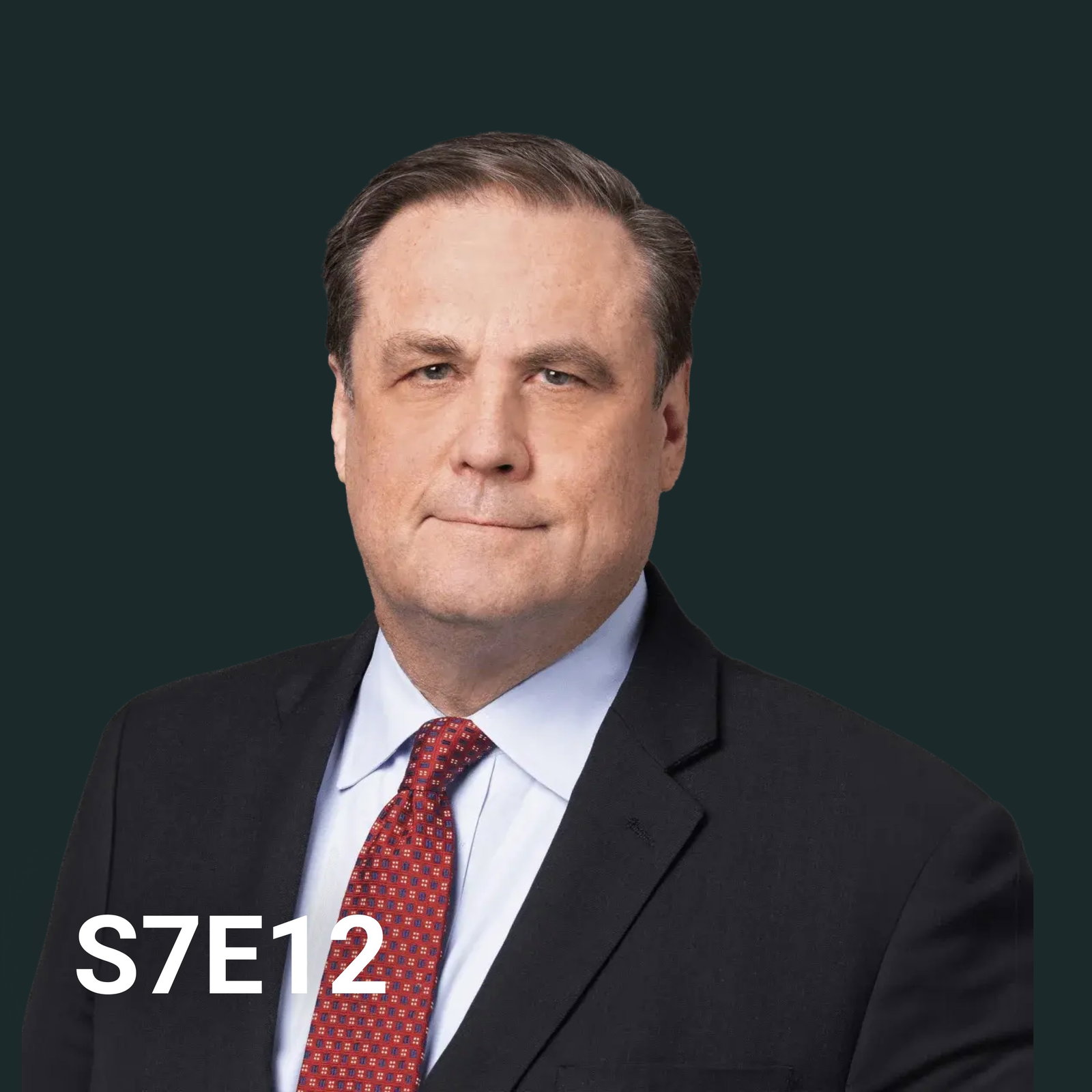 The Checklist Your Deck Is Missing ft. Jeff McMillanInvisible Machines podcast by UX Magazine · on Morgan Stanley77 / 100The Lucid Story | Building a Category-Defining SaaS Company with Ben Dilts, Karl Sun, & Dave GrowThe Spiff Story | Why the Best Founders are Knife Fighters with Jeron PaulPerfect Pitch with Alex Shamir: Owning Your ExpertiseThe Tactical Entrepreneur's Playbook: A Conversation with Wade Anderson, President and COO of ElementsElevating Startup Sales: A Conversation with Aaron McReynolds and Ryan Harris, Co-Founders of Alysio