The Insighter's Club Podcast · 2026-06-04 · 35 min
Key moments - from our scoring
Substance score
47 / 100
Five dimensions, 20 points each
Michelle Evans, Global Lead of Retail Insights at Euromonitor International, tackles the challenge of decision-making in an uncertain retail environment where speed, frequency, and overlap of disruptions - economic volatility, geopolitical risk, and AI - have fundamentally changed how organizations must operate. Rather than waiting for perfect data clarity, she argues that retail leaders should embrace 'informed conviction' and directional guidance, moving beyond the siloed approach that traditionally separated e-commerce, fulfillment, and innovation. Evans examines how companies like Walmart and Amazon are testing AI strategically through dual approaches (partnering with ChatGPT and Gemini while building proprietary tools like Sparky), contrasting this with organizations that chase technology trends without clear use cases. She emphasizes that insight's role has shifted from reporting to facilitating decisions by filtering noise from signal, providing thought leadership that connects disparate data points, and helping leaders focus on changes that actually move the needle. Fashion retailers like Zara, H&M, and Mango exemplify the shift toward shorter buy cycles and faster feedback loops, staying close to demand through data rather than making early commitments. For retail leaders, decision-ready insight means clarity on which one or two signals matter most, what those answers mean for action, and explicit understanding of trade-offs - not voluminous analysis or waiting for 100% certainty.
Strategic AI users start with the problem they want to solve rather than leading with technology. Walmart exemplifies this through test-and-learn experimentation - they partnered with ChatGPT to share product catalogs and enable checkout, but pivoted when conversion rates didn't match Walmart.com, showing discipline around measuring real business value before scaling.
Retailers typically have a prioritization problem, not a data problem. Excess data becomes noisy and fragmented, often looking backward rather than forward. Organizations get stuck on alignment, ownership, and confidence in decision-making - not the insights themselves - leading them to either overanalyze for false certainty or default to past approaches.
Decision-ready insight identifies one or two signals that actually matter, explains what those answers mean for the decision and action required, and arrives before the decision is made. It prioritizes clarity and directional guidance over perfect data, with rigor redefined as knowing enough to act confidently rather than waiting for 100% certainty.
They've shortened buy cycles and tightened feedback loops by staying close to demand through data rather than making large early commitments. They test quickly, learn from sales, and adjust or reorder based on what actually sells - prioritizing disciplined momentum and smaller pivots over perfectionism.
Insight has evolved from a reporting function to a decision function that filters complexity, provides context, and acts as a decision engine. Client expectations have shifted from demanding perfect accuracy to accepting directional guidance with reasonable confidence, enabling faster and more targeted action.
Our reviewer’s read on each dimension, with quotes from the episode.
The episode contains a handful of useful observations - the shrinking decision window, the prioritization-not-data problem, Walmart's ChatGPT pivot - but these are surrounded by significant padding and generic advisory language that a seasoned operator would already know. The ratio of novel ideas to filler is low for a 35-minute episode.
retailers really have less time between when they receive a signal and when they have to respond. That's that window has shrunk
A few months of data came in and they came to realize the conversion rates there are not what we see on Walmart.com so they changed the strategy, they pivoted
The episode recycles widely circulated frameworks - signal vs. noise, test and learn, hype cycles, shiny object syndrome - without meaningfully advancing them. 'Informed conviction' is a passable coinage but the overall thinking is standard analyst-tier commentary rather than contrarian or first-principles.
technology becomes more theater than it, than it is transformation
informed conviction and that's having the confidence to take a directional step
Michelle Evans is a legitimate senior practitioner with 15+ years at Euromonitor and genuine industry recognition across NRF and Forbes, giving her credible analyst-level authority. However, she is primarily a research analyst and thought leader rather than an operator who has scaled a retail business, which caps the ceiling on practitioner-grade insight.
I've been at euromar now over 15 years and I think one of the biggest changes I've seen when it comes to client expectations is a shift in, you know, how, how confident or how accurate the signal needs to be
I've been the ERMonitor for more than 15 years now and have been covering this intersection of tech and in retail
The episode earns credit for named examples - Walmart's Sparky, the ChatGPT product-catalog experiment and resulting conversion-rate comparison, Amazon's Rufus/Alexa, Carrefour's regional performance, and the hype-cycle timeline - but it stops short of hard numbers, dollar figures, or rigorous data, keeping specificity illustrative rather than evidential.
Last fall they did share part of their product catalog with ChatGPT. They were setting up the experience where a shopper could execute their purchase on ChatGPT. A few months of data came in and they came to realize the conversion rates there are not what we see on Walmart.com
2016 or so would have been IoT everything in 2017 would have been blockchain
The host asks topically relevant questions but consistently validates rather than probes, often inserting lengthy personal commentary and agreement that crowds out follow-up pressure. There is no productive pushback or challenge to any of the guest's claims across the entire episode.
That's that's a really interesting, I love that quote and a really interesting point
you're really talking my language now, Michelle
Computed from the transcript - who did the talking, and the words that came up most.
Why doesn’t more data guarantee better decisions? How can you speed up decision-making without sacrificing rigor? And what practices are setting high-performing retail organizations apart? In this episode, Ross is joined by Michelle Evans , Global Lead of Retail Insights at Euromonitor International , Forbes contributor, and one of Rethink Retail's top global experts for six consecutive years. They discuss how retailers can navigate economic volatility, technological disruption, and shifting consumer behaviour - and how insight leaders can create clarity when certainty isn't available. We also cover: How leading retailers identify the signals that matter and make decisions with confidence in uncertain conditions. What Walmart's approach to AI experimentation reveals about testing, learning, and knowing when to pivot. How retailers like Zara, H&M, Mango, and Abercrombie are shortening feedback loops, acting on directional signals, and redefining what rigor looks like in uncertain markets. Join The Insighter’s Club and get exclusive industry insights, expert analysis, and cutting-edge trends delivered straight to your inbox.
Transcribed and scored by The B2B Podcast Index.
Foreign. Welcome to the Insiders Club Podcast brought to you by Stravito, the enterprise knowledge management solution that drives impactful decision making. I'm your host, Ross Dempsey, and each episode we'll be speaking with insight leaders from across the industry to hear how they're turning insights into business impact. Hi, everyone, and welcome back to to the Insiders Club Podcast.
I'm super excited to welcome Michelle Evans who joins us today. Michelle is global lead of retail insights at Euromonitor International and one of the retail industry's most respected voices on digital transformation, E commerce, and the future of consumer behavior. Now, Michelle is also a Forbes contributor, a leader within the National Retail Federation's Industry Partner Council, and has been recognized by Rethink Retail as one of the world's top retail experts for no less than six consecutive years.
And I think we need a bit more here. With deep expertise in how technology is reshaping the retail landscape, Michelle helps global brands understand where consumers are headed next and importantly, how to stay ahead of the curve. Michelle, super excited to have you here. Thanks for joining us.
Yeah, Ross, thanks for the invitation. I look forward to the conversation. Brilliant. So I think I always like to start these conversations by setting the stage as much as we can.
And I think when it comes to retail, maybe the stage here is potentially uncertainty in retail. I think it would be fair to say that the retail has always been sensitive to economic shifts and of course, consumer sentiment. But do you see current volatility as a temporary phase or is this really something that retailers now need to. You need to design this into your decision making.
This is an uncertain world is where we are and where we are for the foreseeable future. Yeah, you're correct in saying retail has always had to respond to different cycles. I think what is different today is the frequency and overlap of these types of disruptions. So obviously there's been periods of high inflation, we have geopolitical risk out there as well as technological disruptions like AI.
So it's really that combination of economic uncertainty as well as these structural shifts. And I really point to the impact of AI here that's compressing decision making. So retailers really have less time between when they receive a signal and when they have to respond. That's that window has shrunk.
And I think retailers also used to talk a lot about these capabilities in silos. So E commerce is a channel, fulfillment's a cost center. AI is an area that we're experimenting in or innovation. And I think something that's also happening is those silos.
Are collapsing. And Walmart, one of the world's largest retailers, I think, you know, they have been talking openly about responding to these new shifts, this new reality, to these new, you know, essentially this new retail business model. And I think one of my favorite quotes comes from its recently retired CEO Doug McMillan. He said it about a year ago, I think it was in April of 2025 and I'll paraphrase him, but he said essentially we are an and company.
So we are, we're people and technology, we're stores and E commerce and we're innovation and execution. So you know, I think he underscores there we have to break down those silos. And it's about looking at our business in a new way where we can't just manage through these cycles. There's a new reality, a new environment in which retailers have to operate.
I think that's a really interesting, I love that quote and a really interesting point. I think for all of us actually, particularly in the inside world, you know, with the advent of technology, AI and many other things. Actually there's a straddle effect happening of, you know, there's a bit of an identity crisis happening kind of globally around these kind of topics. And I love that and link there.
Yeah, it doesn't have to be the old world and the new world. There is, there is a happy medium where you can evolve. Obviously not everything's easy, but there's a lot of value at the end of that. And thinking about AI that you mentioned there, actually a lot of retailers are experimenting with AI and I think regardless of your discipline, AI is essential now.
I guess it's not really an option anymore. But not all of those companies are seeing business value yet. What do you think separates organizations from that are using AI strategically, from those that might be guilty of chasing the trend, if you like? Yeah.
So I think a lot of this always comes down to understanding what problem you're trying to solve or what you think it could improve. So maybe it is more back into operations. So I think we all have seen it more in our day to day work for sure. And that's happening at retailers as well.
Or how to improve the customer experience on the front end. You know, I think this, the idea of like chasing the shiny object is, is more so leading with the technology rather than what you're, what you're trying to solve for. So I think the retailers that are probably getting it right are, are starting with, with the end result that they're aiming for. Of course, I think what's wrapped up in here as well is experimentation.
So I think some of the biggest players like Amazon and Walmart are certainly in more probably experiential mode. In Amazon, when we think about their AI strategy, they've chosen more of a walled garden approach. So we're going to build internally. So they have their Rufus assistant that they just renamed to Alexa to capture their full ecosystem in that way as an assistant.
But Walmart's taking more of a dual approach. They have Sparky, which is a lot like what Amazon is doing, but they've also partnered with others. And I think, I think what I like about Walmart's strategy is more kind of that test and learn mentality that they've embraced. So they did partner or they are partners of ChatGPT and of Gemini.
So they are testing it externally with third parties. Last fall they did share part of their product catalog with ChatGPT. They were setting up the experience where a shopper could execute their purchase on ChatGPT. A few months of data came in and they came to realize the conversion rates there are not what we see on Walmart.
com so they changed the strategy, they pivoted. And I think that's what's critical in an era in which change is happening and it's coming at you fast. I think that's a great point. I was reading yesterday, actually the economists did something similar.
So they've been using generative AI to great effect in their experimentation, kind of reducing time lags when developing products. But essentially it's a human centered business. Also being mindful of the fact that their audience want human centered judgment and opinion on the world, but actually using AI as the infrastructure and accelerator of that strategy. And not everything works, you know, dropping things where it became overcomplicated and maybe not as valuable as it was before.
And actually that kind of leads me around. So in that environment, and it's a changing environment, I think we would all agree, what's the role that insight should play today for retail leaders from your perspective? Yeah, I think you know how insight is changing relative to the business is that it's evolving from just being a reporting function to more, you know, a decision function or at least helping to facilitate that. I think the challenge that many face is distinguishing the signal from the noise.
So retailers, like any business, they have to understand why do these shifts matter and are they, do they have staying power and what action should I take off the off the back of them? So that's for strong insight and I'd also say strong thought leadership plays A key role. And when I talk about thought leadership, I think the importance of thought leadership is that it provides context, it helps to filter complexity as well and it really can help leaders focus on those changes that will shape strategy and move the needle.
So it helps them possibly to see the forest for the trees sort of idea. So I think in that sense insight can become a decision engine and enable faster and more, more confident and more targeted action to help move the business forward. I think that's really interesting. My next thought was going towards data, but a little offshoot question there that's just occurred to me actually that is quite live in my mind at the moment is you mentioned there being more of a decision support function and I think this is very true.
I'm wondering from your perspective, has there been a transition for how insight teams do that? Well, because I'm conscious that traditionally insight teams would kind of work on the problem, present the insight to the business and it would go from there. Today it feels like the conversation needs to be underpinned and in the format of the priority of the decision for the business, of the strategy for the business. Has the language changed for you in terms of how you present insight?
Do you present it in the form of hey, we're solving for this decision and this priority and these are the options in front of you? I'm quite interested in how teams are managing this transition. Yeah, you know, obviously this does vary, I think across retailers and brands and like the degree to which Insights has that seat at the table and has that voice. I think we definitely see that variance across our clients.
I would say what is evolving somewhat is it's kind of what you're speaking to, I believe this notion of not just sharing insights like here's key retail trends, but actually helping our clients unlock what does this mean for your business? So I think that's what that's kind of where the expectation has increased in more recent years is applying it specifically to their business through their lens of operating to help to help them ultimately make it more actionable. Interesting, thanks for that.
And I think data needs to be addressed here as well because as we know kind of today, again, I think it would be fair to say particularly and retailers would be included in this. No one's really struggling for data, particularly at the moment. Retailers arguably have more data, whether that's kind of sales data or shopper data. We've mentioned things like signals.
Why doesn't that automatically translate into better decisions, do you think? And maybe a follow up is where do you see retail Organizations getting stuck between having the data and then not just driving that action. But one thing I see actually is recording the action on the back of it. So not just driving the action, but recording the influence and the trajectory of that insight going through the business.
Yeah, let's dive into that. You know, I think like you're saying, there's no shortage of data. So I don't think retailers have a data data problem. What it really is about is they have a prioritization problem.
So more data doesn't automatically lead to more decisions because it can just lead to, it can become more noisy, it can become more fragmented. A lot of data tends to be backward looking. Of course, there might be forecasts that companies put together, but by and large a lot of it looks backward. So I think the real challenge here is knowing which signals matter and then trying to or working to translate that into action.
So where I think retailers and other organizations get stuck is rarely on specifically the insights piece. It's more they get stuck when it comes to alignment and ownership and confidence in making a decision off the back of that data. Obviously, some of these organizations are rather large. There are different teams, they're also working with different metrics, maybe towards different timelines.
And not every signal is one that you can act on. So as a result, organizations, they may either get stuck in overanalyzing the data and trying to make it a perfect decision, or they just default to what's worked in the past. So again, I think that's where insight and specifically thought leadership plays such a critical role here. Because thought leaders, whether it's externally or those within your business, can help connect those disparate data points, can filter out what is less important, help provide that context and really help leaders focus on.
These are the signals that you should be listening to and would most impact your performance. And it's without that layer of interpretation and alignment that I think more data just has the potential to lead to slower decision making rather than actually improve it. That's interesting. And signals is something that comes up time and again on the podcast.
We, we've had guests who specialize in foresight. But what you were talking about actually reminded me of a. My conversation with, with Tracy Berry, who was a competitive market intelligence specialist. And actually that request for we just need a little bit more data, a little bit more analysis.
I think points to your note there. Sometimes there is an avoidance of decision making. And we've been speaking to insight teams recently around related topics. And one of those things is when do you feel comfortable providing Decision confidence.
I know for Tracy Berry when she worked in the defence industry, there's a whole different set of priorities you're dealing with. But actually, maybe as an industry, we are getting to the point where, you know, our decision makers are experienced people and they make reasoned decisions all of the time. We hear things like 70%, 8% decision confidence. Is that something you're seeing that actually that, that kind of clamber for 100% certainty and more analysis to back up our way of thinking?
It is really, you know, being a bit of an Achilles heel to speed of decision making. Yeah, I think, you know, obviously waiting on that perfect clarity before making a decision can feel, you know, naturally smart and prudent, but that is still a decision in and of itself and can be a costly one if you're too slow to market or too slow to pivot, given the pace of change we face today. I've been at euromar now over 15 years and I think one of the biggest changes I've seen when it comes to client expectations is a shift in, you know, how, how confident or how accurate the signal needs to be.
So I think we're seeing more clients where they, they don't expect perfect answers. It's more so about directional guidance that would allow them to move forward with reasonable confidence. So I think the best organizations are the ones that recognize this and try to move earlier and use that data as a guide to decisions rather than a reason to stumble on making said decisions. Yeah, I think that's an important point, actually.
And I think the other thing that I think is often forgotten is those decisions get made anyway and often quickly, so being part of it becomes even more important. You mentioned earlier the kind of shiny object problem in retail technology. Now, I think retailers in the industry that traditionally has moved pretty quick on new technology, whether that's AI tools, retail media, predictive analytics. Do you see organizations sometimes just going far too much in the direction of the next shiny object rather than focusing on how it's used?
And I guess the thread we're coming back to here is being outcome and end value focused. Is that, is that something you're seeing? Yeah, for sure. I think you're right that some retailers may move quickly on technology, but not always with the discipline of if they should be investing in this space.
And I think, you know, there is the temptation to innovate without maybe being clear on how this impacts your business. I think we're living it right now with AI. Right. You know, I think we're clearly in an AI cycle Hype cycle.
And like I said, I've been the ERMonitor for more than 15 years now and have been covering this intersection of tech and in retail. And it's, it's one year after another, you know, what, 2016 or so would have been IoT everything in 2017 would have been blockchain and even AI. More like machine learning back then. So I think it's easy to get wrapped up into these different things coming out.
And when, when you do, that's when technology becomes more theater than it, than it is transformation. So, sure, maybe it helps you get more dashboards, you might do more pilots, you might have more activity, but it really doesn't matter if it doesn't lead to better decisions and better outcomes. And at the end of the day, if the use case isn't clear for your business or the ownership is fragmented, then it might lead to more complexity rather than, you know, improved capability.
So I think sometimes we do see retailers go all in on things and maybe they should have caused it and thought about, you know, I don't. So we talked earlier about Walmart's AI strategy and I think that's, that's important to highlight again, where it is this idea of you can experiment and they, you know, adopted a test and learn type of strategy and are pivoting with that knowledge that comes in from their testing as well. A couple of things, though. When you were meditating hype cycles, my brain immediately went to the metaverse as well as another one.
I think it's a great shout there, actually, on giving an example, you know, Walmart being the example there around where, you know, your choices around AI can, can really add value. Maybe you could give a little bit more color on a good test for leaders that they can apply to distinguish, distinguish between meaningful innovation and not just another tool that generates more data. You mentioned, you know, Walmart's test and learn approach. Is there a kind of a good ubiquitous approach for leaders when they're thinking about how they make this distinction?
Yeah, so I think, you know, we have to move beyond the idea that this technology, this tool, just gives us more data. But, you know, it's ultimately about does it drive the decision, does it help to improve the decision? Does it, does it add complexity or remove it? And so I think the best organizations tend to be a little bit more disciplined and they start with that decision they want to make from it.
And I think, like I said, Walmart's a good one with the kind of test and learn. And I think, you know, it's that willingness to fail as well. I think it was, it was the Metaverse and I think it was PacSun, I believe that spoke and I think it was a shop talk show where one of their leaders talked about their failure when they first launched and they, they came back with a, with a different approach to it. And it, you know, it's a type of technology that connects more with their audience and they did see lift from it.
So, you know, I think with all of this, it is that sort of test and learn willingness to fail and small trials and pilots and I think understanding that you're not Amazon or Walmart more than likely as well, you probably don't have those pockets and you don't have that audience. But you know, as they've been testing and learning, even with AI, they both have reported positive figures in terms of usage of their assistance, in terms of lift and spend, where they're both talking about an incremental improvement to revenue.
So, you know, it's all about dipping your toe, I think in the water to see if it drives value for your business. Absolutely. And I think maybe a natural follow on to that actually is maybe if we talk a little bit about insight preparation. So what from your perspective, what does decision ready insight actually look like when a retail leadership team, maybe they've got a high pressure decision, whether that's pricing or assortment or expansion, what does that decision ready insight look like in practice?
And maybe a, a further one, if I might, which is how should retailers balance kind of speed and rigor when consumer behavior is and can shift so, so quickly? Yeah, I think, you know, decision making insight, it's not about having a bigger deck or more data. It's about trying to make the choice clearer for you. So I think you have to answer a few questions as you're starting out.
So it might be what are the one or two signals that we think really matter and help to unlock insight into that decision? What would those answers mean for this choice and the action we should take and what direction might it point us to? And with the realization that timing is important, there is a shelf life's insight. And if it's coming after a decision is made, well, it's, it's postmortem commentary.
Right. I'm based in the States, we would call that like Monday morning quarterbacking. You know, it doesn't help you at that point. So I think where teams get stuck is really that, that overanalyzing thinking they'll get more certainty and really not having that confidence high enough to move Forward, you know, in terms of what's the balance between speed and rigor.
I think the best are really trying to redefine what rigor looks like where it's not waiting for that perfect answer anymore, that it's instead, what do we know enough right now to act? Do we know enough right now? And then trying to build out sort of shorter decision cycles around that so you know, more those small pivots, pricing changes maybe, maybe adjusting assortments and phases, maybe it's just doing pilots in specific markets. And I think where teams get stuck is they try to equate rigor with more analysis.
Where in reality rigor is just about being more clear on the signal that you're looking for and being explicit of what those trade offs mean. If you need 100% confidence to act, well then you're asking and you know, are you asking this data and insight to do a job that it was never meant to do. So I think what matters more is informed conviction and that's having the confidence to take a directional step. And when I look at the broad retail space, I think one of the clear places where this has changed the most in the last few years is with fashion retailers.
And some of this of course is driven by incumbents or non incumbents, entrants like Shein coming on the on the scene. But you have a number of retailers like Zara and H and M and Mango and Abercrombie who have definitely changed their strategy and are looking at shortening their buy cycles, trying to stay close through data rather than making these huge commitments too early so they have enough certainty on what trends might hold and then move forward. And they stay close to that demand and give themselves room to adjust or even reorder off the base of those sales.
So again, it's not speed or rigor. I think it's about kind of disciplined and finding that balance. A couple of lines that really stood out to me. One was being clear with your choices as insight producers, but also informed conviction.
And actually there is a time when momentum over perfection becomes the more valuable track to take. I'm just thinking now around differentiation and what sets the kind of high performing retail organizations apart and maybe in your work with kind of retailers globally, what are the behaviors that separate organizations that move forward confidently from those that tend to get stuck in the sand? Yeah, I think there's a few that stick out. So this idea of, and we've talked about it already, but you know, forward momentum versus being hung up on perfection.
So they're willing to act on imperfect information that can provide them with that clear directional signal. What I just spoke about with fashion is that shorter feedback loops. So can you, can you make a call, can you test it, can you quickly learn from it and then adjust rather than maybe going all in on a huge national rollout or all of your categories, whatever that means. And I think they also tend to have more of a curious, outward looking mindset.
So they're not entirely internally focused. They might look at direct competitors, but I think they're also scanning adjacent spaces, adjacent categories that they're asking better questions and bringing in new perspectives. I think that's a critical one that I've seen during my tenure for sure, between those organizations that are moving the needle and those that are not. And you know, I think there is, you can't mix the idea of activity doesn't necessarily mean progress.
So really you have to not just look at more tools or more meetings or more data or whatever. You know, you have this willingness to learn and to keep moving. And I think like someone that comes to mind in this case is Car four. Obviously they're a global grocery retailer.
There's a lot, they operate in a variety of different markets and obviously a lot of different factors at play there for them. And they've really, you know, they've had stronger momentum in France and Spain more recently. They've faced more challenges in different conditions somewhere like Brazil. But they've continued to push ahead with different integrations and margin improvements and convenience expansion and digital transformation.
And I think that's, you know, they're showing that willingness to try to keep building even though the target might be changing, the uncertainty might be rising as well. Absolutely. And as we're coming to the final couple of questions, I think a good couple of wrap up questions here might be for those leaders, for consumer insight leaders inside retail organizations, where would be the most valuable and useful way for them to focus and spend their time and influence right now, in your opinion?
Yeah, so I think it has to, you have to shift focus to those decision moments that matter. So it might be pricing assortment, maybe it's investment priorities. And ask yourself, you know, is this something the business needs to be able to move forward? The second being clarity around the signal.
Again, no shortage of data, but the value comes and being able to say these are the two to three things that we're going to be looking for in order to, in order to move the ship forward. And I think the third is influence. So the most effective leaders are just delivering analysis. They're helping leadership to understand the implications and trade offs and to really unpack that for them so they have enough confidence to move forward.
Because we know the gap isn't access to insight. Right. It's that ability to translate it into clear, timely, actionable decisions. So again, I think what we're talking about is that idea of that shift from the reporting function to more of a decision function or maybe decision enabler.
It could be another way of thinking about it. Definitely. And I think something you mentioned there that's actually really important and often overlooked, which is having your finger on the pulse of the business and not just from what you can see in the data and then requests coming to your team, but in by building human relationships with your leaders, your stakeholders. Having these water cooler conversations can often be some of the most powerful unlocks to the rest of the value estate, I think.
And maybe as a kind of final question, which we always like to do with our guests, if you could give. This is always hard. If you could give one piece of advice to insight leaders trying to guide retail organizations through the current uncertainty or what would it be and why? I think it would be maybe to focus on being less comprehensive and being more clear and directional.
So we're obviously living in these kind of uncertain times. Some have framed it like a poly crisis. These crisises on top of one, on top of another that push it further. And I think what organizations really need is someone who can step back and say this is what matters right now, this is what information we have to demonstrate that.
And this was what it would mean for the business if we make X decision or if we make Y decision. And I think that comes down to judgment. It requires taking a point of view even if you don't have perfect information. So if insight stays more neutral or overly careful, it may sound smart, but it, but it doesn't help move the business forward.
So if I had one thing to leave your audience, your viewers with, it's don't try to answer every question. I think focus on answering the ones that are going to drive the best decisions for your organization. Well, you're really talking my language now, Michelle. I'm often talking to kind of global insight teams around, you know, let's move away from what's missing to what do we know today that can make a difference.
Let's move away from being exhaustive in how we deliver insight to the business. Less so, you know, in how you create and produce your insight. But I think you're absolutely right in, in the age of time, poor stakeholders, shrinking attention spans and an uncertain world. Delivering the right insight to the right audience at the right time becomes for me that prism of what a high value insight is.
Is it consumable? Is it relevant, timely, actionable? And if you're doing that, you're going to be in a good spot as a strategic co pilot, I think. Yeah, for sure there's no shortage of data out there, right?
The AI era, but your CEO can search anything and get a volume of information that doesn't mean that it's useful or actionable. I think it's really. I'm a former journalist and one of the, one of the things that they used to always say journalists do well is distilling information. And I think that's what it's about is lifting that piece of insight out of there to help people make that call.
Well, as a fellow journalist in a former lifetime, I agree with, but thank you so much, Michelle. It's been a fantastic conversation. I think our listeners are going to find that really, really valuable and we can't wait to have you back on the podcast again sometime. Yeah, that would be wonderful.
Thank you for your time and great discussion. The Insightus Club podcast is brought to you by Stravito, the enterprise knowledge management solution that drives impactful decision making. To learn more about how Stravito helps leading brands make the most of their enterprise knowledge, visit stravito.com be sure to click Follow so you don't miss out on any future updates.
And if you would like even more insightful content, you can subscribe to the Insiders Club newsletter at the link in the show notes. On behalf of the entire team here at Stravito, thank you for listening.
Other episodes covering the same guests and topics, from across The B2B Podcast Index.
 Gen AI in retail | Why GEO is replacing SEO according to Euromonitor InternationalThe Ecommerce Toolbox: AI in Retail · features Michelle Evans80 / 100
 Privacy, Power, and Prediction: Reclaiming Control of Your Personal Data, with Carissa Véliz | Lawyerist PodcastLegal Talk Network · on Predictive analytics85 / 100
 Drones Are Changing the Future of FarmingFood Tech Talk · on Predictive analytics81 / 100
 Finding the Students Schools MissTech & Learning Conversations Podcast · on Predictive analytics81 / 100
 How To Build A Career Roadmap Like A Project Plan with Tyler NormanPM-Mastery · on Google Gemini75 / 100
 AI for Growth: Lessons from Leaders Daren HornigAI for Growth: Lessons from Leaders · on ChatGPT integration65 / 100
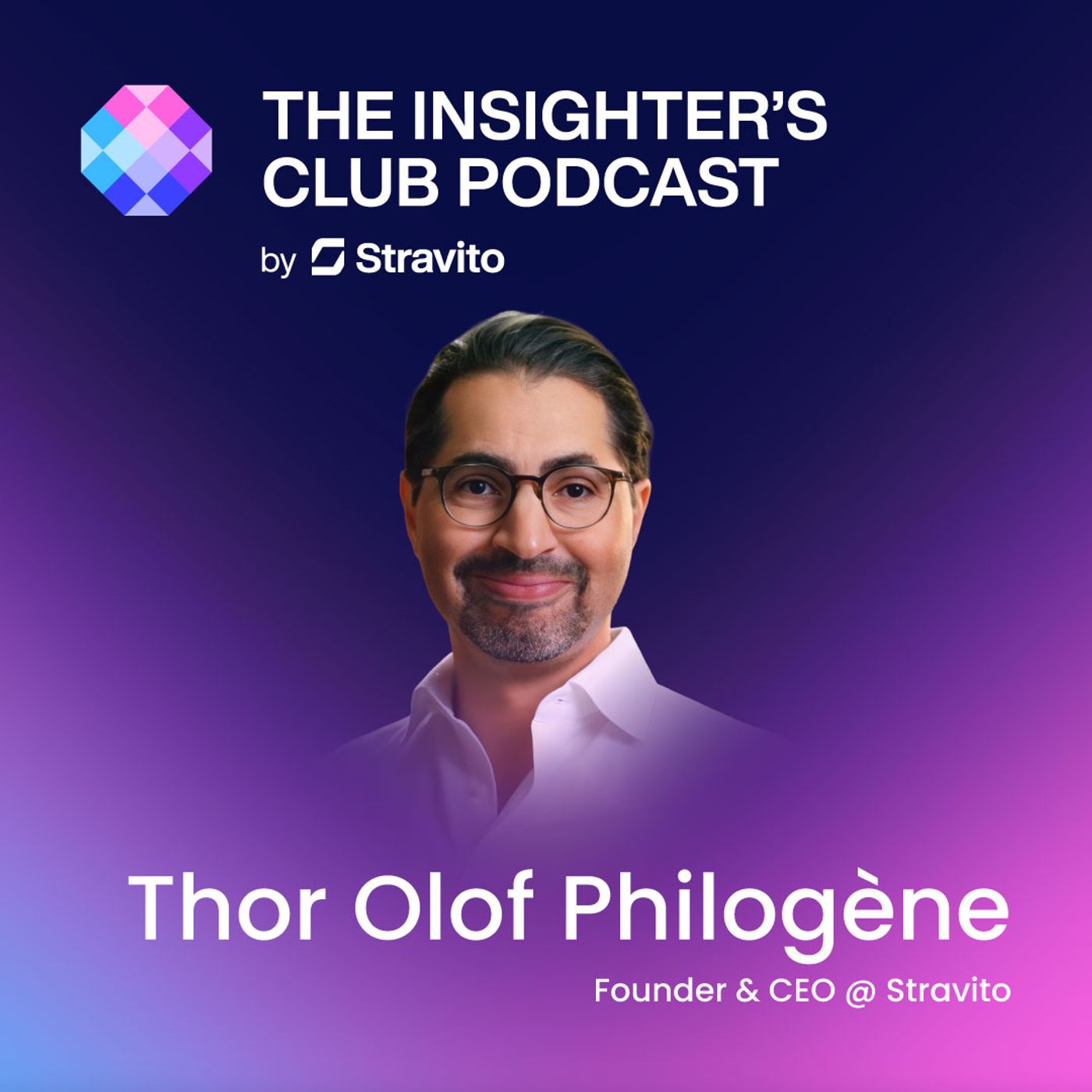 Mid-Year Pulse Check with Thor Olof Philogène, Founder & CEO at Stravito75 / 100
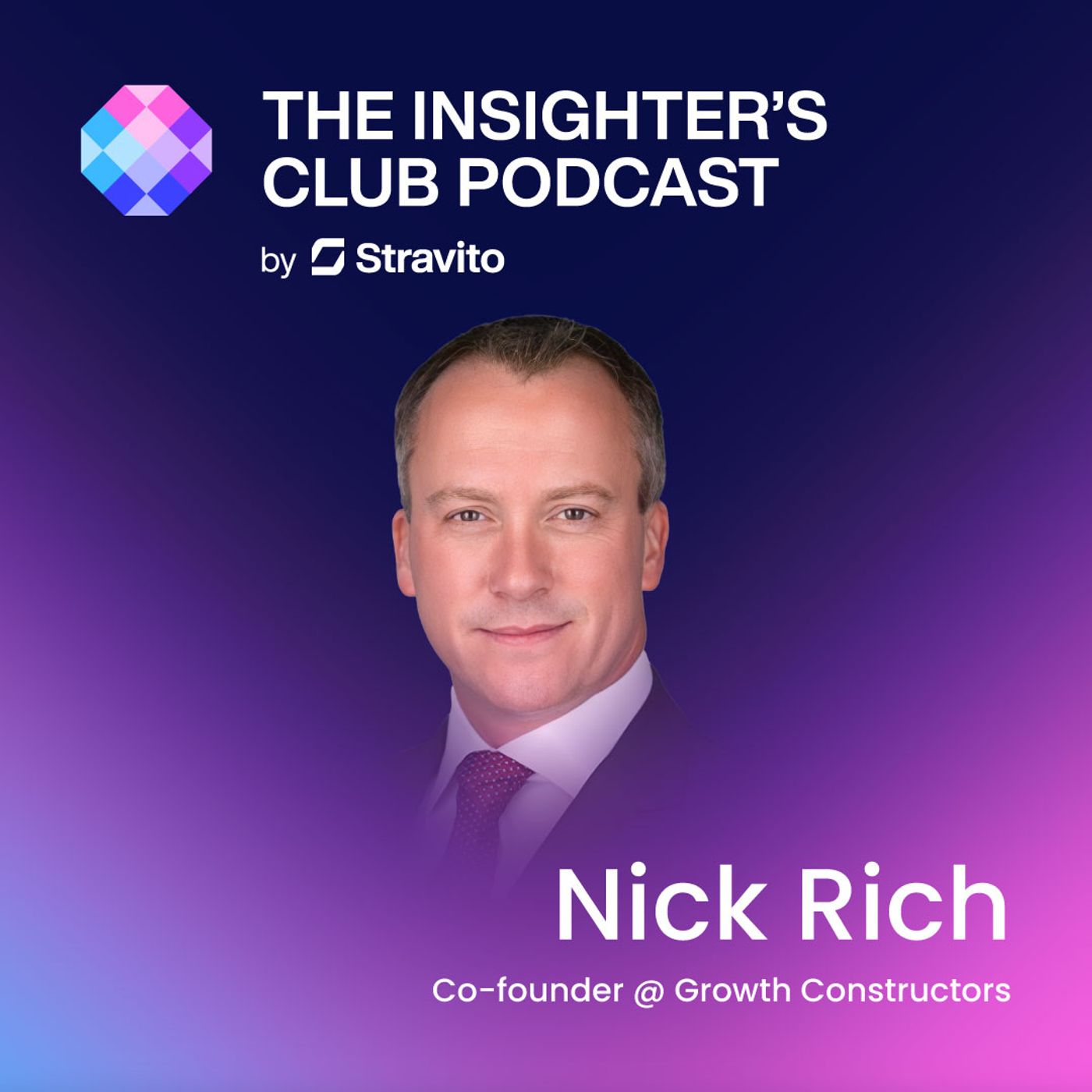 How to Give the Business Answers, Not Homework with Nick Rich, Co-Founder at Growth Constructors66 / 100
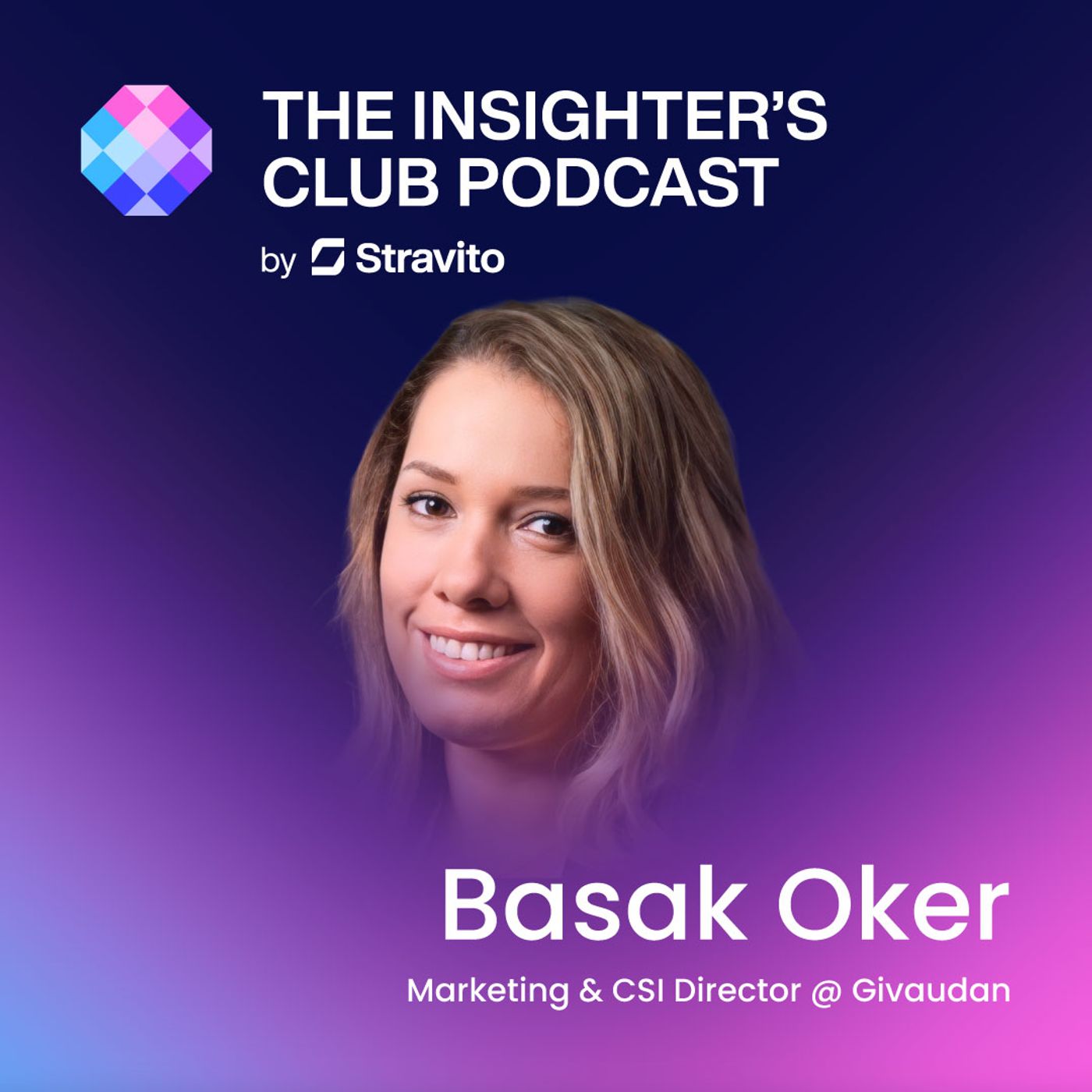 Questions of Taste: How Insights Shape What the World Eats and Drinks with Basak Oker, Marketing & CSI Director at Givaudan67 / 100
 From Signals to Decisions: How Competitive Intelligence Really Drives Advantage with Tracy Berry, Founder at Berry Insights86 / 100
 2025 Year in Review with Thor Olof Philogène81 / 100