The Insighter's Club Podcast · 2026-07-23 · 29 min
Key moments - from our scoring
Substance score
55 / 100
Five dimensions, 20 points each
Following their attendance at major industry conferences in Cannes and Paris, Thor Olof Philogène and Ross Dempsey identify a fundamental shift in how insight leaders approach their role. The conversation centers on three interconnected themes: first, the democratization of data access has moved the competitive advantage from information generation to decision influence; second, AI is rapidly accelerating this transition, but trust and explainability are now the limiting factors rather than speed; and third, insight teams must evolve from traditional reporting functions toward operating as orchestrators and growth catalysts within their organizations. The discussion references multiple leaders including Thomas Walker from eBay, Elaine Rodrigo from Reckitt, Dara Kelly from The Economist, and Tracy Berry, exploring how organizations like Mondelez are grappling with the confidence problem - not data scarcity but prioritization and the ability to act on incomplete information. For B2B decision-makers in the insights space, the episode articulates why glass box AI (transparent, traceable reasoning) is essential for high-stakes decisions, and outlines the capabilities insight leaders must build: AI literacy, signal detection, scenario planning, and the discipline to treat intelligence as an organizational asset rather than a departmental function.
Glass box AI ensures you can see how the AI reached its answer through three elements: traceable evidence linking claims to exact sources, visible reasoning showing the logic and filters applied, and explicit uncertainty indicating what's known versus inferred versus missing. It matters for high-stakes decisions because it lets decision-makers challenge, override, or amend recommendations with their own reasoning, and prevents the dangerous combination of confident-sounding claims built on thin evidence.
No; AI should instead help us understand uncertainty rather than remove it. Leaders don't need 100% certainty, they need to know how confident the recommendation is, what evidence supports it, and what couldn't be found. This mirrors how experienced decision-makers already operate with reasoned judgment, and waiting for perfect clarity is itself a costly decision.
Insight leaders are shifting from information providers and traditional reporting functions to orchestrators and growth catalysts who influence decisions across the organization rather than seeking a single seat at the table. Success is measured by how many people they can move with knowledge and how many important decisions they've influenced, supported by AI handling operational scale while human judgment remains central.
Key capabilities include AI literacy (weighing evidence and knowing when to trust AI), signal detection (cutting through noise), scenario planning, timeless skills like curiosity and storytelling, commercial acumen, and leadership competencies around change management and responsible AI. Adoption is primarily a leadership behavior, not a technology implementation.
No; the most powerful outcome combines human expertise with AI. AI provides infrastructure, scale, recall, and speed, while humans provide interpretation, challenge, decision-making, and ownership. Either without the other fails - AI without judgment produces confident nonsense, and experts without AI cannot keep pace with modern data volumes.
Our reviewer’s read on each dimension, with quotes from the episode.
The episode surfaces several meaningful conceptual shifts (intelligence democratization, moving from reporting to decisions, trust as constraint) and references concrete frameworks (glass box vs. black box AI, confidence hierarchies). However, much of the substance consists of reflections on conference talks rather than novel analysis; the hosts spend considerable time name-dropping speakers and repeating their points rather than synthesizing or extending the ideas. Filler includes extended recaps of Cannes sessions and self-referential podcast callbacks that pad runtime without adding density.
the advantage shift from generating information to shaping decisions becomes less about the insights and more about the decisions we're trying to influence
the constraint has moved. So whereas it used to be an access problem it's more of a prioritization and I would say confidence challenge at the moment
The core thesis - that trust and transparency matter more than raw speed and capability in AI-driven decision-making - is sensible but not contrarian. The glass box/black box framing is Stravito's own positioning rather than a novel industry insight. Much of the episode recycles well-trodden industry talking points (AI as accelerator not replacement, human+machine > either alone, moving from reporting to decisions) without offering first-principles arguments or counterintuitive observations. The framing of uncertainty as a feature rather than bug is sound but not particularly fresh.
AI is the infrastructure it's the accelerator It handles scale recall and speed But human expertise is what we need to interpret to challenge to decide
the probabilistic way that kind of those models work as a feature and not the bug
Thor Olof Philogène is the CEO of Stravito, a relevant operator in the insights/intelligence space with legitimate industry standing. However, this is not a third-party guest interview - it's the host and a company leader reflecting on conference attendees. The actual decision-makers and practitioners cited (Thomas Walker at eBay, Dara Kelly at The Economist, Elaine Rodrigo at Reckitt, Nitesh at Danone) are mentioned but not directly featured; their insights come filtered through the hosts' recollection rather than direct testimony. This reduces caliber compared to having actual senior practitioners speaking firsthand about their decisions and results.
my guests today are esteemed CEO Thor
I've spoken to hundreds of marketing insight leaders decision makers
The episode lacks concrete data, metrics, timelines, and dollar figures to ground its claims. While it names several companies and leaders (eBay, Reckitt, The Economist, Danone, Mondelez), these references are anecdotal and mention only general principles rather than specific decisions, outcomes, or measurable results. The $10 million decision example is hypothetical. No numbers on adoption rates, ROI improvements, or time savings are provided. The host occasionally mentions frameworks ('glass box' components: traceable evidence, visible reasoning, explicit uncertainty) but without supporting data or case studies showing how they've translated to business impact.
are you willing to bet $10 million on you know sure think that was just surfaced in split second
Traceable evidence so that any claim links back to an exact page or passage Not a vague bibliography visible reasoning
The hosts perform a friendly, cohesive conversation but rarely push back, challenge claims, or dig deeper with tough follow-ups. Questions are often rhetorical or leading (e.g., 'can you trust it?') rather than genuinely probing. When Thor makes broad claims about what industry leaders believe, the hosts nod along rather than ask for specifics or counterexamples. The interview reads more as two aligned thinkers confirming shared worldviews than as rigorous inquiry. The host does frame one good question about whether AI should mimic human reasoned judgment, but doesn't press when Thor's answer circles back to company positioning rather than novel insight.
I would echo that as well
I think that's a really good point Ross
Computed from the transcript - who did the talking, and the words that came up most.
When intelligence is available to everyone, what actually sets you apart? Increasingly, it's not who can find the answer - it's who can stand behind it. In this mid-year pulse check, Thor Olof Philogène , Founder & CEO of Stravito , rejoins Ross to look back at a fast-moving H1 and discuss what it signals for the months ahead. Fresh off Cannes and VivaTech, they trace a shift the whole industry is feeling: the hard part is no longer finding information, it's trusting it enough to act. And when the decision is high-stakes, that trust comes from one thing - being able to see how the AI reached its answer, not just what it concluded. As AI takes over the repeatable work, the differentiator becomes human judgment you can actually trace.
Transcribed and scored by The B2B Podcast Index.
Speaker A: Foreign. Welcome to the Insights Club podcast brought to you by Stravito. The insight intelligence platform global brands trust to turn their existing knowledge into better commercial decisions. I'm your host, Ross Dempsey. Each episode we speak with insight leaders from across the industry to hear how, uh, they're turning Insights into better business impact.
Speaker B: Hi everyone and welcome back to the Insiders Club podcast. It's that time of year again. We're about to embark on our mid year review and I'm sure our listeners will agree. Six months in the insight or decision intelligence industry feels like a lifetime at the moment. And my guests today are, uh, esteemed CEO Thor. I'm sure he'll agree. Thor, we've just come back from a very busy few weeks sunsetting some traveling, but we've been out at the Insight Lighthouse session in Cannes and also Viva Tech where Stubito was lucky enough to pick up an award, I might add, as a shameless plug. But I would say that between us we've probably spoken to, well, I know we've spoken to hundreds of marketing insight leaders, decision makers. But to ground this, why don't I start with what stood out for you both across and maybe these last couple of weeks at the entry point here? What stood out for you from our time at IM Cannes and at Viva Tech?
Speaker C: Uh, tough one, Ross. I think, uh, we did talk to a lot of people and there are a lot of things that could be said, but if I had to highlight one or a few things, I think one thing that did stand out was the consistency of the message, I guess, you know, and across both standout sessions, the, you know, all kinds of sessions, the same type of narrative would surface as access to intelligence does get democratized, then suddenly the advantage shift from generating information to shaping decisions. It becomes less about the insights and more about, uh, the decisions we're trying to influence. And that of course builds capability and drives growth in a kind of an irony of things. Obviously people have been talking about AI for long, for at least the past three years. I think the more topics got into technology, the more the room circled back to the human. So yeah, I think to build on that, I'd say like a year ago the room was asking how, you know, should we use AI? And this year it was more about how do we use it. Well, if I had to say something,
Speaker B: I'd say that, yeah, I would echo that as well. And I think that was really clear from what I thought was some of the standout sessions from the kind of progressive leaders, particularly at can you Used the word growth. And actually I thought Elaine Rodrigo made a great point, a uh, provocation to the room if you like, which was, you know, we spent two days really deep diving on the opportunities and challenges facing the insight industry ahead. But actually how much in the room were we thinking about the other conversations in Cannes where the decision makers, the marketeers, the brand people were and changing our mindset to be much more outward looking and ah, to quote Thomas Walker from ebay, to be thinking about ourselves as an enterprise capability rather than just a business function, I thought was particularly interesting. And maybe on that topic, the role of insight changing. We know from doing the podcast over the last 6m months there really has been a kind of through line, a gold thread if you like, which insight really moving from reporting towards decisions and growth as we've touched on. But one thing that stuck with me actually for nearly every conversation and I'm going to relate this a little bit to myself if I might, but through my career I've always kind of been the jam in the sandwich between decision makers and insight teams. Coming from a comms and engagement background. And the shift that I've always felt was needed is from moving from completeness, moving from that need to be exhaustive, moving from that what are we missing? Mindset to a mindset of clarity. And sometimes that can be reason, judgment. We're not always going to have 100% of the information we need to make decisions. And Nick Rich stood out to me actually in the episode we did together. But he, he really took it one step further and that was we have to start treating insights as a report function as Thomas Walker from ebay said. But I think what they're both talking about there is not the discipline and that's often, I think the distinction that's not made very clear publicly. We're really talking about the operating model, the more traditional operating model and that's the direction of travel and AI is becoming an even bigger playing in that. How do you see, and uh, I appreciate this is a big segue to this question, but how do you see the changing of the role of insight given my overview there.
Speaker C: No, I think it's a super relevant question and I do agree with Nick and with Thomas and there are several things I would say. So what many people are seeing and making possible is the reality in which AI is taking over a lot of repeatable operational work. That in turn frees Insights team to spend their time in, you know, working and shaping decisions. What Thomas actually said was influencing was the word he used But I think one thing I'm hoping we can spend more time on is the fact that if you influence something, you also need to understand why AI is making that recommendation. Otherwise you don't necessarily understand, you know, why you should believe that recommendation or not.
Speaker A: Right.
Speaker C: So I think that's an important point. And um, what, in terms of kind of the function, Thomas Walker also reframed the Insights leader as an orchestrator and building, uh, on what you mentioned, Elaine Rodrigo from reckitt, and she called it a shift from information provider to growth catalyst. Uh, so I think there are a lot of these things were called out and I think are super relevant. But, um, more than anything, like if we go back to a theme that has been, I would say, prevalent in this podcast, uh, over several years is that discussion of like, how do we get the seat at the decision making table? That's like, how do we get Insights folks to actually, you know, get the seat there? And, and uh, I think Thomas really challenged that and said like, well, what table? I mean there are so many tables and instead of wanting to be there, like what he, like, the orchestration role is really a role where we instead embrace a reality where our success is how many people are we able to influence with the knowledge we sit on and how many great decisions have been taken that we have been able to influence. And I think that's a whole kind of create intelligence, not data, uh, build systems, not projects. Thinking that I think is the appropriate lens to have right now, definitely.
Speaker B: And I think a lot of that was echoed actually in our own Fireside, uh, chat panel session that we had with Dara Kelly, the chief data, uh, officer at the Economist. Really lots of food for thought there in his feedback. I think some general themes emerged for me actually that kind of back this up, but maybe more from uh, how you practically enable that kind of strategy with your team and with your stakeholders. And he mentioned some really interesting things around adopting a momentum over perfection attitude to really kind of bash through barriers and to bring your team along. And Thomas Walker spoke about this a little bit as well, which was to really provide kind of intensive support for your team. Darren mentioned examples where he brought London School of Economics in for a two week boot camp. Thomas gave examples where he really spoke around the need to make sure his team really felt invested in the direction they were going in. And that was uh, what he described as a light bulb moment, the transformation that he knew needed to happen, but happened quickly. And I think there's a lot in that for our listeners to Take away. I think the days of getting stuck in the mind palace of preparation are gone. It's actually how do you make progress quickly? How do you really be intentional with where you're trying to drive value as an insight team? And that's also been a theme that's ran through the podcast this year. And really what we're talking about here as well is signals. We've heard the term signals a lot this year. How do you cut through noise? And how do you deliver insight at the speed of decision making? In a business, there's always been lots of data. Uh, there's always been lots of tools. But delivering timely, actionable insight is really where we earn trust and become that famed strategic co pilot as a business. And maybe, if I can frame that into a question, a lot of guests are coming at the same problem from different angles. I think when we spoke to Tracy, who was, you know, competitive intelligence expert, on confidence levels and pulling those signals out of the noise, we spoke to other guests on connecting signals across different categories, on moving from reporting to decisions. But it's really coming back to one prism. How do you deliver the right insight to the right audience at the right time? And anyone who's listened to me bang on the podcast will know this sits at the heart of everything we do. And it was everywhere in Cannes as well. How do you test and iterate rather than wait for certainty? But thinking about that point that Dara, uh, and I spoke about, why do you think so many organizations still really struggle to turn intelligence into action? Why is that a common thread that we've seen on repeat recently?
Speaker C: I mean, good point. It is a common thread, but the constraint has moved. So whereas it used to be an access problem. So how can I find the information? It's more of a, uh, prioritization, and I would say confidence challenge at the moment. So what I think we've all experienced is how AI has accelerated a lot of these trends at the same time. We now have access to more data. It goes faster, uh, but also leaves us with less time to respond. It's a kind of irony of history. And I think that Michelle's line was that it's not a data problem, it's a prioritization problem. Uh, and Tracy's line was that data makes the noise and signals are what you find in it. And I do believe that these are views that were echoed in Kahn, where kind of the whole speed point became kind of clearly an important one. And what automatically happens and is, of course, is like when you start to talk about speed. Then you need to ask yourself is like, is the biggest challenge I have that I don't have it fast enough, or is it that I can't trust it? Because I think there are a lot of great solutions out there that give you a fast answer. The question is, are you willing to bet $10 million on, you know, sure, think that was just surfaced in split second. But yeah, there is definitely a reality of kind of, you know, uh, the constraint having moved.
Speaker B: I think that's a great point. Let's deep dive onto that for a second. So trust, very key. And actually, you know, as we touched on at the top of the episode, as AI moves into decisions, it really does become integral that you have that trust. And there's been a lot of talk in the industry about black box AI and glass box AI and essentially black box AI likely isn't really going to be good enough. Uh, as you say, Thor, kind of 10 million pound decisions that you might be making in a business. But you know, phrasing this as a kind of leading question, I guess if AI is really shifting things from finding information to shaping decisions, you know, the question being, can you trust it? Uh, actually, how explicit do you need to be about your confidence levels and your sources? Because I'm thinking, I've spoken to people on the podcast actually previously where confidence scores was really integral from an insight perspective. So when you're making a decision based on insight, many of our guests, they do provide that recent judgment and you know, that confidence score. And actually out in Cannes we had the speaker, uh, Ravi from Harvard, who he put it as, you know, you should never delegate understanding, which I thought was a really interesting turn of phrase. So where do you think that leaves black box AI? And the key question kind of here is, is that enough for making these kind of decisions, these 10 million pound decisions?
Speaker C: I think it's one of the most important questions we need to ask ourselves right now. Know, uh, we all know that if challenged in a boardroom, uh, saying where did that come from? And just saying, you know, because AI said so would never hold up. We all know that. Right? So what's kind of black box's role in this whole ecosystem? I'd say probably low stakes decisions, you know, I mean, you, you just want like a quick answer on something. Go ahead, you'll get your black box. And to be clear, like black box is anything where you get an answer, but you don't really fully understand where it came from and how it came about, what was used, what was not used. But like, for. If you want to get to a point where kind of AI actually informs real decisions that have, like, large kind of financial implications of pricing, calls, investments, launches, then we believe. And I guess this is also Stravito thing. You know, we believe at Stravito that people need to see the reasoning trail and the evidence behind it. But, um, I think more generally, the concerning part is, like, when you get these answers very fast, it feels reassuring. It's like, oh, this is great, right? I mean, you got the answer, you asked the question, you got a quick answer, and, um, yeah, I remember. I believe it was Pamela Forbus at Mondelez, uh, who made the point that AI is brilliant at making anything sounding plausibly true. And, you know, it's that confident, authoritative tone, but reality being kind of on top of blended, untraceable sources, like, effectively a black box. That's what makes it risky. Then I think I've, uh, been tying it to kind of your conversation with Nick Rich. He made a related point, you know, from the consultancy side. You know, teams worth trusting don't hide behind black boxes and complex models. And I think that's, um, even more important now than before.
Speaker B: You sparked an interesting, uh, thought in my mind there. Uh, just thinking back to can as it's so fresh in my mind. I mean, one wider point is life is uncertain. Right. I remember Dara saying how he and his team have really, you know, made a lot of momentum in the business. Uh, and I think there was an interesting turn of phrase and conversation we had, which is, you know, you can't let the fear of being wrong stop you from testing and learning. Decisions are getting made anyway. And maybe Tracy Berry actually framed this very well. She kept making a point that in her intelligence career, which included working in the defense industry, for example, where the stakes are high, uncertainty was made explicit rather than being papered over, which is the point Dara was making. If there's uncertainty, that's something you need to know. And in Michelle's case, that uncertainty was framed in a sensible decision hierarchy. Is it possible? Is it probable? Is it near certain? And then decision makers could act accordingly, knowing there was an element of recent judgment there. And actually, my personal opinion here having kind of pushed insight to the C suite and to broadcast enterprise. In a number of organizations, decision makers, particularly senior ones, are quite happy with reasoned judgment. In fact, I think they often crave it. They're all experienced and, for the most part, reasonable human beings. They're not chasing 100% certainty. So my question to you Thor is, should AI mimic that? Should AI work in the same way? Because I think the expectation often is, well, if it's not getting on there 100% certainty, why would we release it into the business?
Speaker C: I think that's a really good point, Ross. And I think, you know, in the very beginning, what kind of generative AI was a new thing. People expected it to work in the same way as computers. That always worked, right? So it's like instantly, you know, we started, people started criticizing it, et cetera. When in fact you should look at the way the probabilistic way that kind of those models work as a feature and not the bug. So, so in terms of how to think about AI shouldn't pretend to remove uncertainty. It should instead help us understand it, you know, so the honest answer is very rarely a single number. You know, I mean, there are books where that's the case, not to mention which one. But it's, um, generally speaking, it's a confidence level, you know, plus the evidence behind and, uh, surfacing what's known, what's inferred, what couldn't be found is what lets experienced leaders make reasonable calls, make reasonable decisions. Michel called it informed conviction, directional. Confidence is enough to move and waiting for perfect clarity and is itself a costly decision. And what the AI couldn't find is often the most valuable finding because it's what tells you to go and gather more evidence. Now I just want to end it with kind of my personal viewpoint is, I mean, echoing what you said, Ross, like, leaders do not need 100% certainty. They need to know how sure you are. So the danger is like when you have a confident sounding claim on thin evidence, uh, because that's actually worse than no claim.
Speaker B: Yeah. And I think if we carry this metaphor forward, if trust is the constraint, then transparency becomes the advantage, the strategic, the competitive advantage. And you know, I know for us at Spito, that's the real thinking behind what we call glass box AI, particularly for trust from our customers. Now, you know, so I'm always simplicity led. I like to be audience led. If I can make something simple, I will. So mainly in that theme, to put it plainly, what does glass box AI actually mean for our listeners? And why does it matter when the decision is particularly high stakes?
Speaker C: Well, glassbox AI, uh, is one simple idea. You should always be able to see how the AI reached this answer. That's it. But in practice, uh, that means a couple of things. It means three things. Traceable evidence, so that any claim links back to an exact page or passage Not a vague bibliography, visible reasoning. So you can follow the logic, the filters and the steps, and explicit uncertainty. So the system will tell you what's known, what's inferred, and what it couldn't find. All of that means that you remain in charge. You can challenge, you can override or amend what it says with your own reasoning kept on the record. Uh, it means that it reframes uncertainty as the valuable part. Knowing what you don't know is what opens the pro and con conversation and tells you when it's worth commissioning more research. It's really what makes AI safe to rely on when you have important decisions to take. It goes back again to Nick's point on the real advantage of intelligence is differentiated knowledge, not just more of it.
Speaker B: Yes, and I think we, you know, for our listeners, we've chewed over a lot of things there for H1. You know, uh, in my kind of 15 years of working in the insight industry, I probably can't point to another six months where we've had quite so much change, opportunity, challenge, you know, all of the above. But maybe looking forward, if we turn the conversation to be slightly more forward looking as we head into H2 again, Nick, who seems to have provided, uh, a lot of talking points for us here in H1, posed the challenge which was insight leaders shouldn't wait for permission to step into a bigger, uh, strategic role. The permission, he argued, is already there. And I think I, you know, in my role, I always push teams to really put themselves out front and center, you know, put their name on the work, be the subject matter experts, be human, be on camera, have your finger on the pulse of the business. These are all themes our listeners will be familiar with. But interestingly, at Cannes, that was really landed by leaders who put it far better than I can as democratizing boldly or even democratizing democratization as it was framed. And Nitesh at Danone really spoke about doing this across a global enterprise and even treating insight like an internal product you have to market. And I think I mentioned that earlier, earlier this was. Dara was talking about this as well. But taking that forward, what do you think are the capabilities that leaders need to build over the next year as we go into H2 and into next year to really succeed?
Speaker C: I'd say that, uh, a handful of capabilities will matter much more than any, you know, single tool, if you will. So I'd start off with AI literacy, which is of course the ability to weigh evidence, critical thinking, transparency, and you need to own knowing when to trust AI. And when not to. And these are actually not about technology itself. They're really about us humans owning that judgment call. And I believe Elaine Rodrigo Incan put the frame around it where she said something along the lines of timeless skills like curiosity, storytelling, commercial acumen, emerging skills like AI literacy, signal detection and scenario planning, and leadership skills like changing leadership and uh, responsible AI were things that I think she called out, that I think are super relevant in this context. And separately, uh, Bazak for point, I think was also super interesting where she said that AI earns its place where the volume of information is humanly impossible to process. It makes teams faster, makes them more confident, but it doesn't replace the expert. Adoption is a leadership behavior. It's not a software rollout thing.
Speaker B: And I think was quite interesting with the standard LinkedIn summary that I did on Can. I think my opening line was, you know, AI is here, but so are the humans. And as we think about those two elements, I'd noticed that certainly in the last year, and hopefully this is softening and changing from what we saw at can. There was a lot of framing of kind of either or, as if it was a binary choice, AI versus the analyst, automation replacing judgment. And I don't really buy that. And the way I've come to see this, listening to the industry talking to lots of leaders, is technology has to be the infrastructure and the accelerator, but it has to amplify, as you said, that human expertise, that judgment, because that's still what decision makers crave. And that's the real sweet spot. And I think the Economist is a good example. Actually. They did some external press releases on how they're using AI, using it as the engine, but keeping human judgment front and center, uh, and having the courage actually to test and learn fairly ruthlessly if things are getting over complicated, to drop it. And I think that was a consistent message at can too, you know, make the case for augmentation. You know, why does human expertise plus like AI be either one on its own? But what's your view of that? How does augmentation and the marriage of these two elements become really powerful?
Speaker C: I think, uh, I mean, it goes back to what we've seen from prior to generative AI, when I think, you know, you had the computers beating humans at chess, but the humans plus computers beating computers. So I think it's augmentation width is my short answer. AI is the infrastructure, it's the accelerator. It handles scale, you know, recall and speed. But human expertise is what we need to interpret, to challenge, to decide uh, we need to own the decisions, right? And I think that if we take either side away, we'll lose. So AI without judgment produces, as we all know, confidence, nonsense. And experts without AI will never be able to keep up with the pace and volume of, of uh, and speed requirements, you know, that data and kind of the world now has. So the combination will really set the ceiling on kind of what we can do together. And I really think that kind of can hammered home that point. I think Elaine's point was uh, I think her closing point was that humanity is differentiator in the age of AI And Thomas Walker was more along the lines of kind of use AI to amplify judgment, don't replace it. But I want to add one thing because I actually want to tie it to the uh, black box and glass box topic of kind of we covered before. A black box cannot augment judgment. The only thing black box does is that it asks you for blind trust.
Speaker B: Yeah, that's a powerful phrase actually and I think plenty of food for thought for listeners there. Uh, but putting my journalist head on, maybe we can close out with a nice and simple clear finish and maybe a prediction to close on. But what, what for you, given everything we've spoken about in the past half an hour or so, what becomes most important in the year ahead for you?
Speaker C: I mean the AI angle. I think trust will become important as, you know, as capability. So whenever we will successfully make our information available to others, the core question is like, are people able to trust it? Can they make important decisions, high stakes decisions using it? And as ah, AI will become more powerful and more widely used then you know, even though models are evolving at alarming rates, the differentiator won't be who has the smartest model, but it's who can stand behind what it tells you as an end user. Can you trust the outcome here? And similarly I think one of the core points made in Khan was like the future is not really about producing more insights. It's more about architecting the organizations where you know, decisions are made better because human understanding is baked into how they operate. So it's for us as an insights function to influence decisions across, but also to give people that level of trust and certainty so that people actually, so businesses actually can take the decisions when they need to. Uh, utilizing that without us necessarily being in the room, I think, which is an important point.
Speaker B: Absolutely. And thank you Thor, uh, before I kind of go to my closing, just thank you there for helping us navigate the past six months and we can't wait to have you on again in another six months. Who knows where we'll be then? I'm sure you know lots of exciting opportunities, challenges and twists and turns ahead. But building on your comments, I think something that really stuck out to me from can actually and seeing the industry over the last year. It's been through a journey, but actually I see an industry that's got a pretty clear eyed view of the future. I think we're moving out of the what can we do? What should we do? To more of an execution phase now. And maybe a parting thought for our listeners is AI's here. We're all going to be using it to a greater degree or a lesser degree. But maybe a question for us all is can we understand why the AI we use is reaching the conclusions it is and building the outputs it is. And that I think is an interesting question for the next six months. So I'll leave you with that. But thanks for listening and we'll speak again soon.
Speaker A: The Insiders Club Podcast is brought to you by stro, the Insight intelligence platform global brands trust to turn their existing knowledge into better, ah, commercial decisions. Just click Follow to stay up to date with the latest episodes and to learn more about how Stravito helps leading brands make the most of their enterprise intelligence, just visit stravito.com click follow so you don't miss out on any future updates. And if you want even more insightful content, you can subscribe to the Insiders Club newsletter at the link in the Show Notes. On behalf of the entire team here at Stravito, thanks for listening and we
Speaker B: hope you'll join us again soon.
Other episodes covering the same guests and topics, from across The B2B Podcast Index.
 From Data Silos to Insights Intelligence with Thor Olof Philogène of StravitoData Gurus Podcast · features Thor Olof Philogène80 / 100
 How AutoGuru's COO rebuilt their OKR system (and got everyone aligned)Strategy Candy · on Confidence scoring82 / 100
 What Good Financial Leadership Looks Like in PracticeThe Fractional CFO Show with Adam Cooper · on Scenario planning80 / 100
 Episode 28, Part 1 - Rory Brown: Forecasting Truth, Not Storytelling, in the BoardroomThe Growth Workshop Podcast · on Scenario planning77 / 100
 Why Your Planning System Can't Help You ChangeSpeaking of Supply Chain · on Scenario planning76 / 100
 Ep. 194 - The SaaS AI Trap: Fast Answers, Bad DecisionsSaaS Backwards · on Decision intelligence76 / 100
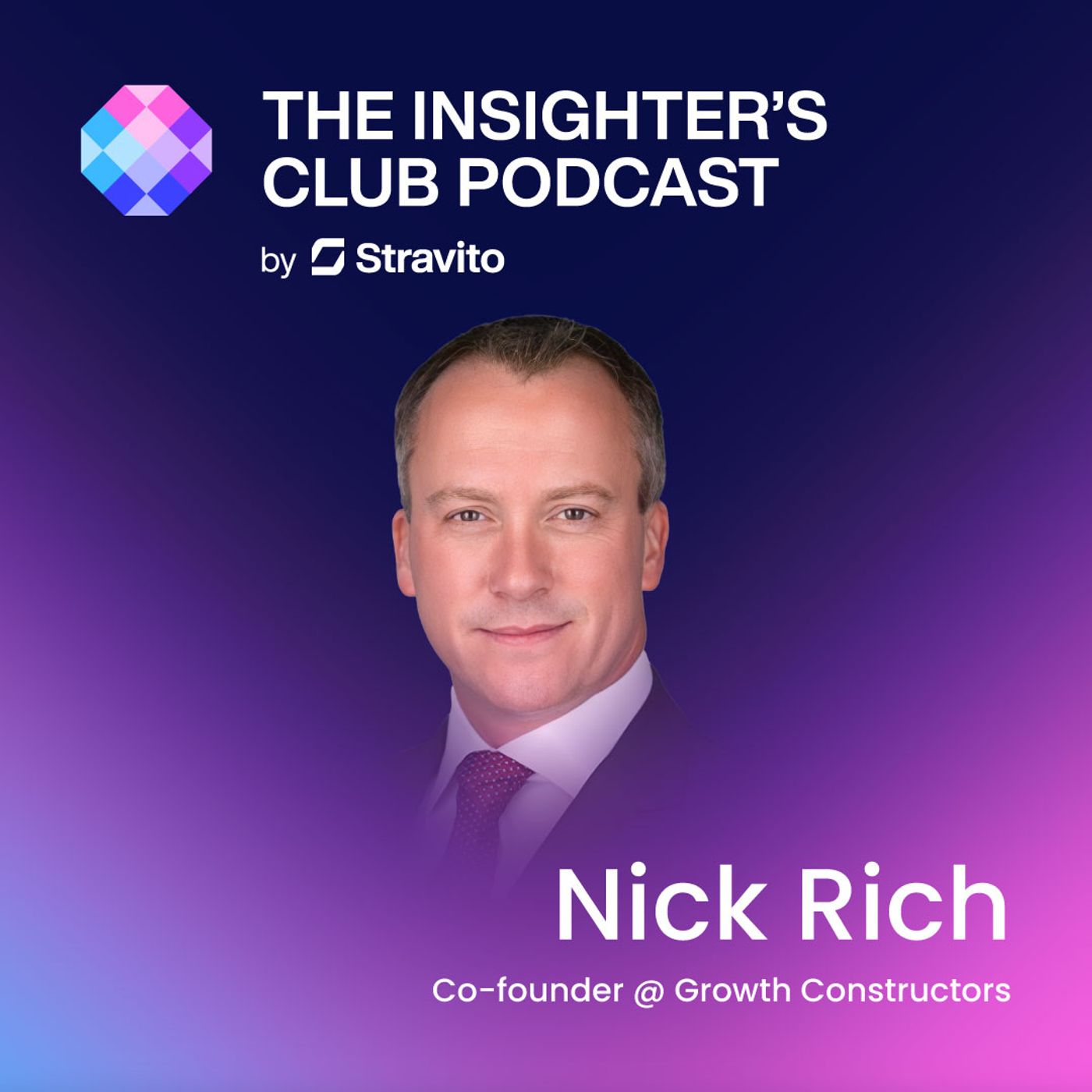 How to Give the Business Answers, Not Homework with Nick Rich, Co-Founder at Growth Constructors66 / 100
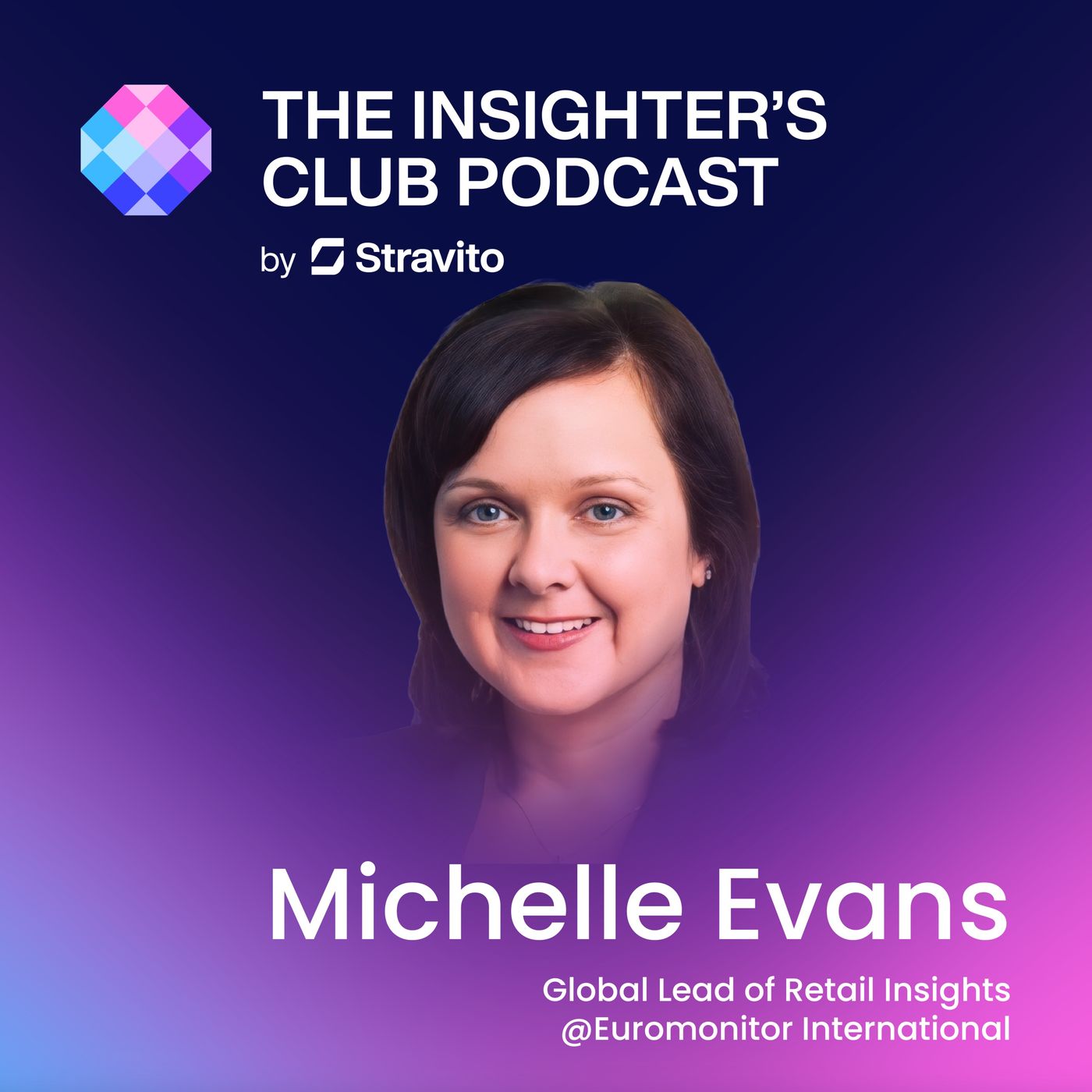 When Certainty Isn't Available: Turning Signals Into Decisions with Michelle Evans, Global Lead of Retail Insights at Euromonitor67 / 100
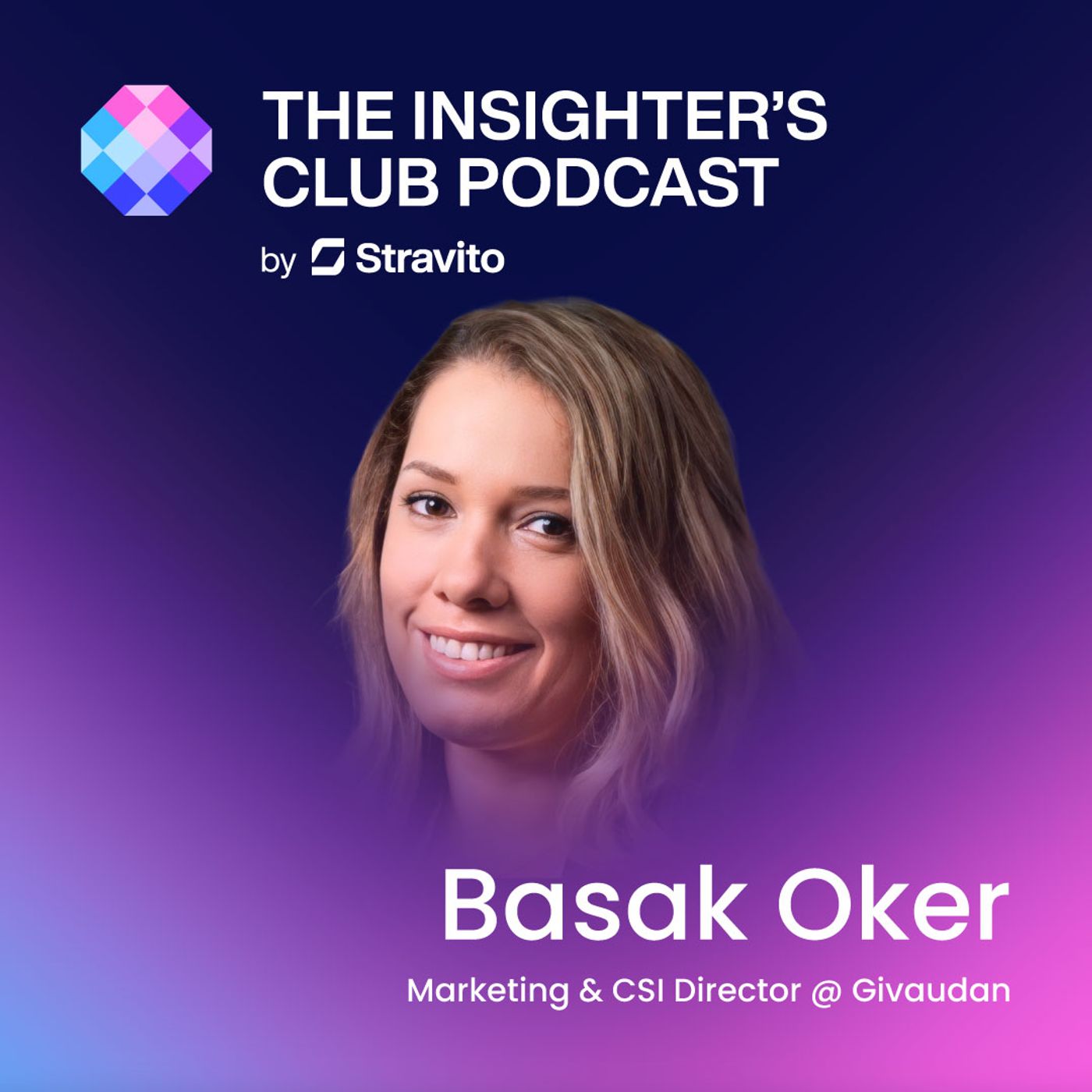 Questions of Taste: How Insights Shape What the World Eats and Drinks with Basak Oker, Marketing & CSI Director at Givaudan67 / 100
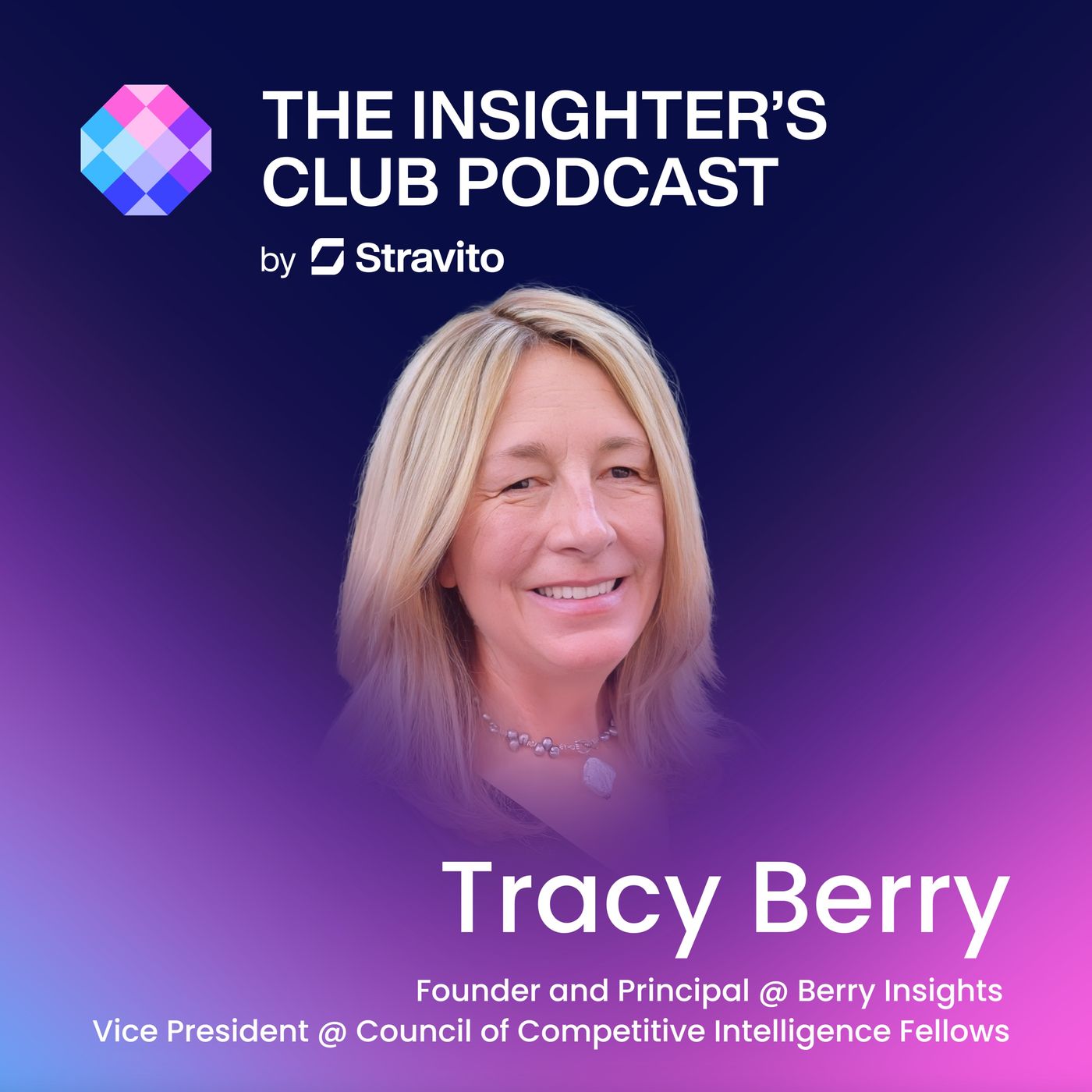 From Signals to Decisions: How Competitive Intelligence Really Drives Advantage with Tracy Berry, Founder at Berry Insights86 / 100
 2025 Year in Review with Thor Olof Philogène81 / 100