
The Inheritance Podcast · 2026-05-22 · 41 min
Key moments - from our scoring
Substance score
48 / 100
Five dimensions, 20 points each
Peter Mostakerski, CEO of Family Office Exchange (FOX), charts the evolution of family offices through five growth stages, drawing on 13 years building businesses in China (1988 - 2001), his strategy role at UBS Wealth Management during the 2008 crisis, and his experience launching Ray Dalio's family office at Bridgewater. The conversation moves beyond technical infrastructure - software, tax structures, ROI - to emphasize the human and operational realities families face when transitioning from business ownership to wealth stewardship. Mostakerski explains why early-stage family offices typically start reactive and unplanned, how they scale toward professionalism, and why isolation is the sector's defining challenge. FOX, founded in 1989 by Sarah Hamilton, addresses this through peer learning, research libraries, and educational programming (forums, webcasts, certification courses) rather than asset gathering. Ideal for family office executives, wealth advisors, rising generation members, and business owners contemplating the transition to multi-generational wealth management.
The episode sets up the framework but focuses primarily on early-stage (reactive, unplanned) versus mature (strategic, scaled) operations rather than fully detailing all five stages. Peter describes early offices as responsive and utility-like, gradually becoming more strategic as they establish functionality and grow.
A Chinese business partner identified a geographic market gap: most candy production was in Guangzhou and Shanghai, but consumption was highest in the northeast and north of Beijing. Shenyang offered an opportunity to serve that market without expensive storage and distribution costs. The company, called Cowboy Candy, operated from 1993 - 1998 until the Asian financial crisis in 1998.
FOX, founded in 1989 by Sarah Hamilton, is a 35-year-old community for ultra-high-net-worth families and their advisors. It layers educational programming, research libraries, job descriptions, vendor recommendations, and certification courses on top of traditional peer networking - all oriented toward helping members "get the job done" rather than gathering assets or selling services.
Peter had to learn from scratch what a family office role entails, put systems in place (finance, tax, reporting), choose scalable software platforms (then basic tools like QuickBooks and Excel), and balance structure and professionalism with flexibility and responsiveness - all while managing potential family dynamics.
Principals seek independent data, benchmarks, and metrics to measure performance - infrastructure that doesn't exist elsewhere in the family office industry. Operators need peer connections and knowledge to answer questions about compensation, tools, vendors, governance, and best practices without the isolation typically inherent to family offices.
Our reviewer’s read on each dimension, with quotes from the episode.
A significant portion of the episode is biographical anecdote (China years, candy company, career path) that delivers entertainment but minimal actionable insight for a B2B operator. The five-stages taxonomy and the wealth-transfer-as-human-problem argument provide genuine substance but stay largely abstract rather than unpacking the mechanisms.
they may be thinking about taxes, but they're probably thinking about the happiness of their kids more than they're thinking about taxes
while a lot of attention is given to the financial aspect of this transfer, almost no attention is given to the human experiential aspect of that transfer
The five-stages framework is their own internal taxonomy but mirrors well-worn family-business lifecycle models; the 'non-financial capitals' framing has circulated in family-office literature for decades. The strongest contrarian moment - that the wealth transfer narrative is overhyped because it ignores human readiness - is a legitimate provocation but isn't developed with depth or evidence.
those who neglect that are going to get commoditized eventually. Even if you have a great business now, you'll get commoditized if you don't find a way to be relevant and to strike emotional chords with your family clients
J. Hughes calls it the meteor. Most people think, oh, you're lucky you got all this money, why are you complaining about?
Peter Mostakerski has legitimate practitioner credentials - he built the Dalio family office from near-scratch and ran a manufacturing business in China - making him a genuine operator rather than a career speaker. His current CEO role at Fox is more network/service-provider than frontline wealth operator, which limits the depth of battle-tested insight he can offer.
I had the privilege of working with Ray Dalio and his family to help build their family office, which at the time was just starting to take shape
I started two businesses there. I worked for the U.S. department of Agriculture for a while
Fox's org stats (400 members, ~40 staff, 80/20 North America-global split, 35-year history, 80 advisors) add concrete texture, and the Dalio and China candy-company episodes provide real named examples. However, the core family-office advice - on stages, non-financial capitals, governance - is delivered almost entirely in abstractions with no supporting data, case outcomes, or dollar metrics.
Fox is about 400 members right now
We are about 80% or so of our members are in North America and about 20 are globally
The host asks pleasantly clarifying questions and lands one genuine follow-up ('Why do you say that's overhyped?'), but the interview is largely a guided biography with no pushback, no probing of contradictions, and no attempt to stress-test the five-stages model or demand concrete evidence for broad claims.
Why do you say that's overhyped?
Peter, thank you so much for joining us and sharing your wonderful insights today
Computed from the transcript - who did the talking, and the words that came up most.
Today we are exploring the evolution of the family enterprise with one of the foremost experts in the field, Peter Moustakerski. As the CEO of Family Office Exchange , Peter sits at the center of a global network of over 400 ultra-high-net-worth families. In this interview, we break down the five stages of family office growth - from the early-stage business family to the advanced enterprise. We also discuss the human side of wealth: why preparedness and happiness often matter more to families than tax structures and ROI. Peter shares fascinating stories from his thirteen entrepreneurial years in China and his time spent building the Dalio family office, offering a rare look at how the world’s most successful families transition from managing a business to managing a legacy. Please enjoy my conversation with Peter Moustakerski. NOTE: This podcast is for educational and entertainment purposes only. Nothing said by the guests or host should be construed as legal or investment advice. Thanks for listening. Joe Reilly runs Circulus Group and is the host of the Private Capital Podcast as well as the Inheritance Podcast . Follow Joe: X / Twitter Website Thanks for listening.
Transcribed and scored by The B2B Podcast Index.
Speaker A: Hello and welcome to the Inheritance Podcast. I'm Joe Reilly, head of Circulus Group Family Office network based in Greenwich, Connecticut. Today we are exploring the evolution of the family enterprise with one of the foremost experts in the field, Peter Mostakirski. As the CEO of Family Office Exchange, Peter sits at the center of a global network of over 400 ultra high net worth families. And in this interview we break down the five stages of family office growth, from the early stage business family to the advanced enterprise. We also discussed the human side of wealth, why preparedness and happiness often matter more to families than tax structures and ROIs. Peter shares some fascinating stories from his 13 entrepreneurial years in China and his time spent building the Dalio family office, offering a rare look at how the world's most successful families transition to from managing a business to managing a legacy. Please enjoy my conversation with Peter Mostakersky.
Speaker B: This podcast is for educational and entertainment purposes only. Anything said by the guests or host should not be construed as legal or investment advice. Thanks for listening.
Speaker C: So where were we? Your background before the candy company?
Speaker D: So I'm originally from Bulgaria. I, uh, but when I was 20 years old, got the opportunity to be an exchange student in China, which was very early in China's, uh, opening up to the world. This is 1988. And so I left Bulgaria a year before the, the Berlin Wall came down and Europe transformed. Landed in China when everybody was still wearing a mouse suit and riding a flying dragon bike and ended up spending the next 13 years of my life in China watching it, traveling, transform to a place where everybody was wearing a Gucci suit and driving a Lamborghini.
Speaker C: Tell, tell us what period that would be. What years was that?
Speaker D: Uh, this is 1988 to 2001. So yes, kind of Europe's transformation from kind of communism to democracies happened a year after I was there. The Hong Kong and Macau handoffs happened a few years into my stay and yeah, so it was pretty amazing. 13 years. So that was formative. I started two businesses there. I worked for the U.S. department of Agriculture for a while and so had a really great time. This was a time when China was exploding onto the world stage and there weren't a lot of foreigners who spoke multiple languages and Chinese. And so there was a lot of opportunities for me to partake in that growth and excitement as part of the negotiations of the WTO and China's entry to that. Maybe people are not as excited about it these days, but it was very exciting then. And yeah, uh, met my wife who's from Princeton, New Jersey in Shanghai, China and Bulgarian meets American in Shanghai. And a couple years into us enjoying the nightlife and vibrant scene in Shanghai. She said I'm pregnant and I'm not having a baby in Shanghai. So back up. And so we moved here to New York City. I went to Columbia Business School from there. Uh, and by the way, you asked about a candy company. So my one of the things I started in China was a milk toffee company which is a kind of candy the Chinese really enjoyed, especially in the northeast of China, Shenyang, Harbin, the rust belt of China. But we moved to New York City, went to Columbia Business School and from there went down to one of the traditional paths. Post business school I went to management consulting, went to Booz Allen Hamilton for five years, primarily landing there in the financial services practice, working with a lot of the capital markets and wealth management firms. And uh, five years into that a client of mine, ubs said why m am I paying Booz Allen all this money where I can double your salary and I can pay less. So why don't you come in here and start the strategy group at UBS Wealth Management. So I did that for several years into the 20089 financial crisis and as that was unfolding of course UBS was significantly impacted at the time all financial institutions were.
Speaker C: What did the strategy group do?
Speaker D: It was a, a pretty broad spectrum of transformational activities. So it would be anything from rethinking the footprint of branches, the complexing of branches and how teams are organized to serve clients, wealth management teams. It could be projects on revisiting, reinventing, redesigning financial advisor compensation. All M and A at the time we had a couple of transactions where we were acquiring or selling branches or firms. So all of that kind of fell in um, under the strategic transformation strategy group that reported to the CEO of the wealth management business. So it was in that time that I got a LinkedIn message on my then BlackBerry that I almost deleted. And it was enterprising recruiter who was using LinkedIn at a time we're talking 2010 where LinkedIn wasn't quite the thing it is today and was saying hey, we think your profile is right for this family office for the founder of this company called Bridgewater. And I was like almost deleted it. What's a family office and what's Bridgewater? And after two days of intense research I was like holy cow, I think I should answer this. And yeah, few days days later I came in from my first interview and a few months into that process, I had the privilege of working with Ray Dalio and his family to help build their family office, which at the time was just starting to take shape and obviously has since become really respected philanthropic and recognized institution. And so, uh, that was my entry into the family office space. We became members of family Office Exchange, Fox. That's how I got to meet Sarah Hamilton, the Fox team, and the Fox community. And then after that, there was the second kind of candy episode after doing my Bridgewater family office. So wait a minute, let's go back
Speaker C: to what was the first candy episode. That was 1995. You started a business in China.
Speaker D: Yeah, that was actually 1993 through 98. So we started a toffee, um, milk toffee, kind of like a company. So I guess there's a very popular candy in China called White Rabbit. Anyone who's been in China knows it's really chewy, sticky, so stick it to your teeth. I don't love it, but it's very well loved in China. It's. China is in China. Candy is like, uh, a gift. You take it to weddings, your birthday parties, when you visit. People like, chocolate is here, emotionally significant product. And so, yeah, we created a candy factory in the northeast of China in a city called Shenyang, and distributed all over China. There was a time where there were no kind of countrywide distribution. So nowadays the logistics and distribution companies, probably 10 years after we, uh, were doing our business, the likes of Carrefour and Walmart came in and built nationwide cold storage, distribution, sophisticated systems. But at the time, we had to basically ship container by container, find the biggest distributor for this city. And China has few dozen million person cities. So there's a few important markets to develop. And so you basically develop the market one, one at a time.
Speaker C: You're a guy from Bulgaria living in China, and you just walked up to a factory and they just started making chocolate. Uh, I'm sure it wasn't that straightforward, Peter.
Speaker D: No, it wasn't that straightforward.
Speaker C: Actually.
Speaker D: We would ship a container to a distributor. Just hope and pray that 30 days or so later they will pay us because they're like the, they're the. One of the richest people in that city we've never been to in Western China. And so they, they have every. They could screw us all day long if they like to.
Speaker C: Why did you pick Shenyang?
Speaker D: Couple of reasons. First, the way we got into the idea was we were negotiating with the business partner of mine from the us we were representing an investment bank and negotiating a deal with a Chinese State owned enterprise. And on the other side of the table, the translator negotiator was this really smart Chinese guy. And he, towards the end of the deal, approached and said, I've got an idea. And he's from Shenyang. All the candy in China is produced in Guangzhou and Shanghai. And most of the product, the consumption of candy is in the northeast and like north of Beijing. And so there is no really strong production base. And at the time, obviously storage and distribution was very expensive. So we can build a candy factory in Shenyang and satisfy this market from right here. So that's how we, we started it. There's a guy that approached us in Shenyang and there was a geographic kind of market, uh, reason why we did that. We called it cowboy candy. And both my business partner and I dressed like cowboys. We wore real stets and cowboy boots and would go around town and supermarkets, actually there weren't even supermarkets at the time. They're department stores. And you would go to the food section, try and negotiate, impress people, and they would just, they'd love to just see us walk in. So they would just take the candy as a bonus. We would even take flights from different cities and we would get up and basically distribute the candy to everybody. Because at the time only the most wealthy, influential people in China would take airplanes anywhere. So we would, Our marketing, uh, was pretty guerrilla. And so we actually were written up in the, in 1997, we were at the, on the, on, on the front page of the Asian Wall Street Journey at a time young correspondent Marcus Browclay, who subsequently became the Journal's managing editor. He was posted in Beijing and he thought our story was hilarious and expensive, inspiring. And we ended up in the Journal. And how did that wrap up?
Speaker C: What happened to that company?
Speaker D: Well, eventually we shut it down because in 1998, the Asian Regional crisis, the Asian target, uh, sorry, the Asian Tiger markets crisis impacted our markets pretty badly. And we decided we cannot recover from that. So we, we shut it down. But it was a good few years of fun in China with that.
Speaker C: Okay, so let's shift to the family office. What were the first things that you had to do?
Speaker D: Oh, first I had to learn what am I dealing with, what is this? And I think this is pretty common in the family office space. You have people who are either recruited or they're just trusted and known to the family who get plucked and plopped into a role. And I would say certainly in the last at least 20 plus years, they would go into that role with zero knowledge of what actually the role entails and what is needed, what skill sets and how to organize things and how to prepare themselves. And that was my journey as well. I very quickly had to figure out what is this role because I came from the corporate world. Uh, yes, I was an entrepreneur, so I understood entrepreneurial thinking, behavior, flexibility, roll, uh, with the punches kind of stuff. But it's also the kind of proposition where you have to bring flexibility as well as structure and professionalism to it. And so you're constantly negotiating between structure and professionalism and flexibility and responsiveness and client service. Um, so that, that's something that one has to learn from scratch or nowadays obviously there are places where you can go and take courses and workshops with organizations such as Fox or the Ultra High Net Worth Institute and other players who are working to prepare professionally. The family office professional or advisor of the day.
Speaker C: What's the biggest challenge from day one? Is it going to be software?
Speaker D: It really depends. Yeah, it can be all. Usually it's all of those things. It really depends on kind of the balance of forces that are causing something to be most challenging versus less challenging. Certainly if you have family dynamics or difficult relationships or something traumatic like this, that will become very important or you just will have to be very well attuned to managing that. But pretty much all of those aspects of an operation that you would take for granted if you are in a, um, existing business or an institution, especially in an early stage office, are ah, not there. So you have to put all of the systems in place and so processes in terms of how you do what you do, whether it's a finance function, it's a, if it's a tax prep function. Reporting obviously very quickly becomes pretty much for any office, even the most simple configurations, the owners want to have visibility and responsiveness with regard to what's my portfolio doing or what are my assets doing or anything else that they want to monitor. So reporting is definitely key and often is done in very basic ways with basic systems like QuickBooks and Excel. And of course once you start to scale and once you start to build a larger, more professionalized organization, then you've got the challenge of choosing a scalable platform. And nowadays there's quite a few players in the marketplace that are building software and applications for the family office space. So we at Fox actually created an entire event and an entire program focused on bringing the technology players into the community so the family office executives and even owners can meet them, see what their products are, compare, look at demos, talk to each other about did you implement Sage or did you implement Addepar and how did it go and things like that. And so that is for sure one of the top priorities nowadays that the family office executive, an operator, would be facing.
Speaker C: When you were forming that family office, did you have any idea that it would reach the scale it has today? It's a very substantial office. It's well over 100 people. Was it planned that way or did it just come about?
Speaker D: Often you start in a very responsive and reactive way because often the family office comes about at a time where there is a significant change in the family or the family principal's lives. And also often that change is associated with a lot of other aspects of their life and business. And the family office is not at the center of what they're focused on. It's more of a, uh, utility that eventually they decide to spend some time on. And so in the early stages of a family office, it's usually not, it's usually not handled in the most strategic, planful way. And that's not a judgment, it's just, uh, a matter of priorities, of life and what happens at the same time in the family's life. And it's only as it gets more established and starts to have a functionality and starts to deliver value, especially if it starts to scale in how it delivers that value to the family, then usually you start to think as an owner and as a team, strategically, okay, what should this capability really be? The capability being the family office, what should it look like? What the scope of service should it offer to the family? How it should be organized? What should be insourced versus outsourced? Should it serve the entire family? Even if it's a large multi branch family, should it only serve certain branches? There's a lot of considerations that come about as the operation begins to mature.
Speaker C: So tell us the history of the family office exchange. How did it come about?
Speaker D: I discovered FOX as a member about 15 years ago when I was at the uh, Dalio family office. And we became members for a very simple reason, because our principal, Ray, like many principals out there, I would say two reasons. One is our principal said, I need information, data and independent resources to make decisions. Like this is. There's no data, there's no infrastructure. It's not like any other industry where there's industry sources and there's scaled libraries of data and established metrics and signals that you follow to benchmark yourself and to measure how you're doing that did not exist, certainly didn't exist 15 years ago in any major way. And to some extent it's still a challenge today. And family offices are probably the largest challenge is that it's a very isolated situation that you are in both as an owner, principal, as an operator, professional executive. Some of this is by choice because of the privacy and the preferences of the family. And some of it is just the way these family offices come about. They come about to the side of everything else. And they are very challenged. And we were very challenged at the time with knowing are we doing well, are we paying our staff appropriately, are we using the right tools, are we spending the right amount of time on things, are we talking to the right people, are we using the right vendors? Uh, all of that was a bit of a mystery and it was all being discovered through personal connections here and there in very sporadic ways. And so one major reason was our principal wanted to have independent, clear metrics. I and the rest of us in the team, but certainly when I came in from the outside of that world, I came in from a corporate world and I realized I really don't know as much about, uh, this space. And so I need peers to talk to. I need people who are in the space somehow. And I found that in Fox and Family Health association and other, a few other groups that we were close to and part of at the time. And so Fox to go back. Fox has been around. We celebrated our 35th anniversary last year. So Fox was founded in 1980, I guess the year I was in Beijing and the wall was coming down in Europe. Sarah Hamilton was founding Fox. I think she had seen in her work at Harris bank for a period of time the formation of or the rise of private wealth following a series of LBO transactions and other private transactions back in the 80s. And she's uh, seen those clients come into the bank and looking for guidance, advice and she's realized that isolated nature of their situation. And I think obviously she tells the story a lot better. But I think she tried to convince Harris bank to do it and they did not want to do it. So she basically picked herself up and founded a company to create a community, a platform for these private families and their either investment or operational teams who are helping them deal with this wealth, usually post liquidity and form family offices and run family offices. And so FOX was established as a network to meet your peers who are otherwise not very public or not easy to discover and in a safe, non commercial discrete environment that is not trying to sell them anything or to gather their assets or in any other ways have any other agenda, but just create a Platform and a community for sharing, peer learning. And I think it blossomed very quickly and became really the uh, place to go if you're considering or you are in the family office space. And I think the other thing that was smart is that I think the community in the company was founded and uh, continues to this day to have a pretty clear mission and orientation toward not just networking and being together, which is really important. But you would argue lots of communities also do that and others have sprung up to do that. But partially because I think Sarah was an educator in early in her career. It had a very strong orientation towards learning and educating. And so everything that in the early years of growth folks put forth, workshops, the actual forums and activities that members would gather together for the research studies, they were all very much education and learning oriented. So that as a professional or as an owner, you could really enrich your knowledge. And the orientation and the DNA, the mentality of this, of the company and the community is very much. I use the, the term jobs to be done in the Clayton Christensen's kind of jobs theory context. Everybody in our community has a job to do, whether it's an owner. Like at the time Ray was trying to establish and build his office, I had a job to come in and figure out how can I play the role of a CEO COO at the time. If, uh, you're an external advisor serving families and family offices, you have a job to do. And Fox's orientation mentally is really helping our members get the job done. Get their job done. Yes, we m. Network. Yes, we sometimes co invest together. Yes, we do other things, we become friends, we become board members of our respective institutions or companies. But the main reason we come into the community and what we take and what we give into the community is knowledge so that others can get the job done and they can be successful at what they're trying to do.
Speaker C: How is this different from a strict peer to peer network?
Speaker D: I, I think every community is different. If I look at some of the organic networks that are springing locally, sometimes it's not. Uh, it's common for one or two family office executives who have met somewhere to say, hey, I know two other people, three other people, let's start meeting once a month for lunch or breakfast. And that's the kind of the most organic small scale. And then there's variations of that. I think that's wonderful. And this kind of connection and exchange, organic exchange is what you would expect from any networking organization. I think what Fox has layered on top of that is a Bunch of capabilities that really supercharge the learning. So we have obviously we have programming calendar throughout the year that gathers the community across different topics and different realms of knowledge. So we have four, we call them forums, large conferences a year, one investment oriented, one operations oriented, one technology oriented and one focused on the family needs and the family journey itself. So family member oriented. We have 20 to 30 webcasts, educational and current events and technical throughout the year. We built an entire education division within FOX which all it does is create and deliver educational courses. They range from two to three day technical courses in terms of educating wealth advisors or educating family office executives or family office staff to also educating rising gen or family members in the roles they need to play and then all the way to virtual technical topics like how to be a good trustee or how to be a good beneficiary or how to think about and potentially pursue a private trust company if that's the right thing for your family. And then all the way to. In the last two to three years we built a library of elearning courses which are ah, members and non members actually can take them on their time asynchronously from anywhere in the world. So education is built into, not only into our mentality but it's actually a core of what we do. And then we also built a number of digital capabilities. So we have a probably the world's largest library of family office related literature research, whether it's ours for the past 35 years or from our members because our members contribute into the library of FOX and we organize and classify all that. When you're currently as you can imagine building an AI overlay on top of that proprietary base of knowledge and, and so we have libraries where you can go in and say I'm looking for job descriptions for particular positions that I'm thinking of recruiting. So do you have any templates or um, I'm thinking about family office governance charters or anything like that. We maintain we collect from our members best practice documents and tools, sanitize them, put them in the libraries and we also do the same thing with members recommendations for vendors. So if someone says I'm looking for divorce lawyer in California and someone says here's some I've worked with, they're excellent. We capture all that information, put it in our systems and we have lists and libraries of recommended members and of course we provide that chat. We call it FOX Chat, but it's a live chat capability where members can be asking each other questions. I think we overlay again networking, connectivity and Connections is at uh, the core more of us because we are a peer community. But I think what differentiates us is that focus, almost obsession with applied knowledge and how can we take this and turn it into tools that you can use and get your job done easier and faster. And of course we probably that's the biggest differentiator is we assign uh, each member a highly experienced and capable relationship manager. So Fox is a kind of a white glove experience. You get an uh, RM who you can call about anything. And so you, when you join as a member you kind of make a plan with your RM to say here's what my goals are and here's what I'm hoping to get from the community. So I'm trying to meet people like this or I'm trying to find vendors like this or I'm trying to educate my kids or whatever. And we work with them and we provide that high touch service again in service of their journey and in, in helping them get the job done and be successful at what they're trying to accomplish.
Speaker C: There's only a handful of groups like this in the world. What is Fox as a business?
Speaker D: So we are, we are a privately owned, family owned company. We always have been. We are small, we are not a large company. We have about 40 or so people on our staff. We are about 80% or so of our members are in North America and about 20 are globally. Although those lines are blurring because we have American families that are going out in either Asia or Europe or the Middle east and setting up operations. And we also have global families coming and setting up either core or satellite offices in the US. Most of our legacy member connections are the US and Canada with a strong and growing exposure to Europe, Latin America, uh, and nowadays Asia and the Middle East. We established a China chapter last year and uh, I ended up going to China for the first time after, after 23 years which was an amazing experience
Speaker C: with the cowboy uh, hat.
Speaker D: Yeah I did, I left my cowboy hat behind this time. But, but we have a tremendous opportunity for growth. I like to, as you said, there's very few organizations, but I would say there's also very few that I would consider credible. And I would recommend to our members consider. And by the way, among those few, most of them have a particular orientation. Just like we have an orientation towards applied knowledge. Others have an orientation towards other priorities. And so even though we serve the same groups, we actually provide fairly different propositions if you look carefully. But there are also groups that I find are complementary. And so as we Think about our uh, global exposure and our global opportunities. We are asked by many players outside of the US to bring the FOX knowledge and the FOX libraries, FOX capabilities, FOX education. We just don't have right now the scale to do it ourselves. But we are partnering with organizations like one organization we're working with is the uh, Family Business Network, fbn. That's definitely an organization I consider to be of the same DNA and the same value system that we share in terms of how we think about our clients, the kind of families would serve with, the kind of propositions that we serve them with. It just FBN happens to also be serving the families more in the earlier stage of their evolution. Families, as you go through this, call it 150 year cycle, just like a person's life cycle where the business is born and succeeds and then it grows and the family grows around the business and eventually maybe the business is sold or the family grows significantly beyond the business. And there's lots of things that they're doing together like philanthropy or co investing or other joint activities that become the family enterprise. The in just what we call enterprise families when they get into that phase. So FOX usually becomes relevant and helpful to families when they're in the later stages of their business and maybe early stages of the post business evolution. And then when they start thinking as an enterprise and starting forming an enterprise. This is where what we do and what we offer and the community that we provide is most relevant to them. And so partnering with others who serve families in different stages makes a lot of sense because we can help our respective members. We also have a lot of shared members with our respective value propositions.
Speaker C: Do you have a personal taxonomy of the types of families that come to fox?
Speaker D: Interesting. Yeah, we've had many taxonomies along the way because families is more complex and they're constantly evolving. But we actually just went through uh, an exercise and we are in the process of actually rethinking and relaunching our community into what we call cohorts because we see an opportunity for families to. Fox is about 400 members right now, but and it's not giant, but if you enter a room of 300 or so people in one of our forums, it can be overwhelming and it could be hard to make a lot of connections unless your RM or somebody is really helping you connect. And so making sure that we create the smaller groups and the smaller sub communities is important. So we are creating the FOX cohorts and we thought about first how uh, should we organize our families because At Fox, we also have about 80 advisors who are carefully selected and admitted into the community. But the families that we have, we, after probably six months of thinking and analyzing the data, we have what we have in our CRM, what we know about families, their journey. We landed on a framework which is not perfect and ah, it's archetypical but, but we identified five stages or five types of families which follow these five stages of the archetypical evolution of the family. And so we, the first stage we refer to is the early stage business family. So this is a family that's still very focused on the business or the business is a big, if not the only joint activity that binds them together as a, uh, as an enterprise. Most likely the, the G1 founder, wealth creator is still around and still calling the shots. The second phase is what we call later stage business families. These are families that are now maybe second or third generation with the business. The founder is no longer either around or leading the family. Uh, they still might be very business focused or they may be starting to evolve beyond the business. They may have created a foundation, they may have started to think about a family office, they may have created a family office, but they're still very much a business family in their mentality and their activities. Then the third stage is what we call emerging enterprises. This is where either the business is sold or it takes a backseat to other activities that the family is starting to prioritize. It could be again philanthropic, could be co investing, it could be impact activities. Uh, a lot of the families we work with have a very strong philosophy on impact on their community. And they think sometimes in 20, 30, 50, 100 year horizons in terms of building communities, building the amenities of these communities. We have members who have transformed entire towns or entire regions with their enterprise. And they're thinking beyond just their business needs, but thinking about the community. So this is the beginning of an enterprise where you know, maybe the, the structures are not quite there in terms of governance and formality, but the scale, the complexity is already accelerating or has accelerated. And maybe a private trust was created or maybe other structures were created to start to formalize the governance of the enterprise. Then we have the fourth stage which is we call advanced enterprises. So these are usually formal, larger, they don't have to be large, but they're formalized and organized, much more formally governed, very formally run and led professionally with either family members or external professionals, and are usually well oiled machines. The Dalio family office is definitely an uh, advanced enterprise nowadays. And I almost seen this evolution with them as they evolved. And you can see it in, in the evolution of the very family and then the last stage. And again I'm describing in this linear fashion, although in real life it doesn't really often happen quite that linearly, but it's a simplification. Archetypical structure is what we call financial families. That's where certainly the business is gone or is not at the center of the activities. Most other activities that would form a family enterprise probably have either dissipated or taken a backseat. And it's really the financial portfolios, the financial wealth, the financial structures and their management of those portfolios and those structures that is at the center of what the family and the family office has to do. And so they are very focused on professional CIO and investment governance and shareholder or stakeholder management and things like that. So that's the five stages, five types of. Again, it's a, it's one way to, to describe the world and to cut um, the complex world of enterprise families. But we've chosen that framework as the framework we are going to put out there for our members to self select into or help them select into so they can form smaller groups and smaller communities.
Speaker C: So you have your own excellent podcast which I have been on. You interview a lot of interesting people in the family wealth space and I'm curious what you think about and what you think people get wrong about wealth.
Speaker D: The reason I do the podcast is because such a diverse and rich space for conversation. People go in thinking that you say family office, you're talking about a financial, uh, like a micro financial institution. And it's all about, it's like the same topics and conversations that you would have when you're talking about a, uh, Goldman Sachs or with the Wall Street Journal or whatever in a financial institution. That's basically it, but on a smaller scale. And it's it as the truth cannot be more different from that. It's such a diverse space that intertwines. I'd like to say that the family office space is an oxymoronic space. It's, even the name is an oxymoron. Is it a family? Is it an office? Is this an investment thing? Is it a family unity, family togetherness, family values, family purpose, uh, exercise or enterprise that we are pursuing here. So it's such a diverse and deep space. And I think what gets missed and where my mind goes when you ask me what I think about or I think is either something to be thinking about or to be concerned about or to occupy yourself with is, is that family part of the family office world? It's I think the office, the structures, the finance expertise, even the technology expertise is now there. And there is a very vibrant world of capabilities and experts catering to that. And the family side that makes our space so unique. The fact that you've got family relationships, family complexity dynamics, but you also have family values and legacies and the way families do things is at the core of our space. And I think it's that family side of our world where the most opportunities and probably the most challenges are also. And it's also the less explored also at Fox, we naturally end up doing more work in that space because there's just so much work being done on the quantitative financial side. And often once people figure out how to do the investments or technology or the outsourcing of things, it becomes about the family. And so the conversations become about, wait a second, are we making decisions? Well, are we clear about our purpose? Are we carrying our values forward? And so those qualitative human capital, social capital, spiritual capital aspects of the family space are the ones that are very potent and underexplored and I think will be increasingly at, ah, the core, maybe will become the core of our field and our profession. And you can see that in many of the technical gatherings, even in the ultra High Net Worth Institute where you start with the quantitative disciplines. But you very quickly start to unrealize that uh, the qualitative topics and the family side of the family office space is where you're eventual success lies. You have to solve that part of the equation. You have to make yourself relevant to this part of the conversation that the family is thinking about and worried about, because they may be thinking about taxes, but they're probably thinking about the happiness of their kids more than they're thinking about taxes. And if you're an advisor talking about taxes, are you too myopic if you're not talking about the qualitative human people side of what they really care about? And so one thing that I'm doing, thinking about, and I have the privilege of working with Jay Hughes right now, who I believe is on your podcast at least once and of course your listeners would know very well, but Jay and I are creating what we call the Hundred Year Committee to think about the human aspects of wealth and the transitions and the now overhyped greatest wealth transfer or whatever we call it.
Speaker C: Why do you say that's overhyped?
Speaker D: It's a fact that it's happening, I think, where it's becoming overhyped. Is that it's now, and this is the premise of us creating this committee, is that there's a lot of attention and noise created around that, that call it somewhere between 80 and 100 trillion, that's going to be changing hands in the coming 10 years or so. There's a lot of attention on the financial transaction intermediating those financial transactions. That money will be changing from here to here, or maybe from this structure to that structure, maybe from these investments to those investments. But while a lot of attention is given to the financial aspect of this transfer, almost no attention is given to the human experiential aspect of that transfer. The people who will be receiving those transfers, are they prepared for them? Are they seeing it as a good thing? Do they know how to deal with it? Are the structures that are being passed on to them allowing them to be happy with this wealth? Or are they trapping them into some kind of trap that they have to then subjugate their own life to instead of using it as a accelerant of all the things that they care about and want to do in the world? So there's a human experience. J. Hughes calls it the meteor. Most people think, oh, you're lucky you got all this money, why are you complaining about? But there is a human experiential aspect that creates a lot of complexity and potentially could create a lot of problems if not managed, intermediated and structured the right way. And so I do think about the non financial capitals of our space as probably the most important aspects to figure out and to make sure that each of us, regardless of what our business is, how we serve the financial needs or other needs of financially successful families. I think each of us has to be asking ourselves, how do I understand all the non financial capitals and needs and worries of the families I serve? How is it that I help them even indirectly alleviate those worries or achieve those human social, spiritual objectives? And I think those who neglect that are going to get commoditized eventually. Even if you have a great business now, you'll get commoditized if you don't find a way to be relevant and to strike emotional chords with your family clients on the topics that they care about the most. And let's face it, the money, investment, taxes topics are important, but they are not the most important thing these families care about. Every now and then, maybe that would be the thing that the owner is most focused on. But most of the time they're focused on very other non money or qualitative objectives. And so as advisors and professionals, you have to really think about what am I doing to help them achieve their qualitative goals.
Speaker C: Peter, thank you so much for joining us and sharing your wonderful insights today.
Speaker D: It's my pleasure Joe. Always great to see you.
Speaker A: Thanks for listening. If you like the podcast, please share it with your friends and take a minute to leave us a review on Apple Podcasts Best. We appreciate it.
Other episodes covering the same guests and topics, from across The B2B Podcast Index.
 Digital Twins and the Limits of Synthetic Behavior with Olivier Toubia of Columbia Business SchoolData Gurus Podcast · on Columbia Business School83 / 100
 Unignorable Buyer Psychology: Why Buyers Buy Accounting Services | Katelyn BourgoinAmplify · on Clayton Christensen82 / 100
 Make your product irresistible: Rob Snyder on the PULL frameworkThe Startup Podcast · on Jobs to be Done framework79 / 100
 Lou Shipley: Founder-Led Sales, Product-Market Fit, and the Go-To-Market Playbook Behind a $565M ExitFounder Views · on Clayton Christensen77 / 100
 Starting over in fintech with Safak Erkol, YapilyProduct Marketing Maestros: Tales from the Front Lines · on Jobs to be Done framework75 / 100
 Episode 218: Bare-Knuckle B2B: Are agencies still worth it? Sage’s Harry Davies on the truthB2B Marketing Podcast · on Sage75 / 100
 Ed Goodman - The Bergdorf Legacy80 / 100
 Jill Shipley - The Need for Autonomy
 Fredda Herz Brown - Sustaining the Family Enterprise
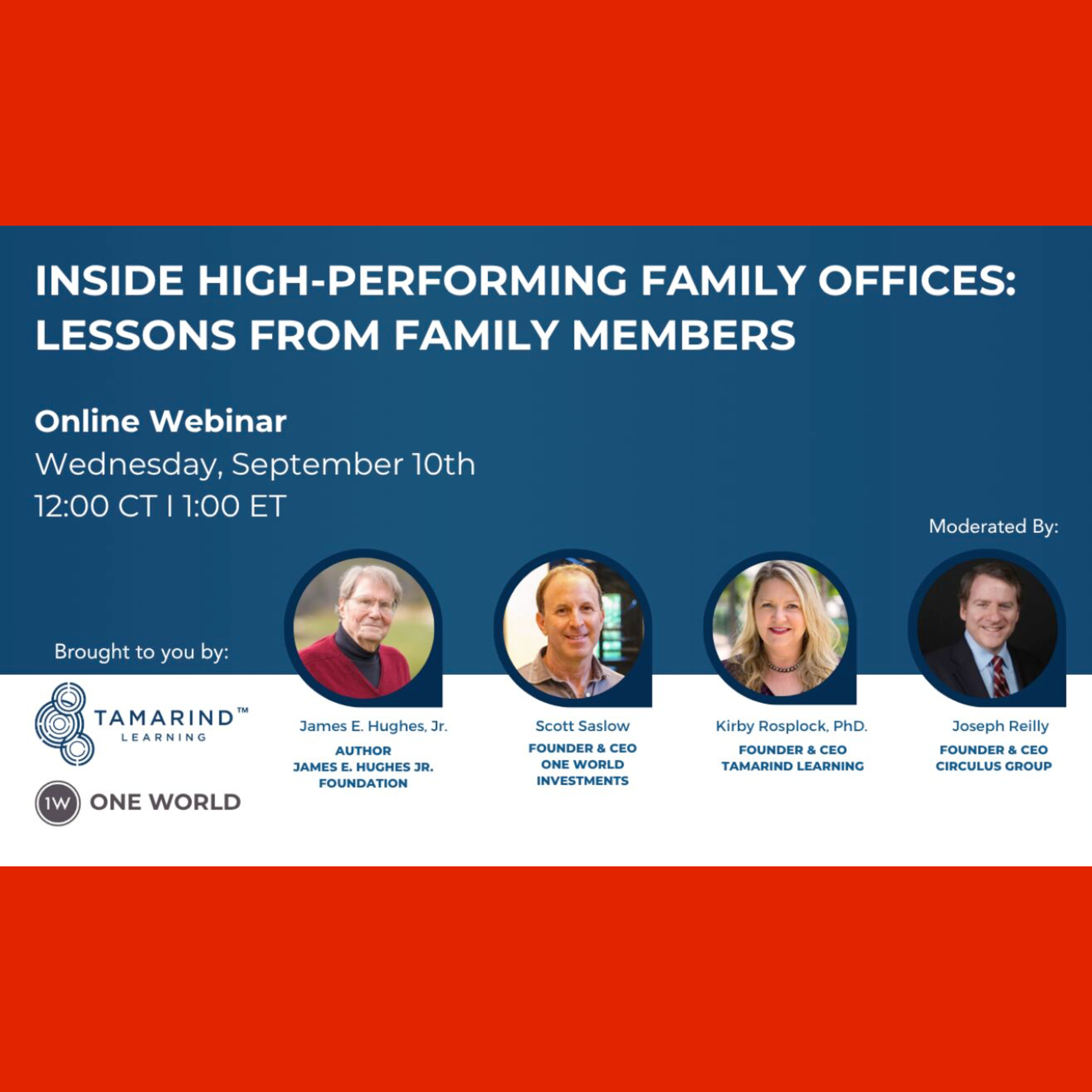 High Performing Family Offices with Jay Hughes, Kirby Rosplock and Scott Saslow
 Jay Hughes - Wealth is Well Being