
The Inheritance Podcast · 2026-04-25 · 58 min
Key moments - from our scoring
Substance score
60 / 100
Five dimensions, 20 points each
Ed Goodman traces the Bergdorf Goodman legacy from his grandfather's entrepreneurial start in 1899 through the family's strategic pivot in 1972. When faced with the classic family business dilemma - pressure from multiple family members wanting dividends versus the need for reinvestment - his father chose to sell the retail operations to preserve the brand while the family retained the highly valuable real estate at 58th and 5th Avenue. This dual strategy proved exceptionally lucrative, positioning the family as landlords to a succession of operators including Neiman Marcus and now the merged Saks Global entity. Ed describes his own modest role at Bergdorf's developing the BG junior dress department through hands-on vendor research, contrasting the specialty store model with department stores like Bloomingdale's through careful curation rather than breadth. He reflects on his father's implicit business education through Sunday newspaper analysis and formal family dinners, the democratizing effect of Marine Corps service post-Yale, and his father's surprising opacity about wealth. The conversation illuminates how family retail businesses across Manhattan - B. Altman, Lohman's, Gimbels - failed when reinvestment needs clashed with dividend demands, while Bergdorf's survived through strategic asset separation and quality merchant partnerships.
The family faced pressure from multiple heirs wanting dividend distributions while the business required continuous reinvestment to stay competitive - a tension that destroyed most family-run department stores. Selling preserved the Bergdorf brand while the family retained the highly valuable real estate, solving both the succession and capital demands problems.
Bergdorf's is a high-end specialty store with careful vendor curation (perhaps 20 vendors versus competitors' 100), premium price points, fashion focus, and service-oriented selling; Bloomingdale's is a broader department store offering everything from fashion to furniture at more modest price points with lower editing standards.
The White Plains location attracted different shoppers - suburban women picking up items quickly rather than planning special occasions - whose spending patterns and shopping behavior didn't match Bergdorf's high price points and service model, while a lower-priced Neiman Marcus store in the same location succeeded.
He spent about five years researching junior-sized dresses by visiting Manhattan stores daily to identify vendors and trends, then developed the BG junior dress department by curating a selective vendor list, which became very successful.
The Goodman family benefits as landlords through percentage rent deals with operators; the recent merger of Neiman Marcus with Saks Global strengthens the tenant's balance sheet, though success depends on whether the new merchant team will optimize merchandising for the unique New York market rather than managing it from Dallas.
Our reviewer’s read on each dimension, with quotes from the episode.
The episode contains genuine business insights, particularly around retail dynamics, real estate strategy, and family business challenges. However, it is heavily weighted toward narrative and anecdote rather than dense, actionable takeaways. Ed discusses the shift from custom to ready-wear, the decision to sell the retail business while retaining real estate, and the structural failure of family retail businesses - all substantive. But large portions are spent on memoir, Marine Corps stories, and leisurely recollection with minimal operational density.
the retail business is a lot like the hotel business. You have to reinvest in plant, keep it fresh and appealing. You're dealing with the public daily. But as families evolve a few things happen.
power shifted from the retailers to the brands. And the brands realized they were spending a lot of money promoting their brands and they could reach out directly
Ed articulates some genuine original observations - the structural tension between dividend demands and reinvestment in family businesses, the wisdom of selling retail while keeping real estate, the editing function as the core retail advantage. However, much of the framing (family business succession problems, omnichannel retail, brand direct-to-consumer shift) is well-trodden. The retail insights are sensible but not counterintuitive; the venture capital section relies on familiar narratives about early-stage risk and luck.
basically the difficulty was that uh, the retail business is a lot like the hotel business. You have to reinvest in plant, keep it fresh and appealing. You're dealing with the public daily. But as families evolve, a few things happen.
the role of the fashion store was to provide the editing function and the presentation for all the brands, that was greatly weakened as the brands did their own direct promotion
Ed Goodman is a genuine operator with credible credentials: second-generation heir who ran parts of Bergdorf Goodman, early venture investor (Apple at seed stage), seven-year partner with Alan Patricoff at a foundational VC firm, 17 years at Ambrose running American venture activity, and founder of his own venture firm. He has actually executed at scale in retail, real estate, and venture. This is not a career pundit; it's someone with real skin in the game and decades of operational experience.
I was a third hire. So he said, I'll give you. Your resume is a bit odd, but give you a six month trial. And that ended up being seven years.
I give Alan credit really. It's hard to believe Apple was to go to our great credit we made the investment
The episode suffers from vagueness on many critical numbers and timelines. Ed mentions selling for ~$9 - 15M in 1972, Bergdorf's now valued near $1 - 1.5B, but these are rough estimates without precise figures. The Apple investment is stated as $250K and ~15x return, but deployment size and timing are hazy. Venture fund sizes (SBIC $2.5M, first fund $26M) are provided, but most other metrics lack specificity. Much discussion is anecdotal (Paris store visits, Marine Corps experiences) without concrete data to anchor claims.
We were offered 9 million. So maybe with the land we were offered, if they bought the land it might have been $15 million, something like that.
it was $250,000 investment in that SBIC, which had about something like 2.5 million of capital. And we leveraged it.
The host, Joe Reilly, asks reasonable setup questions but rarely probes deeply or challenges. He allows Ed to ramble through lengthy anecdotes (Marine Corps, Paris, family dinners) without redirecting to substance. There are few sharp follow-ups; for instance, when Ed mentions selling Apple stock early, Joe doesn't ask what that decision cost or why. The interview reads more as a receptive platform for storytelling than as rigorous extraction of insight. A few questions attempt depth ('What can you tell us about your father?'), but most are soft and allow tangential answers.
Could you tell us about your grandfather, Edwin Goodman and what he did?
Did your parents talk to you about money?
Computed from the transcript - who did the talking, and the words that came up most.
Today’s guest sits at the unique intersection of Manhattan’s fashion history and the high-stakes world of venture capital. Ed Goodman is the grandson of Edwin Goodman, the man who built the Bergdorf Goodman empire at 58th and Fifth. But Ed’s story isn’t just about inheriting a legacy; it’s about the evolution of American business. In this episode, Ed takes us inside the decision to sell the family’s retail business in 1972 while making the brilliant, and incredibly lucrative, bet to keep the real estate. We also dive into Ed’s second act: a decades-long career in venture capital where he was an early investor in Apple and a partner to industry legends like Alan Patricof. From his time in the Marine Corps to his philosophy on raising responsible children in the face of great wealth, Ed shares a masterclass on adaptability, transparency, and what it really means to be an entrepreneur. Please enjoy my conversation with Ed Goodman. NOTE: This podcast is for educational and entertainment purposes only. Anything said by the guests or host should not be construed as legal or investment advice. Thanks for listening.
Transcribed and scored by The B2B Podcast Index.
Speaker A: Hello and welcome to the Inheritance podcast. I'm Joe Reilly, the head of Circulus Group, a family office network based in Greenwich, Connecticut. Today's guest sits at the unique intersection of Manhattan's fashion industry and the high stakes world of venture capital. Ed Goodman is the grandson of Edwin Goodman, the man who built the Bergdorf Goodman Empire at 58th and 5th. But Ed's story isn't just about inheriting a legacy. It's about the evolution of American business. In this episode, Ed takes us inside the decision to sell the family's retail business in 1972 while making the brilliant and incredibly lucrative bet, uh, to keep the real estate. We also dive into Ed's second act, a decades long career in venture capital where he was an early investor in Apple and a partner to industry legends like Alan Patricoff. From his time in the Marine Corps to his philosophy on raising responsible children in the face of great wealth, Ed shares a masterclass on adaptability, transparency and what it really means to be an entrepreneur. Please enjoy my conversation with Ed Goodman.
Speaker B: This podcast is for educational and entertainment purposes only. Anything said by the guests or host should not be construed as legal or investment advice. Thanks for listening.
Speaker A: Could you tell us about your grandfather, Edwin Goodman and what he did?
Speaker B: He was a, uh, classic entrepreneur. Now we, I don't know if he even used that language then, but looking back. So he was born in Lockport, New York and his father had a store which serviced the riverboat traffic, canal traffic which was substantial. Now I'm talking about 1890, but by 1899 when my grandfather was um, 20, 21 and he picked up tailoring skills. I'm not quite sure why or how, but he did. So he was a trained tailor. And I think the perception was that river traffic was dying, the railroads had emerged in the 1890s so that uh, there wasn't any future there. And so he went, came to New York and got a job at a small firm there called Bergdorf and Voigt, which was in the village. And he was a hard worker. He also had this, he had a lot of uh, self confidence and capacity for risk taking because he, I think it was quite difficult. But he borrowed $5,000 at that time from his perspective father in law, and bought into the business and paid. This family legend is, I don't know is that he paid him back in less than the five years stipulated the note and he bought out Voigt and he bought out Bergdorf. Over the next few years, Bergdorf was older and ready to retire. And then he shepherded that business and it migrated uptown from 8th Street, 16th Street, 32nd Street, 52nd street and in 1928 to the current location. And there's a lot of interesting, some interesting insights into how he thought the building at 58th street was actually. If you look at it closely, you'll see the seams in it. There was actually six or seven buildings facing fifth. And uh, his idea was if it didn't go well, he could rent off as necessary pieces. He never had to do that. And over time he was able to. The southern part of the block was a store called Tailored Woman. He was able to take that over and uh, it thrived. And then when my father entered the business and out of. He went to Michigan, class of 30. But he left in 28 after two years. His grandfather said he had to work and he went to work and he took over the business in 1953. But the broader story is that luck played a part in there was after World War II, acceleration of retailing and ready to wear, so called ready to wear as opposed to custom clothing. The store had been actually very small in terms of volume and sales.
Speaker A: It was always apparel.
Speaker B: Yes, always apparel, yes. It had an antiques department which catered to my father's sister's interests. She was a serious antique collector, married to an antique collector. But it was a 90% apparel and 90% female apparel at that time in a small men's department. But then after World War II you had the revolution which is ready to wear from custom to ready to wear. And we were beneficiaries of that. And that meant more modest price points, larger audience and so forth. The other theme I would say is interesting looking back. Benefit of hindsight. There were many family run stores then. All of them have gone away. B. Altman, Lohman's, Gimbels, Franklin, Simon Orbach. It's an astonishingly long list. And I think basically the difficulty was that uh, the retail business is a lot like the hotel business. You have to reinvest in, plant, keep it fresh and appealing. You're dealing with the public daily. But as families evolve, a few things happen. The next generation comes in. They may or may not be that, that competent one thing and they may be numerous and those that aren't in the business still want financial benefits from the business. So you have pressure for, to distribute earnings and dividends where and there's equal pressure to reinvest in the business. So I think that was the death knell of many businesses and it affected ours as well. But ultimately Our way. My father wanted to preserve the brand and the future of the business. So we sold. I think it was not his favorite option, but it was the best way to preserve the business. And Bob Motel is another. That's gone. Henry Bendel, gone.
Speaker A: So Alexander's family.
Speaker B: Alexander was family business. Yeah, Parker's family. They got into the, I think the real estate business in any case. But now I would say that the business is so. So we retained the real estate, which has been. Was a smart decision and it's been lucrative for us to be the landlords. But now. And we were lucky that there were very good merchants there. So after we sold the business, they did very well. The business grew tremendously and we participated as landlord because we have a percentage rent deal. And now there's been many changes. As you probably know, Bergdorf's is a unit of the Neiman Marcus Group. Neiman Marcus Group just emerged with Sachs. The new corporation will be called Sachs Global. Fundamentally, that's good for us because it means we have bigger, stronger tenant with a healthier balance sheet. But the key for us really is will there be smart merchants building the business at Bergdorf's? What happened there over the last few years is that it was run by very smart merchants for years and it was run out of New York. And then Neiman Marcus shifted it and they ran it out of Dallas. And my view, perhaps biased as a New Yorker, is that it's a special market in New York and doing the merchandising out of Dallas didn't optimize for, for the store. So now, uh, it's unclear what Saks will do, how they'll run it, how they'll merchandise it. And also what's happened, of course, is part of the global reality. So the in store sales are growing tepidly, whereas online sales are growing very fast, like 30% plus. So can you be smart about building that business or embracing this notion of omnichannel? You're selling, uh, in store, you're selling online, you're selling in various ways and you're trying to complement each channel, you hope to complement the other, and you merchandise them a little differently. So we benefit when we have smart merchants and we suffer when they're not so good and sales are not so robust.
Speaker A: Have they thought about expanding the brand?
Speaker B: There are flirtations about that over the years, but we don't control it, uh, anymore.
Speaker A: What would you think about a chain of.
Speaker B: Oh, actually, we tried that at one time, unsuccessfully. Years ago, when we were in control, we opened a store In White Plains. And it lasted about four or five years and then it became an even Margaret store. I think we learned a couple of things from that. Some are anecdotal and others are more measurable. My father was an anecdotal man, I think more than analytical. But his view was women wanted to have a special experience at Berdoff's. They would plan a day, they'd drive in with friends, they'd go to Burgos, they'd shop, they'd have lunch, they'd meet their husbands for theater. It was a special treat. And uh, the price points at Berghoffs reflected that. People don't know it, but the price points at Burgers are the highest in the world and higher than Neiman Marcus. And we found that didn't translate to suburban White Plains where the shopper maybe have two kids in the station wagon and she's picked him up at school and she's going in to get something quickly. It's not an occasion and it's not as much of a high ticket spend. So basically it didn't work. The volume wasn't there. The Neiman Marcus store, again, lower price points, somewhat different orientation at that time worked all right. So Neiman Marcus store did okay in that location. So that was one flirtation. We had others we talked about Paris location. There's nothing really like Burgos in Paris. Oh, Printemps is not really. It's more of a department store, more like a Bloomingdale's. And the other one, I forget when I was in there the other day, but they're more like department stores. They're not high end specialty stores. That it came to naught that those flirtations. Oh yeah. And then the biggest one which involved me. Life is full of twists and turns. So we had, uh, we were in discussion to occupy the John Hancock building in Chicago. We were going to occupy the first six or seven floors. And trying to remember the name of the guy, a very nice, engaging multimillionaire was developing the property. He owned the Philadelphia Eagles at the time. And what was involved in the Hancock Center? Uh, it's unlike Manhattan, there's not a very substantial rock infrastructure. You have to go down very below the lake bed. And he had a construction loan. And during our. We had a handshake and we were moving toward a deal. And one element which was exciting, I was to go out there and run it. It was uh, a nepotistic decision, clearly because I was very young. But I think they figured they could buttress me, but I'd be The figurehead. And I was going to have an apartment at the top of the Hancock Center. So my wife was excited. But in any case the bedrocks keep to be, seemed to be receding. And he kept investing. So he went bankrupt. The bank took over the property. And then in a hold, probably the subject of another two hour interview, I decided to leave the business for a variety of reasons. Really some of the reasons I hearkened back to the pressures of family wanting uh, dividends and to take wealth out of the business. And the business needs to retain earnings and reinvest. And there was tension there. I had two brothers in law in the business who were not really suited to it and they both subsequently left. So I decided to leave the business. And that among other things, plus the financial difficulties put the kibosh on the whole Chicago venture. So we stopped that. So that was more than a flirtation. That was a very serious effort to locate a downtown Bergdorfs in Chicago. And I don't know whether it would have been successful, but I think it had a good chance because Chicago was a terrific location, would have been an iconic location. And the market is there, I think both the local market and the significant tourist market. One of my daughters lives there and her husband's a professor at the University of Chicago. And one thing I noted going out there visiting her is that Michigan Avenue is a huge tourist destination. A lot of wealthy Minnesotans, Missourians, Ohio, they go to Chicago for long weekends or for a week for fun. They dine out, they shop. So it was not only the local populace, but sort of as a tourist hub, I think it would have been successful.
Speaker A: What's the difference between a high end specialty store and a department store like Blumies?
Speaker B: Blumies first of all have a broader assortment of things. We don't carry furniture, we don't carry some of the things they do. So that there's a. They're making a broader offering. I haven't been there in a while, but it used to be the case. You could go to Bloomingdale's, get everything you needed for your kitchen, your living room. So we're narrower, we're much higher price point, we're fashion oriented and uh, brand oriented. And I think that's the. And very uh, also I'm not sure it's still the case, but we're very service oriented. So there was a time when the customer wouldn't come in and browse through the racks. They'd come in, they discuss with the salesperson what they wanted, they'd sit down and they, someone else would go and bring items they thought the customer wanted. And even in some cases they might bring items they thought the customer would be appropriate for the customer that the customer themselves didn't even realize they should have. So it's a narrower and it's higher price point and it's fashion oriented. Those are the main distinctions. Now, of course, there's some crossover. Bloomingdale's better dress department would compete with our better dress department and their junior dresses with ours. Also. There is more editing at Bergdorf, which is the specialty store. I actually had a hand in starting a, uh, junior dress department there called bg. So my major activity there. I was there for about five years. And this was before cell phones and cameras. So I went around to all the stores in Manhattan every day looking for junior sized dresses. This is for younger people, smaller sizes, which we didn't have at that time. And if I found something I like, I'd surreptitiously copy down, um, the name of the vendor. And we developed a vendor list and we went out and we started a new department of junior dresses called BG bigi, which was very successful and it was a lot of fun. So that was a. The point is, people had junior dresses, but they might have 100 vendors. We did this editing process we thought were the best, the chicest, the most fashionable might have had 20 vendors. So the editing is important in a specialty store. It's not a question of broader, uh, selection, but a careful selection.
Speaker A: What can you tell us about your father? Was he destined to be involved in the business?
Speaker B: Yes. I'm laughing because, yes, my father a little like me, actually. No thought was given to this whatsoever. It was just assumed. My father confessed to me once that he really wanted to be a sports writer. He was a very good athlete. He loved baseball. He loved baseball and football and he wanted to be a sports writer. But when he, he was at Michigan, the family, uh, legend is that he wanted to go to Yale, but I'm not sure Yale wanted him. And also he had an accident with a family car. He cracked it up. So he thought it would be judicious to get out of town. So he said, I'll go to Michigan. So he went to Michigan, I think, had a good time. I don't think he studied very hard. And after two years his father called him and said, okay, time to go to work. So again, there was no discussion at that time. You did what your father told you, and that's a whole other interview. But he, he thought he should my father should have exposure to Paris and couture. So he arranged for him to get a job at the Jean Patou, which is a couturier in Paris where he went and worked for about 18 months, had a fantastic time and he had a sports car and so forth. There are a lot of funny stories. And then he came back and again there was no formal training program. He just went to work. And he's most focused on uh, buying, merchandising. He'd hang out with the various buyers and go to the market and get to know that and also the parish market. And I think he came to enjoy it. I think at first he was just. He never thought about it and he forgot about becoming a sportswriter. And he did enjoy it, although I think it was challenging because my grandfather was a very stern, old fashioned guy and he would think nothing of criticizing my father in a meeting of eight people rather vociferously sometimes. So he was a hard taskmaster. But I think my father came to love the business and was good at it.
Speaker A: Did he talk business with you when you were young?
Speaker B: Yes, but in an offhand way. He didn't say, okay, let's talk. They just came up. For instance, I very much remember he didn't read, uh, books that I ever, never saw him reading a novel or history. But he read periodicals and newspapers avariciously. And I remember very clearly every Sunday I remember in the summer particularly because you go to the country club and he would have a huge New York Times, all the newspapers and he'd sit in the beach chair and he had pen and he would go through each paper particularly looking at the ads. What is Bloomingdale's advertising this week? What is Saks advertising? Bob would tell her, he'd make notes, he'd have questions. What are we advertising? And he'd bring this whole bundle of paper. Then it was uh, no digital life. Then he'd pack it all in his briefcase and Monday morning he would have questions about why do we run this? Why do they run this? Who made this for Sachs? It looks good, let's pursue it. So that kind of thing I said, I looked over his shoulder. He didn't discuss it with me a formal way. And the other thing I remember is interesting that again it was implicit, not explicit. As I got older in life and we've gone through this in the last 50 years in this country, I discovered how what a big deal gay life was for some people, they're shocked. But as a young person in the fashion business, gay people Were around me all the time in key positions in the fashion business. The burgers is basically run by smart women. That was another factor. Women ran it. Basically all the key merchandisers were women and all the. Many of the key designers were gay and many of the vendors. And then it never. It just was the norm. And then when I got off to boarding school and college, I realized, this is a big deal. Now. I'm talking about 1958. My college class was 62, so that was interesting. The other thing I would say is you asked to be. No. But he was so involved in the business. We were somewhat formal families. It was a big deal. Basically, when you're eight years old, you were allowed to eat dinner in the big room with my parents. And then if you misbehave, you were sent back to the kitchen. Those meals were formal and lengthy and full of conversation. So we would have. I remember, first course, bread rolls and butter. Main course, dessert, coffee, wine, the whole thing, two hours or more. And there was constant conversation, a lot of. About the business and mostly about the business. Not about politics generally, not about cultural issues generally, but only insofar as they touched on the business. My father was an Eisenhower Republican. He didn't really have strong views. Uh, he would get excited by issues like when fifth Avenue became one way. He thought, oh, my God, it's going to be end of the world. No one will come. No one will come uptown. But now how will the downtown people get up? We'll never see them. It'll be a disaster. Of course, never wasn't a problem.
Speaker A: You think he'd like congestion pricing?
Speaker B: I don't think he'd like. No, I don't think he'd like it. So I'd say looking back, the dinner, those long dinner conversations touched on a lot of things and we were encouraged to speak up. And it was fun. So I had three sisters, and we were at one point, shortly, for a short time, we were all home together, but I had one little sister. Uh, she became eligible. My eldest went off to college. But there are always usually two or three of us there. And then we had. They entertained and we were usually invited to be around at least for some part of the evening. So that was all educational.
Speaker A: Did your parents talk to you about money?
Speaker B: How about money? No. It was like you realized. That's an interesting question about when you began to realize you were very fortunate. I was brought up in something of. That's another interesting topic. I was brought up in this bubble, very privileged private schools, off to boarding school, off to Yale. And yeah, uh, I think I took it for granted for a long time. But the great democratizing influence for me was two weeks after I, uh, graduated from Yale, I was on Parris island in the Marine Corps because at that time there was a draft and I had fallen in love. I wanted to marry my wife and I realized that I was up for the draft and I'd be two years away. I didn't want to take the risk. I asked her whether she'd wait for me. She seemed slightly ambivalent. So I decided the Marine Corps is the only branch that had a six month training program followed by five years of reserve duty, which meant one weekend a month and two weeks of training each summer, which became a pain. But for me at that time, it was better than two years away and it allowed me to marry, which I did a year later, and to go into the business, go to work. I'd say if you. That's a deep dive into small d. Democratic experience. It was a great experience, uh, life forming for me. I'd say my way I characterize that is fantastic experience. But unlike other fantastic experiences, not one you want to repeat. But it was an incredible thing to go through and realize resources that you, uh, had. You weren't really aware of a certain level of self confidence it gave you with people. Original bunk mate was poor, uh, little guy from rural Georgia. He had to have all his teeth pulled. He'd never been to a dentist. He had to have glasses. He'd never been to an eye doctor. He actually didn't make it. He was slow. But the system there was. You went through this training unit and if you weren't making it, you were put back. And if you didn't make that, you put back again. And if you didn't make that, you were discharged, general discharge, which I, I suspect was his fate. But it was a shock for me to be with this kid and others. Most of my unit, this was a, uh, coincidence, but I was. 10% of us were college graduates. So most of the units were high school graduates or dropouts. And most just coincidentally were from the south. So they're very good because they're were very good shots. They all had been hunters as kids and I was just sort of city slicker, but I learned it. And also one aspect of Marine Corps training as part of the training is they try and find whatever weakness you might have and they drill in. So they found out I went to Yale and they had a lot of fun with that. I made some mistake and there were A lot of other funny incidents. Uh, I just relate one because it was a classic. My mother, may she rest in peace, the DI said to us at one point, look, they call us girls. They say, look, girls, I want your boots to shine so you can see your face. And they said when you get them to a certain point, you send to your mother, your girlfriend, whatever, and you get some nylons, old nylons, and you take those nylons and that'll give you a really high sheen. So I sent my mother a request and. And what arrives in the mail is a silver box with a red ribbon Bergdorf box with a dozen Christian Dior brand new stockings. And the da they had no compunction about opening the mail. You'd come up to get your mail, he opened it up and he held the stocks up. You know, a difficult time, a difficult moment. But anyway, so I went through that. Yeah. So I think that put a lot of things in perspective and it was good for me.
Speaker A: Did, uh, your father give you any advice about handling money or your financial affairs?
Speaker B: Shockingly little. And also I would say he was incredibly opaque about it. So I never knew this talked about is this young, is this kid wealthy? Or he just from a wealthy family? That's distinct. We lived nicely, but not. My wife and I had a one bedroom apartment in Manhattan. Now you had one kid and that child actually went sort of uh, essentially a closet with a window on an alley. Then we had the second child. We got our first real apartment, we bought an apartment. And I had to borrow from my father again this perspective. It was $70,000 for a three bedroom apartment on Park Avenue. And it's actually declined in value because 74. And we had a recession. It, um, ended up being as low as $40,000. And then it climbed over. We were there for 22 years. Anyway, he never discussed it. And my wife and I joke about it today like we, we had taxes due, we weren't great financial managers, we didn't pay much attention and what we were going to do. And when things were a little tight and all of a sudden, whoop, a check would come in the mail from some trust. A trust I never heard of, that my father never discussed with me. And oh, we're good. No, he didn't. And he. Interestingly, my reaction to that has been to be very. Plan things more carefully and advise my daughters. Be much more open with my daughters than they were with us.
Speaker A: How has that affected the way you've dealt with your own children? And I know you, I think you recently Transitioned the trust, uh, to your children and you put some work into that?
Speaker B: No, it had a big effect. Basically, we've been. First of all, I made an effort to understand my father put a lot of trusts in place with various goals. And my aunt, also my father's sister, she had no children, so she created certain trusts. So I went through somewhat arduous exercise to try and understand oil, getting the lawyers together and the accountants together. And then because of my age, recently I revisited all that for estate planning purposes. And my kids are. I've shared with them all these charts, trusts, information. And they know pretty much what happens upon my demise. Not too much, but upon my wife's demise, what happens. And they'll be pretty comfortable. It's caused me to be, uh, quite open with them and try and make them knowledgeable. And they're both pretty. It's interesting. Kids are. I have also a lot of nephews and nieces and they run the gamut from poets to stockbrokers responsible to irresponsible, healthy to not so healthy. And I think we may have mentioned this on the phone. I've tried to manage the affairs of the 754, the family partnership, recognizing that we couldn't. We had too many diverse interests. What we tried to do, rather than acting as a family going forward, we've just tried to manage and maximize cash distributions so people could enhance their lifestyle whatever they chose to do. From business people to lawyers to poets. And that's worked pretty well. And then I. Well, about 10 years ago, I purposely went out to try and find smart people as an advisory cadre, if you will, for the family, all of whom at that time were mid-40s, right. So now they're mid-50s. And it's been worked out quite well. And the partnership which, uh, controls the. Is the landlord to Bergdorf's, essentially, in which there are about 20 family beneficiaries and owners. It's run by my daughter now, I handed that over about eight years ago and at that time, which sounds hopelessly nepotistic, but I thought she was the best qualified. But what I did, she's very smart and she's also common sense and she has good people skills. And my reading was she was respected by her cousins. And I said this doesn't happen unless you lobby your cousins and get their endorsement, which she did. So she's been in the legal control passed to her governance, as I say, about eight years ago, I still am and all scree in the corner. I advise her and she has advisors, but she Runs it. It's not very taxing. It's basically the issue of monitoring the rentals for accuracy and managing the cash flow for taxes and distributions. We have people that do it, but we monitor and we meet quarterly. As a family used to meet in my office. Now we essentially zoom. And that's been interesting because it's been a way to maintain communications in the family. And we've also. I may have mentioned to you, since we've been such fortunate beneficiaries of this retailing activity and real estate, we formed a foundation which my sisters and I capitalized originally, which makes small gifts to mostly local environment, education, literacy, health, immigration. And we've uh, given. Given away a million six to about 78 groups. So these are grants of five to 20,000 to small groups. But that foundation continues and also meets quarterly. And again it's a way of bringing the family together. And we've got. We've just passed the governance of that from me and my sisters to our children who are now running out. That just started about six months ago.
Speaker A: Do you have any advice for raising children to be responsible based on your own family, but also what you've seen?
Speaker B: It's a tough one. I think more, uh, transparency is a good idea. I don't think it's such a great idea for trust fund kids just to get checked and not understand where it came from or how the money was generated and so forth. So I think transparency is one thing and I think it's hard to. My wife and I have talked about this because some kids are conventionally successful and some not. Uh, and they all benefited financially from the family's history and the difference. I'm not sure what the difference is, but I suspect it has to do with their parents and what the messages they got. You asked me about my comfortable youth, that's true, but my father was always. It was just assumed that I would work every summer. I don't want you hanging around the club. Sounded good to me. To hang around the club I had to work and I went to camps also. That's another thing. I was. My wife and I are amused when we. We talk to people. We see young people talking about, should we send John to camp for two weeks or three weeks? I was sent for two months at the age of eight, I was sent away for two months and then I was sent to boarding school. It makes you more independent. But. And then when I was through camps at 16, I had to have a job and some of them weren't very arduous. But you had to show up, do whatever the job was. And some were amusing. I. He got me a job at Saks Fifth Avenue in White Plains. And summer, I ended up in the baby furniture department. And so I knew all the pregnant women within 30 miles. It was fun. They were all very sweet, excited, and they were looking for whatever cribs. We had cribs in those days, you put the kid in. And playpens. Playpens and cribs and baby carriages and all these things. And then there were two guys working with us. And the summer was quite slow, really, but we had a gin rummy game in the back of the counter, which was fun. They were older than me. They were somewhat older. And I still remember them, Schlesinger and Ryan. And then we would go out for fun lunches at a local bar there. But we had to show up every morning and you had to do the thing. So I think that was good. So my father, uh, the message was, you're always going to work, regardless of whatever good fortune, because it's good for you and there's a lot of interesting things to do and so on and so forth. I would say for the 10 to 12 years after I got out of university, I was searching around. I spent five years in Bergdorfs. I spent five years in War on Poverty. I spent five years, more or less, four years each, uh, running an educational radio station, the left wing radio station. And then through a mysterious process, I woke up when I was 34. I had two children. I wasn't making any money. I wasn't sure what checks might be coming from trusts. I told you that was so big. But I thought, this isn't a good model here.
Speaker A: So even at 34, you didn't know.
Speaker B: That's when I got my first venture capital job, which also was. That's a message I guess I got from my father in some ways that, uh, there have to be, whatever your good fortune, you have to take responsibility. So that was before cell phones and everything. And I went into my dining room, in my apartment, rotary film. And I just called everyone I'd ever met that had anything remotely to do with business or finance. And I had this idea. I wanted to be a venture capitalist, which came out of my experience in the public sector working with entrepreneurs, putting packaging, SBA guaranteed loans together. And I really loved working with these entrepreneurs, even though these were very unsophisticated. These were retailing, demolition companies, printing company were a series of companies we financed there, and we provided management assistance to them and accounting Assistance. And I just got a big kick out of it. And I was a little naive. I uh, think one message I've taken away is sometimes naive day is an important thing because you would never take the great leap if you knew all the risks and issues. So sometimes you have the dream and you go for it. Even though. Because when I started looking it was in 74. People say this actually happened. I called this guy, I'm looking for a venture company. What are you talking about? I just, I got fired today. He was at White Weld. We're in a recession, no one's hiring. Click. So what I did was I. If I talked to people and they had nothing, I said, can you give me three names of people in finance? And I proceeded that way. And someone introduced me to Alan Patrokoff. And it was a very small firm. It was him, a woman named Pat Clardy, a fellow named Bob Faris. So I was a third hire. So he said, I'll give you. Your resume is a bit odd, but give you a six month trial. And that ended up being seven years. Going to school Columbia at night learning the business. It's hard to believe, but I did spreadsheets on accounting paper by hand. We didn't. I had a little adding machine thing. No, no Excel and none of that. But that is incredible training because if you're going to no better way to familiarize yourself with cash flow and so on, realize you have a 14 column spreadsheet. If you make a mistake here, you have to erase everything and go back. It made you very attentive. And then we, we had an SBIC then and I ran that. And again it was an era of. It was the Wild West. It was before the industry became more mature and more disciplined. So we invested in whatever we felt was appealing, which is an incredible place to learn the business in radio, uh, stations, medical equipment, a commuter airline, software companies.
Speaker A: How did you do your sourcing? Did you have an idea of what you wanted to do or was it opportunistic?
Speaker B: Opportunistic. And Alan was a very creative and aggressive guy. I remember I was impressed by this. Every Friday night he would have a stack of annual reports on his desk and uh, he would load them into his briefcase and he would read them and then he would. So one of the things at that time, it's hard to make a living as a venture firm. No one had a meaningful capital. So we did consulting on the side or M and a advisory. So he write a letter to the. He said, I read your annual Report. I think it's very interesting. I noticed you made an acquisition in this field. I think we could help that. Uh, he was tireless and energetic and this generated business advisory business and then that generated deals sometimes. So it was really his energy and his network. I gave him great credit for that. And he'd been around Wall street for before he started his firm, maybe 10 years. No, not even that long. Uh, let me see, he's 88, I'm 85. Four or five years he'd been around Wall street running money. He was very practical. He went to Ohio State and I remember said I wanted to make a lot of money. So I figured, how do you make a lot of money? You got to be near money. So I went to Wall street and he ran money for the Gottesman family. And, and then he started this firm and the model, it's tiny now in these terms. At that time we had, he assembled $3 million. And then we had clients. So if you were a client, you paid us 25,000 a year to see deals. And then we would say, okay, we love this deal. We're putting up for 10% on these terms. So we put up one, uh, hundred thousand dollars, let's say. And then we invite the electronic clients to participate and we write a memo. And if you wanted to participate, you say, okay, I'll take 50,000 or I'll take 30,000. And the deal was that then we'd nurture, develop, and hopefully sell it profitably. And then we had the right to buy 10% of your interest at your basis for five years. That was the model. And then you're familiar with ERISA. So ERISA happened 74. It wasn't promulgated until 79, but it happened in 74. And then an ocean of money became available. 1% of pension assets. And the pension assets grew to be like 70% of the money. The whole thing changed in 79. And we raised our first fund in 76, a meaningful fund of about 26 million. And we thought, wow, 26 million, that's fantastic. And then, so Alan is wonderful guy, but very demanding and exhausting to work for. And I didn't see that as a long term plan. So after seven years, fortuitously, I met this British bank, Ambrose, and they were looking for someone to run a small pool of capital I had and to expand it. And after endless tease, nine months of interviews, they hired me. And I was there for 17 years. And I had a great time. And we built up the American venture activity. And I midwifed similar activities in Australia, Israel, uh, France, UK and it was great. I loved it. I still have friends from the bank got into difficulty as a public entity was broken up and sold. So for about 10 minutes I worked for a South African bank called Investec that bought the assets. It became quite clear they weren't interested in venture activity. And I'd never been fired. I didn't want to start. So I went to them, I said look, I don't think this is working. They were very gracious. They let me stay in the office and I started my own firm. And uh, then I had built some wealth. I spent about $800,000 to start the business including leasing space. And I uh, think I may have mentioned this on the phone. M I found my partner then who's still with me, is now the managing partner. Co managing partner. So he was then. He's now 56. So then he was 26 and I was 60 and he was an M and a guy and smart. I wanted to get on the principal side.
Speaker A: How does a partnership like that work?
Speaker B: Such a vast difference? Uh, I think what happens over time is that he is very smart. But I had the experience in the venture business so we worked together and all the decisions were joint. But I had the whip hand I would say. But that changed quietly over here. What you have to learn I think as a senior guy and an older guy is to relinquish control intelligently relinquish control to smart younger people which I did over the years. And then in 2017 he became the managing partner and uh, we effected a merger with another firm. Like a guy from that firm, that fellow 63 and Todd is 58. They were the managing partners. Rest of the partners are all 50s, in their 50s and we have one guy here now who's 2025. So I think there's no magic formula but you have to, speaking as the older person you have to encourage and guide and give up initiative over time otherwise the younger person will leave or be frustrated.
Speaker A: Tell us, tell us about your investment in Apple.
Speaker B: That was. I give Alan credit really. It's hard to believe Apple was to go to our great credit we made the investment to our lasting discredit we sold it to Sam. But the. We'd been watching this market. There have been a couple of little PC firms that failed and we uh, looked at one. It was, it was a laptop but it was like this. Weighed about 60 pounds. Yeah, it had actually like a suitcase thing. So bizarre. Anyway, but Apple was pretty good and they had Grown. So they did, uh, that particular year. So 79 million in sales. Laughable, isn't that? 79 million. And they earned about 13 million pre tax. And they were raising a final round in anticipation of going public. And it had become very hot prospect and we couldn't get in. And Alan just kept calling every single day, said, you got to get these are. He dealt with some of these brokers. You got to get me. You can get me 250. You gotta get. And finally we got it. It was really to his credit, but it fell into the basket. I was running this sbic. I can't remember the numbers, but I think we made something like 15 times our money. But had we kept it, I'd be retired. An island in the Caribbean out. It was an incredible story. So that's what, uh, that was, you know, that was the $250,000 investment in that SBIC, which had about something like 2.5 million of capital. And we leveraged it. I just think one to one you could leverage SBICs. So we had 5 million of capital to deploy and we ended up with a bunch. We had some other good investments, medical equipment. Oh, and my first deal in the business was this radio station. That's a bizarre now radio, uh, station Oklahoma City, I can't remember. I met the entrepreneur who was impressive. I brought him in, he meet Al and anyway we did the deal. I spent some happy times in Oklahoma City. And uh, basically the radio station and TV business is a business involves first of all the quality of the physical signal. If you have a good signal and a good market. And it did. And then it's management and very much also sales. Add sales expertise and to be simplistic, you buy a station with a good signal, encourage good management or hire better management, add sales management, and the business could be very lucrative. Like 30 or 40% free cash flow. A radio station that had uh, a healthy advertising revenue. But I also learned that and we did well and we ran it for a few years and we sold it and we made about four or five times our money. But I learned also that they're very vulnerable at business. If you're in a market like Oklahoma City, there might be two or three hot stations, maybe a rock station, a folk station, news station, talk radio station. And. But just say if you're, you work for one of them and you're a top ad salesman, there's nothing much to keep you. The radio, uh, station across the street says, come on over, I'll double your salary. It's A volatile business. Now there is some value, intrinsic value, if you own certain stations which have great signals in key markets because they're always going to be have a certain residual value because of their reach. But that was wild. Uh, I could do that kind of deal at that time. And one of the things I loved about the business, which is less true today, which is why I do angel investing, is you could do. It was like this mortgage sport. Uh, you're interested in book publishing? We did. We owned Dutton at one time. Interested in magazines. We owned New York magazine at one time. We owned savvy magazine. American Photographer was another magazine. Looking back, the magazine business is not a very attractive venture deal unless it has certain characteristics. It's incredible education to be radio stations, medical equipment, publishing, and a lot of fun. What happened as the industry grew and became more sophisticated is the investors now very often pension funds. And today, I would say very often family offices. One of the virtues of the venture business is the portfolio diversification to provide risk management. But the money sources realized we're better off getting the diversification at the fund level. So we'll back these guys who are infectious disease specialists just to do that. And we'll back these guys who are auto supply parts specialists just there. And that's where we'll get our diversity because we have so much money and we're happy for these guys only to do auto parts because that's what they know deeply. And these guys do only infectious diseases disease deals. So that made the business much more structured, much more specialized in a way less fun. We are somewhat specialized as a firm. I do angel deals because I can indulge my enthusiasms without the same strictures. And when you do angel deals, you have to have patience, money, talents for risk and intuition. Uh, as you do more mature deals, you have more and more data to measure and to analyze. The younger the business, less data, less history. And uh, the decision is much more about the entrepreneurial leadership CEO, which is fun. And also you develop a really close relationship. Basically, you have to realize you're carried away that you're loved and beloved because you're writing a check to the guy. You have to realize that, but still so lubricates the relationship. And you're making someone, you're making it impossible for someone to realize their dream, which is exciting. So I do that still. And that keeps me open to a lot of possibilities that'll fall outside our structured approach. Which is. The structured approach is sensible, but not always the most exciting.
Speaker A: Do you still follow fashion? How did you develop your eye?
Speaker B: I don't know how much you're born with, how much you pick up at the dining room table. A lot of it. Uh, as I say, there's a lot of talk about fashion in my house. And it's actually terrible in a way. But I remember very clearly we'd be at dinner and one of my sisters would be going out, and they'd come down and my mother said, you can't wear that. And my father said, you can't put those shoes with that tears. And she'd have to go upstairs and change. So this was really on the ground experience. So that was. That was pretty clear. And there are fashion magazines all over the house. And I told you about the Sundays and my father clipping and making comments. And When I was 13, he took me to Paris to the, uh, opening to the show. And he said. And he gave me a pen and pen. So say, I want you to indicate the ones you like. Which I did. And then he took a step further. He said, okay, I want you to think about what can we reproduce and sell in New York and for our customer? And also, is it easily copied by the cheap manufacturers? So he wanted something that was fashionable, we could make. It wasn't too easy to make. And so it would be at Franklin Simon the next day. And that was fun. And I would write these notes out and we would discuss it. And it was also, uh, also way of distracting me because at that time, Now I was 13, 14. There's no AC. This is July in Paris. The French don't open their windows for reasons that everyone said the cultural thing. Windows are shut. 95 outside anyway. Little gold chairs. People are sweating. And I, uh, think I would have gone nuts unless my father gave me these tasks, distracting tasks. So I think I did pick it up. It was just implicit in the family, I guess. If you, George Hallis is your father or grandfather. You talk football all the time, you talk fashion all the time. And even more, everyone wears clothes. Everyone plays football, but everyone wears clothes. So you can comment and TV and all the visual elements were there and always commented on. So I think I picked it up. And I was a very pre Covid. The world's changed. I see. You look very nice today. A tie. I never wore a tie anymore. All my beautiful suits rotting. Uh, a few exceptions. I often wear jeans to work here. Everything's changed. But I was a sort of a close source for years. And I used to like Paul Stewart. I remember I'd buy three suits in the spring Three suits in the fall, like clockwork. And that world was a great shock when I went to Paul Stewart Post Covid and I began to the store, it's on 45th in Madison. And I used to walk through an upstairs where they had the men's department, which had 2,000 suits. And the woman stopped me and said, Mr. Goodman, where are you going? I said, I'm going up to the men. She said, no, that's closed. And, uh, she showed me the men's department was now like this wall. Three suits. They used to show you like 40 in your size. Totally changed inventory, shrunk online sales. Everything's changed. And I remember that morning, this is about three years ago. I said, how old? That I'll go to Brooks Brothers. And I walked the block to Brooks Brothers. Closed.
Speaker A: It's gone.
Speaker B: Yeah, I was totally shocked. It was like an icon from East. Yeah, everything's changed. But I was a clothes horse at that time and enjoyed it. Loved clothes. And I still go to BG Men's now and then, but, uh, it's just less reason to. My wife is furious with me because when Covid came, she said, for two years I wore United Airlines pajamas. Thank you for flights. You got a pretty cigarette. No fun unless you have the stage right. You go to an elegant restaurant, you're going a nice food. I. There's no elegant restaurant. You're at home. We're a United airline.
Speaker A: I'm curious what was selling the business like in 72?
Speaker B: First of all, on a personal level, it was difficult because my father was deeply distressed that I left the business as I was. And I had a very hard time. We salvaged our relationship, but it was very difficult. He was deeply disappointed. And I, uh, think my decision was smart, but not for the reasons I thought. I thought I told you I thought too much. Family making too many demands. And they were going to go the way of the Franklin Simons if we weren't careful. And Chicago had fallen through, and I was also young and idealistic. And Newark was burning and la, uh, was burning. And the civil rights movement was a thing. Vietnam protests and a lot going on in the world. And I felt I wanted to be more a part of that. So anyway, it was extremely difficult. But my father is a sweet guy and he's not a combative guy. And I think he understood that if I wasn't gonna. It wasn't gonna be in succession. My sisters weren't interested and my brothers in law had left and that was the sensible thing to do. And we could Preserve the brand, the reputation of the store and have it continue. So actually I had left maybe four or five years earlier before the sale. I left in 67. 67. We sold in 72. That was the most difficult time in our relationship. But we always stayed in touch. We'd have dinner and so on. So by the time we reached the decision to sell, I came back and worked with them on it, which is healing for us both. And as I say, it worked out. I don't think we were. We were as lucky as well as smart. We didn't realize that we thought the real estate would have value, but we didn't realize what a bonanza it was not to sell the real estate and to just sell a retailing business. I could tell you we were offered 9 million. So maybe with the land we were offered, if they bought the land it might have been $15 million, something like that. And I don't know exactly what it's worth but we know that 590 Madison was priced last week at a bit a billion. One property's worth something between a billion five. So we weren't, we had some intuition there but it wasn't analytical. We just turned out to be smart. And then also my father had been elevated, if you will, really kicked upstairs to be chairman and consultant and they didn't really listen to him. And he was somewhat depressed and frustrated by that, that he wasn't really running the show anymore. At some level I think he was. He'd rather not be involved than being involved in a fiction.
Speaker A: And what did he do after the sale?
Speaker B: I think that was a problem. And he eventually became depressed because he wasn't a man of hobbies. He and my mother traveled somewhat. They had a group of friends. He loved to played cards, he gambled, he played gin rummy. But I'd say and he had a pretty comfortable enjoyed life until the last four or five years. He got depressed. That was difficult. Yeah. He never found anything that engaged him like the business.
Speaker A: Do you think it was a good idea to sell?
Speaker B: Yes, because as I said earlier, I think that the family dynamic was such that we weren't going to be able to support everyone the way they wanted to be and keep reinvesting in the business. So I think the answer was and we didn't have the management talent. My brother in law were not interested ultimately. And when uh, I left we didn't have the management talent. My father's consigliere for many years was old Leonard Hankin was a great guy. So I think for financial reasons, management. And my father was getting on. It was, it was a smart thing to do. And it was. And also lucky because we didn't know, but we didn't recognize then this tremendous changes which um, have occurred move toward online digital sales and so on, shaking everything up. And we're also lucky because when we did sell it, with his conscience too, we sold it to, we thought a very good team of retailers with good merchants. And so they did keep the brand burnished and they did do well and Burdos did well under the new owners. And we benefited from that. I think my father was thoughtful about that. He wouldn't sell it to just anyone. He wanted to sell it to a high end luxury brand with good management, which was Carter Hawley initially Carter Hawley Yale Stores. And then they got financed by General Cinema and General Cinema took control ultimately. And then they sold to Neiman's. It was all fortuitous, good merchandising throughout, I'd say really up to the last four or five years when Covid hit. And then nothing against Ms. Pennock, but the president now of Bergdorf's comes out of Amazon. He doesn't have a long fashion history, high fashion history. And also the merchandising, as I said earlier, the move to Daos and Neiman's, it's a different customer and different price point. So I think that's been problematic for many years. Merchandising was managed out of New York, Ira Neimar and uh, his lieutenants. And they were good. They were very good. Yeah. I think basically it was smart. We got management, we got the brand nurtured, we got good merchants and the business did very well until Covid. And the business is basically about 85% back to where it was when Covid hit. It declined like 50%. But now we're at a new tipping point with Saks Global. And the guy who runs Saks Global we've met with, he's essentially a real estate guy, uh, who uh, made a lot of money on converting Lord and Taylor, that's another one that died. So, um, what will happen now? He understandably wants a lease extension before he makes any capital investments in the property. And we're happy to give it to him for certain compensation which will be already started negotiating. So we'll see what happens. But the key for us will be will talented merchants be installed at Bergdorf's and who can manage also the complementarity of in store and online. The smart merchants use online to drive traffic in store and use Online to promote the brand generally, which helps the store. And that's what I hope will happen. Yeah.
Speaker A: Versus what's happening everywhere else. I know Ferragamo now, the stores are basically. They're just showcases, you know, really, you look at something online and maybe you want to see what the jacket's like.
Speaker B: And I see those. I think he's really the smartest guy around now, or no. And what he's done with Tiffany. And so we'll see. There are a lot of. There are a lot of geographical elements in play that are good for us. We tone is building a Tower on 57th and 5th, renovated. Tiffany got Bulgarian, that other corner, and you've got us on that corner. So that neighborhood is going to be enhanced, and it should be. There should be more and more reason for people to shop in that neighborhood, both traditional customers and tourists. So I think it's auspicious. But, uh, there are a lot of elements. There are a lot of elements. We'll see what happens. The other big thing that happened, of course, which we didn't touch on, is that I think we reacted to it. Whether we reacted to it fast enough, I don't know. But power shifted from the retailers to the brands. And the brands realized they were spending a lot of money promoting their brands and they could reach out directly, Armani and others through retail outlets. Whereas historically, the role of the fashion store was to provide the editing function and the presentation for all the brands, that was greatly weakened as the brands did their own direct promotion. But I still think there's a role. Speaking as a man now and as a shopper, if you go to Bergdorf Men's now, so what I would like is to see all the suits in my size in one place. Like you used to at Stuart and at Brooks and so on. You go into Bergams, they say, oh, you're interested in Armani? Are you interested in Cigna? Are you interested? I said, no, I was interested in 42 long. That editing function. This sort of gave it up, surrendered. Now what you can do is say that you can call up and make an appointment and say, please assemble three Zegnas, two Armanis, three this, whatever, and I'll come in Tuesday at 11. But basically, the editing function, the editorial function, has been, uh, officiated among the retailers. And, uh, the brands have risen. And if you're a brand. If I was running Armani, I'd want to. That's the name I want to promote. I don't want you to see 10 suits of which I have two. I want you to see my 10 and that's just the way it is.
Speaker A: Ed Goodman, thank you for joining us and sharing your wonderful story.
Speaker B: Thank you for your time. I appreciate it.
Speaker A: Thanks for listening. If you like the podcast, please share it with your friends and take a minute to leave, uh, us a review on Apple Podcasts. We appreciate it.
Other episodes covering the same guests and topics, from across The B2B Podcast Index.
 Peter Moustakerski - The Five Stages of Family Enterprise68 / 100
 Jill Shipley - The Need for Autonomy
 Fredda Herz Brown - Sustaining the Family Enterprise
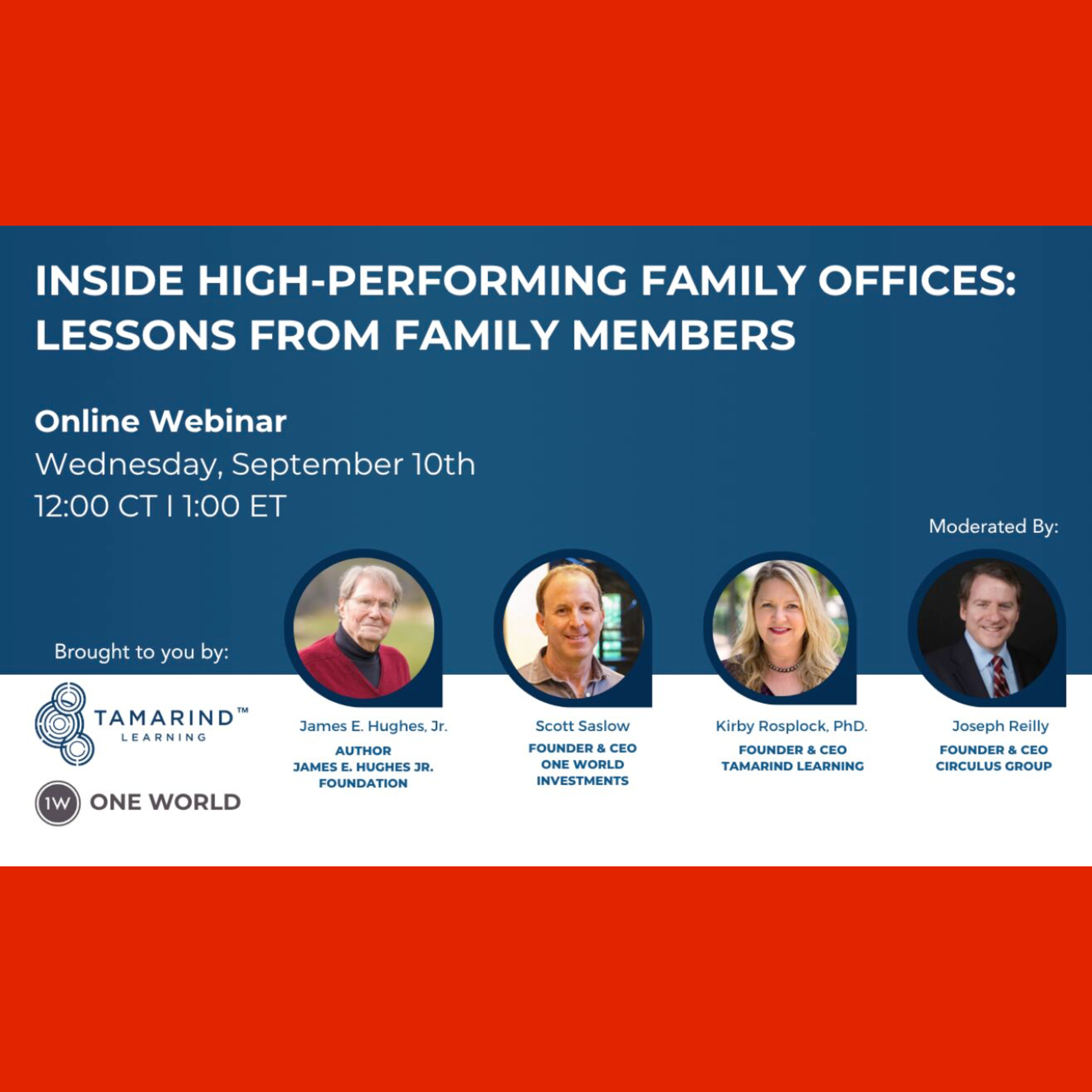 High Performing Family Offices with Jay Hughes, Kirby Rosplock and Scott Saslow
 Jay Hughes - Wealth is Well Being

