
The Generous Benefits Podcast · 2026-03-19 · 24 min
Key moments - from our scoring
Substance score
55 / 100
Five dimensions, 20 points each
Payroll has evolved from a simple check-cutting function into human capital management - encompassing employee onboarding, data administration, tax compliance, and pay delivery. Connor Vining of Proliant explains that common misconceptions about payroll being "easy" lead organizations to underestimate its complexity and the real financial and legal risks of in-house management or poor vendor selection. Key risks include IRS and state agency fines, the hidden costs of hiring dedicated payroll expertise internally, and the substantial gap between vendor demos and actual implementation experience. When evaluating payroll providers, employers should assess their own needs and existing tech stack first, understand the vendor's service model (dedicated support vs. ticketing vs. 800 numbers), and critically evaluate whether the vendor's technology is truly integrated or relies on third-party solutions. Vining emphasizes that the biggest industry shortfall is the disconnect between sales demos and implementation reality - vendors often oversell secondary features like performance reviews and learning management systems while neglecting core daily operations. Red flags include vendors unable to provide client references and those claiming their technology solves every problem. The conversation also covers when PEOs versus standalone payroll providers make sense, and why specialists focused on individual functions often outperform vendors attempting to be everything-to-everyone.
You risk IRS and state agency fines, plus significant accountant fees to rectify errors. Internally, you either need payroll expertise already on staff or must hire and retain someone with that specialized knowledge - a considerable expense that often exceeds outsourced payroll costs.
Payroll pricing typically ranges from $5-$10 per employee per month for basic services to $15-$25 per employee per month for enterprise systems with robust support. Service models vary: some offer 800-number support (quick but potentially unfamiliar reps), ticketing (organized but opaque visibility), or dedicated support (costs more but worth it if you have regular questions).
Ask the vendor explicitly how you get from your current state to what they demoed, what the implementation process looks like, which pieces they handle versus what you do, and request references to speak with existing clients about their implementation experience.
PEOs take on employer liability by owning the employees and sell on convenience, but implementation is often labor-intensive for the client and switching is disruptive because benefits are bundled in. A payroll provider plus separate benefit broker and 401k specialist often delivers deeper expertise and easier transitions if vendor relationships need to change.
Vendors unable to provide client references, claims that their technology solves every problem, and lack of discussion about how their system fits your specific workflows and existing tech stack are major warning signs of poor fit or implementation trouble ahead.
Our reviewer’s read on each dimension, with quotes from the episode.
The episode covers practical vendor evaluation criteria and implementation pitfalls with some useful distinctions (e.g., third-party vs. integrated systems, dedicated support models), but relies heavily on general principles without novel operational insights. Much of the advice is intuitive ('ask for references,' 'understand your needs') rather than revealing non-obvious dynamics. The PEO vs. payroll discussion adds some value but remains surface-level.
a lot of times there isn't enough focus on what implementation actually looks like and, you know, how you ultimately get to the experience that you're looking for. Most of the time when I've talked to groups and they're unhappy with payroll, when you kind of peel back the layers of that onion, it usually started with implementation and just never got fixed from there.
they get on and they're rushing to that demo. They're not going to try and qualify you as much as they really should to understand the way that you're doing things because ultimately they want to show you their system
The episode applies standard B2B buying framework (assess needs, check integrations, vet references) to payroll without fresh angles. The observation about vendors selling secondary features over core workflows is somewhat useful but not counterintuitive. The distinction between PEO convenience claims and reality is mildly contrarian but not deeply explored. Most takes are conventional vendor-evaluation wisdom.
if they're not talking through those aspects of it, you're going to have things that come up during implementation that are going to hit you by surprise
they're selling on the convenience. So they're selling on the fact that we do everything for you. But a lot of times the we do everything is really you do everything. We're just that umbrella that kind of covers it.
Connor Vining brings 7 years of payroll sales experience at Proliant and demonstrates practical vendor-side knowledge of sales cycles, implementation challenges, and service models. However, he is a sales/account executive, not a CTO, CFO, or operator who has deployed payroll at scale across multiple organizations. His perspective is valuable but somewhat narrow; he lacks the vantage point of someone who has evaluated and managed payroll across dozens of implementations or built payroll systems.
I've been in the payroll industry for about seven years now
I've seen very regularly in this industry is people will see a technology and they will get sold on secondary needs.
The episode provides minimal concrete data or named examples. Pricing ranges ($5-10 vs. $15-25 per employee per month) are given without context or sources. No specific vendors are named by the guest, no case studies are detailed, no timelines or failure modes are quantified, and no real implementation examples are provided. Discussion of risks (IRS fines, state penalties) remains generic.
you're going to find a pretty wide range on the pricing depending on the level of service and technology that you're getting. You know, you can go out and you can find companies that can help get your employees paid at probably $5 to $10 per employee per month. But a lot of your enterprise type systems, a lot of the main names that you're going to hear in the industry, you're going to be looking probably around $15 to $25 per employee per month
You're going to face fines. You could face fines from state agencies. You could face fines from the IRS.
Amanda asks relevant follow-up questions and probes on implementation gaps, pricing models, and PEO trade-offs, showing genuine curiosity about employer pain points. However, questioning lacks depth; she rarely pushes back on Connor's framing, doesn't challenge claims with scenarios, and doesn't ask for quantified examples of implementation failures or cost comparisons. The conversation is friendly but rarely ventures into productive disagreement or deeper investigation.
And then if you do do it wrong, like what happens? Are there are there fines? How does that work?
And then are there any red flags during that process that employers should watch for?
Computed from the transcript - who did the talking, and the words that came up most.
On the Generous Benefits Podcast, host Amanda Brummitt interviews Connor Vining from ProLiant about why payroll is far more than a back-office task. They discuss payroll as the hub of employee data, the compliance and legal risks of mistakes, and how payroll affects employee trust and benefits integration. Connor explains when outsourcing or using a professional employment organization makes sense, what to expect on pricing and service models, how to evaluate technology and implementations, warning signs to watch for, and the key takeaway: don’t skimp on payroll - find the right vendor for your needs.
Transcribed and scored by The B2B Podcast Index.
Welcome to the Generous Benefits Podcast, where we talk about building benefits and workforce solutions that actually help people and still make business sense. I'm your host, Amanda Brummitt. Today, we're talking payroll and specifically why payroll is far more than a back office task. Our guest is Connor Vining with Proliant, whose deep experience in payroll and workforce technology has a strong focus on service, accuracy, and the employee experience.
We're going to talk about why payroll mistakes create real risk, when outsourcing makes sense, what employers should expect when it comes to pricing and service, and how to properly vet a payroll provider before jumping in. Let's do it. Well, Connor, thank you so much for being here today. I would love it if you could start by just telling us who you are and how you got into payroll.
Yeah, well, first of all, thank you for having me. Enjoying chatting with you and catching up before this. So look forward to our conversation today. But yeah, I've been in the payroll industry for about seven years now.
And it was really just kind of dumb luck that ended up finding me here. I was in the auto industry before this and I was selling cars at a Mercedes dealership and I would have a lot of clientele that was, you know, in tech companies and consulting. And they'd always ask me like, why was I selling cars? And I would tell them, well, like, hey, hire me then.
And they'd be like, go get a master's and you can come do that. And I was like, well, a master's. Yes. And I'm like, I'm sitting there and I'm like, I don't want to go to school, you know, go quarter million dollars into debt to only make what I'm making in the car business right now.
It doesn't seem like a market. Started talking to a lot of people of, well, if I'm not going to do that, what should I do? And all of them were saying, find a tech company. And I ended up going and found a tech company, happened to be the company that I'm at right now, ProLiant.
And it was really just random. I went in, we did, at that time, our interviews were a day in the life. So you came in and you spent three hours cold calling and then an hour interviewing and just really hit it off with my manager. By the time I was leaving the building, he was calling me to say, hey, when are you going to come work for me?
And so I knew nothing about payroll, nothing about HR and dove right in. Nice. And this isn't a ProLiant commercial, but I never knew until just now that you've had all your time in payroll there. Most people I know that work in payroll, especially in sales, move around a little bit.
So I assume this means that ProLiant's a good company that you actually like working at? I do. You know, it's it's not an easy company to to work at, but it's one of those companies where they really let you make your own way. And it's what you're willing to put in the work.
They will give you the resources and kind of stay out of your way. And, you know, I've found that that's a really good environment for me. I'm a self-starter. I don't need people telling me what I need to do every day.
I just need people telling me what the goal is and to achieve that. And they've really enabled me to do that. So nice. Nice.
And then I think when people think payroll, they think cutting checks, paying people. But what matters beyond getting a check out? Yeah. So I think the payroll industry has changed a lot over the years because it's encompassing more and more things.
So when it did start out, it really was just cutting those checks and getting the taxes filed. But now we kind of look at payroll as managing employee data. So you're thinking of everything from finding a new candidate that you want to hire, how you're getting that person on board, how you're managing that person while they're a part of the company, you know, and specifically how you're managing their data and then ultimately how they get paid and everything else that goes into that.
But it really has become a what's referred to as a human capital management because we're managing everything around that employee data and really trying to make that the central point of information for those employees. Yeah, that makes sense. And, you know, two things I was told early on in my career, never mess with somebody's money, never mess with somebody's vacation. And you guys are smack dab in the middle of both.
So have an opportunity to make a good or really bad experience. I will tell you what, if there are problems on either of those things, people are not shy about speaking up. So definitely. And then what about misconceptions about payroll?
What do people think about payroll that may not be true? Oh, man, that's a tough one. I think, first of all, that it's easy. A lot of people think that payroll is just payroll, and it can kind of be an afterthought.
And a lot of times it's not. There's so many things that go into payroll that aren't necessarily payroll. You think about from an accounting standpoint, you think about just managing people. As we know, one of the biggest variables in a business is your people and how they interact with you.
And so ultimately, I think the idea that payroll is simple and payroll is just payroll, it's a long time since it has been that way. Yeah, well, and we'd all just do it in-house if it was easy, right? Exactly, exactly. Yeah, I hear from Brett and the generous benefits team, both good and bad about payroll vendors on the integration and the setup, especially around open enrollment, because if that doesn't go well on the payroll providers platform, it can be a real nightmare for the client.
Yeah. And I think that's one of the challenges with the industry as a whole is the implementation process. You know, a lot of times there isn't enough focus on what implementation actually looks like and, you know, how you ultimately get to the experience that you're looking for. Most of the time when I've talked to groups and they're unhappy with payroll, when you kind of peel back the layers of that onion, it usually started with implementation and just never got fixed from there.
Yeah, definitely. The sales pitch to the implementation can be a large mountain, gap, ravine, whatever. Yes, very much so. Yeah.
So if if people aren't convinced yet that payroll is more complex than just paying people, what risks are there of doing your own in-house payroll or kind of patchworking together a solution? Yeah. So a lot of times what I've seen with people doing it in-house, one of the biggest challenges is that they're doing the payroll themselves and payroll is not a focus of theirs. It's not been something that they know.
And there's so many things with payroll that it's like, if you don't know, you don't know. And so working with somebody that knows how to answer or ask those questions, how to make sure that you guys have everything set up, you know, from your state tax IDs to your unemployment, to making sure that your garnishments are getting taken care of and paid for the employees. A lot of those things are moving parts that people just don't think about if they aren't a payroll expert. And then the other side of that is when you're doing it in-house, if you're wanting to bring somebody in, a lot of times there's a lot of costs associated with paying somebody that does have all that experience to handle it in-house and that presents another challenge.
So it's kind of the, do you know everything that you need to know for payroll? And if you don't, are you going to be willing to pay somebody to bring them in to do it? And if so, how does that process look like from there? Are you spending a lot of money just to have somebody on your team?
Just to have that knowledge. Yeah, definitely. And then if you do do it wrong, like what happens? Are there are there fines?
How does that work? So you're going to have you're going to face fines. You could face fines from state agencies. You could face fines from the IRS.
And ultimately, you don't want to be in that position. Once you start getting notices that your taxes are off, it's not going to typically be a good experience from there. It's either going to be you spending a bunch of time with an accountant, talking through everything and trying to get it rectified, which, as most of the listeners here will know, any time that you're spending with your accountant is not cheap. And ultimately, the other thing is that if you're not dealing with your accountant on it, you're going to be spending a lot of times with the state agencies or the IRS talking through everything.
And as a business owner, if you're spending time doing that, it's taking you away from focusing on your business, which, ultimately that needs to be your core focus because you're going to be much more valuable focusing on those things than focusing on taking care of payroll and taking care of fines with a state agency or the IRS. Definitely. And the IRS is terrifying. I wouldn't want to mess with them.
Exactly. Okay. So if people are thinking about bringing on some kind of paid payroll service, what should they be looking for in pricing? What should they be looking for in service levels?
Yeah. So I think some of it's going to depend on what their needs are as a client. I think they should first start by assessing who they are as a company and what they need in terms of a partner. And from there kind of trying to evaluate based off of that are you a self-starter are you somebody that wants to do it yourself and just need some resources around it or are you the type of person that wants a lot of hand-holding wants somebody that when you don't know you're going to the source and getting them to help you with it understanding that is a big first step and then the second step that I would take is understanding the current technologies you have in place that won't change.
The reason that you should focus on that is if you know the pieces that are going to stay consistent, you can go out and you can find partners that can work within that ecosystem. So there might be options out there that are great on customer service or have a beautiful system, but they don't integrate with the technologies that you're utilizing. It may be a better experience for you to go out and get that integrated partner, even if maybe the service isn't as good as it would be somewhere else because it fits into your environment so well.
And so that's one of the things that I think a lot of times gets neglected is they go out and they look for the shiniest toy in payroll and they don't think about how that fits into what they're currently doing. And sometimes the best for someone else isn't the best for you. And taking that step back to understand what your biggest needs are and what things are going to be there when you do make a payroll transition should be considered. I think from there, you know, you had asked about the pricing.
I think you're going to find a pretty wide range on the pricing depending on the level of service and technology that you're getting. You know, you can go out and you can find companies that can help get your employees paid at probably $5 to $10 per employee per month. But a lot of your enterprise type systems, a lot of the main names that you're going to hear in the industry, you're going to be looking probably around $15 to $25 per employee per month for your pricing on that.
So hopefully that helps give a range of what it would cost. But I will say for a small organization, even at that cost, it's going to be pretty considerable savings versus having that person internal that can do everything in-house for you. Yeah, most definitely. That makes a lot of sense.
And then what about access to humans to assist you versus everything having to go through the automated system? Does that cost more? It typically does. And that is a good question to really understand is what does that service model look like from your payroll provider?
If you are going out and you're outsourcing payroll, yes, you're purchasing a technology and the rights to that technology. But a lot of times you're doing that because you want the support as well and you need help. And so, you know, making sure you understand the service model that that payroll provider has is a big thing. A lot of payroll providers have moved away from dedicated support.
So understanding, am I going to be putting in a ticket? Am I going to be reaching out to a team where I'm going to have different individuals? Am I calling an 800 number? Knowing what that experience looks like is a big thing in terms of what you ultimately expect on that service side.
And it's not saying that any of those models could be bad. It's just you need to know that that's what you're signing up for going into it. And if Each of those systems, they have their pluses and minuses. You know, if you're calling an 800 number, you're probably going to get somebody fairly quickly.
Challenges, you might get somebody that doesn't know anything about your account or anything about the way you're trying to do things. You know, tickets could be good. You can have tickets that you put in and they're getting picked up right away and getting handled quickly. But a lot of the challenge with tickets is a lot of times it's not, there's no visibility for the client.
They see, oh, I entered a ticket. What happens from here until it gets completed? They have no idea of what's going on. So just understanding the way that they're going to service you is going to help in the way that you're looking at that relationship with the provider.
And again, it's not to say that it's bad, but I would just make sure to understand that because most of the time, if you're going out to get a payroll provider, like I said, you're looking for that support. And a lot of the big, bigger names in the industry have, even though they've moved to more a la carte service models, you can still get dedicated service. It does just cost more. But if it is something that you're looking for, I would say a lot of times that money is going to be worth it because if you have questions that need to be answered on a regular basis, it's going to save you more money to pay for that and have that resource than to pay the fines and deal with everything afterwards.
Yeah, definitely. OK, so if we're looking for somebody, we're making an evaluation. Support matters and knowing what we need. You mentioned tech.
Are there certain pieces of tech that the employer should be thinking about? Yeah. So, you know, the biggest thing that I would be looking at initially, like I mentioned, those integrations and fitting into the tech stack that they currently have. But then provided that it does, understanding the technology from the vendor.
Is everything their product? Are they utilizing third party solutions? If they're utilizing third party solutions, how can it service? Is it serviced on their internal team or are you working with that third party?
And it's not to say that third party systems can't be good, because a lot of times it means that you're going to get the best technology in each of those modules. But understanding if you're working with three third parties through this payroll vendor, you might not be getting the support that you're looking for because you're now reliant on three additional partners serving an account. So that would be a big question. But again, just because somebody has the entire system in their umbrella does not necessarily mean that it will be the best environment for you.
Because sometimes if you have a holistic system, they expect you to do things a certain way. And if you're not going to do it within that, a lot of times it's not going to work the way you expect. And so it's just finding that balance. Again, it's not necessarily one is better than the other.
It's who is the better fit for that client. Yeah, most definitely. And then when they're evaluating, how do they get a gauge of what things are going to look like from that sign up to or from that demo to the actual implementation? That is probably one of the biggest shortfalls in our industry.
Having done this for a while, I see a very common sales cycle of everybody in payroll, they get on and they're rushing to that demo. They're not going to try and qualify you as much as they really should to understand the way that you're doing things because ultimately they want to show you their system and show you that their technology is the greatest thing under the sun. And a lot of times what ends up happening is they demo in essentially a vacuum environment, meaning they're in a perfect scenario for their technology and they get to show you that exact environment.
And where the shortfall comes is a lot of times people don't ask, how do I get from what I just saw in that demo or from where I'm at right now to what I saw in that demo? And really talking through what that implementation process looks like and understanding that. One of the things that I've seen very regularly in this industry is people will see a technology and they will get sold on secondary needs. And what I mean by that is things that either they're not using right now or things that aren't essential to the day-to-day operations of their business.
So think things like performance reviews, things like learning management, things like social media type environment for employees. They get sold on features like that, and they neglect that day-to-day process of the things that they're going to be doing inside the system week in, week out. And then what ultimately ends up happening is they're implementing focused on those secondary products, and they start having a lot of issues on their day-to-day items. And it's because they ultimately didn't talk through and think through how that process would work on the hot end.
And it's not to say that implementation necessarily went poorly, but they were trying to hit a mark that was different than what the client's expectation was. And so one of the things that I think would help clients as a whole in this industry is once they've seen the demo, taking a step back and asking that vendor, hey, how do I get there? What does it look like from here? What's the implementation process look like?
Is this a self-service where you guys are going to give me the technology and then I'm setting it up on my own? Are you guys going to be involved in it? And if so, what pieces are you guys doing? And a lot of times I've seen that there is a big gap between the expectation of a client and what the payroll provider is doing.
And a lot of that's probably on the sales rep because we're trying to run as quickly as we can to that closed deal versus taking the time to understand what they really need and understanding how we fit into it. Yeah, that totally makes sense. And then are there any red flags during that process that employers should watch for? I would be asking any of your top vendor choices for references.
And if they cannot get references, that would be a very big red flag for me. The other thing that I would say is if they talk about their technology, like it is just going to solve everything under the sun for them, that would be a red flag. The reason being is more often than not, you're going to fix a lot of things with payroll, but if you're making a move, there's probably going to be a thing or two that don't fit into the way that you're doing things. And if they're not talking through those aspects of it, you're going to have things that come up during implementation that are going to hit you by surprise and not in a good way.
So it'll ultimately create more challenges for you. And so just taking a step back and kind of challenging your sales rep on how do you guys deliver? What references can you open the door to so I can speak with them and understand? I think those would be a couple of the, And then that technology piece, if they're if they think their technology solves every problem, I'd be a little bit concerned because they're probably neglecting some things that they should be asking or talking about.
Yeah, most definitely. And then if an employer is weighing an external payroll provider versus just going to a professional employment organization or PEO service, what would you say there? Yeah. Yeah.
So there's going to be certain situations where a PEO makes a lot of sense for a client. A lot of times we see it on the smaller side, you know, when they don't have an HR, they don't have a payroll team and they need to have some of those components covered. It can be a big thing there, especially if they're in an industry where there's a lot of liabilities for them as an employer. A lot of times it can be very advantageous to work with a PEO because they're going to take on a lot of that liability because they own the employees.
But one of the challenges that we've that I see a lot of times with the PEO is they sell on the convenience. So they're selling on the fact that we do everything for you. But a lot of times the we do everything is really you do everything. We're just that umbrella that kind of covers it.
And so PEOs, the biggest thing that I would be focused on if you're trying to evaluate the payroll versus the PEO is what is the PEO providing that I couldn't get by just working with a payroll provider and some other partners? One of the other things that I've seen with PEOs is once you're on it, it can be difficult to get off. But if you aren't getting the benefits that you're looking for, because PEOs are typically tied to the benefits, a lot of times I see groups where they go to a PEO, they're on that because they got the good benefit offering that they're looking for.
The next year, their rates get jacked up, and now they're having to change PEOs to try and find those same benefit options, and it is so disruptive to the business. And if they're finding themselves in a cycle like that, a lot of times it's probably going to be better for them to go work with a payroll provider because they have somebody doing just that, focusing just on that, and then go have a benefit broker that they're working with from that standpoint in FA because you're going to get an environment where you have a specialist that is focused and is owning that process instead of saying we're going to do everything and just kind of doing bits and pieces of it.
Mm-hmm. Okay. And then... If you peel off the PEO part of it, but do a payroll company that also does the benefits, same answer or is that different?
You know, it's that's an emerging market. So what we've started to see lately is that a lot of benefit agencies are going out and buying smaller payroll providers to offer them themselves and also kind of combat that convenience of the PEO. But we're also seeing payroll providers go out and purchase benefit shops and foreign providers to kind of roll that under their umbrella. You know, I think it's probably not as much of a challenge to move away from those as it would be with the PEO.
But the reason they're doing that is to help make themselves sticky. And in some situations, it's probably going to be a very good environment. But in some situations, you get that where somebody is trying to do something that they're not. And a lot of times when you have somebody doing something that they're not, you're not getting the best experience there.
And so a lot of times I think it's more valuable for a client to go out and work with a specialist in each of those areas because you think about it, your biggest spend is payroll, your next biggest spend is usually your benefits, and one of your next biggest spends is your 401k and your finances. So like I would much rather work with three people that are doing that great than one person that's covering all of those but only doing an okay job. Yeah, that's a good point. I've actually never thought about that for our own business, but that is exactly what we do.
We have three different people and they all talk to each other and they all they all interact. But yeah, get the best of all three worlds. Exactly. And you can find partners that work with each other well, that it's ill creating that experience of everything being seamless and, you know, being integrated.
But you're not just working with one place. You know, you have those specialists on each one. Yeah, definitely. All right.
Well, you have shared a bunch of information. If there's just one thing that you want employers to walk away with today, what would it be? Don't skimp on payroll. And payroll has a reputation that it's just bad in general.
But know that that doesn't have to be your experience. If you are having a bad payroll experience, you're probably just not with the right vendor for you. And I would say explore, evaluate them heavily, but find the right vendor because there are a lot of people out there that are very happy with payroll, whoever they're with, and you just have to find the right fit for yourself. Okay, fantastic.
Well, thank you so much for all the information. And yeah, just thanks for educating us on a pretty complicated topic. I appreciate it. Thank you for the time today.
It was a pleasure meeting with you and chatting about this. So that was Connor Vining. Here's the takeaway for employers. Payroll is not just about cutting checks.
It touches tax compliance, reporting, benefits integration, employee trust, and legal liability. When payroll is set up well, it makes things even smoother. If today's conversation made you rethink how payroll is handled in your organization, the Generous Benefits team can help. While we don't sell payroll services, we interact with a ton of providers and will gladly point you in the right direction.
Thanks for listening to the Generous Benefits podcast.
Other episodes covering the same guests and topics, from across The B2B Podcast Index.
 How Vertical Software Is Reshaping the Private Security IndustryVertical SaaS with Fexingo · on Proliant82 / 100
 The Art of Bootstrapping with James BenhamSaaS Growth Podcast · on PEO (Professional Employment Organization)76 / 100
 The Focus Crisis: How to Separate the Urgent from the Important and Accelerate Your CareerLeadership Sovereignty Podcast: Career Growth and Promotion · on human capital management66 / 100
 How small properties can outrun chains with tech ft. Elise Roberts of Happiness HospitalityMatt Talks Hospitality: Real conversations for innovative hoteliers · on Tech stack integration63 / 100
 120 Doug Levy, President of Lexington Rose Consulting, Inc., on G.E.T. Together with The Entreprenudist PodcastThe Entreprenudist Podcast · on human capital management62 / 100
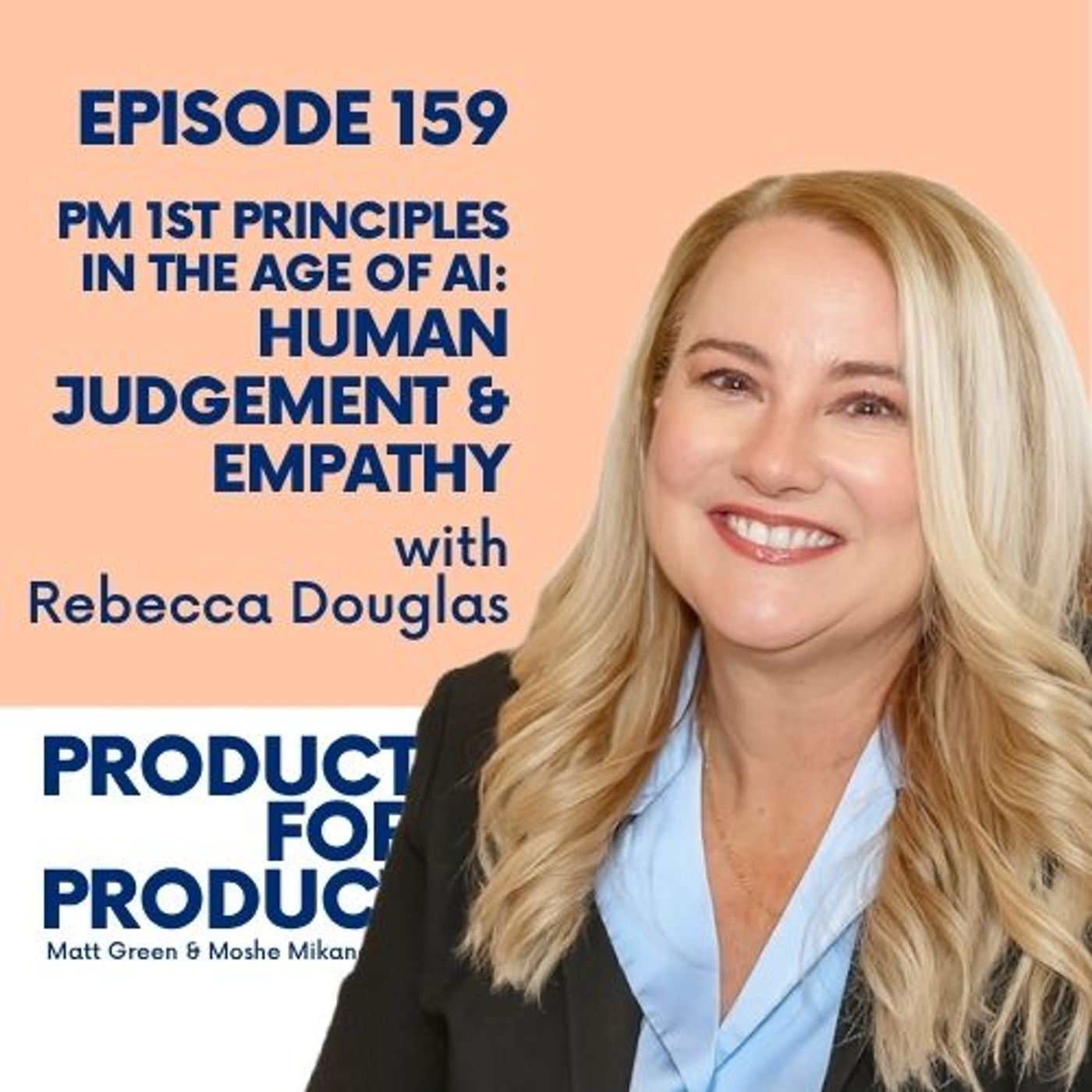 EP 159 - Human Judgement and Empathy with Rebecca DouglasProduct for Product Management · on human capital management59 / 100
 Leaders Who Coach60 / 100
 Employment Agreements and Non-Competes: What HR Needs to Know78 / 100
 Five Minutes or Less: Improving Engagement, Trust, and Culture79 / 100
 Narrow Networks and Community Owned Health Plans80 / 100
 When is Executive Coaching the Answer?79 / 100