
The Franchise Academy Podcast · 2025-05-13
Innovative Outsourcing, founded by Cindy Filer 30 years ago to create part-time work options for career professionals wanting flexibility, has evolved into a recruiting firm serving small businesses across HR, finance, and administrative hiring. The company operates on a unique model where nearly all recruiters work part-time themselves, practicing what they preach. In this conversation, Cindy and her son Matt address critical 2025 challenges: despite high-profile layoffs at major companies, unemployment remains historically low at 2.1 jobs per person, meaning small businesses still can't hire talent at discounts. They reveal that recruiter expertise significantly outperforms DIY hiring - their placements stay 3-4 times longer than candidates found internally. Key findings include that 84% of job applicants want remote or hybrid work, with hybrid employees showing 12% higher productivity, but employers needing on-site workers should budget a 20% salary premium. Matt shares that personal workplace relationships - having a best friend at work - drives engagement more than flexibility alone. The firm also offers HR Compass, a fractional HR service starting at $450/month, addressing small businesses' need for professional HR guidance beyond recruiting.
Using a recruiter saves significant owner time (60-80 hours per hire) and yields better retention; when you post on Indeed, you typically get 600 resumes of which 540 lack minimum qualifications, whereas experienced recruiters like Tina (24+ years at Innovative Outsourcing) know exactly what controllers or finance professionals require and can screen effectively.
No - unemployment is historically low at 2.1 jobs per person, meaning candidates still have options and will not accept discounts; employers must compete on culture, management quality, PTO, and work flexibility rather than expecting to pay less.
Over 84% of job applicants want either remote or hybrid work; most prefer hybrid (1-2 days in office for socialization), which also yields 12% higher productivity than fully on-site roles, though employers requiring five days on-site should expect to pay approximately 20% more in salary.
Yes - most clients have 20-50 employees, and they've hired for businesses with as few as 5-8 employees; they specialize in white-collar positions (HR, finance, admin, bookkeeping, paralegals) but not blue-collar or restaurant roles.
HR Compass is Innovative Outsourcing's fractional HR service that provides 3-10 hours monthly with an HR director-level professional starting at $450/month; it includes policy writing, exit interviews, job descriptions, and advisory work for small businesses without dedicated HR staff.
Computed from the transcript - who did the talking, and the words that came up most.
In this insightful episode of The Franchise Academy Podcast , host Tom Scarda sits down with Cindi Filer and her son Matt Filer, the dynamic team behind Innovative Outsourcing. Together, they explore the evolving world of HR, where companies must rethink their strategies to attract and retain top talent - especially in a world moving back to on-site work. Cindi shares her journey of building a pioneering staffing company that connects businesses with top-tier part-time professionals. The Filers reveal how companies can create "commute-worthy" roles, develop powerful HR policies, and leverage storytelling to make job offers irresistible. They also discuss the secrets to retaining great employees and maintaining a healthy work culture. Whether you’re a CEO, a franchise owner, or an HR enthusiast, this episode offers practical insights and proven strategies to build a thriving workforce in 2025. Key Takeaways: How to make job roles "commute-worthy" for on-site work. The power of storytelling in getting candidates to accept offers. Proven strategies for recruiting and retaining top part-time talent. Why strong HR policies are essential for a successful team.
Transcribed and scored by The B2B Podcast Index.
Speaker A: Foreign to go into business for yourself.
Speaker B: Get ready for another episode of the Franchise Academy podcast. Ah, education, insight and inspiration.
Speaker A: Here's your host, small business and franchise expert Tom Scara.
Speaker B: M. Welcome to another episode of the Franchise Academy. My name is Tom Scarda and we are coming, uh, to you live from Florida. But today I have a really exciting guest. Something that is a little bit different for the Franchise Academy. We're going to talk about hr, we're going to talk about recruiting and the challenges in 2025 and beyond that some professionals see that have been in the business more than three decades. Although the founder looks like she started it just maybe two years ago.
Speaker C: That was the right answer.
Speaker A: Yeah, that's good.
Speaker C: Yeah.
Speaker B: Uh, and I'm serious. So to another episode. I, um, am just excited to have you guys with me today. This is Matt and Cindy Filer from Innovative Outsourcing. So Cindy is the founder, started this 30 years ago. Her son Matt is taking on the business and growing it through all, all over the Atlanta market, but all over the country. For people who need outsourcing, I'm going to let them tell the story because it's awesome. So welcome Cindy and Matt.
Speaker A: Thank you for having us.
Speaker C: Hey, we're glad to, uh, we're glad to be here with you.
Speaker B: Oh, no, thank you. This is really an honor to have you guys because one of the biggest challenges in business, the biggest challenge in business is employees. It's hiring and it's retained, retaining them. Cindy, give us a little background. How did Innovative Outsourcing start?
Speaker C: Yeah, I was in corporate America. I was just working like a, uh, regular person in corporate America. Decided to stay home with kids when Matt was born. Matt's 31 now. And so he and his dad, his dad and I decided I was going to stay home. And, and when I got home, I was like, okay, this is fun, but I would really like to do some work. And I looked around and I was like, there was nobody hiring part time. Now it's the thing to do. But then it wasn't. And so I founded Innovative Outsourcing to have an option for moms who wanted to work part time and raise their kids part time. It was a great place for people who were accountants and HR people and lawyers and people who had great careers but didn't want to make that tough decision of work versus home. So we gave them a little bit of both. So I worked with small businesses and said, hey, could you use a controller part time or could you use an HR person part time or a bookkeeper? And it grew from there.
Speaker B: That's amazing. I love the entrepreneurial kind of you found the problem and solved it.
Speaker C: Yeah, that sounds better than it was. It was just like I wanted a part time job for myself. So it actually is just a really cool thing that happened when you serve an under utilized group of people that were on the bench and you found a place for them to serve with a bunch of clients who really could use that really great a help but at a lower price. So it actually just worked. I would like to say that it was this great strategy, but I just fell into it.
Speaker A: I like to tell people that, that basically I ruined her life 30 years ago, brought her out of corporate America and then now she. And then she got to do something where she got to use her HR and recruiting expertise. But I definitely say that I ruined her life there for a little bit because I think she liked working for Delta.
Speaker C: Yeah, he did. Yeah, I did. Uh, a couple of years ago we were meeting and I was with this guy and this guy comes up and he said, I just met the co founder of your company. I was like, huh, huh, who would that be? And he's that young gentleman over there. I was like. So I went to, I said matt, come over here. And so he came over there and the guy was still there. And I was like, did you tell this man you were the co founder at the company? He says I did. And I was like, I don't know how that happens because you're 30. What you were yet younger than the Cybes business. And he said, mom, you wouldn't have probably had this business had I not been born, you would have probably still been at Delta Airlines and hr. I was like, yes, you're probably right.
Speaker A: So I thought it was an extremely fair point. Yeah, I probably. It was a joke.
Speaker C: It was a joke.
Speaker A: It was a joke. It was a good joke.
Speaker C: It was fun,
Speaker B: I think and it makes a lot of sense. And I think that a lot of businesses born out of necessity. Right?
Speaker C: Yeah.
Speaker B: And so it, I think it. And it's a really cool concept and especially back then, that was innovative. And I feel really bad about women who have these careers and then they are put on the bench as you said, because they have a child. And so how do you do both and make it happen? And I call it trying to find like a, in the franchise world, trying to find a. What I call a school bus business. You could work between school buses in the morning, in the afternoon.
Speaker C: That's exactly right. We always work between drop off. I Always said that, um, I was not the corner of the market saying everybody, woman should work part time. I had a lot of friends that worked time, full, full time, a lot of friends that didn't work at all. But for those people that wanted to work part time, I wanted to find them an option of uh, where they could work.
Speaker B: Yeah, no question. My wife, when my kids were young and my kids are, my son is Matt's age, 31 and my daughter's 35. My wife was a New York City police officer for 20 years. And you couldn't do that part time, but I just wanted her to be home with the kids. That's like really important. So if there's an option, that's great. So that's, that's how you guys get started. And so then you got into like more recruiting. So how did that happen?
Speaker C: Yeah, I'll let Matt take that one.
Speaker A: Yeah, I think it just happened the way you tell it. I wasn't here from when that started, but I think it just happened naturally because clients said, hey, we liked Yalls process when it came to the part time recruiting and finding the people and giving us the right resumes, giving us summaries, doing personality tests. Like we did all of that for part time and they were asking just us to do full time placements as well. Same companies, same clients. And I think our recruiters were totally about it and said it's the same process. And so now we still do a lot of part time, but we definitely do a lot of full time as well. And we do mostly hr, finance and admin positions, operations, a little bit paralegals, some. But mostly we stay in those three boxes of hr, finance and admin. And I think it's just a testament to we have awesome people on our team. Every one of our recruiters is still part time. I'm the only member of our staff that's full time.
Speaker C: That's true.
Speaker A: So.
Speaker C: Except for me.
Speaker A: Yeah, except for you. But practice, I think that was really important to mom, was we got to practice what we preach. Like we can run a business with a part time controller, part time recruiters, part time HR people. And so I think that has been a huge. We practice what we preach, which is big to us.
Speaker B: So I got, I have a question for you because I've owned several businesses. Why do I need a recruiter to find somebody. Can I just run a Craig craigslist ad?
Speaker C: Yeah. Yes, you can run a craigslist ad. You can Craigslist. Do we do that anymore? I thought that was Dangerous. Anyway, yeah, you can put in something on. Indeed. You can put on something on LinkedIn. But I think what you find is that you get 600 resumes. And of those 600 resumes, about 540 of those resumes, they probably don't even have the minimum qualifications to do your job. So it's like, how do you sort through those? And then there's that experience piece. The person that we're going to take, a person on my team. Her name is Tina. She's been a recruiter for. With us for 24 years, 25 years. And so she has hired so many controllers in her life that she's really good at finding controllers. So when you go and you put that, you know that job description on Indeed. And you get that 600 resumes, you haven't hired a controller in eight years. You're probably not as good at it as Tina is because she's seen so many of it. She knows what we need to pay those people. She needs. She can know all the ins and outs of hiring because she's just experienced. And so just. I wouldn't probably do my own business taxes, because I want somebody that does those all the time. Why would we try to hire ourselves? Because it's a pretty important thing. Your people are generally the most expensive part of your business, and you got to get that right.
Speaker A: And I think also the statistic is that for small businesses under 100 employees, it takes 60 to 80 hours of work hours for them to find someone, find a new team member. So 60, 80 hours, if you times that by your. What your time is worth, if it's a COO or a CEO or a business owner or even the controller that's doing the hiring, what is their time worth? Because if it takes 60 to 80
Speaker C: hours, you could have gotten a new client.
Speaker A: That's a lot of time, a lot of money where you could be spending doing other things that you actually probably want to do, rather than sifting through resumes and, and doing interviews that you might get an Uber driver that walks through the door.
Speaker C: Yeah. And we find that the people we place, based on our stats, stay three to four times longer than the average person that the company finds themselves. And that usually is because we can see through what they're trying to sell us. Now, we've been around the block enough to understand when somebody says, yeah, I want that job and I can drive 40 miles a day to that job, we're like, yeah, you can't. That's not going to last. I think that those Reps help us to identify great candidates and then they end up staying longer. And that is what you want. You want, if you're going to hire somebody, you want them to stay.
Speaker B: So if I'm a small business like Sam, um, I got a franchise, I've been open maybe only two years, I'm growing. I need to hire a person here or person there. Can you still work with somebody like that or do you need like a business that already has 50 employees and they're looking for large C suite type person?
Speaker C: Yeah, you want to take that?
Speaker A: Yeah. So I think we can definitely help a franchise. So uh, if they're looking for a chef, we're not going to be able to help them because we're helping with mostly white collar jobs. So any, like I said, hr, finance and admin are three main buckets, but that's from part time bookkeeper, all the way up to controller, HR coordinator all the way up to HR Director of people and culture, that kind of stuff. So we definitely can help a wide array of positions. We're just not the best suited to, to help maybe find a waiter or find a chef or find a blue collar worker in some way shape.
Speaker B: Those are like specific type of depending on the business. But every business eventually is going to need a bookkeeper.
Speaker C: Um, absolutely. And we hire for a lot of small businesses. We hire for businesses that have five employees. We just hired for a business this last week and they've been our client for a while. They have eight employees and we've hired four of them over a course of years. So sometimes they'll hire somebody one year and then we don't hear from them for three years and then they'll need somebody else. Sometimes we have more, but most of our clients are well under 100 employees.
Speaker A: Yeah, most of them are within 20 to 50 employees I would say.
Speaker B: So if I'm somebody who gets laid off in this economy, do I need your help or can I? How does that work? Because I'm a mess with that.
Speaker A: Yeah, I think you could use a recruiter's help, you know. Well, we, we always get people that send resumes to us, which is all, which is fantastic. And Tom, I think I've told you this before, we'll do our best to help them, but the best thing that we can do is mon. We have someone on our team that we actually hired last year and one of the cool things about her background was she was a career coach as well as a recruiter. Right. So we're able to pass them along to her so she can say, hey, this is what you should do with your resume. It's out of style because we had somebody that came to us and they hadn't looked for a job in 30 years. They had wanted to be a fractional CEO and they were trying to do something. They wanted to do something different, but they hadn't updated the resume in 20 to 30 years is what he said. And his resume was way out of date. And so all she did was just update. It took her 15 seconds. It would have taken him probably a lot longer. And she was able to advise him on a few things to be able to best serve him. However, we're not going to be able to help every resume or every person that. That walks into our door that we get recomm. We're going to do our best to be able to help them or get us a part of their. We'll put them as part of our database, which we have what, 68,000 at this point that are in the Atlanta and Charlotte area for the most part, but all over the country that are trying to find positions. So we're able to help, but usually we're just trying to help them be best set up to. To get those interviews for sure.
Speaker B: So right now we're. We're in a, uh, what, second quarter of 20, 25. We have a unique economy going on, to put it mildly. What's your role in this kind of thing in. In regard to employees and retention? Do you have any advice for people that are listening?
Speaker C: Yeah, it's an interesting economy. Right now we're seeing a lot of employers. You hear the big companies, they're doing layoffs. We have government doing a lot of layoffs. And so all of a sudden, as a small business owner, you think this is my opportunity because I can hire people for nothing. Right? Because all these people are laying people off. That is not has what has happened. And so sometimes it's our education thing we have to do for our clients, saying we are still in very low unemployment numbers. It's historically low unemployment, which means that there is 2.1 jobs for every two people, which means that we are underemployed, meaning that we can't find people in many different job categories. Some HR people, some a lot of finance jobs. They're very tough to find. So it's not like you can get people for a discount right now. And you can. It's also not like you can treat your employees terribly and they're going to stick with you. So we're still in A retain your best employees mode. So a lot of times we go around and speak to CEO groups and they're asking, how do we keep our people? And we're still in that mode, even with this economy. How do we keep our people making sure we treat them right? They have great managers, we're paying correctly, and we have good PTO policies. Ah, we do some remote work, if possible, for those companies that can. We need to keep our people that are good people, and we need to let our people go that aren't good people. But we need to make sure that we're retaining and that we have created a story in our company where people want to be hired into our company. What's the, um, main reason that I would leave my great job and go to your job? And if you don't have that story, then you might as well not be trying to hire right now.
Speaker B: So somebody. I was listening to, Kevin O', Leary, Mr. Wonderful from Shark Tank, he was saying, this goes back, like, probably a year ago. I saw him being interviewed. He said, if you're like a CEO of a company and you're sitting down with somebody to hire them, you're interviewing. You have to realize they don't care about the salary, they don't care about the benefits. They only want to know if they could work from home.
Speaker C: Yeah, that's, uh, a. It's an interesting piece. Right now, we. We're finding that over 84% of people that are applying for jobs right now in jobs that are capable to be from home want to work either remotely or hybrid. Right. A lot of them don't want to work fully remotely anymore. A lot of them, the major. The great majority want to work hybrid jobs, which is a day or two from home every week, so that they have that socialization at work, but they also have that flexibility. And so for those people that can. For those jobs that are allowed to do that, that is definitely what we think should happen. And studies have shown that those hybrid employees are 12% more productive than even employees that are on site five days a week.
Speaker B: Is that crazy?
Speaker A: And we're. And we are saying, like, if you truly do want people in the office more four days a week or five days a week, you're going to have to pay more. Right.
Speaker C: So it's almost like a 20% increase in pay to get them there five days a week.
Speaker A: Now, oh, we hired sales coordinator, and we posted two different positions. One was fully on site, one was fully remote. We got the clients go ahead of just, hey, go ahead and post two of them and then make the fully on site one $7,000 more. And that was. And they were gearing towards. They wanted fully on site. And our recruiter has said that they had way more qualified candidates for the on site position because of 7,000 more dollars. So that says to us. And I don't know if that's just an Atlanta thing, I don't know if that's just a south thing, but I think that says to us that at least I. We still do think hybrid is the way to go, but we also think that still money is king. Right. Like money is going to outweigh the work flexibility, even though it's very important.
Speaker C: But you got to decide, hey, if it's really important for me five days a week to have that person in that seat, I'm going to pay the premium for it.
Speaker A: Yep, you have to pay for it.
Speaker B: That's. I've never heard that before. And that's brilliant. So I'm so glad that we brought that up. I have like my daughter, she lives in New York and so she lives in Long island suburb and commutes. But she was for Covid, Obviously she was 100 remote, been 100% remote for four years now. They're like, oh, you got to come back one day a week starting last year. And now the. All of a sudden four days a week and she's I'll quit. I won't go in. Just small kids. I won't go in four days a week. I don't care what they say. Yeah, I think what. And then this past. So this past week they started four day a week and they didn't have enough desks. There was no resources for the. They weren't even ready for it. And yep.
Speaker C: I um, think there's been a whole lot of publicity on the back to work stuff, the return to work stuff, even full time. We've seen the big companies all decide from the Googles and everything else and it's very much in the news right now that they're going to go back to work. So everybody has the green light on. It's cool. Now we need to go back to work. And a lot of people have done it without having the HR policies ready to go. So we recommend really to do some HR work on the front end before you bring all those people back to make sure their experience is. The term is commute worthy. So we're having to explain to these employees it's not just a, it's not just a requirement, but how do we make Your daughter at her company understand that what she's going to is commute worthy. The experience is different, the, the ambiance is different. Their ability to rise and get promotions is different. That's the HR job is to really create that story of what is commute M worthy.
Speaker A: But also you need personal interaction. I think that's what keeps people at companies. If, if you look at engagement scores, one of the top ones, and it sounds elementary is you have a best friend at work. Like you have a friend at work. And I think so. I have a little anecdote here, but my, one of my best friends he went to, he was working for an agency and he wasn't taking jobs that were trying to get him to come back to the office. And he was saying there's no chance I'm ever coming back to the office. Dream company reached out to him and said, you want this job? It was Coke here in Atlanta. And he took the job. But he was like, the one bad thing about it is I have to go into the office four days out of the week. So I only get to choose one day of the week. He's now going five days out of the week. And he was like, I forgot how much I missed having people to talk to every single day. He was like, I don't know how I did this since COVID Like I don't know how I was locked up in my house for, for four days. Like I needed personal interaction. Like it brings out the best in me. Meetings bring out the best in me. And there are people that are like that and there's also accountants and it people that really do want to get inside their bubble and be by themselves and their heads down work. And that's what HR is supposed to do, right? You're supposed to find what is. Who are the people who need to have their alone heads downtime and who are the people that need other people to be creative to. To actually have conversations that can further in the business. So I think it is, we're at a crossroads, but I think it is gearing more and it's just my take on it. I think it's gearing more towards being in person.
Speaker C: Yeah, I think we're going to see more and more of that. I think there are some things that. There are some companies that aren't going to do that because a lot of companies went 100% virtual. They sold the office and they're having retention issues. Their turnover is through the roof because you can just change out the computer in your living room. You have no relationships.
Speaker A: If you, if someone offers you one more dollar, why aren't you taking that dollar?
Speaker C: Because you're just changing out computers, computers. And so you don't really have that, that thing. And then we're also. One of the things I speak on a lot is mental health issues in the workplace. And we're seeing a lot of those have increased substantially. And in many cases we think it's because there's no connection with other people. How does that play in.
Speaker B: Yeah. Wow, that's brilliant. We could do a whole episode just on that. Oh my goodness, that's awesome. And then Leslie, I just wanted to touch on the. You're doing some fractional HR stuff. Can you tell me about that? What is that?
Speaker C: Yeah, we decided years ago, um, that it was great hiring say a bookkeeper for a company, small business, 15 people. We'd hire a bookkeeper that nine months later they'd call me because they needed a new bookkeeper. And I'd think that's weird. We usually hire bookkeepers for longer than that. And then a year later another bookkeeper and something's amiss. Where did everybody go? And so we realized that small businesses, we could hire great people for them, but oftentimes they didn't have the HR talent they needed to create those policies, procedures, create that ambiance in those companies to keep those people. Their controller was doing their HR work or the executive assistant to the CEO was doing the HR work. And they could do the work just fine, but they just didn't have the expertise. So we created a, uh, fractional HR service called HR Compass. And it allows us to have one of our HR director level people from M3 to 10 hours a month. With these people it starts at $450 a month. So it's pretty inexpensive. And they get great high level HR help to not only advise on stuff, but also to do stuff like write policies and do exit interviews and help create job descriptions. And so just giving them that little extra piece. And so we really wanted to be HR for companies that couldn't afford big hr. So providing this recruiting to hire them great people as well as that fractional HR to really help them once those people are hired, to have a great experience and want to stay.
Speaker A: And I think that's very underserved too, is that what we like to say is five to 50, 60 employees. A lot of times their HR is done by an office manager or by a controller or maybe the business owner who really doesn't want to do it or hasn't been able to delegate it. And they might be great employees, that office manager could be a great employee, but they probably don't have the HR background that they need. And so if they could have someone that they could call if like a huge HR issue comes up, right? If someone falls on the job or there's a sexual harassment claim, are they going to be the ones that are going to answer those questions or that can they call someone and say that
Speaker C: they already have a relationship, that they
Speaker A: already have a relationship with? Uh, it's their sole person. We're not like a call helpline or anything like that. We want them to have a relationship with that person. Be able to call and say, hey, this happened. What, what do I do? And if those things are not happening, then being able to conduct exit interviews and stay interviews, being able to help with review process to help with staying in HR compliance in different states. Say you're moving to another state, you need to stay in HR compliance or you're hiring different people in other states, that's a huge deal. And so being able to have a service where it's just three to 10 hours and you're not paying, maybe for a part time or full time person, maybe not outsourcing your whole HR, but you get to have that three to 10 hours and have it at a low price. And I think that's been a cool thing that we've been able to do recently.
Speaker B: Yeah, really, it's great. And companies need that so badly so that I love that. Lastly, I want to ask, what's one myth about HR or recruiting that you would like to bust right here?
Speaker A: I think the big one for us. And mom will always say she's a mathematical economics major and so she loves stats, she loves the math.
Speaker C: That's the fun side of that.
Speaker A: That's the fun side of HR for her. But we like to say that HR can affect your bottom line. I think a lot of times our job is to try to convince business owners with not a ton of employees with that below 50 or 60 employees that that HR is a, that HR is a big deal. And I think a lot of people think of it as Toby Flinderson from the office. It's just the rules police or just the people that can tell you no, but it can save you money. Retention, like the cost of. We're recruiters, we benefit if you lose an employee and we have to help you find them. But it costs two and a half times what it takes to retain that person. So if they leave then you're Spending two and a half times the amount to find a person and train them. Right. So even that alone, HR compliance, if the Department of Labor comes knocking on your front door, you can lose tens to tens and thousands of dollars in about an hour in a nanosecond. If you're, if you don't know where your i9s are or you're misclassified with W2s versus 1099. In our mind, HR does affect the bottom line. And I think that is not viewed by a lot of companies. You think of sales affecting your bottom lines, but. And marketing affect your bottom line, but maybe not hr.
Speaker C: There's this great book by Patrick Lencioni, who's a business writer. I'm sure everybody's heard of him. It's called the Advantage. It's a little bit older book and it's compares and contrast companies within the same industries where one company focused on their organizational health, which is the things we've been talking today about the, you know, the HR side of the world. And one company did not. And they compared their bottom lines, not whether it felt good, the touchy feely side of hr, but really what profit did they make. And it concluded through a lot of stats, which I love, which aren't touchy feely. That if you spend money on your organizational health, making sure that your employees are happy, making sure that it's a good place to work, making sure that your managers are trained, making sure that you're recruiting the right people and you have great retention, it shows that you will get that back in spades in your profit. So it makes sense not only because we want to make great places to work, but if you do, then you'll be monetarily more profitable. And we love that about HR because it can help people and at the same time it can help that business owner.
Speaker B: That's fantastic, guys. I gotta tell you, this was mind blowing for me. Much more than I expected and anticipated. So thank you so much for your time. This is Cindy and Matt Filer from um, Innovative Outsourcing and you can find all their information on the franchiseacademy.com if you want to hire Cindy to speak at your event, she would be fantastic for that. Mental health issues, she could speak to that. So if you guys need HR help, reach out, you can find them on the franchiseacademy.com and we'll get you hooked up. So thank you guys, appreciate your time. We'll see you soon.
Speaker C: Uh, thanks for having us.
Speaker A: Appreciate you.
Speaker C: This has been another episode of the Franchise Academy podcast. For more info, go to our website, the franchiseacademypodcast.com Remember to subscribe to Tom Scarta's YouTube channel for educational videos on franchising, education, insight and inspiration.
Other episodes covering the same guests and topics, from across The B2B Podcast Index.
 How a Coffee Chain Cut Employee Turnover by 50 PercentThe Operations Podcast with Fexingo · on Employee engagement scores90 / 100
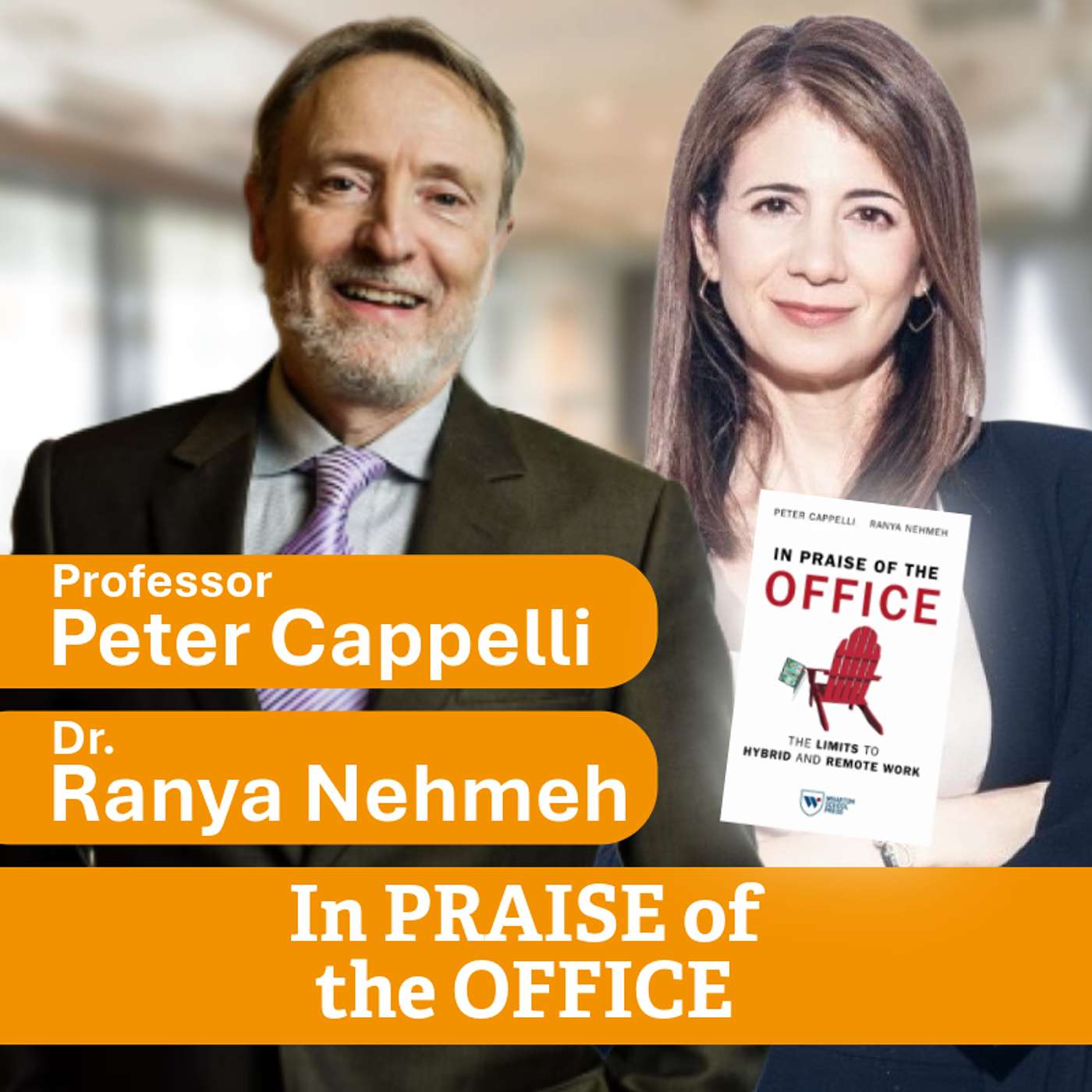 In PRAISE of the OFFICE! with Dr. Peter Cappilla & Ranya NehmehLeadership BITES · on Hybrid work arrangements82 / 100
 312: Blowing Up the HR Playbook with Lisa SterlingPunk Rock HR · on job descriptions81 / 100
 No One Wants to Work Anymore Is a Lie, Here’s What Leaders Are MissingChats with Jason · on Exit interviews80 / 100
 Ep 209, Midcareer DevelopmentConflict Managed · on job descriptions78 / 100
 Tend Your Team Like a GardenHR Voices · on Exit interviews76 / 100A Great Unique Franchise Concept54 / 100Deciphering The Franchise Disclosure DocumentFrom Operator to Visionary: How CEOs Build Self-Sustaining BusinessesCybersecurity 101: Safeguarding Your Franchise TodayFranchising 101:Myths, Success Strategies & Private Equity