
The Founder Files · 2025-11-04 · 1h 51m
Ground 2 Tap emerged from Stephen Walker's realization that water treatment companies were addressing homeowners with technical questions they couldn't answer. After studying engineering at UCT and completing four years at Bain & Company's Johannesburg office, Walker moved back to Cape Town with a nest egg and initial plans to launch a brewpub. While developing beer recipes using his parents' borehole water, he recognized that 96% of beer is water, and water composition directly affects flavor profiles. This insight led him to question why residential customers needed advanced technical knowledge about flow rates and pipe sizing when selecting water systems. Walker positioned Ground 2 Tap around translating engineering complexity - substituting technical specifications with practical homeowner questions like "how many bathrooms do you have?" His first installation at his parents' house became an expensive learning experience ($15k invested), but it validated the concept. The business grew 50% annually to reach 25 employees by scaling with intentionality: reusable stock sheets from day one, video proposals featuring Walker speaking each client's name and explaining their specific system, and later, voice-cloned AI proposals to maintain personalization at scale. Walker credits his entrepreneurial parents, his faith-based worldview, and building for long-term sustainability rather than short-term fixes as drivers of both his approach and the company's growth through Cape Town's 2018 water crisis.
Hosted by Metavolve. The show scores 72.0/100 on substance across its analysed episodes. See the full show profile.
Ground 2 Tap translates engineering jargon into practical questions: instead of asking about flow rates and pipe sizing, they ask 'how many bathrooms do you have?' and handle the technical calculations internally, making the customer experience simple and accessible.
Water minerals like calcium, sodium, and chloride directly influence taste; high calcium works better with darker grains (like in Irish stouts), while high chloride complements hop-forward beers (like IPAs), which is why different beer styles developed in different regions based on local water profiles.
They cloned Stephen Walker's voice so that video proposals can still feature the founder speaking each client's name and walking through their specific system, allowing the personalized founder-led approach to scale beyond what one person can manually produce.
He built a nest egg through Bain consulting and university modeling work, saved 40-50% of his income during employment, and had his wife's marketing manager salary from Johnson and Johnson, giving them runway to tinker and validate the business idea.
Walker misspeci fied the system - wrong fittings, undersized and oversized components, wrong pump selection - resulting in leaks everywhere; he charged his parents 15k to cover equipment costs and treated it as expensive tuition to learn the business.
Computed from the transcript - who did the talking, and the words that came up most.
Transcribed and scored by The B2B Podcast Index.
Speaker A: I was actually doing a lot of the recipe development here at my parents house and they've got a borehole and I was using their borehole water to brew beers. And water is 96% of beer. So got the water analyzed and sort of had a look at exactly what forms the water. And when I started understanding that and doing some research, I said, well actually, what's wrong with just running this water straight into the house? Like, why can't we do that? I use my, my parents house where I was brewing beer as uh, as a guinea pig and went and spent 15 grand at a, at a local supplier and installed what I thought would work. Turn it on and like there was just water everywhere. Like every single fitting, just, there was leaks. Just crazy. From day one, everything that we've set up, whether it's our stock sheets, our stock sheet that I developed probably in February 2018, we're still using today with a business that is 15 times the size of what it was. The reason that I did that is because I built that early on, knowing that I'm not going to build something and put a bandage on it for right now. I want to build it for the long run. One thing we do from a proposals perspective is we actually do for every single client, we do a proposal. We don't send a quote and we do a video proposal where I speak to that client by name and walk them through their system every single step and why they need each individual thing.
Speaker B: Every deal you use the CEO, uh, and the founder. Every deal.
Speaker A: Yep, every deal. Well, I'll tell you a secret. Not anymore. Although a lot of clients think I do.
Speaker B: Is that AI.
Speaker A: Exactly. So we've cloned my voice.
Speaker B: I think a huge part about this is that we haven't shared with the audience yet is like what success looks like for you.
Speaker A: It's not necessarily about me. It's about the 25 people that we've been able to provide employment to and the four people in each of their families and the 100 people that we've actually touched. Just from a, from a people perspective in our business, it's the fact of being able to get the worry of water off of people's minds.
Speaker B: Hello and welcome back to the Founder Files. Today I'm talking to Stephen Walker, the founder and CEO, uh, of Ground to Tap, a business that creates water filtration systems for household and for commercial use. And this story is about basically how someone who's an engineer went Bain consultants found an idea and like just kind of ran with it. But the Principles that he's applied and how he's thought about his business has been so intentional from moment one. Thinking about why he's in this in the first place, where he wants to be going, what his success looked like, thinking about the gap in the markets from a, uh, language perspective. For the record, this is before he even launched. Right. Like how he should be communicating with the potential customers. Now he has the idea, then the patience, the piloting, building relationships, his customer experience, bringing in a salesperson as a second hire besides operations, um, and then just scaling it throughout with just so much intentionality, but so much, so much wisdom, um, that this is an epic conversation and a founder that I've learned a lot from and I think you will too. And yeah, if this is the kind of content that you're here for, you're not already following the podcast. Suggest you click that follow subscribe button now so you don't miss more stuff like this. But yeah, let's get straight into hearing about Steve and the wisdom that he has to share about how he has scaled and is continuing to scale ground to tech. Welcome M to the Founder Files, the podcast that's like eavesdropping on a conversation with a successful entrepreneur over a fireside chat. Join me, Cameron Coutts, through this unique experience of unfiltered stories and insights from scaling founders around the globe as they share their ups, downs and everything in between.
Speaker A: The beginning, yeah, so beginning. But Steve Walker. So, yeah, I think it's nice to, nice to know that because it does drive, I think, where we're, where I've got to with the business. So, yeah, grew up in Cape Town, went, uh, to UCT and studied, uh, engineering there and had a really good time. That was, I was very, very lucky, um, growing up that I seem to get things quite quickly, um, from a learning perspective. So I actually didn't spend a hell of a lot of time at Varsity. Um, I was able to skip a lot of lectures and end up getting decent marks at the end of it, which is, I think just, just very, very lucky. And I think it's, I think it's a lot of.
Speaker B: It's a super humble way of saying I'm very intelligent.
Speaker A: I don't think it's anything about that. I think maybe I think it comes down to the way that my, My parents had really sort of built and brought us up and both of them are entrepreneurs and they've always been problem solvers themselves. So I think that just in the way that they've taught us to learn and um, I think they've taught us to learn in a very interesting way where they've always asked us, you know, how, how would you think about this differently? Rather than giving us the answer, they've always taught us from a young age, like, oh, do you think there's a business idea there? Or something like that? And so it's, it's been, uh. I wasn't aware of this when we were growing up, but I think looking back on it, um, and now being a parent myself, like, I think that those skills that they taught us are just sort of ingrained in us and I think it's given me a foot up for sure just to the way that I process things and the way that I sort of synthesize things. Um, and, and yeah, it's, it's been quite incredible to see that. I think now looking back at a later stage, life. So I was able to sort of skip through a lot of classes and stuff, but I think in varsity, just understanding engineering is one part of it. And my parents having been entrepreneurs themselves, my dad runs a mining company and my mom's run a landscaping company. And I saw the freedom that that gave them and that was always sort of what was on my heart. Like, I didn't know life other than the freedom that they had as entrepreneurs. And so I knew that that was where I wanted to get to, that I didn't want a boss, but I knew, I knew that I wanted control of my time and I wanted to be able to figure out what I wanted to do with my time. But having an engineering degree, I had no idea how to, how to do that, how to do business. And so I got an amazing opportunity to, and go into. So I'm going to turn WhatsApp off there, so just, uh, cut out whatever happened there. So I got an amazing opportunity to go and work at a management consultancy company called Bain, uh, that was up in Joburg.
Speaker B: And that was like just a management consultancy.
Speaker A: Just a management consultancy, a decent one. Um, and yeah, I mean they were, they were amazing. And, and that was. I knew it wasn't going to be the forever job. I knew that it's probably not what I was going to really enjoy at the time, but I knew it was a massive gap in, in who I was and, you know, where I wanted to get. I had some engineering ability, had no clue about business, didn't know the difference between profit and revenue, you know what I mean? And so it was, it was, it was amazing to be able to learn that. And, um, at A place that's. That I just learned so many things. I'm so grateful for that experience of going through Bain. And yes, it was a, uh, fast track and it was super intense and late nights and hard work. Um, but that learning that I was able to get in four years up in Joburg, I would not have been able to get anywhere else in life. I think, um, it was an amazing opportunity and I specifically chose things like working in the private equity ring fence to learn about small businesses because a lot of the work that the management consultancies do with these massive corporates, um, which is a little bit irrelevant. So I really try to tailor, uh, my learning experience through Bain and get the most out of it. And so after four years up there, I said, right, enough's enough. And I, yeah, was planning on starting a family, so moved back down to Cape Town and had to start something. And, and during, during the later stages of my band career, I, I, um, I decided that I wanted to start a brew pub. So I was super passionate about brewing and, and engineering I think is tied into that a little bit. Um, but I just love the sort of recipe development and producing something from grain and water. I think that's quite a trend throughout. A lot of things that I've done is it's, it's about making something that didn't exist before. Not that's necessarily new, but you're building something. And, and so the idea there, which I think is still a fantastic idea, but I'm super happy I didn't pursue it any further. And the idea there was to create a wine farm type of environment. But in the brewing industry, like if you go to a beer pub these days, you get, you know, a guy with a beard and sort of like messy, uh, T shirt and he sort of serves you as tasting tray and takes a big lick off of the glass before he shoves it in front of you and says he has your beards. You know what I mean? That's like the beer vibe. But what goes into beer and the taste and the flavors that are in beer are like so much more intense and, and diverse than what you're tasting in wine. Yet wine Farm, you get somebody in a bow tie and a suit's coming and explaining those tastes and where these grapes came from. And you don't get that sort of, the sort of feel from a, from a brewery. And so I thought that the beer deserved that sort of accolade and I thought it was an amazing opportunity to like be here in the Cape Town wine routes. And be able to do something with that. Thank goodness that didn't materialize because like two years later, Covid hit and we would have been dead in the water. So, yeah, so I think, uh, my path was guided for me, which I'm very grateful for. But as part of brewing, I was actually, uh, doing a lot of the recipe development here at my, at my parents house. And they've got a borehole. And I was using their borehole water to brew beers. And water's like, I don't know, 96% of, of water, uh, is 96% of beer. So I got the water analyzed and sort of had a look at exactly what forms the water. And when I started understanding that and doing some research, I said, well, actually, what's wrong with just running this water straight into the house? Like, why can't we do that?
Speaker B: I just want to go back step like you just said. What forms the.
Speaker A: Though?
Speaker B: Like, I, I don't understand that. I'm. My, my brain's immediately going back to like high school chemistry. I'm like H2O. Uh, like
Speaker A: 100%. So, so I'm, I'm uh, maybe jumping a little bit. But so what, what are the minerals that are part of that water? Like, it's not just H2O. There's other stuff that's dissolved in that water. There's calcium, there's, you know, ph, there's salts, there's iron, there's all sorts of things that are as part of that water. And they're really important with beer brewing because, I mean, not to get into the technicalities of it, but if you've got a high sodium to chloride level, then you've got a more rounded taste beer, or high chloride to sodium, then you've got a more. And a sharper beer. And, and so you, you. Why you have different beers developed all over the world is because of that water profile. And they found that when they were developing, you know, stouts, uh, in Ireland, they had a whole bunch of calcium in the water and that worked nicer with darker grains and, and was able to give that sort of more rounded, fuller taste. Whereas, you know, when you did your IPAs in, in, in, in London, um, or even in California like there, they had a lot higher chloride ratio in the water and that was able to complement those hops that they were putting in the beer. So it was very important from a beer perspective. But now I started looking at these minerals from a slightly different lens and I said, well, why can't we run this into the House and started doing some research into that, and I actually found out that we had pretty good water. But the people that I was asking, um, about, you know, why, what we needed, what equipment we needed, would start asking me, like, quite crazy questions that me as an engineer, I was struggling to answer. So they'd asked me, like, what flow rates you want? Or like, what pipe sizing are you going to use? And I just thought, like, how are these guys trying to sell something to a, uh, residential homeowner? Asking technical engineering questions that I've got to go and work out, like on a calculation. And I thought there was a massive opportunity there. I mean, the, the core of it is that I thought there was a huge opportunity just to simplify the language and make something that's a pretty complex engineering process, make it easy to understand for the individual customer and, you know, get them across the line from that perspective. And don't worry, like, we will con. We will do. Do the engineering side. This is what you need to know as a homeowner. And, you know, and so rather than what flow rate you need, it's like, how many bathrooms do you need? Ah. Or how many bathrooms do you have? You know, to try and work out? You know, we'll do the calculations in the back end. And so I thought there was a huge opportunity and a gap just to. Just to communicate slightly differently.
Speaker B: Cool. Um, I want to get more into that story because I think that was where the idea was formed. But just like, talk to me about the scale that you're at now.
Speaker A: Yeah. So, um, and you are fast track. Eight years. And, um, we. We. We've gone from that concept to a team of 25 people. And, you know, we've. For the last couple of years, we've been doubling pretty much. Or, sorry, growing at about 50% each year, which I'm super proud of, and that we'll get into this as well. I'm almost like. I feel like I have very, very high, high expectations for myself. So there actually wasn't any other option but to get to the place that we're in now, and there wasn't, like, an alternative option for us. I didn't, I didn't even, like, entertain another.
Speaker B: What do you mean?
Speaker A: And I think that. So, you know, having done well through varsity and through school and, and, and, you know, being able to go to places like Bain and do those sorts of things, uh, I struggle to think of a time where I haven't been able to achieve what I've been able to set my mind to and so while, you know, people do compliment me, I often don't take those compliments as a compliment. You know, I almost look at it as like, hey, there's actually no other option like that, that is, that is the only way, like I would have failed if I didn't achieve better than excellence. You know what I mean? So there is a very high level and standard that I put for myself and I know that that's very unhealthy. Like that's not a good way to live life because there will be a time and a place where things will crash and burn for sure. And we haven't had that time yet, but I'm anticipating it's going to come in the future one day. And you know, how I deal with that is also going to be a story in itself.
Speaker B: Okay, so it's basically like, uh, you're waiting for the complexity to get the better of you. But up until this point you've had a good handle on this.
Speaker A: I don't think it necessarily just with grand to tap like. And sure, you know, the complexity of ground tap is, is, is, is, is mad, but I know that something at some stage of my life, you know, I'm not going to be able to achieve what I want or where, where my goal is. Like, you know, the fact that it's, it's sort of like, you know, a swimmer or a runner, uh, visualizing where the end of the race is and you, you, you hear that concept of, you know, you need to, you need to see yourself winning the race, you need to see yourself getting over that line first. And I think it's a similar thing in business or in life. You know, I've got no doubt that I'm going to get there and I think it's important. It sounds incredibly arrogant and uh, I think that so far it's probably sounded incredibly arrogant.
Speaker B: You don't come across as arrogant at all, just for the record. You just, you come across as self aware.
Speaker A: I'm trying to say it's a confidence that's been built over many years, um, that gives people the, the opportunity to try something and try it with guardrails that they've thought it through in a place, but it's not no risk. And I think that that confidence has really pushed it through to actually be able to be fruitful at the end of the day. And by no means do I take it as it's me and I've been able to create this. I've got a huge, um, I've got a huge Standing in my faith and in terms of what God's been able to gift me with to get to this place. And I don't think it's about me either. You know, I think that one of the core reasons that ground tap exists is very, very much to be a blessing to other people. And it's not necessarily about me. It's about the 25 people that we've been able to provide employment to and the four people in each of their families and the hundred people that we've actually touched. Just from a, From a people perspective in our business, it's the fact of being able to get the worry of water off of people's minds, whether it's, you know, taps running dry or other companies that can make a better profit because we're giving them water at a cheaper price. It's about. I think a lot of the concept around Ground Tap is about being able to create better lives for the people around us. And I firmly believe that the path has been paved, these doors have been opened, because that is sort of the destined plan for, for, for what God wants. And, um, again, if, if, if we crash and burn and if there's that time that comes that, you know, something, not necessarily ground Tap or something else in my life, I'm not worried about that because I've got the confidence that there's actually something bigger at play here. Um, and it is so freeing to be able to live life like that and not having to have, you know, check over your shoulder and worry about every single next cent that comes onto the table. Because, yeah, yeah, sure, there's planning in place, and it doesn't mean I'm going to sit back and just relax and let life happen. I'm very, very, um, intentional about life, but I know that I don't have to worry.
Speaker B: Cool, man. Um, refreshing. Back to the beginning. At least we've gone through the prologue. We're not the conception of the business. Um, keep telling that story. I want to just hear about how the idea came to fruition. Your first prototyp. Um, even what you did before prototype, the fact that you were just trying to simplify this language. What happened?
Speaker A: Yeah, so, um, so I think I had the, the, the. The marketing side down or the sort of strategy of how we were going to approach things from a sales perspective and how we were going to get into the, you know, the customer's ears from a. From a communication perspective. But we, we did it still have to cross the bridge of, okay, we've got to have a product to be able to sell. So I used my, my parents house where I was brewing beer as a, as a, as a guinea pig. And um, I said to them, like, look, are you keen? And if, if you're keen and would you mind paying for the equipment that I'm going to install at your house? And they said, yeah, no problem. And so try to figure out about
Speaker B: your first customer right there.
Speaker A: Yeah, went and spent 15 grand at a, at a local supplier and got all the sort of components that we needed installed. What I thought would work. Um, uh, turn it on and like there was just water everywhere. Like every single fitting just, there was leaks. Just crazy. Um, and I'd use the wrong footings and yeah, hadn't been able to connect them properly. I had no idea. And I'd undersized stuff and oversized other things that spec the wrong pump and all that sort of stuff. Um, but it was amazing opportunity to be able to just do something and, and, and see it being built and, and have that concept and, and actually see it materialize, um, fix the leaks. Sort of got.
Speaker B: Actually, before you get into that, I'm just trying to picture the context of you and your life right now. I mean, it's like Bain was always there and like, I still don't understand what the reason was to leave Bain. Slash, you're kind of in a, in an open spot. Um, now I know that these consulting, uh, companies pay quite well. So I mean it sounds like you had a bit of a, some breathing room. What are my next steps? What is it that I want to do? You had the microbrewing idea. So I just, I'm just trying to like, contextualize the headspace you're in at the time, uh, and why you've got the freedom to tinker. Just. Yeah, just a, just a brief summary of just that.
Speaker A: Yeah, I was very much sort of nest egg that, that had been built up through, through Bain. And I was also, I may not look at now, but at. In varsity days, I was lucky enough to do some modeling and sort of earn some money on the side as well. So I'd built up a fair amount of money to just be comfortable and not have to stress about, know, getting food on the table tomorrow. I just recently got married. We, uh, were renting a place. My wife was still, uh, she was working a very, very good job as a marketing manager at Johnson and Johnson. And um, so, you know, we were, we were pretty frugal. I've, I've always been very, you know, intentional about the way that we Spend money. So even a ban, earning good salaries like didn't blow us. Like I, I, I, I was able, you know, people say oh, you should save 10% of what you earn. You, I was pushing it to try to save like 40 or 50% of what we earned just because I could at the time I didn't need to be lavish, I didn't need to go and to um, blow money up. And so yeah, I had a really nice nest egg and had some, some, some time to settle. I, I knew that we wanted to have kids and I knew that I wanted to, I knew that I wanted to have the end goal of having a business because then I could have control of my time and, and I didn't want a boss and uh, to be honest and, but I also knew that I probably only had like two, three years to get that right because if we were to have kids, I didn't want to be starting a business while we were having kids. I had two, three years to mess around and tinker and do that stuff. But there was some sort of, you know, pressure to get it across the line sooner rather than later. And so yeah, after probably about nine months of trying really hard to find a uh, good venue for the, for the brew pub, sort of had the concept and the idea of the, of the water treatment systems and yeah, that's when I sort of switched a little bit and started, started playing around with those water treatment systems and installed that first one at my folks place and leaks managed to fix it, managed to get it up and running. And yeah, I mean we were break even from day one essentially because 15 grand out and I charged them 15 grand for the equipment and sure it was my time and my labor and, but it was, it was school fees, you know what I mean, from there. And my mom had a couple of landscaping, um, uh, jobs and she started contacting or she gave me the contacts of a couple of people from her landscaping jobs who have really nice houses in Constantia. Uh, day zero was around the corner. So this was 2017 and if you remember Cape Town, day zero was in 2018, which lost sort of, I think what spurred me on to say, okay, well this is actually an important thing right now. And, and I was able to, you know, go sit down, sit them, see them in their lounge, have a cup of tea and say, you know, droughts around the corner. Why don't you look at this as an opportunity? And sure, we'll, we'll charge you very little for, for actually doing it, you know, compared to what Other companies were charging at the time we, we're getting off the ground but I've got an engineering degree and most of the other guys installing stuff are plumbers. So I'm pretty sure that we can design something that's better than what the plumbers are installing. And, and I got another three sales that was September. I got another three sales uh, between then and December. And that was again amazing because I would charge them a 60 deposit. I'd go and that would cover the sort of procurement of the stock and I'd, I'd go and buy that stock. I'd go and build it in literally in my parents garage and put it together with, with pipes and onto a skid, take it to the client site, install it and when they were up and running, you know, charged them the remaining 40% and that was sort of to cover my time and my design and everything. So from day one we didn't really need a huge amount of investment or anything like that in stock or anything. And um, I was able to start breaking even.
Speaker B: So just uh, what's your headspace, what's your priority at that time? Kind of what's your strategy? It sounds like it's not about um, generating quite a bit of profit, not necessarily trying to grow the business. It's almost like just trying to learn like figuring out well what's this? Not even what the sales system is, what the product is, what the need is. It's kind of you, you thought through the marketing, you know, the simplification of language, you can see the gap. But yeah, just talk, talk to me through like your, your thinking and prioritization because there's you very deliberately not trying to charge at a high uh, at even a reasonably profitable rate at that point.
Speaker A: I don't know if I had any sort of real intention at the time and sort of looking back it's always easier to try and figure out sometimes or maybe it's not so not so easy because I actually it's 88 years ago as well, so I can't remember that far back. And there was a slight different concept at the time where I actually thought the first idea was to say I'm going to buy the stuff, I'm going to do the sale, but I'm actually going to get plumbers to install it. Um, and after my first two or three that I installed I realized, hold on, I'm not going to be able to get a plumber to install. This is actually a lot more complex than, than I thought it was on day one. And I think that my goal at that stage was just to you know, uh, you know, with that, with that concept, it was just to become like a solo, solo tribune, whatever the word is. It's just a single business. There we go. That's the one. And where I'm just bringing money in, you know, getting somebody else to do it and procuring and sort of selling and, and you know, if I was, if I was making a couple hundred thousand rand a year, that'd be fantastic. Like that's all we needed and, and oh, maybe something, maybe I'll get somebody else to do it down the line. But there was no like big glamorous plan of hey, this is going to become this company. And I think from there another big client that we got was Eagles Nest Wine Farm. So my wife's uh, dad, my father in law, um, used to work, he was the farm manager at Eagle's Nest. And again, looming day zero, um, they'd run bore water into their, into their, their property at the, at the vineyard, at the vineyards and at the farm, at the estate. And Peter the owner said that one day he was sitting watching TV and suddenly there was like a leak that develops like on the wall next to the tv and like three days later there was just water like shooting through the wall. And that's what happens with water. If you don't treat it properly and you run it into copper pipes and when the pH is low, when it's a little bit corrosive, it starts eating away at those copper pipes and creating pin prick holes. So that was an experience that they'd had in the past. And he was like, I know Daiso is around the corner, I want to get the sorted. Steve, can you sort it out for me? And that was our first commercial job that we did. Um, eight years down the line we still sort of servicing that system which we have done one renovation to uh, one little upgrade to. But um, you know, to all intents and purposes it's, it's doing a really good job. And, and no more um, water shooting through the wall either, which is fantastic. And, and then from there we started getting into some of the wine farms. So we've done like Constantia Wine Farm, uh, all of their water. And that was like year, year one we're sort of looking at some of those, those, those wine farms and stuff. So had really nice foot ups um, all the way through. And I mean it was amazing at that stage. Like I was building out a website, I was um, trying to do the sales. I Was trying to procure stock, try to find the right stock. I was doing the installs myself, you know, building the systems and going, installing them. And uh, I actually had a mate at that stage who just finished Varsity. His name's Kieran. I don't know if you know, Kieran Breckmo's Kieran. Actually, um, Kieran Donnelly. And he was also at a loose end at that stage and he was like, cool. I mean, I'm happy to come help you out on an hourly basis. And the two of us were just sort of going and fitting these systems into houses and, and turning them on and getting them up and running. And um, after that we had another guy that was working for my dad that also had some free time and we said, cool, I'm going to pay you. His name's Massey. He's, ah, still working with us today, who's come back and started working with us today. Um, and he started uh, doing some stuff for us on the side as well. And then we got to a stage during peak of day zero where we were doing two of these systems a week and I didn't have enough time to be able to. Yeah, I was, I remember leaving a, leaving a voicemail on my phone saying please don't call me, just send me an email. And my dad tried to call me one day and he's like, Steve, you can't do that. You're trying to sell stuff to people. You can't say don't call me. Like, you can't, you can't do that. And, and so I realized like, look, um, I'm short of hands here. And I mean my dad was getting involved just like gluing pipe in the, in the garage, um, just so trying to help and see where we can get hands down. So like day zero was, was again like the stars aligned. It was an amazing springboard just to kick off an idea and, and really get the business growing. And um, yeah, I think, I think that Kieran was a huge influence in the business in that early stage because he didn't only have the, um, he could help me in installations, but he had, he's actually running a marketing company now and he has an amazing marketing brand. And he started doing things like videos for us and some basic marketing material and refining our uh, website, which we probably only changed like four or five years down the line. And so some of that core stuff that he helped us set up, not just on top of the installations that he was doing, was super helpful for us as a business, um, to get
Speaker B: Going, yeah, I want to, if you were doing like a uh, Bain case study or like a consulting case study based interview situation on your own business, um, I say that partially facetiously, but the, the early stage success, um, I want to understand what is, what are the conditions that you think created that success. And you're not allowed to say luck, you're not allowed to say the grace of God and you're also not allowed to say the uh, serendipitous marketing conditions around day zero.
Speaker A: Yeah, so, so I think that, that I have still been very intentional, you know, from the get go on, on a lot of those things. You know, running out of hands is, is part of an entrepreneur's journey at every single stage. We still running out of hands eight years later and, but try to anticipate and see a little bit further down the line of what is the next thing that you're going to need is, is I think key to, to, to where I've got to. So when I did uh, when I did realize that, okay, I'm no longer going to become this one man band that's you know, just selling systems and I started realizing, hey, there is a bit of a market for this. So uh, probably early 2018, I said if this is going to become a business. So that's what, four, four months after we started and if this is going to become business. And one thing that I want to be very clear on is that I can't be the center of every single decision. I can't be the one person that's doing everything and that is going to be the bottleneck consistently. And so I mean from from day one, everything that we've set up, whether it's our uh, stock sheets, our uh, stock sheet that I developed probably in February 2018, we're still using today with a business that is, yeah, 15 times, 15 times the size of what it was and, and has, you know, hundreds uh, of pieces of inventory that we try to manage. The reason that I did that is because I built that early on knowing that I'm not going to build something and put a bandage on it for right now. I want to build it for the long run. And so I spent probably more time then than I needed to building out a stock sheet and which had a whole bunch of bells and whistles, but I knew that it was something that we were going to use down into the future and it's falling apart now, but that's fine. It's done eight years of hard yard, so that's okay. I'M happy to accept that. Same thing with our service tracker. Like within that period of that first year I realized, hold on, we've now got 40 clients. I can't remember whose systems, whose and where it was and what components are in each system. Let me try and build out something that's good for tracking, tracking that so that we know when we need to service those systems in the future. That's the same service tracker that we're using today, eight years later. And so it's been built with that future vision, that feature purpose of saying, how do we make sure that this is good not just now, but good in 5 years time and 10 years time. And then in terms of the decision making, I think, I think that ties into that decision making thing which is, okay, how do I remove myself from being the one person that knows who we need to service and what components we need to go get in there? How do I remove myself from being the one person that knows where we need to procure stock and how much it's going to cost and how much stock we actually need to procure? Hara, how do I make that, that, that process something that we can actually get somebody on board to do that. We only got a stock controller in two years ago. So for six years I was using that platform, but now my stock controller can take that platform over completely and they know exactly what to do without me being there. And I think I've been very intentional again about as the business has grown, what's the next piece that I can give away that I don't have to be in control of that I don't have to make the decisions of. So the very, very first thing that we did was operations. I had a head of operations that joined, uh, he, he left uh, after about a year or two. And then I've had another head of operations that, sorry, not head of operations, uh, operations manager that's joined and he'd been with us for six years and he's absolutely incredible. And he uh, moved to America.
Speaker B: Okay.
Speaker A: So him and his girlfriend. Yes, is his girlfriend, wife, fiance was American and they were moving back over and, and you know that, that business, that, that side of the business, I knew that it was in Jacques hands and Jacques was super proficient. He's still, I mean he was probably 24 years old when he joined us. Probably the most mature 24 year old I've ever met in my life. And um, had his head screwed on straight and just had very good decision making ability and, and I knew that it was safe in his hands. And, and so I was able to sort of pull myself away from that. And now. Okay, cool. Now I need to focus on sales. Right, cool. I'm getting very involved in sales. If I could get away from sales and focus more on strategy or more on some of the operational processes, that'll be great. Cool. Let me find a salesperson. And I went and found a salesperson and those are the first two hires that we did was basically uh, an operations manager and then a sales consultant, which is very unusual I think. Sales. Sales consultants are not something that you hire as person number two in a business.
Speaker B: Yeah, it's usually the hardest thing, the function to replace because it's all operations and then all kind of like back office. And only then it's like, okay, I need to kind of solve this like founder dependence on sales and all these relationships. And then it actually becomes a lot more complex to undo at that point.
Speaker A: That's it. So, so yeah, it was, it was, it was actually something that many people advised me against. You know, salespeople, uh, are different animals. They're very difficult to manage. They, you know, and, and by no means have we got sales. Right. Like we still. I need to dive deep into sales now because we, we're in a place where I need to try and restructure that and try and give more guidance and, and, and give more strategy around sales. But I think that that's something that was able to free up my time and, and remove some of that decision making or just even that client communication side of things to really focus in on the business. So as we've gone through, it's been the next thing that I've given away. The next thing that I've given away from whether it's been um, you know, from, from sales into um, post installation, customers servicing, uh, into uh, engineering into stock, into finance, into marketing, into recruiting. Uh, each of those positions are people that we've sort of, okay, the business is now ready for the next bolt that we've or the next person that we're going to bolt on and the next person that we're going to bolt on. And I say I'm probably at the stage now where maybe, maybe 70% out from a. And what I mean by out is like the, the business could function 70% without me. Um, definitely not 100% of the way there.
Speaker B: What's the 30%?
Speaker A: 30% is still. There is still some, definitely some sales. So we're doing um, I'd say that probably 50% of the sales still run through My networks, um, and people that I've developed relationships with.50% run through, you know, the sales arm, um, that we've got. The only reason that I said 70% is because we're short on staff as well. I think all the systems and processes are there in place for operations to run smoothly and by itself. But we are super resource constraint. So, uh, sometimes I need to step in and help with an engineering design or help with a review and that side of things as well. At least 50% of my time currently is spent on still how do we, how do we grow and structure and process and sort of improve the operations or improve the sales process and sort of, you know, that whole concept of focusing on your business rather than in your business. So, um, while, um, definitely not perfect, I think, I think 50% is a good, a good measure for the moment. And I think it's, it's, it's definitely what's been able to help us with that growth.
Speaker B: So I want to go back to the, um, sales consultants. When you like, first brought them in. Um, yeah. How did you set them up for success? Right. Were there specific types of customers? I mean, you've got everything from working with, with homeowners, uh, you've got um, targeting like wine farms and wine estates at that time. There's probably other businesses kind of corporate as well. Uh, there's different needs that you're serving some people. It's like from a utilities perspective, similar to solar. It's like it's more of a financial system and financial value proposition than just about water. For some people it is about water quality. Um, and that's the priority. Like, how did you simplify that for your sales consultant? So it's like, let me just give you a couple, like, like at least one customer segment or market segment or something to set you up for success. Like, like, I don't even know if that's the right answer, but like, yeah, just talk me through how you, how you. Because you're giving them everything that a founder can do is never going to work. But it's like, so, yeah, how did you set them up for success?
Speaker A: Yeah, I didn't, I think that I, uh, didn't set them up for success. And I mean even that simple concept of you saying, okay, well maybe just focusing on this industry would have been fantastic direction at that stage because I think it's really good, good advice. And I think that still, as we build out the sales arm of our business, I think that if we, we have a specific sales consultant focused in on each individual industry, I think that's ideal because they've got different language that they talk and they've got different needs and, and understanding the different needs between development, you know, mall that's going up versus a, a, uh, farm, um, yeah, they've got completely different language that they're talking. You're in different networks as well. You know, one side you're talking to these architects and these Qs and the other side you either go and have a classy ban with a, with a farmer, you know what I mean? It's very different. And so I don't think looking back that setting up that sales arm, um, early was hugely successful from a business perspective. If I look at it, I've, uh, probably invested more in my sales team money wise than what they've brought in in profit. Um, but what it has done is it's given me time to um, give an essential part of the business to somebody that I can, that I can then focus on some other area of the business. So if you're just doing a direct, direct cost and comparison, it's a poor business decision. But the fact that it freed me up to go and do other things, that was where the growth came from. So it was an enabler for me to be able to do other things. Um, and we very much sort of fumbled our way through the sales things until probably only three or four years ago we came up with the idea to start, you know, sales wasn't going to be about cold calling. And I think the days of cold calling are long gone. Um, it was about networks and about relationships and the penny of that only drops about, you know, halfway into our life, um, as a business and, and that's when we started creating these pods of um, of say, construction. So, you know, we, we become really close with the Qs and with that QS we find out like, which builders does he generally use, which architects does he generally use and try and really get involved with each one of those people in those touch points. Because not every construction project works the same way. Where sometimes it's the QS that comes with the recommendation, sometimes it's the architect that comes to the recommendation. And trying to build those network of pods, um, I think has worked really, really well. And you know, you can't pick up the phone and call somebody and say, hey, I'm, I'm seeing from ground to tap, like, can I sit down and chat to you? You've got to say, hey, I got your number from X. Um, I got your number from Cameron. He said that you might be interested in this like and, and they almost feel compelled because they don't want to disappoint Cameron uh, at that stage just sit down and have a conversation with you. And um, and that for me has been like quite a, quite a door that's open in terms of understanding how sales works and, and you're building. I didn't hated sales. I never thought I was a good salesperson um, until I realized how powerful just my friends were. Um, and my, just the networks that I've been able to build through that or through, through my parents, twins or through and our existing clients who, who, who love what we've done and just being able to you know, refer on, on people that they've, that they've, they think would, we'd be a good fit for. And that is really the power that I've seen in sales in the type of business that we're running where it is big project based. Obviously if you're selling sunglasses and it might be slightly different.
Speaker B: Yeah. I think when it comes down to a simple product that's often going to be the case. But when um, you're selling to businesses or you're selling to people or there is change required, there's change in processes, change in ways of working, changes in behavior, um, then the sale can't be simple. Right. Inherently. Because there needs to be an education part, there needs to be a trust. There needs to be because people don't like change as, as much as we change super quickly and the rate of change in the world is insane. Um, it's like we don't do it easily. Uh, we need to, we need persuasion. But what else? Sometimes persuasion, but more often than not we need trust. Uh, anyway, before I go down that rabbit hole, um, I'm still just trying to unpack the um, the sales part and because you talk in a way where there's, there's like total comfort and like often with founders it's like new prospects, new clients. Like um, you're not going to mess this up. I'm going to control this. Like, like I want to because if, if, if it's going to be messed up then it's on me and it's like the learning etc, but like uh, there's this like risk and like this fragility to, to the business. Like I can't, I can't fuck this up basically. Um, yeah, you didn't seem to have that mentality.
Speaker A: Yeah. Look, I think if you're going to hold on to everything you're Going to be really stifled. And I think that with. I think it comes down to the right people, um, as well. Um, like the first sales consultant we got just didn't work. Um, and, you know, it lasted very, very short. Um, and, uh, she sort of said, right, enough's enough. And, and, and the second guy that we got in, his name's Reg. He's also still with us. Um, he. I think he knows what he knows and he knows what he doesn't know, which is, is very good. And he was also. He's also quite a bit older. You know, he's not, he's not, you know, he's not wet behind the ears. And I think that that comes with experience as well. Um, yeah. And so, so I think I had a hold on it from a perspective of. And maybe this is a good thing or a bad thing. We didn't have a product off the shelf that we sold. So every sale still had to run through me, not from a sales side, but from a proposal side, if that makes sense, where we actually had bespoke design each sale. And so even though he was having all the conversations, which takes up a lot of the time, I was still in control of the actual final price that we were going to give and sort of the way that that was delivered. Um, and what we've done, actually, we've pushed that to another step where I'm still in control of it, but I'm not in control of it. Where one thing we do from a proposal's perspective is we actually do. For every single client, we do a proposal. We don't send a quote and we do a video proposal where I speak to that client by name and walk them through their system every single step and why they need each individual thing.
Speaker B: Every deal. You as the CEO and the founder. Every deal.
Speaker A: Yep. Every deal. Well, I'll tell you a secret. Not anymore. Although a lot of clients think I do.
Speaker B: Is that AI.
Speaker A: Exactly. So we've cloned my voice and now my proposals engineer does a small thing, but it runs through. It runs through. So they do all the proposals, they do all of the script, and then it's still my voice over in terms of the proposal.
Speaker B: Very cool. Um, okay, I jumped a bit ahead there. You're still talking through this, um, this actually development of your sales function. That's just fascinating to. Listen, please, just give me more.
Speaker A: Yeah, so. So it's, um. Yeah, I think, I think one thing we realized, uh, with that was, was you had to get connections. So, so that was really important. Uh, the second step we realized was how do we differentiate ourselves in that sales environment? Like, it's very, very difficult for, uh, a client to know the difference in two water treatment systems, like, or two different water treatment companies. Like, how do you differentiate yourself? How do, how do you say to your client that we're better than the
Speaker B: other person, except for just saying we're better and. Trust me, bro.
Speaker A: Exactly. Trust me. You know what I mean? Like, just jump off a Kev. Trust me. And it's not like a small amount of money that they're going to be spending on the system either. And it's something that is really close to them as well. It's water that they're going to be running through their house, they're going to be showering and they're going to be drinking. And so there's a huge amount of trust that's up there. And I think that identifying that it is a high trust product and knowing that we are going to invest a little bit more time in that proposal stage and, um, putting that together and being really, ah, tailored to their thing and spending more time and walking them through that, that builds a lot of trust. And I think that that day that we started doing those proposals, our, uh, conversion rates jumped from, say, 20% to 50%. Like, we just had a huge influence. It had a huge impact in terms of how many clients we really were able to get through the door.
Speaker B: I think that's. That makes a lot of sense. Coming back to the original reason why you had the idea was just simplifying the language. Right. Um, and even if you talk about flow rates and whatnot, it's still the point of, um, I'm not an expert on this and this, like, as a homeowner as well. There's just. I'm not an expert in anything about the building that I live in. And I'm always trusting people. Like, I'm trusting plumbers and trusting electricians. Like, listen, we knew you need this. It's going to cost us. I'm like, I guess. Okay, um, cool. Um, but I think, and to your point, it's something that's as complex as your entire water system. Um, and putting in a filtration for that is a lot. And just the signaling of. Instead of like, here's a quote, it's like, I'm going to walk you through this, explain it to you, have a conversation. I'm putting the effort in to show you that this is important. Um, uh, yeah, Just creates that human trust. Yeah, it's just that trust Element of, um, this isn't, uh, it's transparent. It's not. It's taking my needs into consideration. I'm feeling seen, appreciated and heard and like, and I just, I see effort. Right. It's not just, it's not just plugged into a system. Cool. This, like, tell me if you're gonna buy it. Leave. It's like, no, like, like you care about this, I care about you too. Doing that. And it's. And, and there's just that small element of like, I'm happy to put this in your hands.
Speaker A: Yeah, exactly. I think, I think it's something that I, that I realized early on is that you don't necessarily. In South Africa, and this is probably even before starting grand stuff. Like when I was at bay and I realized if you want to start a company, it doesn't have to be a novice idea. It doesn't have to be the next Uber, like the next unicorn or whatever. Like crazy idea. You've just got to do it better than the person next to you. And in South Africa, that's actually not too difficult because service levels across anything. I mean, even listening to your mate who's doing the thing about recruiting, like, they don't do recruiting properly. Most of the other companies just doing recruiting properly is actually going to get you further than any sort of novice idea or new way that you're doing it. Just communicating with the client, like updating them, getting back to them on time and explaining why different things. And with the water treatment system, it's something that's going into their house and then they're going to continue using for the next 10, 20 years. They can't expect you. You got to be around for the next 10, 20 years to service this thing. How then are you not just going to install and run away with their money, like. So it's a lot of building that trust, um, up front. And so that's why we do invest very heavily in our proposals. And I think that was definitely a big uptick in terms of building that sales, sales arm out. The other thing that was super important from the sales arm is also being able to filter clients, um, and screen clients. And you know, if we, if we were to build a, uh, proposal for every single inquiry that came through the door, we would be completely out of time. I say we got a 50% conversion rate, but before we get there, we've done a whole bunch of qualification to make sure that this client is actually somebody that's going to be interested and somebody that got the budget and that is actually going to go ahead with a project.
Speaker B: It's.
Speaker A: Now, are they going to go with paid with us or somebody else? Um, and that's the stage where we will sort of kick off the proposal stage. So, again, how do I. How did I get my time back? Reg was incredibly good at filtering out a whole bunch of that stuff, um, where maybe if we didn't have a salesperson, I would have just been completely bogged down, um, in just dealing with all those inquiries, um, and never mind just putting, you know, trying to get them across the line. But so, so, yes, he's paid his. He's paid himself back a thousand fold in time, uh, even if it's not been super, uh, on the, on the financial side.
Speaker B: Okay, uh, talk me through that qualification process, like, and how you're doing that whilst not just maintaining, uh, trust, but actually enhancing it. Because it's. It can be quite easy, uh, to be arrogant in qualification. It's just like, hey, do you mind just quickly filling out this form just so we can know? It's like, sorry, you're not a good fit and. But thanks for inquiring. Um, no one wants that.
Speaker A: Yeah, I think it's, um. I think it's something we're still developing and getting into. I don't think we have any secret sauce here. And I think it's just sort of asking just general questions, you know, about how crewed up are they, about where they, where they're getting to. I mean, we have a thousand, you know, inquiries, not quite that many, but, um, I'm being exaggerative, but, like, we've got a lot of inquiries coming in about water bottling, everything. Everybody thinks that water bottling is like the next big idea and that they're going to do it in their town. And, you know, as soon as you get one of those calls coming in, like, do you have a business plan? Like, how much are you going to be selling?
Speaker B: So we mean by, like, what, what a bottling is, it's about the fact that it's like taking on thirst and bona aqua and Valpre and it's like, I'm gonna launch my own water business.
Speaker A: Everybody in Nailsprite, you know, or whichever small little dorpy things that, that, you know, they can now become their. Yeah, all I.
Speaker B: It's, it's simple. All I need. All I need is a borehole and I need a filtration system and then, like, I need plastic and I'm a millionaire.
Speaker A: Yeah, exactly, exactly. It's pretty straightforward. But, uh, when you ask those qualification questions like there's no point putting a proposal together for them. And you sort of nicely send them to the Water Bottling association of South Africa website and you say when you've got an idea of your business plan, like, here's an example of one, you know, come back to us. And, and so, you know, generally they don't. And what we've started to do recently is we have started to sort of put together some ballpark numbers, especially for residentials. It's a bit more difficult for commercial, but for residentials, hey, I know you haven't had your water tested yet, but you based in rondos. There's higher iron levels in rondos generally, is what we're finding. So you're going to be looking somewhere in this region and just getting a feel from them if they go, oh, uh, I didn't realize it was that expensive. Like, why does treated. That's what I, yeah. And. Or, or they're like, okay, know, I thought it would be around about there, you know, it's 10, 20 higher than I thought. And you know, now you, now you sort of know that somebody's, somebody's warm or they're not even warm, they're like now getting quite hot. And so you're really just spending time asking them questions about what do you have on site? Like, uh, how many, how many bathrooms do you have? Do you have Jojo tanks? Like, have you had your water tested? All those sorts of questions. Not that those are disqualifying questions, but it's about you starting to get a feel for how in depth they've actually thought through this process.
Speaker B: But also as a customer, like I imagine myself going through that and I was like, yes, I'm really in the hands of an expert. Right. It's like you're asking all these questions. It's like trying to understand me and my needs. And for you it's like I'm trying to qualify you. And for me it was like, there's so many of these things I haven't thought about. And it's like. And sure, yeah, 100%. Like I was just like, I, ah, want faulted water. And it's like. And you asking me all of this stuff and it's like, like, wow. Like I'm, um, I feel like I've owned the right business for this. Whether. Whether or not I buy from you, I feel like I've owned the right business.
Speaker A: Yeah. And, and when we've done it badly, oh, I, I cringe because you feel so bad for that customer, it's. You can't. You, you don't know the number of. So actually just after day zero, say 2020, uh, 2021. I'd say that 50% of the work that we were doing on residentials was just fixing other people's crap systems that they put in. Like there is a huge number of work that just came, amount of work that just came from fixing systems that were poorly installed. You can have all of the right components in the wrong order and it doesn't work. Um, or the wrong control side of it and it doesn't work. And so there's, it's again it's very, very difficult for customers to, to understand that. And I got so I was so sad just for the customers who were you would say sometimes say oh you know it's ten grand cheaper there. I'm going to go with that guy. And you, you say dude, I, I don't know how to say this but you're going to be kicking yourself in the head like two months down the line. It, it's going to happen. You're going to come back to us and I'm going to say sorry, we're going to have to redo the whole thing and it's so difficult to, to deal with at that stage. But yeah, I, I agree with you. It's about a two way thing. It's yes, we were qualifying um, but at the same time the customer was feeling that, feeling that love.
Speaker B: I think the point of you also bringing in a sales consultant. Right. And doing it early but even that not being profitable like what the benefit is to your time. It's also I'm thinking of a customer experience lens to this as well. And, but that goes everywhere all the way to the beginning of sales too. If you are the one controlling sales, if you don't have someone that you've kind of handed this over to and you are also running everything else in your business. There's uh, not, not from a uh, desire or an arrogance perspective. It's just from uh, a like, like an emotional resource perspective. Like in terms of where our budget attention. Like, like I, like I don't want to be spending my time with people that aren't potential clients. So within that is it's like I actually don't have much resources for empathy because it's like allocated to everything else. And so I'm like, like what's the list? Cool. Like how many bathrooms do you have? Sec. Like sorry, listen, like I don't think we're the right fits but like go to this person and it's like the exact same words that you use to get that point. But it's like you just feel like it's been rushed. And it's like I feel like that was a shit experience. Versus you could say this is like how many bathrooms do you have? Um, like okay, let me understand what is that you're looking for? Um, how many people live in your house? Right. Um. And like, like, do you shower? Like once a day, twice a day? Uh, whatever. Like whatever your requirements are. And it's like okay, cool. I don't think you're the right fit for us right now. But like you go. It's the exact same words. But I think because you've got the space, you can have empathy. Right? And the reason why I'm even talking about this is like, like I'm a little bit burnt out at the moment and noticing my own irritability going up is just my. Like just because I don't have the bandwidth for empathy and I'm a very compassionate person. And that's just explains what basically irritability is and why people that are stressed are irritable. It's not because they're bad people. It's just they don't have the emotional budget for empathy, uh, in that situation. And I think it's given me a different lens on, on what that benefit is but why it's so important. It doesn't pay off in the short run. Uh, but for your reputation and for that customer experience and for that level of trust, uh, it really pays off in being able to build a sustainable business. So I mean that's. That. That just click for me. Um, does what I say resonate with you?
Speaker A: Yeah. 100 and I think finding that person that, that does have the time and does enjoy those conversations because I don't necessarily always enjoy those conversations either. Sure I don't have much time, so I'm even more short. But also not somewhat drives me.
Speaker B: That's.
Speaker A: That's not what I love. Like r. Loves talking to people and so, so please go ahead, do, do all the talking for me. Um, and then, and then let me know when you need help on somebody that's serious. Um, and yes, I think 100% agree with you. I also haven't thought about it from that perspective, but it's probably resulted in a much better customer service. And through that process, you know, the key, key drivers for me was the qualification side of things and um, and the uh, the proposals and I think one, one other thing with the qualifications. What I've seen with other companies in the water treatment space is that they're very nervous to do anything or say anything unless there's water results and, and, and, and something.
Speaker B: What do you mean by water results? Do you mean like test results?
Speaker A: Yeah. So, so in Cape Town. Well, I mean across South Africa or across the world, but I think more so in Cape Town. Your boreholes and your well points will differ in water quality but depending on where you are. So most uh, people, most borehole companies or uh, water treatment companies will say okay, I can put a quote together for you, but I need water results. I need to see what's in your water so that I can design something and then I can give you a price. And I think in that, in the, in the, the, the guts to say to actually put, put yourself, you know, put a line in the sand and say we've done enough work in this area to know that you are likely to get iron in that area or you likely to get salt. And so you're going to be in this ballpark and to sort of package that and do that I think has been very helpful in that qualification process. But it takes a bit of balls to be able to do that. It takes you know, having to be, to put your line down on the sand and say I think this is what it's going to be because so many people will be scared to say too high a number at that stage because what happens if there's not iron? And I could actually get them a ph system only and that would be so much cheaper and then we'd actually convert them. But now I'm giving them an iron number and I'm not. So, so having the guts to be able to do that is, is, is something that's important and I think knowing that you're not going to sell every single job that comes down your plate but that's going to get you to 80% of them in a much quicker manner and I think was an important process. So we actually, you uh, know, how do I, how do I get my sales guys to be able to do that? Well I've built out on Google my maps like I've plotted the different areas of where I from from experience and from the engineering background like know roughly what different quality, quality waters you're going to get in there. So now all my sales guy does is he types in okay, this home address, um, X. And he sees oh it's in a yellow area. That means there's going to be iron there and how here's a pricing card to give a ballpark of what iron systems are going to be costing. Um, and that's really sped up that qualification process as well for them to get to a lot more clarity a lot quicker.
Speaker B: But I think besides the qualification process, again, I'm thinking about myself going through this as a customer experience and everything that that signals is deep expertise and even the framing of that. There's just so much honesty in this. It's like, listen, you're likely to don't know until test but here's a ballpark. Like is this what you're thinking of? It's like, yo, I'm actually just tire kicking right now and I thought borehole would be a good idea. But never, um, mind, I might get back to you. Never. Um, uh, and I guess, I guess there's a point of seriousness but, but either way there's still the like what that does for me, even if I'm a non customer going through that is like I'm never going to forget that. Right? Because like you don't have an experience like that with other businesses. You don't have like the. Hey, it's. By the way, it's likely to be this cool. Like we know this, we've done this before. And also given. And even that point of I can tell you not a customer, but I'm still giving you a customer service. Um, yeah, I'm just really like, I'm just imagining what it's like to like I'm almost going to actually phone your business and just like attempt to be a non customer just to see what it's like because I feel like I'm going to have a good time. Um, I'm kidding. I'm like, I'm not going to, I'm not going to waste your business's time like that. Uh, but, but the way that you're describing it is it's like it's, it's. I can't imagine having a bad experience which is uh, really cool.
Speaker A: Look, I think that's the goal. I don't think it always materializes like that. I think that, you know, I can say the concept and what I'm trying to achieve and yeah, humans, things happen, you know, like. So right now our sales consultants move more into sort of a, a slightly different uh, path where he's actually building gone into like a full commission structure. And so I'm hiring right now for a new sales specialist. So right now your calls come through and they go to like finance and hr. Who needs to redirect you if, if, if, if they can, if the sales consultants around. And so yes, ideal world. And that's what happens most of the time ideally, but not all the time.
Speaker B: Well that's, that's the, that's the, the, the, the growth pains, the scaling pains. Right. And that's, and that's less of a human thing. That's actually more of a systems problem.
Speaker A: Yeah, exactly, exactly. One other thing now that you're reminding me is something else that we did from a sales perspective quite early on. Um, when Reg joined was we tried to help him with this filtering idea. We actually built out the different types of clients that we get. Um, uh, this is not uncommon and I think a lot of businesses do this. We call them different animal names. So you get uh, Helpless Bunny, right. Who's somebody that in the right area like in the Constantia Bishop's Court area. They've, they've got a decent amount of money, you know and, and yes our systems are on a residential level. They are high end. We aim it at the higher end of that side of things. They, they include like remote monitoring and doing all the bells and whistles. From a water treatment perspective it's going to be the best quality system that you're going to get from a residential perspective. But it's also going to cost. That's not the same that we do from a commercial perspective. From a commercial perspective it's really about functionality and so we've got two very different clients there. But anyway, I digress a little bit. But from our, from our residential side, help us. Bunny is somebody that doesn't know anything about water and you've got to help get them across the line and they are in the right area. And then we got one down from that which is a wise owl. Now it's somebody that um, maybe is in the right area and you know, is going to be a potential client but they are starting to ask questions around ph and how do we do things and you know that they, they pretty cled up already and they probably shopping around as well. And so the way that you address that client is going to be slightly different. Then you get things like the thirsty ostrich who's and going to be in an area that either has salts or iron in the water. The system's going to be big. It's going to be the size of an ostrich. It's going to be like a big size system but flip, they're going to use a lot of water and it's going to be expensive, you're going to have to struggle to get them across the line. That's more like a bit of a yellow client versus the first two that were going to be greens. Those are going to be much easier sales. Or an elusive lizard who is also in that irony type of area that's going to need a big system but they're never going to buy from you and, or you've got like a pinching crab who just is just trying to just feed information off of you. And yeah, so a couple, a couple of different animal names around that which I think, yeah, it would help because I'd get an inquiry coming in from the website Warmees. I send it to Reg. I say here's a helpless buddy and you know exactly that he needs to call that person asap. He needs to give them all the attention they will buy and it's just about giving them a good service. And so, yeah, that was, that was super helpful I think in terms of that journey as well.
Speaker B: Yeah, that is, um. Dude, I'm loving this. Uh, like I love every, the, the way that you've explained, uh, just how you're running your business. It's like really, really inspiring but also really thought provoking. Um, talk to me about the, the complexity of managing those two different markets. Right. Obviously going to the homeowners versus the commercial side. You've got one sales consultant. There's you. Very different solutions, very different needs that are being met. Um, just the operations of that I can imagine on a commercial side is far more complex. Lots, um, more moving pieces, literally. Um, yeah. How do you, how do you handle that separation to make sure that you're still maintaining a great customer experience on both sides?
Speaker A: Yeah, it's, it's interesting. It's um, I think as the business has grown, uh, we started very much focused in, on the residential side of things. And so we probably were doing from a volume perspective like 90% residential work and 10% commercial work. And um, I think that the, the residential space is, it's sort of about marketing positioning as well. So the residential space, you get a lot of plumbers doing sort of really average work, um, and fly by nights and all that sort of stuff that happens. And we positioned ourselves and there's lots of them and then we positioned ourselves above that. Where we're not a plumbing company, we're an engineering company and we come at this from an engineering perspective and we give you high quality and there's very people, very few people playing in that space. Um, where it's like there's a, there's a high quality, uh, solution for residential. There's a couple, but there's very few. Then you take it into the commercial space and the proficiency of the companies changes substantially. So the people that we're competing with is also very different. Not only the clients, but the actual competitor. Competitors are different as well. And they now are, uh, also engineering companies and they're very proficient. What they've been, that they're doing, they've been around for a lot longer than us. They've got more engineers than us. You know, they got more time to develop, you know, systems and put it into that. So how do you compete with, with those guys? And I think that there's a, uh, it's, there's definitely a cap in terms of where we've decided to play. Like we've been very clear that 200,000 liters above is not really the game that we're playing it because there are really good companies in that space and we just don't have the finances and the backing and all that sort of stuff to try and start competing with those guys. We're probably coming in at a lot, much better price than them. Um, but you know what, I don't think that's where we want to be focusing. And there's a nice niche between 10 cubes a day and 200 cubes a day cubes is like kiloliters and it's difficult to conceptualize. But one of those big Jojo tanks you, you look at is like a 10 cube, 10 kil JoJo tank. Um, so, so between one of those and 20 of those a day in terms of water consumption and that's a nice space for us to be playing. Yeah, it's a lot of water still
Speaker B: and that's like a, uh.
Speaker A: Yeah, yeah, for sure. So I mean like, like a car wash or a service station may only use like 20,000. 20 kil a day. So only two tanks. You know, we do work with um, a really big cool drink manufacturer in, in Stellenbosch, which is where I was today, going and commissioning an upgrade there. And they, they're using 200 and they're sort of on the high end. So 250, 000 beaters a day, 250 kil a day. And that's, you know, producing cool drinks. So it has to be super high quality and, and um, a really nice client. And so, so it's sort of a bit about marketing, positioning and that side of things and then the way that we sell to Those different customers is completely different. In the residential space it's all about high quality, right? And it's about the water not cutting out. So how do you avoid the day zero situation? And how do I know that I can trust the water that's coming into my house, that I'm drinking, that my kids are using, that my wife is showering in, etc and we get a lot of, a lot of people that have moved down from Joburg, a lot of people that are moving uh, from overseas, buying houses in South Africa. Oh, I don't know what I can trust, what I can't trust and making sure that things that are most important, they're covering those. And versus the commercial space which is all about money. It's all about making savings on your water. And the savings are so, so real in that commercial space. And if you think about the uh, cost of water, it, it when you're only using a kil a day and it's 40 rand a kil in a residential house, there's not much savings to be made. But when you're using 200 kilo liters a day and you're paying municipality 40 rand a kilter and our systems are producing that from you from an operating perspective of like 10 to 15 rand a kilter, there's, there's a lot of money that you can be saving over the period of a month. And and the other nice thing about these, you know, I think a lot of people compare the water systems that we do to solar because it's essentially the same thing. It's getting off the grid from a uh, water perspective, not from an electricity perspective. And while the solar systems are, you know, the payback that you're going to get on a residential house I think are quite similar to the payback that you're going to get on a commercial building because each panel is specked, it's 300 watts and you've got to have the same number of batteries. You know, it's just more of the same. It's not super scalable. So you're going to get an eight year payback whether you're looking at a residential house or whether you're looking at a commercial building. Like it's a pretty straight and flat model. It's not super scalable. The water systems we're using very similar components from a control perspective, a dosing perspective, a pump perspective. If it's in a house versus if it's in a building, a uh, commercial building. And so it's very, very scalable. You're operating you're sorry, your capital costs up front are, uh, just because you're doing double the volume or three times the volume, the costs aren't double three times. And so in those commercial systems we sometimes find payback periods of like two years or three years, which is incredible for anybody to invest in from, from that perspective. And hey, what's more than just the financial savings now you're getting better water quality and you've got a backup supply because you can use municipal as your backup and now you can use the treated water as your prime.
Speaker B: Yeah. Uh, so just on that, I mean we've taken this long for me to actually ask you about your business model. Right. And is it, is it quite similar to like the power purchase agreements model that solar has?
Speaker A: So it's not. And that is a huge opportunity for us. Um, there's, there's this massive, pretty much.
Speaker B: So it's, it's just, it's just pure installation. And then, and then, and there's their maintenance like, like because the fact that you're visiting, uh, your, your clients in Stellenbosch are there. I'm like, you've installed the system like, besides going and maintaining it. Uh, and what does that maintenance look like? What does that kind of contracting look like, et cetera.
Speaker A: Correct. Yeah. So there is, there is a maintenance side of it and for sure, and, and, and that's never been, it's probably only been about 20% of our revenue in the past, but it's only because we're growing as quickly as we are that it is, I think it's, the annuity income is going to catch up at some stage. Um, I haven't sort of forecast where that's going to be. In my mind. I'd love for our annuity income to be like 45% of our business. And I think that's really sustainable not only from an exit perspective to investors and that size things, but also just to, you know, fluctuating market conditions and Covid or whatever is the next pandemic that comes around or whatever it may be. I think it's a really nice secure place to be. And so yes, there is a, uh, I see our lifetime value of our clients is probably half on the installation and half on the, on the servicing, uh, over the next 10 years. And so there is that nice aspect. But majority of our systems, I say, I don't even have to say majority. 100% of our systems to date have pretty much been a capital purchase. You've got money, you put it down Put a deposit in, uh, we, we go and procure the stock, we build the system, we install it, and you pay the rest on, on when you complete. And the problem is, you know, the size. Even for a residential system, not many people have 100,000 rand lying around to spend on a water treatment system. And so opening up, uh, financial models is, or financial opportunities, um, and even things like pay per kil is definitely the next step of where I'm wanting to grow. From a sales perspective right now, we don't necessarily need to, but I know that, that that space is also going to be capitalized on quite quickly. So you know, I can't wait too long.
Speaker B: Yeah, because I'm also just thinking about the adoption curve. I mean you've kind of got the innovators, you've got the early adopters that can afford this. But now like going early majority, late majority, actually getting like the solid chunk of the markets. Um, like there's, there's. The majority of the market is just uh, not able to do this. Just quite simply from a cash perspective. Right. Like there's the need, there's the 1, 2, etc and it's like that's gonna, um. And the interesting thing is, I imagine when you do that, not only are you going to need the right financing partner for uh, your clients, you're gonna need the right financing partner for yourself. Um, and that's going to be like a hugely different like stage in the business.
Speaker A: Yeah, that's right. And that's sort of what, what's probably been holding us back so far. So I mean to date we haven't had any investment in the business from external parties or anything like that. And you know, it's been completely, I'd say bootstrap funded. Um, and, and I've got a small amount of my own money that I've invested in the business but, but you know, nothing major and um, and, and I've, I've loved it that way. And that's, that's been very intentional as well. I specifically, in the beginning I said I want to be my own boss. I want to be able to choose what's the right path. You know, where I want to work from today, you know, who, what I want to engage with, what I want to focus on, uh, where I think the next right way for the business is to go. And, and look, I have a lot of um, people that give input in that. And so I have a leadership team that really helps to drive that. And I've got a couple of people that are That I asked from a mini advisory perspective. So it's not, I'm not saying by any means, it's all me. And I think there's a lot of really, really good ideas that come out of those people and that's what guides us. But that's what I want. So I'm very nervous about the fact of well, uh, how do you do this, how do you finance something like that? How do you, how do you partner with it? And like we can't finance it internally. So do we need. Yeah, so I'm fleshing out all those things. I've come up with a couple of good partners already, two specifically that can, One of them can look at it more from a financing perspective and one can so like a rent to own setup and then the other one from a kilolitre purchasing agreement sort of thing. But it's also very new space. So you know, the regulatory um, environment needs to be explored in more depth from, from my perspective, uh, from those sorts of things too. And, but just to touch on the another thing that you may find interesting is, is just some of my thoughts, especially in the earlier stages, but even today like on investment versus bootstrapping and sort of doing it by yourself. And I think there's, from my side, there's a huge amount of jealousy of like friends that I see who've had investments um, in their businesses and they're pulling a nice salary and they've grown their staff like triple in one year and all those sorts of things. And I'm like oh, like it would be so nice. But I've got to keep on reminding myself that that's not what I'm wanting. That's that I don't want to have to then go and report to a board, um, and, and, and, and, and be held accountable for you know, whatever decisions or direction they want me to go in. Like I want to be in control of that destiny and I know very clearly where our goals are. Uh, and that may be very different from there. Otherwise I may as well just go work in another business. I may as well just go work in a corporate um, and pull that nice cushy salary. And so I get pretty jealous in those situations. But I've got to keep on reminding myself of like what the true purpose is here.
Speaker B: I'm very curious about where you're thinking about this and thinking about scale, but also to your point around taking investments. And it's also very, it's very tempting. There's the sustainable business. There's also the kind of control. There's the freedom elements. But I think a huge part about this is that we haven't shared with the audience yet is like what success looks like for you, like what that end point is. And it's not, it's not a yacht in Mallorca. Um, and just like, I just want to share that because that also is an important principle of uh, of like I don't think a lot of people think about what, what and defining success and visualizing and picturing like what is actually success looked like for me because then that often dictates our own biases as an entrepreneur about how we want to grow our business. Because if it's just about material success and status, um, and doing that, then, then the route of how quickly can I get financing, how quickly can I make sure that I get the right investor so I can scale this thing up through the roof. It's like becomes a bit of a no brainer. But for you, you're not playing that game like you've got a different personal goal in mind. Um, so yeah, unpack that for me but also unpack how that's affected your philosophy of how you're building your business.
Speaker A: Yeah, so true. I think, I think it is really the core of your philosophy of building a business. I had somebody who came to me the other day and I just spent an hour with them. They wanted to talk to me about business strategy and what their next steps were. And we just really went back down to the basics to saying I can't actually I'm, I'm not the one to advise you on strategy. First you need to figure out what you want in terms of what's good for you and your personal life. Like do you want this business? Do you want personally to be managing a team of 100 people in 20 years time or do you want to just be running a marketing business by yourself and earning a decent amount of money so that you can travel? Like those have two, three different avenues that you're going to have to go down and, and that's going to shape the, you know, how your business is built and, and where you wanting to go with it and exactly what you're wanting to do. And so, so yeah, I think, I think all of these things have been very true. So, so pretty much from, from that, you know, like February20, um, 18, like I said, that's when I realized, okay, it's now going to be a business, it's not just going to be me. And right then I need to be able to decentralize a lot of the decision making and empower other people to do things. Why do I need to do that? Well, I need to do that because I want control over my own time. And what's my end goal? I've always, always, always had a passion in my heart from school days. I mean, um, as soon as I finished school, I went and spent six months going and working in the bush because I absolutely love the bush and I absolutely love animals and that's my thing. That's what gets me going. However, I very quickly realized after six months of work in the bush that I'm not going to get to owning a game farm, which is sort of the pipeline dream part. Dream. I'm not going to be able to get to earning a game farm by working in the bush. You don't earn that as a gamer salary. So it's going to have to come from somewhere. And so having sort of meshing all the pieces together, I know I want to be my own boss. I know that sort of the life of entrepreneurship that my parents gave me and I know the end goal of where I want to get to. Well, that's now helping me shape um, the business idea behind where I'm wanting to get to. Because I know that I'm going to have to earn a certain amount of money to be able to buy that gang farm. And I know how I want to earn that money. Well, I want to earn it by running my own business and being in control of my time while I'm doing that as well. And, and so, so that's very clearly shaped where, where I want to get to. And I, I sort of know a number that I actually need to, to be able to get there. So right now the, this probably is, is something that anybody would look at and say is a terrible idea. But the goal of the business is not to make a profit. The goal of the business right now is to grow. And purely from a revenue perspective, um, and of course we need to be focused on profit. And there is an aspect of that as well.
Speaker B: Well, uh, there's a difference between profit and profitability.
Speaker A: Yeah, exactly. So, so the goal of the business is to grow because I know that, you know, earning 10% on uh, 1 million rand company or say 20% on a 1 million rand company is going to be a lot less than earning 5% on a 20 million rand company. Like you're earning less percentage profits at the end of the day. But the company is just bigger. So the bigger that we get to the company, we're going to be able to earn much more or I'm going to be able to get much more from a profitability perspective and from a sale perspective than I would be without focusing on that growth. So it's again about the long term goal of saying I'm going to sacrifice profit now. I'm going to sacrifice that because I'm investing in the business and I'm investing in. Yeah, I had abs around the other day. They're saying where the investment of the business like what assets have you bought? I said I'm investing in people. I'm getting people on board. So it's not as if, but I'm getting people on board in the right places, training them up, getting the systems and processes in place and that costs money to get that in place ahead of time. So that we preempting the growth because you, you got to grow the people now to be able to grow into that space. And, and so if you look at like uh, our, our uh, sort of revenue growth and our sort of overheads growth, it's, it's sort of always been that overhead tracks a little bit ahead of okay, well okay, this cost of goods sold but conceptually and there's the overhead grows uh, you know in sort of these steps. These, these steps as you hire a bunch of new people sort of it gets to the next level and then we sort of wait for revenue to catch up to that step and then once revenue catches up to that step, well we then do another step change in terms of people growth and once revenue catches up then we do the next step change. So there's your overheads is sort of growing in that step fashion and ideally your revenues in a straight line or a curve of some sorts. Um, but it always is lagging currently and the way that we've, that I've run the business is slightly behind um, the growth rate of the overheads and that side of things. So yeah, that's my concept in terms of where I'm wanting to get to. And, and I think that feeds off a lot of, of of how we're getting there. What I've realized more recently in the last two years is that sure, uh, and uh, I mentioned this right in the beginning is it's actually not always about that end goal and it's a lot about the journey of, of how we're getting there. And, and, and I think just through doing some soul searching and, and, and, and I've just felt like really on my heart that it's number one, this business is not me. Like, there's been a lot of. A lot of doors that have opened and a lot of opportunities that I've had throughout my life that have been able to get me to this position. And there's. There's no reason that that's. That's definitely not on me. There's a bigger purpose for this business and for, you know, my influence that I can have on other people's lives in that. And I think that something that's been so important for me recently is that this business needs to be a blessing to others. Where does that blessing start? That blessing starts with our employees. Number one, people always say customer first. Like, you know who's the most important person in the business? It's the customer. No, it's your employees. You can get another customer. You can't get more. It's a lot more difficult to get new employees. And so it really has to, has to, has to start there. And what I've been doing from a business perspective is trying to build a culture where. Where the employees feel really appreciated. But not just that. Like a lot of these guys come, you know, if you're a technician and you're coming from. From. From a very different background where you haven't been exposed to structure in your life or how things work or being paid at the right time every month, it's not something that exists all budgeting on your personal side. And that's, uh. So those soft skills, those life skills are things that I'm really trying to build the company up to be an example to the people that are working within there to be sometimes the fathers that those guys didn't have, and, um, not myself, but the company, to be a father and to be that nurturing help and that support system that they didn't have. And so I think that that's really been sort of a calling on my heart to say that this is not about me. This is not built for me. And actually, to be honest, this could crash the employee tomorrow. But I'm confident that it's not, because I know that God's actually got a greater plan for this business and for the people that are involved in this business. It's not about me. Um, and so that's. That's, again, it's. It's really rewarding because when. When we get into those tough times and cash flow is difficult, it's so freeing. And it sounds so, so silly, but it's so freeing to know that it's actually, I don't. I don't have to worry like it's not. I know that things are going to work out and if they don't, there's a bigger purpose for it as well. It's not just me and my little bubble in my world that I've got to deal with. There's something bigger at play here.
Speaker B: Yeah, I also love the transcendent element of it is um, uh, there's these moments that I, like, I have, like I said, I'm pretty burnt out at the moment when I just feel tired and exhausted and it was like, kind of sucks being an atheist because it's like there's, there's, I don't, I don't, I don't have that. And it's like I kind of have this moment. It's like I'm actually starting to feel jealous of people that have faith because uh, um, my belief system unfortunately doesn't uh, provide me with that. But um, that's a personal journey for me to go on.
Speaker A: Um, I mean on that I don't know how I wouldn't be able to live. I wouldn't be able to uh, do what. I wouldn't be able to be where I am without that support. What is the bottom? There is no bottom. So the bottom just drops out below you if there isn't that support. So I feel for you and the place that you're in and many other people around the world. What I've, what I, what we've been able to do at groundstep would not exist without that. Hands down.
Speaker B: Yeah, it's definitely tested my resilience. I must say that um. Steve, what does the next 12 to 18 months look like for you? Actually, no, let me make them more specific. What is the, like the, the running up to the end of 2025 look like and then what does 2026 look like for you in the business?
Speaker A: So, so I always had, um, um, let me, I mean maybe just feeding on to, onto sort of my long term vision and where, where we want to get to and then I can, and then I can bring that back down to one year. And I think often from a strategic perspective I always look at like 10 year, three year and then down to the one year. So I think it's quite nice to paint that picture. Probably about two, three years ago I said there was a ten year plan and that was the number of X for my game farm. And you know, the idea was always to build a business to scale, that I could get it to a sellable place. But like again that's, that's A concept that, that I was struggling with because we all know that most times when a company gets a medium sized company gets to that so size, you know, whoever's buying it's not just going to let the founder go and like go runners gan farm like I'd say it doesn't happen. The finance are fit and integral to the business but they also just need somebody to hold their hand for like an extended period of time to like transition that over. So, so I've sort of started to, to, to struggle with the idea of is, is exiting really the right idea. I, I don't know. And uh, I had a chat to a guy probably about a year, a year and a bit ago and he has started and runs an amazing company they or the distributors for Jack Daniels and a couple of other liquors uh throughout South Africa and Africa. And he said I'm on the, I'm on the business of selling companies. I'm um, the business of buying companies. Like what am I going to do? Yes, sure you're going to sell for the amount that you're going to sell. But just built into me as a person and I'm being from his perspective to build into me as a person is like I will need to be involved in something else after that and that money is going to run out. Yeah, the money that you sort of been been bought off by. But like he's got himself into a position where he's earning a decent amount of money and um, just he's working very, very low hours. He's still written it into his contract where he's you know, with his new MD that he's still draws a very big salary from that and that's more than sufficient to you know, with his savings over the 20 years that the business has been running, you know, invest in whatever he wants and buy whatever gain farm he wants. He's done incredibly well for himself and that's uh, quite a different path. And it started to sort of play with my mind say maybe that is the better way to do it. Regardless, it doesn't actually matter uh, about me right now because whichever path I choose my next step is exactly the same. My next step is I still need to make sure that that business can operate without me. I still know that the next person I need to sort out my sales function and get my new sales specialist and I need to get another junior engineer and I need to get another um, field manager so that that business can run without me having to be so integrally involved. And that's the same story if I'm going to sell it or it's the same story if I'm going to remove myself slowly from it and be able to sort of pull a decent salary or decent profit from that business at some stage. So that sort of informs the greater idea, sort of informs the next steps of where we wanted to get to. Um, and so while it was a 10 year idea to sort of sell at that stage, it's now sort of morphing into a position of well, maybe it's not a ten year plan, maybe it's much longer and maybe there's a lot of adjacent companies and stuff that can be started um, through this. So in the last two years we've started a company called Commercial Pool Engineering. And that's been an amazing success story in terms of a. It's exactly the same components. It's pumps and dosing, pumps and chemical control and that sort of stuff. Still pipes, still treating water, but it's a very, very different application. So Commercial Pool Engineering does the big pump rooms for school pools, university pools, gym pools and that sort of thing. This year we've done four amazing projects. We've done a new center, uh, aquatic center for American International School in Takai. We've done Bishops High School. We in the process of redoing the entire water product pool. And uh, we've done two projects for Herschel Girls uh, school as well. And we'd actually done a project for Weinberg Girls High School too. So I mean that's been a huge success story which is just a, uh, it's a completely different client and application but it's exactly the same product. And actually all of my. I don't have any staff employed by CPE because I just sort of shared services, contracts them through from ground to tap. And I think there's many other, which I'll keep closer to my chest ideas that um, that, that are similar to that, that can can be spinoffs of Grantstap. And I think it's, it's an amazing way to be able. I think people disregard what being around in a business, what accounts just being around and doing the hard slog for many years does like I've compared, yeah, I've said that I've looked at other people that have had um, investment and been jealous of them. But I've also looked at other people that are running other businesses whether it be a landscaping business or a irrigation business or a water treatment business or you know, selling socks. And I've said how have they got that big and you forget what 20 years of hard work does and that exponential effect that that has. And I can start to see that now. We're starting to get referrals. We started to get work that we worked on. We started working on these, on some of these projects like three years ago. And the clients come back to us and we're starting to sell those projects now. And so that just that, that snowball effect of just being in business and being in those networks and getting your name out there and being that name that people know is super important. And I think that in the short term focus, we forget that. And it's been inspirational to be able to start to see that come into fruition. Um, which is really nice.
Speaker B: I love the fact that you've had that transformation and thinking. Because I've always been, I mean, not necessarily quite confused, but uh, I've never fully grasped people that have the predominant goal to build, to exit, like, exit from the beginning. And the reason why is because like, throughout my life I've, uh, had the privilege of brushing shoulders with some extremely successful people. But these people all built their businesses from scratch. Um, they always got financing, but they never had, uh, a proper board. They never had bosses, as you put it, even like, uh, in investors. They never had an agenda except their own. And so for them, the more that they scaled, the more fun they had, right? The more freedom that they had. And the view was it's like, yes, they were always ended up being CEOs of their business, but the way that I viewed it is that their business is at a point where they've got the freedom to do whatever the hell they want. Right. They could be, uh, executive, non. Executive chairman and still pull an epic salary. They could have given themselves a job as a, like head of sales. Like you can do whatever you want at that point. Point. Um, but also the, the that's outside of the freedom side. They've got so much contextual knowledge on their industry, on their markets, on their problem, on their supply chain, on their value chain. And so with that is like, there's a deep network, there's a deep knowledge. So to the point where not only do you have the, the network, but you've also got the resources where it's like, it's never been easier to solve problems for them. Um, but. And also in the process of monetizing them. So I just see people when they get there where a lot of people like, okay, I must exit. And I was like, if you left that for like five more years, right? And Just kind of kept going because you're going to keep scaling that, that, that level of fun and freedom and enjoyment and also financial freedom is uh. And again, I can't speak to this from experience, but it's, it's become ingrained in my philosophy. Right. And just in terms of what I view entrepreneurial success to be like, because you, like, I, I also genuinely, genuinely believe you can have your cake and eat it too. Right. You can still have your business and still have like unadulterated freedom at the same time. Right. It is still very possible, uh, because of, because I've seen it. I don't know how to get there.
Speaker A: Right.
Speaker B: I know how to form. Help people form strategies to help certain steps along the journey. I don't know how to get there. Um, but it's just, uh. And because I, because I've had that belief system, it's just, it's really, really interesting to hear you share how you are starting to convert that yourself as well.
Speaker A: Yeah, yeah, so true. And, and it's, it's um. Yeah, it's, it's, it's, it's, it's just difficult to. I think uh, one thing that you said earlier, which was, I'm just trying to think now exactly what it was, but it was around the fact that they can do whatever they want and they can make themselves in whatever position and why would they wait? If you just waited five more years, you could have that sort of freedom from that snowboarding mothball, uh, effect. I think that I can also sympathize and see where people are at, where enough's just enough too. Because the reality is that this entrepreneurship, um, journey is super tough. And we often in podcasts like this talk about all the good times and people will say up front, it's the most difficult thing I've ever done. But it's actually difficult to really conceptualize that and there's you in it. And I think even with Grant tap, I mean there is a very big risk of it becoming too much before I get to that. So stage like there was so many balls in the air that we juggling. Uh, you know, sometimes I wish that I was selling sunglasses because it's a set of. It's an item that you give to somebody and the only time it breaks is when they sit in the car and they come back to you and they buy a new pair. But you know, from, from when we started installing that first water system at my parents house to the complexity that's involved in an engineering company now and the Number of, I mean cables that go into a system and control features and sensors and all those sort of things and the number of them that can, that can number one fail, but also the number of touch points that different people have to be involved to get that project across the line from sales to proposal engineer to detailed design to project management to procurement of that stock, then getting the technician to install it correctly according to the insulate and double checking, quality checking. It's like it's, it's mind blowing. It's, it's so, so, so complex. And, and, and then you know, couple on that to the fact that number one people are, are, are using this water. Like they, they, they're, it's touching their bodies, it's going, they, they're drinking it like there's a, there's a high risk. So you've got, you can't get that wrong anywhere along that line. And then on top of that fact is that it's again, we're not dealing with solar where there's one sun m and it gives a specific type of sunlight. We're dealing with borehole water that can change at any time. And your system's got to be able to be flexible enough to say, oh, we're picking up some iron now. Like how do we make sure that we're dealing with that? And, and, and you know, anything can fail at any time and you also need power to run into the system. And they, so there's just like an epiphany of, of a number of different deviations and, and things that can happen. And that complexity can get incredibly overwhelming. It's not only the, the complex, you know, the difficulty of worrying about cash flow at the end of the month, it now comes with a whole different side of complexity, um, and effort as well. So I can, I can definitely sympathize with that guy not lasting an extra five years. And just, I mean you think you burnt out, like just being tired after a while.
Speaker B: It's beautiful. Like a couple things going through my head is even what you mentioned earlier, like someone was like, um, I want some help with my strategy. It's like first question, what do you actually want? Like, like what, what kind of business do you actually want to run? Because like, that's also why there's no perfect answer to this topic because it's also an extremely personal journey. Like you're pouring your identity into this. You're pouring your energy, your, your attention. Uh, like this is like that's what entrepreneurship is. And so um, if you're not kind of clear what it is that you want to be building for. Um, your subconscious. It reminds me of a quote is that, um, actually I want to Google it. Like it was a subconscious. Something to do with subconscious and fate. Um, I think it's Carl Jung. Uh, is this ringing any bells to you by any chance?
Speaker A: No, it's not.
Speaker B: Ah, it's so good. Um, until you make the unconscious conscious, it will direct your life and you will call it fate. Um, it just made me think of that. But on that being the personal journey, um, it also reminds me of why Nick, uh, who's my other business partner and whose methodology we use, why he built this in the first place. He believes there's nothing more powerful than the intuition of an entrepreneur. But no matter how good you are at handling complexity, your business is going to keep complexifying. It's going to get more and more complex as you're going to. And that can be overwhelming at times. And this whole point was just like, how can you constantly elevate someone's strategic IQ so that their intuition can handle and keep up with or stay ahead of that complexity? And that's his mission. That's ah, one thing that I definitely share in an overlap with, um, because that's why I have that belief. It's like, what's that ceiling effect? What's that point where it's like I'm overwhelmed and I'm tired and it's like. Yeah, maybe it's because you've been running this on intuition the whole time.
Speaker A: Right?
Speaker B: There is, there are ways to like elevate that. And um, I fundamentally believe in that. But I also. It's because this is a very complex but intangible problem. It's not the full solution either. Um, but I do hear you.
Speaker A: Yeah, I think give yourself more credit than that. I don't think you've just been running on intuition. I think there's a lot of thought in terms of what you've been doing as well, so.
Speaker B: Oh yeah, yeah, 100%. It's like not just me, it's, uh. And same thing to also entrepreneurs. I'm not just saying it's all just pure intuition, but, um, uh, yeah, after a while I'm sharing his philosophy and why the frameworks and the methodology come in. You made me trip over my words there. Um, actually no, I tripped over my own words because of myself. Um, Steve, uh, what is the one question that I haven't asked you that I should have asked you, that you'd like to answer now?
Speaker A: One thing that has been, I think, again, through my learning and something that's so, so important about business and something that I by no means have got right. Um, and there's a huge amount of work that we still need to do in it. But it's very, I'm very conscious about it and the way that we've done it is the people aspect and it's something again, coming back to Bain days, I'm so grateful for. It's. Bain is a company that isn't selling a product as much as they are selling their people. They sort of pride themselves in having, you know, high, highly intelligent individuals that are able to come in and solve complex business problems. The reason you don't have them in your current corporation is because they come at too high a price point often. And so they just come in for short periods of time and come and crash something else. But to, to, to attracts that person and they, they, they don't just pay a high salary. They, they really treat their people with such respect. And so many of the processes and things that they've put in place at Bain is all around your growth as a person and the people side of it as well. So everything from like, um, professional development conversations and the way that they manage PD and to just, just empowering their team have been things that I've picked up and I've wanted to incorporate in my business. So from day one, like, we, I set up that we have formal PD discussions right in the beginning. So employee number one, we would have PD discussions. We would have quarterly events that we would have, you know, the two of us would go to and, and we'd go and have a quarterly team building event, just two of us, right? And we would have formal sit downs, just two of us, and we would have a, uh, a uh, check in every two months and we would talk about, you know, a list of things and you know, put away from the web perspective. How you doing? What's the, what, what, what's on your mind? And I think it's, it's, it's really amazing to see that the perseverance that I've had with those things are now starting to really take effect now on a team of 25, when you've got a team lead sitting down with a senior technician and having a PE chat and talking about how they can work together, that's been because of that initial culture that was built around. This is an, this is as an important part of business as getting your job, right? Like, this is the essential part around making people feel Heard making people, you're helping people to grow. And it was, it was, it was quite disconcerting for me because I've also had to learn that technicians and office staff react in a very, very different way. You know, Bain was built around office staff and you know, uh, uh, uh, somebody that's gone to university, um, and, and obviously thinks in a certain type of way and wants to do things a certain type of way. M has various aspirations for that. Now I've got somebody that has sometimes a matric or a grade 10 and, and hasn't necessarily sometimes done well in those, in those. And actually wants to work with their hands, doesn't want to work in front of a computer. Like they were very different aspirations to do the office of so how. And they've come from companies in construction where the way that their boss gets them to do work is by shouting at them like that's how, that's how things happen in construction industry. Like how do you now take that person, uh, with that experience out of that environment and try and get them to buy into this bigger picture of well this is a supportive structure. This, you know, this is a team that we're working in and this is the way that we do things. And you know, the only time they were ever called into the director's office was when they were in trouble. And now I'm bringing them in and saying, you know, I just want to have a chat and find out how you're doing. And the nerves.
Speaker B: What's the catch?
Speaker A: Yeah, exactly. Like what is this? Like I'm very confused. And so I think it's something that's slowly starting to rub off but it's definitely not something that we've got across the line. And it's so difficult in an entrepreneurial company as well to while we've worked incredibly intentionally and hard at it, I still don't think that we're good at it. Um, and there is a degree of fight or flight that happens in a company our size just because we're resource constraints. And that's always going to happen in an entrepreneurial company. Like there's important things that need to get across the line. You know, if somebody is asking me a question, you know, my immediate response is and we have very high expectations as well as myself, uh, in the company. And we need to have those high expectations because we're delivering a high quality product. We can't afford any slip ups along the way. And um, so there is sort of sometimes this bit of fight or flight mentality around things that I haven't figured out how to solve. Um, despite the underlying culture that we're trying to create, how do you get people to really act in a way that frees them up to make a mistake, but let's then proactively go and sort it out? I'm not going to be angry if you made a mistake, but I want you to be able to put the checks and balances in place to catch that mistake early, don't brush it onto the carpet. And then let's work together and try and make a solution here. How do you get that person to take that ownership of that situation and not feel like, especially coming from the background that they may have come from, that their boss is going to shout at them and kick them out the door? And so, uh, it's very difficult to change the culture of, in many ways a nation. And I really do feel like that is again, part of that being a blessing as a company is we need to be a shining star in terms of a way of doing things differently with our people. And it's difficult. I don't think we're there yet by any means, but it's something that I'm very actively trying to work on and get right in the long run.
Speaker B: How are you doing it and what are some of the signs that you can see this is working? Because the way that you're even describing this, I'm imagining anyone who's been very relationally traumatized coming, uh, into this, it's very difficult for them to open up because there's all of this. I'm protecting myself. I just do this head down. Uh, like, don't trust, don't open up. Not allowed to have an opinion because every time I ever have, I've been kind of shot down and hit down. And I'm just equating this to trauma, but in many ways it is actually, it is relational trauma. You come into this job and like someone's shouting at you the whole time. It's like, imagine you came home and someone just shouted at you the whole time. Uh, like we talk about like abusive households, but like, I don't think abusive workplaces gets, um, it's spoken about enough. Um, yeah. So, uh, like, what do you, how are you actually doing that and what are you seeing is working? And uh, also what's, what's, what's not working?
Speaker A: Yeah. And I mean, maybe ask me in five years time because I don't have the answer yet. Um, and, and I, I don't. I think that the problem is, is that it's not changed overnight, it's not in a day, it's not in eight years that it's going to change. It's, it's, it's something. And remember, I mean, like, our, our company was 12 people two years ago, you know, and we're 25 people now. So there's a lot of new people as well that still need to learn that culture and learn that type of way that we're dealing with. And I mean, it's, it's very rewarding to get some, some, some of the people into our business that are more senior and have been working in other businesses and they see that this is substantially different. They're like, this is something special from the way that we're trying to build that culture and what we're trying to do there. And, and, and they're starting to buy into that and adopt that. And, and it's got us filtered onto the team from that perspective. It's just going to have to be, I think, just repetition after repetition after repetition and, and just people learning. I think, I think you've, you've, you've mentioned the speed of trust, that book after a while, but people getting to know your intent and knowing that your intent is true and knowing that it's not me that I'm actually doing this for, I'm doing this for us. Right? And that, that's really what a leader is. It's about, it's not about getting people to do what you want. It's about helping them understand what they want is aligned to the company, you know, values and, um, where we're trying to go. And they're never going to do what you want. They're going to do what they want. So how do you, as a leader, how you get them to want the same things that you want? And, and, and so it's, you know, things like I've been very clear again from day one, you know, uh, to two employees, I've had six monthly strategy sessions with my entire team where I've been very clear, like, this is where we're going. This is what the plan is. This is how we've done from a revenue perspective. And these are what our goals are in the next six months or three months or year, and we continue to do those. And I've actually realized that I need to remind our team of our goals every quarter because you get that, um, that, uh, that sort of workplace amnesia where you just forget what your goals are. And, and, and uh, I know what they are because they're on my to do list every single day. But the technician that's installing a system doesn't remember what they are and that you need to remind them. So I think it's a lot about repetition. It's a lot about knowing that that's the intent. I, you know, my one goal as, as, as, as a, as a, as an MD is or founder or, or directors, that every single person that comes in and goes out of the business, I know that I want them to be a better person when they go out than when they came in. They. I'm under no false pretenses that people are going to be around forever. People are going to come and they're going to go, and that's absolutely fine. And, but my goal is that I need them to have grown in that experience. And so, uh, if anybody in the business, doesn't matter how busy, busy I am, asks me, can I have five minutes? I know that, you know, from an intent perspective, I need to give them that five minutes. I want to give them that five minutes. I've never ever said no to anybody. And often that five minutes turns into 45 minutes. And that's fine. I'm going to leave that client waiting because I'm dealing with my employees who are the most important people and, um, in the business. And so I think I'm hoping that it's going to rub off. I don't, I don't have the solution. It's a very complex situation because I think it's, it's had better effect in the office staff than it has in the technician staff. There's definitely some people we need to get across the line, but I think if I look back, I think we've made progress. Um, and I think we're starting to get that sponsorship spine. Right. Of people that are that understand that this is not normal and, um, that this is something different and starting to rub that off on other people in
Speaker B: the business as well. Dude, awesome. Just all of us, um, thank you for sharing your story on the founder files, um, whichever path you choose to go down, uh, and how you're going to be scaling your business and all those other amazing ideas that you probably had that, well, that you say you have close to your chest. I'm excited for round two and, um, I'm very grateful that you shared your story with us. So thank you very much.
Speaker A: Awesome. Thanks, Cam. You've been an amazing host. As I mentioned, you've got a way of asking the right questions, so well done.
Speaker B: Thanks, Steve. Cheers.
Speaker A: Cheers, Cam.
Other episodes covering the same guests and topics, from across The B2B Podcast Index.
 When to Raise Venture Capital - and When It Destroys DisciplineStartuprad.io™ · on Bain & Company85 / 100
 How Operating Partners Win: Inside Apollo's Playbook with Aaron MillerExecutive Edge Podcast · on Bain & Company83 / 100
 Episode 272 | Mike Monovoukas, CEO & Co-founder at AcuityMD | The Future of Medtech Commercialization: AI, Data, and Smarter GrowthProject Medtech · on Bain & Company78 / 100
 392 Orit Gadiesh: The Amazing Longtime Chairman of Bain You May Not Know AboutDisrupt Yourself Podcast with Whitney Johnson · on Bain & Company78 / 100When European Fintechs Should Raise Venture Capital - S. RivaFinTech Germany · on Bain & Company74 / 100Financing Capital-Intensive Deep Tech - Partech's Simone RivaDeep Tech Germany · on Bain & Company74 / 10050 Years of Strategy: Why Most Entrepreneurs Fail (And How to Win) - Nic Frangos72 / 100
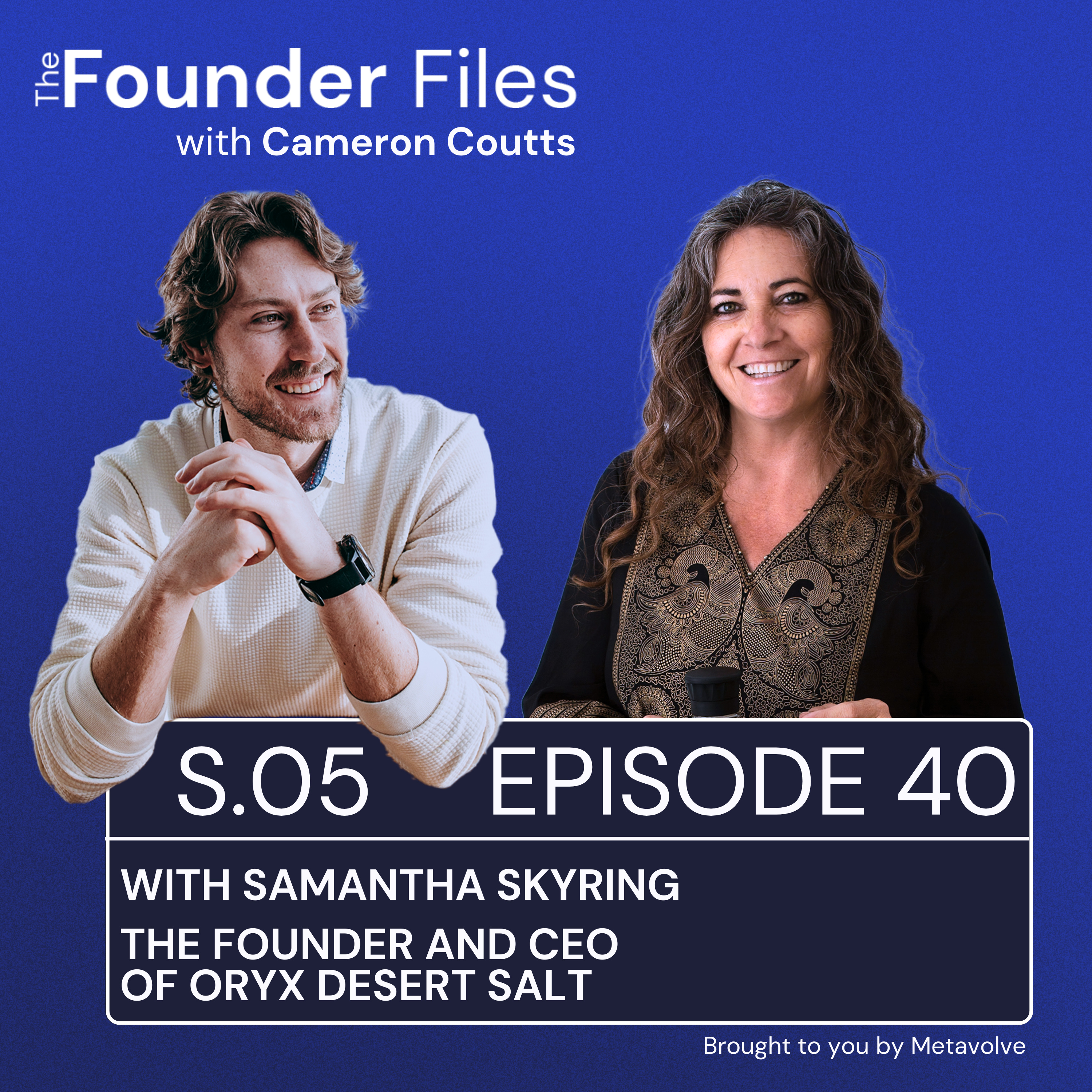 The Founder Who Sold Her House for 34 Tons of Salt - Samantha Skyring, Oryx Desert Salt
