
The eCom Ops Podcast · 2026-05-22 · 28 min
Key moments - from our scoring
Substance score
40 / 100
Five dimensions, 20 points each
Aaron Smedley, GM at Cloudinary and former digital leader at Apple and Arc'teryx, reframes visual asset management from a creative problem into an operational system that directly impacts conversion, site speed, and margins. Most e-commerce brands treat images and videos as decoration - a 'coat of paint' - missing that visual governance involves creation, approval, versioning, SKU mapping, transformation, delivery, and measurement. When this chain breaks down, three failure modes emerge: pages slow down, products get misrepresented, and teams waste hours hunting files, translating to lower conversions, higher returns, and delayed time to market. Smedley walks through four operational nevers (no fragmented 'final' versions, always test on real phones with poor connectivity, avoid metadata-less libraries, never optimize only for aesthetics), then shares the 80/20 playbook: start with your top 10% of SKUs, define visual standards per product, establish a single source of truth, and automate renditions for different channels. He covers how AI - distinct from automation - can handle boring admin work like auto-tagging and variant generation, while human creativity remains irreplaceable. The conversation includes lessons from Apple's obsession with customer moments of truth and why Rolex doesn't compromise video quality for speed: the best brands make performance part of the operating system.
Pages slow down due to unoptimized assets, products get misrepresented through inconsistent or wrong images, and teams waste time hunting for the right file versions, all of which show up as lower conversion, higher returns, and increased time to market.
Never let teams keep their own versions of assets without a single source of truth; never ship a product page without testing it on a real phone with mediocre network conditions; never treat your media library as a dumping ground without naming, metadata, or governance; and never optimize visuals only for aesthetics while ignoring performance.
Start with your top 10% of SKUs by revenue and returns, define what good looks like for each product (required angles, scale cues, variant rules), establish a single source of truth with naming conventions and metadata standards, then automate rendition work like resizing, cropping, and compression rather than doing it manually.
Automation provides efficiency and repeatability by following rule sets and brand standards, while AI provides decision-making capability; use automation for tasks like cropping and resizing, and AI for higher-value work like auto-tagging, de-duping, and connecting visual attributes to business outcomes like returns and support contacts.
Images and video are usually the heaviest payload on product pages and homepages, and on mobile they often determine your Largest Contentful Paint - the difference between a customer staying or leaving; you fix speed not by removing visuals but by delivering the right asset, format, size, using responsive images and lazy loading.
Our reviewer’s read on each dimension, with quotes from the episode.
The episode offers a reasonable reframe of visuals as operational infrastructure with a handful of useful frameworks (three failure modes, four nevers, AI vs. automation distinction), but it is padded with personal anecdotes, book recommendations, and Nokia/iPhone nostalgia that kill momentum. Most of the tactical advice (name your files, test on mobile, compress images) is surface-level for any experienced operator.
Automation provides efficiency and Repeatability. AI provides decision making. So when it comes to cropping and standardizing your images, do you want it making decisions or do you want it following a rule set
When one product image can create a support ticket or return. If it's the wrong image, it's ops problem.
The central thesis - visuals are operational infrastructure, not just creative - is a coherent reframe but is essentially standard DAM vendor positioning rather than a genuinely counterintuitive or first-principles argument. The AI-vs-automation distinction and the 'closed loop on creative performance' concept are the freshest points, but neither is developed into a truly novel framework.
Visuals aren't decoration, they're the decision making infrastructure that your customers are most receptive to.
AI is going to connect visual attributes to outcomes, not just conversion, but return reasons, support contacts and recommend what to change
Aaron has genuine senior operator credentials - Apple retail, Arc'teryx, now GM at Cloudinary - and draws on real practitioner experience. However, he is now in a vendor role and portions of the conversation read as soft Cloudinary positioning, which blunts the credibility of purely operator-grade insight.
I've spent 15 years building premium experiences across retail and D2C from Apple to Arc'. Teryx
Apple taught me that experience really is the product and every bit of friction is tax. Terex told me that premium isn't just a tagline, it's operational consistency.
The most concrete data point is a back-of-envelope calculation (5,000 SKUs × 2 minutes = 166 hours) rather than empirical evidence from real deployments. There are no conversion rate lifts, no named brand case studies, no A/B test results, and no revenue figures. The Gartner visionary mention is a credential drop, not evidence.
If you've got 5,000 SKUs and each needs two minutes of extra manual work per month, suddenly you've got 10,000 minutes of work. That's 166 hours. That's a full time job
we're the Gartner visionary in dam
The host's questions are consistently generic and surface-level ('What does that mean in practice?', 'What would you advise?'), and the episode is derailed by an extended and entirely irrelevant tangent about the host's Nokia phone and the guest's Apple Store memories. There is zero pushback on any vendor claim and the book-recommendation segment consumes substantial runtime with no B2B operator value.
Did you have. When the iPhone came out, what was the transformative experience or your most transformative experience in the Apple Store?
I had the Nokia phone at all the 3620. I think it was that. Yeah, this was my absolutely favorite.
Computed from the transcript - who did the talking, and the words that came up most.
Your Best Creative Is Killing Your Conversion In this episode, Aaron Smedley, GM of Shopify at Cloudinary, breaks down why the visual layer is one of the most underestimated operational levers in eCommerce. Drawing on his experience at Apple, Arc'teryx, and Cloudinary, he explains how asset chaos creates hidden costs, why slow pages are a management problem not a design problem, and what it actually takes to build a media system that scales. Aaron Smedley is GM of Shopify at Cloudinary and a digital commerce operator with 15 years of experience across brands like Apple and Arc'teryx. He works at the intersection of retail operations, customer experience, and Shopify transformation, helping brands scale without sacrificing speed, consistency, or performance. Cloudinary is a visual media platform that helps eCommerce brands manage, optimize, and deliver images and videos at scale across every channel and device.
Transcribed and scored by The B2B Podcast Index.
This episode is sponsored by B2Bware, the platform that turns your ERP into a self service ordering engine for your B2B customers. No more manual entry, no more email orders, no more data chaos. I think most brands treat the visual layer like a coat of paint. Make it look nice and assume that's just the creative problem and it sits in a little bubble.
What they miss is that it's scale. It's an operation system. You create, you approve, you version, you map to a skew, you transform, deliver and measure. And when that chain isn't governed, you get three quiet failure modes.
Pages slow down, products get misrepresented and teams waste time hunting for the right file which shows up as lower conversion, higher returns, more support noise and fundamentally increase time to market. Hello and welcome to the E Commerce Podcast. I believe that there is more than enough content focused on e commerce marketing and not enough content celebrating the real heroes of E commerce, those running the operation. Each week we find and interview an E commerce operations expert to share the secrets behind how some of this industry's most exciting businesses are run.
I'm your host, Norbert Strapler, the CEO of syncspyder. Hello and welcome to another episode of the EcoOps podcast. Today's guest is someone who has built and scaled digital businesses from the inside across Europe and North America for some of the world's most recognizable brands. Aaron is the GM of Shopify, Cloudinary and before joining Cloudinary, he led digital and e commerce teams at companies like Apple, arc', Teryx and a lot of more.
He's replatformed onto Shopify plus Untangled, messy mark tech stacks and bold omnichannel engines that actually drive revenue. Now at Cloudinary, his focus is on the visual layer of E commerce that most brands underestimate. Images and videos affect performance, site speed, conversion rates, returns and even operational efficiency. And if you think visuals are just a creative decision, this episode might change your mind.
Welcome to the show, Aaron. Great to have you here. So happy to be here. Yeah, it's wow.
It's awesome to have a guy like you on the board. Before we dive in, who are you, Aaron? So what is your journey from Apple and Culinary and the dinosaur name company. I guess at heart I'm an operator who's been really privileged in that I've got to experience the power of brands unleashed by operational rigor.
I've spent 15 years building premium experiences across retail and D2C from Apple to Arc'. Teryx. For those who don't know that comes from Archaeopteryx Lithographica to leading digital transformations and now Cloudinary. And yeah, Apple taught me that experience really is the product and every bit of friction is tax.
Terex told me that premium isn't just a tagline, it's operational consistency. And when you make that experience consistency consistently excellent loyalty follows. And then Cloudinary really sharpened the same belief for me, but in modern E commerce and that the visual layer is the UI of the operating system. If it's slow, if it's inconsistent or wrong, trust breaks and margin really quickly follows.
Interesting, you said that the visual layer of commerce is often misunderstood. What do most brands get wrong about it? I think most brands treat the visual layer like a coat of paint, make it look nice and assume that's just the creative problem and it sits in a little bubble. What they miss is that it's scale.
It's an operation system. You create, you approve, you version, you map to a skew, you transform, deliver and measure. And when that chain isn't governed, you get three quiet failure modes. Pages slow down, products get misrepresented and teams waste time hunting for the right file which shows up as lower conversion, higher returns, more support noise and fundamentally increased time to market.
The fix isn't more content, despite what we see from the generative AI crowd marketing, it's treating visuals like product data. One source of truth, standards per category, strong metadata, automated renditions for every channel. Visuals aren't decoration, they're the decision making infrastructure that your customers are most receptive to. When I go into a web store or into a website as a user I just see okay, there is some text, there's an image, there's maybe a video and there's the buy button.
How does this influenced me as a user to or as a search engine to make a decision if I should buy that or not? When does it stop being a brand topic? It becomes an operational problem. If we take this right back to the fundamentals, the visual impacts you as a consumer the same way it does when you walk into a store.
But online you have less cues. In a store you can the look, feel the atmosphere, the smell, the music, the attention of the staff, the feel of that product. Online you have the visual and the visual and the copy has to distill that experience that we are all trying to replicate into a moment. Be it 10 seconds, 15 seconds or 3 minutes and the moment you have scale and complexity.
If you have multiple SKUs variants, markets, channels, visuals stop being a photo shoot and really become part of that Operational system. So I mean a line that I tend to keep in my head. When one product image can create a support ticket or return. If it's the wrong image, it's ops problem.
When a wrong variant shot ships the wrong expectation, OPS ends up paying the price. When pages slow down because assets aren't optimized, OPS pays. And when marketing, merchandising and CX can't move fast enough because they're hunting files, OPS pays. So yeah, visual starters brand.
But once they influence speed, accuracy, workflow and cost to serve their operational visuals, touch margin their ops. I got it. Yeah, very interesting. I've seen a lot wrong optimized images.
For instance, this is really very common when I browse across web stores that you see an image that has 1.5 megabyte or even more and it's just there. It's not all optimized, it's not under cdn, it's not cashed or whatever. It's just there in a big size.
So this is not necessary and can be easily done. But what would you advise in general Shopify brands not to do ever? I give four nevers. And this is from someone who's resistant to saying never.
Never let every team keep their own final underscore final version two of assets. Pick a single source of truth. We've all had those conversations on a Friday afternoon where someone's hunting for a version of and nine show up in the search. Yeah.
Is it final or final? Final two. Final three. Yeah.
Final hashtag Norbert or final hashtag Aaron. Which one of us is the single source of truth on this? Yeah. Never ship a PDP that you haven't checked on a real phone on mediocre network conditions.
This is where buying happens. It doesn't happen on a desktop in your office simulating with a heart. It happens when you're commuting on a train. It happens when you're at an airport, when you're in a car like test in real world environments.
Never treat your media library like a dumping ground. No naming, no metadata, no governance. You're just building future debt here. And then never optimize your visuals only for aesthetics and ignore performance.
A beautiful slow page is still a really slow page. And. And it's not converting. And it's not converting at all.
Right. And Shopify makes it so easy to launch. But the brands that treat media like a product system are the ones that find that route to scale. And what can I do about that?
What would you recommend? I'm actually a Shopify brand. Selling D2C I manage everything myself. How do I get the structuring of the assets in a good condition so they are well organized and the perfect fit for my use case?
I think the nice and reassuring way to start this answer is to say that every brand is going to have this problem, be it 100 years old, with billionaire VC backing or someone who's just starting out. The key really is here to start small and focus on the 80 20. Pick your top 10% of SKUs. The products that drive your most, your highest revenue, your most returns.
Define what good looks like for each product. What are your required angles, what are your scale cues, what are your variant rules, what are your rules around video? And then establish a single source of truth with that naming convention, metadata standards embedded. And then for me the key to doing this fast is automating rendition.
So resize crop format compression. This is creative admin and the more that you can offload those decision making points that automation, the better. And then frankly measure, look at where you've done that media completeness. Compare the before and after conversion.
Compare performance and conversion to your other products. Look at your returns rate and remember you're not going to fix everything at once. You, you build a repeatable system and roll it out. It's where platforms or processes like Agile are so valuable here.
Don't try and boil the ocean, fix the money skus first and start small. And that's so funny because you, you said something that we tell even our team internal that that is actually doing our website, that is actually doing the content. And there are some rules like the image name always has to be this and that formatted, always, always the same pattern, always cropped, always put in the right size to be optimized and it's still made wrong. Always and ever we find assets that are simply wrong.
And this is just website, it's not a web store which is actually really driving money. So the question is what's the real cost of asset chaos? When you are managing thousands of SKUs, I think the cost really shows up in four places and only one of them is really obvious. Time being the first.
It's a tax. Teams burn hours searching, resizing, renaming, re uploading and it's not what you want them doing. It's just part of the process to get to market. The speed to market launches slip because of that process, because approvals and versions are scattered.
Your creative team is doing background removal on 500 new assets and somebody's trying to scale that beautiful 4K video that your creative director has spent six months on to fit on a mobile. Now imagine how that's going to go on glass, by the way. And then revenue that inconsistent or incomplete visual reduces conversions on the products that fundamentally pay all of our bills. Yeah, fully agree.
Visuals are I think the most important selling point of any product. Is it a video, is it a bit image or what else? Where should I start with as a, as a store owner, where should I start to get these things done? Are there any tools you recommend?
Is there anything that helps me organize all this? There's a lot out there. I think if you're a small medium business, let's start with the really basic stuff. Let's get our naming convention in order to.
Let's choose a repository that fits where we're at. Then as you start to scale, let's think about where we're investing, let's think about what that investment is worth and then let's choose a solution that has the scale and features that we're looking for. So you know, obviously I work for Cloudinary, we're the Gartner visionary in dam, but there are other products out there that will do digital asset management, transformation and delivery for you. Maybe you only need one of those things if you're on Shopify, then delivery is complementary as part of that platform.
That doesn't mean you won't want to use this, but that means you may not need that part of the program to start with. I think when you start assessing that's probably where it's time to do a simple back of the envelope calculation and start to work out what value looks like. If you've got 5,000 SKUs and each needs two minutes of extra manual work per month, suddenly you've got 10,000 minutes of work. That's 166 hours.
That's a full time job that you are having someone that you would rather have being creative, doing essentially visual admin work. And that asset chaos as it builds, as that debt builds is hidden headcount. Yeah, it is absolutely. And actually it's a boring job.
If you do it manually, it's a boring job and you don't want to have boring jobs actually. And yeah, this is part of the AI to do boring jobs. How is AI involved in all of that? What can it do for us?
I think there's a really important piece that we need to cover before we start talking about AI and that's remembering that AI and automation are two separate and very powerful tools, but they are different things. Automation provides efficiency and Repeatability. AI provides decision making. So when it comes to cropping and standardizing your images, do you want it making decisions or do you want it following a rule set and a pattern set by your brand standards?
So I think when you come from that lens, you start to make better, more informed decisions about where you can and use should use AI to your point. The power it has to automate the boring jobs, the admin, that workload of a workflow and allow a human to do what we should be doing, the high value tasks is incredible. I think when I look at what's coming down the pipe with AI. Zero touch hygiene at scale, auto tagging, de duping, running through brand compliance work, instant channel fit delivery, one master asset becoming dozens of variants delivered with the right crop format compression to your individual experience on the cell phone, your phone, your network, multi CDN delivery is amazing.
And then a closed loop on creative performance. AI is going to connect visual attributes to outcomes, not just conversion, but return reasons, support contacts and recommend what to change, show more texture on that product. We need fewer lifestyle shots. We need to see that jacket on a heavier set individual.
Yeah, that's really amazing what I've seen with those AI tools out there. I was even impressed when I just got to test out the alt text description for images. The alt text that actually can be author generated. You upload the image and you have the alt text and in search engine optimization keyword language that you actually provided what you want to have as keywords in there.
So it's wow. It's amazing, right? Yeah. But I don't think I said earlier, I don't think AI is going to change the landscape by creating more images.
I think when we look at AI generated images, they lack emotional resonance. Yeah. And that's because the palette, the tool set hasn't developed yet. It's not finished in the same way.
That early Pixar content wasn't amazing, it was technically brilliant, but it didn't make me cry. Then John Lasseter produced Toy Story and I boiled like a child in the cinema. That's the human in the loop. Yeah, it is.
Absolutely. Absolutely. And I think this will take a very long time until this really could be taken over by AI if even so I think the human touch, and this brings me actually to the next topic, but the human touch is what we actually really need. And you talk about designing around real human behavior, which brings us to this topic.
What does that mean in practice? What does that mean for you, designing around real human behavior? It means accepting that customers don't behave like we want. They don't behave like our reporting platforms want to assess them.
We behave like humans. They behave like humans. They skim, they get distracted, they shop on phones, then compare. They're trying to determine value and reduce risk and they're doing it through all of the means of communication available to them.
We as retailers have added complexity here. You know, in practice, put your most confidence building visuals first. Make variant selection visually obvious on that PLP show scale fast, use short video for motion and fit and avoid overwhelming people with more when they need clearer. They're there coming to you for information.
Give it to them. You know, at Apple we learn to design for the moment of truth. The one question that the customer was silently asking when they were stood at the iPhone wondering, stood at the Genius bar wondering why their iPhone battery was dying. They didn't want the technical assessment that said, your battery's fine, enjoy your life.
They wanted an explanation of why their battery was running down faster so they could feel empowered and fix the problem. When they come to our sites, people are looking to be empowered through information and visuals. Yeah, absolutely. This is a perfect example.
I often get the feedback when we ask customers, how would you like your website to look like or how would you like to store it? Look like? I often get Apple, I think. And yes, it's actually, it's the story.
It's actually there's everything perfect. The colors, the pictures, they're all smoothly tied together into one story. The page is a story. And I think this is what people want to see online if they buy a product they want to have.
You said it at the beginning of the interview. The experience that you have in a physical store, the smell, the people, the products, the decoration, all of that needs to fit on a screen so that we feel comfortable to buy. And that experience of course is costing load time and therefore needs to be optimized. Yeah, correct.
Yeah. And these are lessons that were learned in retail first. Yeah, it's the reason folding boards are there in the Regent Street Apple store. Before LED bulbs were a thing, we had a scaffold that we could roll out every night to ensure that there was never a burnt out bulb in the ceiling.
Okay, good, interesting. Didn't know that. Yeah, so we talked about already side speed. Side speed is actually always a very hot topic.
It cannot be fast enough. Never. How big the do the visuals actually play in the performance? What is the role of visuals in the performance of a page?
They play a massive role. Usually the heaviest payload on a product or A homepage. They often determine your largest content, full pain and on mobile. That's really the difference between I'm still here and I'm gone.
And the nuance here really is that you don't fix speed by removing visuals. That removes the whole reason to buy. You fix it by delivering the right assets for the context, the right format, the right size, responsive images, lazy loading below the fold and being disciplined about where you deploy video and for what reason. Speed and beauty aren't enemies.
The best brands make performance part of the operating system. You don't go on Rolex's site and go, oh, it's a beautiful video. If only if it was still in 4K. Yeah, okay, I got you.
Very interesting. Good. Let's come to some interesting topics. The final questions of my interviews.
Who has taught you the most about building great digital experiences? I'm so many of your guests have said they're teams and I would say my teams, my customers. And then my biggest single teacher was my early career at Apple retail, specifically leaders like Ron Johnson and Steve Kono. They taught me to obsess over the customer's moment of truth and to build systems, processes and teams around that.
You look at the genius and creative teams in Apple Store, the job isn't to explain the product. It's to remove friction and build confidence. They're an integral part of that brand promise. So the discipline I carried forward was to listen to the real question the customer is asking, then design the system to answer it.
And that mindset is the bridge between brand performance and ops. The best digital experiences for me feel inevitable because the system is doing its job. I love that answer. Really.
It's so true. And we all know the story of Apple. We all know what they did and what they are doing still to make the experience perfect. And every other else in this industry is actually trying to copy that, go on any other of those big phone smartphone companies and see how they present their smartphones.
It's actually very close to what Apple does and that's very interesting if you follow that. Did you have. When the iPhone came out, what was the transformative experience or your most transformative experience in the Apple Store? I had, I think I had an.
I think it was called mda. This was one of those with the pens where you could already work with the pen. It was a Nokia, I think something with Nokia. I had the Nokia phone at all the 3620.
I think it was that. Yeah, this was my absolutely favorite. It, it was pretty nice. And then of course The Apple iPhone came out and I needed to have that.
It was wow. Yeah, I love that and I want. I was one of the very first users actually when it came out it was exactly mine. Yeah, but.
But now I'm Team Google. Amazing products. Pixel is also a very nice one, but actually they're all cooking the same kind of water and try to bring that experience really to the users. Before we wrap up, we have a question passed down from our last guest from Disney Founder CEO of Liquidonate and she's asking what are three books you would recommend for the audience?
Story Driven by Bernadette Jiwa. I'm sorry Bernadette, if I'm pronouncing your name wrong. It's a really beautiful book that was recommended by Seth Goding and talks about the power of storytelling from a cultural standpoint all the way down to a modern day commercial skill set. This is Marketing by Seth Godin.
I think the way he communicates marketing makes it accessible and understandable to anyone within an organizational structure. And getting perspective on how marketing functions and what its purpose is is invaluable for having a conversation about marketing. And then the third one would be Obliquity by John Kay. This came from a Rory Sutherland presentation that I was lucky enough to see and I'm 10 pages in and loving what I'm reading so far.
And that's about achieving our goals indirectly. Perfect. I love the recommendations. We will put it into the blog post about this podcast with the links.
One book that I would like to ask you. Did you read don't make me Think? No, it's a wonderful book. Don't Make Me Think.
I do not know the author but you can find it easily by just googling. Don't Make Me Think. It's very. It's also an old book, has already a lot of different versions, but it's really about how to present something to users so they do not need to think.
We have often the situation that we would like to put something else on the website or on the web shop like another button or another teaser or another menu navigation to make it even more structured. But we make users think then and that's not the goal. It's the goal to not make me think. Don't make me Think.
It's also a nice book. So we will put the recommendations on. Thank you so much for your recommendations. Thank you.
We will pass that down to Disney. Now it's your turn. What's your question you would love to ask our next guest over the last 24 to 36 months. Where have you invested time in a way that you would recommend to the listeners of the podcast?
Oh great. I love that one. Okay, let's do it. We pass it down to the next guest.
Don't worry, Aaron. It was a really great reminder, actually, that growth doesn't just live in ad budgets or checkout tweaks. Sometimes it's hiding in plain say it inside your product images and your video workflows. The big takeaway here is that that visuals are a part of the infrastructure and when treated as structured, measurable assets, they can drive speed, they can drive trust, they can drive conversions and even maybe lower returns.
At least they help to speed up the site and make everything great. So thanks for breaking down a topic that usually seen as creative and showing its operational impact is, I think, very important. Because whenever you talk about images and videos, you typically go to those creatives and tell them, let's build me something. And something is maybe not enough.
It also needs the admin part, the operational part, to make it actually perfect fit into the site we're working on. So thanks for breaking that down. Thanks so much for your time. And guys, to everyone listening, if you ever launched a campaign and thought, why is this taking so long?
Maybe it's time to look at your visual layer. Thanks so much. See you next time on the EcomOps Podcast. And that's it for this episode of the EcomOps Podcast.
If you enjoyed listening and would like us find and interview more e Commerce operations experts, Please search for EcoMouse podcast in your favorite podcast listening app and then subscribe, rate and review. Until next time. This episode is sponsored by B2Bware, the B2B commerce platform that replaces your email orders, your manual data entry, and your integration mess with one system that runs runs on your ERP, check them out at b2bware.com.
Other episodes covering the same guests and topics, from across The B2B Podcast Index.
 How ElevenLabs Turns Feature Launches Into a Growth Engine - Luke HarriesSub Club by RevenueCat · on AI-generated imagery88 / 100
 Transforming Tradition with Dwayne Doshier from Shopify - EP021The B2B eCommerce Podcast · on Shopify Plus87 / 100
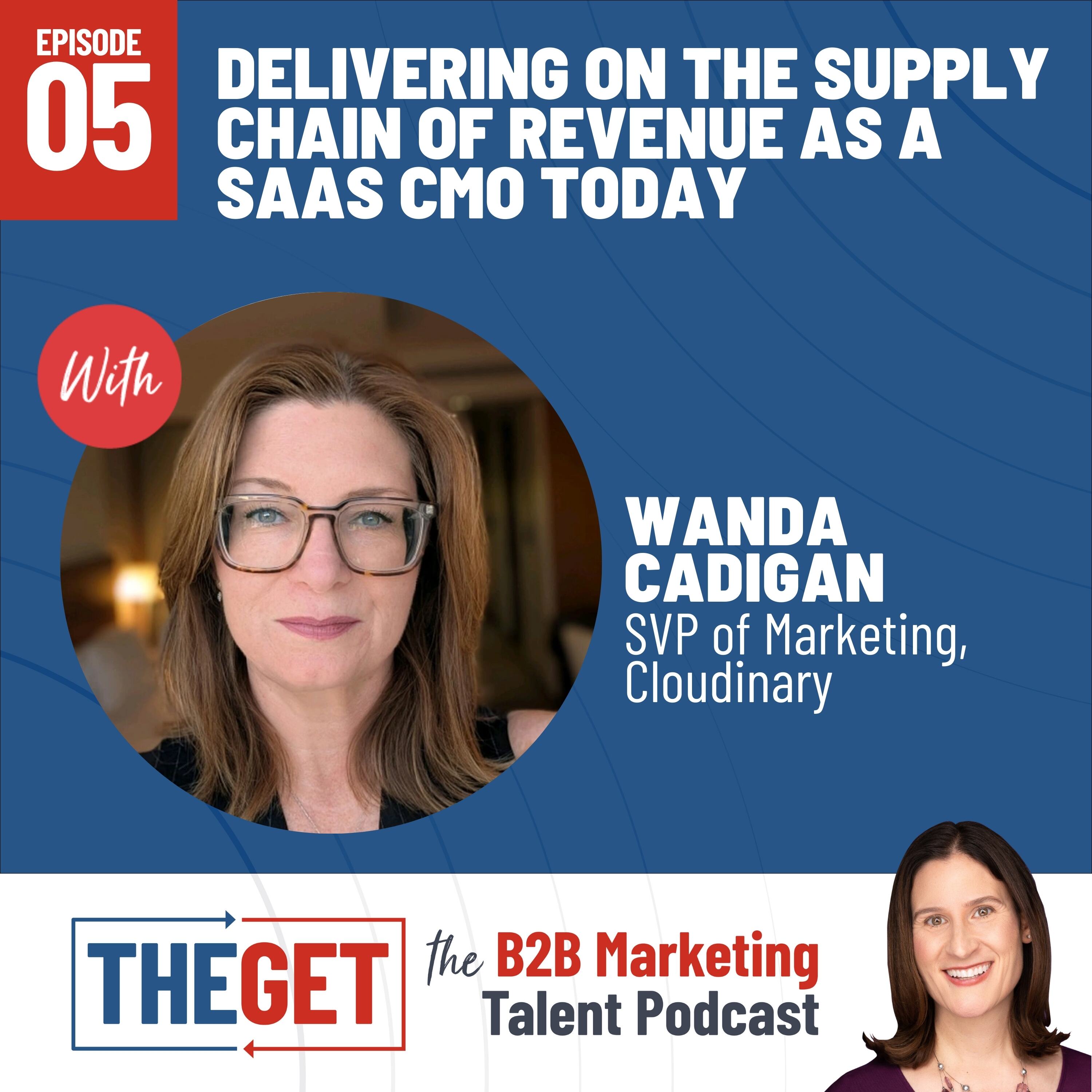 Delivering on the Supply Chain of Revenue As a SaaS CMO TodayThe Get · on Cloudinary82 / 100
 The SaaS Playbook For Growth, Partnerships & AcquisitionsSaaS Stories · on Shopify Plus77 / 100
 Cannes Lions 2026 Dispatch: Agentic Media Buying, Retail Media Shakeups, and the Future of Creator CommerceRetail Media Breakfast Club · on Digital Asset Management (DAM)77 / 100
 Make the move successful: Replatforming content opsContent Operations · on Digital Asset Management (DAM)75 / 100
 Slow Decisions Are Killing Your eCommerce Business - Alex Pospekhov85 / 100
 From Views to Sales: The Shoppable Video Playbook with Eitan Koter54 / 100
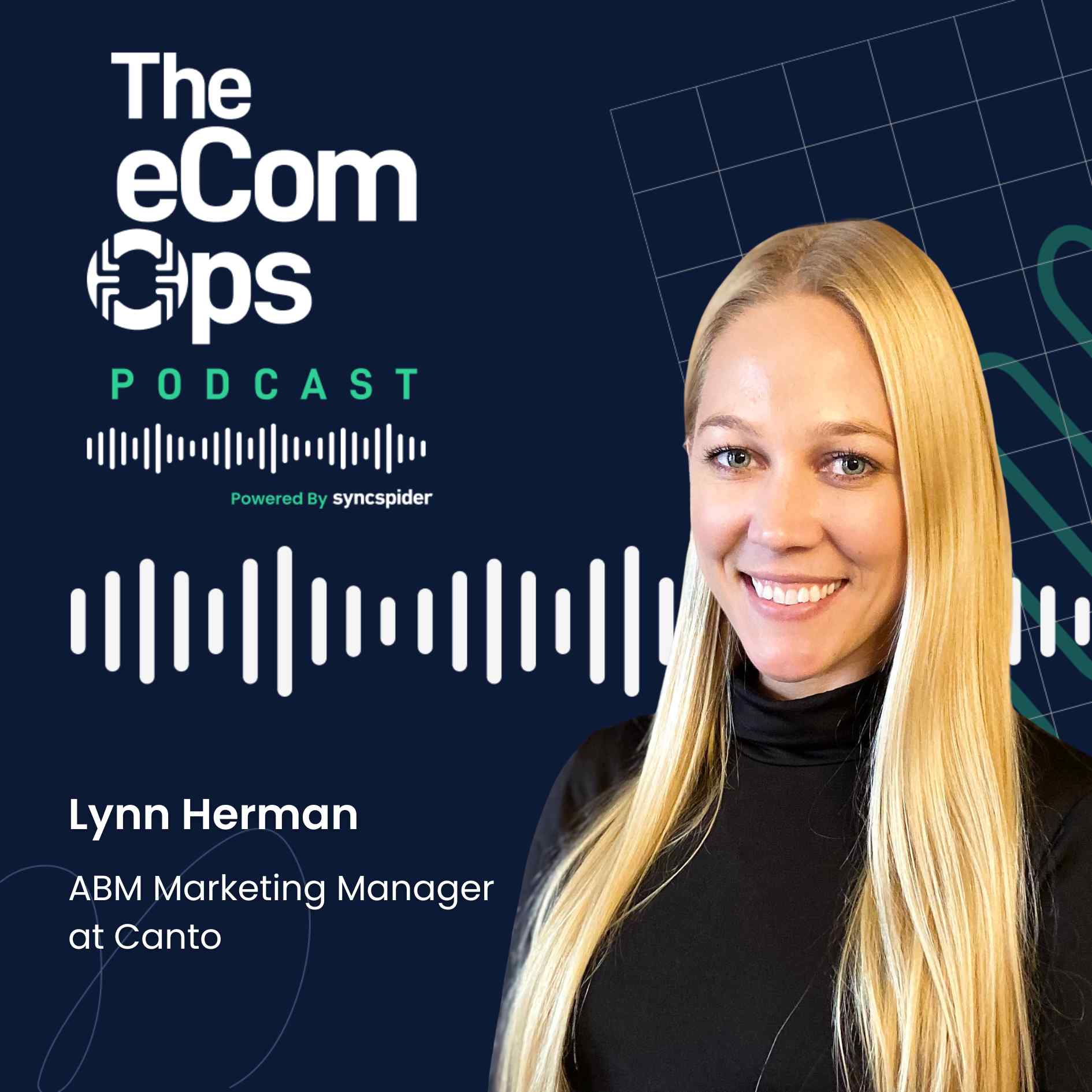 When Product Content Is Slowing Down Your eCommerce Growth with Lynn Herman48 / 100
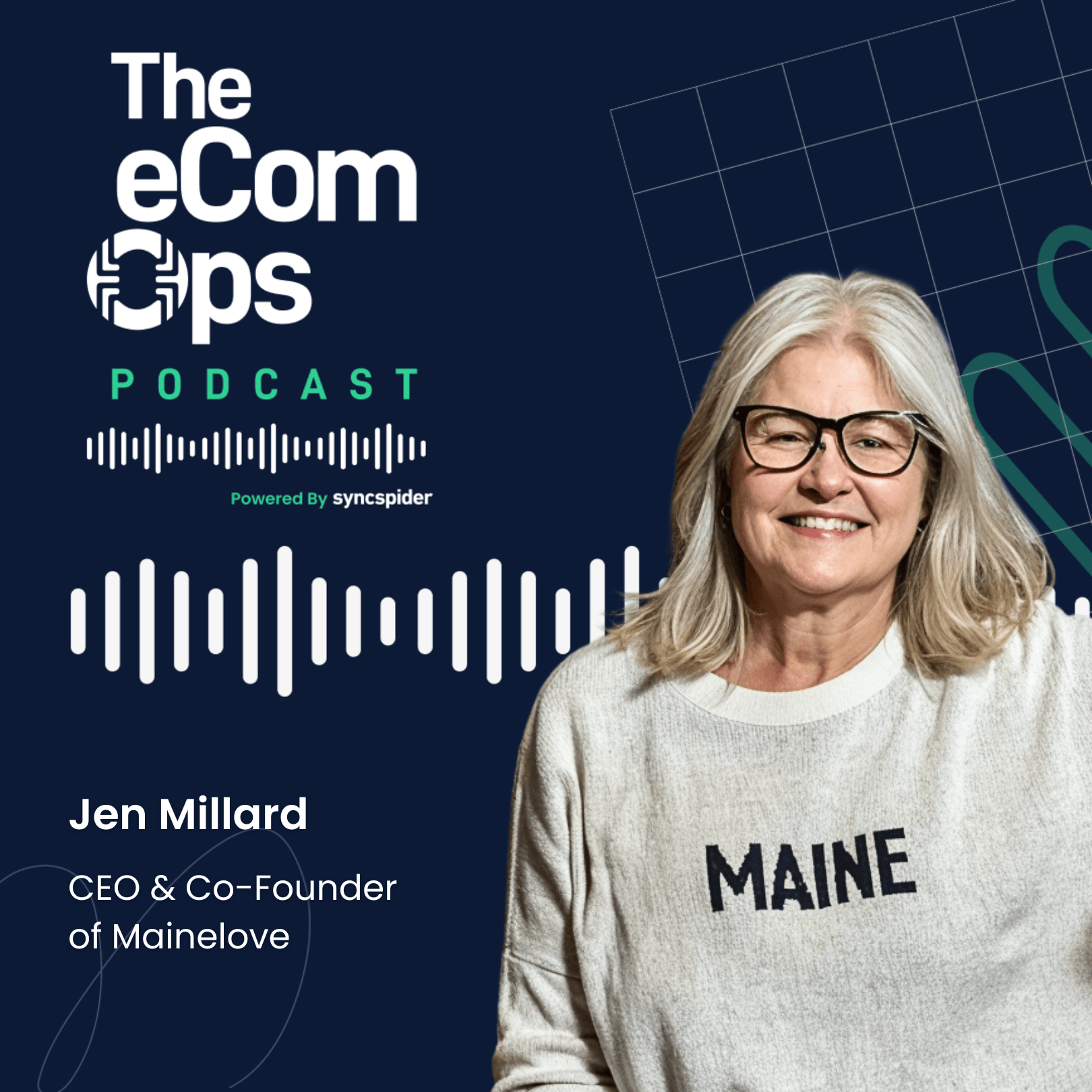 How to Build a Product Business Without Owning the Factory - Jen Millard
 The Best Logistics Strategy Most eCommerce Brands Miss with Daniel Cunningham Jr.