
The eCom Ops Podcast · 2026-07-11 · 19 min
Key moments - from our scoring
Substance score
65 / 100
Five dimensions, 20 points each
Alex Pospekhov brings a frontier-tech and defense-AI background to ecommerce operations, having analyzed over 40,000 operations per month across 465,000+ stores for Hyper Focus, an autonomous operations platform. His central insight: spreadsheets don't scale, and when brands add a second or third channel (TikTok, Amazon, Shopify, wholesale), decision velocity collapses from hours to days. Founders face a unified inventory ledger problem - reconciling three sources of truth (Shopify, retailer portals, Friday spreadsheet updates) - while fee leakage (11-16% death by a thousand small fees) goes unnoticed. When viral moments hit, the operations chain breaks first at inventory, then customer service, fulfillment, and reviews simultaneously. Pospekhov argues the missing infrastructure layer is a system of records with batch traceability, compliance rules engine, channel-specific demand forecasting, and separate margin models. Hyper Focus solves this with a project-management-like interface backed by autonomous agents, giving small teams 5x efficiency without hiring. For operators scaling wholesale or multi-channel, this conversation clarifies why execution systems matter more than growth - tribal knowledge dies with employees, and decision lag is the real cost of chaos.
Founders see deposits hit the bank and move on without reconciliation. Fees are buried across a dozen line items (referral, fulfillment, ad attribution, returns, fixed adjustments) and no single line is big enough to trigger alarm, creating what Pospekhov calls 'death by a thousand small fees'.
Inventory breaks first, followed by a chain reaction: customer service gets 10x more tickets overnight, fulfillment capacity is exceeded, reviews tank, platform penalties trigger (late shipment rate warnings, seller health issues), and by day 10 the brand is fighting five operational fronts simultaneously.
With one channel, a founder makes decisions within an hour. With two channels requiring cross-channel context, decision time stretches from hours to days, and by the time the decision is made, the moment and market opportunity are gone.
Five layers: unified inventory ledger across channels, batch traceability for recalls, compliance rules engine (different per platform), channel-specific demand forecasting, and a separate margin model for wholesale since it behaves differently from D2C.
At low revenue, most operational decisions live in one founder's head with no system or logic written down. Once that founder leaves or forgets the reasoning, there is no playbook - when multiple people make decisions at $200k, they don't understand how the original decisions were made and chaos spreads across teams.
Our reviewer’s read on each dimension, with quotes from the episode.
The episode delivers several substantive operational insights - slow decisions vs. bad decisions, fee leakage patterns, the chain of breakage during viral spikes, and the five infrastructure requirements for wholesale (unified inventory, batch traceability, compliance rules, channel-specific forecasting, separate margin models). However, there is notable filler and repetition, particularly around Elon Musk motivation and conversational padding that dilutes the density. The core insights are solid but could have been compressed; the guest sometimes circles back to similar points rather than deepening them.
With one channel the founder makes the call under an hour. With two every decision is like the cross channel contact and then spreadsheet can give you that in the real time. So decision then splits like from hours, days.
you need to have a unified inventory ledger across all of your channels. You need to have batch traceability for the recalls. Certainly need to have compliance rules engine because they're all different on the platform.
The framing of 'slow decisions kill more than bad decisions' is refreshingly counterintuitive and not standard B2B podcast fodder. The specific pattern of cascading failures (inventory → customer service → fulfillment → reviews → penalties) during viral spikes is concrete and useful. However, the broader narrative around spreadsheet limitations, need for unified data, and scaling challenges are well-trodden themes in operations circles. The Elon Musk inspiration story is entirely generic.
You don't lose money on bad decisions, you lose it like on the slow ones.
First inventory, then customer service. Like you have 10, 10 times more ticket like overnight then your team is staffed, you have a lot of issues at ah fulfillment then reviews the platform M penalties
Alex Pospekhov is the co-founder of a working operational platform (HyperFocus) with genuine operational data - he claims to have mapped 40,000+ operations per month across 465,000+ stores. His background in space tech/forecasting lends credibility to understanding complex systems. However, he is speaking primarily as a vendor selling a solution, which introduces inherent bias. He is a legitimate practitioner but the commercial angle somewhat limits pure objectivity; he's not a neutral operations veteran reflecting on past challenges.
Alex is the co founder of Hyper Focus, an autonomous operations platform for brands that's selling on TikTok, Amazon, Shopify and wholesale. And um, instead of running ads, he mapped over 40,000 operations per month per brand across 465,000 plus stores
Last six years I was building space tech company. We were involved in uh, forecasting of the solar storms, developing satellites, do a lot of the data fusion
The episode includes some hard numbers (11-16% fee leakage, 40,000 operations/465,000 stores, 5x efficiency gains) and named examples (TikTok, Amazon, Shopify, wholesale channels, 30-day return policies). However, most claims lack depth: no specific brand case studies, no concrete timeline comparisons, no actual data on how many founders fail due to slow decisions, no ROI metrics. The five infrastructure requirements are listed but not illustrated with real examples or metrics from actual implementations.
fee leakage of 11 to 16%
mapped over 40,000 operations per month per brand across 465,000 plus stores
Host Norbert asks solid setup questions ('what breaks first', 'what shocked you most', 'what infrastructure must be in place') and follows a logical flow. However, he rarely presses back or challenges claims - when Alex makes broad statements, Norbert validates them ('I can completely confirm') rather than probing. There is one instance of gentle pushback on the spreadsheet claim, but mostly the interview is affirmatory rather than adversarial. The host could have pushed harder on the vendor's solution effectiveness or asked for failure cases.
Well it's very interesting that you say that because if I think about my customer base and even my own company, I can completely confirm that this is the case.
So spreadsheets work maybe at a 20k per month revenue, but uh, at a full part of 200k or 2 million. It's not the right tool. Right.
Computed from the transcript - who did the talking, and the words that came up most.
Slow Decisions Are Killing Your eCommerce Business Alex Pospekho v is a serial technology entrepreneur whose background spans space systems, defense AI, and advanced data modeling. Before entering eCommerce, he spent years developing satellite technologies, forecasting solar storms, and translating highly complex scientific innovations into commercial products. Today, Alex is the Co-founder of Hyperfocus , where he applies systems thinking and AI-powered automation to help eCommerce brands simplify operations, reduce manual work, and scale across multiple sales channels. His work focuses on replacing fragmented workflows with intelligent operational systems that enable smaller teams to achieve enterprise-level execution.
Transcribed and scored by The B2B Podcast Index.
Speaker A: I think the missing layer is a system of records that uh, survives this multi channel complexity. So without the unified record, without unified data layer, the brand is reconciling three sources of trust, let's say like the Shopify, the retailer portal spreadsheet and some updates on Friday. So that's the thing we want to replace. So we want to put like all the inventory, all the fees, all the compliance, customer state in all one operation layer that can act on top of that record.
Speaker B: Hello and welcome to the E Commerce podcast. I believe that there is more than enough content focused on e commerce marketing and not enough content celebrating the real heroes of E commerce, those running the operation. Each week we find and interview an e commerce operations expert to share the secrets behind how some of this industry's most exciting businesses are run. I'm your host, Norbert Strapler, the CEO of Syncspyder.
Speaker C: Uh, hello and welcome to another episode of the E Commops podcast. And today's guest didn't come into E commerce from marketing or retail. He came from frontier tech, from space systems and from defense AI. Wow, powerful. Alex is the co founder of Hyper Focus, an autonomous operations platform for brands that's selling on TikTok, Amazon, Shopify and wholesale. And um, instead of running ads, he mapped over 40,000 operations per month per brand across 465,000 plus stores to understand what actually breaks the brand scale. His observation? Spreadsheets don't scale, manual ops don't scale, and hiring your way out of chaos doesn't scale either. So this conversation is about what really breaks when brands add a second or third distribution channel and what a uh, system designed alternative could look like. Welcome to the show, Alex.
Speaker A: Good morning, Norbert, nice to hear you.
Speaker C: Yeah, great to have you here. Before we dive in, Alex, who are you and what made you shift from frontier tech and defense AI into E commerce operations?
Speaker A: Yeah, totally. So I can call myself serial, uh, tech entrepreneur. Last six years I was building space tech company. We were involved in uh, forecasting of the solar storms, developing satellites, do a lot of the data fusion, providing lots of the models for the forecasting of very complicated and sophisticated scientific data. And my task was to explain in simple words to people who have zero understanding of what it is, why it's very important and why do they need to buy it.
Speaker C: Okay, very interesting and I think a hard job to do that, right?
Speaker A: Absolutely. But as one man said, it's very important to have CEO of the space tech company who came not from the tech world because he must be a rock Star he must tell investors to put the money to the thing they're not very well under can understand. And the same goes to all of the other applications in the space domain because we had two different customers not only in the space tech but also uh, in more normal world, let's say like the airlines or the people who do like the risk aware job every day.
Speaker C: Got it. So after you've been mapping 14,000 plus operations per month per brand, what pattern shocked you the most?
Speaker A: The most it was not the volume of operations. What shocked me the most was the logic behind decision in the people lives. Because companies that don't document how decisions get made, which creator gets sample went to the flag anomaly, what should we put to inventory? So it becomes like internal lore like the tribal knowledge, it's nowhere written down. So the moment that employee quits the company loses the playbook. People just don't know what to do. This was like the most shocking part because in our frontier tech industry everything was very well written 10 times repeated. And uh, for me it was very interesting decision. Yeah.
Speaker C: Ah, well it's very interesting that you say that because if I think about my customer base and even my own company, I can completely confirm that this is the case. There is no one really trains you on how to build a system.
Speaker A: Yeah, exactly. Exactly.
Speaker C: When you start getting an entrepreneur, uh building up a store, you do it because you like to do that. You, you want to do that and there is no training. You just start off and do it. It's and then on the road or down the road, you simply don't think about how should I document that, how should I write that down? What is if someone comes in and should do the next thing?
Speaker A: Exactly. That's what we put in our manifesto. Because uh, the most thing I want to bring back is I want to bring back joy to the people who started their own e commerce business. Because you tell, you told about it. It's like this real, you feel that the first day and now you just can comprehend it. You can imagine if somebody told you like five years ago how it's going to happen, probably you would be saying no.
Speaker C: Perfect. Well, we will talk a bit later about how you solve the problem. But first let me ask you what breaks first when a brand adds a second distribution channel on top of a uh, spreadsheet driven setup.
Speaker A: With one channel the founder makes the call under an hour. With two every decision is like the cross channel contact and then spreadsheet can give you that in the real time. So decision then splits like from hours, days. By the time you decide, the moment is totally gone. So you don't lose money on bad decisions, you lose it like on the slow ones. And uh, if you're scaling your company and uh, if you have like your weekly routines, the information you have on Monday is already made last week and probably it was collected like couple days ago. And it's like the big problem that you as entrepreneur must decide on the data which like already outdated and you don't have the opportunity to challenge it. You don't have the opportunity to scale it. So I'm thinking it's like the biggest, it's the thing that breaks first.
Speaker C: Yeah. So spreadsheets work maybe at a 20k per month revenue, but uh, at a full part of 200k or 2 million. It's not the right tool. Right.
Speaker A: I'd like to say that spreadsheets at 20k cap you at 20k because uh, most of the operation decisions they live inside one person head. So you don't have uh, no, you have no system, no logic written down. Okay, maybe it's like the worst case scenario, but like on the sum levels of your decision, it really look like this. And like at 200k, it falls apart faster than people can expect it. Because now you have multiple people making decisions. They don't understand how the original decisions were made. So someone reorders inventory without knowing the ad team. The ad team don't understand like what people from the finance want from. From this. And I'm not touching the market at all.
Speaker C: You know how hard it is the marketers are anyway. Completely weird.
Speaker A: Absolutely.
Speaker C: If spreadsheets disappear tomorrow is a bit of a fun question. How many brands would actually survive that?
Speaker A: Yeah, you know, I like to say that the ones who survive are the ones who already read spreadsheets. A scratch paper, not as a system of record. A healthy company use spreadsheets to think like model scenario, run a quick calculation, sketch the forecast. So. But you open, you close it, you throw it. The actual state of business lives somewhere else in your erp, in database, in ledger. I don't think spreadsheets gonna disappear. Probably only in the case when somebody will give you the tool. But I think we just so far away from it. And people will never Excel, never leave their Excel spreadsheet.
Speaker C: Yeah, hopefully we need it each and every day. Well, you documented a fee leakage of 11 to 16%. Why do founders usually not see this until it's too late?
Speaker A: Because nobody reconciles the number that looks roughly right. Founders see the deposit hit the bank and they just move on. Nobody want to re reconcile, nobody want to calculate it because the fee is buried across like dozen line items like referral, fulfillment, ad attribution returns a fixed adjustment and it's no single line is big enough to trigger the alarm. So we called it like a death by a thousand small fees and it's still very very time consuming job.
Speaker C: Yep. To analyze that and to get that fixed.
Speaker A: Yeah.
Speaker C: Uh, when a brand goes viral on TikTok or an Amazon or what actually breaks behind the scenes first it's not
Speaker A: a thing, it's a chain. First inventory, then customer service. Like you have 10, 10 times more ticket like overnight then your team is staffed, you have a lot of issues at ah fulfillment then reviews the platform M penalties, you have late shipment rate trigger, seller health warning. So by day number 10 the brand is fighting on five front at once. And the viral video that started is like already cold and it's like already dead. So it's a big problem and people from the outside this world think that oh viral video, it's like it's a holy grail. No, no, it's very heavy. It's very heavy test for the team and for the operations themselves.
Speaker C: I can fully agree to that. But when you talk with founders and most founders actually really think adding Amazon or wholesale is just another channel.
Speaker A: Why isn't I think every channel has its own velocity, its own uh return policy like the fee structure compliance regime and the customer customer expectation. TikTok shop is a uh, let's say content channel with 30 day return and creator driven attribution.
Speaker C: Yeah makes sense. But nowadays I see this more and More that typically D2C brands start releasing a wholesale channel. I've seen that also very often with our customers and uh, that they actually started in D2C and then they, they started to also do wholesale because the products get got some tractions, they fund resellers. What operational layer is usually missing?
Speaker A: I think the missing layer is a system of records that survives this multi channel complexity. So without the unified record, without unified data layer, the brand is reconciling three sources of trust. Let's say like the shopify, the retailer portal spreadsheet and some updates on Friday. So that's the thing we want to replace. So we want to put like all the inventory, all the fees, all the compliance, customer state in all one operation layer that can act, that can act on top of that record. Mhm.
Speaker C: Okay. And if a brand plans to add wholesale distribution this year, what infrastructure must be in first place?
Speaker A: Something is like five things. So first you need to have a unified inventory ledger across all of your channels. You need to have batch traceability for the recalls. Certainly need to have compliance rules engine because they're all different on the platform. And the more complicated brands you have, the more complicated this compliant thing is. You need to have channel specific demand forecasting because again like with the viral video you can have Spike on the TikTok but if you share the one layer with your Shopify store and system is not updated like very often or you just didn't test it properly, you can have a lot of the issues. And you need to have a separate margin model for, for wholesale because of course it's like behaves totally differently from the D2C. Something uh, without these wholesales like growth looks like a gross and the operations like a leak. Yeah.
Speaker C: Ah, got it, got it. Well, with hyper focus tech you developed actually help for the customers. What problems do you solve and how is it really helpful for customers?
Speaker A: So the thing with the thing we solve at the first place that we can give small teams, we can give the teams five times more efficiency so they can manage five times more operations, they can increase the attributed margin. And second thing that finally you can do all of the operations needed because usually you simply don't have uh, you simply don't have the people who should fulfill the whole to do list you need to do. And it's always okay, we have five people in our team, we have 10 people of our team, but we have 20 times more jobs and tasks that should be done. And you always try to, always try to find the balance. So we bring, we bring the joy to the small teams that they now can manage much more bigger iterations. I bring this tech which is usually open only to 1% of the top ecom brands, to everybody. This is let's say my m, my main mission as a human being here.
Speaker C: That's great. And how does this look like? What can I expect when I go into the solution?
Speaker A: So we have five different operation layers. So we have shop, we have your life for the live streams. We have created relationships so we have the content and the finance itself. Then you simply put the tasks the same as you put the task to your uh, to your team. So you can put some routine tasks, for example monitor the compliance rules, monitor the shop health. You can ask the system to do some search for example bring me the, bring me the creators with different, with different filters or otherwise you can ask the system if you have a lot of inbounds from your creators. Just show me, show me the guys who already like passed this filter. You can also put this thing on the autopilot and just see how everything executed. So it's mainly the same as your normal project management tool. But the difference that ah, there are agents behind it who really execute this job and they also can ask you to do the work for example if you need to approve something or if you have the alert or if you need to do something manually. So technically it looks the same as normal project management software except these are like virtual agents that already do the job for you.
Speaker C: Yeah, and that's good. I mean AI is so much of a uh, helper especially in E commerce and automation. Absolutely. This is really something that would not have worked five years ago, but now it's a complete different story in a complete different world.
Speaker A: Even, even six months ago it was like nearly impossible.
Speaker C: After you've analyzed so many thousands of stores, do you think most founders truly understand the operational margin?
Speaker A: I think like 50% yes. The problem that usually you don't have so much to do with your operational margin and the only thing you want to do is as written like in many playbooks that you need to increase your sales because channels are growing, TikTok shop is growing, everything is growing. So when everything grows very well then probably like the better solution to spend your time on growth and sell more. But on the other hand you still, you uh, still have a lot of to do like the manual work, how to cut this, how to cut that. This is like where AI can help you because I can imagine it's like, it's very like it's very noisy. You know, it's very like sad job of trying to optimize like couple couple percent point. But this is a place where AI can really help you a lot.
Speaker C: Awesome. Very, very interesting. And guys, if you want to check it out, just hop over to hyperfocus.de and check it out yourself. Alex, typically we have the wrap up here where we ask you the question from our previous guest. This was Chan Millard, the CEO and co founder of Main Love. They sell water. This is also really great. They sell water. I love that idea actually and the concept, it's really great. And she has a super duper question, namely mine. I always ask that as well but it's a great one. Who shaped your thinking throughout your career? A uh bit in other words than my who has told you most about e commerce thingy. But I love that as well. So who shaped your thinking throughout your career?
Speaker A: It's elon but not in a way like everybody talks about him. He started his space venture maybe like year 2000 and he spent eight years developing everything from scratch with zero results. And I still remember I have this picture in my office when he sits on the pile of trash from the latest rocket launch with a uh, very, with very, very sad face. And nobody knows why because the reason that they only have left money at the bank account for only one lunch more. And it's like if next launch will fail, there will be no SpaceX, there will be uh, no space venture. And like in the hard times and you always ask yourself what this man is made of that he can spend eight years without having any results at all, without putting all of his money, all of his effort to the idea that probably will never work. And it can apply like to the any, to the any industry, especially like in our very complicated time.
Speaker C: And this is uh, very motivational sentences that you just said. And I really love that and I love the idea because eight years is really a long time, really a massive long m time where things change and happen. But what it shows us is stick to that, what you love and it will work at some point. Uh, and that's very motivational and I love that. Now it's your turn. Alex, what's the question you'd like to ask our next guest?
Speaker A: As I've said earlier in my personal mission here is like empower founders in the e commerce with the stack tools which only now only huge corporations can have. The question here is if nearly anyone will have access to the same tool, stack, to the same technology, to the same providers, so how the sales will be different, what will separate the good brand from the bad brand and what a founder of the future should focus on.
Speaker C: Great. Okay, thank you. We will ask that and give you an update about the answer. Alex, uh, this was one of those conversations that makes you realize that scaling is more about surviving more complexity than just selling more. It's really more. It's. Everything is. It's a complete different world if you start scaling in different channels. So spreadsheets feel productive, hiring feels like progress, but neither fixes the broken system. This is what I understood.
Speaker A: Yeah.
Speaker C: So for everyone listening who's layering TikTok, Amazon, DTC and wholesale on top of each other, the real question isn't how do we manage this? It's how do we was this system designed to handle this in the first place? And I think this is where we need to go to to get a system when we scale and implement that always and ever.
Speaker B: That's it.
Speaker C: Thank you so much. We see you in the next episode of the ecomops. Bye Bye.
Speaker B: And that's it for this episode of the EcomOps podcast. If you enjoyed listening and would like us find and interview more E Commerce operations experts, Please search for EcoMouse podcast in your favorite podcast listening app and then subscribe, rate and review. Until next time.
Other episodes covering the same guests and topics, from across The B2B Podcast Index.
 Avocado Green: The Organic Mattress Brand That Built Its Own Supply ChainShopify Masters · on wholesale distribution85 / 100
 Stop Blaming Marketing: The Real Reasons Your Emails Land in SpamEmail After Hours: The Podcast for Email Senders · on Shopify85 / 100
 Amazon Product Photography: How to Increase Conversion RateHumans of Growth · on TikTok Shop80 / 100
 Summer Break Replay: How Dylan Jahraus Turned Etsy into a Multi-Six-Figure BusinessMOMetize Your Passion · on Shopify76 / 100
 The Rising Cost of GrowthThe Fractional CFO Show with Adam Cooper · on Shopify75 / 100
 Meta Ads: Leverage UCP and First-Party Data for Meta Ads Success with Yiqi Wu, AimerceKeep Optimising · on Shopify72 / 100
 From Views to Sales: The Shoppable Video Playbook with Eitan Koter54 / 100
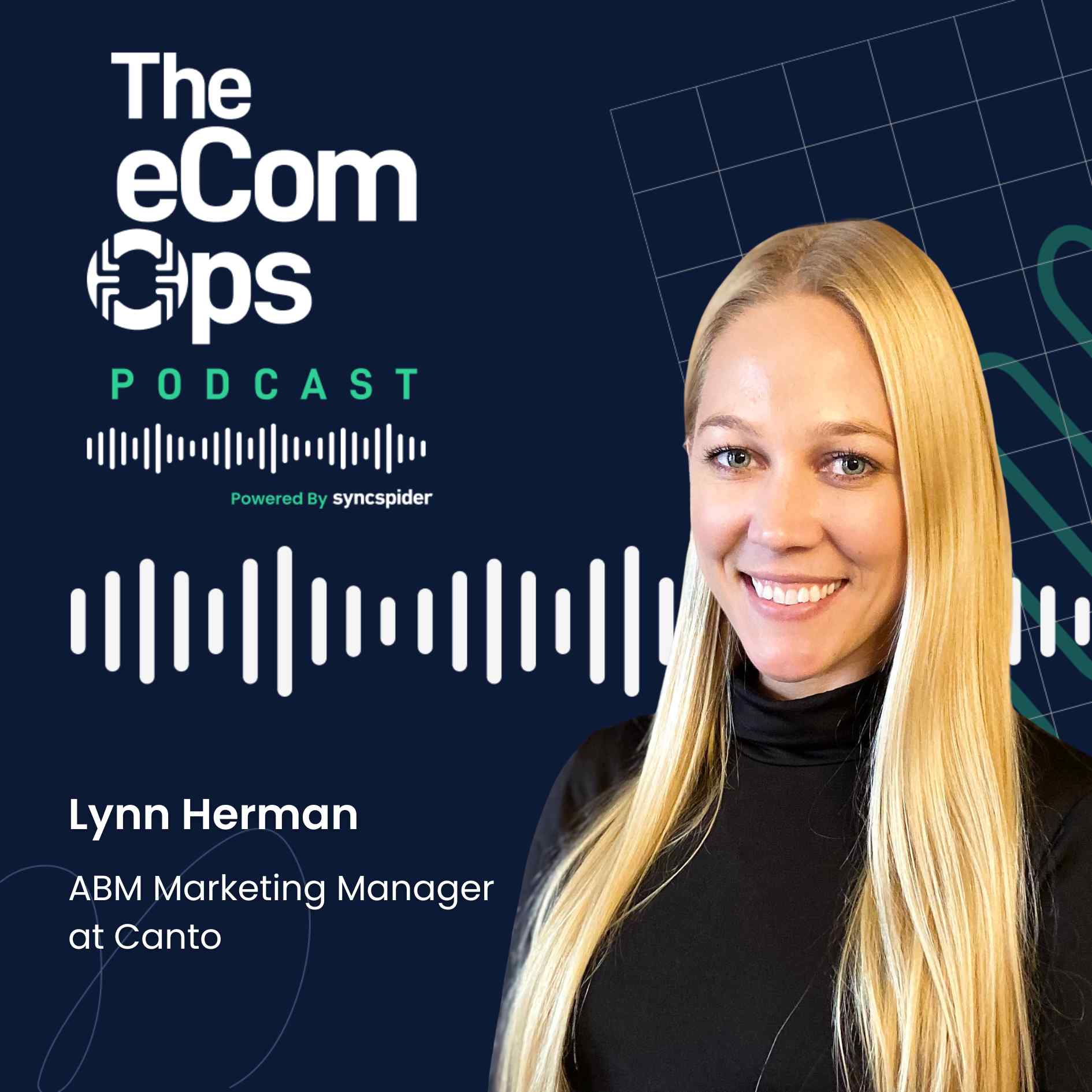 When Product Content Is Slowing Down Your eCommerce Growth with Lynn Herman48 / 100
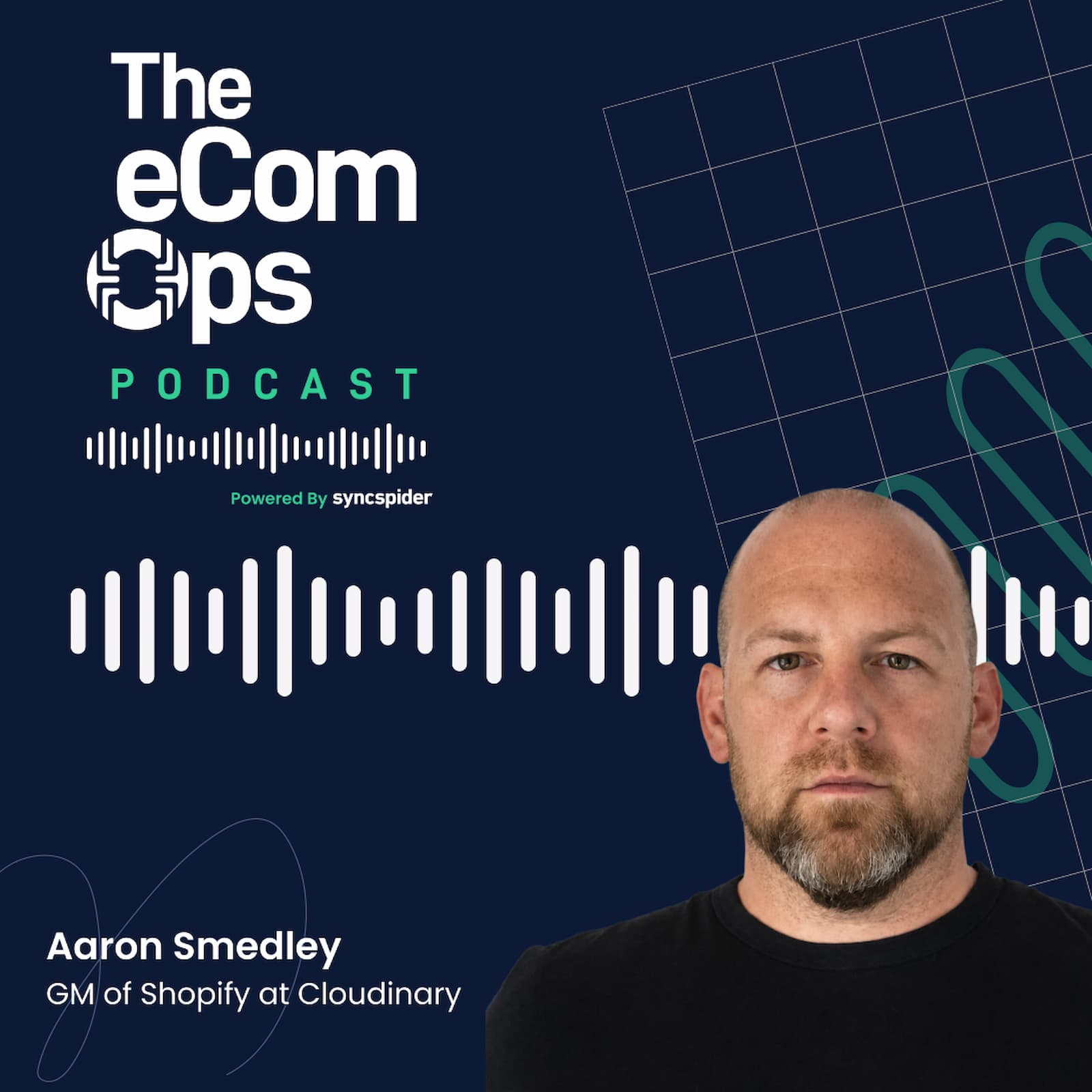 Your Best Creative Is Killing Your Conversion with Aaron Smedley60 / 100
 How to Build a Product Business Without Owning the Factory - Jen Millard
 The Best Logistics Strategy Most eCommerce Brands Miss with Daniel Cunningham Jr.