
The Daily Sprint · 2026-06-02 · 26 min
Key moments - from our scoring
Substance score
18 / 100
Five dimensions, 20 points each
Darrel Esterbrook, a 30-year veteran of UX product design and founder of Designy, articulates what drives effective design practice beyond tools and deliverables. He grounds his philosophy in purpose as the primary driver of design decisions, arguing that wireframes, Figma, AI tools, and other platforms come and go, but the underlying design process - listening, thinking, designing, communicating - remains constant. Esterbrook identifies three core aptitudes: visual thinking (the ability to arrange concepts visibly), pattern recognition (seeing how workflows and screens interconnect systemically), and curiosity about both the domain being designed and the people using the solution.
For product designers and design leaders wanting to shift from order-taker to strategic partner, Esterbrook emphasizes real-time design demonstration with stakeholders rather than tossing work over the wall, delivering multiple actionable options within available time constraints, and balancing innovation with MVP pragmatism. He argues that design shouldn't be confined to a role or deliverable but understood as a verb - a continuous process from project start to finish. His Designy framework and Design for Value masterclass on Designy Academy operationalize these beliefs for practitioners facing stakeholder misalignment, impossible timelines, and the pressure to do more with constrained resources.
Visual thinking (composing and arranging concepts visibly to communicate ideas), pattern recognition (seeing how workflows and screens interconnect within systems), and curiosity both about the domain being designed and the people using the solution. Without these three, Esterbrook argues it becomes very difficult to deliver value even with experience and frameworks.
By balancing the doing of design with communicating design to stakeholders, asking clarifying questions, identifying gaps, and demonstrating design in real time rather than delivering finished work without relationship or input. This requires confidence and the ability to show stakeholders the value of the design process as it unfolds.
No. Esterbrook argues the tools change (from Photoshop to Sketch to Figma to AI), but the design process itself does not. The core cycle of listening, thinking, designing, and communicating remains constant and is what drives efficiency and effectiveness regardless of which platform is used.
The quality and number of deliverables should match the available time, like a goldfish growing to fit its bowl. Options might include future-looking innovative features, right-now solutions using existing capabilities, or hybrid approaches. All should be actionable and grounded in engineering reality, while still pushing innovation where appropriate.
Purpose must be clarified at every level - from overall project goals down to individual screen decisions - so designers can explain why they made each choice and whether it will be effective. The more actionable and clear the purpose, the better communication, speed, and product outcomes.
Our reviewer’s read on each dimension, with quotes from the episode.
The episode is almost entirely motivational throat-clearing, personal philosophy, and vague process platitudes. The handful of operational ideas (designing in real time in meetings, offering multiple options) are stated at a high level with no depth or novelty for an experienced operator.
Listen, think, design, communicate. And then after you've communicated, listen, think, design.
the amount of time is really going to matter because kind of like a goldfish, right? The size of the quality of the deliverable is going to be matched by the amount of time we have
The frameworks offered ('listen, think, design, communicate'; 'tools change, design process doesn't') are well-worn UX industry truisms. The religious framing is distinctive personally but does not translate to any counterintuitive or actionable argument for practitioners.
the tools change, the design process doesn't
we're created specifically by God. And to create. He's the first creator
This is a solo host monologue; there are no guests. The host claims 30 years of UX experience and runs a coaching platform, but the episode content does not substantiate deep practitioner expertise at any meaningful scale.
I'm Darrel Esterbrook, 30 years in UX product design and the founder of Designy, a platform for product designers
I coach designers into leaders through real time, interactive product specific guidance
The episode contains virtually no concrete data, named client work, metrics, timelines, or dollar figures. The only specifics are tool names (Photoshop, Sketch, Figma) and a self-promotional link to a masterclass.
I started with Photoshop 4, version 4
go to academy.deziony.com and look for the Masterclass
This is an uninterrupted solo monologue directed at a general audience via rhetorical questions; there is no guest, no interviewing, no follow-up questions, and no productive tension or challenge of any kind.
What drives you? What are your values for UX product design and how do you want to change things?
I'd love to hear about what's the thing that you would want to change
Computed from the transcript - who did the talking, and the words that came up most.
What's the single most challenge you're facing today in UX Product Design? Is it an Al overtake? Your stakeholders are confusing? Or how can you deliver with impossible timelines? Whatever you're facing in design, it's time to take a step back and get a fresh mindset. I'll go over what makes me tick and how you can get Designy, too. If you want to double down on the Designy Framework, check out the masterclass "Design for Value" at Designy Academy Find out more and get on board with the free newsletter at Designy:
Transcribed and scored by The B2B Podcast Index.
Speaker A: Welcome to the Daily Sprint. What's the single most challenge you're facing today in UX product design? Is it an AI overtake? Your stakeholders are confusing? Or how can you deliver everything with these impossible timelines? Well, whatever you're facing in design, it's time to take a step back and get a fresh mindset. I'll go over what makes me tick and how you can get designy too. I'm Darrel Esterbrook, 30 years in UX product design and the founder of Designy, a platform for product designers who want to design with a. Why I coach designers into leaders through real time, interactive product specific guidance. Find out more and get on board with a free newsletter@designy.com that's Design with a yes. Welcome to episode 20 double tens. It's kind of like that last frame of bowling. Two strikes. Well, I'm glad you're here. So what are you facing in product design? What's your challenge that you're up against? There's so many things that we get inundated with every day and I think part of it is, I mean we love designing. I hope you do. I really love it. I love the prospect that there is something that a, uh, client doesn't know how to solve and they, yet they know where they want to go. At least they want an outcome and they hired me because they don't know what to do. And so to be able to see a similar situation and come up with a solution and really work with them, um, through it and along the way discover that while I come with a uh, framework and a process and experience and patterns and all sorts of things like that talent and design, visualizing, but they come with the content and the domain. It's a ball. It's a real joy to learn about other domains, other jobs, things people do every day, very detailed, very nuanced. Uh, there are things that I never think needed to be done and there's people doing it and usually they're doing it with a spreadsheet or some other workaround or the tool that they're using has been 20 years old and it's old buttons and old timey takes you back. But to be able to get into that situation and really help walk them through it and then to see their eyes light up just not only because it's nothing that they expected but that it actually fits into their workflow like a glove, something tailor made and then they're productive with it and they're actually able to do more than what they did before. I Don't know. It's like if you had a tool, you're using a hand saw to cut wood and it just takes a lot of work and you got to really lean into it and pull and push and try to get this cut is kind of crooked a little bit and gnawed off. Or like what happens with me, it gets stuck halfway through and you're just fighting this thing and then someone hands you a power saw and it just cuts like butter. Zoop. And it's straight and, uh, all sorts of things. Yeah, it's that feeling progress that we're able to make. And so I don't know, that's kind of the hook for me. But I wonder when we think of UX product design, kind of to take a step back, because we can get all caught up in these discussions of tools and procedures and even deliverables. Like you have to wireframe or you don't have to wireframe or AI can wireframe for you. And we're stuck on wireframes and we're missing the bigger picture. So I don't know, I wanted to go through what makes me tick as a designer and see how you align with that and see if there's any tools and tips and tricks about that that you can apply and help you get a new mindset on product design and what you're currently challenged. So when it comes to UX product design, I think there's a strategy that we employ. We're presented with a project or a feature or something like that, and we're going to do our thing. But really, what beliefs and values inform that strategy? Right. You're coming to it as a person. You're not a machine, you're a real person. You have thoughts, you've got a history, your upbringing. Like all of those things come into play. It's what makes you unique, uh, what makes you interesting. And you're going to work with these people, but you're also going to interpret what you're hearing through that lens. And so what are those values and beliefs? Well, when it comes to UX product design, for me, I go big picture. There's an ultimate purpose for what we're doing. And I believe that we're created specifically by God. And to create. He's the first creator, created everything. You look at the Bible In Genesis 1:1, in the beginning, God created the heaven and the earth. I mean, that's pretty massive, pretty comprehensive, pretty integrated. And we are made in his image. So, yeah, we have this propensity to create. We're always creating. Everyone is creating something. It might not be a, uh, product design software tool, very specialized domain, but we, whatever we're doing as people, we're creating and then to that end, connected to it. What really sets me going in a direction is that purpose drives every aspect of our lives. But few people are aware of how to make it actionable, especially in product design. So we're not just passive people. I guess when our family goes to the beach for, uh, vacation, I try to sit in the chair on the beach and do nothing. I've got to build a thing. I end up building a sandcastle or sculpt something out of sand. But doing nothing even has its purpose. But to even get to the beach, you had to, well, you had to have a purpose to get to the beach, and then you had to come up with a plan to get there and you had to figure out how to pay for it and all sorts of things. So purpose really drives every aspect of our lives. And we're designing our lives with all our actions and everything, decisions we make. But specifically product design purpose is critical. And it's not just these overall project goals or a, uh, feature or even a user story. Like, those things are good, we need those. But I'm talking about design. When you put mouse to pixel, if you, you're moving these things around the screen, however you're creating these screens, there is a purpose in it that you have to understand in order to explain why you did what you did, in order to know if it's going to be effective. And I think the m more actionable. You can make that purpose the clearer you can make the purpose in order so that it's actionable, then it's going to really help the product, it's going to speed things along, it's going to help communication, all sorts of things, and that's huge. The other thing that really drives me is in talking to other designers, junior designers, uh, when I mentor them or work with them. And the idea of having this aptitude for visual thinking, like if you can compose, take a concept and put it down, visibly arrange things in such a way to where you communicate the idea so people can see it, like, make it tangible, then that's huge. If you can see patterns in things when you're looking at any sort of situation, especially we're talking about workflows, um, but screens that make up individual flows, um, there are patterns everywhere. These emerge. And if you can see them and see the pattern with, within the pattern, how things repeat, um, that's really going to help in making systems and really seeing how things interconnect. And I think curiosity is another part. There's a lot of things that people may want to just create and just do for the fun of it, and that's grand. But having this curiosity to push yourself forward, like, well, what if it looks like this? Like, what if I make it this way? What if I put this over here? Like, those aspects, that's going to drive you to discover things. But the curiosity of really being vested in the people you're designing for, what's their workload, what's their workflow, how do you know, uh, when they're successful, like, really getting vested in that is huge. And those things are the building blocks. Visual thinking, seeing patterns, curiosity. I think those are core. And you can go to the moon with a. Like, if you're not visually thinking, you're not seeing patterns and you're not curious, it's going to be really difficult. Um, but, you know, you don't know. Aptitude is something that you have to try and see if that is where you're aligned. The other thing that really kind of undergirds all of this, especially when I look back and see when we first started product design and where we are today, it's the tools change, the design process doesn't. I started with Photoshop 4, version 4. I don't know what version. It's up to like 28 or something, but the idea that you've got Photoshop and that's how we're going to make our screen designs all the way to sketch was really popular for a while. People used Illustrator, of course, Figma now. And then there's AI tools, whatever. I mean, really, those things are going to come and go. They're going to help you in some areas. There's products design tool products that are going to help you in some other areas. But the design process hasn't changed it. It won't change, especially when it's tied with purpose. There's a thing we always go through each step. It happens whether you're aware of it or not. And if you're aware of it, wow, you can harness it. And when you harness it now we're getting into efficiency and effectiveness. And so those things are really key, I think, beliefs and values and taking that to the next stage of when we look at where we are in UX product design, wherever you are, uh, what do you want to change about that situation? Right. We're kind of in this thing. We're not digging ditches or we're not somewhere else doing another thing. Those are all good things. We're in UX product design, but it's not perfect. Um, there's things that we see creep up, uh, that happen across the board. We all can relate to. Like I said, a few of them, like, your stakeholders are confusing. Well, they're all confusing. Some more than others, some less than others. Um, the ones that are less confusing are really easy to work with. The ones that are more confusing are really difficult. Um, that may just be the way that it is because we're people. So how do you navigate that? Well, that's part of the process, but I think what are things that you'd want to change that make it difficult overall? Uh, these are big ideas. I would love to change the view that design is just an object or that it's just a skill or that it's confined to just a role. Like when you say design to someone who's not a designer, they think, oh, the screen that you gave me. And, uh. Right. I mean, that is a design. That's the noun, but kind of think of it as a verb. Right. Design is this process. It's the act of doing it. It starts from the moment that we walk into the project all the way till we walk away from it. Whatever happens in between is all design. And it's not confined to a role because everybody's doing it now. That doesn't mean there shouldn't be a role. I think a person who embodies the design role is in a very unique spot. They're the spokesperson for what design is. They can help guide the team directly or indirectly on, um, how to do it better and what the process is and what dependencies there are and stuff like that. That's the real challenge. And I think that's the real excitement too, because it's not just a thing and it is a skill, but it's not just something in the resume or it's not just the role. We just need a designer on the team and just plug them in for a couple weeks and then pull them out. That's a view I'd love to change. And we'll get down to how you can change that. The other thing I'd love to change is the single designer or, I mean, if you're on a team design team, but usually a single designer on a product, you don't have to be an order taker on the product team. Put this here, put that there. You're just moving stuff around, rearranging things. I totally Believe that you can lead a product if you, if you know how to balance the designing portion of it with the communication of design portion of it with stakeholders. Like that balance, you gotta make and do stuff, but then you have to be able to turn around and communicate what you meant by it and receive what they meant by it. When stakeholders are talking, they have a little picture in their head and you're trying to bring it out. So those would be two. There's so many. I think we could probably have an endless list. I'd love to hear about it. If you send me a note, I'd love to hear about what's the thing that you would want to change. So how do you challenge this product design industry? It's an interesting thing. Like there's so many roles in product design, m technology, all the way strategy, like where do you fit? And there's some clearer than others. And I think it probably transcends any role. But what I find is super effective is this little cycle of listening, thinking, designing, communicating and repeat. Listen, think, design, communicate. And then after you've communicated, listen, think, design. Uh, it's the same. It starts with listening. You have to listen. You're coming into this as a person who's going to serve design up right? We're going to show, you're going to walk you through it. But, but where are we going? Like, what's our purpose? Listening is key. Thinking then, and not just acting, you got to think through it. You got to weigh and balance what you're hearing. But then you do have to put it into practice. You have to make it real. I think the designing is huge. Like making that thought and then communicating it back out. What did you mean by this? Does this match the vision? Is this going to handle all the constraints? Hey look, there are new questions that come up just by making this design that's invaluable, right? That, that sort of thing. Listen, think and design, repeat. Uh, if you can do this at every level, at every stage of the process and get really efficient at it, that's going to set you apart. Because there's. Anyone can hear, but not everybody listens. Everyone can think, but they're not engaged in their thinking, designing. Not all designers are able to visualize and not all designers who visualize can extrapolate into multiple, uh, versions of what they're thinking about. And then communicating. That's the art of speaking about, explaining. And it doesn't have to be very complicated. But many people talk, but very few communicate. So how do you deliver all of this value, I mean, you're there. It's a service. I mean, you're providing, uh, a service. You're doing a thing. You're creating a thing live, right? Well, that's part of it. I think when you're demonstrating design in real time, it stops becoming theory. Because up until this point, people are like, I just need a designer. Every couple weeks that's going to happen. But in those couple weeks, how can you demonstrate the value of this design process while they're watching? I think it's really easy to get things tossed over the wall. Hey, can you design this? Yeah, let me get the specs and then send it on over. And there's really no relationship there, right? We're people, we're not just machines. So even in creating this, like, there's another person there who's ordering this, uh, why don't you find out what, what they like, what they want, where they're going with it and make it conform to them as you do it in real time. And that takes some confidence in your ability because it's easier. You may have to take it back and say, I'll get back to you tomorrow or later on today. But as you get better at it, you can do it in real time. You can start to have meetings where you're actually providing design and not taking orders, but actually demonstrating this. And then you're demonstrating through the questions you ask and, uh, the gaps that you're trying to fill. And those things become, oh, I hadn't thought of that. That's the golden feedback. I hadn't thought of it. That's a great idea. Great. Now let's see if we can make it actionable. Let's see if we test it, let's see how it really works. But you got the buy in and that's the first step. And I think delivering options like multiple ideas, all which are actionable and to do it in any time box that's available. So that seems like a huge. How do you do that? What if they say, tomorrow I need two weeks to do it? What if. Well, the amount of time is really going to matter because kind of like a goldfish, right? The size of the quality of the deliverable is going to be matched by the amount of time we have to put it together. And that doesn't mean now we've got AI, we just churn out 57 options in two seconds. You still have to analyze those things and still know why they were here, still tweak it anyway. But the designing options, multiple approaches to Solve this problem. Some may have fanciful new future looking features that don't exist yet. Some may have right out of the box what we can do today. Somewhere in between, maybe it's pieces, maybe it's parts. Uh, you know, the way something opens up is like a new way of doing that. And that would be appropriate here. I want to show it to you. But all those things that then we can implement this. If we want to invest more time exploring it. We could, but we can deliver that. And it's not something so fictional, so disconnected from the reality of engineering. It can be done the flip side of that, of what engineering can deliver. There are times that we need a lead of what engineering hasn't anticipated because that's where the innovation comes. There's a point in a, uh, design system that you hit kind of a glass ceiling. We've created all these options that now we're starting to just produce the same thing over and over again. Well, how do we do this differently? What this new use case, will it allow us to kind of branch out? And yeah, that's worth exploring because there's value there. So we do want to push the envelope, but we have to be able to kind of step back a bit and say, hey, if we can't do it this future way, maybe that isn't the mvp, maybe we'll do it something lesser now. Let's get it out the door, let's get it tested, let's get it in people's hands and we'll learn more and we'll go forward. So I hope that was helpful. There's so much more, of course, but think about that. What drives you? What are your values for UX product design and how do you want to change things? What do you want to move in your world and how do you deliver that? How do you make sure that you make that thing actually appealing to the people that you're delivering it to? They'll thank you for it. So there are lots of more details we can go into. That design process I mentioned is something that's really key and core to what I've been doing at least the past 10 years. This pattern of purpose and doing options. And I put that together in a framework. I um, call it the designy framework, but it's a design process that is entirely scalable to anything from app strategy down to the smallest feature you might be creating graphic on the screen. And I put a masterclass together and it's available on Designee Academy, so it's called Design for Value. And it's really about infusing value into everything we do. So take a look at that if you're interested in it. You go to academy.deziony.com and look for the Masterclass. And if you want to find out more and get involved, go to designy.com sign up for the free newsletter, and if you want to connect, there's a Ask a Question button, um, on every page of designy.com that ask a question. I'd love to hear what your values are in product design, what are your challenges, those sorts of things, and we can explore it more later. So thanks for listening to the Daily Sprint. And just remember, today is a great day to design with a Y. See you next time.
Other episodes covering the same guests and topics, from across The B2B Podcast Index.
 How AI splits startups into winners and losers | E2322This Week in Startups · on Figma77 / 100
 Scaled MongoDB From $35M to $2B - Why He HATES the Word PlaybookHunters and Unicorns · on Figma74 / 100
 How a Solopreneur Built a Business on One Recurring InvoiceSolopreneur Sessions with Fexingo · on design systems72 / 100
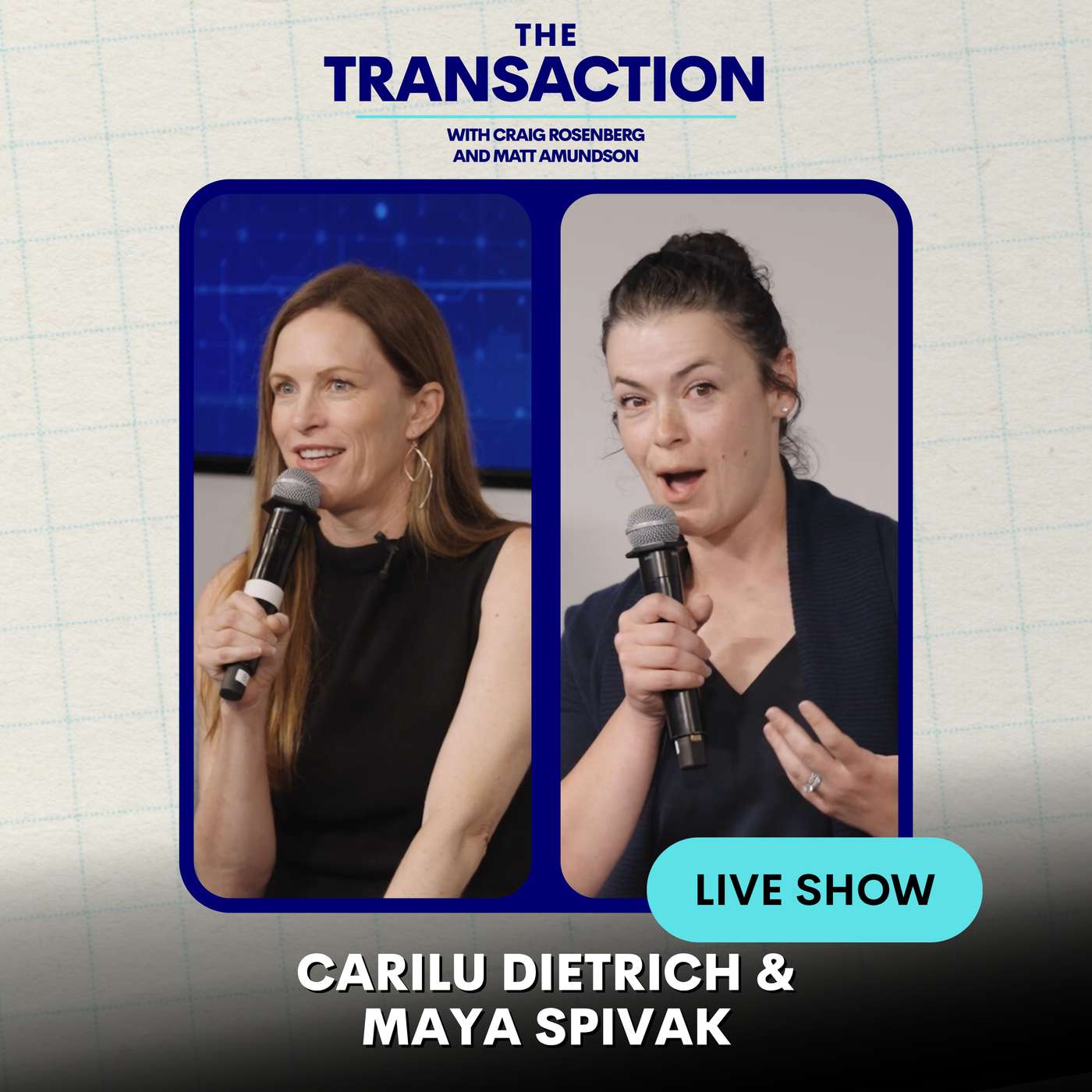 Building Brand Momentum in Market with Carilu Dietrich & Maya Spivak - Live Session - Ep 83The Transaction · on Figma70 / 100
 Investor Stories 481: Lessons Learned from Centana Growth, a16z, and Emergence: Trusting Management, Spotting Original Thinkers, and Investing Before Revenue (Byunn, Ulevitch, Saper)The Full Ratchet (TFR) · on Figma67 / 100
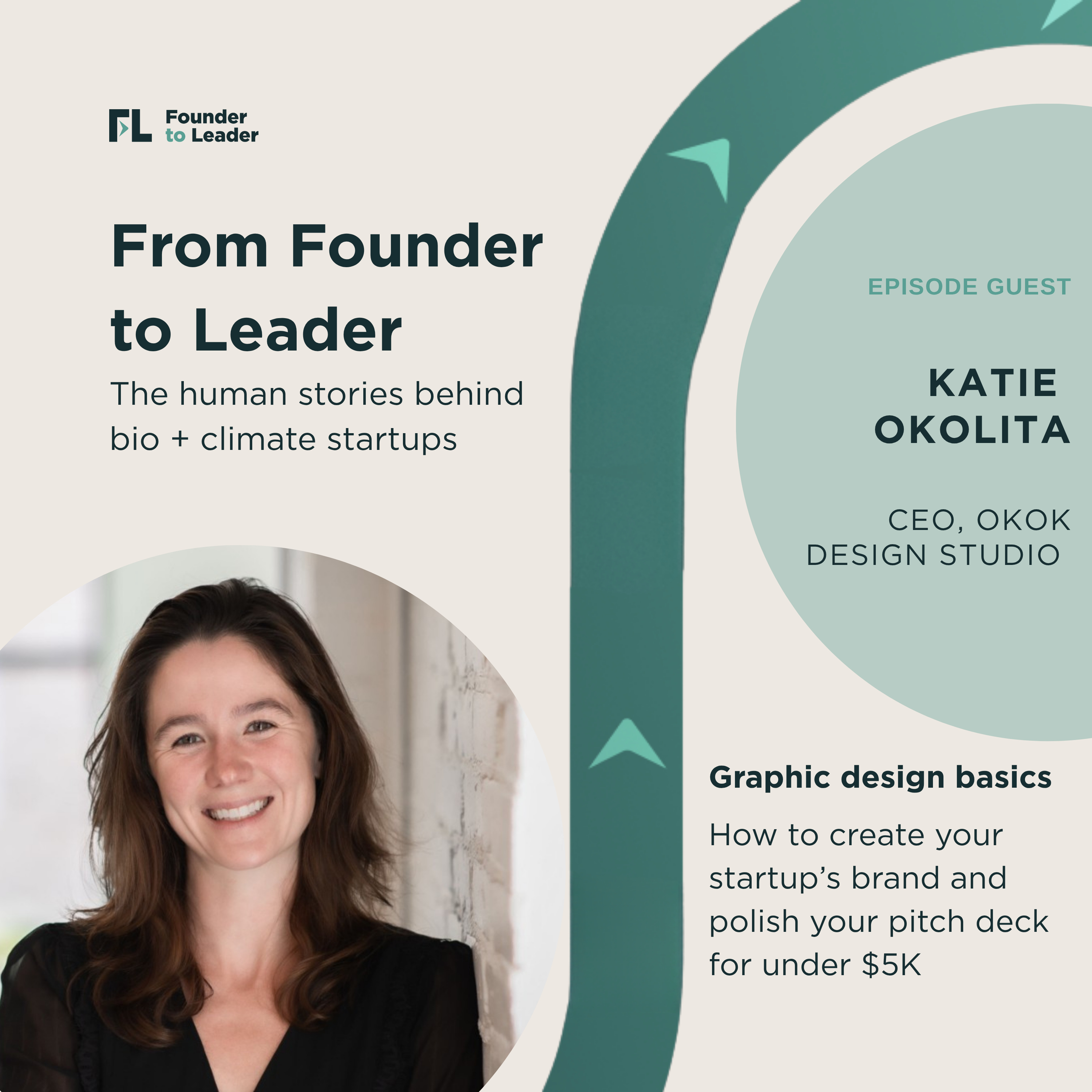 Graphic design basics, with Katie Okolita, CEO of OKOK Design StudioFrom Founder to Leader · on Figma65 / 100
 Become a Fireproof Designer37 / 100
 Managing Anxious Stakeholders37 / 100
 The Invisible AI Feature82 / 100
 More Than Taste49 / 100
 Not Good Enough