
The BreakLine Arena · 56 min
Key moments - from our scoring
Substance score
63 / 100
Five dimensions, 20 points each
Jack Hidary walks through the evolution of quantum mechanics from Max Planck's 1900 breakthrough through Einstein's work, explaining why the universe operates probabilistically rather than deterministically - a concept even Einstein struggled to accept. He emphasizes that quantum technology already pervades modern life through transistors, MRI machines, and lasers, but most people don't recognize it. The conversation then pivots to the third quantum revolution, an applied phase distinct from the theoretical first revolution (1900-1935) and the early applications of the second revolution (1940s-2000s). Sandbox AQ, which spun out from Google in March 2022 with Eric Schmidt as chairman, is positioned to apply quantum mechanics and artificial intelligence to solve intractable problems in drug development, disease treatment, and energy. Hidary specifically addresses the pharma industry's crisis: new drugs take 13 years and $1-3 billion to develop, with two-thirds of clinical trials failing. The episode explores how quantum computing and advanced modeling could dramatically reduce development timelines and failure rates by better understanding how candidate drugs interact with specific cellular receptors.
The first quantum revolution (1900-1935) was theoretical, establishing quantum mechanics as a fundamental theory of physics. The second revolution (1940s-2000s) created practical applications like transistors and lasers. The third revolution, which began approximately three years before this episode, applies quantum mechanics to solve major real-world problems in healthcare, energy, and cybersecurity by building on the previous two revolutions.
Quantum technology is already embedded in everyday life through transistors in computers, MRI machines, lasers, and solar panels. Additionally, the third quantum revolution is creating career opportunities for non-physicists - data engineers, software engineers, and cloud infrastructure specialists - to work on major scientific challenges at facilities like CERN and LIGO.
Drug development currently takes 13 years and $1-3 billion per drug, with two-thirds of clinical trials failing. Quantum technology can improve molecular modeling and drug-receptor interaction predictions, potentially reducing development timelines and failure rates by better understanding how candidate drugs interact with specific cellular targets.
Dark matter and dark energy comprise approximately 96% of the observable universe, while all visible stars, galaxies, and matter represent only about 4%. We currently have no fundamental understanding of what dark matter and dark energy are, though there are four leading theoretical candidate theories for dark matter's composition.
Einstein believed the universe operated deterministically under cause and effect, famously saying 'God does not play dice.' Quantum mechanics, however, revealed the universe is fundamentally probabilistic rather than deterministic - a concept Einstein intellectually accepted but emotionally resisted throughout his life.
Our reviewer’s read on each dimension, with quotes from the episode.
The episode contains substantive educational content about quantum mechanics, its history, and near-term applications in drug discovery and cybersecurity. However, it is heavily padded with conversational throat-clearing, long biographical narratives, and repeated encouragement to join the field. The core insights about quantum simulation for drug development and post-quantum cryptography are valuable but sparse relative to total runtime.
quantum technology now can start to simulate billions and billions of permutations of that chemical structure. Adding a hydrogen, adding a carbon ring, taking away a carbon ring, manipulating the structure of that drug
quantum computers break that good news before people lose sleep. About this tonight after listening to this podcast, the good News is that many people around the world, 25 plus countries, thousands of researchers and cryptographers, worked hard for the past 20 years since we knew that this was coming and have now developed standard ways of using different protocols, new protocols called quantum safe encryption, or pqc
The episode relies heavily on well-established frameworks and historical narratives (Planck, Einstein, the three quantum revolutions, discrete vs. continuous analogies). While the geopolitical angle and emphasis on quantum-safe cryptography are timely, the core explanations recycle standard science communication tropes. The career/pipeline diversity message, though important, is conventional wisdom in tech.
the analogy I would give here is if you're in an elevator, you can stop at discrete floors, floor 2, floor 3, floor 4, as opposed to a ramp
we call them neural networks because they indeed mimic in some sense the networks of neurons in our actual brain
Jack Hidary is a legitimately credentialed operator: successful founder (Dice.com, Vista), executive at Alphabet/Google, and current CEO of a quantum-focused venture with backing from Eric Schmidt. He has shipped real products and managed at scale. However, his current role is still relatively new (spun out March 2024) and SandboxAQ's commercial traction remains unproven, limiting the score from reaching 18+.
I had the opportunity to do research down at, uh, nih. Fantastic facility
we spun out successfully. And Eric Schmidt, the former CEO of Google, is the chairman now of sandboxaq
The episode includes some concrete examples (pharma drug development timelines: 13 years, $1-3B cost; 2/3 of trials fail; specific companies like Merck's Keytruda; specific universities like UC Merced) but frequently lapses into abstraction and anecdote. Claims about quantum's impact on drug discovery are illustrative rather than backed by case studies, pilot results, or customer evidence. Geopolitical claims (China's investment, quantum divide) lack specifics.
takes roughly 13 years on average to develop a drug. Thirteen years
Two thirds of clinical trials fail. Two thirds of clinical trials fail
The host (Bethany Coates) asks open-ended, softball questions and rarely pushes back or demands specifics. She is warm and supportive but does not probe depth, challenge claims, or ask hard follow-ups about SandboxAQ's actual revenue, customer base, or timeline to impact. Hidary is allowed to deliver lengthy monologues with minimal interruption. The interview feels more like a platform than a rigorous conversation.
Can you explain to an audience of laypeople, why is this movement so important?
I'd love to see more of is how welcoming you are to folks with a range of skill sets
Computed from the transcript - who did the talking, and the words that came up most.
Join us in the BreakLine Arena for a conversation with Jack Hidary, CEO of Sandbox AQ, an enterprise SaaS company combining AI + Quantum to solve the hardest problems facing society. Opportunities in quantum are vast, as are the revolutionary applications of quantum tech in solving the world’s greatest challenges. In today’s episode, Jack joins the BreakLine Arena to discuss the third quantum revolution and its real-world applications and implications. Jack breaks down the fundamentals of quantum, explaining its history and its role in our world today and in the future. He shares a myriad of quantum-related job opportunities (no, you don't have to have a PhD). Jack also explains the quantum divide and how SandboxAQ is actively working to bring a diversified talent base into the field. “The universe, at its fundamental level, does not work the way that we humans think it works. About 96% of our universe is unknown. Quantum technologies will be the make or break in drug discovery, clean energy, in cybersecurity, and in so many other key aspects of our society.” Please like, rate, subscribe, or review our show if you’ve liked what you’ve heard! We’d love to hear your thoughts.
Transcribed and scored by The B2B Podcast Index.
Speaker A: There is generally a resistance to new technology very often. And the same thing happens in science. Often there are trends such as, for example, neural networks. Neural networks, as developed in the 80s, 90s and early 2000s, were rejected by the field of computer science. They were not accepted. They were rejected. It took Geoff Hinton, Yeshua Bengio, Yann Lecun, who shared the Turing Prize. They shared the Nobel Prize for computer science. We called the Turing Prize after Alan Turing, a great computer scientist. They shared that prize a number of years ago. Well, deservedly, because they carried the torch of neural network AI when others rejected it over decades of time.
Speaker B: What's up, everyone, and welcome to the Brake Line Arena. We are so grateful that you are here. The Brakeline arena is a space that welcomes change makers, hustlers and leaders in the tech industry to share their journeys and passions and insights.
Speaker C: We are hosted by Brakeline Education, which serves to help top performers from under selected backgrounds land new and exciting roles in the tech industry. If you're a person of color or a veteran or a woman, there's info in the show notes about how to join our community. Now let's dive into the arena for today's special guest.
Speaker D: Welcome, everybody. This is Bethany Coates, CEO of, uh, Brakeline. Delighted to be here today with Jack Hickory, CEO of Sandbox 8Q. Jack, thank you so much for being here.
Speaker A: Hey, Bethany, great to be here with you.
Speaker D: Delighted to have you. And I want to welcome the folks who are here with us. I think we've got some of your teammates, Jack from Sandbox aq, including Jen Savada, who we both know and love, and, um, members of the Brake Line community as well. So delighted to have everybody here to join us. And Jack, as we get started, could you tell us just a little bit about you, your life, your career, Tell us a little bit about the journey that you followed to get to where you are today. Sure.
Speaker A: So first I would say, uh, Bethany, it's great to be with you and great to be with the Brakeline community. And big shout out to all the members of the community. I know there's a lot of veterans in the audience and we have quite a few in our company, and it's great to support veterans as the transition to many different sectors, in our case, the tech sector. So I'm sure we'll get to that today as well. In terms of my own career, Bethany, I started with a very strong obsession with both computers as a kid, started coding when I was 12 or 13 years old, and found a coding camp for the Summers, uh, and shipped myself off to Illinois for three summers to do that. So by the time I got to college, I was already really into coding. And during high school and college got, uh, very into both physics and neuroscience as well. And that also led to artificial intelligence. And so I was really fortunate in that I had the opportunity during particularly college to pursue lots and lots of different subject matters and to really get deep in, uh, neuroscience and physics and AI and already had all the coding. And so really combined all that. And then I was very fortunate to get a fellowship to the nih where I was able to pursue this amalgam, this intersection of where physics and AI and neuroscience all come together, which is in neuroimaging. Neuroimaging is done with MRI machines and positron emission tomography machines and spec machines and all that takes a lot of quantum physics to make happen. And in turn it sheds light on our brain and our brain in turn gives us a lot of insight as to how to build these, uh, new kinds of artificial intelligence models, new in the sense of the last, you know, 20, 30 years. And they're inspired by the architecture of the brain. They're not exactly like a brain, but they're inspired by it. And we call them neural networks because they indeed mimic in some sense the networks of neurons in our actual brain. They're not as sophisticated as the ones in our brain. That's why the brain still could do so many things with pattern recognition and all kinds of interesting tasks that we can pick up. But still the inspiration has caused a revolution in artificial intelligence and deep learning. And so I've been very fortunate to be at that nexus point where these different disciplines have all come together. And that's really been my passion throughout my career to bring these things together. And they all came back together now in sandboxaq. So I had the opportunity to do research down at, uh, nih. Fantastic facility. Part of the United States government, obviously, and the National Institutes of Health is a robust medical research facility with thousands of scientists and lots of groundbreaking research happening there, and really had a wonderful opportunity there and then started my first company in the tech field, which brought together and brings together still, uh, employers and employees. And so from the beginning I saw a vision of the fact that there would always be an imbalance in the tech sector of demand, massive demand for tech people and never enough supply. And so, uh, dice.com was part of our first company and till today it's the leading marketplace for it. Jobs, both full time jobs and gigs, contracting gigs. And I'm not involved anymore. But it uh, was great to build and run that, that operation into a national success because it really helped literally millions of people uh, get their jobs still. Till today. As I give talks and speeches around the country, people come up to me and say thank you for 5 years, 10 years, 10 years plus of uh, jobs they got on dice.com so it was very, very fulfilling as a mission to help people gain certificates in it, gain knowledge in it and then get their job in it. And so DICE was a wonderful experience and the fact that it's still successful today is testament to this enduring need to bring people together as they move, you know, with their career into higher and higher value add, particularly in the IT sector. It is always changing, it's never static. And so I think that's some of the drivers that those are some of the drivers that really drove the success and continue to drive the success of Dice.com, my first company, with my brother, my friend Nova, we had a wonderful time to build that out and that was a wonderful experience. And that experience in turn led to a deeper understanding of the financial markets, the capital markets, because we both were a private company and then a public company. And that taught me a lot about the needs of the financial community. And we decided then, uh, to build another company called Vista and which serves the needs of these large scale investors. And then after about three years sold that to S and P, to Standard and Poor's and I stayed on at the request of S and P, as an advisor to the CEO and to the senior leadership at S and P. And I learned a lot about not only the equity side of the capital markets, as I did in building my first company, but also on uh, the debt side, the fixed income side, the ratings that are given out by S and P and Moody's, and these are all very interesting aspects of our capital markets that drive not billions but trillions of dollars of movement across our economy. And so these were great learning experiences and also team building experience. I love building teams, I love people. And it was really wonderful in both Dice, Earth, Web and Vista, uh, the research company too, the financial company, the fintech company, to build these wonderful high performance teams. And then more recently about six years ago, the folks at Alphabet and Google reached out to me and said, hey, we're going to launch something called Alphabet. And uh, it'd be really cool if you want to come and join us there. And in fact, Alphabet is a place where entrepreneurial type people can come and build out very interesting new projects and Divisions. And I had the opportunity to work with wonderful people to do that at Alphabet over the last six years and to really focus the vision. They said, jack, you have a blank slate, open ideas, what do you want to do? And really the vision was bringing all these strands together, bringing artificial intelligence, quantum mechanics, uh, quantum technologies, along with other disciplines to solve the hardest problems in the world, to solve problems in medicine, to solve problems in energy and climate change, to solve problems in cybersecurity. These are some of the most pressing challenges facing our society today. And they really need much more powerful tools than we've had in the last 10 years. And so it's really a dream come true to be building this team first inside of Google over the last five years. And then March 22nd of this year, we spun out successfully. And Eric Schmidt, the former CEO of Google, is the chairman now of sandboxaq. I serve a CEO. We have a wonderful team that spun out with me, and since then we've now more than tripled the size of the team since spinning out. So it's really a dream come true to once again build a high performance, world class global team. We're in seven countries now, so it's really wonderful to have the richness and diversity of all these different talented people coming together.
Speaker D: I have so many questions for you, Jack, but the first thing before we went live, I asked you if you were a fan of the Office, because one of my favorite memes is of Michael Scott saying, explain this to me like I'm five. And that's what I want you to do right now with respect to quantum. Can you explain to an audience of laypeople, why is this movement so important? Why should it matter to everyone on Earth? Why should all of us be aware of the progress that we're making in this space, and particularly that you and your team at SandboxAQ are making. Can you explain it to me like I'm, I'm five, Jack?
Speaker A: It's actually a very interesting how we got to quantum as humans. Uh, humans have had so much progress in the last 200 years. In particular, if you look at millions of years of, you know, hominid development in the last 200 years, we've really taken a spurt up in terms of the science and the technology. And about 120 years ago, uh, there were many crises that were occurring in the world of physics. And as physicists and, you know, physicists try to understand how the world works, what the universe is made of, what is energy, how the world works, what are the dynamics of our world, of our universe. And in doing so, a number of experiments started to really make it clear that the physics of that time, 1880, 1890, the physics, the equations, were not sufficient to explain the experimental data. Things were not working out well. And a, uh, crisis was brewing and bubbled up. By the 1890s, it was very clear that either the data was wrong or the physics was wrong. And it turns out after checking and again again on the data, the data was not wrong. So the physics had to be incomplete. And so max Planck in 1900, in what he called later in his autobiography a quote unquote act of desperation, wrote down, you know, a set of equations and some basic framework about how the world must be if this data is correct. And that turned out to be the birth of the quantum era. He said, let's use this word quantum from Latin, how much? Like quanto in Spanish as an example, a Latin, you know, derived language. And quantum is a unit. It's like how much, It's a specific unit. I take this discrete amount, not more, not less. I'll go in chunks. And the analogy I would give here is if you're in an elevator, you can stop at discrete floors, floor 2, floor 3, floor 4, as opposed to a ramp, maybe, that, you know, you could, uh, stop anywhere along the way on a ramp, but elevators are more discreet as opposed to continuous. And that's one of the hallmarks of a lot of phenomena that are quantum in nature, that they're discretized, they're quantized, we say, and that's where this word came from, from Max Planck in 1900 in his presentation to the Prussian Academy of Sciences, and then in his paper just about nine months later, that kicked off this age. And, you know, it's rare that we can point to one specific moment in time when, uh, an entire global revolution started. But in this case, we can. And Albert Einstein, a very young person at that time, read that paper and at the age of 24, uh, started writing his papers in 1905. And that was his annus mirabalis, his miracle year, where he wrote five papers that changed our understanding of the world. And one of those papers explained how solar panels work, how solar energy works, the photoelectric effect. And that's a, uh, he realized that that is the same thing that Max Planck was talking about, a quantized effect. And that was an unexplained phenomenon before Einstein wrote his paper in 1905. So the background of all this is a resolution of a major crisis that happened in physics back in the late 1800s and early 1900s. And then fast forward. So about 1935, we had the body of work, the theory of, of quantum mechanics. And then it was up to their students and the students of those students to start putting it into application. And whether what's funny, Bethany, is that all of us use quantum technology today, or everyone listening to this podcast today, I guarantee, uses quantum technology, but we don't even know it's so embedded in our society today. So an example is being on a computer. A computer uses transistors, and transistors are. Were built by three quantum physicists. That's who invented the transistor at bell Labs in 1947. And we also, many of us have been inside MRI machines and other imaging devices. Those are quantum machines. Many people have used lasers, laser pointers to give a presentation, or if you had laser done on your eyes. A, uh, laser is a quantum device developed by a physicist. And so these are all throughout society now. And they're so embedded in our society that we hardly even realize that they're quantum in nature. So the basic essence of quantum, to come back to your question, is it's the fundamental theory and understanding of how our universe works. And it turns out, surprisingly, that the universe at its fundamental level does not work the way we humans think it works. When we're just born and grow up, we think the world is like a Newtonian world, a world where you have billiard balls on a pool table, you hit the white ball, the white ball hits the red ball, the red ball goes into the pocket. It's very deterministic. It turns out our universe is probabilistic. And that's very unsettling to some as they start to realize that quantum mechanics tells us that our world is not deterministic. It's not just cause and effect. And cause and effect is actually a probabilistic core element. And Einstein, Bethany, till the day he died in 1955, he was upset with this aspect of quantum. He was unhappy. He said, no, this cannot be the case. And he famously said, God does not play dice, Right? And so that. What he meant by that is that he couldn't believe he couldn't internalize, even though intellectually he knew the theory held water. He just could not accept emotionally, in a sense, that the world was probabilistic. And he tried to find another way, another theory that could explain this whole thing in a deterministic sense. So a, uh, key hallmark, there's, uh, several key hallmarks of the fact that now we understand Our world to be quantum in its core base. One, probabilistic, not deterministic. Two, that many phenomena in our world are discretized, are quantized the way that an electronic where it can sit outside the nucleus of an atom is discretized. It can sit in certain shells, certain layers, not anywhere randomly. And there's many other examples of these phenomenon, spectral lines from, you know, different phenomenon like stars and things like that as well. And there's other aspects also that quantum tells us about our world that again are very surprising. When we grow up in school, we're taught about how the world works and unfortunately we can use those heuristics in a day to day life because we humans are rather large compared to atoms and molecules. But the reality is at the atomic and the subatomic level, the world is governed by quantum mechanics. So in essence it's a theory that was born out of necessity. We had to develop this to explain the data. Number two, it's a theory that tells us fundamentally how the world is built up. If you think about the world built up from small constituent parts and energy, then it tells us a lot about that. Now is the story complete? It is not complete. And here's what's so exciting. While it is very exciting, what we do know about our universe. I'll tell you what's more exciting, in my opinion, is what we don't know about our uh, universe. And what's super exciting about that is that all the universe we've seen, all the stars and the galaxies and the gases and the planets and the exoplanets and everything that we've observed everywhere, and all the energy that we've seen and black holes and just everything we've observed, all that is only just about 4%, about 4 and uh, a change percent of the total universe and the rest is made up of dark matter and dark energy. And what is dark matter and dark energy? Well, as you might imagine from the word calling it dark matter and dark energy, we don't know. We have very little clue about what makes up the majority. About 96% of our universe is unknown. We don't understand what it's made up of. Uh, I'm not just talking about in the 4% that there's faraway stars and it's hard to see them now at the James Webb telescope. We can see them better. I'm not talking about that. That's all in the 4%. What I'm talking about is in the 95, 96%. We don't even have A fundamental sense of what they're made of. We know that dark matter is not from the stuff in our periodic table. It's not made of those kinds of things. It's something else. And we don't know. There's a lot of good theories for it. There's about four really interesting candidate theories for what dark matter is, but we don't know. And I think that's why it's so exciting now to be in this field. It's exciting because, once again, just like the 1890s, Bethany, this is a moment of great crisis. We have massive crisis in physics right now. Good crisis. A crisis that could lead to, um, great discovery. And I welcome anyone listening to this podcast to enter this field. You don't have to become a quantum physicist to enter the field. There's lots of ways to enter the field. You could become a techie to help with experiments. Cern, for example. The Big Collider. Yes, there's many physicists there. But you know who there's more of than physicists? There's non physicists. There's people who run all the computers. There's people who manage all the data. Petabytes of data. Not gigabytes, not terabytes. This is petabytes and exabytes of data. And if you Google exabyte, you can see how many zeros there are after the one to make an exabyte. That's a lot, a lot of data. And by the way, at CERN, at the big collider, they throw away 99% of the data. They can't even store it. So if you're into the big picture of the universe and the mysteries of the universe, and you want to work, for example, in big science, like the Collider, like LIGO, and other types of big science experiments, you don't have to go get a PhD in physics. You can go into it, into cyber, into enterprise cloud, into any one of these areas. And there are wonderful jobs in big science. So that's one area that I would encourage listeners to think about. So I know it's not the shortest answer, Melanie, but that hopefully captures some of the mystery, the wonder of what quantum is today.
Speaker D: Oh, Jack, thank you so much for that explanation. That was so much fun to hear. You help clarify and bring it to life for people like me. And you have described the moment that we are in as the third revolution of quantum. And you talked a lot about the mysteries of the universe, and you talked about the theoretical aspects of quantum, and all that's left to be Discover. But you also talked about sandboxaq being primed to solve really extraordinary challenges in healthcare, in science, in technology. Can you talk to us about the third revolution of quantum and what that means in terms of the application to our day to day lives?
Speaker A: Absolutely no. Great question. So the first revolution was the Mach Planck revolution, the Einstein revolution, Niels Bohr, all these folks between 1900 and 1935, that was the first revolution. The theory, as you absolutely correctly pointed out, the next revolution was the second revolution, 1940s to early 2000s, the applied revolution, the second revolution. And now just about three years ago, we kicked off the third quantum revolution. This also is an applied revolution. It's a revolution where we now can build on the first and second revolutions and really think about going much further than the second revolution in applying quantum mechanics to solve these big issues. So let's just take some examples of the third revolution. One would be in how we develop drugs. Right now there are unfortunately so many diseases out there where we do not have great treatments. While there has been good progress in medicine in general, there are many types of cancer, for example, that are still quite deadly and we don't have great solutions for them. If we look at pancreatic cancer, if we look at many forms of other cancers, gbm, for example, glioblastoma, brain cancer, dozens of years, decades in fact have gone of uh, uh, research have gone into trying to find solutions for some of these cancers. We do not have any good solutions right now for these cancers. Let's take heart disease. Heart disease is still the number one killer, the number one killer in the majority of countries in the western world, the number one killer. And soon it's becoming the number one killer in many other countries as they unfortunately adopt a western style diet and lifestyle of being on a couch all day. And so heart disease, now we also have the rise of the neurodegenerative diseases, be it Alzheimer's, Parkinson's. As people are, uh, living longer, we're seeing the rise and more frequency of these diseases. After 35 years of Alzheimer's research, we have very little to show, very little to show for Alzheimer's. A handful of drugs that may ameliorate some of the worst symptoms, but not really anything that would stop, arrest and reverse, you know, the onslaught of that disease in terms of treatments like that. And so we have really a crisis in medicine right now. And quantum tech, this third quantum revolution, has a lot to say to see how we can impact this massive, massive challenge for all of us, specifically when we think About a new candidate drug pharma. The big pharma companies, biotech companies, biopharma we call it in general, takes roughly 13 years on average to develop a drug. Thirteen years, and then at the end of that, can get into clinical trials, can try to validate in clinical trials, and then of course get approval from the FDA or the CE mark in Europe and then go out and market that drug. And, uh, that takes about a billion to $3 billion per drug. And, and here's the kicker, Bethany. Two thirds of clinical trials fail. Two thirds of clinical trials fail. One of the biggest pharma companies in the world just had three phase three failures in the last 60 days. Three drugs failed in the final phase, the most expensive phase. That phase alone cost $400 million. Just that phase alone. So they had three failures. So when we think about how a, uh, drug interacts with the body, it doesn't interact with every cell in the body it usually wants to fit into. It's designed to fit in one particular receptor, one particular target. If it's a cancer drug, for example, an immunotherapy drug, a drug that leverages the body's own immune system to help fight the cancer. So this is not chemo, this is not radiation. Right. This new class of immunotherapy drugs, uh, Keytruda is an example from Merck. That's one example of immunotherapy. But we've plateaued in terms of new immunotherapy drugs that are effective for many new, many types of cancer. And so if you have immunotherapy drug and you want to take it to market, quantum technology now can start to simulate billions and billions of permutations of that chemical structure. Adding a hydrogen, adding a carbon ring, taking away a carbon ring, manipulating the structure of that drug. So to see in simulation, will that drug fit in the target, that will let it fight the cancer. And to give you an analogy, in the world outside of quantum, when you look at Boeing and Airbus, when you look at car designers and airplane designers today, they don't build all those clay models that, you know, you saw in old movies, them building and shaping and putting in wind tunnels. They're leveraging simulation, they're leveraging large scale computing to look at and design that next airplane. The Boeing 777, for example, was designed this way most famously. And that cut down the time, cut down the cost, and increased the probability of success of the Boeing 777, which is now a successful plane. And so the same with the Boeing with the Airbus 380, another great example of use of simulation. But that is in the macro world, the big world. Now we have to take simulation to the quantum world and the world of molecules and atoms, the world of these drugs. We're in the quantum world. That's a quantum question. How will this drug hit that receptor? That's a quantum simulation question. And at Sandboxaq, we're developing more and more software to do this simulation at great scale and great speed, which again, not only reduces time and cost to develop these life saving drugs for cancer, for Alzheimer's, for Parkinson's, but also increases the probability of success of the trial. Because in addition to looking at whether that compound, Bethany, can hit that target, it can also look at off target effects, for example, in the liver, in other places, the body, where we know toxicities often occur. One of the key reasons why drugs get knocked out in clinical trial is not because it's not effective. It actually may be effective, but it has too much toxicity in other parts of the body. And by simulating this and looking at all this in billions of different ways, we can hopefully help that drug company get to an answer faster, higher degree of success. But this is also not just for drugs and the medical world, but also for the world of clean energy. In the world of clean energy, for example, we want to have better and better batteries, batteries that can store more energy, batteries that are cheaper, batteries that weigh less so that we can drive electric cars, batteries that can store the power generated by solar and wind. And uh, to do so, we ultimately need to move beyond the lithium ion chemistries that we have today. Um, there's several reasons that the supply chain will not ultimately scale to the global need for batteries, which is lithium and ion chemistry. And so designing the next generation of battery chemistry, for example, is something for sandboxaq and for the third revolution in quantum tech. So those are just two examples of how we can use the third quantum revolution and how sandboxaq is using its skillsets of both quantum and AI and these high performance computing platforms to help solve and address the biggest problems in our society today. I think that's one of the most exciting things today about the world of industry and the commercial world. Today we can do both. We can build successful companies, but be very mission driven. At sandboxaq, we're a mission driven company. Everyone who joins our team, Bethany, is somebody who cares very passionately, very deeply about impacting the world. That's been the thread through my life that, uh, we talked about earlier, from my early days Doing research on the brain, bringing physics and AI and neuroscience together to my work at SandboxAQ. And there's similar arcs in the work of the colleagues I have now at sandboxaq. And I encourage the listeners out there today. You know, today a lot of people want to find deep meaning in their work. No longer are we in a society where people want to clock in, clock out at some meaningless job and then try to augment mission in the weekends. People are really looking for deeper, more meaningful work. That is probably what led to the huge mass resignations we saw over the last two years. It's what's leading people to reject the idea that they have to necessarily be in an office to get work done. The new flexible work style is not just about having convenience. This is about family. This is about being close to your children, being close to your children's school and being able to drop them off and pick them up every day because you work from home or work in a more flexible style. So family has become more central and the personal and home life and the gym and healthcare, the uh, health of the individual has become more central now in the COVID and post Covid world. And I think people are reluctant, appropriately so, they're reluctant to give that up. And so I think that's why you've seen some of the insurrections happening across, you know, different companies out there that have tried to implement old school return to office RTO policy. So back to your question. Sandboxaq, the third quantum revolution. It's really about taking the most recent breakthroughs that we've had at sandboxaq, both when we were inside Google, but now also as a spun out independent company where we can now work on a global basis, uh, work with many, many kinds of partners out there, partners in biopharma, uh, partners in clean energy and technology, partners also in cybersecurity. And that's also, we should mention, part of the third quantum revolution is a new level of cybersecurity. Because quantum computers, while they have many benefits they will bring to society, we also must be aware that they will crack and break the core encryption that we use in our society today. When you're uh, on WhatsApp and it says encrypted end to end, when you are using imessage or any other kinds of secure messaging technologies, you are using, generally speaking, RSA technology, RSA encryption technology, that's why others can't read your messages. But unfortunately, quantum computers break that good news before people lose sleep. About this tonight after listening to this podcast, the good News is that many people around the world, 25 plus countries, thousands of researchers and cryptographers, worked hard for the past 20 years since we knew that this was coming and have now developed standard ways of using different protocols, new protocols called quantum safe encryption, or pqc. Post Quantum cryptography, which is what we say in the industry, pqc to use them in our messaging, in our secret communications for patient data, in hospitals, all the places we need to have security. So this new level of cybersecurity, this quantum safe cyber, is also Bethany, part of the third quantum revolution. Back to you.
Speaker D: Mhm. Thank you, Jack. It's energizing to hear the conviction that you have around, um, the mission involved in Quantum and the work that you and your team are doing at sandboxaq. But I also want to put this into a geopolitical context. And you've thought about that a lot too. You spoke in London a few months ago and you talked about how governments are investing in Quantum because it's going to impact every single country standing on the world stage. And you mentioned that China has invested the most in quantum so far, excluding private investments. A lot of brake liners, perhaps particularly our veterans, would be interested to hear how this could affect the, the U.S. and how we should be thinking about it from a geopolitical construct.
Speaker A: No, it's a great question and we uh, are very concerned about this. There are many geopolitical implications of quantum tech. And before we even we get to China and the U.S. i think that we see a growing quantum divide. Uh, just like there was a digital divide that was identified in the late 90s, early 2000s of having broadband access. Some countries had it, other countries did not. And we saw the consequences of that. Those countries, like the US and others that had early access to broadband, had a lot of innovation, developed many, many different platforms that allowed for great innovation and great wealth creation because of easy access to broadband and high bandwidth type of uh, services. And now we see the same thing happening with quantum tech. In fact, I think it's going to be even more severe in terms of the have and have nots in quantum tech. With the World Economic Forum as a key convening point, we and many other companies and governments are hoping to contribute to a process that will help address this growing divide in quantum technology. And so the hope is that through the wef, the World Economic Forum, which as you know, convenes in Davos, Switzerland every year, the hope is that we can really address national and regional quantum blueprints, blueprints that are Best in class practices that governments can adopt quickly catalyze themselves into the first realm of quantum technology. If you look at case studies, a uh, look at Canada and how they vaulted themselves to a premier level of quantum technology with the University of Waterloo, the University of Toronto, other universities throughout Canada, with investors and other ecosystem partners in Canada, creating companies in Toronto, in Vancouver and Waterloo and Ottawa, many other cities throughout throughout Canada. Look at Singapore, look at Israel. Two case studies of much smaller countries, right Than many other countries, yet with even limited resources. They put together a uh, key consortium. Ecosystems of academia, government, industry, venture capitalists and other stakeholders pulling them together, focusing on the entrepreneurs, focusing on the academics, getting STEM programs going, PhDs in quantum, PhDs in other relevant fields like quantum chemistry, quantum photonics, quantum networking, cybersecurity and getting it together. Singapore and Israel, Two case studies Canada, another case study. Uk, another case study. A larger country than Singapore and Israel, but a country that pulled it together very quickly with core efforts at Oxford, Cambridge, Imperial, Bristol, ucl, many other universities the government pitched in. Venture capitalists stepped up. If you look at venture capitalists in UK such as Amadeus Capital, if you look at other venture capitalists there stepped up in a big way to invest early on before people really understood what quantum will be about. And if you look at Oxford, Quantum Circuits, a company run by Alana Wisbey and recently gained a 30 plus million pound round of uh financing. Again an example of an ecosystem that has really pulled itself together. And so we want to share these learnings with the rest of the world and share these opportunities with the rest of the world. This is an opportunity for countries to step up in a big way and to help their own people to gain access to the third quantum revolution technologies, technologies that as we mentioned will be the success, make or break in drug discovery, in clean energy, in cybersecurity, in so many key aspects of our society. So when it comes to the U.S. we have a good start in terms of the quantum ecosystem here. We're very strong in terms of university programs, although let me say we'd love to see more universities have programs here. So we have some of the world leading university programs in quantum sciences. We call it qis, Quantum Information Sciences. But there's a big but to that which is that we don't see it spread enough across. And so we at SandboxAQ, for example are working with universities such as UC Merced. People listening may not know UC Merced. You probably have heard of UCLA, you've heard of UCSF. What is UC Merced? UC Merced is the latest, most recent campus of UC. I had the honor of serving on the board of trustees in its first two years of conception before there was even a campus. And uh, many of us felt, and still do feel that we needed to do more for the Central Valley in California as an example. This is, uh, an area of California populated by farmers, migrant workers, uh, many others who were left out of the traditional system. And we set up a campus to address these needs. And I'm happy to say, due to the wonderful efforts of the UC Merced team, that it's now a campus of 10,000 plus students, heavily focused on STEM, Latinx, 55% African American, 20 plus percent, and other minorities as well. And so it's a majority minority school and it's a school that is very focused on stem. We are working with the team there to ramp up quantum teaching and capabilities at that university. As one example. We'd love to see more universities and certainly if folks listening to this have a university in mind that we can be helpful to, please reach out and let us know. We have a team, a university team at SandboxAQ, who on a pro bono basis helps these universities to ramp up in this way. So we're putting our money where our mouth is in terms of really trying to help broaden the pie and not just have the usual suspect, you know, universities be the ones who glean all the benefits of the quantum revolution. So there's both a global divide, but also even within the United States, we're worried about a, uh, growing divide right here in the United States. So bringing in a diversified talent base into the pipeline, very, very critical to make that happen as well. Veterans addressing, uh, the veterans in our audience here today. Veterans gain wonderful skills, leadership skills and many other skills, uh, during their service. And we recognize that and honor that. And also we're encouraging the DoD to start incorporating quantum technologies not only in the use inside DoD, but also in the teaching at the various colleges and also in the various service programs that are throughout the government, the military. And so we hope to be able to catalyze additional skill building while people are still performing their service for the country. But also of course, as you come out of service, this is an area of great opportunity. And again, let me emphasize, please do not be put off by the word quantum. This is not about getting a PhD in quantum mechanics. If you want to, that's fine, that's great. There's programs to do that, but there are many, many programs, for example, now that will start to emerge in Quantum safe cybersecurity. Cybersecurity is a wonderful career to have. You have essentially guaranteed job security being in cyber for the rest of your life. There will always be hackers out there. And so I encourage folks to think about cybersecurity as one example and to add the knowledge of quantum safe cyber that will give you an edge in the cyber market and to come into the market with very, very strong skills. So back to the U.S. i think that we have a good start in the US Why I'm very concerned about the internal divide in the US of have and have nots in terms of quantum. We need to get a more diverse, uh, workforce into the pipeline. We need to scale the pipeline. Already there's an imbalance of demand and supply. Many quantum companies in the United States, the good news is, Bethany, have gotten funding. Uh, so if you look at this great companies that have gotten funding out there across the board, and in fact more than $3.5 billion has been they injected into quantum companies just in the last two, three years. That's the good news. But where does that money go? That money goes mainly to hire people. And that demand means that we need more supply. And so working with folks, not just. When I say universities, by the way, I'm not just talking about undergrad, PhD level. I'm also very concerned, equally concerned about adult reskilling. Upskilling. The majority of the workforce are adults and so upskilling adults and having ways to do that through extension courses, through Coursera, through the moocs, Udacity, many other online courses. MIT I should want to highlight, does a great job in offering extension courses through OCW online courseware and edX. EdX. So people, I want to encourage folks to check out edX, OCW, uh, check out Coursera, Udacity, check out many other free resources online for learning online. But this is a great moment to enter the workforce to help power the US towards continued innovation and breakthroughs in this area.
Speaker D: Uh, Jack, one thing that I'm appreciating so much is clearly you are an intellectual titan and you are an expert in your field. But something that I'm appreciating about you that I think is, you know, I'd love to see more of is how welcoming you are to folks with a range of skill sets. And you've made that point several times. And you also talked about Einstein and it felt to me like he was a hero to you. And one of my favorite Einstein quotes is everybody is a genius, but if you judge a Fish by its ability to climb a tree. It will live its whole life believing that it's stupid. Quote and yeah, great quote. I love it. And what I'm hearing from you is that Quantum is a team sport. Building out this new field of knowledge is a team sport and it's going to require folks with a big range of backgrounds to help realize its potential.
Speaker A: Absolutely. And it's a team sport both within the U.S. and also again, other countries. I had the opportunity when I was in college to go study. Not only did I study at Columbia University, but I also had the opportunity to study in Columbia, the country. I live with my cousins there who my mom's side is from Colombia. And I, uh, had the opportunity to live with them and to go to school there and to understand a deeper sense of the culture that my mom's side comes from. And uh, had the opportunity more recently now to speak to some of the universities in Columbia and encourage what we've just talked about, encourage the investment in these kind of programs so that we can bring countries like Colombia into the fold, into this team building work. Because again, it's going to take a broad range of skill sets, a broad range of folks, and we really want to bring these kinds of allied countries into the fold as quickly as, as quickly as possible.
Speaker D: I interviewed Othman Laraki this year. I don't know if you ever crossed paths with him. He's, he's the CEO of a company called Color. And one thing that he said that I've reflected on a lot is not to underestimate how much you can learn with three months of focused attention on a new field. And so, you know, as you encourage people to consider quantum, just your thoughts around how quickly they can get up to speed, to feel like they can contribute and participate even if they aren't the PhD in physics. You know, coming from some other angle, sure.
Speaker A: The thing I would do is encourage people to again, use the online courses. Use Coursera, Udacity, use some of the online. The MIT one. MIT has a four week course in quantum computing. Now does that one four week course qualify you to then jump into the whole field? No, but it's a really good start and it's a way to kind of break in and understand the core elements of the field. And one point we should absolutely make, Bethany today is that quantum tech is not just about quantum computers. Quantum computers is a piece of quantum tech, but actually quantum sensing, quantum communications, quantum secure cyber, these are areas that are actually much more near term than quantum computers. Quantum computers are At a very early stage right now of development, there's about four dozen companies building them. We at SandboxEQ do not build quantum computers on purpose. Strategically, we decided we wanted to build and collaborate with the four dozen plus quantum computing companies and labs out there. But quantum sensing, quantum cyber, these are all areas of great opportunity as well. So one pitfall to avoid for folks listening today is just don't go down just one, one hole, the quantum computing hole. So I would say that in a four week course, eight week course, you can certainly get a taste of it. Look for emerging courses in quantum safe cyber. If you're already a cyber professional, from the work you might have done in your military service as an example, then probably six months more of work will get you to be a deeper understanding of what it means to be quantum safe cyber. And so I think that's a great opportunity for cyber professionals. If you're just breaking into it right now and you want to start in the field of IT again, I'd like to highlight cyber and recommend that because it is an area of almost unlimited opportunity, every company needs cyber, every government needs cyber, and it's a very positive field to go in. And then just a little bit more work and study can get you into quantum safe certification, which will allow you to enter into this third quantum revolution as well. In terms of, uh, if you come from a medical background, you're listening here today, you've been in healthcare, you worked in a hospital, you worked in drug discovery, biotech, anything of that nature, then using quantum tools is going to be a great way to jump into this revolution as well. Again, no need to jump and get a PhD right now, but more about getting a sense of how these tools are used, how to deploy these tools. And there are going to be many, many jobs at the big pharma companies, at biotech companies, hospitals as well to deploy these tools. So there's a wide range. And by the way, for those who want to also enter into the business side of the quantum revolution, ample opportunity for those of the business side. Every one of these companies I've been referring to needs business people, business development, business partnership, marketing, engagement, customer engagement. All these business roles are now being created. So again, that would not require a PhD as well. Lots of business roles, lots of opportunities there, finance roles. We hired a great CFO, for example, at Sandbox AQ. 31 years in finance and he's getting up to speed very quickly on quantum technology as well. But finance is a key role to play as these companies scale.
Speaker D: Jack I know we're up on time. I just had one last quick question as we wrap up, which is you talked about Einstein's deep disappointment and frustration and discomfort with his realization that the universe was probabilistic rather than deterministic. I hate to think about him feeling that way as he acquires new knowledge. Did he die with those feelings, or did he come to terms with the universe as it is?
Speaker A: Well, in a way, I think he died happy in the sense that we have his board, we have his chalkboard at Princeton, at the Institute for Advanced Study. It's left as. Is as he left it the day he died. And we know he was continuing to work on this quest to try to find some way of reconciling quantum with what he felt would be a more deterministic and, you know, way of looking at the universe. But in a way, that was his life. It was a journey. It was not necessarily the destination, but it was a journey. It was a journey of discovery. It was a journey of upending a lot of previously understood principles. And in fact, the first. If you look at the reaction to Einstein's initial theories, if you look at the reaction, uh, to the theory of special relativity, and particularly the reaction to the theory of general relativity that came out in 1915-1917, it's similar to the. How people react to new technology. Very often, very often people hear about new technology, they reject it initially. And, uh, then later, many years later, it becomes actually commonplace. Uh, if you look at automotive technology, unfortunately, it took 25 years from the invention of the airbag for the airbag to show up in production vehicles. 25 years, even something like FM radio in cars, you'd think, wow, radio. Fantastic. Love radio. It took an act of Congress to mandate putting radio in cars. It took an act of Congress to put seatbelts in cars because the car companies did not want to imply in any way it was unsafe to be in a car. And there's a famous movie, of course, about, uh, automated windshield wipers and the attempt of that entrepreneur to get that into cars. So there is generally a resistance to new technology very often. And the same thing happens in science. Often there are trends such as, for example, neural networks. Neural networks, as developed in the 80s, 90s and early 2000s, were rejected by the field of computer science. They were not accepted. They were rejected. It took Geoff Hinton, Yeshua Bengio, Yann Lecun, who shared the Turing Prize. They shared the Nobel Prize for computer science. We called the Turing Prize after Alan Turing, a great computer scientist. They shared that prize a number of years ago. Well deservedly because they carried the torch of neural network AI when others rejected it over decades of time. So when it comes to Einstein, he had brilliant breakthroughs. He changed the way we look at the world. And he continued this quest to literally the day he died because we have his chalkboard to see what he was working on. He did not. And we, we believe that there probably isn't a determination theory what one could get. But you know what? I think he died happy because he loved playing the violin, he loved discovery, he loved his discussions. There's a beautiful book that people may want to read about. It says when Einstein walked with Godel a G O D E L. Godel was a, uh, Kurt Godel was a famous logician of mathematics. And uh, they became friends even though they were about 20 years apart in age. They became very close friends and took long walks in Princeton, New Jersey in the last 10 years of Einstein's life. And I think he died knowing that he had deep, deep discourse, deep thinking about the world, about the universe. He connected with some of the best thinkers of his time. But it also goes to show they were all human. Even Einstein, Bethany was human. Even he had his blind spots and could not recognize that indeed the world is a bit different than we may have grown up with. But with that I think is inspiration that we ourselves need to kind of examine our own ideas and say what of our ideas? Are we holding onto that? Matching. Maybe we should need to, we need to maybe let go of and jump into a new, maybe even quantum revolution.
Speaker D: Mhm. Jack H. CEO Sandboxaq what a treat to chat with you today. Thank you so much for taking the time for Breakline in our community.
Speaker A: Great to be with you all today day and look forward to future conversations.
Speaker B: Thank you guys so much for joining us for another episode of the Breakline Arena. We're hoping that you're walking away feeling a little moved, a little inspired and
Speaker C: if you really had a good time, feel free to head on over. Rate. Subscribe. Leave us a review. It does help us spread the good word and keeps these good vibes rolling.
Speaker B: Yes, we would love to hear from from you. Thanks again and we will see you next time.
Other episodes covering the same guests and topics, from across The B2B Podcast Index.
 Rebooting Enterprise AI with MCP and KubernetesPractical AI · on Neural networks88 / 100
 DOP 356: Warehouse Robots Are a Distributed SystemDevOps Paradox · on Neural networks83 / 100
 World's Leading Safe AI Expert: Superintelligence Will Change Everything & It's Closer Than You Think! - Dr. Craig A. KaplanFour Fs Podcast · on Neural networks74 / 100
 InsideAnalysis at We Make Future: AI Innovation from the Show FloorInsideAnalysis · on Neural networks67 / 100
 Neuroscience Behind Play: Why Early Experience Shapes Future Skills | Sonya Barlow x LoveEveryTechnology, Business Trends and Future of Work · on Neural networks55 / 100
 The Bitter Lesson: The history of reinforcement learningCoRecursive: Coding Stories · on Neural networks54 / 100
 Rahul Roy-Chowdhury, Global Head of Product at Grammarly | Value-Driven Communication79 / 100
 Anthony Mirabile, Managing Director at Goldman Sachs | Service Before Self
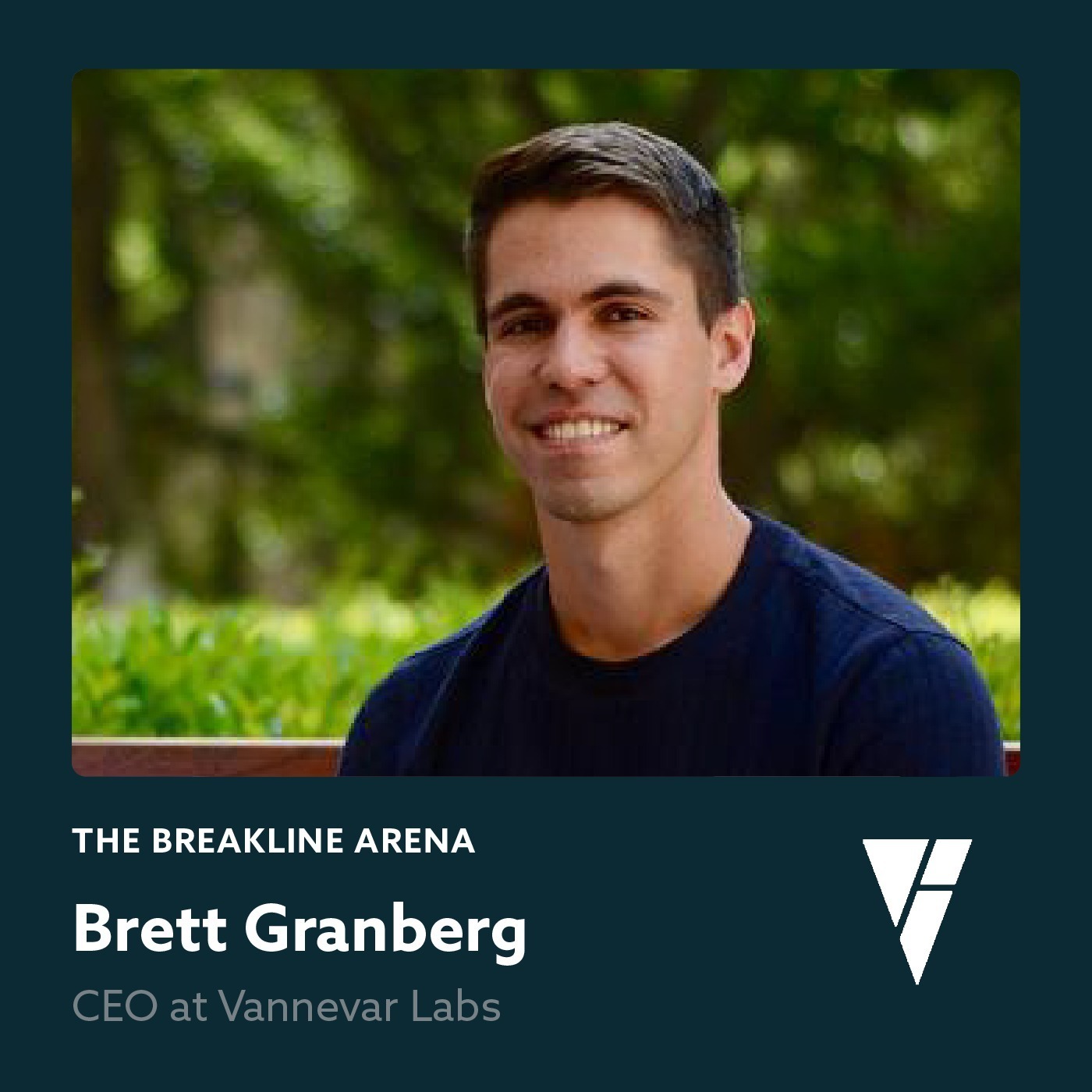 Brett Granberg, Co-founder and CEO of Vannevar Labs | Revolutionizing Defense Technology
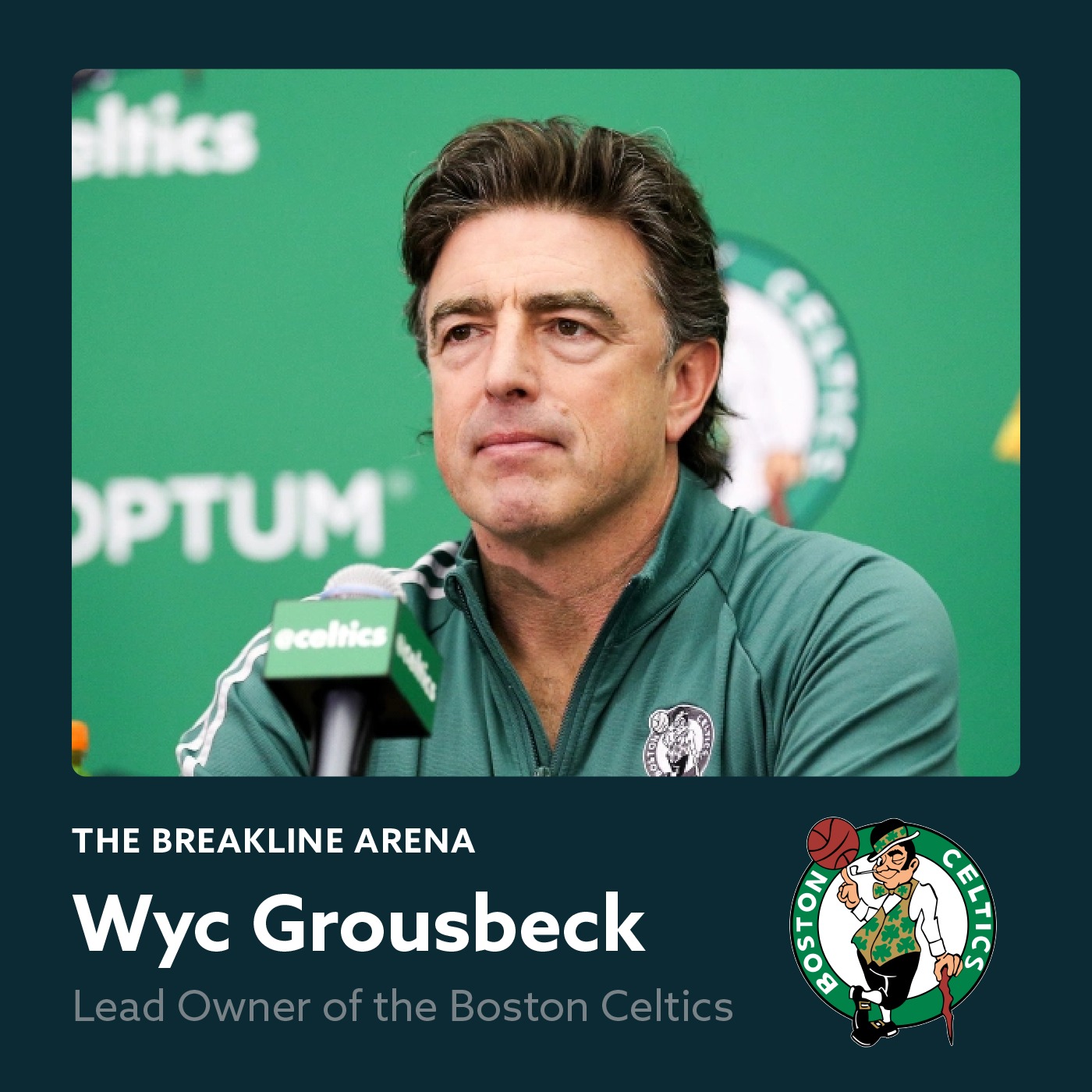 Wyc Grousbeck | Life Lessons for Winning
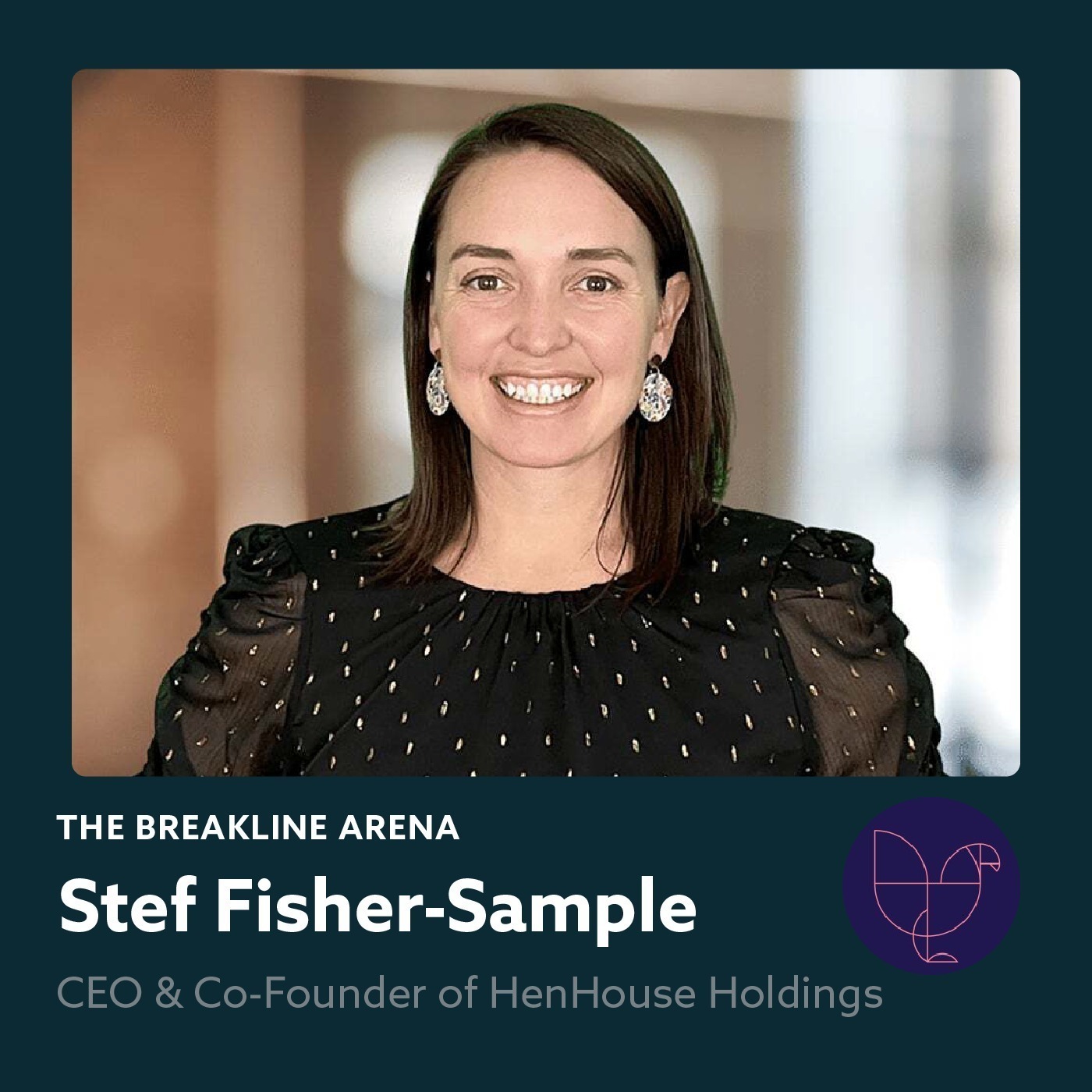 Stef Fisher-Sample, CEO and Co-Founder of HenHouse Holdings | The Secret to Entrepreneurship and Franchising