
The Brand Called You · 2026-10-31 · 57 min
Key moments - from our scoring
Substance score
39 / 100
Five dimensions, 20 points each
Slim's career represents a deliberate integration of technical rigor and human empathy - a rare combination in tech. Starting as a third-culture kid moving between Seoul, Cairo, and Beijing, he developed an outsider's instinct to understand others' perspectives. After earning a CS degree from Carnegie Mellon and encountering Randy Pausch's Building Virtual Worlds course, he discovered that technology could serve human connection. At Maya Design (1999-2008), he worked on DARPA-funded research and design consultancy for clients like DEC, GE, and Siemens, pioneering concepts in reusable web components and direct manipulation interfaces - precursors to today's low-code platforms. The pivotal moment came when a close friend's mental health crisis revealed the limitations of his problem-solving approach: his well-intentioned fixes often increased distance rather than healing. This paradox - compassion leading to worse outcomes - prompted him to leave high-tech entirely for Rhode Island School of Design (2008-2011), where he conducted a four-year ethnographic inquiry into how artists and craftspeople develop empathetic capacity through embodied making. His MFA thesis, "Realizing Empathy: If Resonance is the Answer, What is the Question?" formalized this insight, positioning empathy not as a feeling but as a practice cultivated through deep listening and understanding.
Hosted by The Brand Called You. The show scores 57.2/100 on substance across its analysed episodes. See the full show profile.
MAYA stands for 'Most Advanced Yet Acceptable,' a quote from industrial designer Raymond Lowy. The company, founded by three Carnegie Mellon professors (cognitive science, industrial design, and computer science), balanced cutting-edge technology with human-centered design by asking not just how to build something advanced, but whether humans would actually accept and use it.
A close friend's mental health crisis exposed the paradox that his well-intentioned problem-solving was increasing suffering rather than reducing it. He realized his compassion-driven 'fix-it' approach was rooted in his own worldview rather than understanding the other person, prompting him to study how artists and craftspeople develop genuine empathetic capacity through embodied practice.
He published early work on reusable web components, visual programming, and direct manipulation interfaces - concepts that directly anticipated today's low-code and no-code composition platforms that now dominate enterprise software development.
Moving between countries every five years made him feel misunderstood and foreign, which drove him to develop perspective-taking and cultural understanding as survival skills - later applied to human-centered design by always asking 'what is the user's actual context and worldview?' rather than assuming his own framing is correct.
His thesis, 'Realizing Empathy: If Resonance is the Answer, What is the Question?', formalized his insight that empathy is not a feeling but a practice developed through understanding another person's perspective - directly addressing the paradox he'd observed throughout his career where solutions designed without genuine understanding failed or harmed users.
Our reviewer’s read on each dimension, with quotes from the episode.
A handful of genuinely interesting ideas surface - the MAYA philosophy, the distinction between 'having' vs 'realizing' empathy, and the idea that the problem-solver is contributing to the problem - but they are buried under extended biographical narration and repetitive host summaries that consume the majority of airtime, yielding very low insight per minute for a B2B operator.
realizing empathy, on the other hand, is an event. We have no control over it. It happens by surprise
most advanced yet acceptable...you can come up with a lot of wonderful, interesting technology, but if it's not acceptable to human beings, then it doesn't actually do uh, them any good
The intentional coinage of 'realizing empathy' as distinct from 'having empathy' - framing empathy as an uncontrolled event rather than a cultivatable trait - is a genuine and somewhat counterintuitive idea; however, the surrounding material (tech-person-discovers-soft-skills, coaching-helps-CEOs-see-differently) recycles familiar territory without first-principles argumentation.
I intentionally coined the phrase, uh, in contrast to the phrase having empathy, because having empathy is sort of referring to the potential that we have to connect with other people...Realizing empathy, on the other hand, is an event. We have no control over it.
you're contributing to the problem. But often people think like, well, I'm the problem solver who is separate from the problem.
Slim is a genuine interdisciplinary practitioner - CMU CS, nine years at Maya Design working with real enterprise clients, MFA from RISD, author, and CEO coach - making him a credible non-generic guest; however, his coaching practice is modest in scale ('200 plus startup founders') and he operates more as a niche coach and author than as an operator who has scaled a business.
One of the CEOs that I met in some of the conferences kind of asked me, like, would I be willing to be his coach? And at the time, like, I didn't even know what a coach meant.
we would have clients, uh, like Digital Equipment Corporation was one of the clients and whatever kind uh, of uh, kind uh, of projects uh, that they had that was related to Maya
There are concrete anchors - named Maya Design clients (DEC, GE, Eaton, Siemens, Whirlpool, Merrill Lynch), DARPA grants, a named Kickstarter campaign, a book award, and specific institutions - but coaching outcomes are described in purely abstract terms with no client names, no before/after metrics, and no business results that a B2B operator could benchmark against.
Digital Equipment Corporation was one of the clients
the book came out in 2013...the audience that resonated most deeply with my content was not a group that I expected uh, to be...tech founder CEOs
The host consistently reads lengthy biographical summaries back to the guest and asks 'did I miss anything?', inserts his own anecdotes and credentials, poses compound multi-part questions, and never once challenges a claim or probes for depth - the result is a one-sided career retrospective rather than a substantive dialogue.
So maybe from 2015 to 2020 you get into coaching and leadership. Right. So you use forks and bridges as a publishing meta, design consulting, executive coaching identity
I'm actually embedded in Microsoft for startups. Maybe this would be of interest. We're very large, I'm an invited um, advisor, investor mentor
Computed from the transcript - who did the talking, and the words that came up most.
In this episode of The Brand Called You (TBCY), we sit down with Seung Chan Lim, also known as Slim, the founder of Kru. Slim’s remarkable journey spans computer science, fine art, business, coaching, and human-centered design. Discover how his experiences growing up across cultures, his encounters with influential mentors, and his transition from technology to art school shaped his unique perspective. The conversation explores the relationship between empathy, innovation, and leadership. Slim explains the idea of “realizing empathy” as a shift in perspective and shares why understanding people is essential for personal growth and organizational success. Learn how Slim founded Kru to support mission-driven technology founders, foster meaningful peer connections, and help leaders navigate challenges at the intersection of technology and humanity. Whether you are a technology entrepreneur, business leader, creative professional, or lifelong learner, this episode offers valuable insights into cross-disciplinary thinking, human-centered innovation, and more effective problem-solving.
Transcribed and scored by The B2B Podcast Index.
Speaker A: Foreign. Hey, Slim. Uh, thank you for coming in. You know, you just have a really tremendous background as, uh, founder, ce, coach, author, designer, uh, artist, uh, even, you know, you got, um, sort of raised as a computer scientist, and then you became a human, um, center, designer, artist, researcher, CEO, performance, go so with empathy. So normally there's a contrast between people who go into computer science and then empathy, you know, sort of like at the opposite ends of the spectrum. But you, you combined all of these, and M, of course, you won awards and things like that, and, uh, just an amazing background. We're going to mine some of that, uh, background during the interview. So thank you for coming in and sharing the insights with my audience.
Speaker B: Oh, absolutely. It's a pleasure to be here. Thank you for the introduction, uh, Stephen.
Speaker A: So, uh, Slim, first of all, why do you want to be called, or how did that, uh, sort of abbreviation of your name Slim come about? And then after you answer that, give me, uh, three inflection points in your life that made you who you are today. And don't start at, you know, when I went and got my degree in computing science, and then I got my master's and, uh, you know, design or whatever, you know, fine arts. Let's start from maybe when you're three or five, it could have been 10. You know, what are those defining moments that really shaped who you are? And it could have been insight outside the family, could have been challenges or opportunities or some combination. Uh, so first of all, why Slim? And then, uh, let's get into the three inflection points and then we'll move from there.
Speaker B: Sounds good. Uh, my last name is limited. Uh, Lim. The M first letter of my first name, which is Seung Chan, is S. So when you put the first letter of my first name S with my last name Lim, you get Slim. And that's the email user ID I got in college, and that basically stuck and everybody started calling me Slim.
Speaker A: Okay, now your inflection points.
Speaker B: Sure. I think the first one that I think really, um, goes back to my childhood, which is that I was. I was born in Seoul, Korea, but I kept moving from country to country every five years. So the first inflection point would be the kind of the transitions that I experienced going from one country to another, which is this repeated feeling of, uh, being misunderstood and feeling like a foreigner in those countries, and that sort of driving me to want to understand them, because as a foreigner, I felt like I didn't have any other choice but to sort of figure out a way to assimilate into these new cultures every time I moved. So I think that that feeling, that contrast between feeling misunderstood myself, but that in turn becoming a drive for me to want to understand them and the different cultures that I was exposed to, I think was kind of the first, uh, inflection point. The second one I think would be kind of like what you alluded to earlier, which is when I went to study computer science in college, um, that was actually a very challenging kind of experience for me because I felt once again misunderstood by the professors, uh, that I met there. Because I think from their perspective, um, if I didn't understand a concept or if I didn't, uh, have as much motivation to really, uh, appreciate computers to the extent that they did, they felt like, that's odd, like, computer is the most amazing artifact in the world. Why wouldn't you be interested kind of thing. Uh, so I kind of felt misunderstood because there are some things that just didn't make sense to me personally. Um, but the inflection point there was when I met somebody called Dr. Randy Pausch, who passed away a while ago. He, uh, ran a course called Building Virtual World. And that's the first time where I actually genuinely developed an interest in computer and computer science. So I think that was another major inflection point for me, uh, feeling misunderstood by other professors in computer science, then finding this one professor who said things that really resonated with me and made me feel understood and that actually turning into a genuine interest in the subject matter as well. So I think that would be the second sort of inflection point. I think the third inflection point is once again kind of like what you alluded to earlier is having been, uh, having had this background in computer science in college, one would assume that you would kind of linearly go through computer science as a computer scientist or a software engineer, et cetera, et cetera. But there was another inflection point where I felt like that. Well, I was personally challenged by, um, I guess somebody I would now call a wise woman. I met a wise woman who challenged my perspective that were anchored in computer science. And that led me to kind of find a place that was the opposite of computer science, at least from the perspective I had, which was fine art. So it was opposite in the sense of art versus science, but it was also opposite in the sense of high tech versus low tech or handcraft, that sort of thing. So going from, uh, kind of a background in computer science and high tech and then embedding myself for four years in a very traditional Craft based art school for four years trying to really understand um, basically the world from a very different perspective. And that was another sort of major inflection point I would say. Those three things kind of defined who I am today in many ways.
Speaker A: You know that's a really fascinating uh, background. Right. You know you talk about um, moving quite a bit when you were young and you were like um, the outsider and you had to understand other people when you're the outsider. So thinking of the other and their perspective and that shaped you. I can see why uh, you were introduced by Stephen Hecht and the Mill and Peacemakers and he has this non flick process which is really understanding the other walking in their shoes. I can see why you two are, you know, it kind of became conjoined in a way or you know, had this sort of alignment uh, aspect and then uh, you know you, you go into tech and, and uh, you study computing science. But again you felt like you didn't really quite sync with the comp sci, uh, professors because they're very kind of mathematics oriented and computer oriented and things like that which you, which you have, but you have other parts of. You didn't think those parts were addressed until you uh, had this amazing professor who said, you know there's, there's kind of like another side to computing science. You can design these virtual worlds. And so the creative aspects, um, interested in you thought oh, okay, I can see now this intersection computing science with design and things like, and the creative elements. And that excited you. And um, you thought well I found some alignment with um, what I do. And then you meet this wise woman as you indicated and that opened up this whole creative side. And the creative side is uh, I wouldn't say now it's non tech because there's a lot of tech in the creative side. But at that time, you know, a lot of it was sort of manually based and things like that. So you know, um, drawing or, or whatever, you know, so sort of seeing that aspect of yourself and then you finding that calling uh, of, of that sort of synchronicity, um, if I'm a wise woman on the, on the creative side. So I could, I can see all of those mel elements gelling. Okay, now let me ask you some questions. Based on that uh, amazing journey you just shared, uh, you went into computing science. Is it because um, your parents or your family was very kind of mathematics or like the traditional Asian family, you got to go into mathematics or it's got to be law or medicine or something like that or, or Was this just. You had a natural instinct and interest in, um, you know, mathematics and computing and things like that.
Speaker B: I think it's a combination between. So, so I, I did very well in mathematics. I guess that's very typical of an Asian kind of context. But it wasn't because my parents were sort of like pushing me to be good at mathematics. I was genuinely. I think it was the. I think in retrospect, I think it was a subject matter that I felt the most certainty with. Uh, and, and you know, in many ways it was like a comfort blanket. Like I, I could like, figure it out and then like once I sort of knew how to figure things out, like the, the process of figuring that out and then coming up with an answer that really felt good. There was something about that process that really felt like a warm blanket. It's something that I could kind of rely on, uh, consistently and that was, uh, uh, very enjoyable. So I enjoyed mathematics. I excelled at it. But the more important part that, uh, kind of moved me into computer science was the fact that I loved to play video games. And this was kind of a misunderstanding of what computer science really was because you don't really know what you're going to, uh, what you're going to get into once you go to college, uh, when you're in high school. Right? I mean, at least I didn't like it because, because there weren't any computer science courses at the International School of Beijing that I attended. It was mostly just like, you're a user of the computer, you're not actually programming anything, at least at that point. So for me I thought, well, if I study computer science, I'm going to probably like, do something related to video games. That was sort of the kind of the intuitive misunderstanding that I had. Little did I know once I got there, like, it was very, very, very rigorous. A lot of mathematics, a lot of sort of abstract thinking and things that I didn't really expect to be sort of immersed in. And that's the kind of the challenge that I was faced with. And that confrontation, not confrontation, but like that interaction I had with professors trying to really understand, like why is this important. That sort of a conversation that, that arose from that misunderstanding that I had about what computer science, uh, was as a field of study.
Speaker A: Ah, uh, so that makes uh, a lot of sense then. And so you're like, you're, you're born in Seoul, um, and uh, you moved to Cairo when you were six years old. So this is this journey that you talked about. And then later Lived in, uh, Beijing and came United States, uh, for College in 1995. And then you talk about identifying as this kind of lifelong, uh, third culture kid. Right. Longing and acceptance reoccur throughout, uh, your life. So you ended up with a, uh, Bachelor of Science in Computer Science, um, from Carnegie Mellon, which I think is really interesting. It looks like you also had Japanese as a minor. I
Speaker B: did, I did.
Speaker A: And, and, and you were, um, president of the Korean, uh, Students Association. Right. And
Speaker B: why. Right. How did you know that?
Speaker A: And then you have Randy, uh, Pausch building virtual worlds. You take a course and, and it's about a meeting for shared human experience. So that kind of this third culture kid aspect of you. And um, and though you, you express some regret because you didn't uh, get the opportunity to express all the gratitude or how it shaped your life. And then, um. But you create. You also had a creative life, you know, uh, as a dj, music producer, creative performance director. Right. So, so that's. So we're, we're mining that aspect that uh, moving around different areas. And then, uh, I think the interesting thing is Carnegie Mellon is one of the top schools in computing science in the world. Um, but you ended up, uh, with an MBA in international business, I believe, uh, at uh, Point Park. And then of course you talked about, um, a wise woman, sort of unleash the creative aspects. You end up with a, uh, Master of Fine Arts and Graphic Design from um, rist. Right. And um, so I think that's really interesting. Okay, now let's talk about what happened. Um, after all of that educational journey, um, you spent some time in Maya Design. Can you talk about Maya Design? What is that? I mean, some people may not realize what Maya Design is. Right,
Speaker B: sure. So Maya Design. So Maya stands for most advanced yet acceptable. It's a quote from an industrial designer named Raymond Lowy. Uh, basically the idea that you can come up with a lot of wonderful, interesting technology, but if it's not acceptable to human beings, then it doesn't actually do uh, them any good. So there is this sort of fine line between creating something that is extremely high, uh, tech and advanced and such, but also being ah, fit with human beings, it's familiar enough for them to recognize it, use it, appreciated, that sort of a thing. So kind of straddling that, that, that fine line, that balance is sort of like the, the philosophy embodied in the word M A Y A Maya. So Maya Design was a company that was founded by uh, one of the Carnegie Mellon professors, right. Along with two other Carnegie Mellon professors. So there was I think uh, three Carnegie Mellon professors that started this company. There's um, one from um, cognitive science, one from industrial design and one from computer science. So from the get go there was this idea that the computer science person might represent the technology side, but the industrial designer really thinks about well, how is this going to be acceptable by human beings? And then the cognitive scientist says well let's really test out if it is indeed acceptable by human beings. Let's find out what does it mean to be human, how do they think, how do they feel that sort of a thing. So really balancing those sort of, sort of three stools, three uh, legs of a stool was kind of like the um, impetus behind why Maya was the kind of company it was. But the role I had was because Maya had sort of two different arms if you will. One was this sort of um, research arm. And the idea was that the founder really wanted to revolutionize computing. There's a whole new paradigm he called information centricity. And without getting too much into the weeds, it's basically this idea of getting rid of uh, what is commonly accepted as the primary currency of computing is like files, applications and WIMP paradigms and all those things just completely get rid of them and then come up with a whole new paradigm where people can directly manipulate information and uh, then kind uh, of use tools to sort of like manipulate them. Instead of having these applications developed by different companies and different organizations. It was a very very uh, very different paradigm. Um, to this day there isn't such a thing where you can really directly manipulate information that way. There's still files, there's still WIMP paradigms. But this was like you know, back in the 90s, so this was almost what, 30 years ago, this was present, uh, and the company was trying to revolutionize, competing that way. But to bring about this kind of revolution, uh, you basically needed a lot of money, a lot of funding to do it. And so the typical way to do it is to get venture funding. But uh, he really wanted to find ways, other ways to fund this research other than venture capital. So part of it was funded by grants like DARPA grants. But when that wasn't enough, he really wanted to find ways in which it was self sustainable. So he had another arm to my design which was a design consultancy. So this is where uh, uh, we would have clients, uh, like Digital Equipment Corporation was one of the clients and whatever kind uh, of uh, kind uh, of projects uh, that they had that was related to Maya, which is they had the technology but like how can we get it to, how can we shape it, how could we m, uh design it such that it was acceptable by human beings? That was sort of the idea of the consultancy is like we would have these really advanced technologies that are uh, you know, either going to be soon, uh, uh, presented to the, to the, to the public or it was going to be uh, presented to the public in the future. How we actually influenced the process of designing that such that it would be more acceptable by human beings. Right. So this was the time when you know, Apple, Apple wasn't, didn't have as much prominence as it does now. Nowadays it's sort of taken for granted that user interface should be intuitive, all that kind of stuff. But back in the mid-90s and such that wasn't kind of the norm. Right. So this was a very novel idea of like uh, kind of taming complexity was the, was the term that we often use is like how do we tame this complex technology into a form factor that really human beings could accept. So that was sort of the two arms that Maya Design had. Um, and I sort of straddled between both of those uh, arms. I, I was uh, I was knee deep in research trying to revolutionize computing and I was also involved in sort of the consulting part of it to help clients uh, tame you know, whatever complex technology they had.
Speaker A: Yeah. And then your Carnegie Mellon Computing, uh, science degree combined with your Master of Fine Arts is a perfect intersection. And
Speaker B: I, I hadn't gone to RISD at that point yet. It was only after I graduated from, from cmu.
Speaker A: Okay. So but it, it addressed that creative aspect of, of, of your interest as well. So
Speaker B: did. Yes.
Speaker A: Yeah. So um, I guess from 1999 to 2008 you're at uh, Maya Design and um, you complete an MBA in International Business at uh, Point Park. So you're kind of, you were doing that while you were at Maya Design. So you spent nine years at Pittsburgh's uh, Maya Design, ending as senior, ah, software design engineer and assistant Director of Engineering. And what you're saying is the work combined future hci, human, uh, computing interface research with human centered innovation for organizations. And you talked about darpa, so really the US Department of Defense, you talked about dec, Digital Equipment Corporation, so ge, Eaton, uh, Siemens, Whirlpool, Merrill lynch, um, and completing as I mentioned, an mba, um in international business while working full time. So it's really this uh, kind of business, uh, as a service and treating organization constraints and ethics as a design inputs. And you published early work on reusable Web components which I think is really interesting. Uh visual programming and direct manipulation ideas agent and took really uh, later became low code uh composition which
Speaker B: is
Speaker A: proliferating today. So it's interesting way ahead where we are today. But you had a close friend who had a mental health crisis and exposed the limits of solution. First care and trying to fix somebody else's or trying to fix someone can increase distance when listening and understanding or missing from a um progression standpoint I guess it's from 2007 to 2011. So you're right. Afterwards uh, at age 29 an artist uh, you met as a computer science conference challenged you to pursue you what you didn't understand and what you weren't necessarily good at and feared. And after night class as an experimentation you left high high tech for wrist in 2008 and it called wrist and brown undertook yeah ris d. Um, he undertook a four year embodied uh eth. Ethnographic inquiry into how artists and crafts people created uh drawing, sculpture, acting, dance, carpentry and how um making um developers empathetic or empathic capacity I guess. And that kind of ties into this mental health kind of crisis aspect that you had ah earlier experienced with a friend and sort of understanding that journey. What does RISD stand for by the way?
Speaker B: So it's Rhode Island School of Design.
Speaker A: So okay, so and then earning a Master of Fine Arts and graphic design from RIST UH D in 2011 and your thesis was realizing empathy. If resonance is the answer, what is the question? Right. So, so, so did I get anything wrong in that kind of summary of that part from engineering?
Speaker B: Just, just minor dates like. So it was really the RISD experience was 2008 to 2011.
Speaker A: Right? Yeah. Rather than 2007 to 2011. Right. So um, and, and that's sort of realizing empathy of resonance is the answer. What is the question? Why, why that topic? And it's because of that journey I was describing and things like that.
Speaker B: Yeah, so, so, so a little bit of background. So before I went to risd, one of the kind of the conundrums that I faced was what you alluded to earlier is the idea of problem solving kind of getting in, getting into a rut. So as a computer scientist, as somebody who was trained to be uh, analytic in sort of problem solving, I have, whenever I see a human being in distress, uh, my compassion kind of gets triggered. So the idea like so I don't want that person to suffer so I want to help them. And the default way in which I tend to do that is to figure out what problem they have and fix it. And the premise is that if I could just do that, then hopefully that person will feel better and then their suffering will be gone. Is sort of the simplistic way of looking at that situation. And that has sort of been my go to response, uh, to other people's suffering. And that has gotten me into a lot of trouble in my 20s, uh, uh, in many different kinds of relationships. So this was a puzzle, or I mean, I think a more accurate way of calling it is it was a paradox. Right? Uh, the paradox was like, here I was a compassionate individual, do not want, I sort of feel this sort of concern for another person's suffering and I'm motivated to help them and I help them. And then the actual outcome of that helping endeavor is that that person suffers more. And that was just mind boggling to me. Like, just didn't make any sense. Like how, why is that? There's this paradox of like, I'm trying to do good, but then it doesn't actually translate to good. So that was something that was troubling me kind of all throughout my 20s. Right now I go to art school based on this challenge that I get from this wise woman. And the premise behind the challenge was so I basically talked about this challenge to her, but I didn't talk about it in a personal context. I talked about it in a kind of a business context. Like, for example, when we were working with clients, um, we would produce these amazing designs and all these solutions for them, uh, and they would pay us a lot of money to actually deliver these wonderful deliverables, only to not use them. And I was like, huh, uh, uh, and then like, and then the, you know, the final customers or users who would be the kind of the recipient of the next version of the product, which kind of basically went the opposite way of what we designed was suffer. So like that was the kind of, the context in which that I shared this with the wise women is like, doesn't make any sense. Like in my personal life and in business, the more I try to help other people, the more it seems to lead to not so great outcomes. It, uh, doesn't make any sense. So the conclusion I had drawn at that point is there's something wrong with human beings. Like the human beings are irrational. Uh, maybe, maybe like human beings are the problem. Maybe people are the problem. Or that way of sort of framing people as the problem, not the way in which I was solving the problem. Right. So when I sort of presented this framing to her, she Basically said, well maybe the way you're looking at the people are the problem, not necessarily the people, right? And uh, I was like, what do you mean by that? It's like well it's really hard to explain because right now your perspective is fixed into a particular way of looking at these people. So even if I try to explain, you're going to reject that because it doesn't fit into your worldview, your perspective. And I was like, I still don't understand like what you're getting at. It's like well the only way to really understand this is to, for you to experience it and for you to have this realization where your perspective shifts. That's the only way in which you would genuinely uh, appreciate and understand uh, why you keep running into this rut. And I was like, I still don't know what you're saying, but like what do you, like just tell me what you, what do you want me to do? Like how do I get rid of this problem? And she basically said in a very kind of, in a practical sense of the word, like well you need to remove uh, yourself from your current, I guess, habitat, uh, which I would call high tech and highly analytical kind of context and uproot uh, yourself and move to a place where you would consider the opposite. Right? So, so for example, uh, kind of the opposite end that I alluded to was because I was in science, that I would go to art kind of context. And because I was in a highly analytical kind of context, I would go somewhere that was highly intuitive and non analytical kind of a thing. So when push came to shove she basically said well what I'm basically trying to tell you is that you should just go to art school. And I was like what? Like that just seems, the rant like seems random. Like why all of a sudden, ah, a person who studied computer science and is knee deep in technology, uh, why would I all of a sudden uproot myself and go to art school? It just doesn't make any sense. And then she basically said she herself used to be a painter, um, and then she was ah, challenged by her mentor, uh, to actually uh, uproot herself from the world of art and go into the world of science. So she had uprooted herself and went to MIT to get a PhD in computer science. So she was like, well that's the experience I had and it was transformative and it completely changed my perspective. And now I can choose to live in two different worlds simultaneously. And that is not an experience I can explain to you. You Just have to experience it for yourself. It's just that I'm suggesting you do the opposite because you started in computer science. Uh, so you should go to where I started, where she started, which is fine art. Now when I heard this uh, idea, the rational kind of part of me, uh, I mean the logical part of me is like, I could see the logic. I was like, okay, it makes sense that you would suggest that given the experience you had. But like the ego side of me was unwilling to accept it because I thought like, well, it makes sense for you to go from art to computer science because that to me is a way up. Like you're going from art, which is kind of this fuzzy like navel gazing thing, to like a rigorous, you know, field of study, like computer science. That makes sense. But like, why would I go from computer science and go down to art? Like it just doesn't make any sense. That was kind of the ego part of me speaking. So obviously that conversation didn't go anywhere because I was unwilling to accept this, this suggestion that she was giving to me. But it was one of those things where it just, that idea just wouldn't let me go. Like I would come back home and lie in bed and it just kept ringing in my ears. Like this idea of like, like there's something there is all I could really say. Like, although, um, like my whole body is trying to reject it, it doesn't make any sense, blah, blah, blah. But a small, tiny voice in the back of my head is basically saying like, you know, she has a point. There's something about like you keep getting into these ruts, you keep getting stuck. Uh, maybe there is something about the way you're seeing, you know, the world and everything that kind of like keeps, uh, you stuck there. And the only way to get out of it is to shift the perspective. And shifting perspective isn't something you analytically do. It's, it's an experience that kind of like shakes you, right? And it really kind of like puts you in a different, different way of being right. So I think what I basically did was I, I, I told myself that I'm going to run an experiment as a, as any scientist would do. And the hypothesis was I'm going to take one art class. And if that one art class blows my mind so much that it shifts my perspective in, in any way. Right. That is, that is profoundly surprising. Then and only then will I entertain the idea that her, uh, suggestion has any merit and then, you know, entertain the thought of potentially attending art school. If uh, if the, if the experience doesn't yield any kind of profound, uh, shifting in perspective, then yeah, I have no reason to, to follow that advice. Right. So I ran the experiment. I attended one class in the nearby art institute called Drawing from Observation. And you can probably guess what happened. Uh, that class blew my mind so much that it basically shifted my perspective. Uh, and it had a profoundly jarring experience where I almost basically told myself, like, I feel like I lived my entire life blind and I'm now only now beginning to see, really see. And you know, I was, what, like, like, uh, toward my end of my 20s and I felt like, like, like, like how, how much would my life change had I been able to see? Like the way I was able to see after that drawing class, my life would be totally different. And that impact really basically, um, uh, changed my worldview on her. Her, my, the sage woman's advice. And from then on, I spent about a year like, researching all the different art schools in the, in the world and going there to talk to the professors there, like what they're about, what the program's about, and finding the right program for me and then preparing the portfolio. I needed to get into that environment. And really, uh, once I got in, I was able to explore broad and deep into any and every aspect of art that I could possibly, uh, um, experience.
Speaker A: Okay, so let me re. Summarize what I'm hearing. So I did a bit of a summary prior to you adding more context and background. So now the pieces are, uh, I can see, um, all of the sort of the gaps filling. So at age 29, you met an artist, but really not an artist. An artist and a computer scientist.
Speaker B: Yes.
Speaker A: Right. So really the combination and who you met at a computing science conference. So now I can see why at a computer science conference that challenged you to pursue what you didn't understand at the time was not good at and you actually maybe feared in some way. Right. And like you said, you always thought, why would somebody do something that's actually less? And now you realize it's not that. It's, you know. And in fact, um, I find that because I sit across all these different communities and everybody, when they're in a particular community or niche, they think they're the best under their elite, not realizing that every other community thinks the same way as well. Right. And you gotta realize that really all of them are important and equal there. Right? So you, you had that same perspective. And then you take a night class and some experimentation and it blows you away and you Think oh my God, uh, that's a whole nother life. So you leave high tech For RISD in 2008 and across RISD and Brown, that's then when you undertook a four year embodied ethnographic inquiry into how artists and craftspeople create. So that's drawing, sculpture, acting, dance, carpentry and how making. So making, creating develops uh, empathic capacity. And then that's where you earn a master in Fine Arts and Graphic Design for RISD in 2011. And now I can see that thesis, the reason for it. Right. Realizing empathy. If,
Speaker B: if
Speaker A: resonance is the answer, what is the question? So I can see all of those pieces combining and um, really expanding your capacity um, in really a multi dimensional way or in a high dimensionality way, um, which is really quite fascinating. Then uh, um, you do a 2012 Kickstarter for realizing Empathy where you raise some money from some backers and that you're looking at translating research into workshops, public talks and coaching. And then you published a, a um, you know, 400 plus page self designed hard cover Realizing Empathy an Inquiry into the Meaning of making in 2013. And this book treats making, making, that's the kind of the, all the fine art stuff as a respectful conversation with an, with another person, material body, character, ID or technology. And in 2014 the book won a national Indie Excellence award for new uh, non fiction as a communication arts uh, topography annual Word of Excellence. And, and you've done things like TedX and Rodman and Fuse appearances, widening the audience. But that exchange with other, with other people will also increase your capacity is Right, right. Because you're um. You know one of the uh, things that I do in my keynotes is I say that um, what you need to practice is active questioning, observing, experimenting, trying new things, trying things outside your boundaries. And you do that in a loop. And then you have to associate diverse ideas into novel new ideas. I call the combinatorial thinking. And then networking people with different than you because that's how you expand your capacity. So so you're doing all of those things which, which is how you survive now all of this kind of chaotic environment because change is happening so quickly. So
Speaker B: and
Speaker A: by your predating on this rapid expansion of this intersection of all of these um, different aspects of what's happening uh, globally. So that's just a fascinating. Okay, so in this um, um journey um, where you go into um, Kickstarter starter Realizing empathy, writing this book wins an award and then you're doing all these speaking engagements as well, you're widening your Audience Did I miss anything there? And do you want to add some more context?
Speaker B: No, I think that sort of summarizes kind of the, the journey that uh, culminated into the book. And I think from then on it's really the book kind of leading the way and me, me not knowing exactly where this is going to take me but really trusting that there is something about this, this uh, discovery that I made in our school that is of value to, to others.
Speaker A: Yeah. And then I guess from 2015 to 2020 you get into coaching and leadership. Right. So you use forks and bridges as a publishing meta, design consulting, executive coaching identity and connecting the personal, the interpersonal, organizational transformation in your and your background and working across so many different communities and different organizations and thinking in a broad, in a multidimensional way, kind of like a matrix way. Um, set you up perfectly for that. And then you bought um, experiential empathy work to SAP Tech Field, Cleveland Clinics Patient Experience Summit, uh, Agile, um, Prague Beyond Agile, isro, uh, leedav Making Empathy Practical for Technology Care Innovation Leadership. Then from your mid-30s you then deliberately applied the practice to difficult father son relationship which I think is interesting uh, writing about this that patient growth is an understanding rather than as a neat resolution then realized in uh, the 2019 audio program. What can we do um, with all for our People Problems and continued essays on Care, Resentment, Hyper Empathy, Identity Paradox. The reason I'm kind of compressing this because uh, we're running to the end of our interview so I'm sort of summarizing and then is there any context you want to give to that kind of part of your path?
Speaker B: Yeah. So I think one of the interest like for me kind of the most surprising element of, of going on a tour with the, with the book and all is that the book came out in 2013. Uh so and I was very fortunate enough to be picked up uh even before the book was published because the Kickstarter campaign was there to go on talks all over the world. Right. That was very, very uh, very lucky for me to kind of have that experience. And so when I, when I got on the road with the book and I g started giving talks, the, the audience that resonated most deeply with my content was not a group that I expected uh, to be. Right. Um, so the group that m most resonated with the context that I shared were tech founder CEOs. That was not uh, the audience that I expected to be the one most uh, captivated uh by my journey. But in hindsight it makes a lot of sense, they're very like me, meaning they have some kind of technical background. They're usually computer scientists. Uh, they're highly technical people. And then they are put into this, this leadership position where they're dealing with, you know, people all the time. And, and just like me, they're like, ah, these people are getting in my way. I'm like, why don't they understand what I'm trying to tell them? Like, why don't they get me? Like, these are, these people are problems. I think it's exactly the way I sort of saw it in the first place. They were having the exact, uh, they had the exact same problem solving mindset and they were running into the exact same rut that I was running into. Um, so, like, in hindsight, it made a lot of sense, but, like, in foresight, I did not expect that to be my sort of core audience when I went on tour with my book. But it happened to be the case. Right. So, um, and one of the, kind of the serendipitous encounters, One of the CEOs that I met in some of the conferences kind of asked me, like, would I be willing to be his coach? And at the time, like, I didn't even know what a coach meant. Like, obviously in a sports context, I understand what a coach is, but in that sort of context, like, what kind of coach are you expecting me to be? And he's like, well, you know, in Silicon Valley there is this notion of a coach, and many CEOs have coaches. You know, maybe you're not aware of it, but it doesn't matter whether you're aware of coaches or not. Like, what matters is, I respect you. Like, the journey that you went on, like that really deeply resonates with me. And the fact that you, like, took that as a challenge and went through it and came out the other end changed, that is something that's inspiring. So I think what matters for him was that he had respect for this person that he'd be willing to call a coach. So I was like, all right, that's fantastic. Thank you. But, like, what do you want me to do? Well, we can meet, uh, every week to have some conversations around whatever problems I'm having and you help me. So I was like, oh, uh, yeah, I can try that. So from my perspective, it was, it was simply, uh, translating what I've written down in my book into practice. Because basically what I'd experienced in art school was, uh, what I coined as realizing empathy. And it may not be exactly what you think it is because people think like, you know, uh, realizing empathy as the same as having empathy. That's the way sort of people tend to think about it. But I intentionally coined the phrase, uh, in contrast to the phrase having empathy, because having empathy is sort of referring to the potential that we have to connect with other people through understanding and all that kind of stuff. Realizing empathy, on the other hand, is an event. We have no control over it. It happens by surprise, just like.
Speaker A: Or a journey as well, right?
Speaker B: Yes. You go on a journey and then it's not that, you know it's going to happen. And then you go on a journey hoping that it would happen. And, you know, hopefully it will happen. Right. But. So you, You. But it. It's. You. It requires a kind of a kind of an intentional effort to want to really kind of pursue that. That direction. Uh, or it happens sort of happenstance, either way kind of a thing. Right. But it's not something that you have genuine control over. Right. So I, I say that we realize empathy when we discover a surprising or unexpected way of seeing someone, including ourselves or something, through a sudden realization, hence realizing empathy. Right. So, you know, this is a very familiar circumstance for a lot of people. Like, when we realize empathy, it makes us go, aha. Ah. Oh. Or sometimes we burst out laughter concerning something we either did not or had incorrectly assumed to have understood or appreciated enough about that someone or something. Right. So when I say I sort of put that into practice, uh, when I was working with these CEOs, was they would come into, uh. They would. They would come, uh, and come to these meetings that they scheduled with me. And then they would come with a problem. Right. And they were having difficulty solving. And then by the end of it, they would have this experience where they go, oh, or aha. Uh-huh. Or like. Or start laughing about the absurdity of how they used to think about things. This, you know, uh, uh, a couple hours earlier. Right. And this would happen consistently every time we meet. They would come with a problem. They would see this from a different perspective, and it would seem so obvious in hindsight, like, why didn't they think of this in that way before? So, like, once again, this is exactly what happened in art school over and over and over again. I just happened to give it a name and then capture, like, the process that. That was more likely to lead to this. This moment of realizing empathy. And so I sort of put that into practice in my coaching practice. And that was very fascinating that a lot of the issues that they were having as, uh, CEOs in their organizations, if they actually go through this process, they would actually feel the sense of relief of like oh, there is a way to sort of see this differently. And once you see the situation differently, the problem kind of dissolves and they're able to actually figure out a way to move forward in those situations.
Speaker A: Yeah. And then reflecting back, I mentioned that uh, and you've been public about this, this kind of difficult father son relationship and then indicating that patient growth and understanding. So this patient growth is kind of realizing. Right. Uh, rather than a neat resolution. So it's a journey, it's a continual evolving spectrum. Right. And then I can see why then you had this audio program, you know, what can we do with all of our people problems and, and it's, it's a right uh, of care, handling, understanding, resentment and then hyper empathy, identity and paradox. And you founded um, a company called Crew. Is that 2021? So that's the curated uh, founder, CEO cohorts, uh, built around uh, candor, peer counsel, strategy, accountability, measurable value and uh, coaching for techstar founders and uh, the wider public uh, affiliations invitations including Singularity University which is quite famous Google for startups. Um, I'm actually embedded in Microsoft for startups. Maybe this would be of interest. We're very large, I'm an invited um, advisor, investor mentor and we partner with Nvidia. It's a very large uh, global program. So that may be of interest. Another conversation with you.
Speaker B: Sure.
Speaker A: And then you launched the Journey of Realizing Empathy podcast where founders begin with I don't know, I don't know. And then think through a live question and an empathetic um, conversation. Right. So
Speaker B: yeah.
Speaker A: And then your current chapter is um, Chicago based CEO, performance coach, author, speaker, podcaster, um, focusing on helping mission driven tech founder scale without losing what made the company or themselves successful. And that's broadening their perspective, this kind of matric understanding so that you're, you're in sync with the other. You're not or you're thinking of the other and in line with the other, you're putting yourselves in the other. Essential sort of like you spent your whole time uh, you know, being the other, then realizing the other is you as well. You just have
Speaker B: to yes.
Speaker A: Live their experience. Right. So and his um, you got you know, 200 plus startup founders coach roughly uh, 25 years guiding growth and innovation. Um, and um, you presented at the uh, empathy uh summit in 2024. And um, realizing empathy with devoted scholars, opening with uh, the Brown emeritus sociologist Greg Elliott Um, on mattering and things like that. You're active in your, in your blog. So we only have about three minutes left. Uh, do you want to um, maybe add some additional, uh, sort of context to that last part if I missed anything? And then we'll have a closing question. And the closing question is two parts. What do you want to leave the audience? Uh, like a recommendation. And then what questions do you want to leave the audience? So first of all, in that quick summary, anything else you want to add? And then the closing question.
Speaker B: Um, I think one of. So the latest sort of efforts that I'm pushing most on with the IS crew. Right. So CRU is as a CEO peer group that I actually started in Korea. So I did the pilot back in the U.S. in 2021. Uh, but one of the things that I sort of wrestled with is I needed to pick a country to do this in and to do it in the us Then I would pick another city. Uh, it was just a lot of decisions that I would make to sort of like narrow down. But it was a very difficult decision to make until I received a suggestion from a CEO that I have coached in the past in Korea to start it in Korea. Because in Korea most of the startup tech founders live in Seoul, or if they don't live in Seoul, they live in near Seoul. So it would be very easy for them to meet with each other to form this sort of peer relationship and support. So I started it in Korea, uh, in 2023. So I've done it for about three years now and only now beginning to think about ways in which I can bring it back to the US So there are sort of kind, uh, of endeavors of mine to find out audiences that are pertinent to CREW in the US Finding ways in which to curate, uh, a very small group of people who are highly dedicated to supporting each other and then kind of improving upon uh, their companies growing to the next level and really also kind of doing humanity, uh, some good. Right? Technology, not merely for technology's sake, but technology to actually make people's lives better. Kind of that kind of mission driven people. Finding those people and then creating crew in the US is sort of my focus at the moment.
Speaker A: Yeah, I mean that's very kind of YPO like. Right. Which is a community of 38, 000 CEOs. This is my estimate that they do about 12 trillion annual repeat revenue. If you go on their website, it'll say 9 trillion. But it's been that 9 trillion for like five years. Right. So, so that my estimate, uh, 12 trillion and uh, across 150 countries and they employ 22 million. But they have these small groups, uh, called forums where
Speaker B: right
Speaker A: there's intimate sharing. So you really created um, that kind um, of safe zone where they can share. But then you're adding all of your expertise in this matrix, uh, thinking. Right. High dimensionality, uh, thinking and bringing solutions to the journeys that they're having. So I think that's ah, really um, interesting. And your cohorts are roughly what, four to six CEO founders? I think. Something. Yeah.
Speaker B: So the way that the feedback that I kept hearing from the CEOs that I coached who are members of YPO or they were kind of the things that they said was first of all uh, uh, they were in YPO because they couldn't find other groups that, that kind of rivaled that caliber. Uh, right. But the complaints were that most of their peers were not tech founders. Uh, they were either uh, traditional businesses or in real estate. And so while it was useful to really be around these amazing CEOs with great uh, experience and all that kind of stuff, they really crave to be with uh, other like kind of field of expertise like in tech. Uh, but they couldn't really find those people. That was one of the complaints. And the other complaint was the idea that um, they couldn't get deep uh, enough. I mean there was, there was a level of depth they could uh, reach with YPO and other kind of similar forms. But they really craved more. They really wanted to get really dig into each other's businesses and down to the nitty gritty, really understand each other's businesses and really learn from those really high level details and have that level of context. They can talk about uh, each other's businesses in much more depth. So those two things became kind of like my launching point of like all right, when I make crew I will make sure that it's exclusively for tech founders who are craving this sort of kinship with other tech founders. Uh, and also make it make the structure of these uh, forums much uh, more a little bit different from just sort of like flexible monthly event kind of meetings, but something that really happens all throughout the year in building these detailed contexts of each other's businesses. So when they meet they can talk shop in a much more detailed way and learn from each other in greater depth than they could in any other CEO forum.
Speaker A: I see. So it's really a combination of tiger 21 which it gets into the business elements. They really expose the business. That's a requirement in tiger 21, with this educational aspect of sharing leadership with this in ypo. So you're really combining the two.
Speaker B: I suppose.
Speaker A: Actually I can see it as really a combination of three. Entrepreneurship or the entrepreneurs organization, because those are founders. Right,
Speaker B: right.
Speaker A: And, and a lot of them are tech combined with ypo and tiger 20. So you really combine, you're really combining those three elements. Uh, so I could see how that's quite unique. And you know, there's psychological safety there, there's vulnerability with honesty. Right. And then you got strategy and priorities, peer console, return on investment, accountability, um, compassion, humility, technology, um, use for good, not just status. And so really, really I can, I can see why Stephen Hack, who's the founder, uh, or co founder of Million, um, Peacemaker, said, you know what, you need to meet Slim Talk. Um, uh, just an amazing sort of background. Okay, so the last question, and you got really about a minute to answer it, and that is, um, what recommendation do you want to leave my audience? And that's part one and part two is what open questions do you want to leave the audience?
Speaker B: What do you mean by recommendation?
Speaker A: Um, it's like um, when I do a keynote, I'll say, you know what you should practice? Grit, resilience, adaptability. So I'm giving a recommendation, right? So what recommendation do you want to leave the audience? And then what open question do you want to leave the audience? Questions they should be asking.
Speaker B: So maybe I don't think this is a recommendation is quite the right framing, but, um, I think this is interesting to ponder on a regular basis is, is uh, whenever you encounter a problem, uh, and the more you try to solve the problem, the worse it gets. Which is exactly the conundrum that I had before. Instead of uh, continuing to solve the problem the way you're solving the problem, stop and assume for a moment that the way in which you're looking at the problem is itself making the problem impossible to solve. So you're actually contributing to the problem. But often people think like, well, I'm the problem solver who is separate from the problem. But in fact, when you encounter these situations where the more you try to solve the problem, the worse it gets, it's because you are actually contributing to the problem without you really either recognizing it or admitting to it. Right? So instead of like feeling puzzled and you know, wondering like, why isn't this working? Assume that this is happening, that you're contributing to the problem. And then instead of trying to solve the problem, try uh, to understand like how you're Contributing to the problem. That may be a challenge, but I think that would be a much more fruitful and fruitful endeavor in you actually coming to realize a different way to see the situation and actually solving the problem eventually.
Speaker A: Well, again, Slim, uh, thank you for coming in. I mean you do have an uncommon advantage because you've got computer science, business, human centered design, art and craft organizational systems. Um, you have a proposition that empathy is not simply a trait. It's like a journey and it's, and it can be sort of realized through a surprising perspective change how we understand a person, material conflict or system, and it therefore changes um, what we do next. So it's kind of like a flowing process, but um, a high dimensionality kind of flowing process. It's like uh, you're um, the J space and LLMs, right? Uh, enlightened space, you know, context building. Uh, that's happening again, Slim, just a remarkable journey. Thank you for sharing so much and thank you for coming in.
Speaker B: Thank you for having me, Steven. Appreciate it.
Speaker C: Thank you for listening to the brand called you videocast and podcast. A platform that brings you knowledge, experience and wisdom of hundreds of successful individuals from around the world. Do visit our website, visit www.tbcy.in to watch and listen to the stories of many more individuals. You can also follow us on YouTube, Facebook, Instagram and Twitter. Just search for the brand called YouTube.
Other episodes covering the same guests and topics, from across The B2B Podcast Index.
 Ep 215, Responsible Interaction With AIConflict Managed · on Human-centered design77 / 100
 Disrupted, Not DerailedThe Future of Work · on Human-centered design75 / 100
 #735 Government is People and Culture in Action with Michael Baskin, Montgomery County, MDGovLove · on Human-centered design71 / 100
 Decolonizing Ourselves: Building True Partnership in Global Development with Jill LaLonde and Sheku Mohamed Gassimu, Jr.The Power of Partnership · on Human-centered design67 / 100
 Why Employees Still Skip the Office - and What Workplace Design Can Do About It with Wesley EdmondsFuture Of Work Podcast · on Human-centered design64 / 100
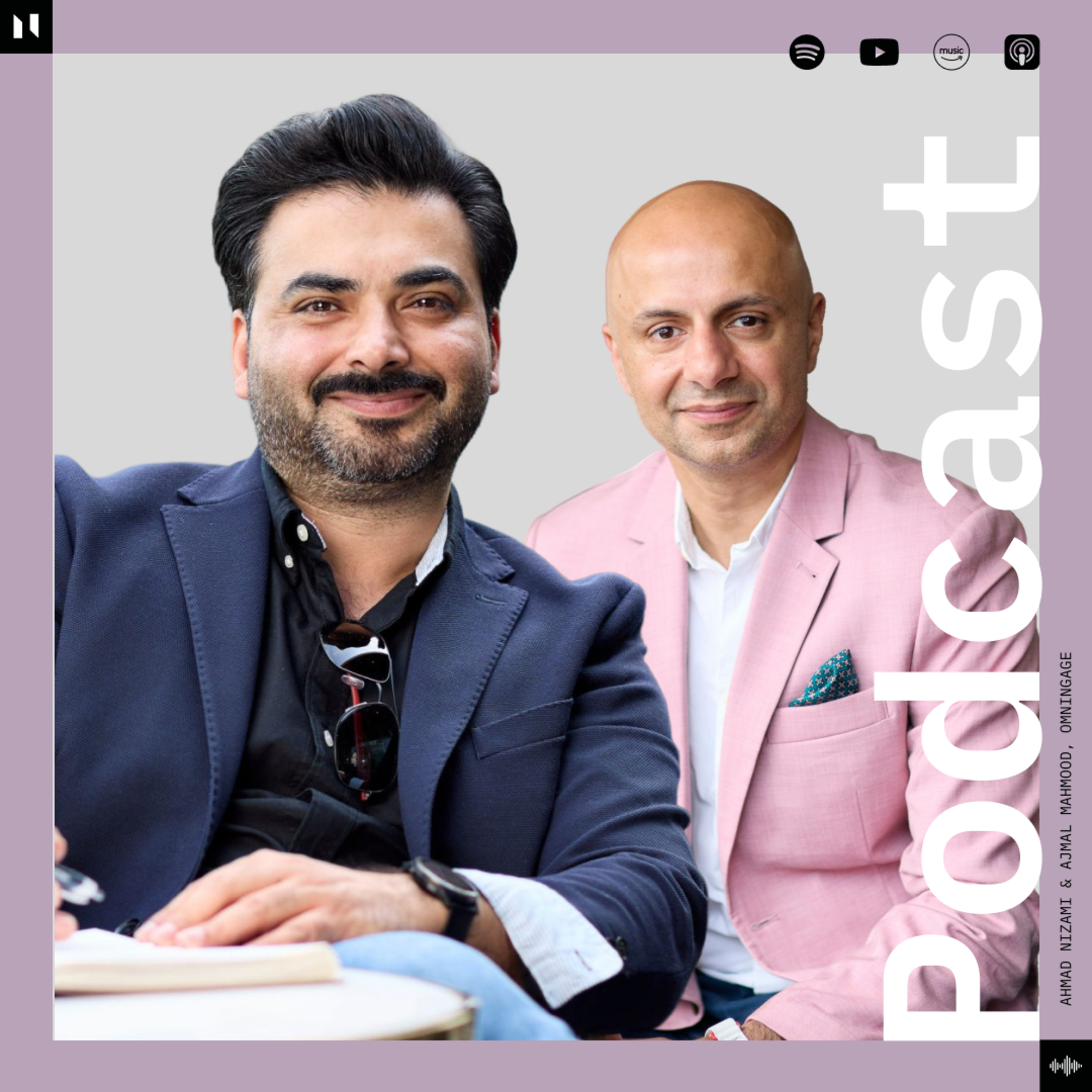 The future of customer service: More human, thanks to AINODE Podcast · on Human-centered design62 / 100
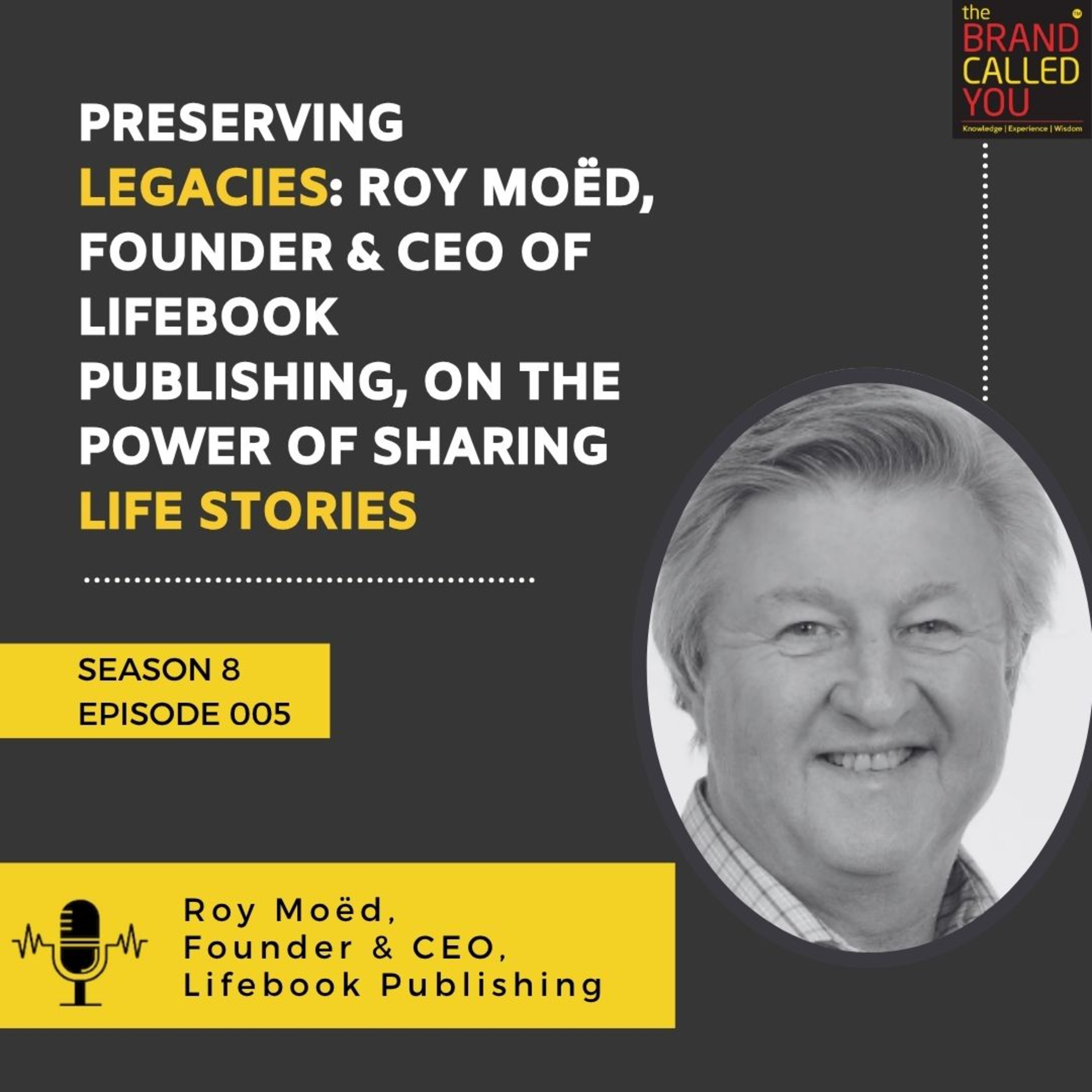 Preserving Legacies: Roy Moëd, Founder & CEO of Lifebook Publishing, on the Power of Sharing Life Stories 57 / 100
 Super Dad Coach Vishal Kumar Singh: Redefining Fatherhood & Building the Platform of Papas37 / 100
 Unlocking Elite Performance: Michael Ambrosino, Partner at Access Ventures, on Servant Leadership & Venture Success 76 / 100
 Crafting Signature Talks & Building Authority: Ashley Stahl, Founder of Wise Whisper Agency57 / 100
 From Child Labourer to Changemaker: Devendra Kumar, Founder of Ladli Foundation Trust, on Empowering Lives 72 / 100
