
The Brand Called You · 2026-06-25 · 31 min
Key moments - from our scoring
Substance score
37 / 100
Five dimensions, 20 points each
Mani Mekhalai, former MD and CEO of Union Bank of India, discusses her three-decade journey in banking and the transformational priorities that shaped one of India's largest public sector banks. The episode covers her path from Vijaya Bank through multiple mergers to leading Union Bank, where she grew profitability from ₹5,200 crores to ₹18,000 crores, reduced NPA from 11% to 3.6%, and expanded business by over 5 lakh crores (₹500 billion). Mekhalai explores the core values - integrity, accountability, and respect for people - that anchored her leadership philosophy, and explains how she built organizational culture and digital transformation through the YOM platform. She addresses being the first woman MD/CEO of a major public sector bank, emphasizing that leadership success stems from competence and results rather than gender-based narratives. Banking operators, organizational leaders, and aspiring executives in financial services will benefit from her insights on sustainable profitability, asset quality management, credit discipline, digital ecosystem design, talent development, and building stakeholder confidence during major institutional transformations.
Her three priorities were strengthening profitability in a sustainable manner with strong fundamentals and risk management; improving asset quality through monitoring, resolution, recovery, and credit discipline; and building confidence across all stakeholders including customers, employees, investors, and regulators.
The bank improved asset quality through rigorous credit appraisal and risk management, strengthened monitoring mechanisms with early warning signals, engaged in recovery and resolution across courts and NCLT forums, and ensured accountability across all departments as a shared institutional responsibility rather than siloing the problem.
Key drivers included improving asset quality and balance sheet health, focusing on quality growth rather than growth-at-any-cost, improving operational efficiency through digital adoption and technology, and ensuring people were aligned with the bank's goals.
YOM was designed as a single integrated digital ecosystem that would meet both customer and banking needs with seamless integration, focusing on accessibility, innovation, and convenience so customers wouldn't need multiple applications or fragmented experiences across different platforms.
She emphasized moving beyond tokenism to focus on opportunity, establishing strong mentorship programs, leadership development pathways, flexible support systems, unbiased talent evaluation, and giving women meaningful critical assignments while understanding that diverse leadership teams make stronger decisions and build stronger institutions.
Our reviewer’s read on each dimension, with quotes from the episode.
A handful of concrete metrics appear (NPA from 11% to 3.6%, profit growth from 5,200 to 18,000 crores) but the explanatory content is almost entirely generic banking platitudes. The ratio of genuinely non-obvious ideas to filler is very low for a 31-minute episode.
profitability is important, but sustaining profitability is even more important
trust remains a constant episode, uh, in a banker
Every insight offered is well-worn conventional wisdom - integrity, accountability, people-first leadership, trust as currency. There is no contrarian, first-principles, or counterintuitive claim anywhere in the episode.
Leadership is not about authorities. It is about responsibility.
having more women leaders is not only a diversity objective, it's a big business objective
Mani Mekhalai is a genuine practitioner who ran the fourth-largest public sector bank in India and delivered measurable, large-scale results. The caliber is real, but the conversation fails to extract depth commensurate with that experience. The episode title also incorrectly names a completely different guest.
former managing director and chief executive officer of the Union bank of India, which is the fourth largest public sector bank in India by market capitalization
I took up the reins of the bank somewhere in June, uh 2022
The best numbers in the episode (NPA 11% to 3.6%, profit 5,200 to 18,000 crores, 5 lakh crores business expansion, 73,000 employees) are largely introduced by the host rather than volunteered by the guest, and the mechanistic explanations for how these results were achieved remain vague.
the asset quality improved with an NPA reducing from 11% to 3.6%
you grew the profit of Union bank from 5,200 crores to nearly 18,000 crores during your tenure
The host is consistently deferential, responding to every answer with praise phrases and never challenging a single claim. Questions are wide open and sequential rather than probing, making this feel like a scripted PR interview rather than a substantive conversation.
Great response.
Absolutely fascinating. Great response.
Computed from the transcript - who did the talking, and the words that came up most.
Unlock the secrets of building a powerful speaking career with Ashley Stahl, Founder of Wise Whisper Agency, in this episode of The Brand Called You, hosted by Ashutosh Garg. Discover how to craft your signature talk, understand the difference between credibility and authority, and turn personal stories into impactful, actionable insights that inspire audiences and drive meaningful results. Ashley shares her journey from starting with no speaking experience to building a thriving speaking career. She also reveals practical frameworks for creating scalable intellectual property and discusses real-world success stories, including how one client went from being relatively unknown to generating 2.5 million views in just 100 days. Whether you're a corporate executive, activist, wellness expert, entrepreneur, or aspiring speaker, this episode offers actionable strategies to elevate your voice, strengthen your authority, and grow your personal brand.
Transcribed and scored by The B2B Podcast Index.
Mani Mekhalai: Foreign.
Ashutosh Garg: Welcome to another episode of the Brand called you a, uh, vodcast and podcast show that brings you leadership lessons, knowledge, experience and wisdom from thousands of successful individuals from around the world. I'm your host, Ashutosh Garg. And today I'm um, privileged to welcome a very tall corporate leader, a very senior and respected banking leader from Bangalore, Ms. Money, a Mani Mekhalai. Mani, welcome to the show.
Mani Mekhalai: Thank you, sir.
Ashutosh Garg: Um, Mani is the former managing director and chief executive officer of the Union bank of India, which is the fourth largest public sector bank in India by market capitalization. So ma', am, you know, I was so fascinated to read the amazing story you have had to reach the very apex of such a large bank. Tell me what first attracted you to banking as a profession?
Mani Mekhalai: So I can tell you one thing that you know, banking as a, uh, profession, honestly when we joined the banking, uh, sector, it is nothing like, you know, that was an opportunity that came to us. And like all young professionals, all of us are looking for an opportunity to build a meaningful career, to become financially independent and contribute to society. I can tell you one small thing that the banking has direct, you know, actually has that direct connect with people's life. Every banker you can see is not merely handling, uh, money. A banker is actually helping someone or their aspirations to, you know, build a first home, start a business, probably educate a child and overcome probably a difficult phase in someone's life. So what actually is, uh, you can say banking is, you know, it sits on the intersection of somebody's aspiration and the opportunity that lies for a banking. So that's what you know, really attracted me to banking.
Ashutosh Garg: Great response. And tell me what were some of the most important lessons you learned during your three decades at Vijaya bank that shaped your leadership philosophy?
Mani Mekhalai: I can tell you that uh, Vijayabank was a great bank and we uh, had the privilege like I had of course the privilege to work across different geography, functions, responsibility, meet a lot of people because it was a mid sized bank. So we were groomed in all areas of banking. Those years taught me lessons that no classroom could ever teach us. The first lesson I learned from the bank was because it was started by a group of uh, farmers in the coastal Mangalore Was the first lesson that you learn is about humility. And the branch is the greatest management school in the world. When you sit across a farmer, a small business, a teacher or a first time borrower, you quickly realize that every number has a human story behind it. And the second most important lessons are there must be many Lessons, but I will only tell you about two or three of them. And the second, of course, is the trust. That is the real currency of banking. Technology will change, products will change, regulation will come and go, but trust remains a constant episode, uh, in a banker. And a third most important lesson was authority and leadership. About authority and leadership. Leadership is not about authorities. It is about responsibility. Some of the finest leaders that you meet in your career, they don't come with, you know, designations. They come with, you know, they are consistently looking at the institution rather than themselves or a small department that, uh, they are heading. So looking back, I often say that, you know, I often believe that also that Vijayabank just did not give me a career. It gave me a foundation and it taught me to be disciplined. And the, uh, journey shaped my, that particular journey shaped my leadership role that followed later.
Ashutosh Garg: Absolutely fascinating. Great response. And tell me, what personal values have remained constant throughout your professional journey as a banker?
Mani Mekhalai: So I already told you, if I had to identify a few values that has shaped my career or has been constant throughout my journey, the first would always emerge as integrity. M. It sounds like a simple word, uh, but it becomes truly meaningful when you have to make decisions during difficult times. It is easy to do the right thing when circumstances are comfortable and everything around you is hunky dory. But integrity's real test comes when there is pressure, uncertainty, and conflicting interest. The second value, of course, is accountability. Throughout my career, I believe that, um, uh, leadership is not about claiming your success. It is owning that responsibility. When things go well, the credit should go to the team. And when challenges arise, leaders must step forward and take the blame for it.
Ashutosh Garg: Very interesting.
Mani Mekhalai: And the third value is, you know, the respect for people or nearly, because, you know, in, in a public sector bank, you also meet a 5 rupee customer and a 500 crore customer.
Ashutosh Garg: Correct.
Mani Mekhalai: So you have to give them the same kind of, um, level playing field. You have to respect people for what they are, what they're doing for you. And then you have lived and worked with lot of employees. So all those things give you the understanding that people are important to you. And um, I always believed that, uh, these are the three things that mostly defines your character. And you have to continuously learn. And that's what I will say, sir. These are the values that I stood. And I've always been, you know, on that path. Integrity, accountability, believe in people and learning. Of course, these are the things that, you know, defines a person actually.
Ashutosh Garg: Absolutely. You have worked through multiple banking transformations and mergers. How did each transition Prepare you for the MD and CEO role.
Mani Mekhalai: So uh, I should tell you here that um, of course I moved from uh, Vijayabank, uh, to Kendra bank and then to Union bank of India. Every transition in my career taught me something different. And um, each one prepared me for the next level of responsibility. One of the biggest lessons I learned in that transformation is never about systems alone. It is always about people. If people are with you, then the systems work on their own. When organizations go through mergers of that big scale, like what I saw in um, Union bank of India and what I saw um, uh, even in um, Kendra bank or even when the merger of Vijaya bank with Bob, it is not an operational integration, it is actually an emotional integration. People worry about their futures. Teams wonder where they will fit. Cultures need to align and of course trust needs to be rebuilt. So these are the things that you should come through. Communication through clarity of the purpose, patience and all these things. When I assume the role of MD and CEO really helped me to have multiple perspectives. And then I had also had a lot of experience in branch operations, credit recovery, business, human resources. All this, you know, gave me a, ah, good fundamental push towards the major role that I was to play as an MD and CEO of Union Bank.
Ashutosh Garg: Absolutely. And therefore when you became MD and CEO of Union bank in 2022, what were the three priorities you identified immediately?
Mani Mekhalai: So as uh, the MD of Union bank of India. Let me tell you sir, that um, uh, I had, you know, uh, you know my uh. The government had um, given me the fsib had conducted the interview and they had come out with the um, you know, results in March 16th, 2022. And I, I took up the reins of the bank somewhere in June, uh 2022. So I had sufficient time to understand what Union bank was about, understand what I should be doing. And I knew that the bank had already gone through a significant transformation journey following the merger of Andhra bank and uh, uh, Corporation bank with Union Bank. My first priority was of course to strengthening profitability. And that too in a very sustainable manner. Profitability is important, but sustaining profitability is even more important. I wanted growth, but that was supported by strong fundamentals and disciplined risk management. And uh, you should have operational efficiency for that. And the second priority was improving asset quality. And uh, asset quality is the, the, you can say the foundation of banking. If asset quality weakens, every other achievement becomes, you know, vulnerable.
Ashutosh Garg: Yeah.
Mani Mekhalai: So we focused in the bank, we focused on monitoring, resolution, recovery. And the most important is the credit discipline across the organization. And the third priority Was, um, if I can, uh, recount. Was, you know, the building confidence across the stakeholders, whether it be customers, employees, investors, regulators, all, every stakeholder, uh, should feel confident about the institution.
Ashutosh Garg: Correct.
Mani Mekhalai: Only then the cons, the institution can go forward and step forward and acceleration will happen. So we have to, what do you say? That people have to be aligned towards a common purpose and only then they can move forward. And looking back, if I can say my years of um, the priorities that I took was one of discipline and a focused execution, which of course the outcomes that followed were that reflection of the collective efforts of all the unionites rather than one single person sitting there at the helm of a.
Ashutosh Garg: Absolutely. Very well said. You mentioned that your first priority was profit and you grew the profit of Union bank from 5,200 crores to nearly 18,000 crores during your tenure.
Mani Mekhalai: Yes, sir.
Ashutosh Garg: What were some of the specific actions that drove this dramatic improvement?
Mani Mekhalai: So many of times people have asked me this question and I, you know, they feel that it was a magic or a secret behind what is there. There's no secret, you know. But I can tell you that, you know, it was not a single small decision that I had taken or it was a transformation overnight. And uh, many of my stakeholders, whether it be the government or, you know, the regulators, there is a Bank of India, ah, all have helped me to really come out with this transformation. The improvement was results of hundreds of discipline decisions that we consistently took over a period of time. As I already mentioned to you, asset quality was one, uh, big uh, improvement that we have made. Healthier balance sheet, of course, creates a stronger foundation for growth, and that was one thing. And second, uh, driver was the credit discipline. We focused on quality growth rather than growth at any cost. So this is what I've been always telling. Let's not look at uh, any kind of a growth just because we want a growth. But we have to see that every growth contributes to the bank's bottom line. That was my long. And that will only allow the balance sheet to grow in a sustainable manner. And the third driver, of course, was, uh, operational efficiency. We improved digital adoption. We include technology. And all this, of course, uh, was um, you know, it impacted the profitability in a very strong manner.
Ashutosh Garg: Very interesting.
Mani Mekhalai: And the last but not the least that I can tell is the people who, you know, were aligned with the goals of the bank. And that's a reason, sir, that we could do what, uh, we could, what we had uh, to do in the bank.
Ashutosh Garg: Fascinating. The second, um, priority you spoke of was asset quality. And you under your leadership the asset quality improved with an NPA reducing from 11% to 3.6%. What were some of the most critical interventions that made this possible.
Mani Mekhalai: So as I've already mentioned, you know asset quality improvement is never the result of a sale single initiative. Yes, it requires you know, lot of discipline, consistency and the willingness to address the difficult issues head on. Now you cannot say, you know, you throw it back and say okay, this is fine and but sir, uh, there were a lot of such um, you know, consistent willingness uh, that we were able to do and the government also stepped in and many of the times the constantly the DFS were always, you know, urging banks to reduce npa. You must have seen how mam also FMM has also been talking about this, how you know, discipline has bought this. It begins you know, like with credit appraisal monitoring and risk management. That's what the first thing that comes to my mind. If you do your, you know, the basics correctly, then everything is okay. When your appraisal itself is wrong, then firto, there's nothing, no stopping in the account becoming an npa. And then you have to strengthen the monitoring mechanism of focus on the early warning signal and ensure that potential stress is identified at the very beginning before it hits your um, balance sheet. You tell that yes, the problem is occurring and you try and put a stop to that. So monitoring is very important. And the third of course is recovery and the resolution. My team worked really tirelessly across the country to engage with borrowers, uh, you know, engage with um, the courts, engage with the um, NCLT forums everywhere. We, you know, and find out a practical solution wherever it is possible. And of course the last one is accountability. Each one of us have to be accountable for what. It's not just a department which is responsible for the uh, asset quality. It is, it's a shared responsibility of the institution, the credit, the department, the monitoring department, the resolution department. Everyone should be on the same page. Only then, sir, we can find that things can change. And this is what has happened and we have demonstrated what has happened here only. And of course on top of that all these things, it's governance and risk management. And that is important to uh, the, in the risk framework and the governance framework, how these are executed together that only will align to the goals that the bank has got. Sir.
Ashutosh Garg: Amazing. One more question relating to the bank's performance and then we'll come to some other questions. The bank's business expanded by over 5 lakh crores. Yes sir, I lakh crores. For my viewers and listeners who are not in India is over $500 billion.
Mani Mekhalai: Yes sir.
Ashutosh Garg: Uh, what were the key strategic decisions behind this growth?
Mani Mekhalai: As uh, I have always been telling sir, it is you know like sustainability is what uh, it comes to my mind. You know the growth becomes meaningful only when it is balanced and it is sustainable.
Ashutosh Garg: Right.
Mani Mekhalai: If you just you know pursue growth simply for the sake of larger numbers, uh, uh, you know it's not going to help anything. We focused on building a diversified and a resilient uh, you can say a business franchise like you know, retail banking. It was a very good growth engine for US Agriculture, MSME and uh, you know MSME is the backbone of India's economy. So we all strengthened all these things uh, through our corporate banking relationship Though we had uh, you know, if you're looking at uh, what the bank had, we always said 55% of your portfolio should be retail and ramp portfolio that is and remaining should be the uh, larger corporate banking. So we tried and took uh the corporate relationship also. We tried to maintain a very disciplined risk framework in that. At the same time we invested heavily in the customer experience and digital capabilities and that also increased the business. One thing I've learned is that the customer do not think in terms of banking projects, they think in terms of solutions. When institutions focus on solving the customers needs effectively, growth follows naturally. So that is what I feel sir is uh, the secret behind that tremendous growth in my business.
Ashutosh Garg: Very well said. You also spoke a few minutes back about uh, technology and digital uh transformation and I think you led the VoM platform which now serves millions of customers.
Mani Mekhalai: Yes sir.
Ashutosh Garg: What was the vision behind creating such a strong digital ecosystem in the bank?
Mani Mekhalai: So uh, you know when you say that um uh technology is very important, I have also said see technology is only um, uh what do you call um enabler and um, it is the people who have to really align with those things. So what yom's philosophy was simple. We wanted to create a single integrated digital ecosystem that would meet a customer's banking needs at one end and the banking needs on the other end. So there should be a seamless integration of the customers, uh, what he wants and the technology. Today's customer expect convenience. They do not want multiple applications, complicated processes and a fragmented experience. Anywhere he goes he has a different experience. Yom we designed to bring together simple things like accessibility, innovation where the customer feels happy about adopting it. And that I feel was ultimately what um YOM could give and uh, build relationship across the customers and the various stakeholders.
Ashutosh Garg: Of the banks m with over 73,000 employees, and the fact that you had, uh, two new banks which were merged into union, uh, bank. What changes did you make to culture, talent development, and employee engagement during your tenure?
Mani Mekhalai: So that's a very fascinating question, actually, and close to my heart, too. So large institutions, you know, uh, succeed when people feel connected to a common purpose.
Ashutosh Garg: Correct.
Mani Mekhalai: And, um, you have seen any edifice is built on people. And if there is a common motto, common purpose. And that's how organizations grow. We have seen how Southwest, uh, airlines, all those things, how did they grow? It is because people felt, this is my institution, uh, this is my purpose, and these are my goals. When that ownership comes in, naturally, everything changes. So one of my first priorities was creating an environment where employees felt valued, heard, and empowered. So if you have ever come to my, my bank. When I was, you know, whether I was a Ed or the MD of the bank, I always kept my doors open so anybody could walk in and give their two piece and, you know, whatever they wanted to tell me, they could tell. We focused. That was one thing that I did. We focused on learning and development also. We bought out so many things, but digital capability, leadership development, wellness initiatives. So all this brought out greater engagement across the levels. I have always believed that culture should not be imposed from the top. It must be an experience that the organization should feel. You know, the moment a culture is imposed, you know, nothing happens. Actually, one day the DNA will break. But what you have to do is take little steps to change the DNA of organization.
Ashutosh Garg: Right.
Mani Mekhalai: When the employees feel respected and invested in, they contribute beyond their job description. And that energy becomes visible in customer experience. And the front desk is where you really feel that, yes, people have changed. People have really understood what the bank is, and they all contribute to the institutional success.
Ashutosh Garg: Uh, very interesting. Next question. A few questions are for you. Uh, as one of India's most accomplished women banking leaders, what unique challenges did you face in your journey to the top?
Mani Mekhalai: Uh, sir, I can tell you that, um, um, you know, I actually have not taken that as a challenge. Like, you cannot say that. Um, uh, you know, leadership in every profession or leadership journey comes with challenges, regardless of gender. So rather than viewing a challenge as a barrier, I, uh, can say that I approach the opportunity to. It was like an opportunity to learn, perform, and, you know, grow. Throughout my career, I have remained focused on competence and delivering results.
Ashutosh Garg: Yeah.
Mani Mekhalai: And I told you in the very beginning, integrity was something that I did not let go at all in my career. So becoming the first Woman MD of CEO uh, MD And CEO of Union bank of India. And at that time the only women heading a public sector bank was both, you know, like more a responsibility than a privilege. It reinforced my belief that leadership is defined not by gender alone.
Ashutosh Garg: Absolutely.
Mani Mekhalai: But, you know, performance and the ability to. To, you know, inspire others. So that remained constantly with me. And that is how I've seen myself and that is how I've, you know, got to that level. Sir.
Ashutosh Garg: Um, but, you know, um, money. I've spoken to many, many women leaders around the world and I've asked, often asked them the same question that I'm going to ask you. Have did you ever feel that you had to work harder than your male counterparts to prove yourself?
Mani Mekhalai: So, uh, that's a difficult question to answer. But see, as I told you in the previous answer also that the focus is always on doing a job to the best of your ability, rather than comparing your journey with someone else. Comparisons will always come up, but then you have to do what you feel is your ability. Am I giving 100% to my job? You know, while leadership journeys, um, differs from people to people, I believe that sustained performance and commitment, uh, ultimately earns respect and recognition. My focus has always been on contributing meaningfully to the institutions, uh, or the departments I serve. Um, rather than thinking of what others are doing, what have they done? Should I work harder than them? No, that was not my goal at all. Give you 100%, see that the result is achieved and stay focused on whatever you're doing and that's, uh, what will contribute meaningfully.
Ashutosh Garg: Sir, great response. Time for two more questions for you.
Mani Mekhalai: Yes, sir.
Ashutosh Garg: Um, what practical steps can organizations which are so large, like bank of India, UN bank of India take to create more women leaders at senior levels?
Mani Mekhalai: So the first and foremost thing that we have to ask is, you know, like, uh, tokenism. Whether we are just, you know, we're saying 33% or 25% or 16%. Like Union bank of India had about almost 30%, uh, women, uh, in the roles. The conversation m. Uh, should be more on, uh, opportunity rather than on representations. So what we have to create at the ground level is organizations need strong mentorship programs, leadership development pathways, actually, and a flexible support system. Most important is an unbiased talent evaluation processes. Most importantly, women must be given meaningful opportunities to critical assignments. So this is what happens when a woman feels, you know, truly respected and you know that she's been given this kind of a critical assignment. Her motivation actually grows. And as we've seen in my bank in Vijaya bank that when I started, you know I was given these kind of roles so that developed that kind of uh, instinct in me that you know I'm capable of doing something, I'm better. So this capability will you know build and you know the experience and this develops the experience and also observe.
Ashutosh Garg: Very nice.
Mani Mekhalai: And you know one thing all of us should understand that having more women leaders is not only a diversity objective, it's a big business objective.
Ashutosh Garg: Absolutely right.
Mani Mekhalai: Because diverse relation uh, leadership teams, uh, make stronger decisions and build stronger institutions. And so I can say that you know, you should have a proper ecosystem, you should have, you should foster merit based growth and you know create a leadership pipeline. Only then I can say that organizations can unlock the full potential of a diverse talents. And this is what we have been doing in Union bank of India. We bought out lot of leadership programs of women. Empower her. That is something that we bought out and where we have been given uh, different lessons. I, you uh, know bought many women leaders from the industry to talk to them. So a lot of things that we did, you know, it cannot be counted but lot, many little things we did so that we can unlock the full potential of the uh, potential of the women talent in the.
Ashutosh Garg: Very nice. And I completely agree. I mean I worked with so many women across in my career. I've just found work ethics and I've said this many times, work ethics of women leaders is significantly better. But coming to my last question, and this is back to you again. If you could go back and give advice to the young woman who joined Vijaya bank in 1988, what would you tell her?
Mani Mekhalai: So I would uh, probably tell her uh, to worry less, worry less and trust the journey more.
Ashutosh Garg: Absolutely.
Mani Mekhalai: When we are young so we often feel the pressure, everything figured out immediately. You know, like we are impatient, we compare ourselves with others, we worry more on the timelines, we wonder where we are progressing, whether we are progressing at all.
Ashutosh Garg: Yes.
Mani Mekhalai: So I would rather say that. Keep learning, stay curious, protect your integrity and treat people with respect. And I think all the other things will follow and uh, consistency is one thing that will come. Uh, these are the things I would say to myself. You know, protecting integrity and treating people with respect, that's very, very important.
Ashutosh Garg: And these are very very powerful words. But on that note, I just want to say first, congratulations on the incredible success you had while leading Union bank of India and in an amazing career that you've had since you started in 1988. You know, your journey has been so fascinating. You know, for my viewers and listeners, it's almost like a case study in management, uh, of how you built Union bank of India and how clearly you have articulated your own values, your priorities for the bank and you know, to achieve such incredible numbers. I was fascinated to hear you saying that you've drilled it down to just three simple priorities which seem to seem very easy. But I can only imagine how hard the work must have been to have achieved all these amazing results. Thank you so much for speaking to me.
Mani Mekhalai: Thank you very much, sir. Thank you very much.
Ashutosh Garg: Thank you for listening to the brand called you'd Videocast and podcast. A platform that brings you knowledge, experience and wisdom of hundreds of successful individuals from around, um, the world. Do Visit our website www.tbcy.in to watch and listen to the stories of many more individuals. You can also follow us on YouTube, Facebook, Instagram and Twitter. Just search for the brand called you.
 Preserving Legacies: Roy Moëd, Founder & CEO of Lifebook Publishing, on the Power of Sharing Life Stories 57 / 100
 Karen Salmansohn: Bestselling Author & Behavioural Change Expert on Creativity, Purpose, and Living a “To-Die-For” Life
  Unlocking Leadership & Strategy: Perry Atwal, Full-Time Instructor, Sauder School of Business, UBC
  No Adult Left Behind: George Pillari, Managing Partner of Running Fox Partners, on Embracing AI for Lifelong Success
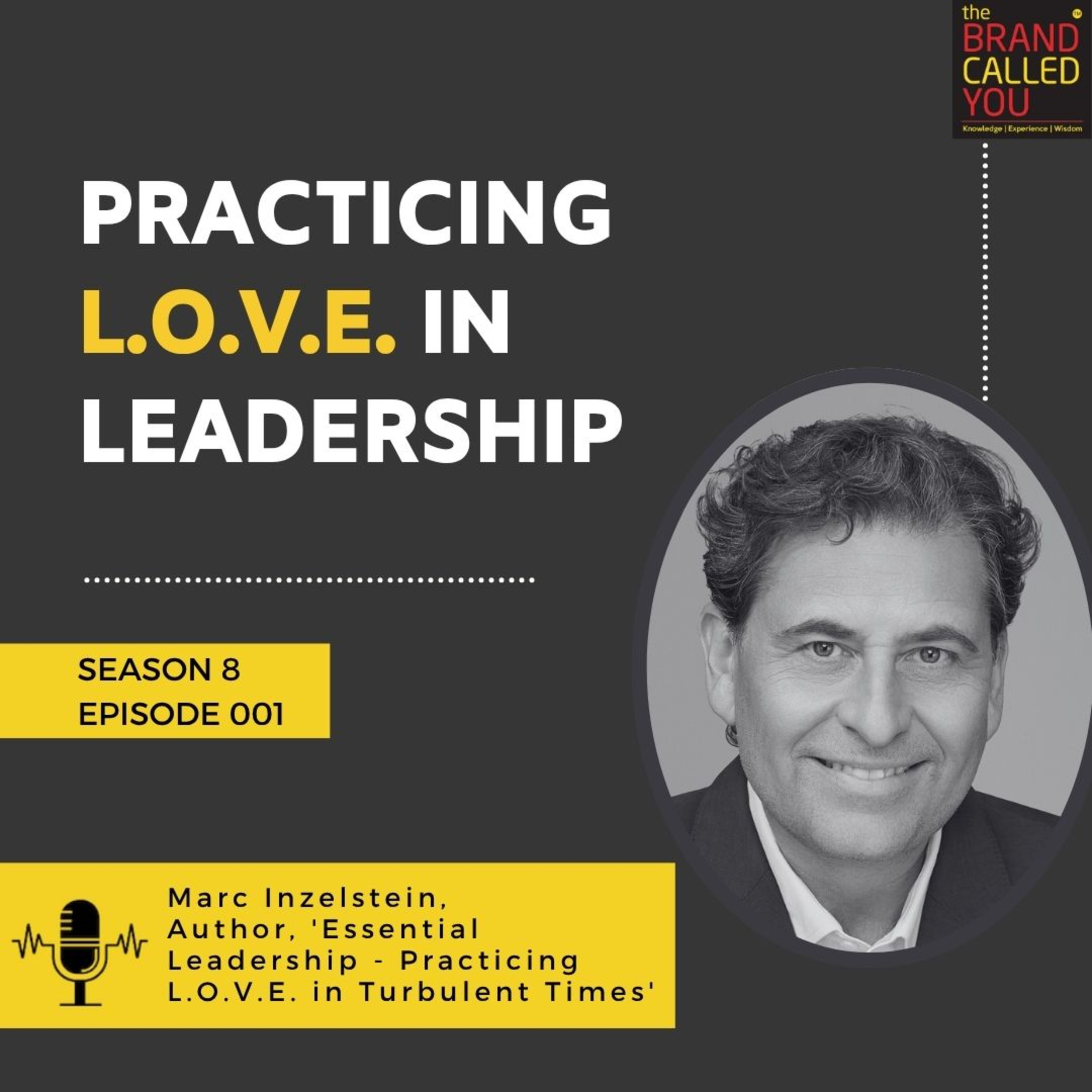 Practicing L.O.V.E. in Leadership: Insights from Marc Inzelstein, Author & Executive Advisor