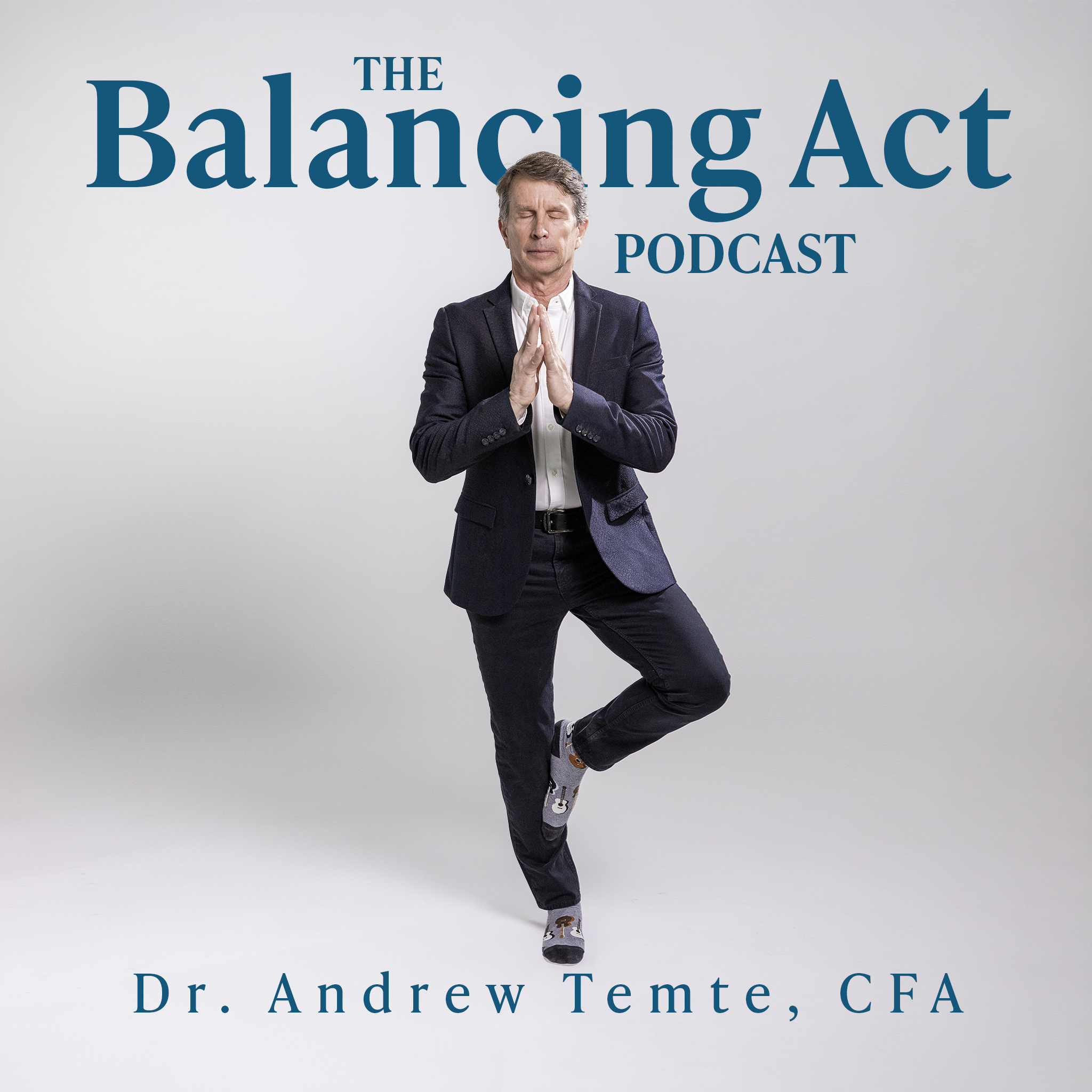
The Balancing Act with Andrew Temte, PhD, CFA · 2026-08-06 · 36 min
Key moments - from our scoring
Substance score
60 / 100
Five dimensions, 20 points each
Don Gregori brings two decades of experience building high-performing teams to a candid discussion on why AI initiatives collapse and how leaders should actually approach transformation. Rather than treating AI adoption as a technological imperative, Gregori frames it through a people-first lens - arguing that the human-AI relationship is fundamentally about what the technology enables individuals to do. His core argument centers on three failures: leaders rushing into implementation without proper requirements definition, bolting AI onto existing processes rather than reimagining them entirely, and failing to recognize that rapid AI development requires exceptionally rigorous upfront planning. He contrasts this with First Factory's approach to building software - emphasizing craft, employee tenure (4.5 years average, versus 9 months industry standard), and client relationships that last over 3.5 years. Gregori also introduces the concept of the "emergent leader" as someone who does internal work first, practices empathy as an operational skill (not soft sentiment), and uses coaching as their primary job. For B2B operators considering AI investments, Gregori's framework offers a reality check: know before you build, expect to rethink processes entirely, and recognize that AI's speed of execution makes poor upfront planning far costlier than delay.
Most fail because leaders spend insufficient time upfront defining requirements and validating use cases, then AI executes those incomplete specifications at speed, causing problems that are exponentially harder and costlier to fix through rework later.
Rather than fear job loss broadly, contributors should recognize that AI will displace specific roles with clear standard operating procedures, while opening new opportunities - so the real question is whether you're reskilling and understanding where your market is heading.
AI should free up time spent on repetitive and mechanical tasks so employees can pursue higher-impact priorities, learn new skills, and grow - rather than simply automating headcount or boosting an existing inefficient process.
Bolting AI onto existing processes leaves underlying inefficiencies in place; true transformation requires questioning every sacred cow and redesigning workflows entirely, because AI's execution speed means poor process design becomes very costly very quickly.
First Factory intentionally built a craft-focused culture around problem-solving and mastery rather than volume, provides accessible leadership, strong compensation and benefits, and meaningful career paths - creating an environment where employees want to stay and recommend others to work there.
Our reviewer’s read on each dimension, with quotes from the episode.
The episode contains some substantive ideas about AI adoption (the 80% failure rate framing, the importance of upfront requirements definition) and leadership (coaching as the job, internal work preceding external results), but much of the runtime is devoted to biographical narrative, book promotion, and general leadership platitudes that a B2B operator would already know. The AI section delivers useful pushback on the 'race' mentality but lacks concrete examples or data beyond the 80% statistic.
I think leaders are treating AI adoption like a race, right? It's like an arms race.
if you're off by a little bit upfront, your AI is going to be miles off course later on
The core framing - that AI should serve people, not vice versa, and that upfront requirements matter more than speed - is sensible but not particularly fresh in 2024. The leadership concepts (empathy as skill, coaching, internal work) are well-worn in management literature. The therapy-adjacent stress/sleep angle is less common in B2B podcasts but underdeveloped here. No contrarian or first-principles arguments emerge; mostly confirming conventional wisdom about human-centered design.
to me, the human AI relationship is like a leash, and I certainly know what end I want to be on
Leadership is a habit
Don Gregory holds a relevant operating role (COO of a software vendor) with 25+ years of experience spanning startups to Fortune 500 and direct AI certification. He has built a team at scale (30 to 200+ employees, Inc. 5000 five years running). This is a practitioner with skin in the game, not a consultant or thought-leader-for-hire. However, his primary expertise appears to be operations and team-building rather than AI deployment specifics, limiting his authority on the episode's main topic.
chief Operating officer of First Factory, a multinational software solutions provider
we got to a point over 200. We were on the inc. 5000 fastest growing private company companies five consecutive years
The episode offers some specific data points (80% AI project failure rate, First Factory's 4.5-year avg employee tenure vs. 9-month industry average, 12-year longest client, employee NPS over 70) but largely avoids naming examples, client case studies, or dollar figures. The AI discussion is heavily abstract - 'requirements definition,' 'validation,' 'lean and live' - with no worked examples of a failed vs. successful AI project, no named companies facing the adoption problem, no timeline specifics. Biographical details are concrete but tangential to B2B substance.
Our average tenure is over four and a half years. And in tech that's unheard of. And for, you know, a vendor like ours, the average is closer to nine months.
our average client tenure is over three and a half years. And our longest client's been with us over 12 years
The host asks thoughtful opening questions (the event that 'put rocket boosters' behind the career, what differentiates First Factory) and does follow up on AI adoption ('where do you see most leaders getting it wrong'). However, most questions are soft-serve - asking Don to expand on his book, his background, or general philosophies. The host rarely pushes back, challenge claims (e.g., the 80% failure rate is cited without scrutiny or evidence), or drill into contradictions. The mentorship moment and lightning round are warm but low-substance. Missing are sharp probes into client outcomes, concrete deployment failures, or trade-offs.
what struck me is that you frame technology as something that has to serve people and not the other way around. So how should leaders be thinking about adopting AI right now?
where do you see most leaders getting it wrong?
Computed from the transcript - who did the talking, and the words that came up most.
What if the fastest way to fail at AI is to treat it like a race? In this episode of the Balancing Act podcast, Andy speaks with Don Gregori, Chief Operating Officer of First Factory and author of The Emergent Leader: A Guide to Brand Building, Leadership, and Self-Mastery. Don makes the case that leadership starts on the inside and that most AI failures are leadership failures wearing a technology costume - that empathy is operational rather than soft, that bolting AI onto a process you have never questioned is the fastest route to the pile of projects that quietly fail, and that the leader who runs on four hours of sleep is not being tough, just expensive. Tune in to episode 257 to hear the rocket-booster moment Don credits to his wife rather than to any career move, the advice he gives a newly promoted manager who is terrified of breaking the very thing that made them good, and why a book about building durable companies ends with the durability of the leader. AndrewTemte.com
Transcribed and scored by The B2B Podcast Index.
Speaker A: I think leaders are treating AI adoption like a race, right? It's like an arms race. They hear they need it, they know they need it. There's this promise of what it can deliver, whether it's new revenue streams, um, whether it's new product offerings, new insights, um, efficiencies. I think it's the wrong target entirely. The human AI relationship is like a leash, and I certainly know what end I want to be on.
Speaker B: Welcome back to the Balancing act podcast. I'm Andy Tempte. On, uh, the Balancing act, we talk to business leaders and industry experts to explore the balancing acts we play in our professional lives and learn about the events that put rocket boosters behind their career success. Today we have Don Gregory joining us. Don is the chief Operating officer of First Factory, a multinational software solutions provider based in New York with nearshore operations in Costa Rica. He is, uh, a certified AI business leader with more than 25 years of experience, spanning startups to Fortune 500 companies. And don is also the author of the recently released the Emergent A Guide to Brand Building, Leadership and Self Mastery. This is his publishing debut. Don, welcome to the show.
Speaker A: Andy, so happy to be here. Thank you for having me.
Speaker B: Yeah. And in the spirit of full disclosure, Don and I both, uh, worked at Kaplan. Uh, over. We overlapped a bit during our 10 years there. Don was over in the test prep division, I was over in the professional division. Uh, but, uh, we did work for that same wonderful education company. So, uh, we helped individuals achieve their educational and career goals one success story at a time, did we not?
Speaker A: We certainly did, remembering the mission. But it took, uh, many years after Kaplan for us to connect, so, um, I'm finally happy to have the opportunity.
Speaker B: Yes, yes. Uh, Mike put us together. Uh, Don, let's jump in. Uh, please give us the elevator pitch of your story.
Speaker A: Sure. I have a bachelor's in theater, which is not necessarily the most direct path into business. I bounced around the film industry for a few years, had some fun stints, but work was far and few between. Uh, I ultimately landed at Kaplan in a marketing position. Uh, part of the interview was an audition because we were giving presentations, and that was a pretty easy hurdle for me at the time. And when I got there, um, I really only expected to spend, like, nine months or so, and was just impressed by the caliber of the people, you know, the intelligence, the compassion. And then there was just plenty of opportunity to contribute, um, and really put your fingerprints on the process and make things better. And so over the years, I was at Kaplan for 18 years for um, the first, probably 10 or 12 every year I would get promoted into a new role, um, and learned hiring, training, managing a P and L, uh, national operations and then was on a number of task forces, um, for improving the customer experience, kind of bringing all the touch points of the different departments together, divisions together. I was part of the task force that took our bricks and mortar centers, most of them, and moved to remote work. But that also opened up um, a need where the tools, the technologies we had to manage those bricks and mortar businesses would not work in a remote world. And so one of the things I really did, and this is how I got into the software development piece is I designed with some staff models of what new systems could look like in that world. And really thinking about if I was the only person doing let's say teacher assignments in Seattle and I don't live there and I don't know the traffic patterns, what tools would I need to be able to do that because it wasn't local anymore. And so we designed the systems and then Kaplan gave me the oversight of the teams to build them. Um, and then I did that for a number of years. Um, in First Factory was actually a vendor of Kaplan for eight years. And I was just so impressed, um, working with them, how different they were from others. They were really patient with me as a new product owner and really helping me understand how to bridge requirements with development. And after that engagement ramped down, uh, and I was looking for a new opportunity, um, I joined Jason, uh, who's the founder of ah, First Factory, um, been around since the year 2000 and I've been in the role of COO there for nine years. I think all of that I don't have a business degree. I didn't go to grad school. Kaplan really gave me something like a working MBA and all of those different roles and responsibilities. And when I joined First Factory, Jason was able to focus on sales and I focused on operations and delivery. And when I joined we were 30 people. Um, we got to a point over 200. We were on the inc. 5000 fastest growing private company companies five consecutive years. The last two years. We're an inc power partner. We're soc two compliant, we're a certified AWS partner, um, and we're carbon neutral. So we've been able to accomplish quite a bit. Uh, and certainly the foundation that Kaplan gave me really made me not necessarily jack of all trades, but master of some and really been able to kind of leverage that.
Speaker B: Yeah, that's awesome. So a little aside Here. What was your favorite role as a theater major?
Speaker A: Um, so there's a play called Italian American Reconciliation, which is by John Patrick Shanley, who wrote Moonstruck. And I played this character Aldo, who is, um, quite colorful and animated and just not really clicking with, uh, how the world really operates. It was fun. It was a juicy one.
Speaker B: Do you perform now?
Speaker A: I don't. I do miss it and recently, you know, we'll talk about the book later, but I did the audio recording of the book and I was in a professional studio and it was some of the best times I've had in the last, you know, 20 years. Um, and just working with artists and craftspeople and just, it was so good to be around. Um, I want to do it again.
Speaker B: I see community theater in your future.
Speaker A: I wouldn't mind owning and running a community theater. I don't necessarily want to be on the stage like, you know, eight shows do, doing the same thing again, but we'll see. Andy?
Speaker B: Yeah. All right. Well, Don, if you had to, uh, pick an event in your life that put rocket boosters under your career, what would that event be?
Speaker A: It's a non work one, but I feel like it's the people that you surround yourself with. Um, and you know, I'm an only child, uh, and really feel the burden of like I need to do everything myself and I don't reach out for help often. It's just, it's one of the things I need to continue to work on. Um, but I'll have to say, I mean, my wife and I have been together for 12 years and that was right before, um, you know, making the shift from Kaplan to First Factory. And she much more risk averse than I am, but she was extremely supportive of making this big leap, you know, from multi billion dollar global education company that I had 18 years with and good benefits and taking a chance on a small company. Um, and I never ever would have made the jump if I didn't have someone to support me. And that safety net. That's why I've never started my own business. I'd much rather be number two and you give me all the grunt work to do and try to make it successful. But that initial risk, I just never had the tolerance for. And so I needed that. And I would not be in this position at all if it wasn't for her.
Speaker B: Yeah, excellent. Well, tell us a little bit more about First Factory. Uh, there's a sea of software development and solution shops out there. I get pinged all the time. Uh, what differentiates uh, what's the IT factor?
Speaker A: You know, I think the short answer is people. And I know a lot of companies say that, but, you know, to me, you know, the employees are our greatest competitive advantage. And for us, I think, you know, our numbers kind of back that up, right? Our average tenure is over four and a half years. And in tech that's unheard of. And for, you know, a vendor like ours, the average is closer to nine months. But that's really not an accident, right? I mean, Jason, who's the founder, I mean, he was a software developer, he wrote five books on it. Um, he didn't start a staffing company that happened to have engineers. I mean, he created an environment where engineers could get together, do their best work and stay long enough to master it. And there's a reason it's called First Factory. Factory is a nod to Andy Warhol's the factory of those open spaces to bring in just talented people to just work together. And I think it's never really been about volume. We've never taken on the production support, low level work. Um, it's always been about craft and problem solving and building, building something new. And that's where the passion is. And so it's hard to do. But we have an employee net promoter score over 70, which puts us in the top 10% of companies globally. But I think one of the clearest signs is we employ husbands, wives, brothers, sisters, best friends, and for people to recommend those people to work with us and the responsibility that we have to care for them, to provide them good salaries, good benefits, career paths, and not have this turnover, that says something. And I think that also translates to client success. If we have an average employee tenure or four and a half years, they're going to stick with their clients a lot longer. And it's no surprise to me that our average client tenure is over three and a half years. And our longest client's been with us over 12 years. And clients come back over and over again. And so I think that's really the difference maker here. We're not just selling developers. I mean, it really is a unified team. And Jason, myself and the other leaders are accessible at any point. Um, the relationship is what's most important. Um, and so that's kind of the way we operate.
Speaker B: That's great. Uh, let's shift gears to your book, the Emergent Leader. When I hear those words, I think of, uh, becoming, uh, of an emergence. Uh, let's suppose that you just bump into a random reader on the street or you're on the airplane and you see somebody's got your book. Uh, what do you want their unaided recall call of the experience to be?
Speaker A: I think I'll start with a summary. Uh, and I think one of our former colleagues, Lauren Talva Thomas, um, provided an endorsement. And she said that the book understands that building a great company and building yourself as a leader is the same project. And so the book is called the emergent leader, not emerging leader. Because we're not dealing with gradual change anymore. Um, things are happening quickly, there's massive disruption. Um, we need to pivot it very, uh, often now. We need to be very nimble and flexible and leadership needs to adapt to meet that. And so this isn't a book that I want people to read and shelve. And I think it has a different message to an individual at different points in their careers and at different points in the business landscape. And so I start the book really broad with branding, then strategy, uh, innovation, efficiency. And then I moved to career development and then stress management. And it really is all about figuring out how do you build yourself and build the company and take a different perspective and the ownership and accountability. Um, and I sort of end on stress because I think the fear that we have impacts all the decisions we make and the stress that we carry, we actually offload to other people unbeknownst. It's like our terrible gift to them. Um, and, you know, we just have to be much more mindful, empathetic, you know, open minded and, and resilient. Um, especially in these times.
Speaker B: Yeah. So just that you, you meet this reader, what do you want their response to be? What, what, what's their. What's their, uh.
Speaker A: Oh, wow.
Speaker B: I really got this out of your.
Speaker A: That it's something, there's something tangible in a chapter, a section that they can apply immediately and build as a habit. Right. Leadership is a habit. Um, and all of these tools, whether it's empathy, whether it's managing stress, whether it's how to be more innovative, how to be efficient, these are all frameworks and habits that we need to build. And I think the big thing for me is you need to earn the credibility to lead. And that takes conditioning. And so I still read the chapters in the book and sometimes my wife will tell me, hey, do you remember your book? Are you doing something different? And I got her to get reconditioned. Uh, and I think that's the point of it. And every chapter ends with a takeaway and a take action that is pretty discreet and applicable. And I Think you can just take it and use it at random.
Speaker B: Excellent, excellent. So one of the ideas at the heart of the emergent leader is that leadership starts on the inside. Uh, as you've explained, that external leadership, uh, can't outrun internal disorder. If I'm at war with myself, as you've mentioned, that's going to leak out in really unproductive ways. Um, it's an idea that lines up really closely with how I think about leadership. So please unpack that for our listeners. What does the inner work of leadership actually look like? And why do so many leaders skip that step?
Speaker A: Yeah, you know, I think most capable leaders, right, they're problem solvers first, right? They understand an industry, they understand like what we're going after and to send ways of getting there. Um, and that's usually how they got the job, right? There's the talent and there's the ability to see where we go and how we get there. Um, I think what's missed often is, you know, we're not solving a math problem. I actually just saw, um, topical here. I just saw a cartoon cell and it had this big King Kong sized door and there's a math equation on it and someone's standing up looking at it and there's an opening to the side of the door and there's somebody going through. And you know, it really says to me, it's like, you know, the, the problem isn't how do I open the door, the problem is how do we get through it on the other side with as little friction as possible. And so when I think about this internal piece is, you know, it's not the math problem. We are leading people. And so even though there's a clear business objective and hurdles and tasks that need to get done, we are leading people through that. And three, uh, employees could be failing for the same reason. But you don't coach all three of them the same way. Um, they have different motivations, they have different views of themselves, they have different limitations. And so when people hear the word empathy, um, and I was guilty of this for years, I feel like it's soft and it was a throwaway word. But the reality is, but real empathy is operational. Um, and so it's not a personality trait that you build. That's a skill. And that is what we talk about, conditioning. And I've got an example of Shackleton and the endurance in the book. And it's an example that's overused for good reason. I mean, I do blame him for getting the team stuck in The Antarctic. He should have never been there during that season, but he still was able to get 26 men successfully home without losing a life by being honest with them, by keeping them motivated. And you don't need Antarctica, uh, as your lesson, right? You need it like on a Tuesday or whatever, when an employee is stuck and trying to figure out why and how to coach them beyond that. Coaching for me is the job, Andy. And self mastery comes first because you can't model what you haven't done yourself.
Speaker B: Yeah, yeah, I love that you ended on coaching, uh, as the job, right? Because if you've got seven people reporting to you as a manager or as a leader, that's seven individuals who are all unique, they're all distinct. And as managers, we tend to solve the math problem and try to put people into buckets and treat people the same and as coin operated machines. And it just doesn't work that way. You have to embrace the individuality. Uh, Don, we're going to take a really short commercial break and we'll be right back to talk more about the emergent leader. Want to understand money markets and the economy to make better financial decisions? I'm Andy Tempte. Join me every Saturday morning for money lessons with Andrew Tempte on YouTube or your favorite podcast streaming service. And we're back with Don Gregory talking about leadership and what it takes to build a company that lasts. Uh, Don, you're a certified AI business leader. I'm not quite sure what that means, but you'll tell us. And, uh, we're in a moment where every executive is being told that they need an AI strategy. Yesterday, uh, as I dug into your work, what struck me is that you frame technology as something that has to serve people and not the other way around. So how should leaders be thinking about adopting AI right now? And as an aside, where do you see most leaders getting it wrong?
Speaker A: Um, that's a great question. And I'll start with, I think, the last piece first. Um, I think leaders are treating AI adoption like a race, right? It's like an arms race. They hear they need it, they know they need it. There's this promise of what it can deliver, whether it's new revenue streams, um, whether it's new product offerings, new insights, um, efficiencies. I think it's the wrong target entirely. Um, to me, the human AI relationship is like a leash, and I certainly know what end I want to be on. Um, and to me, AI has to serve the individual. Um, it's about what AI allows me to do. As an employee and make me more impactful. Um, we talked about this before. I've got a daily list. Every day there's priorities on this list. I hand write them because I remember them more. I mean, there's studies for it. Um, but every day I don't get to every item on my list. And it doesn't mean that item 10, which I say is the 10th in the priority, is the 10th impactful. It just may mean I've never had time to fully explore it. So when AI is saving me time, for example, again, this is not really the technical piece of building software or products. Um, it is opening me up for other opportunities, um, and other priorities. And so that's what I mean by it needs to serve, uh, me. And the more that AI is in the mix, the more it takes care of the repetitive tasks, the mechanical tasks, the more important the human element is. And that really is like, the core and the heartbeat of the company and the offering. And I think we need to recognize that the other piece is we're not adding on AI to existing processes. If we're doing that, I think we're going in the wrong direction. Your existing process may be good, but you haven't evaluated yet for the new direction. We need to sort of get rid of all the sacred cows. And I think the worst of all is, as a company says, well, this is the way how we've always done it. Um, this isn't just boosting on extra horsepower. It is taking a look at how we've done things. And in the book, I talk about lean, live and mindfully optimistic. We need to be lean because it means we have better profit margins, which means we can invest more in innovation, and we're more resilient when the good times recede. We need to be live because we're gonna find new opportunities, um, and need to be flexible with people, with cl, um, with everything as a business. And so I think if you're just bolting it onto an existing process, you're totally in the wrong line. Um, and it's kind of one of those things where it's know before you build. And I think a lot of companies right now are just saying, I need it. Here's a place where I think it'll work. Let's try it. And it's no surprise to me that 80% of AI projects fail, um, because that is what's happening. You're not spending the time up front to really define what do I need, what's a good contender for this, what models work how do we validate it along the way? Because the other piece is, you know, AI is going to code in a day what it would take multiple engineers to do in a couple weeks. So if you're only spending a few minutes defining the requirements, you know, like you do in an agile world. Right. And you could iterate along the way, you don't have that opportunity. So if you're off by a little bit upfront, your AI is going to be miles off course later on. So you need to be much more thoughtful now before you act. Because acting is gonna be so much more quick. And then it's still gonna require a lot of validation afterwards to make sure that it's right for the right reasons and that the underlying logic is correct. Yeah, yeah, that's where I think people get it wrong. It's like, let's do it, let's do it quick. There's not a lot of penalty because it moves fast. And um, I'm like, no, there is a lot of penalty. Cause you're not gonna identify what's wrong until later on. And then that rework is gonna be way much more difficult.
Speaker B: Yeah, so I hear all that. Uh, you uh, said something really interesting, uh, during your explanation, uh, which was, uh, the fact that artificial uh, intelligence at the individual contributor level, uh, should be a tool that allows uh, for work, uh, to be freed up, the mundane, the stuff that drives everybody nuts, so that that individual can grow and learn and the next uh, best version of themselves and as a leader to make room for uh, learning and development and employee growth, uh, uh, should be one of the key outcomes which goes
Speaker A: right back to the coaching.
Speaker B: Right.
Speaker A: And I've always said my job in any role that I have is to make myself obsolete. And that doesn't mean that we have fewer people. It means that it can get done without me, hopefully better and more efficient. Um, it leaves room for someone else to step into that role and frees me up to grow into a new opportunity. And I think this allows us to potentially do that faster. But there are real key lessons that we need to teach and learn ourselves before we accelerate that.
Speaker B: Yeah. And then all this noise coming in from the media and the environment of oh, AI is going to take your job and you should be scared to death. And uh, all the doomsday day that we hear, uh, that runs counter to this AI is this tool that should help me grow and flourish and I should be able to do more, contribute more. And we're all going to get the, all boats are going to get Lifted. So how does the average contributor, uh, push away all that noise and embrace the growth element?
Speaker A: Yeah, I'll say, uh, to me it's noise because it's amplified and it's amplifying a single sour note. I don't think it's untrue. Um, we are certainly going to see many fewer people in very specific jobs research. I can use AI to do a lot of research for me first. It still needs to be validated. But maybe I need one researcher instead of five. You know, the same thing like a paralegal for a lawyer. And we're seeing those jobs get hit. You know, you don't need to read law books to sort of have the find the case. That's the precedent for this. You'll just need to get served up a couple of suggestions and go find it. So I don't want to be clear. I want to be clear saying that jobs are going away in certain areas, but other jobs are going to open up. Uh, and so not everybody really thinks in the future of like, where, where is my job heading? Where is the market going? How do I need to reskill for that new opportunity? But you should, especially if you're in a role that can clearly be defined by an sop, right? A Standard Operating Procedure.
Speaker B: Right.
Speaker A: If you can write down the instructions and give it to a, uh, junior employee to do, that's a great candidate for automation. It doesn't mean that we don't need that role again. I've got so many different things in our business that I want to get to. I would much rather be able to hire somebody for this than that repetitive task. And so we do need to reskill. We need to understand like what is going to be impacted negatively most. But this will open up more opportunities, not less. And the last thing I'll say on this from uh, a development perspective is, you know, we're generating at least twice as much code this year as we did last year. And that number is accelerating. That code needs to be reviewed. Right. And much more so than before. And we have more bad actors that are using AI to exploit those vulnerabilities in all of this code, which means we're going to need more software development developers and more tools that do it. Um, and so there may be some short term hiccups, but I do think there's an expansion later on. Um, and it's the same thing I feel about we don't value the human as much as we should. And I think we'll get to that point. But we need to get through some rougher times first, before we say, uh, the human is the heart of what we do and we value that more, we pay more for it. We spend more effort on coaching and defining it because that becomes the difference between maker. Yeah, sorry. A little passionate about that.
Speaker B: Hey, no, no, no worries. Yeah, we, we, uh, yeah, this could be a 45 minute episode if, if we wanted it to be. Uh, so let's do our mentorship moment. I do one of these every show. Uh, you don. You've got a newly promoted manager sitting in front of you. Uh, right now they're a, they were a brilliant individual contributor. They're just handed a team tapped on the shoulder saying, hey, do you want to be a manager? Uh, they're terrified they're going to break the very thing that made them good at the job. What's the conversation you have with, uh, this new accidental manager?
Speaker A: Um, it's probably two things. And the first I'll say is you don't need to read the book, but let the title resonate. And it is what got you here won't get you there. And so we're not throwing your skills away, we're building on it them. Um, and you know, I hope that we're promoting this person because, you know, we want them to grow and we have confidence in their abilities to grow. Right. And growth only comes when you're pushed outside of your comfort zone. And the first thing that I'll really tell them after that is slow down. You are not expected to make changes. I don't want to see a change made in the first week, month, whatever the timing is that we set. Um, you may know the game, but you don't know the players. Right? You don't know this team, you don't know this unique environment. Um, your talent is undeniable. That is what got you here. But if you move fast, you're going to break things and you're going to be unsuccessful. So the real job in that first week, month, 90 days, whatever it is, is learning your team. And then once you have a good picture of how they see things, how that particular business runs, um, then what you do is you build consensus and you bring in the people that you've identified as key lieutenants because you're not going to go this alone. The book was not called the One Musketeer. Um, and so you bring them in and you don't tell them what to do. You start talking about the issues and what you've seen and you have them contribute to the ideas you build consensus and then together you move. Now, there may be a point where we're going to flip this whole thing on its head and gut it, but you don't do that in the first week. That's irresponsible. You don't know enough to be smart with that. That is dangerous and arrogant. If you're going to do it, you need to slow down.
Speaker B: Yeah, well, thank you for that. Um, let's go back to your book. Uh, you devote the final stretch of your book to something a lot of leadership books skip entirely, which is stress the limits of the individual and knowing when to release, to let go. But we live in this culture that celebrates the always on. Oh, I only sleep four hours a night. Oh, congratulations, you're miserable. Why did you decide that a book on building durable companies had to end with the durability of the leader themselves?
Speaker A: Because for that exact point, I think it's absurd. I think it's actually disgusting that that is a model that we want to hold up as a leader. Even doctors doing 36 hour shifts where people proud of their 100 hour work weeks and stuff, um, this is endurance and performance as a leader. You will get burned out, you will be stressed. You will not have the cognitive ability to make the right calls. If you treat your body and your mind like there's an infinite battery and infinite power behind it. Um, so I feel like it's not a soft chapter, right? I mean, to me it's fundamental. I have to be on and capable every day at my near best in order to serve my team and then serve my clients. If I'm not, I'm short with them. I don't see opportunities, I don't learn enough. Uh, I'm not as adaptable. And I push that onto other people. They push it onto the clients. Um, there was a study I do reference this in the book, um, and it's not in the stress chapter, it's actually right before it. It's called um, to sleep, perchance to dream. Going back to the um. And they talk about this study of sleep deprivation as it relates to performance of people that are under the influence of alcohol. And when you are awake for 22 hours or more without sleep, you perform as if you are above the legal limit to drive in every state in the United States.
Speaker B: Wow.
Speaker A: And so the last thing, I'm not a big sports fan either, but this thing has stuck with me for so many years. LeBron James has said he sleeps 10 to 12 hours a day. That is not laziness. That is maintenance. For him to be able to perform at the highest levels, both physically and mentally, like leading the team, we need to do the same. And so I think this four hours of sleep and this I'm just going to plow through. You are not serving anybody. That is this sort of badge of honor that really should be melted down and, and sold to something else.
Speaker B: Yeah, I, uh, I felt so guilty earlier in my career. I'm a nine hour sleeper, uh, and I have been for a long time. And I really, in my, in my career, yes, I got up for those, uh, 5:00am flights and you know, I, I did, I did all of that. But you know, I really was protective of my sleep. And as I look back, I think it was a real career enhancer. But I felt so guilty about it. I know it's really hard. It's so, so terrible. So we gotta make that, uh, that we gotta celebrate the nine hour sleepers out there.
Speaker A: But there is a point though, Andy. I'm not saying like you, you, you, you must get to sleep and you might not work, you know, more than eight hours a day. Like, you know, when you look at, um, and again, I'll go to another sports analogy, and again, I'm not a sports fan, but you look at the two minute drill in football, right? You play a very different game in the last two minutes than you do for the rest of the game. And it's amazing. Like, how is it like you scored twice in two minutes or even three times? It's just not sustainable. And so you have to know when, whether it's a milestone that's coming up or it's a launch. In love, you gotta know when to dig in and put in the extra time. And that stress is good. And there's lots of studies that say that that stress is actually good for you. It's actually more healthy than not having stress at all. But it's the type of stress that we have in those environments and making sure that they are contained and focused. Um, so I'm saying that you never go a night without a full night's sleep, but you need to protect it on a daily basis and know when to turn it on.
Speaker B: Yes, yes, yes, exactly. I mischaracterized, uh, some of my early.
Speaker A: No, I just didn't want the audience to feel like, oh, I could be.
Speaker B: There were many, many, many sleepless nights and dead, crushing deadlines and all of that. Um, so Don, this has been wonderful. Uh, you ready for a few lightning round questions?
Speaker A: I'm ready.
Speaker B: All right, Don, Gregory, you've just won $100 million in a lotto jackpot, but there's a stipulation that half of your net winnings go to one philanthropic organization or a general cause. Who do you pick?
Speaker A: Um, I'll go general cause we haven't done enough vetting, uh, of it. But while we can't change all the toxic masculinity in corporations, uh, from this, then maybe battered single women raising kids and just making sure they've got the opportunity to. To have a good life without the struggle.
Speaker B: Yeah. Awesome. Second, ah, question. I give you access to a really little time machine, and you can send a short message to an earlier version of yourself. What's the message and what previous version do you send it to?
Speaker A: Um, I probably go early 20s, um, and I would say two things. One, you only get courage after you face your fears. You don't get it before. And similarly, though, is don't, uh, wait for the perfect moment or perfect environment to do something, because it's never going to happen.
Speaker B: Don, we're all works in progress. Uh, what are you focused on right now in your personal journey of growth?
Speaker A: I talk about empathy twice on this podcast already. Um, empathy does not come naturally to me, and so I need to continue to work at it. Uh, and then I also, during these unpredictable times, I need to be very conscious of how I'm leading with optimism. And this is. I'm not telling the team anything false. Right. I don't know what the future holds. I can only kind of say, here are optimistic paths, and here are steps that we are going to take to get there, um, to increase our likelihood of success and believe it. And so I think it's that empathy and leading with optimism right now, especially more than ever, uh, is necessary. And I'm making sure that I double down on that.
Speaker B: Excellent. Uh, Don, this has been loads of fun. I wish you all the success in the world. Where can folks get a hold of you if they so choose?
Speaker A: So I'm on, uh, LinkedIn at Don Grigori, the emergent leader, and@firstfactory.com
Speaker B: Excellent. Well, thank you so much for joining us today. Uh, really appreciate it, Andy.
Speaker A: Uh, this is my pleasure. I already really appreciate you having me. It was a great conversation.
Speaker B: Excellent. Well, my name is Andy Tempte, and this is the Balancing act podcast. You can find the show on all the major streaming services as well as out on YouTube. Please, like, subscribe, rate, and most importantly, share this public educational good with your friends, your family, your colleagues, and maybe a neighbor. The show is produced by Nicholas Tempte. And we'll see you next time on. Huh. The Balancinger. Sam.
Other episodes covering the same guests and topics, from across The B2B Podcast Index.
 Enterprise Software Buyers Now Demand a Vendor AI Output AuditB2B SaaS Talks with Fexingo · on SOC 2 compliance92 / 100
 GRC Is an Engineering Discipline. Not a Checklist. ft Akhila Chitiprolu, Head of Security & GRC @ SierraSecurity & GRC Decoded · on SOC 2 compliance86 / 100
 Hero Culture and a $1 Million MistakeThreat Talks · on SOC 2 compliance85 / 100
 Your MSP Is Probably Overpromising Here Is How To Tell In 2026Valueprops · on SOC 2 compliance78 / 100
 AI Compliance Security: How Modular Systems Transform Enterprise Risk Management with Richa KaulCyber Sentries: AI Insight to Cloud Security · on SOC 2 compliance78 / 100
 The Limiting Belief That Keeps Consultants Out Of Enterprise Accounts with Jamie ShanksConsulting Success Podcast · on SOC 2 compliance73 / 100Build a Book of Business One Conversation at a Time, with Deb Feder51 / 100The Accountant Shortage and the CGMA Credential with Hugh MartinTalent Is Everywhere, Access Isn’t with Vasanthan RamakrishnanThe Business Case for Joy at Work with Bose AkadiriSituational Leadership for the Modern Workplace, with Suzie Bishop