Tech Startups Germany · 2026-04-09 · 21 min
Key moments - from our scoring
Substance score
50 / 100
Five dimensions, 20 points each
Germany's startup ecosystem is undergoing a structural selection event, not a recovery. While €80.4 billion flowed into German startups in 2025 (up 19% year-over-year), 83% of global capital in February 2026 concentrated into just three companies - OpenAI, Anthropic, and Waymo. Fewer, bigger deals are replacing breadth: Germany recorded 716 deals in 2025 (down 5%) while mega-rounds above €100 million increased to 18. The filter has shifted from potential to perceived necessity - founders must demonstrate that their absence would create structural problems, not just product value. Joe from StartupRad.io identifies three seismic shifts reshaping the German market through Q1 2026 data from 400+ ecosystem signals.
Geographically, Bavaria has overtaken Berlin for the first time, raising €2.7 billion versus Berlin's €2.4 billion in 2025. This reflects functional specialization, not rivalry: defense tech (Helsing €600M), robotics (Neura Robotics €1B, Agile Robots-DeepMind partnership), space (ESA Aerospace €250M), and industrial AI cluster in Munich and southern Germany, while Berlin dominates fintech and consumer software. The exit window is reopening - SpaceX targets $1.5 trillion valuation, OpenAI $500 billion, and Bitpanda plans a Frankfurt IPO at €4-5 billion. However, only companies demonstrating proven unit economics, category dominance, and strategic inevitability will qualify. The German ecosystem's strength is real, but converting it to global positioning requires aggressive internationalization and operational discipline most founders lack.
$189 billion was invested globally in February 2026, making it the largest single month of startup funding ever recorded. 83% of that capital - approximately $157 billion - went to just three companies: OpenAI, Anthropic, and Waymo.
Munich overtook Berlin for the first time in German startup ecosystem history, attracting €2.7 billion in 2025 compared to Berlin's €2.4 billion. Munich now has nearly 2,500 active startups and startup density per capita matching Berlin.
Companies must demonstrate: (1) proven unit economics or a clear path to profitability, (2) category dominance rather than competing for market share, and (3) strategic inevitability. Companies meeting at least two of these three criteria have a realistic exit path.
Munich's rise is driven by sectors requiring proximity to engineering, manufacturing, hardware infrastructure, and government procurement: defense technology, robotics, space, deep tech, and industrial AI. Companies like Helsing (€600M for defense AI), Neura Robotics (€1B valuation), and ESA Aerospace (€250M) exemplify this trend.
The filter is perceived necessity, not efficiency or product-market fit. The market invests in companies whose absence would create structural problems for someone's business - companies perceived as indispensable infrastructure rather than nice-to-have products.
Our reviewer’s read on each dimension, with quotes from the episode.
The episode is a tight solo analytical brief that generates several genuinely non-obvious reframes - 'perceived necessity vs. efficiency' as the funding filter, and functional geographic specialization rather than city rivalry - alongside strong data density. Some synthesis points slide into aphorism, but the signal-to-filler ratio is high for a 21-minute solo format.
The filter the market is applying is simple. Is your company disappeared tomorrow? Would it matter? Not would people miss the product? Would the absence create a structural problem for someone's business? That's the bar, and it's a very different bar than product market fit.
716 deals in 2025, down 5% from the year before. So you have more capital going into few companies. This is not a recovery. This is a selection filter.
The 'selection event' framing and the Munich-Berlin split as functional specialization rather than rivalry are genuinely fresh angles; the language-gap-as-structural-vulnerability observation is specific and underreported. However, the power-law concentration argument and the 'market buys stories not companies' line are well-worn takes that dilute the originality.
The risk is not that one city wins and the other loses. The risk is that the ecosystem fragments into two worlds that stop talking to each other.
What we're seeing across all three signals is the same underlying force the market is shifting from potential to proof.
There is no guest whatsoever - this is a solo monologue by Joe from Startuprad.io, who presents as an ecosystem analyst and podcast host, not a practitioner who has built or scaled a company. The entire episode's credibility rests on aggregated public data rather than hard-won operator experience.
Welcome to StartupRate.io Quarterly Review for Q1 2026. I'm Joe from StartupRate.io.
The transcript is unusually dense with named companies, precise valuations, deal counts, procurement contract values, and cross-city language-usage statistics - most claims are traceable to a named source or figure. Minor credibility issue: the transcript states '80.4 billion euros' but the synthesis says '8.4 billion euros,' suggesting a transcription error, but the overall evidentiary quality is high.
Helsing, an AI defense company based in Munich, raised 600 million euros and now has Bundestag-approved procurement contracts worth 268 million euros for strike drones.
Palua, a Berlin-based AI company, raised $350 million at a $3 billion valuation. Neura Robotics in Metzingen is raising roughly 1 billion euros, backed by Tether at $4 billion valuation.
As a scripted solo monologue, there are no host questions, follow-ups, or pushback of any kind; the 'conversational craft' dimension is replaced entirely by narrative architecture. The consistent three-part sub-structure ('what happened / why structurally / what people are getting wrong') is a genuine analytical discipline that elevates the episode above a news recap, but the format structurally cannot deliver the interrogative depth the dimension rewards.
This is the episode where we step back from the headlines and ask, what's actually changing?
If I were a founder right now, I would aggressively reposition towards must have, even if it means narrowing the narrative.
Computed from the transcript - who did the talking, and the words that came up most.
This episode analyzes three structural signals shaping the DACH startup ecosystem in Q1 2026. First, startup capital is concentrating into fewer, more defensible companies. Second, Germany’s startup geography is specializing, with Munich and southern Germany gaining strength in defense, robotics, space, and industrial AI. Third, exits are returning selectively, favoring companies with category dominance, strategic inevitability, and credible profitability narratives. Full Blog Post: Youtube Full Video: ️ Work with us: partnerships@startuprad.io Subscribe across platforms: Feedback: Follow Jörn on LinkedIn: © Startuprad.io
Transcribed and scored by The B2B Podcast Index.
Let me give you three numbers. One hundred and eighty nine billion dollars. That's how much was invested into startups globally in February 2026 loan. It's the largest single month of startup funding ever recorded.
Eighty three percent. That's a share of capital that went to just three companies, OpenAI, Anthropic and Waymo. Three companies, 83% of all the money. 2.
7 billion. That's how much Munich raised in startup funding last year, overtaking Berlin for the first time in the history of the German startup ecosystems. Those numbers tell a story, and the story is not what most people think it is. Welcome to StartupRate.
io Quarterly Review for Q1 2026. I'm Joe from StartupRate.io. This is the episode where we step back from the headlines and ask, what's actually changing?
Every quarter, we track hundreds of signals across the German and European startup ecosystem, funding rounds, policy shifts, exit, and talent moves. This quarter alone, we analyze nearly 400 of them, and then we filter for what actually changes the game. Today, I'm going to walk you through the three that matter most. Not news, but dealists, signals, the structural shifts that will define the next 12 months.
Signal one, capital is not disappearing, it's concentrating, and the filter it's using is not what founders expect. Signal number two, Germany's startup geography is breaking apart. Bavaria is overtaking Berlin and it's not because of the craft beer. Signal 3.
The exit window is reopening, but it's only opening for a very specific type of company. Let's get into it. Signal one, capital is concentrating, not disappearing. What happened?
The funding winter narrative is lazy and mostly wrong. German startups raised 80.4 billion euros in venture capital in all of 2025, a 19% increase over the year before and the third highest figure in the history of the ecosystem. And Q1 2026 has continued that momentum in just the first two months of a $1.
2 billion float into the German startups across 63 rounds. Look at the names. Palua, a Berlin-based AI company, raised $350 million at a $3 billion valuation. Neura Robotics in Metzingen is raising roughly 1 billion euros, backed by Tether at $4 billion valuation.
Orsapiens in Mannheim hit unicorn status with a $100 million C-series led by a BlackRock-Temasek joint venture. ESA Aerospace just close to 150 million euros at a 2.2 billion valuation. Desiro, an observability platform out of Solingen, rich unicorn status with 110 million dollar series B.
So money is flowing. But here's the thing. Why it's happening structurally. 716 deals in 2025, down 5% from the year before.
So you have more capital going into few companies. This is not a recovery. This is a selection filter. Three structural forces are driving this.
First, capital efficiency expectations have changed. Funds are no longer underwriting potential. They are underwriting inevitability. The area of a bet on the TAM is over LP1.
Fewer, bigger, more defensible bets. Second, AI has created a new category of companies that looks like infrastructure, not startups. And infrastructure always attracts institutional capital. Nscale just raised $2 billion backed by NVIDIA.
Palo has round tripled its valuation in eight months. These are not seed stage bets. These are capital deployment events. Third, the mega-deals are eating the ecosystem globally.
February 2026 alone saw $189 billion deployed and 83% of that went into just three companies. That's not a market, that's a power law on steroids. What changes next? We are now in a barrel market.
On the one side, companies that are clearly mission critical, like AI infrastructure, defense tech, regulatory compliance software, they get funded at scale repeatedly. On the other side, everything else, and everything else is struggling disproportionately. For German startups especially, this means the mega deal count matters more than the deal count. Germany had 18 rounds above 100 million euros in 2026, six more than the year before.
That's where the growth is. If you're not in that tier, the funding environment has not improved for you at all. Let me say that again because it's important. The headlines say recovery.
The reality says selection. What people are getting wrong. And here's where most founders get it wrong. They think the answer is to become more efficient, to cut burn, to extend runway.
But efficiency is not a deciding factor right now. Perceived necessity is. The filter the market is applying is simple. Is your company disappeared tomorrow?
Would it matter? Not would people miss the product? Would the absence create a structural problem for someone's business? That's the bar, and it's a very different bar than product market fit.
If I were a founder right now, I would aggressively reposition towards must have, even if it means narrowing the narrative. Because the market is not rewarding breadth, it's rewarding perceived indispensability. Signal two, geography. Germany's startup geography is breaking apart.
What happened? For the first time in the history of the German startup ecosystem, Bavaria has overtaken Berlin as the leading startup funding destination. Munich attracted 2.7 billion euros in 2025, Berlin 2.
4. Bavaria now has over 4,400 active startups and scale-ups. Munich alone contains nearly 2,500 of them, and the density startups per capita now matches Berlin. This is not a one-quarter anomaly.
The data from Sifted from the Varian startup and scale-up monitor from our own signal base, all of it points in the same direction. Germany is not decentralizing, it's specializing, and that's a completely different dynamic. Why it's happening structurally? The conventional explanation is Munich has good universities and big corporates.
That's always been true. It doesn't explain why the shift happened now. What changed is the sector mix of where capital is going. The sectors attracting largest rounds right now are defense technology, robotics, space, deep tech, and industrial AI.
All of these sectors have one thing in common. They require proximity to engineering, to manufacturing, to hardware infrastructure, to government procurement pipelines. That is Munich. That is Bavaria.
Look at evidence from this quarter alone. Helsing, an AI defense company based in Munich, raised 600 million euros and now has Bundestag-approved procurement contracts worth 268 million euros for strike drones. The Bundestag approved 540 million euros specifically for combat drones from Helsing and Stock Defense. Quantum Systems, also Munich area, secured 150 million euros in institutional financing from the European Investment Bank, KFW and Deutsche Bank.
ESA Aerospace, Munich, 250 million euros for its Spectrum rockets. Rubco, Munich, 100 million dollars for modular industrial automation. Neuro Robotics in Metzing, Baden-Württemberg, not Berlin either. And Agile Robots also Munich just partnered with Google DeepMind to integrate Gemini into industrial robotic systems.
Berlin is still strong in fintech and consumer software, but capital-heavy sectors, the ones raising 100 million plus, are overwhelmingly in the south of Germany. What changes next? Germany is developing a dual-center startup economy. Berlin remains the center of software for international talent pipelines for consumer-facing companies.
Munich and southern Germany are becoming the center of hardware-adjacent AI for defense, for space, for industrial automation. This has real implications. Policy, funding programs, talent flow. The KFW deployed 748 million euros to VC funds in 2025.
The state of Bavaria committed 400 million for just Proxima Fusions demonstration reactor. Those are real estate level industrial bets, not startup brands. And some players are doubling down. Google just opened its new AI center in Berlin as part of a 5.
5 billion euro Germany commitment. but the Bundestags defense procurement contract are going to Munich companies. The infrastructure is splitting by function. What people are getting wrong.
The misread here is thinking this is rivalry. It's not just Berlin versus Munich. That's the sports narrative. What's actually happening is functional specialization.
The same thing that happened in the US between Silicon Valley and New York, between the Bay Area and Boston. The risk is not that one city wins and the other loses. The risk is that the ecosystem fragments into two worlds that stop talking to each other. Berlin's companies don't attend Munich defense tech events.
Munich founders don't pitch at Berlin SaaS meetups. The network diverges. And there's a talent signal buried in the data that matters. Only 46% of Munich startups use English as their primary working language versus 67 in Berlin.
If Munich wants to compete globally, that gap is a structural vulnerability. And here's one signal that tells you where the smart money thinks this is going. Julian Teicher, the former WeFox founder, and Jürgen Müller, the former SAP CDO, just joined forces to build Agent F, an AI-native ERP system. Two of the most experienced operators in the German startup ecosystem are betting their next decade on industrial AI infrastructure.
That's not a trend. That may be a verdict. If I were Munich-based founder, I would lean into the industrial advantage but aggressively internationalize the team. The companies that win with the next decade will combine German engineering debt with global first operations.
That combination barely exists today. Signal 3. The exit window is reopening, but not for everyone. What happened?
After two years of essentially closed IPO markets, 2026 is shaping up to be the year the window reopens. SpaceX is reportedly preparing for an IPO filing that could value the company at $1.5 trillion. OpenAI is targeting a listing by end of 2026 with a valuation that has already crossed $500 billion.
Anthropic, probably at $350 billion after its latest round, is being traded as one of the hottest IPO candidates. This course has filed a confidential IPO application. Close at home, Bitpanda, the WNR-based crypto and investment platform, is advancing plans for a Frankfurt IPO at a 4 to 5 billion euro valuation with Goldman Sachs, Citi and Deutsche Bank leading. And on the M&H side, the activity has been significant this quarter.
Google acquired WIS, the cloud security platform. IBM acquired CoFluent, the data streaming company. Amazon acquired River, a Zurich-based robotics startup, an ETH spin-out for approximately $100 million. Uber is in advanced talks to acquire Blacklane, a building-based premium chauffeur service.
Benning Spoon, a quite attractive, an Austrian Pet Tech Scala, potentially the largest exit in Austrian startup history, and Swart Health, a quite higher health, a Berlin health tech startup for $285 million. That's a lot of movement. So the question becomes, why now? Why it's happening structurally.
Three forces are converging to open this window. First, LP pressure for distributions. Venture funds raised enormous amounts between 2020 and 2022. And the investors, the limited partners, need to see returns.
Not markups and paper, actual liquidity events. IPOs and acquisitions are the only way to deliver that. Second, the IPO infrastructure itself improved. EY reported that 1,259 companies went public globally in 2025, up 2% with an issuance volume rising 32% to over $163 billion.
The market has proven it can absorb new listings again. Third, the strategic acquirers are back. Big tech is buying again. Amazon, Google, IBM, Uber, They are not just investing, they are acquiring, and they are specifically targeting companies that fill capability gaps in AI, robotics, cloud security, and enterprise data.
What changes next? The exit window is opening, but it's a filtered window. The IPOs that are moving forward share three characteristics. 1.
Proven unit economics or at a minimum a clear path to profitability. OpenAI is repositioning ChatGPT as a productivity tool. That's a profitability narrative. 2.
Category dominance. SpaceX owns the commercial launch market with defined cloud security. These are not companies competing for market share. They are the market.
3. Strategic inevitability. Bitpanda's Frankfurt listing isn't just a fundraising event, it's a statement about European Capital Markets infrastructure. If you don't meet at least two of these three criteria, the window is technically open but functionally closed for you.
What people are getting wrong? The misread is thinking the next exit window is reopening for the ecosystem broadly. It's not. It's reopening for companies that have already won.
There's a massive overhang of companies that raised in 2021 valuations, never grew into them, and now are stuck. They can't IPO at a down round. They can't get acquired at a price their investors will accept. Their invalidation purgatory.
Meanwhile, look at what OpenAI just did. They shut down Zora, their customer video product. They canceled a billion-dollar Disney partnership. They're redirecting everything towards enterprise and B2B.
That's a company actively reshaping its narrative to match what the IPO market wants to buy. The buy-in tech founders are stepping down is the same pattern. The company is entering its execution phase. The market wants operators now, not visionaries.
If I were a founder preparing for an exit, I would stop optimizing the product and start optimizing the narrative because the market doesn't buy companies. It buys stories about inevitability, and the story has to match the moment. So, let me pull these three signals together. Signal 1.
Capital is concentrating into fewer, bigger bets. The filter is perceived necessity, not efficiency. Signal 2. Germany's startup geography is splitting by function, meaning for hardware, defense, and deep tech, building for software and international talent.
Signal 3. The exit window is reopening, but only for companies that have already won their category. Now, here's the synthesis, the thread connecting all three. What we're seeing across all three signals is the same underlying force the market is shifting from potential to proof.
In the funding market, proof of necessity. In the geographic shift, proof of industrial capability. In the exit market, proof of category dominance. The area of exiting narrative plus large CAM equals funding is structurally over.
What replaces it is demonstrated in dispensability. And that changes the playbook. For founders, stop telling the market what it could become. Show what breaks without you.
For investors, returns are concentrating in companies that look boring from the outside, but are structurally irreplaceable from the inside. For the German ecosystem, the strength is real. 8.4 billion euros, new unicorns, defense procurement, space launchers, fusion reactors.
But the window to convert that strength into global positioning is narrow, and it requires a level of ambition that this ecosystem has historically been uncomfortable with. That's what I see in Q1 2026. Not a funding winter, not a recovery, a selection event. And the companies that understand that distinction are the ones that will define the next cycle.
Thank you for listening to Startup Radio. If this helped you to see the market more clearly, send it to one founder who is still operating on 2021 assumptions. They need to hear this. I'm Joe from Startup Radio.
I'll see you in the next quarter. That's all, folks. Find more news, streams, events, and interviews.
Other episodes covering the same guests and topics, from across The B2B Podcast Index.
 Helsing with Jon GjengsetRust in Production · on Helsing99 / 100
 E 767 - Unicorn Atlas #1: Helsing - Europe's $18 Billion Defence AI BetStartup & Tech News from Germany, Austria, and Switzerland by Startuprad.io™ · on Helsing84 / 100
.png) Industrial AI, Defence & Space Tech: April 2026 VC RotationDeep Tech Germany · on Helsing80 / 100E 767 - Unicorn Atlas #1: Helsing - Europe's $18 Billion Defence AI BetBlockchain Germany · on Helsing79 / 100DACH Startup News - May 2026: Helsing's $18B, SAP's AI Bet & the Orbit QuestionStartuprad.io™ · on Helsing75 / 100May 2026: Bitpanda's IPO, MiCA & DACH Fintech SignalsFinTech Germany · on Helsing73 / 100
Industrial AI, Defence & Space Tech: April 2026 VC RotationDeep Tech Germany · on Helsing80 / 100E 767 - Unicorn Atlas #1: Helsing - Europe's $18 Billion Defence AI BetBlockchain Germany · on Helsing79 / 100DACH Startup News - May 2026: Helsing's $18B, SAP's AI Bet & the Orbit QuestionStartuprad.io™ · on Helsing75 / 100May 2026: Bitpanda's IPO, MiCA & DACH Fintech SignalsFinTech Germany · on Helsing73 / 100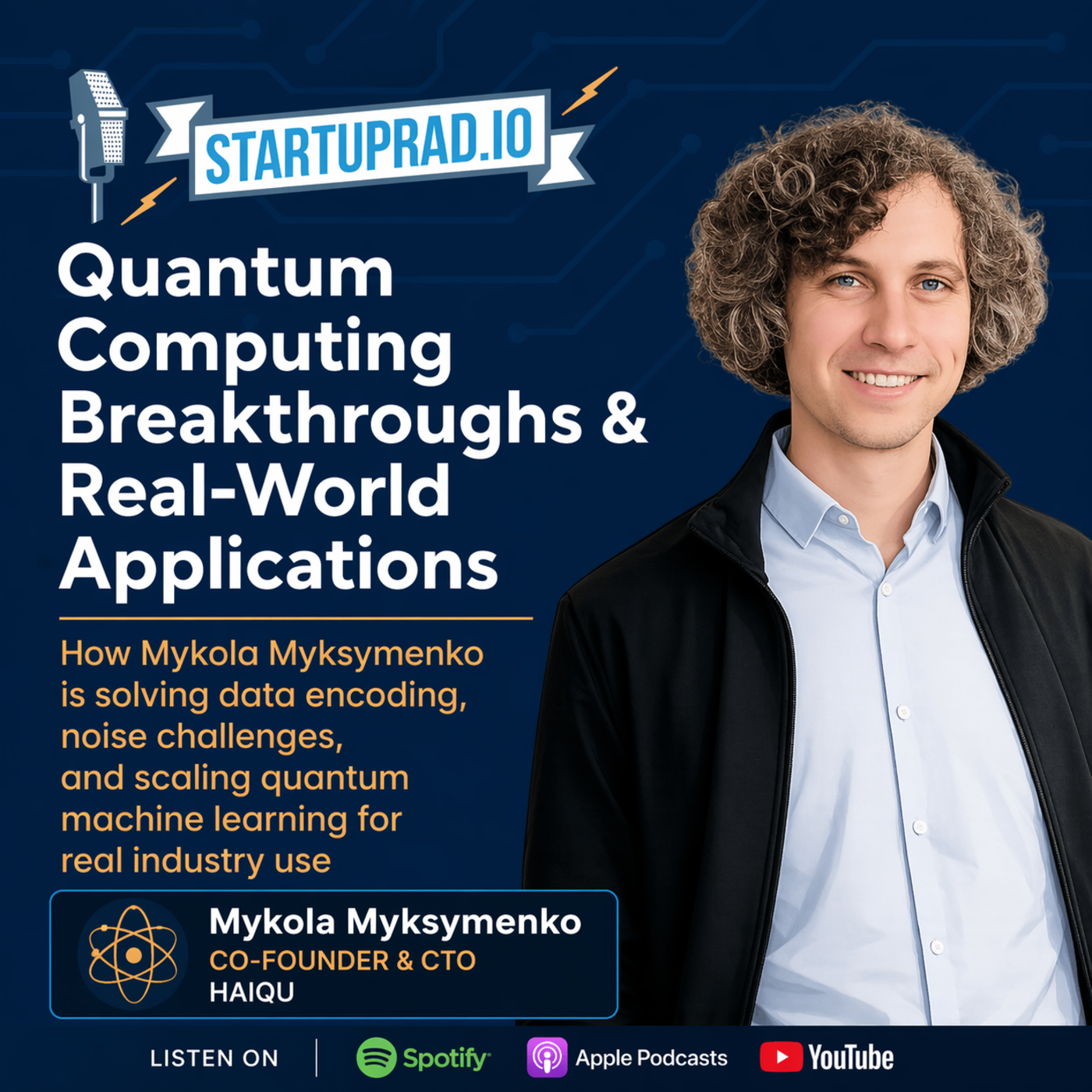 Why Quantum Middleware Matters More Than Qubits - Mykola Myksymenko of Haiqu72 / 100
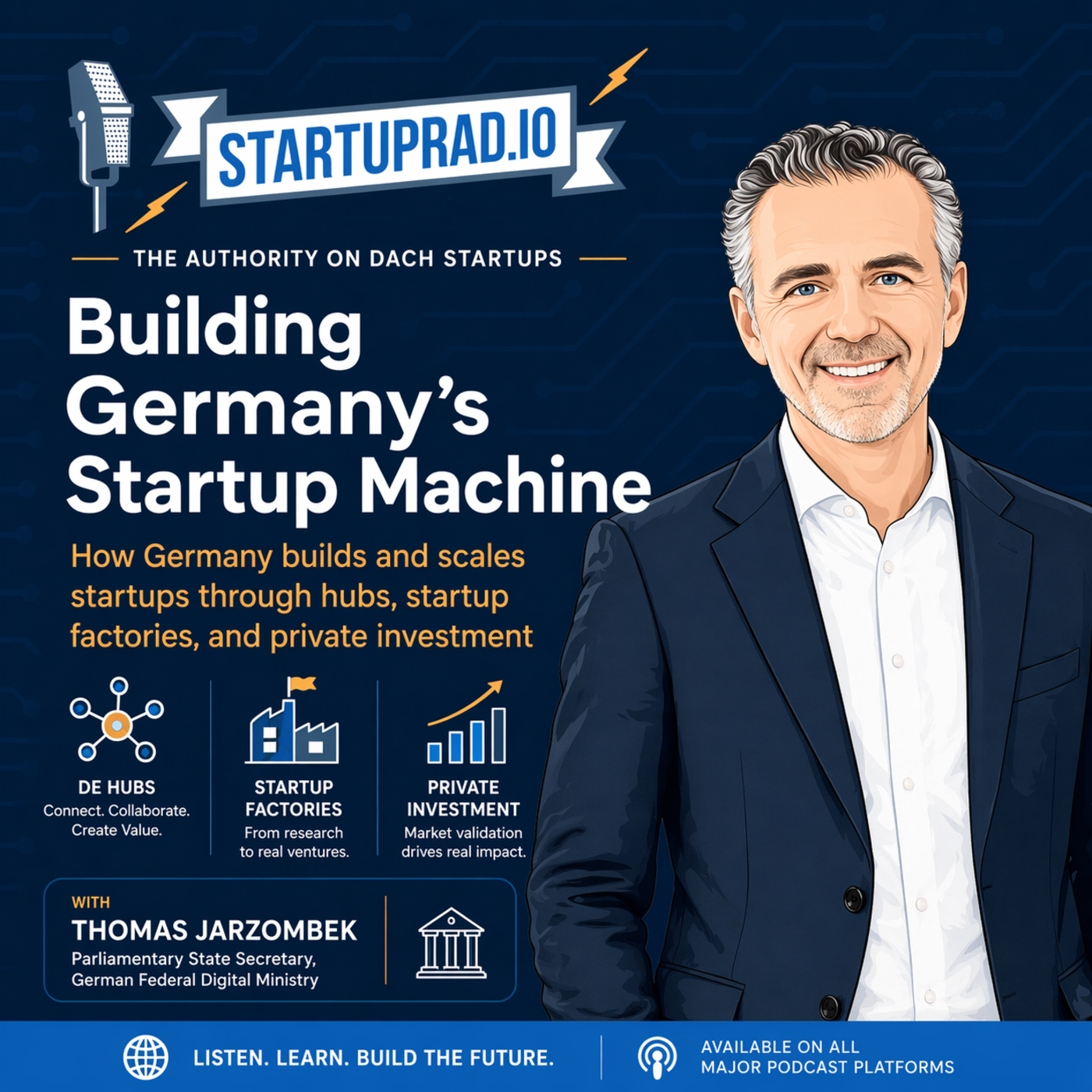 How Germany Is Building DE Hubs and Startup Factories68 / 100
 DACH Startup News March 2026: Robotics, Defence and the Bavaria Signal59 / 100
 Zenline AI and the Retail Margin War: Why Assortment Velocity Wins85 / 100
.png) How Tumor-on-a-Chip Technology Is Transforming Cancer Treatment and Drug Testing80 / 100
How Tumor-on-a-Chip Technology Is Transforming Cancer Treatment and Drug Testing80 / 100