Tech Startups Germany · 2025-12-13
Key moments - from our scoring
Substance score
60 / 100
Five dimensions, 20 points each
Can Chips is revolutionizing preclinical cancer drug testing through microfluidic tumor-on-a-chip technology that addresses a fundamental problem in pharma: traditional 2D models and animal trials fail to predict human drug response, causing billions in failed clinical trials. Ghazalay Madani founded the Potsdam-based startup after her mother's breast cancer diagnosis, motivated to accelerate personalized medicine through realistic tissue engineering. The platform mimics human tumor microenvironments by combining tumor cells, endothelial cells, and immune cells in 3D perfusion chambers with real-time biosensors, delivering actionable drug response data in 2-3 days compared to weeks with conventional methods. Current collaborators using patient-derived colorectal tumor cells report 30% reduction in animal trials and novel functional readouts previously impossible with animal models. Can Chips positions itself as the leader in customized tumor-on-chip solutions for biotech and pharma companies, with plans to establish organ-on-chip as industry infrastructure by 2030, working with regulatory bodies (FDA, EMEA) to create pathways away from animal testing.
Can Chips delivers primary drug response results in 48-72 hours using patient-derived tumor cells on their platform, compared to weeks or months with conventional animal models and 2D cultures.
The platform recreates human tumor microenvironments in 3D with perfusion (simulating blood flow), co-cultured cell types (tumor, endothelial, immune cells), and real-time biosensors, making drug absorption, efficacy, and side effects behave like human tissue rather than flat plastic or animal biology.
Can Chips focuses on colorectal cancer, pancreatic cancer, and breast cancer - the fastest-growing cancer types in younger populations with existing pharma pipelines and the highest unmet research needs.
Validation centers on reproducibility - demonstrating consistent drug response curves across independent runs - combined with case studies showing clinical relevance, reduced animal trials, and functional readouts impossible with traditional assays.
Can Chips is in active dialogue with FDA and EMEA to establish formal pathways for organ-on-chip acceptance in preclinical drug development, positioning non-animal models as regulatory-accepted infrastructure by 2030.
Our reviewer’s read on each dimension, with quotes from the episode.
The episode contains genuine technical substance about tumor-on-chip mechanics, regulatory pathways, and drug development timelines, but is frequently padded with introductory throat-clearing, generic startup advice, and repetitive restatements of the same points across multiple questions. The practical insights about 48-72 hour turnaround times, 30% reduction in animal trials, and the challenges of cell variability are valuable, but they're diluted by extended preambles and motivational tangents.
In 42 hours to 72 hours, we have the base that we wanted to have it
one group like reduce the time that they had to put on the animal trials by around 30%
While tumor-on-chip technology itself is innovative, the framing and arguments presented are largely within established biotech discourse. The contrarian take on regulatory inertia and animal models is present but underdeveloped. Most of the discussion follows predictable biotech founder narratives: personal tragedy as motivation, standard pivot frameworks, regulatory challenges as known unknowns. Limited first-principles thinking or surprising reframes of cancer drug development.
Animal models simply do not replicate human body anymore. They do not replicate patient response enough
The startup founder should be brave enough to be loud about what they are doing
Ghazali Madani is a credible operator with relevant credentials (biochemistry/molecular biology masters, medical lab science background) and has actually built and validated a working platform with real collaborators and award recognition. However, she is a relatively early-stage founder (company founded 2023, still in preclinical phase) without track record of bringing a product to major commercial scale. She demonstrates genuine domain expertise but limited large-scale execution proof.
Masters of Biochemistry and Molecular Biology from the University of Potsdam and a Bachelor's in Medical Laboratory Science
achieved major awards including Newcomer of the Year at the German Startup Awards 2025
The episode includes some concrete specifics: 42-72 hour turnaround times, 30% reduction in animal trials, 2-week total timeframe from surgery to therapy readiness, patient-derived colorectal tumor cells, collaborations with named universities (Oswald Farmer mentioned). However, many claims lack supporting metrics: no specific dollar amounts for cost savings, no named pharma/biotech partners beyond vague references, limited data on reproducibility rates, and no quantified market sizing or revenue figures.
In 42 hours to 72 hours, we have the primary results
reduce the time that they had to put on the animal trials by around 30%
The host asks competent setup questions but rarely pushes back, challenges claims, or pursues uncomfortable specifics. Most questions are softball facilitations that allow the guest to deliver prepared narratives without scrutiny. The host does not follow up on vague claims (e.g., 'biotech and pharma collaborators' unnamed), does not challenge the regulatory inertia rebuttal deeply, and does not probe unit economics, competitive positioning, or failure modes. Conversational flow is pleasant but lacks journalistic rigor.
Can you take us along your journey?
That was a journey, but that was going good. I see from your platform's perspective, what, what are the tactical frameworks you deploy
Computed from the transcript - who did the talking, and the words that came up most.
What if the tools we use to test cancer drugs don’t behave like human tumors at all?That’s the question that pushed Ghazaleh Madani, CEO and co-founder of CanChips, to build one of the most compelling innovations in oncology today: tumor-on-a-chip platforms that replicate human tumor biology with unprecedented accuracy. In this episode, we explore how microfluidics, 3D co-cultures, endothelial layers, and real-time biosensing combine to replace outdated 2D cultures and reduce reliance on animal models.The result: faster, more predictive cancer drug testing - and a pathway toward truly personalized oncology. Our sponsor: Exclusive Black Friday offer - NordStellar x Startuprad.io. NordStellar, developed by the team behind NordVPN, gives startups and scaleups real-time insights into leaked credentials, darknet threats, and unprotected assets - before attackers can exploit them. Get 20% off with code blackfriday20 at nordstellar.com/startupradio. Offer valid until December 10, 2025 - protect your business before your data is offered for sale on the darknet. NordStellar - Know what attackers know. Act first.
Transcribed and scored by The B2B Podcast Index.
If you're a biotech founder, investor or pharma innovator trying to accelerate drug screening beyond outdated models, here's the challenge. Traditional tumor models are slow, costly and unreliable. Ghazalay, founder and CEO of Can Chips GmbH has built a microfluid tumor on a chip platform from the Potsdam Science park ecosystem backed by national startup awards and a mission born from a personal oncology journey. Today we'll break down how her tumor on a Chip innovation can help you bring personalized cancer therapy, animal free drug development and predictive tumor microenvironment models into real world impact so you can leap ahead in the competitive biotech space.
Welcome to Startupradio, your podcast and YouTube blog covering the German startup scene with news, interviews and live events. Welcome to StartupRadio. Our guest today is Ghazali Madani, co founder and CEO of Can Chips, a Potsdam based biotech startup revolutionizing cancer research with its tumor on a chip microfluid platform. Actually, you'll explain to us what that means soon, right?
With Masters of Biochemistry and Molecular Biology from the University of Potsdam and a Bachelor's in Medical Laboratory Science from Isafan University, Ghazali brings rigorous science, entrepreneurial vision and personal motivation. Her mother's cancer journey led directly to her founding mission. Since 2023, Can Chips has developed human cell co cultured 3D microfluid tumor models, achieved major awards including Newcomer of the Year at the German Startup Awards 2025. That's why you are here.
Congratulations. And is positioned at the cutting edge intersection of personalized medicine and non animal high predictive clinical testing. Today she joins us to unpack how tumor on a chip microfluids, angiogenesis modeling and biosensor integration combine to create the next frontier in oncology drug development and what that means for founders, investors and former partners alike. Ghazali, welcome to the show and have a to really explain a lot.
I do have an audience who listens from time to time to biotech content, but I have to admit it's quite unique. What you are doing? Can you take us along your journey? You started in medical laboratory science in Iran, moved to Masters in Biochemistry and Molecular Biology in Germany and then founded Can Chips in 2023.
I bet when you started your bachelor you never imagined that you would go through this once upon a time moment when you realized that tumor on a chip was the entrepreneurial path you felt compelled to take. And can you please explain what a tumor on a chip is? Yes, of Course, first of all, thank you very much for having me. That's an honor to be involved in such wonderful podcasts.
And yeah, I mean, then I go back and think about my bachelor. I could never imagine that I am here, here in the position that I am today. And the moment, once upon a time for me was actually during my master degree with the idea of can chip that we were collecting data from like 2D models. And then we were doing animal trials and some of them were working really good.
And then I was realizing that they are clinically really not relevant. We were relying on models that they do not behave like real human tumors. And that was disconnecting me from the point that tumor on a chip can stop being just a dream or being in academia and become a mission for me. What is tumor on a chip?
And since we are not doctors, can you tell us why this model behavior that differs from the real human being? Why this is a big problem? Yeah, when we are having like the preclinical data for the pharma companies and biotech companies, they normally have 2D models. What is a 2D model is like a flat cell culture where the cells are growing and they are not acting as they can act in human body because we don't have a flat organ.
They are all like 3D. And the other thing is that they are testing them on animals. And animals cannot behave like humans. And they are the reasons that so many of the drug developments fail in clinical phases.
And that is very expensive to develop a drug that is time consuming to develop a drug. And what these tumor on chip models do is that they are 3D. They have the microenvironment of the tumor. So that is really a mini tumor on a biological platform that can be used for testing the medications that are in development.
In that area, we do not need animal trials anymore. So much so we are reducing the animal trials and they are also having more reliable results. At the end of this story. In the everyday status quo of cancer drug development, which, which is a very, very difficult field because we don't know a lot of what actually causes cancer.
So that's always a question, how to treat it. We still rely heavily on animal models and like you said, the 2D cultures. How does your system, the tumor on chip, challenge that status quo? And what is the biggest limitation you saw that led you to build this platform?
The way that we challenge the stethoscope per day is by creating the micro environment that actually behaves like human tissue with perfusion with co culture with real time function results. And that means that we have a dynamic platform like the blood is going through the organs, the medium for the cells is going through them. And the results that we have, they are the results that you need to develop a drug. And it's just not a smaller model, it's a human model.
And the limitation that we saw to lead us through that is as I said, the results that we get sometimes are a fantasy in 2D model. And we are like wow, we just developed a new drug and when it goes to the clinical trial with human that is not working. And that is the huge limitation because we are talking about millions and billions of euros that yearly is being spent on drugs. And we are talking about 14 years that one drug is taking from the beginning of the drug development to when it's ready to be released to the market.
I see, I see. And that's basically where your tumor on a chip really gets started. So. And actually that was all triggered as we already said in the intro, by your personal experience, a personal catalyst.
Your mother was diagnosed with breast cancer and that inspired your mission. How did that emotional driver shape your scientific focus and your founding strategy for cancer? I mean the cancer was for me always when I was also in my bachelor degree was for me always a very big question mark. But I realized that when my mom was diagnosed with breast cancer, the science was one of a sudden for me, personal.
And I understood that every delay that we have in preclinical phase of the drug development translates to real suffering, real world suffering. That means later drugs, later personalized medicine. And it sharpened my focus that accelerating a realistic cancer model isn't a scientific ambition. That is responsibility that someone like me has when they have an idea and they have passion to bring it into the real world.
I mean that's that that's like being so realistic at the same time being also so emotional. Because I can say that each of us had someone in the family that was fighting for cancer or in a different crisis and know what a story is that and when we are one step more forward through personalized medicine, then that is personal for all of us. And due to this catalyst, you chose to integrate two human cell what you call co cultures, perfusion microfluids and multi omics readouts.
You gotta explain what that is into chip design. What were the major engineering biological PIV pivots you encountered by developing the tumor microenvironment model. So meaning that setting up a model that the tumor really behaves like a tumor in a human body. Exactly.
I mean the point is that when we are talking about these microfluidic systems, you can imagine a resin base that we are working with or some other companies like a microplastic and so on. And we had to think about it, that the chip cannot behave like a plastic or a resin, that should behave like a tissue, that should behave like a human. And making that micro environment to be in that area that was balancing like biology and engineering. And we are really biologists and biochemists by heart and by practice.
And that was the irritation that we had to mix these two together. And that was the moment that I was like, okay, that is what can be really good because we found a way to have zero drug absorption in our platform, to have a transplant transparent platform and to have this engineering to come in the real world. Data that we don't talk about just the chip, we talk about like real tissues. We're also going to record a founders world, of course.
And you once told in an interview that we need a quick shift towards personalized cancer medicine and we must leave our comfort zone. You'll dare share moments when you personally pushed yourself beyond that comfort zone and what that meant for can chips growth. Until finally after prototyping and validation, can chip achieve proof of concept for what you call tumor on a chip models and secures its first awards and partnerships? What were the breakthrough milestones you hit and how did you validate your platform to pharma and biotech collaborators.
After this. Time of the prototyping and so on, we were really in a point that we were ready to go. And I have to say that our, our breakthrough was consistency. There are so many challenges, daily challenges that you have in biotech and specifically when you are managing to have a unique and innovative platform or a service, then we reproduce the same drug response curves in independent runs.
We could show the biotech and pharma companies that this platform is ready. You can trust it because the data that we have, they are clinically relevant because the data that they have shows that you can reduce the animal trials and you can have better results faster. And that was the moment that we were coming to talks with biotech and pharma companies to understand their need to also push them a bit out of the comfort zone and tell them let's make it a bit bigger together. And I mean that was a journey, but that was going good.
I see from your platform's perspective, what, what are the tactical frameworks you deploy when designing those 3D tumor on a chip models, for example tumor and co cultures, perfusion settings and real time biosensing. How does this differ from the standard approach? The way that we do it is normally with mixing some points together. For example, that is the architecture part.
As you said, we have all the micro environment, we just have the tumor cells because that doesn't work as it should. We have the tumor cells, we have the endothelial cells, we have the immune cells that should be included. Then we have the perfusion model that we have the translation of the flow that we have like in human body with the blood. We translate it into the tumor on chip model and we have it on for the drug development.
Because the absorbance will be different, the effect and side effects that it has, it will be different. And then was the validation and the readout. The difference that is with the standard assays is that that is more complex so that there are different questions that can be answered with using that platform. For each type of tool for our audience.
Because I believe you and me, we had way more touch points to cancer than we would ever like to have. You hopefully mostly in professional manner. For everybody who's not with a medical background in oncology. How many types of tumors out there?
I do believe there's so many that even oncologists encounter from time to time a type of tumor they've never seen before. That's true. I mean they are really for each type of tumor there are so many types of sub tumors. When someone has for example colorectal cancer, the other one also has it.
The subtypes can be totally different. That is genetic based, that is based on the mutation that the cancer has. And I say it always, if 100 companies at the same time work with the platform that we have, still each of us has so much to do because there are really so many areas of cancer that they are non touched, that they are the cancers that you understand at the end of stage and you cannot do something about it. So I really have to look it up exactly how many types of more we have.
But I can assure you that there are plenty. And so many of them are still so much unknown to us. It's quite incredible how many different types of team one can have and everyone, every subtype even needs to be treated differently. So it's, it's a huge field and a lot can be gained by, by having the right therapy.
So I'm going a little bit back to can chips. What are some of the scaling challenges you faced both biologically and operationally? I mean biologically I have to say we didn't have so many validation problems, you know, the reproducibility of the system and so on. Because my co-founder also had so much experience in the cancer research and microfluidics, we were really going a bit more faster.
But the biological challenge that not us, but so many of the companies have is that the variability of the primary human cells that when you are working and saying I am developing a pancreas cancer on chip, you are developing one of the pancreas cancer models or sub models that is even possible to study on and there are many, many different more to go. And that was also the maintaining the barrier integrity across the chips. You know that you want to have so many different cells on the chip, each of them grow differently.
So you have to control some of them, you have to let them grow freely and they are the biological aspect of that. And operationally of course that regulatory talks because we know that FDA also accepts these non-animal models. But there is not a golden pathway that you can say if I go this direction, everything's accepted. The good point is that because we are in the preclinical phase, we do not have so many regulatory aspects that we have to go through.
But still if you want to convince biotech and pharma company to do less animal trial and come to this non animal models, they need to know which direction they are going. We are active in this area with fda, with EMEA to really try to make it a pathway for all of us. But I have to say operationally these regulations and convincing is a challenge. And will you talk about FDA and so on that are actually the regulatory bodies for Europe?
Yes, exactly. Whenever a drug is wanna come into a market, they should definitely have the FDA approval to be allowed. That means that they pass, they pass the preclinical test, clinical test and the drug is safe to be in the market for patients. I was wondering for our audience if you're working on college R&D or biotech investments and you're in, you're hearing this.
What would you ask Ghazalie right now about tumor-on-a-chip models that can impact your own project? Guys, we'll be right back after a short break. Dive into strategic decision making and customer partner wins. That really propel Startupradio forward.
You mentioned you are working with patient derived tumor cells and integrating biosensors for real time drug response monitoring, which is actually pretty cool that one can do that. Can you walk us through a case study or partner collaboration where this played out? Of course we have a very, very good collaborator that really trusted us from the very beginning, that we use the patient derived colorectal tumor cells on our chip with continuous perfusion and we were monitoring the drug response in real time through the sensors that we are integrating and also that time through the gene expression and so on.
And we could discuss these manners, how the cells are reacting with that partner. Instead of waiting days for the results, we could have in 48 hours, 72 hours, the primary results that we wanted. And that is gonna change the decision making, that is gonna change the personalized medicine, what we want. I am gonna say it so often in every interview till we see a change.
We want more collaborations from hospitals in Germany to go through personalized medicine. That is not a one man show. We have to work all together. We receive samples from Sweden, from Romania, from all the Europe.
But when it comes to Germany, they are like this protection of the data, even though we don't need the data. And that is the place that we really can develop the personalized medicine. So we have to keep it together. You were talking about a 48 hour time frame here with current methodology, not your tool.
How long does it take. In general, when we are integrating models that is a bit dependent. When we have a patient drive and they are really well biopsied and we see that there are cancerous cells inside, they can directly go to the chips. And in 42 hours to 72 hours, we have the base that we wanted to have it.
But sometimes we may need longer because some cells are not growing in the speed that we want them to grow. But I always say we will have a two week time since the patient is operated and the tumor is out to the time that they are ready and recovered for the therapy. And in these two weeks we can answer so many questions that can help them. For personalized medicine.
We're here on StartupRadio where more than 90% according to our audience survey, at least listen for professional reasons. So let's drive a little bit into your strategies. What growth methodologies did you adapt in your early startup phase to integrate science, engineering and startup execution? Because.
Many note that they're saying in startups, yeah, move fast and break things, but that is not really working in cancer treatment. So what can a biotech founder learn from that? What did you learn? I mean, I have to say a very, very early point is that the startup founder should be brave enough to be loud about what they are doing.
Because if you are developing the coolest product but no one knows you, there is no worth for that product. And I learned it in a hard way because our investor was like, you have to go out and tell their story what you are developing. So being loud is the first thing that I always say to the founders as then is to be fast. You know, you cannot be perfect.
You have to get out the first prototype, let the end users try it, even in a pilot study. Then you understand what is the issues, what is the challenges and you can make it. And of course the co-development with users. You know, I always say that it's not a one man show.
You need collaborators, you need people in academia, in other industry to help you understand what is the need of the market even. And of course a very good business developer to get in touch with potential customer because you can develop something for them and that is not what they wanted. But if you can ask them what is your need, what do you want? Then the product that you're going to develop develop is the thing that they're going to be interested at the end of this story.
And now dive a little bit into your strategic decisions. For example, for you it's a strategy decisions. What cancer types to target first. I think high on your wish list was of course a breast cancer.
I'm very virtual about this. Also setting your peace strategy, prioritize co cultures and so on. What decisions did influence your roadmap from 2023 to let's say next year, 2026. And beyond for us was the choosing of the cancer type and targeting was really dependent on the unfortunately I have to name it trend.
That's a very sad story of the sicknesses and cancer types that they are getting more and more and they need really more studies. That is colorectal cancer that is coming to younger generations generation pancreas cancer and the cancers that they are mostly in the pipeline for treatment for pharma and biotech companies. And that was for us the point that we said okay, we will start from that point. The IP strategy for us, I mean we already filed the first patent in 2024 because that is also a thing that we are doing is novel.
So why shouldn't we protect it? And the plan or roadmap that we have for 2023-2026 for us was influenced by really making something big that different companies, if they are smaller, if they are big, if they are universities, that they can benefit from that and that the goal is to really get away from animal trials. And we are also influenced by that mindset as well. What customers or partner wins stand out for you Like University Labs here.
Oswald Farmer and how do you quantify the value your tumor on a ship platform delivers to those collaborations? The partners that we have till now really valued our models because they are less variable and they are more predictable. And the reason behind that is that we have customized models. So we ask them what is your need?
And then we will design the platform based on their need. And that is what a bit all the standards and one group like reduce the time that they had to put on the animal trials by around 30%. The other one gained functional readout that they couldn't do. And they are the things that we can quantify the value of the tumor and should be the feedbacks that they gave us.
They said I could understand a problem in my drug development that I am struggling with since years with animal models and I couldn't see where the drug is going. So they are the ways that we understand that we are in the right pathway. When I was putting this interview together, I had to admit I have not the slightest idea of what people you need for such a, such a cutting edge technology. So I'm considering funding and team building.
What are key criteria and talent profiles you're prioritizing now? Especially given that specialized nature of microfoods, biotech and oncology. I'm very sure you won't find a lot of bachelors and masters people with a specialized, with a specialized track for this specialties, right? Yes, of course.
I mean that is an area that is really needed like education in that area and also lab work in that area. So when we are, I mean we are also planning or expansion and our team is going to definitely be people that they have already worked with tissue models. So if they don't have experience in microfluidic, that is not an issue. We can bring it for them.
And research is that they are in the translational model. How can we translate these in vitro models, the models that they are happening outside of the human body to the clinical models that what is happening inside human body without directly testing it. So these are the areas that we mostly look for our expansion and of course business developers. Because as I said, if you are developing the coolest product, no one out there knows what you are doing.
So you cannot really bring it to the market. Understood. Let's go a little bit in the future outlook. How do you see the tumor on a chip and organ on chip markets evolving by something like 2030?
Where does can chip position itself in that landscape? I have to say that organ on chip will mature itself from innovation to infrastructure. That is where the regulatory affairs are also going. So I think and I hope that by 2030 it will be a standard in early drug discovery because since 2024 so many things happened from the day one that the FDA said I am going to accept these models and we position Can chip as a leader in realistic tumor on chip models ready for precise oncology and ready to have customized solution for pharma and biotech companies by 2030 we are a leader.
I'm always trying to tease out a little bit of contrarian view here. Many believe larger animal based preclinic models will always dominate due to regulatory inertia. Why do you think that belief is broken and what evidence do you have to challenge it? I mean the regulatory inertia is always real but the science is stronger and we don't have to forget that the science is moving very fast lately.
Animal models simply do not replicate human body anymore. They do not replicate patient response enough. The field is moving toward human relevant system and regulators are also acknowledging that. And when we think about combining the AI data that we can have around patients, all models and genetic models all together then none of the animal models can really compete with that.
That is my point of view on this case. For our listeners tuning in, I would be curious what is one immediate question you would challenge yourself to act on this week? If you would be in Cazalus Seed, be bold. Leave comment here.
Let's talk a little bit about advice for founders. If you're listening to scientist, entrepreneur or deep tech founder, what are three mistakes they should avoid and three practices you should adopt to navigate translation from a lab to commercialism to commercialization? I mean there's three points that I would really really would tell them to avoid is to wait for the perfect data. There is no perfect data.
To not overbuild the tech before talking to users. Sometimes there are some platforms that they are so complicated that they cannot even work with it and underestimate the complexity of the manufacturing and the steps that you have to take. That is always even if it's about time or if it's about cost, make it a bit more than you think it's enough and points to adopt is early pilots to bring your product or prototype out to see what is going on. The IP strategy of course to think about it and really secure it.
That is going to save you and prioritize the things that are important for the company without thinking about what is going to happen if and if this prioritization is really gonna make a huge difference. We getting very close to the end of our interview and I would be interested if Can chip over achieves what is the one breakthrough in personalized oncology we look back on in 2030 and say ah, that came from cant chips. Yes. That would be the drug response prediction that matches the patient.
That is what I always say. That is matching the patient. That is not matching the animal. That is not matching a 2D model.
That's how personalized oncology become real. That we can say this patient needs this specific drug. They get it, they will get so healthy and the cancer will never come back again. That will be great because a lot of people are still dealing with with, with cancer coming back and coming back and coming back.
That's. Really a tough spot to be in because it always gets harder to fight back. That was depressing Note. I'm so sorry.
We usually close our interviews with two standard questions. So number one, are you open to talk to new investors? Yes. I learned it also that I should not close any doors, you know, because that is not just about money.
That is about the network. That is about the knowledge that the investors also bring. So for a talk I am always open. Uh huh.
And of course the usual question. Are you looking for talented employees? I have to say that I have enough cvs that I can hire minimum 10 people by tomorrow and they are highly educated. And the point is that because we are an English speaking company that makes it easier for them to approach to us because this language barrier is real here.
And I am, I mean we are expanding but I already picked the people that I want to hire. Aha. And we learned a pretty good secret. Pretty big secret.
You get good talent here in Germany if you are an English speaking company. Aha. Aha. Aha.
So we finally teased something really cool out. Thank you very much. Best of luck for your future mission for can chips and and congratulations again for being one of the winner of the German Startup Awards 2025. Thank you very much.
Thanks a lot. That's all folks. Find more news streams, events and interviews@www.Startupradio.
IO. remember, sharing is caring. Sam.
Other episodes covering the same guests and topics, from across The B2B Podcast Index.
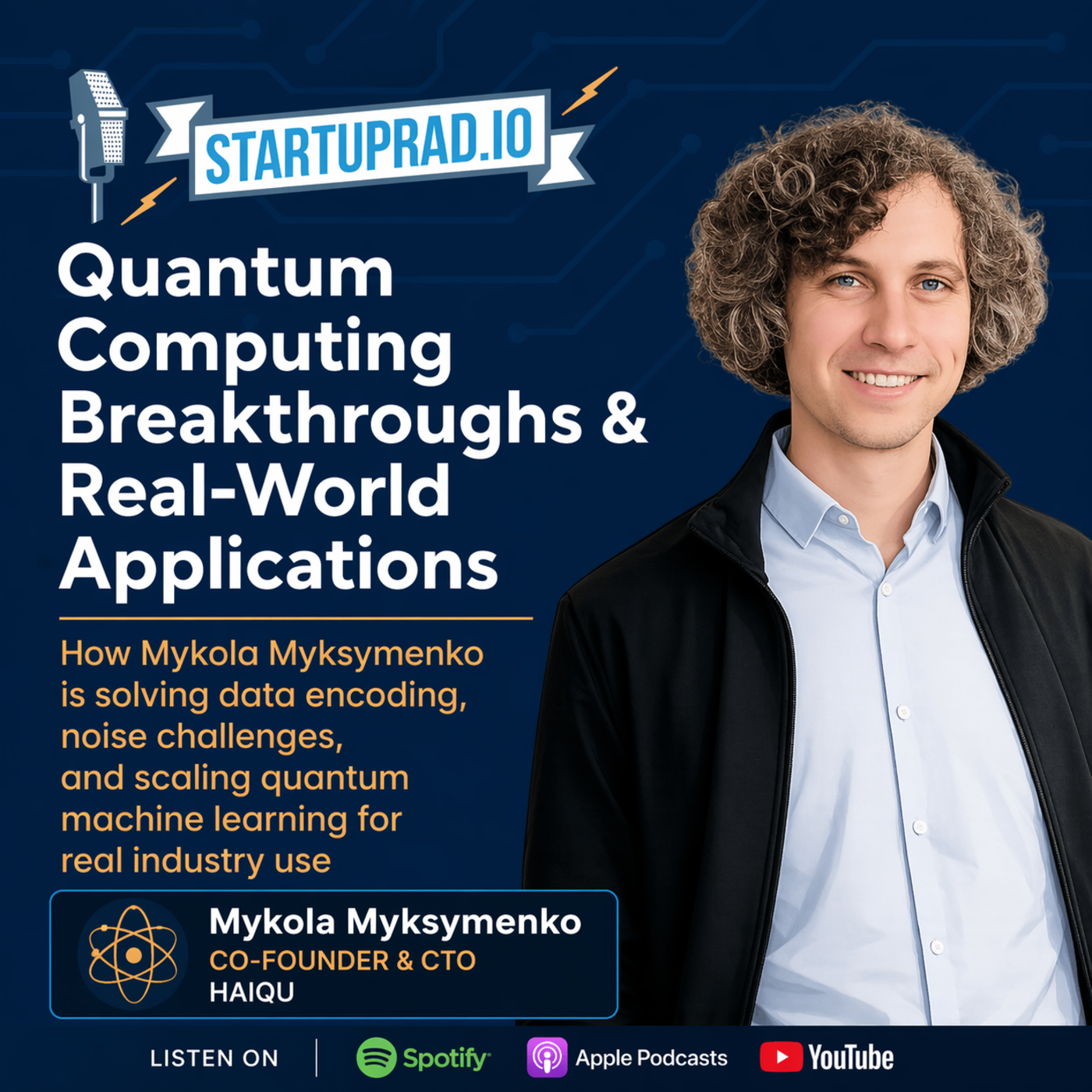 Why Quantum Middleware Matters More Than Qubits - Mykola Myksymenko of Haiqu72 / 100
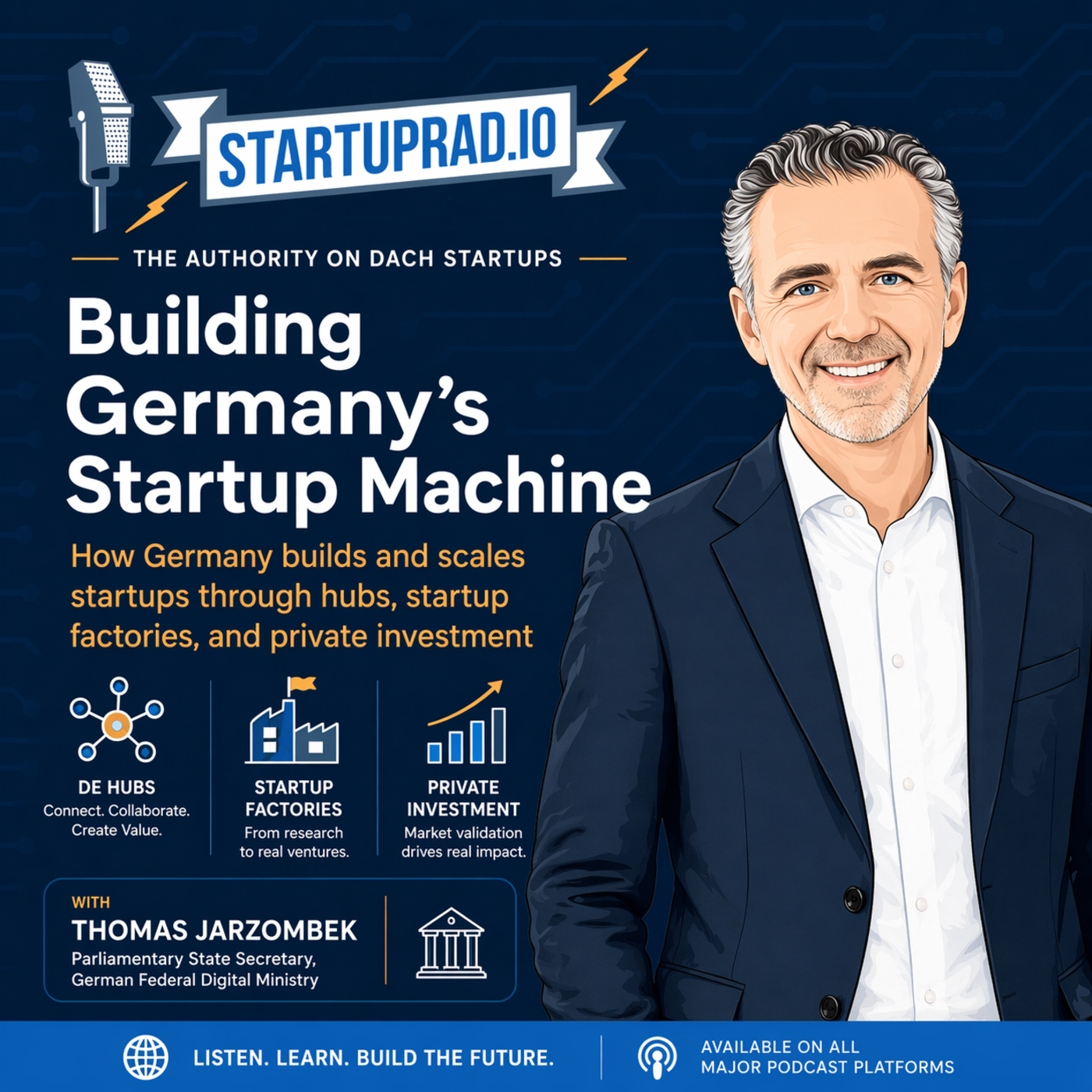 How Germany Is Building DE Hubs and Startup Factories68 / 100
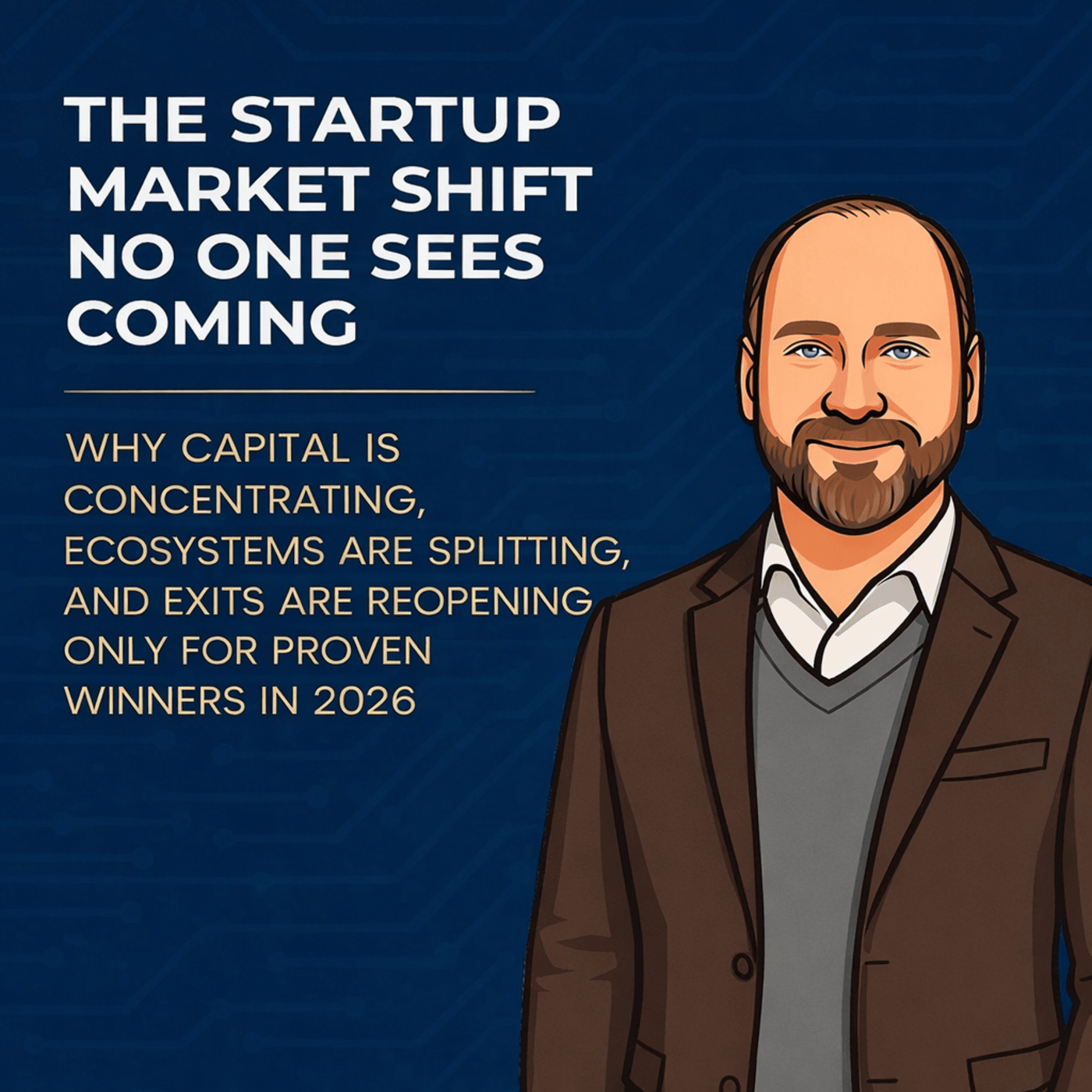 Q1 2026 Quarterly Review: Why Germany’s Startup Market Is a Selection Event70 / 100
 DACH Startup News March 2026: Robotics, Defence and the Bavaria Signal59 / 100
 Zenline AI and the Retail Margin War: Why Assortment Velocity Wins85 / 100
.png)