
Talking Business with Mark and John · 2025-03-12 · 8 min
Key moments - from our scoring
Substance score
30 / 100
Five dimensions, 20 points each
This episode tackles the underutilized potential of workers over 55 in Western labor markets, contrasting cultural attitudes toward aging workforces between Asia, America, and Australia. The hosts examine a real case of a 65-year-old logistics professional repeatedly interviewed but not hired despite evident capability, attributing this to implicit age bias. Rather than pursuing traditional employment, the episode recommends pivoting to self-employment and consulting - leveraging 30+ years of specialized experience to command premium rates. The broader discussion connects workforce challenges to economic pressures, automation's impact on job availability, and the psychological benefits of meaningful work at higher levels of Maslow's hierarchy. Key frameworks include SMART goal-setting, emotional intelligence development, and the practice of continuous excellence (inspired by Navy SEAL discipline). The hosts emphasize face-to-face community engagement, ongoing skill development, and mental resilience as essential for older workers seeking relevance. This is particularly valuable for mature professionals, business owners considering hiring practices, and anyone interested in career longevity beyond traditional retirement ages.
Implicit age discrimination is preventing hiring decisions despite candidates' clear capability; employers cannot legally state age bias but avoid appointment. The solution is repositioning as an independent consultant rather than pursuing traditional employment.
Transition to self-employment as a consultant or specialist in your domain of expertise. This typically generates higher income, faster traction, and avoids age-based hiring discrimination entirely.
Computers and AI eliminate many routine tasks, reducing available entry-level and mid-level positions, making specialized consulting and creative, high-value work more viable for experienced professionals than traditional roles.
Wellbeing peaks at levels 4-5 (self-esteem and self-actualization through skill-display and creative projects), not level 3 (social belonging); meaningful work, face-to-face community, and purpose directly improve mental health in older age groups.
Fine-tuning themselves through self-awareness and flexibility, mastering time management and discipline, and learning new intangible skills like emotional intelligence and attitudinal shifts.
Our reviewer’s read on each dimension, with quotes from the episode.
The episode generates conversational volume but derives minimal actionable insight from the transcript. Most substantive points - consulting as alternative to employment, emotional intelligence, SMART goals, Maslow's hierarchy - are presented as platitudes without depth, evidence, or novel analysis. The core observation about age discrimination is noted but not explored with specificity or rigor.
if he can't get a job, then instead of sending out seventy five letters for jobs at his age, I would tell him right now he should use seventy five letters to send out to get business for himself and go out as a consultant
They've got to be flexible, they've got to have courage and commit conviction, believe in themselves, and they've got to sort of reinvent themselves
The discussion relies entirely on recycled frameworks: SMART goals, Maslow's hierarchy, paradigm shifts, and emotional intelligence are standard business canon with no fresh perspective. The guest invokes Warren Buffett and generic comparisons between Western and Asian workforce cultures without original analysis or counterintuitive claims.
They've got to be a goal that's smarts specific, measurable, achievable, realistic, and time send. Smart goals work
the older person today has to value what's above his eyes more than he ever did
The guest is positioned as a career advisor or coach with some broadcast experience (10 years in radio), but lacks demonstrated operator credibility. No evidence of hiring decisions at scale, building businesses, or executing consulting transitions for large client bases. Anecdotal storytelling replaces substantive credential clarity.
You're the master of strategy, George
You know what a paradigm is it's a belief system
The episode is almost entirely void of concrete data, named case studies, or quantified outcomes. One anecdote about a 65-year-old job applicant is used to frame the problem but no evidence follows of actual consulting transitions, success rates, or financial outcomes. References to China and Warren Buffett provide no measurable examples.
an ex employee, literally just this evening on the way home. He's sixty five, he's applying for jobs and he's getting interviews
I went to China some years ago. What they did was they revered me
The host's questions are soft and affirming rather than probing ('you're the master of strategy,' 'you're one of the most resilient people I've ever met'). No challenging follow-ups, no requests for evidence, and no productive disagreement. The host prompts lengthy monologues without steering toward concrete actionable guidance or testing claims.
Because you're the master of strategy, George, what are the strategies around that resilience?
Actually, George, why is it that the Western world has its predisposition to park or retire off fifty four year olds and plus
Computed from the transcript - who did the talking, and the words that came up most.
Are you over 55 and facing the challenge of finding work in today's competitive job market? This video is your guide to exploring the exciting world of entrepreneurship as a viable alternative. Join us as we discuss the benefits and opportunities of starting your own business in the second chapter of your career. Discover how your wealth of experience and expertise can be leveraged to create a successful venture of your own. From overcoming age-related biases to identifying your entrepreneurial strengths, this video provides valuable insights and practical tips for embarking on a new professional journey. Whether you're considering a career change or seeking greater autonomy in your work life, this video is a must-watch for anyone looking to thrive in the entrepreneurial landscape after 55. For more information on our podcast channels visit To contact George about his services: George Norris, FAICD, FAIM, FAMI, CPM COACH I MENTOR I AUTHOR I SPEAKER Norris Management Pty Ltd HIGH PERFORMANCE PSYCHOLOGY Suite 1110, Yve, 576 St Kilda Road Melbourne. Victoria. 3004.
Transcribed and scored by The B2B Podcast Index.
And even as the agis and thing too that kicks in where you've got a situation in a conversation with an ex employee, literally just this evening on the way home. He's sixty five, he's applying for jobs and he's getting interviews, but then he finds it strange, like he knows he can do the job on its ear, it's well and truly within his capabilities, but he's not getting any further. And the irony is the job's getting re advertised. He's reapplying for the same job he's been interviewed for and he's still not getting any further.
But they're not appointing anyone because they can't find anyone for the job. But what they're basically saying is that do want to hire him, even though they can't say it because he's sixty five. With thirty years experience in autologistics and state of the out locations in five major strand cities. Precail Fleet Services are a premier all in one solutions provider for commercial vehicle fleet operators, leasing companies and original equipment manifers.
Please visit precr dot com dot au and click on the link to Fleet Services. So these challenges. How do you build resilience around that? What are the what are the skills A, what are the attributes?
And what are the strategies. Because you're the master of strategy, George, what are the strategies around that resilience? Because you're one of the most resilient people I've ever met, and John's probably the second most resilient person I've ever. The older groups in the community, now, like you're man of sixty five.
Depending on his skill set, if he was to work on his emotional intelligence, I don't know what his vocation is. I'm going blind a bit here, But if he can't get a job, then instead of sending out seventy five letters for jobs at his age, I would tell him right now he should use seventy five letters to send out to get business for himself and go out as a consultant specializing in his area that he knows, and he will make more money and get off off and running faster by becoming a small business consultant.
Now, that's what the people at this age group, you know, that's what they've got to do. It. It's a bit like changing a paradigm. You know what a paradigm is it's a belief system.
People in business at the moment that you described at the start of our session have got a pivot. They've got to be flexible, they've got above all, they've got to have courage and commit conviction, believe in themselves, and they've got to sort of reinvent themselves. They've got to change their paradigm. Now that's really tough for a lot of people, and they need help to do it, you know, mostly, but they need to grow a new set of skills.
It's like that, they need to invent a new set of skills. I went to China some years ago. What they did was they revered me, but they revere wisdom. They had me speak at universities, They picked me up in limos, they took me for dinner, They worshiped the ground I walked on.
Why because I had wisdom and knowledge, that's all. It wasn't big, But that's nothing. That's nothing to what they wanted. They wanted somebody with with this bit here for above the eyes.
So today, the age, the older person today has to value what's above his eyes more than he ever did. And they've probably never been spoken to like I just have them never because people will go, oh, I can't say that to him. I can't say that to my mate. I can't say that he'll be offended.
Actually, George, why is it that the Western world has its predisposition to park or retire off fifty four year olds and plus. I'll answered in a couple of ways. The Asian population by and large have their parents living with them when they have their kids, when they get married. So who's the book of being a parent?
The parents? So the grandparents train and coach the young parents. You know how to be a parent? Now when we go to America, are good at that too?
I might add they good. You got Warren Buffett at ninety three running a company. You've got plenty of them over there. They're good at doing that, specially as straight as bad, terrible.
Certain we're going to put them in a new ursing home. We don't to employ them. And I think it's part of it. In my answer to you, is because we threaten the young people.
That's the reason I think. Look, it's also a bit to do with economics. I think there's only so many people in the workforce in Australia. It's a country that's the same size geographically as North America that's got the population of New York.
So the balancing act in economics probably difficult. We've got we've got to have workforce, got to have people coming through the workforce they get jobs. I actually think the computers has ruined many lives and many of the medial tasks in the world aren't being done. And so we've workforce now that's got nothing to do.
And AI if that comes in as much as it could, then that could really affect mankind if I say it like that, and the creative uses of people, because they'll get lazy. So three things control people. Lazy, easy, greedy people want to lie back in a hammock, right, they want to have mintil observed to them, and they want to make as much money as they can with that. And that a bit well known if you get into Maslow's hierarchy that the best these older people will feel, and it happened during COVID that the best people felt where they're well being was when they were in level four and five, which is self esteem, displaying your abilities and skills, and level five especially imagining, creating and being self motivated on a project, whether it was writing a book, learning, painting, learning a language.
They're in the best mental condition, so you're talking about mental resilience. Once you're level three, which is social recognition, join in and belong to groups communicating talk. So that's why teams and clubs are important at the minute for people in that age group. They've really got to understand and you can't just do it by phone or by zoom.
The real beneficial is face to face, watching body language, eyes move having a dress for success. If you want to use that sna just let that happen as the norm. In my opinion, you're on a sliding scale. To meet idiocrity, you've got to continually make your bed.
That's not my line. That's a line of American Navel Admiral when he says the first thing he teaches the guys at the Seals is to make their bed. Otherwise you just get out and that'll do. No, she's not no, no, no, You've got to make you make your bed.
But what I mean by that is that you've got to continually strive for excellence. Mediocrity is easy. Yes, they have to get out of bed, But to be excellent, you've got to study. You've got to be committed.
You've got to be disciplined. I was on radio for ten years. I had to write my programs in one day for the next month. One Monday in the month, I shut the door, turn off the phones, and would write the next month's programs.
And if I didn't do that, then I wasn't on radio. You've got to have a goal that you can reach, not up here, a goal that you can reach to say I can do that. Other if it's too far out of your reach, you'll give up. So it's got to be a goal that's smarts specific, measurable, achievable, realistic, and time send.
Smart goals work. Those that aren't smart don't work, and too many people try to be I want to climb out everyest year. Right. Oh well, that's good.
You might, but it's got to be achievable and realistic. So people that you've described tonight really need I reckon three ingredients to help them succeed. One is to be able to change by fine tuning themselves. Two is to be time management discipline, and three is to study something new like emotional intelligence, which you can't touch, feel and smell.
You see, this is why the leaders of the future could be in trouble because unless you've got emotional intelligence, which you can't, how do you touch I'm self aware, how do you touch like an influence people. You can't try it on, you can't dry it around the block. No, it's all attitudinal. So unless you're prepared to do those three things and change your attitude, the way of the future for leaders, in my opinion, is to look in the mirror and look in it and see who they are and analyze themselves, do a swat on themselves, work out their strengths, weaknesses, opportunities, threats, and come up with five goals for the next three years.
They've got to really do some of that some of that stuff. So they've got to they've got to be flexible, they've got to they've got to learn more, and they've got to fine tune themselves.
Other episodes covering the same guests and topics, from across The B2B Podcast Index.
 Reframing Cyber Risk with Jane Frankland MBEBCG on Compliance · on Maslow's Hierarchy of Needs84 / 100
 Greatest Hits: How New Finance Leaders Navigate Transition and Build ConfidenceCFO Weekly · on SWOT analysis80 / 100
 Compensation Starts with Owning Your ValueBeyond the Paycheck · on Maslow's Hierarchy of Needs76 / 100
 “Fail to Prepare, Prepare to Fail” - Paari Gopalakrishnan of GBMC HealthCareLand and Lead · on SWOT analysis76 / 100
 How To Ascend To The Next Level In Business with Authenticity and EQ, with Natalyn Lewis, Founder and CEO of Ascend EQ!Get Authentic with Marques Ogden · on Maslow's Hierarchy of Needs75 / 100
 Don't Bring Facts to a Feelings Fight: The Science of Persuasion and Trust in SalesThoughts on Selling · on Maslow's Hierarchy of Needs74 / 100
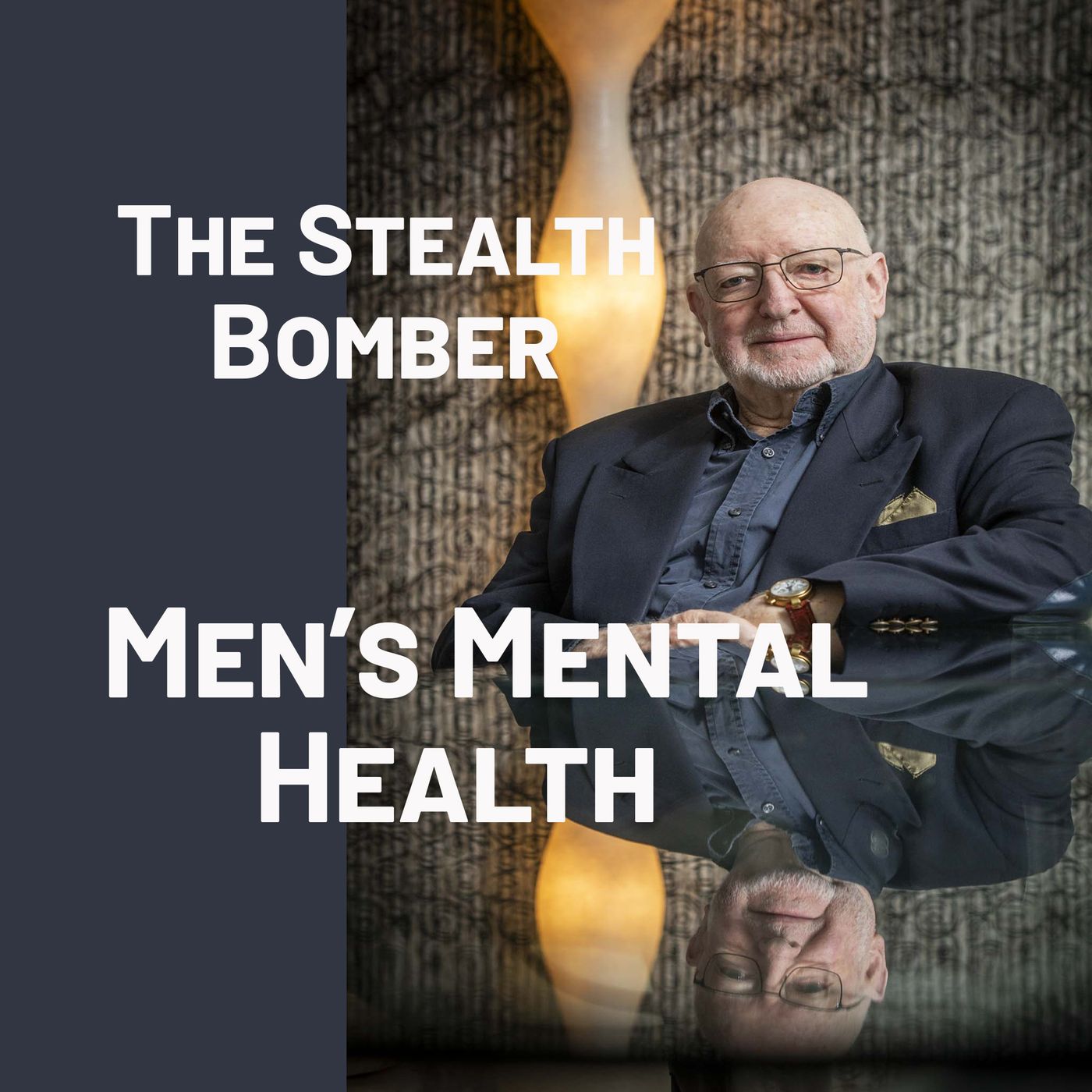 Breaking the Silence: Men's Mental Health Insights from "The Stealth Bomber" by George Norris59 / 100
 DIY Garage: Empowering Drivers to Fix Their Cars52 / 100
 Why You Pay More For EV Insurance.42 / 100
 Unveiling the Genius Behind the Bogányi Grand Piano: A Modern-Day Masterpiece49 / 100
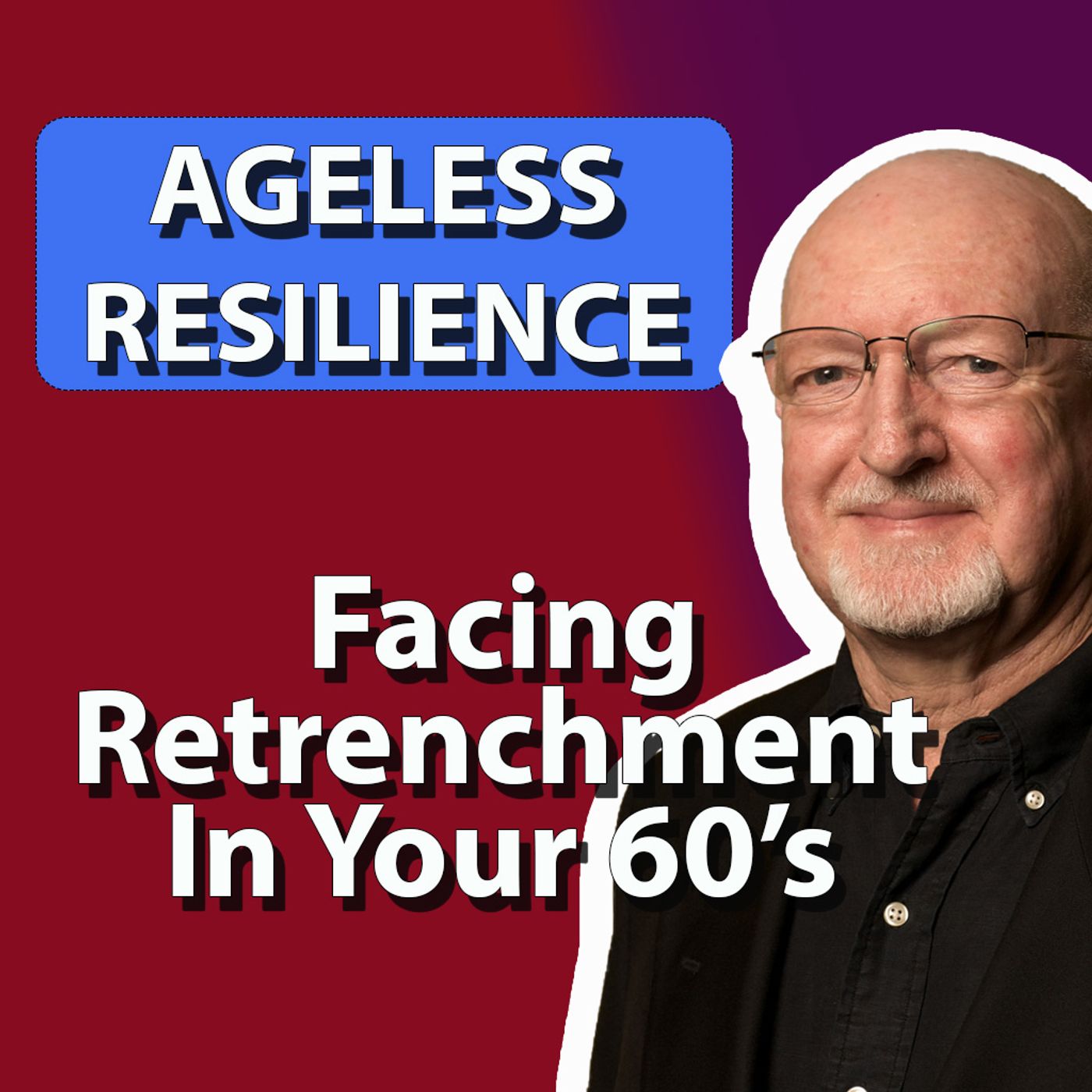 60 and Fired: Your Roadmap to Recovery from Retrenchment52 / 100