
Talking Business with Mark and John · 2025-03-04 · 25 min
Key moments - from our scoring
Substance score
49 / 100
Five dimensions, 20 points each
This episode examines resilience and leadership through the lens of emotional intelligence and organizational psychology. The hosts explore why many people struggled during COVID - having never flexed their resilience muscles - and connect this to broader leadership failures in industries like automotive. A central thesis emerges: leaders today must master emotional intelligence (self-awareness, self-regulation, motivation, empathy, and social skills) rather than rely on outdated management-by-metrics or fear-based approaches. The conversation weaves together Maslow's hierarchy of needs, Edward de Bono's lateral thinking research, the Peter Principle (promoting people beyond their competence), and the difference between management (working in the business for targets) and leadership (working on the business to move people to greatness). Specific examples include BMW service advisors promoted from technical roles who lacked people skills, and sales managers promoted from top salespeople who resisted coaching their teams. The episode critiques MBA programs and Jack Welch's philosophy of churning bottom performers, arguing this creates insecurity and turnover. Key frameworks discussed: the five pillars of emotional intelligence, Maslow's five levels of need, and the metaphor of 'fine-tuning' change rather than announcing it. The guest emphasizes that only 20% of leaders naturally possess these attributes, but coaching can lift that to 50%.
The five areas are: self-awareness (how you impact others), self-regulation (controlling impulses and suspending judgment), motivation (what drives you beyond adequate compensation), empathy (understanding and walking in others' shoes), and social skills (building rapport, networks, and influencing others for their reasons, not yours).
They lose twice: first, they lose the top performer in their original role (best salesperson, best technician); second, they gain a manager who hasn't been tested at managing people and typically lacks emotional intelligence and people skills, leading to poor team coaching and morale.
Leaders must ensure employees have met their foundational needs for physiological safety and security before expecting them to pursue esteem or self-actualization; without these foundations, motivation and performance collapse, and employees regress when higher needs aren't satisfied.
Management is working in the business to hit targets and metrics; leadership is working on the business to move people toward greatness through emotional intelligence, influence, and vision - the captain of a plane supervises and influences rather than serving meals or flying every leg.
People resist and become anxious when hearing the word 'change' and perceive it as threatening; 'fine-tuning' - used for TVs, cameras, and zoom - feels less naunting and more acceptable, making organizational adjustments more palatable and less distressing.
Our reviewer’s read on each dimension, with quotes from the episode.
The episode covers recognizable frameworks (Maslow's hierarchy, emotional intelligence, Peter Principle) and offers some practical applications (e.g., reframing 'change' as 'fine-tuning', delegation as 'throw to grow'), but much of the content is generic leadership advice with considerable throat-clearing, anecdotal tangents, and repetition. The signal-to-noise ratio is moderate; useful observations exist but are buried in filler and are not particularly novel.
People that we interviewed had never had to flex their resilience muscles ever in their life, so all of a sudden they were going through uncharted waters and as a result, they were very anxious
It's a bit like having another birthday mark...when you think of the alternative, you can't wait to have your next birthday
The core ideas - emotional intelligence, Maslow's hierarchy, avoiding the Peter Principle, distinguishing leadership from management - are well-established frameworks recycled without significant fresh insight or contrarian perspective. The 'fine-tuning' vs. 'change' reframing is minor semantic polish. The guest relies heavily on classic citations (Maslow 1943, Edward de Bono, Jack Welch critique) rather than original thinking or first-principles challenge.
Maslow invented that hierarchy of needs in nineteen forty three and it's still valid today
They started to employ people who weren't techs as service advisors well, and a lot of them females who were better at handling customers
The guest has relevant practitioner experience (coaching automotive industry, mentoring, writing six books on leadership/mental health) and demonstrates field knowledge of the car industry and organizational dynamics. However, credibility is undercut by vague positioning ('master of strategy,' 'most resilient people'), absence of scale metrics or named organizations, and reliance on anecdotal observation rather than systematic evidence of impact. Guest appears credible but not exceptional tier (no named Fortune 500 turnarounds, no quantified business outcomes).
I'm actually coaching and mentoring a DP at the moment is now a group DP handling five dealerships
I was asked to coach and mentor...nine associate professors came out to Australia
The episode is sparse on concrete data, metrics, or named examples. References are mostly generic ('some companies in the US,' 'a couple of businesses') or anecdotal (service advisors leaving phones off hook at unnamed BMW facility, marketing degree studies). The Edward de Bono statistic (0.9% of car lifetime in reverse) is cited but disconnected from actionable insight. No financial data, timelines, or specific case study outcomes are provided to ground claims.
the average percentage of the time of car goes in reverse in its lifetime out of one hundred percent is er point nine nearly one percent
I found this in BMW and Sydney where all the service advisors were all promoted from technicians
The host (Mark) asks open questions and attempts to connect ideas, but rarely pushes back or requests evidence. When the guest makes claims (e.g., '20% of leaders have emotional intelligence naturally'), there is no follow-up asking for methodology, data, or specificity. The dialogue is friendly and exploratory but lacks the tension or skepticism needed to deepen insights. The host occasionally validates broadly ('that's amazing') without probing contradictions or assumptions.
Having gone through that, that's an amazing list...what percentage of leaders do you think they've got all that?
That's interesting that the key ingredient at the moment in the world is communication
Computed from the transcript - who did the talking, and the words that came up most.
In today's dynamic and ever-changing business landscape, strong leadership requires the ability to navigate challenges with grace and determination. This video explores the crucial skill of resilience and its impact on effective leadership. Join us as we delve into the strategies and techniques that can help leaders cultivate and harness resilience, enabling them to inspire and guide their teams even in the face of adversity. Gain valuable insights on how to develop resilience as a leader and unlock your full potential in driving organizational success. Whether you're a seasoned executive or an aspiring manager, this video is a valuable resource for honing your leadership skills and mastering the art of resilience. For more information on our podcast channels visit To contact George about his services: George Norris, FAICD, FAIM, FAMI, CPM COACH I MENTOR I AUTHOR I SPEAKER Norris Management Pty Ltd HIGH PERFORMANCE PSYCHOLOGY Suite 1110, Yve, 576 St Kilda Road Melbourne. Victoria. 3004. Australia T +61 3 9521 2292 M 0418 561 271 E norrismanagement@bigpond.com This information on this site is intended as a general reference for Internet users.
Transcribed and scored by The B2B Podcast Index.
There's the mental stuff, like you've got to be resilient, and resilience is something that really stands out, especially obviously with COVID. Now in the post COVID environment, we're seeing some interesting things out like there's lots of change. You've got a new president in the White House now doing different things. Nothing's going to be really simple and straightforward over the next five to ten years, I reckon and we sort of want to talk about there's a lot of people I've been speaking to that have done a bit like myself where they've gone, well, I've been in corporate for X amount of time, I'm dealing with it.
These overseas masters that are you know, they really don't catch any slack. They micromanager to a millimeter of your life. And yeah, then there's what do you doing? You want to get out and do something different and a lot of people want to start their own do their own business, or get into their own business, or buy a business or do a startup all of these challenges.
How do you build resilience around that? What are the skills A, what are the attributes, and what are the strategies? Because you're the master of strategy, Jordan what are the strategies around that resilience, Because you're one of the most resilient people I've ever met, and John's probably the second most resilient person I've ever With thirty years experience in autologistics and state of the art locations in five major strand cities, pre Car Fleet Services are a premier all in one solutions provider for commercial vehicle fleet operators, leasing companies, and original equipment manufacturers.
Please visit precar dot com dot au and click on the link to Fleet Services. Well, I'll come back to your point. When COVID was thrust on us the population I took Australia, but the world really, but the population of Australia had never encountered a depression or a world war, or a famine or a pandemic for example. And myself and my daughter, who's a doctor of psychology, we're asked after COVID finished, we're asked to go and speak to groups of companies and without on and on.
We did it, and we swap notes every night. And one of the things she said, which you'll hit on, really, Mark, is that the people that we interviewed had never had to flex their resilience muscles ever in their life, so all of a sudden they were going through uncharted waters and as a result, they were very anxious and anxiety set in. I was asked to do a number of sessions with various companies, someone Zoom and some in person. And of course when you work out what makes you anxious?
Why do you suffer anxiety? Well, it's really losing control of your future, both short, medium and long term. Many younger people and old but mainly younger started to suffer this resilience factor where they didn't know how to cope. And unfortunately, we've read in the news there's a huge mental health problem, and I'm told by various psychologists that there's a tale, if you like, a scorpion's tale that hasn't even come out yet.
And there's so much, so much mental health that people suffered who are now starting to understand how they can't cope. In fact, I'm writing my sixth book as we speak, called The Stealth Bomber attacking Men's Mental Health. Now I'm focusing on men. Females are more adrois at networking and talking discussing sharing issues and there I've learned this over my years.
Men are physically powerful and women are mentally powerful, and that's why women handle breakups a lot better than men. They handle divorce a lot better than men. Men are loath to talk to one another often, but they're loath to talk because of fear of failure and being Wick. Research says it stems back from the caveman era, where the caveman went out to catch the meat and the wife, the female stayed home looking after the kids and warding off the saber tooth.
So he was the provider. He was the bread winner, and that's seeping down through grandpas and grandmas. But it's a conflict at the minute because he's going to find it pretty hard to get a job. Well.
Two is it. One is that he's perceived to be out of date. Whether he is or is, it doesn't matter because the people employing him, by and large, will be a lot younger, twenty to thirty years younger, if not forty years younger, and they'll think that he is because they don't know. They don't know.
If you can say it like that, that he's got wisdom and experience beyond, he will threaten them because he knows more than them. Therefore they don't want to employ them, right, But that's what I pick up. So the second thing is they don't think they'll be technology savvy enough in the current world. Many people that age don't want a new iPhone, they don't want a new piece of equipment.
They don't even want a new smart TV because they know how the current one works. It's all to do with feeling inadequate. And so once you feel inadequate, you start to feel anxious, and you suffer anxiety because you don't know how to use your mobile phone properly. Coming back to resilience, it's a bit like having another birthday mark.
Everybody hates having the next birthday when to get over twenty one? Funny, isn't it. When you're under twenty one, you can't wait to have it, But when you're over twenty one, you're last thing you wants another one until you think of the alternatives, And when you think of the alternative, you can't wait to have your next birthday. So it's a bit like that.
With getting a job, you've now got to learn to pivot per a wit. That's I like that. Better pivot, be flexible, be resilient. There's a great piece of information.
Edward de Bono did research and you all know or most people know who Edward de Bono is what was invented the words lateral thinking. Now he did research on worldwide the average percentage of the time of car goes in reverse in its lifetime out of one hundred percent is er point nine nearly one percent. So in other words, it goes forward ninety nine per round figures and goes and reverse one. But you can't drive without the one.
Therefore, people today, leaders today have to be able to go into reverse to get out of a problem. I'm actually coaching and mentoring a DP at the moment is now a group DP handling five dealerships with general managers in the others in each of them because they're finding and coming to what your original initial comments were is that the car industry, especially and as you say quite rightly, markets a microcosm of industry. Well, the CA car industry is rife with the Peter principle.
Now, if you don't know what the Peter principle is, I'll explain it. It's by a book by Lawrence J. Peter, a UI consultant, where people and employers are promoted based on their current performance to a new higher level of performance which they've never been tested at before. And so when you promote somebody, they're very unlikely to say no, I don't want it.
So they say yes, and the business loses twice. They lose, for instance, the best sales generator, the best technician, or the best service advisor, and they get a person who hasn't or doesn't know how to manage people, so they lose twice. I mean I found this in BMW and Sydney where all the service advisors were all promoted from technicians. Well, one day I noticed that all the phones are off the hook.
They said, they're so busy they can't cope, so they take the phones off the hook so the customers can't ring. But the bottom of the root cause of it was their technicians left brain task orientated people are who like it, and maintenance people and accountants and auditors an engineers, they're all left brain task orientated, not right brain people orientated with lacking in intelligent in emotional, intelligent intelligence communication people skills. So thereby hangs a target.
You see, now, this is what's going on. So some good examples in the let's stay with the motor industry. Four minutes. The motor industry perennially are promoting their best salesmen to sales manager and losing twice.
They still want to sell cars. They don't want to They don't want to manage and be a captain and coach of a team. They love the chase of the sale, and so they don't train, coach, motivate, mentor their sales team enough. They keep wanting to go and sell cars.
The service advisors who have been promoted from being a service advisor a service manager, and they are used to running a team of people either. They're used to handling a customer and a technician, one one in each hand right now. A few of my clients, when I explained this to them, they started to employ people who weren't techs as a service advisors well, and a lot of them females who were better at handling customers. You've got to be resilient to be able to cope with change, and people hate the word change.
I've learned a word that's much more easily digestible, which is called fine tuning. So we fine tune our TV, we fine tune a zoom we fine tune the focus of a camera, we don't throw it out and get a new one, and it's less naunting. It's much more acceptable. So if you say, let's fine tune this discussion, let's fine tune the process of how we check in the vehicles, let's fine tune how we have meetings.
You know, for instance, people aren't threatened as soon as you say the word change. They hate it, They resist and in fact they get distressed. It's really quite interesting. In fact, what happened when we add the pandemic COVID nineteen.
They get anxiety attacks. Yeah, and it can be pretty serious. They can't handle it. So the key to the new the new leader in any industry, and it's prevalent in the Western world now, is you have to have emotional intelligence skills.
You can't. It's not a nice to have. It's mandatory, okay, It's like learning to do up your shoes. And there's five basic areas of it.
Self awareness. How do you impact other people and how do you affect them? Self regulation, how well are you ability to control you and disrupt your impulses, to shoot from the hip, to suspend judgment, she's an idiot, he's an idiot. Yeah, this is a new way to go.
Motivation. Well, this is interesting. What motivates you beyond money? Money only motivates people to a level called adequate.
Once a person has adequate money, they're not motivated anymore by it. What motivates them is a new car, a new chair, a new title, a new house. And hidden in that motivation area is a very very big problem at the moment, and it's caused by the digital world, and that's organizational commitment. How well are you coping with time management?
It's a big, big problem. In fact, they were saying that in the paper today. I read there's a huge percentage of parents only have between thirty and sixty minutes a week just to look after their kids or see their children. And the fourth one is the key empathy, and that's being able to understand who you're talking to and know who you're working with, walk in their shoes and feel how they feel.
That's the key prerequisite at the minutes, because of what we've been speaking about, because of COVID nineteen to being a leader at the moment, that's the big one. You're going to be able to walk in other people's shoes. And the last one, Number five is social skills. Now, the ability to build rapport and the ability to build networks without wanting business.
If I can say that build social networks, build relationships, and the cause. The key to the new leader at the moment is the ability to influence others, but not for his or her reasons, but for their reasons, for the workforce's reasons, for the brand's reasons. So I'll give you an insight into some of the key abilities key attributes. They've got to have a high level of self confidence.
They've got to have a realistic view of themselves. They've got to have a self deprecating sense of human not take themselves too seriously. They have to be trustworthiness and have integrity. They've got to be comfortable with ambiguity when it's changed of grace.
Some people can't handle it. It's got to be black and white or that's the left brain task orientator. They've got to have a level of openness to change. In other words, they've got to be prepared to fine tune and pivot.
To use your word, They've got to have an empathy've got to have an expertise in building and retaining talent, they've got to be able to develop relationships. They've got to have a high cross cultural sensitivity. Now that's a that's a real big one at the moment in Australia where we're a multiculturalism country and many of our leaders that are older have trouble with that christ cultural sensitivity, they really do. And lastly, the service to clients and customers in that empathetic way that the only reason you're in business is for a customer or a client.
So the only reason you should get out of bed anywhere in the world at the moment, if you're in business is for a client. There's no other reason. They pay you your money, they pay you your staff. And lastly, in social skills, effectiveness and leading change, we see all this is emotional intelligence, you see, it's all attitudinal the ability to persuade and influence other people to do things differently, and expertise in building and leading teams.
Now, having gone through that, that's an amazing list. If you like, what percentage of leaders do you think they've got all that? Twenty percent of got it, twenty percent of got it. Naturally you can probably get up to fifty percent have it through coaching and mentoring.
Knowledge is power, but a lot of people are scared of coaching and mentoring because they feel they will be made vulnerable and transparent and therefore lose will be seen in the eyes of the coach or the mentor to be inadequate, so they don't do it. Therefore, they don't get emotional intelligence skills that they need to enable them to lead, not manage. Leadership is an action, not a position. So that's why the leaders of the world.
I'll use Trump at the moment, whether he's right or on, we're not going to debate that. But seventy three million people want him, so it's none of my business. He is a man of action, you see, and whether you like what he's doing or you don't, he's taking action. That's why they elected him.
So if he was elected and didn't take action, there would be a rebellion because he would have colnmed them into electing him on the presumption he would take action when in fact he's not going to do so he is. See leaders say follow me. Leaders aren't followers. So leaders have to be courageous, they have to be above all.
If you think back to all the leaders in the world you admire. They were all great orators. I'm not saying they're right. They all had the ability to move people to change, and you can go through them Churchill, JFK, you know, Matt Nagaraney.
They've all got it. They've all got this ability to be an orator. Now many leaders today aren't realizing that ability. It's a bit of a change.
Even in the Western politics in Australia, we've got people who aren't good orators wanting to be Prime Minister. Dan Andrews, to his credit, whether his writer or is wrong, was a great orator. He had daily press conferences and he wanted them and that's what his key plank was being an orator. That's amazing.
Just now so many elements. The one that really stands out for me is the Maslow. I recall with one of my two years ago one of the organizations I worked in a team session with the the whole sales team, brought them in the operational guys plus also the field guys, and actually actually got Maslow. Was something that in my various studies, through by social deployment and also by degree a marketing degree, Maslow kept coming up and I kind of thought why is this guy kept coming up in this Masnow story.
When you live and breathe Maslow, you can just apply it everywhere and just you just talked about before that whole COVID scenario. And for those that don't are familiar with Maslow, you've got your physiological first. Then you've got your security and safety, and then you've got your esteem, which is the esteem, and then you've got your well, there's a social one, then there's there's esteem, and then there's a self actualization which is the esteem and self actualization of the other two that Evon strives for.
That's that's nirvana of happiness. That's there the productive levels here. But the key is if all it takes. I haven't remember having this argument with an individual many years ago when I was my first day Maslow and because here was about esteam is everything.
I said, the steam is nothing if you don't have safety and security. Because a person who is in Ukraine right now while the bombs are whizzing in is not safe. They're not worried about doing that car restoration that you mentioned. That's what I'm thank you, or baking or baking that amazing sourdo bread which we did in COVID.
And it's interesting how you can apply that Maslow hierarchy and just look at each each person as to where they're at, because if those foundations aren't met on the way up, you have got absolutely no chance at all in getting the best out of someone. Yes, in fact, if you don't get satisfaction moving up, you'll drop back down to security or physiological correct what you means you're angry, see in a bit of debt. Maslow invented that hierarchy of needs in nineteen forty three and it's still valid today.
Is a genius, Absolutely, it is genius. It is nothing but genius, and it's. Taught around the world, as you rightly say when you're doing your degree. My daughter said this to me.
Now, they don't teach it like you describe it, because I put a business common spin on it so that people understand it, and they go, oh, yeah, we did, Masley, but I never really worked out what it was about. Now that becomes the focus. Two things at the moment become the focus of my coaching and mentoring. One is Masley's iraqive needs, and the second one is a Professor Gohman's emotionally intelligent because unless you understand that's knowledge, isn't it.
So unless you have the knowledge of those two, you can't go forward. You're spinning your wheels in Quicksand. Actually, George, I just made me think of another really profound statement, which I think it's perfectly what you're just talking about. I remember being had a seminar once and this genius got up and spoke and he said, tomato vegetable or fruit.
He just asked the room, and half the room said vegetable, half the room said fruit. And he said, well, knowledge is that the tomato is a fruit. And he said, wisdom is knowing not to put the tomato in the fruit salad. And it was like one of those moments it was like, makes sense.
But that's the wisdom that you're talking about. And that's interesting that you say that. Where the when you visited China, they recognized your knowledge. But more so, it's not just the knowledge, because they've all got their degrees, they've all done kum mine and all that sort of stuff, but they know that with the knowledge that you have, you have the wisdom and that's respected and that is It's a fascinating thing that with a lot of people get caught up with knowledge and don't really think of the wisdom side of things because they're they're they're they're very proud that that tomato is a fruit, because they're getting the other half of the room feel like Dodo's because they thought it was a vegetable.
Exactly. I was actually in that size. Well, you mentioned about the going to China. I mean, I'll explain this.
Nine associate professors came out to Australia and I was asked to coach and mentor them. I couldn't speak at Chinese. Only one of them could speak fluent English and she would interpret everything that we went through. Now, when I was then going to China some two years later, I wrote to them all asking who could I meet up with for a coffee to saylo.
The only one that replied with the female interpreter, who happened to be the Deputy DAN at the University of Agriculture in Beijing, and she said, would you mind giving a half day seminar on the benefits of communication with leaders? She said, I'll interpret for you so she can pick me up. They took me out there, and of course you have to back off how much information and it took because she's got to do what you say, so you have to cut it back. The professors at the university, the one thing they wanted to know is how to communicate a actively from the other person's position not there.
It's interesting that the key ingredient at the moment in the world is communication, and that's where the leaders the biggest. The best leaders are the best, and the worst leaders are the worst. I think possibly a big problem we have is the MBA programs. And you know I maybe I myself, but in the seventies and eighties they started coming out with you need to measure everything and hold everybody accountable to targets, and then if you don't meet your targets, you out.
And that goes a lot of gainst what you've been saying about the empathy and having sort of emotional intelligence and helping, because if someone doesn't get their targets, it's often not his fault. It could be manufacturing issues, it could be product issues, that could be pricing issues or types of things. And I think even if some companies in the US were churning saying you have to create competition between your staff and churn the bottom twenty percent every year. And I think that sounds like you're reading Jack Welsh.
Yeah, no exactly. I don't want to say his name, but there was Jack Welsh's philosophy, and I think that causes the promise because I think because you fire these people and then the rest of the company are and secure, so keep thinking, well, when's my turn, and then they start looking for turna for employment. See, that's managing by fear. I've got a couple of couple of businesses that are doing that right now.
Managing by fear. Wow, that's out of date, mate, that's you must have. You're still looking at black and white TV. Did you know we've been on the moon and we've got electric vehicles?
Wow? So managing by fears in You're right when you said that managing used to be managed. What was it called? It was called managing metrics.
Or yeah, I was managing by metrics. Well that'll do anyway. It's not quite exactly what I meant was going to say. But we're talking about leadership, you see, leadership.
The difference between my opinion and I get this aster lot, the difference between what you and I are just talking about now, managing is working in the business for targets. Leadership is working on the business to move people to greatness. And so the best leaders don't They aren't hands on all the time. They don't worry.
How about a pilot on an A three to eighty. He doesn't serve the coffee and the meals, Yeah, but he could. And the first officer manages. The first officer usually flies the plane the left seat.
The captain doesn't fly the plane. He only lands it or takes it off at captain only landings, captain only I think Hong Kong used to be a captain only landing and take off. So the first office is more the manager, and the cabin manager is a manager because it's in their names. But the chief executive, if you like, the CEO of the flight is the captain in the left seat, who doesn't do any of that.
He just supervises the oh lot and walks through the cabin says hello, where you're going. And so leadership is working on the business. Management is working in and of course, John Tright, you can't just wander to run out in a social out again. You've got to you've got to hit targets, and you've got to you've got to have metrics.
Of course, that's a that's a given though, But that's what I'm talking about tonight. Is leadership is different to that. Leadership is working on the business, helping a group go with you on a journey into the future in an emotional intelligence way. And one of the things you mentioned Mark in Maslow in level in level for self esteem is so you've got to respect yourself and receive respect from others in that order.
But their behavior pattern is to let people display their abilities, skills, knowledge, and experience. Well that means delegation, you see. So it's right what John's saying. So you've got to be able to what I call throw to grow.
It's a bit of a rugby term. You've got to throw the ball. And those managers who don't throw the ball don't become leaders. They stay as managers.
Other episodes covering the same guests and topics, from across The B2B Podcast Index.
 190: The Education Revolution - Jeff DavisLearning Uncut · on Emotional intelligence85 / 100
 Reframing Cyber Risk with Jane Frankland MBEBCG on Compliance · on Maslow's Hierarchy of Needs84 / 100
 Ep 223, Honest, Calm, and Empathic ConversationsConflict Managed · on Emotional intelligence80 / 100
 L&D Is the New R&D: Consultative LearningThe Upstream Leader Podcast · on Emotional intelligence77 / 100
 Bonus Episode: Master Your Spiritual Intelligence, Featuring Yosi AmramHumanity Working · on Emotional intelligence77 / 100
 How To Ascend To The Next Level In Business with Authenticity and EQ, with Natalyn Lewis, Founder and CEO of Ascend EQ!Get Authentic with Marques Ogden · on Maslow's Hierarchy of Needs75 / 100
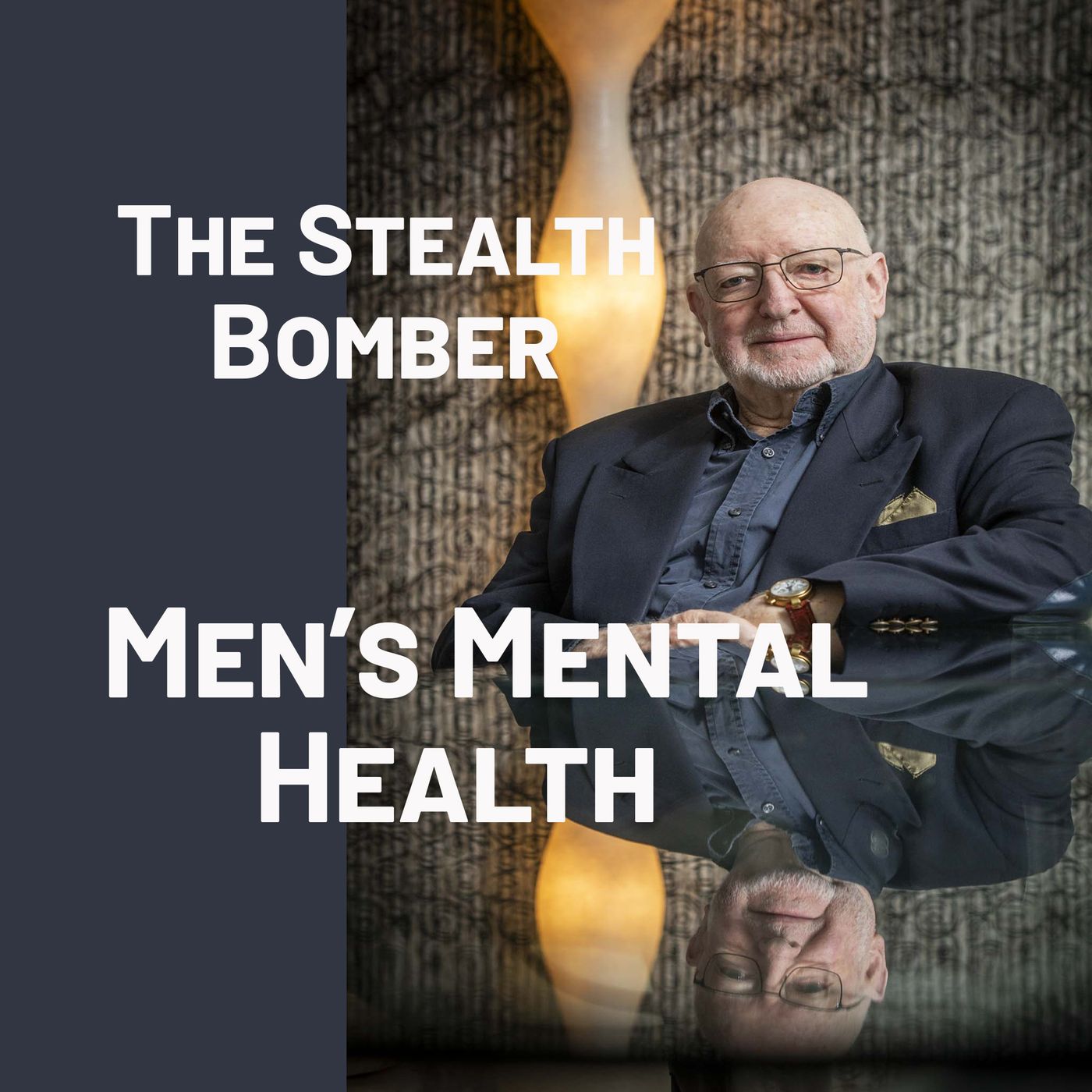 Breaking the Silence: Men's Mental Health Insights from "The Stealth Bomber" by George Norris59 / 100
 DIY Garage: Empowering Drivers to Fix Their Cars52 / 100
 Why You Pay More For EV Insurance.42 / 100
 Unveiling the Genius Behind the Bogányi Grand Piano: A Modern-Day Masterpiece49 / 100
 60 and Fired: Your Roadmap to Recovery from Retrenchment52 / 100