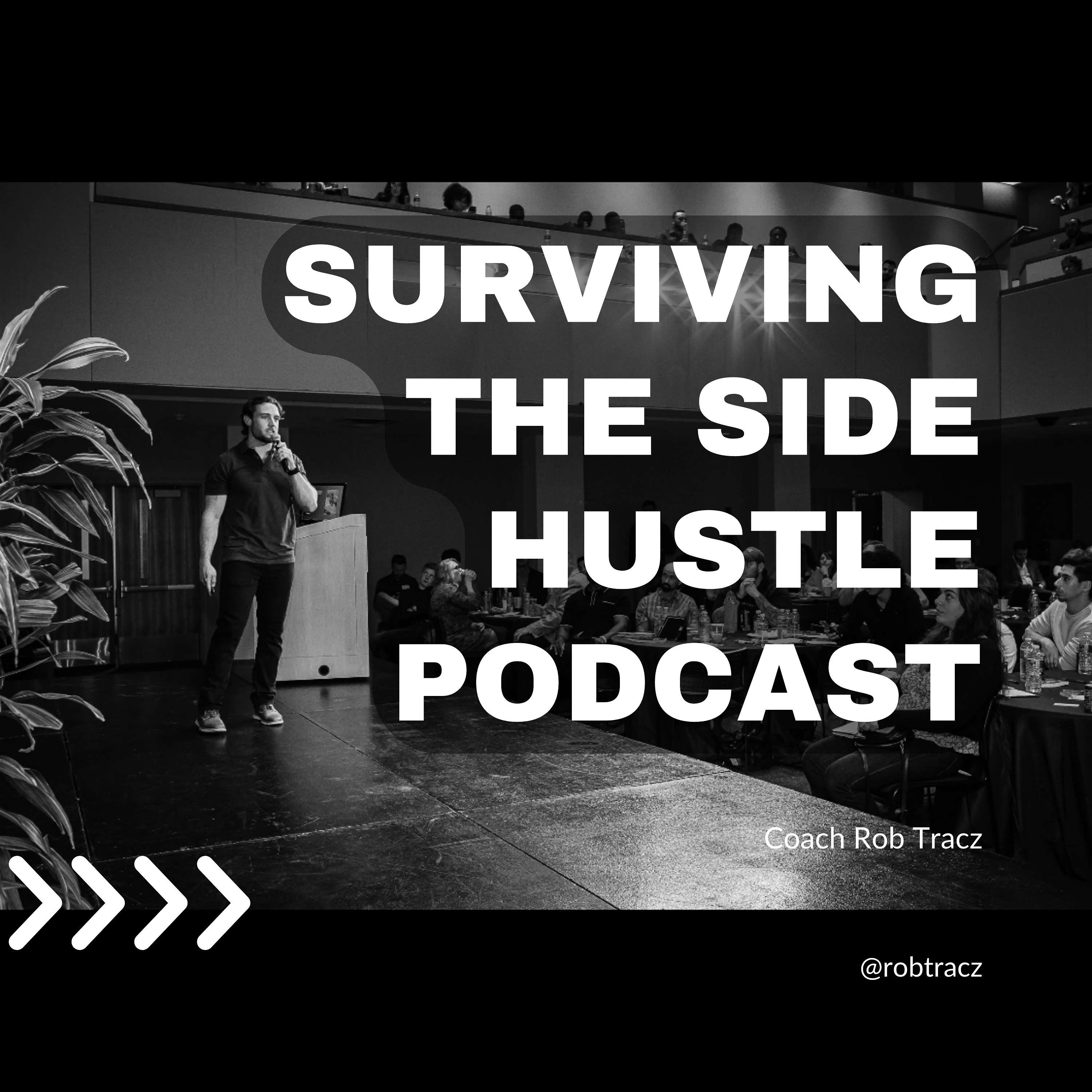
Surviving the Side Hustle · 2026-05-29 · 23 min
Key moments - from our scoring
Substance score
63 / 100
Five dimensions, 20 points each
Glenn Bostock's journey from struggling cabinet maker to CEO of a $30M elevator interiors and office pods company challenges conventional entrepreneurial wisdom. Rather than chasing money and grinding harder, Bostock built Snapcab on three core values - be kind, be authentic, be useful - creating a radically different operating system from the typical top-down, profit-driven model most entrepreneurs learn. The episode dissects five key lessons: starting in the neighborhood of what you love (not waiting for the perfect venture), the critical transition from technician to leader, surfacing problems as opportunities through "gemba boards" that reward employees for identifying issues, embracing weaknesses to build stronger teams, and designing your company like a living body with a responsive nervous system rather than a rigid machine. This reframe transforms how founders approach scaling, hiring, culture, and problem-solving. Bostock's upcoming book, A Human Business, formalizes these principles for entrepreneurs seeking growth without losing their company's soul or burning out in the process.
Bostock started by taking unglamorous furniture refinishing and repair work nobody else wanted, which taught him bookkeeping, customer service, and operations. Over time - starting with small cabinets, then elevator interiors, then a patented system that caught Otis Elevator's attention - he grew Snapcab to 144 employees across the US and Canada, growing at 30% annually for over a decade.
Snapcab uses 12-13 gemba boards throughout its facility where employees post problems on sticky notes the moment something goes wrong. The leadership team walks the facility daily to read the boards, visit where the work happens, and reward employees with carnival tickets (redeemable for extra vacation or family dinners) for surfacing issues, treating every problem as an opportunity to improve systems.
Bostock argues the purpose of business is to create value for customers, and money is simply feedback indicating whether you're actually solving real problems. When entrepreneurs obsess over revenue instead of usefulness, they accidentally turn customers into means to an end rather than genuinely serving them, limiting sustainable growth.
A machine-like business is a top-down hierarchy where problems take time to reach leadership; a body-like business has a responsive nervous system where information from the edge flows back instantly (like a fingertip sensing heat), enabling the organization to self-heal and adapt automatically through good system design.
The critical shift is from being a technician (the person doing all the work) to being a leader who designs the environment where other people do the work - requiring new skills in recruiting, culture building, casting vision, coaching people, and building systems that don't depend on the founder's personal effort.
Our reviewer’s read on each dimension, with quotes from the episode.
The episode distills several coherent business ideas - money as feedback rather than goal, starting in the neighborhood of what you love, the technician-to-leader transition, problem surfacing as ROI, and the body-as-system metaphor - with concrete examples (gemba boards, carnival tickets, Snapcab's 43-year trajectory). However, most of these are repackaged wisdom (the technician-to-leader transition is textbook Gerber; value-first thinking is common), and the host spends considerable time restating and connecting ideas rather than introducing novel claims, diluting insight density.
Gold is in the problems. If you can identify a problem and solve it, it's like finding money on the street.
Money isn't the goal, money is the feedback. It's how you know if the thing you're doing is actually useful.
The host presents several frameworks as novel - the body-vs.-machine metaphor, the gemba board system, the idea of rewarding problem reporting - but these are adaptations of Toyota Production System and Shingo's lean principles, which are decades old. The value-first, founder-scaling-through-weakness angle is discussed in countless contemporary business books. The episode lacks contrarian argument or first-principles thinking; it mostly reframes established management theory in human-centric language without challenging underlying assumptions.
Ritsoyu told Glenn this. Gold is in the problems.
The leadership team is like the head. The brain that thinks, sees the big picture. Production is the hands.
Glenn Bostock is a genuine operator: 43 years building a business from $0 to $30M revenue, with 144 employees, double-digit annual growth for over a decade, and named clients (Starbucks, Microsoft, Otis Elevator). He has demonstrable skin in the game and built something at scale. The credibility is strong, though the transcript is framed through the host's recap rather than direct guest interaction, which slightly reduces the direct calibration of his thinking.
Snapcab has 144 employees across the United States and Canada. They do 30 million in annual revenue and they grow at 30% a year for over a decade.
Glenn is founder and CEO of Snapcab, and his story one of the most unusual journeys that I've heard on this show in quite some time.
The episode includes concrete details: Snapcab's $30M revenue, 30% annual growth for over a decade, 144 employees, named client contracts (Starbucks, Microsoft, Otis), gemba boards (12-13 throughout the facility), carnival ticket rewards system, and Glenn's 43-year timeline. However, specificity is unevenly distributed. The gemba board system and Otis contract are named, but many claims lack numbers - how long does problem surfacing typically take to show ROI? What metrics measure culture shift? The host relies heavily on paraphrase rather than direct quotes from Glenn explaining mechanisms.
Snapcab has 144 employees across the United States and Canada. They elevator interiors and office pods for companies like Starbucks and Microsoft. They do 30 million in annual revenue and they grow at 30% a year for over a decade.
They call the gemba boards. Twelve or thirteen of them throughout the entire facility.
This is a post-interview recap, not a live conversation, which inherently limits conversational dynamics. The host does offer structure and clear takeaways, but there is no evidence of sharp follow-up questions, pushback on Glenn's claims, or moments where the host challenges vague assertions. The framing is reverential and additive rather than investigative. The host connects Glenn's ideas to his own coaching framework (TAPs, prime performance) without critical examination of potential contradictions or limitations.
Glenn dropped one of the cleanest pieces of business advice I'd ever heard, and I want to make sure that you don't miss it.
This is honestly the closest external parallel I've heard to what I've been teaching inside coaching for years now.
Computed from the transcript - who did the talking, and the words that came up most.
In this episode of Surviving the Side Hustle, Rob Tracz dives into a transformative perspective on entrepreneurship with Glenn Bostock, founder and CEO of Snapcab. Glenn challenges traditional business models, emphasizing kindness, authenticity, usefulness, and seeing the business as a living organism. Discover how to shift from hustle culture to a more sustainable, value-focused approach. Main Topics Covered: The limitations of conventional hustle and top-down leadership in business growth Building a business on values: be kind, be authentic, be useful Starting in the neighborhood: the importance of unglamorous work as a foundation Transitioning from technician to leader for scalable success The power of surfacing and solving problems: systems that reward transparency Treating your business like a body: creating a self-healing, ecosystem-like organization Practical steps for entrepreneurs to build resilient, purpose-driven companies Timestamps: 00:00 - Introduction and core question: Is the traditional business operating system holding you back?
Transcribed and scored by The B2B Podcast Index.
Rob Tracz: What's going on and welcome back to another Friday recap of surviving the side hustle? usual, I wouldn't love to ⁓ it off by asking you something. And week's question is ⁓ what everything you've been taught about running a business is actually the problem? Like what the hustle, the top-down leadership, the money is the goal mindset, and the firing people for mistakes, pushing harder until break.
⁓ What if the whole operating system is the thing that's keeping you stuck at the level that you're at? here's the truth ⁓ entrepreneurs building businesses that actually last aren't grinding harder than everyone else. They're from a completely different model. And most us were never even told the other model existed.
And that's what want to dive into because this week's guest has been quietly proving. This whole concept for 43 years. what he's built is going to challenge how you think about every part of your business or your projects, even. So week on Surviving the Side Hustle, I sat down with Glenn Bostock.
Glenn is founder and CEO of Snapcab, and his story one of ⁓ the most unusual journeys that I've heard and on this show in quite some time. Glenn started his career in the early nineteen eighties as a cabinet maker. couldn't really read well as a kid because of several learning disabilities. He got tested mercilessly in school, found his confidence in his dad's wood shop in the basement, then went college for fine woodworking, started his own shop at twenty three years old with his newly wed ⁓ wife and dog, and spent his years.
⁓ Refinishing furniture and fixing bro broken pieces because nobody would pay him for the high-end work yet. forward to today, Snapcab has 144 employees across the United States and Canada. They elevator interiors and office pods for companies like Starbucks and Microsoft. They do 30 million in annual revenue ⁓ and they at 30% a year for over a decade.
But here's what makes Glenn's story matter for you who's listening. didn't build Snapcab using the playbook every book sells you. He built it three values that became the foundation of his upcoming book called A Human Business, which be kind, ⁓ be authentic, and be And the way that runs the company is so different from standard model that It took me half the conversation to fully wrap my head around what he was even saying. this week's episode is for any entrepreneur who's starting to s sorry, to suspect that the way you've been taught to build a business is actually limiting how big it can actually become.
So if haven't yet, go back, check out the guest interview, and when you to it again for a second time, this is the lens I want you to listen through. See, Glenn said something on the mic stick with you. He the purpose of building a business is not to make money for the owner. The purpose of a business is to create value for customers.
And the money is just an indicator of whether you're actually doing that. Now, let say again. Money isn't the goal, money is the feedback. It's how you know if the thing you're doing is actually useful.
think about how most entrepreneurs run their businesses. We obsess over revenue, ⁓ chase top line numbers, ⁓ measure success by hits the bank. And in that, we accidentally turn the customer into a means an end, a transaction designed to value and not deliver it. But Glenn Glenn flipped that.
Be useful, solve a real problem, add real value, and let the money come as a natural consequence of doing that at scale. whole guest interview episode ⁓ about what becomes possible when you stop building a business for yourself and start building one for people it actually serves. So the takeaway I want to give you guys from the guest interview is start in the neighborhood of what you love, not on top of it. Glenn dropped one of the cleanest pieces of business advice I'd ever heard, and I want to make sure that you don't miss it.
said when he started his cabinet shop at twenty-three, nobody would pay him to do the high-end fine woodworking that he actually loved to do. He didn't have a reputation. He didn't have a portfolio. He had a barn, ⁓ dog, a newlywed wife.
So instead of holding out for the dream work, he started refinishing and And fixing broken pieces, drenched in chemicals, scrubbing old finishes, the kind of work that nobody else wanted. And the line: get into business in the of something that you love. Not exactly the thing, but near it. See that hit and stuck with me because so many entrepreneurs I coach ⁓ are stuck in trap where they refuse to start until they can do exact thing that they want to do.
the exact way that they want to do it with exact client that they dream about. And they're waiting to start the perfect business, the people actually built something started ugly and ⁓ into something pretty. started the refinishing furniture. That's not woodworking glamour, that's soaked back breaking work.
But it got him in the neighborhood of what he really loved. ⁓ It taught him ⁓ the business of cabinet making, the bookkeeping, the customer service, the pricing, the operations, him having to risk the high-end work that he wasn't ready yet for. And over time he grew into the work he actually wanted to do. The refinishing led to small cabinets, the small cabinets led to elevator interiors, and the elevator interiors led to patented system that caught Otis Elevator's attention.
The Otis contract led to and SnapCAD led to 144 employees and $30 million a year. But of it happens if Glenn doesn't start in the neighborhood. Here's what want you to hear if you've been sitting on a business idea waiting for the perfect launch moment. Stop waiting.
Start in the the crummy job nobody else wants. The unsexy client, the small offer, the work that gets you the reps and revenue while you figure out who you actually are as an operator. people who get good at business aren't the ones with the best ideas. ⁓ the ones who get their hands dirty long enough to learn the rhythm of having customers, collecting money, solving problems, and showing up the next day.
And in prime performance coaching, of TAPS ⁓ we've got a whole framework behind this. But core idea is that the journey isn't a straight line. You don't at point A and arrive at point B. You start near point A and you take road.
You learn what you couldn't have learned any other way. ⁓ the path actually as you walk it. Most entrepreneurs are Paralyzed because they're trying to map the entire route before taking the first turn. map gets drawn by driving.
So please ⁓ in the neighborhood of what you love, not on top of it. ⁓ road to dream businesses runs directly through the unglamorous work that you've been on of you've been avoiding, and entrepreneurs who skip that work never actually arrive. And this is so true to me as well, because I started coaching career in strength and conditioning. And although I still love strength conditioning and being in the gym, just knew that it wasn't specifically I wanted to be doing forever.
So without going through that grind, without going through the burnout, I would have never landed in the speaking and coaching world that I'm in nowadays. So I it to be so true. And the second lesson that I want for guys is the transformation from technician to leader is the bottleneck of every business. This is part of the episode that I think every entrepreneur listening needs to hear.
Glenn was clear. he had stayed a technician, if he had stayed the guy with a hammer building cabinets, his business would have topped out, maybe one or two employees and couple hundred thousand in revenue forever. But he a transformation. And the transformation wasn't about getting better at woodworking.
It was about that his first love was The deepest love, the one underneath the surface love, actually woodworking at all. It building, creating, solving problems. And eventually building a of people who could do together that he could never do alone. Here's that trap that most entrepreneurs are gonna fall into.
They become world class at their craft. They get really, really good at something. Then they assume the path forward is to do more of the thing. More clients, more sessions, more cabinets, design work, more coaching calls.
And they hit a wall they cannot punch through because ceiling on doing the thing yourself is set by the hours in your day and the in your body. And no amount hustle changes that math. Glenn realized he had shift from being the technician. know, the guy doing all the work to being the guy who builds the environment where the work gets done by other people.
And that's a completely different skill set. Recruiting, culture building, casting, ⁓ coaching, ⁓ people accountable, designing systems that don't depend on him. See, didn't get good ⁓ at skills overnight. He hired four different leaders over 15 years before he figured out what kind of leader he actually needed to build.
the one of most honest moments in the conversation with Glenn was when he that he had to embrace his weaknesses. He had to say to his team, Hey, I'm great at product and creative problem solving. The list of what I'm great at is way longer. Then what the things I I am good at.
need help. That's the move most entrepreneurs are too afraid and never make. hide our weaknesses because we think being a good leader ⁓ having all the answers. But entrepreneurs who actually scale figure out the opposite is true.
Being a good leader means being honest enough ⁓ about what bad at that the right can step in and cover it. When you try to good at everything, you stay small. When you get honest about what what you're not good at, you build a team that can be good at everything together. to tie it back to Tap's coaching's prime performance process, you have probably heard me talking about the team triangle and the social skills.
There's the behind it, ⁓ but the idea is exactly what Glenn lived. You can't scale business that depends on you being the best at every function. You scale by getting clear eyed about what you're built for, a team around the gaps and creating an environment ⁓ the right people can do the work better than you could have done it yourself. Again, that's not weakness, that's actual job of a leader.
Takeaway number three for you guys is the gold in the problems. This the moment of the entire episode for me, and I'm to be quoting it for a long time. Glenn shared something mentor told him: a Japanese manufacturing consultant Ritsoyu Shingo, the son a who developed Toyota production system. Ritsoyu told Glenn this.
⁓ Gold is in the problems. you can identify a problem and solve it, it's like finding money on the street. Most do the opposite. ⁓ We a problem and we get frustrated.
We complain, we get defensive, we blame people, we try push the problem out of sight so we can get back to doing the work. Clem flipped it at Snapcab. He built a system. They call the gemba boards.
Twelve or thirteen of throughout the entire facility. Where every time something goes wrong, an employee writes it on a post-it note and slaps it on the board. team walks a facility every single day and reads the boards. They to the place where the work happens, see the problems, and treat each problem like a gift.
And here's the that's gonna blow your mind. They reward employees ⁓ ⁓ reporting the Carnival tickets, ⁓ stack them up. ⁓ At company meetings, whoever has the most tickets gets a spin on a prize wheel for extra vacation days or dinner with their family. literally pay people to find the problems in their business.
And they do this because every problem surfaced is an opportunity to build a system that prevents that problem from ever happening again. And system improvement makes company more scalable, more resilient, more profitable. Hide problems and hide growth. surface problems and then you compound the growth.
compare this to how most small businesses run. The owner finds a mistake and explodes. ⁓ employee learns to hide mistakes next time. Other see what happens and learn the same lesson.
⁓ Don't the boss when something's wrong. And slowly, the entire company becomes structurally incapable of getting better. Because the information could fix it is being buried out of fear. Glenn made the analogy explicit on episode.
He said most businesses can't feel the pebble in their shoe. If they could, they take it out. But the fear-based culture ⁓ has them to their own dysfunction. The reason business isn't growing isn't because you don't have enough wins.
It's because you have a system for surfacing your losses fast enough to learn from them. Can't outpace anything that you cannot see. in business, the things that slow you down most aren't the big problems. ⁓ the small problems that nobody surfaces because the culture ⁓ the messenger.
But a culture where the messenger gets rewarded and suddenly can see the whole field and that changes Remember, the gold is the If your team is afraid to you it's broken, ⁓ you're not running a business. You're just running blind. Build a system that pays people to find what's not working. not a cost.
That's highest ROI investment most companies make. And finally, biggest for you is build it like a body, a machine. This last one might be the deepest reframe for the entire guest interview. doesn't think about his business as a machine like most people do.
He thinks about it as a body. And analogy is so good, ⁓ I you to walk through this thing with me. He said that leadership team is like the head. The brain that thinks, sees the big picture.
Production is the hands. That's the work gets done. Operations is the torso, core that holds everything together. The company is connected like a nervous system ⁓ with flowing in every direction.
When he the gimba boards every morning, he said it's same ⁓ sensation his fingertips he touches something hot. The information about what's happening at edge of the company gets back to the brain fast ⁓ because the system is designed for Most companies are top-down hierarchies. has to climb the ladder to reach the leadership, which by the time the head finds out about the problem, the hand already been burned. And here's the thing I you to remember.
Glenn said most businesses can't the pebble in their shoe. But worse, many businesses have cancer inside of People working on things that are out of ⁓ with where the company is going. And because the leadership can't sense it, misalignment grows unchecked until it threatens the entire organism. Now about that as a leader of your own business and life.
Even if business is just you and the contractor or maybe two other people, where are the in your system? What are you not that you should be feeling? Where is the information from the edge of your business not getting back to your head fast enough to act on? here's the beautiful part of the whole entire body metaphor.
The ⁓ is You don't to tell your immune system to fight a virus. You don't have remind your skin to scab over a cut. The design of the handles it. Clenn's whole thesis is that well-designed company ⁓ should be the same.
⁓ self-healing system. Where problems get surfaced, and converted into growth automatically because culture is designed to do that work. That's the between a business that depends on its founder forever and a business can outlive its founder. One is a machine breaks when the operator leaves.
⁓ The other is a that keeps growing because it's built to live its own. This is honestly the closest external parallel I've heard to what I've been teaching inside coaching for years now. The body is the system. The system ⁓ the business.
And you stop trying to dominate the business and start trying to design ⁓ the like a like an ecosystem, like a community, unlock a level growth ⁓ that pure willpower can't And overall, the biggest idea here is version of business most of us were sold, ⁓ the top-down money first, hide the mistakes, push harder, isn't unkind. It's inefficient. It builds companies, it produces worse cultures, it burns out founder, it punishes the truth tellers, it hides the very that could make the business great.
There is a different operating Clenn's been running it for 43 ⁓ And built a thirty million dollar company it. Be be authentic, useful. Treat business like body, ⁓ not a machine. ⁓ people for surfacing Hire for love of work community.
And stop chasing the that start the value. And watch the money up as the byproduct. not soft, it's not naive. It's the most Strategically advanced way to run a business that almost nobody is teaching.
Glenn's book, A Human Business, is officially being released on June 16th through Forbes Books. And if you're an entrepreneur trying to scale your company without losing the soul of it, this a book that you're going to want to grab. And ⁓ can a free chapter right now at his website, ⁓ glenbostock.com.
And Glenn. with two ends and B-O-S-T-O-C com. Glenn, you're listening to this recap, thank you again for coming on, man. The wisdom the conversation was purely a gift.
I appreciate you so much. And I want leave you with the last thing that said when I asked him what entrepreneurs in the early stages should focus on most. He said, be aware of lights you And what wakes you up in the morning. what you love.
You're not going to do it perfectly at the beginning, but keep it in mind. And in meantime, find the crummy, terrible chop that nobody else wants to do, but that has real market need. Then add value, keep value. Be useful and keep being long enough for the business that has no choice but to The simplest business strategy I've ever heard is so useful for so long that people can't ignore you.
That's Man, that's whole game. No funnels, no hacks, no secrets. Just being useful day in the neighborhood of what you love for the people who ⁓ what you can actually The entrepreneurs who win aren't loudest. ⁓ They're the most useful over longest stretch of time.
if you're listening to this, go that. And I'll catch you guys next Tuesday with a new guest interview. And until then, stay sharp, stay aligned, keep the side hustle. Thank you, you.
Peace, peace, peace.
Other episodes covering the same guests and topics, from across The B2B Podcast Index.
 Human Business Leadership: Glenn Bostock on Turning Culture Into Growth | Ep. 209Business Superfans® Advantage · features Glenn Bostock77 / 100
 The Toyota Method That Could Transform Dentistry. Why AI Multiplies Mess Without ItThe TechDental Podcast · on Toyota Production System95 / 100
 What Private Equity Looks For Before They Buy with Wayne Marhelski (#79)Exit Algorithms · on Toyota Production System91 / 100
 Do the Right Thing, Every Time: Lessons on Leadership and AgencyTake Command: A Leadership Podcast · on Toyota Production System82 / 100
 From Action Plans to ExperimentsThe Lean Solutions Podcast · on Toyota Production System81 / 100
 What Big Companies Do To Ensure Profitability with Ravinder Nottra [CPD Available]Dentists Who Invest Podcast · on Toyota Production System80 / 100E199 - Why Financial Planning Should Help You Live Now with Ohan Kayikchyan61 / 100E198 - Lessons from Anthony Cutno: Building on Faith When Everything Falls Apart
55 / 100E197 - From Homelessness to Leadership: How Faith and Authenticity Drive Success w/ Anthony Cutno55 / 100E196 - Lessons from Eric Dingler: The Ultimate System Change That Frees Entrepreneurs Doing It All72 / 100E195 - How Leadership Transformed a Side Hustle into a Full Business with Eric Dingler81 / 100
What Big Companies Do To Ensure Profitability with Ravinder Nottra [CPD Available]Dentists Who Invest Podcast · on Toyota Production System80 / 100E199 - Why Financial Planning Should Help You Live Now with Ohan Kayikchyan61 / 100E198 - Lessons from Anthony Cutno: Building on Faith When Everything Falls Apart
55 / 100E197 - From Homelessness to Leadership: How Faith and Authenticity Drive Success w/ Anthony Cutno55 / 100E196 - Lessons from Eric Dingler: The Ultimate System Change That Frees Entrepreneurs Doing It All72 / 100E195 - How Leadership Transformed a Side Hustle into a Full Business with Eric Dingler81 / 100