
SRI360 · 2026-05-06 · 1h 43m
Key moments - from our scoring
Substance score
71 / 100
Five dimensions, 20 points each
Amel Karboul brings two decades of experience operating at the intersection of government, philanthropy, and private capital to reshape how development funding works. Rather than asking how much money we spend on education, outcomes-based financing asks whether that spending actually changes results - a fundamental reorientation captured in her concept of 'price per outcome.' The Education Outcomes Fund brings together governments as implementers, donors as capital providers, and private impact investors as risk-takers into unified structures where success is defined by measurable student learning gains, not deployed capital. This episode traces Karboul's journey from Mercedes-Benz engineering innovation programs through her unexpected 2013 call to become Tunisia's Minister of Tourism during the post-revolution democratic transition, revealing how her background in co-creation and stakeholder alignment at scale prepared her for the complexity of aligning investors, governments, and development actors around education results. The conversation explores the hard questions: how to avoid narrowing impact to only what's easily measured, how to balance investor returns with educational outcomes, and what standardization might look like for outcomes contracts to scale beyond bespoke structures into tradable instruments.
The Education Outcomes Fund brings together governments, donors, and private impact investors in unified structures where payment is contingent on independently verified learning outcomes - typically measured by student reading ability - rather than on activities completed or capital deployed. This fundamentally reorients incentives away from activity-based spending toward results.
Price per outcome divides total capital spent by the number of beneficiaries who achieve measurable results (e.g., learning to read), not by all participants reached. Karboul argues this reveals that spending $500 million to help 15% of children achieve literacy outcomes costs far more per actual outcome than smaller, better-targeted programs - and sometimes justifies spending as much as a Harvard education per child if outcomes are achieved.
Her 2013 appointment during Tunisia's post-revolution democratic transition gave her access to government decision-making and created an environment open to innovative financing models. This real-world laboratory allowed experimentation with outcomes-based structures that traditional governance frameworks resist, generating practical lessons for scaling the Education Outcomes Fund globally.
Key risks include narrowing what counts as impact to easily measurable metrics like reading ability while ignoring unmeasurable dimensions of quality education, student agency, and long-term human flourishing; and the tension between investor return requirements and the pace of real educational change on the ground.
At Mercedes, Karboul led supplier co-creation programs that yielded five patents by moving away from traditional top-down engineering to collaborative problem-solving. Nearly 30 years later, Ronald Cohen asked her to apply the same co-creation philosophy to outcomes-based education financing - aligning multiple stakeholders (governments, donors, investors) around shared results.
Our reviewer’s read on each dimension, with quotes from the episode.
The episode contains substantial operational and strategic insights about outcomes-based financing in education, particularly around pricing mechanisms, government capacity building, and the mechanics of impact investing. However, significant portions are devoted to biographical narrative and philosophical reflection that, while contextual, don't directly advance B2B operator learning about the model itself. The specifics on price-per-outcome calculations, RCT implementation, and multi-stakeholder orchestration are valuable but interspersed with considerable personal history.
Price per outcome is those hundreds of million you spend divided by those 15%, not by the hundred thousand
you can spend $5 per chart for 5 million children and achieve profit
The outcomes-based financing model for education is relatively novel and represents a genuine attempt to adapt social impact bonds to education systems in emerging markets. However, the underlying concepts - social impact bonds, results-based financing, RCTs in development - are not new. The main originality lies in the specific application structure and government partnership approach, but the intellectual framework itself draws heavily from existing impact investing playbooks. The critique of how aid is deployed and the emphasis on price-per-outcome rather than price-per-beneficiary are useful reframings but not deeply contrarian.
how can we change the way we fund education? How can we change to achieve more results in education?
we don't Tell them what to do. We hold them accountable for the outcome
Amel Karboul is genuinely impressive as a guest: she has operated at scale as Tunisia's Minister of Tourism during democratic transition, served on the International Commission on Financing Global Education (under Gordon Brown), and is actively building and running a $130M+ outcomes fund across six African countries. She has hands-on operational experience in both government and impact investing, which is rare. However, she functions somewhat as a thought-leader and advocate for her own model rather than as a skeptical practitioner stress-testing assumptions, which slightly limits her caliber for this specific conversation.
Former Minister of Tourism in Tunisia, and she is a pioneer who is leading the way forward
we've launched and implemented the biggest outcomes fund in education in the world
The episode includes concrete examples (Sierra Leone Education Innovation Challenge: $18M, 325 schools, 134,000 children; Ghana Education Outcomes Project: $30M, 70,000 out-of-school children; specific RCT results showing 70th percentile performance) and real numbers on outcomes pricing. However, much of the specificity is surface-level - exact mechanics of contract templates, detailed provider performance data, and granular breakdowns of cost structures are referenced but not deeply explored. The toilet block story is illustrative but anecdotal. Financial flows and risk allocation could be more precisely quantified.
$18 million, 325 primary schools, 134,000 children, five implementing partners
the year three, we just finished the program recently, and it still achieves better than 70% of programs across the continent
The host asks solid contextual and biographical questions early on, but once the conversation turns to the EOF model itself (the second half), the questioning becomes more affirmatory and less challenging. The host rarely pushes back on tensions or asks for granular detail on failure modes, risk distribution, or trade-offs. He mentions tensions (investor returns, government capacity, measurement narrowing) but accepts Karboul's responses without sharp follow-ups. The interview reads more as a narrative exploration of her journey than a rigorous examination of the model's assumptions and vulnerabilities.
So tell me what he said and take me inside those two hours
Walk me through the full life cycle of an EOF outcomes partnership
Computed from the transcript - who did the talking, and the words that came up most.
Impact investing is entering a more disciplined, outcomes-driven phase, and it’s more complex than it first appears. In this episode of Sustainable & Responsible Investing 360 , I sit down with Amel Karboul, Founder and CEO of the Education Outcomes Fund, to explore how capital can be tied directly to measurable results. Drawing on her experience working with governments, philanthropies, and impact investors, Amel explains why traditional funding models often fail to deliver real impact, and how outcomes-based financing aims to realign incentives across the system. Rather than paying for activities, this model pays for results, introducing both greater accountability and new challenges. We explore the tensions at the heart of this approach, from balancing different stakeholder expectations to addressing concerns around investor returns in low-income markets. We also discuss the risk of narrowing impact to what can be measured, and how thoughtful design can mitigate those trade-offs. Looking ahead, we examine what it will take for outcomes-based models to scale, from simplification and standardization to the potential emergence of more tradable forms of impact.
Transcribed and scored by The B2B Podcast Index.
Up next on the SRI 360 podcast. Some countries in the world, 90% of children can't read and write a paragraph for meaning at age 10, you know, or at the end of primary school. So that kind of youth unemployment is increasing despite all these young people having access to training, you know, or education. The core is we are failing young children.
I felt like we have failed these young people if their sense of I matter means I have to go to kind of that dark path. Price per outcome is those hundreds of million you spend divided by those 15%, not by the hundred thousand, you know. And so when you make that calculation, you could have sent each one of them to Harvard, basically. And this is what we don't calculate.
You know, sometimes people say, What is your price per beneficiary or why is it higher? It's like, yeah, I mean, you can spend $5 per chart for 5 million children and achieve profit. Unlock the potential of your investors to improve the world and make high performance return. Welcome to Sustainable and Responsible Investing 360.
My name is Scott Arnell, and each week I sit down with a world-class investor to uncover their secrets of profitable ESP, impact, and socially responsible investing. Find out more at SRI360.com. Hey everyone, I'm Scott Arnell, and welcome to Sustainable and Responsible Investing 360.
My guest today is Emil Carpool, founder and chief executive officer of the Education Outcomes Fund. Emil is a former Minister of Tourism in Tunisia, and she is a pioneer who is leading the way forward and demonstrating how capital can be invested to deliver real-world impact on the education systems in the emerging market. Emil has spent her career operating at the intersection of government, philanthropy, and private capital. And today, she's helping design and scale outcomes-based financing models that aim to fundamentally change how we allocate money and development.
Not just how much we spend, but whether that spending actually changes results on the ground and delivers desired outcomes. And that's really the heart of this conversation. Because for all the growth and impact investing over the past decade, one uncomfortable question remains. Are we actually improving the outcomes or just getting better at measuring intentions?
In this episode, we explore what it looks like to move from funding activities to investing in results. ML breaks down how outcomes-based financing works in practice by bringing together governments, donors, and private impact investors all into a single structure where success is defined by measurable impact, not just deployed capital. We also dig into some of the harder sections in the space, from the effects of investor returns for educational results to the risk of narrowing impact to just what can be measured, to the very real challenge of aligning stakeholders with completely different incentives.
And finally, we look ahead at what it would take for impact investing to truly scale from the most complex structures into something more standardized, more accessible, and potentially even tradable at scale. This is a conversation about accountability, about incentives, and about what it really means to pay for impact. Please enjoy, and as always, thank you for listening. And now, please meet ML Carwood.
Thank you first and foremost for being a part of this community. But it's driving me crazy that over 83% of you that listen to or watch this show regularly haven't yet subscribed to this show. So can I ask you for a favor before we start today? If you like the show and if you like what we do here and you want to support us, the free and simple way that you can do just that is by hitting the subscribe button or following us on your podcast app.
It helps this channel more than you know. Thank you and enjoy this episode. Emil, thanks for coming on with me today. I really appreciate it.
Thank you, Scott, for inviting me. Happy to be here. I always start by going back to the beginning of my guest story, but today I want to start by dropping into one very specific moment of your life, and then we'll rewind back from there. And I want to go back to December 2013, and you were in South Africa for Nelson Mandela's funeral.
And at that point in your life, you have a successful international consulting practice. You have a comfortable life in Europe. And your phone rings, and it's the new prime minister of Tunisia, Medijoma, and he essentially says, Emil, Tunisia needs you. Come home, help us build the first democracy in the Arab world.
And he makes you an offer and gives you two hours to decide. So tell me what he said and take me inside those two hours and what was the internal dialogue inside your head and tell me what happened with that. Yeah, I mean, definitely it was a yeah. I mean, looking backwards, even probably more of a life-changing moment than in the moment.
I was just kind of probably a mixture of awe and shock. It was really wonderful conversation. And interestingly, if you look at the cabinet he built later, every one of us has a story. One of my colleagues was living in Brazil and was running around on the beach, and like everyone has their story of that call.
And I'm grateful he gave me two hours. I think these big decisions, if you have days, it makes them only harder. Everyone I called in those two hours, including my father, who has a long, you know, political career, etc., said, Don't do it.
Everyone said, you know, like if the world is gonna watch you fail, and you know, you have such an amazing life, and you're taking something that is kind of mission impossible. But just a day earlier or two days earlier, I wrote in the condolences book that the best way to I don't remember the wording exactly. Actually, I think I took a photo of it, but I can't find it. Like the best way to serve your legacy for Mandela is to kind of serve, you know.
And that call coming in that same moment, I just felt a calling and a mission. And I was like, Yeah, we have to say yes. And so despite everyone saying I shouldn't do it, I I talked with my that time husband, and then actually I did a body exercise I do for big decisions. So I took a bit of a meditation moment and kind of saw how my body feels of me saying yes versus saying no, and my whole body said yes, and so I said yes and had kind of only really few weeks, couple of weeks to move.
It became much, much more challenging than I thought it would be. I think it's good. I didn't know it's gonna come. What did it cost you concretely to walk away from that life you had built to do that?
Oh, a lot, honestly. Like, I mean, obviously, personally, my children we had has actually recently moved to the UK, so they just started kind of a new school system. They were, you know, four and nine or something at the time. And yeah, and I had a whole company that I was CEO of.
Interestingly, that year I had from two major consulting firms offers to buy the company, and I could have sold it for yeah, multiple million dollars. And I decided not to because I felt I wasn't leveraged enough yet. I wanted to grow it a bit further. And so, yeah, life happens while we're making plans.
I also had kind of that sense of wanting to do something that has a stronger social impact, and so it cost me literally leaving a company, my livelihood, my family, and just kind of taking a plane and just going to serve. So now I want to rewind back and talk about your life earlier. Your father was a secretary of state in the Ministry of Interior and eventually Tunisia's ambassador to Germany. If I'm right, five languages spoken in your home and two religions practiced.
And I think about that, and I think you are learning something at your home that can't be taught in any school. So tell me about growing up in your home and your parents, and what was the thing that they taught you, not through words, but through how they live that you still carry with you? Yeah, thank you. It's a great question because sometimes I ask myself this too, because we have a tendency, you know, in adulthood, to blame our parents still.
I know I have a friend, she's like when you're past 40 or when you're past 50, depending on how you define it, you're not allowed to blame your parents for anything anymore. But so, yeah, I think it started also with my grandparents. My grandfather from my mother's side was an independent fighter against French colonialism, he was then jailed in Algeria. My grandmother was the first woman to drive a car on the island of Java.
My grandfather died as the age of 104 a few years ago. So they were born uh kind of 1910s. So I do feel like there were a lot of kind of without really talking about it through the action. My grandparents and my parents, my mother was very successful professionally in a think tank.
And I think this value of standing tall and you know, not accepting oppression, standing for your values, even if it costs you. I think my dad is the end of his career by standing up to Ben Ali, you know, the dictator that then was ousted during the revolution, you know, kind of was ousted of his post, you know, and left hanging. And so after 40 years serving his country. And so, in a way, integrity and value-driven and maybe also the long arc of history.
You know, a lot of people live in a very definitive moment, and maybe it's a luxury that I can look at because I don't have to fight for my day-to-day, you know, livelihood. I guess it's a luxury that I can see. But I grew up in a city that was founded like over 3,000 years ago by a woman, Carthage, by the way. And so it's just kind of we are as much a product of our time and history and context, and it's our kind of work to leave the world in a better place than we were.
And interestingly, when I was younger, I was like, I'm never gonna go to politics. My grandfather was in politics, my father was in politics, and I felt like the price you pay is very high because you don't have private life, you know, everything you say, your family says is out in the public, and it's quite a lot of pressure. So I was like, I'm gonna go in the big corporate world and make sons of money. But yeah, I guess that catches up with you, it's very deep.
And I love seeing also my daughter's my youngest, she has such a big sense of justice, she's kind of a fighter, she's angry, and I was like, we need more angry young women. So, in a way, it's really nice to these values kind of continue. Yeah, you've described a bit of a feminist upbringing as a major influence. What did feminism actually mean in Tunisia in the 70s and the 80s?
Yeah, I mean, it's really fascinating because I find like Tunisian men in the 70s and 80s were proud to call themselves feminists. I think in much more than, let's say, when I moved to Germany in the 90s, you know, beginning of 2000, when I did my engineering studies and lived. You know, my father was a very proud feminist, but I know many people, like our first president Habib Burgiba, was a feminist, you know, like Tunisia had abolished polygamy and after independence 1956, equal rights for men and women, education was free for every child.
And so I just kind of being a feminist was a positive thing to be. And it's a positive thing for men as well, which I believe today is the case, you know, is kind of these traditional gender roles are not just oppressive for women, they're also oppressive for men. So it was never like I saw, yeah, young men and young girls were treated differently by society to a certain degree, but it was still the ambition of everyone. Like equality was something my family, our friends, maybe, and it wasn't just a bubble, it was a societal project as well, you know.
Contraception was free, family planning institution everywhere, which contributed also to women having a better life and families having a better life. Yeah. And then around 18 years of age, you left Tunisia on a day scholarship, DAAD, which is a prestigious program for international students, to study or do research in Germany. And you moved to Germany and first to study in an intensive German language course at the University of Heidelberg.
And then you were off to Karlsruhe Institute of Technology, where you earned a master's in mechanical engineering. Now tell me why Karlsruhe and why mechanical engineering. Yeah, I mean, look, I I love physics and math. I love dance as well.
So I have an arty side, but at school I was pretty nerdy. I don't know, people like Niels Bohr were the epitome of sexy for me as a teenager. So just to give you a sense of what type of person I was, I guess. And so I felt like you know, bringing math and physics and stems into kind of changing the world in a concrete way.
So mechanical engineering sounded kind of the good place to go. And then Germany has a great world reputation. I got accepted in France as well. I remember Louis Legrand, which is like these prestigious all my francophone friends are not gonna like what I'm saying now.
But I just left. I felt like I don't know, I didn't feel it was a big difference to Tunisia. I felt it's a very structured, top-down analytical type of studying. And I wanted kind of a bit more kind of free thinking and freedom, I guess.
And I heard like in Germany, and I had the scholarship was also valid for Germany, that you kind of at that time, you know, you create a bit your own path, you know, through university and the research you do. And so to be honest, I'm gonna sound very boring, but for me, like I looked at kind of ranking tables and I was like, if I go there, I want to go to the best, you know, and it is kind of the German MIT. There was Aachen as well, that they compete between one and two every year.
And then I visited both cities, and there was a lot of sunshine in Karlsruhe. So I was like, and the lot of rain in Aachen. I know when you're 17 and a half, 18, you make decisions based sometimes on a very strange piece. And I was like, you know what?
Since they're kind of equal, and Karlsruhe felt more of a campus place and sunshine, and has also like a very strong computer science department, one of the first actually in the world. And so yeah, it felt kind of the right place to go. Yeah. And then I remember the first day was really interesting.
So in Tunisia, like already at that time, like engineering at the time was like 40 or 30% of women. And so I walk into the first kind of class in mechanical engineering. I think it was like Matter 1, you know, math one for engineering, and then there were like 480 boys, I don't know, like it was like three or four, like less than kind of one percent of women. And I thought I was in the wrong kind of lecture hall, you know.
I was like, is this like a male kind of club or something that I ended up? Is this really math for mechanical engineering? And they were like, Oh, yeah, yeah, yeah. And I was like, Where are the women?
And then I remember, you know, going home and calling my dad from one of those kind of payphones, and it's like, I was like, Dad, you didn't tell me women don't study in Germany, you know. And I was really pretty shocked, it was like news to me, you know. But yeah, but at the end it was really great time to be honest. Yeah, I imagine it was more women don't study engineering, no?
Yeah, it was my first experience in Germany. Yeah, yeah, yeah. Mechanical engineering. Yeah.
Now your father was the ambassador to Germany, but when you moved at 18, did you never live in Germany previously when you were growing up? No, I had a year there where I went to French school, but the decision was it really dependent on my dad's kind of post. No, I didn't speak a word of German. My parents used to use German when they fought, so that we don't understand.
Then we were saying, like, you don't have that language anymore. So I've learned it literally from scratch. But I guess this is a very Tunisian thing. I don't know.
We love languages, I guess we learn languages. I have Tunisian friends who study in Japan or Russia or US, and they all went with knowing literally nothing, and we kind of, you know, eight months. I think in immersion you probably can learn almost any language. In hindsight, what was that move like for you culturally learning to operate between two differ very different worlds?
Yeah, I mean, look, I actually loved a lot of things about Germany, to be honest. You know, I think one on the technical, obviously, side and the university and the quality of the professor and everything was amazing. I was working at the edge of you know science, physics, and everything in the world. So that was fantastic.
But also like I discovered it had a lot of depth, so obviously something I didn't know when I was much younger. So when I started reading in German, you know, German philosophers, human reflection, and I started even like at I remember at age like 20 something, I started therapy in Germany. So I started with a very classic psychoanalysis where you sit three days a week on a couch for an hour. It's brought to me kind of a deep self-reflection.
I don't know if how much this is well known of Germany, but in a way, kind of there is a deep cultural tradition, you know. We have lots of musicians, philosophers, literature, poets. So in a way, I got in touch with that side of the country, and I think it made me a more reflective person. Now that I don't have the contrafactual, would have that happen if I was in the US or in Japan or elsewhere.
But in a way, kind of art into the arts world a lot. And I think I love working until today with German. I mean, their system is really creates like very independent thinkers in a sense, and people who work independently, and kind of having learned to work in Germany, and they're obviously big perfectionists, sets you, I think, in a good trajectory in the world, you know. And your parents are they both Tunisian?
Because there's this five languages in the house. Oh, yeah, like they're but they're both Tunisian. I mean, then the house where I grew up, but the house also now with my daughters. So I know they're both Tunisian, but my grandparents' mother's side were still spoke Amazir, which is the Aborigines language of North Africa in a way, which is called Baba, but it's Baba comes from a colonialist word, so we don't like to use it.
So it's Amazir language, it's a completely different language. And Arabic, then obviously we spoke standard Arabic, speak Tunisian. Tunisian is a dialect, but it's to be honest, I mean, I see it with my daughters now trying to learn Arabic and Tunisian. They're almost two different languages.
Obviously, French from very young on. My mother had a very francophone side, and then German and English now. You got out of Karlsruhe, you joined Mercedes-Benz as a project leader for innovation management and supplier relations. And then you ended up being based in post-apartheid South Africa.
I think that's around 1996. South Africa is just two years into democracy under Mandala. So what drew you there? Yeah, I mean, it was like a great opportunity.
So I was when I joined Mercedes, I had this future leader kind of program. And then a part of that program you could go and work abroad in one of their plans. And so there was an alternative Indonesia, I think Argentina, US, and then South Africa. And for me, going to South Africa at that time post-aporta was really important, you know.
I think to kind of see how a society actually goes through transition, probably. And so I ended up in East London, a very small town on the east side of the country, and it was very fascinating. And somehow, first I got a lot of responsibility. I was responsible for a very big logistics program called Lost in Plant Dimension Plant.
So basically, those are parts in the system and they're not of the plants, or in the plants and not in the system. And it was a multimillion dollar problem to solve. And I think something happened once which really kind of gave me the sense I can add value. You know, when you're very young and you feel like, who are you?
I was suddenly the engineer from Germany, you know, there to solve this problem. And then I was like, Yeah, let's talk with the workers on the shop floor, you know, who basically are using these materials every day in and out. But then people said, Yeah, but many of them don't speak English, they speak COSA, COSA, which the kind of local language. And I was like, Yeah, let's do the workshop and you know, naive Tunisian here, grew up with multiple languages.
I was like, Yeah, let's do the workshop in COSA, you know, like who cares? We want to solve the problem. We don't want people to learn English, you know, that's not the goal. And it was a big thing.
I kind of went to the management team of the plant and suggested it, and I was like, let's hire some translator, let's do the thing. And I discovered it was the first time that a workshop was run in that language with the workers, and it really moved them and touched them. And in a way, I feel people were really motivated to contribute because they felt like their identity was so respected in a way. So I have to say, like, obviously, it was very early days, obviously apartheid.
And I think some mental models were obviously still there when when you come from outside and see things differently. So it's a big lesson for me in one being humble because you know, you when you have bigger responsibilities, you're when you're younger because everyone knows more than you, you know, and so knowing that I need the support of everyone to help me succeed here, but also bringing a certain different, maybe sometimes worldview that can unleash new powers. It was a really quite influential time for me in my leadership, I would say.
Then you moved to Deimer Chrysler Corporate University, working on knowledge transfer and leadership development across the US and Singapore and Germany. So what was that about? And did that experience plant some seeds for what you're doing now with the Education Outcomes Fund? Yeah, it's really interesting because you know, your life you can see it backwards, you know, red thread, not forward.
So that after South Africa, actually, I had this role for the head of strategy at procurement and supply of Mercedes, which sounds small, but procurement and supply of Mercedes at that time was the budget was higher than the GGP of Africa, just that to give you kind of a sense of size. And then they said, Look, there are different roles, but we're trying to do this thing with suppliers to innovate and not for a Mercedes engineer to discover the world and throw it over the wall so that suppliers.
I can build it, but co-create. No one talked about co-creation at that time. Co-create together. And I was like, Yeah, let's do it.
So I don't seem to be the person who creates the idea. So there was like, I think at that time it was like McKinsey or so, one of these big companies who basically left a concept note and a PowerPoint about this. And then my boss is like, Yeah, there is like a three or four pages here that describe this. Let's, you know, do you want to lead and do it?
And I was like, Yeah, hell yeah, let's do it. And so basically two years later, we had like five patents between Mercedes and suppliers. I even got the check for many years out of that patent, actually, even after I left Mercedes. So it was really fascinating and was an amazing experience.
And if you compare that with EOF, like the Education Outcomes Fund, which 30 years almost like in between, it's the same pattern again. You know, Gordon Brown, the former UK Prime Minister, introduced me to Sir Ronald Cohen, Ronnie, who was seen as the godfather of impact investing. I meet him in his house and he gives me again a two-pager. And he's like, some people sat down and wanted to do this innovative finance and changing education in the world, et cetera, et cetera.
Would you like to co-lead and make this a reality? And so it really has been a pattern in my life that I'm not the zero to one person, apparently, or the zero to zero point five person, but I'm the person who takes an idea and then create an institution and implement it and deliver on it. And that was really a knock. So after this super successful work with the suppliers, that was the merger with Kleiser, obviously in the US, and people said, Oh, you've done this very successful kind of knowledge transfer and co-creation between supplier and Mercedes, let's do it between Dam and Kreiser and engineers and to lead that orchestrate in a way, that kind of learning and exchange.
It was really intriguing, like for me right now. I can probably speak more openly about this because so long ago, so I was linked to that post-merger integration team that kind of, you know, the merger was a failure and we burned billions of dollars in a way. But like for me, the first trip I did to Christ, I was like in Auburn Hill, Michigan, and their headquarters was built in a way that if they had to give it up or something, it could be a shopping mall. Is that it wouldn't cost too much money to transform it into a shopping mall.
And I don't know, when I landed, I was like, this murder's never gonna succeed. It was so much different cultures. It's really intriguing how you know big ideas don't fail because, you know, of technology and ideas. Often it's it fails because we underestimate the transformation and the change and the kind of power of culture has.
I learned a lot. I had my first American boss, she was African American. In a way, she was a great real model for me because we also at Mercedes had very few women in top leadership roles, so which was in the case for Carlsley, so that was fantastic. She kind of mentored me a bit.
I was thinking about becoming a mother and how can I succeed. But in in general, it was a more sobering kind of experience, but that that convinced me. Um, and then that was clear for me. Like if I stay here, I'm gonna have a Mercedes star on my fill head.
And I felt the world is a bit bigger, and maybe it makes sense to look elsewhere. And that's how I moved to BCG because I felt like I wanted to discover more of the world. I want to discover how do we get big strategies, kind of you know, thinking and implemented, and started kind of my consulting career. Because then you were at a Boston Consulting Group in Germany, and then a Vienna-based systemic consulting firm called Ratha Goldneuwdeck, yeah.
Neuwald, where you became a managing partner and then you founded your own firm, change leadership and partners with offices in London, Tunis, and Cologne. So, what did you learn from building your own firm across three continents? Yeah, I think it's really interesting. Piece is that I loved consulting, but I kind of loved more the delivery implementation, like seeing things implemented, you know?
And so what actually my firm was like, let's say at that time, I did for seven years, is like once, I don't know, once BCG or McKinsey or still leave, like, you know, six months later the client called us and we're like, you know, we have this thing and we still need like take us three years to implement. Can you support us to implement it? And so we wouldn't be there every day. We kind of would support through a kind of organizational change again and transformation, support the leadership team, work with leadership teams, work around conflict, work around culture, handling the whole of organization and to like implement whatever change they were hoping to implement and achieve the results they want to achieve.
And so, yeah, huge learnings. I was very, you know, I'm grateful and humbled to have been able to work with some of the top CEOs of the world, Fortune 500 DUX30, to coach them. I kind of developed kind of a sweet spot at some point to working with executive teams, taking dysfunctional executive teams and make them functional. Things again, building trust, connecting top leaders with, you know, with the human side of leadership as well, and connecting them with themselves.
But these jobs can be kind of soul-sucking, to be honest. And so I've learned a lot about how lonely it is, you know, even being a CEO of my company, but it was different than CEO of Lufthansa or CEO of DuPont or of Big Bank. And I've learned a lot from these leaders, to be honest. And so, in a way, yeah, uh very humbling.
And today, being a CEO of UF myself, I see some of the challenges I have that you know the leaders had that I was trying to support. And actually, sometimes I'm self-reflecting. I was like, oh my God, how much I ask of them. I was coaching them and as a consulting and asking them to do this list of 50 things that they need to do to get their organization back in track.
And today I'm a CEO myself and think, how I have time to do three of these 50, you know, different to sit on the seat and having to implement your own advice. It sounds like you filled a niche of actually doing the execution after the consultant parade has gone home. What you described is almost cliche these days. After you know, I've worked for very large companies for a good part of my career.
And the consultants come in and they're great at the PowerPoint presentation, but then there's no follow-up. And that's where so much of this falls apart, no? Yeah, I guess it's the thing is it's different going to, I don't know, nutritionist to who give you a plan how to change your food and lifestyle, and then having to change your your lifestyle and how you eat. I mean, I guess I see it similarly for organization.
I think you can take a three month, six months, whatever to think through a big strategy, etc. But then changes behavior change, you know, at the end. And behavior change takes time. So yeah, I mean, cliche, not cliche, I think there are also a lot of people right now who works with organization to support them to go through.
And I guess the consulting model is maybe from the business model it's built, it can't stay there for five years. But yeah, yeah, it's it was fascinating work. So out of all this consulting and coaching work came your book titled Coffin Corner. And for listeners who aren't familiar with what I've now learned is an aviation term.
Tell me what that means and why you named your book that. Yeah, and finally we have now an English translation of it that I hope will be published soon. So it's been published in German. There is no English translation.
No, no, no. It's actually even a bestseller, actually, in Germany, funny enough. Um, so you have to learn German. But now we have an English translation that publisher, actually, interested, updating it a bit.
So in aviation, is so the higher the fly, the less fuel you use because the less air resistance you have. But at some point you can be too high and not have enough resistance to basically fly. And then there is a kind of an ideal place where you consume the least fuel, but the highest point is which you can still fly. And below that highest point, there is a corner, and it's called Coffin Corner, because I think there was an Air France plane which ended up there and fell.
It's like it gives you very little space for maneuver. That was a kind of that metaphor for organizations who through an insane amount of planning, you know, you they spend months doing this budget strategies and spend a lot of time their way to maneuver, basically, to a minimum. I mean, nowadays I think more people are probably more familiar with this because things changing so much, you know, like by the time you have your budget and strategy, they're already obsolete, you know.
But we still have this illusion of stability, this illusion of planning, and that can go company. So I talk a lot of examples of companies that basically fail and why they fail. Yeah. Was there a specific moment where you saw an organization effectively flying in the coffin corner and thought, I need to write about this?
Oh, yeah, every day. I mean, it doesn't need to be like the big, massive, you know, bankruptcies. But if you look at the companies that nowadays are the most successful, most of them barely existed or existed in very different ways, even 10 years ago, you know. And so seeing organizations being really stuck in the way things are done, being stuck with products that are becoming more and more obsolete, not that I'm a big fan of Alan Musk, to be honest.
If you look what the role that Tesla had in becoming complete outsider, why none of the automotive companies have created electric and a million other examples you can see in AI and in banking, you know, things like Revolute now and like why none of the traditional banks have done that. So it's kind of when you feel like your business model is there. And actually, my book doesn't talk about where there is a big problem that's easy to see because you know you're bankrupt or your revenues.
It's more where it looks like you're stable ish and you're still in business, but you could actually be out of business in 10 years. And which are the kind of early signs that leaders can see and how can they change their leadership and behavior and the strategy of the organization? And how can they listen differently to customers, etc., and to the market to and be more agile.
So I do think that's why we're updating it now. I mean, in a way, with this whole AI boom and technological changes, I think people are much more aware. But don't be surprised. I mean, I think when you walk around in the world, you see still a lot of the opposite of agility, no?
We already talked about how you ended up returning to Tunisia as a Minister of Tourism at a pretty consequential moment after the Arab Spring. But then after you left government, you served as the Secretary General of the Maghreb Economic Forum. And in 2016, you were named a commissioner on the International Commission on Financing Global Education Opportunity, which was chaired by Gordon Brown. And you helped present the Commission's landmark learning generation report at the UN General Assembly.
And that report said that about half of the world's 1.6 billion young people would be out of school or failing to learn by 2030 if there wasn't some urgent action taken. So, what became the pull towards education for you at that point in your life? To be honest, like I think the question is like, why did I say yes, more or less?
Because when Gordon Brown called me to say, you know, building this commission, 20 plus leaders, I mean, like, third of them were billionaires, Jack Marley, couldn't go to the other world, third of them were previous heads of state, like Julia Gillard, Philippe Calderon, et cetera. And then the other third, more or less like heads of the World Bank, of you know, UNICEF, et cetera. And so I told him I was on the phone. I was like, you know, I haven't done much with education in my life.
The closest I came to education was probably executive education. And he convinced me that it's my role and my reputation as being a transformational leader, why he invited me to do that. But something happened during my tenure in government that deeply, deeply impacted me. So when I was in government, I remember really vividly in the summer, is kind of the festival, the higher tourism region.
So the Minister of Interior calls me and he's like, invites me and the Minister of Culture to a strategy meeting. And he's like, I just want to talk to you about our anti-terrorism, our security strategy for the summer, et cetera, et cetera, to make sure that everything goes well, you know? And I was like, yeah, fine. You know, like I go there to the meeting thinking I'm gonna, you know, listen to a strategy on a power presentation, ask a few questions, understand their risk assessments, and then you know, just go to the next meeting, basically.
And so that the first part of the meeting was exactly that. But then there is a part of the meeting where he's like, at the end, he's like, yeah, and we want to show you, yeah, some potential kind of people who are on our lookout list, you know, for terror, for could become terrorists. And I was like, yeah, okay, fine. And I've lived like so much in the Western world, I was already brainwashed.
I was like, I'm gonna see images of like middle-aged guys with ugly eyes and big beards. And then the photos he showed me, with every photo, I got sicker because he was like 16, 17, 18-year-olds that looked exactly like my children. And I was like, what the hell? And then left that meeting, sat in my car and cried.
And I had this feeling we have failed these young people. And I mean, if you look at research, even kind of very prominent US research, they show that young people who go into tourism, it has nothing to do with religion. But it often has to do with purpose, with a sense of I matter, I can take leadership in this world, you know. And I felt like we have failed these young people if their sense of I matter means I have to go to that dark path, you know.
And so I felt like right now I can't do this. Right now we are preparing all the first presidential and parliamentary elections and doing big economic reforms and succeeding the tourism season and a million other things. But I felt like after I leave government, I really want to dedicate a lot of my time and network and experience to helping children and young people live up to their potential. And so it left a really deep impact on me.
So at the Microeconomic Forum, we started doing some of it, like a big program we call Jobs for Tunisia. But then when Gordon Bryan invited me to join that commission, I just felt the universe listened to what I wanted to do. And it's been now 10 years, over 10 years. So we had two years where we worked on the learning generation report.
And then one of the recommendations of the report was to basically the idea was like in health, there's been a lot of innovative financing used. How can we guarantee more results for education? How can we change the way we fund education? How can we change to achieve more results in education?
And so the Education Outcomes Fund that I've co-founded with Sarah Natko and with Ronnie and others is one of the results of that kind of commission report, you know, and so 10 years in, I'm still working on, you know, giving a better future to children and young people. That was around 2018, the Education Outcomes Fund was born. It comes kind of from a convergence between Gordon Brown's Education Commission on one side and Sir Ronald Cohen's global steering group for impact investment on the other.
Ergo, the education policy world meets the impact investing world. So it's probably the first time coming together. Tell me about the genesis of the founding of the Education Outcomes Fund. Yeah, I mean, we knew like we had three big things to solve, you know.
So one is how can we achieve better results for children? As you said, like half of the words children are failing to learn. If you look at interventions, like if you skill a skills program, like skilling or training programs, you know, two-thirds of those have absolutely no impact on earnings or employment for young people. So the thing is we're yes, we need more money, you know, for education and for young people, but we need to spend the money we have better.
You know, that's very clear. And so for us, like one imperative was is there a way for us to make sure that every you know, dollar, you know, pound, whatever euro we spend is achieves results? The second imperative was how can we do this in true partnerships? You know, governments can really work well with private, you know, these famous PPPs, you know, private public partnership for building bridges and dam for infrastructure projects, but not really for human messy problems, let's call it that way.
But we knew governments alone can't solve this. We need government, we need private sector, we need civil society, we need the third sector, et cetera, to solve this. And the third was how can we leverage more of the capital market? How can we make private money, not just, you know, create profits and let's say dump externalities on governments to deal with them, but contribute to social change.
And more young people and women are inheriting policy changes for sovereign funds, et cetera, means more money is supposed to be spent to achieve social and environmental outcomes, positive ones. And so we have these three things, you know, can we achieve more results, create two partnerships between governments and others, and crowd in money from private capital market? And that's where basically the work of Sir Arnold Cohen with you know social impact bonds before, et cetera, made sense.
Like instead of creating a new reinventing the wheel, you know, in the conversation with that, like, okay, how can we scale that? How can we, you know, take a great idea that started, you know, with a few million pounds in the UK working with recidivism, reducing recidivism for young people, and make this kind of changing the lives of millions and hopefully hundreds of millions of children. And so now, a few years down the lines, we've launched and implemented the biggest outcomes fund in education in the world.
We work in six countries: so Ghana, Australia, Rwanda, South Africa, Tunisia, Nigeria, and soon, potentially also the UK. So we're starting also to expand in high-income countries because the problem of jobs and young people and education is uh is going to be a world-world problem now. I think we build a center of excellence around how to do this. And we achieve, based on randomized controlled trials, results in some of the most marginalized areas.
It's been insanely hard and it's still insanely hard, but pretty proud of that. Yeah, we've reached now around half a million young people and children. Before we start drilling down, what is the mission of the Education Outcomes Fund and how's it legally structured? How would you articulate the core problem that you're trying to solve?
Because I want everyone listening to understand what's broken before we talk about what you're trying to fix. Yeah, I mean, uh again, as I said, what's broken is we we basically are failing too many young people and children. We've had success in increasing access, so more bodies are in classrooms, let's call it like that, or young people have access to higher education or skill training, but too few of that basically result, you know, translates into results, like children who can read and write.
You know, some countries in the world, 90% of children can't read and write a paragraph for meaning at age 10, you know, or at the end of primary school. So that kind of youth unemployment is increasing despite all these young people having access to training, you know, or education. And so the question for us is really that's kind of at the core, because this is really important with all the technicalities and the finance jargon and stuff you can forget. The core is we are failing on children, and the core is we are spending today, you know, hundreds of billions all over the world, but then we are not achieving the outcome in the achievement.
We want to increase accountability, we want to change how governments spend their money. And we use basically philanthropic money and impact investing money almost like a catalyst. I've always been a strong protagonist to say philanthropic money or aid money, you know, should be like the venture capital of social change, should be catalysts, should because governments sometimes can't take like big risks for certain things, to come do something, show that it works so that governments can do it better.
Look, I don't believe philanthropy can replace government. You know, I think maybe very few US billionaires think they can do it better than government. But at the end, governments are the ones who are supposed to deliver better for citizens. And so we support them kind of in a transformative journey, how they can do that for children and young people.
You've described the EOF, and that's I'm gonna refer to your fund for the remainder because it's a mouthful, as wanting to be for education, what venture capital was for the tech industry. I'd like to steel man both sides of that, make the case for that comparison, and then tell me how you would respond to the smartest version of the criticism, which is that education is a public good and should not be financialized. Yeah, I mean, look, and uh better to talk about a concrete example.
For example, in Sierra Leone, we've just you know closed after a few years the Sierra Leone Education Innovation Challenge. It started actually before our time. So at that time, David Senger, who is now actually the chief minister, which is kind of like the Prime Minister of Sierra Leone, was the Minister of Education, and he felt like Sierra Leone is one of the poorest countries in the world, and it has some very marginalized communities, and over 90% of children can read and write by the end of primary school.
And he was very bold. He's like, this is the reality, I'm not gonna hide it, you know. Like now I want to change it, but I don't really know how we're gonna change it. And so he started actually with a pure philanthropic project where they worked kind of with five partners trying, you know, various interventions in schools.
And then we came after that and we said, look, let's take the small things that worked and help you scale them to 500 schools. We ended up working, I think, with trying 325 schools, but then from there we can take it nationally. So in in Sierra Leone, we worked you know with five partners, some of them international, like Save the Children, but some also local NGOs. And we did an RCT around Zemascan.
So five partners were basically working all over the country in different districts, but with public schools. So we work with state schools, where basically the intervention could be teacher coaching, safeguarding in schools, training, and you teaching at the right, like implementing some like structured pedagogy, different things. So each of these partners implemented different interventions. Now the cool things is we don't Tell them what to do.
We hold them accountable for the outcome. We say we're going to measure if the children are on track to learning the right numeracy, literacy, etc. But we're not going to tell you what in our world happens often is like a very top-down approach to say you have to do ABC. We tell them do whatever is needed for these children to be learning.
And it's so fascinating because, you know, from child to child, from school to school, from district, they can be different things. You know, so one partner started working a lot with a teacher, and then they discovered they have to work much more with the community and parents because when it was harvest season, a lot of parents, you know, took children out of school to do harvest. So they worked with the chiefs, you know, in the villages and the community. And then I've heard like an interesting, you know, wonderful story when a father was working with his son to go to work on the field, and the chief, you know, saw him and came and had a conversation with him, and the child ended up going back to school, you know.
So, in a way, it's like a work that is very customized, if you want to call it very human-centric on the young people there. And the results show it. You know, we achieved results that are kind of a 90% percentile, 70% better than most of what has been achieved in similar environments. And some people can depress you around education because the problems are so big, and then they're like, oh, we can solve this, but we've shown we can, you know, in three years, you know, especially rising academies, which is kind of our one of the superstars, the partners we worked with, have achieved insane results both in literacy and emergency with the children they've worked with.
And these are like some of the most constrained environments in the world where sometimes you don't have enough teachers, you don't have infrastructure, and still you can achieve learning. So I do feel like that's our goal. And we are not privatizing education, we're actually working with the governments, with the state schools to make them deliver better. Now I want to get into how this actually works in practice because the devil's always in the details.
Walk me through the full life cycle of an EOF outcomes partnership from the moment that a government agrees to participate with you through the contracting of service providers and impact investors to the independent results verification through randomized control trials. And don't spare the details. I want listeners to understand exactly how the money flows and who bears the risk and where the pressure points are in this process. Yeah.
So yeah, I mean the good news is actually the last governments, like now, for example, Namibia, they have reached out. So it's fantastic. You see, at the beginning it was uh when you start something new and innovative, you're chasing everyone. And then I think the moment that people come towards you, you understand that okay, you're now more established.
So, but the cut the conversation always, yeah, it starts with governments who and have like a very open-heart conversation about what they want to achieve. The problem often is with government, they have a million things that don't need to achieve. So helping them really focus on what is for this next phase, the one I want to focus the most on. Like now, for example, we just launched a new program in Nigeria with Lagos states, with it's gonna have a focus on out-of-school children.
You know, there's a lot of migration from other parts of Nigeria to Lagos as a city and as a state, and we're gonna reach 50,000 out-of-school children and then integrate them into existing public schools and make sure that the 200,000 children in that school learn. So, but that can be a process, you know, because you know, governments maybe say, Oh, I want to do early childhood and I want to do skill training and I want to do a million things. So that's the first phase. Really agreeing on the outcomes they want to achieve.
And it takes political courage, you know, because it means to have to be open of when it's working. And then you have to do work to price these outcomes. So now the world normally knows a price per intervention or a price per beneficiary. The world doesn't know what a price per outcome is.
Just to show you how big the difference is. From another country, they have a program where 100,000 young people every year go through this program. It costs a few hundred million, and then basically these young people then are subsidized into jobs for a couple of years. So basically, the companies are subsidized to hire these people from rural areas.
Anyway, we did a review to see how many of these young people are still in jobs after three years. Let's say one year after that subsidy end. And the result was 15%, one five. Now your price per outcome is those hundreds of money you spend divided by those 15%, not by the hundred thousand, you know?
And so when you make that calculation, you end up, you could have sent each one of them to Harvard, basically. And this is what we don't calculate. You know, sometimes people say, What is your price per beneficiary or why is it higher? It's like, yeah, I mean, you can spend $5 per child for 5 million children and achieve nothing, you know?
And then, you know, so the question is for us, this price per outcome is really a discovery process. We try to find how much it costs, who did it before. So it's quite technical in a way, but it's really important. And very few countries, I mean, the UK is a country where they've priced, you know, how much does a homeless person cost, or how much is a young person who is unemployed, but very few countries have actually those those.
And we are building now, thanks to actually AI databases, where we already have across the pathway of a child, the life of a child, actually the costs to have them developmentally on track at age five, learning at 10, you know, employed at 20 or something like that. So that's the work we do. So once that's kind of clearer, uh obviously we have already started looking at who could be partners. So we do a request for a proposal together with the government, so that we raise the outcomes funding first.
So the outcomes funding means is the money that's gonna pay for the outcomes once they are achieved, you know. So in the case, for example, of Nigeria, Lego State, the aim is to raise kind of $25 million, you know, so that's gonna pay for the outcomes achieved. And the outcomes achieved means these kids have been found that are out of school, maybe went through immediate learning, have been integrated in the public school, and still they're in learning two years later, haven't dropped out again, you know.
And so the outcomes funding so far comes from the government themselves where we work. That's really important for us that they have skin in the game because at the end they are the custodians of education in their country. But we raise also money from philanthropic sources and sometimes from other governments like with traditional aid money and CSR as well, you know. So we pull together for the outcomes fund.
Once we've pulled that, we go to the market and say, who can basically provide this? We buy the outcomes. I know it's really innovative because not many people buy goods, you know, buildings or services, like by consulting firms. Very few people buy outcomes or governments are not able to buy outcomes.
So there is a big legal part as well. Like we develop now a lot enough of template contracts where governments, so these six governments we're working with are some of the first governments in the world that actually today can buy outcomes. So you say, I'm gonna pay for a child that can read and write at HNF. I'm gonna pay for a girl that moved from secondary primary.
I'm gonna move for a young person who's in a job and stays in the job for six months. And so then we go to the market and you know, ask people who is able to do so, and then they apply, we do a due diligence, and then we basically sign a deal. I mean, I'm gonna give you a new job, Scott. Let's say you're in Nigeria and you're on a nonprofit.
Sometimes they're social enterprises, could also be private sector. But let's say, Scott, you you know, you come and you're like me. Like I'm gonna work with 20,000 of these out-of-school children, I'm gonna find them, I'm gonna help them with remedial learning. You know, they're between the age of six and fourteen.
You know, some of them have never been to school, and I'm gonna integrate them into public school and make sure they stay there and you don't drop out. And then I'll say, fantastic, I'll do due diligence. And I was like, Scott, fantastic here, you know, signing the contract. I'm simplifying this a bit.
And once the results are achieved, I'm gonna have also a third party who's gonna verify that those results are achieved. I'm gonna pay you X amount per child, you know. Congratulations. Now, Scott, your problem right there is fantastic.
You've won this kind of to run this program, you can help the children, but how are you gonna pre-finance the work? You know, if I'm gonna pay you only once the outcomes are achieved. This is the piece where people get it tricky and find it the financial engineering sometimes a bit complex. But do you need working capital unless you are a very rich private sector company, which is almost never the case?
Do you need working capital to be able to do the work, be able to deliver until the outcomes are achieved? And that's where, look, in a perfect world, you would take the contract you have with us and then go and probably be able to raise working capital, but we're not in a perfect world. So what we do is we don't manage that side, but we would match use cut with kind of social investor, which we call social investor, impact investor. There are people who are willing to give you the money, but it's almost like as unrestricted core funding.
It's like they're not gonna give you the money and you want to change things. They say, give me uh, you know, every coffee cup receipt, or you can't change anything only 10% in a budget line, like when you normally have government or philanthropic money. These are people who would give you the money as basically almost like venture capitalists or like a private. They give you the money, they've done your diligence, and they help you, you know, with performance management, they help you with your data.
So I've talked with CEOs of you know, NGOs and nonprofits and social enterprises who've been on the receiving end of outcomes funding, and they say that it's really transformed the way they work, pushed their boundaries. It's harder, it's much harder than they thought it would be at the beginning, but it really changed the way they work. And some of them who worked with social investors say that partnership also really moved the boundary in terms of using data, performance management, et cetera.
So you get that working capital, you do the work. Let's assume you're extremely successful, you get paid at the end after the evaluator says, yes, Scott, achieved 20,000 kids, they're all learning, et cetera. Fantastic. And then with that money, basically you can pay the investor back, including the reward for the investor, depends on how much you achieve.
Maybe if you overachieve the outcomes, it it gets high. But it's all baked in compared to a base case scenario. You know, so the price per outcome at the end, including the reward for the investor, is not higher than what you would have paid previously. So that's the cycle.
So who are these service providers? That's the one part of this. I'm having a hard time being real. So they are like different depending on countries.
As I said, they can be national nonprofits, international nonprofits, social enterprises. Depends. In every country, we have, you know, between three and seven or eight, some do consortiums to deliver. So these are, in the case of Nigeria, we haven't finished the RFP yet, so I can't tell you who they are.
But in Sierra Leone, they were like Save the Children's, Sea Chad, Raising Academies, NIAF. So different organizations that then work with the communities and the schools. In Tunisia, for example, where we're doing a skills to employment program, which is a different thing. There we have organizations that Education for Employment, or Amidist or Go My Code, like you know, organizations that have, you know, traditionally work with young people in skills training and help them, you know, with their CVs and applications and things like that.
So it depends on what target group we work with, those service provider are kind of different. Yeah. So they go in and they work with the government and the school system, and they work over a period of years, and then you have your outcome measured and so forth. And then have they equipped the government school to continue this and then they move on to somewhere else, or are they part of this, or you know, what happens when they go away?
Yeah, so that's a really good question. So, what we try to do is like from the design process to bake in the sustainability, and the sustainability can be they get to basically contract with the governments and work further, but it can be also different. Like now, for example, in Sierra Leone, we're talking with the Ministry of Education and they have subsidies that are school, and so they're like, you know, can we do these subsidies more performance-based? So it doesn't mean like the continuation has to be the exact same thing.
You know, it can be like some providers can show the results they achieve as an RCT and can raise more money to do work there or can contract directly with the government. But sometimes the government also takes those learnings and bakes them into the way they work. Yeah. So that we are not married to the tool.
I think this is really important. I think in our scene, sometimes we became too kind of financially jargony, you know. Like it's not about an impact bond or an outcomes fund or something. It's about a way to work that achieve outcomes.
And there are multiple tools. And what we do is prepare the government as a first phase. And later there are different ways to make this work sustainable. But yeah, it is it is really important because otherwise we're back into you know, the money's ended, the program is ended, and then nothing stays.
Yeah. Emil, it must be a bit tricky how you manage the different expectations of the people sitting around the table. Because you've got philanthropic donors who I guess want zero return, then you have bilateral agencies like FCDO who want accountability, and then you've got impact investors like Bridges Outcomes Partnerships or UBS Optimus Foundation who want a financial return. So, how do you reconcile those fundamentally different motivations within a single structure?
Yeah, I think that's really the core of our job. It's like we are orchestrators, really. Like it's really interesting because people sometimes ask, what is your role? Are you just another intermediary?
But actually, we are really orchestrators. And the examples, not just from us, from the whole ecosystem of this work shows, but you need an orchestrator, you know, to bring all these different entities and you have the governments as well, you know, on the table and the providers. So to bring different people who speak different languages with different incentives to kind of around delivering these outcomes for children. And where that orchestrator was missing, because people felt like, oh yeah, we don't need people like UF or others, we do it straight away.
Like a few of those failed, especially when you do it for the first time. I think we are not an entity that is there to make money. We are public goods. You know, we were built as a center of excellence.
Um, you know, some of our early supporters like uh, you know, the UK government, but also Lego Foundations, now CIF Children Investment Fund Foundation, you know, they they fund us because they want us to be a center of excellence, a center of expertise to help governments, to help foundations, to help impact investors to be able to do this work, to achieve better results for children and young people. And this is really interesting because I find, you know, I spend a lot of time in the private sector, and no one would do it and merge an acquisition and think they want to be their own investment bank.
There is more openness to take help. You know, in our sector, there is sometimes a tendency to say, why do I have to pay a middleman? And I guess sometimes it makes sense not to do so. But I do feel like this orchestration job and creating true partnerships that last, that learn from each other, that last through conflict.
You know, like when everything goes well, everyone is happy. But it's not the case. You know, we had cases where outcomes were not achieved, not across the board, but where some providers achieve more outcomes and some achieve less, and some you know didn't achieve the outcomes. And then that becomes a much tougher conversation because people are losing money and children haven't achieved the outcomes.
But I'm really grateful, like in Sally, and we had obviously five partners, and we had you know people who overachieve or just achieve, some who haven't achieved outcomes in certain areas. But I think all of them say that they've learned a lot from doing this work, you know. And so I think we don't also give enough space for failure in this week. So our role is also to give space for failure because what is the alternative?
Like that's that's my biggest frustration. People are like, oh yeah, but you you don't have that much record. Or like let's say some people don't achieve outcomes. But it's like, but these hundreds of billions we're spending every day.
That's the status quo that are not achieving anything. That's my contrafactual, you know? So trying something a bit harder because these are massive and maybe have a mixed bag of outcomes and knowing what works at what price, that's for me already a better deal than spending trillions and achieving nothing. I think we've given a lot of space for failure, even in the OECD.
We've spent a lot of money. Let's talk a minute. You've referred to the Sierra Leone Education Innovation Challenge. $18 million, 325 primary schools, 134,000 children, five implementing partners working in parallel.
Can you tell me a little more about this program? I've seen your year two results, which look pretty remarkable. Tell us about those as well. Yeah, so as I said, this is the program I talked about.
I'm really proud because I do feel like together with the government and with our partners, we've helped children in some of the most difficult environment kind of learns. So as I said, the year three, we just finished the program recently, and it still achieves better than 70% of programs across the continent and is a 90% quartile in a system that is basically one of the most constrained of the whole continent in Africa and one of the most difficult ones. So I do feel like for us it was a lot of stakes because it's our first fund that closes basically to show that kind of a proof of concept at scale.
So yeah, and obviously happy to see the government, you know, wanting to take this further and kind of you know introduce these kind of performance-based subsidies and performance-based budgeting to schools. So it's really fantastic to see this happening. You asked me to talk more about the results, but I think for me, there's something I underestimated, and I think my team as well, is doing this work is a much bigger change and management and transformation than we thought it would be.
You know, there is a lot, obviously, of technical side to it, but you need still champions at every step of the way, you know, to basically something do different. You know, like governments normally have a budget. If they don't spend the budget in that year, they don't get it back. Most people have like an annual budgeting system.
And to say, I'm gonna start thinking differently, I'm gonna start measuring impact, the final impact, paying for it. We have to get ministries of finance, you have to get ministry of planning. A lot of people have to change the way they work. And, you know, with fiscal constraints, with jobs being cut everywhere, you know, it's easier to do, you know, like status quo rather than something new.
So I'm I'm deeply grateful for the government of Sierra Leone, you know, to have the limited capacity they have and resources behind such an innovation and to be actually now, you know, an example of success in the world. And now we're actually doing the second, so which is fantastic. But the president of Sierra Leone himself is doing a program now for early childhood, so to increase access to early childhood in the country. So for us it's good news.
So they wanted more of it. So I guess uh the government felt this this makes sense to them. Then Sierra Leone, you built the gender lens directly into the financial structure. I think paying something like a 20% premium improvement in girls' results.
So tell me quickly about that. Yeah, that was really an innovation as well. And we have seen it in the results. So girls almost caught up with boys in both emercy and literacy compared to previously.
So we wanted to incentivize because the baseline showed there was a bigger difference, and so we wanted to incentivize that specifically. And we're taking that innovation further. In Rwanda now, we have an early childhood program where we incorporate children with disability and we're paying double the price for children with disability, and asking actually providers to find them like it is really kind of interesting and terrifying in a way that when they did the baseline in many of the centers, like they said there are no children with disability.
And it was like zero percent. I was like, that's not possible. Is it one that the only country in the world where there are no children with disability? Like it's uh there must be uh uh something in the system.
But then we figured out that children are just you know not seen. Like I spoke personally with a mother visiting one of the villages and her son had has epilepsy, and she's like, yeah, he can't go to early childhood center because you know other parents think this could be contagious. So there is a lot of educating also that kind of needs to happen. So we are actually now incentivizing our partner to go find these children, not like assume they're there.
We say you have to find them. I mean, normally I think the benchmark is like 20% of children have some form of disability. We said let's go to 10%, like if we're starting at zero and we pay double for that. And we hope to see the similar results that we still in Sierra Leone by incentivizing like paying 20% more for girls to seek those girls catching up with boys.
Here, I hope to see better results for children with disability who so far have been not present, not served at all. Yeah. Let's talk about Ghana. The Ghana Education Outcomes Project, $30 million.
I think it's the largest education outcomes fund in developing countries. You're targeting 70,000 out-of-school children through an accelerated learning program for reintegration into formal schooling. Plus, you have support for over 100,000 children across 600 primary schools. So walk me through the financial structure and the results you've achieved on that to date.
So that's a collaboration with the World Bank, which is also really good for us, good in a way, because for us, success is not UF launches, you know, a million outcomes funds. You know, for us is partners like the World Bank, the UN, you know, development agencies, etc., embrace also these ways of working. So it's a partnership with the World Bank and the government of Ghana.
It was our first ever outcomes fund, so it's kind of the first baby. I think we've learned a lot also there. So apologies for everyone. We had to go through a learning curve.
There was a Focus also on other areas of the country where you get your chocolate, your cacao plantation, but children are still taken to work in cacao plantation. And so I think the partners working on the ground have really achieved amazing results, you know, with the children. It's fascinating because just these few months, you know, eight months of remedial, sometimes they managed to bridge many years of learning and so that children can reintegrate these schools. So in basic education, right now we have Ghana and Sierra Leone, which I talked about, and now Nigeria, which we are launching.
We have a big portfolio in early childhood, which is South Africa, Rwanda, and Sierra Leone, which is the second. And we have our Skills to Employment program in Tunisia looking now as a pipeline in as well as Morocco and actually expanding outside of Africa. So we're looking at in Asia, for example, we have an inquiry from Thailand, from Mongolia. So I think the word is starting to go out there.
I think governments are more and more into fiscal constraints. I think jobs for young people is a big issue for many people, achieving better results. They say that crazy people are the ones who do it at the beginning, and then at some point the crazy people are the ones who are not doing it. So we're not there yet, but on the trajectory.
Now it took five years to design this program. And I say this with no judgment because I understand how many moving parts you've got going and something like that. But five years is a long time when you're talking about children who can't read, and a child who was five when you started designing this is ten now. So how do you sit with that tension between getting it right and the kind of urgency that you really must wake up with every single day to getting it done now?
Yeah, I mean, I guess design and lounge, but when you look at Nigeria, our last one, it was like eight months, less than a year, you know. Is there anything though that could be done to compress the design timeline on these things? Oh yeah, yeah, no, definitely. That's why I said that was our ever first program.
And I think there was a lot of convincing to it, it wasn't really design, I think only. I think there was a lot, if you look at the timelines, there was a lot of convincing also of partners, you know, like people to fund this and you know, working with the governments, working with the World Bank to get it right. So, but definitely not the benchmark. I would say for me, the benchmark now our latest, which we launched in Nigeria, which basically within the same year, you know, like from the first conversation to actually launch, you know.
So uh in a way, I think we've learned, we obviously you have to iterate and learn over time. And we are working on things like templatization and codification and sharing also with others in the ecosystem a lot of these templates so that not everyone has to reinvent the wheel. So I'm 100% with you. For me, is one big thing is how can we reduce the design time for these things.
But you can't reduce it to zero as well. You know, we talked earlier about, I want to be fully honest, like when you orchestrate partners, you know, you have philanthropists, you have impact investors, you have governments, you have service providers, you have the children, you have the communities. And as I said, often you don't have the data. So I guess for me, if it takes like up to a year, but that's fair.
Sometimes we even have to calculate baselines to, you know, do so. It's easier, obviously, you know, for a philanthropist or an impact investor to take something already intervention and just you know invest directly in it. But then you are talking about price beneficiary. And I don't want to say that's bad always.
I think when you know what works and what price, you should do it. You should do not do this. But for us, if you've been spending money on something repeatedly and you haven't solved it, you know, it's still broken, then doing an outcomes fund, I think, can be a way to really figure out how you can solve it. Now I want to talk about some of the things that are hard about your model, and I'd like to start with the ethics of investor returns.
Impact investors in your model can earn up to 10%. You're operating in Sierra Leone and in Ghana. These are some of the poorest places on earth. Someone listening right now might be thinking, so private investors are making money off of whether children in Sierra Leone learn to read.
And how do you respond to that? Yeah, I mean, definitely. Uh look, is is first of all, for me, the total price, including those rewards, shouldn't be higher than what you would have paid previously, like per beneficiary, you know? And if you actually calculate that what you have paid previously per beneficiary often hasn't achieved outcomes.
So there was a, I think, a very long name for a panel that was funded by World Bank of CDO Gates Foundation, etc., but it's a review of all intervention in education or multiple that had evaluation. And they found half of them had no impact on learning. So for me, it's like that reward is baked in, shouldn't be higher than what you would have paid before.
So that's for me the baseline. And on the other hand, capital has a cost. Like if these providers would take a loan, they would have also to pay kind of return interest on that loan. And so getting actually the knowledge of the impact investor and their help with performance management, with data to get the work achieving better results and having the reward baked into the price still being cheaper that we spent earlier with less results, then for me, the cost of capital, that's fine, because you know, that's part of the work they're doing as well, you know.
So I don't have using a Gen Z word beef about that, you know, but I do feel like obviously people who don't want to learn and go deeper, they can on a superficial level say, okay, you're paying people, they're gaining on the back of the poorest children. If they make money, but you know, make these children finally able to learn or being alive and being thriving, and that not more expensive as what we spent before, then be my guest. You know, I'm very pragmatic there. Second tension, the impact of using non-state organizations and players on long-term government capacity.
So the EOF contracts NGOs and non-state service providers to deliver results inside government schools. Now that's powerful for driving the results in the short term. What happens when the program ends? Does the government have the capacity to sustain these gains?
Or yeah, somehow is there some risk of creating like a parallel delivery system that actually somehow ends up weakening the state? Yeah, I mean, that risk uh probably exists. I mean, for us, it's like in the design, how can we make sure that it doesn't exist? I mean, that's not the only risk.
I mean, there are more risks of, you know, when you pay for results, things like create perverse incentives. You can work with the reasiest-to-reach children. There are multiple things. So for me, these are not problems, that's why you shouldn't do it.
It's really problems that you have solved to solve through good design. And I think there are different areas in early childhood and in skills-to-employment in many countries that anyway delivered by non-state actors, be it religious organization and the skills employment, a lot of private sector, etc. So that's kind of for me pretty straightforward because often is this delivered through anyway, like community services through non-state actors, and making that non-state ecosystem stronger and delivering better results, that's for me quite straightforward.
Now, if you go to foundational learning and basic education, we have taken the strategic decision not to work with private schools. So we only work with state schools, public schools, and improving their capacity. Now, will this be 100% sustainable? I would say, I would lie if I say yes, because I have to be humble because we're still early stages.
We design it in a way that to make sure that follow-up programs happen, that the policy changes are supported. We were lucky we had ministerial changes both in Ghana and in Sierra Leone in our basic education program, and everything continued, but that's not guaranteed, I guess. So I would say it's early stage. I'd love you to ask me the same question in three, four years, because then I would have more proof to say this worked and this hasn't worked.
So then my third tension is the risk of narrowing education to what is measurable, the old saying you get what you measure. Your outcomes are primarily measured through literacy and numeracy scores. But education is a whole lot more than just test scores. Are you ever concerned that tying financial returns to specific metrics could inadvertently narrow the curriculum and create incentives for service providers to just teach to the test, so to speak?
Yeah. So how do you think about the outcomes that are harder to quantify, like critical thinking, creativity, socioemotional skills, things like that? So again, there is a difference between the different areas. Now, with foundational learning, we are looking at listenercy and numeracy.
I'm kind of want to go bold there because I find you can't really think about something if you can't read it, you know? And I'm also not that worried about teaching to the test. If the test is being able to read a paragraph, then please be my guest, teach to the test, you know? So I feel quite strongly about that, you know, because I feel like children need the basics.
They need to be able to read and write, and they need to be able to use literacy. And then obviously they can learn. The interesting bit is being able, like achieving those learning outcomes, is actually quite hard and much more complex than one thinks. So, for example, you will see some of our partners did like, you know, surveys among the kids, and they found 90% of the kids were scared to ask questions, were scared to make mistakes, you know?
And so they started coaching the teacher and training. And then I think the next survey, I think only 30 or 20% of the children were scared to do that, you know. And another school they they covered the wealth so that children don't fall into wealth. In another school, they did a lot around safeguarding.
So actually, for children to learn in this environment, a lot needs to happen. You know, so even if you're just measuring literacy and numeracy, actually what happens behind it's a lot. And that's for foundation learning. But when you go to our early childhood work, that's much more holistic.
So we look at social-emotional learning, we have a strong focus on learning through play, because children between age and three and five, it's even if you test in the morning is different than if you test in the afternoon. So we look at process quality, which is like the relationship between the carer and the child, things like that. So we measure more than that, and obviously in the skills to employment, again, we measure did someone find a job, has been placed in job, and did they stay in the job?
But for that to happen, you know, there's a lot of mentoring and coaching and working with HR. And so I don't see that danger. If we were doing this in, let's say, secondary or older schools, like that we're focusing on just one subject, I would agree with you. But I do feel like in foundation and learning, teach to the test because I want children to be able to read.
If reading is teaching to the test, please teach to the test. Yeah. You've mobilized until now over $130 million across six countries, and your target is $1 billion by 2030. So, where does the next $870 million come from?
And could this model of yours that we've been talking about ever attract purely commercial capital? Did you ever see pension funds or sovereign wealth funds or major asset managers allocating to education outcomes and what would need to change for that to happen? Everyone I spoke with who started something new, they say it's not linear. Obviously, the first part is really the hardest.
And once you have track records, it's gonna get easier. Now, the question is for me, and I'm really at the center of this question now, the model as is. I think I believe in it. I think it's powerful.
I'm seeing on the ground how it changes how governments act and think, how funding is allocated. But I would say it still needs a bit more simplifying and templatization. I'm totally honest here. And also, until now, almost every fund has felt like a heroic effort to bring everyone.
So it can't be like that because everything that is heroic effort can't be scaled, you know? So for me, we are looking really at one, in the pure, let's say, impact bond outcomes fund model. How can we simplify this more? How can we create more templates?
But also, I'm looking kind of adjacent areas, you know, like how can we be very outcomes focused without this complex financial engineering? Is there a way to create something like tradable impact, something that you really can buy and sell without this complex design? Because I think the big commercial money will come in once you can basically buy or sell these type of outcomes in the hundreds of millions. Because often, like big investors and pension funds, they tell us we're still too small for that.
And so I think there is still a journey to go to kind of have that type of tradable, almost like social impact. I know in the environment it happened, you know, much carbon credits and things like that. I could see things like social credits or young people credits appearing. And we're actually working with partners right now to develop, let's say, 2.
0, 3.0 of this. Yeah. I've been asked to ask about a story you have about toilet blocks in Ghana that changed everything for you.
Oh, you were visiting a school in the northern Ghana, and you know, they didn't have doors, they didn't have furniture, and it was one of the schools we potentially were going to be targeting, but they had three massive, beautiful toilet blocks. And I asked the headmasters, women, why do you have three toilet blocks? You know, you need one basically. And she's like, Yeah, we already had two, and the next NGO came, and it was like it's trendy among a lot of funders sometimes to follow the same path.
And it's true that having toilets, by the way, in schools allows for girls to stay in school, especially, you know, with period, etc., to have access to that space. And then the NGO came and was like, Yeah, we have money from a funders, you know, from the US or whatever, to build toilet blocks so that girls stay in school. And she's like, But I have already two and I need, you know, doors and furniture.
And they're like, no, our funding is restricted to toilet blocks, you know. And so instead of saying no to the money, they build a third toilet block, you know. In that small village in the northern of Ghana, that kind of epitomizes what's wrong with the system. Sitting somewhere in in New York and thinking how you're gonna solve girls' education in the north of Ghana in a wonderful theory of change, totally agree to.
It's true, but for me, it was really clear we have to move the power and the decision making of what needs to be done to basically much closer to the people and hold people accountable for the outcomes we want to see without telling them what they need to do. Yeah. You have a new book coming out called Better Lives, Better Spending. This one is in English.
I'm always interested in the frustration that compels someone to sit down and write a book because my personal experience, writing a book is a lonely, miserable process. What's the specific gap in the current conversation about impact investing and international development that you felt couldn't be addressed through your day job that required yet another new book? Yeah, I'm actually quite happy about the feedback for this book. I mean, this book has a really interesting story.
So I was invited to be a resident at Bellagio. Bellaggio is a wonderful place in Italy. Rockefeller Foundation has a beautiful mention and grounds there, and they allow leaders to take a month off and be in paradise. Basically, if paradise exists, probably looks like that, and just kind of work on a project.
And so had the chance to take time and really take a step back. And the question you've actually asked to say, maybe we moved from, you know, we when we started, we were already standing on the shoulders of other people. Like they went from zero to one. Maybe we went now from one to ten.
How do we go from ten to hundred? So for two and a half weeks I didn't write a word. I read a lot, I reflected about what we've done, I talked with people, and I got more confused. And suddenly walking in nature and giving up on a very structured way, I had this idea to kind of make it in a storytelling way because I we struggle in our field that a lot of things is very technical.
And taking people through this story, like what does it bring? What is the advantage? There is a whole chapter on when it breaks. So trying to be also very honest rather than selling, because often I talk with funders, I have to sell, you know, the story.
But I spoke very openly of where it breaks and then kind of a vision for the future. And I I wrote this in the last 11 days of the month, like 14 hours a day. So the two and a half weeks of being lost were probably meaningful. And the feedback has been really fantastic.
I'm really, like, hope don't sound arrogant, but the word brilliant has used a lot of times. People said this is the best they've read about social outcomes. And I really try to kind of demystify, de-jargonize, de-technolise by taking people through real examples and stories. So yeah, it's a niche, I guess.
It's for people who are nerdy enough to want to for government to deliver poet citizen, to think like how can philanthropy be catalytic, how can impact investing money change the you know word? But let's see, maybe it's more than just a niche, you know. So we are talking with a publisher right now. Isn't the book out?
No, but we are in the final contracts with a publisher to for it to come out. Yeah, we should have done this podcast when it's out so that the listener can go and buy it. Wrong timing for me. You shared with me an excerpt though, and the in the excerpt you wrote about uh how outcomes, partnerships force a shift from did we do it to did it work?
And you say that shift requires real courage because it invites scrutiny and exposes failure, and it changes the conversation from you're funding the NGO to you're funding the outcome. So, where have you seen that courage and where have you seen the lack of it? Yeah, I mean, look, the lack of it is not always that people are like horrible and they don't want to achieve outcomes. You know, we have to understand a lot of politicians, like politician tenure is reducing everywhere in the world, you know?
And also the media frenzy like rewards more launching things. Like, you know, you go and launch things and you cut ribbons and you make announcements. Who comes after four or five years and check actually if that has achieved what you were supposed to achieve? You know, very rarely.
So, in a way, having been in that seat of politics, I do have empathy in a sense of what is rewarded. So that's why I'm saying you need those champions who believe. I mean, in all the six countries I've talked with, I know the UK has been also a champion. I mean, they just launched the Better Future Fund, which is a 500 million pound fund for children families to change.
And we see some movement indifferent in Colombia, it is an amazing country where a lot of things are happening. But still the majority of, if you look at governments and philanthropic money, you know, is spanned for interventions and very, very rarely actually looks at if it worked, you know. We we're not incentivized to do that. I mean, for me, an example of courage that has nothing to do with our programs is I think not this September before, I saw the Minister of Education from Ethiopia, you know, and I thought, wow, what political courage.
He was at Anger and he stood up and he spoke. Now, okay, we'll have to fact-check this. Um, I'm just kind of what I remember from the story is like he said, they have this end-of-high school exams, and he was convinced that it wasn't telling their true story. I don't know, they had 80% or something people pass.
And he's like, I want the true story, I want the true number, I know to know the reality. And I think the first real kind of exam they did was like 5% of pupils pass, you know. And it's shocking for a country, it needs a lot of political courage to do that. And then he's like, now I know the truth.
Now I can work, you know, to go to 20, 30, 40, whatever. I've never heard a minister of education speak so openly in an international environment because I work with governments, for example, in early childhood. Again, you know, they say the policy says 80% of the kid children should have access to kind of pre-primary education. But the reality is maybe 3% have access nowadays.
So I say, okay, let's increase to 20%. Let's go from 3%. Yeah, but the policy says 80. The president is gonna hold me accountable to 80, you know?
And so that's where I feel like the political courage comes to say, I want to see the reality, I'm not gonna fake, bullshit it, sorry for the language, and then I'm gonna measure also if we achieve this outcome and if we don't. And I say citizens, we don't like failure as well. We want to hold people accountable, but we have to learn that if we don't check, if maybe moving from 3 to 20 is a big success rather than moving from three to a fantasy world, 80%. Yeah.
When I read that, it made me think I did rather long interviews a year and a half ago or something with Rocus Momarts of responsibility. I don't know if you know him, it's in Switzerland where I live. And he's been at this for a long time. And I went through his story about how he got into it, and it was, I think, back in the 70s or 80s, even.
He was in Switzerland, and there's all these NGOs sending money. And they sent him, a guy from Switzerland doesn't know anything about Latin America, to do an audit of what's the benefit that they're getting for all this supposed impact. It wasn't really called impact back then, but it was investment in development. And he went to all these places he'd never been before, and uh he said the report never got published because the result was there was no impact, you know.
And so I thought of that immediately. It's a very interesting story to hear that. That's how he ended up being an impact because he just through serendipity got sent as a consultant to go do that. Yeah, and I'm also like deeply grateful in a way that I'm doing this job after having been a member of government because I've seen, you know, big donor countries coming to me and saying, you know, we have this strategy, we want to help you fund X, you know.
And I was like, but I just did my strategy, you know? And actually The strategy to improve tourism in Tunisia needs ABC, you know, and can you fund the ABC? They're like, no, our funding is very and I said no to money because, in a way, we have very limited resources and capacity, people that can do the work. If I take something that is out of strategy and put the people there, I'm not gonna achieve what I want to achieve.
But you need also, again, a lot of courage to say no to money. And then leading the MEF for two years, the Micro Economic Forum, which was a regional NGO, I was also on the receiving end of this insanity. You know, like we would get funding, and then we discover a month in that what we're doing is doesn't make sense. And we want to completely change what we do.
And then I get a feedback, you can only change 10% on every budget line. You have to continue doing that, or we compete. It's just like I've been two years on the receiving end of funding that I find undermined the impact I wanted to achieve. And that's how pushed me to say, I want to do something on a much more systemic level.
I want to change how we fund, actually. Yeah. Emil, I want to shift gears here and talk about in 2023, in the middle of running a $130 million UN fund, you went back to Oxford and completed a master's in mindfulness-based cognitive therapy. And I don't know many fund managers at any level who have done that.
In fact, I don't think I know any. What drove that decision? And uh has it changed how you make decisions or handle conflict and tangible specific ways that you can point to in your day job? Yeah, no, definitely.
And thankfully, actually in a weird way, the interview I did with Oxford was the last interview I had before COVID lockdown happened. I think it was like the beginning of March 2020. And in hindsight, if it wasn't COVID, I probably would have not been able to do it. I was overestimating my abilities.
But in a way, doing the masters during COVID meant I wasn't just working 24 hours and you know had the whole weekend to do it. But no, I've been meditating since, you know, now probably close to 30 years. I think a colleague at Mercedes actually, when I was stressed in my first or second year, recommended me a meditation course, and then I started that. And I was, yeah, 23, I'm now gonna be 53 this Saturday.
So it's 30 years. And it's actually only when I was a member of government that that became a survival strategy. So I would literally meditate after lunch, otherwise I wouldn't survive the day, you know, like in a way to kind of reset my nervous system, to be able to make good decisions. I find like, you know, people at the highest level of leadership, we do people a disservice if we are not grounded and balanced because we're making decisions that impact so many people's lives.
And it became a big part of my life and my leadership. And I felt I wanted to pass it on, but everything that I saw was either very long, you know, going on a 10-day silent retreat in Cape Town, like who has the money and time to do so, or very ideological or maybe religious, spiritual. And I thought, is there an evidence-based model out there that is accessible both financially and time-wise of learning and teaching meditation and for it to impact leadership in a different way?
My own leadership and the leaders I mentor hopefully are influence. And in a sense, maybe my retirement job when I'm 90, hopefully and healthy, if I get the genes of my grandparents and I could be full-time meditation teacher. So I took myself part in the, it's called MBCT. It's so simple.
It's I think six weeks, two hours a week program. So not much time investment in a way with a bit of homework. The costs weren't really high. So I took as a participant, and then I thought, like, wow, this is it.
This is something that is evidence-based, research-based, really kind of accessible from a investment banker to a maybe a homeless person, you know, all can access it. And so I decided to lift the box and do the master's degree behind it to be able to teach it. Much more complex than those two hours every six weeks. It's a two-year research program, and there is so much behind it.
Yeah, and I wrote my thesis actually, which maybe should become the next book after this one, which is about how mindfulness can help you develop ethical leaders. How can you use mindfulness as a leadership development program to develop ethical leaders? I uh really enjoyed it a lot and was probably another transformational part. I'm a lifelong learner, so for me, it really was important to do that.
Yeah. You have a concept you call pomegranate thinking, which is embracing a diversity of options without a single core. So tell me about that concept a little bit. Yeah, and it's in a way, it's kind of between the coffin corner work we talked about earlier and my mindfulness practice, in a way that you know, we are living in a world that is pomegranate, anyways, is a fruit that is very strong.
And my country is linked to a lot of important moments in my life. And it kind of looks messy, but it's one of the healthiest and most detoxing fruits in the world as a metaphor. But it's in a way, is like we live in a world that is so full of uncertainty and and so full of contradicting phrase. I mean, now with a raise of authoritism with, you know, a million problems.
It feels like it's to be an ethical, value-driven leader that achieves impact. It's not a motorway, it's not a German automat. You have to find grounding in your values, in your center, and being open to influences, to listen. And for me, there is more and more artist leadership, to be honest.
I find in stable times leadership can be more of a science. In these times, I find it's more of an art. And art is a holistic, basically, practice in that sense. And so the pomegranate for me links to that holistic practice.
You've described your career as having two halves. You said I moved from the first period where it was more about success, to the second period, which I hope will be more about significance. 30 years from now, what do you want the education outcome fund's legacy to be? Wow, big question.
Never thought about 30 years from now, so give me a second to think. I really hope looking back that we would have been trailblazers in a way that people will think back, and you know, maybe all governments are gonna be delivered amazingly for this. And that we look back and see, you know, like our work at EUF and and we are hoping to expand also beyond education soon, has been one of those catalysts, one of the players that that pushed, you know, governments, philanthropists, the capital market for money to be spent on impact or not just on risk and return.
So yeah, that would be fantastic and hopefully to have changed the lives. You know, like when my father died, you know, a couple of years ago, now I was so surprised how many people came to the funeral and how many people reached out to me of how much he helped them, you know. People I didn't even know, like the guy who does my IT for my website, I didn't even know he know knew my father, you know, he's 30-year-old. And he's like, Oh, when I was a child, you know, I was playing violin and you we couldn't get violins in Tunisia.
And your dad make sure I got one from, I don't know, the Netherlands or something like that, you know. And then a woman comes and is like, oh, my child was disabled and he couldn't get access to this disability blah blah blah program, and your dad helped me. And I got over 900 of these messages, and I was like, How did he do that? I just kind of I'm so in awe.
And I was like, Am I failing? Because I'm not helping that many people, you know. But I I feel like maybe I don't know the name of every like today is 500,000 young people and children. I don't know the name of every one of them.
I probably met only like maybe 100 or 200 of them. But in a way, I'm maybe anonymous, but I I do feel like I am in the legacy of my parents of trying to leave the world a bit of a better place. So maybe in 30 years it's not gonna be 500,000. Hopefully, it's gonna be maybe 100 million or 500 million or 800 million.
Yeah. You risked your life to help build Tunisia's democracy. What does it feel like to watch something you nearly died for start to disappear? Heartbreaking, but also hopeful.
I remember you know the Chinese saying when they ask, what do you think of the impact of the French Revolution? they say it's too early to say. So I do think that that track record is probably gonna live longer than we think, even if it's superficially right now, it's being dismantled. Okay, Emma, I've got some short answer rapid fire questions for you before we wrap up.
Don't overthink these and just give me whatever comes to your mind. And if nothing does, feel free to take a pass. That's okay too. But if you had to name the single most important challenge in the outcomes-based education finance space at this point in time, what would that be?
More people to believe uh can move the needle for education. What do you know now about outcomes-based financing that you wish you knew when you founded Education Outcomes Fund in 2018? That most people do not want to be change agents, but do more of the same. You don't have to name names, but can you describe a program or an outcomes partnership that you were convinced of at the time ticked all of your impact boxes, but in the end it didn't turn out as expected.
And what was the lesson learned from that experience? They were doing this just to get new form of money. And we stopped it late. So I think I've learned that you have to have tough conversation from day one about what this work means.
The lesson learned from that is how would you avoid getting involved? Is it just talking or is there something you would do? I think it's asking the different questions really and having tougher conversation from the beginning, you know. We've learned over the years, you know, from Ghana to Nigeria now.
We've learned what are the questions we need to ask and what are the questions that we need to get answers to. So in that case, there were some questions you didn't ask. Yes, or maybe some tough conversation we avoided. Yeah.
Yeah. Now I want to ask you the converse of that. Can you describe an outcomes partnership or initiative that you personally had some level of skepticism about, either at the time and maybe you ultimately passed on supporting it, or in the end you went ahead, but you still kind of thought, I don't know if this is going to work out. But it turned out way better than you thought.
And what was the lesson learned from that experience that you carry with you as you look at opportunities going forward? Yeah, that's a country where it took forever to launch. I mean, we had like three or four ministers in three years. Sometimes they would ghost us, sometimes then they would be excited again.
We talked on the board to stop this for three, four times. I was but deeply committed to the country, to the future of the programs. And now miracle it's one of the programs that is running the best, where we're learning the most, and after even a few months of implementation. And the lesson is persistence and being cutting oneself and our partner slack, because I think you know, we live in a world where everything has to happen yesterday, you know, very fast.
But these are big, messy problems, and sometimes taking people at the hand and walking with them through this tough journey and accepting that change happened and staying the course, staying the course is, I think, through hardship. And if someone wants to get into the outcomes-based financing and education impact space, how would you advise them to cut their teeth and where to start? Join us, join the UF. Or fund the UF.
All right. Emma, this has been absolutely fascinating for me. Your journey from your diplomatic childhood in Tunis to mechanical engineering in Germany, to the cabinet table, and a revolutionary government, then on to building the world's first outcomes fund for education at the UN is pretty unique. And the way you're using Impact Investing Mechanics to try to transform how the world pays for children's learning, it's a compelling story.
So thanks for going through all this with me today. I've really learned a lot. Thank you very much, Scott. I enjoyed uh the time we spent together.
And thank you for bringing up also some memories from the past that kind of is a good memory to have sometimes why we're doing what we're doing. So before we wrap up, tell everyone where they can find out about all the great things you're doing at the Education Outcomes Fund and connect with the work that you guys are doing. You can visit our website on Education Outcomes Fund, allinoneword.org.
We have also a LinkedIn, follow us on LinkedIn. We share a lot of the stories of you know what's happening on the ground. Yeah, and I think these are two good starters. And what's the best way for someone to reach out to you if they want to get in contact with you directly?
Office at edufundmea.org. So then we'll reach Mia at some point. Yeah.
Okay, that's office at edufundmea. Because we started actually with Middle East Africa and now we're expanding, but that's our old like seven years ago email address. Office at edufundmea.org.
So that's at eduf.org. Yeah. Everyone should definitely check out educationoutcomesfund.
org, exactly like it sounds, to find out about the fund's work and watch Emil's TED Talk on the global learning crisis and follow her on LinkedIn. Emil, thanks so much for all this. I really appreciate you coming on today. It was a great talk.
Thank you very much, Scott. Thank you. Bye. All right, goodbye, everybody.
You've been listening to SRI 360. If you enjoyed it, please hit the like button and subscribe to get future episodes. You can find an archive of all previous podcast interviews and more articles and information on SRI ESP Impact Investing, Sustainable Investing, and Socially Responsible Investing at our website, SRI360.com.
If you'd like to read more lessons learned from world-class SRI investors, get a copy of Scott Arnell's book, Sustainable and Responsible Investing 360. It's a must-read for anyone wanting to know more about investing for positive social, environmental, and ethical impact. All with market financial return. These are the stories in tactic to those leading the way as sustainable and responsible investing goes mainstream.
Sustainable and responsible investing 360 is now available in hardcover, e-book, and audiobook format wherever books are sold.
Other episodes covering the same guests and topics, from across The B2B Podcast Index.
 Ep83 Is ESG a Western Trend? Navigating Sustainability in Asia with Nana LiThe Asia Climate Finance Podcast · on Impact investing82 / 100
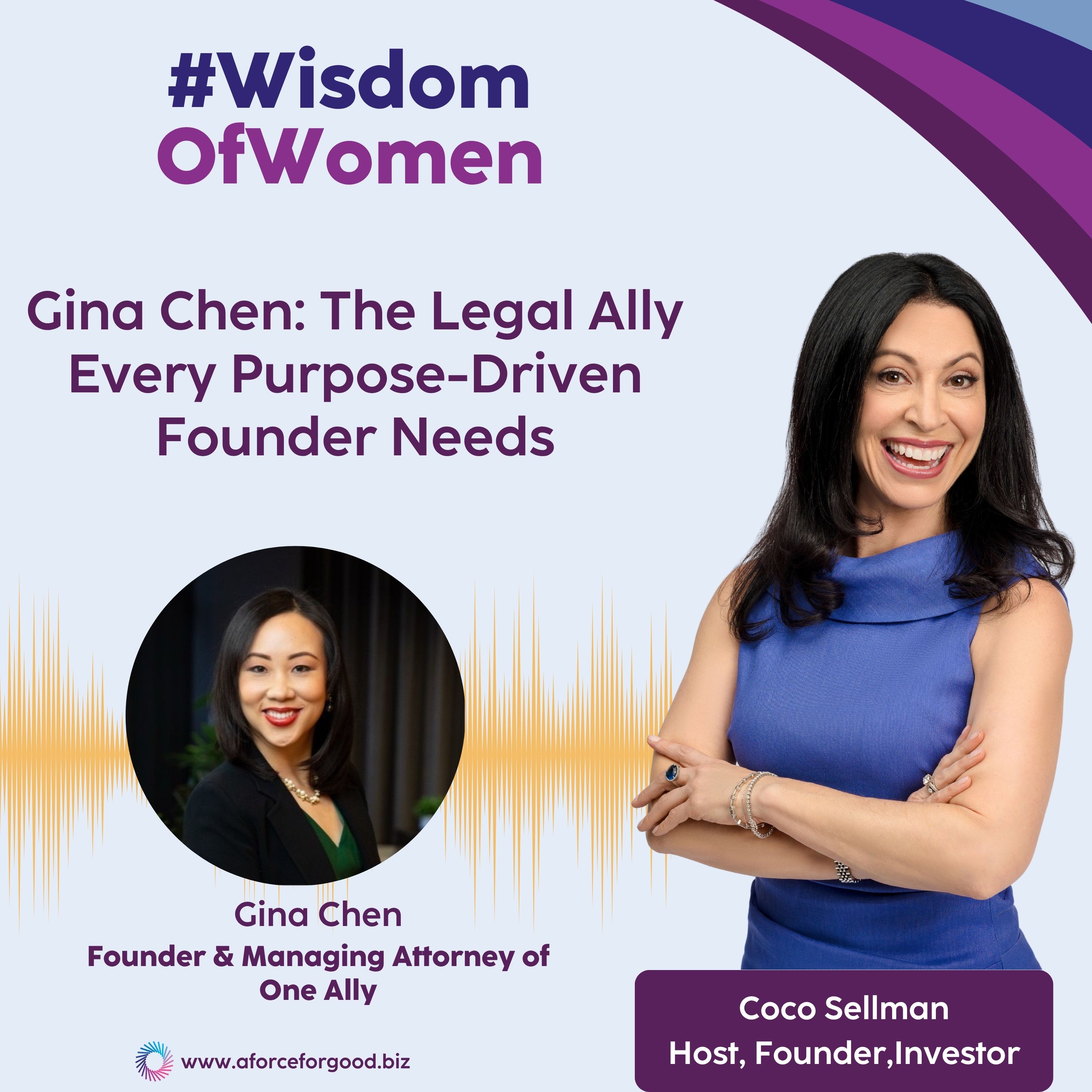 Gina Chen: The Legal Ally Every Purpose-Driven Founder Needs#WisdomOfWomen Show · on Impact investing77 / 100
 Mission Driven at Startup Speed: A New Playbook for Philanthropic CapitalASU+GSV Summit Sessions · on Impact investing70 / 100
 His Father Lost His Life Savings. Now He’s Fixing Finance.Give It A Nudge · on Impact investing70 / 100
 Inclusive Capital: Edward Dugger III of Reinventure CapitalIn the Business of Change · on Impact investing64 / 100
 #97 - The $3B Giving Machine (Ben Choi, Managing Partner at Next Legacy)Investing In Integrity · on Impact investing64 / 100The $120 Trillion Repricing: 4 Investors on the Carbon Bubble, Stranded Assets & Real Returns | (#142)80 / 10095% of Emissions, 14% of the Capital: The Bond Market Mispricing in Plain Sight | Elizabeth Alm, Saturna Capital (#137)85 / 100From Goldman Sachs to Excel Hell: Measuring Sustainability That ESG Ratings Miss | Samantha Duncan, Net Purpose (#136)92 / 100From Apartheid to the BRICS Bank to BII: Leslie Maasdorp’s Journey Through Development Finance (#135)87 / 100Africa’s Unbanked: Where FinTech Is Finding the Most Resilient Returns | Mohamed Okasha, DisrupTech Ventures (#134)86 / 100