Speak Up · 2026-06-26 · 13 min
Key moments - from our scoring
Substance score
21 / 100
Five dimensions, 20 points each
Laura Camacho breaks down how OpenAI's CFO Sarah Fryer embodies the Strategic Sage archetype - one of seven executive presence profiles from her Executive Presence Mastery system. Rather than focusing on polish or appearance, Camacho argues that executive presence is about making your distinct value visible through communication; Fryer creates measurable business value by enabling better decisions through calm, structured thinking and transparent risk assessment. The seven archetypes (Strategic Sage, Calm Commander, Visionary Architect, Trusted Diplomat, Charismatic Catalyst, Authentic Anchor, and Executive Minimalist) each contribute different value: better decisions, stability, innovation, alignment, momentum, trust, and clarity respectively. Camacho provides a framework for high-performing leaders and introverts to identify their primary archetype by reflecting on why colleagues seek them out, then amplify their natural strengths rather than mimicking others. This episode is essential for professionals frustrated with generic executive presence advice, wanting concrete language to recognize and communicate the unique value they bring.
The seven archetypes are: Strategic Sage (better decisions), Calm Commander (stability), Visionary Architect (innovation), Trusted Diplomat (alignment), Charismatic Catalyst (momentum), Authentic Anchor (trust), and Executive Minimalist (clarity). Each represents a distinct way of creating business value through communication and leadership.
Executive presence is fundamentally about making your value visible so people recognize it; appearance and polish are downstream effects. When your communication creates confusion, people discount your value, not because they think you're polished but because they don't understand you or trust your judgment.
Reflect on the last three times colleagues sought you out at work and ask why they came to you specifically - were they seeking better decisions, stability, innovation, alignment, momentum, trust, or clarity? That pattern reveals your primary archetype and the value you naturally create.
Fryer creates better decisions through calm, structured thinking and clear communication that reduces ambiguity. Her thoughtfulness lowers perceived risk, her credibility helps stakeholders align around difficult choices, and her structured way of speaking makes her judgment visible - exactly what Strategic Sages do.
Different archetypes create different critical value - without Visionary Architects, there's no breakthrough innovation; without Strategic Sages, there are terrible decisions; without Trusted Diplomats, meetings become conflicts; without Executive Minimalists, processes create unnecessary complexity.
Our reviewer’s read on each dimension, with quotes from the episode.
The episode introduces a seven-archetype framework and makes one genuinely useful reframe (executive presence as a value-creation mechanism, not polish), but the runtime is dominated by repetitive list-recitation of the same seven archetypes and motivational filler rather than substantive unpacking. A B2B operator would extract very little actionable insight beyond the surface-level taxonomy.
executive presence is not the icing on the cake. It's not the sprinkles. It's one of the basic ingredients.
Your communication, verbal and nonverbal, creates business outcomes, and business outcomes create value.
The seven-archetype framing is a mildly novel organizing device, but the underlying claims - amplify your strengths, don't copy others, presence is about value not appearance - are thoroughly recycled coaching tropes. There is no contrarian or first-principles argument anywhere in the episode.
It is the value you consistently create because everybody creates a different kind of value.
you want to be yourself. Right? That's the best. It's amplifying your own strengths.
There is no guest; this is a solo host monologue. Sarah Fryer (OpenAI CFO) is referenced as a third-party example observed from another podcast, not interviewed. The host is a communications coach, not a senior B2B operator or practitioner with at-scale organizational experience.
I heard about her on the all in podcast.
I'm not labeling her personality at all. I don't know her personality.
Concrete evidence is almost entirely absent. The single named client example ('a client from RTX') is unnamed and undetailed, the Sarah Fryer analysis consists entirely of host assertions with no direct quotes or specific incidents, and no data, metrics, or timelines of any kind appear in the episode.
I can remember a client from RTX who did exactly that.
When she walks into the board meeting, nobody is saying, oh, um, thank goodness she's here.
The episode is a solo monologue with no actual conversation, interview, or dialogue. The host poses rhetorical questions to the audience as a coaching device, but there are no follow-ups, no challenges to any claim, and no productive tension of any kind. The format structurally precludes conversational craft.
Do people come to you when there's a mess and the stakes are high and there's too many options?
I want you to think about the last three times people sought you out at work.
Computed from the transcript - who did the talking, and the words that came up most.
Know Your Own Executive Presence Strengths & Opportunities: Click here to pinpoint the specific area in your executive presence that’s keeping you invisible to senior leadership and guarantees you stay working hard as a pack mule who never gets promoted. Are you trying to improve your executive presence - but still unsure what actually makes leaders influential at the highest levels? Many professionals believe executive presence is about confidence, charisma, appearance, or executive polish. But what if those assumptions are completely wrong? In this episode, Laura Camacho, PhD, uses OpenAI CFO Sarah Friar as a real-world example to reveal why executive presence is really about making your value visible - and how understanding your unique leadership archetype can dramatically increase your influence, credibility, and opportunities. After listening to this episode, you'll know: How executive presence creates measurable business value through communication, trust, and decision-making. The seven Executive Presence Archetypes and the unique value each one contributes to an organization.
Transcribed and scored by The B2B Podcast Index.
Speaker A: Are you still trying to improve your executive presence, but not really sure? What is it that makes the senior leaders influential at the highest levels? Welcome back to Speak up, the number one ranked business communication podcast where we help high performing introvert leaders, including you, social introverts, turn your ideas into influence and improve business outcomes. Because being brilliant does not automatically make you influential. I am your host, Laura Camacho, your career accelerator and executive presence strategist plus godmother. After listening to this episode, you will know how, uh, executive presence creates measurable business value through communication, trust and decision making. The seven executive presence archetypes and unique value. Each one contributes to an organization and a practical framework for identifying your own executive presence archetype so that you can amplify your natural strengths instead of trying to copy someone else's style. So, as I'm sure you remember from last week, in episode 589, I introduced the brand new seven executive presence archetypes from the Executive Presence Mastery system. They are to review strategic sage, calm commander, visionary architect, trusted diplomat, charismatic catalyst, authentic anchor, and executive minimalist. And since then I've gotten a few questions about one thing or, uh, how do I know what archetype I am? And, um, one of the easiest ways to discover your archetype. And you will have a primary and a secondary. You're not just going to be one, but it's a great way to study leaders whose executive presence is already highly developed. And that's what I bring you here. So today we're going to play a game called which Executive presence archetype is this? And our contestant is the fabulous Sarah Fryer. As you probably know, the CFO of OpenAI. Now, before your eyes glaze over and you start thinking, laura, I became an engineer specifically so I wouldn't have to think about CFOs. Stay with me. Because this is not about accounting or finance. It's about value. And that's why executive presence matters. It's not about anything else. There's this huge misunderstanding about executive presence. They think it's about looking polished, and when you have it, you are polished. That's a downstream effect of executive presence. It's not the right suit helps, posture helps. A, uh, handshake helps. But that is not the point. The appearance again, is downstream. Although I do believe in looking good, as good as you can. But executive presence here is about making your value visible so that people recognize that value, so you can have the most brilliant ideas. But if your communication is creating confusion, it's your value that gets discounted. People aren't saying, wow, I should really pay more attention to what Laura says because it must be great, but since I don't understand it, it must be on me. No, they're thinking, Laura is an idiot if I don't understand what she's saying. Okay. Your communication, verbal and nonverbal, creates business outcomes, and business outcomes create value. And that's why executive presence is not the icing on the cake. It's not the sprinkles. It's one of the basic ingredients. And the higher you go up in the organization, the more it matters. So the executive presence archetypes to go into that are, uh, not personality types. It is the value you consistently create because everybody creates a different kind of value. The strategic sage creates better decisions. The calm commander creates stability. One type is going to lean more heavily into one specific type of value. The visionary architect creates innovation because they're into the future. The trusted diplomat creates alignment because they have all these great personal relationships. The charismatic catalyst creates momentum because they're so high energy and fun to be around. The authentic anchor creates trust. And the executive minimalist creates clarity. So like I said before, every company needs all seven. Imagine open AI without visionary architects, you would have no breakthrough and innovation. What about strategic sages, which is my primary? Yay. Lots of exciting ideas and note and lots of terrible decisions. Without our input, without the trusted diplomats, every meeting could become a cage match. The executive minimalist. Three hour meetings that create six new M committees. So it's not a matter of which archetype is best, it's about which value do you naturally create, because that's going to be where you can lean in rather than trying to compensate. Your opportunities are. So Sarah Fryer. I heard about her on the all in podcast. When she walks into the board meeting, nobody is saying, oh, um, thank goodness she's here. The meeting needed more excitement. No, she's not expected to deliver standup comedy or a motivational speech. People do expect something much more valuable, which is better decisions. Right. So I see her as the strategic sage, Classic strategic sage. And, um, the value she creates is better decisions. When the strategic sage speaks, people assume that the homework is done. The trade offs are considered, the risks are identified, especially those others may have missed that they looked around the corners. Their communication is let's make the smartest decision, not necessarily the fastest ones. So strategic sages are not loud, really, they're not even charismatic. They're not the people dominating the conversation, but they have the keen business judgment and that judgment becomes visible. Through the way they communicate. And it's not even the appearance of confident. It's because she is confident, because she has a clear, like, what is a confident person? A confident person is relaxed. Like, I know things. Yeah. Can you push back and challenge me? Yes. And maybe I am mistaken, but I'm not worried that my whole identity is going to collapse because I'm mistaken about something. Right. In the case of Sarah Fryer, she helps, uh, other people make good decisions. And because she is good at appearing calm and confident, her structured thinking and structured way of speaking reduces ambiguity. The fact that she's thoughtful lowers the perceived risk. Her credibility helps stakeholders align around difficult choices. Ah, where she's backing a certain point, uh, investors feel more confident. Board members feel more informed. She's operational, strategic and financial. Remember, you don't want to be thinking, oh, I need to communicate exactly like that person, Sarah Fryer. No, maybe. If you feel like you're a strategic sage, you can definitely look to her for some tips. But you want to be yourself. Right? That's the best. It's amplifying your own strengths. So we're going to play archetype bingo. Let's see if any of this sounds familiar. Do people come to you when there's a mess and the stakes are high and there's too many options? Nobody's as sure what to do next. And are you the person who's listening to all this chatter and asking yourself, what is the real problem? What are we missing? What happens if we're wrong? What are second order effects? That is you, Your primary architect may be the strategic sage, and your superpower would then be creating confidence in decisions. But hey, maybe you're not. You're like Laura, that's not me at all. Perfect, because we don't need everybody to be a strategic sage. And a lot of companies, depending on the industry, depending on how old the company is, there can be a lot of chaos. Like in startups, you may particularly value a calm commander who's never panicked. Or maybe it's an older, established heritage brand company that needs that visionary architect to see possibilities that no one else is seeing. Maybe you're the person who gets five departments to stop fighting and start collaborating. I can, uh, remember a client from RTX who did exactly that. One of her archetypes for sure is the trusted diplomat. If you're the person that gets everybody excited and moving, then you're a charismatic catalyst. That charismatic catalyst, that's the life of the party type person. But on the other hand, there's People who are quiet, grounded, consistent. That's an authentic anchor. If you're the person who can reduce complexity really easily, then you're an executive minimalist. So I want you to think about how is it that I create value, right? So if you're thinking about how can I improve my executive presence, that's really good. But I want you to go deeper and ask yourself, what is the value? What value am I trying to make visible? Because executive presence should be amplifying value. So I'm going to go through the seven again and help you see the value. The strategic sage should communicate judgment. The trusted diplomat alignment. The visionary architect communicates possibility. The calm commander stability. And another use case for this calm commander would be with mergers and acquisitions, right? That's when you really value someone who is calm and clear in that situation. Charismatic catalyst should communicate momentum. An authentic anchor communicates trust. An executive minimalist should communicate clarity. Like, especially if you're an AI right now, think about what is the story that makes this complicated issue clear. If you do that, your contribution will be impossible to miss. So this is for the Friday episode. I want you to think about the last three times people sought you out at work. This is a little personal challenge for you. I want you to remember not what they asked you, but why did they ask you in particular? Were they looking for a better decision? Were they looking for consistency, stability or innovation? Alignment, momentum, trust, clarity. That's going to give you a little insight into your executive presence archetype. And maybe it was more than one and that's okay. You can create value in more than one way, but usually you don't create value 11 different ways. We look at Sarah Fryer and we identify her as a strategic sage. I'm not labeling her personality at all. I don't know her personality. I'm just seeing the value that she consistently creates through better decisions. And the way she communicates verbally, non verbally helps other people recognize the value before she has to open up the spreadsheets. This is why we're into executive presence. It's too access the value that you're bringing in to amplify that. If you are interested in growing your executive presence beup summer camp is a very accessible way to test the waters, to get some tips, very specific tips and exercises. Every week of the four weeks there's a weekly exercise sheet and there's six daily lessons for four weeks starting July 6th. In any case, have a glorious day and I will catch you on the next episode. Hm SA.
Other episodes covering the same guests and topics, from across The B2B Podcast Index.
 Ep 93: CEO of Redwood Research Buck Shlegeris on OpenAI/HuggingFace Revelations, Fixing AI Safety & Takeover OddsUnsupervised Learning with Jacob Effron · on OpenAI98 / 100
 The 18x Midas Lister Betting $3B on AI (and calling most of it fake) | Navin Chaddha, MayfieldThe Peel with Turner Novak · on OpenAI91 / 100
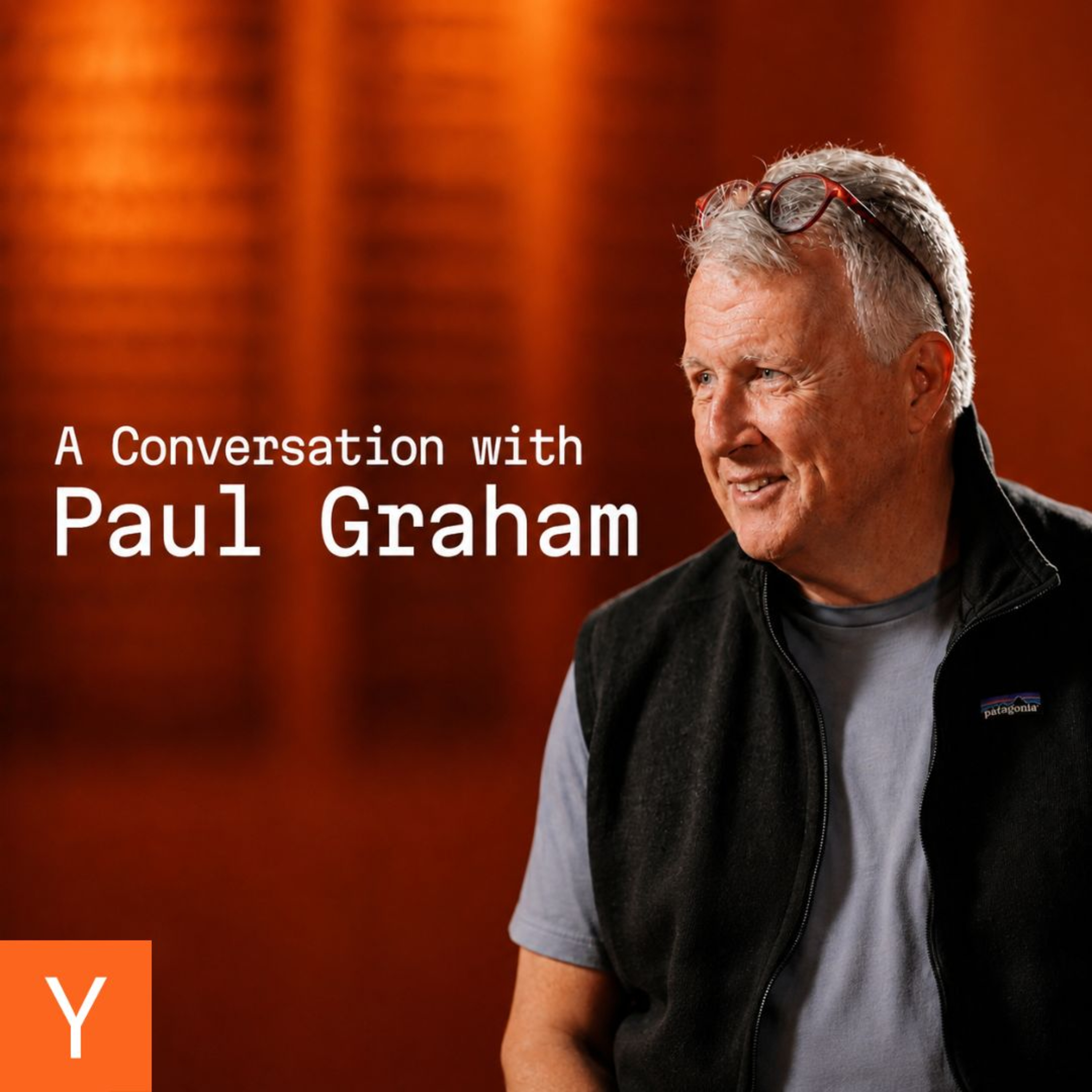 Paul Graham On Startups, Ambition, and Great FoundersY Combinator Startup Podcast · on OpenAI88 / 100
 How SSW turned AI into ½ their pipeline - Ulysses Maclaren, COO of SSWSaaS Stories · on OpenAI86 / 100
 EP 148: Is the AI boom cracking? Inside July’s sell-off and beyondBeyond the Benchmark by EFG · on OpenAI85 / 100
 Unscripted with Victor: Agentic AI, Fintech's Future, and the Death of the App EconomyVentures from The Valley · on OpenAI83 / 100
 620: You Know What Needs to Change. Why Can't You Get Executive Buy-In?51 / 100607: The 6 Patterns that Make a Leader Captivating - Insights from the 2026 Executive Influence Index41 / 100621: Everything You Thought You Needed To Do To Demonstrate Executive Presence Is Actually Making You Less Effective619: Why Some Leaders Are Remembered - and Others Are Forgotten by Lunch | New Findings from the 2026 Executive Influence Index618: The Link Smart Leaders Miss Between High Performance And Executive Presence