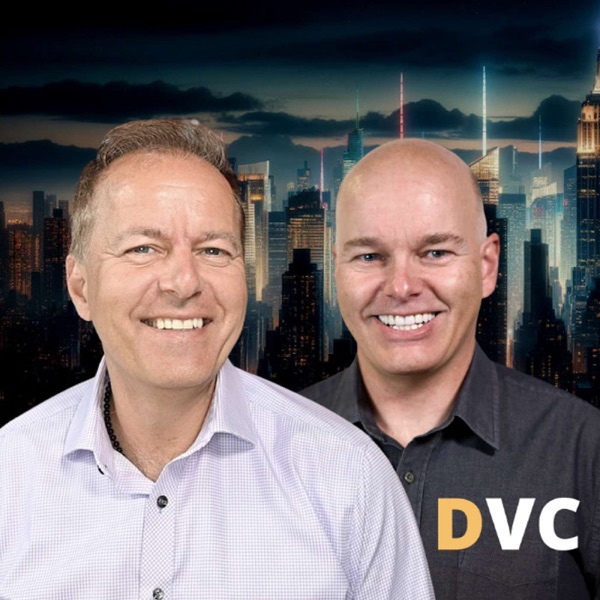
Hosted by Krish Palaniappan and Varun Palaniappan
Listed under Technology
We’ve been doing Software Development and Architecture work for a while at Snowpal, and currently have several B2B and B2C products in production. In this podcast, we’ll share our experiences on a regular basis to help you & your teams build great software.
471 episodes · publishes daily · latest 2026-08-04 · ~66 min/episode
Rank
#365
Substance
74.5
/ 100
Breakdown
Scored 2026-08
Updated monthly
Across the index
#365 of 1878
Substance
Top 19%
outscores 81% of the index
Software Development, Finance and AI ranks #365 on The B2B Podcast Index with a substance score of 74.5 out of 100, scored across 2 recent episodes. It scores highest on guest caliber and insight density. Gerard Holland is a legitimate practitioner with operating experience - he founded a platform placing African talent with Western firms and has spent time in multiple African markets. However, he is fundamentally a service provider selling access to these markets, not an independent analyst or operator at a multinational scale. His credibility is real but narrowly scoped to talent arbitrage, and his financial disclosures and business model create inherent bias. He is neither a C-suite executive at a major tech firm nor a macroeconomic analyst.
Averaged across 2 recently scored episodes, with cited evidence.
The episode contains several substantive points about African labor markets, AI's impact on outsourcing, and demographic trends, but relies heavily on repetition and conversational meandering. The host and guest circle back to the same ideas (affordability, infrastructure, English proficiency) multiple times without introducing genuinely novel operational insights. The AI discussion, while timely, remains mostly speculative rather than grounded in concrete business findings.
“every second person entering the workforce, the global workforce by 2035 will live on the continent of Africa”
“if you can have AI enabled people, this could be the greatest opportunity for the developing world”
The core argument - Africa as the next outsourcing destination after India and the Philippines - is a straightforward extrapolation of established patterns rather than contrarian thinking. The host's pushback on cost arbitrage in an AI-driven world is well-trodden ground. The guest offers some localized observations (M-Pesa, grassroots fintech) but doesn't articulate a truly original thesis about how Africa differs structurally or strategically beyond 'younger population, cheaper, not yet saturated.'
“India has become a lot more expensive now. Like eight, nine years ago, you know, India was still very, very affordable”
“Africa's on an earlier uh, part of that journey where the demand from uh, the Western world isn't there”
Gerard Holland is a legitimate practitioner with operating experience - he founded a platform placing African talent with Western firms and has spent time in multiple African markets. However, he is fundamentally a service provider selling access to these markets, not an independent analyst or operator at a multinational scale. His credibility is real but narrowly scoped to talent arbitrage, and his financial disclosures and business model create inherent bias. He is neither a C-suite executive at a major tech firm nor a macroeconomic analyst.
“I do come from a finance and an accounting background. I was an outsourced CFO”
“founder of TMA to connect global companies to Africa's top talent”
The episode lacks concrete data. Claims about demographics (average age 19 in Africa, 2 billion by 2050) are stated without source attribution or nuance. Pricing comparisons between India and Africa are vague ('70% less,' 'more favorable'). The Toronto client example with AI agents is mentioned but not detailed. No revenue figures, retention rates, case study metrics, or comparative wage data are provided. The discussion remains largely anecdotal.
“the average age in Africa is 19. Now if you look to the USA, it's in the 40s”
“every three months they were getting price increases of 15%”
The host asks solid clarifying questions and attempts productive pushback, particularly around whether AI makes cheaper labor obsolete and whether cultural/coordination costs offset savings. However, follow-ups are often soft; when Gerard gives speculative answers ('no one has the answer yet'), the host accepts this rather than pressing for specifics. The host's own closing answer about his hiring criteria is substantive, but he doesn't redirect Gerard to validate claims with data. The conversation is cordial but misses opportunities to drill into contradictions.
“I want to sort of play the devil's advocate, as I kind of almost always do, just to hear both sides”
“if I only need eight people now, I might as well hire those eight people in this country as opposed to going elsewhere. Is there a validity to the argument, or am I missing something there?”
2 periods tracked.
2 scored on substance · 63 tracked in total.
Add this badge to your site - it links back here and updates automatically as you rank.

<a href="https://index.fame.so/show/software-development-finance-and-ai" target="_blank" rel="noopener">
  <img src="https://index.fame.so/badge/software-development-finance-and-ai/badge.svg" alt="Ranked #43 on The B2B Podcast Index" width="360" height="136" />
</a>Track Software Development, Finance and AI's rank
Get an email whenever this show moves up or down the Index. Monthly at most, no spam.
Companies, products and tools that come up most across this show's episodes.
The themes that come up most across this show's episodes.
Podcasts that dig into the same topics.